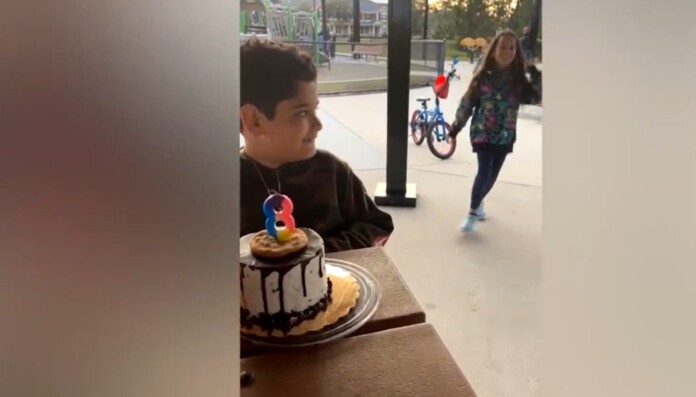
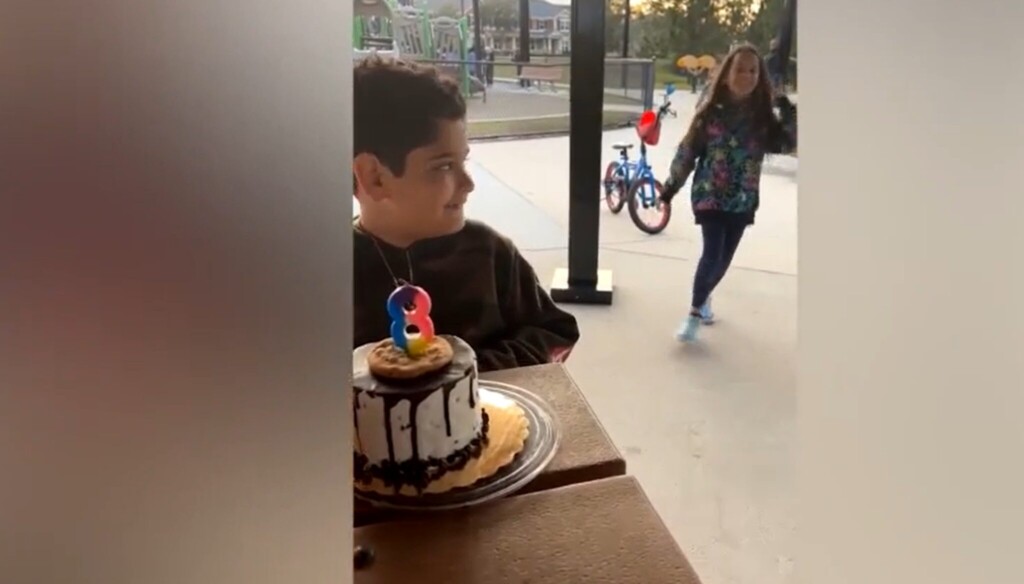
James at his birthday party - credit: Ashley Giselle Jeffords
James at his birthday party – credit: Ashley Giselle Jeffords
A young boy was celebrating his 8th Birthday in the park, and was ready to blow out the candles on a delicious cake when he received an unexpected surprise.
Strangers: just a few, but enough to raise James’ eyebrows in surprise, came over to help sing Happy Birthday.
On their own initiative, an adult and three children in matching jackets asked if they could help James ring in his new year, perhaps because the party was pretty scant on guests.
As the famous song starts off, the shock and surprise can clearly be felt through James’ coy smile, growing without stopping until the final note sends James up onto his feet to high-five his new friends.
WATCH the video below from ABC 6…
SHARE This Heartwarming Video With Someone Who Needs A Smile…
Damaged Bronze Lenin statue in backyard of Estonian History Museum-Ferran Cornellà - CC BY-SA 3.0 EE
Quote of the Day: “For a time, tyrants can seem invincible, but in the end, they always fall.” – Mahatma Gandhi
Photo by: Ferran Cornellà – CC BY-SA 3.0 Estonia (cropped)
With a new inspirational quote every day, atop the perfect photo—collected and archived on our Quote of the Day page—why not bookmark GNN.org for a daily uplift?
Damaged Bronze Lenin statue in backyard of Estonian History Museum-Ferran Cornellà – CC BY-SA 3.0 EE
Jayceon Branch (in white) performing the Heimlich maneuver - credit Raleigh Oak Charter School, released
Jayceon Branch (in white) performing the Heimlich maneuver – credit Raleigh Oak Charter School, released
In surveillance video from a North Carolina school, a 9-year-old boy stepped in to save his friend from choking by using the Heimlich Maneuver.
The boy said he learned this classic, lifesaving technique for clearing the airways by watching YouTube, showing that maybe a little screen time isn’t all that bad.
WRAL News first reported the story that at Raleigh Oak Charter School, young Jayceon Branch nonchalantly saved the life of his 7-year-old friend, Darren.
“We were playing basketball and he ate a granola bar and we started playing longer until he started choking,” the Branch told WRAL News. “I didn’t know he was actually, actually choking, so I just did my thing, which was a heimlich.”
The surveillance footage indeed shows them playing basketball with 2 other kids when the shorter of the two suddenly stopped and bent over. Wasting no time at all, Branch, who can be seen in the white shirt, gave two compressions on Darren’s abdomen, which dislodged the food.
The remarkable part is how quickly everything went back to normal.
“I’ve had to be called to the school before; for him,” Jayceon’s father said with a wry smile. “But I was hoping this time, like ‘Oh god, don’t let this be this again.”
But, he said, because he missed the call he got to listen to the voicemail telling him the good news: his part-time trouble-maker had become a part-time hero.
WRAL was able to show the footage to the parents of both boys, who watched in amazement at the quick response of the older one to save his friend, the foundation of a friendship that will surely last a lifetime.
WATCH the story below from WRAL…
SHARE This Little Heroic Boy’s Actions With Your Friends On Social Media…
Prince Wise, a 9-year-old heart transplant recipient, and chef Fernando Canales - supplied to Today by Christopher Ramirez, Fairmont Pittsburgh
Prince Wise, a 9-year-old heart transplant recipient, and chef Fernando Canales – supplied to Today by Christopher Ramirez, Fairmont Pittsburgh
A 9-year-old transplant survivor recently had the opportunity of a lifetime to help craft a menu item for the restaurant of a ritzy Pittsburgh hotel.
In the name of raising money for the local chapter of the Make-A-Wish Foundation, little chef in the making Prince Wise was adamant it be crab cakes.
Wise was just 7 when he was rushed to the hospital with dilated cardiomyopathy, an inflammatory condition of the left ventricle. He needed immediate surgery, a special pediatric heart assist machine, and months to recover.
During that time, he was on the waiting list for a heart for a total of 3 months, a harrowing experience for him and his mother.
“Everything happened so quick,” 30-year-old Chantell Hardin told Today. “At that time, we were told he had to go to immediate surgery in order to save his life. It was the worst nightmare ever.”
A donor heart was eventually found, and Wise underwent the transplant successfully. But there was something particularly bad about the whole experience: the hospital food.
Wise is no fool when it comes to food. Even though he’s just a boy, he knows every one of the 50 spices that Hardin keeps in her spice rack. He likes a good seafood boil, and loves nothing more than a visit to the local sushi bar.
Once he learned how to eat without a feeding tube, he had to deal with cheeseburgers and a berry shake every day, because everything else was just too bland. During his treatment, Hardin got in contact with the Make-A-Wish Foundation, which organized a trip to Orlando, Florida on a tour of its famous amusement parks.
The experience was amazing, but Hardin assumed that was the end of their association. Then, last year, Make-A-Wish of Greater Pennsylvania and West Virginia reached out to see if the little survivor wanted to help design a dish for the restaurant at the Fairmount Hotel in Pittsburgh Floor 2, leaving the son and mother crying with excitement.
Arriving at the Fairmount, Wise got to meet head chef Fernando Canales from Mexico, and after familiarizing himself with the kitchen and ingredients, sat down to brainstorm a dish.
“I was impressed when he said, ‘Oh I love crabcakes,’ because he’s a kid,” Canales tells TODAY.com. “When he told me, ‘Oh I love lobster.’ I was like, ‘You have expensive taste.’”
They discussed how to incorporate crab into the menu, how to account for seasonable availability, and what to do about garnishes and flavors to make a high-end restaurant-quality menu item.
Wise suggested avocado. Perfect, Canales said. There had to be extra thin fries on the side like McDonalds. Tartar sauce suggested the chef—here’s how to make it. The brainstorming went well, and soon, Prince’s Crab Cake Sandwich was featured on the menu for several months to raise money for Make-A-Wish.
The hotel gifted Prince an apron and chef’s hat with his name on them, capping an experience he’ll never forget. Hardin was parental pride personified.
“He rocked it,” she said. “Everything was so natural for him.”
SHARE This Inspiring Story Of A Resilient Boy And His Love For Cooking…
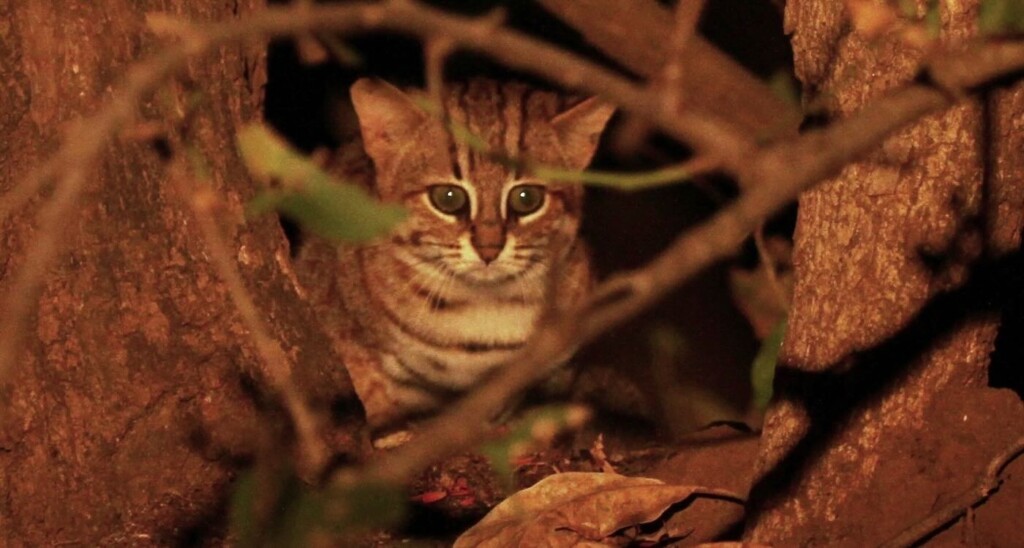
Rusty-spotted cat of India by David V. Raju - CC BY-SA 4.0
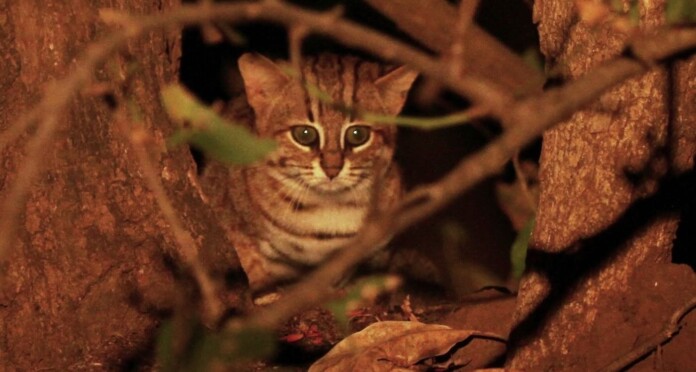
A rusty-spotted cat in the forests of West Bengal – credit: Human and Environment Alliance League.
One of the world’s most secretive and tiny wildcat species has recently been photographed for the first time ever in its home of West Bengal, India.
Weighing in at a ferocious 2 to 3.5 pounds, and stretching 14 to 19 inches from whisker tip to tail tip, it’s the smallest species of wildcat in Asia. If more were known about it, it could be confirmed as the world’s smallest, but Africa’s black-footed cat may be smaller.
An environment and conservation NGO called HEAL (Human and Environment Alliance League) recorded an image of a rusty-spotted cat in the wilds of eastern India’s state of West Bengal during a camera trap survey.
Very little is known about the ecology and behavior of the rusty-spotted cat in the wild. Captive ones are mostly nocturnal but also briefly active during the day.
“Such a rare and sensitive lesser cat will only survive in a forest where it gets a favorable ecosystem,” said Anjan Guha, divisional forest officer of Purulia (a district in West Bengal). “The recent movement by tigers, presence of leopards, and now this lesser cat also show that the wild food chain is being maintained in the forests here.”
Reported first by the Times of India, Vasudha Mishra, a researcher at HEAL, said that the presence of the rusty-spotted cat means the state’s known wildcat species have increased from 8 to 9. There are 39 wildcat species in the genera Felis and Panthera found worldwide.
Camera trap surveys like the one carried out by HEAL are primary ways to estimate populations of animals in forest habitats. They can also ascertain an animal’s range, all of which goes to inform conservation strategies.
Found in Nepal, Sri Lanka, and India, this cat is exclusively confined to the subcontinent of India, where it used to be widespread. Today, recorded sightings have been found in Jharkhand and Chhattisgarh, and now West Bengal, which share a particular ecoregion called the Chhotanagpur Plateau where leopards were recently recorded as well.
Rusty-spotted cat of India by David V. Raju – CC BY-SA 4.0
“Villagers residing in the forest fringes are already aware of the presence of the leopard and are being assisted with our livestock support projects to promote tolerance,” said Suvrajyoti Chatterjee, the secretary of HEAL.
“Together such initiatives will continue to support the persistence of a rich cohort of mammals like sloth bears, pangolins, small Indian civets, golden jackals, jungle cats, hyenas, and wolves.”
SHARE This Great Sign Of Robust Indian Wildlife Populations…
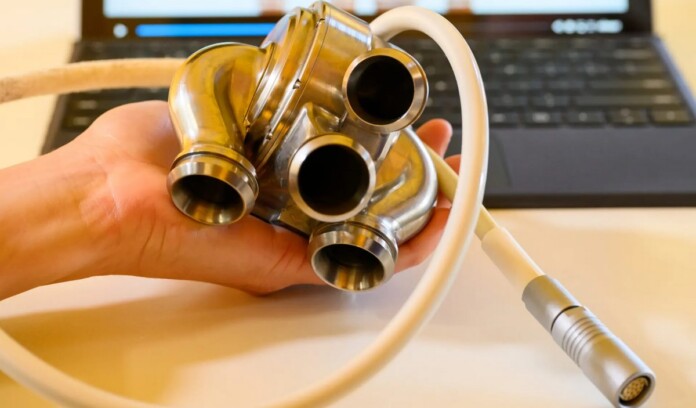
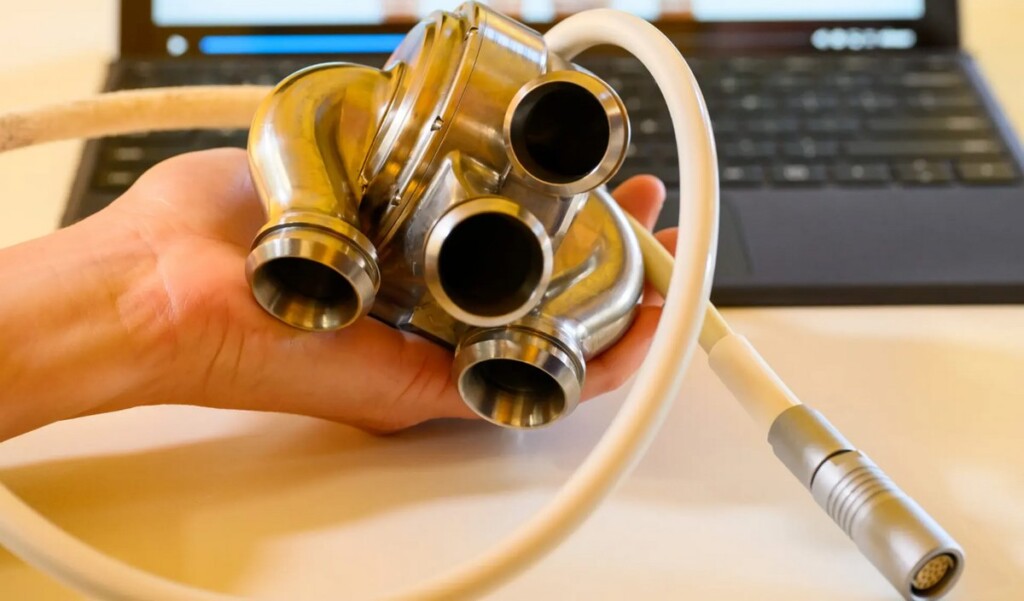
The Total Artificial Heart, made of titanium - credit BiVACOR
The Total Artificial Heart, made of titanium – credit BiVACOR
In Australia, a man was kept alive for 100 days on an artificial heart made of titanium while a donor heart was eventually found.
This is the longest-ever period that a man has been kept alive by an artificial heart, giving its developers encouragement that it can play a major role in supporting waiting list patients whose hearts are failing.
5 months ago, a man in his forties received the BiVACOR Total Artificial Heart (TAH) after experiencing heart failure. The TAH has no pumps, valves, or other moving parts susceptible to wear. Instead, magnetic levitation permits a single rotor to pump blood to the body through both ventricles.
He was able to leave the hospital even, before a donor heart was found that was transplanted successfully.
In a statement, BiVACOR, St. Vincent’s Hospital where the surgery was carried out, and Monash University which provided the grant funding for the development of the TAH, said that the result is a sign the artificial heart could potentially offer a long-term option for people suffering from heart failure.
BiVACOR’s founder, Australian bioengineer Daniel Timms, who invented the device, said it was “exhilarating to see decades of work come to fruition.”
“The entire BiVACOR team is deeply grateful to the patient and his family for placing their trust in our Total Artificial Heart,” he said in the statement. “Their bravery will pave the way for countless more patients to receive this lifesaving technology.”
In the United States, there are around 3,500 donor hearts made available every year for more than 4,400 people who join the waiting list.
The TAH has already been tested in an early feasibility study in search of eventual FDA approval. 5 patients received the device, CNN reports, with the first being last July, when a 58-year-old man suffering end-stage heart failure received the implant during surgery at Texas Medical Center.
The four others also received it successfully, and organizers hope to expand it to 15 patients.
SHARE This True Breakthrough In Artificial Heart Technology…
Quote of the Day: “Strong people alone know how to organize their suffering so as to bear only the most necessary pain.” – Emil Dorian
Photo by: Jaime Dantas
With a new inspirational quote every day, atop the perfect photo—collected and archived on our Quote of the Day page—why not bookmark GNN.org for a daily uplift?
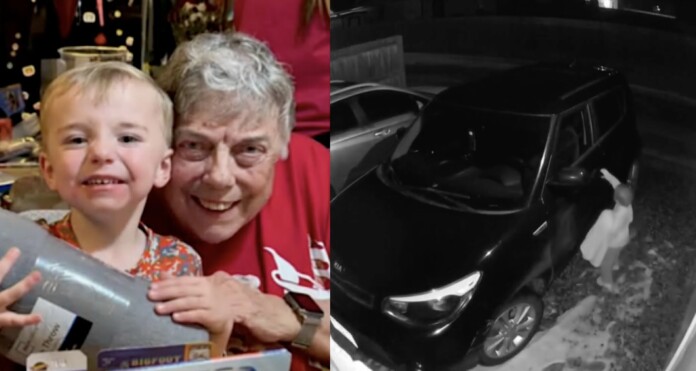
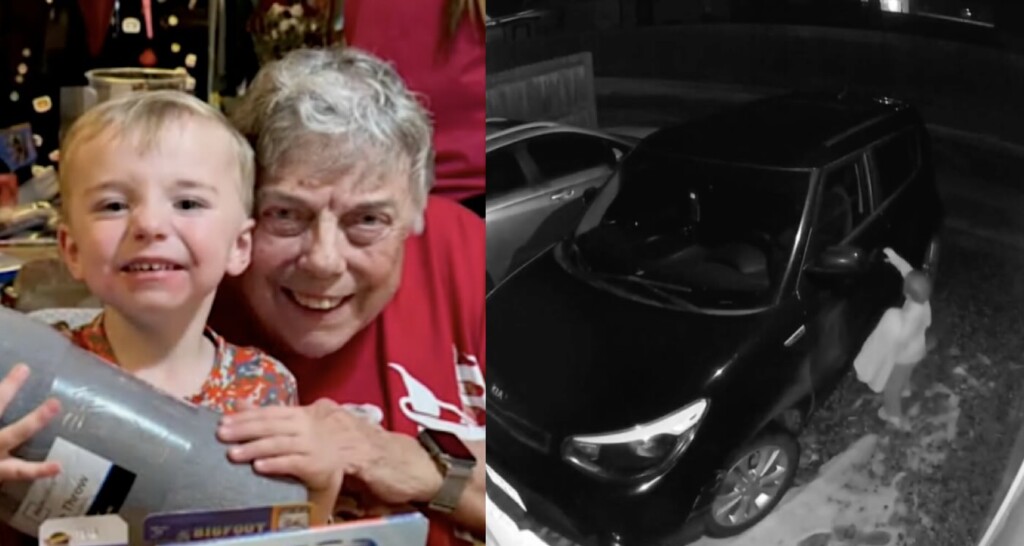
Sharon Lewis and her great-grandson Bridger retrieving her phone
Sharon Lewis and her great-grandson Bridger retrieving her phone
From Colorado comes the story of a little boy conquering his fear of the dark to help a family member in an emergency.
Sharon Lewis, a 77-year-old great-grandmother with mobility problems, fell on a concrete step, suffering a serious concussion. She knew she needed to call 911, but had left her phone in the car.
All alone that evening with her little 3-year-old great-grandson Bridger, he was her only hope. Bridger came and found his “G.G.” (short for great-grandmother) lying on the ground bleeding from her head.
“I said, ‘So Bridger, you’re going to have to be a big boy and go out to the car and get G.G.’s phone,’ And he said, ‘It’s really dark, G.G.,'” Lewis recounted. “I said, ‘It’ll be OK. Jesus will help you. Don’t be afraid.'”
Home security footage shows Bridger walking determinedly into the garage, saying to himself “Don’t be scared, don’t be scared,” before opening the car door and finding the phone.
“I went out—right there—and I was so scared!” Bridger said in a video message shared with Good Morning America, reporting on the story.
Lewis would end up needing 23 medical staples in her head from the fall. She says she stared to call him “hero” but he just reminds her that his name is Bridger.
“[H]e doesn’t get it but he really is a hero to me,” she said.
WATCH the heartwarming video from ABC…
SHARE This Heroic Little Boy And This Great Video With Your Friends…
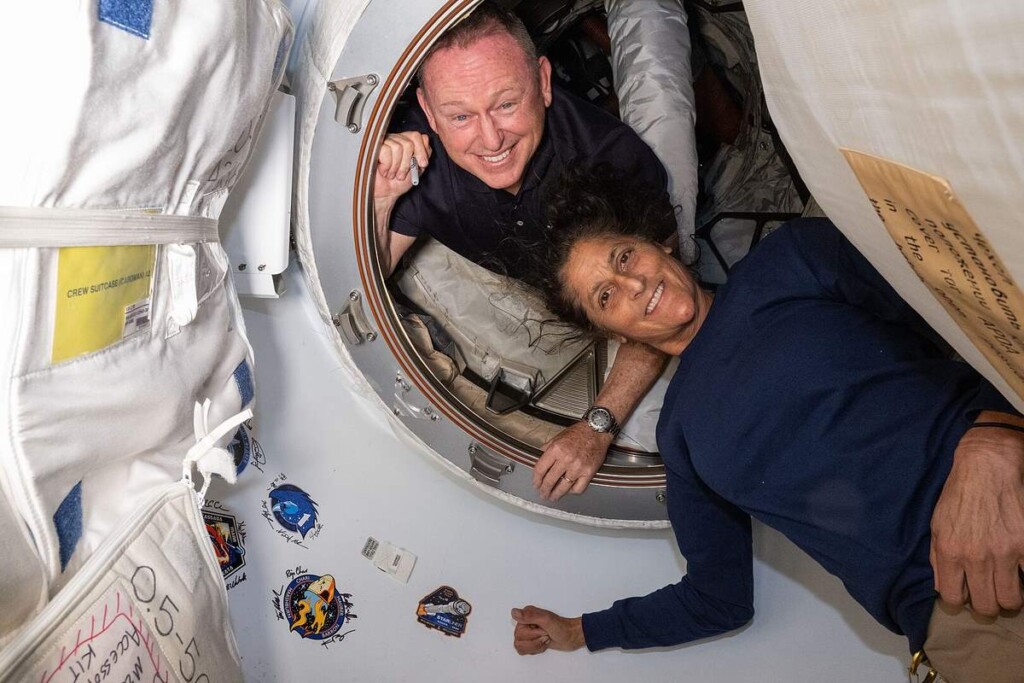
Barry Wilmore and Sunita Williams on the ISS - credit, NASA, public domain
Barry Wilmore and Sunita Williams on the ISS – credit, NASA, public domain
The pair of astronauts stranded aboard the International Space System will finally be coming home after an unforeseen 9 additional months in space.
They are being taken home by SpaceX Crew 10 Mission, which also delivered their replacements to the ISS.
Barry Wilmore and Sunita Williams arrived at the ISS in June 2024 on the test flight of the Boeing Starliner capsule, but technical problems with the Starliner left them stranded. Instead, their ride home was decided to be the SpaceX Crew 9 capsule, docked at the ISS since September.
But they couldn’t leave until Crew 10 arrived to relieve Crew 9, which just happened after they blasted off from the Kennedy Space Center aboard a Falcon 9 rocket.
To fill the time, the pair were integrated into the work rotation of the entire ISS crew.
Their replacements are made up of Russian Cosmonaut Kirill Peskov, JAXA astronaut Takuya Onishi, and NASA astronauts Nichole Ayers and Misson Commander Anne McClain.
WATCH the arrival, the reunion, and the recap, from NBC…
SHARE In The National Relief That These Two Great Americans Will Be Coming Home…
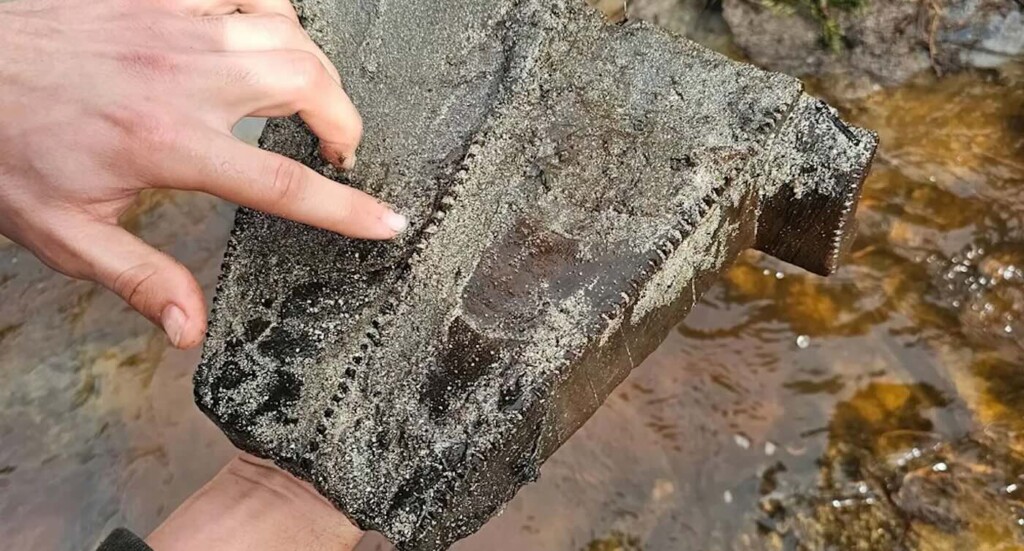
Piece of carved waka found in creek – Credit: Vincent Dix
Piece of carved waka found in creek – Credit: Vincent Dix
On New Zealand’s Chatham Islands, the complete remains of a wooden boat used by the islands’ indigenous Polynesians—perhaps even to arrive there, have been found.
This monumental and unprecedented discovery will yield fascinating insights about the settlement of the island, the dates it would have occurred, and maybe even about other islands in the Pacific.
Starting 3,000 years ago, but particularly in the 13th century CE, Polynesians struck out across the Pacific and settled a huge number of the islands in the vast ocean. They sailed by the stars and other open ocean indicators like birds on large boats called ‘wakas.’
The Chatham Islands’ original inhabitants are the Moriori, and it was a father and son who first found the splinters of wood on the main island of Rekohu that led to the discovery, which one archaeologist said will go down as one of the most important finds in Polynesian history.
“My son and I were just loading the boat up and taking the dogs for a run up the beach… just after a big rain,” Vincent Dix, a local fisherman, tells Radio New Zealand. Then, he says, his son Nikau saw pieces of timber in the river. The wood sported strange holes, and it appeared to be well preserved. Taking some of the pieces home, they began to see if they could fit some of them together.
A waka is a rare but not unheard of discovery in Polynesian archaeology, however they tend to be found in fragments, with no other material from the sails or rigging left over.
Another storm came and went, and the two men returned to the site where the remains of the whole boat had been unearthed. They immediately called the relevant authorities who came and secured the site.
“Before we started this project, the holy grail would have been to find some of the sail, or some of the twine that held things together, or some of the rope or the corking,” Justin Maxwell, the archaeologist leading the investigation, told the Guardian. “We found all of that. It’s completely blown our minds.”
In a statement, the Ministry for Culture and Heritage of New Zealand explained that pieces were individually recovered and placed into holding units to preserve the old wood.
“The local community were instrumental in leading the on-island support during the excavation,” the statement read. “Community interns and volunteers travelled across the island to the site, providing precious cultural advice, supplying meals and taking up the opportunity to add new skills to their impressive resumes.”
At the time of publishing, no estimated dating of the wood has been carried out, but the Smithsonian Magazine reports that some pieces clearly came from mainland New Zealand, suggesting a journey was made between the two, a distance of hundreds of miles.
One major aspect of this waka is that it was built with individual boards rather than out of a single tree, as others found in the past have suggested was the norm. Maxwell said this is going to help them learn so much about Polynesian waka technology.
SHARE This Discovery And What It Means To The People Of The Island…
At Good News Network, we believe in celebrating stories that inspire action, and our latest project is no exception. Water Ways, our award-winning short film created in collaboration with Niagara Cares, is making waves by spotlighting the critical importance of water stewardship.
This beautifully crafted documentary takes viewers on a journey through the efforts being made to protect and restore one of our planet’s most vital resources—water.
From the first frame, Water Ways showcases the power of collaboration in creating a more sustainable future. Through breathtaking visuals and heartfelt storytelling, the film highlights real-world solutions that are helping communities thrive while safeguarding freshwater ecosystems. (Watch the film below…)
At the heart of it all is Niagara Cares, the philanthropic arm of Niagara Bottling, whose dedication to responsible water use is driving real change.
Protecting Rivers And Planting Trees
Niagara Bottling, a family-run beverage company hydrating America since 1963, has long been committed to sustainability. Through Niagara Cares, they’ve partnered with leading conservation organizations like the Arbor Day Foundation, the National Forest Foundation, and Colorado Water Trust to plant nearly 200,000 trees, restore watersheds, and support healthy water ecosystems in the West and Southwest regions of the United States.
Their mission is clear: protect and revitalize the natural ecosystems that feed the Colorado River and Rio Grande—two lifelines that supply fresh water to millions of people. These regions face increasing environmental challenges, from droughts to wildfires, making their restoration efforts more urgent than ever.
By planting trees to filter runoff, restoring streams to replenish drought-prone areas, and mobilizing volunteers for hands-on conservation work, Niagara Cares is making a measurable impact on the future of these waterways.
“At Niagara, we are dedicated to protecting water as a vital resource and creating healthy, hydrated communities,” said Ann Canela, Director of Corporate Giving at Niagara Bottling. “These rivers are essential to multiple states in the West and Southwest, and through our partnerships, we’re taking meaningful steps toward improving river flow and creating a greener, more biodiverse future.”
More Than a Film—A Movement
What makes Water Ways truly special is its focus on the people behind the progress. From dedicated Niagara volunteers to environmental experts on the frontlines of conservation, the film is a testament to the power of community action. Their passion and commitment remind us that even small efforts can lead to profound change.
Beyond the documentary, we explore their mission in greater depth in the latest episode of our Good News Gurus podcast, Hydrating Hope, sharing the stories of their partners and the innovative ways they’re addressing water sustainability.
The journey toward a more sustainable world starts with awareness, and we invite you to be part of it. See firsthand how small actions can lead to a ripple effect of positive change.
Watch Water Ways below—and listen to Hydrating Hope—to join the movement protecting our vital resources.
MAKE A SPLASH By Sharing The Award-Winning Water Success On Social Media…
Temple Bar in Dublin, Ireland – Credit: Marco ten Donkelaar
Quote of the Day: “St. Patrick’s Day is all about being Irish and celebrating life as only the Irish know how.” – Anthony T. Hincks Happy St. Patrick’s Day!
Photo by: Marco ten Donkelaar (The Temple Bar in Dublin, Ireland)
With a new inspirational quote every day, atop the perfect photo—collected and archived on our Quote of the Day page—why not bookmark GNN.org for a daily uplift?
Temple Bar in Dublin, Ireland – Credit: Marco ten Donkelaar
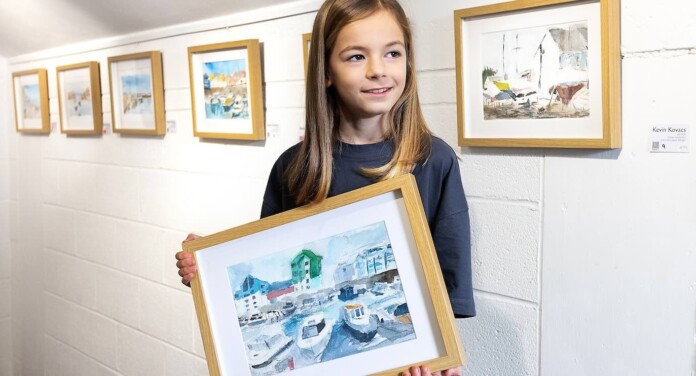
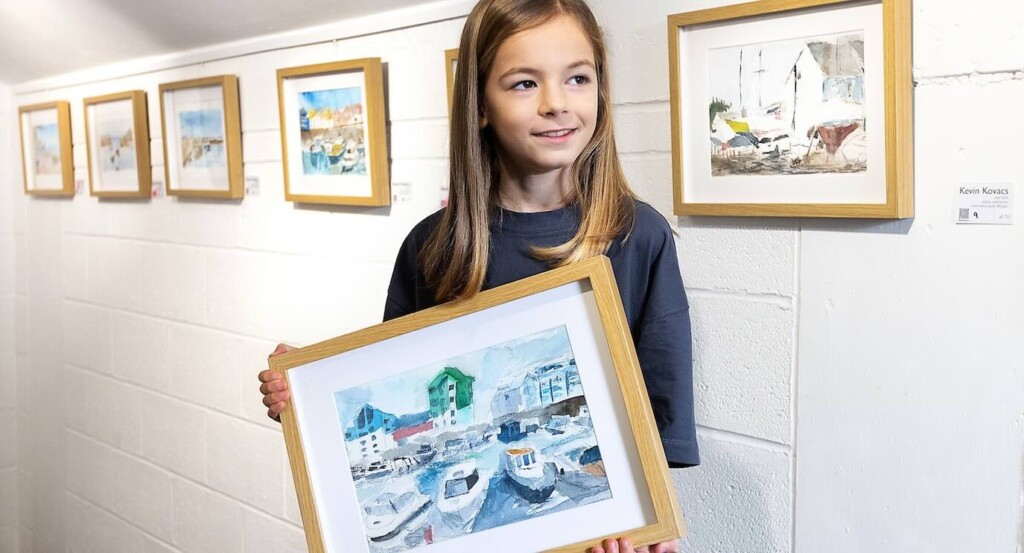
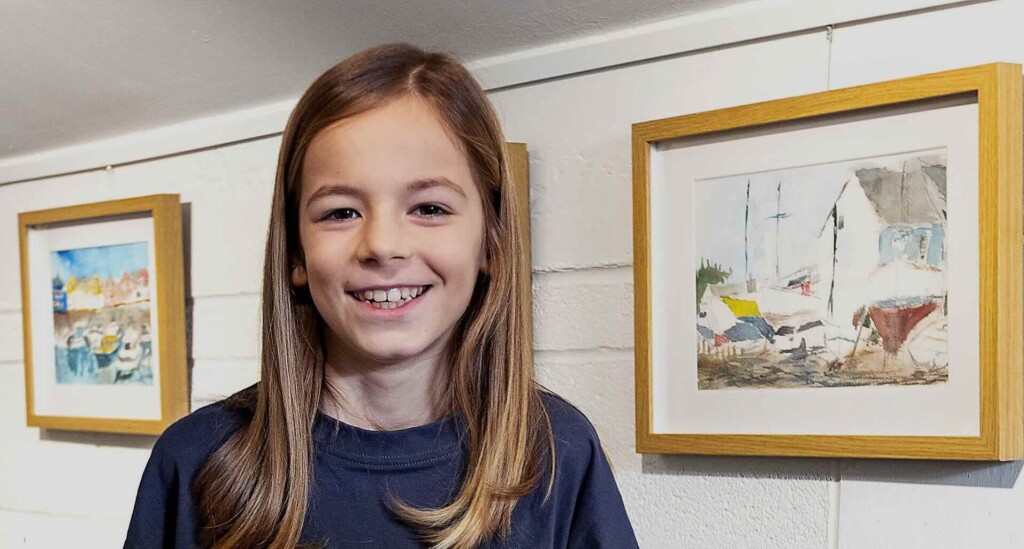
Kevin Kovacs, 8, from Somerset, holds his first solo art exhibition –SWNS
Kevin Kovacs, 8, from Somerset, holds his first solo art exhibition –SWNS
An eight-year-old artist was invited to present his watercolors in a local exhibition—where he has now sold his first paintings.
Kevin Kovacs is self-taught and started drawing when he was a toddler. He was invited to put together his own solo art exhibit at the Tacchi-Morris Arts Centre in Taunton, England, after his mother started sharing his creations on social media.
The young artist from Somerset even set his own prices for the artwork, which will be displayed until April 29.
“I am happy that people can see my art on the walls—and I hope for another exhibition in London.”
Kevin has been exposed to creativity and art his whole life, as both his mom and dad are keen photographers.
“My husband photographs nature, wildlife, and landscapes, so Kevin was around cameras all the time and we loved to draw with him when he was a toddler.
“We bought him all kinds of mediums—paints, watercolors, and all kinds of art supplies—and I could see he was enjoying it when he was around two.”
When Kevin turned five he started sketching, and he took inspiration from all the trips with his family to coastal towns around South West England, his mother Natalia told the SWNS news agency.
Kevin’s painting of Watchet in Somerset, which is one of his favorite subjects – SWNS
He loved sketching buildings and whenever they would be sitting down in one of the villages he would be drawing. Afterward, Kevin would use Natalia’s phone to take photos of his surroundings and begin drawing the images he’d captured.
He then began using color when Natalia showed him winning artwork from competitions around the world. There was one winning piece from India that was very colorful—and that was the point he started adding color.
Once people started to take an interest in Kevin’s work, Natalia decided to create an Instagram page for her son, so she could post all of his art in one place: “People were asking me all the time about his art.”
Kevin Kovacs with paintings in his exhibition – SWNS
A volunteer from the Tacchi-Morris Arts Centre then reached out, showing an interest in hosting an exhibition of Kevin’s work, and he ‘happily’ agreed.
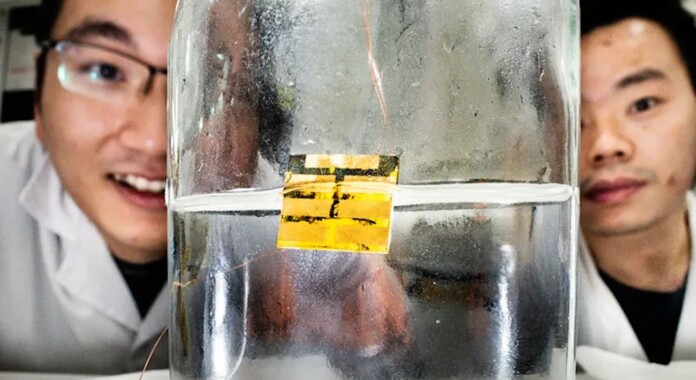
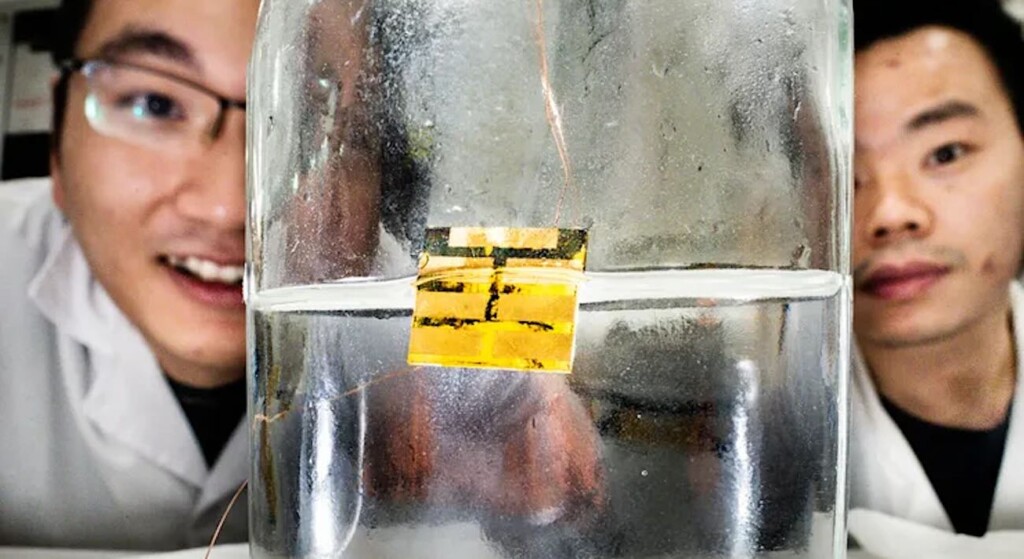
Xun Xiao and Niansheng Xu watch solar cell dissolving in water – Credit: Thor Balkhed
Xun Xiao and Niansheng Xu watch solar cell dissolving in water – Credit: Thor Balkhed
Solar is one of the best solutions to the growing demand for renewable green energy. However, while conventional solar panels contribute to clean energy production, their disposal presents several environmental challenges.
Now, a groundbreaking innovation may change that: researchers have developed a method to fully recycle modern solar panels using water as the main solvent, which would make it a truly sustainable energy.
The method from scientists at Linköping University in Sweden can recycle all parts of a modern solar cell repeatedly without environmentally hazardous solvents—and the recycled solar cell has the same efficiency as the original one.
The method works with one of the most promising technologies for next-generation solar cells: perovskite.
Perovskite solar cells are not only relatively inexpensive and easy to manufacture but also lightweight, flexible, and transparent. Thanks to these properties, they can be placed on many different surfaces, like windows. Also, they can convert up to 25 percent of the solar energy into electricity—comparable to today’s silicon solar cells.
However, silicon panels are at the end of their life cycle, which has created a landfill problem.
“There is currently no efficient technology to deal with the waste of silicon panels. That’s why old solar panels end up in the landfill,” says Xun Xiao, in the Department of Physics, Chemistry and Biology at Linköping University.
“We need to take recycling into consideration when developing emerging solar cell technologies,” said Feng Gao, a professor of optoelectronics at the same Swedish college.
“There are many companies that want to get perovskite solar cells on the market right now, but we’d like to avoid another landfill,” adds Niansheng Xu, postdoc at LiU. “In this project, we’ve developed a method where all parts can be reused in a new perovskite solar cell without compromising performance in the new one.”
Given that perovskite solar cells currently have a shorter life span than silicon solar cells, it is important that perovskite solar cell recycling is efficient and environmentally friendly. They also contain a small amount of lead, necessary for high efficiency, so this also must be addressed in a functioning recycling process.
Water as the solvent
There are already methods for dismantling perovskite solar cells. This mostly involves using a substance called dimethylformamide, a common ingredient in paint solvents. It is toxic, environmentally hazardous, and potentially carcinogenic. What the LiU team has done instead is develop a technology where water can be used as a solvent in dismantling the degraded perovskites.
And more importantly, high-quality perovskites can be recycled from the water solution used.
“We can recycle everything—covering glasses, electrodes, perovskite layers, and also the charge transport layer,” said Xun Xiao.
The next step for the researchers is to develop the method for larger scale use in an industrial process.
New research indicates that a natural compound found in the skin of grapes, blueberries and raspberries has the potential to improve female fertility, by improving the quantity and quality of egg cells.
The systematic review into resveratrol, which is a polyphenolic compound known for its anti-aging, anti-inflammatory, and antioxidant properties, is published in the International Journal of Molecular Sciences.
Researchers from Anglia Ruskin University (ARU), alongside colleagues from Italy, South Korea, and a Queen Elizabeth Hospital Foundation Trust, examined all previously published research on resveratrol’s effect on female reproductive health.
By collating and reviewing results from 24 in vitro and in vivo studies involving a total of 9,563 human participants, they found evidence to suggest resveratrol can improve the quantity and quality of egg cells, which are called oocytes.
Two of the studies specifically assessed the quality of matured oocytes and both reported an improvement among the women who took resveratrol. Four studies investigated resveratrol in connection with the quantity of matured oocytes, and two reported a notable increase in the number of egg cells, while the other two found no increase.
A possible explanation is that resveratrol reduces oxidative stress, helping to protect mitochondrial DNA from damage and enhance telomerase activity, to reduce cellular aging. Resveratrol also activates the molecule sirtuin 1 (SIRT1), which is typically reduced in aged oocytes, therefore the resveratrol may be slowing cell aging and extending ovarian lifespan.
The review also found evidence that resveratrol could potentially treat infertility associated with endometriosis, and have positive effects on polycystic ovary syndrome and obesity-related infertility, by inhibiting pathways involved in androgen production and reducing inflammation and oxidative stress.
“Our systematic review on resveratrol and female fertility is a comprehensive overview of all current research, and it highlights the compound’s potential to improve reproductive outcomes and possibly pave the way for new, less invasive treatments, using natural substances,” said Lee Smith, Professor of Public Health at ARU and senior author of the paper.
Resveratrol is generally considered safe when consumed in moderate amounts through diet and through supplements, in doses up to five grams per day for a month, but the safety of higher doses, particularly over long periods, remains untested.
There were mixed results from studies that looked at pregnancy rates among those taking resveratrol. Of the five studies, two reported an increase, two found no difference, and one indicated a decrease.
Although Prof. Smith characterized them as “promising results”, the team’s findings are based on a limited number of human studies, so they’re calling for further clinical trials to gather more robust data on dosage and side effects.
SHARE THIS PROMISING TIP With Families-to-be On Social Media…
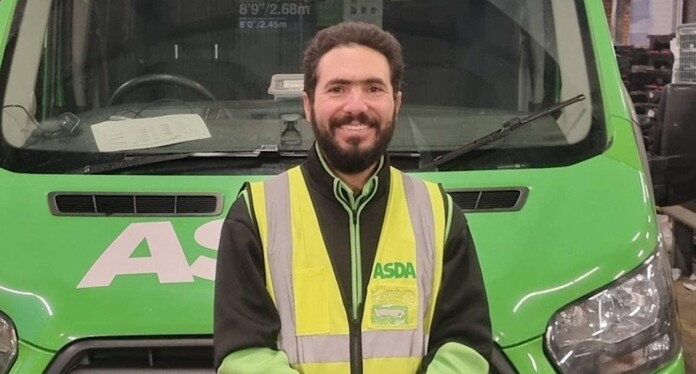
A British grocery store delivery driver saved a woman’s life after she didn’t answer the door and he got the feeling that “something was wrong”.
Leandro Pinto Dantas sensed there was a problem and decided to go back for another look in the window—and only then spotted her lying unconscious on the floor.
It was around 9:00pm in the coastal town of Poole in southern England when the driver for an Asda store arrived at his next delivery.
“Everything seemed normal,” said the 36-year-old. “The light was on and the TV was on. I knocked on the door but didn’t get an answer, so I called the contact number we had for the delivery but got no reply.
“I thought at first they must have gone out, so I looked in the window, but no one was coming.
He turned to go, but “something didn’t feel right.
“I believe God made me go back to the window. I pushed some branches away, so I could get a better look, and that’s when I saw the lady face down on the floor.”
He quickly called for an ambulance and paramedics were soon on the scene and gave the diabetic woman some glucose to raise her blood sugar.
Leandro wasn’t even scheduled to work that night, but he swapped shifts with another driver at the last minute.
“I think it was fate that I was called there that day,” Leandro told SWNS news agency. “I’m just happy that I was there and saved her.”
While she was being examined by emergency workers, Leandro put the lady’s groceries away. And a few days later he visited her home to see how she was doing and brought her some flowers.
The woman, in her 60s, was taken to the hospital with low blood pressure, but was discharged the next day. She was so grateful to Leandro that she wrote a letter to the local newspaper, the Bournemouth Daily Echo, to thank him.
“Leandro is such a wonderful chap,” she said. “I can’t thank him enough.
“He did a marvelous job… certainly going above and beyond what I would expect supermarket delivery drivers to do. He even came round later with flowers for me.”
The delivery driver has now been nominated for an Asda ‘Service Superstar’ award.
“We are so very proud of the way he handled the delivery,” said Heidi Mallinson, the store’s online trading manager. “And his instinct that something was amiss.”
“He truly is a hero and went totally above and beyond, which in turn probably saved the customer’s life.”
TELL FRIENDS TO LISTEN TO THEIR INSTINCTS By Sharing This Story on Social Media…
A new neuroimaging report says merely looking at nature can help ease how people experience pain by reducing the brain activity linked to pain perception.
It is well known to reduce feelings of anxiety and depression as well, and the report serves as a reminder of how much good the great outdoors can do for the heavily-medicated US population.
Published in the journal Nature Communications and led by a team from the University of Vienna and University of Exeter, the research offers a “promising foundation for new types of non-pharmacological pain treatments”.
“This study highlights how virtual encounters can bring the healing potential of nature to people when they can’t get outside,” Dr. Alex Smalley, a coauthor from the University of Exeter, explained at the release of the study.
“But we hope our results also serve as renewed evidence for the importance of protecting healthy and functioning natural environments, encouraging people to spend time in nature for the benefit of both the planet and people.”
“The fact that this pain-relieving effect can be achieved through a virtual nature exposure which is easy to administer has important practical implications for non-drug treatments, and opens new avenues for research to better understand how nature impacts our minds.”
Loch Lubnaig off the A84 north of Callander – credit SWNS
In the study, researchers monitored the brain activity of 49 participants in Austria, using an fMRI scanner, as they received pain delivered through a series of small electric shocks.
When they were watching videos of a natural scene compared to a city or an indoor office, participants not only reported feeling less pain, but scans showed the specific brain responses associated with processing pain changed too.
The study used advanced machine-learning to analyse the brain networks which are related to pain processing.
The team discovered that the raw sensory signals the brain receives when something hurts were reduced when watching a carefully designed, high quality, 5-minute, virtual nature scene. What’s more, when shown the five-minute video of the urban scene, it was also rated as a highly beautiful space, as it included (like the nature scene) a body of water disturbed by wind ripples, only surrounded by man-made elements like walls, chairs, and pathways rather than trees and hills.
This finding suggests that beauty or orderliness (the third, indoor scene was a perfectly ordered office space with the soundtrack of a fan and far away traffic) wasn’t a key factor in the pain reduction effect observed.
The study confirmed previous findings that suggest nature can reduce subjective reports of pain, and also marks the first clear demonstration of how natural environments influence the brain, helping to buffer against unpleasant experiences.
“Numerous studies have shown that people consistently report feeling less pain when exposed to nature,” said University of Vienna PhD student Max Steininger, the lead author of the study. “Yet until now, the underlying reasons for this effect were unclear.
“Our study is the first to provide evidence from brain scans that this isn’t just a placebo effect—driven by people’s beliefs and expectations that nature is good for them—instead, the brain is reacting less to information about where the pain is coming from and how intense it feels.”
“Our findings suggest that the pain-relieving effect of nature is genuine.”
The paper also helps shed light on a longstanding mystery of the healing potential of natural settings.
Over forty years ago, a seminal study from pioneering American researcher, Roger Ulrich, showed how hospital patients used fewer painkillers and recovered faster when their windows overlooked a green space instead of a brick wall.
Yet following decades of research, the mechanisms underlying this effect remained unknown.
The new findings provide the first “robust” explanation of why Ulrich’s patients might have experienced less pain, and demonstrate how virtual nature encounters could bring these benefits to anyone, anywhere—providing a non-invasive, accessible pathway to pain management.
SHARE This Remarkable Finding With Your Friends On Social Media…
Quote of the Day: “When you can’t control what’s happening, challenge yourself to control the way you respond to it. That’s where your power is.” – Lisa Nichols
Photo by: Federica Giacomazzi for Unsplash+
With a new inspirational quote every day, atop the perfect photo—collected and archived on our Quote of the Day page—why not bookmark GNN.org for a daily uplift?
$9 million in grants from Lowe’s is going to support 15 nonprofits dedicated to training the next generation of tradespeople to meet the growing demand for workers—fueled by rising wages and expanding job opportunities.
The grants support training programs focusing on carpentry and construction, HVAC, electrical, plumbing and appliance repair.
From Alaska to Mississippi, each organization is helping prepare new tradespeople to fill the dearth in the US workforce.
In construction alone, average hourly earnings have risen 4.4% over the past 12 months, according to Associated Builders and Contractors.
“We listen closely to contractors and know that many candidates don’t have the necessary skills to fill the wide range of open trades positions,” said Janice Dupré, a Lowe’s executive vice president and chair of the Lowe’s Foundation in a press release.
“Through modern training methods, these nonprofits are unlocking the workforce’s potential while building an economy that rewards skills, not just titles or four-year degrees.”
The Boys & Girls Clubs of America is one of the 15 nonprofits and will enhance their job readiness programs for youth ages 16-24 at three club locations—Hobe Sound, Florida, Madison, Wisconsin, and Seattle.
“This funding will directly bolster their efforts to equip young people with the skills needed to enter the workforce, particularly in the skilled trades,” said Jennifer Bateman, Senior Vice President of Youth Development from Boys & Girls Clubs of America. “It’s an investment in their future and the future of our community.”
The National Association of Home Builders says the grants are playing “a pivotal role in helping to strengthen the residential construction workforce”.
The Lowe’s Foundation Gable Grants have invested over $34 Million since 2023, backing scalable training programs in dozens of states.
The other 14 nonprofits include ReBuild Detroit, the Trade Institute of Pittsburgh, Uncommon Construction (in New Orleans), Hope Renovations (in Raleigh-Durham NC, the Latino Academy of Workforce Development (in Madison, Wisconsin), Next Step of West Michigan (in Grand Rapids), Nontraditional Employment for Women (in New York), the North Alabama Homebuilding Academy (in Huntsville), Alaska Works (in Anchorage), Moore Community House (in Biloxi, Mississippi).
PASS THE OPPORTUNITY to Youth Looking for Careers By Sharing On Social Media…
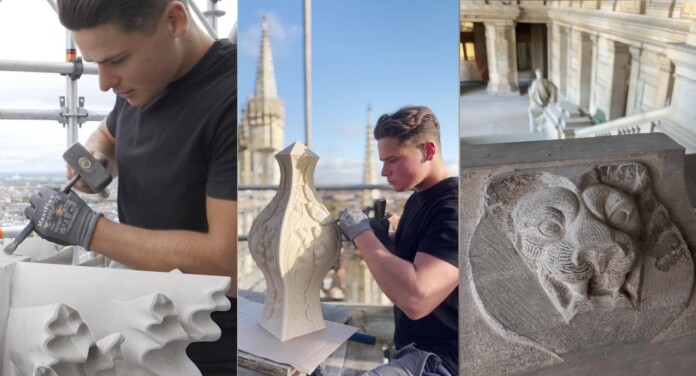
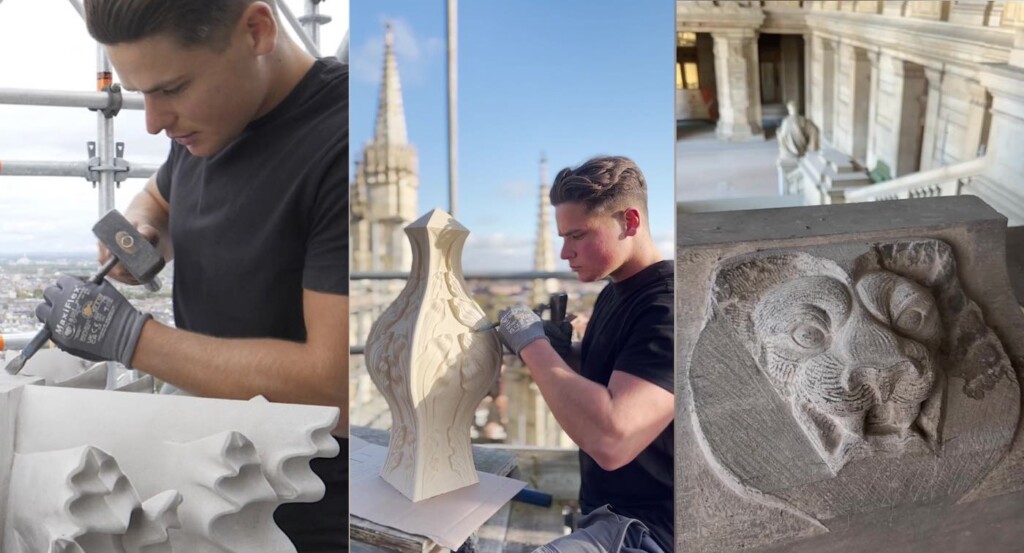
22-year-old stonemason Charlie Gee (photos via SWNS)
22-year-old stonemason Charlie Gee (photos via SWNS)
Meet the Gen Z stonemason who restores historical landmarks in Europe damaged during World War II.
Charlie Gee has followed in the footsteps of his father who is also a stonemason.
The 22-year-old specializes in cathedral masonry and has worked on iconic buildings, including the Cologne Cathedral in Germany and the Palace of Justice in Brussels, Belgium.
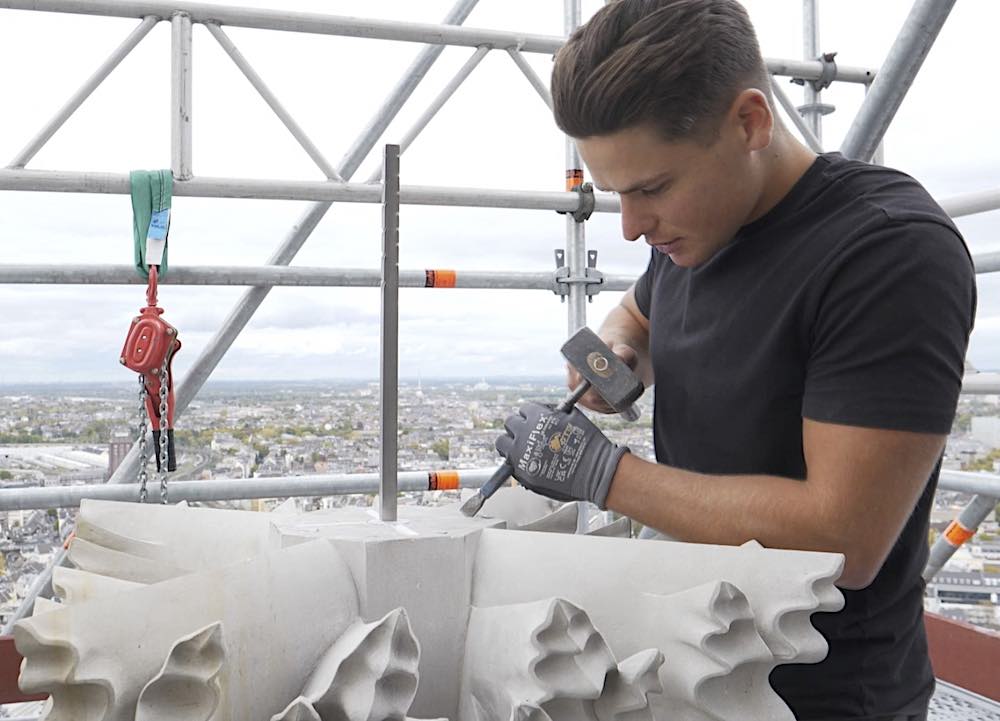
At the Cologne Cathedral, Charlie oversaw the completion of restoration on the final eight pinnacles atop one of the church’s spires.
He says it’s an “honor and privilege” to work on the historical sites, some of which date back as far as the 13th century.
“I feel incredibly lucky to be able to work on a building that is hopefully going to be there for centuries,” said the Englishman from Bath.
“Cologne Cathedral specifically has been on my bucket list and it’s been a great one to tick off. I was only there for two months but I hope to be returning for a longer period of work soon.
“It’s truly incredible,” Charlie told SWNS news agency. “I really feel the fact that I’m working on a piece of history when I’m at a cathedral like that.”
Gen Z stonemason Charlie Gee (via SWNS)
Watching his father Matthew Gee restore historic landmarks inspired him to follow in his footsteps and become a stonemason.
“When I was five years old, we actually moved from Bath to Tuscany for six years for my dad’s work.
“Living in Italy and seeing my dad work on churches out there inspired me to get involved in the same trade.”
The youth began his studies at Weymouth College at age 15 where he did a three-year stonemasonry course.
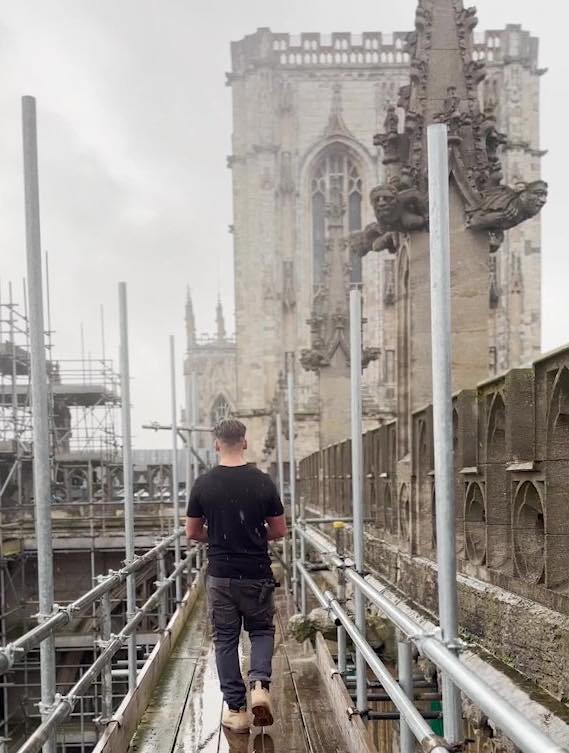
After that, he was accepted for a four-year apprenticeship at York Minster where apprentices work alongside masters while taking part-time classes at York College.
“It was a big deal for me. York Minster has the best cathedral stonemasonry training—as opposed to commercial stonemasonry—in England, and it’s really competitive to get an apprenticeship.
“The difference between commercial and cathedral stonemasonry is that commercial stonemasons use a lot more power tools and usually want to get the job done as quickly as possible.
“You can see in my videos that I’m always using a mallet and chisel, which is a lot more traditional.” (Watch below…)
Finishing his apprenticeship in late 2023, he has been self-employed ever since. Thanks to his training, he gained access to a global network of cathedrals seeking stonemasons.
He has also worked on the Cathedral of Santa Maria del Fiore in Florence, Italy, and the Cathedral and Metropolitical Church of Saint Peter in York—also known as York Minster.
Stonemasons all have a mark which they leave on stones they’ve crafted and Charlie’s is his initials CG. “It’s so special to think your mark is on such an important landmark.
“I hope to bring my future kids one day and be able to point up and tell them that’s my work up there—just like I had with my dad growing up.”
Charlie hopes his videos can get younger people interested in the trade again, like his sister is now. Check out his in-spire-ing work on Instagram and on his YouTube channel.
“There doesn’t seem to be much interest from the younger generation in stonemasonry. I can understand why, because it’s a lot of hard work and training, and each job takes a lot of time and care.
“But I hope that if people see how amazing it is to be working on these sites, they’re more likely to consider it.” (WATCH his videos below via SWNS…)
SHARE THE CAREER IDEA With Young People On Social Media…