Quote of the Day: “Earth provides enough to satisfy everyone’s needs, but not everyone’s greed.” – Mahatma Gandhi (Happy Earth Day!)
Photo by: Harrison Schmitt aboard NASA’s Apollo 17
With a new inspirational quote every day, atop the perfect photo—collected and archived on our Quote of the Day page—why not bookmark GNN.org for a daily uplift?
Today is the 56th anniversary of Earth Day. Created at a time when water and air pollution were out of control—20 million Americans in colleges, schools, and communities observed the first Earth Day. READ how it came about… (1970)
The movement’s leader, Sen. Gaylord Nelson, directly credited this outpouring of public support for persuading US politicians that environmental issues had a voting constituency. Within two years, the country saw passage of the Clean Air Act, the Clean Water Act, the establishment of the EPA, the ban on DDT, and the reduction of lead from paint. The holiday is now celebrated annually around the globe.
MORE Good News on this Day:
The Oklahoma Land Rush began at noon as thousands of homesteaders staked claims (1889)
Happy 75th Birthday to British-American rock legend Peter Frampton, known for his double LIVE LP Frampton Comes Alive, and the hit, Show Me The Way (1950)
Pink Floyd‘s legendary album, Dark Side Of The Moon, set the record for total consecutive weeks on the Billboard 200– 741 weeks over 14 years (1988)
Japan‘s Prime Minister Junichiro Koizumi apologized for Japan’s war record (2005)
Sudan banned female genital mutation and made it a crime (2020)
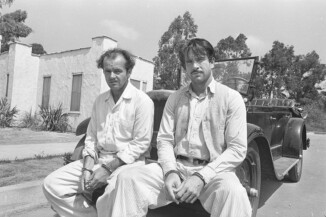
Happy Birthday to Jack Nicholson who turns 89 years old today. Born in New Jersey, the actor has excelled in genres from satirical comedy to romance to dark portrayals of antiheroes and psychopaths. Working in Hollywood for more than 60 years, he has played the “eternal outsider, the sardonic drifter,” the rebels against social structure – and his 12 Academy Award nominations make him the most nominated male actor in the Academy’s history. Only he and Michael Kaine have been Oscar-nominated in every decade since the 60s.
Jack Nicholson and Warren Beaty (right) in 1975 – credit Larry Bessel, Los Angeles Times, CC BY-SA 4.0.
Among his many memorable performances, including the colonel in A Few Good Men, Nicholson won the Oscar twice, for the 1975 drama One Flew Over the Cuckoo’s Nest and in 1997 for the romantic comedy As Good as It Gets. He also was named Best Supporting Actor in 1983 for Terms of Endearment. His talent in acting is nearly legendary, and multiple directors have gone out of their way to express this.
“Jack is particularly suited for roles that require intelligence. He is an intelligent and literate man, and these are almost impossible to act. In The Shining you believe he’s a writer, failed or otherwise,”—Stanley Kubrick.
“He’s what the Thirties and Forties stars were like. He can come on the set and deliver, without any fuss, without taking a long time walking around getting into it. “What do you want? Okay.” And he just does it straight off. And then if you want him to do it another way on the next take, he can adapt to that too,”—Tony Richardson.
“There is James Cagney, Spencer Tracy, Humphrey Bogart, and Henry Fonda. After that, who is there but Jack Nicholson?”—Mike Nichols. (1937)
302 years ago today, Enlightenment philosopher Immanuel Kant was born in Prussia. This revolutionary thinker saw rationality as inseparable from morality, and Kant’s formulation of humanity, in his famous “categorical imperative,” states that as an end in itself, humans are required never to treat others merely as a means to an end, but always as ends in themselves.
Immanuel Kant – by Jean-Marc Nattier
The tremendous influence of Kant’s moral thought is evident both in the breadth of appropriations and criticisms it has inspired and in the many real-world contexts in which it has found application.
One of his most famous pen strokes outlined in The Groundwork for the Metaphysics of Morals that one should “act only in accordance with that maxim through which you can at the same time will that it become a universal law.”
Kant believed that morality is the objective law of reason: just as objective physical laws necessitate physical actions (e.g., apples fall down because of gravity), objective rational laws necessitate rational actions. He thus believed that a perfectly rational being must also be perfectly moral, because a perfectly rational being subjectively finds it necessary to do what is rationally necessary. (1724)
104 years ago, Charles Mingus Jr., one of the greatest American jazz band leaders ever, was born in Arizona. Mingus played the double bass and piano, and composed in a soulful center of hard bop jazz surrounded by influences of gospel, blues, free jazz, and classical music. He was also an extreme man, and wielded a fearsome temper.
By the end of his twenties, he had already performed with Louis Armstrong and Charlie Parker, the latter influencing him enormously with his improvisation. His biggest influence was Duke Ellington, and Dizzy Gillespie commented that Mingus was very similar to a “young Duke.”
Charles Mingus, playing at the Bi-Centennial, in Lower Manhattan – CC 3.0. Tom Marcello
As a composer, Mingus released 55 albums, with another two dozen or more as a bass player, an instrument on which he is credited as one of the finest ever to play. None is more stunning than Epitaph, a work so long and complex he called it as such, and declared it was written “for my tombstone.” Wynton Marseilles, noticing a trumpet section, remarked that it looked like something purposely written for an advanced music studies book.
It’s 4,235 measures long, takes more than two hours to perform, and was only completely discovered during the cataloging process after his death. With the help of a grant from the Ford Foundation. Indeed it was first performed 10 years after Mingus’ death, but was a critical triumph.
Epitaph wasn’t the only uncovered gem in Mingus’ collection. In 1993, the Library of Congress acquired Mingus’s collected papers—including scores, sound recordings, correspondences, and photos—in what they described as “the most important acquisition of a manuscript collection relating to jazz in the Library’s history”. (1922)
35 years ago today, the Dave Matthews Band played their first–ever live concert when they appeared at the Earth Day festival in Charlottesville, Virginia.
The South-African-born guitarist/singer-songwriter was bartending at Miller’s bar when he was ‘blown away” by jazz musician LeRoi Moore on saxophone, and approached him, along with local drummer Carter Beauford (left), to record some demo tracks.
DMB’s 1994 debut studio album, Under the Table and Dreaming, brought Matthews and his four bandmates worldwide fame; the LP was eventually certified 6x platinum. The jazzy, melodic jam band later launched their own indie label, Bama Rags, and went on to sell more tickets and earn more money during 2000-2010 than any other act in North America—no kidding. Their 2018 album, Come Tomorrow, debuted at No. 1 on the Billboard 200, making DMB the first band to have seven consecutive studio albums debut on top. WATCH their music-video performance of Satellite, and check out their charity work… (1991)
– Photo shows DMB violinist and backing vocalist Boyd Tinsley with Matthews (right) and Beauford.
The band’s Bama Works Fund established in 1999, has raised over $52 million to support charities and NGOs, handing out over 2000 grants to local and international nonprofits. Matthews has also supported Farm Aid by performing at their annually concerts and serving on the Board of Directors.
During the pandemic, Dave has been performing in his house, streaming the acoustic shows live on various channels, and is featured on SiriusXM (the DMB channel) with his new Live From Home: By Request series.
Also, 56 years ago today, British yachtsman Robin Knox-Johnston became the first sailor to circumnavigate the globe non-stop and single-handedly.
He launched his solo voyage from the British Isles at age 29, in a 32-ft (9.8m) ketch. Despite losing his self-steering gear off Australia, he rounded Cape Horn and several months later arrived back in Falmouth, completing the trip in 312 days. He authored several books and completed his second solo circumnavigation in 2007 at age 68—and is still sailing (and won a trophy at age 75) from his home base in London.
The spark for the idea was a British newspaper announcing a trophy and prize money to the first person who could do it. Nine men set off in the first Golden Globe race—but only this former Navy man completed it, and he was knighted for the accomplishment. Such round-the-world races became a popular adventure sport. “The challenge is just as stiff as it was in my time; the only difference is they know it can be done.” Visithis website to learn more, and WATCH a video about the voyage… (1969)
More than 25,000 books are on the way into the hands of underserved residents across New York City and Long Island.
They’ll be distributed across the boroughs by Book Fairies a nonprofit that since 2012 has donated 6 million books to Title I schools, educators, and community partners.
The donations come via the world’s largest online retailer of used books, ThriftBooks, which teamed up with the Book Fairies which hosts large-scale distribution events where community leaders and educators can go and get books that might otherwise be beyond budget.
25,000 books is a lot of weight, and on the ground at the Book Fairies central receiving and sorting area, it’s hard work dividing them between reading level and eventual destination. Volunteers sort the received books before using pallet jacks to move them around in large boxes.
Dan Schwartzberg, who works in media relations for the 4Media group which managed the press for the ThriftBooks donation, told GNN that he visited one of Book Fairies’ free book events and saw the impact of the organization first hand.
“They told me a story where a teacher grabbed a stack of books on the table and started crying because she asked for $150 from the school to buy these particular books for her kids and was denied but found them at Book Fairies for free,” Schwartzberg said.
“Book Fairies has an incredible track record of getting books into the hands of children and families,” said Barbara Hagen, Vice President of Sales and Marketing for ThriftBooks.
“ThriftBooks is about more than just selling books, we’re focused on saving them and sharing them, and making sure that reading is something everyone has access to. Partnering with Book Fairies allows us to really turn that mission into action and opens up a life of books for so many children and their families.”
Courtney Collins, Associate Executive Director for Book Fairies said that last year the organization was 28,000 books short of requests from various partners and schools, and that a gift of this size will have an incredible impact.
“That’s 25,000 opportunities to provide what we otherwise would not have been able to provide, so it’s going to change so many lives,” Collins said, noting that inadequate access to books is the number one cause of delayed child literacy.
SHARE This Fantastic Opportunity To Fulfill Children’s Literacy Needs…
Flags planted on the National Mall for every colorectal cancer diagnoses expected that year - credit, Sdkb - Own work, CC BY-SA 4.0
Flags planted on the National Mall for every colorectal cancer diagnoses expected that year – credit, Sdkb – Own work, CC BY-SA 4.0
A small but substantial tweak to the treatment regime of bowel cancer demonstrated remarkable improvements in survival almost 3 years after surgery.
Changing the kind of drug and the delivery window showed substantial improvements over the previous pairing, and build on earlier results showing that the drug led to major tumor shrinkage in patients with stage 2 or 3 bowel cancer.
These latest findings, to be presented at the American Association for Cancer Research (AACR) Annual Meeting 2026 in April, make up the results from the NEOPRISM-CRC clinical trial led by a team from University College London and UCL Hospital.
Patients were treated with a short course of the immunotherapy drug pembrolizumab before surgery instead chemotherapy after surgery. Initial results indicated that 59% of patients had no signs of disease after treatment with pembrolizumab and their operation.
Now 33 months later, none of the treated patients have experienced a return of their cancer. This includes those who had no signs of cancer after treatment and those who still had small amounts remaining, which did not grow or spread during follow-up.
“Seeing that no patients have experienced a cancer recurrence after almost three years of follow-up is extremely encouraging and strengthens our confidence that pembrolizumab is a safe and highly effective treatment to improve outcomes in patients with high-risk bowel cancers,” said Dr. Kai-Keen Shiu, Chief Investigator of the trial from UCL Cancer Institute and a Consultant Medical Oncologist at UCLH.
It’s expected that around 25% of patients who have the standard surgery and post-op chemotherapy will relapse after 3 years, but this study suggests that a short course of immunotherapy before surgery can provide more durable, long-lasting cancer control for this type of high-risk bowel cancer.
Alongside the survival data, researchers analyzed blood samples to better understand why the treatment is so effective and how to identify those most likely to benefit. They designed personalized blood tests that can show early on whether the treatment had worked and whether any cancer was still present in the bloodstream.
“What is particularly exciting is that we now may be able to predict who will respond to the treatment using personalized blood tests and immune profiling,” Dr. Shiu added. “These tools could help us tailor our approach, identifying patients who are doing well and may need less therapy before and after surgery versus patients at higher risk of disease progression or relapse who need additional treatment.”
Bowel cancer is the fourth most common cancer in the UK, with around 44,000 cases a year. In the United States, bowel cancer (also referred to as colorectal cancer) is the third most common cancer diagnosis and the second leading cause of cancer-related death for both men and women. For adults under 50, it is now the number one cause of cancer-related mortality.
Like many cancers, if bowel cancer is caught early, the chances of a positive outcome are high. 9 in 10 patients treated for stage 1 bowel cancer survive for 5 years or more, but specific sub-types of tumors don’t respond as well to treatment and are more likely to return. Five-year survival falls to 65% in stage 3 and 10% in stage 4 bowel cancer.
The NEOPRISM-CRC trial saw 32 patients recruited with stage 2 or 3 bowel cancer and a certain genetic profile (MMR deficient/MSI-high bowel cancer) borne by around 10% to 15% of bowel cancer patients from 5 hospitals around the UK.
Patients were given up to 9 weeks of pembrolizumab prior to bowel surgery, instead of the usual treatment of surgery followed by 3 to 6 months of chemotherapy, then monitored over time.
“As a research team, we were thrilled to be able to follow patients very closely using the personalized blood tests,” stated Yanrong Jiang, first author of the latest abstract and clinical PhD student at the UCL Cancer Institute. “When tumor DNA disappeared from the blood, patients were much more likely to have no cancer remaining, and this matched the long-term results we’re now seeing.”
“In addition, we also saw that immune profiling from tumour tissue, before patients start their first cycle of treatment, can help to predict response. We hope these tests may be used to guide treatment decisions in a more practical and timely way.”
73-year-old Christopher Burston said that 3 years after his treatment, he’s returned to normal activities while attending regular follow-up appointments.
“The recovery went fine. I didn’t have any problems. And since then, I’ve been feeling pretty much back to normal. I feel very lucky that I’ve reached the stage where my main problem is age rather than cancer or any illness,” he said.
SHARE These Groundbreaking Trial Results With Your Friends…
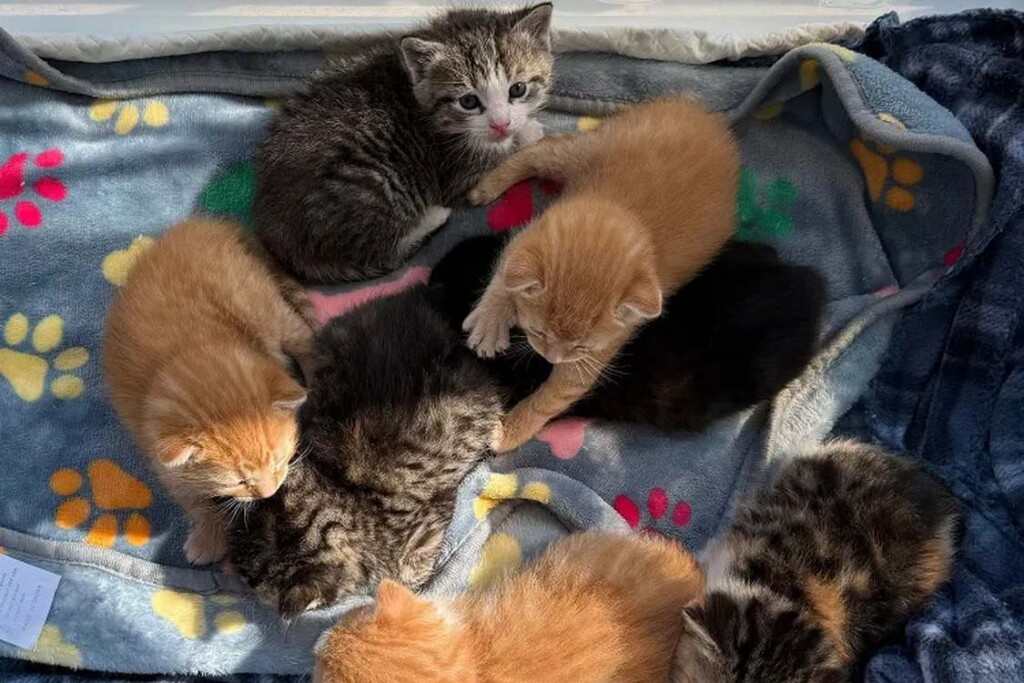
Employees at a Lowe’s in Pennsylvania were shocked after they went to retrieve a pallet high on a shelf and heard a chorus of frightened mewling.
Atop the boxes the pallet held, they discovered 7 kittens across two litters.
The store in Downingtown called Lucky Dawg Rescue shelter and explained their predicament.
Lisa Newton from the shelter received the call, and went down with her cat carrier to investigate.
“They directed me to the Garden Center and said they have 7 kittens, and I was surprised at that. And, they said, ‘two separate litters,'” Newton said to WPVI News.
“They had to get the forklift and go up and get them. One of the litters, you could tell that’s where the mom had delivered them.”
One can only imagine what a strange life it must have seemed for the little creatures as they opened their eyes—the whole world being confined to the box tops on the rectangular shelf, surrounded by a lethal drop to the floor below where strange, bipedal giants routinely chattered and walked about.
The store employees say two female stray cats frequent the Garden Center, and obviously liked it enough to have their litters there. Newton has since heard that the two cats are still around, so Lucky Dawg is planning to return and capture them for neutering.
As for the kittens, Forklift, Herb, Pallet, Planter, Grass, Lowe, and Rose will be available for adoption soon on the shelter’s website.
WATCH the story below from ABC 6…
MEW About This Tiny Timely Rescue With Your Friends Who Love Cats…
Fatou, 69, celebrating her birthday - credit, released as a courtesy from the Berlin Zoo
Fatou, 69, celebrating her birthday – credit, released as a courtesy from the Berlin Zoo
On April 13th, the world’s oldest gorilla celebrated her birthday with a vegetable feast at the Berlin Zoo.
Named Fatou, no one knows how she was taken from her home in Africa, but one story says she was brought to France by a sailor who later had to sell her to settle a bar debt.
The western lowland gorilla eventually arrived in Berlin via a French animal trader, and has far outlived any known member of her species from the wild.
The Berlin zoo cannot confirm the tale, but say that she did arrive in West Berlin Zoo in 1959 at the age of 2. Zookeepers naturally have no idea when she was born, but they picked April 13th as her birthday, and invited the Guinness World Records who recognized her as the world’s oldest gorilla.
“Fatou looks at you and looks right into your soul,” said Philine Hachmeister, a spokesperson for Zoo Berlin. “She has this dignity. She looks at you, and it’s like looking at your grandma. That’s what I’m thinking every time I go past her.”
Fatou, 2, arriving in West Berlin – credit, released as a courtesy from the Berlin Zoo
She has more in common with a grandmother than just her demeanor. She doesn’t move very fast anymore, and suffers from a mixture of age-related maladies. Her eyesight is poor, she has arthritis, and she has to be careful about her blood sugar. This, unfortunately, precludes the routine eating of raspberries and blueberries which were her favorite food.
Her teeth have mostly fallen out, so zookeepers must cook the majority of her food to make it easier for her to eat.
Compared to the more famous mountain gorilla, the western lowland gorilla is smaller, weighing between 150 and 300 pounds. They still live in large family groups, and are mostly peaceful creatures with incredible social sensitivity, mourning the loss of family members and taking care of their most vulnerable.
“I always say that they reflect some of the best things that we love most about our own species,” Tara Stoinski, president of the Dian Fossey Gorilla Fund, told the Washington Post.
SHARE This Story Of How Aging Gracefully Isn’t Confined To Humans…
Quote of the Day: “The sea doesn’t reward those who are too anxious or too impatient.” – Mark Doty, poet
Photo by: Aaron Burden
With a new inspirational quote every day, atop the perfect photo—collected and archived on our Quote of the Day page—why not bookmark GNN.org for a daily uplift?
Ethiopian Empire flag, commonly used in Rastafari iconography.
60 years ago marked the first Groundation Day, now celebrated every year on April 21st, when hundreds of thousands of Rastafari celebrate the arrival of Emperor Haile Selassie in Jamaica in 1966. The great significance of this event in the development of the Rastafari religion is that, having been outcasts in society, its adherents gained a measure of respectability for the first time. With Rasta having become acceptable, reggae music became commercially viable, leading in turn to the further global spread of Rastafarianism. READ what the Marleys thought… (1966)
A digital rendering of the walls of Pompeii and a possible polybolos - credit, Veronica Casadei with Lumion Pro Student 2024.
A digital rendering of the walls of Pompeii and a possible polybolos – credit, Veronica Casadei with Lumion Pro Student 2024.
2,100 years ago, famed Roman general and one-time dictator Lucius Cornelius Sulla laid siege to a rebellious Pompeii during a lesser-known conflict called the Social War.
On the day, Sulla brought along a special form of artillery. The contraption could fire multiple projectiles without needing either to reload or reengage the firing mechanism; in order words, it was the precursor to a machine gun.
Called the “polybolos,” meaning multiple launcher, Sulla’s artillery was something written about in prior Byzantine chronicles, but has never been confirmed to exit through archaeological evidence.
It was apparently designed by the Greek, Dionysius of Alexandria.
Recently, a team from the University of Campania in Italy, led by researcher Adriana Rossi, identified impacts on the city walls made by a large and powerful projectile. The quadrangular holes identified at two sites were identical to each other and closely spaced.
To press the gun metaphors further, Rossi and her team had found the Roman artillery officer’s “groupings.”
Published in the journal Heritage, the study brings together ballistics science and engineering with historical primary sources and intelligent software to reconstruct various impact scenarios. The result is a comprehensive analysis of what could be the first-ever evidence of the polybolos’ existence.
“The indentations—clearly of anthropic origin by number and morphology—bear no resemblance to the circular marks caused by spheroidal projectiles launched by ballistae or skilled slingers,” the authors wrote.
– credit Silvia Bertacchi CC 4.0. Int.– credit Silvia Bertacchi licensed via CC 4.0. Int.
Ballistae used their large, horizontally-bowed arms drawn back by a cord to launch large stones to batter city walls and gates. The polybolos was not so much a siege engine as an anti-personnel weapon. Hypothetical drawings of the device make it appear to be a large stationary bow that shot heavy iron darts capable of piercing wooden barricades and shields.
“The artillery deployed during the assault was primarily intended for anti-personnel purposes, targeting defenders positioned along the ramparts and between the merlons, rather than to demolish the fortifications themselves,” the authors wrote.
SHARE This Amazing Discovery And Unique Insight Into Medieval Weaponry…
7th Avenue in Ybor City – credit, Joe Giannotti CC BY-SA 3.0.
Local but lovely, a historic street in a Florida town is getting a new-old makeover, that will restore the oldie charm and reduce traffic risk for pedestrians.
The key to clearing both these hurdles in one leap is the recently-commenced re-bricking of 7th Avenue in Ybor City, near Tampa Bay, where contractors have sourced some 60,000 bricks made with local clay for the job.
Brick streets are common all over the world; less so in the US. But along with adding a touch of the rustic to any street scene, they act like automatic speed traps, because as anyone who’s ever driven on one knows, it sends a tremendous racket and vibration through the car.
7th Avenue was lined with bricks for decades until they were replaced by asphalt in the 1960s. Local business and community leaders said they had been pushing for this change for 10 years as part of a way to make the area safer and encourage more people to visit downtown Ybor.
Ybor was founded in 1886 by cigar manufacturers and populated almost entirely by immigrants from Cuba, Italy, and Spain.
The bricks to be used were made as far back as 100 years ago, and crews will lay each one by hand before leveling the road the ensure it’s accessible for scooters and cyclists.
The project was slated to begin on April 16th and finish in early May, while all shops and sidewalks will remain open.
WATCH the story below from WFLA 8…
Have You Ever Been To Ybor? SHARE This Story Of A Cool Day Trip With Your Friends…
A jury recently decided unanimously that Live Nation and its subsidiary Ticketmaster were operating as a monopoly, and that this had led to exploitative pricing and promotional contracts with venues.
Rolling Stone magazine called it a “landmark decision,” and while fans and concertgoers shouldn’t expect ticket prices to go down anytime soon, it could usher in enormous changes to the live music and events industry for years to come.
Originally sued by the DoJ along with 30 states plus DC for violating antitrust laws in 2024, the jury heard testimony from witnesses who said that Live Nation threatened to withhold promotional contracts from venues that didn’t also agree to use Ticketmaster exclusively as their ticket broker.
American antitrust laws are only invoked against large companies if there is this kind of evidence: that a firm with dominant market share is doing something other than providing superior products at attractive prices to push out competitor firms.
Live Nation’s attorneys argued that the firm had done just this in reaching its dominant position, but the federal jury in Manhattan ruled 10-0 against them. The jury also found that Live Nation has violated a bevy of antitrust laws within the co-plaintiff states.
Another major finding was that of overcharging for tickets. It’s not news to report that Americans using Ticketmaster are often shocked to reach the checkout page only to find the famously galling service fees tacked onto the end of the transaction.
“You think it’s gonna be a certain price on the website and then you get to the end at check out and it’s just so much more from the fees,” regular concertgoer Mikey White, a University of Utah Junior, told Fox 13 after he heard about the decision.
The jury agreed with an assessment that these service fees amounted to an average “overcharge” of around $1.72 per ticket across all venues and all events. That figure is crucial as it will be a component in calculating any future damages the firm may owe.
For now, Live Nation has promised it will appeal on several grounds, including an objection with one of the expert witnesses, who it believes was called unfairly.
Judge Arun Subramanian will decide remediations at a second set of trial dates in the future. Along with these, there will inevitably be the question of divestment, or even the rare order to break up Live Nation.
SHARE This Reminder That Antitrust Can Work With Your Friends…
40 years ago today, Vladimir Horowitz, one of the world’s greatest pianists, returned to his Russian homeland, after 61 years away, to perform for an emotional audience in his hometown of Moscow. At the age of 82, Horowitz gave one of the most emotionally astonishing and riveting performances of his life. READ about the events of the night…(1986)
Quote of the Day: “A good friend is like a four-leaf clover, hard to find and lucky to have.” – Irish Proverb
Photo by: TOMOKO UJI
With a new inspirational quote every day, atop the perfect photo—collected and archived on our Quote of the Day page—why not bookmark GNN.org for a daily uplift?
A juvenile brown booby - Tommy Hall, supplied by Island Conservation
A juvenile brown booby – Tommy Hall, supplied by Island Conservation
For most people, Wake Atoll will remind them of a battle, not an island. Well now, 81 years later, another battle has been fought—and won—on Wake: against invasive rats damaging the island ecosystem.
Wake Atoll is today an unincorporated territory of the United States, and it’s experiencing a cascade of positive ecological, infrastructural, and human health and safety-related changes thanks to the successful eradication of these rats.
A scourge of the high seas as mean as Black Beard, the quick breeding, opportunistic rats have degraded island ecosystems all over the Pacific.
But a multi-agency collaboration by the nonprofit Island Conservation, the United States Department of Agriculture (USDA), and the United States Air Force Civil Engineering Squadron have successfully defeated the rats, and restored the local environment to its endemic state.
“We’re astonished—and thrilled—at the results of this work,” said Tommy Hall, Project Manager at Island Conservation. Hall, and this project, recently earned recognition from the US Undersecretary of Agriculture for its astounding success, highlighting its importance as a model for collaborative conservation.
“These benefits will strengthen the island’s ecosystem, but they’ll also help Wake’s inhabitants thrive, now that we’ve removed the threat to important infrastructure, making food and water safe from contamination.”
16 species of nesting native birds are reappearing and increasing in number without invasive rodents devouring their eggs and young. A newly discovered Bonin Petrel (or Nunulu in Hawaiian) colony marks the first documented nesting of this species on Wake Atoll, while the atoll’s globally significant population of Sooty Terns enjoyed a record-breaking breeding season.
Other native seabirds—including Laysan albatross, wedge-tailed and Christmas shearwater, black-footed albatross, red-footed booby, and red-tailed tropicbird—are also showing early signs of increased nesting activity and improved reproductive success.
Beyond seabirds, populations of geckos, skinks, spiders, moths, and hermit crabs have surged—all indicators of a healthy, recovering ecosystem. And the island’s vegetation is rebounding dramatically, with thousands of new native Pisonia tree seedlings emerging where none were previously seen.
Together, these responses underscore the rapid and far-reaching ecosystem improvements that can follow sustained conservation action.
“The rats consumed virtually all of the Pisonia seed—I had never seen a seedling before the rat eradication. Now there are hundreds, if not thousands, of Pisonia seedlings,” said John Gilardi, an ornithologist working with Island Conservation.
Personnel stationed on Wake Atoll are also benefiting from the island’s renewal. With the island free of invasive rats, the risk of disease transmission is significantly reduced, and critical infrastructure—including food-prep facilities, equipment storage, and living quarters—is now cleaner, safer, and more secure.
Inspired by the island’s recovery, several individuals among the military personnel there have organized beach cleanups and other conservation activities.
Island Conservation is one of the most successful conservation organizations on Earth, and GNN follows their activities closely. Their teams have successfully removed invasive species on some 70 islands worldwide, and in doing so, have permitted hundreds of native species to return to often the only places in the world they call home.
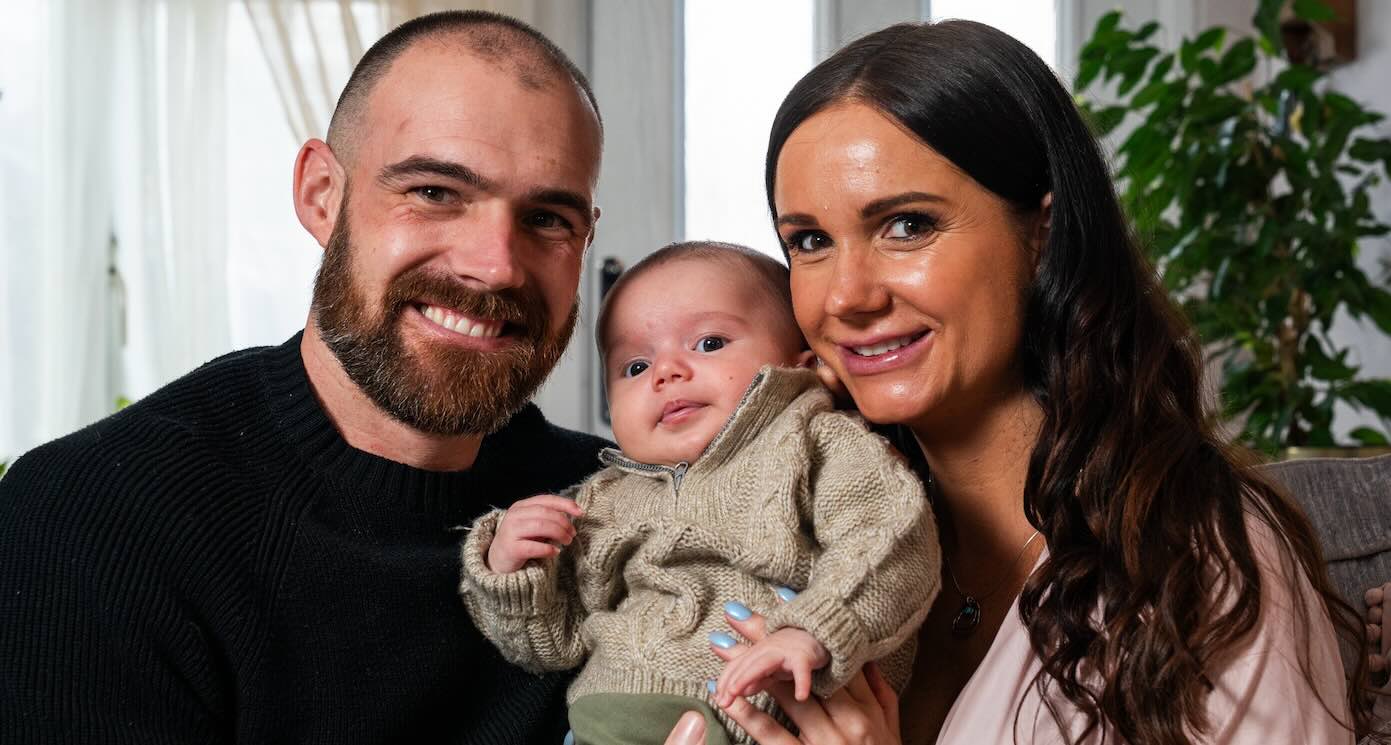
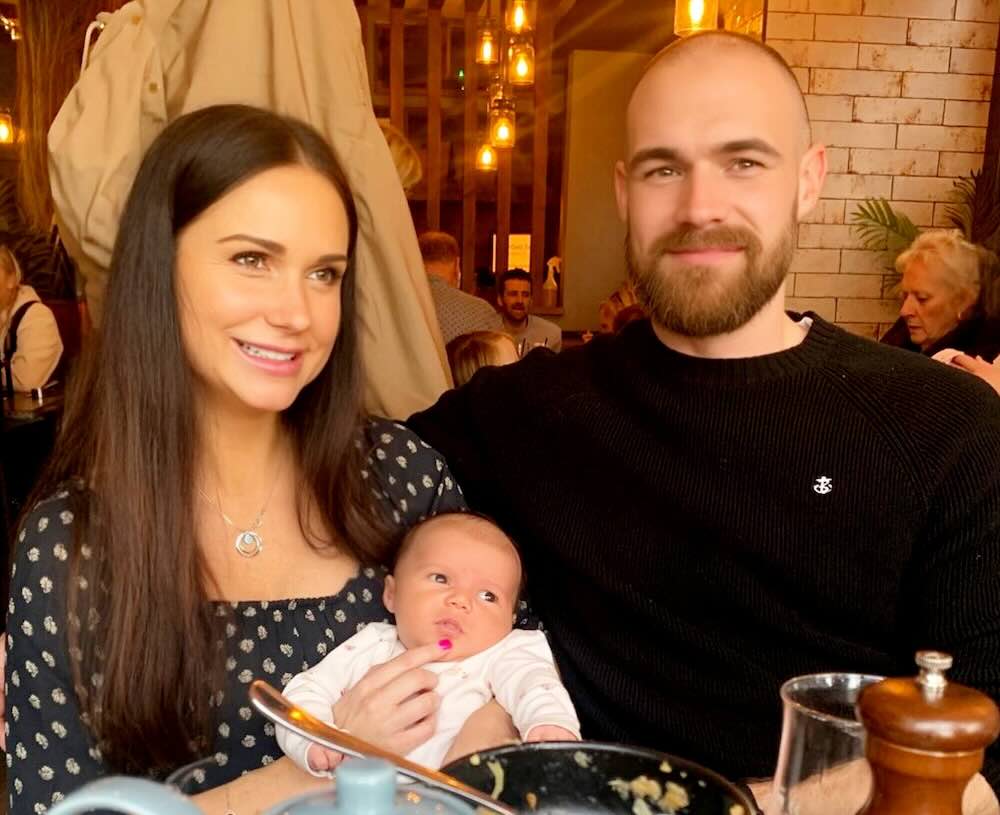
Adam Rice and Natalie Le Prevost with baby Zavi – SWNS
Adam Rice and Natalie Le Prevost with baby Zavi – SWNS
A nurse who gave up on dating decided to pay for IVF treatment to have a baby on her own, before meeting her soulmate four months later—who became a devoted father.
The 39-year-old always dreamed she’d be married by age 30 and have a big family—but after a failed engagement and six years of unsuccessful dating she still hadn’t found her match.
Desperate to become a mother, Natalie Le Prevost decided to go it alone and paid thousands to undergo IVF in Spain, and got pregnant after her first IVF attempt.
More luck came her way at three months pregnant when she unexpectedly met Adam Rice—and the couple really hit it off.
“I had given up on love. I didn’t want to settle for something that didn’t feel right,” said the new mom from Devon, England.
“There was no chemistry,” she told Talk To The Press. “I gave up on love and just decided to go it alone.”
“I’m strong and independent and this was my life-long dream. Everything I’ve always wanted has fallen into place.”
Natalie had her first round of IVF in March 2025, and with the support of her parents welcomed her little boy Zavi-Emilio on Christmas Eve.
“I was on cloud nine,” she said. “I loved being pregnant.
SWNS
Then, while she was four months pregnant, she went on a date with Adam, the electrician in the senior care home where she worked. From their first, she knew instantly that he was her soulmate.
Adam fully supported Natalie’s dream to be a mother, and even came to the hospital just after Zavi’s birth.
“I feel so lucky. Zavi is my little miracle. It’s amazing.”
The trio see each other five nights a week now.
“We’re soulmates. No relationship has felt like this before. We’re even born two-days apart.”
Adam found out Natalie was pregnant half way through our first date.
“I was surprised, but her honesty, her strength, the quiet courage in the way she told me, made me want to stay.
“With every date I felt myself falling for her more deeply.
“Watching her bump grow felt incredibly special, like I was witnessing the beginning of a story I somehow already belonged in.
“The first time I met Zavi, everything inside me just settled; I felt calm, steady and certain. I knew in that moment I was meant to be in his life.
“She was brave enough to choose motherhood on her own, strong enough to follow her heart without waiting for the “right” circumstances. And somehow, life brought us together anyway.
“She thought she would be doing this alone, but she won’t be. I feel unbelievably lucky to love them both.”
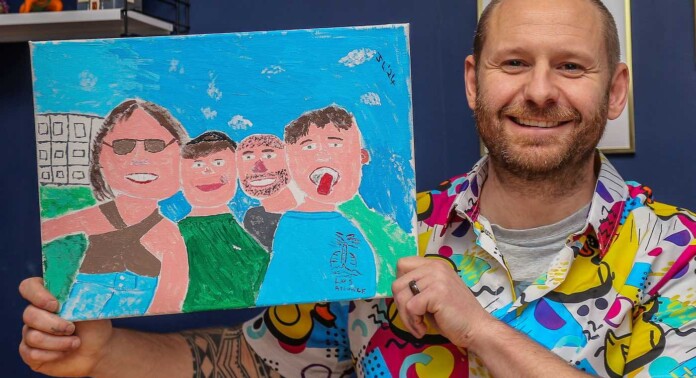
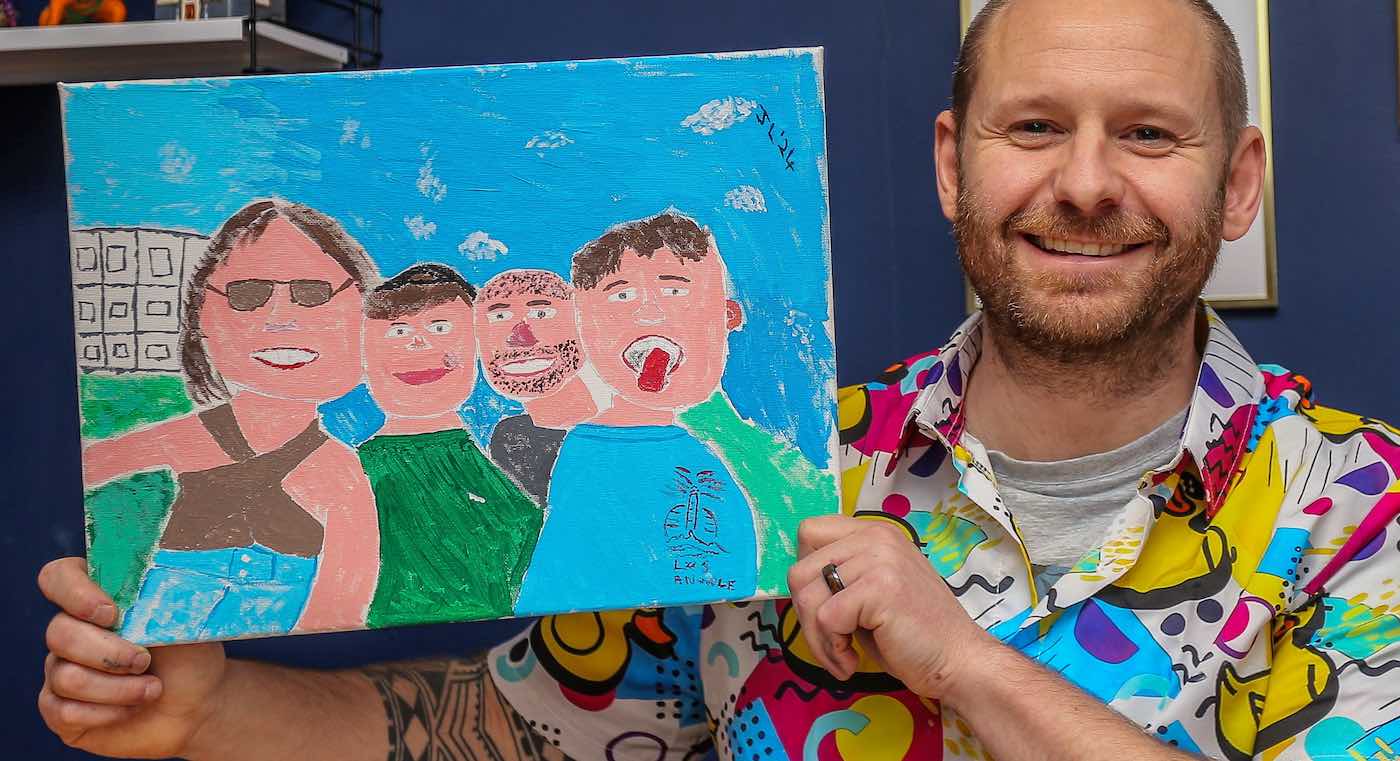
In an update from a GNN story 15 months ago, this ‘hilariously bad’ artist has raked in thousands from his ‘dad paintings’, after receiving more than 430 commissions from around the world.
The 42-year-old began the unusual side hustle accidentally, giving a gag gift to his wife, Kate, in 2024. She posted the funny artwork on social media and it racked up thousands of views and comments.
Jamie Lee Matthias has since been inundated with requests from people desperate for him to create funny versions of their own family photographs.
The dad-of-three, now juggles his art business—under the name @TerribleArtByJamieLee—alongside his full-time managerial job. See all his creations on Instagram.
“Most people respond with joy and laughter [to my paintings] which is why it’s been so fun, because they absolutely get it,” said the jokester from Cheshire, England.
One painting generally takes 45 minutes to an hour to finish depending on the amount of people featured. Last January, Jamie received 130 orders and was painting for at least five hours a day.
“I didn’t expect it to become a big part of my life, but sometimes I spend more time painting than I do at my actual full-time job.”
Jamie Matthias painting from family photograph – via SWNS
He says he’s received requests from 12 countries, including the US, Hong Kong, and Taiwan. In fact, he estimates that 35% of his commissions have come from Taiwan.
His paintings often start at £45 ($60), with some selling for a few hundred.
With the added income he has been able to afford a whole new garden for his house as well as a family holiday to Turkey last year.
But despite the success, there is always constructive criticism to be found around the house as both Jamie and wife, Kate’s children are on hand to call his work “terrible”.
“My kids say the paintings are terrible. You know what kids are like, they speak the truth. But deep down I know they love it. It’s colorful and fun.”
Jamie says his funniest order was one where he was asked to combine two photos: one of a nice country field and the other of a dog “doing its business”.
hilariously bad portrait w Grommet by Jamie Lee Matthias -SWNS square
His advice: Just pick up a brush
The folk art painter is now even teaching art workshops locally.
“I think the participants were turning up for a proper guided painting session, but everybody completely embraced it.
– SWNS
“It was really good fun and, with the exception of mine, there were some really good paintings at the end of the night.”
He’s also brought his painting passion to school—giving demonstrations for his step-daughter’s class.
“Some of them actually thought it was quite good, but you know, they were 10-and-11-year-olds so it’s probably that sort of level isn’t it?”
Jamie recently painted actress Judi Dench, who is an avid artist herself, donating the portrait to be auctioned off to support the Sobell House Hospice.
Dame Dench, who has also provided a painting for the charity, signed Jamie’s artwork, and it is set to be auctioned later this year.
Volunteers Build 10,000 beds in 24 hours in Charlotte – Credit: Lowe's
Volunteers Build 10,000 beds in 24 hours in Charlotte – Credit: Lowe’s
6,500 volunteers worked around the clock to build over 10,000 beds in just 24 hours for kids who don’t have one of their own.
Inside the Charlotte Convention Center in North Carolina, Lowe’s store employees rolled up their sleeves alongside thousands of others to reach the big goal—all in support of the charity Sleep in Heavenly Peace.
By the end of her shift, Jenna Restrepo had lost count of the boards she’d sanded, hauled or stamped—but it wasn’t the numbers that stayed with her.
“I’m thinking about my own kids,” said the product manager at Lowe’s. “I’m so fortunate to put them in their own beds. I hope every child feels as safe and comfortable as mine.”
More than 140,000 children across the United States are currently waiting for a bed, according to Sleep in Heavenly Peace, which is why partners like Bank of America, Honeywell, Rebuilding Together, and the Charlotte Hornets NBA basketball organization all came together three days ago. (Watch the video at the bottom…)
Sanding station – Lowe’s
It took teamwork and coordination—on a scale most volunteer projects never reach—to turn 200 miles-worth of raw lumber into10,027 beds, using 2,000 gallons of stain, over 730,000 wood screws and nearly 18,000 sanding discs.
Roles were doled out in 16 lines, with hundreds of people moved in sync: cutting, sanding, assembling, finishing—each step building on the last.
By the end, all those hands and hours added up to something huge. When the noise of the tools had stopped, thousands of finished beds were stacked and ready to head out to families across 36 states, via the 110 chapters of Sleep in Heavenly Peace.
For Lowe’s associates, it was a chance to step out of their usual routines and be part of something important.
Stackable beds with Sleep in Heavenly Peace logo –submitted by Lowes
“Without consistent, quality sleep, kids fall behind in ways that affect their health and learning,” said Dr. Douglas Kirsch, a medical director of sleep medicine at Atrium Health.
What matters most is simple: a place to sleep and all the possibilities that come with it.
STAGE A BED-IN—And Share This Corporate Love-In On Social Media…
DJ AG performs a live-streamed set with Age UK Barnet participants, celebrating Omaze’s £5.25m partnership. A viral street DJ brought a "day rave" to an old people's centre in Barnet. DJ AG - real name Ashley Gordon - led a sing-along dance session for participants at the Age UK Ann Owens Centre in Barnet on Saturday. The London-based DJ, who has performed alongside the likes of Ed Sheeran and Idris Elba, gave his time for free on Saturday to host an afternoon of dancing and singing as a result of the £5.25m raised for Age UK by the Omaze Million Pound House Draw in 2024.Over 100 of Age UK's organisations have benefited from the donation - the biggest in Omaze's history - which has allowed Age UK to continue its work in supporting thelderly with home support, various helplines, or friendship services.
Senior home turns into ‘day rave’ with DJ AG at event for Age UK Barnet / SWNS
A spunky video captured a popular entertainer leading a ‘day rave’ inside a London senior center—on a mission to combat loneliness.
The DJ named AG, who has performed alongside stars like Ed Sheeran and Idris Elba, led one of his signature karaoke-style singalong sessions as part of a UK program to ease isolation among the elderly.
The rowdy session evolved into anthems and antics, with a dance tutor guiding participants through energetic moves as attendees sang along to a mix of crowd-pleasing hits. (See the video below…)
Organized by ‘Age UK-Barnet’—one of 100 local branches in Age UK’s network—the London-based DJ lit up the Ann Owens Centre with enthusiasm, giving his time for free.
“I’ve performed on streets all over the world, but walking into that room was something really special.
“These guys were right up there with the best crowds I’ve played to—giving it absolutely everything.”
Seniors dancing with DJ AG at event by Age UK Barnet – SWNS
“Music brings people together whatever your age, and the OGs at the centre proved that ten times over.
“Seeing everyone jumping around and singing along, made it unforgettable.
Among those showing off their moves, 84-year-old Helen said it was her first time ever on a dance floor. “It was well worth the wait!”
Another participant, Lenny, 84, from Mill Hill, said: “I wasn’t sure what to expect when they told us a DJ was coming in—especially when they said it would be live-streamed, but it turned out to be an amazing afternoon.
“I’m not a natural dancer but they made it easy to feel included. I loved singing and dancing along with everyone. It brought back memories of my youth!
“This human connection really lifted us all—bringing color and joy to these challenging times.”
Age UK Barnet holds DJ events at senior centers – SWNS
“I always look forward to the events that Age UK Barnet puts on. They help me enjoy later life so much more than I ever thought I could. I’m incredibly grateful and actually feel positive about the future.”
Age UK is using funds from a $7M donation (£5.25M) raised through a sweepstakes company called Omaze, which held a lottery-type drawing in 2024 for a free house. It raised the most money ever collected for a charity partner in Omaze’s history—and these proceeds are enabling Age UK to deliver over 10 million minutes of vital friendship, social activities, and practical support to older people across the UK.
“When people enter our draws to win life-changing prizes, they’re also supporting incredible charities, helping them to change the lives of the people they help.
Thanks to the Omaze drawings, which have raised over £100 million ($135M) for good causes across the UK, they’re raising peoples’ spirits as well.
DJ AG summed up that joy, saying, “I’d do this every week if I could.”
SHARE THE HEARTWARMING MOMENTS On Social Media to Inspire More Raves!
251 years ago today, a shot rang out in Lexington, Massachusetts, that’s often called the one “heard round the world.” It marked the start of a skirmish leading to the American Revolution. It gave needed time to the militia at nearby Concord to organize around the North Bridge where they turned back British troops under heavy rifle fire. British Officer John Pitcairn had ordered his redcoats forward toward Lexington to raid the colonists’ stash of cannon and gunpowder. Halting them was a rookie band of militiamen led by Captain John Parker, a veteran of the French and Indian War. READ what happened next… (1775)
Quote of the Day: “Love is like a faucet, it turns on and off.” – Billie Holiday
Photo by: João Paulo Carnevalli de Oliveira
With a new inspirational quote every day, atop the perfect photo—collected and archived on our Quote of the Day page—why not bookmark GNN.org for a daily uplift?