Quote of the Day: “All the beautiful sentiments in the world weigh less than a single lovely action.” – James Russell Lowell
Photo by: Kelly Sikkema (cropped)
With a new inspirational quote every day, atop the perfect photo—collected and archived on our Quote of the Day page—why not bookmark GNN.org for a daily uplift?
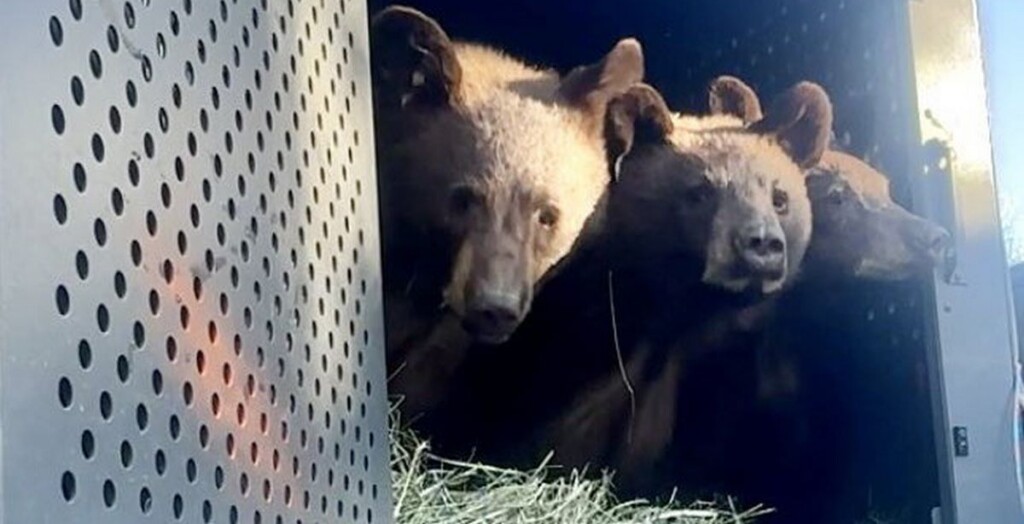
Orphaned bear cubs peek out of the CPWD truck - Credit: Colorado Parks and Wildlife, via SWNS
Orphaned bear cubs peek out of the CPWD truck – Credit: Colorado Parks and Wildlife, via SWNS
Footage from the Colorado Parks and Wildlife Dept. (CPW) shows the heartwarming moment five orphaned bear cubs were released back into the wild.
The cubs spent the summer at a CPW rehabilitation center in Frisco Creek after being found and determined to be too young to be left alone.
According to local reports, three of the bears were rescued after their mother was euthanized because she entered a home, while the other two were found in separate instances. Black bears are more likely than brown or grizzly bears to view humans as a source for food, and anytime that association is made, the bear is a danger to public safety.
After being rescued, all the cubs were taken to the rehab center to grow and socialize before being released back into the wild.
While the bears are in rehabilitation, there is no talking allowed near the pens where they are kept and the bears never see a person feeding them. These measures help ensure the bears develop the appropriate instincts to survive in the wild.
The 5 were released in Pagosa Springs, Colorado on November 20th.
“Of the 25 cubs rehabbed at Frisco Creek this year, eight have now been released following three earlier this week by the Colorado Parks and Wildlife Department in Jefferson County,” a spokesperson for the Colorado Parks and Wildlife Department said. “Eight more will go out next week, including some to Gunnison. Some aren’t fat enough yet to go out for hard release.”
The spokesperson added that the cubs who remain at Frisco Creek will continue to eat before going into artificial den boxes to be released later in January or February.
“We like to get cubs over 80 pounds for release to give them an extra head start on getting through winter and the early spring months,” they added.
“A huge thank you to Sirochman and his family at Frisco Creek for the excellent care of these cubs. Every year is different. We’ve had as few as four and as many as 40 cubs at the facility in one summer. The joy is felt by all when they return to the wild.”
WATCH them scamper off into the woods…
SHARE This Great Return To The Wild For These Apex American Predators…
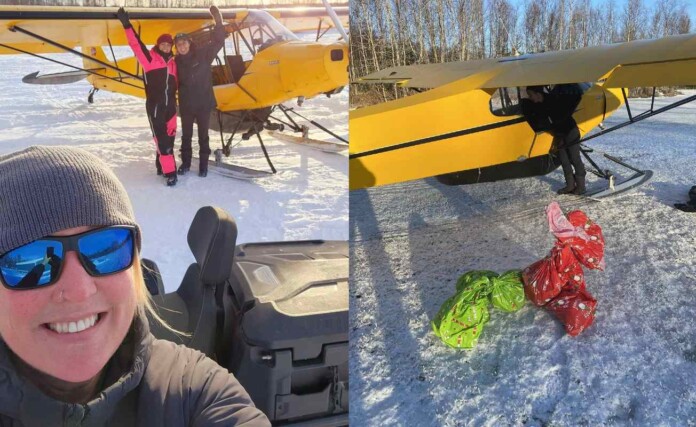
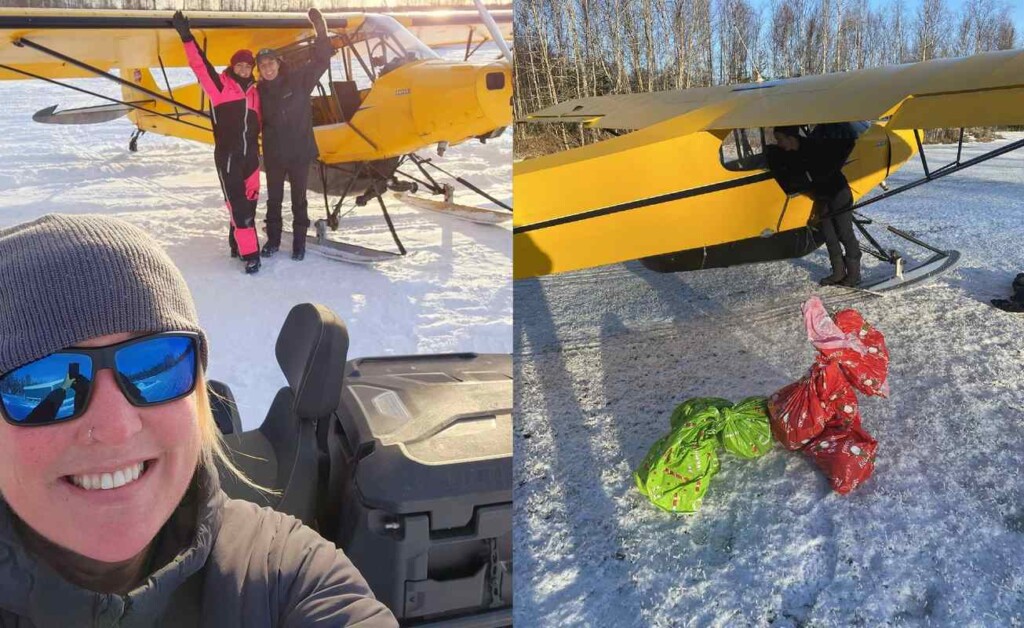
When she heard that some of her neighbors were eating squirrels for Thanksgiving, a local pilot thought she’d lend a helping wing.
Many people believe turkeys can’t fly. They can, actually, in more ways than one.
Esther Sanderlin lives in rural Skwentna and West Susitna Valley Alaska, where flying small single-engine or prop planes is a common mode of personal transportation.
“I was visiting our newest neighbor and they were talking about splitting a squirrel three ways for dinner, and how that didn’t really go very far,” Sanderlin told Alaska’s NBC affiliate KTUU on the Monday in advance of Turkey Day.
“And I just had a thought at that moment, ‘You know what, I’m going to airdrop them a turkey for Thanksgiving,’ because I recently rebuilt my first airplane with my dad and so I can do that really easily.”
Sanderlin grew up occasionally receiving turkeys at her home via air-drop after the roads froze over in late autumn. She combined these wild childhood memories with the news of the squirrel dinner and decided she ought to pay it forward.
This year she’s dropping 30 to 40 turkeys to ensure her neighbors have as much to eat as they like on the day to be thankful for friends and family.
She doesn’t need to attach a parachute to them, as the soft snow below, and the frozen flesh of the turkey, means that a hard landing is no harm no fowl.
Speaking to the NBC, she said she hopes to turn her turkey drops into a nonprofit in the future so that she can extend her reach to more communities across Alaska.
“Huge shout out to everyone that helped with this year’s Turkey bombing! It was a success and thanks to many, we were able to deliver 36 Turkeys to the Yentna and Skwentna River area!” a post on the page read.
SHARE This Amazing Display Of Neighborliness In America’s Frigid North…
The development of America’s geothermal resources has picked up steam, one could say, after the US Interior Department approved a project in Utah that could generate up to 2 gigawatts of electricity.
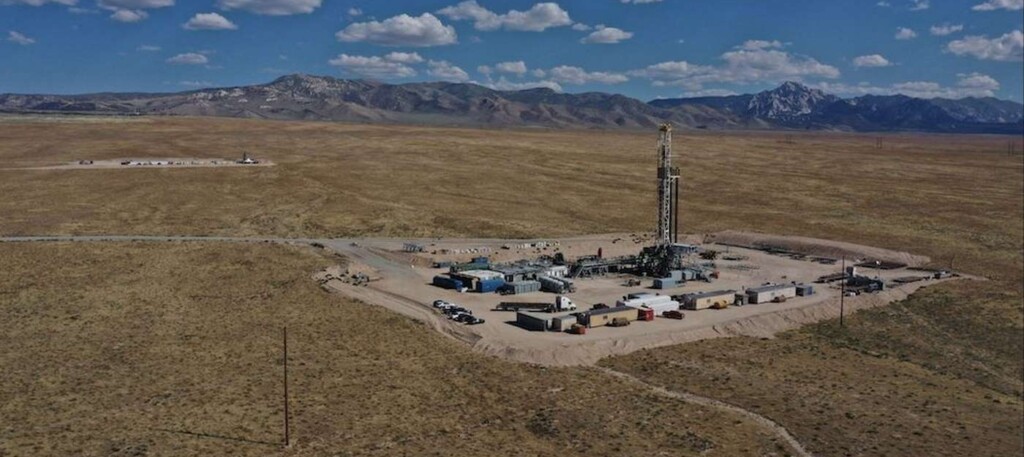
Houston-based Fervo Energy received department approval in October for their Beaver County project that is set to start generating energy for clients in 2026.
Wells will be drilled across 631 acres of an area called the Cape, 158 acres of which are public lands.
Fervo said in September that flow rates from the Cape project’s first well test show it has the potential to be the “most productive enhanced geothermal system in history.”
The test demonstrated a single well flow rate of steam sufficient for the generation of 10 megawatts of clean energy, triple what earlier estimates had suggested.
Tim Latimer, Fervo CEO and co-founder, says the company “continues to achieve technical milestones for geothermal development that experts predicted to be set decades from now.”
If the reader is opposed to fossil fuel extraction, then the Cape Project seems a little like poachers being hired to guard elephants, as Fervo has achieved these testing and approval milestones with fossil fuel workers accounting for over 90% of on-site labor.
This is because the Cape Project has used many of the same methods of drilling and steam injection collectively referred to as “fracking” only instead of trying to push more oil out of the ground, the water is injected into hot rocks so it turns into the steam used to generate clean energy.
Fervo hasn’t released cost estimates for the project, and says the power generation will grow in phases, with the total potential to reach 2 gigawatts. If so, Engineering News Record reports that it would tie the national record for geothermal power generation, set in 1987 at a northern California power plant called The Geysers.
SHARE This Impressive Upcoming Geothermal Development With Your Friends…
Italian authorities have seized dozens of important artifacts from the Etruscan civilization that some foolish locals had attempted to sell on the black market.
Their paper trail led to what the Italian Ministry of Culture said was one of the most important discoveries of Etruscan antiquities that has ever come from police work.
The haul was uncovered in the central Italian region of Umbria, where a local farmer came upon an Etruscan tomb in his field. Two stone sarcophagi, 8 stone urns, a perfume bottle, and bronze mirrors were among the treasures recovered.
A local entrepreneur and another man from the town of Citta della Pieve were arrested after phone taps and other leads led the Carabinieri art police to find them with the artifacts.
They had sloppily shared images of the artifacts on the internet in an attempt to gain access to the illicit art trade and even posted a photograph of the businessman on Facebook with one of the artifacts in the background.
The men “had nothing to do with the world of practiced tomb raiders and were clumsy and amateurish in the way they tried to access the black market for looted art,” Perugia Chief Prosecutor Raffaele Cantone said according to reports.
One sarcophagus contained the full skeleton of a woman in her 40s, and some of the tops of the urns had residues of paint, including red on lips and gold on jewelry.
The Etruscans were a culturally advanced people that inhabited central Italy before the rise of the Roman Republic. The tomb discovered by the farmer included material inscribed with the name Pulfna, the same surname found on another tomb near the same town back in 2015.
That tomb, and the contents it held, were reported to the authorities by the landowner who discovered it and received $110,000 as a reward. Meanwhile, the arrested individuals this year will face up to 10 years in prison for trafficking and theft.
The moral of the stories is that honesty pays, and that if you are planning to illicitly sell ancient antiquities, don’t ask about it on Facebook.
SHARE This Great News For Italian Patrimony With Your Friends…
Quote of the Day: “Start with what is right, rather than what is acceptable.” – Franz Kafka
Photo by: JSB-Co. via Unsplash
With a new inspirational quote every day, atop the perfect photo—collected and archived on our Quote of the Day page—why not bookmark GNN.org for a daily uplift?
NASA's Mars Perseverance rover captured this image of a black-and-white striped rock on Sep 13, 2024.
The Mars Perseverance rover captured this image of a zebra-striped rock on Sep 13, 2024 and named it ‘Freya Castle’ – NASA / SWNS
NASA’s Curiosity Mars rover has recently passed through a channel in which pure sulfur rocks litter the ground, and scientists aren’t sure why.
In July, GNN reported how the rover had found a strange white stone, broke it open, and found sulfur crystals, shocking the rover’s science team back at NASA’s Jet Propulsion Laboratory.
Now, as Curiosity prepares to leave its 12-year haunt along the slopes of the three-mile-high Mount Sharp, it’s had to pass through a shallow channel littered with the same white stones.
The channel, known as Gedis Vallis, is located among the mountain’s foothills, the geology of which indicates they had formed in an already dry climate after water had begun disappearing from the surface of Mars.
However, the presence of the channel suggests that water flows still coursed through the area from time to time, and evidence of rivers and wet debris in the channel helps to corroborate the idea.
It was only after the rover entered Gedis Vallis that the field of sulfur stones was discovered. Though the area had been scouted by the Mars Reconnaissance Orbiter, the stones were too small to be detected by the probe’s instruments.
Field of sulfur stones in the Gedis Vallis channel on Mars – Credit: NASA/JPL/Caltech/MSSS
“We looked at the sulfur field from every angle—from the top and the side—and looked for anything mixed with the sulfur that might give us clues as to how it formed. We’ve gathered a ton of data, and now we have a fun puzzle to solve,” said Curiosity’s project scientist Ashwin Vasavada at NASA’s Jet Propulsion Laboratory in Southern California.
From a vantage point, Curiosity, which has now driven about 20 miles since landing in 2012, imaged the field with its MastCam, and stitched together a 360° view of its surroundings, which NASA turned into a convenient video with spacey music.
EXPLORE the Gedis Vallis below…
SHARE This Intriguing Discovery With Your Friends Who Love Space…
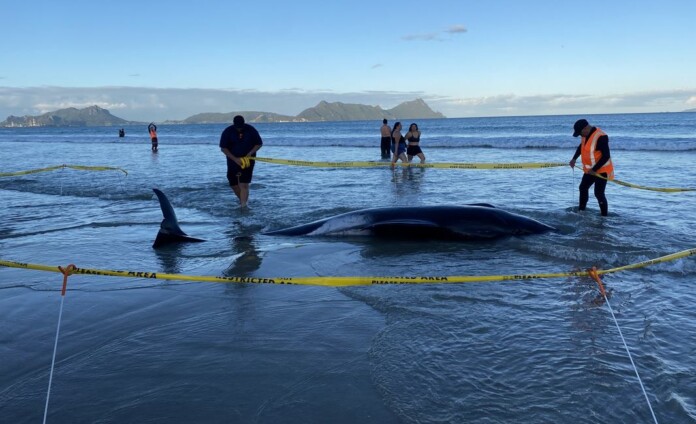
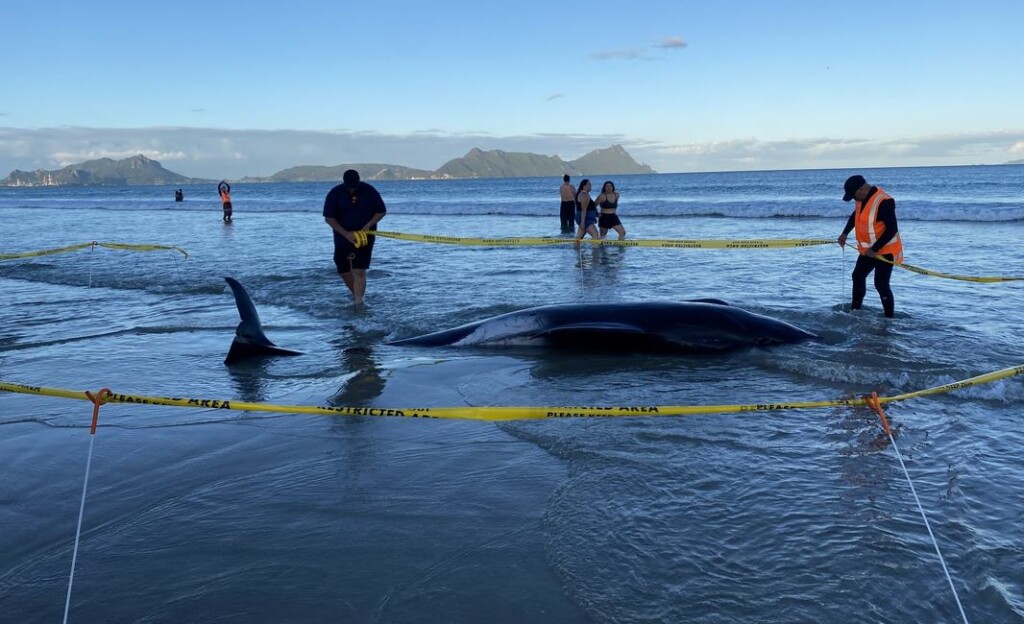
After a pod of more than 30 pilot whales stranded themselves on a New Zealand beach, over a thousand volunteers and professionals alike organized to save them by carrying them back out to sea on sheets.
The sheets were suspended from the prow of a boat operated by New Zealand’s Department of Conservation (DoC).
The stranding happened on Ruakākā Beach near the city of Whangārei in New Zealand’s north island, a particularly prolific stranding location for pilot whales. DoC agents routinely survey the beach and ask the public to report any whales coming too near.
Rescue efforts saw almost all of the pilot whales survive, while three adults and one calf perished. A Māori ceremony was held to honor their spirits, as the Māori believe the animal to be a sacred cultural treasure.
“It’s amazing to witness the genuine care and compassion people have shown toward these magnificent animals,” Joel Lauterbach, a Department of Conservation spokesperson, said in a statement. “This response demonstrates the deep connection we all share with our marine environment.”
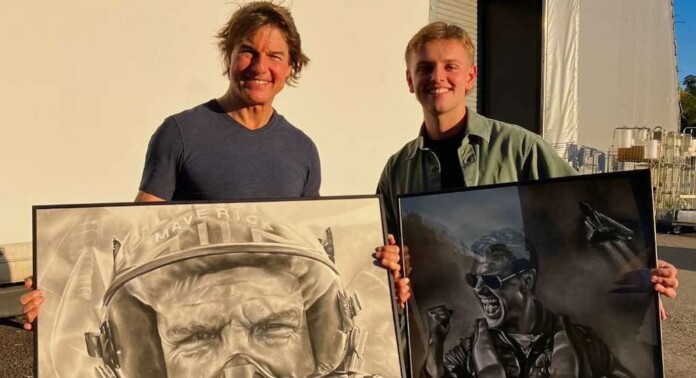
On a lark, a colorblind artist contacted Tom Cruise’s management team to see if the Top Gun star wanted to keep a portrait he had made of him.
Wilf Elliott, who hails from the east England town of Clacton, is colorblind and has made charcoal drawings of celebrities like Gareth Bale, Zara Larsson, and Sam Ryder.
Having seen the 2022 action film Top Gun Maverick 18 months ago, he concluded it was one of the most enjoyable films he had seen.
The portrait traveled through multiple people before it was finally given to Tom Cruise who said he wanted to meet Elliott in person.
The pair finally met last month after 9 months of planning and they spent 20 minutes together.
“He asked me about my career and said it was so impressive. I shook hands with him multiple times,” said Elliott. “The people I have met before have all been big and incredibly lovely, this has been way above any expectations I’ve ever had.”
“He was probably one of the nicest guys I have ever met, and he wanted to know about my career,” he added.
Wilf had also completed a second artwork to gift to him, but during the chat, Tom insisted on Wilf keeping it as a memory and they took some photos together.
Quote of the Day: “What I love about Thanksgiving is that it’s purely about getting together with friends or family and enjoying food. It’s for everybody, and it doesn’t matter where you’re from.” – Joyce Giraud
With a new inspirational quote every day, atop the perfect photo—collected and archived on our Quote of the Day page—why not bookmark GNN.org for a daily uplift?
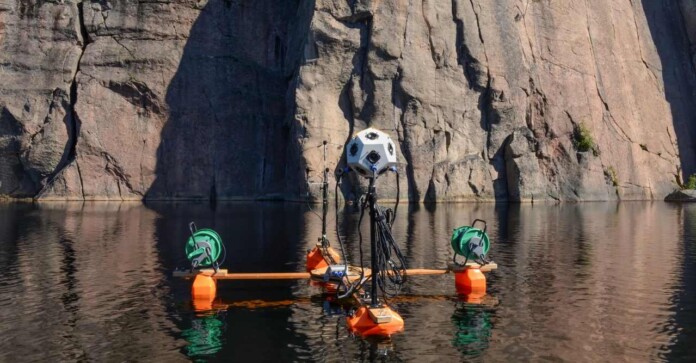
The scientists raft used for summertime recordings - Credit: Julia Shpinitskaya
The scientists raft used for summertime recordings – Credit: Julia Shpinitskaya
Rising directly out of the water of a lake in the Finish Lakeland region, tall granite cliffs are believed to have acted as a musical element in Neolithic Finns’ socio-religious activities.
That’s because their unique shape, and boundary shared with the water, create powerful single echoes back at whomever made a sound in their direction.
Now, a new study has aimed at exploring the connection between these cliffs’ unique properties and the people who painted images of humans, elk, drummers, boats, and human-animal hybrids on its surface.
The Finnish Lake District emerged after the recession of the Continental Ice Sheet, leaving as many as 35,000 small and large lakes behind. Like the granite massifs in Yosemite, the ice rubbed the surfaces of the cliffs smooth, creating a unique acoustic profile.
Hunter-gatherers approached them either on the ice in wintertime, or on canoes, and painted images on their surface. Underwater archaeology has revealed offerings were left by the cliffs. Any soundwaves sent toward them would rebound dramatically.
“So, people heard the painted elks talking and the human figures responding with a voice that resembled their own,” said study author and archaeologist Riitta Rainio.
As these reflections appeared to emanate from invisible sources behind the paintings, the auditory and visual images overlapped, merging into one multisensory experience, Univ. of Helsinki press wrote of the study.
Although the sounds and music of prehistoric people are beyond our reach, the study shows that the physical environment actively participated in their activities, co-vibrating and creating reciprocal tangible encounters between the human and more-than-human worlds.
“The possibility to communicate reciprocally with the physical environment or more-than-human reality may have been an essential reason why these cliffs were visited and painted, and why offerings were left to them. For the history of sound and music, the study provides an example of how significant a role sound reflections could have in past societies.”
Reverbarative landscape features have also been acknowledged to have played a role in socio-religious practices in the Andes Mountains, where a pre-Incan site called Viejo Sangayaico was found to have a large hollowed-out “dance floor” that would have produced a resonance that echoed through the surrounding hills.
LISTEN to the researchers’ experiment near the cliffs…
SHARE This Incredible Insight Into The Lives Of Prehistoric Peoples…
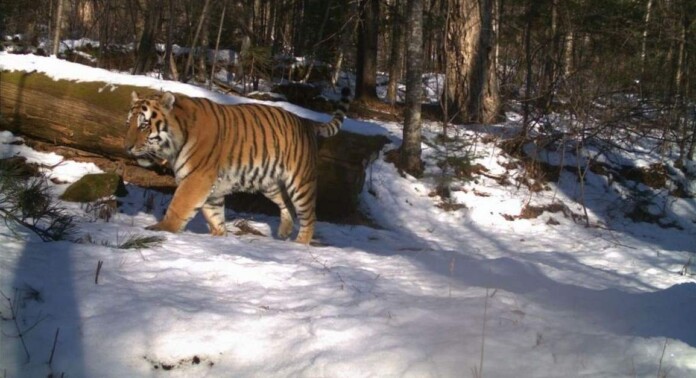
A Siberian tiger, closely related to the extinct population from Kazakhstan - Credit: Bastak State Nature Reserve, CC 4.0. BY-SA
A Siberian tiger, closely related to the extinct population from Kazakhstan – Credit: Bastak State Nature Reserve, CC 4.0. BY-SA
In a historic step toward the first-ever restoration of the tiger population to a nation where they were once extinct, two captive Siberian tigers have been translocated from Anna Paulowna Sanctuary, Netherlands, to the Ile-Balkhash Nature Reserve in Kazakhstan.
This remarkable event is part of an ambitious program led by the Government of Kazakhstan with support from WWF and the UN Development Program to restore the Ile-Balkhash delta ecosystem and reintroduce tigers to the country and region, where the species has been extinct for over 70 years.
“It is a high priority for Kazakhstan to work on the restoration of rare species. For ecological value it is important that our biodiversity chain is restored. And that the tiger that once lived in this area is reintroduced here,” said Daniyar Turgambayev, Vice-minister of the Ministry of Ecology and Natural Resources of Kazakhstan.
In the early 21st century, genetic studies were carried out on bones and furs held in national collections which revealed that the population of tigers living between Iran, southern Russia, Central Asia, and the areas around the Caspian Sea was extremely similar to Siberian tigers.
This led scientists to conclude that Felis vigrata, the former name of the Caspian tiger, was simply the Siberian tiger that developed into a distinct population, but not a new subspecies, over generations of being separated by habitat fragmentation.
Bodhana and Kuma, the male and female tigers, will be housed in a spacious semi-natural enclosure of three hectares within the Ile-Balkhash Nature Reserve. Any of their offspring will be released into the wild and will become the first tigers to roam Kazakhstan in decades, and potentially the first-ever international tiger reintroduction.
They will play an important role in the establishment of a new tiger population in the region where they had previously been wiped out as a result of excessive hunting.
“Today marks a monumental conservation milestone to bring tigers back to Kazakhstan and Central Asia,” said Stuart Chapman Leader of WWF Tigers Alive. “This tiger translocation is a critical step to not only bring back the big cat to its historic homeland but also to rewild an entire ecosystem.”
Progress towards restoration of the area is already well underway with recovering and reintroduction of critical tiger prey species like the Kulan (Asiatic wild ass), and reforestation of over 120 acres with native trees. Being the apex predator, tigers will play a significant role in sustaining the structure and function of the ecosystem on which both humans and wildlife rely.
Ile-Balkhash has been the center of rewilding in Kazakhstan. The rich mixture of forested hills, mountains, lakes, and plains makes it exceptionally biodiverse. This includes an effort in 2019 to begin reintroducing Bukhara deer.
“With the launch of the tiger reintroduction program, we have witnessed a significant change—the revival of nature and our village of Karoi,” said Adilbaev Zhasar, the head of the local community group Auyldastar.
“This project not only restores lost ecosystems, but also fills us with pride in participating in a historic process. Because of small grants from WWF, we have the opportunity to do what we love, develop small businesses, and create jobs in the village, which brings joy and confidence in the future.”
From the very beginning, the local community around Ile-Balkhash Nature Reserve has been closely involved in the project. This includes support for improved agricultural techniques and the future development of nature tourism in the area.
The translocation of these tigers is the first of several planned in the coming years, with a goal to build a healthy population of about 50 wild tigers by 2035, starting with this pioneering pair for breeding. This initiative is not only a testament to the resilience of the species but also a powerful example of governments, conservation organizations, and local communities cooperating in wildlife and nature conservation.
The Candela P-12 hydrofoil ferry - Credit: Candela, released
The Candela P-12 hydrofoil ferry – Credit: Candela, released
In 2023, GNN reported that the world’s first ‘flying’ electric ferry boat had entered into mass production after sailing through its performance and safety tests.
Well now, the Candela P-12 hydrofoil ferry boat is bound for these shores, having already begun service inside Stockholm.
With Lake Tahoe attracting over 15 million outdoor enthusiasts year-round, road congestion has become an ever-increasing problem. Travelers often find themselves stuck in long car lines, especially in winter, due to road closures caused by heavy snowfalls.
However, local company FlyTahoe is set to solve this by introducing a revolutionary zero-emission vessel that will make its US debut: Candela hydrofoil electric ferry. FlyTahoe, a ferry company specifically set up to introduce the Candela in America, will feature a 30-minute cross-lake service, cutting the travel time in half compared to the daily 20,000 car trips along the same route.
This 30-seat vessel, designed to accommodate both skis and bikes, uses hydrofoil technology—computer-guided underwater wings—to fly above the water’s surface at high speeds, unaffected by waves and winds.
The wings lift the hull above the water, significantly reducing drag and cutting energy consumption by a staggering 80% compared to conventional vessels. This is what allows the P-12 to be fully propelled by renewable electricity instead of fossil fuels, while providing a smooth ride above the waves even at high speeds.
“It’s ironic that while millions, myself included, drive around Lake Tahoe to admire its beauty, the road sediment we generate contributes to the largest threat to the lake’s famous cobalt blue clarity. Our service will provide a faster transport than cars or buses, while keeping Tahoe blue,” says Ryan Meinzer, Founder & CEO of FlyTahoe.
Since Lake Tahoe, the second deepest lake in the US, never freezes over, the ferry can operate year-round. This added mobility convenience will enhance business and improve the lives of both locals and tourists, providing a versatile zero-emission solution to reduce traffic during both summer and winter seasons.
The FlyTahoe ferry will connect the northern and southern parts of the lake in under 30 minutes, while driving around the lake often takes over two hours in the winter. FlyTahoe will create a vital link to the 14 world-class ski resorts encircling the lake, making it an ideal option for tourists and locals alike.
WATCH the Candela cruise through Stockholm’s waters…
SHARE This Cool Ride Across Lake Tahoe With Your Friends…
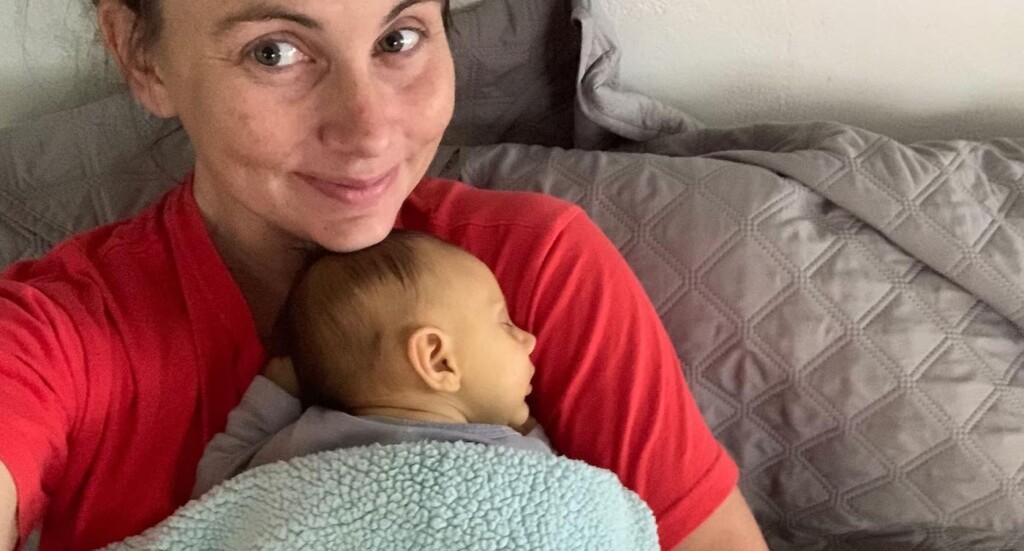
Sarah Love holds her son Lincoln - Courtesy Sarah Love
Sarah Love holds her son Lincoln – Courtesy Sarah Love
Because a stranger had the mixture of compassion, bravery, and instincts to speak up, a little boy will live to become an adult.
Little did Sarah Love know, but her newborn baby was suffering from a rare genetic disease that might have taken his life. Yes, he was jaundiced at birth, but pediatricians at a wellness checkup were reticent to ascribe it to anything serious, and suggested she get 6-week-old Lincoln a bit of sunlight.
It was at a trip to an amusement park with their big beautiful family, of which Lincoln was the 6th addition, that Love noticed a stranger taking inordinately long glances at her newborn.
Before they could move on, the stranger decided to act on his instincts.
“He introduced himself and mentioned that he was a first responder,” Love told Good Morning America. “He said he noticed Lincoln and how very jaundiced he was, and he didn’t want to scare us … but he just thought it might be a good idea for Lincoln to get some medical attention.”
Love would later say he only gave up that he was a firefighter in a neighboring county, but she took his advice seriously even though he didn’t say his name.
Calling the same pediatrician who earlier had dismissed Licncoln’s jaundice, she referred them to a nearby hospital for some blood work. After arriving, little Lincoln was hooked up to IV fluids, before it was eventually recommended that he be transferred to a specialty hospital, Nemours Children’s Hospital in Orlando.
At Nemours came tests and several misdiagnoses, until it was identified as Alagille Syndrome, a rare genetic condition that affects the liver and heart, and was responsible for Lincoln’s deep-set eyes, pointed chin, and yellowed skin.
There is no cure for the condition, but pharmaceuticals can help patients live long lives in spite of it. Love had always been slightly on edge over Lincoln’s appearance, but said it was the stranger’s comments that pushed her over it.
“It was that extra added bit of encouragement that we needed,” she said, adding to GMA that she’s learned from the experience how there are “no silly questions when it comes to your baby’s health.”
Depending on how he responds to medication, Lincoln may eventually require a liver transplant, but will have to work alongside a nutritionist for the rest of his life to ensure he and his family can address nutrient deficiencies that he may develop.
Love said that she uses this story to raise awareness online and in her community for Alagille Syndrome, and how to look out for it in infants. Her outreach is also meant to try and find the stranger who stood up to say something when he believed he ought to.
“I don’t think there are enough words that can honestly describe how thankful our family is. Thank you from the bottom of my heart,” Love said of her message to the stranger. “It was a tough thing to go through, but because of that one small thing that he did, look at how much of an impact he had on Lincoln, on our family. I just want to say thank you.”
SHARE The Incredible Impact Of This Stranger’s Actions On This Family…
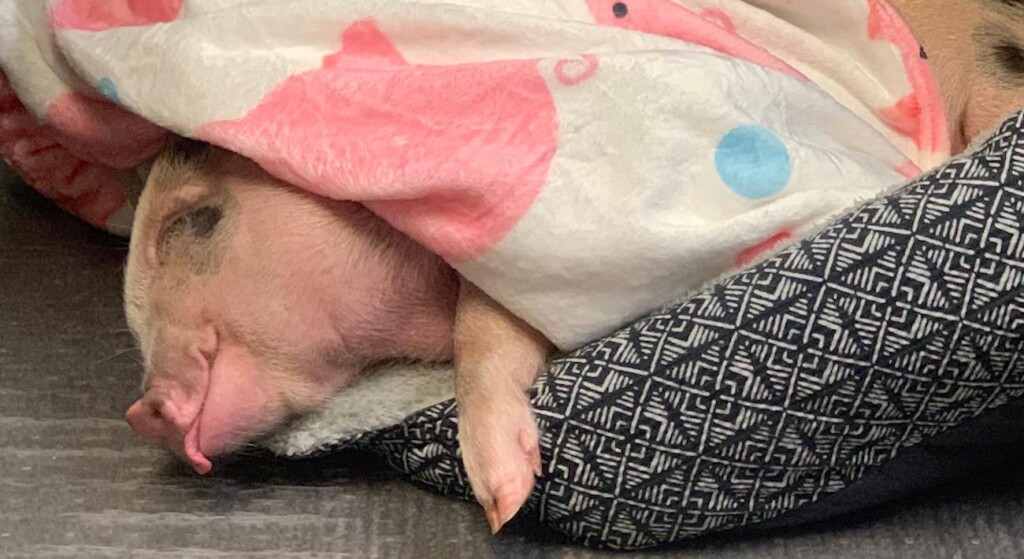
Bringing his piglet to work – by Brett Martin-released
Bringing his piglet to work – by Brett Martin-released
A maintenance worker at a care home has begun bringing his pet pig to work, putting smiles on the faces of many of the residents.
Brett Martin, from the Good Samaritan Society in Olathe, Kansas, first got the idea over the summer, 10 years or so after his children surprised him on his birthday with a pet house pig the size of a tennis ball tube.
After that pig passed away, Martin was smitten, and went to a licensed breeder of Juliana pigs, one of the smallest pet pig breeds, for a new family member.
He asked the nursing home’s administrator Fred Pitzl, who was hesitant at first, but his misgivings were mainly down to misconceptions about what kind of pig it was. Though bearing a fierce name, Odin the pig is as gentle as a lamb.
“I gave him some Cap’n Crunch cereal and he really seemed to enjoy it,” Mindy Howell, a 62-year-old resident, told the Washington Post. “I’d never fed a pig before, and I’d never petted one either. But he loved it, and he gave me a good oink.”
Pitzl reckoned that many of the residents grew up on farms and would probably really appreciate taking an unexpected trip down memory lane.
“He’s an instant stress reliever for everyone who interacts with him,” Martin said. “A few of the nurses will come and get him from the office and take him to our memory care center, where he really brightens the day.”
Brett Martin introduces Norma Hoban to Odin this month at the Good Samaritan Society. Credit: Good Samaritan Society.
Odin wallows around the care home most days, relieving himself in the litter box and sleeping in Martin’s office. He loves to snack on cereal like Cheerios, which the residents readily offer him along with scratches.
The Washington Post, providing this loving story, added that he gets along with the resident cats, and a dog that is routinely brought in.
As a result of this pampering, Odin is reticent to leave, and Martin usually has to trick his hog into leaving the building. If he suspects it’s time to go home, he’ll go hog wild and hide away.
SHARE This Bacon And Awws With Your Friends On Social Media…
Quote of the Day: “More than kisses, letters mingle souls.” – John Donne
Photo by: Anne Nygård
With a new inspirational quote every day, atop the perfect photo—collected and archived on our Quote of the Day page—why not bookmark GNN.org for a daily uplift?
An annual fundraiser for charitable organizations and schools Minnesota has broken its record for donations after it received $37 million in just 24 hours.
The donations will be sent to 6,556 charities, non-profit firms, and schools.
GiveMN, the fundraiser’s organizers, launched in 2009 as a collaborative venture led by Minnesota Community Foundation and other associations committed to helping make the state a better place.
They organized something called Give to the Max Day. That spark touched off an outpouring of generosity—$14 million in 24 hours. Since that trial run in 2009, Give to the Max Day has become an annual tradition. Every year thousands of organizations raise money to improve the quality of life in Minnesota and communities around the world.
CBS News, covering the marathon give-away day, spoke with organizers at the Prop Food Shelf, who had a fundraising goal of $125,000 for that period, but were struggling to meet it.
Then, an anonymous check of $50,000 arrived in the mail, and check and check followed during the fundraising period, until a quarter million had come through the door.
GiveMN has said this is a record for donations received, which came in from more than 150,000 people, all 87 counties of MN, all 50 states in the US, and, if it can be believed, 36 different countries around the world.
“I think what we’re seeing right now in our communities is an interest to try and support one another, have a place where we can come together and give together,” said Jake Blumberg, executive director of GiveMN. “That is a lot of people giving $5, $10, $100 where they can.”
Over the last 16 years, the St. Paul non-profit has channeled $350 million during Give to the Max Days.
WATCH an explanation story below from KTTC…
SHARE This Beautiful Outpouring Of Support For The North Star State…
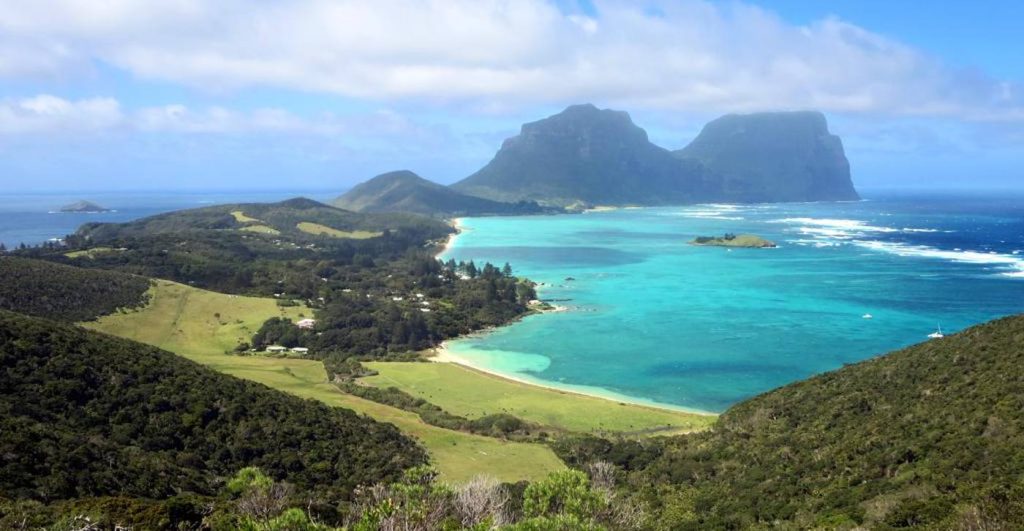
Examples of Lord Howe Island's rare flowers. Credit: Ian Hutton
Examples of Lord Howe Island’s rare flowers. Credit: Ian Hutton, supplied to ABC.
In 2022, GNN reported on the return of wildlife seen on Lord Howe Island of Australia following an extermination campaign of rats.
Now, an expedition to the island’s high forests has revealed stunning imagery of a one-of-a-kind ecosystem where 85% of plants are found nowhere else on Earth.
“Ascending into this rare island cloud forest is like stepping into a fairytale—a hushed and secret world, carpeted in a tapestry of rich greens, rare palms, and twisted trees veiled in lichens,” writes ABC News Australia in a special report.
A UNESCO Natural Heritage Site in the East Tasman Sea, the island may have housed mice as early as the mid-1800s, with the rats arriving later in 1918. As is so often the case with biodiversity Down Under, the native animals suffered.
Their absence, which took three years of eradication, is revealing a diverse landscape—with fruiting trees, returning numbers of land invertebrates, and one of Australia’s rarest birds, the flightless woodhen—whose population has doubled to 565 in the past three years.
“What is unfolding is an ecological renaissance, since the rodents have gone, the catchphrase is: ‘I’ve never seen that before’,” Hank Bower from the Lord Howe Island board told the Sydney Morning Herald, in 2022.
The remains of an extinct shield volcano, the two peaks of the island are often shrouded in clouds, shading and moisturizing a forest of mosses, lichens, ferns, palms, and rare flowers.
Lord Howe Island. Credit: David Stanley, CC 3.0., retrieved from Wikimedia.
“There are not many islands in the world with very tall mountains that stick up so high into the atmosphere they create their own cloud, so it is pretty special,” the island’s resident biologist and naturalist, Ian Hutton, said.
Now that renaissance mentioned by Bower has gone into overdrive, with the woodhens reaching 2,000 individuals. Providence petrels, a cliffside nesting seabird, has seen the success rate of its chicks rise from 2% to 50%.
Ian Hutton, an ecological researcher on the island since the 1980s, told ABC News that 30 threatened species of plants found nowhere else on Earth are rapidly redistributing to the slopes of the two mountains.
The Critically Endangered little mountain palm, once reduced to just 4 kilometers of range, is now thriving again.
Invertebrates are also thriving again with no rats to gobble them up. Photographing insects and snails during the nights, Sutton has found a weevil thought to have gone extinct in 1916, and 10 new species of land snail, including another 4 that hadn’t been seen for decades.
Back in the 1950s, the island government made the decision to cap visitors at any given time to 400 people, a decision that has been retained now that the island’s reputation for unspoiled wilderness has been restored.
Only 25 houses have been approved for construction over the last 10 years, and every person, ship, flight, or animal is prevented from coming ashore until they have been scrutinized by a sniffer dog.
Visitors to the island, ABC reports, routinely familiarize themselves with local species through de-weeding tours to clear invasive plants from the island’s habitations.
The piece from ABC includes stunning photography from all over the island, documenting the incredible resurgence of life, as well as the pride of the locals who live there.
SHARE This Incredible Biological Renaissance With Your Friends…
Seema Devi and Suman Hooda of the Delhi police – released
In India, a pair of police officers have reunited 104 children and minors with their families in just 9 months, the Times of India reports.
Head constables Seema Devi and Suman Hooda of Delhi Police Outer North District, have been lauded for their accomplishment with the Anti-Human Trafficking Unit (ATHU).
“We don’t have fixed duty hours. Whenever we receive information about missing kids, we just leave our homes,” Hooda told the Times. “There are days when I don’t see my kids,” she smiled.
Their marathon of cases took them across northern India’s states of Bihar, Uttar Pradesh, and Haryana, dealing with bad photographs, reticent locals, unfamiliar locations, and language barriers.
Under the banner of Operation Milap, the searches took place between March, when Hooda joined the AHTU, and November.
At times they’ve dealt with cases where the child hasn’t been seen in years, and outdated photographs have been the officers’ only lead, which is when they typically have to conduct door-to-door searches with the help of willing locals—even beggars, in one instance.
At other times they’ve relied on the cyber division to track mobile phone locations, and walked across wide rural distances in completely unknown locales.
“We have walked for kilometers because of lack of transportation in such areas. Many people are ready to help us, but there are also those who think assisting police can lead to legal trouble,” said Hooda.
During the operation, most of the cases were down to elopement, drug addiction, or insufficient parental care.
“We are extremely proud of the exceptional work done by Seema and Suman in Operation Milap. Their achievement reinforces our resolve to combat child trafficking and guard our communities,” said the Director General of Delhi Police, Nidhin Valsan.
SHARE This Incredible Achievement With Your Friends On Social Media…
“Walk in and give us your BEST dance moves for 5 seconds,” read a sign displayed on the entrance door of a coffee shop in Massachusetts.
In our world, as it exists today, social media virality ensued.
Coffee Milano Cafe in Middleborough got the idea from a pizza shop that pulled off a similar promotion—to help get people through the door and see the lovely, comfortable interior and great coffee.
But they never imagined it would go viral, with 7.6 million views on TikTok alone.
“We just thought it was going to be a small thing for the people that come in every day,” Olivia Svenson, barista and social media director of Coffee Milano Cafe, told ABC News.
“Everybody likes to see people happy,” she continued. “It wasn’t that (the coffee) was free. It is that people were able to express themselves.”
They’re now planning a similar event for Black Friday, brainstorming various ideas, including a “dance with your dog” version.