The Perseid Meteor Shower By Bill Dickinson, CC license
The most prolific meteor shower of the year will be at its peak on the morning of August 12th, when 150 shooting stars can be seen per hour in the Northern Hemisphere.
The meteors are called the Perseids because they appear from the general direction of the constellation Perseus, but in more modern times have shifted to radiate on the border between Cassiopeia and Camelopardalis.
According to Valerie at Space Tourism Guide, the Perseids Meteor Shower is caused when the Earth passes through a stream of debris left by the Comet 109P/Swift-Tuttle.
Special conditions permit us to see the debris every August, even though the comet has a 133-year orbit around the Earth.
In a slight case of misfortune, there will be a quarter Moon in the sky that night, meaning in already light-polluted areas with few stars in the sky, the Moon will make it slightly more difficult to see the meteorites.
However if one can position themselves in a rural-enough area with dark skies and plenty of visible stars, our solitary satellite won’t dampen the meteor shower too much at all. In fact, it might even make for a spectacular image.
There are a few other additional events in the night sky this month, such as a close approach of the Moon and Mars on August 27th. They will appear just 5° apart, and both be present in the skies surrounding the constellation Taurus.
For those interested in learning more about their cosmic environment, or as a great crash course for little ones on how to find the Red Planet in the sky, this is a great opportunity.
On the YouTube channel Learn the Sky, there’s a great guide for how to find Taurus in the night sky. Convenient to this article, it’s just under Perseus where the meteor shower will arrive from this month. Also included in the Taurus sector is a famous deep-space object known from ancient times called the Pleides, also known as the Seven Sisters.
SHARE This Great Stargazing Opportunity With Your Friends On Social Media…
From Kansas comes the story of a quick-thinking rescue that hauled a 14-month-old toddler from a would-be tomb at the bottom of a drain pipe.
The terrifying ordeal was caught on camera and saw a Moundridge Police Department officer build on the spot a makeshift catchpole typically used for pulling varmints out of hard-to-reach places.
Secured under his shoulders, the loop of rope at the end of the catchpole was able to haul the boy, named Bently, out from where he was trapped 10 feet down a section of 12-inch-wide PVC pipe that had been buried vertically.
In certain fits of frustration, it’s entirely possible, especially in the South, that a parent should refer to a rambunctious and recalcitrant 2-year-old as a varmint. Fortunately for Bently, he was still the size of a varmint, and so the varmint-catching tech proved lifesaving.
The parents said they called 911 just before 2 p.m. when they realized Bently had fallen into the PVC hole.
“Looking down at him as he was screaming, he wanted out of there, he wanted help and you can’t do anything. Just complete helplessness,” Blake, the boy’s father, told the local news station covering the rescue. “It’s horrifying, it’s haunting, to feel so helpless knowing that your child is in serious need of help.”
When police, fire department, and EMS arrived at the family’s home in Moundridge, about 40 miles northwest of Wichita, Officer Ronnie Wagner had an idea. He obtained a long thin section of PVC from the paramedics, threaded a rope through the length of it, and tied a knot on one side.
He was making a tool typically used by animal control officers and thought it would serve the same purpose here.
In dramatic footage of the rescue, the officers can be seen negotiating the loop of rope at the end of the pole around the boy before gently lifting him to safety after a 15 to 20-minute ordeal.
“We are relieved to report that the child, while understandably shaken, was unharmed,” the department said. Police thanked “all the first responders for their swift and effective action, which transformed a dangerous situation into a successful rescue.”
WATCH the rescue below…
SHARE This Dramatic Rescue With Your Friends On Social Media…
This year, GNN has featured a variety of stories showing how viral posts on social media do a world of good, all around the world.
Yet another entry in the series comes now from the Netherlands, where a 24-hour live stream of a seal rehab center went viral on social media 8 time zones away in Japan.
The Zeehonden Center in Pieterburen is one of the premier seal hospitals in Northern Europe. They take in sick or injured seals, and handle them in such a way as to maximize the chances of preserving their wild instincts.
This includes rehabilitation from injuries, and fit to purpose, the center has a large pool for young seals to swim in safely. The center set up a 24-hour live stream—a recently popularized tool in the zookeeper and conservationists toolkit to help with outreach and education.
Last Thursday, the Japanese X account @hokahoka_times shared the livestream of the Pieterburen Seal Center with the text: “Let’s all watch a seal sanctuary in the Netherlands for 24 hours.”
That message has now been shared 30,000 times and reached 14 million people.
On the first day, hundreds of additional viewers tuned into the live stream, and donations flooded into the recuse center.
“It was convenient that the seals were just fed, so that viewers in Japan could see that their donations were going well,” says Marco Boshoven, spokesperson for the Seal Center, in a translated statement.
Boshoven told Nu.nl that the center received in a single day as many donations as they typically receive in a month, so the digital outreach team got to work trying to cater to the Japanese, who by the next day were arriving digitally to watch the seals by the thousands.
“We are answering their questions via a translation program, so there’s an educational side to it as well,” Boshoven said.
As with many viral events on social media, the popularity of the seals took on a life of its own, with some visual artists quickly sketching up some fan art of the seals.
Boshoven learned that the Japanese affectionately refer to seals in their country as “tea leaves.”
“One of the people we spoke to told me a tea leaf floating upright in the water is a symbol of good fortune.”
“When seals are upright in the water they look a bit like that,” he said, explaining the connection.
HERE’s the live stream…
SHARE The Story Of This Amazing Cultural Confluence Centered On Seals…
Quote of the Day: “Adventure is worthwhile.” – Aesop
Photo by: Jairph
With a new inspirational quote every day, atop the perfect photo—collected and archived on our Quote of the Day page—why not bookmark GNN.org for a daily uplift?
The Franklin County Sheriff’s Office – Internet Crimes Against Children Task Force
The Franklin County Sheriff’s Office – Internet Crimes Against Children Task Force
A doctor who treats children in Ecuador is currently facing a 30-year prison sentence for creating explicit content involving minors—and his prosecution is thanks to Rosco, the electronic sniffer dog.
Not a robotic dog, but a dog trained to detect the chemicals applied onto the surfaces of data storage devices, even SD cards no larger than a pinky nail.
Rosco hails from Rogers County Oklahoma, where he and his partner Lieutenant John Haning work in the Internet Crimes Against Children Task Force.
Another K9 in the task force, a black Labrador named Ruger, last year sniffed out a laptop loaded with evidence hidden under the cushion of a sofa.
“If you overlook one cell phone, one computer, micro-SD card, or one hidden camera somewhere in the room, that could lead to another victim or that could lead us to put this perpetrator away for a long period of time,” said Haning.
While typically handling cases in the US, their reputation for success has earned them calls to catch child predators internationally. In the Ecuador case, they were asked to join a big police raid, and Officer Haning told local news that whenever called upon, they answer.
“When they called up and said ‘Hey we need your help.’ We have a high-profile doctor in Ecuador who’s hands-on in creating content that he’s sharing on the internet internationally,’ We jumped at it,” Haning told KJRH News.
On Jan 19th, 23 the FCSO Internet Crimes Against Children Task Force assisted the Fairfield CO Sheriff’s Office in the execution of a search at a home during a child exploitation investigation. Franklin County K9 Ruger located a laptop hidden under the cushion of a sofa. pic.twitter.com/7em6IWU6Ha
Then, Rosco’s secondary training—being a support dog—kicked in.
A 15-year-old girl with special needs was present in the house, and was completely out of control and crying. Suddenly, a big blonde pooch walked over to comfort her and the girl calmed down almost immediately.
Rosco also provides comfort to Haning and his fellow officers who admit they’re forced to deal with really ‘heavy’ work. So, when the 80-pound blondie wants to get in their laps, it lightens their loads, too.
It’s a story that reinforces the notion that not all heroes wear capes, as well as introduces the notion that among those heroes who don’t wear capes, some don’t even need to catch bad guys—they just need to sniff out a motherboard.
SHARE The Story Of These Heroic Hounds And Their Ability To Gather Evidence…
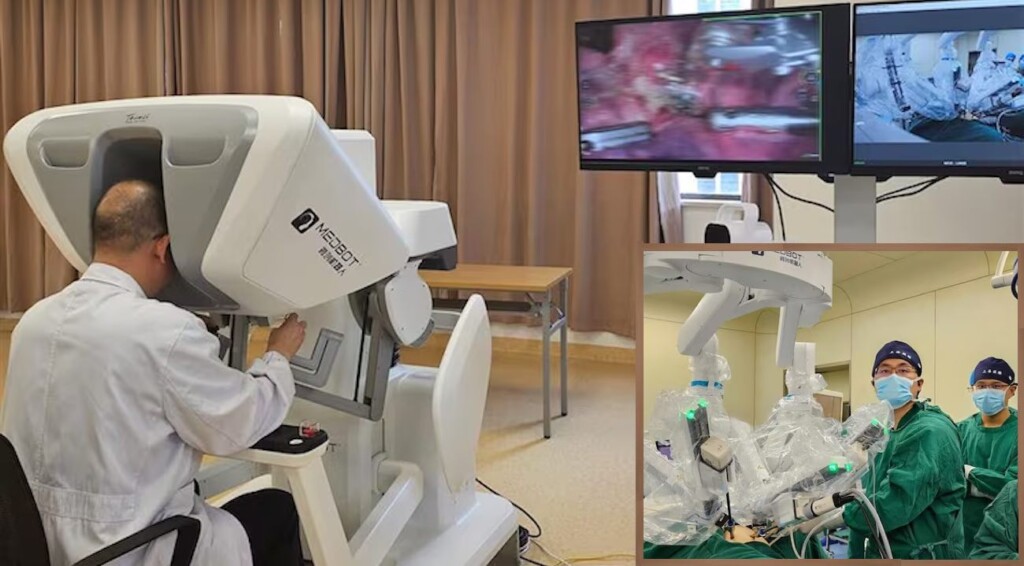
Dr. Luo Qingquan performs remote surgery using robotics – Shanghai Chest Hospital
Dr. Luo Qingquan performs remote surgery using robotics – Shanghai Chest Hospital
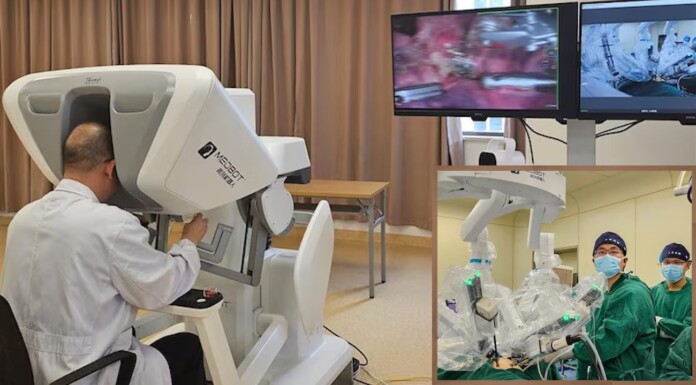
Is the above image the future of medicine? In it, Dr. Luo Qingquan uses a sophisticated control center to guide a set of robotic surgery tools to remove a tumor from a patient’s lung 3,000 miles away.
Dr. Luo was seated in the Shanghai Chest Hospital on China’s Pacific Coast, while the patient was anesthetized on a bed inside a hospital in Kashgar, Xinjiang Autonomous Region.
The Chinese-made 5G Medbot allowed Luo to transmit his precision and decades of experience instantaneously across three time zones, ushering in an era of telesurgery that may save thousands in rural areas where lack of expert medical staff may have been a death sentence in previous years.
According to Shanghai Daily, the Shanghai Chest Hospital is the nation’s first medical facility carrying out robot-assisted surgery, and it is also the facility carrying out the largest quantity of such surgeries in China.
The global shortage of specialist surgeons is a major impediment to medical advancements in low and middle-income countries. With just over 1.1 million surgeons, but only half as many anesthesiologists, there really are shortages in high-income countries as well, but one review from the Lancet calculated that for every 100,000 people in low and middle-income countries, there are just 0.7 specialist surgeons, compared to 5.5 in high-income countries.
A surgeon in China successfully removed a lung tumor from a patient while being 5000 km away. The doctor operated the machine remotely from his office in Shanghai, while the patient was in Kashgar, located on the opposite side of the country. The entire operation was completed in… pic.twitter.com/8VQrpnvtS0
— Naresh Nambisan | നരേഷ് (@nareshbahrain) August 2, 2024
48% of the world’s population enjoys the service of just 20% of the global surgical workforce, the paper continues.
MORE MEDICAL MIRACLES:
It takes over a decade to become a trained surgeon, but a robot can be shipped and installed in just a few months, allowing surgeons in richer countries to perform certain surgeries in poorer countries, or surgeons in richer areas to perform operations in poorer areas in the same country. In either case it’s a truly revolutionary development.
SHARE This Absolutely Mindblowing Medical Advancement…
England was rocked recently by a spate of riots, vandalism, and violence partly targeting Muslims, but one man went viral on social media for proving that such deplorable behavior is the exception, not the rule, in Jolly Olde England.
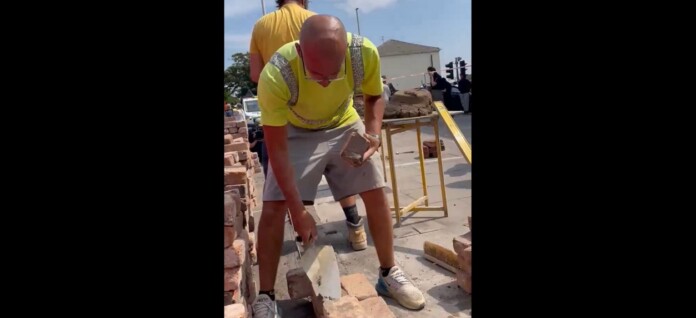
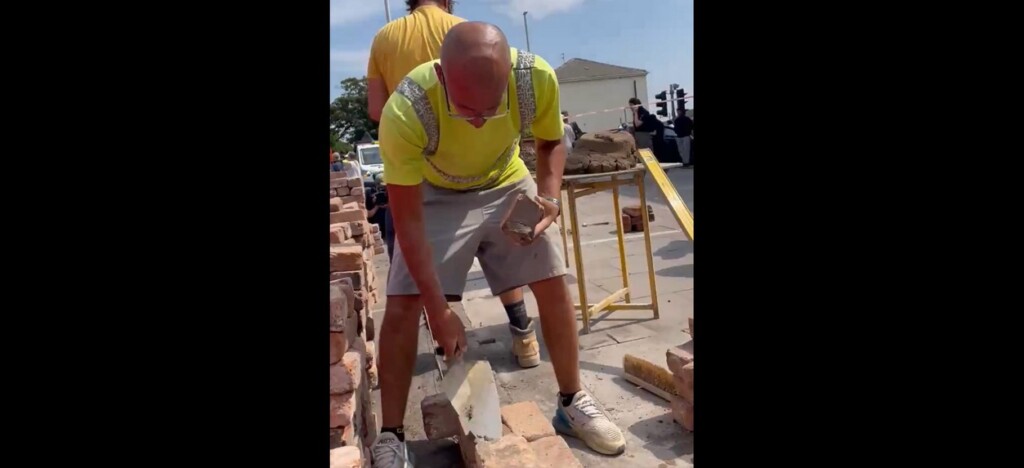
The mosque in Southport was burned down last Tuesday, but local Bricklayer Tony Hill has been labeled a “legend” for helping the Southport community rebuild it, laying bricks in blazing heat with astonishing speed and efficiency.
In a video clip on X that went viral, Hill can be seen sweating and smearing mortar while attempting to explain his motives. The quote below is edited to reflect his thoughts, which may have been difficult for US readers to understand
“We spoke to the company we work for, and the [other building crews] were coming down, so we just joined them. And yeah, just try and get it done before someone comes back.”
“We just really want to get this up so that the community is safe,” he told a person on the scene interviewing him. “It’s just a community isn’t it? You can tell by… just looking at everyone here, it’s quite diverse.”
The mosque was burned down after three young women were stabbed to death on Monday.
“Rioters in Southport had been triggered by an avalanche of misinformation on social media, in particular after a website falsely claimed that the killer of the young girls was a migrant from a majority Muslim country on the MI6 watchlist,” according to the London Economic.
Despite the racial charge to the issue, Bricklayer Hill was generous and diplomatic. When asked if he had a message to those who tore the wall down, he replied sympathetically, “Get your facts straight before you start doing stuff. Facebook’s a dangerous thing.”
The Conservative MP Saqib Bhatti called him a “legend”. The director of Islamic Relief UK, Tufail Hussain, agreed with that description, saying that “Tony Hill and all that have turned up today to support the local community in Southport are absolute legends.” Another X user remarked that “we should all be a bit more Tony Hill.”
WATCH the viral video below…
Spare a thought for Tony Hill who has been working at break neck speed in blazing hot sun to rebuild the Southport mosque wall before the far right can return. He said: “And if we have to build it again afterwards we will do just that.” pic.twitter.com/e0IplQreGQ
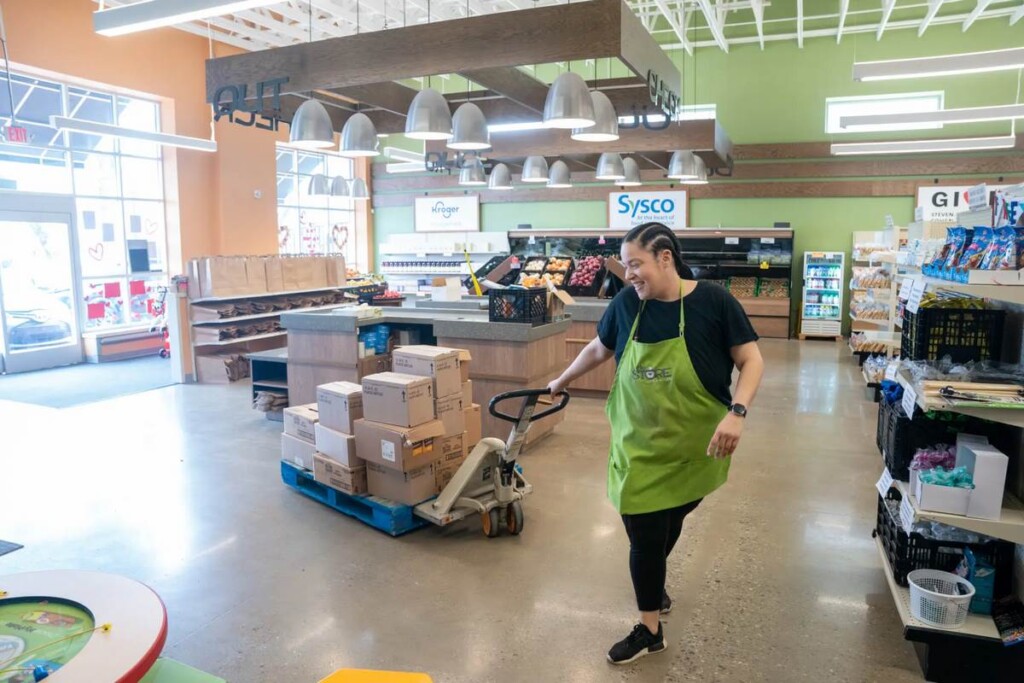
The Store Operations Manager Sarah Goodrich unloads inventory - credit Belmont University.
The Store Operations Manager Sarah Goodrich unloads inventory – credit Belmont University.
In 2019, GNN reported that country star Brad Paisley had broken ground on a free grocery store that would allow residents of Nashville suffering from food insecurity to ‘shop’ with dignity and variety.
Now, after five years of unexpected challenges, Pasiley is looking to expand by building another location in North Nashville.
“We’re going to open another location as soon as we get all the T’s crossed and I’s dotted,” Paisley told the invited guests at last month’s CEO Roundtable awards, according to Nashville Business Journal.
“It’s groceries with dignity,” Paisley said. “We’ve all seen the situations where people are willing to go get a handout in a brown bag from the back of a truck. We envisioned something completely different, where all of the sting of the indignity, that comes with really your kids seeing you in this precarious position.”
On March 12th, 2020, The Store by Brad Paisley opened its doors, only to face immediate and unprecedented challenges. Just ten days before its opening, Nashville was hit by a deadly tornado outbreak, leaving over 70,000 residents without power and marking it as the sixth costliest tornado in U.S. history. Amidst this chaos, The Store, though working at limited capacity, sprang into action to assist those affected.
Days after the tornado, the COVID-19 pandemic forced a nationwide shutdown, including Tennessee’s shelter-in-place order. This necessitated an urgent pivot from The Store’s initial model. Brad, his wife Kimberly, and the team developed a pandemic program overnight, offering curbside pickup and home delivery services, particularly to the elderly, operating in this manner for the next 17 months.
Despite the challenges, it fulfilled Brad and Kim’s ideal of introducing their children to the idea of service.
“We’ve got to get them into service and get them out of their bubble, and help them understand that there are hungry people in the world,” Kimberly Williams-Paisley shared on The Store’s website.
The Store gradually expanded and expanded, including comprehensive wrap-around solutions such as counseling, budgeting, cooking classes, and even literacy, pet care, back-to-school support, and music therapy.
In November 2023 it added a toy store just in time to help stock the Christmas trees of the 400 families the Store routinely serves.
“The emotional aspect of being able to give your child something your child wanted versus just something to sort of get you through the holidays, that’s such a load off the minds of somebody who maybe didn’t think they were going to be able to do that,” Paisley said.
WATCH The story below…
SHARE The Paisleys’ Incredible Efforts Of Giving Back To Their Community…
Quote of the Day: “Psychology regards all symptoms to be expressing the right thing in the wrong way.” – James Hillman
Photo by: Jr Korpa
With a new inspirational quote every day, atop the perfect photo—collected and archived on our Quote of the Day page—why not bookmark GNN.org for a daily uplift?
The excavations, with St. John Lateran's church in the background - credit, Italian Ministry of Culture
The excavations, with St. John Lateran’s church in the background – credit, Italian Ministry of Culture
Woe betide anyone who plans road construction in Rome.
In late July, news headlines brought the world up to speed regarding ongoing excavations of the previous center of the Catholic Papacy—the Patriarchio, a palace of Papal authority dating back to the late Roman Empire.
Discovered during roadwork in the plaza in front of the Archbasilica of St. John Lateran, a series of walls are believed to represent defense works that protected the Patriarchio in the heart of the Eternal City.
Finished in 313 and known as the Lateran Palace, the site served as the seat of the papacy following Emperor Constantine’s Edict of Milan that promoted religious tolerance of Christianity across the Empire.
The complex of religious and administrative buildings gradually expanded outward until a comparatively brief period when the Papacy moved to Avignon in France.
“This is an extraordinarily important find for the city of Rome and its mediaeval history, as no extensive archaeological excavations have ever been carried out in the square in modern times,” the Italian Ministry of Culture, Gennaro Sangiulliano said.
“Every single stone speaks to us and tells its story: thanks to these important discoveries, archaeologists will be able to learn more about our past,” he added later.
credit – Italian Ministry of Culture
2025 will herald a year-long pilgrimage event in Rome known shorthand as the Jubilee, and the excavations in the plaza in front of St. John Lateran were part of major renovations for the event, during which the city expects 30 million visitors.
By the time the Papacy returned to Rome, the Lateran Palace was in disrepair and had suffered from fires and earthquakes. The defensive walls were ordered to be knocked down, and Pope Gregory XI moved the site of the palace to the Vatican where it remains today.
In the 16th century, Pope Sixtus VI arranged for the palace to be restored, and today it blends easily into the historic Roman cityscape. Three monuments survived and were incorporated into the building built by Domenico Fontana in 1589 opposite St. John Lateran. These monuments are the Scala Santa and the Chapel of the Sancta Sanctorum.
SHARE This Impressive Discovery With Your Friends Who’ve Visited Rome…
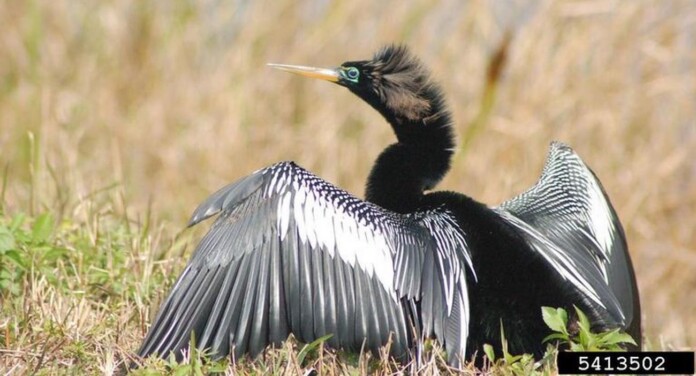
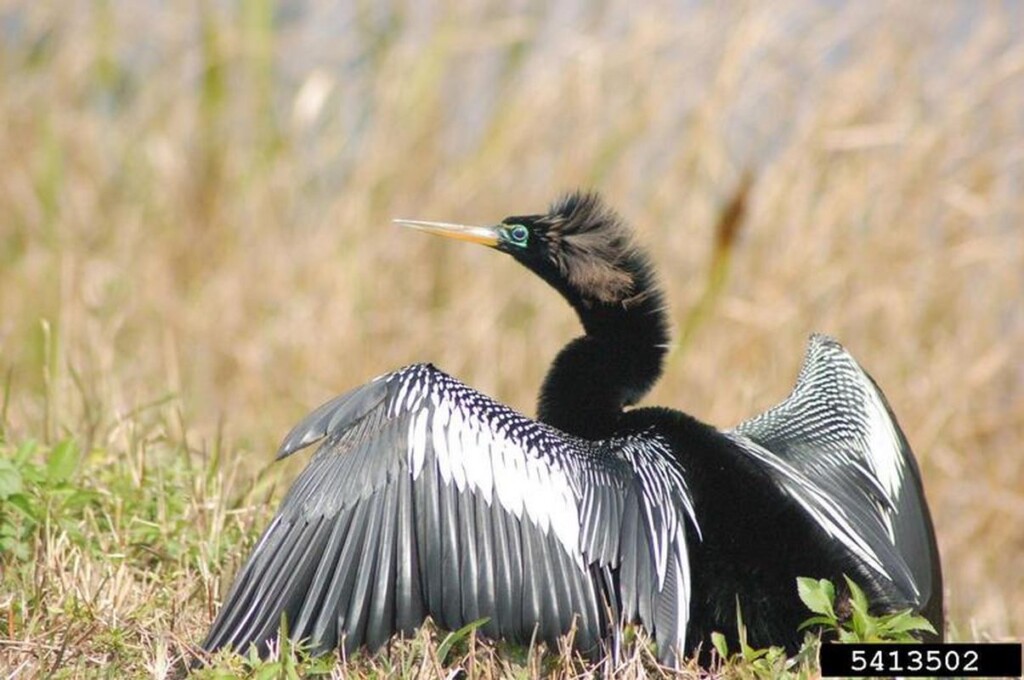
Adult male Anhinga - CC license 3.0 by Joy Viola, Northeastern University, Bugwood.org
An adult male Anhinga, credit – Joy Viola, Northeastern University, Bugwood.org / licensed under a Creative Commons Attribution-Noncommercial 3.0 License.
In winter of 2022, Maine was accorded the honor of a visit from a Stellar’s sea eagle, a truly incredible raptor with an 8-foot-wingspan that may have been diverted from its migratory path as far away as Russia.
Now, it’s the turn of this strange, long-necked “devil bird,” to send the state’s birdwatching community into a flurry of activity, as it’s the first-ever sighting in Maine’s history.
Related to the double-crested cormorant, this is an anhinga, a piscivorous bird native to South and Central America. Its breeding range extends into Florida, the Gulf Coast, and even as far as the Carolinas.
The out-of-place creature started making waves on July 23, when a woman posted a photo of it in a local Facebook group after seeing it loitering near a pond in Somerville, about 70 miles north of Portland.
Tabatha Holt did her own research and cleverly concluded it wasn’t a cormorant, as some in the comment section had suggested, but rather an anhinga “a little out of her usual range.”
At least 80 people were able to go and take a look at the anhinga, including Doug Hitchcox, staff naturalist for the Maine Audubon Society.
“Climate change is a big driver in northward expansion of bird ranges, and this fits within that pattern,” Hitchcox tells the Portland Press Herald. “It is definitely a factor, but it’s hard to know with a sample size of one. A lot of these waterbirds have weird expansions and retractions.”
Indeed, Hitchcox described this time of year as the “rarity season” when “just about anything can show up,” he said, this time to Bangor News Daily.
Their name comes from the Indigenous Tupi people of Brazil, according to Sarah Kuta of Smithsonian, who called them “devil birds” or “evil spirit of the woods.” Their no doubt striking appearance has also led to them being dubbed “water turkeys” and “snake birds” because of the way their long, black, serpentine necks seem to move like snakes through the water.
SHARE This Incredible Sighting With Your Friends Who Love Birdwatching…
At Georgia Tech, an incredible piece of biotechnology has cured one lucky child in a groundbreaking new treatment for a rare birth defect of the windpipe.
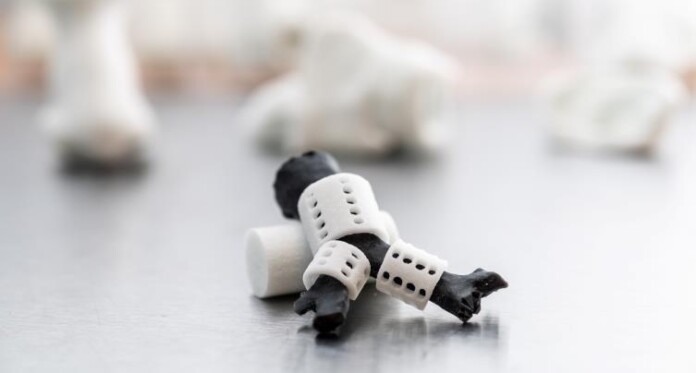
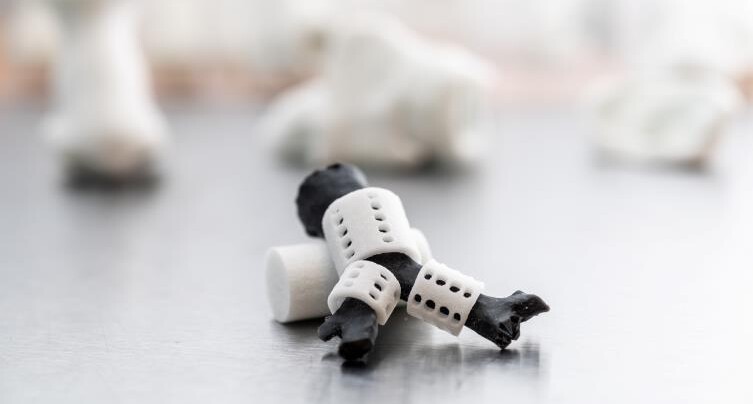
Partnering with Children’s Healthcare of Atlanta, the invention is a 3D-printed tracheal splint, which has allowed 4-year-old Justice Altidore to leap into preschool with all the gusty enthusiasm of a normal child.
About 1 in 2,100 children like Justice are born with tracheomalacia (TM), the most common inherited birth defect of the windpipe, according to the Cleveland Clinic.
TM occurs when cartilage in the trachea, or windpipe, is weak or floppy, causing the windpipe’s walls to collapse and restrict breathing. Treatments are by no means a sure thing, and much of a child’s early life with TM involves labored breathing and being put on a ventilator.
The Georgia Tech splints are made of bioabsorbable material, and hold the trachea in place like a medic would splint a bone. The cartilage eventually develops, and the splints are ultimately absorbed.
Children’s pediatric cardiologist Dr. Kevin Maher and Dr. Steven Goudy, a pediatric otolaryngologist, oversaw Altidore and three other children receive custom tracheal splints for an FDA-approved expanded access trial.
All four have seen substantial improvements in their respiratory capabilities, and the unprecedented results suggest a new era of care for the narrow field has arrived.
It’s not the first time that 3D printing has been used to help tracheal recovery.
In March, GNN reported that a biotech company had become the first and only one in the world to produce a bio-3D-printed windpipe that was successfully transplanted into a human body.
Nasal stem cells and cartilage cells were obtained from other patients who underwent other procedures, and these were replicated and combined with polycaprolactone (PCL) for structural support as well as a special ink made from living cells to make the windpipe, or trachea.
The transplant procedure was performed at St. Mary’s Hospital in Seoul on a woman in her 50s who lost part of her own trachea during thyroid removal surgery. The one-of-a-kind 3D printer, designed with over a decade of research and testing, was provided by the company T&R Biofab.
SHARE These Incredible Stories Of Medical Tech With Your Friends…
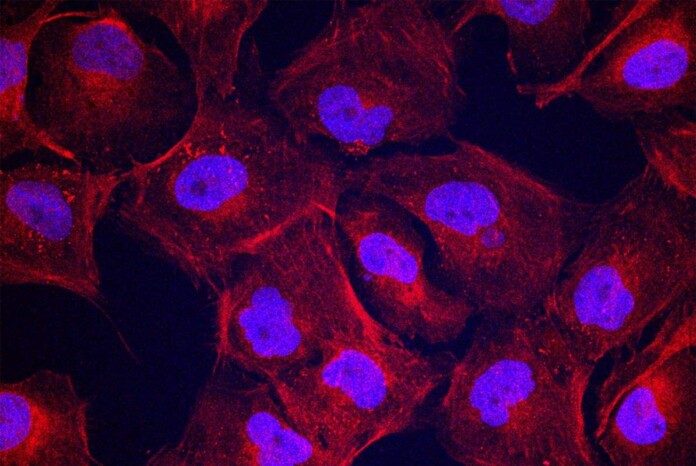
Collagen II (shown in red), a crucial component for regeneration, after being treated with the dancing molecules. Credit Stupp Research Group
Collagen II (shown in red), a crucial component for regeneration, after being treated with the dancing molecules. Credit Stupp Research Group
A team at Northwestern University has come up with the term “dancing molecules” to describe an invention of synthetic nanofibers which they say have the potential to quicken the regeneration of cartilage damage beyond what our body is capable of.
The moniker was coined back in November 2021, when the same team introduced an injection of these molecules to repair tissues and reverse paralysis after severe spinal cord injuries in mice.
Now they’ve applied the same therapeutic strategy to damaged human cartilage cells. In a new study, published in the Journal of the American Chemical Society, the treatment activated the gene expression necessary to regenerate cartilage within just four hours.
And, after only three days, the human cells produced protein components needed for cartilage regeneration, something humans can’t do in adulthood.
The conceptual mechanisms of the dancing molecules work through cellular receptors located on the exterior of the cell membrane. These receptors are the gateways for thousands of compounds that run a myriad of processes in biology, but they exist in dense crowds constantly moving about on the cell membrane.
The dancing molecules quickly form synthetic nanofibers that move according to their chemical structure. They mimic the extracellular matrix of the surrounding tissue, and by ‘dancing’ these fibers can keep up with the movement of the cell receptors. By adding biological signaling receptors, the whole assemblage can functionally move and communicate with cells like natural biology.
“Cellular receptors constantly move around,” said Northwestern Professor of Materials Sciences Samuel Stupp, who led the study. “By making our molecules move, ‘dance’ or even leap temporarily out of these structures, known as supramolecular polymers, they are able to connect more effectively with receptors.”
The target of their work is the nearly 530 million people around the globe living with osteoarthritis, a degenerative disease in which tissues in joints break down over time, resulting in one of the most common forms of morbidity and disability.
“Current treatments aim to slow disease progression or postpone inevitable joint replacement,” Stupp said. “There are no regenerative options because humans do not have an inherent capacity to regenerate cartilage in adulthood.”
In the new study, Stupp and his team looked to the receptors for a specific protein critical for cartilage formation and maintenance. To target this receptor, the team developed a new circular peptide that mimics the bioactive signal of the protein, which is called transforming growth factor beta-1 (TGFb-1).
Northwestern U. Press then reported that the researchers incorporated this peptide into two different molecules that interact to form supramolecular polymers in water, each with the same ability to mimic TGFb-1.
The researchers designed one supramolecular polymer with a special structure that enabled its molecules to move more freely within the large assemblies. The other supramolecular polymer, however, restricted molecular movement.
“We wanted to modify the structure in order to compare two systems that differ in the extent of their motion,” Stupp said. “The intensity of supramolecular motion in one is much greater than the motion in the other one.”
Although both polymers mimicked the signal to activate the TGFb-1 receptor, the polymer with rapidly moving molecules was much more effective. In some ways, they were even more effective than the protein that activates the TGFb-1 receptor in nature.
“After three days, the human cells exposed to the long assemblies of more mobile molecules produced greater amounts of the protein components necessary for cartilage regeneration,” Stupp said.
“With the success of the study in human cartilage cells, we predict that cartilage regeneration will be greatly enhanced when used in highly translational pre-clinical models,” Stupp said. “It should develop into a novel bioactive material for regeneration of cartilage tissue in joints.”
“We are beginning to see the tremendous breadth of conditions that this fundamental discovery on ‘dancing molecules’ could apply to,” Stupp said. “Controlling supramolecular motion through chemical design appears to be a powerful tool to increase efficacy for a range of regenerative therapies.”
SHARE This Complex But Nevertheless Important Breakthrough In Material Medicine…
Quote of the Day: “In a world full of adversity, we must dare to dream.” – Rob Burrow (former rugby star, who died of ALS in June at age 41)
Photo by: léa b
With a new inspirational quote every day, atop the perfect photo—collected and archived on our Quote of the Day page—why not bookmark GNN.org for a daily uplift?
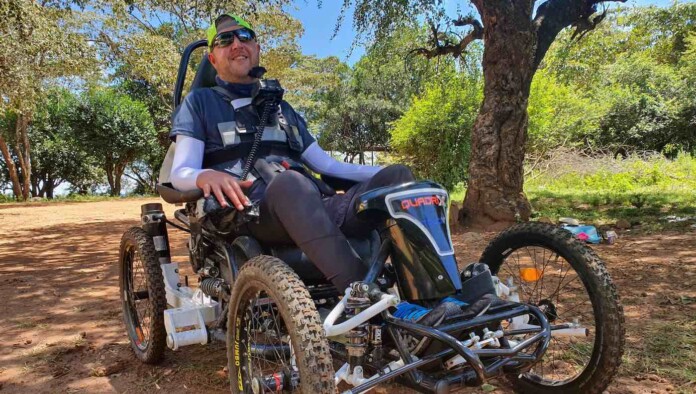
Andy Walker on his specially adapted quad-bike for people with paralysis-SWNS
Andy Walker on his specially adapted quad-bike for people with paralysis-SWNS
A 47-year-old paralyzed man hopes to become the first person to cycle the entire 1,000-mile length of Britain using a motorized bike controlled by his chin.
Andy Walker set off on his epic voyage from Lands End today, in a specially made quad-cycle with the goal of arriving at John O’Groats in two weeks—and he’s raising thousands for a charity involved in motor neuron disease (MND), an incurable brain condition.
The ex-competitive swimmer was 28 when he suffered a spinal cord injury after hitting a rock as he dove into the sea from Goa, India. He was left paralyzed from the neck down, and local doctors gave him just a one percent chance of survival.
But he refused to give up. He underwent a major operation at a hospital specializing in spinal injuries in Delhi, and was later flown back to England, where he spent a further eight months at Sheffield Northern Hospital.
“Since my accident, I’ve had absolute conviction and determination to lead a full and rewarding life,” said Walker. “Taking on these extreme challenges helps me continue to live my dream and make a difference to other people.”
Andy previously rode 350 miles across Kenya on a motorized quad bike and says he is motivated to complete these extreme charity challenges to “transform” the lives of others.
“This will be physically and mentally tough for me, but I’ll be able to get through it with the support of my friends and family, and knowing the money I raise will help transform the lives of so many people.”
Andy Walker and friends with paralysis in Kenya on specially adapted bikes (SWNS)
Andy team, including his cousin Lisa and lifelong friend Alan, will be traveling across the country this month, taking in some of the UK’s most beautiful landscapes. They’ll start in Cornwall before heading through Shropshire, and then go up to the Yorkshire Dales and the Lake District, before reaching John O’Groats in Scotland.
One of Andy’s heroes is former rugby league star Rob Burrow who died recently at age 41 from MND, after relentlessly campaigning to raise awareness of the disease. A third of the money Andy raises on GoFundMe will go toward building the new Rob Burrow Centre for Motor Neurone Disease, in partnership with Leeds Hospitals Charity.
Paul Watkins, the director of fundraising for that charity, said Andy embodies the famed rugby player’s legacy.
“Andy is embodying Rob Burrow’s famous quote, ‘In a world full of adversity, we must dare to dream’.
“His positive attitude and determination has proved he can overcome his own barriers to inspire others.
“This challenge is an incredibly difficult one, so for someone to be doing that on a bike controlled only by their chin, is truly incredible.
In addition to raising money for charities, Andy has also set up a motivational speaking company, called Living Your Dreams, to help inspire others to live life to the fullest.
In 2019, Andy was awarded the MBE (Member of the Order of the British Empire, a title bestowed on Brits for outstanding achievements or service to the community over the long term).
At the time, he said, “I’m a bit of a character… Getting awards and MBEs isn’t what my life is about.
“I try to support people—and that’s what the challenge was all about, raising money and awareness for such a great cause. I’ve had so much support from my family and from the charity, so if I can help somebody I will.
“My main aim has been to prove that life goes on.”
DOES THIS INSPIRE YOU? Share It to Inspire Others on Social Media…
You may be surprised that fully 85% of parents whose kids previously moved out are delighted their birds have came back to the nest, according to a new poll.
A survey of 2,000 parents whose kids in their 20s live at home aimed to figure out what this experience of housing their 20-somethings has been like—and it uncovered some interesting trends.
42% had kids who initially moved out, while 58% said their chicks had never flown the coop.
For those who spread their wings and left their parent’s house, the top reasons included: to experience living on their own (41%), go to college (29%) or to live with a partner (26%).
Of these respondents, seven in ten said they recall the moment their child asked to move back in (69%). 42% agreed the reason for moving back was not begin able to afford living on their own, and 33% simply wanted to save money (perhaps for a down payment on their own mortgage).
Conducted by Talker Research for BOK Financial, the survey found that convenience also played a factor in why these adult kids returned home (32%).
Most interestingly, one-quarter of the homebound youth wanted to be closer to their family (25%)—and nearly half of parents (45%) said it actually improved their relationship when the child moved back.
A quarter of those surveyed admitted they weren’t financially prepared to have their child live with them later in life (27%), but just 19% said the situation had a negative impact on their own financial planning or retirement plans.
“If you have adult kids living at home—which isn’t uncommon nowadays!—it’s an opportunity to model good financial practices while encouraging them to save diligently,” said Leasa Melton, manager of product strategy for BOK Financial.
29% reported their child rarely (or never) contributes to the household financially, but Melton encourages patience.
“They’re often living at home to save up for their next step of independence and having them in your house gives you a chance to cheer them on in a safe environment.”
“Like everything else in parenting, it’s a balance between letting them learn and helping guide them.
On average, parents estimate that their kids will remain under their roof for another 16 months, while a third of respondents aren’t sure about their children’s tenure (32%). Indeed, 56% have doubts about their kids being financially prepared now to leave home at this time.
For their children to gain financial independence, 28% of parents wish there were more resources for financial education or planning. However, a whopping 90% agreed that it was important for them to teach their children financial lessons before they exit high school.
Just 20% would grade their child’s understanding of financial matters with an A—although 27% gave the same grade to themselves.
There’s always time to learn, though. Parents have taught their children all sorts of lessons in adulthood, primarily finance-related (66%), domestic-related (59%) and lifestyle-related (52%).
A third of parents also recall being late bloomers, sharing that all of the financial advice they taught their child was learned in adulthood (32%).
While their adult children have been living with them, parents reported having emphasized lessons on how to save money (77%) and budget (71%), above all. Parents also stress the importance of paying down debt (53%) and investing (46%).
“Children might not always pick up on financial lessons when they are young,” said Melton. “But as they gain independence, living at home provides another opportunity to help them establish good financial habits—a win for both parents and their adult children.”
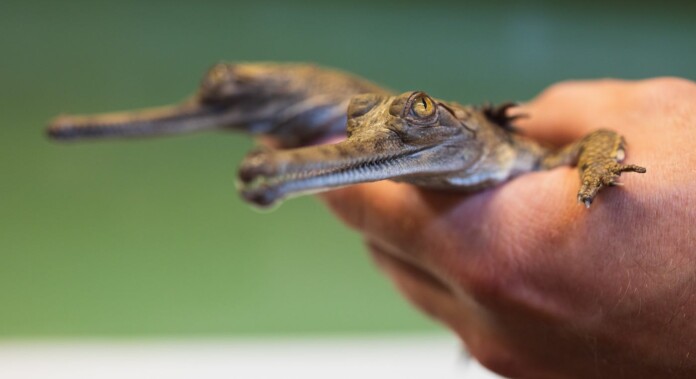
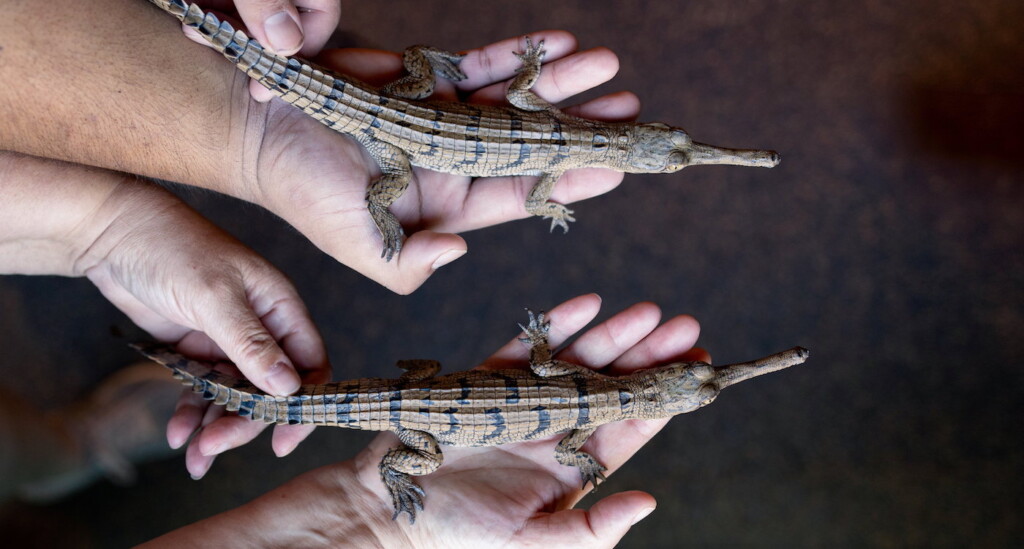
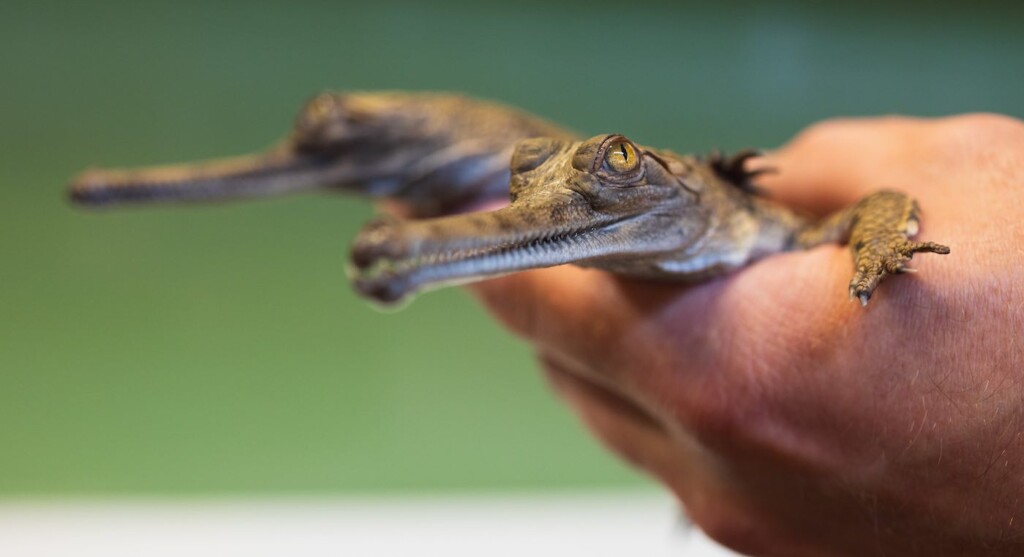
The 2024 gharial crocodile hatchlings – Fort Worth Zoo (SWNS)
A Texas zoo has made history with the first back-to back gharial crocodile hatchlings born in North America.
One gharial newborn arrived on June 16—and the second was found a week later—at the Fort Worth Zoo.
Gharials are listed as ‘critically endangered’ animals, with only around 650 adults left in the wild—so every conservation effort matters.
Fort Worth has been the only zoo in North America to produce multiple gharial crocodiles in one season—and is now delighted to be the first to do it in back-to-back years.
They were hatched from eggs laid by two different females within the zoo’s gharial group.
“Everyone here at the Fort Worth Zoo is ecstatic to have repeated success with our gharial hatchings for the second year in a row,” announced Vicky Poole, associate curator of ectotherms, on July 24.
“Having two additional hatchlings is a big win for growing the gharial population in zoos and expanding knowledge to help this critically endangered species survive.”
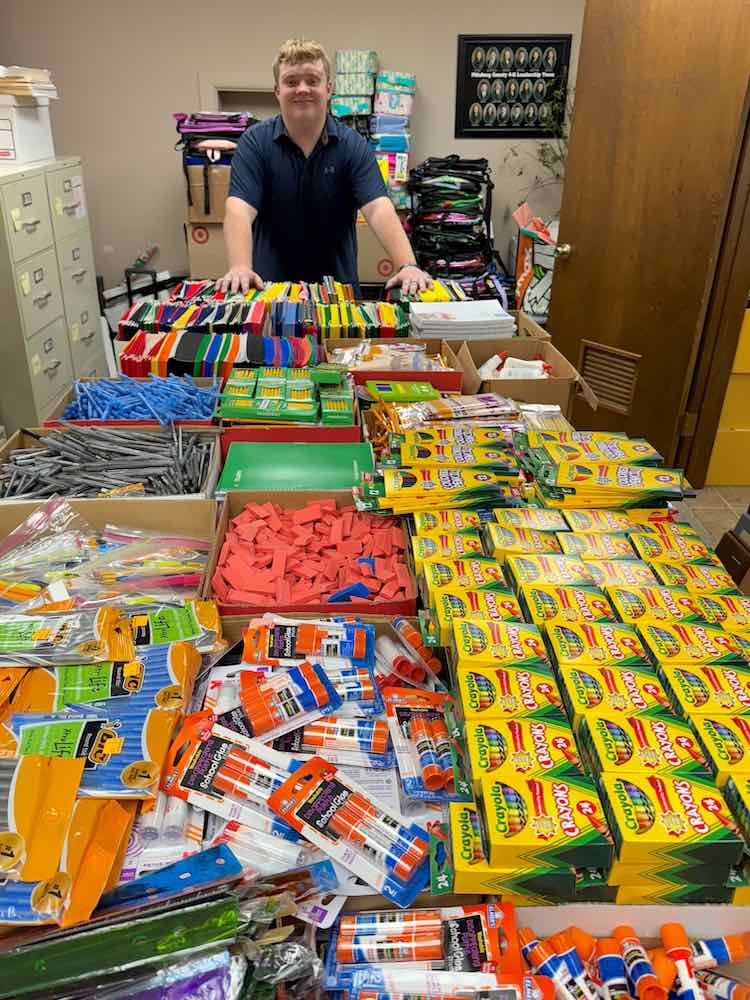
Backpack giveaway on August 3, 2024 – SGT. Miles Tarron Foundation
Backpack giveaway on August 3, 2024 – SGT. Miles Tarron Foundation
An 18-year-old Oklahoma boy spent his Saturday igniting school spirit by giving away 6,000 book bags stuffed with school supplies.
It was his ninth annual Back-to-School Book Bag Giveaway, which has distributed more than 33,000 backpacks and $1.3 million in school supplies to students and families from Reed’s hometown and beyond, including across Oklahoma, Texas and Arkansas.
Yesterday’s drive-thru event is just one aspect of Reed Marcum’s uplifting work to address the needs of the McAlester community in Pittsburg County
“I want to help kids get their school year started right,” said Reed, who is a rising sophomore at Oklahoma State University. “We have been distributing book bags and school supplies for nine years now and each time it is so fulfilling to know we are playing a small part in getting kids excited about their education.”
Reed was inspired by his longtime membership in 4-H, an American youth organization whose mission is “engaging youth to reach their fullest potential to become true leaders.”
The giveaway is part of Reed’s annual 4-H service project—and its success resulted in the teen being honored with the 4-H Youth in Action Award for his community-centered projects that have collectively raised more than $3.5 million in funds and donated items.
Reed Marcum with school supplies – SGT. Miles Tarron Foundation
As a national winner, Marcum received a $5,000 higher education scholarship and has had opportunities to showcase his story nationally, develop professional skills and network with prominent 4-H alumni.
“Reed’s commitment to his community is inspiring. He has had a huge impact here in McAlester,” said Greg Owen, Pittsburg County 4-H Educator and Marcum’s mentor. “I am so proud to support his service projects and watch him grow.”
Since 2016, Reed has also organized an annual 4-H Toy Giveaway. During last year’s toy drive, cars lined up for over three miles near the Southeast Expo Center in McAlester and Marcum distributed more than 10,000 toys to children and families in need for the holidays.
“I’m grateful to 4-H for the support and opportunity to make a difference in my community.”
Reed’s charity work and backpack giveaways are supported by the Sergeant Miles Tarron Foundation and Hudson Strong. To contribute to Reed’s projects with a debit/credit card or Paypal, click here.
HAIL THE TEEN HERO By Sharing the Inspiration on Social Media…
Quote of the Day: “We have, I fear, confused power with greatness.” – Stewart L. Udall
Photo by: Max Bender
With a new inspirational quote every day, atop the perfect photo—collected and archived on our Quote of the Day page—why not bookmark GNN.org for a daily uplift?
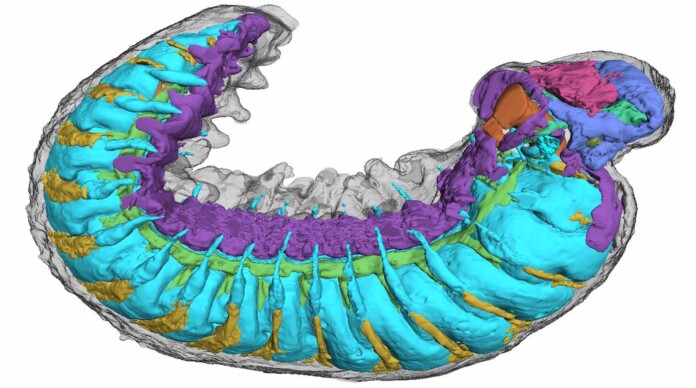
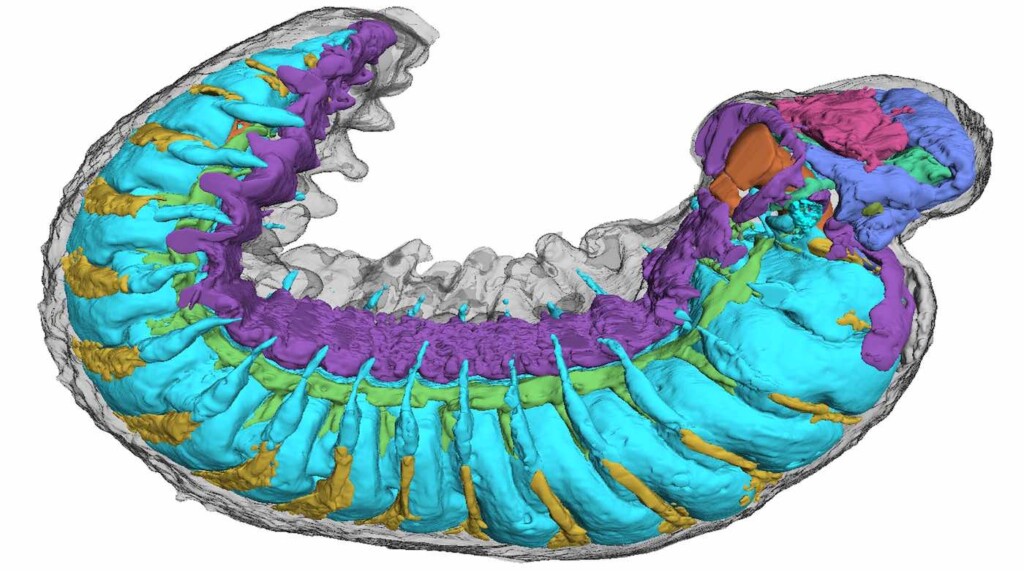
Side view of Youti Yuanshi worm fossil shows internal organ systems – by Emma J. Long via SWNS
Side view of Youti Yuanshi worm fossil shows internal organ systems – by Emma J. Long via SWNS
A 520-million-year-old worm fossil has solved the mystery of how modern insects, spiders and crabs evolved.
The “incredibly rare and detailed” fossil, named Youti yuanshi, offered a peek inside one of the earliest ancestors of many species today, as it dates back to the Cambrian period when major animal groups were first evolving.
What makes the fossil so special is the exceptional preservation of the larva and its internal organs, despite its tiny size.
The research team led by Durham University in the UK says it is one of the first arthropod ancestors belonging to a diverse group called euarthropoda, which includes modern insects, spiders, centipedes, and crustaceans.
Scientists published their findings in the journal Nature, saying the level of complex anatomy proves the early arthropod-relatives were much more advanced than previously thought.
“When I used to daydream about the one fossil I’d most like to discover, I’d always be thinking of an arthropod larva, because developmental data are just so central to understanding their evolution,” said Durham’s lead researcher Dr. Martin Smith.
“But larvae are so tiny and fragile, the chances of finding one fossilized are practically zero—or so I thought.
“I already knew that this simple worm-like fossil was something special, but when I saw the amazing structures preserved under its skin, my jaw just dropped. How could these intricate features have avoided decay and still be here to see half a billion years later?”
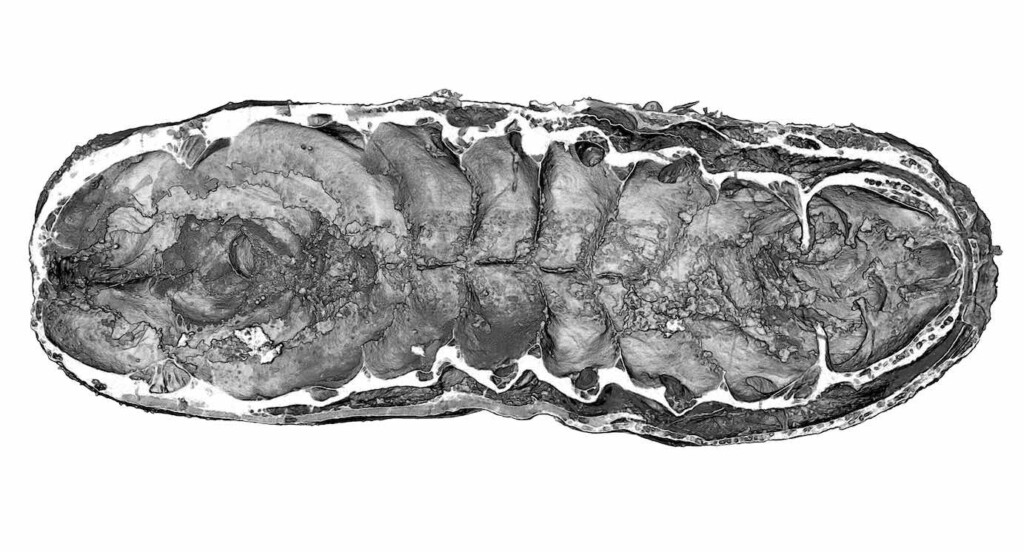
Virtual dissection of Youti yuanshi shows internal structure of body cavity with head to the left – Emma J. Long via SWNS
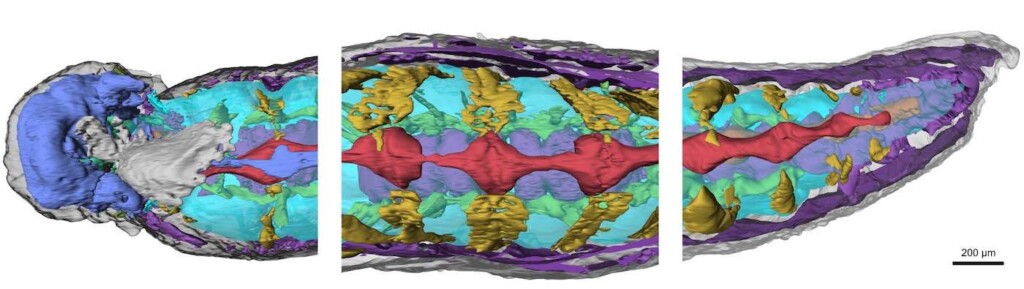
Using advanced scanning techniques of synchrotron X-ray tomography at Diamond Light Source, a national UK science facility, the research team generated 3D images of miniature brain regions, digestive glands and a primitive circulatory system. They even found traces of the nerves supplying the larva’s simple legs and eyes.
“It’s always interesting to see what’s inside a sample using 3D imaging, but in this incredible tiny larva, natural fossilization has achieved almost perfect preservation,” said study co-author Dr. Katherine Dobson, of the University of Strathclyde.
Studying the ancient larva has provided “key” clues about the evolutionary steps required for simple worm-like creatures to transform into the sophisticated arthropod body plan with specialized limbs, eyes and brains.
For example, the fossil reveals an ancestral proto-cerebrum brain region that would later form the nub of the segmented and specialized arthropod head with its various appendages such as antennae, mouthparts and eyes.
Composite image showing internal organ systems at front, middle and rear of Youti yuanshi – By Emma J. Long via SWNS
Scientists explained that the complex head allowed arthropods to take on a range of lifestyles and allowed them to become the dominant organisms in the Cambrian oceans.