














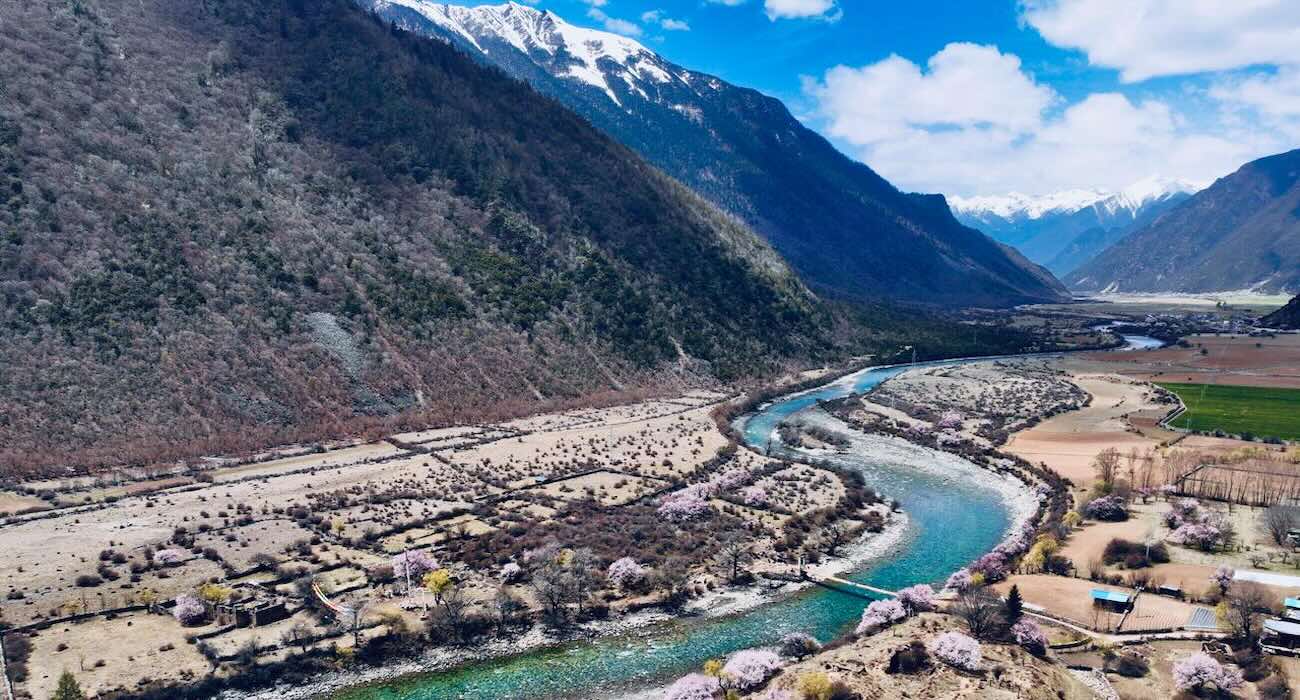
Thawing permafrost is considered a growing source of greenhouse gases as our climate warms and releases ancient carbon once stored in the frozen soils.
But a new study reveals an overlooked plus side: the process will also trigger a removal of emissions from the atmosphere as the landscape thaws.
The research, published in the journal Nature, shows that rock weathering increasingly counteracts river CO2 emissions, as permafrost degrades.
Rivers may develop a capacity to remove CO2 through intensified rock weathering. Researchers found that warming and permafrost degradation expose reactive minerals and increase water–rock interactions, accelerating chemical weathering processes that consume CO2.
In some river catchments, this geological carbon uptake is partially or even fully offsetting river CO2 emissions.
The research team from Umeå University in Sweden and East China Normal University investigated 50 rivers across the Qinghai–Tibet Plateau to understand how thawing permafrost reshapes carbon cycling. Outside of polar regions, the Plateau in southwestern China is Earth’s largest high-altitude cryosphere (areas with snow or ice year round). It’s often called “the Roof of the World”.
By combining measurements of river CO2 emissions, dissolved carbon, isotopic tracers, and geochemical modeling, the researchers found evidence that thawing landscapes intensify chemical weathering, transferring carbon into dissolved inorganic forms while consuming atmospheric CO2.
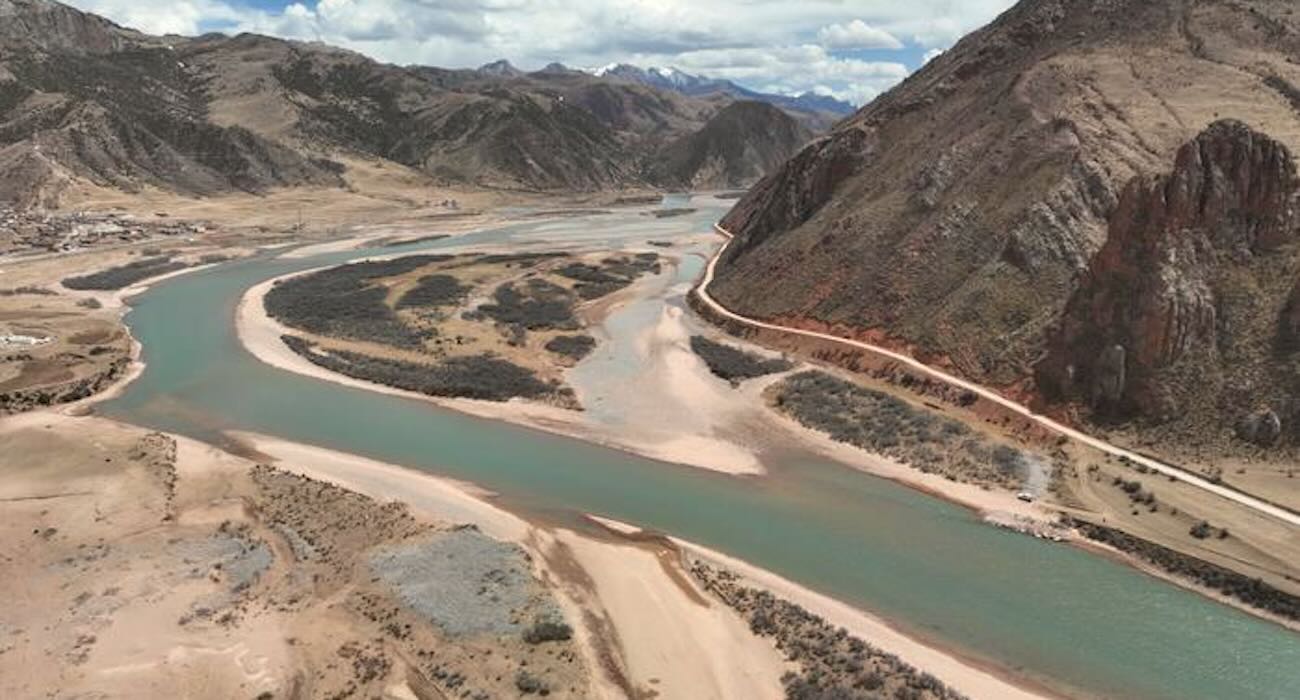
Carbon uptake can even exceed emissions
“We found that river CO2 emissions decline while carbon uptake through rock weathering increases as permafrost cover decreases,” said Liwei Zhang, biogeochemist at East China Normal University.
“In some catchments where permafrost has become patchier, weathering-driven carbon uptake was large enough to offset or even exceed river CO2 emissions.”
Across the study region, the team estimated that, on average carbon uptake from rock weathering offsets roughly 35% of river CO2 emissions.
However, in landscapes with discontinuous or isolated permafrost, weathering-driven carbon uptake sometimes exceeded 100 percent of river CO2 emissions, suggesting that geological carbon uptake can rival biological carbon release.
The findings challenge a simplified view of thawing permafrost as only a carbon source.
MORE CLIMATE GOOD NEWS:
• Polar Bears are in Better Physical Shape than 25 Years Ago, Despite Ice Losses
• One Glacier Is Actually Growing–Perplexed Scientists Hope to Discover its Secrets
• Pumping Water Onto Sea Ice Could Halt its Loss in the Arctic—Nonprofit Proves ‘Naive’ Idea Plausible
As frozen soils thaw, rivers receive large inputs of ancient organic carbon that microbes convert into greenhouse gases released to the atmosphere. But the new research suggests that geological processes operating alongside biological ones may partly counterbalance these emissions.
The researchers argue that future climate assessments should move beyond a sole focus on biological driven carbon emissions and, instead, incorporate geological carbon sources and sinks that emerge as frozen landscapes thaw.
SEND THE UNIQUE CLIMATE NEWS to Friends on Social Media…