- an artist’s impression of the LignoSat, credit Kyoto University.
– an artist’s impression of the LignoSat, credit Kyoto University.
One might imagine the hostile environment of space as bad news for any organic molecules.
However, Japanese engineers just created a wooden satellite called LignoSat, with preparations for a summertime 2025 launch.
The mission is meant as a demonstration of the capacities of this humble material to live long and prosper in the vacuum of space.
In space, there is no oxygen to set wood alight, no moisture to cause it to rot, and no microbes to eat it away. The biggest risk to the structural integrity of the lignan cells is burning up in the atmosphere—which is exactly what LignoSat was designed to do.
“All the satellites which re-enter the Earth’s atmosphere burn and create tiny alumina particles, which will float in the upper atmosphere for many years,” Takao Doi, a Japanese astronaut and aerospace engineer with Kyoto University, warned recently. “Eventually, it will affect the environment of the Earth.”
LignoSat was built from magnolia wood, a selection that was made based on a year of rigorous testing in various environments and conditions including the ISS. The tests were performed by Kyoto University in partnership with one of Japan’s oldest incorporated companies, Sumitomo Forestry.
“Wood’s ability to withstand these conditions astounded us,” Koji Murata, head of the project, told the Guardian.
One of the missions of the satellite is to measure the deformation of the wooden structure in space, Murata told the Observer.
“Wood is durable and stable in one direction but may be prone to dimensional changes and cracking in the other direction,” he said.
Before anyone gets the idea for wooden space stations, the LignoSat is the size of a large coffee mug, and will have an orbital period of 6 months before being allowed to fall into the atmopshere.
If the LignoSat performs well, space-grade lumber could become a standardized forestry product in the upcoming years. Many more nations are now launching satellites into space, and it’s estimated that 2,000 launches will be taking place annually during the next half-decade.
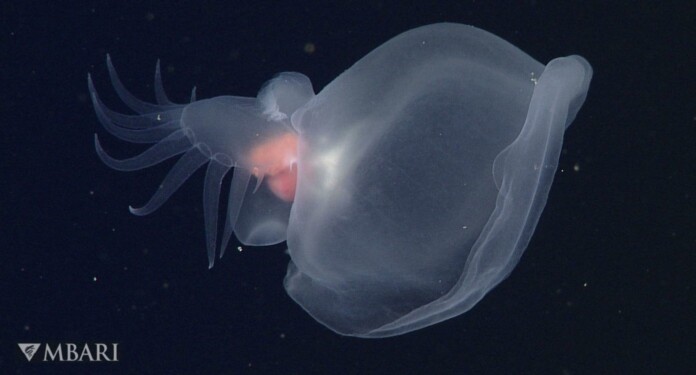
Newly described nudibranch, nicknamed ‘Mystery Mollusk’ – Credit: Monterey Bay Aquarium Research Institute
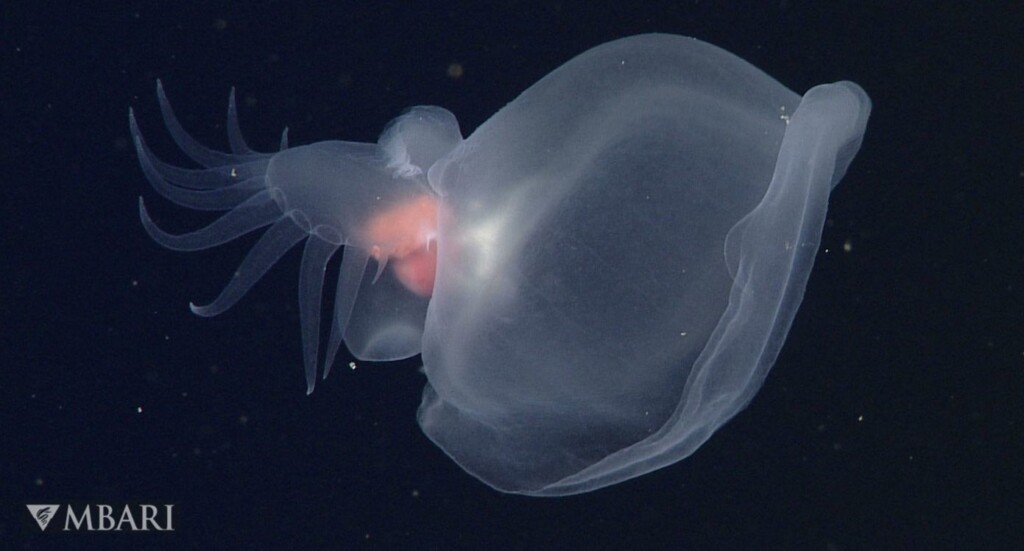
Newly described nudibranch, nicknamed ‘Mystery Mollusk’ – Credit: Monterey Bay Aquarium Research Institute
A remarkable new sea slug nicknamed the “mystery mollusk” has been discovered swimming deep in the ocean’s lightless zone.
The species has adaptations for life in the pitch-black depths including a large gelatinous hood to trap prey, a paddle-like tail, and the ability to light up, say American scientists.
The 5.6-inch (14.5-centimeter) hermaphrodite species, given the scientific name Bathydevius caudactylus, was discovered by marine biologists from Monterey Bay Aquarium Research Institute (MBARI) in California.
“Thanks to MBARI’s advanced underwater technology, we were able to prepare the most comprehensive description of a deep-sea animal ever made,” MBARI senior scientist Dr. Bruce Robison said. “We’ve invested more than 20 years in understanding the natural history of this fascinating species of nudibranch.”
MBARI researchers first observed the mystery mollusk in the year 2000 during a dive with the institute’s remotely operated vehicle (ROV) Tiburon offshore of Monterey Bay at 8,576 feet (2,614 meters) deep.
After reviewing more than 150 sightings from ROVs over the past 20 years, they have published a detailed description of the creature in the journal Deep-Sea Research.
With a voluminous hooded structure at one end, a flat tail fringed with numerous finger-like projections at the other, and colorful internal organs in between, the team initially struggled to place the animal in a group.
Because it also had a foot like a snail, they nicknamed it the “mystery mollusck.” After gently collecting a specimen, MBARI researchers were able to take a closer look at the animal in the lab and confirm that it is, in fact, a sea slug, or nudibranch.
They are commonly found in coastal environments—such as tide pools, kelp forests, and coral reefs—and a few species are known to live on the abyssal seafloor. Some live in open waters near the surface, belying their colloquial name.
But Bathydevius caudactylus is the first nudibranch known to live in the midnight zone, an expansive environment of open water 3,300 to 13,100 feet below the surface, also known as the bathypelagic zone.
The B. caudactylus is currently known to live in the waters offshore of the Pacific coast of North America, with sightings on MBARI expeditions as far north as Oregon and as far south as Southern California.
While most sea slugs use a rough tongue to feed on prey attached to the seafloor, B. caudactylus uses a cavernous hood to trap crustaceans like a Venus fly trap plant. A number of other unrelated deep-sea species use such a feeding strategy, including some jellies, anemones, and tunicates.
To avoid being eaten, it hides in plain sight with a transparent body. If discovered, it can light up with bioluminescence to deter and distract hungry predators. On one occasion, researchers saw it illuminate and then detach a steadily glowing finger-like projection from the tail, likely serving as a decoy to distract a potential predator.
“When we first filmed it glowing with the ROV, everyone in the control room let out a loud ‘Oooooh!’ at the same time,” said MBARI senior scientist Dr. Steven Haddock. “We were all enchanted by the sight.”
“Only recently have cameras become capable of filming bioluminescence in high-resolution and in full color. MBARI is one of the only places in the world where we have taken this new technology into the deep ocean, allowing us to study the luminous behavior of deep-sea animals in their natural habitat,” the appropriately named Haddock, added.
To date, MBARI technology has been used to document more than 250 deep-sea species previously unknown to science, but Haddock says B. caudactylus represents a “unique” find among them.
“For there to be a relatively large, unique, and glowing animal that is in a previously unknown family really underscores the importance of using new technology to catalogue this vast environment,” he said. “The more we learn about deep-sea communities, the better we will be at ocean decision-making and stewardship.”
SHARE This Great Deep Sea Discovery With Your Friends…
Attached to the presidential ballots in this year’s elections, Rhode Island had posed question 4: would the voter like to see the state borrow money for environmental preservation?
Question 4 passed by a three-to-one margin, authorizing the state to issue $53 million in so-called “Green Bonds” and use the money for farmland and forest preservation.
Rhode Island is the smallest state in the union, and land is therefore at a premium and always has been. Before World War II, nearly the whole state was farmland, but after years of suburban sprawl and immigration from nearby major cities, farmland and forests have shrunk drastically.
“The Green Bond received the highest level of approval of all the bond questions on the ballot, winning in all 39 cities and towns in the state,” said Jed Thorp, director of advocacy for the nonprofit Save The Bay. “The bond will lead to meaningful investments in climate resilience, and the protection of farms, forests, and open space—all of it will benefit the bay and watershed.”
Specific projects haven’t been stipulated yet, apart from $15 million being earmarked for industrial upgrades in the Port of Davisville in North Kingstown, and $5 million for farmland preservation.
EcoRI reporting on the news, spoke with members of the ALPC, or the Agricultural Lands Preservation Committee, who explained how this public body has bought thousands of acres of farmland in a trust to prevent it from being turned into commercial real esate or housing.
NBC 10 WJAR, reports that money will also go to protecting waterways and outdoor recreation areas.
“At the heart of the $53 million bond is our commitment to protecting our environment, and growing our green economy, and enhancing quality of life for us Rhode Islanders,” Gov. Dan McKee said. “These three pillars will help revolutionize our state’s fight against climate change and bolster our efforts to become a healthier community for all.”
SHARE This Investment In Rhode Island’s Green Economy With Your Friends…
Quote of the Day: “When you say you are in love with humanity, you are well satisfied with yourself.” – Luigi Pirandello
Photo by: Ishan Gupta
With a new inspirational quote every day, atop the perfect photo—collected and archived on our Quote of the Day page—why not bookmark GNN.org for a daily uplift?
From the Île de la Cité in Paris, out from the northern Belfry of the Notre Dame, the tolling of bells was heard by thousands.
It was the first tolling since 2020, a year after a fire destroyed much of the 850-year-old building in 2019, and their restoration represents an important milestone in the lead-up to the cathedral’s opening in less than a month.
Eight of the bells rang as part of a technical test on Friday. Neither the bells nor the belfry had been destroyed in the fire, but they were damaged and it took over a year to restore that part of the building.
“Hearing the bells ring this morning was very moving,” Mr. Alexandre Gougeon, who managed their installation, told CNN, adding it was “the culmination of a big project.”
Three new bells were added to the tower, including a large one donated by the Parisian olympic planning committee. It was rung with a mallet above the Stade de France, the country’s national stadium, whenever an athlete won gold or broke a record.
Though the structure wasn’t ready for the Paris Olympics, as President Emmanuel Macron had originally planned, all the notable milestones have been met, including the restoration of the roof, spire, bells, and golden cockerel.
Philippe Jost, president of the public body responsible for conserving and restoring the UNESCO World Heritage Site, credited 2,000 people working to restore the building by December 8th.
“Everything is almost ready, which means we’re on schedule. We’re confident,” Jost told radio network RTL. “Every day the cathedral is more beautiful,”
WATCH and LISTEN below…
SHARE This Perfect Excuse To Visit Paris Christmas With Your Friends…
A pair of lost cities in the highlands of Uzbekistan recently found by archaeologists using lidar demonstrate that the bounty of the Silk Road trade was so lucrative, it allowed urban populations to flourish without agriculture to support them.
Tugunbulak and Tashbulak were two mountain settlements that flourished between the 8th and 11th centuries CE nominally under the control of a Turkic state known as the Qarakhanids that held influence over a slice of Central Asia spanning from the Aral Sea to the Taklamakan Desert.
Along with his colleagues, Michael Frachetti, lead author of the paper on the discovery and lead excavator on the sites since 2011, carried out the first lidar survey in the history of Central Asian archaeology to make the discovery. Lidar stands for Light Detection And Ranging and uses laser-based technology to map landscapes from the air.
It’s one of the most consequential technological innovations in the history of archaeology and has been used all throughout the world to find evidence of past habitation where today only nature remains.
Typically, lidar is used when trees block the view of any eyes looking down upon a landscape, but archaeologists speaking with Science remarked with astonishment how nuanced the lidar survey’s topographical readings were, and how much more they revealed compared to looking down from above on what is essentially an open field.
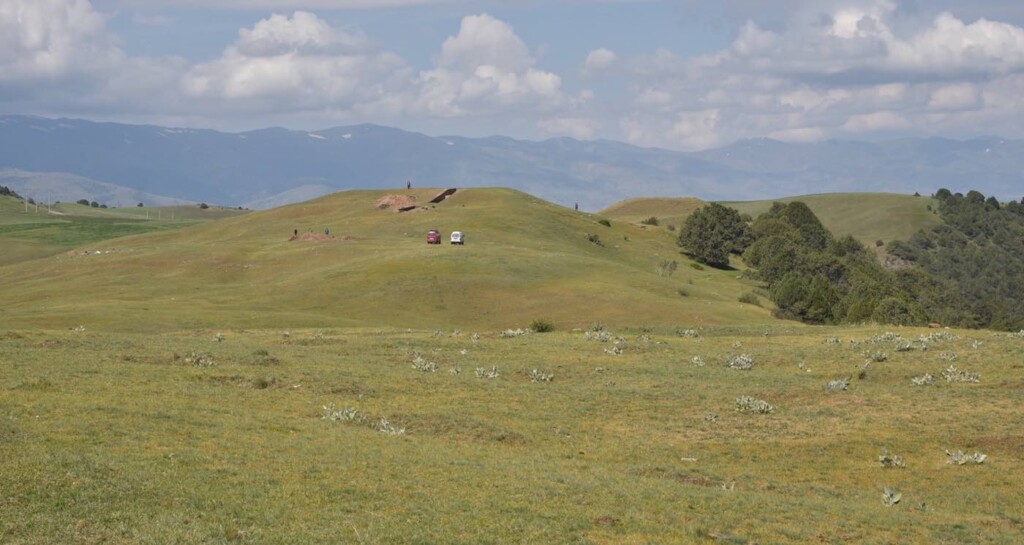
Tugunbulak occupies approximately 120 hectares (1.2 sq. kilometers) and shows evidence of over 300 unique structures, which vary in size from 30 to 4,300 sq. meters. More specifically, the researchers identified watchtowers connected with walls along a ridge line, evidence of terracing, and a central fortress surrounded by walls made of stone and mudbrick.
Tashbulak, meanwhile, occupies 12–15 hectares (0.12–0.15 km2). Frachetti and colleagues note that even the smaller city follows urban planning similar to concurrent cities in medieval Central Asia, namely it includes a central citadel made of an elevated mound surrounded by dense architecture and walled fortifications. They suggest that there are at least 98 visible habitations, which share a similar shape and size to those in Tugunbulak, and hypothesize that both cities were built to exploit the surrounding mountain terrain for defense as well as the abundant ores and pastures the highland region provides.
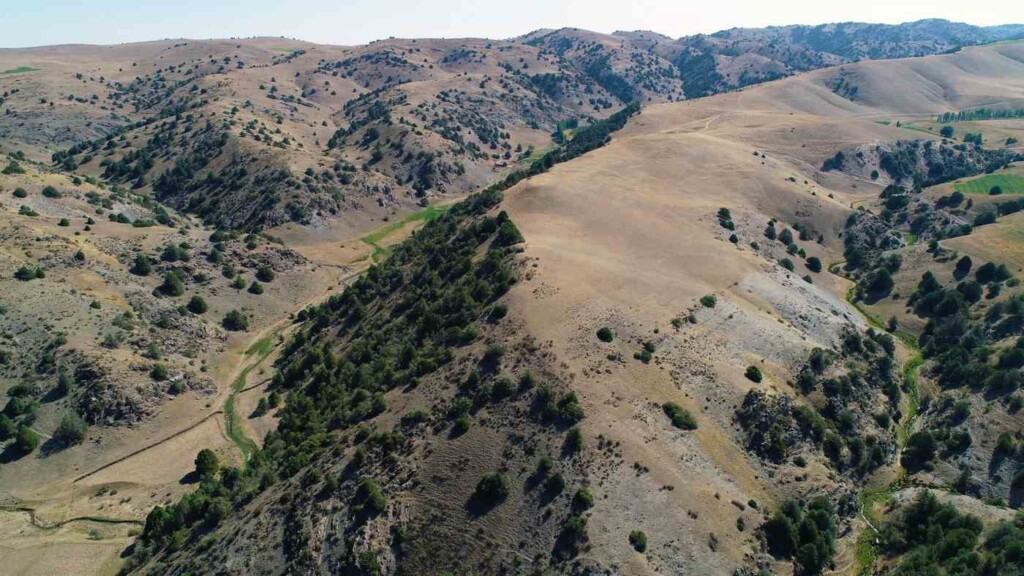
Both sites sit at or above 6,000 feet (2,000 meters) above sea level. Even today with all of humanity’s power to move and shape the landscape, only 3% of the global population dwells at that elevation or higher.
“High-altitude urban sites are extraordinarily rare in the archaeological record because of a unique set of landscape challenges and technological demands that must be overcome for people to form large communities in mountainous areas,” writes Zachary W. Silvia, a professor at Brown University’s the Joukowsky Institute for Archaeology and the Ancient World, who wasn’t involved in the study.
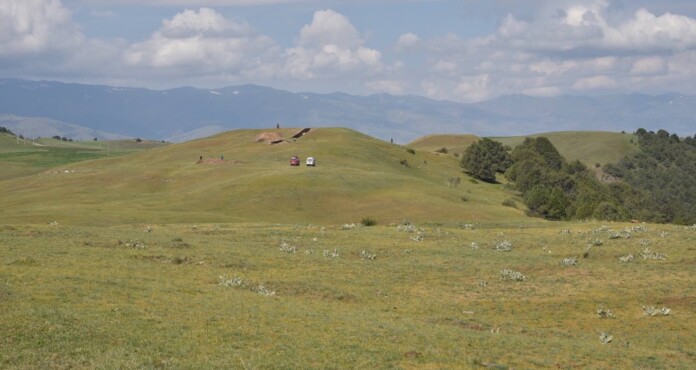
PICTURED: A semi-automated method of image analysis helped the authors identify potential archaeological features of interest (dark lines) and evidence of dense urban development during medieval times. PC: Michael Frachetti et al, released.
A Tale of Two Cities and the Wealth of Nations
Discovered in 2011 and 2015, Tashbulak and Tugunbulak sit along the famous collection of overland trade connections that linked East and West popularized in the 20th century by the name of the Silk Road(s). Rather than being a single highway, the Silk Road was instead an intricate, human-powered commercial network that allowed Rome to trade glass and cotton for China’s silk without one civilization ever needing to visit the other.
A variety of ethnic groups, kingdoms, and oasis cities linked these disparate superpowers of their day, the fortunes of whom rose and fell with the trade along the dozens of individual routes that made up the Silk Road. Famous Central Asian cities like Bukhara, Samarkand, Merv, Kashgar, and Khiva flourished off this trade, but were located on planes or lowlands with abundant water supplies.
Nestled in a valley in the Mal’guzar highland range of southeastern Uzbekistan, a northern offshoot of the formidable Pamir Mountains, Tashbulak and Tugunbulak are far from being as conveniently located, and despite being far from any suitable land to practice agriculture, Tugunbulak, which is over half the size of Samarkand from the same period, could have housed as many as 5,000 residents with the only source of food being pastured animals or what could be imported.
The evidence that pastoralists inhabited the city is convincing. Coupled with the impressive fortifications, artifacts recovered during digs in the city suggest that Mal’guzar was beyond the cultures of any then-ruling states, and existed as a somewhat separate entity—which in Central Asia almost always means nomadic. No sub-urbanism seems to have developed beyond the scope of Tugunbulak’s walls, reinforcing that the inhabitants dwelt in yurts or felt tents if no room could be found in the city.
Excavations in the city revealed the presence of iron ore foundries with domed furnaces that likely produced steel from the wealth of iron veins in the surrounding hills. The city seems to have been a fortified center of metallurgy, producing weapons, farming implements, and equestrian tackle for nearby societies and spending their revenues on imports to sustain their mountain living.
As was the case with many cities along the Silk Road, a shift in commonly used routes because of danger or environmental change, the fall in demand for a product thousands of miles away, or the onset of war, might dry up the life-sustaining trade in remarkably short time, and the course of the Silk Roads are littered with results of these changes in fortune, something that Tashbulak and Tugunbulak must have fallen victim to.
“Frachetti and colleagues’ work provides an immense contribution to the study of medieval urbanism in Central Asia, as well as to the poorly understood phenomenon of dense settlements at high altitudes,” Silva adds. “Future work will certainly reveal the economic and social effect that these sites wielded over contemporary cities across these medieval Silk Roads”. WaL
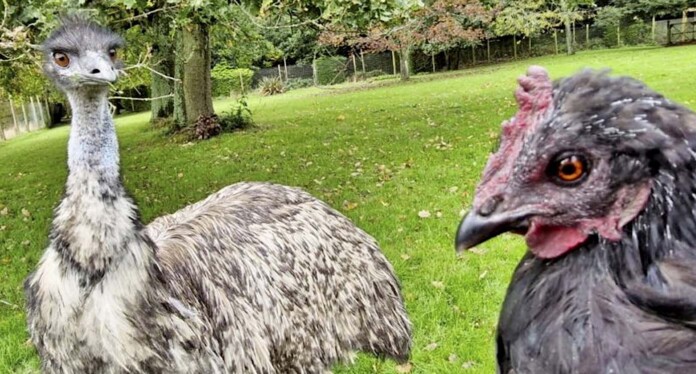
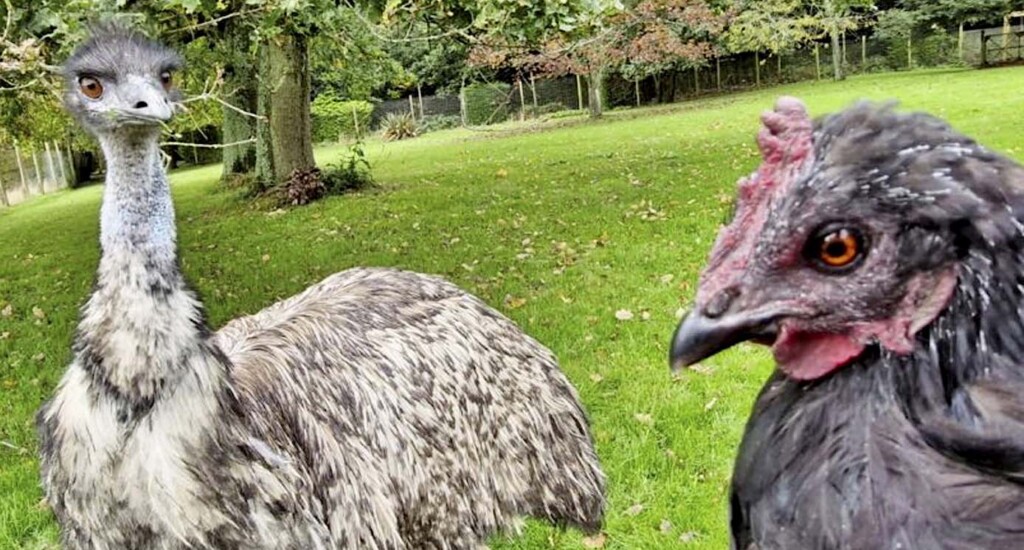
An abandoned emu is thriving in a British aviary after being raised by an unlikely foster mom one-tenth her size.
The emu, named Shrub, was rejected by parents Forest and Mathilda who also had a difficult start in life.
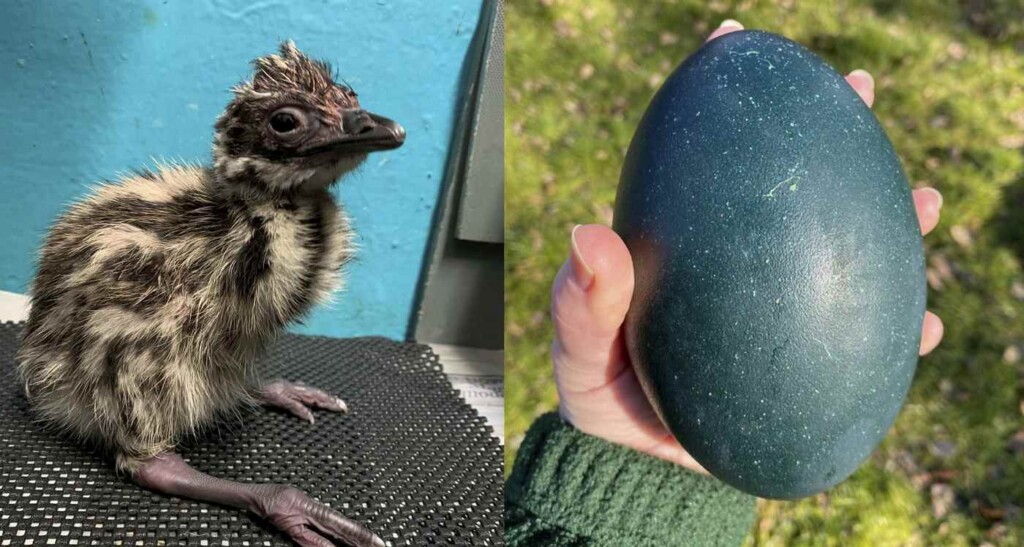
Keepers at Birdworld discovered Mathilda had successfully hatched an egg but neither parent was willing to take on the role of caregiver. The lifeless one-pound body of an emu chick covered in mud, flies, and being pulled from the nest by crows, turned out to be Shrub.
In the wild that would certainly be the end of the story, but as they were in captivity, the job of raising her was given to Nugget, a small Bantam Hen who lived at Birdworld in Surrey, England. Nugget taught shrub skills such as eating and walking.
“Unlike most birds, emu males incubate eggs, and they are typically winter breeders,” said Polly Bramham, Living Collections Manager at Birdworld. “However, Shrub’s mother, Mathilda, laid eggs in the summer, and Forest didn’t seem to be incubating them.”
“We didn’t expect the eggs to hatch and were surprised when they found Shrub cold, muddy, and neglected in the nest. She was rushed to an ICU, warmed up, and fortunately turned out to be a resilient survivor, much like her father.”
credit – Birdworld / SWNS
Following her rescue and recovery, Shrub needed some expert training on how to become an emu, a job one might suppose Nugget was unprepared to teach. But Nugget took to emu-ing like a duck to water.
“Shrub quickly learned how to pick up food, drink, and coordinate her gangly legs. The keepers loved watching the two of them together,” said Polly, adding that it wasn’t long before the difference in size meant that the moment had come to reconnect Shrub with her parents.
“However, emus can be very reactive and defensive, and to let Shrub in with Forest and Mathilda may have been fatal.”
To combat this obstacle, Birdworld’s keepers would walk Shrub outside Forest and Mathilda’s enclosure, letting Shrub interact with her birth parents from outside the safety of the fence.
“It was particularly important to do this while Shrub was still a juvenile, so that Forest and Mathilda would not see her as a threat,” said Polly. “We found Shrub to be a very happy-go-lucky emu, frequently misjudging social etiquette and getting disciplined as a result.”
Emus are extremely large and potentially dangerous birds with strong kicking legs, meaning that Shrub would continue to be separated from the adults at night for the next couple of months as she learned the rules of emu life that Nugget had been unable to impart.
Today, Shrub now lives full-time with her parents, having started her life facing adversity but finding hope under the wing of her caring foster mother, Nugget.
“Seeing Shrub with her parents as they race around their paddock, you would never guess their difficult beginnings. Shrub is an amazing lady, and the keepers are so proud that she has no confusion about who she is. She is 100% emu,” Polly said.
STRUT This Stroy Of A Bizarre Upbringing For This Bird To Your Friends…
When Mount St. Helens erupted in 1980, lava incinerated anything living for miles around. As an experiment, scientists dropped gophers onto parts of the scorched mountain for only 24 hours. The benefits from that single day were undeniable—and still visible 40 years later.
Once the blistering blast of ash and debris cooled, scientists theorized that gophers might be able to help regenerate lost plant and animal life on the mountain by digging up beneficial bacteria and fungi. Two years after the eruption, they tested this theory, and were proved right.
“They’re often considered pests, but we thought they would take old soil, move it to the surface, and that would be where recovery would occur,” said UC Riverside microbiologist Michael Allen.
But the scientists did not expect the benefits of this experiment would still be visible in the soil today, in 2024. A paper out this week in the journal Frontiers in Microbiomes details an enduring change in the communities of fungi and bacteria where gophers had been, versus nearby land where they were never introduced.
“In the 1980s, we were just testing the short-term reaction,” said Allen. “Who would have predicted you could toss a gopher in for a day and see a residual effect 40 years later?”
In 1983, Allen and Utah State University’s James McMahon helicoptered to an area where the lava had turned the land into collapsing slabs of porous pumice. At that time, there were only about a dozen plants that had learned to live on these slabs. A few seeds had been dropped by birds, but the resulting seedlings struggled.
After scientists dropped a few local gophers on two pumice plots for a day, the land exploded again with new life. Six years post-experiment, there were 40,000 plants thriving on the gopher plots. The untouched land remained mostly barren.
An unhappy gopher and plant near the gopher enclosure fence, 1982 – credit, Mike Allen/UCR, released.
All this was possible because of what isn’t always visible to the naked eye. Mycorrhizal fungi penetrate into plant root cells to exchange nutrients and resources. They can help protect plants from pathogens in the soil, and critically, by providing nutrients in barren places, they help plants establish themselves and survive.
“With the exception of a few weeds, there is no way most plant roots are efficient enough to get all the nutrients and water they need by themselves. The fungi transport these things to the plant and get carbon they need for their own growth in exchange,” Allen said.
A second aspect of this study further underscores how critical these microbes are to the regrowth of plant life after a natural disaster. On one side of the mountain was an old-growth forest. Ash from the volcano blanketed the trees, trapping solar radiation and causing needles on the pine, spruce, and Douglas firs to overheat and fall off. Scientists feared the loss of the needles would cause the forest to collapse.
“These trees have their own mycorrhizal fungi that picked up nutrients from the dropped needles and helped fuel rapid tree regrowth,” said UCR environmental microbiologist and paper co-author Emma Aronson. “The trees came back almost immediately in some places. It didn’t all die like everyone thought.”
On the other side of the mountain, the scientists visited a forest that had been clearcut prior to the eruption. Logging had removed all the trees for acres, so naturally there were no dropped needles to feed soil fungi.
“There still isn’t much of anything growing in the clearcut area,” Aronson said. “It was shocking looking at the old-growth forest soil and comparing it to the dead area.”
These results underscore how much there is to learn about rescuing distressed ecosystems, said lead study author and University of Connecticut mycologist Mia Maltz, who was a postdoctoral scholar in Aronson’s lab at UCR when the study began.
“We cannot ignore the interdependence of all things in nature, especially the things we cannot see like microbes and fungi,” Maltz said.
SHARE This Unlikely Hero Of Mount St. Helens’ Ecosystem On Social Media…
Quote of the Day: “The ties that bind us are stronger than the stresses that separate us.” — Colin Powell
Photo by: Juri Gianfrancesco (cropped)
With a new inspirational quote every day, atop the perfect photo—collected and archived on our Quote of the Day page—why not bookmark GNN.org for a daily uplift?
In an ad-hoc ceremony reminiscent of the famous Christmas Truce of the First World War, Chinese and Indian troops along a disputed border region exchanged sweets on Diwali.
The two nations have contested a region called Ladakh for decades, but following a recent agreement to draw back from strategic chokepoints, relations are on the up and up such that the soldiers, who now have mutually exclusive patrolling schedules to prevent accidental conflict, met to exchange presents of sweets on Diwali, the Hindu festival of lights.
A traditional practice on the holiday, the gifts were exchanged at five designated Border Personnel Meeting Points in much the same way that the Germans and Allies emerged from their trenches and exchanged gifts in no man’s land along the Western Front in the Winter of 1914.
An Indian army official who was not authorized to speak to journalists confirmed that “sweets were exchanged between troops of India and China at several border points on the occasion of Diwali,” according to the Straits Times.
Ladakh itself is part of the Jammu-Kashmir union territory of India, but since the 1962 Sino-Indian War, a portion of land along the border has been claimed by both nations. The two are not divided by recognized borders but by a notional demarcation line called the Line of Actual Control (LAC), a term presented by CCP leader Zhou Enlai as a compromise—that each nation could claim land up the point at which they actually can control it.
While it’s one of the most hotly contested border areas on Earth, each nation prides itself on restraint. It’s said that not since 1975 have shots been fired at men along the LAC.
Such is the reluctance by both forces to ever be the first to fire a shot in anger, the most recent flare-up in tensions escalated into a massive street brawl, lasting 6 hours, involving hundreds of border patrolmen from both sides wielding makeshift hand-to-hand weapons, and causing the deaths of 20 Indians and between 4 and 43 Chinese, all without either group ever opening fire on the other.
On October 21st, Indian Prime Minister Narendra Modi and Chinese President Xi Jinping negotiated a disengagement of several key friction areas along the LAC which was completed, as confirmed by the Indian military scouring the area with drones.
The completion of the disengagement led the Chinese Ambassador to India, Xu Feihong, to declare “China-India relations are standing at a new starting point,” adding later to reporters that “The most important thing is how to handle the differences.”
SHARE This Good Old Fashioned Diplomatic Resolution With Your Friends…
A vast collaboration of birding organizations has organized the largest citizen science project in the history of ornithology—a ‘Big Day’ with 201 countries participating.
Documenting 7,800 species in a single day, (there are around 11,000 species known in the world) the October 12th Big Day succeeded in recruiting 748,000 birders for the job, and producing 66,000 photos for a scientific library.
The 10/12 Big Day was organized by eBird, the Cornell Lab of Ornithology, the birding app Merlin, and dozens of continental and national birding groups.
“To every birder who took part in October Big Day: thank you. Your passion, dedication, and love for birds are what make this event truly special,” eBird’s press team wrote in a statement. “Together, we’ve contributed data that will help inform the conservation of birds for generations to come.”
The name ‘Big Day’ comes from the typical birding phrase ‘Big Year;’ one in which a birdwatcher plans to try and see as many species as she or he can in a single year.
Standout performances this year were seen in Italy, where eBird Italia registered a doubling of users, and a 229% increase in checklists submitted bettered only by Tanzania in year-over-year increases.
Unsurprisingly, Colombia, which has the largest number of endemic birds of any country on Earth, recorded the highest number of bird sightings. Tanzania recorded the highest number of species in an African country (772) and India recorded the most for Asia (750).
Data from birdwatching events like this can help inform the conservation status of birds year after year. While scientists may be able to carefully track the populations of single animals, such work is expensive and time-consuming.
Along with being free of cost to science, citizen science initiatives like the Big Day create a greater picture of overall bird diversity and abundance.
The next Big Day is on May 10th.
SHARE This Amazing Accomplishment With Your Friends Who Love Birdwatching…
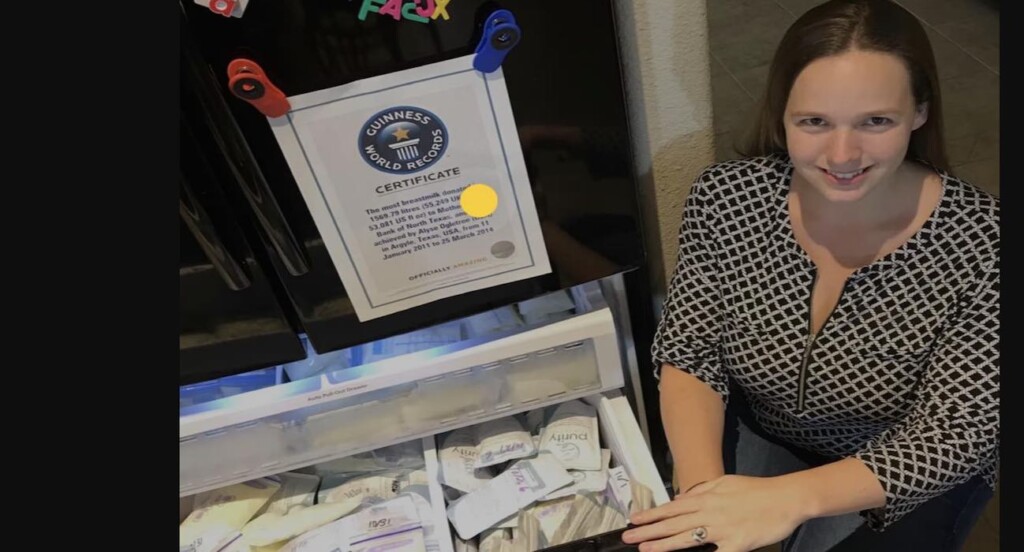
An extraordinary woman from Texas has claimed a Guinness World Record thanks to her generous heart, and a little help from some other organs.
Alyse Ogletree has set the world record for the most amount of breastmilk donated by a single person—2,645.58 liters—or just about 700 gallons.
It was a record she had previously broken in 2014 following the birth of her son Kyle in 2010. She was told that she could donate the extra amount of milk she was producing to women who wanted to breastfeed their infants but were struggling.
The suggestion was made when the nurses observed how much excess breastmilk Alyse was producing. She was more than happy to donate, and admitted in an interview with Guinness that donating and giving are some of the most important parts of her life.
“I have a big heart, [but] at the end of the day, I’m not made of money and I can’t give away money to good causes over and over because I have a family to support,” Ogletree said. But “donating milk was a way I could give back”.
“I was overproducing and throwing away milk, unaware overproduction was unique and other mothers struggled,” she remembered. “Our first child, Kyle, was in the hospital, and I was filling the nurses’ freezer. A nurse asked if I was donating, which I didn’t know was possible.”
By the time Kyle was finished nursing (and a fair bit after) she had donated 414 gallons (1,569.79) to Mothers’ Milk Bank of North Texas. She would take up the challenge again after the birth of her two younger sons Kage (12) and Kory (7) such that by the time she finished building her family, she had donated an additional 528 gallons (2,000 liters) to another milk bank—Tiny Treasures—as well as to close friends in need, though these were not counted towards the Guinness World Record.
The Mother’s Milk Bank of North Texas told Ogletree that every liter of milk can feed 11 premature babies, which by her math means that her milk has fed 350,000 infants across Texas if it were all to be used.
Shaina Stanks, the milk bank’s director, said they were “shocked and astonished” by her donation of “an incomprehensible amount of surplus breastmilk to fragile infants.”
“Her life-saving efforts are an undeniable testament to her extraordinary generosity and compassion,” Stanks’ statement added.
The Guardian reports that doctors aren’t really sure why her body seems to be such a natural latteria, but Ogletree stresses her well-balanced, nutrient-rich diet and proper hydration.
SHARE This Incredible Woman And Her Enormous Heart With Your Friends…
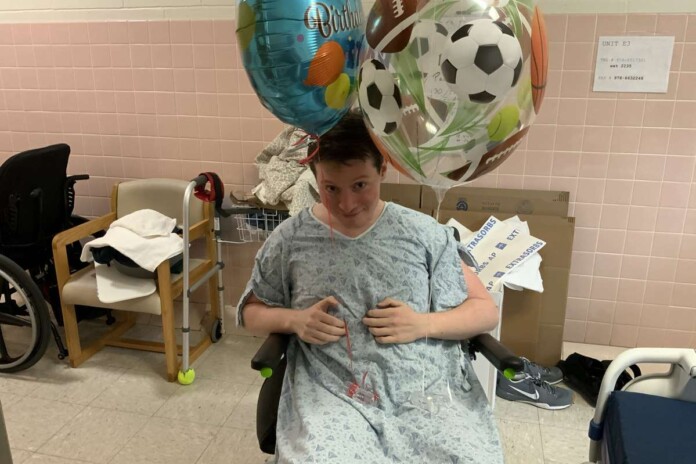
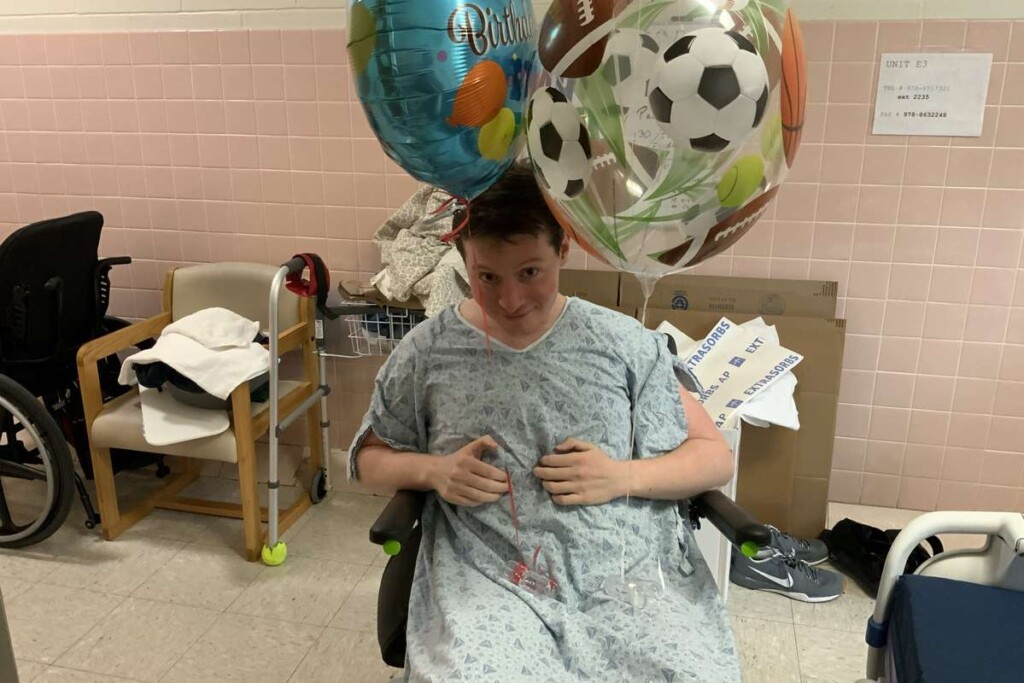
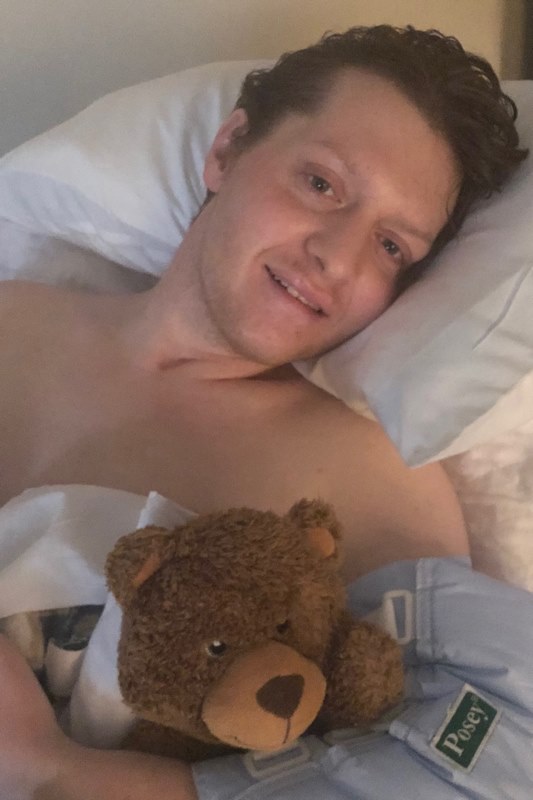
Jacob Haendel whilst receiving treatment in hospital for locked-in syndrome - SWNS
Jacob Haendel whilst receiving treatment in hospital for locked-in syndrome – SWNS
A man labeled “brain dead” has become the first ever to recover from an extreme form of locked-in syndrome, which paralyzed him so completely he couldn’t even blink—which sometimes allows patients with this disease to communicate, and even write books.
In 2017, Jacob Haendel was living a normal life as a head chef in Boston, Massachusetts.
But in the space of just a few weeks, his life was turned upside down after he was diagnosed with acute toxic progressive leukoencephalopathy, which in turn progressed into locked-in syndrome.
Locked-in syndrome can be caused by brain trauma, infection, or exposure to toxins, and results in slow, complete paralysis. Jacob ended up paralyzed and unable to talk or blink for a few months.
“By month five, I was at stage four, which they said no one ever recovers from,” Haendel said. “They told me I would enter into a coma and pass away.”
He is the first ever person to recover from stage 4 acute toxic progressive leukoencephalopathy.
Jacob, now 35, says “everything has changed after what happened. Everything is much more positive in all regards.”
At 27, he developed a strange pattern of symptoms, involving a high-pitched voice, dizziness, and impaired balance. Doctors at a hospital in Worcester, Massachusetts, initially suspected Jacob had had a stroke, but tests revealed it was far worse than anyone could have imagined.
“Eight doctors were standing in my room, and I knew right away it was bad news,” Jacob said.
He was told he would lose the ability to walk within weeks, become wheelchair-bound soon after, and lose the ability to speak within a couple of months.
First came chronic pain, then fevers, and three months later he was paralyzed. The famous novella, TheDiving Bell and the Butterfly, was written by a man with locked-in syndrome, by blinking his left eye to select a letter, but Jacob lost even the ability to do that.
“It’s like being trapped—your brain is totally intact, but you can’t communicate with anyone,” he told British news outlet, SWNS.
Jacob Haendel whilst receiving treatment in hospital for locked-in syndrome – SWNS
Unable to move or speak, he could hear everything around him but had no way to let people know he was still there. This included juicy gossip between the nurses who had confused him as being brain dead. At a certain point, Jacob began to wonder if he had, in fact, died, and he was hallucinating.
After 10 months, some of the nurses noticed him moving his wrist, and all heaven broke loose among his doctors.
“They told me to do it again, and that was my one shot, I focused everything I could on moving my wrist.”
He regained the ability to blink, which allowed him to communicate for the first time in almost a year. The first words he said were “I love you” to his family.
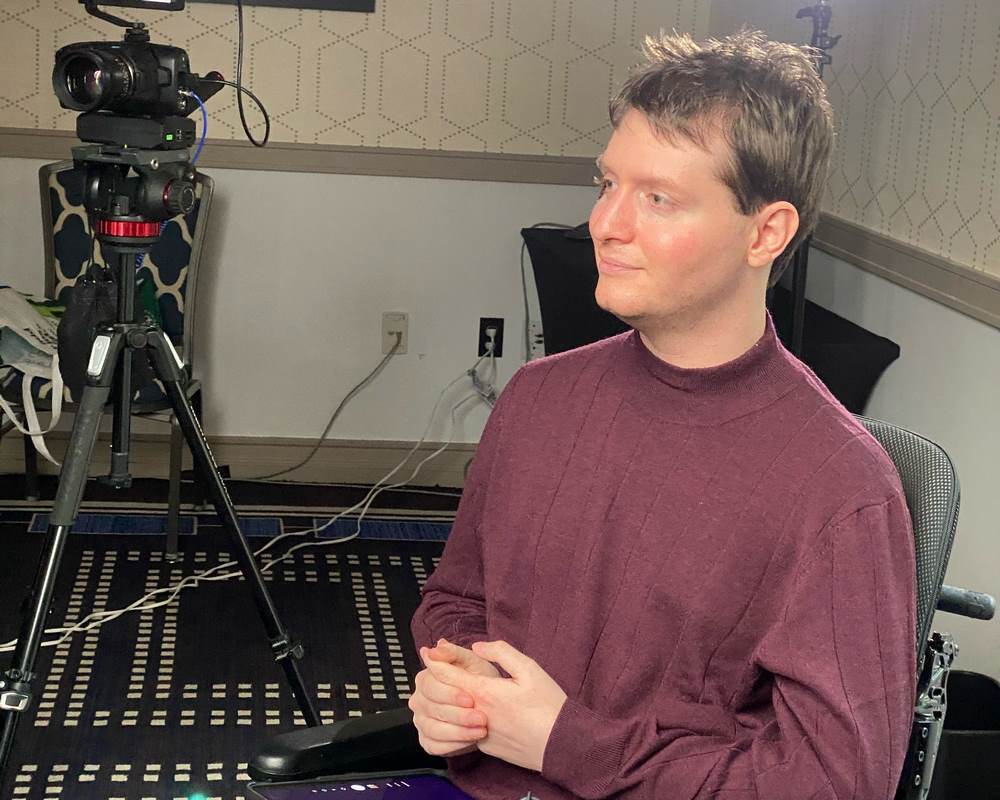
– SWNS
Rehabilitation took 18 months, during which time Jacob learned basic movements and how to talk again. He then regained his ability to walk with the help of surgeries and physical therapy and by December 2020, he had moved back home with 24-hour care as the only known person to recover from the disease.
In 2021, Jacob co-founded a mobile app, Ahoi, designed to help people with disabilities navigate accessibility challenges when out and about.
“Before this happened to me I was always a fun, outgoing guy, but deep down, I was sad and depressed,” Haendel revealed about his journey. “Now, even with all the challenges, I appreciate the little things. But it’s still been a strange and traumatic period, it will take a long time to get over.”
SHARE Jacob’s Incredible Story Of Recovery With Your Friends…
Quote of the Day: “True patriotism springs from a belief in the dignity of the individual, freedom and equality not only for Americans but for all people on earth.” – Eleanor Roosevelt (Honoring Veterans Day 11/11)
Photo by: Kevin Delvecchio
With a new inspirational quote every day, atop the perfect photo—collected and archived on our Quote of the Day page—why not bookmark GNN.org for a daily uplift?
A four-year-old girl, who doctors said would never walk, has defied expectations to take her first steps.
When she was a baby, Scottie Mae Blair was diagnosed with Angelman syndrome—a rare genetic condition that causes severe physical and learning disabilities. Her parents were told to expect that their daughter would not be able to walk, talk, read, or live independently.
However, a year later, they received a call from doctors reporting that Scottie Mae had been misdiagnosed. Then two-years-old, she actually had DUP15q syndrome, a similar but less severe disorder.
This meant that Scottie Mae was now more likely to reach these milestones, but medical professionals didn’t expect her to hit them this early.
“Seeing her take her first steps felt so good—like seeing all the work paying off,” said her mom Logan, from Tucson, Arizona.
“While everyone is screaming and shouting in the video, I was sobbing.
“Her sisters are going crazy, they are her biggest cheerleaders and want to see her succeed.”
Scottie Mae began having seizures at 10 months, which was the first sign to her parents that something was wrong.
Logan recalls the day Scottie Mae had her first seizure.
“We went to the ER… She ended up having more than 100 just in that day.”
After all the tests and all the hospital stays, the family is celebrating small victories.
“When first getting a diagnosis, everything seemed dark and I had it stuck in my head that she would not be able to accomplish these milestones.
“As time went on, we found our groove, got more comfortable with seizures, and adjusted to Scottie Mae’s life with Angelman syndrome.”
“With the new diagnosis, we know that it is simply going to take more time than a typical developing child.”
Scottie Mae has attended four different types of therapy every week for the past three years.
“Having a physical therapist who believes in her and knows her potential has made a huge difference.”
The seizures are now no longer as frequent and are controlled by medication.
With her walking milestone now passed (see the moment below), a whole new world has opened up for Scottie Mae. “This changes everything!”
“We know the day is coming where we can confidently let her walk completely on her own.”
SPREAD THE LOVE By Sharing The Moment On Social Media…
Your attitudes about aging, whether positive or negative, can lead to a better—or worse—cognitive experience in your senior years, suggests a new study from researchers at Penn State.
Getting older comes with certain expectations, from gray hair to wrinkles to forgetfulness. While these beliefs may seem harmless, they may influence how one perceives their own cognitive abilities while they age.
The team found that people who had more positive expectations of aging tended to report less frequent cognitive problems, such as difficulty concentrating or keeping track of what they were doing. They were also less likely to report that their cognitive performance had declined over time.
If we can modify the expectations that older adults have about aging, “we could support healthier cognitive aging” by increasing awareness and teaching accurate assumptions about the process.
“Aging expectations are malleable and influence an individual’s perceptions of their cognitive functioning,” said Nikki Hill, associate professor in the Ross and Carol Nese College of Nursing at Penn State, who is first author on the paper published in the journal Aging & Mental Health.
Previous research has found that expectations about aging, such as whether a person expects to maintain high levels of activity or if they expect everything to go downhill, are associated with health. Those with more negative aging expectations tend to experience worse outcomes, such as more rapid physical and cognitive decline, while positive perceptions of aging are linked to behaviors that promote health and wellbeing like exercise.
Fotolia
Hill is interested in understanding how older adults experience cognitive changes and how that influences outcomes related to aging. In her work, she said she’s noticed that when people describe their experiences, they often include stereotypical and stigmatized beliefs about aging and cognitive decline.
It led Hill to wonder how people’s expectations about the aging process may influence how they interpret cognitive changes they may experience—a relationship that few studies have examined.
“Do people’s perceptions of what they expect aging to be in the future, in terms of physical health, mental health, cognitive health, affect the way that they perceive their cognitive performance?” Hill said. “If it does, then that gives us more clues about how to interpret people’s reports of cognitive changes and, potentially, how to intervene earlier to support people to maximize their aging outcomes.”
For example, people who are worried about perceived declines in their cognitive function—even if their cognitive health is normal—are at higher risk for developing a cognitive impairment in the future, Hill explained. She said that with conditions like Alzheimer’s disease and related dementias, there’s a slow, gradual decline in cognitive function over decades and people often experience subtle symptoms before clinical tests identify an impairment in cognition.
The research team conducted an online survey among individuals aged 65 and older in the United States who lived independently and didn’t report any diagnosis of dementia or other cognitive impairment. A total of 581 people completed the survey; 51% of the respondents were women and 74% were non-Hispanic white.
The survey asked about their expectations about physical health, mental health and cognitive function in relation to aging. They were asked to rate statements — for example, “every year that people age, their energy levels go down a little more” — on a four-point scale from “definitely true” to “definitely false.”
To assess their perceptions of their own cognition, participants were asked about their cognitive abilities over the last seven days. They were also asked about their ability to perform certain tasks today compared to 10 years ago to assess whether they believed their cognitive abilities had declined.
The team found that people who had more positive expectations of aging tended to report less perceived decline in their cognitive abilities, both in the last week, and over the last 10 years. On the other hand, more negative expectations of aging were linked to more negative perceptions of their current cognitive performance and whether they perceived cognitive decline.
Attitudes about both physical and mental, and cognitive health affected how they perceived their cognition. People with positive aging expectations in any of the three domains were more likely to rate their cognition higher, while people with negative expectations rated their cognition lower.
“If we can intervene in a way to ground aging expectations more in what is true and less stigmatized, then maybe we can help people clarify what they’re experiencing in terms of cognitive changes, which will support our ability to respond to individual needs for maximizing cognitive health,” Hill said.
The team plans to conduct more research, including how healthcare providers engage patients in conversations about cognitive health and aging.
ENCOURAGE BRAIN HEALTH By Sharing This on Social Media…
Edited from original article by World At Large, a news website of nature, politics, science, health, and travel.
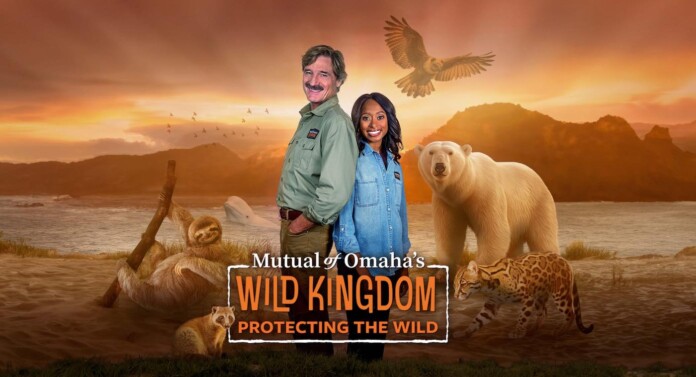
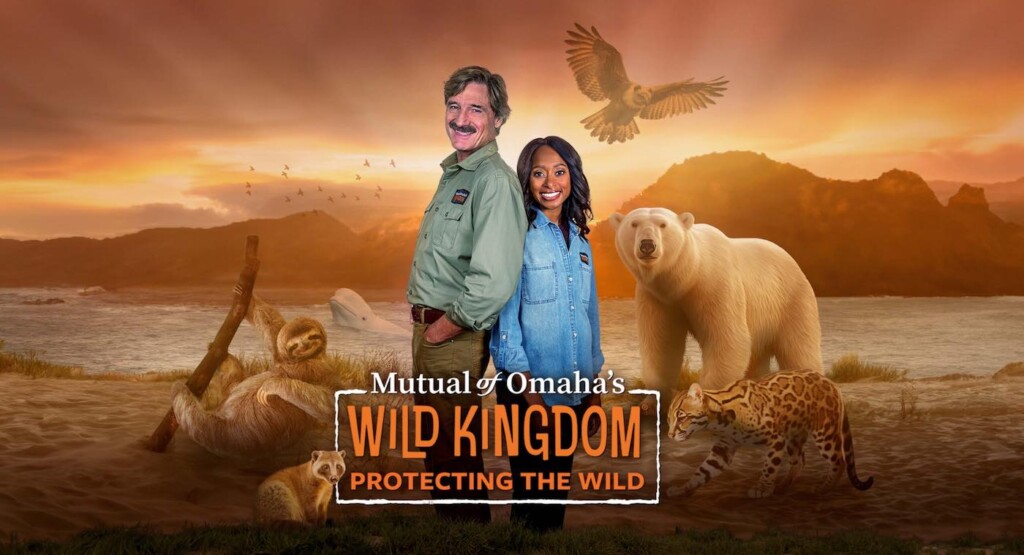
For an entire generation of Americans who were glued to their TVs during the moon landing or watched The Tonight Show starring Johnny Carson, Mutual of Omaha’s Wild Kingdom provided the first glimpse of an Amazon rainforest or a Serengeti savannah, broadcast right into their living rooms via the first wildlife television show—and now it’s coming to the modern screen.
Premiering in 1963 and running for 22-seasons while winning 41 major awards for episodes that were viewed countless millions of times, Mutual of Omaha’s Wild Kingdom was the series that jumpstarted the wildlife programming we know today, like Animal Planet, Discovery Channel.
Returning to its original home on NBC, Wild Kingdom has been reborn to entice a new generation to protect wildlife—and it is co-hosted by one of the leading alums of the program.
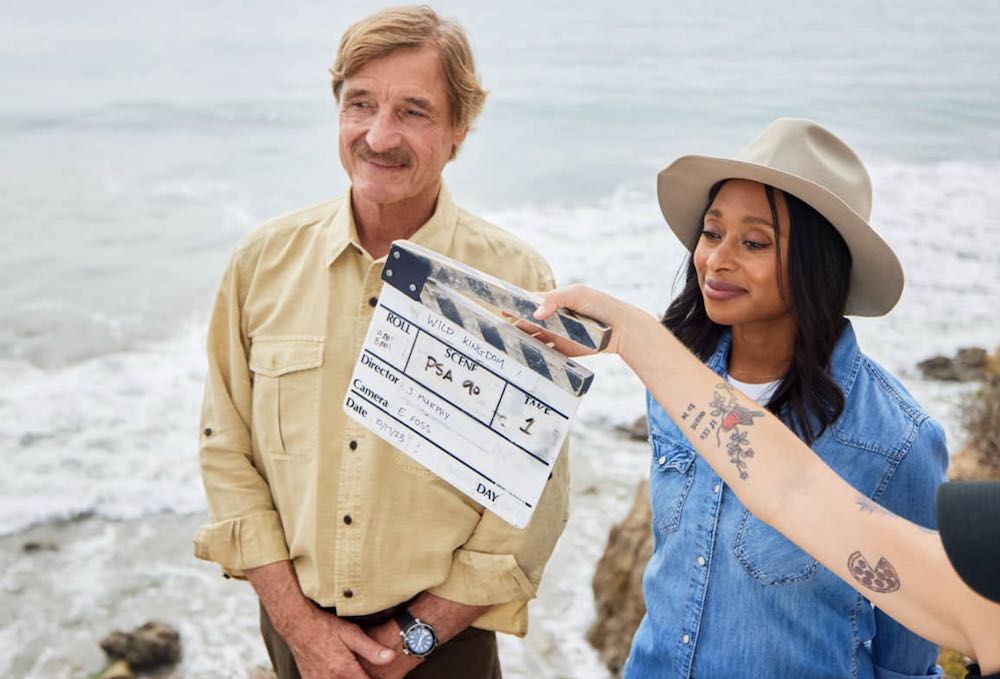
Peter Gros, who joined the original show as co-host in 1985 after Marlin Perkins’ health declined, has brought on Dr. Rae Wynn-Grant, a predator ecologist and National Geographic Fellow for the new Saturday morning program—which already won 4 Emmy nominations in its first season. It will also be streaming on YouTube, where fans can reminisce by watching highlights and full episodes from the 60s, 70s, and 80s.
Gros, whose son is an avid viewer of GNN told Andy Corbley, writing for World At Large, “I think a lot of people were hungry to hear less doom and gloom stories about the future of our planet and its animals and the natural world. We’re getting a lot of nice positive feedback.”
The times they are a-changing
The world has changed since the days of Perkins and Jim Fowler—and much of the change resulted in good news. For example, on two classic episodes, Gros highlighted the plight of the bald eagle and the alligator two of the first animals added to the US Endangered Species List. Today, the eagle is one of the most widespread and numerous raptors in America.
“Back in 1963, when Wild Kingdom first started doing the show with Marlon Perkins, their goal was to affect people’s attitudes about the importance of conservation,” Gros told WaL.
Today, there is seemingly no end to the number of native wildlife species at serious risk, but the new iteration of the show is called Wild Kingdom–Protecting the Wild, and aims to provide some optimism for today’s youth.
“The idea came up, ‘let’s tell the story of conservation successes’. Let’s create some hope, let’s not have this next generation think that it’s too late, because there are solutions to the problems that we have,” said Gros.
“The show we have been filming, is (about) how we do, indeed, have some problems with conservation, but here are some solutions”. Watch an example, from their Season-1 clip about the adorable black-footed ferret…
Gros received the offer to take over for an ailing Marlon Perkins, after making a career designing wildlife enclosures in America’s zoos that were more natural. A childhood romping through a 3,600-acre forest his grandfather had reforested in New York’s Hudson Valley had instilled in him a love of all wild things that eventually led him to a degree in animal husbandry with a focus on big cats.
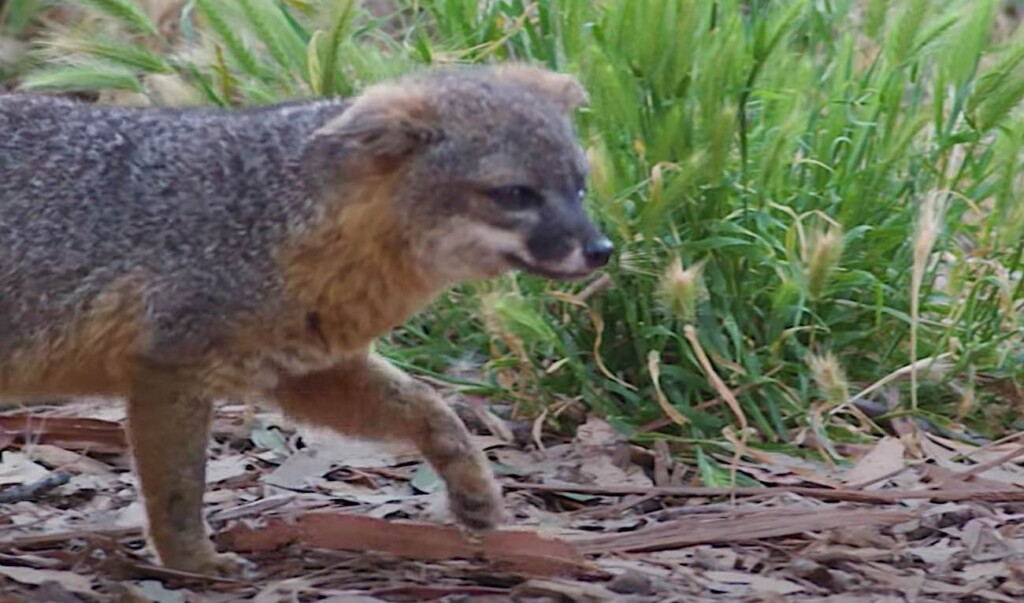
In a career of more than 40 years in wildlife conservation, Gros has seen many successes. He recounts the story of the Channel Islands fox in one episode, and the recovery program that saved the species from extinction without ever having to move them from their native island. Their numbers were falling from multiple causes. A cattle ranch was destroying habitat, and golden eagles, which prey on terrestrial species, were drawn to the islands from the mainland due to the presence of invasive mammals.
Channel Islands Fox from Wild Kingdom / Youtube
“Rather than collecting foxes and moving them off the island, and facing issues of disease since they were endemic only to the Channel Islands, the raising was done there on the island in large enclosures,” he said. The foxes were an easy meal for the eagles, since they never had to worry about being preyed on before, but once the invasive species were cleared, the golden eagles departed.
The next generation
It isn’t just animal protection that has changed over Peter’s career, but the tech.
“You could spend days near a water hole hoping animals would show up. You spent hours and hours hiding and waiting. And, to get those long sweeping shots, you had to use helicopters”.
“Now what you see is a lot more natural animal behavior in the wild because we have very quiet drones. We don’t have to get close at all, we have these incredible long lenses that shoot in digital and the photography is just incredible. You can set up motion and heat sensing cameras along trails and capture animals coming by. So the advantages to doing the new show is you see so much more natural behavior, and I have to admit, being involved in both eras, it’s much easier on the body too by the way!”
Just as Mutual of Omaha’s Wild Kingdom taught Americans about the challenges facing conservation, part of Protecting the Wild’s mission is to inspire the next generation of conservationists with a science-based series—and this summer, it captured a Saturday morning audience on NBC totaling over a million viewers per episode.
Many of the episodes start by addressing the conservation status and threats of an animal featured that week, and then by the end of the show they’ve creating hope through a narration about how this is problem is going to be solved.
Peter Gros and co-host Dr. Rae Wynn-Grant – Wild Kingdom
Gros and his team decided there are so many good stories in North America to tell, they’d start the first season with those—such as the ocelot, a South American wildcat that occasionally strays into south Texas, and the North Atlantic right whale, one of the most endangered in the ocean with only 340 individuals left.
“Their problem is entanglement with lobster pots—literally millions of lines of ropes dangling from buoys in the water in areas where they would be traveling and feeding. Fortunately, again, reasons to hope: we worked with the Woods Hole Institute and their solution is rope-less lobster pots,” he said.
“Like, so many of the projects we’re filming, there are so many agencies, volunteers, and groups working together to make this happen.”
The second season debuted on October 5th, and airs Saturday mornings during NBC’s programming block, “The More You Know”.
HAIL THE COMEBACK By Sharing With Wildlife Loving Families on Social Media…
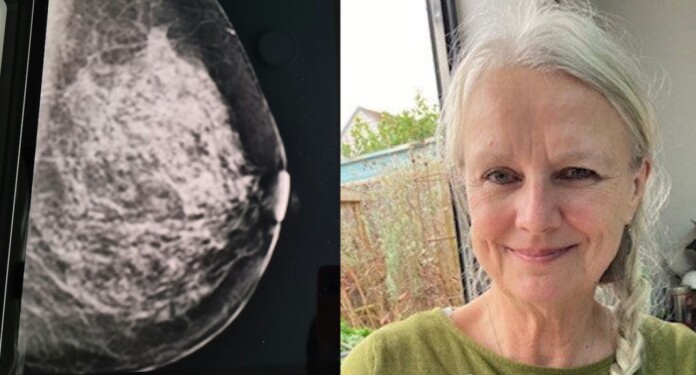
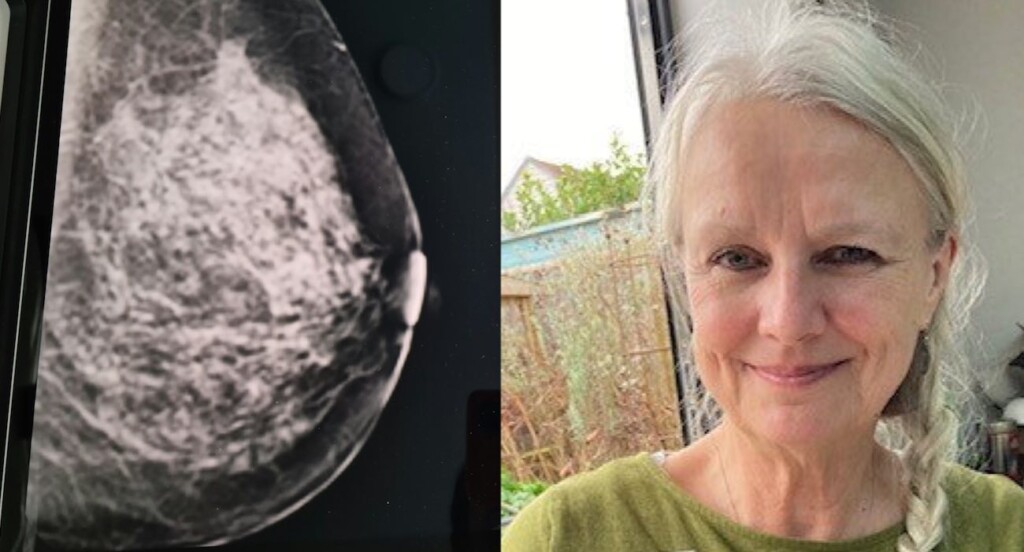
(Left) cropped image by Getty images / Unsplash+ (right) Sheila Tooth via SWNS
(Left) cropped image by Getty images / Unsplash+ (right) Sheila Tooth via SWNS
Artificial intelligence successfully detected a woman’s breast cancer, after a routine scan evaluated by humans came back as ‘normal’.
Sheila Tooth was given the all-clear after her most recent mammogram was examined by two experienced radiologists who determined that there were no signs of cancer. However, University Hospitals Sussex, where she had her appointment, was participating in research to see if AI could improve early detection.
The technology spotted cancerous cells which were undetectable by the human eye, which allowed Sheila, who had been diagnosed with early breast cancer 15 years ago, to get minimal treatment as early as possible.
“It’s extraordinary and I’m amazed,” said the retired nurse from West Sussex, England. “I knew that whatever they could see on my scan must have been incredibly small if it wasn’t picked up the first time.”
The mother-of-one was diagnosed with the same early non-invasive breast cancer as before—but because it was found so early, she was able to have a lumpectomy and didn’t need any further treatment.
Now, recovering from the surgery, she says she is so grateful for the AI technology.
“When I talk to friends, we just can’t believe this AI can detect what the human eye can’t always see. I just feel so lucky.
“Being 68, this may have been my last mammogram, so my early cancer might have developed into invasive cancer in my 70s, so, I’m deeply grateful for it to have been caught so early.”
Five out of 12,000 ‘normal’ screenings were overturned
University Hospitals Sussex is one of 15 trusts across the UK that participated in the project to test if AI can spot cancers humans may miss. The project used an AI system developed by Kheiron Medical Technologies called Mammography Intelligent Assessment, and was funded by the NIHR and NHS England.
Throughout the two-month project, more than 12,000 mammograms deemed to be normal by radiologists were reviewed using the AI system, which suggested that just under 10 percent of those films should be re-read by a clinical panel to identify any potential cancers that were not detected in the initial screening.
Upon further review, 11 women were asked to come back for investigation. Five of these were found to have breast cancer.
Dr. Olga Strukowska, a consultant radiologist and director at the West Sussex Breast Screening Program, said we are still in the early stages of AI evaluation in clinical scenarios but based on current trials and research, AI will surely find a place in screening programs.
“The earlier and more accurately we detect cancer, the better the chance our patients will have a positive outcome. That’s why this is so exciting.
“It empowers screening services to deliver confident, accurate, timely results through deep learning technology that works with radiologists and promotes high-quality standards of care for our patients.”
Steve Dixon, Senior AI Project Lead for Breast Services, said, “I have no doubt that, in time, integrating AI with clinicians’ expertise will enhance the effectiveness of patient care, improving both outcomes and the quality of service for patients.”
University Hospitals Sussex is now planning to take part in a national randomized controlled trial involving AI – which forms part of the next phase of introducing the technology to breast cancer screening.
Mammogram patients need to be registered with a doctor to be invited for the added breast cancer screening, but Sheila now recommends the technology to everyone, saying, “It’s just fantastic!”
Quote of the Day: “We still do not know one thousandth of one percent of what nature has revealed to us.” – Albert Einstein
Photo by: Casey Horner / Unsplash+
With a new inspirational quote every day, atop the perfect photo—collected and archived on our Quote of the Day page—why not bookmark GNN.org for a daily uplift?
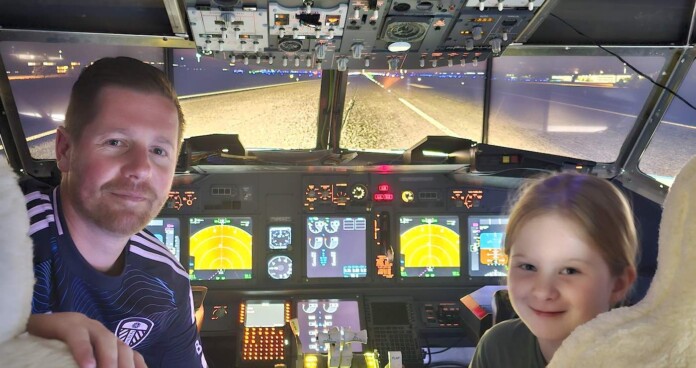
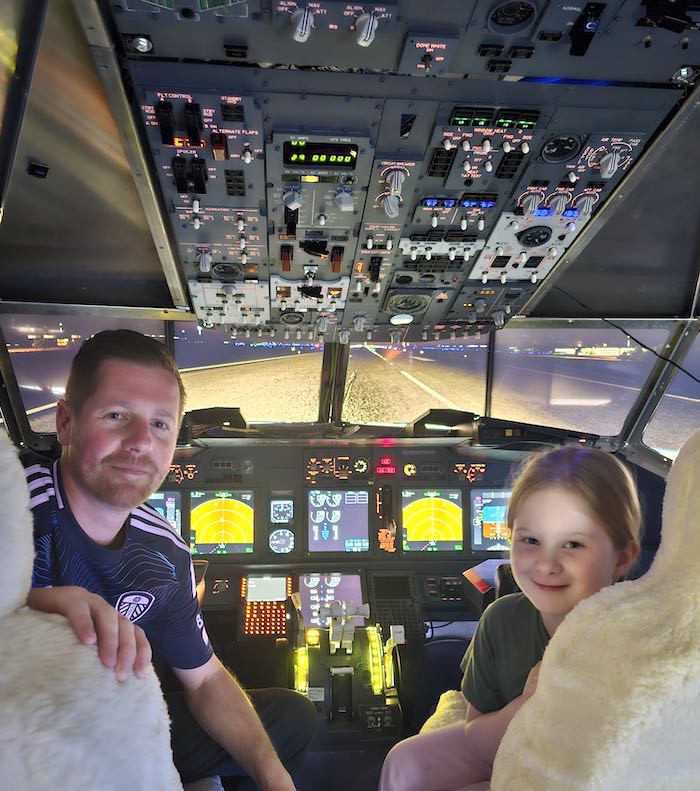
Craig Cullingworth and his daughter Sophie in flight simulator via SWNS
Craig Cullingworth and his daughter Sophie in flight simulator (SWNS)
An Englishman who was told he “wasn’t clever enough” to become a pilot has built an incredible $25,000 flight simulator in his home using spare parts—and now he and his daughter can ‘fly’ every day.
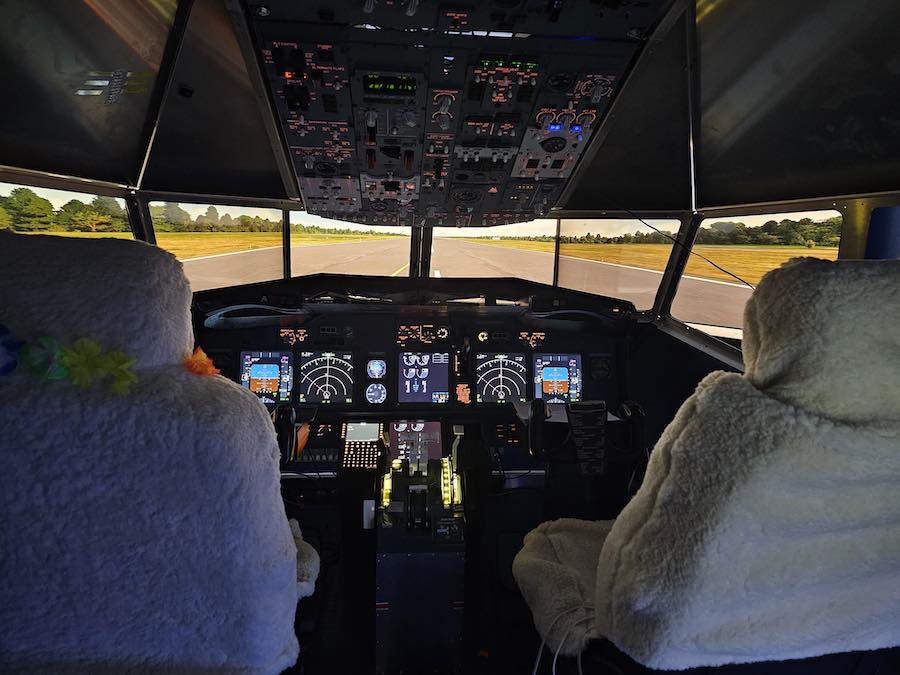
Craig Cullingworth spent two years building his accurate model of a Boeing 737-800NG cockpit with mostly second-hand parts he sourced online.
Now, using a computer program, he takes to the skies with his “obsessed” daughter, Sophie, from the comfort of their home in Leeds, West Yorkshire.
The 40-year-old’s plan to create the replica came after his wife gifted him a simulator experience at a local flight center as a Christmas present.
He then bought a cockpit shell – with all the dials and levers found on the real twin-engine aircraft, and painstakingly turned it into a fully working model (seen in the video below).
He took his maiden voyage about three months ago, saying, “I always wanted to be a pilot, but at school I was told I wasn’t clever enough.”
“My wife got me a Boeing 737 experience because she knew how much I wanted to do it. It was the best experience of my life—and on my way home, I was searching how to build one.
“I found bits and bobs all over the country and started building it in my spare room after work, in a bid that one day I could get it flying.
SWNS
“About three months ago, we did our first flight which I shared a video of on social media and gained lots of positive feedback.”
“My eight-year-old daughter is now obsessed. She takes it in very quickly.”
Craig said his flight simulator teacher, who is also a first officer at Ryanair, thought he was a “natural” after their first lesson together in 2021. And Craig later earned his wings on the lifelike computer model, which professional pilots from carriers like Virgin and Jet2 often use to improve their skills.
Now he likes to fly on his simulator through the skies over Britain so he can have fun navigating tricky regional runways. He’ll take off from Leeds-Bradford and land at Manchester, then go over to the East Midlands airport, and down to Heathrow, needing about three hours to fly to a local airport, land, and then prepare for taking off again to go to the next airport.
“I usually do Leeds-Bradford for the fact that it’s one of the top ten worst airports to land in, and it’s usually quite tricky. It is usually a two-man crew effort, and you share the duties between each other.”
The cost of buying a new Boeing 737 flight simulator is around $70,000 (£55,000), but Craig spent less than half that on his model by using second-hand parts.
Flight simulator experiences cost well over $100 for 30 to 90 minutes of time ‘in the air’, so Craig is thinking about creating a business that offers the unique experience to more aspiring pilots.
“I’ve met people all over the country who have built their own flight sims but you tend to find they are retired pilots, and not people my age. The experience is so hands-on that you won’t know if you’re any good at it until you actually give it a go.” (Watch them in action below…)
Craig, who paints cars for a living, said he may now offer other interested flyers the chance to use his simulator—or others that he builds in the future—as part of a business venture.
“My body shop is expanding so we will have more space for me to set up two or three simulators for people to use, (especially) targeting pilots because they can do their training on these simulators.”