From New York comes the story of a restaurant owner who shelved his Easter plans to fulfill a dying man’s last wish.
Jokingly described as looking like “a big, bad biker guy” by his brother, 67-year-old father of 3 Frank Ozimek had a last wish as he approached his final hours: to repay some of the kindness he had received.
For 6 weeks, Ozimek had been undergoing cancer treatment at Niagara Hospice. With no success, and little time life, Frank asked his younger brother Ken for one final favor: he wanted to treat the nursing staff to a meal.
Ken Ozimek looked around on the internet but realized everywhere was closed for Easter. Eventually, Ken got through to someone: Tommy Milani, owner of Sub Delicious pizza and subs in Lockport.
“I said, ‘Absolutely, whatever you need, Ken,'” Milani told local news WKBW, adding of the hospice nurses, “They do an amazing job there. They’re all saints.”
Milani put his Easter plans on hold while he whipped up, flipped up, and delivered pizzas for the entire nursing staff.
Ken said that he was beyond grateful for Milani for helping his family at their time of loss.
“To me, it means the world to see that kindness, that greatness spread,” he told WKBW. “And I hope when people see this story, they take it and say, ‘Why can’t we do this and spread joy and kindness to each other?'”
Enriched by a close relationship with the Great Outdoors his whole life, Frank Ozimek was also a music lover who liked to attend the annual Niagara Falls Blues Festival. He is survived by his 3 children and 5 grandchildren.
WATCH the story below…
SPREAD The Joy And Kindness To Others, As Ken Said, By SHARING This Story…
Without any fanfare from either party, it was recently revealed that Mozambique cleared its entire $701 million debt with the International Monetary Fund (IMF).
The news comes as a meeting between the officials and the IMF was scheduled for August, which it had previously been presumed would include discussions about the outstanding debt becoming distressed.
Such a state would put billions in additional debts, current and future, for vital gas and infrastructure projects, at risk according to the World Bank.
Business Insider Africa reports that without any announcement, in the final days of march the IMF website updated Mozambique’s outstanding debt level to zero, while Fáusio Mussá, chief economist at Standard Bank in Mozambique, the local branch of Africa’s largest continental bank, disclosed that the country had settled.
The news makes Mozambique the latest in a small series of African country to get out from under internationally-held, aid-related debt.
The southeast African nation had built up all-time record foreign currency reserves of $4.15 billion, which have been reduced to $3.5 billion following the repayment.
The country ranks among the least-developed in the world along multiple lines of standard measurement, such as life expectancy and GDP-per-capita. It had been ravaged by a civil war until 1994 when it held its first multiparty elections had has remained mostly stable since.
Namibia and Nigeria are two other countries to have recently paid off large amounts of IMF debt. In October of last year, Namibia paid off $750 million to make it the second-lowest debtor to the organization in Africa, while in May, Nigeria paid back a $3.4 billion loan to cushion the impact from its government-mandated business closures and lockdowns while attempting to reduce the impact of COVID-19.
SHARE This Good News For Mozambique With Your Friends On Social Media…
Kelsey and Wes Dixon planted cherry tree 20 years ago
Kelsey and Wes Dixon planted cherry tree 20 years ago
It’s a simple story of well-rooted love, nurtured year after year, blooming, and producing fruit—but the latest chapter has social media entranced.
High school sweethearts Kelsey Dixon and her now-husband Wes Dixon planted a cherry tree together as teenagers in 2007 and have taken a photo with it every year since.
“It’s a good tradition and 17 million or so people on Instagram seem to think so too,” Dixon said on the platform, where a story she shared has been viewed something like 48 million times.
The two would go on to marry, but even after they moved 3,000 miles away, they’d return every year to take a photograph with the tree—including one with Dixon’s baby bump.
As if the team at GNN needed any more evidence that trees are connected to what’s going on around them, Dixon’s mother-in-law sent her a picture that left the couple stunned.
Kelsey Dixon with her new children’s book, partially about the tree
The cherry tree sprouted a clutch of basal sprouts, or suckers, from one of its roots—in the same year that Kelsey gave birth to two children.
Mrs. Dixon has now published a children’s book—Roots and Wings—about the events and tradition that inspired it, and partnered with a vivarium called The Sill on a line of trees perfect to plant for the same or similar reasons.
Love is so often about little things that become (or perhaps always were) big things, and the story of the Dixons certainly fits that paradigm. It’s beautiful in its simplicity, much like the cherry blossoms it was born under.
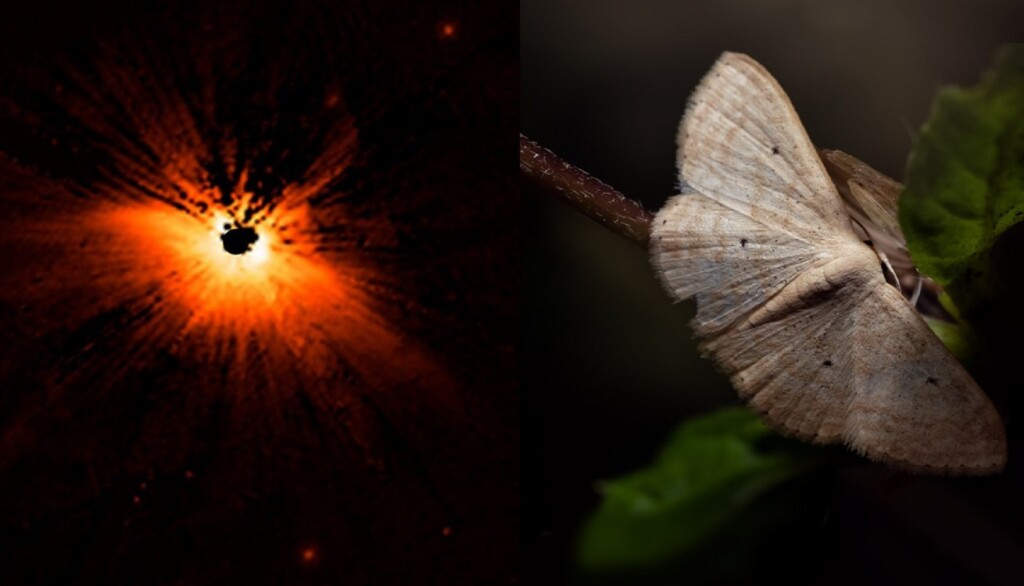
Young ‘Sun’ Caught Blowing Bubbles in X-ray and Infrared light. Credit for X-ray image: NASA/CXC/Johns Hopkins Univ./C.M. Lisse (Credit for Infrared image: NASA/ESA/STIS; Image Processing: NASA/CXC/SAO/N. Wolk)
Young ‘Sun’ Caught Blowing Bubbles in X-ray and Infrared light. Credit for X-ray image: NASA/CXC/Johns Hopkins Univ./C.M. Lisse (Credit for Infrared image: NASA/ESA/STIS; Image Processing: NASA/CXC/SAO/N. Wolk)
For the first time, a much younger version of the Sun has been caught red-handed blowing bubbles in the galaxy, by astronomers using NASA’s Chandra X-ray Observatory.
The bubble—called an astrosphere—completely surrounds the juvenile star. Winds from the star’s surface are blowing up the bubble and filling it with hot gas as it expands into much cooler galactic gas and dust surrounding the star.
Our Sun has a similar bubble around it, which scientists call the heliosphere, created by the solar wind. It extends far beyond the planets in our solar system and protects Earth from damaging particles from interstellar space.
This is the first image of an astrosphere astronomers have obtained around a star similar to the Sun. It shows slightly extended emission, rather than a single point of light as seen for other such stars.
“We have been studying our Sun’s astrosphere for decades, but we can’t see it from the outside,” said Carey Lisse of Johns Hopkins University in Baltimore, who led the study which was recently published in The Astrophysical Journal. “This new Chandra result about a similar star’s astrosphere teaches us about the shape of the Sun’s, and how it has changed over billions of years as the Sun evolves and moves through the galaxy.”
The star is called HD 61005 and is located about 120 light-years from Earth, making it relatively close. HD 61005 has roughly the same mass and temperature as the Sun, but it is much younger with an age of about 100 million years, compared to the Sun’s age of about 5 billion years.
Young Sun HD 61005 Blowing Bubbles – Credit: (X-ray) NASA/CXC/Johns Hopkins Univ./C.M. Lisse et al; (Infrared) Credit: NASA/ESA/STIS; (Optical) Credit: NSF/NoirLab/CTIO/DECaPS2; Image Processing: NASA/CXC/SAO/N. Wolk
Because it’s so young, HD 61005 has a much stronger wind of particles blowing from its surface that travels about 3 times faster and is about 25 times denser than the wind from the Sun. This amplifies the process of astrosphere bubble-blowing and mimics how our Sun was behaving several billion years ago.
“We are impacted by the Sun every day, not only through the light it gives off, but also by the wind it sends out into space that can affect our satellites and potentially astronauts traveling to the Moon or Mars,” said co-author Scott Wolk of the Center for Astrophysics | Harvard & Smithsonian (CfA). “This image of the astrosphere around HD 61005 gives us important information about what the Sun’s wind may have been like early in its evolution.”
Astronomers have nicknamed the HD 61005 star system the “Moth” because it is surrounded by large amounts of dust patterned similarly to the shape of a moth’s wings when viewed through infrared telescopes. The wings are formed from material left behind after the formation of the star, similar to the Kuiper Belt in our own solar system. Observations of these wings with NASA’s Hubble Space Telescope showed that the interstellar matter surrounding HD 61005 is about a thousand times denser than that around the Sun.
(left) the Moth as imaged by the Hubble Space Telescope
Since the 1990s, astronomers have been trying to capture an image of an astrosphere around a Sun-like star. Chandra was able to detect the astrosphere around HD 61005 because it is producing X-rays as the stellar wind runs into cooler interstellar dust and gas that surrounds the star.
The dense local galactic environment, combined with Chandra’s high-resolution X-ray vision, the strong stellar wind, and the star’s proximity, all helped create a strong X-ray signal, allowing discovery of an astrosphere around HD 61005.
The Sun not only likely passed through a phase of development similar to HD 61005 when it was younger, it also likely traveled through a denser region of dust and gas than where the Sun is currently located, strengthening the connection with HD 61005.
“It is amazing to think that our protective heliosphere would only extend out to the orbit of Saturn if we were in the part of the galaxy where the Moth is located, or, conversely, that the Moth would have an astrosphere 10 times wider than the Sun’s if it were located here,” Lisse said.
HD 61005 is not visible from Earth with the unaided eye, but it is close enough that skywatchers could see it using binoculars.
The first hints of X-ray emission from the Moth’s central star were based on a brief, one-hour-long Chandra observation of HD 61005 in 2014. In 2021, astronomers observed HD 61005 for almost 19 hours, which allowed the detection of the extended astrospheric structure.
WATCH the story below from Chandra’s Social Media Team…
Quote of the Day: “Because of a great love, one can be courageous.” – Lao Tzu
Photo by: Oksana Zub
With a new inspirational quote every day, atop the perfect photo—collected and archived on our Quote of the Day page—why not bookmark GNN.org for a daily uplift?
87 years ago today, John Steinbeck’s Pulitzer Prize-winning novel The Grapes of Wrath was published, a story he wrote after interviewing displaced migrants who escaped the Dust Bowl (a period of severe dust storms that greatly damaged the ecology of the Midwestern prairies during the 1930s and the Great Depression). The book won the National Book Award and the Pulitzer Prize for fiction and soon after was made into a celebrated Hollywood film starring Henry Fonda. WATCHa video… (1939)
Helmet of Cotofenesti - credit Radu Oltean, CC BY-SA 3.0 via Wikimedia
Helmet of Cotofenesti – credit Radu Oltean, CC BY-SA 3.0 via Wikimedia
A golden helmet belonging to an ancient Romanian culture holding “inestimable value” was recovered after it was stolen in January from a Museum where it was on loan.
A museum director sought to demonstrate the value of Romanian history by loaning the national treasure to a Dutch museum as part of a 6-month-long exhibition, but disaster struck when thieves broke into the museum, stole the helmet, and a trio of golden bracelets.
The theft shocked the European art world and caused a diplomatic incident, with incensed Romanian officials breathing down the neck of Dutch police, urging them to stop at nothing to recover it.
Called the Helmet of Coțofenești, it was manufactured out of gold during the Dacia civilization in the decade around 450 BCE. Dacia left no written history, so only finds like the Coțofenești Helmet bear witness to their capabilities and identity. Embossed with mythical scenes and studs atop the cranium, a panel covered the eyes meant to shield the wearer, it’s believed, from bad luck.
On April 3rd in the city of Assen, police and officials at the Drents Museum unveiled the helmet, alongside 2 of the bracelets, which they said they recovered through a plea deal reached with 3 suspects arrested shorty after the January break-in.
“We are incredibly pleased,” Corien Fahner of the prosecution service told reporters. “It has been a roller-coaster. Especially for Romania, but also for employees of the Drents Museum.”
It was originally feared that if the thieves’ aim was for money, the helmet would be melted down, since its iconic design would have rendered it unsalable. Fortunately, it seems that either wasn’t the aim of the perpetrators, or their quick arrest interrupted the plan.
The Guardian, one of many outlets reporting on the theft and recovery, reported that Dutch authorities made several attempts to convince the suspects to reveal the location of the treasures under enormous pressure from the Romanian government.
It’s unclear which terms were agreed to in the plea deal, but one offer may have included a halving of their eventual prison sentence, while an undercover officer may have tried to buy the items outright for €400,000.
The National History Museum of Romania received €5.7 million as part of an insurance claim on the loss, some if not all of it, the museum may have to pay back now that the objects have been recovered.
One of the 3 stolen bracelets is still missing, while the helmet suffered a dent during the theft. Romanian authorities are confidant the third can be located, and said they will stop at nothing to bring the final treasure back to Bucharest.
CELEBRATE The Recovery Of This Priceless Historical Treasure…
Archaeologists in barrow, a prehistoric burial mound in Norfolk, England –Credit: RWE energy company
Archaeologists in barrow, a prehistoric burial mound, in Norfolk, England –Credit: RWE energy company
Preparatory archaeology work at an English wind farm development site has turned up two incredible discoveries.
The first was a Roman villa and bathhouse, and the second was a Neolithic burial mound. These were discovered by a team of archaeologists who fully believed they weren’t going to find anything.
The team works for Headland Archaeology, which was employed to preform surveys along a 40-mile underground cable path for a new wind power project from RWE.
The team had consulted historical maps and records, and performed a magnetometry survey, with the end point being that they didn’t find anything of interest. Their ultimate surprise came during trench digging to examine large areas at once when they began to pull a lot of roof tiles out of the Norfolk earth.
This occurred back in 2021, and the subsequent excavations revealed a long-utilized farming estate that dates back to the local society of the Iron Age and forward to the Roman Empire.
“There’s a lot of evidence for growing and processing food,” Headland Archaeology’s Jessica Lowther told local news, “so we think it was quite a large farming estate.”
The walls and foundations of several additional structures, including a Roman road and a bathhouse were also uncovered. Many items reveal the daily life of the inhabitants: nail cleaners, hair pins, and jewelry, as well as a military belt and the bones of dogs and cats believed to have been kept as house pets.
A digital rendering of what the Roman villa might have looked like – credit, RWE
Additionally, the handle of a bronze vessel molded into the shape of a strange creature was discovered, that somehow earned the nickname “Norfolk Nessie” referring to its appearance hearkening back to that famous photo of the Loch Ness Monster.
That wasn’t the last time the archaeologists’ assumptions about the cable route being clear was proven wrong. Further along they found a very large Neolithic burial mound with an underground chamber filled with pottery and stone tools.
Yet further, Smithsonian Magazine writes that they uncovered a burial site from the Bronze Age, and later the remains of a medieval village that they were able to confirm once stood there thanks to the Norman’s Domesday Book: a seminal, 11th century survey of land holdings carried out after the end of the Anglo Saxon period.
GNN once reported that when major underground discoveries are made in Greece, developers will often obscure them to prevent interruption of the project. Not RWE, which seems to have become very involved in the discoveries genesised by their wind project.
“The archaeological campaign has revealed a remarkable story about how this landscape has changed over time,” project director Jon Darling says in a RWE statement. “Careful archaeological work sits alongside responsible infrastructure development, helping to protect and record Norfolk’s heritage while supporting the transition to renewable energy.”
SHARE This Sequence Of Amazing Finds All Because Of A Power Cable…
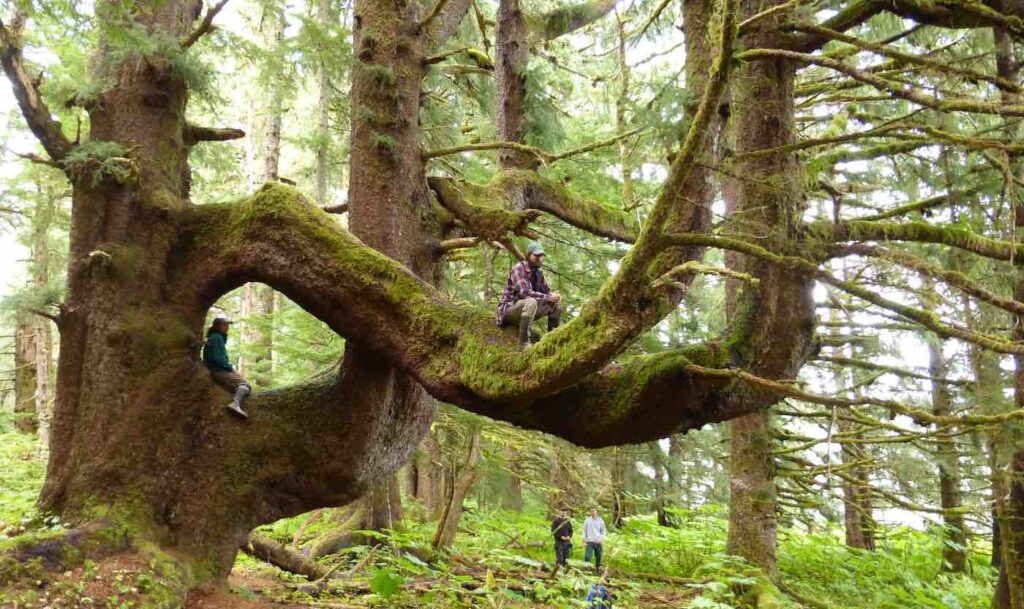
Tree in Tongass National Forest- USDA Forest Service
Tree in Tongass National Forest- USDA Forest Service
An Alaska district court judge has ruled against a coalition of logging interests looking to get their saws on Tongass National Forest’s old growth timber stands.
As the nation’s largest national forest, and the world’s largest temperate rainforest, Tongass acts as a superb stronghold for many species, such as the bald eagle, sperm whale, Steller’s sea lion, Chinook salmon, brown bear, mountain goat, and the Endangered Haida ermine, an all-white relative of the weasel.
The logging interests consisted of Alaska Forest Association, Viking Lumber Company, Inc., and Alcan Timber Incorporated, which together sued the US Dept. of Agriculture and its secretary, and the US Forest Service and its director, last March. Two local townships and several environmental groups joined the suit on the side of the defense.
Judge Sharon L. Gleason granted the defendants’ motion to dismiss, and did so ‘with prejudice,’ meaning that the plaintiffs can never sue the same parties for the same reasons again.
Prejudice is usually invoked in cases deemed frivolous, when the plaintiffs have improperly served legal notice, or if the judge determines that the plaintiff’s case as it was thusly brought was deceitfully put together.
Whatever the reason, it means that the old-growth forests in Tongass will remain erect for the Haida ermine, the bald eagles, and the rest of the woodland wildlife.
“This ruling is a big victory for the Tongass’ old-growth forests. I’m relieved the court squarely rejected the logging industry’s rash attempt to force large-scale logging,” Marlee Goska, the Center for Biological Diversity’s Alaska attorney, said in an email to GearJunkie.
“This lawsuit had no legal basis, and the court was right to dismiss the case outright. We need to leave the Tongass standing for the sake of wildlife, climate, and local communities.”
The lawsuit revolved around two regulations passed by the USDA in 2016 and 2021, and a 1990 law called the Tongass Timber Reform Act (TTRA). The TTRA lays out a requirement to provide the timber industry with areas to log in order to meet “market demand.”
The 2016 Forest Plan, contingent on the TTRA’s requirement, outlined that logging interests could buy 46 million board feet of timber from Tongass, 34 million of which could come from old growth and 12 million from young growth. Then, in 2021, the USDA announced the “Southeast Alaska Sustainability Strategy,” (SASS) which provided for an end to old-growth logging in Tongass except for tribal reasons.
The plaintiffs argued the totals able to be logged over the last few years have been far below 34 million board feet, and also far below “market demand.” They also claimed that since the SASS was a ruling, it should have undergone a comment period, which it didn’t.
The defendants argued that neither the 2016 Forest Plan nor the TTRA set out quotas or requirements, but merely outlined a broad objective as well as an upper limit. Furthermore, they argued that the SASS was simply a continuation on the 2016 Forest Plan, not a whole new ruling. Judge Gleason sided with this argument, and agreed that the 2016 plan’s language does not set up a goal of logging 34 million board feet of old-growth trees, but rather a cap.
She dismissed the case with prejudice. In the preparatory materials on the day when Judge Gleason heard the arguments for the request to dismiss the case, the Center for Biological Diversity quoted a Viking Lumber company officer stating in a company release that absent sales of new old-growth lumber, the company will likely go bankrupt.
SHARE Stunning Trees Like This One To Be Protected From Logging…
With the Earth having welcomed the month of April with a full Moon, several celestial events will follow that promise to provide a perfect reason to get out into the shortening spring nights.
Chief among these will be the opportunity to see the Lyrid meteor shower safe from the light of the Moon during the peak night of 22/23 April.
From a dark sky area, far from city lights, observers can spot up to 15 shooting stars per hour, which manifest to our eyes as streaking fireballs in the night sky. Far from being stars, they are actually fragments of the comet C/1861 G1 Thatcher.
Every year, the Earth passes through the comet’s orbit as if it were the wake of a motor boat. As the comet hurtles through the solar system, it sheds material like ice and dust, which burn up in Earth’s atmosphere during the special period we pass through that debris trail.
The Lyrids are one of the most active spring meteor showers, and with the Moon setting before midnight, it promises to be particularly showy this year.
Even though they originate with the comet Thatcher, they’re called the Lyrids because the point in the sky where it appears they originate from is found near the constellation Lyra. To find Lyra, all one need do is find the second-brightest star in the Northern Hemisphere: Vega.
Vega is so bright, it was the first star ever to be photographed: with a daguerreotype plate in 1850.
A few days before the Lyrids peak, a New Moon occurs on April 17th and presents as the perfect time to drive to a dark sky area and observe the Milky Way’s galactic core, which is highly visible during this month’s pre-dawn hours.
A truly dark sky, not only lacking a Moon, but any kind of significant light pollution from street lighting, is needed to see the galactic core, but the reward for making the drive out to such a rural area will be millions of stars and the beautiful band of white and grey across the sky: the perfect introduction to a young boy or girl to the true scope of the cosmos.
SHARE This Perfect Excuse To Stay Up Late This Month…
Quote of the Day: “Love yourself as if you were a rainbow with gold at both ends.” – Aberjhani
Photo by: Typhaine Braz
With a new inspirational quote every day, atop the perfect photo—collected and archived on our Quote of the Day page—why not bookmark GNN.org for a daily uplift?
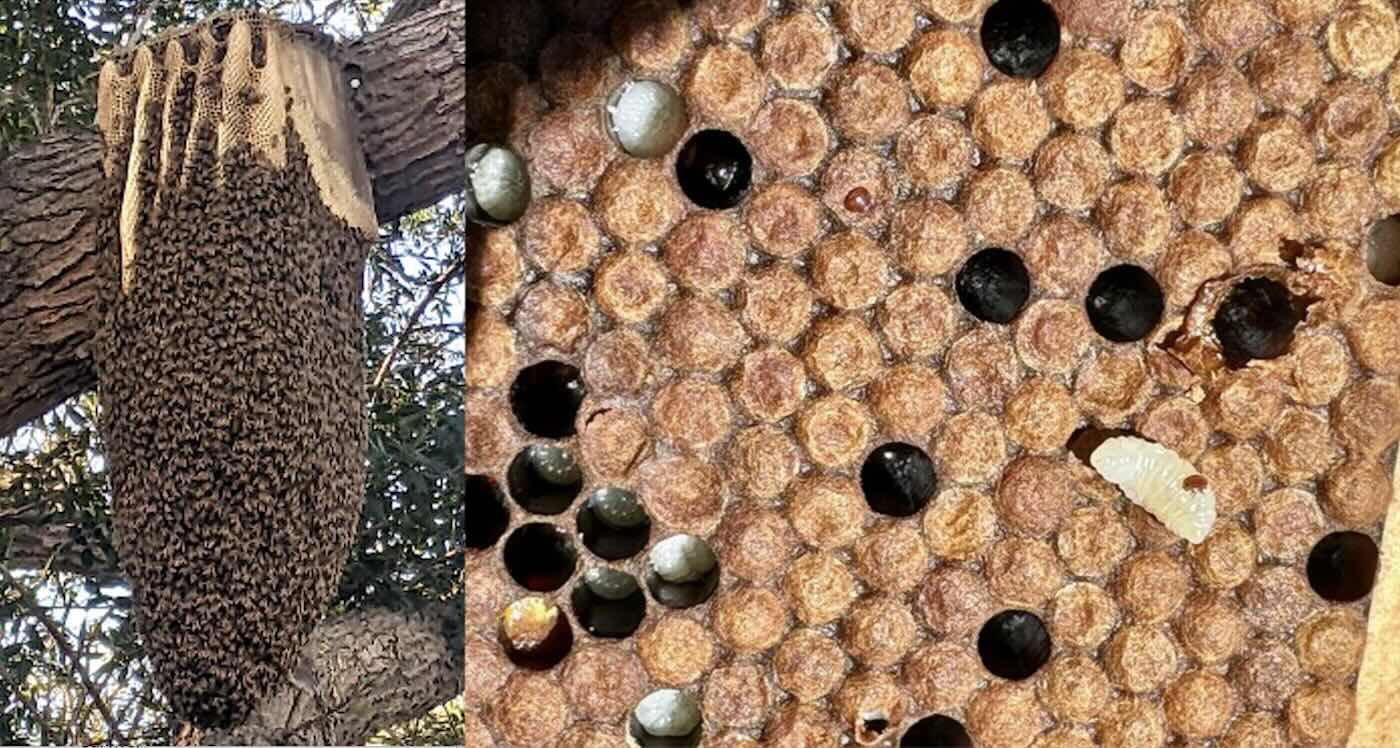
Hive hanging from tree; and Varroa mite on honeybee larvae – Credit: Boris Baer and Genesis Chong-Echavez at University of California-Riverside
‘Southern California is home to a black-and-yellow flying treasure’, wrote scientists giddy over good news about bee populations—and our food supply.
Commercial honeybee hives across the US have been collapsing for years, under attack from deadly parasites—but now a unique hybrid bee found only in the southern part of California has demonstrated the ability to survive.
Varroa mites feed on honeybees’ fat body tissue, resulting in weakened immune systems, reduced body weight, and shorter lives. (The fat body is a bee’s organ which performs similar functions to a liver, pancreas, and immune system). The mites also spread deadly viruses.
Beekeepers have relied on chemical treatments that can lose their effectiveness against the mites over time, but a new study from researchers at the University of California–Riverside offers hope.
Published in Scientific Reports, it is the first paper to show that a locally adapted population of honeybees can naturally and consistently suppress the mites.
“We kept hearing anecdotally that these Californian honeybees were surviving with way fewer treatments,” said Genesis Chong-Echavez, a UCR graduate student and lead author of the study. “I wanted to test them rigorously and understand the driving force behind what the beekeepers were seeing.”
Alongside entomologists from UCR’s Center for Integrative Bee Research (CIBER), Chong-Echavez monitored 236 honeybee colonies for three years.
Honeybees entering hive – Credit: Damien TUPINIER
68% fewer mites and 5x healthier
The Californian bees were not entirely immune to the mites. However, colonies headed by locally-raised Californian hybrid honeybee queens had 68% fewer mites on average than colonies headed by commercial honeybee queens.
They were also five times less likely to require chemical treatments.
The bees in the study are a mixed population of genetically diverse honeybees established in Southern California—often feral colonies living in trees. Recent research shows they are a hybrid population with ancestry from at least four honeybee lineages, including African, Eastern European, Middle Eastern, and Western European bees.
To more fully understand the bees’ resistance to the mites, the researchers also ran laboratory experiments with developing honeybee larvae. Varroa mites must enter brood cells to reproduce, so the team tested whether mites were equally drawn to larvae from commercial and Californian hybrid honeybee colonies.
They were not.
Mites were less attracted to the Californian hybrid honeybee larvae, especially at seven days old—the stage when mites are normally most likely to invade.
The findings suggest that the secret to bees fending off mites lies in early development, before any adult worker behaviors come into play.
“What surprised me most was the differences showed up even at the larval stage,” Chong-Echavez said in a media release. “This suggests the resistance mechanism may go deeper than some kind of behavior and may be genetically built into the bees themselves.”
The findings could have implications beyond Southern California. Honeybees pollinate crops worth billions of dollars and are under growing pressure from multiple environmental stressors. The research suggests that part of the answer to improving honeybee health may lie in the biology of these bees.
The researchers hope to learn which traits help these honeybees keep mite levels lower, and whether those traits could support future breeding programs or reduce dependence on chemicals.
Next, the team plans to investigate the genetic, behavioral, and chemical signals that may make the larvae less attractive to mites.
His songs are born inside the imagination of a three-year-old girl.
But thanks to her music-teacher father, the songs—like, Purple Bear Princess—are enjoying a long life on social media, becoming viral sensations whenever Stephen Spencer transforms his daughter’s musings into full-blown melodies.
“I’m always inspired by the strange and beautiful things that my 3-year-old daughter comes up with,” the music lecturer at Hunter College in New York City told the Huffington Post.
The collab began soon after his daughter could talk. Spencer would express his musical whimsy by singing things back to her, making impromptu songs about whatever she just said.
Eventually, he turned these musical moments into ‘real’ songs, sitting at his piano to mix his daughter’s words with notes and chords and catchy beats.
“I try to strike a balance between taking the craft seriously—producing a radio-ready song that sounds polished and professional—and keeping the whole process playful and spontaneous, the same way the stories came to me in the first place.”
This is the tune that started it all… ‘Wigglin’’ (Click the speaker at the bottom of the video to listen.)
Spencer’s social media followers surged from 34 to 340,000, with more than 30 million people playing his songs.
Commenters are flooding his pages with positive feedback and clamoring for a full album of songs. Clearly, his daughter’s words and Spencer’s stringed instruments are pulling on some heart strings, too.
One Instagram commenter whose daughter is all grown-up now, gushed over a performance about a grown-up purple bear princess: “Pardon me while I go into her old room and have a good cry.”
“I’ve been amazed by the reaction online,” Spencer added. “Seeing so many people connect with something that started as a silly family moment has been really heartwarming, and motivates me to keep creating.”
(Watch his appearance on Good Morning America, below…)
A full-length album might be arriving soon. You can keep an eye on his Spotify account here.
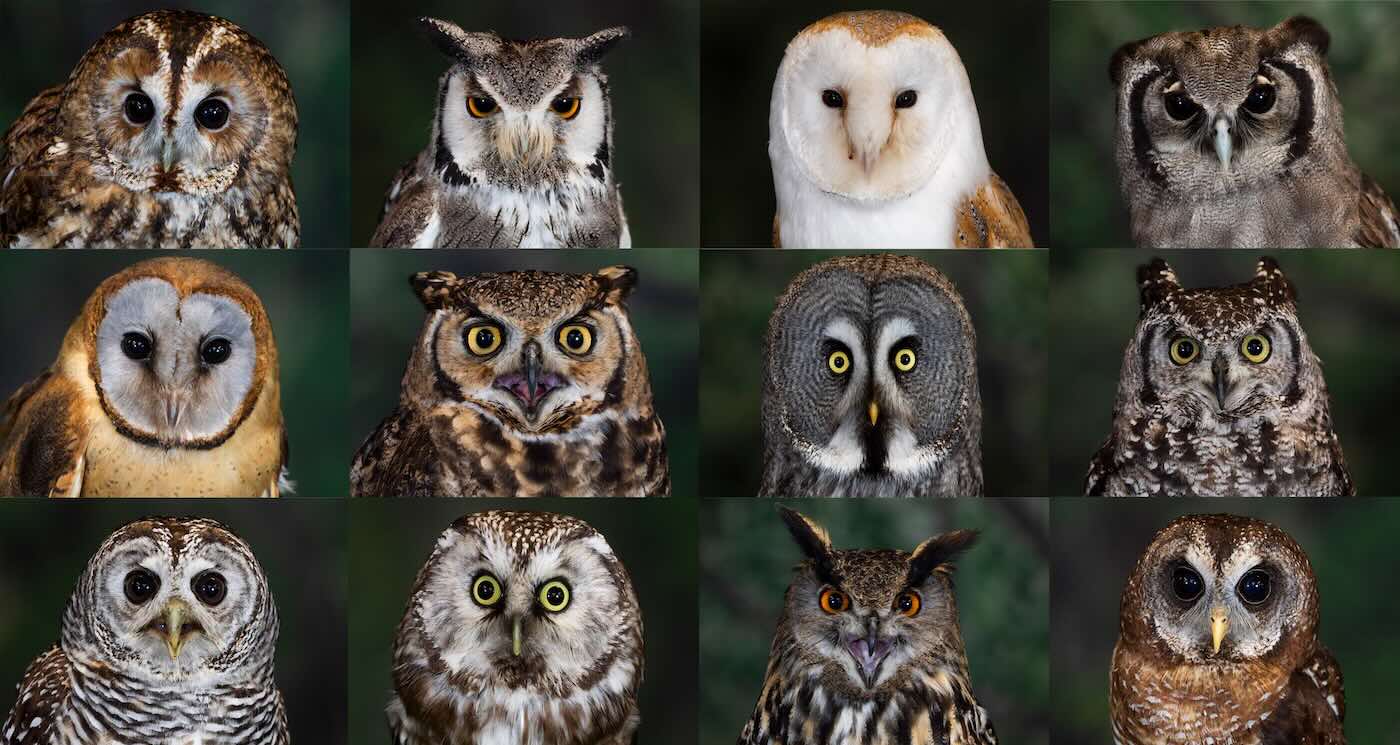
Top row: tawny owl, southern white faced owl, barn owl, milky eagle owl Middle row: ashy faced owl, lesser horned owl, great grey owl, African spotted eagle owl Bottom row: Chaco owl, Tengmalm’s (or boreal) owl, Eurasian eagle owl, African wood owl – Courtesy of Scottish Owl Centre
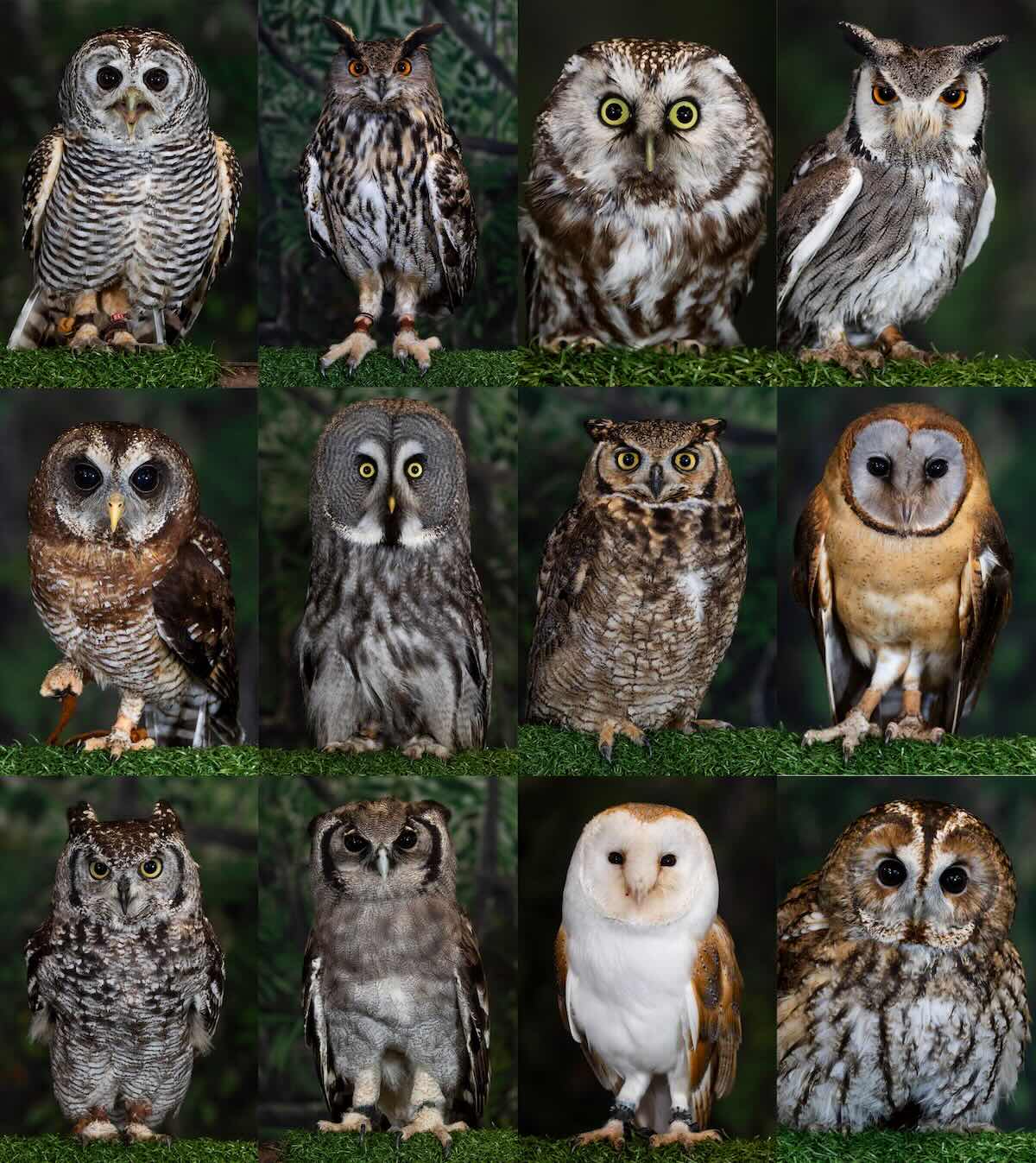
Beautiful portraits are showcasing the twelve species of hand-reared birds that are being touted among the largest collection of owls in the world—over 150 raptors in total.
Ranging in age from 1-19 years-old, they were photographed at their home in the Scottish Owl Centre in Bathgate, 23 miles outside Glasgow—and, as the founders are nearing retirement, you could be the next owner.
The youngest is an Ashy-faced owl named Opia (far left, middle row). The oldest—and also the largest bird at the center—is a Eurasian eagle owl (pictured in bottom row, third from left), majestically named Zeus.
The zoo’s head keeper Trystan Williams trains all the owls for daily flying displays—teaching the chicks at a young age to get used to human contact, and rewarding them with small pieces of chicken by hand.
“These are the birds that people meet here at the centre and that they’ll see in our flying displays,” he said. (Listen to them in the video at the bottom…)
Of the birds pictured, the one that’s been flying in the shows the longest is the Eurasian eagle owl, Zeus, a rescued bird that arrived at age five. One of the largest of the owl species, eagle owls have a wingspan of well over six feet.
“It’s hard to have a favorite when they’re all so fantastic, but the big owls are spectacular, so Zeus is a favorite of lots of the staff and visitors,” said Trystan.
TOP ROW: Chaco owl, Eurasian eagle owl, Tengmalm’s (boreal) owl, southern white faced owl MIDDLE row: African wood owl, great grey owl, lesser horned owl, ashy faced owl BOTTOM ROW: African spotted eagle owl, milky eagle owl, barn owl, tawny owl – Scottish Owl Centre photos by Katielee Arrowsmith
“I love seeing them in flight,” said the trainer. “I also enjoy talking to people about them and sharing my passion with others too.”
Looking for a new purpose aligned with owls?
The Center, which first opened to the public 20 years ago, was founded and is owned by Rod Angus, a life-long ornithologist, and his wife Niccy.
As they approach retirement, they’re keen to find new owners who align with the Center’s educational mission and concern for the welfare of owls and their conservation.
Their award-winning zoo is profitable, too, attracting 22,000 visitors in 2024.
“We are committed to a smooth handover and would provide any necessary training and phased support after the sale, ensuring continuity for staff, visitors and the owls in our care,” they wrote on their website, where you can find more information.
“Owning and managing the 150+ owls of the Scottish Owl Centre would be a unique work of love and life-style choice for anyone interested in wildlife education and conservation.”
GIVE A HOOT: Help Find An Owner By Sharing This on Social Media…
Candela P-12 electric hydrofoil rendered on Norwegian fjord for Boreal
Candela P-12 electric hydrofoil rendered on Norwegian fjord for Boreal
Tourists and commuters along Norway’s stunning coastline will soon travel aboard “flying” electric ferries—quietly whizzing above the water to their destinations.
A Norwegian leader in sustainable transport, Boreal AS, has ordered 20 electric hydrofoil vessels from Candela Technology, with deliveries next year from the Swedish company that will launch the world’s largest electric fleet.
Water travel is an essential part of daily transportation along Norway’s fjord-lined coast and the “uniquely fast” hydrofoils will speed up commute times. (Watch the video at the bottom…)
Electrifying passenger boats has been challenging—because E-ferries have lacked the range and speed to replace diesel-powered vessels connecting towns across Norway’s 62,000 miles of coastline (100,000km).
The Candela P-12 solves this: it combines a cruising speed of 25 knots with a range of around 40 nautical miles, enabling electric operation on routes previously only served with diesel fuel, according to a company press release.
“Candela P-12 is the only electric passenger vessel that combines longer range with high speed without requiring extensive charging infrastructure,” said Boreal CEO, Nikolai Knudsmoen Utheim.
Candela P-12 on test run in Stockholm – media release
“Our investment will enable new high-speed routes both in cities and in rural areas.”
“Norway has already led the electrification of maritime transport. With this fleet, Boreal wants to take the next step—accelerating zero-emission high-speed travel.”
The P-12’s unique performance comes from computer-controlled hydrofoils—wings mounted beneath the hull—that lift the vessel above the water at speeds above 18 knots. By flying above the waves, drag is drastically reduced, and energy consumption drops by around 80 percent compared with conventional vessels of similar size.
Furthermore, the efficient P-12 can fully recharge in an hour using standard DC car fast chargers, avoiding the expensive megawatt-scale charging systems required by conventional electric ferries.
The capability was recently demonstrated during a voyage between Sweden and Norway, when the P-12 completed the longest electric sea journey to date, recharging along the route using a mobile battery system transported by a Ford F-150 Lightning pickup.
Passengers will also see a major upgrade in comfort. The vessel’s digital flight controller reads wave conditions using sensors and adjusts the hydrofoils in real time, ensuring a smooth ride even in rough seas.
Candela electric ferry interior – released
Indeed, Candela’s EU Director Alexander Sifvert touted the upcoming ferry journeys as “free from seasickness and without the negative impacts of wake and emissions on the unique Norwegian fjords.”
Recent tests in Stockholm showed that wakes from the P-12 measured just 13 cm (5 inches), which the company compared to “a small dinghy with an outboard motor”.
Cabin noise tests confirmed cabin noise levels of just 64 dB—which is lower than modern trains, aircraft, or ferries.
With 99% of new car sales in Norway already fully electric, it makes sense that the backbone of the nation’s rural transport—“hurtigbåtar”—should also be cleaner and greener and lifted into the 21st century.
WATCH the ad-free video below…
CELEBRATE THE GREEN NEWS By Sharing the Flying Boats on Social Media…
Quote of the Day: “The worry is what you do next.” – The Madison (2026 TV series)
Photo by: Tulips by Matt Cooper via SWNS
With a new inspirational quote every day, atop the perfect photo—collected and archived on our Quote of the Day page—why not bookmark GNN.org for a daily uplift?
Happy 79th birthday to David Letterman, who on February 1st, 1982, took the reins of NBC’s Late Night and kept them for 33 years before stepping down in 2015. In total he went on the air for 6,080 episodes, surpassing his friend and mentor Johnny Carson as the longest-serving late-night talk show host in American television history. Perhaps unsurprisingly, he went on to host what is essentially a late-night talk show on Netflix, called My Next Guest Needs No Introduction with David Letterman. The first season of which contained a cross-interview with Jerry Seinfeld entitled “You’re David Letterman, you idiot.” READ some more about the famous host… (1947)
A missing cat has finally been reunited with his owner five years after being ‘catnapped’.
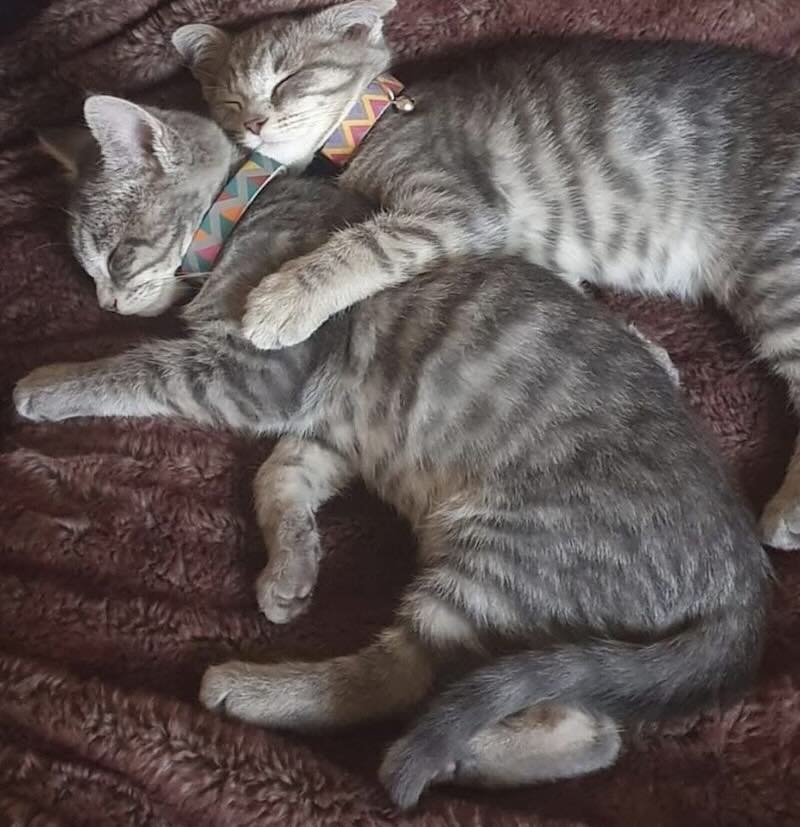
Danielle Arme was left heartbroken when her beloved kitten Bodhi suddenly disappeared in July 2021. In a double blow, Bodhi’s brother Braxon also vanished leaving the family devastated.
Danielle put posters up around her neighborhood in Derby, England, and asked locals but no one had seen either of the grey tabbies.
Braxon was found a few weeks later, but Bodhi stayed missing—and eventually the family was forced to give up hope and eventually moved to a new home.
Danielle was stunned when a vet called her last week saying her long lost pet had been found 20 miles away from where he was last seen.
“I burst into tears, I was so shocked,” said the 37-year-old. “There’s not many cats that go missing for that long and come back to you – it was just so surreal.
“I shouted his name when we met, and he came totting on over, it was like out of a film. He rubbed his head on me and was purring. He was so loving after all these years.”
Cats Bodhi and Braxon – Danielle Arme / SWNS
Danielle got two boy cats from the same litter in 2020, and believes Bodhi and Braxon had been ‘catnapped’ before being dumped miles from home.
“The heartache I felt when they were both missing was unbelievable.
People around her suspected someone was responsible because six cats had mysteriously disappeared. There was never any proof so the police never got involved.
“When my two lovely boys went missing I was posting letters through doors and spreading them far and wide.”
Months later Braxon was found wandering the streets 20 miles away in Uttoxeter, Staffordshire, so she immediately posted a notice about Bodhi on the Facebook page for the town, in case anyone saw him.
“The years rolled by and I thought he was a goner, until this lovely lady called Viccie Mahon from Sudbury messaged me through Facebook last week and asked if I ever found my cat Bodhi.”
“She said she thought she had him, and he’d been living around her cottage and under her car port.
Viccie had been trying to get hold of the family since last year, but they moved twice since Bodhi and hadn’t updated the contact info on his chip.
“Finally, she searched Bodhi’s name on Facebook and lo and behold my poster from all those years ago came up, and she managed to message me.
Pet lovebird and ringneck parrot by Mariyam Jazeela (via SWNS)
Pet lovebird and ringneck parrot by Mariyam Jazeela (via SWNS)
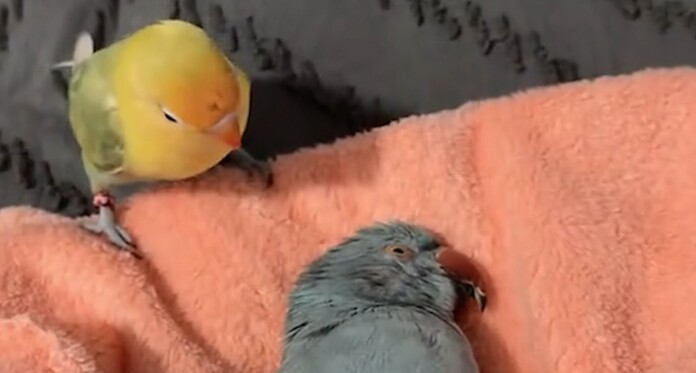
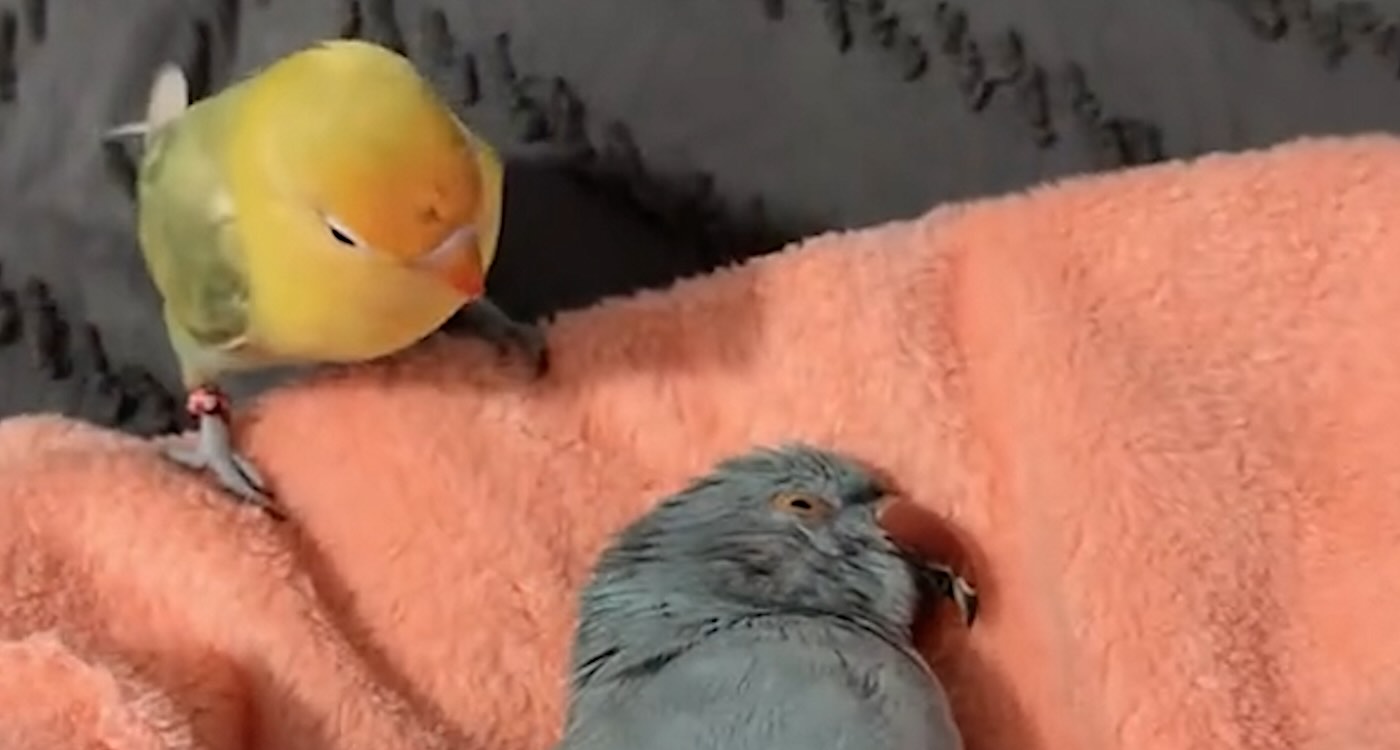
A devoted pet lovebird lived up to her name when she wouldn’t leave the side of her companion after it died at the owner’s home in the Maldives.
Mariyam Jazeela captured a video of the poignant moments on March 2nd as her lovebird, Ollu, lingered next to Sky, the ringneck parrot which had just passed away.
The tiny lovebird stayed by his side, reluctant to move away from her longtime friend.
According to Jazeela, Sky had developed an infection, but couldn’t be treated in time.
The two birds had formed a strong bond over the past year, she said, making the loss even more painful.
Despite Jazeela being left heartbroken by Sky’s death, she reported that Ollu has gradually started to bond with another bird living at their home in Maafushi.
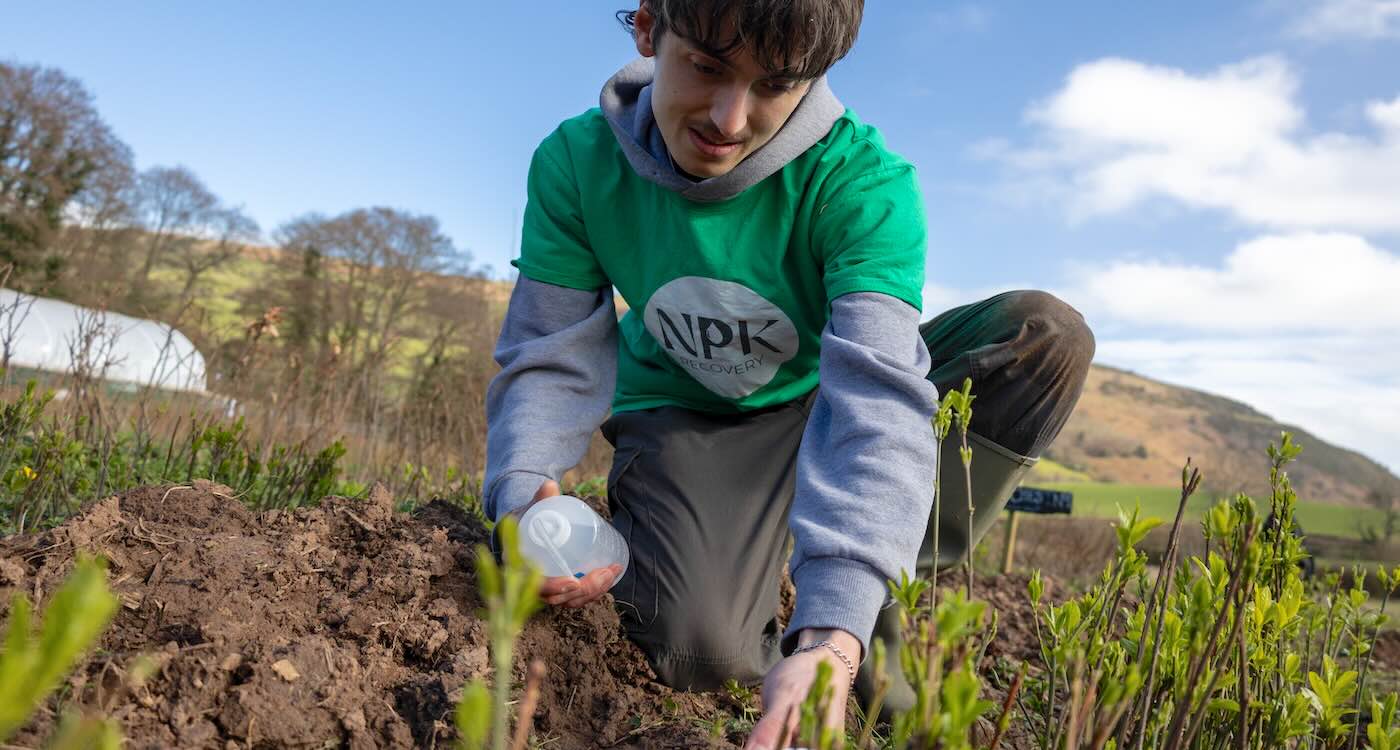
NPK Recovery Junior Scientist George Barnsley fertilizes field for planting
NPK Recovery Junior Scientist George Barnsley fertilizes field for planting
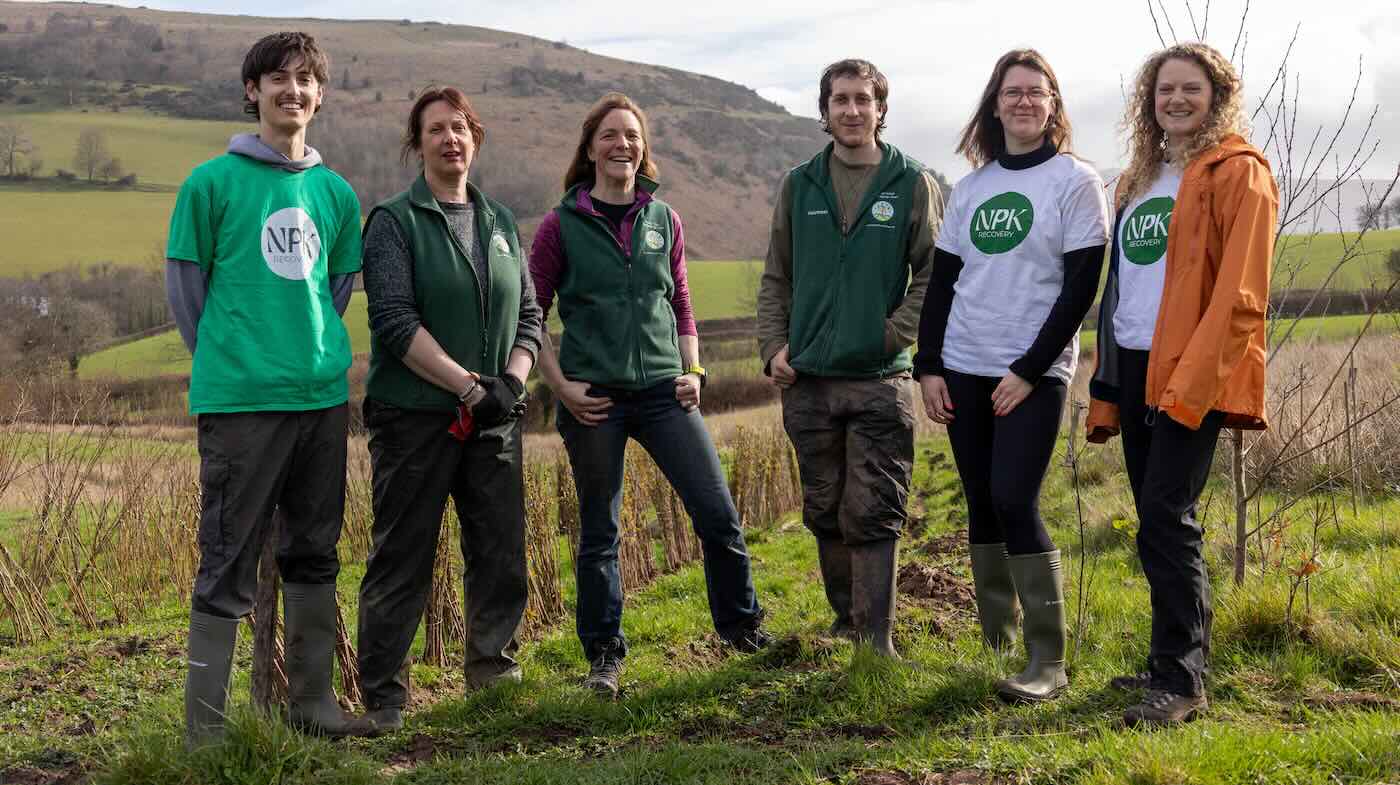
In a UK first, a new forest is set to be grown with fertilized nutrients recovered from urine collected from music festival toilets.
The woodland in Wales will feature 4,500 native British trees, like beech, grown with fertilizer made with pee from the Boomtown festival, Bristol Pride, and even the London Marathon.
The first seed, a Scots pine, was planted in February on the Brecon Beacons National Park as part of a trial funded by the UK Forestry Commission.
Behind the green fertilizer is NPK Recovery, a Bristol-based start-up that collects thousands of liters of urine from portable composting toilets at festivals—and gigs including Massive Attack and the Sugababes—and transforms them into odorless fertilizer.
Scientists with the female-founded company extract the nitrogen and other nutrients, such as phosphorous and potassium, from the urine to produce fertilizer on site in a natural bacteria-driven process.
Recently the team has perfected their own mobile processing system in a unit that measures 2 x 6 meters, which they take to events and plug into the back of festival toilets to process the urine into fertilizer right there on site—easing the burden on the volume of sewage that the event produces and minimizing chemical use.
Credit: Getty Images for Unsplash+
The process required to make the product incorporates biochar, which is a sustainable material that improves soil health. The team then works with the festival and land owners to apply the fertilizer on that local acreage—or they take it with them back to Bristol. (Watch the video below…)
The product has already enriched crops such as wheat and mustard, and measurements show it is just as effective as synthetic and commonly used fertilizers.
Product manager and Co-founder Lucy Bell-Reeves said the company is determined to create ‘fertilizer security’ for farmers and growers in the UK, particularly at a time when the war in Iran is causing the price of imported synthetic fertilizers to soar.
“Urine is a resource that we have in abundance, so it really is a win-win here,” she told SWNS news agency.
But she is quick to warn that it’s not a good idea to start peeing in your garden.
“Urine has great nutrients but it also contains other components that are not safe or free from pathogens and contaminants.”
NPK Recovery and Stump up for Trees at the Welsh nursery – SWNS
The reason they use urine and not feces is because it is much harder to recover nutrients from mixed waste, especially due to fecal contamination, which is more likely to have pathogens that are more challenging to remove.
“So the exciting thing is that more festivals are using urine-diverting toilets—where the urine is already separated which is great. It means you can recover the maximum amount of nutrients possible which is the best solution.
For NPK Recovery’s plans to grow a forest, the company has partnered with a Welsh nonprofit, Stump up for Trees, and its tree nursery on the outskirts of Abergavenny. The fertilizer will be used to grow thousands of native trees from seed, in a project backed by a nearly half-million dollar grant from the Forestry Commission’s Tree Production Innovation Fund.
“We wanted to explore where else our sustainable fertilizer could make an impact and the government has set high tree-planting targets.
“So we can’t wait to give these trees a good fighting start and lead a UK first in using nutrients from urine to grow trees.”
And the team is interested to hear from anybody who wants to discover a more sustainable way to recycle their waste: “It’s about understanding the power of your pee even if you’re not an environmentalist.
“I love the idea that by the end of this three-year project, revelers and runners will have created a fledgling Welsh forest, which could flourish for hundreds of years.”
DON’T HOLD THIS STORY–Share it to Spread the Idea on Social Media…