(left) Kelsea and Willow credit - Glasgow Children's Hospital Charity, released
(left) Kelsea and Willow credit – Glasgow Children’s Hospital Charity, released
A Scottish mom is thanking her lucky stars after her “miracle” twins avoided the worst of a potentially mortal fetal complication.
At one point given a 10% chance to live, Kelsea and Willow were born at 32 weeks, breathing on their own. After a one-month stay in the NICU, they went home and are developing normally.
More than halfway into her pregnancy, mother Sally Kynoch from Moray was transferred from Aberdeenshire Maternity Hospital to the Fetal Medicine Department in Glasgow, where she was told her twin girls had a life-threatening complication.
They were diagnosed with stage 4 twin-to-twin transfusion syndrome (TTTS) which describes a condition where two babies share one placenta, locking them in a delicate balance where one could die if it gives away more blood than it receives, and the other could die from an overworked heart if it receives too much.
“After discussing possible options… we decided to go ahead with laser ablation to seal off some of the blood vessels in the placenta so that both babies receive a more equal supply of blood,” Kynoch told the Daily Record.
“This came with a lot of potential risks and complications such as preterm delivery, rupture of membranes, and complications for the babies. But without any treatment, there was only a 10% chance of both twins surviving. Thankfully, the laser ablation was successful.”
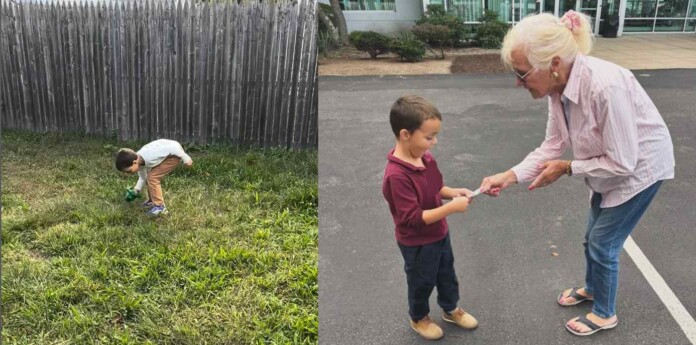
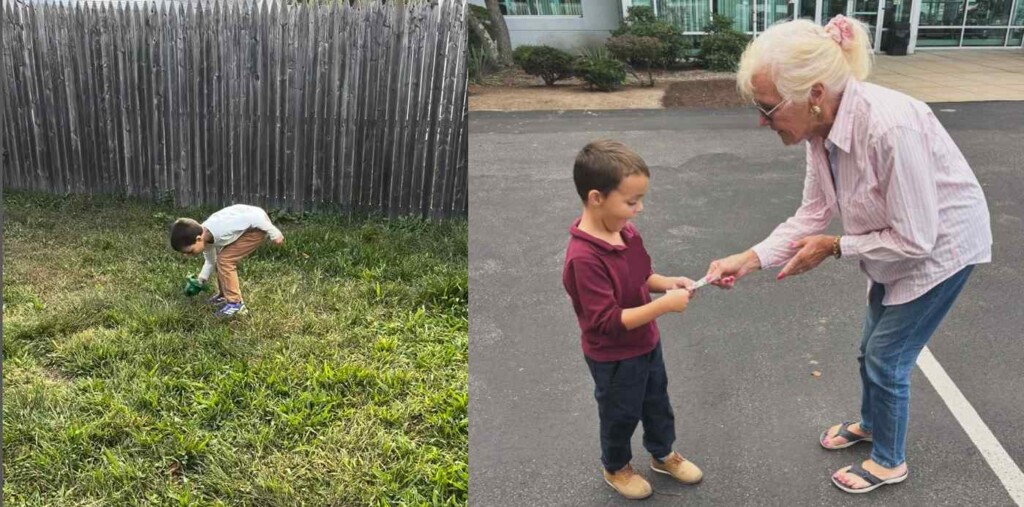
This is Luca Arpin, better known to his neighbors as “Poopa Scoopa Luca.“
His moniker is well-earned, as the 6-year-old styled himself the neighborhood’s #1 number to call for cleaning up after dogs and cats.
“People hate picking up dog poop,” said the first-grader from Warwick, Mass. Speaking with WJAR, Arpin said he has an appreciation for all things tidy, and prefers cleaning up above other activities.
His rate is $15 for one dog, or $20 for multiple dogs. He even has his own business card.
His mother says that volunteering is one of their family’s core values. She and Luca have an enduring love for animals and together have fostered 98 four-legged friends through her work at a local animal shelter.
First to fold laundry or mop a floor, Luca’s mother said that his tendencies to offer his help pro bono at the shelter slowly landed him in a predicament where he wanted to afford to permanently adopt a cat, but couldn’t afford to do so.
It didn’t take long for Luca to save enough money to bring ‘Pebble’ a little female kitten he decided he couldn’t live without, into the busy embrace of their home. Luca continues to work, raising money which he hopes can go to help other animals.
WATCH the story below from KMVT…
OVERWHELM Your Friends With Heartwarming Cuteness With This Kind, Enterprising Lad…
Sakai et al. Yamagata University Institute of Nasca, via PNAS, CC 4.0. BY SA
Sakai et al. Yamagata University Institute of Nasca, via PNAS, CC 4.0. BY SA
It took nearly a century to locate the 430 geoglyphs hidden in the Nazca Desert of Peru, but archaeologists surveying almost the entire region with the help of AI just turned up another 303 in a single study period.
Nazca is one of the greatest mysteries in anthropology—why did the Nazca Culture, active perhaps around the first century BCE, take the time to carve, dig, and arrange the Earth into these massive motifs of animals and human figures all over the desert?
The mystery has now deepened considerably.
The artificial intelligence used by the research team, consisting of scientists and archaeologists from Japan, France, Germany, and New York, was poorly trained, the team said, because of the limited number of subjects for it to study.
AI programs trained to identify tumors in X-ray images or mammograms, for example, are trained using thousands of positive cases. In stark contrast, there were only 430 Nazca lines for it to study.
So when the team deployed their AI to examine photographs of the Nazca Pampas taken from airplane, it went ballistic—identifying 47,000 possible matches. The team eventually cut that number down to 1,309 high-potential candidates.
Between September 2022 and February 2023, the team visited as many of the high-potential sites as possible to see whether a geoglyph was there. Aided by drones, they eventually narrowed down the 1,309 to 303.
“Of the 303 newly discovered figurative geoglyphs, 178 were suggested by the model, and 125 were additional finds. Of those, 66 were found as part of an AI-discovered cluster of geoglyphs, while 59 were discovered during the fieldwork without any help from AI,” CNN reports.
There’s no leading theory in why the Nazca Culture carved or dug out the lines on the ground, which have been well preserved in their unique, dry ecosystem prohibitive to agriculture, and remain visible at least 2,000 years after they were carved. Ideas suppose they are some form of calendar, that they were a pilgrimage site that got out of hand, or that they played some role in communication, dancing, and ceremony.
In the study of the figurative Nazca geoglyphs, the symbols are designated as either a line-type or relief-type geoglyph. Among the most famous line-type examples is the hummingbird, but more than half of the newly identified geoglyphs are relief-type, which more often depict humans, and without the beautiful geometry of the line-type glyphs.
The addition of 303 data points has allowed the study team to more broadly define the style and nature of the geoglyphs. For example, out of the more than 700 known, the line-type geoglyphs are almost all huge. Often utilizing straight lines and U-turns, they average around 90 meters—about 300 feet, in size.
By contrast, the relief-type geoglyphs, which are often stylized humans, heads, domesticated animals, or things modified/used by humans, average about one-tenth of the size of the line types.
The authors propose that the explanation of what these decorations were for involves how locals traveled across the area.
The figurative, relief-style geoglyphs are arranged often together, and often within sight of hundreds of miles of winding, well-worn footpaths. Using aerial imagery, the team determined that these winding trails had no fixed beginning or end, and were simply a result of continual use. Averaging 30 feet or so in length, these glyphs could be clearly seen by a person even at ground level.
By contrast, the line-type geoglyphs are massive and can only be seen in their entirety from the air. Their margins sat dozens or even hundreds of yards from a network of straight ‘roads’ that could be 120 feet wide at times.
These roads ran in straight lines and in trapezoidal arrangements, and passed by each of the largest line-type geoglyphs on the northern boundary of the Nazca Pampas, with their other ends terminating at Cahauchi Temple and the confluence of the Tierras Blancas and Aja rivers.
“This indicates that the network was mainly designed for groups from the Ingenio River Valley to make pilgrimages to the Cahuachi Temple and the confluence of rivers in the Nazca River Valley,” the authors write in their study.
SHARE This News With Your Friends Who Love An Ancient Mystery Or Two…
Ticket for Grand Opening of the War Memorial Opera House in 1932 – Credit: San Francisco Opera Archives
Ticket for Grand Opening of the War Memorial Opera House in 1932 – Credit: San Francisco Opera Archives
In 1932, the above ticket to the San Francisco Opera was sold for $10. Now, the artistic company is offering prime seats for the same price to welcome opera-curious locals.
The ticket priced in today’s currency is over $220, but two years ago, in honor of the SF Opera’s 100th anniversary, they rolled back the cost for some prime tickets to celebrate the War Memorial Opera House birthday—and the program was so popular, they’ve extended the offer for the second season.
This Monday, “Opera for the Bay” tickets will go on sale under a partnership with the Dolby family that will subsidize tickets for people who have never seen a magnum opus—or those who’ve not seen one in three years.
Just $10 will get you into prime seating locations to feast your ears—and eyes—on two classics, Carmen and La Boheme.
“With the company now entering its second century, we want to invite people of all ages and backgrounds around the Bay Area to experience the art produced by this dynamic institution — their opera company,” Dagmar Dolby said when the program launched in 2022.
“We hope the ‘Opera for the Bay’ ticket initiative is the catalyst that encourages the newcomer, entices the opera curious, and welcomes back those who have not been in a while.”
To get a ticket, residents of San Francisco with a zip code between 94000–95999, who haven’t purchased a ticket to a main stage performance at San Francisco Opera in the past three years, can create an account at the SF Opera and visit this page when tickets go on sale.
$10 tickets are limited to two per person, and go on sale online only one month prior to the opening night. If the past is repeated, tickets will go fast.
At noon on Monday, October 10th, tickets for George Bizet’s classic French tragedy Carmen, will go on sale.
Telling the story of a lustful Spanish dragoon who falls in love with a fiery independent gypsy woman, Carmen is a mainstay in any opera calendar and features compositions so famous you may not even know you’ve heard them.
Don’t forget to pass along this amazing opportunity to see a world-class opera by sharing this good news on social media—or directly with friends in San Francisco…
Quote of the Day: “The artist is nothing without the gift, but the gift is nothing without work.” – Emile Zola
Photo by: Flow Clark
With a new inspirational quote every day, atop the perfect photo—collected and archived on our Quote of the Day page—why not bookmark GNN.org for a daily uplift?
The Draconid Shower of 2018 - credit Mike Lewinski, Flickr CC 2.0.
The Draconid Shower of 2018 – credit Mike Lewinski, Flickr CC 2.0.
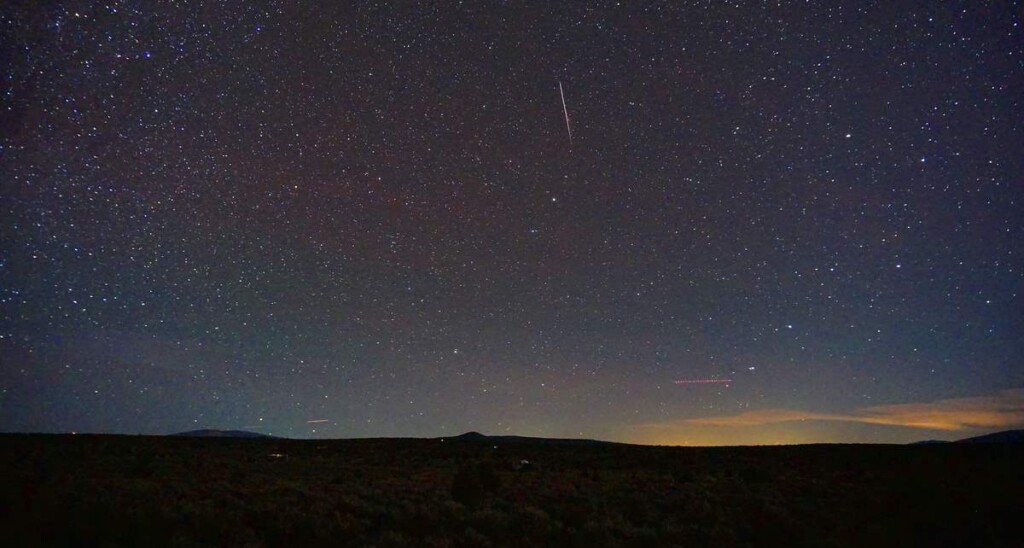
On the night of October 8th, the Earth will pass through a meteor shower radiating from the constellation Draco, an event that stargazers await with great anticipation.
That’s because the Draconid Meteor Shower can often display a peak rate of shooting stars of just a few per hour, but, every few years, exceeds all others for activity.
In 2011, the Draconids approached a rate of 600 per hour; more than the hyper-active Geminids and Perseids, and in 1933, topped out at 6,000 per hour.
There are reasons to be hopeful for a good show if you’re a stargazer. The Draconid shower is expected to peak around midnight (8th into the 9th of October) so there’s no reason to wake up intolerably early.
The light from the Moon can sometimes obscure the faint light of shooting stars, but a waning crescent moon means that lunar illumination will be just 32% that evening.
To find the constellation of Draco, the great serpent, its body snakes like the letter ‘S’ only backwards, with the tip and lowest section of its tail sitting between the Big Dipper (below) and the Little Dipper (above).
These shooting stars come from the comet 21/Giacobini-Zinner.
“Because this comet has an orbital period of nearly seven years, the next perihelion won’t come until 2025. So we’re not expecting an outburst this year. But, then, no one really knows for sure,” writes EarthSky.com
If the Draconids don’t impress, don’t worry—just 11 days later will be the peak of the Orionids, one of the more routinely active meteor showers.
Originating from the easy-to-locate constellation of Orion’s Belt, they are expected to be at their zenith from the night of October 20th, and through the a.m. hours of October 21st.
One may see up to 21 shooting stars per hour, or around 1 every three minutes.
Much of this information, as usual, comes from Valerie at Space Tourism Guide, who details that for almost all of October the Earth will be passing through meteor showers, including the two already mentioned, and others like the Cameleopardids and the Southern Taurids.
If asked what he will be looking for this year, this author would write that he looks forward to seeing the Pleiades, aka, the Seven Sisters, aka M45, which will be especially visible on October 19th when it passes very close to the newly-waning full moon. The Pleiades can be seen in a dark sky with the naked eye, but any old set of binoculars makes them truly dazzling to behold.
SHARE This Great Activity On October Nights With Your Friends…
The analysis of health records of more than 120,000 adults in the UK with an average age of 57 found that people who are happy with their lives are significantly less likely to suffer a heart attack or stroke.
They were also less likely to develop coronary artery disease, suffer a heart attack, heart failure, or have a stroke than those with lower levels of well-being, according to the study published in the Journal of the American Heart Association.
Researchers suggest a holistic approach to life that includes regular physical activities, social activities and/or stress management techniques, is an effective way to enhance personal well-being.
The study found that, compared to adults with a low sense of well-being, the overall risk of developing cardiovascular disease was 10% to 21%—being lower for people with the highest well-being scores.
Compared to adults with a low sense of well-being, people with the highest well-being scores had a 44% lower risk of coronary artery disease, a 45% lower risk of stroke, a 51% lower risk of heart failure, and a 56% lower risk of heart attack.
“Our findings support a holistic approach to health care, where enhancing a person’s mental and emotional well-being is considered an integral part of preventing heart disease and stroke,” said study senior author Professor Wen Sun, of the University of Science and Technology of China.
“Health care professionals might consider including strategies to improve life satisfaction and happiness as part of routine care, such as recommending regular physical activities, social activities or stress management techniques as effective ways to enhance personal well-being.”
It is well-known that life satisfaction, or well-being, can increase mental health.
But, until now, the influence of well-being on cardiovascular health was less clear.
After reviewing questionnaires from more than 120,000 participants in the UK Biobank database, the Chinese research team assessed well-being as it related to satisfaction with family, friendships, health, finances, and general happiness.
They analyzed the potential connection of well-being with the development of four major cardiovascular diseases: coronary heart disease, heart attack, heart failure, and stroke.
The study also examined the impact of well-being on lifestyle factors and inflammatory markers.
“These results underscore the profound impact that emotional and psychological health can have on physical well-being, shedding light on intricate biological mechanisms that were not fully appreciated before,” Professor Sun said.
“They add to the growing body of data that psychological health can impact cardiovascular risk,” said Professor Glenn Levine, of Baylor College of Medicine who was not involved in the study, said of the findings. “Much of the focus on psychological health has understandably been on negative factors such as depression and stress.”
“This study emphasizes the importance of positive psychological health, including the more global factor of a person’s sense of well-being.”
SHARE This Story With The Happier Seniors In Your Life…
Town of Conception Bay South, retrieved from Facebook
Town of Conception Bay South, retrieved from Facebook
During an annual half-marathon in Newfoundland, a strange individual was seen among the runners during the final few miles.
A goat, seemingly excited by all the motion, was happily trotting along between the sneaker-shod bipedals on the road through Conception Bay South.
The occasion was the annual T’Railroad Trek Half Marathon on Newfoundland’s east coast. Winding through forest trails and town streets, the runners passed a local business called Taylor’s Pumpkin Patch.
Mayor Darrin Bent said one of their employees suddenly joined the race.
“They have a resident goat, Mr. Joshua. And when the runners went past the pumpkin patch, the goat decided, ‘Well, I’m not staying here,'” Bent told CBC News.
The goat covered an amazing 2.4 miles of the course before his owner Mr. Taylor caught up to him and led him the last quarter mile to the finish line. Taylor said he had come abreast of his goat’s newfound passion for endurance running through social media posts of the race while it was going on. There were hundreds of pictures and videos.
Meanwhile, at the finish line, Mayor Bent caught word of Joshua’s participation from other runners and decided after a moment of befuddlement to prepare a medal for him.
“We very quickly put a medal around his neck and he became quite the star. Most people who actually ran the half marathon wanted their picture with Joshua at the finish line,” said Bent.
Mr. Taylor said that Joshua has always liked crowds, and evidently got caught up in the excitement of the runners, many of whom decided to match their pace with the goat, who reportedly slowed down and sped up at different intervals.
The mayor said he hopes the goat will become a mascot for the event, and to that end he has been designated the half marathon GOAT (greatest of all time) and is soon to drop the puck at a local CBS ice hockey game.
SHARE This Unlikely Story About The GOAT Of Endurance Running…
Chicago skyline behind The Lakeside Center overlooking Lake Michigan – Photo courtesy of the Metropolitan Pier and Exposition Authority
Chicago skyline behind The Lakeside Center overlooking Lake Michigan – Photo courtesy of the Metropolitan Pier and Exposition Authority
A Chicago real estate company has shelled out $1.2 million for a sophisticated suite of decals that will deter birds from crashing into glass windows.
McCormick Place was alerted by local wildlife advocates that the glass facade of its Lakeside Center building had, during a single night in the autumn migration season, fatally attracted 1,000 birds to fly into it.
McCormick Place is the largest convention center in North America, and the total area of the Lakeside Center’s glass exterior—just one of its five buildings—is 2.6 acres.
The Metropolitan Pier and Exposition Authority which runs McCormick Place, got in touch with Feather Friendly Technologies, a Toronto-based firm that manufactures a special adhesive film to coat the outside of a building’s glass facade with white dots—invisible to the human eye—but which can be seen by passing birds.
The dots help the birds’ eyesight distinguish between the solid glass and empty air.
“There was a lot of staff and logistics involved in the installation and several lifts and boom trucks,” says Paul Groleau, vice president of Feather Friendly Technologies.
It took several teams several weeks to apply it to the whole center, whereupon it was pulled down after a few days leaving behind the dots on the glass.
“When we learned of the reported mass collision event last year, we knew that we needed to quickly make additional improvements to protect local and migratory birds as they pass McCormick Place,” Larita Clark, CEO of the authority, told ENR News Record.
Local urban wildlife researchers say that the Lakeside Center has been attracting birds to their deaths for decades, and the window treatment will make a huge difference in the number of migratory birds that pass through Chicago safely.
McCormick Place is also a part of Lights Out Chicago, a metropolitan program between building managers to make the night skies in the city during the autumn migratory period significantly darker by turning off as much exterior lighting as possible.
GNN has reported on these programs in other American cities and the outsized difference they can make in the number of bird-building collisions that occur as birds migrate south for the winter.
Quote of the Day: “Life without liberty is like a body without spirit.” – Khalil Gibran
Photo by: Getty Images for Unsplash+
With a new inspirational quote every day, atop the perfect photo—collected and archived on our Quote of the Day page—why not bookmark GNN.org for a daily uplift?
NASA's Mars Perseverance rover captured this image of a black-and-white striped rock on Sep 13, 2024.
NASA’s Mars Perseverance rover captured this image of a black-and-white striped rock on Sep 13, 2024.
Last month, while trundling across the Martian landscape, the eyes of the Perseverance Mars rover settled on an extraordinary rock.
Featuring black and white striations like Alpine granite, it has NASA scientists excited that the rover is entering an area where new discoveries about the planet can be made.
The Mars Perseverance rover captured this image of a zebra-striped rock on Sep 13, 2024 and named it ‘Freya Castle’ – NASA / SWNS
Sighting it with the Mastcam-Z, NASA’s Jet Propulsion Laboratory which controls the rover took a closer look after identifying the rock which looked entirely out of place.
Currently ascending the vast Jezero Crater in which it landed, the rover has recently found a spot of flat ground allowing it to travel more freely. Having already collected samples of ancient river sediments, it’s now climbing to higher elevations in search of ancient rocks.
In June, while traversing Mount Washburn, Perseverance found a sparkly white boulder of feldspar and pyroxene not too dissimilar to this white rock, which measured approximately half the size.
Nicknamed Freya Castle, Perseverance posted up next to it for a spectrographic examination.
“The internet immediately lit up with speculation about what this ‘zebra rock’ might be, and we’ve enjoyed reading your theories!” Athanasios Klidaras, a Ph.D. student at Purdue University working with the Perseverance mission team, told Earth.com.
Recalling Geology 101, we hopefully remember that rock is formed in three ways. Sedimentary rock is formed as layers of soil and organic matter are buried and compacted over millions of years. Igneous rock is formed when magma emerges from the Earth’s crust in the form of lava, which then cools, and solidifies.
It’s sometimes said that metamorphic rock, which forms stones used for building like granite, gneiss, and slate, is “baked.” It’s formed when certain mineral compositions are joined under intense heat and pressures under the Earth.
NASA’s Perseverance Mars rover took this selfie over a rock on September 10, 2021 Credits: NASA/JPL-Caltech/MSSS
Freya Castle is believed to be a metamorphic rock, which if true could give more detailed information about Mars’ volcanic past. Jezero Crater is mostly Martian bedrock and sedimentary layers, meaning that Freya Castle tumbled down into the crater from higher up.
Klidaras and his colleagues have said they are keeping the rover’s eyes out for a larger deposition of this rock. Such a collection might shed light on whether the stones were uplifted from the crust during the Jezero impact event, or if they were transported to the area from some significant volcanic event millions of years ago.
SHARE This Bit Of Scientific Discovery with Your Friends…
The child was battle severe brain abnormalities - credit, Getty via Unsplash+
The child was battling severe brain abnormalities – credit, Getty via Unsplash+
A 4-year-old has become the first patient known to British medical history to be taken off life-support and proceeded to recover—so much so that he went home with his parents.
This story revolves around a sensitive topic about terminally ill patients, decisions around the ends of lives, sometimes young ones, and what roles do parents, physicians, or courts play in making those decisions.
The decision to take him off life support was ordered by the UK High Court following a hearing in which the boy’s doctors said the artificial ventilation was not leading to any improvement and that his condition, involving severe brain abnormalities, continued to deteriorate.
Referred to as NR in the case for confidentiality, Justice Poole, the presiding judge, said it was a “delight” to see this “remarkable boy” home with his “devoted parents.”
“I do not wish to minimize the emotional turmoil suffered by Mr. and Mrs. R and the continuing burdens that NR suffers because of his conditions, but it seems to me to be a wonderful surprise that NR has confounded expectations, that he no longer requires continuing invasive interventions and, in particular, that he has been able to return home to the loving care of his devoted parents,” Poole said, according to the BBC.
It’s been several months of home care during which NR has been able to play outside at a park, “feel the wind in his hair and the sun on his face,” aspects which led Poole to reverse the previous ruling which would have given physicians legal protection for withholding certain invasive treatments, as well as CPR—in a word because it would only prolong a largely empty, suffering life.
“A decision to withdraw life-sustaining treatment is not a decision to bring about the death of a patient, but a decision that the continuation of the treatment is not in their best interests,” Judge Poole clarified, who said that at the time of the ruling, the only identifiable pleasure in NR’s life was the consoling touch of his parents.
NR continues to improve. He no longer requires ventilation and recently stopped relying on a urinary catheter.
NR will now receive treatment, even in the case of an emergency return of past symptoms, like a normal boy. Past periods on life support will not influence any treatment decisions—which his mother says he “deserves” after fighting back from so long a period on the brink.
The court said the emergence of NR’s recovery will raise challenging questions for future court rulings on the topic.
SHARE This Miraculous Recovery, And A Family Reunited…
First Ian, then Idalia, now Helene—a special housing development in Florida has withstood them all.
Without any doubt, the neighborhood at Hunter Point in Cortez along the Gulf Coast has lived up to its billing of hurricane-proof, as the storm that has ravaged the southeastern United States was endured without issue.
Helene made landfall last Thursday, and Cortez was battered with waist-deep storm surges that turned the roads to rivers. Not only did Hunter Point stay dry, but kept the lights on as well thanks to a bevy of storm-resistant architectural and landscape designs.
“[H]urricanes were our number one priority,” Marshall Gobuty, founder and president of Pearl Homes, the developer that built the community, told Fast Company in the wake of the storm. “How could we build to survive a Cat 5 hurricane?’
Helene didn’t make the 5 grade, but based on how easily Hunter Point survived it, you’d imagine it could handle the worst if it came.
The ground floor garage is solid concrete. On the first floor, two-by-six timber boards are used for the frames rather than two-by-fours, and the walls are filled with hard insulation rather than foam, making it sturdier and more energy efficient. The roof is made of steel, and the three floors are interconnected with steel seams.
Solar panels are installed on the roof in a design that was tested in an enclosed environment to be unmovable—the wind can’t blow underneath and tear it off the roof. The solar panels charge a battery system that can power the home for several days if the grid goes down—which happened in Cortez after Helene hit. The next morning, when the sun came out, the solar panels went back to charging the battery which was still running, and has been proven in tests to be capable of running in a limited mode for another 9 if needs be.
Swales built into the landscape of the Hunter Point development channeled stormwater away from the streets until it filled up a large pond on the property. The garages stayed dry, but even if the rain had been much greater or longer, 16 feet of concrete separate the terrain from the living area.
For sure none of this is cheap. Houses start for a cool $1.25 mil, but apartments with similar building standards are available for $1,700 and $2,000 in nearby Bradenton, Florida. Set within walking distance of entertainment, restaurants, shopping, and event space in the Village of The Arts location.
The price isn’t all bad, the insurance costs are much less, and companies are much happier to insure buildings that include Pearl Homes’ storm-proof features.
“I was on the phone with our insurance company this morning, and let them know I’m sending pictures, everything’s great,” Gobuty told Fast Company. “She said, ‘Finally, [some] good news.’ Insurance is a big, big component in the future, because climate change is here. And we have to adapt.”
SHARE This Amazing Place To Live That’s Totally Storm Proof…
Since 2016, poaching of one-horned rhinoceroses in India’s Assam state has fallen 86% after a change in government brought determined action to protect them
By expanding protected areas and bolstering ranger patrols, the steady growth in the number of rhinos, seen since the late 60s, has now accelerated to the point where 3,000 horns grace the Assam savannah.
“Rhinos are synonymous with the identity of Assam. They are our pride and the crown jewel of our biodiversity. Ever since we assumed office, we have taken various initiatives to protect the prized species, expand its habitat and ensure its safety,” Assam state’s Chief Minister Himanta Biswa Sarma wrote on Twitter-X.
In India, the Chief Minister, often abbreviated CM, is the equivalent of an American governor, and the state of Assam which Sarma governs is India’s rhino stronghold, with 88% of all the rhinos in the country located in Kaziranga, Manas, and Orang national parks, and Pobitora Wildlife Sanctuary.
The remaining 12% is spread widely across the country. CM Sarma’s tenure which began in 2021 oversaw the addition of nearly 50,000 acres of habitat in Orang National Park, and another 50,000 to two other protected areas.
Last year, GNN reported that for the first time since 1977, zero rhinos were poached in the country.
Sarma ordered the rhinos treated like presidents, with sophisticated police commando teams patrolling the parks with night vision equipment and drones during moonlit nights.
Since then, the population of Assam’s rhinos has grown by 105 to 3,000; up from a low of 600 during the 1960s. The government released these poaching figures on World Rhino Day (Sept. 22nd) to show that if the will to protect these beasts is there, the most poached megafauna species on Earth can thrive.
SHARE This Inspiring Story Of Anti-Poaching In India…
Quote of the Day: “Success seems to be largely a matter of hanging on after others have let go.” – William Feather
Photo by: Nagara Oyodo
With a new inspirational quote every day, atop the perfect photo—collected and archived on our Quote of the Day page—why not bookmark GNN.org for a daily uplift?
A black bear born without front legs has been sighted more or less thriving in the mountains of West Virginia.
Though not unheard of, it’s wild to be able to see the animal’s natural movement, having been transformed, by consequence of his birth, from a quadrupedal animal to a bipedal animal like us.
“The area he’s in has some of the steepest terrain in the Appalachian mountains,” hunter and outdoor writer Kirk Price wrote on Instagram. “He has no problem getting around.”
Price posted a video on his YouTube channel in 2022 explaining he had been aware that the bear was in the area, and had seen still photos of it from as far back as 2018, but the video was him explaining a face-to-face encounter he had with the animal which he described as “just the toughest, baddest son-of-a-gun.”
He also said that there were no signs the “son-of-a-gun” was deadly underfed and that the encounter ended with the bear running up a steep hillside on his two hind legs like it was no bother.
The most recent sightings must make this particular bear, according to Price’s estimation, around 8 years old. Black bear cubs, he said, stay with their moms for 2 years. He hadn’t been with his mother in 2018 in the trail camera photos, but he wasn’t particularly large then, making a 2015/2016 birth year plausible.
Speaking with USA Today, Price said he had been asked if traps could have been the cause of the bear’s disability, and added that the “clean nubs” where his forearms should be are not at all the result one would see if the bear had fallen prey to such a device.
Also, the bear has never been seen with one arm, which would then suggest that if it were a trap that disfigured him, he would have had to have lost both arms to traps either simultaneously, or one after the other over a very short time span, while also surviving the subsequent injury and infection.
Bear traps are not used by hunters today, and are not only illegal, but the kind of thing most hunters would abhor.
“I firmly believe he was born that way and has overcome all odds. That’s what the focus should be on. This bear is truly amazing,” Price told the news outlet.
The Instagram comments were filled equally with people suggesting such an animal led to the myth of Bigfoot, and jokes that the Democrats had taken away his Second Amendment Rights…
Companies and organizations are descending on affected communities in North Carolina with donations and volunteers as they begin to dig themselves out of a 100-year storm.
Hurricane Helene “wiped out whole communities” according to Governor Roy Cooper, leaving over 200,000 people without power and causing exceptional destruction even far inland from the Atlantic.
The response, particularly from the North Carolina sporting world has been inspiring and robust.
David Tepper, the owner of the Carolina Panthers and the Charlotte FC soccer team, has made a $3 million donation in concert with his wife through their charitable foundation to Helene relief efforts.
The David and Nicole Tepper Foundation’s contribution will focus on providing food and other essentials through community food banks and service agencies in the Carolinas.
“The David & Nicole Tepper Foundation, Carolina Panthers, and Charlotte FC stand alongside all those who have been affected by Hurricane Helene and the devastation it has wrought across the southeast, and particularly in our backyard throughout the Carolinas,” said David and Nicole Tepper said in a release.
“This is our home and we are committed to supporting relief efforts throughout the region by providing critical resources and aiding the efforts of our heroic first responders,” the Teppers said. “The impact on our community has been severe, but Carolinians are resilient and courageous, and together, we will rebuild and recover.”
The NFL at large followed the Tepper foundation’s lead, with clubs and ownership groups from the Atlanta Falcons, Houston Texans, Tampa Bay Buccaneers, and the NFL Foundation itself, together donating another $5 million.
“Our hearts go out to all of those impacted by Hurricane Helene, and the NFL is committed to doing our part to help the affected communities recover,” said NFL Vice President of Philanthropy and Executive Director of the NFL Foundation Alexia Gallagher.
Three NASCAR entities, including Driver Greg Biffle, Joe Gibbs Racing team, and Hendrick Motorsports have all been using privately owned helicopters to carry supplies out to some of the most rural communities affected by the storm.
Biffle has been delivering pallets of donated Starlink hubs in his helicopter, as telecommunications are down across large parts of the state
The rural town of Banner Elk personally thanked Joe Gibbs Racing for using a helicopter to transport donated supplies there, as one of the main roads to the town passed over a bridge that was blown away by the flooding.
Meanwhile, a contributing editor for Road & Track posted an image of helicopter flight paths on X. The copters belonged to the three entities mentioned above going back and forth to western North Carolina where damage has been particularly bad.
Support has been shown from beyond the sporting world as well, with Lowes and Home Depot contributing $2 million each through a variety of support operations.
This week, Lowe’s stores will host relief events to distribute cleanup supplies in more than 25 communities across the affected regions. The company is also working closely with first responders to distribute relief supplies and donate much-needed products, like water, chainsaws, and generators, a statement said.
Home Depot’s donations will go to the American Red Cross, World Central Kitchen, Convoy of Hope, Team Rubicon, and Operation Blessing—all organizations currently on the ground assisting affected communities.
Team Depot, the volunteer force of the home improvement brand, is also working to help clean up in local communities in North Carolina, South Carolina, Florida, and Georgia, including The Home Depot’s hometown of Atlanta. Money will also go to furnishing “tool banks” with the equipment needed to support cleanup and rebuilding efforts.
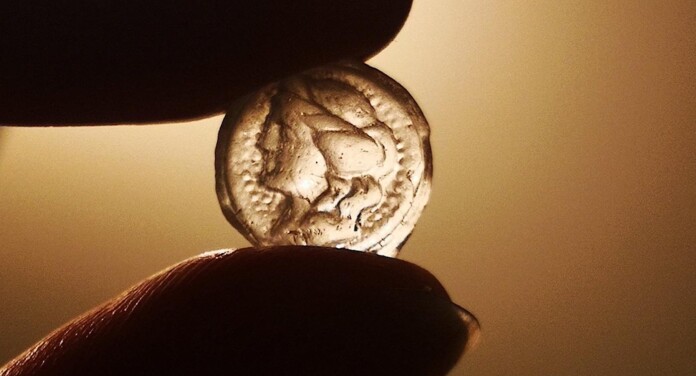
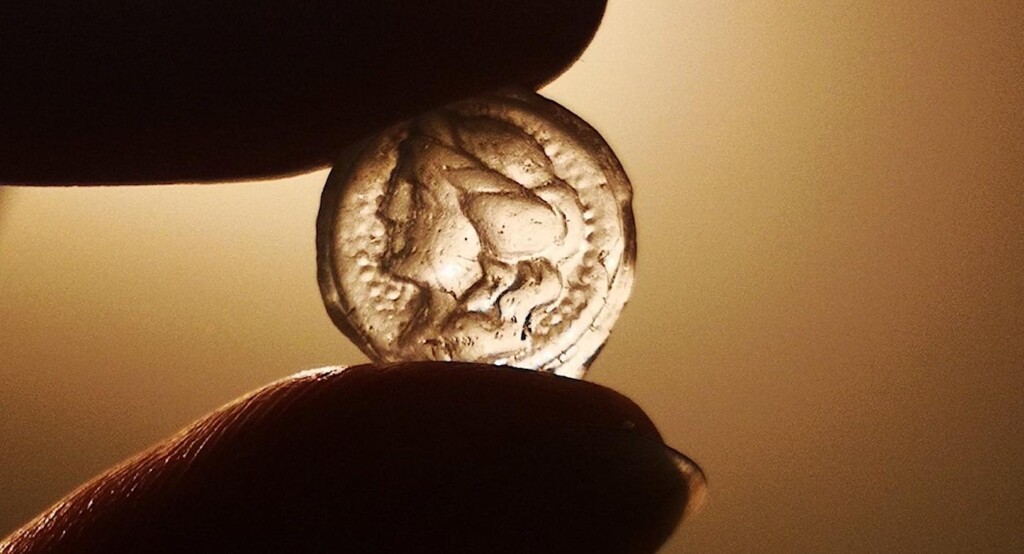
Ancient pendant found by Nikki Banfield on a beach at the Isles of Scilly, England – SWNS
Ancient pendant found by Nikki Banfield on a beach at the Isles of Scilly, England – SWNS
43-year-old Nikki Banfield says it’s always when she’s not looking for treasures on the beach that she finds treasures on the beach.
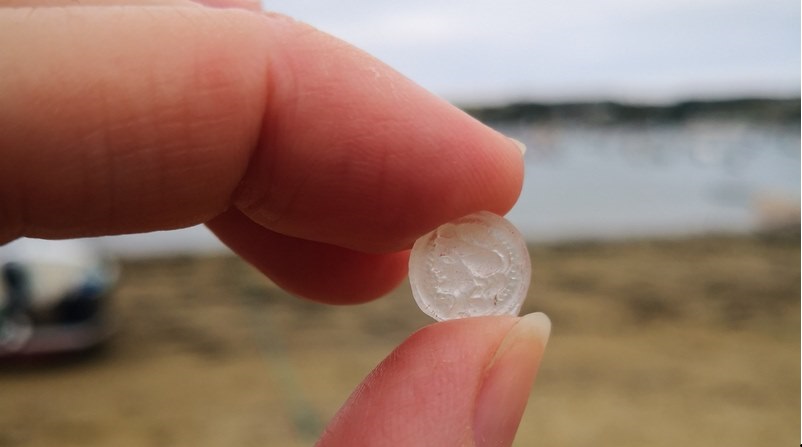
Recently, she came upon a glass ‘cameo’ about the size of a penny with the depiction of a woman’s face, an object that may be 200 years old, but could also be 2,000 years old.
SWNS – via Nikki Banfield
Cameos, Banfield explains to the English media service SWNS, are known as ‘glyptics.’ These little ornaments are associated with ancient Greece and Rome and have been around for thousands of years.
However, she adds that cameos became popular jewelry pieces throughout the Victorian period, leading to the confusion over its origin.
Banfield adopted the handle The BareFoot Photographer due to venturing without shoes whilst capturing images from her local environment on the Isles of Scilly, a small archipelago off the tip of Cornwall, England, where she found the curio.
“I always find when I’m on the beach and am not looking for things that that is when I find things,” said Banfield. “I spotted what I thought was a button at first glance. But upon scooping it up, and holding it up to the light, I realized it was something very different.”
“We think this is a miniature glass cameo, rather than an intaglio—as the miniature head in the piece is raised, whereas in an intaglio, the design would be imprinted,” she added.
Banfield is meeting with a curator in the local Scilly museum to see if they can confirm the mystery around the object which is about the size of a thumbtack.
“It is about the right size to have been used in a small piece of jewelry, either a ring or a necklace. Collectively known as glyptics, and most strongly associated with ancient Greece and Rome, cameo and intaglio have been around for thousands of years.”
“Often used as talismans and for protection, they were carved with images of deities, mythological figures, animals, loved ones and narrative scenes,” she concluded, saying that the optimist and romantic in her would love to think it was something ancient, with a wonderful story.
“But whatever it turns out to be it’ll still be a hugely special find, as it’s beautiful and has captured the imaginations of so many.”
SHARE This Fascinating And Random Find On A Random Beach…
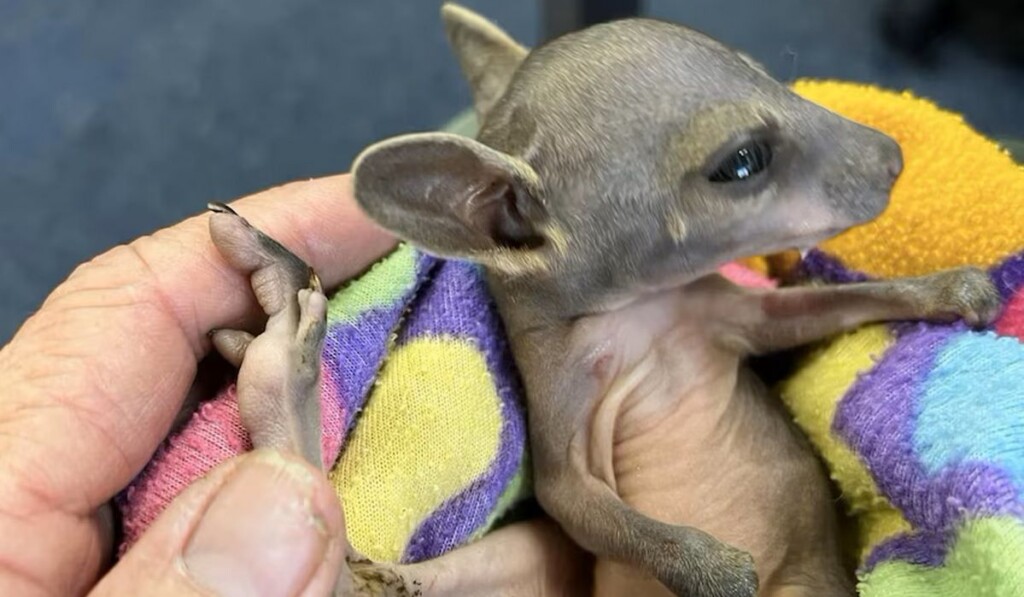
When an Australian nurse working at a hospital with outdated incubators happened upon a kangaroo rescue center, she realized she could help save lives.
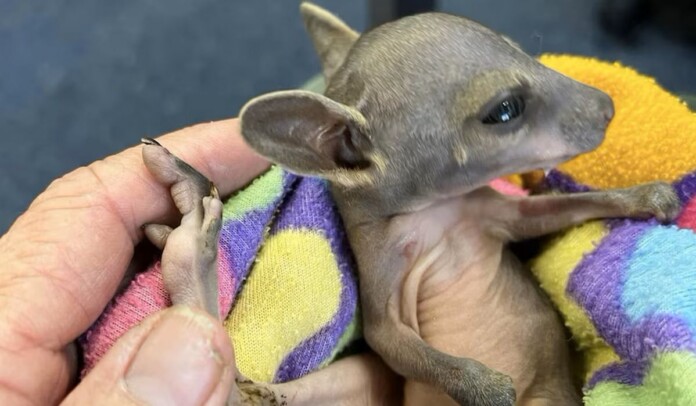
Once used to help save premature human babies, the incubators are now mimicking the conditions of a mother kangaroo’s pouch, where her joey will live for the first 8 months of its life.
Dozens of orphaned joeys and pinkies, or marsupial pups who haven’t opened their eyes yet, are brought into Kununurra Kangaroo Rescue Haven in East Kimberly, Australia, every year.
Because they are the largest terrestrial animal in Australia, an adult kangaroo rarely has to worry about predators and their populations can balloon quite dramatically. This, unfortunately, renders them much like whitetail deer in the US—at extreme risk of becoming roadkill.
Mandy Watson, director of the Kununurra Haven, has saved hundreds of orphaned joeys from their moms who have been hunted or struck by vehicles. Young, pinky joeys can struggle to survive without the warmth and humidity of their mother’s pouch.
She has seen hundreds of orphans return to the wild, but thousands not make it to adulthood.
“In 20 years, we’ve released 823 back into the wild. It’s really hard, especially in the dry season, for us to keep up that constant temperature,” Watson told ABC News Down Under. “The humidicrib (incubator) is going to be a constant temperature that’s going to dramatically help [to] save a few more lives.”
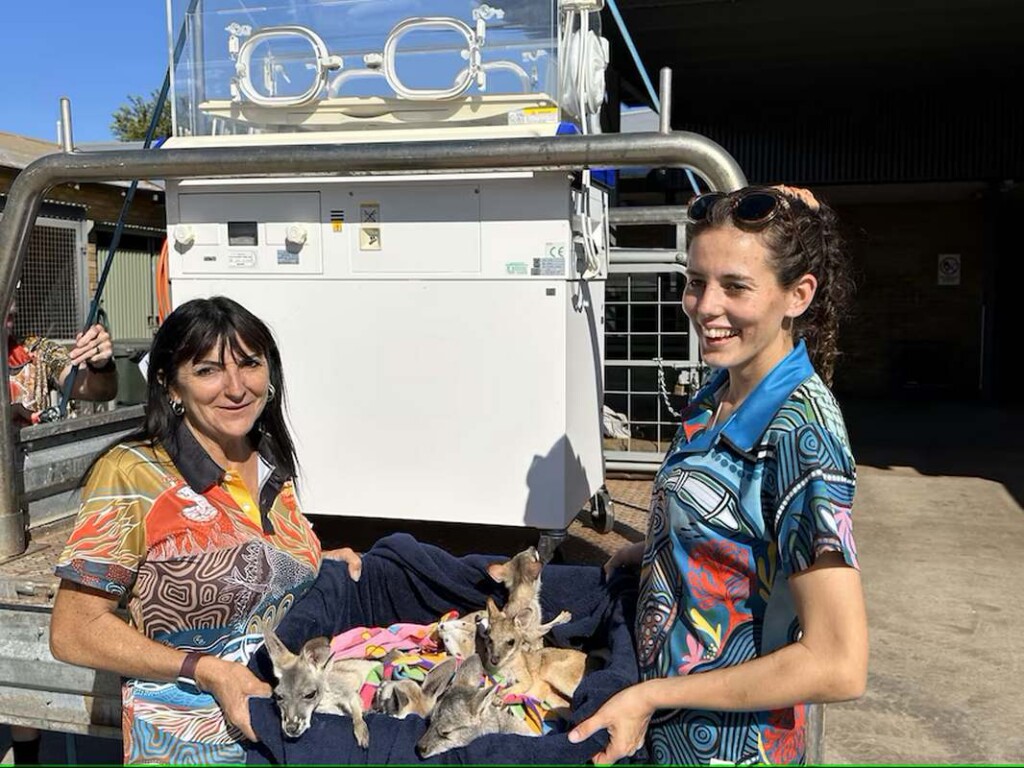
Mandy Watson (left) and a volunteer play with some joeys next to their truck-mounted incubator. Provided by Jane Darlington
The humidicribs were donated by nurse Jane Darlington, a clinical pediatric nurse at the Kununurra District Hospital. The hospital needed to get rid of them as the rapid march of medical technology had seen them become obsolete.
Darlington got the idea while shopping in town. She saw a volunteer from the rescue center helping to raise awareness of their work by walking around in a wallaby costume, holding one of their orphaned joeys.
“It was very cute and caught my attention,” Darlington remembered. “I’m very pleased we’ve been able to give [the incubator] to somebody [who will] use it.”
SHARE These Women And Their Saintly Rescue Operation With Your Friends…
Quote of the Day: “Happy is the man whom the Muses love: sweet speech flows from his mouth.” – Hesiod
Photo: 1690 Painting by Johann Michael Rottmayr ‘Venus and Cupid’ – Art Institute of Chicago
With a new inspirational quote every day, atop the perfect photo—collected and archived on our Quote of the Day page—why not bookmark GNN.org for a daily uplift?