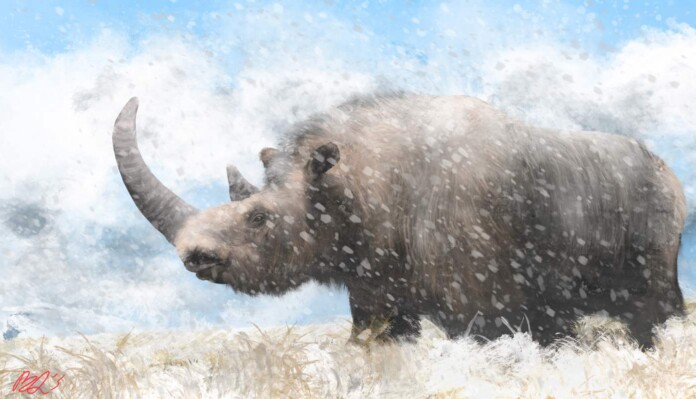
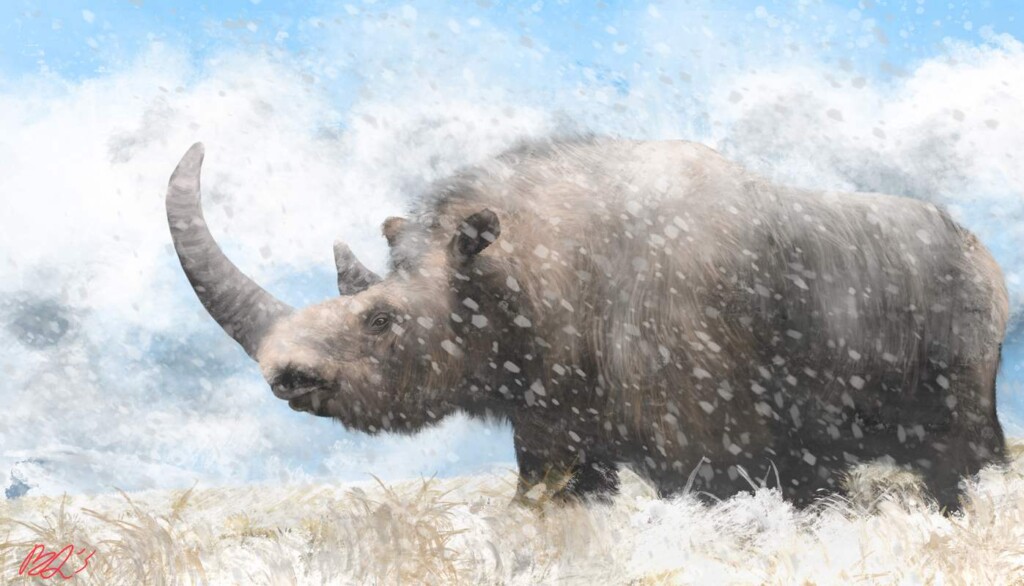
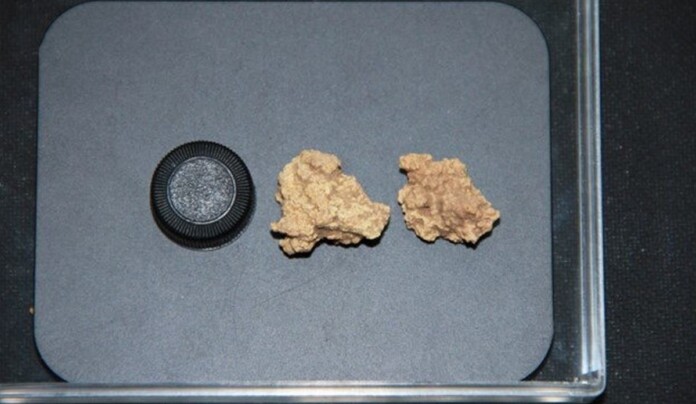
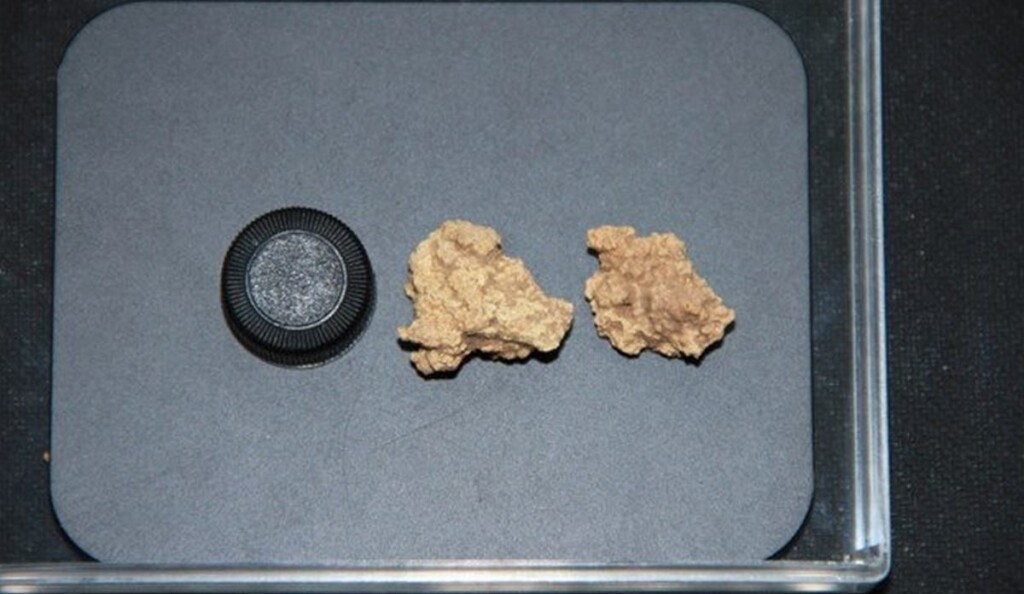
Four years ago, someone came across an extraordinary find—a juvenile rhino from the Pleistocene ‘mummified’ in the Siberian permafrost.
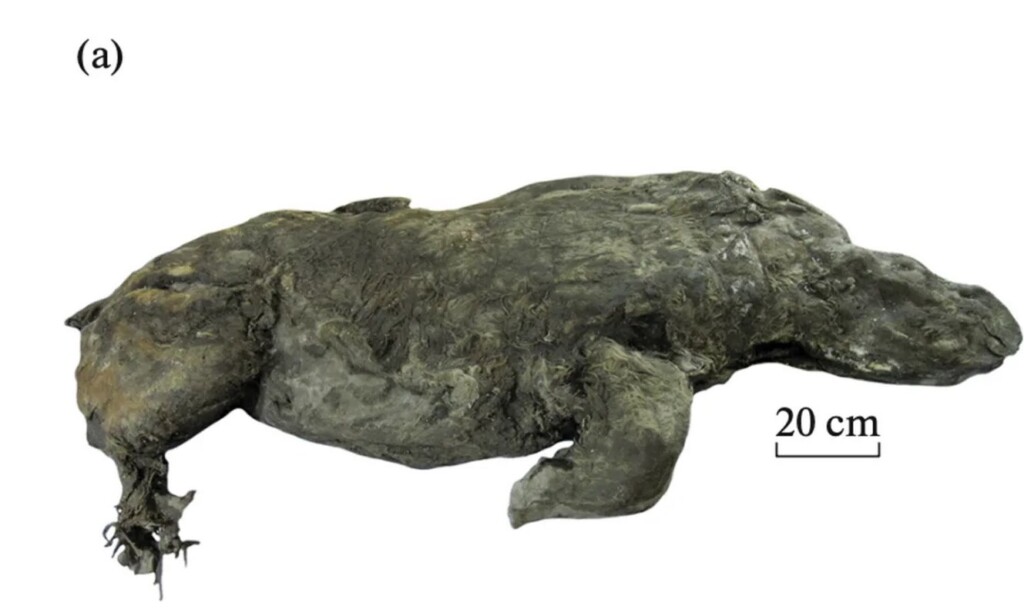
Alerting the relevant authorities, the discovery turned out to be a 4-year-old woolly rhino (Coelodonta antiquitatis) with its fur, skin, and organs intact, offering paleontologists a rare glimpse into the biology of this Ice Age behemoth.
The specimen was found in August 2020 on the banks of the Tirekhtyakh River in Russia’s Sakha Republic. Researchers from institutes in Yakutsk and Moscow just released a paper on their investigations into the animal.
None of them were able to speak with Western news outlets, but the general consensus from scientists in the field not involved with the research is that the most notable discovery is the presence of a fatty hump around the shoulders very similar to the one seen in modern camels.
“We knew from skeletons and cave art that woolly rhinos had large shoulder humps,” Adrian Lister, a paleobiologist at the Natural History Museum in London told Ars Technica, adding that “maybe this is the first time fat has actually been discovered there, which for sure is a great discovery if so.”
credit – the Russian Academy of Sciences, released.
Indeed it has been hypothesized that perhaps these woolly rhinos had reservoirs of calories stored in a camel-like hump for long, bleak winters. Other species of Ice Age mammals had this same trick, but other researchers assumed it was part of the animal’s display equipment.
While the authors of the examination didn’t explain how it was found, leading to the suspicion it was unearthed by mammoth ivory hunters, the animal’s left half was so badly damaged they could only conclude it was eaten by predators, perhaps suggesting it was found after defrosting naturally from the permafrost.
The specimen bore a light brown coat of fur, suggesting that rhinos were born with something like a blonde coloration that gradually darkened as hairs in preparation for adulthood.
Another feature of its fur were the preserved remnants of small parasites—water fleas—which no longer exist in the region today, indicating how much the environment, even so far north, has changed. Future examinations, perhaps on its intact stomach, might reveal details about its diet.
It was the second-largest animal in its ecosystem behind the woolly mammoth, and despite the smilarities, they inhabited different enviornments. Additionally, the mammoth made the leap across the Bearing Land Bridge, while the rhino didn’t. Paleoecologists don’t know why, and it remains one of the bigger questions in Siberan history.
While impressive, this isn’t the most complete rhino ever found subjected to cryomummification. A specimen from 1929 discovered in Poland that was missing only fur and horn, and a plaster cast made for the Natural History Museum in London seems like the animal died last week.
SHARE The Story Of This Ice Age Rhino Mummy With Your Friends…
Video screenshots from ‘She Deserved The Purse Challenge’ – TikTok @thekatiebeach
Video screenshots from ‘She Deserved The Purse Challenge’ – TikTok @thekatiebeach
A rather unique story is sweeping American social media—moms leaving presents for other moms inside baby products.
The story began when Nashville mom Denaesha Gonzalez went to Target and saw a strange yet translatable sight—a silver clutch purse placed on the shelf with the baby supplies.
A mother, Gonzalez reasoned, had picked out the clutch which retailed for $20, but gave up her own desires in order to provide for her baby. Gonzalez posted a video of it on her TikTok account which later went viral.
In it, a long inhale and exhale is followed with the caption: “She Deserved The Purse…To the Mother who chose themselves last, you deserve the world tonight and always.”
The video went mega-viral, being viewed by tens of millions of people, and it launched a spontaneous nationwide campaign to hide gift cards or cash inside boxes of diapers and other projects that was propelled all the further after Gonzalez’s video was seen by Cecily Bauchmann, a “mom influencer.”
She went into a Target and recorded a video of herself buying a $100 gift card, writing a note, and walking through the store to stash it for a lucky, hardworking mom to find.
“Hey! You deserve that special ‘you’ thing. You are amazing!” the note, which she put in between a bag of Huggies.
Bauchmann called it the #shedeservedthepurse challenge, and the Washington Post reports there are now over 150 videos on TikTok under this hashtag—all featuring either women leaving gifts for their postpartum peers, or finding the gifts and—usually—recording a tear-soaked thank you video about it.
“Social media was always an aspirational place where people weren’t really showing the truth,” Beach said. “I think recently, as we all start to show more of the truth, it makes motherhood feel so much less alone.”
Imagine if you were flipping through records at a store and discovered an unreleased single from Jimi Hendrix or Freddie Mercury.
That’s what archivists must have felt when they held up 200-year-old sheet music for a composition about 12 minutes long.
They realized that Wolfgang Amadeus Mozart was about to drop a new track, more than 200 years after his death.
Researchers at Leipzig Municipal Library were revising the Köchel catalogue, a physical, chronology of his compositions when they pulled out one from the 1760s—when the child prodigy was a pre-teen.
Entitled Serenate ex C. and given the shorthand name “Ganz kleine Nachtmusik,” the piece was composed for a string trio and contains 7 separate movements. The name on the music sheets is Wolfgang Mozart. He didn’t start including his middle name until he was 19.
“We are convinced that we can now present a completely unknown, charming piece by the young Mozart,” Ulrich Leisinger, head of research at the Mozarteum Foundation, told the German Press Agency in advance of the opening night.
The first modern performance of it took place last week at the composer’s birthplace in Salzburg, Austria, and was carried out by students from the Johann Sebastian Bach School of Music. A line stretched half a kilometer across the Augustusplatz of people waiting to for something that any one of them would surely have admitted they never thought could happen—hearing a new Mozart piece.
Classical FM wrote that certain aspects of the piece seem to suggest it was written to be performed outdoors, as several sharp, staccato intros were probably there to grab the attention of promenading well-to-doers.
In attempting to communicate the style of Mozart to modern readers, several news outlets described his compositions as beloved for their simplicity, symmetry, and balance. He wrote over 600 in his lifetime before dying young.
WATCH the performance below…
SHARE This Once-In-A-Lifetime Discovery With Your Friends Who Listen To Classical Radio…
Duke University Hospital - credit, Duke.edu released
Duke University Hospital – credit, Duke.edu released
A touching story comes now from North Carolina of a man who saw a reversal in his progressive blindness just in time to see the face of his newborn son.
The new father was born with retinitis pigmentosa (RP) and knew even from a young age that it would mean a total loss of vision.
Tyler Wilfong never had near-sight, and by 23 he had his driver’s license revoked for the loss of peripheral vision. Gradually he had to rely more and more on help from others to get around.
“It was inevitable, but I kept my faith in God and I just had a feeling that one day something would change,” he recalled to CBS 17. “And you know, 30-some years later, here comes this opportunity.”
Many different faulty gene copies can lead to RP, and after applying for candidacy in a medical trial at Duke University, he found that the gene therapy being tested was for the ones at fault for his vision loss.
“There’s a gene that is important for the retina to work properly, and a mutation in that gene renders it not functional, and so what we try to do is to bring a healthy copy of that gene into the eye through an injection,” said Dr. Oleg Alexeev, Assistant Professor of Ophthalmology at Duke University Eye Center.
That injection contains a disarmed virus that is instead a carrier of those healthy gene copies. Engineered to infiltrate the retina, the virus deposits the gene copy and then dies.
In the spring, Wilfong received this functional copy in one eye, and within hours realized he could see the hand in front of his face—something which he had never been able to do before.
The defective gene copy that Wilfong was born with is responsible for merely 1% of the 100,000 Americans who suffer from RP, and Dr. Alexeev says his colleagues across the country really have their work cut out for them to expand on this gene therapy treatment.
But for Wilfong, seeing his hand was just the start—beholding his baby boy was the real reward for his faith—in the divine, and perhaps also in modern medicine.
“It’s been a blessing,” he told CBS 17’s Maggie Newland. “It’s made of a world of difference. Just simple tasks that you don’t even think of, like changing his clothes.”
WATCH the story below from CBS 17…
SHARE This Tear-Jerker With Your Friends On Social Media…
Quote of the Day: “The principles of true art is not to portray, but to evoke.” – Jerzy Kosinski
Photo: 1883 painting by Walter Langley – Birmingham Museums Trust
With a new inspirational quote every day, atop the perfect photo—collected and archived on our Quote of the Day page—why not bookmark GNN.org for a daily uplift?
Janitor Richard Goodall singing at his school -Instagram
Janitor Richard Goodall singing at his school –Instagram
Richard Goodall, a 55-year-old school janitor, became the winner of America’s Got Talent season 19 in a true underdog story that culminated with him claiming a $1 million prize.
He beat out a drone light show, and a dog act to win the finale with a belting rendition of Journey’s “Don’t Stop Believin.'”
He made it to the final with performances of other famous falsetto tracks like “Eye of the Tiger,” and Journey’s “Faithfully.”
But it wasn’t all neon lights and red carpets for Goodall, who had an audition tape turned down by NBC’s The Voice on his way to AGT. Perhaps frustrated by the rejection, Goodall took the opportunity of a 5th-grade graduation ceremony to sing “Don’t Stop Believin'” when the occasion typically calls for a patriotic song by Lee Greenwood instead.
TikTok was sent into a frenzy over “Indiana’s singing janitor,” who was encouraged by commenter after commenter to audition for AGT as well.
Throughout the season, Goodall repeatedly won the audience’s vote, beating out a Zimbabwean comedian, a death-defying Tanzanian acrobat troupe, and others to claim Heidi Klum’s Golden Buzzer and help win host/judge Howie Mandell a wager he had made from day one that the singing janitor would go all the way.
“You are such an amazing man. You are so humble, you’re so kind. You are also a little bit quiet, but not when you are behind the microphone!” Klum told Goodall during the final round. “Then you are a big rockstar! … I want you to win this so bad, Richard.”
When he eventually did, Goodall ran it back alongside Journey founder Neal Schon, who had been following his progress, and the rest of the band for a stellar performance.
His employer of West Vigo Middle School did its part to drum up support among the community for Goodall, and since the $1 million is paid as an annuity over decades, he’ll be showing up on Monday to sweep and mop the floors as he’s been doing for years “at least for a while…”
WATCH the finale-winning performance below…
SHARE This Unbelievable Rags To Riches Story With Your Friends’ Who’ve Stopped Believin’…
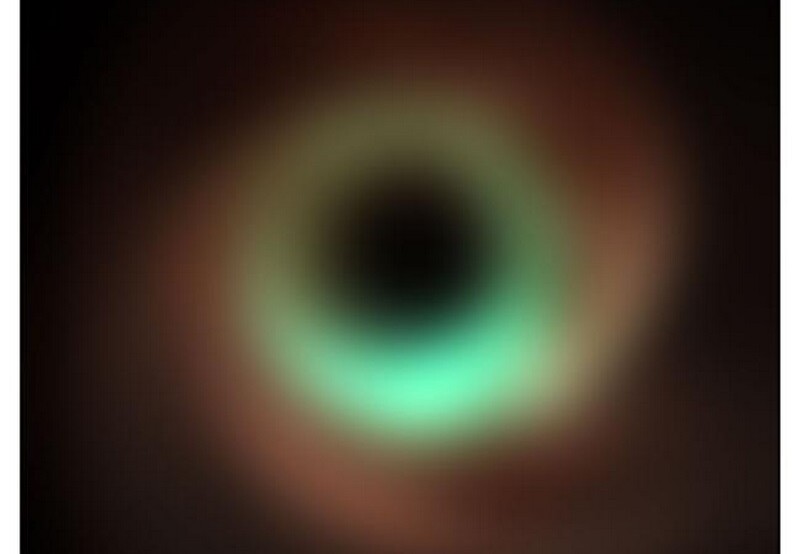
Supermassive black hole M87, seen here in a composite image of three wavelengths merged together - credit EHT, D. Pesce, A. Chael
Supermassive black hole M87, seen here in a composite image of three wavelengths merged together – credit EHT, D. Pesce, A. Chael
For generations, humanity has had to be content with artistic illustrations of black holes as a means to imagine these difficult-to-imagine cosmic objects.
Now, the Event Horizon Telescope (EHT) Collaboration which gave the world its first real image of a black hole in 2019, has imaged the same object with different frequencies and at the highest resolution ever—creating a real-life picture that looks delightfully similar to these impressions.
This latest demonstration of the network of Earthbound telescopes increased the light spectrum of its imaging potential to as high as 345 Ghz. The collaboration’s scientists combined these with existing images of the supermassive black holes at the hearts of spiral galaxy M87 and Sagittarius A, at the lower frequency of 230 GHz to produce multi-color views of the region immediately outside the boundary of these cosmic beasts.
The new detections, led by scientists from the Center for Astrophysics | Harvard & Smithsonian (CfA), which included the Smithsonian Astrophysical Observatory (SAO), were published today in The Astronomical Journal.
“With the EHT, we saw the first images of black holes by detecting radio waves at 230 GHz, but the bright ring we saw, formed by light bending in the black hole’s gravity still looked blurry because we were at the absolute limits of how sharp we could make the images,” said paper co-lead Alexander Raymond at NASA’s Jet Propulsion Laboratory (NASA-JPL).
“At 345 GHz, our images will be sharper and more detailed, which in turn will likely reveal new properties, both those that were previously predicted and maybe some that weren’t.”
The EHT works by linking together multiple radio dishes across the globe, using a technique called very-long-baseline interferometry (VLBI). To get higher-resolution images, astronomers have two options: increase the distance between radio dishes or observe at a higher frequency.
Since the EHT was already the size of our planet, (it uses observatories from Hawai’i, Morocco, Greenland, and Chile) increasing the resolution of ground-based observations required expanding its frequency range, and that’s what the EHT Collaboration has now done.
(Left) the EHT Collaboration’s original image of M87, compared with the new, higher resolution image – credit EHT, D. Pesce, A. Chael
“To understand why this is a breakthrough, consider the burst of extra detail you get when going from black and white photos to color,” said paper co-lead Sheperd Doeleman, Founding Director of the EHT. “This new ‘color vision’ allows us to tease apart the effects of Einstein’s gravity from the hot gas and magnetic fields that feed the black holes and launch powerful jets that stream over galactic distances.”
A prism splits white light into a rainbow of colors because different wavelengths of light travel at different speeds through glass. But gravity bends all light similarly, so Einstein predicts that the size of the rings seen by the EHT should be similar at both 230 GHz and 345 GHz, while the hot gas swirling around the black holes will look different at these two frequencies.
This is the first time the VLBI technique has been successfully used at a frequency of 345 GHz. While the ability to observe the night sky with single telescopes at 345 GHz existed before, using the VLBI technique at this frequency has long presented challenges that took time and technological advances to overcome.
Water vapor in the atmosphere absorbs waves at 345 GHz much more than at 230 GHz weakening the signals from black holes at the higher frequency. The key was to improve the sensitivity of the EHT, which the researchers did by increasing the bandwidth of the instrumentation and waiting for good weather at all sites.
An image from the EHT Collab. that shows which bandwidths created which color in the final image – credit EHT, D. Pesce, A. ChaelArtist illustration of the black hole that looks very similar to the real thing – credit, NASA, ESA, Leah Hustak (STScI)
This achievement also provides another stepping stone on the path to creating high-fidelity movies of the event horizon environment surrounding black holes, which will rely on upgrades to the existing global array. The planned next-generation EHT (ngEHT) project will add new antennas to the EHT in optimized geographical locations and enhance existing stations by upgrading them all to work at multiple frequencies between 100 GHz and 345 GHz at the same time.
As a result of these and other upgrades, the global array is expected to increase the amount of sharp, clear data EHT has for imaging by a factor of 10, enabling scientists to not only produce more detailed and sensitive images but also movies starring black holes.
SHARE This Latest And Best Image Of A Black Hole On Social Media…
Strawberries growing on Plenty's 30-foot vertical towers - credit Plenty, via SWNS
Strawberries growing on Plenty’s 30-foot vertical towers – credit Plenty, via SWNS
In Virginia, a company has opened what it is calling the world’s first indoor strawberry farm.
Plenty Unlimited says their AI-based system makes it possible to grow produce with peak-season flavor, year-round, almost anywhere in the world.
More than 10 million data points are analyzed by AI each day across 12 grow rooms, adapting each grow room’s environment to the evolving needs of the plants.
Plenty says the farm itself uses 97% less land and up to 90% less water than conventional farming, while their patent-pending pollination method, using controlled airflow across strawberry flowers, offers “more efficient and effective pollination than using bees”.
The Richmond-based company says their farms are the most technologically advanced in the world and remove “the unpredictability of Mother Nature,” predicted to become all the more unpredictable as the climate changes.
The new indoor berry farm (see the video below) is designed to produce more than 4 million pounds of strawberries annually in less than 40,000 square feet by growing vertically on 30-foot-tall towers.
The company will exclusively grow Driscoll’s brand strawberries—with the partnership‘s first crop set to be available in stores in early 2025. It follows on their leafy green vertical farm that recently went up in Compton, California.
“While most vertical farms are limited to lettuces, Plenty spent the past decade designing a patent-pending, modular growing system flexible enough to support a wide variety of crops—including strawberries,” the company said in a statement.
“Growing on vertical towers enables uniform delivery of nutrients, superior airflow, and more intense lighting, delivering increased yield with consistent quality.”
“This farm is a model for the positive impact climate-agnostic agriculture can have, and proof that vertical farming can deliver the crop diversity, scaled and local production needed to future-proof the global food system,” said Arama Kukutai, Plenty CEO.
“The Plenty Richmond Farm is the culmination of 200 research trials over the past six years to perfect growing strawberries with consistent peak-season flavor indoors year-round.”
Watch a video of the strawberry farm…and another about Plenty’s vertical farming success…
SHARE This Innovative Growing Operation With Your Friends…
Reprinted with permission from World At Large, a news website of nature, politics, science, health, and travel.
Depending on where you live in the world, you may be opening this story with every tree in your neighborhood blushing bright yellow, orange, and red, or you could be wondering why all the colors didn’t show up.
The phenomenon we call fall or autumn is as complex and varied as it is inevitable. Changes in the length of the day, nutrients in the soil, species diversity, moisture and precipitation levels, fluctuations in temperatures, and even atmospheric nitrogen deposition, all drive fall leaf coloration in different ways, not all of which are known and understood by botanists even now.
When conditions are right, autumn leaf displays are among the most beautiful phenomena of nature, but some years, fall can pass by with leaves seemingly going from green to brown, or from green to the ground.
But is there a place on Earth where autumn is the best, or where it’s never skipped over? What does that forest look like, what are the tree species there? What’s the climate like?
“Mt. Asahidake in Hokkaido… holds alpine vegetation and its spatial distribution is quite big compared with other alpine regions in Japan,” says Professor Dai Koide, Senior Researcher at Japan’s National Institute for Environmental Science. “It’s mixed colored canvas with green (dwarf pine Pinus pumila), red (mountain ash, Sorbus matsumurana), and yellow (birch, Betula ermanii, and alder, Alnus maximowiczii) on a wide-scale alpine topography is quite beautiful for me”.
Koide has studied leaf coloration—its variations in brightness, duration, and intensity, in Japan’s northern island of Hokkaido for years. Autumn in Japan is famous—so much so that it was the lure of autumn tourism which cracked the reluctant Japanese government into finally ending their COVID-19 travel restrictions in 2022.
He says that many different parts of Japan have unique or beautiful fall scenery, and any attempt to establish the best would probably be subject to extreme bias from locals; “It’s quite a difficult question”.
“Kyoto is a well-known traditional city in Japan, and its autumn season is strongly colored by red maple and its combination with traditional Japanese temples is also quite a beautiful scene,” he told WaL.
For someone extremely curious about ecological factors that determine autumn’s character, one very quickly reaches the bottom of the barrel of scientific research.
“There are more things that we do not know than the things that we know,” says Simcha Lev-Yadun, Professor Emeritus at the University of Haifa’s Department of Biology and Environment. “When we deal with colorful autumn leaves, we discuss something related to several thousand species. Next week I will sample trees with a molecular biologist in order to progress with one species,” he told WaL.
The approach to Nison-in (二尊院) a Tendai sect temple in Ukyo-ku, Kyoto, Japan. PC: Tetsuhiro Terada. CC 4.0
A primer on autumn
Fall is one of mankind’s greatest connections to the world around us—the ultimate sign that the year is winding down, that changes are always at work on the planet, and that the time of plenty has passed. For ancient peoples it was both positive and negative: a time of harvest and marking of the calendar, as well as the starting pistol for the long winter.
Today in the West, it comes with its own ceremony—the advent of the return to school, the opening of hunting seasons, the coming of four holidays in a span of 60 days, of pumpkin spice everything, and perhaps a fall-flavored vacation to admire autumnal forest scenery across the many US national parks that boast world-renowned fall color phasing.
WaL spoke with several researchers who have decades of experience studying the phenology of trees and shrubs in the autumn, and from each corner of the world they crocheted together the picture of a very complex natural event.
Studying how climate change is changing autumn in the US National Parks of Acadia and Shenandoah, Assistant Professor of Geography and Environment at the University of Richmond Dr. Stephanie Spera says that trees’ main cues for changing are temperature and daylight.
“Acadia is northeastern coast (44.3 north latitude) so Acadia will turn first; less light, and gets colder,” she told WaL. It turns out this is the same in the northern island of Hokkaido—Japan itself stretching from 20 to 45 degrees north latitude—where Professor Koide says autumn already reaches in September “but it reaches October in the central part of the biggest island, Honshu,” he says.
Because the Earth is tilted on its axis, the arrival of September and October heralds not only fewer hours of daylight, but a lower intensity of sunlight that spends more time behind horizon features like hills and mountains. Leaves are green because of chlorophyll, which is key to photosynthesis, but also a pigment that shows green to our eyes. However, it breaks down over not-so-long spans of time if it isn’t being actively replenished by the plant’s nutrient systems.
As a result of this, when the longer nights cause trees to produce a layer of tissue called abscission in the leaves which cuts the leaf off from those systems, the green pigment degrades. Orange, yellow, and brown colors emerge on the leaves as the chlorophyll degrades away; they were always there, and merely remained hidden behind the chlorophyll.
Orange is sometimes attributed to phytonutrients called carotenoids, while yellow is attributed to a group of carotenoids called xanthophylls, however Professor Lev-Yadun says that orange is always a wildcard, and without a chemical test for each species it can’t be known whether orange leaves are that way because of carotenoids, xanthophylls, or a mixture of those two plus the red leaf pigment known as anthocyanin.
The mechanisms that cause some trees to turn red and others yellow are known, but why those mechanisms were developed and what are other factors that can influence them are difficult questions.
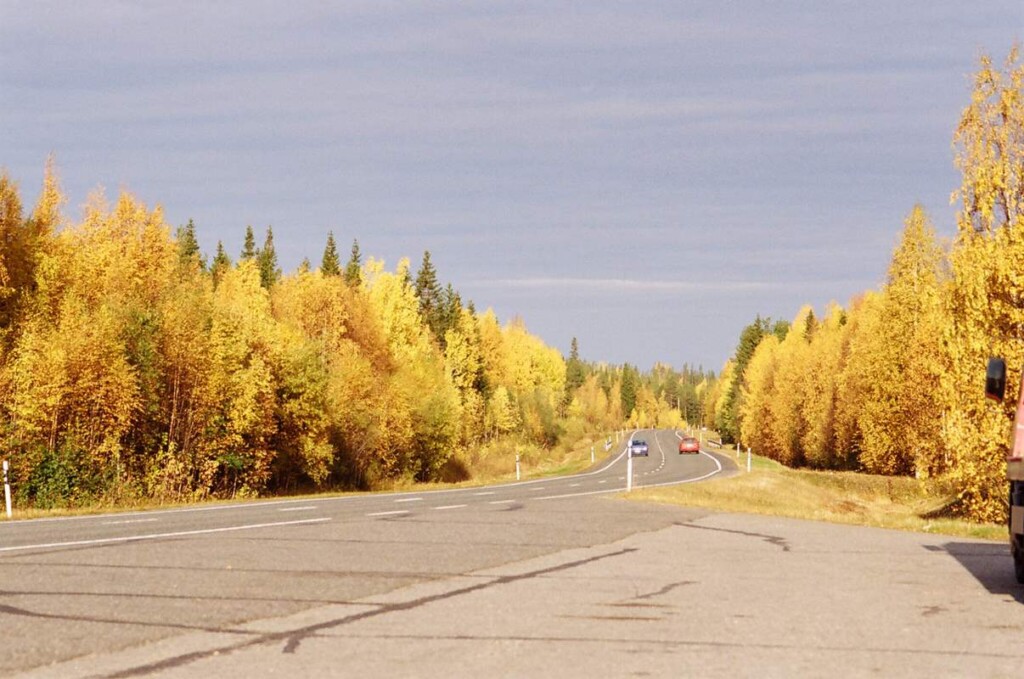
PICTURED: Finland’s Ruskha landscape in central Finland. PC: Lev-Yadun.
Raking back the curtain
In a review published by Professor Lev-Yadun in 2022, he outlines the currently accepted theories for why yellow leaves dominate fallscapes of Europe and Western Asia compared to East Asia and North America where red leaves are more common. Lev-Yadun interprets the state of the evidence as showing that red pigment—created by anthocyanins—is anti-herbivory in nature and is visible in plants in the autumn as a sign that the plant is defending itself from herbivorous insects.
These herbivorous insects and their prey species could travel south to the equator during the last Ice Age because mountain ranges in East Asia and North America run north to south. This pressure, he writes, “resulted in the preservation of many ancient Tertiary floral and faunal elements there,” compared with Europe where species were trapped between the advancing ice and the major ranges of the Alps and Carpathians which run west to east. As a result, extinction rates of flora and fauna were much higher in Europe, which was reflected in the number of endemic tree species that survived, and the relative lack of red pigment in the endemic flora species.
“In Finland, the phenomenon of yellow autumn leaves is called ‘Rushka’, and it is very different from what is known from the Eastern USA and East Asia,” writes Lev-Yadun in his paper. “The yellow-gold Rushka belt at its height shifts gradually from the north to the south of Finland in about 2–3 weeks and is visually incredible. Two golden walls of millions of trees with bright yellow-or gold-colored leaves seen along the roads”.
Indeed the dominance of yellow in Scandinavia from the Poplus and Betula genera is almost total. There are only four indigenous tree species with red autumn leaves in Northern Europe (Prunus padus, Prunus spinosa, Sorbus aucuparia, and Acer platanoides) and 24 on the continent as a whole. By contrast, there are 89 such species endemic to North America and 152 in East Asia.
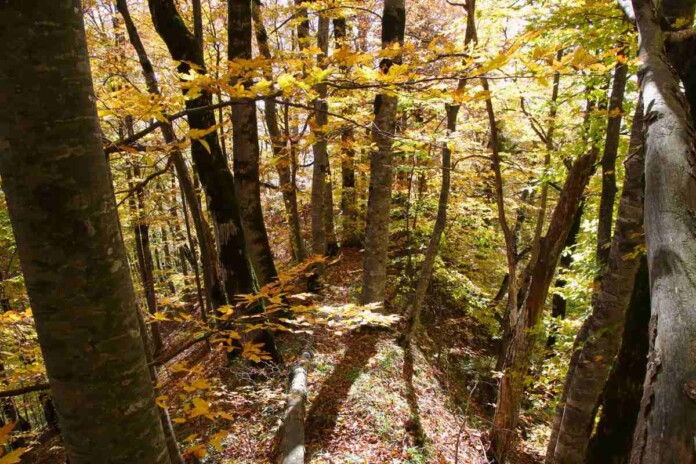
As I walked through the forests of the southernmost slopes of the Caucasus mountains, in Azerbaijan, I didn’t know to think about it at the time—that there was a lack of red trees and a variety of red shrubs. Peak fall comes in mid-late October, between the 16th and the 25th—it being around the same latitude as Acadia and Hokkaido.
Support for this theory of the origin of red leaf coloration in the autumn comes from the fact that red leaves dominate non-evergreen shrub species in Scandinavia preyed upon by insects.
“Under the snow cover the insects do not die because it is a natural igloo, while the trees emerge above the snow cover and they and the insect eggs are exposed to
very low temperatures and therefore the insects die,” Professor Lev-Yadun told WaL in an email. He has also done research himself that shows many species in Finland, Japan, and Israel that have red leaves in spring have red leaves in the autumn as well, further supporting the idea that anthocyanins are for insect defense.
Perhaps it’s a coincidence, but one of the worst invasive pests in Europe for fruit-bearing shrubs and trees like grape vines, blueberry bushes, stonefruit trees, apples, and pears, is the Popillia japonica beetle—and comes from Japan.
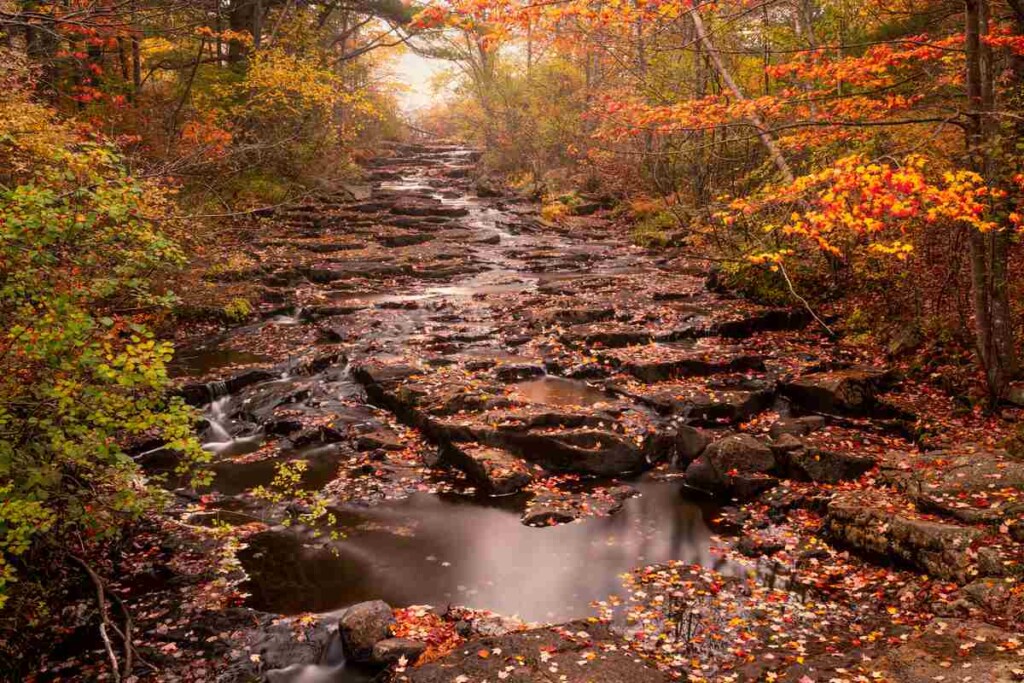
PICTURED: Duck Brook in Acadia National Park. PC: Geoff Livingston. CC 4.0.
Each its own story
Japan is famous for this kind of red display, particularly among maple trees—a feature it shares with Acadia.
“Acadia (a much smaller national park (190 km2)… you have a lot of different plant species, including cool coastal scrub and their famous wild blueberry bushes which turn a bright red in the fall,” says Dr. Spera.
Spera has found over 30 years of studying climate change and autumn that it’s like the whole natural cycle is shifting later.
“What we’ve found is that in the early 1950s, peak fall foliage was occurring around October 4-6, now, on average, it’s about the 14/15, with some years even later. So overall, the season is shifting later and later—thanks, mostly in part, to warming temperatures—particularly in September. But, the other interesting thing that’s happening, particularly in the last 20 years, is really that the timing of the whole season is becoming more and more unpredictable because the climate is shifting,” she says.
May rainfall, her research has shown, is directly correlated with an earlier autumn in Acadia. Professor Koide spends more of his time researching variations in color brightness and says that in Hokkaido, it’s the date of the spring “green-up day” that matters.
“For alpine regions, spring phenology (green-up day) seems to affect the autumn color brightness through the limit of the leaf life span; earlier spring would cause earlier senescence,” he told WaL in an email.
“Color brightness is a recently approached topic and its data are still limited,” he said, explaining his work on the alpine tree Sorbus matsumurana. “In the alpine region, I found a correlation between autumn color brightness and green-up day. The late green-up year showed a brighter red color. I guess that the effect of leaf life span occurs for the early green-up year, and decreased physiological activity in autumn would reduce the biosynthesis of anthocyanin”.
Soil conditions matter as well, as do anthropogenic effects. A 2013 study in the Adirondacks of New York found that atmospheric nitrogen deposition, such as can be accelerated from mass automobile use, leads to dimmer colors in sugar maples, along with a general decline in canopy robustness and growth rate.
What would make a perfect fall?
A keen observer of nature might note a short checklist of features starting in springtime that would clue them in as to the quality of the “leaf-peeping,” as it’s called in the United States, to come.
While Koide found importance in the timing of the first spring leaves in the Japanese alpine reaches, when studying in Acadia Dr. Spera did not. She found a correlation instead with rainfall in spring. Perhaps for the purposes of creating a checklist, it would be to take notice after an early spring and a wet May.
Sunlight is not disputed, however. Sunny days, especially in late summer, are strong drivers of color in the fall. The sunlight causes the diminishing chlorophyll to be used up faster.
“So the best fall color comes when you’ve had a moist summer but not a sopping wet summer, followed by a fairly dry fall where you have cool nights but non-freezing nights and then warm days that are clear and sunny,” says Wendy Cass, a botanist and Ranger at Shenandoah National Park, a region in the Virginia Appalachian Mountains famous for late-fall coloration.
This is especially true because the pigments of yellow, orange, and brown are part of the leaf’s defense strategy; “stress conditions such as excess warmth, radiation, and drought seem to affect the amount of carotenoid (the yellow pigment), which has a function to reduce such stresses,” says Professor Koide.
If that’s what your year has looked like, head to a temperate region at between 41 to 45 degrees north latitude in a dry patch of weather in mid-late October for the best show. The upper part of these coordinates runs through some enticing destinations like Aquitaine, France, famous for fall foliage displays coincidently, and Dr. Koide’s haunt of Hokkaido, while the lower end passes through Spera’s Acadia National Park and the Caucasus highway in Azerbaijan, where this author took some of the photographs seen here.
But these are just suggestions, as all the researchers were quick to admit that beauty in fall, whether it’s the color brightness or variance, will be a matter of personal opinion.
“A strong red-color-only scene may attract somebody but the other person would select a mixture-color scene,” said Professor Koide. “How humans feel beauty should be also approached to solve this problem”.
“I also, subjectively, just think having topography, water, coast, and pine forest along with these colors, which in Maine—for example has low-lying bushes that turn scarlet, to yellows and oranges of birches, beeches, and maples, are just more fun and exciting than the mostly deciduously colored oranges and browns of rolling hills/mountains you see when hiking in the Blue Ridge Mountains,” said Dr. Spera. “But, I assume this is because I see life through the lens of a New Englander, and that place and space is very important to me”. WaL
Quote of the Day: “Happiness comes from living as your inner voice tells you to.” – Shonda Rhimes
Photo by: Le Minh Phuong
With a new inspirational quote every day, atop the perfect photo—collected and archived on our Quote of the Day page—why not bookmark GNN.org for a daily uplift?
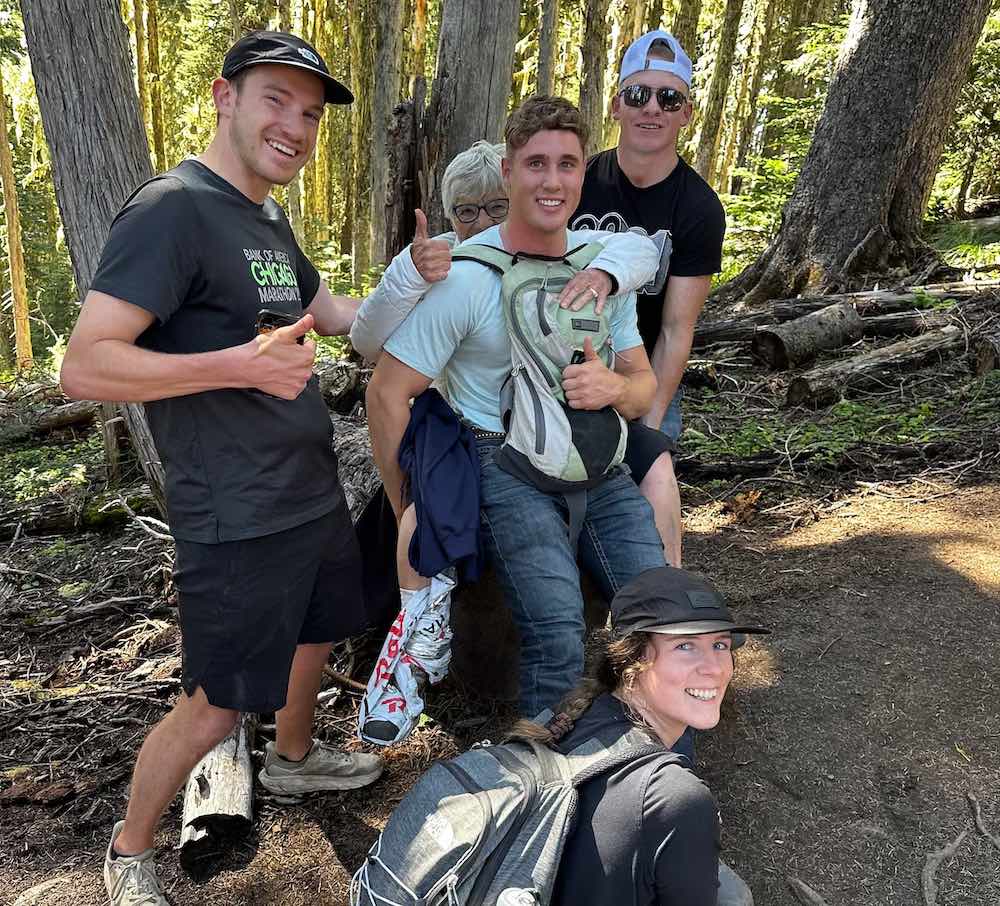
Courtesy of Ursula Bannister who got a ride on Airman Troy May
Courtesy of Ursula Bannister who got a ride on airman Troy May
A woman who broke her leg while hiking was rescued by a trio of strapping young whipper snappers, who carried her all the way down the mountain on their backs.
Even realizing she’d be alone for the 3.2-mile trek, Ursula Bannister had been confident of getting to the place where she scattered her mother’s ashes 23 years ago; she had gone up many times before.
For anyone who’s taken the trail to High Rock Lookout, a viewpoint near Ashford in Washington, they’ll know it’s hard and steep.
As the 79-year-old Bannister predicted, she made it to the top, left some flowers, and began heading back down. Catching a hole in the trail bed with her foot, she fell forward hard and by the time she turned herself right side up, she saw her foot was pointing the wrong way.
In pain she cried out for help, and before long a group of 3 young hikers came to her side and called 911. A search and rescue team said they’d be there in 5 hours, discouraging everybody.
20-year-old Troy May, an Air Force Airman, was hiking up to the lookout that day with his fiancé and a friend Layton Allen. Bannister asked them if they had any painkillers, to which they replied they did not, and realizing the woman had nothing to help her strap in for 5 upcoming hours of agony, May took action.
Courtesy of Ursula Bannister, carried by Airman Troy May
“I knew I was capable of carrying her down,” May told the Washington Post. “I really didn’t make much of a decision, I just knew I needed to carry her down if I could.”
Lifting her gently onto his back, he began the slow, careful journey downhill, hiking three-quarters of the 1.8 miles that remained on Bannister’s journey, while Allen took care of the home stretch. On the way they passed occupational therapist Emily O’Brien, who led Bannister through some breathing exercises, and physical therapist Tim Meyer who splinted her leg.
With the extra hands, May was able to move more assuredly, and keep enough puff in his lungs to talk to Bannister on the way down to try and keep her mind off the pain.
They asked her about her life as a child moving to the United States from Germany in 1959, having been born just after the fall of the Third Reich, and May would later recall she had a lot of cool stories.
Once they arrived at the trailhead, Allen sped Bannister off to Tacoma General Hospital where doctors told her she had a compound break of the tibia, fibula, and heel bone. They were impressed with Meyer’s splint, and said it might have been a lot worse.
She would leave the hospital late that night as her leg was too swollen and inflamed to operate on.
She would eventually receive 11 screws and a titanium plate, and embark on a long road to recovery that saw some of her rescue team come and visit her, including May who won an Air Force medal for his efforts.
“I was just overwhelmed with gratitude that these people literally came out of the woods to help me and they were totally unselfish and kind,” Bannister said, adding that the friendship she gained in May and the others was worth more than the pain and discomfort.
SHARE This Herculean Effort To Rescue This Stranded Senior…
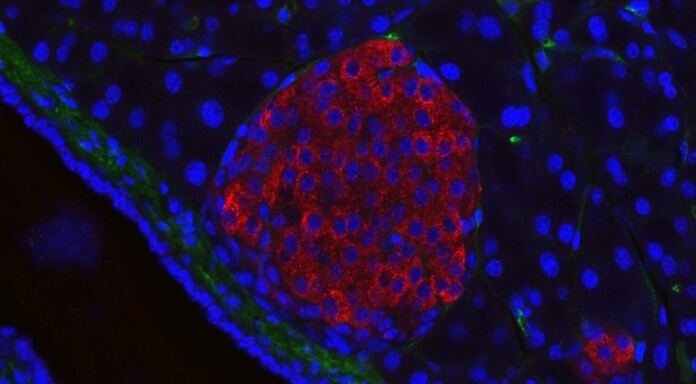
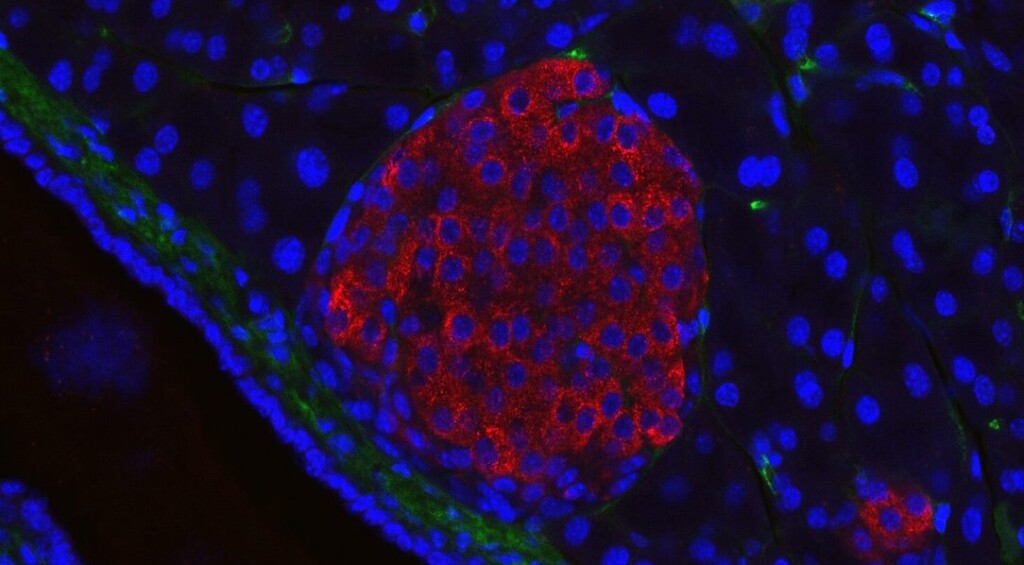
A mouse pancreatic, or islet cell, with the red color marking the insulin - Jakob Suckale, CC 3.0. BY SA
A mouse pancreatic, or islet cell, with the red color marking the insulin – Jakob Suckale, CC 3.0. BY SA
“I can eat sugar now,” said a woman from Tianjing, China, who recently became the first human to have their type-1 diabetes cured through a stem cell procedure.
Using the patient’s own stem cells, the results offer hope of limitless treatment options for type-1 diabetes, where special insulin-producing cells were previously needed from a donor.
Unlike type-2 diabetes which can be developed through poor diet and lifestyle choices, type-1 diabetes develops on its own in certain humans.
Type-1 diabetes is classified as an autoimmune disorder, as the immune system attacks islet cells in the pancreas responsible for producing insulin, a vital metabolic signaling hormone that instructs muscle tissues to absorb excess glucose and other sugars out of the bloodstream.
Treated with exogenous insulin and a mixture of immunosuppressants, the only thing like a cure is an islet-cell transplant, for which there are not anywhere near enough donors to meet the demand.
Instead, Chinese researchers reverse-engineered the patient’s own tissues to produce pluripotent stem cells which they then chemically reprogrammed to form islet cells. Once transplanted, the researchers, whose first subject was a 59-year-old man, observed he was producing his own insulin within 3 months, and after 4 months had a glycemic range that was 98% similar to that of a non-diabetic.
James Shapiro, a transplant surgeon and researcher at the University of Alberta in Edmonton, Canada, told Nature press that the results of the surgery are stunning. “They’ve completely reversed diabetes in the patient, who was requiring substantial amounts of insulin beforehand.”
In this more recent case of the young woman, the cultivated stem cells were injected during the surgery into the abdominal muscles—a new introduction site for this procedure. Previously, donor islets were transplanted into the liver, where they couldn’t be observed.
By contrast, in the abdominal tissue, the islet cells’ activity could be monitored with an MRI machine.
Two-and-a-half months later, she was producing enough insulin to live without needing top-ups, and she has sustained that level of production for more than a year.
“That’s remarkable,” said Daisuke Yabe, a diabetes researcher at Kyoto University who wasn’t involved in the study. “If this is applicable to other patients, it’s going to be wonderful.”
In the woman’s case, she was already taking immunosuppressants for a previous liver transplant, and so the researchers can’t confirm whether or not the new islet cells would be subject to the same autoimmune response as before.
Generally, medical researchers want to see years pass by of normal function before acknowledging that “curing” took place. The woman will reach the two-year mark in November. If she is still experiencing normal glycemic activity, cell biologist and lead author of the research Dr. Deng Hongku at Peking University Beijing, wants to expand the trial to between 10 and 20 people.
SHARE This One-Of-A-Kind Result In Battling This Dangerous Disease…
In a rather unique story from Reuters, the Spanish olive oil market is profiled for what it can do to power Spain’s homes, not just its economy and kitchens.
Accounting for half the production of olive oil in the EU, growers are now getting to sell olive pits as a valuable ingredient for biofuel. Hundreds of thousands of tons of olive pits are now being consumed in Spain every year to heat homes, power oil mills, and even airplanes.
Pits make up between 8% and 10% of an olive crop by weight. During the pressing stage in the oil production process, the pits are squeezed out and separated before being washed and dried to create fuel similar to wood pellets used in certain domestic stoves, grills, and fireplaces.
In the past, cultivators didn’t have a good idea of what to do with the olive pits, says Pablo Rodero, an affiliate with the Spanish biomass association, Avebiom. Avebiom estimates that 400,000 tons of olive pits are produced every year in Spain. That’s a lot of material to not know what to do with.
“Now everything is used,” Rodero told Reuters. “Olives are like pigs: Nothing goes to waste.”
According to Reuters, the energy shock from the Russian invasion of Ukraine that caused domestic heating prices to soar led directly to a further development of the olive pit industry as a fuel product.
One-third of all pits are now refined to remove as much moisture as possible and sold for around 300 euros per ton, which equates to around 6 cents per kilowatt-hour for home heating.
The rest is used on the farms to drive the almazaras, or traditional olive mills, or sold to power industrial boilers.
Petro company Cepsa uses olive oil pits as the key ingredient in a sustainable aviation fuel blend that powered 200 flights out of Andalusia’s capital of Sevilla airport last year. Biofuels, usually made from old cooking oil, have been pioneered as more sustainable jet fuel in China and other parts of the globe.
It might seem strange to Americans who have to pay prime dollar for olive oil imports, but some farms and farming collectives pull in as much as a third of their revenue from pit sales.
FREE WILL ASTROLOGY – Week of September 28, 2024
Copyright by Rob Brezsny, FreeWillAstrology.com
LIBRA (Sept. 23-Oct. 22):
On the morning of January 27, 1970, Libran songwriter John Lennon woke up with an idea for a new song. He spent an hour perfecting the lyrics and composing the music on a piano. Then he phoned his producer and several musicians, including George Harrison, and arranged for them to meet him at a recording studio later that day. By February 6, the song Instant Karmawas playing on the radio. It soon sold over a million copies. Was it the fastest time ever for a song to go from a seed idea to a successful release? Probably. I envision a similar process in your life, Libra. You are in a prime position to manifest your good ideas quickly, efficiently, and effectively.
SCORPIO (Oct. 23-Nov. 21):
You have passed the test of the First Threshold. Congratulations, Scorpio! Give yourself a kiss. Fling yourself a compliment. Then begin your preparations for the riddles you will encounter at the Second Threshold. To succeed, you must be extra tender and ingenious. You can do it! There will be one more challenge, as well: the Third Threshold. I’m confident you will glide through that trial not just unscathed but also healed. Here’s a tip from the Greek philosopher Heraclitus: “Those who do not expect the unexpected will not find it.”
SAGITTARIUS (Nov. 22-Dec. 21):
What development are you so ready for that you’re almost too ready? What transformation have you been preparing for so earnestly that you’re on the verge of being overprepared? What lesson are you so ripe and eager to learn that you may be anxiously interfering with its full arrival? If any of the situations I just described are applicable to you, Sagittarius, I have good news. There will be no further postponements. The time has finally arrived to embrace what you have been anticipating.
CAPRICORN (Dec. 22-Jan. 19):
Capricorn screenwriter and TV producer Shonda Rhimes has had a spectacular career. Her company Shondaland has produced 11 prime-time TV shows, including Grey’s Anatomy and Bridgerton. She’s in the Television Hall of Fame, is one of the wealthiest women in America, and has won a Golden Globe award. As you enter into a phase when your ambitions are likely to shine extra brightly, I offer you two of her quotes. 1. “I realized a simple truth: that success, fame, and having all my dreams come true would not fix or improve me. It wasn’t an instant potion for personal growth.” 2. “Happiness comes from living as your inner voice tells you to. Happiness comes from being who you actually are instead of who you think you are supposed to be.”
AQUARIUS (Jan. 20-Feb. 18):
I have performed in many poetry readings. Some have been in libraries, auditoriums, cafes, and bookstores, but others have been in unexpected places: a laundromat, a bus station, a Walmart, a grocery store, and an alley behind a thrift store. Both types of locations have been enjoyable. But the latter kind often brings the most raucous and engaging audiences, which I love. According to my analysis, you might generate luck and fun for yourself in the coming weeks by experimenting with non-typical scenarios—akin to me declaiming an epic poem on a street corner or parking lot. Brainstorm about doing what you do best in novel situations.
PISCES (Feb. 19-March 20):
I have two related oracles for you. 1. During the unfoldment of your mysterious destiny, you have had several homecomings that have moved you and galvanized you beyond what you imagined possible. Are you ready for another homecoming that’s as moving and galvanizing as those that have come before? 2. During your long life, you have gathered amazing wisdom by dealing with your pain. Are you now prepared to gather a fresh batch of wisdom by dealing with pleasure and joy?
ARIES (March 21-April 19):
Here comes the Hating and Mating Season. I want to help you minimize the “hating” part and maximize the “mating” part, so I will offer useful suggestions. 1. To the degree that you can, dissolve grudges and declare amnesty for intimate allies who have bugged you. 2. Ask your partners to help you manage your fears; do the same for them. 3. Propose to your collaborators that you come up with partial solutions to complicated dilemmas. 4. Do a ritual in which you and a beloved cohort praise each other for five minutes. 5. Let go of wishes that your companions would be more like how you want them to be.
TAURUS (April 20-May 20):
Many fairy tales tell of protagonists who are assigned seemingly impossible missions. Perhaps they must carry water in a sieve or find “fire wrapped in paper” or sort a heap of wheat, barley, poppyseed, chickpeas, and lentils into five separate piles. Invariably, the star of the story succeeds, usually because they exploit some loophole, get unexpected help, or find a solution simply because they didn’t realize the task was supposedly impossible. I bring this up, Taurus, because I suspect you will soon be like one of those fairy-tale champions. Here’s a tip: They often get unexpected help because they have previously displayed kindness toward strangers or low-status characters. Their unselfishness attracts acts of grace into their lives.
GEMINI (May 21-June 20):
You are in a phase with great potential for complex, unforeseen fun. To celebrate, I’m offering descriptions of your possible superpowers. 1. The best haggler ever. 2. Smoother of wrinkles and closer of gaps. 3. Laugher in overly solemn moments. 4. Unpredictability expert. 5. Resourceful summoner of allies. 6. Crafty truth-teller who sometimes bends the truth to enrich sterile facts. 7. Riddle wrestler and conundrum connoisseur. 8. Lubricant for those who are stuck. 9. Creative destroyer of useless nonsense. 10. Master of good trickery. 11. Healer of unrecognized and unacknowledged illnesses.
CANCER (June 21-July 22): Tanzanite is a rare blue and violet gemstone that is available in just one place on earth: a five-square-mile region of Tanzania. It was discovered in 1967 and mined intensively for a few years. Geologists believed it was all tapped out. But in 2020, a self-employed digger named Saniniu Lazier located two huge new pieces of tanzanite worth $3.4 million. Later, he uncovered another chunk valued at $2 million. I see you as having resemblances to Saniniu Lazier in the coming weeks. In my visions of your destiny, you will tap into resources that others have not been able to unearth. Or you will find treasure that has been invisible to everyone else.
LEO (July 23-Aug. 22):
Marathon foot races are regularly held worldwide. Their official length is 26.2 miles. Even fast runners with great stamina can’t finish in less than two hours. There’s a downside to engaging in this herculean effort: Runners lose up to six percent of their brain volume during a race, and their valuable gray matter isn’t fully reconstituted for eight months. Now here’s my radical prophecy for you, Leo. Unless you run in a marathon sometime soon, your brain may *gain* in volume during the coming weeks. At the very least, your intelligence will be operating at peak levels. It will be a good time to make key decisions.
VIRGO (Aug. 23-Sept. 22):
Golf courses are typically over 150 acres in size and require huge amounts of water to maintain—not to mention their vast tracts of grass being doused with chemical pesticides. There are 67 million golfers in the world who play the sport, so let’s use the metaphor of a wasteful golf course as we analyze your life. Are there equivalent questionable uses of resources and space in your day? Now is a favorable time to downsize irrelevant, misused, and unproductive elements. Re-evaluate how you use your space and resources.
WANT MORE? Listen to Rob’s EXPANDED AUDIO HOROSCOPES, 4-5 minute meditations on the current state of your destiny — or subscribe to his unique daily text message service at: RealAstrology.com
Quote of the Day: “The good man is the friend of all living things.” – Mahatma Gandhi
Photo by: Getty Images for Unsplash+ (cropped)
With a new inspirational quote every day, atop the perfect photo—collected and archived on our Quote of the Day page—why not bookmark GNN.org for a daily uplift?
One of ancient Greece’s most hallowed sites has been uncovered thanks to a determined Swiss archaeologist, a chatty local, and the stroke of luck that brought them together.
The story begins with Strabo, a Roman geographer who gave history’s first account of the Sanctuary of Artemis Amarysia, near the Greek city-state of Eretria on its island of Euboea. (Eretria was one of the earliest city-states and a prolific colonizer of the Mediterranean.)
Several miles from the walls of the city, a magnificent temple complex was built for the worship of Artemis, goddess of the hunt. It was one of the most important sites for ancient Greek religious activities. But, despite its fame and Strabo’s precise location described as seven stades—around 8/10 of a mile—from Eretria’s walls, a flurry of excavation in the late 19th and early 20th centuries uncovered nothing.
Gradually, even the belief that there was such a place called the Sanctuary of Artemis Amarysia came to be questioned, and the quest to find its hallowed walls diminished.
Enter a young doctoral student in classics named Denis Knoepfler, who joined a Swiss archaeological team working in Eretria in the 1960s. By then, efforts to try and find the sanctuary had been ongoing for seven decades, and Knoepler, who told Archaeology Magazine’s contributing editor Jason Urbanus that he had been interested in the history of Eretria for years, decided a new approach was needed if this famous building was ever to be found.
He started by investigating any structure in the surrounding countryside that had reused marble blocks from earlier periods and zeroed in on a 13th-century church built like a patchwork quilt of marble in a town called Vathia. Nearby, earlier excavations had yielded artifacts that depicted Artemis’s form and name, and Knoepfler believed the site of the sanctuary would have been near the sea on a hill called Paleoekklisies, or Old Chapels.
14th C. church in the Euboea town of Vathia built with ancient stone blocks – Courtesy Swiss School of Archaeology in Greece
In 1969, he filed a report with the Swiss Archaeological Mission in Greece (ESAG) stating he believed as a result of investigations that the sanctuary “must be” at the foot of that Hill.
So thoroughly did archaeologists working in Eretria believe in Strabo’s account that Knoepfler’s report was largely ignored and never even got published until 6 years ago. However, Knoeplfer continued following his hunch. In the following decades, he demonstrated how medieval monks translating Strabo’s Greek into Latin may have confused the number 7 with 60, because of how Ancient Greek used letters to represent numbers.
Kato Vathia and the Paleoekklisies Hill lay 60 stades away from the walls of Eretria.
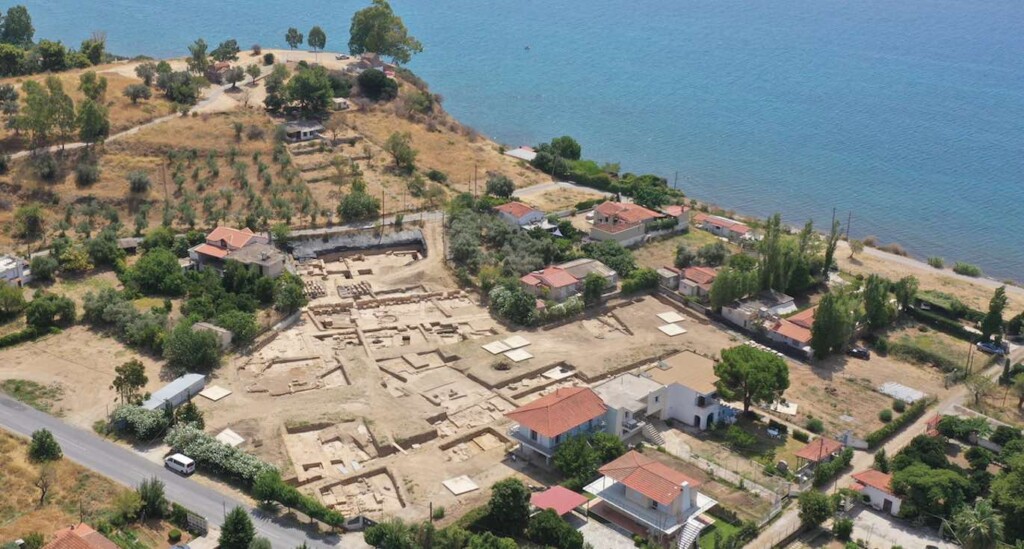
As the 20th century gave way to the 21st, a construction boom began at the base of Paleoekklisies Hill, and because nobody had yet found the Sanctuary of Artemis Amarysia, Knoepfler managed to galvanize his department in Switzerland to take his theory seriously and apply for surveying permits before the imagined treasure was buried by modern villas.
In 2006 they began to excavate on the Paleoekklisies Hill only to find 5,000-year-old artifacts, rather than 2,800-year-old artifacts. The trail seemed to have gone cold, wrote Urbanus in a wonderful feature article for the September edition of the magazine—but in literally the last hours of Knoepfler’s allotted time at the site, a lead materialized from the most unlikely source.
An artist depiction of the sanctuary as it looked – Courtesy Swiss School of Archaeology in Greece
“A local resident approached in a car, rolled down his window, and pointed to a construction site near the base of Paleoekklisies Hill,” writes Urbanus, recounting Knoepfler’s colleague Sylvian Fachard, director of the ESAG who was there at the excavation. “‘You should have a look at that villa that they’re building over there. You’ll find interesting stuff,’” Fachard recalled, quoting the motorist who then drove away.
Among a big pile of pottery, they found a substantial marble block cut with sharp precise angles, which Fachard said was a sure sign the sanctuary must be there, as this sort of masonry is seen only in the most substantial Eretrian structures.
When the two men returned the next day the block had vanished, likely a result of the modern construction ethos throughout Greece, whereby ancient discoveries are often reburied to avoid government confiscation of the land. Knoepfler and Fachard secured another permit to dig nearby and found nothing.
But, much the way the motorist gave them hope when all else had seemed hopeless, the closing stages of their second excavation revealed another clue.
A big hunk of dirt dislodged itself from their excavation trench, and that’s when ESAG archaeologist Thierry Theurillat saw part of a large marble block protruding from the trench wall, nearly seven feet underground.
“It was a second stroke of luck,” Fachard said “If we had put our trench just four inches away, we never would have found a thing.”
16 years later, we now know the Sanctuary of Artemis was found on that day. ESAG bought more than a dozen properties to remove the restrictions on excavating imposed by the private landowners, and many important discoveries of the ancient Greek cult were uncovered.
Three colonnaded structures made up the sanctuary, including one that was 225 feet long. In 2017, the first evidence of a temple was uncovered—a terracotta roof tile with the tantalizing word “Artemidos,” meaning “of or belonging to Artemis” embossed in ancient Greek. The next discovery was a makeshift staircase permitting the descent into a nearby well that had been assembled from ancient markers and statue bases, one of which bore an inscription of an agreement made between the city-states of Eretria and nearby Styra “at the Sanctuary of Artemis at Amarynthos.”
Courtesy of the Swiss School of Archaeology in Greece
Amarynthos was a Theban word for sanctuary.
Bingo. The 120-year-old mystery had been solved, and as the years of joyful excavating rolled on, ESAG found the temple foundations in 2020 and began exhuming artifacts.
“It’s an unimaginable discovery that impressed us all,” ESAG archaeologist Tamara Saggini told Archaeology Magazine, “on the one hand because of the state of preservation and, on the other hand, because of the size of the deposit, its exceptional variety, and the rareness of many of the objects discovered.”
The working hypothesis is that many of the artifacts were buried in the foundations of the sanctuary after an enormous fire destroyed much of the temple in the 6th century BCE. The builders erected a new temple atop the ruins, sealing all the votive offerings underneath like an ancient time capsule.
The dizzying number of treasures include ceramic and bronze vases and vessels of every description, remnants of weapons and armor, jewelry in gold, silver, bronze, amber and ivory, small terracotta figurines, and even the remains of a trunk filled with textiles that were amazingly preserved.
Another standout find was a 16-inch limestone statue of a woman holding a fawn, which might depict a woman offering a sacrifice, or Artemis herself, who is often depicted with deer due to her association with hunting.
“It was a window of literally just a few hours,” Fachard said, thinking back to the tip-off from the motorist. Without that moment, the sanctuary would likely have been lost forever.
SHARE This Amazing Story With Your Friends Who Love This Kind Of Stuff…
Instagram began alerting teens that it will automatically place them in more private, restrictive settings starting next week, released Meta
Instagram began alerting teens that it will automatically place them in more private, restrictive settings starting next week, released Meta.
Concerns over the well-being of teenage users of Instagram have led to its parent company Meta creating the most insulated form of the app seen so far: the Teen account.
All accounts registered with teenage users (up to age 15) have automatically been changed to the teen mode, which applies many of the more than 30 parental supervision and underage safety features that Meta has added to the app in the last 2 years.
The new teen accounts feature the strongest degree of moderation of sensitive content, while users can only be messaged by accounts they already follow, and the app will automatically stop sending push notifications after 10:00 p.m.
The accounts are private by default and there are “nudges” from the app to encourage teens to stop using it after 1 hour of use time in a day.
“With parents, we know from speaking to them, three of their top concerns with teens’ online safety are who can contact them, the content that they’re seeing, and time spent,” said Kira Wong-O’Connor, Meta Youth Safety Policy Manager.
Any adjustments to these restrictions require the permission of a parent or supervisor which the teen account has to connect with. Once connected, parents can monitor their teen’s social media usage, set app-use time limits, see who has recently messaged their children, and approve or deny certain alterations to the content moderation settings.
Social media use among teens, particularly teen girls, has been suggested to be a strong driver of the rapid increase in mental health disorders among young people in the United States.
Anyone who has followed famous television psychologist Dr. Phil Mcgraw’s post-television career will know he is very passionate about this topic. If Dr. Phil isn’t your cup of tea, best-selling author and professor at NYU Jonathan Haidt has the same thing to say.
Meta founder and CEO Mark Zuckerburg has been grilled in front of Senate subcommittee hearings on this topic, where he was accused of ignoring warnings for years about harm to teens on his platforms.
Going over exactly how the new restrictions are set in place, one quickly realizes that lying will still allow teens with unobservant parents to circumvent these restrictions, as Meta doesn’t conduct ID checks outright.
There’s nothing stopping a teen from asking a friend to create an account with a date of birth decades older than them and setting this fraudulent account as their parent in order to deactivate the teen account mode. Confronted with this fact, Wong-O’Connor told CNN that any changes to existing accounts that fall within the teen and parent age ranges will require an ID check.
Additionally, anyone looking to register as the parent of a teen account will have to fall within a certain expected age range, meaning no post-hoc alterations to existing accounts can succeed in pulling the wool over Meta’s eyes.
Sure, teens and their friends can simply collaborate to create a fake email address to register a fake Instagram account, but at a certain point, parents should be expected to monitor or involve themselves a little in their teen’s device usage. Blaming Meta for utter parental negligence is much like the pot calling the kettle black.
SHARE This News With Anyone You Know Concerned About Their Teens Social Media Usage…
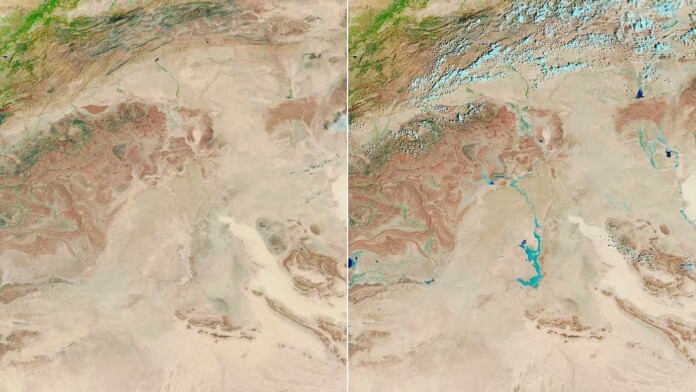
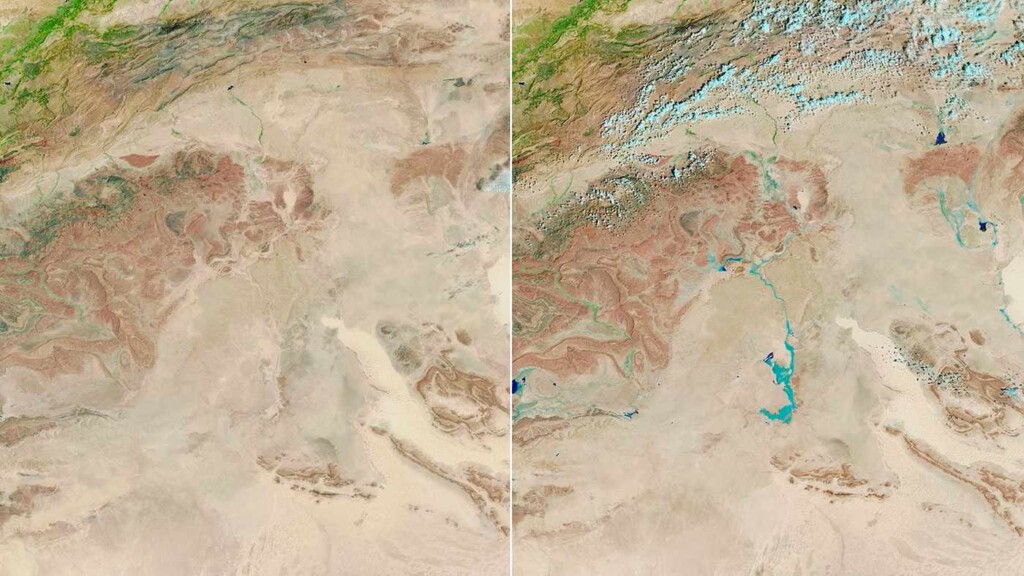
Morocco 2023 (left) and 2024 following the recent extratropical storm (right) - credit, NASA Earth Observatory
Morocco 2023 (left) and 2024 following the recent extratropical storm (right) – credit, NASA Earth Observatory
Bountiful rains are greening parts of the Sahara that haven’t had a good soak in years.
An extratropical cyclone pushed across the northwestern Sahara on September 7th and 8th and drenched large, treeless swaths of Morocco, Algeria, Tunisia, and Libya.
At the same time, the Intertropical Convergence Zone, a line of rainfall that floats between a few degrees latitude on either side of the equator between July and September, has pushed farther north than normal, soaking Niger, Chad, and Sudan according to data from NOAA’s Climate Prediction Center.
As a result, these portions of the Sahara Desert are anywhere from twice as wet to more than six times wetter than they normally are.
“When you get these really exceptional rainfall events, the dunes become these just incredibly verdant and flowered fields where the plants will just instantly grow for a short period of time to take advantage,” Peter de Menocal, president and director of the Woods Hole Oceanographic Institution, told ABC News.
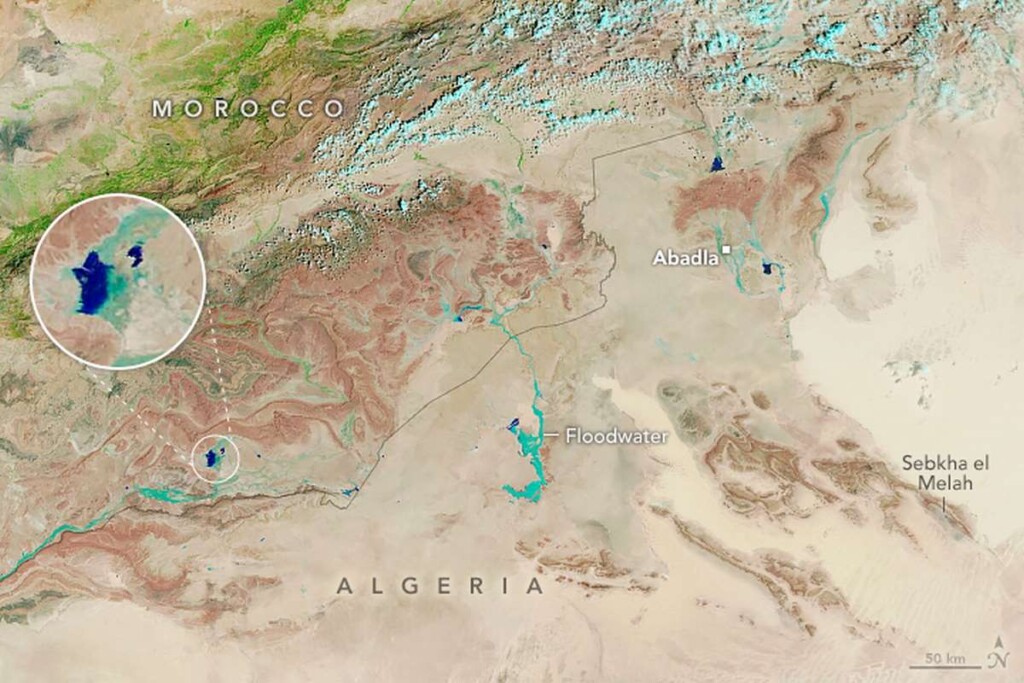
Images from NASA’s MODIS Satellite have revealed some of this greening, while at the same time showing that lakes which have long been dry are now filling up, such as one in Morocco’s Iriqui National Park.
Moshe Armon, a senior lecturer at the Institute of Earth Sciences and the Hebrew University of Jerusalem, said in a statement that between 2000 and 2021, Sebkha el Melah, a salt flat in central Algeria, has only filled six times. He suspects this month’s rains will be enough to make that seven.
Sahara Flooding map -credit, NASA Earth Observatory
11,000 years ago and beyond, the Sahara looked a lot more like the savannah of Kenya and Tanzania than the world’s largest non-polar desert that we see today. Evidence of this is all over the northern half of the continent, from thousands of fossilized lighting bolts found embedded in soil all over the Sahara, to evidence of rainfall erosion on the body of the Sphinx in Egypt, to the prehistoric footprint of Lake Chad, which is tens of thousands of square miles larger than the current water level.
The rains this year it must be said have resulted in some ghastly flooding, displacing thousands of people, destroying homes, and costing hundreds of lives.
While rich in species diversity, natural beauty, and cultural heritage, living in a desert often means living in poverty, and droughts, which are predicted to increase in severity in the coming years, will strain desert resources all the more. Because so much of desert life and culture is adapted to making the most of freak rainfall events like this one, the water will help preserve delicate livelihoods for months, even years to come.
WATCH the story below from ABC News…
SHARE This Story Of Green Appearing From The Brown On Social Media…
The oldest traces of fermented dairy ever discovered were recently found in western China’s Tarim Basin, dating back 3,600 years.
A DNA analysis shows that rather than being cheese, as the physical profile of the sample suggested, it was actually solidified kefir.
Kefir is a type of fermented milk that offers a great way of fortifying the gut microbiome, but because the name kefir comes from the Turkish word “keyif” which refers to the “good feeling” a person gets after drinking it, kefir has long been thought to originate from the Russian steppes and the Caucasus Mountains.
But this new revelation suggests it hails instead from China.
The ancient cheese samples were found alongside the famous Tarim Basin mummies in China, dating from the Bronze Age around 3,600 years ago. Found in the 20th century, these mummies helped provide a genetic bedrock to underpin scholarship on the great genetic and linguistic melting pot of Central Asia.
The analysis of the cheese sample was carried out at the Chinese Academy of Sciences and published in the journal Cell. It suggests a new origin for kefir and sheds light on the evolution of probiotic bacteria.
“This is the oldest known cheese sample ever discovered in the world,” said corresponding author Professor Qiaomei Fu. “Food items like cheese are extremely difficult to preserve over thousands of years, making this a rare and valuable opportunity.”
“Studying the ancient cheese in great detail can help us better understand our ancestors’ diet and culture.”
Archaeologists discovered mysterious white substances smeared on the heads and necks of several mummies found in the Xiaohe cemetery in China’s Tarim Basin around 20 years ago. The mummies date back about 3,300 to 3,600 years ago.
At the time of the discovery, researchers thought the substances might be a type of fermented dairy product, but they couldn’t identify exactly what kind. Central Asian nomads of all sorts relied on dairy as a food source, and fermented mare’s milk was the chief item in the famously revolting Mongolian diet, according to Chinese sources.
Now, after more than a decade of advancements in ancient DNA analysis, a team led by Professor Fu has unraveled the mystery. The Chinese research team successfully extracted mitochondrial DNA from samples found in three different tombs at the cemetery.
They identified cow and goat DNA in the cheese samples.
Fu said the ancient Xiaohe people used different types of animal milk in separate batches, a practice differing from the mixing of milk common in Middle Eastern and Greek cheesemaking.
The researchers also managed to recover the DNA of microorganisms from the dairy samples which confirmed that the white substance was in fact kefir and not cheese.
They found that the samples contained bacterial and fungal species, including Lactobacillus kefiranofaciens and Pichia kudriavzevii, both commonly found in present-day kefir grains.
Kefir grains contain multiple species of probiotic bacteria and yeast, which ferment milk into kefir, much like a sourdough starter. Being able to sequence the bacterial genes in the ancient kefir gave the researchers the chance to track how probiotic bacteria evolved over the past 3,600 years.
They compared the ancient L. kefiranofaciens (from the kefir) with the modern-day species and found that the ancient sample was more closely related to strains identified as the origin of the species which hail from Tibet—challenging a long-held belief that kefir originated solely in the North Caucasus mountain region of present-day Russia.
The Russian L. kefiranofaciens is the most widely used globally, including in Europe, the United States, and Japan, for making yogurt and cheese.
“Our observation suggests kefir culture has been maintained in northwestern China’s Xinjiang region since the Bronze Age,” said Fu.
The study also revealed how L. kefiranofaciens exchanged genetic material with related strains, improving its genetic stability and milk fermentation capabilities over time.
These genetic exchanges helped Lactobacillus become more adapted to human hosts over thousands of years of interaction, as compared with ancient Lactobacillus, modern-day bacteria are less likely to trigger an immune response in the human intestine.
“This is an unprecedented study, allowing us to observe how a bacterium evolved over the past 3,000 years,” said Professor Fu. “Moreover, by examining dairy products, we’ve gained a clearer picture of ancient human life and their interactions with the world.”
“This is just the beginning, and with this technology, we hope to explore other previously unknown artifacts.”
SHARE This Amazingly Precise Discovery Of Ancient Food Culture…
Quote of the Day: “You can find peace amidst the storms that threaten you.” – Joseph B. Wirthlin
Photo by: Getty Images for Unsplash+
With a new inspirational quote every day, atop the perfect photo—collected and archived on our Quote of the Day page—why not bookmark GNN.org for a daily uplift?