












All News - Page 216 of 1719 - Good News Network
Home Blog Page 216

Indian IT Worker Designs New Eco-Friendly Sewage Treatment Method with the Sacred Cow as His Inspiration

Martijn Vonk - Unsplash
Martijn Vonk – Unsplash

An Indian entrepreneur has developed a zero-energy, zero-chemical system of wastewater treatment, and true to the traditions of the sub-continent, he used nature as an inspiration—specifically Hinduism’s most sacred animal.

In Bengaluru, a 54-year-old IT security specialist was living pretty in a luxury gated community earned after a long successful career, but he decided to put all he had achieved on the line over a simple clogged drain.

Tharun Kumar began to imagine ways to build a better sewage treatment method that could produce good quality water without chemicals. The nearby Varthur Lake was the perfect example of the need for innovation in this area, as the lake has for years been famous for pollution.

In 2017, Kumar started ECOSTP with the chambered stomach of the cow as his “bovine inspiration.”

Like all ruminants, cows have a 4-chamber stomach, in which the plants they eat are broken down by anaerobic bacteria. If we remember high school biology or PA classes, anaerobic means metabolism without oxygen.

Typical wastewater plants use aerobic bacteria, or metabolism with oxygen, to break down sewage, but this requires the ventilation system that continually runs on energy. Regular sewage treatment also tends to use chemicals, and has the presence of a full-time employee. Kumar has eliminated almost all of these drawbacks.

At the base of the ECOSTP septic tank is a layer of cow dung that provides the bacterial workers. With the water moving via gravity, it enters the second bacterial chamber before passing into the third space which is a filter of sand and gravel. The fourth chamber lies under a garden of select vascular plants which removes suspended solids, pathogens, nitrogen, and phosphorus, the latter two going to feed the plants.

YOU MAY ALSO LIKE: Washington, DC Sewage Plant Spins Human Sewage into Fertilizer Gold

The resulting water is graded by health inspectors as good quality for toilet water and gardening applications. With the aid of a grant from the US-based Biomimicry Solutions, ECOSTP now has 325 clients across 22 states in India, and their septic tanks are unmanned and unpowered, saving thousands in running costs.

“My team and I measure ourselves by three metrics,” Kumar told India Today’s Ajay Sukumaran. “How much bad water did we convert to good water? How much power did we save compared to a normal STP? And how much coal we saved, because 70 percent of India’s electricity comes from coal.”

GREEN INDIA NEWS: Indian Man Quits Tech Job and Becomes Environmentalist–And Turns Infamous Dump into Green Oasis

“We are proud to have reclaimed 2 billion liters of sewage so far without power or chemicals.”

ECOSTP is now seeing if it’s possible to identify anaerobic bacteria that can remove the harmful compounds of industrial effluent.

WATCH a five-minute mini-doc about Kumar and ECOSTP below… 

SHARE This Spark Of Bovine Inspiration With Your Friends… 

LA Firefighters Rescue 1200-Pound Horse Named ‘Lucky’ from Backyard Sinkhole (WATCH)

Fire Captain Erik Scott LAFD (Twitter)

In LA County, fire and rescue had a ton of work to do to lift out a 1,200-pound horse that fell into a sinkhole near Lake View Terrace.

Lucky by name, lucky by nature, this 20-year-old mare managed to avoid any serious injuries to her legs from the fall when the muddy ground of her pasture parted beneath her hooves.

Heavy equipment was called for by the Los Angeles Fire Department, who enlisted 50 staff members to assist in the rescue operation.

“The name of the game is to not hurt the horse, to keep her calm,” LAFD Capt. Erik Scott told ABC 7 Eyewitness News, while the rescue was still underway. “She’s been in mild to moderate distress at this time and we want to get her freed and get more definitive care.”

At first the team thought a helicopter would be the best method of extraction, but eventually changed course to use the boom of an excavator to attach the heavy strapping which formed a makeshift harness around Lucky’s midriff.

MORE ANIMAL RESCUES: Good Samaritan Saves Farmer’s Pig, Calls 911 After Joining Livestream and Seeing Barn On Fire

A large vacuum was used to clear away the sand from the hole before the excavator lifted her partially out and brought her back legs over the solid ground she needed to gain purchase with her hooves and heave herself out.

20 years is old for a horse, and it’s a miracle she wasn’t mortally wounded by the fall. It seems whoever named the mare had good reason for picking ‘Lucky.’

WATCH the rescue below from ABC 7… 

SHARE The Coordinated Rescue Of This Old Mare With Your Friends… 

Pony-Sized Dinosaurs Swam or Floated Across Hundreds of Miles of Ocean from America to Colonize Africa

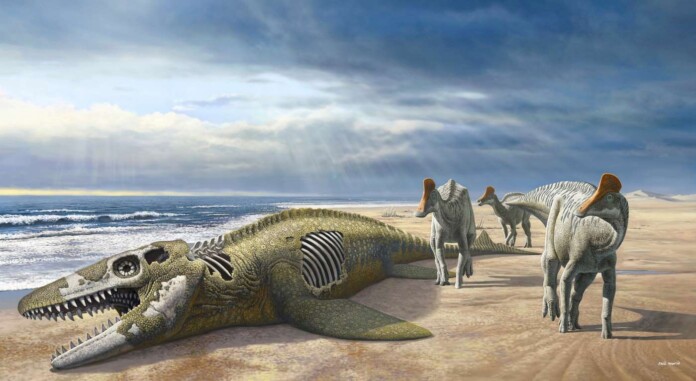
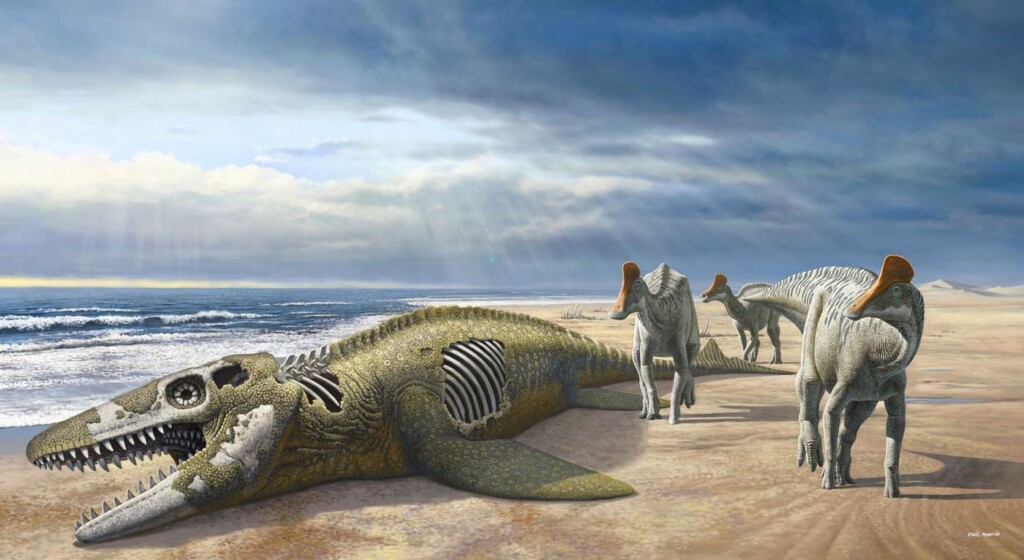
An artist impression of the duckbills arriving on the shores of Africa - credit Raul Martin, via SWNS
An artist’s impression of the duckbills arriving on the shores of Africa – Dr. Longrich et al, via SWNS

Describing a “once-in-a-million year event,” an international team of paleontologists has suggested that, though nearly impossible, a herd of pony-sized duck-billed dinosaurs must have either floated or swam across to Africa up to 66 million years ago.

Fossils belonging to three species of duck-billed dinosaurs were found in Morocco, on a proto-Africa that would have been isolated by several hundred miles of ocean from where they evolved in North America.

The researchers also discovered that, once in Africa, the duck-billed dinosaurs not only survived but thrived and became diverse throughout their new continent.

At the end of the Cretaceous period, some 66 million years ago, high sea levels and the breakup of the supercontinent Pangaea isolated Africa as a lone island continent, surrounded by water on all sides.

However, the remains of a member of the duck-billed dinosaur family that evolved in North America were recently found in northern Africa—prompting questions as to how they got there.

The fossils, found in modern-day Morocco, revealed a new species of pony-sized, duck-billed dinosaur called Minqaria bata, which measured between 9 and 12 feet long and weighed around 500 pounds.

The anatomy of the new species closely resembles that of the European species, prompting researchers to reluctantly suggest the dinosaurs swam or floated across several hundred miles of open ocean to colonize North Africa.

Dr. Nicholas Longrich, from the University of Bath’s Department of Life Sciences, and his team, made up of international scientists from universities in the UK, Morocco, and Spain, said that though the dinosaurs traversing the oceans to get to Africa was unlikely, it appears to be exactly what happened.

“It’s extremely improbable that dinosaurs could cross water to get to Africa,” he said. “But improbable isn’t the same as impossible. And given enough time, improbable things become probable.”

“Buy a lottery ticket every day, and if you wait long enough, you’ll win. These ocean crossings might be once-in-a-million-year events but the Cretaceous lasted nearly 100 million years.”

“A lot of strange things will happen in that time,” he suggested, “including dinosaurs crossing seas.”

The researchers compared the anomaly of the crossing to the unusual journeys of some modern-day animals, such as a group of at least 15 iguanas swept off the shores of Guadeloupe in the Caribbean by a hurricane and washed up around 200 miles away on the island of Anguilla a month later in 2015, or a tortoise from the island of Aldabra that once drifted ashore in Tanzania, 700 kilometers away.

OTHER NATURAL WONDERS: Dinosaur Evergreens Thought Extinct for 2Mil Years Discovered by Park Ranger–the Grove is the ‘Find of the Century’

Deer, elephants, and hippos are also all known to have swam out to the Greek island of Crete during the ice age.

“These duckbills are maybe the most surprising find of my career,” Dr. Longrich admitted. “If you asked me what kind of dinosaurs we’d find in Africa, then a duckbill is the last thing I would have imagined, let alone three species.”

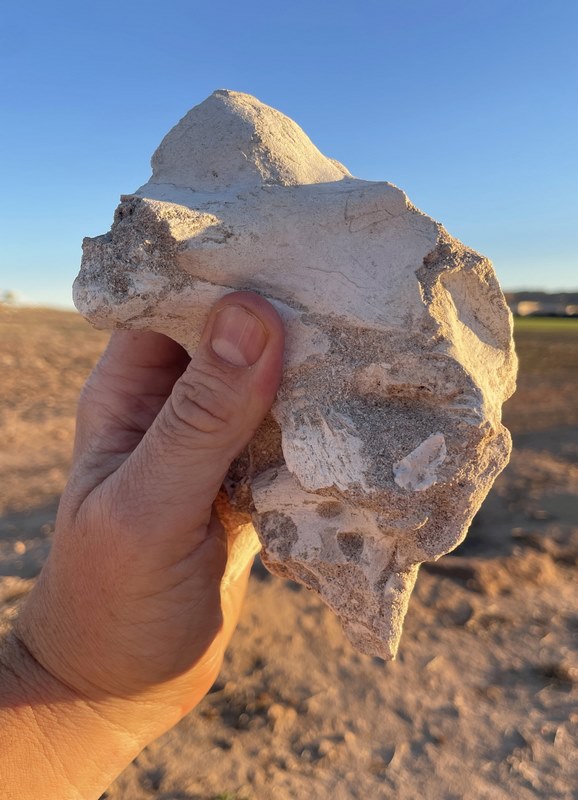
Dr. Longrich holding one of the duckbill fossils – SWNS

“There’s still so much unknown in the fossil record, but if there wasn’t, we wouldn’t need to keep collecting fossils.”

ALSO CHECK OUT: Scientists Discover Butterflies Originated in America 100 Million Years Ago When Upstart Moths Wanted to Bask in the Sun

The first of the three species in question was named Minqaria bata—Arabic for ‘beak’ and ‘duck’, respectively, and it closely resembles the only previously known African species, Ajnabia odysseus, though the shape of its jaws and teeth are distinct, proving it was a different species.

The other Moroccan species, Ajnabia, was about the same size, and larger bones studied by the team, including an arm and a thigh bone, suggest a third species grew much bigger, to around 15 to 18 feet long.

“Not only did duckbills manage to reach Africa at the end of the Cretaceous,” Dr. Longrich continued, “But once they did, they quickly evolved to take advantage of open niches and became diverse.”

MORE DINOSAUR STORIES: ‘Impossible Fossil’ Preserves the Exact Moment the Dinosaurs Died: ‘It’s Absolutely Bonkers’

Sea levels were high at the end of the Cretaceous period, flooding much of the continents, and the Earth’s land was fragmented by the breakup of Pangaea and continental drift.

This left Africa floating alone in the ocean; an island continent much like modern-day Australia.

SHARE This Paleontological Puzzle With Your Friends Who Love The Dinos… 

Even Exercising Just Once a Week Can Help You Lose Weight, Says New Study

A team of researchers has discovered that even if you only have time to exercise once or twice a week, you can still reap the same benefits as those who exercise more frequently, specifically as regards weight loss, provided you meet certain minimums for duration and intensity.

Guidelines from the World Health Organization (WHO), and most governments besides, recommend that adults perform at least 150 minutes per week of moderate physical activity or 75 minutes per week of vigorous physical activity.

Plenty of people want to meet this level of exercise but find it difficult to do so because of the fast-paced and time-consuming lives many of us lead.

The study, published in the journal Obesity, found that people labeled ‘weekend warriors’—in other words, those who condense their exercise into just Saturday and/or Sunday—can lose the same amount of weight as those who exercise every day, as long as they meet the recommendations set out by the WHO.

The research team believes their findings will be especially welcomed by people whose jobs mean they sit for most of the day, such as taxi and bus drivers or office workers.

“The weekend warrior pattern is worth promoting in individuals who cannot meet the recommended frequency in current guidelines,” said corresponding author Lihua Zhang, a healthcare scientist at Fuwai Hospital and professor at Peking Union Medical College in Beijing, China.

“These people are struggling to catch up in their exercise plans in daily life to offset the hazard of a sedentary lifestyle but have less free time to get to the gym. Our study could offer them an alternative choice to keep fit.”

Researchers gathered data from more than 9,600 participants, aged between 20 and 59 years old, who took part in the US National Health and Nutrition Examination Survey between 2011 and 2018.

The team assessed the participants’ abdominal and general body fat using dual-energy x-ray absorptiometry—a non-invasive body composition scan—and via other measurements such as BMI.

OTHER NEWS FOR WEEKEND WARRIORS: Being A ‘Weekend Warrior’ Boosts Health as Much as Working Out Every Day, According to New Research

Next, they analyzed how these correlated with physical activity levels, using data from three groups: inactive, ‘weekend warriors,’ and regularly active.

Results showed that the ‘weekend warriors’ and the regularly active participants had lower abdominal and body fat, smaller waist circumferences, and lower BMIs.

MORE EASY EXERCISE TIPS: Exercise in the Morning May Stave Off Cancer, As Opposed to Later in the Day, New Study Says

“The main takeaway is that people should be active in any manner that suits their lifestyle,” said Dr. Beverly Tchang, Assistant Professor at Weill Cornell Medicine in New York. “All types of exercise are welcome, whether that be running, hiking, cycling, climbing, or other options.”

SHARE This Good News To Get Up And Move With Your Friends In Offices…

“One thing frees us of all the weight and pain in life. That thing is love.” – Sophocles

Quote of the Day: “One thing frees us of all the weight and pain in life. That thing is love.” – Sophocles

Photo by: Johnny Cohen

With a new inspirational quote every day, atop the perfect photo—collected and archived on our Quotes page—why not bookmark GNN.org for a daily uplift?

New Sustainable Florida Homes Survived Hurricane–as Nearby Homes Were Devastated–and Never Lost Power

Hunter Point – Pearl Homes Developments

These cute little Florida townhomes are tougher than they look. While they may be as green as a budding daffodil, they have a backbone like reinforced concrete.

Built by the enterprising construction company Pearl Homes, they shook off both Hurricane Ian and Hurricane Idalia, losing power during neither, even when all surrounding structures were heavily damaged.

From smart homes that generate more energy than they consume to energy-efficient rental units that promote affordable living, Pearl Homes claims they are actively showing the world a new way to feather a nest.

Marshall Gobuty, currently Founder/CEO of Pearl Homes, built a huge fashion empire in the 80s/90s around a hugely successful line of women’s private label blue jeans, which he eventually sold to a hedge fund and retired.

He is now building communities of net-positive energy homes that together form a virtual power grid. Through this approach, they create modern, affordable communities for people to enjoy and live in, but also develop communities that are conscious of their impact and overall footprint on the environment.

The houses seen above are part of an 86-unit development called Hunter’s Point. The development includes 30 already completed and occupied units that were rated as ‘Platinum’ by Leadership in Energy Environmental Design (LEED), a third-party efficiency rating agency, and named the first net-zero, single-family modern housing development on Earth.

MORE SUSTAINABLE HOUSING: Sweden Is Trying to Build a Whole City Borough Out of Wood to ‘Show What is Possible’

Hunter’s Point also includes resort, hotel, and commercial space, right on the ocean in Cortez, Florida, although a 1,678 Sq. Ft. unit with a two-car garage runs a cool $1.5 million.

Pearl Homes’ apartment development, called The Met, offers 1 and 2 bedrooms between $1,700 and $2,000 in Bradenton, Florida. Set within walking distance of entertainment, restaurants, shopping, and event space in the Village of The Arts location, it’s also a few blocks from the Gulf.

The 200-unit development used construction materials that are good for the environment and human health, with recycled content and energy-friendly manufacturing practices, including low VOCs and no off-gassing. The apartments exceed Code-required standards for energy efficiency by 30%, meaning that bills will be lower.

A SIMILAR STORY FROM FLORIDA: New Florida Community Survived Hurricane Virtually Unscathed After Being Designed for Resilience

Another collection of Bradenton apartments, sit for around 40% of these prices, and are meant for housing workforce members like teachers, first responders, firefighters, or a variety of medical workers. Called The EPIC, the units prioritize building methods, materials, and the implementation of in-home technology that facilitates healthier lifestyles.

SHARE These Modern, Sustainable Housing Opportunities in West Florida… 

Tube of Red Lipstick 4,000 Years Old Unearthed in Iran Bears ‘Striking Resemblance’ to Modern Ingredients

Mineral composition of lipstick under microscope (by Federico Zorzi, CC license) and lipstick tube (by Massimo Vidale, CC) – Scientific Reports

While the ancient Egyptians may have made eyeliner famous, a stunningly detailed archaeological find shows that ancient Iranians may have held the first patents on lipstick.

Detailed recently in a study in the journal Scientific Reports, a vial of deep red powder found during excavations of a pre-Achaemenid Iranian civilization dating to the Bronze Age seems to hold all the characteristics of modern makeup.

The vial, made of a carved greenish schist called chlorite, was located at a museum in Iran, but first surfaced when the River Hilal in Kerman province flooded several graveyards and dislodged items buried within.

The graves were dug by a powerful and well-documented civilization that predated the Persians known as Marḫaši in Sumerian script, and Paraḫšum in Akkadian.

Using a variety of imaging methods including liquid chromatography, mass spectroscopy, scanning electron microscopy, and X-ray diffraction, a team of scientists from the universities of Padova and Tehran identified the mineral composition of the purple substance found within the chlorite vial.

Made up of hematite (which produces its deep red color), manganite, braunite, galena, anglesite, and plant-based waxes, the mixture “bears a striking resemblance to the recipes of contemporary lipsticks,” the authors wrote.

Their investigation obtained the first-ever radiocarbon date from a Bronze Age cosmetic in the ancient Near East, and placed its creation around the years 1,936 and 1,687 BCE.

Most of the cosmetic preparations that have been recovered from ancient civilizations are white powders that were used as foundation or eyeshadow, as well as the iconic eyeliners of the Egyptians and Persians made of black kohl or, unfortunately for their neurological health, lead.

“When did people start to paint their lips red? Which pigments were first used for coloring human lips? In the same framework, were people aware of the potential dangers of direct lead ingestion from mouth?” the authors discuss.

“While Ancient Iranian foundations, eye shadows, and rouges were mainly made of lead carbonates, the newly discovered cosmetic has minimal amounts of lead minerals,” they continue.

OTHER WINDOWS INTO THE PAST: Archaeologists Discover a ‘Master Blacksmith’s’ Workshop Dating to the Very Dawn of the Iron Age in Britain

“The contrast between the abundant use of lead-based substances apparently intended for the skin, and much less in this red paint, might suggest the makers of cosmetics were aware of the potential dangers of a direct oral lead ingestion.”

They believe the plant-based substances may have been added to produce a pleasant aroma.

One hypothesis the researchers made, further strengthening the idea that shades of lipstick, like those sold today in prepackaged tubes or kits by Mac or L’Oreal, date all the way back to Ancient Marḫaši, is that the chlorite vial was intricately carved in a manner unlike any other previously identified cosmetics container from the period.

MORE ARCHAEOLOGY FROM THE NEAR EAST: 5,000 Year-Old Tavern Found in Iraq

This, they suggest, meant that this particular product may have been packaged and sold individually—that buyers in high society knew that vials carved into the shape of a reed stalk were made by a particular craftsman.

Whether or not this idea of ancient branding is true, it’s a fascinating window into the beauty routines of a people contemporary with some of the oldest urban civilizations on Earth.

SHARE This One-Of-A-Kind Window Into The Lives Of Ancient Iranians… 

Couple Converts 40-Foot School Bus into Gorgeous Home for Working and Travel–LOOK INSIDE

Josh and Emily Scherrer with their Skoolie – Courtesy of Instagram @aurora.theadventurebus

Renting in cities and owning houses continues to be expensive in the United States, so this is the story of one couple who decided to ditch a sedentary life for one with more freedom and opportunities to travel.

Josh and Emily Scherrer are married in their late 20s. They both work as engineers, and it happened that in 2020 they transitioned entirely to remote work.

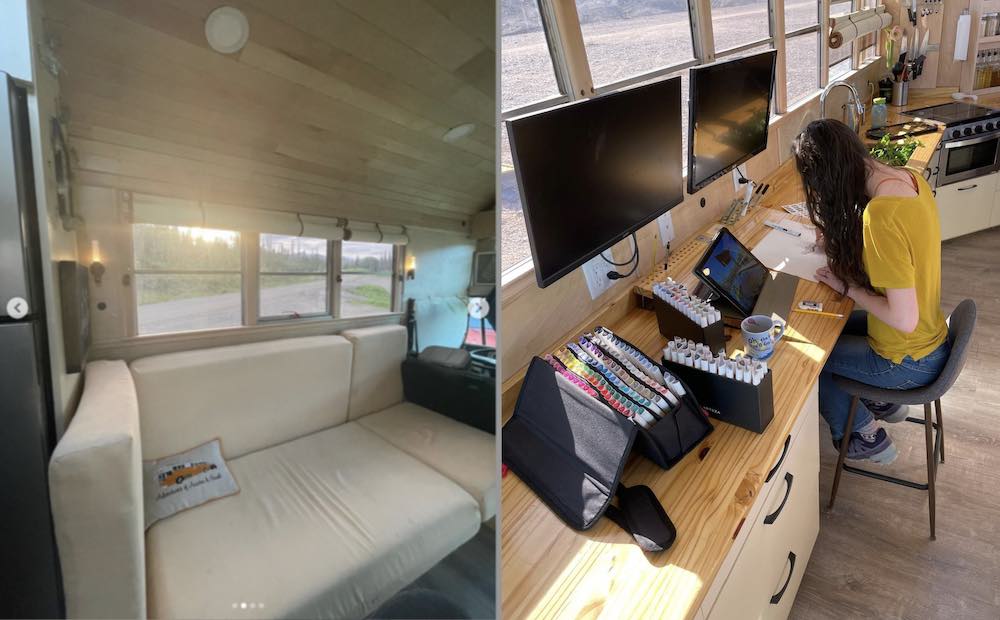
Originally bonding over their love of travel and shared ambition to do more of it, they took the plunge and bought a school bus in January 2021 with the intention of turning it into a mobile home. School buses are cheaper than actual mobile homes, and provided more space for the couple who each needed their own office.

Courtesy of Josh and Emily Scherrer @aurora.theadventurebus

Working on the weekends and evenings, it took 18 months to transform the old bus into their “skoolie”—a modern term rapidly infiltrating the American zeitgeist that refers to a school bus that’s been renovated into something new, like this fellow who turned it into a hostel, or this fellow who turned it into an Airbnb.

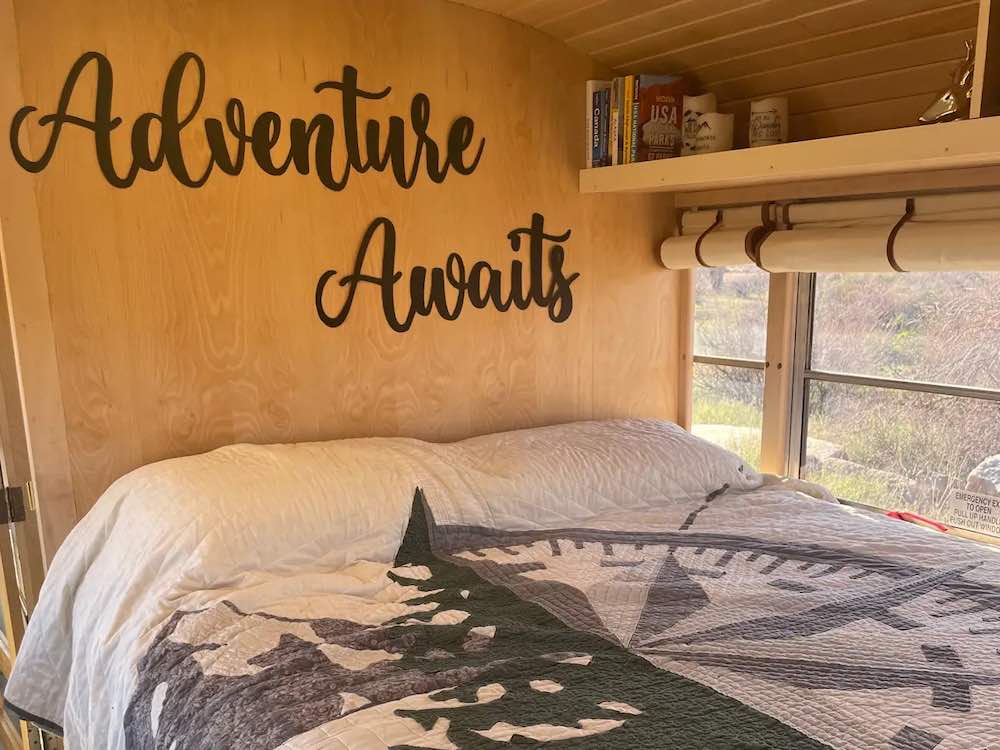
Now called “Aurora the Adventure Bus” on Instagram the skoolie is equipped with maple wood ceilings, shower, full-service kitchen, solar panels, and satellite internet. The conversion ended up costing $80,000, which the Scherrers admitted to Business Insider is well on the higher end for typical skoolie conversions.

Courtesy of Josh and Emily Scherrer @aurora.theadventurebus

“We don’t have to pay for plane tickets or hotels, so we can experience more for our money,” Emily Scherrer told BI. “Our expenses depend on where we park and the amenities we find.”

The southwestern US has a lot of land available for public use… we like to use that kind of land versus going to campgrounds, which saves us a lot of money,” she said.

Courtesy of Josh and Emily Scherrer @aurora.theadventurebus

It’s a good thing too because “skoolie life” isn’t as cheap as they thought it would be. Diesel costs around $300 per month depending on how often they fill up, while insuring their mobile home for a year is around two grand. The satellite internet is also a hefty fee of $150. Emptying the bus’ septic tank also comes with a fee and must be done around twice a month.

So far, the Scherrers have taken their skoolie to Alaska, New Mexico, Texas, and Colorado, and even though the up-front and monthly expenses of their bus were higher than they imagined, they were able to find money in the budget to buy a piece of land in Idaho where they plan to eventually settle down.

The experience of traveling in their 20s has been richly rewarding, and by the time they’re ready to build a house on their land, they both know they’ve got the perfect vacation tool—their skoolie—which isn’t going anywhere anytime soon.

SHARE This Stunning Example Of Creativity And Dreamchasing… 

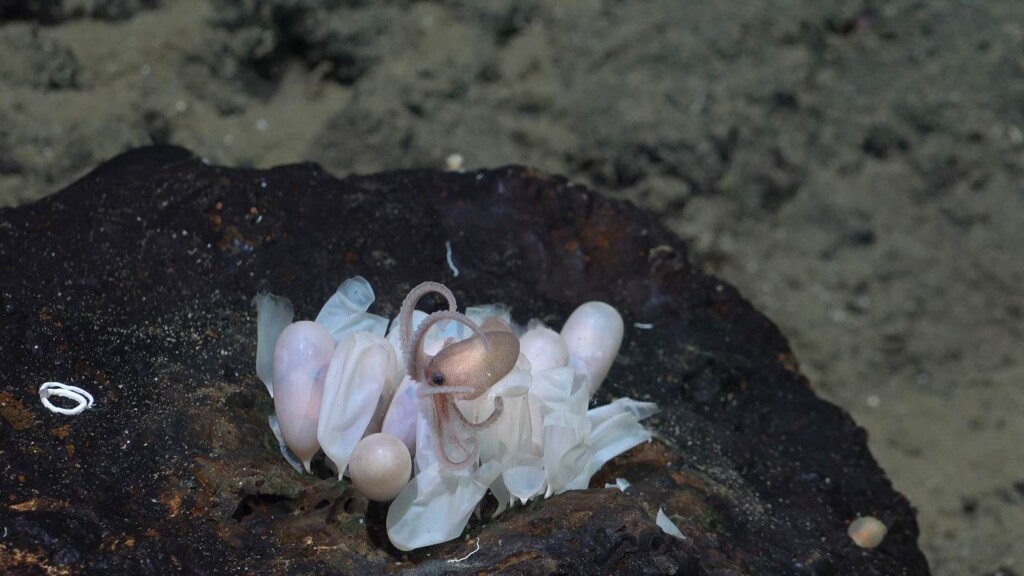
Deep Sea Octopus Nursery With 4 New Species Confirmed by Marine Biologists

One of the new species - credit, Schmidt Ocean Institute released to the press.
One of the new species, a female brooding on her eggs – credit, Schmidt Ocean Institute released to the press under CC 4.0.

The Schmidt Ocean Institute recently announced a set of absolutely incredible results from one of their expeditions 2 miles below the seas of Costa Rica.

Near a rocky outcrop called El Dorado Hill, the marine scientists identified four new species of octopus photographed a rarely-seen octopus hatchery, and documented their life around a series of hydrothermal vents with video and photographs in a zone where the light doesn’t reach.

The first expedition conducted by the Schmidt Institute took place in June of last year, while the second followed in December, when the team was able to confirm that these nurseries seem to be active year-round.

At the hatchery, the females were photographed incubating their eggs with their suckers pointing out as a defense strategy. According to Smithsonian, it can take years for the eggs to hatch this way, but the water released from the hydrothermal vents warms the area and speeds the process up.

The four species were identified and are currently being described by Dr. Janet Voight, associate curator of invertebrate zoology from the Field Museum of Natural History, and Fiorella Vasquez from the Zoological Museum at the University of Costa Rica. It has already been decided that the brooding species seen in the hatchery will be called the Dorado octopus after the site where it was found.

Mother octopuses brooding over their eggs – credit, Schmidt Ocean Institute released to the press under CC 4.0.

Three other species were identified in the immediate vicinity, but the Dorado was the only one present at the hatcheries.

“Through hard work, our team discovered new hydrothermal springs offshore Costa Rica and confirmed that they host nurseries of deep-sea octopus and unique biodiversity,” said Dr. Beth Orcutt of the Bigelow Laboratory for Ocean Sciences in a statement.

An octopus hatchling emerges from a group of eggs at a new octopus nursery – credit, Schmidt Ocean Institute released to the press.

“It was less than a decade ago that low-temperature hydrothermal venting was confirmed on ancient volcanoes away from mid-ocean ridges. These sites are significantly difficult to find since you cannot detect their signatures in the water column.”

MORE MARINE WONDERLANDS: Scientists Discover Pristine Deep-Sea Coral Reefs in Galápagos Marine Reserve ‘Teeming With Life’

The Dorado octopus seems similar to a species found on the California seamount, while two others had traits that placed them reasonably close to other medium-sized members of the genus Muusoctopus. But a fourth had only a single row of suckers per tentacle, and other traits that make it seem, at least for now, like an anomaly.

The science team also found a thriving deep-sea skate nursery at the top of another seamount in Costa Rican waters, nicknaming the site Skate Park.

YOU MIGHT ALSO LIKE: Scientists Find A Whole New Ecosystem Hiding Beneath Earth’s Seafloor

The team also located three hydrothermal springs in the region, 10 to 30 nautical miles from each other. The springs all have different fluid temperatures and chemistries from one another, indicating unique reaction processes are facilitating their formation.

The captured specimens will not be sent back to the US but instead will be given to institutes in Costa Rica to inspire local deep-sea biologists and conservation in the future.

SHARE This Amazing Deep-Sea Discovery With Your Friends… 
“I am the master of my fate; I am the captain of my soul.” – William Ernest Henley

Quote of the Day: “I am the master of my fate; I am the captain of my soul.” – William Ernest Henley (from his poem, Invictus)

Photo by: freestocks (cropped)

With a new inspirational quote every day, atop the perfect photo—collected and archived on our Quotes page—why not bookmark GNN.org for a daily uplift?

Circular Stone Plaza Moves Up Start of Stone Age Construction in the Andes on Par with Stonehenge

supplied by Jason Toohey.

Reprinted with permission and alterations from World at Large, an independent news outlet covering world news, conflicts, travel stories, conservation, and science news.

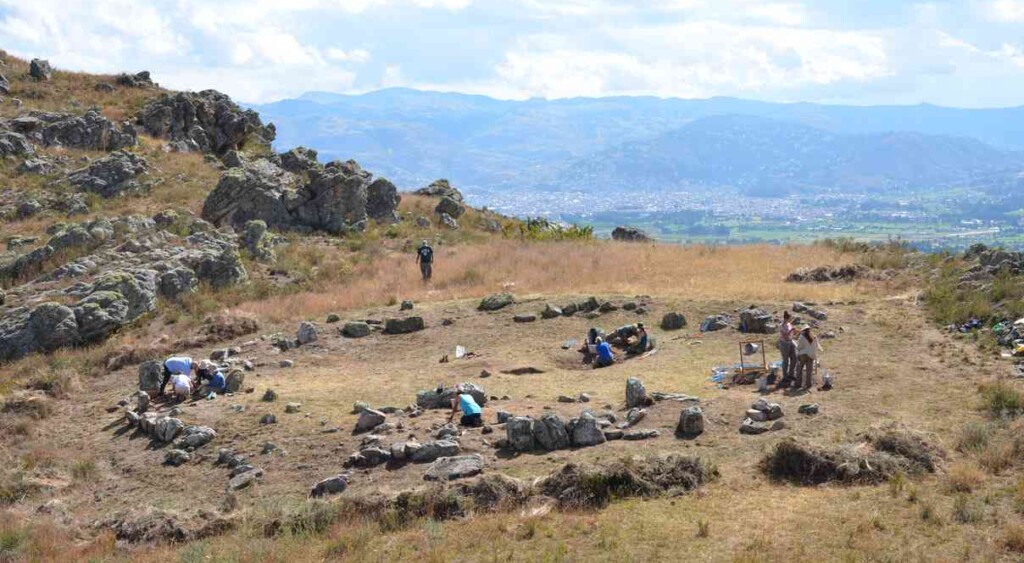
In the Cajamarca Basin of Northern Peru, at a place called Callacpuma, archeologists have uncovered a real treasure—a circular stone plaza with human activity dating back farther than almost any other megalithic structure in the Western Hemisphere.

Additionally, its design and construction method are also entirely unique, and the discovery opens up a new prequel chapter in the rich history of human civilization in the Andes Mountains.

Evidence of charcoal and fires found at the base of one of the megaliths was used for radiocarbon dating, since this standard method of estimating the age of objects can’t be used on bare rock.

The charcoal was last burned between 2,632 and 2,884 BCE, placing its construction within the Andean Late Preceramic period, and around the same time as Stonehenge in England.

“This structure was built approximately 100 years before the Great Pyramids of Egypt and around the same time as Stonehenge,” says University of Wyoming Anthropologist, Jason Toohey, who helped lead the excavations and publish the paper on its discovery.

Callacpuma has been investigated for 60 years, but early excavations focused on around 100 instances of carved and painted rock art connected to the site. The site is composed of a large number of features, including domestic and agricultural terraces, platform mounds along the ridge’s summit, and a large cave complex, and though it didn’t exist at the time, it is bounded on the northern side by the famous Inca road network.

“It was probably a gathering place and ceremonial location for some of the earliest people living in this part of the Cajamarca Valley. These people were living a primarily hunting-and-gathering lifestyle and probably had only recently begun growing crops and domesticating animals,” said Toohey.

supplied by Jason Toohey.

The plaza is formed by two concentric walls and measures about 60 feet in diameter. Multiple large stones were placed upright in the circular construction. They are by no measure as large as those used to construct Stonehenge, but would still have required backbreaking labor to move them up to the crest of the hill where the plaza was made.

Excavations also revealed that the earth had been cleared to the bedrock layer before construction began.

SOUTH AMERICAN HISTORY: 300 Epic Ancient Murals ‘Unique in the World’ Depict Creation Myths on Texas Rock: ‘Oldest Books in North America’

The stones were neither shaped nor mortared and instead were placed in a close interlocking order. The plaza was sunken, and an entry point that allowed for descent into the plaza was identified on the western wall. Two to three small, enclosed rooms were present on the interior of the circular plaza and abutted to the eastern plaza edge, where the charcoal was discovered.

When surveying the archeological record of Peru, monumental stone architecture can only be hypothesized at some sites dating to before the plaza in Cajamarca.

Toohey et al. write that large platform mounds, such as those found at the coastal sites of Caral (~2600 BCE), Cerro Lampay (~2400 BCE), and Sechín Bajo (~3300 BCE), and highland sites including Kotosh and La Galgada (~3000 BCE), show that monumental stonework was not a new invention, but typically involved stone-faced walls filled with cobbles and soil.

MORE ANCIENT ARCHEOLOGY: Ancient Mayan City Hidden for Over 1,000 Years Discovered by LiDAR

However, the earliest dated architecture in the region of Cajamarca are the mound complexes at Huacaloma, which date to around 1,600 BCE. While ceramics at Callacpuma were recovered from the surface layer, no such artifacts were present on the foundation layer; one of the evidence points which led Toohey and his team to conclude that the construction predates the invention of ceramic pottery.

To that end, no such design of stonework has ever been found in the pre-ceramic tradition in the Northern Andes, and it represents one of the oldest such constructions identified in the whole Western Hemisphere. Toohey and the team modestly write that the sunken circular plaza of Callacpuma didn’t represent a whole tradition of construction, but perhaps a single offshoot.

SHARE This Ancient Discovery With Your Friends On Social Media… 

Scientists Spot the Brightest Object Ever–500 Trillion Times More Luminous Than the Sun

Artist’s rendition of the record-breaking quasar J059-4351 (Credit: ESO via SWNS)

Quasars are the bright cores of distant galaxies powered by supermassive black holes, and 12 billion light years away, one has been found that is shining brighter than 500 trillion suns.

Growing in mass by the equivalent of one Sun per day, it’s the fastest-growing black hole to date, but at 12 billion light years away, it probably burnt out long ago. The light detected today is merely the echo of its existence.

Using the European Southern Observatory’s (ESO) Very Large Telescope (VLT), astronomers have characterised the quasar, called J0529-4351, which was first seen in 1980.

“We have discovered the fastest-growing black hole known to date. It has a mass of 17 billion Suns, and eats just over a Sun per day. This makes it the most luminous object in the known Universe,” says Christian Wolf, an astronomer at the Australian National University (ANU) and lead author of the study published in Nature Astronomy.

The black holes powering quasars collect matter from their surroundings in a process so energetic that it emits vast amounts of light. So much so that quasars are some of the brightest objects in our sky, meaning even distant ones are visible from Earth. As a general rule, the most luminous quasars indicate the fastest-growing supermassive black holes.

The matter being pulled in toward this black hole, in the form of a disc, emits so much energy that J0529-4351 is over 500 trillion times more luminous than the Sun.

This image shows the region of the sky in which the record-breaking quasar J0529-4351 is situated – Credit: ESO / Digitized Sky Survey 2 / Dark Energy Survey / SWNS

“All this light comes from a hot accretion disc that measures seven light-years in diameter — this must be the largest accretion disc in the Universe,” says ANU PhD student and co-author Samuel Lai.

Researchers say that remarkably, this record-breaking quasar was hiding in plain sight.

MORE STORIES LIKE THIS: Astronomers Detect Oldest Black Hole Ever Observed Dating ‘From the Dawn of the Universe’

“It is a surprise that it has remained unknown until today, when we already know about a million less impressive quasars. It has literally been staring us in the face until now,” says co-author Christopher Onken, an astronomer at ANU. He added that this object showed up in images from the ESO Schmidt Southern Sky Survey dating back to 1980, but it was not recognised as a quasar until decades later.

Finding quasars requires precise observational data from large areas of the sky. The resulting datasets are so large, researchers often use machine-learning models to analyse them and tell quasars apart from other celestial objects.

OTHER BRIGHT PHENOMENON: Unprecedented Gamma-Ray Burst is ‘The BOAT’ – Brightest of All Time in Human History

However, these models are trained on existing data, which limits the potential candidates to objects similar to those already known. If a new quasar is more luminous than any other previously observed, the program might reject it and classify it instead as a star not too distant from Earth.

Finding and studying distant supermassive black holes could shed light on some of the mysteries of the early Universe, including how they and their host galaxies formed and evolved.

SHINE The Light Of This Incredible Discovery With Your Friends… 

Big Tech Companies Sign Pact to Fight AI-Generated Election Misinformation in Unprecedented Year

Clay Banks - unsplash
Big tech companies have signed an agreement to counter AI interference in elections. Clay Banks – unsplash

Throughout its 16-year history, the Munich Security Conference typically features a lot of companies trying to win defense contracts, and a summary dismissal of anything presented by the Russian Federation.

But in a change of pace, the 16th edition of the conference concluded with an agreement drafted by a variety of big tech companies to try and prevent the use of artificial intelligence to deceive and sow chaos during national elections.

As the companies point out, 2024 will bring more elections to more people than any year in history, with more than 40 countries, including two of the three largest democracies in the world, and more than four billion people choosing their leaders and representatives through the right to vote.

Their intention with the agreement is to combat deceptive AI election content such as “convincing AI-generated audio, video, and images that deceptively fake or alter the appearance, voice, or actions of political candidates, election officials, and other key stakeholders in a democratic election, or that provide false information to voters about when, where, and how they can lawfully vote.”

Signees include Meta, OpenAI, X, TikTok, Microsoft, McAfee, and Amazon.

Because the last 8 years has featured several major events that have put social media censorship and government infiltration and control of the internet never far from the center of debate around technology and its role in society, the companies were quick to point out that such AI-generated content, should it be present, won’t be taken down outright (presumably unless it violates other terms of service related to showing violent or graphic content) but rather labeled as AI-generated so people can do their own fact-checking against what the AI-generated image or video says or claims.

Three huge democracies have already gone to the polls to choose their executives: Indonesia, Pakistan, and Bangladesh, while Taiwan has also held elections. 9 months from now it will be the United States’ turn, but dozens of others will also take place.

MORE CORPORATE RESPONSIBILITY: New Google Geothermal Electricity Project Could Be a Milestone for Clean Energy

Euro News, reporting on the agreement, heard from industry members and others who found it positive, noting that all these companies have different terms of use, and so by nature it had to be broad and unspecific.

“[No] one in the industry thinks that you can deal with a whole new technological paradigm by sweeping things under the rug and trying to play whack-a-mole and finding everything that you think may mislead someone,” Nick Clegg, president of global affairs for Meta, which runs Instagram, Facebook, and WhatsApp.

“I think we should give credit where credit is due, and acknowledge that the companies do have a vested interest in their tools not being used to undermine free and fair elections,” said Rachel Orey, senior associate director of the Elections Project at the Bipartisan Policy Center, who also noted the language isn’t as strong as she would have liked.

POSITIVE ELECTION STORIES: Politician Declared Winner But Gives Up His Seat When He Learns of Election Interference on his Behalf

“As leaders and representatives of organizations that value and uphold democracy, we recognize the need for a whole-of-society response to these developments throughout the year,” the companies write in their agreement.

“We are committed to doing our part as technology companies, while acknowledging that the deceptive use of AI is not only a technical challenge, but a political, social, and ethical issue and hope others will similarly commit to action across society.”

SHARE This Story On Social Media (Just Don’t Use AI)… 

The ‘Skywalker’ Gibbon Thought to be Nearly Extinct Has Significant Populations Uncovered in Myanmar

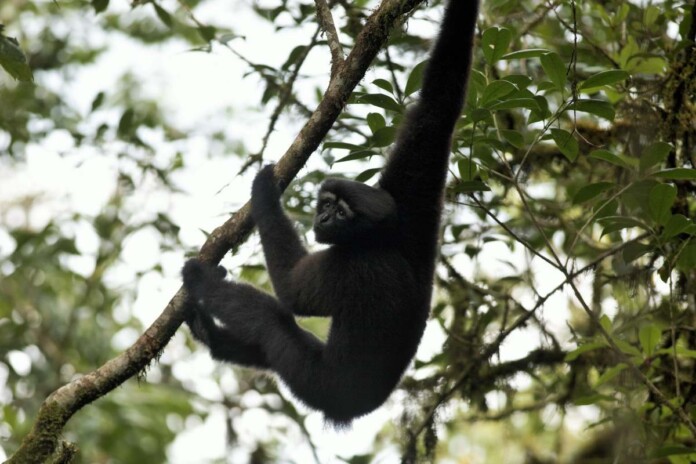
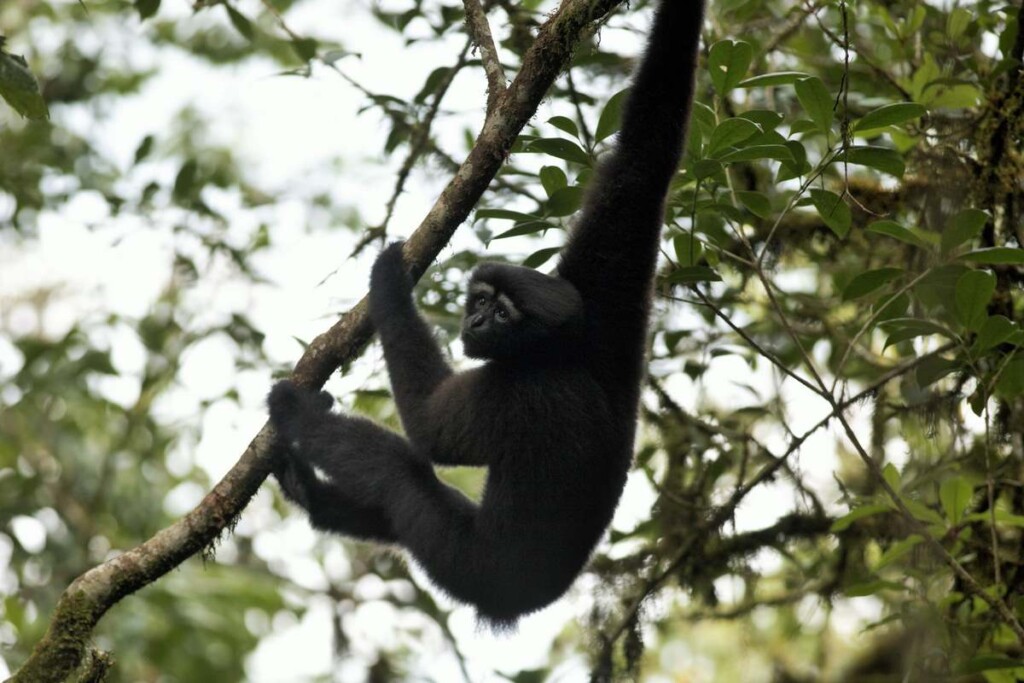
An adult male Hoolock tianxing - credit Peng-Fei Fan, released to the press.
An adult male Hoolock tianxing – credit Peng-Fei Fan, released to the press.

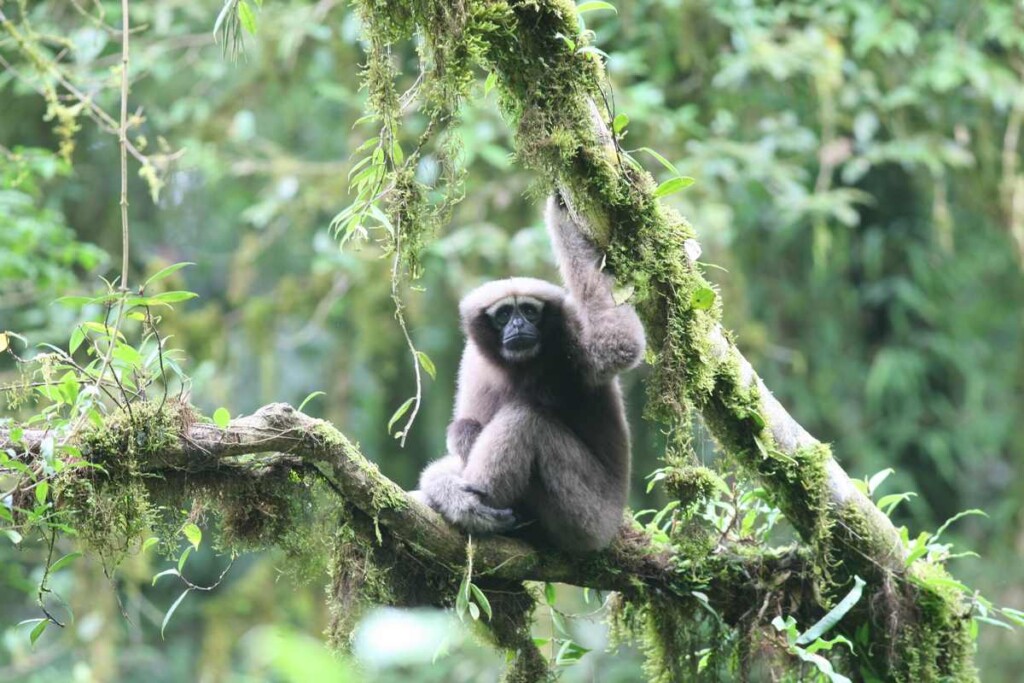
From the Far East comes fantastic news for species conservation after new populations of the gorgeous ‘Skywalker’ gibbon, known to science for only 6 years, were recently found living in the politically chaotic nation of Myanmar.

Also called the hoolock gibbon, this dainty vocalist was first described in 2017 living in the extreme south of China on a mountain in Yunnan. Classified as Endangered by the IUCN, the population was estimated to number a paltry 150 individuals, but others were believed to live in Myanmar.

Even before the recent military junta usurped the president and plunged the country into civil war, Myanmar was a difficult state to explore owing to the ongoing conflict between Yangon and several restive populations, in particular in the states called Shan and Kachin.

Now in open revolt against the military junta, these two states were nevertheless destinations for an intrepid team of scientists from the Nature Conservation Society Myanmar, Fauna & Flora International–Myanmar Programme, the IUCN’s ape specialist group, and field researchers from universities in England, China, and the US.

Together, they conducted acoustic surveys, collected non-invasive DNA sampling, and took photographs for morphological identification at six sites in Kachin State and three sites in Shan State. With the help of the Myanmar conservationists, the team also interviewed locals dwelling in rural forested areas, small conservation programs, and timber companies about the frequency of sightings and the hunting pressure.

Population estimates of unknown quality and scientific rigor conducted in 2013 suggested there might be 65,000 hoolock gibbons in Myanmar, but the matter became much more complicated after the classification of the Skywalker gibbon as a separate species from the eastern hoolock gibbon—where before they were confused as the same.

An adult female Hoolock tianxing – credit Peng-Fei Fan, released to the press.

“We were able to genetically identify 44 new groups of Skywalker gibbons in Myanmar,” said senior author Tierra Smiley Evans, research faculty at the UC Davis School of Veterinary Medicine, and contributing author. “This is a huge resource and success story for Myanmar.”

These gibbons sing to each other at dawn for around 22 minutes, and consume 36 different plant species; choosing fruit first, and flowers later. They seldom sleep in the same tree two nights in a row to avoid predation, and can’t swim so are often confined to territories by river systems.

The team that discovered them in China in 2017 loved Star Wars, and called them tianxing which is Chinese pinyin for “heaven movement;” a nod not only to their favorite sci-fi franchise, but also to China’s ancient history. In the famous Book of Change of the Zhou Dynasty, a divination poem refers to gibbons specifically, and uses tianxing as a verb to describe their movements.

The interviews were a source of great data for the scientists. For starters, nearly all individuals in both the Kachin and Shan states could identify a Skywalker gibbon by sight and by playback of its singing, lending the exercise a good degree of reliability.

OTHER JUNGLE DISCOVERIES: Astonishing ‘Fairy Lanterns’ Found Growing in the Darkest Depth of Malaysian Rainforest

Villagers located in the non-protected forest reserve of Mae Nei Taung, for example, were almost all Buddhist and reported a diminishing presence of gibbons but no local hunting of gibbons whatsoever, in addition to the existence of social taboos toward hunting them.

By contrast, in the villages of the forest reserve of Paung Laung, which were half Christian, and half Buddhist, 46% of interviewed villagers reported that people hunted gibbons around Paung Laung. Of the 34 respondents who described their perceptions of causes of gibbon decline, 85% of respondents considered that forest cover had decreased locally in both reserves.

“Biologists did not believe Skywalker gibbons could live in the small remaining patches in Southern Shan State before we started this project,” Pyae Phyo Aung, executive director of Nature Conservation Society Myanmar, told the UC Davis press.

MORE MONKEY NEWS: This Monkey Was Already Endangered When Discovered in 2003–but is Now on the Up and Up

“I am delighted with our field team members who have done an excellent job, within a short period of time, building community trust for further conservation actions. This area is degraded forest. It is really important for Myanmar and China to consider extending conservation approaches for the Skywalker gibbon to this new geographic area.”

Nearly 32,000 square kilometers, or around 8 million acres of forestland in Eastern Myanmar are suitable gibbon habitat, and while existing forest reserves like Paung Taung and Mae Nei Laung are quite large, they remain unprotected. For this reason, the survey team recommended they remain considered ‘Endangered’ on the IUCN Red List until habitat protections improve.

SHARE This Great News About The Skywalkers Return… 

“There is no instinct like that of the heart.” – Lord Byron

Quote of the Day: “There is no instinct like that of the heart.” – Lord Byron

Photo by: Matthew Henry

With a new inspirational quote every day, atop the perfect photo—collected and archived on our Quotes page—why not bookmark GNN.org for a daily uplift?

Glow-in-the-Dark Petunias Emit Bioluminescence Like Fireflies–Now For Sale in 48 States Online

By Light.bio
By Light.bio

Unfortunately for the human taste of beauty, forest plants have no need to glow in the dark like those in the movie Avatar. Fortunately for the human taste of beauty, we can genetically modify plants to glow in the dark.

Cleared as non-disruptive by the USDA and now available to order, the Firefly Petunia is set to become the first commercially raised flower species that glows in the dark.

The Firefly Petunia emits a soft glow at a lux level similar to moonlight. It can be grown in pots, baskets, or gardens, quickly attaining about 8 to 10 inches in size with abundant white flowers, according to the company Light Bio, which made them.

Although typically regarded as annuals, petunias can be grown indoors if placed in a sunny spot. They flourish under long summer days, preferring at least six hours of direct sunlight. Promoting vigorous growth will produce a brighter glow.

Bioluminescence has been found in many animal species, including fish, invertebrates, and bacteria. The origin of this particular science experiment comes in the form of bioluminescent mushrooms. Scientists transferred four genes from these mushrooms into a tobacco plant, and found it glowed in the dark for its whole life.

“We show that you can transfer four genes from these glowing mushrooms into the plants —and wire them into plant metabolisms—so that the plants start to glow in the dark,” Karen Sarkisyan, one of the lead authors of a study published in the journal Nature Biotechnology on Monday, told CNN.

COOL IDEAS FOR NATURE AT HOME: Making Terrariums at Home: They’re Beautiful AND Good for the Mind

As far as scientific aims, the light emanating from the plants’ own cells has been found to correspond to certain behaviors; some known, some not. According to Sarkisyan, the experiments are just as much about (re)introducing people to the unique beauty of the plant world as producing a valued product for the market.

She said that other plants like periwinkles and roses, could also be made to glow.

“The magic of bioluminescent plants will spark curiosity and interest in nature and science, especially in children,” the company writes. “By hands-on exploration of a living plant designed to emit light, young learners are introduced to the stimulating world of biotechnology.”

WATCH the teaser video…

SHARE This Amazing Gift Idea With Flower Lovers on Social Media… 

Century of Tree Planting Stalls the Warming Effects in the Eastern United States, Says Study

unsplash - Jarosław Kwoczała
unsplash – Jarosław Kwoczała

A century of gradual reforestation across the American East and Southeast has kept the region cooler than it otherwise would have become, a new study shows.

The pioneering study of progress shows how the last 25 years of accelerated reforestation around the world might significantly pay off in the second half of the 21st century.

Using a variety of calculative methods and estimations based on satellite and temperature data from weather stations, the authors determined that forests in the eastern United States cool the land surface by 1.8 – 3.6°F annually compared to nearby grasslands and croplands, with the strongest effect seen in summer, when cooling amounts to 3.6 – 9°F.

The younger the forest, the more this cooling effect was detected, with forest trees between 20 and 40 years old offering the coolest temperatures underneath.

“The reforestation has been remarkable and we have shown this has translated into the surrounding air temperature,” Mallory Barnes, an environmental scientist at Indiana University who led the research, told The Guardian.

“Moving forward, we need to think about tree planting not just as a way to absorb carbon dioxide but also the cooling effects in adapting for climate change, to help cities be resilient against these very hot temperatures.”

The cooling of the land surface affected the air near ground level as well, with a stepwise reduction in heat linked to reductions in near-surface air temps.

YOU MIGHT ALSO LIKE: 4 Decades of Data Suggests Pacific Coral Reefs Can Acclimate to Warming Oceans and Resist Future Bleaching

“Analyses of historical land cover and air temperature trends showed that the cooling benefits of reforestation extend across the landscape,” the authors write. “Locations surrounded by reforestation were up to 1.8°F cooler than neighboring locations that did not undergo land cover change, and areas dominated by regrowing forests were associated with cooling temperature trends in much of the Eastern United States.”

By the 1930s, forest cover loss in the eastern states like the Carolinas and Mississippi had stopped, as the descendants of European settlers moved in greater and greater numbers into cities and marginal agricultural land was abandoned.

MORE NEWS ABOUT FORESTS: Kenyans Flock to Fields and Parks to Ring in 3-Day Weekend for New National Tree-Planting Holiday

The Civilian Conservation Corps undertook large replanting efforts of forests that had been cleared, and this is believed to be what is causing the lower average temperatures observed in the study data.

However, the authors note that other causes, like more sophisticated crop irrigation and increases in airborne pollutants that block incoming sunlight, may have also contributed to the lowering of temperatures over time. They also note that tree planting might not always produce this effect, such as in the boreal zone where increases in trees are linked with increases in humidity that way raise average temperatures.

SHARE This Cool News With Your Friends Across America’s Southeast… 

When a Preschool Was Opened Inside a Dementia Care Home, All Heaven Broke Loose

Courtesy of Belong Chester / Ready Generations

They say it takes a village to raise a child. Centered on that concept of communal flourishing, a dementia care village in England has incorporated a day nursery for small children—bringing together young and old for learning and sharing.

Stimulation, learning, and fun—these are all activities that are known to delay the progression of dementia, and what better way to add these critical elements of life to a daily regimen than to let a flock of preschoolers do it?

Belong is a nonprofit operator of senior homes, specializing in dementia care. They have senior care villages in the country’s northwest, and West Midlands regions. But this is the first to integrate children.

The pioneering facility supports older people to live their lives independently, with access to several shops and services on site. The UK charity Ready Generations partnered with Belong to run the village’s day nursery.

Children feature in the daily life of residents and tenants, enjoying experiences together including shared mealtimes, stories, arts and crafts, and exercise.

Recently, Belong welcomed the Lord Mayor of Cheshire, Sheila Little, to declare the latest village in the county officially open, though it’s been operating since last year. “This is a particularly exciting and innovative development as it includes a nursery, which benefits both the children who attend and the residents,” said Little.

Courtesy of Belong Chester / Ready Generations

Breaking the mold of more ‘traditional’ care environments, the $24.5 million, state-of-the-art village incorporates six family-sized 24-hour care households, 23 independent living apartments, as well as the children’s nursery.

Centered around a vibrant hub of amenities, including a bistro, hair salon, and specialist exercise studio, the site is open to the public, creating a bustling environment with customers from the local community.

Courtesy of Belong Chester / Ready Generations

SEE ALSO: Practicing and Listening to Music Can Slow Cognitive Decline in Healthy Seniors by Producing More Gray Matter

Belong Chester is the eighth village in the dementia specialist’s group and its fourth in Cheshire County, with its other sites in the Cheshire municipalities of Crewe, Macclesfield, and Warrington.

Courtesy of Belong Chester / Ready Generations

Similar projects have been pioneered in America as well. The Intergenerational Learning Center at Mount St. Vincent nursing home in Seattle opened its doors to the oldest—and the youngest—in 2015.

CHECK OUT: Youth Volunteers Form ‘Grandpals’ to Connect Lonely Senior Citizens With ‘Grandkids’ to Hang Out With

The 400 adults in that assisted-living center join the kids in daily activities from music and dancing to storytelling and just plain visiting.

A filmmaker named Evan Briggs made a documentary about the Washington State facility that portrays the experience of aging—“both growing up, and growing old.” Watch his video below…

SHARE This Great Idea And Heartwarming Images With Your Friends… 

Doctors Called in for Rare Emergency C-Section on Gorilla in the Zoo–and the Baby Pics Are Incredible

Fort Worth Zoo / SWNS

Human doctors stepped in to perform a rare emergency c-section on a gorilla mom after she went into labor five weeks early.

The story is an incredible, breathtaking reminder of the similarities between these magnificent animals and ourselves.

At the Fort Worth Zoo in Texas, a mother gorilla named Sekani showed signs of a pregnancy complication called pre-eclampsia that were identical to those seen in human mothers.

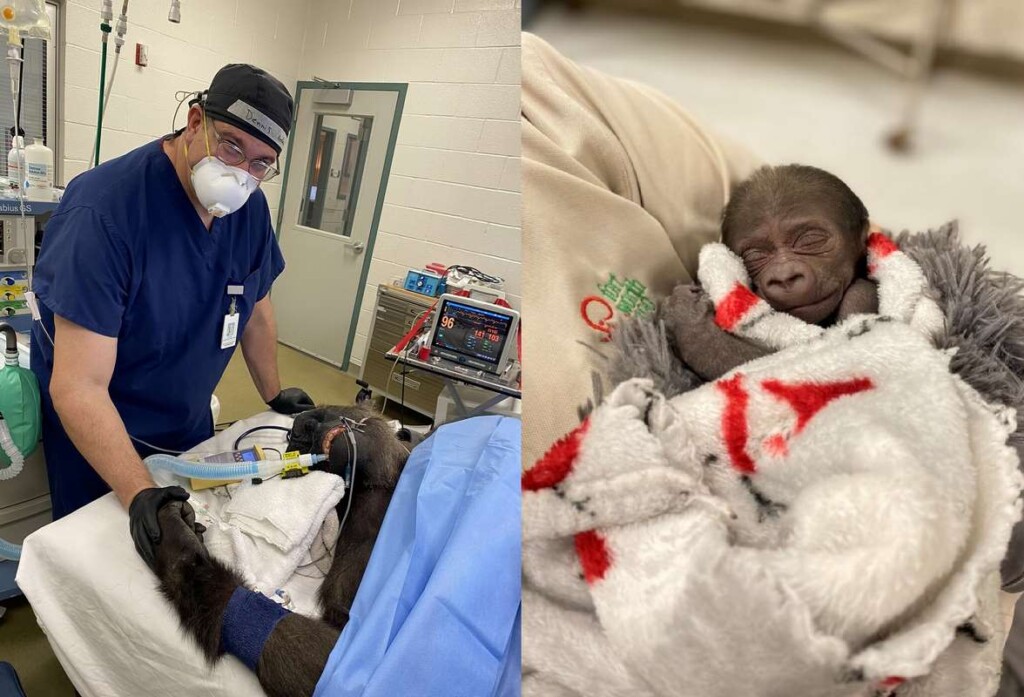
Zookeepers then called in a team of gynecologists who usually spend their time looking after pregnant women, to assist with the urgent delivery. Arriving at the zoo, they determined that, if it were a human woman in the same condition, an emergency C-section would be required to save the life of both infant and mother.

Alongside vets, they proceeded with the operation when Sekani was five weeks before term. The newborn required urgent resuscitation, and the event became the highlight of the team members’ respective careers.

Dr. Jamie Walker Erwin led the surgery with neonatologist Dr. Robert Ursprung and Dr. Dennis Occkiogrosso—none of whom had ever worked with primates or apes before.

The baby was named Jameela, which means “beautiful” in Swahili, but also after Dr. Jamie.

“Taking part in delivering Sekani’s infant via cesarean section was one of the highlights of my entire career as an OB-GYN,” Dr. Erwin said in a statement. “It is an honor and privilege to assist with care for this endangered species and to share my expertise with the veterinary staff at the Fort Worth Zoo.”

It is the third gorilla birth in the zoo’s 115-year history but the first gorilla to be born via cesarean section.

YOU MAY ALSO LIKE:  Baby That Had Spinal Surgery While in the Womb Can Now Walk and Run

The infant required immediate intervention and Dr. Ursprung assisted the Fort Worth Zoo team with resuscitation and stabilization, respiratory support, and radiographs.

Sekani the gorilla and her infant – credit Fort Worth Zoo via SWNS

“It was incredible how similar this mother-infant pair was compared to what I see in the hospital for babies born under similar circumstances,” said Dr. Ursprung. “The baby needed critical respiratory support for a few hours post-delivery, but as she transitioned to life outside the womb, she stabilized quite nicely.”

“She had so many features typical of a slightly premature human baby.”

Fort Worth Zoo primate keepers, along with veterinary and nutrition staff, began around-the-clock care and feeding of the little gorilla while Sekani recovered.

Jameela the gorilla and Dr. Erwin – credit Fort Worth Zoo via SWNS

Despite repeated attempts to reunite the mother and baby, Sekani showed little interest in caring for her baby, they said.

Zoo experts suspect Sekani never experienced the necessary hormonal cues that come during natural and full-term birth.

MORE DRAMATIC ZOO BIRTHS: Birth of Rare Eastern Black Rhino is Cause for Celebration–Watch the Amazing Birth Caught on Camera, With Only 1,000 in Wild

After two weeks and several unsuccessful reunification attempts, staff started to train a 24-year-old female gorilla named Gracie to become a surrogate mother.

Gracie has two offspring of her own, including one-year-old Bruno, and is already trained to “present” her baby up to keepers for a visual examination.

WATCH the procedure take place, and the sweetness that followed… 

SHARE These Dramatic Scenes With Your Friends On Social Media…

“The roots of all goodness lie in the soil of appreciation for goodness.” – Dalai Lama

Aaron Burden

Quote of the Day: “The roots of all goodness lie in the soil of appreciation for goodness.” – Dalai Lama

Photo by: Aaron Burden

With a new inspirational quote every day, atop the perfect photo—collected and archived on our Quotes page—why not bookmark GNN.org for a daily uplift?