












Reaching a stellar milestone just before Earth Day, Ecosia, the nonprofit search engine, is celebrating 250 million trees planted worldwide, becoming the world’s largest planter of native trees.
Since its founding in 2009, Ecosia has built the world’s largest network of local reforestation operations, numbering more than 200,000 tree planters and 125 organizations worldwide. Users’ clicks and searches, as well as the ad revenue they generate, translate to revenue which the company uses to organize tree planting.
These partnerships have allowed the tech company to focus on working with local experts to plant 1,600 native tree species, including 144 endangered or vulnerable species making them the leading contributors to threatened-tree conservation. These efforts are helping biodiversity hotspots recover and restoring ecosystems in communities for generations to come.
Founder Christian Kroll—together with Germany’s Federal Minister for the Environment—planted a tree to symbolize the 250 million milestone in front of the German federal parliament, the Reichstag, in Berlin where Ecosia is headquartered.
“All of our successes have come from this powerful on-the-ground movement, ” said Christian Kroll, founder of Ecosia. “From one click in 2009 to 250 million trees today, our global community supercharged our climate action.”
GNN has previously reported on Ecosia. The search online often targets countries that are the most biodiverse, where tree loss directly corresponds with species loss. This has caused them to launch projects in Nicaragua and Peru, Burkina Faso and Malawi, and Indonesia and Australia.
In 2018, for example, they created a tree nursery for 200,000 trees in Madagascar, to help create a forest corridor leading from an isolated habitat to the ocean. In 2019 they created a forest agriculture project in Borneo, to prevent locals selling the land to oil palm development.
That same year, Ecosia took measures to ensure that it can never be sold and that no one, including the founder, can profit or receive dividends from the company. This means that the business is set up purely to benefit the planet.
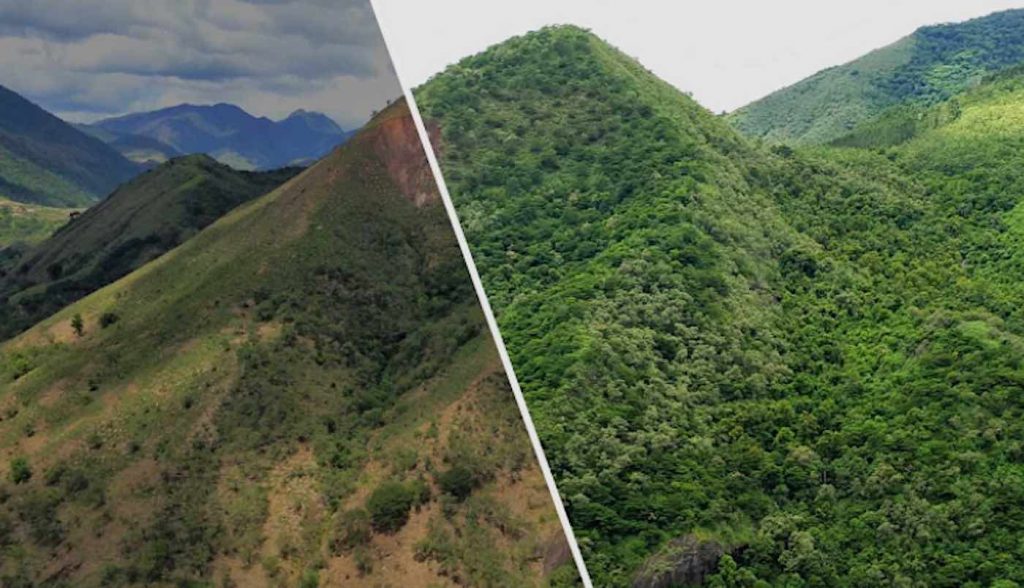
Growing trees and forests is a long term game that is more than just planting seedings. Some of Ecosia’s trees get planted because they guarantee future revenue for the community (e.g. fruit and nut trees or trees that boost harvest yields); these provide a strong incentive for the beneficiaries of these products to protect the trees long term. Other reforestation work provides returns on investment for financers. These are the most well funded.
However, not every tree has a straightforward financial return of investment and therefore making a case for long term investment is not clear cut. In fact, much of the deforestation today is the result of trees not being worth much in the eyes of economics.
RELATED: Peru is Protecting Machu Picchu By Planting One Million Trees to Guard Against Mudslides and Fires
This is why Ecosia’s work is so critical to reforestation. It can step in where return-seeking capital won’t. This allows vital ecosystems and communities to be supported without greenwashing or offsetting motives. A purpose company with only one shareholder: the planet.
Unique to any other tech company, Ecosia has a dedicated Tree Team; a group of forestry and nature conservation experts, social business experts, economists and social scientists, focused on finding the right partners to work with, collaborating with communities, and planting the right species to ensure our trees thrive. It is the only company in the world with a CTPO: Chief Tree Planting Officer.
MORE STORIES ABOUT TREES: Planting 30,000 Trees Surpasses Goal for Regenerating a Rainforest on the Isle of Man
“We care about our trees long term, not just for some pretty pictures of young saplings,” shared Pieter van Midwoud, Ecosia’s CTPO. “We have developed a vigorous monitoring program to analyse if projects that we started would benefit from further support. Ecosia as a purpose company is best placed to do this long term and we hope to grow millions of more trees.”
The next chapter for Ecosia is to make a bigger move into landscape restoration. Rather than solely assessing projects on factors that affect the long term benefits of trees—such as the water supply, fuel access and financial sustainability—the company has started to take a more active role in influencing those factors.
“We know that collaborating together with the local community is the only way to run a successful restoration project long term, so combining tree planting with complementary interventions that enable farmers and nature to have a bigger impact will be further strengthened,” said van Midwoud.
SHARE This Story With Your Friends, And Maybe Change Your Default Search Engine…
Actions speak louder than words. I’d rather see one person planting trees and shrubs than a thousand people talking about it.