











58 years ago today, Planet of the Apes starring Charlton Heston was released in theaters. In the film, an astronaut crew crash-lands on a strange planet in the distant future. Although the planet appears desolate at first, the surviving crew members stumble upon a society in which apes have evolved into creatures with human-like intelligence and speech. The film was a box-office hit, earning a lifetime domestic gross of $33.3 million. It was groundbreaking for its prosthetic makeup techniques by artist John Chambers and was well received by audiences and critics, particularly for the score. READ more about the (spoiler) “statue in the sand moment”… (1968)
Numbers of Rare Butterfly Eggs are Best on Record After Hedges are Allowed to Grow Wild

Numbers of rare butterfly eggs have skyrocketed in South Wales after landowners let their hedgerows grow wild.
Volunteers for the UK nonprofit Butterfly Conservation have counted record tallies of Brown Hairstreak eggs this winter around the Welsh county of Carmarthenshire.
The success, they say, is down to two partner organizations that agreed to reduce the amount they cut back on their hedgerows, which has allowed the Brown Hairstreak to thrive.
“After a decade of heartache for Brown Hairstreaks in Carmarthenshire’s Tywi valley, there is at last signs of an upturn,” said Richard Smith, who has volunteered with Butterfly Conservation for more than 30 years.
Once abundant across the UK, the butterfly declined substantially due to farmers and landowners cutting back their preferred shrubbery, called ‘flailing’, which destroys young shoots of the spiky blackthorn bush.
The species will only lay its eggs on these green shoots, and since 2010, they—and the butterflies—had almost totally disappeared in the region.

“When we found a small remnant population in 2021 just west of Llandeilo, we conducted annual egg counts after help from two key partners, the National Trust team at Dinefwr and the South Wales Trunk Road Agency, who both got more blackthorn planted on their respective estates and got those two sites completely protected from annual flailing,” said Smith.
“Results have been improving year on year, and this winter has seen 50% increases on such protected land.”
Butterfly Conservation volunteers went out each winter for years, armed with magnifying glasses, and spent hours hunting the hedges for the tiny white eggs.
This winter, their years of hard work have paid off.

MORE BUTTERFLY GOOD NEWS:
• Number of Monarch Butterflies Wintering in Mexico is Way Up–Doubling the Forest Acreage Over Last Year
• Efforts to Save Endangered Blue Butterfly Quadruples its Population–but Also Saves a Lupine from Extinction
“Small changes to the way we look after our hedges can help wildlife thrive and hedges function better for nature and people,” said Dan Hoare, Butterfly Conservation’s Director of Nature Recovery.
“We don’t want to stop anyone managing their hedgerows, but we would love more landowners to try cutting back on their cutting back.
“If hedgerows are only trimmed once every two years, or even every three years, it could make an enormous difference to the survival of the Brown Hairstreak and help many other species as well. The lovely Brown Hairstreak is an indicator of getting that balance right.”
FLY THIS GREAT NEWS to Nature Lovers on Social Media…
Scents From 3,500 Years Ago Recreated to Give Museum Visitors a Whiff of History


Scents from the past are being recreated using state of the art technology to give museum visitors a whiff of history.
Bio-molecular archaeology can bring ancient odors to life and allow people to breathe in the past.
Advances in the field have shown that ancient objects can retain the “molecular fingerprints” of past aromatic practices—and scientists say those molecules provide “unprecedented” insight into ancient perfumery, medicine, ritual, and daily life.
In a new study, published this week in the journal Frontiers in Environmental Archaeology, researchers showed how museums can use molecular evidence to engage audiences with the sensory worlds of the past.
The team, led by archeo-chemist Dr Barbara Huber, combined their expertise to create a new way of converting bio-molecular data into accessible, visitor-ready olfactory recreations.
“This research represents a significant shift in how scientific results can be shared,” said Dr. Huber this week, from the Max Planck Institute of Geo-anthropology and the University of Tübingen, Germany.
Dr. Huber collaborated with scent-based consultant Sofia Collette Ehrich to breathe life into scientific data with perfumery practices.
Building on that foundation, perfumer Carole Calvez developed a series of formulations that translated ancient chemical signatures into a scent suitable for museum environments.
“Bio-molecular data provide essential clues, but the perfumer must translate chemical information into a complete and coherent olfactory experience that evokes the complexity of the original material, rather than just its individual components,” she said.

“The real challenge lies in imagining the scent as a whole,” she said.
The team developed two ways for presenting ancient odors in public settings.
Most recently, they created a scented card, which quickly became an integral part of guided tours at the Museum August Kestner in Hanover, Germany. The paper holds the essence of the reproduced scent after it is inserted onto the card via scent printing.
ALSO SEE: Priestess Statue Found Preserved in Walls of Pompeii, Set to Star in New Exhibit on Roman Women

They also erected a fixed scent diffusion station (pictured above the card) that was integrated into an exhibition two years ago called, The Scent of the Afterlife, to provide a recreation of the aromas that accompanied the ancient Egyptian mummification process.
The team’s aroma analysis centered on the mummification substances used to embalm the noble lady Senetnay in the 18th dynasty, circa 1450 BCE.
“We analyzed balm residues found in two canopic jars from the mummification equipment,” said Dr. Huber. The team found that the balms contained a blend of beeswax, plant oil, fats, bitumen, Pinaceae resins (most likely larch resin), a balsamic substance, and dammar or Pistacia tree resin.
“These complex and diverse ingredients, unique to this early time period, offer a novel understanding of the sophisticated mummification practices and Egypt’s far-reaching trade-routes,” says Christian E. Loeben, Egyptologist and curator at the Museum August Kestner.
“The ingredients in the balm make it clear that the ancient Egyptians were sourcing materials from beyond their realm from an early date,” says Prof. Nicole Boivin, senior researcher on the project. “The number of imported ingredients in her balm also highlights Senetnay’s importance as a key member of the pharaoh’s inner circle.”
ART MYSTERY SOLVED: Mysterious Tunnels Sketched by Da Vinci Confirmed After 500 Years to be Hidden Under a Castle
The scent of a mummy
“Scent provides a new approach to mummification, moving away from the scare factor and horror movie clichés towards an appreciation of the motivations behind the actions, and the desired results.”
The fixed scent station was installed in the Moesgaard Museum in Aarhus, Denmark, to accompany the exhibition Ancient Egypt – Obsessed with Life.
“The scent station transformed how visitors understood embalming,” said curator Dr. Steffen Terp Laursen.
“Smell added an emotional and sensory depth that text labels alone could never provide.”
This work demonstrates how molecular traces of the past can be transformed into meaningful cultural experiences.
Ms. Ehrich says they can offer museums compelling new tools for bringing visitors closer to past environments and their peoples through engaging the senses.
Lead Pollution Has Dropped 100-Fold in the U.S. Over the Last Century


Lead pollution today compared to 100 years ago has dramatically declined—by 100-fold over the last century—according to new research.
Lead is a dangerous neurotoxin that accumulates in human tissues and is linked to developmental deficits in children. Due to the health risks, the United States and other countries start phasing out lead in the 1970s, with the US achieving total elimination for on-road vehicles by 1996.
The UK followed, banning general sale of leaded auto fuel by early 2000—and the last country, Algeria, stopped sales in July 2021.
Researchers examined hair samples from local residents going back a century to document how banning lead in gasoline has been a major success in reducing environmental pollution.
Before the 1970 establishment of the EPA, the Environmental Protection Agency, Americans lived in communities awash with lead from industrial smokestacks, paint, water pipes, and—most significantly—exhaust emissions.
The analysis of hair samples conducted by scientists at the University of Utah show “precipitous” reductions in lead levels since 1916.
“We were able to show through our hair samples what the lead concentrations were before and after the establishment of regulations by the EPA,” said University of Utah Professor Ken Smith.
“Back when the regulations were absent, the lead levels were about 100 times higher than they were after the regulations.”
The study showed that after the Nixon administration banned lead in gasoline in the 1970s, even as fuel consumption escalated in the US, the concentrations of lead in the hair samples plummeted, from as high as 100 parts per million (ppm) to 10 ppm by 1990.
And in 2024, the level was less than one part per million.
MORE POSITIVE TRENDS:
• New York City Had the Lowest Number of Shootings in its History Last Year
• Brazil Sees 65% Drop in Amazon Area Burned by Fire—Lowest Since Monitoring Began
• Fires and Fire Deaths from Almost All Causes Fall by Two-Thirds Since 1980
He says the findings, published in the journal Proceedings of the National Academy of Sciences (PNAS), underline the vital role of environmental regulations in protecting public health.
The study notes that US lead laws are now being weakened by a White House administration moving to ease environmental protections.
“The lesson is: those regulations have been very important,” said study co-author Professor Thure Cerling.
“Sometimes they seem onerous and mean that industry can’t do exactly what they’d like to do when they want to do it, but it’s had really, really positive effects.”
Lead is the heaviest of heavy metals and, like mercury and arsenic, accumulate in living tissue, and are toxic at even low levels. By the 1970s its toxicity became well established and EPA regulations began phasing it out of paint, pipes, gasoline and other consumer products.
The researchers acquired multiple hair samples from 48 participants—both recent and when they were younger—which offered a window into lead levels along Utah’s ‘Wasatch Front’, which historically experienced heavy lead emissions from industrial sources.
Some participants were even able to find ancestors’ hair preserved in family scrapbooks dating as far back as a century.
“The Utah part of this is so interesting because of the way people keep track of their family history,” said Prof. Smith.
“I don’t know that you could do this in New York or Florida.”
He explained that this particular Utah region supported a vibrant metal smelting industry through most of the 20th Century. Most of Utah’s smelters were shut down by the 1970s, after the EPA clamped down on the use of lead in consumer products.
The research team ran the hair samples through mass spectrometry equipment and says the surface of the hair is special.
“Lead is not lost over time,” said research team member Professor Diego Fernandez. “It is concentrated and accumulated in the surface. It tells you about that overall environmental exposure.”
MORE GOOD NEWS: The Baltimore Homicide Rate Has Fallen to Near 50-Year Low
Before the 1970s, gasoline contained around two grams of lead per gallon, which added up to nearly two pounds of lead per person a year released into the environment.
“It’s in the air for a number of days and it absorbs into your hair. You breathe it and it goes into your lungs,” explained Prof. Cerling.
But, thanks to federal regulations, the median blood lead level today in children, aged 1–5 years, fell from over 15 in the late 1970s to just 0.6 in 2020.
SHARE THE UPLIFTING TREND With Doomsday Friends on Social Media…

Your Weekly Horoscope – ‘Free Will Astrology’ by Rob Brezsny
Our partner Rob Brezsny, who has a new book out, Astrology Is Real: Revelations from My Life as an Oracle, provides his weekly wisdom to enlighten our thinking and motivate our mood. Rob’s Free Will Astrology, is a syndicated weekly column appearing in over a hundred publications. He is also the author of Pronoia Is the Antidote for Paranoia: How All of Creation Is Conspiring To Shower You with Blessings. (A free preview of the book is available here.)
Here is your weekly horoscope…

FREE WILL ASTROLOGY – Week of February 7, 2026
Copyright by Rob Brezsny, FreeWillAstrology.com

AQUARIUS (Jan. 20-Feb. 18):
The coming weeks will challenge you to think with tenderness and feel with clarity. You’ll be called on to stay sharply alert even as you remain loose, kind, and at ease. Your good fortune will expand as you open your awareness wider, while also firming up the boundaries that keep mean people from bothering you. The really good news is that cosmic forces are lining up to guide you and coach you in exactly these skills. You are primed to explore intriguing paradoxes and contradictions that have valuable lessons.

PISCES (Feb. 19-March 20):
In alchemy, solve et coagula is a Latin phrase translated as “dissolve and coagulate.” It means that transformation must begin with the process of breaking down before any building begins. You can’t skip over the dissolving phase and jump straight into creating the new structure. I mention this, dear Pisces, because I believe you’re now in the dissolving phase. It might feel destabilizing, even a bit unnerving, but I urge you to stick with it. When the moment comes to construct the beautiful new forms, you will know. But that time isn’t yet. Keep dissolving a while longer.

ARIES (March 21-April 19):
I’m thrilled by your genius for initiating what others only dream about. I celebrate your holy impatience with fakery and your refusal to waste precious life-force on enterprises that have gone stale. I’m in awe of how you make fire your ally rather than your enemy, wielding it not to destroy but to forge new realities from the raw materials of possibility. Everything I just described will be in your wheelhouse during the coming weeks.

TAURUS (April 20-May 20):
How do I love you? Let me count some of the ways. 1. Your patience is masterful. You understand that some treasures can’t be rushed and that many beautiful things require slow nurturing through your devoted attention. 2. You have a knack for inducing the mundane world to reveal its small miracles and spiritual secrets. 3. You practice lucid loyalty without being in bondage to the past. You honor your history even as you make room for the future. 4. You know when to cling tightly to what needs to be protected and preserved, and you know when to gracefully loosen your grip to let everything breathe. In the coming weeks, all these superpowers of yours will be especially available to you and the people you care for.

GEMINI (May 21-June 20):
In carpentry, there’s a technique called “kerf bending.” It involves making a series of small cuts in wood so it can curve without breaking. The cuts weaken the material in one sense, but they make it flexible enough to create shapes that would otherwise be impossible. I suspect you’re being kerf-bent right now, Gemini. Life is making small nicks in your certainties, your plans, and your self-image. It might feel like you’re being diminished, but you’re actually being made flexible enough to bend into a new form. Don’t interpret the nicks as damage. They’re preparation for adjustments you can’t see yet. Let yourself be shaped.

CANCER (June 21-July 22):
In Irish folklore, “thin places” are situations or areas where the material and spiritual worlds overlap. They aren’t always geographical. A thin place may be a moment: like the pre-dawn hour between sleeping and waking, or the silence after someone says “I love you” for the first time. I believe you’re living in a thin place right now, Cancer. The boundary between your inner world and outer circumstances is more porous than usual. This means your emotions may affect your environment more directly. Your intuitions will be even more accurate than usual, and your nightly dreams will provide you with practical clues. Be alert. Magic will be available if you notice it.

LEO (July 23-Aug. 22):
In traditional Korean jogakbo, scraps of fabric too small to be useful alone are stitched together into a piece that’s both functional and beautiful. Every fragment contributes to the whole. I encourage you to treat your current life this way, Leo. Don’t dismiss iffy or unfinished experiences as “wasted time.” Instead, see if you can weave all the bits and scraps together into a valuable lesson or asset. Prediction: I foresee a lovely jogakbo in your future.

VIRGO (Aug. 23-Sept. 22):
The Maori people of New Zealand practice mirimiri, a form of healing that works not by fighting disease but by restoring flow. The technique involves removing blockages so life force can move freely again. I think you need the equivalent of mirimiri, Virgo. There’s a small but non-trivial obstruction in your life. The good news is that you now have the power to figure out where the flow got stuck and then gently coax it back into motion. Let the healing begin! Here’s a good way to begin: Vow that you won’t hold yourself back from enjoying your life to the max.

LIBRA (Sept. 23-Oct. 22):
In the coming weeks, I encourage you to prioritize mirth, revelry, and gratification. For starters, you could invite kindred spirits to join you in pursuing experimental forms of pleasure. Have fun riffing and brainstorming about feeling good in ways you’ve never tried or even imagined before. Seek out stories from other explorers of bliss and delight who can inspire you to expand your sense of wonder. Then, with your mind as open as your heart, give yourself the freedom to enjoy as many playful adventures and evocative amusements as you dare.

SCORPIO (Oct. 23-Nov. 21):
In the Inuktitut language of the Intuit people, the word ajurnarmat is translated as “it can’t be helped.” It acknowledges forces at work beyond human control. Rather than pure resignation, it reflects an attitude of accepting what can’t be changed, which helps people conserve energy and adapt creatively to challenging circumstances. So for example, when hunters encounter impossible ice conditions, ajurnamat allows them to refrain from forcing the situation and notice what may actually be possible. I suspect you’re facing your own ajurnarmat, Scorpio. Your breakthrough will emerge as soon as you admit the truth of what’s happening and allow your perception to shift. What looks unnavigable from one angle may reveal a solution if you approach it from another direction. Practice strategic surrender.

SAGITTARIUS (Nov. 22-Dec. 21):
Your hunger for meaning is admirable! I love it. I never want you to mute your drive to discover what’s interesting and useful. But now and then, the hot intensity of your quest can make you feel that nothing is ever enough. You get into the habit of always looking past what’s actually here and being obsessed with what you imagine should be or could be there. In the coming days, dear Sagittarius, I invite you to avoid that tendency. Rather than compulsively pursuing high adventure and vast vistas, focus on the sweet, intimate details. The wisdom you yearn for might be embedded in ordinariness.

CAPRICORN (Dec. 22-Jan. 19):
In architecture, a “flying buttress” is an external support system that allows a massive building like a cathedral to reach greater heights without collapsing under its own weight. Because the buttress is partly open to the air rather than solidly built against the wall from top to bottom, it appears to “fly,” which is where the name comes from. In the coming weeks, I encourage you Capricorns to acquire your own equivalent of at least one new flying buttress. Who or what could this be? A collaborator who shares the load? A new form of discipline that provides scaffolding? A truth you finally speak aloud that lets others help you? To get the process started, shed any belief you have that strength means carrying everything all by yourself.
WANT MORE? Listen to Rob’s EXPANDED AUDIO HOROSCOPES, 4-5 minute meditations on the current state of your destiny — or subscribe to his unique daily text message service at: RealAstrology.com
(Zodiac images by Numerologysign.com, CC license)
SHARE The Wisdom With Friends Who Are Stars in Your Life on Social Media…

“We love life, not because we are used to living but because we are used to loving.” – Friedrich Nietzsche
Quote of the Day: “We love life, not because we are used to living but because we are used to loving.” – Friedrich Nietzsche
Photo by: Patty Brito
With a new inspirational quote every day, atop the perfect photo—collected and archived on our Quote of the Day page—why not bookmark GNN.org for a daily uplift?

Good News in History, February 7
42 years ago today, astronaut Bruce McCandless II drifted away from the space shuttle Challenger as the first human to undertake an untethered space walk. He used NASA’s Manned Maneuvering Unit (MMU) to control his movements rather than being joined to the craft by a safety tether. A picture of McCandless floating in space some 320 feet (98 meters) from the shuttle has become one of the most popular in the NASA archive. READ more about the nerve-wracking event… (1984)
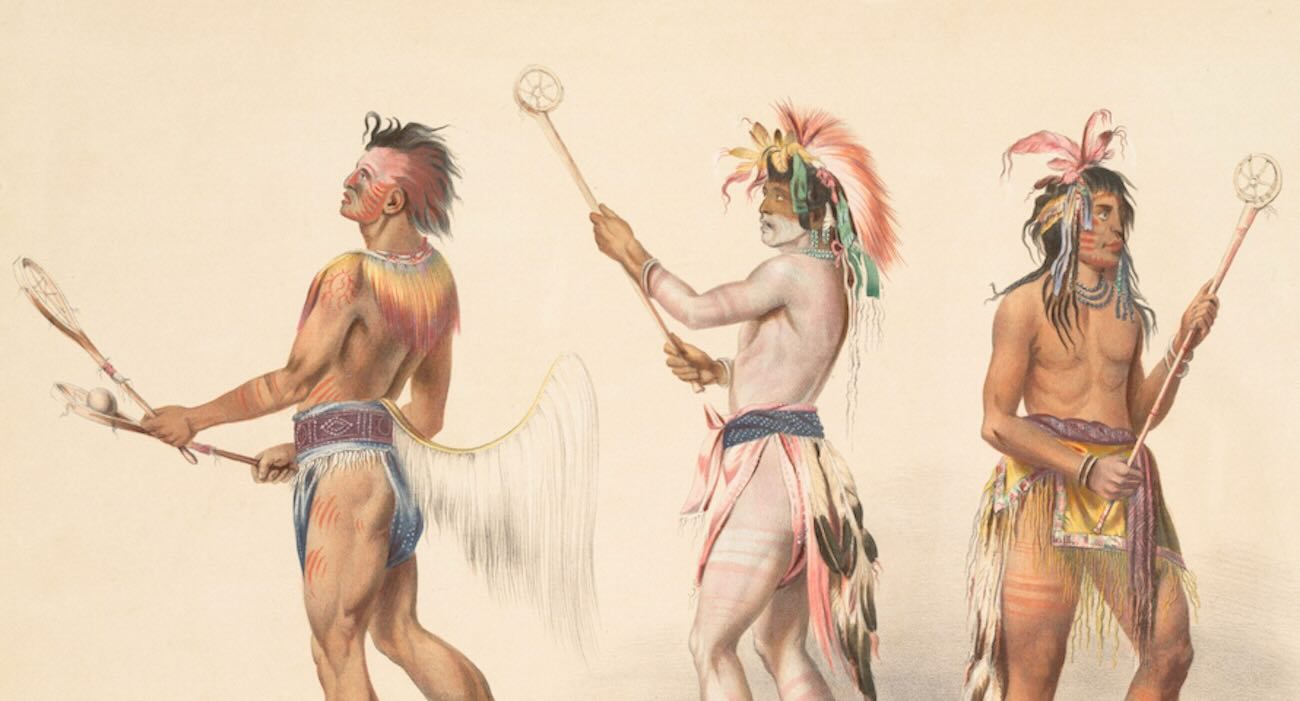
Forgotten Centuries-Old Ball Game Making a Surprise Comeback After 50 years

A long-lost sport once feared dead is being dusted off and played again in the villages where it was born.
“Knurr-and-spell” was once played widely in pubs across England’s South Yorkshire, but had all but vanished by the 1970s. The quirky ball game which bears a similarity to golf sees players hit a clay ball with a specially fashioned stick.
The winner is the person who can hit the ball—called the knurr or “pottie”—the farthest. The knurr sits on a stressed iron rod, which is triggered like a catapult by a quick tap of the player’s stick to throw the ball up in the air, at which point the player takes a swing at it.
Boz Davison, from Crane Moor near the county town of Barnsley is on a mission to bring back the game which he said suffered from elitism.
“I came across a book with some pictures of knurr-and-spell from 1933,” he told England’s Southwest News Service. “In the series of books called Played In Britain, it was described as a ‘defunct game.’ That was like red rag to a bull.”
Knurr-and-spell is believed to have its roots in the Germanic world, in part because of the name—”knurren,” meaning a wooden ball and “spielen,” meaning to play. A similar game is played in Switzerland.
While the traditionally carved, flexible sticks of hickory or ash are now almost impossible to come by, that has not deterred Mr. Davison, who first started by looking at how to make some of the equipment himself, and relaxing the rules a bit.

Among those who have been watching Mr. Davison’s efforts with interest include former players from knurr-and-spell’s last revival in the 1970s.
“There’s a player at Grenoside, Eric Wilson, who won the World Championship in 1969, and he’s been… and another player, Tommy Chambers, who played in the 1972 World Championships,” said Davison. “We’ve played 4 games so far.”
Davison has relaxed the rules around the sticks for his version of the revival, he explained.
MORE STORIES LIKE THIS: In Belize, Maya Descendants Are Reviving an Ancient, Sacred Ballgame
“You had to have certain equipment and someone who could make the sticks. The sticks are a nightmare, if you had a go at trying to make them it would take you at least a week,” he said. “Years ago, people used to walk around with a walking stick practicing. All that has gone, the techniques have all gone.”
For his game days, he permits hockey sticks and hurling sticks, as they’re similar weight and heft to a knurr-and-spell stick.
PLAYED IN BRITAIN: Visitors to Scotland Can Play ‘Real’ Tennis’ on the World’s Oldest Court Dating Back 500 Years
The next formal match is planned for Leeds later this year, and Davison hopes to set up games in Lancashire to reignite the classic Roses rivalry, referring to any match in any sport between Yorkshire and Lancashire.
While in the 1970s, players might have been less concerned about health and safety than people today, Davison has ensured everyone is covered having taken out a special public liability insurance in case someone takes a whack from one of the knurrs.
WATCH the game and its continental cousin games below…
SHARE This Story With Your Friends Who Love Obscure Trivia On Social Media…

Hundreds of Ponds Restored Across Iowa Bring This Endangered Fish Back, Along with 100s of Species


Across Iowa, a tiny fish has inspired an enormous conservation program that has seen hundreds of ponds restored to their natural state.
Though originally for the sake of this small federally-endangered fish, the lakelets soon demonstrated their power to alleviate the state’s nutrient runoff problems as well.
The Topeka shiner is from the minnow family and was once found widely across Iowa, which despite its reputation as a prairie state, used to be covered by wetlands. Heavy rainfall would cut new channels in the meandering course of rivers that would change their path, leaving wide bends cut off from the main flow.
These oxbow lakes, as they’re called for the U-shape, formed a micro wetland ecosystem that covered 11% of Iowa before agriculture. That transformation left over 10,000 of these water bodies barren and erased, and with every one that thusly vanished, the little silver and orange shiner vanished with them.
In 1998, the shiner was placed on the Endangered Species List, and in 2000, the US Fish and Wildlife Service worked together with the Iowa chapter of the Nature Conservancy to identify and begin restoring some of these oxbow lakes in order to save the shiner.
After the first 20 or so of these lakelets were restored, identified by a scar they would leave several dozen meters beyond the zenith in a river bend, either existing or historical, conservationists began to see how agricultural pollutants in waterways were being washed out of streams to settle in the mud of the oxbows.
“It really is a success story,” said Karen Wilke, associate director of freshwater at the Nature Conservancy in Iowa. “Now we’re not just doing it for Topeka shiner, but we’re doing it for water quality as well.”
Most importantly, the shiner returned along with the oxbows. But the benefits—which many landowners were happy to gain—go far beyond the shiner, with some 57 fish species and 81 bird species documented living in the restored oxbow wetlands, and beyond that—mussels, turtles, amphibians, beavers, and even river otters.
“I think all the species are hungry to have this habitat come back, hungry to have more water on the landscape,” Wilke told Inside Climate News.
ENDANGERED SPECIES IN AMERICA: Locally Extinct for a Century, Bay Scallops Thriving Again on Virginia Shore of Chesapeake Bay
The work has cost tens of thousands of dollars per wetland, but has been picked up by a combination of private capital, state, and federal grants, so as to ensure landowners have all the incentive and none of the downside.
In 2011, the Iowa Soybean Association trade group came on board, joining forces to restore more oxbows in the Boone River watershed in north-central Iowa, which lent new vigor to the project.
RESTORE IT AND THEY WILL COME: Astonishing 916% Increase in Breeding Birds Seen at England’s Premier Rewilding Project
Topeka shiners have been documented in 60% of the over 200 oxbow lakes restored across Iowa’s landscape, 97% of which is privately-owned.
A 2021 review of the shiner’s status recommended it be moved from “endangered” to “threatened,” which would represent yet another success story for the Endangered Species List, one of the most effective wildlife conservation measures ever put in place by any nation.
SHARE This Inspiring Rewilding Story Across Iowa’s Amber Waves…
Right to Build Offshore Wind Power Upheld by US Judge for 5th Time Since Attempted White House Ban

A district court judge struck down the stop-work order on the Sunrise Wind project, marking the fifth time courts have overturned the Department of Interior’s order halting work on 5 offshore wind projects under construction along America’s eastern seaboard.
Sunrise Wind now joins Coastal Virginia Wind, Empire Wind, Revolution Wind and Vineyard Wind, all of which have been cleared to resume work. Collectively, the projects will provide enough power for roughly 2.5 million homes and businesses on the East Coast.
Ronald Reagan-appointed District Judge Royce C. Lamberth, who was presiding over the Sunrise Wind case, ruled that as it was losing $2.5 million a day while it sat idle, the project would “be irreparably harmed” unless work is allowed to continue during the legal fight.
The lead firm on the project, Denmark’s Orsted, has already been invoiced $7 billion, and work is only 45% complete. “I find that Sunrise Wind faced greater harms by a total pause of construction than the government faces from continued mitigation efforts while the construction continues,” said Lamberth.
Last month, Judge Lamberth ruled in similar favor to the Revolution Wind project off the coast of Rhode Island.
The three other projects are each owned and under construction by Dominion Energy, Norway’s Equinor, and Spain’s Iberdrola, and each have been granted their respective requests for preliminary injunctions to halt the stop-work orders.
“Because the East Coast relies so heavily on volatile natural gas, adding more cost-stable wind power to the grid is essential for increasing supply and keeping bills down,” wrote Environmental Defense Fund Director Ted Kelly, who supported the court challenge.
“Offshore wind delivers immense value during electricity crunches in the winter because ocean winds are often at their strongest. The already-built portion of Vineyard Wind saved New Englanders $2 million per-day in energy costs during a December cold snap.”
MORE STORIES LIKE THIS: Flint Finishes Replacing 11,000 Lead Pipes, Concluding Activists’ Decade-Long Effort to Secure Clean Water
Vineyard Wind is already 95% complete, meaning the company has spent billions, investors will have contributed tens of millions, banks will have made hundreds of millions in loans, and all of them will be—such is the nature of large-infrastructure economics—expecting a return on those investments.
No American executive should be able to tell a company and its investors what they should and shouldn’t spend their time and money building if permits and permission from the relevant agencies have already been granted. If offshore wind farms aren’t profitable as the Administration has claimed, than the best and quintessentially American action would be to allow them to fail, for the investors to learn their mistakes, and for the firm to have its assets auctioned in bankruptcy court to those wiser and more capable of using them.
WIND DEVELOPMENTS: Two-Headed Wind Turbine Could Solve Every Challenge in the Offshore Industry
Instead, the Administration has attempted to block the various firms, citing national security concerns, while failing providing evidence or details of those concerns.
Since Judge Lamberth was presiding over the Sunrise Wind project, he was permitted to view the classified national security assessment, and said “the administration failed to explain which features or activities related to the Sunrise Wind project were implicated in the new security issues [and] also didn’t explain how these concerns differ from the same ones that the developers committed to mitigating in an earlier agreement,” Japan Times reported.
SHARE This Big Win For Business, Wind Power, And The East Coast…
Childbirths and Marriages Are Up and Divorces Are Down in World’s Least Fertile Country

At 0.77 children per woman in 2025, South Korea was the world’s least fertile country.
Perhaps heralding a reversal of fortune, though, childbirths have grown at the fastest pace in 18 years on the Peninsula, with a 6.2% increase totaling 233,708 babies between January and November.
The number of divorces, meanwhile, went down 9.8% on-year to 6,890 by November.
It’s a big problem the world over, receives virtually no attention compared to other existential issues, and demonstrates cross-cultural spread: most native populations aren’t having enough babies.
No region is more greatly affected by this phenomenon than East Asia, where Taiwan, Hong Kong, Singapore, South Korea, and China make up 5 of the 10 least fertile countries on Earth.
Hopefully, this sharp increase in South Korea can be sustained. In November alone, the Ministry of Statistics reported, 20,710 babies were born, the highest for the month since 2019, and up 3.1% from 20,083 a year earlier.
2025’s mini baby boom pushed the fertility rate to 0.79. It’s believed that economic assistance for childcare has helped incentivize couples desiring children but who were wary of the economic burden in the high-cost country.
MORE STORIES LIKE THIS:
- Incredible Results from 20 Years of Cancer Research Boost National Survival Rates to 7 in 10
- People Globally Are Living Better Lives, More Hopeful About the Future: We Know Because They Said So
- Iraq is ‘Unrecognizable and Remarkable’ After Decades of Conflict – UN Coordinator Shows Why
Yet more joy for the nation’s future came from data on marriages, which were also up year-over-year. Korea Times reports that increases in marriage rates tend to be followed by increases in childbirths, since pregnancy out of wedlock is rare in the country.
Marriage rates increased in November by 2.7% on-year to 19,079, “marking the 20th consecutive month of growth,” Korea Times reports, citing an increase in the percentage of the population entering their 30s.
SHARE This Positive Turnaround For The Korean Race With Your Friends…
“Fear is met and destroyed with courage.” – James F. Bell
Quote of the Day: “Fear is met and destroyed with courage.” – James F. Bell
Photo by: Joshua Earle For Unsplash+
With a new inspirational quote every day, atop the perfect photo—collected and archived on our Quote of the Day page—why not bookmark GNN.org for a daily uplift?

Good News in History, February 6
55 years ago today, Apollo 14 astronaut Alan Shepard did one last thing before leaving the surface of the moon, something he had planned for months—he teed up a golf shot. The NASA commander brought a six-iron club head on board inside his space suit pocket which had a fitting on it for attaching to the handle of a lunar sample scoop. In a constricting space suit, he topped and sliced his first two swings, but finally hit two balls, driving them “miles and miles and miles,” he told mission control, who listened bemusedly. WATCH the actual golf swings on film… (1971)
‘Green-Thumb’ Miracles Gave These Monks an Eco-Authority in Medieval Italy New Research Shows


A scorched cherry twig miraculously sprouting; a diseased swamp restored to ‘peak fertility’; healing the broken leg of an ox; and multiplying cabbages.
These are just some of the forgotten medieval miracles of the Augustinian Order which Dr. Krisztina Ilko brings to light not long this 800-year-old organization found one of its members elected Pope for the first time.
“Bleeding hosts and stigmatizations are the best-known medieval miracles,” Dr. Ilko, a medieval historian at Queen’s College, told the Cambridge news team. But for these forest and mountain dwellers, miracles most often attributed to them are linked to agriculture and natural beauty.
“With Leo XIV becoming the first Augustinian Pope, it’s the perfect time to make the order’s astonishing history better known. There has been so much focus on Italian cities, we’ve lost sight of how important the countryside was to the Church and to the Renaissance,” Dr. Ilko said.
A decade of research took Dr. Ilko to two dozen archives and she trekked to more than sixty Augustinian sites, including some of the most inaccessible ruins in Italy. She made discoveries in frescoes, illuminated manuscripts, hagiographies, and letters. Some of the ancient documents she studied had been misdated and wrongly attributed, further denying the Augustinians their miraculous limelight.
The earliest collection of Augustinian life stories Dr. Ilko studied was written by a Florentine friar in the 1320s and has been largely overlooked until now because, she believes, scholars deemed its miracles too rural. Housed in Florence’s Biblioteca Medicea Laurenziana, the manuscript opens with the life of Giovanni of Florence who built the Augustinian hermitage of Santa Lucia in Larniano with the help of local farmers.
One of his greatest miracles was healing the broken leg of an ox. Another life story describes Jacopo of Rosia commanding an unreliable apple tree to produce fruit every year, as well as him multiplying cabbages.
“When people think about religious orders and their massive role in the Renaissance, they usually turn their attention to cities like Rome, Florence and Siena,” Dr. Ilko says. “The Franciscans and Dominicans, in particular, are credited for Italy’s rapid urban renewal from the 1200s onwards.
“Not many people realize that the Augustinians drew most of their power from the countryside. Their miracles were very green-fingered, agricultural. In a more eco-conscious world, the Augustinians deserve much more attention.”
The merit of attention, she argues, is well demonstrated by the popularity gap between Saint George and Guglielmo of Malavalle.
Saint George was the most famous Christian dragon slayer and appears in countless paintings as a lance-wielding military saint. Far less-famous is the 12 century hermit Guglielmo, who was venerated by the Augustinians for killing a dragon with a humble wooden staff shaped like a pitchfork.
In medieval Europe, disease suffered by livestock, crops and people was often blamed on dragons, and more specifically on their toxic breath which, it was thought, suffocated the countryside and those who lived there. Dragons were particularly associated with swampy areas.
MORE STORIES LIKE THIS: Students Decipher Title of Burnt Scroll from the Famous Library Buried by Vesuvius–Called ‘On Vices’
After hearing a voice from the sky, Guglielmo settled in Malavalle, ‘the bad valley,’ in Tuscany’s swampy Maremma region. Toxic air and terrible storms were thought to have left the valley barren, so ‘dark, and terrible’ that not even hunters dared to enter.
Ilko argues that Guglielmo was venerated for ‘defeating the dragon’ because he purified the putrid air and restored the valley to ‘peak fertility.’
“These achievements weren’t symbolic, Guglielmo provided a crucial public service, he helped country people survive in a really harsh natural environment,” Dr. Ilko says.
MIRACLE WORKERS: From No Cure To No Trace, Texas Girl’s Inoperable Brain Tumor Disappears
“Guglielmo was a pitchfork-wielding dragon slayer and divine gardener all at once. Commanding the weather, securing a good harvest, and restoring the health of livestock must have seemed the most desirable divine interventions in the late medieval countryside. They were matters of life and death.”
Lacking a compelling origin story or a charismatic founder, the Augustinians drew heavily on their wild power-bases—forests, mountains and the seaside—to prove their antiquity and authority to the Vatican.
YOU MAY ALSO LIKE: After More Than Three Centuries, a Geometry Problem That Originated with a Royal Bet Is Solved
“Direct contact with nature gave the friars legitimacy, special spiritual powers and access to valuable natural resources including timber, crops and wild animals.”
All these insights and more are found the book written by Dr. Ilko after this decade of research: The Sons of St. Augustine: Art and Memory in the Augustinian Churches of Central Italy.
SHARE The Story Of This Eco-Friendly Order Of Hermits And Their History…
Woman Discovers Childhood Pen Pal Became Doctor Who Delivered Her 2 Kids: ‘My Mouth Dropped’

It wasn’t quite a reunion; since the women knew each other well.
Their relationship, so far as they understood it, was that important one between an OB/GYN and their patient carrying a child. Little did Megan Lewis and Suzanne Koziol know it at the time, but their relationship was actually a little bit deeper than that.
When Megan Lewis was just a 2nd grader at Fern Hill Elementary School in Pennsylvania, she wrote a series of letters to a pen pal 9 grades her senior. Whether typed up or written by hand, the two girls happily divulged favorite foods, activities, and what they dreamed of.
Three decades passed, and then last Thanksgiving those letters which Lewis had completely forgotten about were given back to her by her mom who’d saved them. Looking up the name Suzanne Koziol on Google returned a professional profile of one Suzanne Koziol Pugh, complete with a photo.
“My mouth dropped. I could not believe that my pen pal was Dr. Pugh, who was my OB/GYN and delivered my kids: Caroline and Jack,” Lewis told the ABC News affiliate WPVI.
Lewis sent Dr. Pugh a text message immediately after.

“I had no recollection of this,” Pugh said. “Her mom had given her a box of papers/mementos from elementary school, and in the box were the letters from me. She sent me pictures of the letters and it was me! It’s such a crazy small world.”
SERENDIPITY STORIES:
- 30-Year-old Letterman Jacket Is Found By Brother in Serendipitous Twist of Fate
- Watch the Serendipitous Moment a Dog Runs Into Her Puppy Brother in a Park—Even Though He Lives 500 Miles Away
- Canadian Man on Vacation in Florida Serendipitously Saved By Stranger From His Hometown
The letters were written between 1994 and 1995 when Dr. Pugh was a junior at West Chester East High School.
Lewis said that during her first pregnancy with her daughter Caroline, she and Suzanne grew very close, as it was a difficult 9 months. She made sure she’d be the physician in the room for the delivery, and made the same assurance later when Lewis gave birth to her son Jack.
“It really made us feel like I was meant to take care of her and we were meant to play a role in each other’s lives,” said Pugh.
WATCH the story below from Inside Edition…
SHARE This Crazy Coincidence With Your Friends On Social Media…

Billionaire Auctions Rembrandt Lion Drawing for $18M to Help Save the Animal it Depicts, Thanks to Tom Kaplan


Yesterday, Sotheby’s oversaw the record $18 million sale of a drawing by Rembrandt: one of 6 drafts he made of lions, and the only one to have resided in private hands.
Those hands belong to Dr. Thomas S. Kaplan and his wife, who along with standing foremost among the world’s private Rembrandt collectors, ride in the vanguard of global wildlife conservation on behalf of the very cat the drawing so vividly depicts.
Founder of both the Leiden Collection of Dutch and Flemish master works and Panthera, the world’s leading conservation organization dedicated exclusively to wild cats big and small, Dr. Kaplan has been able to synergistically marry these two passions, leveraging one to fund the other, as all proceeds from the record-setting, $17.9 million sale will help ensure the lion survives long beyond both Rembrandt’s time, and our own.
Called Young Lions Resting, Rembrandt depicts with superb draftsmanship the languid, fearless pose of the lion through loose, confident strokes, particularly in the modeling of the lion’s paws, and a controlled shading that brings its gaze to life.
Dr. Kaplan, who’s spoken to GNN before about his work at Panthera, explained how it was the most he and his wife had ever paid for an object after they embarked upon their anonymous journey of collection Rembrandt and other Dutch/Flemish masters pieces in 2003.
“We recognized immediately the synergy, as my wife told me when I asked her opinion of it when I took her to see it before buying it: she responded ‘it’s a Rembrandt, it’s a lion, and it’s beautiful; if it’s not for you then who’s it for?” Kaplan told GNN.
Only 6 drawings of lions by Rembrandt are currently known. Young Lion Resting is the first drawing by the master to come to the market in a century, and the $17.9 million sale price sets a new record for a drawing by Rembrandt by almost $15 million.
Kaplan founded Panthera along with renowned and late conservationist Dr. Alan Rabinowitz just one year after he bought the painting in 2005. Highlighting the plight of the lion across its entire native range, the sale of Young Lion Resting at Sotheby’s was paired with a faithful reproduction entitled Young Lion Vanished, wherein the animal Rembrandt so skillfully brought to life on the paper is replaced by a void—a reality on our Earth across 95% of the lion’s former range.
“Is it savable? Yes, it is, and with much larger landscapes than with the tiger in India. But, in 26 out of the 48 countries through which it roamed, it’s now extinct,” says Dr. Kaplan, who’s involvement in Panthera goes far beyond his role as its billionaire philanthropist founder, and stretches well into the scientific.

While Panthera has achieved incredible results protecting leopards and jaguars, Dr. Kaplan says that as regards the lion, its programs are still about “playing defense.”
“The lion is not there not, but it could be. I don’t believe it will ever be extinct in the wild, but it might come to exist only in fortresses, and we want to see more connectivity.”
AUCTIONS FOR GOOD: Three Bob Ross Paintings Sold for $600,000 at Auction in Fundraiser for Public Television
Young Lion Resting was co-owned with the chair of Panthera’s board of directors, Jon Ayer, who’s spoken with GNN multiple times, and who provided a statement to mark the sale.
“The pulse of life that Rembrandt captured in this lion’s gaze continues to beat today through our conservation field programs,” said Ayers. “This sale provides Panthera with critical resources to combat poaching and habitat loss globally, ensuring that the majesty Rembrandt admired in the 17th century survives well into the 21st and beyond.”
PANTHERA’S GREAT WORK: Critically-Endangered West African Lion Going from Strength to Strength in Niokolo Koba, Senegal
Those resources come as the organization he chairs and Kaplan founded will celebrate its 20th anniversary this year. The auction proceeds will support science-directed initiatives fostering human-wild cat coexistence and critical landscape protection in some 40 countries across four continents.
“We probably spend 80% of our time working with people to ensure that we’ve protected them from the human-animal conflict that usually precedes the slaughter of the animals. If people don’t have to kill lions, usually they don’t, but if all of your material wellbeing is wrapped up in a cow or a goat, you’re not going to take that loss stoically,” Dr. Kaplan remarked empathetically.
MORE GREAT PHILANTHROPY: Former Google CEO Plans to Singlehandedly Fund a Hubble Telescope Replacement
“You’re going to make sure that doesn’t happen again. On the other hand if you create good fences, generally speaking people do not want to kill the cat.”
Kaplan told GNN that among those whose job it is to know within the federal government, there is a belief that if Panthera can’t save a wildcat, no one can. If that’s true, then this record Rembrandt auction suggests the lion is in a safe pair of paws.
SHARE This Remarkable Artwork, It’s Record Sale, And Noble Mission On Socials…

Moss Spores Riding on the Outside of the Space Station Survive For 9 Months

The reproductive spores of a moss species were able to somehow survive the vacuum of space during a 9-month stint outside the International Space Station.
In the immortal words of Jeff Goldblum, life, uh, finds a way.
Physcomitrella patens is known as a hardy pioneer species of spreading moss that readily cultivates on muddy ground.
Scientists looking to test the boundaries of the plant’s resilience exposed the moss’ spores to a variety of extreme, space-like conditions in laboratory settings, including to a deep-freeze environment without oxygen, and another bathed in ultraviolet radiation.
Having demonstrated resilience even in the face of these lethal conditions, the team then sent the moss up to the ISS onboard the Cygnus NG-17 spacecraft. Once there, astronauts stuck containers of the spores in a sample holder on the exterior hull of the station and left them there for 9 months.
Compared to a germination rate of 97% on Earth, the space-abused spores returned to Earth and reproduced 86% of the time.
“If such spores can endure long-term exposure during interplanetary travel and then successfully revive upon rehydration and warming, they could one day contribute to establishing basic ecosystems beyond Earth,” Dr. Tomomichi Fujita, the lead author of the study, from Hokkaido University in Japan, said in a statement.
LIFE ABOARD THE ISS: Artwork That Can Exist Only in Space Delights Everyone Aboard the International Space Station–LOOK
Dr. Fujita said that being able to tolerate these conditions and reproduce could put moss squarely in the astronaut’s future toolkit when exploring other bodies.
“While moss may not be on the menu, its resilience offers insights into developing sustainable life-support systems in space. Mosses could help with oxygen generation, humidity control or even soil formation.”
MIRACLE MOSSES: Moss is So Unique it’s Acted Like Fingerprints to Help Solve a Dozen Crimes
By contrast, a human wouldn’t last much longer than a minute beyond the pressurized, oxygenated walls of the ISS. Within 15 seconds, being both unable to breathe and unable to hold one’s breath, a human would lose consciousness.
Dr. Fujita’s study isn’t the first that has investigated whether plant material can survive space to reproduce. Some seeds have also been tested outside the ISS and shown this ability.
SHARE This Idea Of Space Moss With Your Friends Who Love That Sort Of Thing…
“Everything in Nature contains all the powers of Nature. Everything is made of one hidden stuff.” – Ralph Waldo Emerson
Quote of the Day: “Everything in Nature contains all the powers of Nature. Everything is made of one hidden stuff.” – Ralph Waldo Emerson
Photo by: Joshua Earle For Unsplash+
With a new inspirational quote every day, atop the perfect photo—collected and archived on our Quote of the Day page—why not bookmark GNN.org for a daily uplift?

Good News in History, February 5
On this day 41 years ago, and in a charming little stint of political theater, the mayor of Rome, Ugo Vettere, and his counterpart Mr. Chedli Klibi in Carthage, Tunisia, met on a mission of goodwill to officially end the Third Punic War, which concluded with the destruction of Carthage 2,132 years ago. The agreement was signed on the anniversary of Carthage’s defeat in the war by the Romans. (1985)
NASA Webb Pushes Boundaries of Observable Universe Closer to Big Bang


NASA’s James Webb Space Telescope has topped itself once again, delivering the confirmation of a bright galaxy that existed a mere 280 million years after the Big Bang; so close to the beginning of the universe as we understand.
GNN reported on the last such discovery, a galaxy 300 million years after, and scientists are now certain that James Webb will break every such record until the earliest observable light is eventually detected.
The newly confirmed galaxy, MoM-z14, holds intriguing clues to the universe’s historical timeline and just how different a place the early universe was than astronomers expected.
“With Webb, we are able to see farther than humans ever have before, and it looks nothing like what we predicted, which is both challenging and exciting,” said Rohan Naidu of the MIT’s Kavli Institute for Astrophysics and Space Research and lead author of a paper on galaxy MoM-z14 published in the Open Journal of Astrophysics.
Due to the expansion of the universe that is driven by dark energy, discussion of physical distances and “years ago” becomes tricky when looking this far. Using Webb’s NIRSpec (Near-Infrared Spectrograph) instrument, astronomers confirmed that MoM-z14 has a cosmological redshift of 14.44, meaning that its light has been travelling through (expanding) space, being stretched and “shifted” to longer, redder wavelengths, for about 13.5 of the universe’s estimated 13.8 billion years of existence.
“We can estimate the distance of galaxies from images, but it’s really important to follow up and confirm with more detailed spectroscopy so that we know exactly what we are seeing, and when,” said Pascal Oesch of the University of Geneva, co-principal investigator of the survey.
MoM-z14 is one of a growing group of surprisingly bright galaxies in the early universe— 100 times more than theoretical studies predicted before the launch of Webb, according to the research team.
“There is a growing chasm between theory and observation related to the early universe, which presents compelling questions to be explored going forward,” said Jacob Shen, a postdoctoral researcher at MIT and a member of the research team.
One place researchers and theorists can look for answers is the oldest population of stars in the Milky Way galaxy. A small percentage of these stars have shown high amounts of nitrogen, which is also showing up in some of Webb’s observations of early galaxies, including MoM-z14.
“We can take a page from archeology and look at these ancient stars in our own galaxy like fossils from the early universe, except in astronomy we are lucky enough to have Webb seeing so far that we also have direct information about galaxies during that time. It turns out we are seeing some of the same features, like this unusual nitrogen enrichment,” said Naidu.
With galaxy MoM-z14 existing only 280 million years after the big bang, there was not enough time for generations of stars to produce such high amounts of nitrogen in the way that astronomers would expect. One theory the researchers note is that the dense environment of the early universe resulted in supermassive stars capable of producing more nitrogen than any stars observed in the local universe.
The galaxy MoM-z14 also shows signs of clearing out the thick, primordial hydrogen fog of the early universe in the space around itself. One of the reasons Webb was originally built was to define the timeline for this “clearing” period of cosmic history, which astronomers call reionization. This is when early stars produced light of high enough energy to break through the dense hydrogen gas of the early universe and begin travelling through space, eventually making its way to Webb, and us.
MORE WEBB MAGIC: LOOK at All the Dark Matter in This New Image from the James Webb Telescope
Galaxy MoM-z14 provides another clue for mapping out the timeline of reionization, work that was not possible until Webb lifted the veil on this era of the universe.
As Webb continues to uncover more of these unexpectedly-luminous ancient galaxies, it’s clear that the first few were not a fluke. Astronomers are eagerly anticipating that NASA’s upcoming Nancy Grace Roman Space Telescope, with its combination of high-resolution infrared imaging and extremely wide field of view, will boost the sample of these bright, compact, chemically enriched early galaxies into the thousands.
ON THE EARLY UNIVERSE: Six Enormous Galaxies Detected from the Dawn of Our Universe: ‘Our First Glimpse Back This Far’
“To figure out what is going on in the early universe, we really need more information—more detailed observations with Webb, and more galaxies to see where the common features are, which Roman will be able to provide,” said Yijia Li, a graduate student at the Pennsylvania State University and a member of the research team.
“It’s an incredibly exciting time, with Webb revealing the early universe like never before and showing us how much there still is to discover.”
SHARE This Fuzzy Image Of The Oldest Thing Ever Seen…