











All News - Page 244 of 1716 - Good News Network
Home Blog Page 244

New Way of Treating Aggressive Prostate Cancer Shows ‘Promise’ in Cedars-Sinai Phase III Clinical trial

National Cancer Institute

Two new treatment options for aggressive prostate cancer have shown promise in a major clinical trial that demonstrated improved survival odds.

Both of the treatments for men with recurrent prostate cancer helped patients live longer than the current standard treatment without their disease progressing.

“If these treatments are approved by the Food and Drug Administration, our results will be practice changing,” said Stephen Freedland, MD, a prostate cancer researcher at Cedars-Sinai, and lead author of the study. “Both of these new options improved metastasis-free survival while preserving quality of life.”

The results of the Phase III international study led by Cedars-Sinai Cancer investigators were published this week in the New England Journal of Medicine.

Cancer of the prostate, a walnut-sized gland that helps make semen, is not always a deadly diagnosis. For some, treatment may never be needed because they have a slow-growing form of the disease, but those with more aggressive prostate cancer are often first treated with surgery or radiation therapy.

Unfortunately, in about a third of those patients, the cancer recurs within 10 years.

Patients with aggressive recurrence are treated with a hormone therapy called androgen deprivation therapy (ADT), which reduces the patient’s production of the male sex hormone testosterone, which aids in the growth and spread of prostate cancer cells—as the hormone therapy effectively reduces the growth-stimulating effects.

POPULAR: 14-year-old Invents Soap for Treating Skin Cancer and Wins Top Honor as America’s Top Young Scientist

But ADT has two downsides: It doesn’t completely eliminate testosterone, and it can cause many side effects.

“When you go on ADT, the testosterone level in the blood is reduced, but not completely eliminated,” Freedland said. “And the concern is that the testosterone that remains may still be enough to stimulate tumor growth. Also, patients don’t love the idea of being on hormones.”

In this study of 1,068 prostate cancer patients from 244 sites in 17 countries, Freedland and fellow investigators tested two experimental interventions—one to address each of these issues.

MORE PROSTATE GOOD NEWS: Large Dose of Iron Could be Used to Kill Off Drug-Resistant Prostate Cancer, Scientists Believe

In the randomized clinical trial, one-third of the patients received ADT plus a medication called enzalutamide, which blocks the effects of testosterone. Enzalutamide keeps any testosterone remaining in the blood from stimulating the growth of cancer cells.

Another third of the patients received enzalutamide alone. This option relied on the medication to block the effects of testosterone even though testosterone levels in the patients’ blood were not reduced.

“We wanted to see whether enzalutamide on its own was so effective that we didn’t need the ADT,” Freedland said.

The final group of patients received ADT alone, which is the current standard treatment.

Investigators found that the combination of ADT plus enzalutamide reduced the risk of metastasis or death by 58% over ADT alone. They found that enzalutamide alone reduced the risk of metastasis or death by 37% over ADT alone. Both treatments maintained quality of life relative to the ADT alone.

TASTY PREVENTION: Men Free of Prostate Cancer Had Guts Fortified By Microbes Found in Yogurt

“While the combination therapy offers greater risk reduction, some men might prefer enzalutamide alone. It does a good job of preventing cancer spread or death, with different side effects that may be more acceptable for some men,” Freedland said.

The next step is for the makers of enzalutamide to apply for FDA approval, so the experimental therapy can come into wide use, Freedland said. The study was funded by Pfizer and Astellas Pharma, the co-developers of enzalutamide.

SHARE Some Good News (for a Change) With Friends on Social Media…

“Kind words do not cost much. Yet they accomplish much.” – Blaise Pascal

Please visit my facebook page, http://www.facebook.com/SomewhereInLife

Quote of the Day: “Kind words do not cost much. Yet they accomplish much.” – Blaise Pascal

Photo by: 白士李 (CC License)

With a new inspirational quote every day, atop the perfect photo—collected and archived on our Quotes page—why not bookmark GNN.org for a daily uplift?

Visit their Facebook page

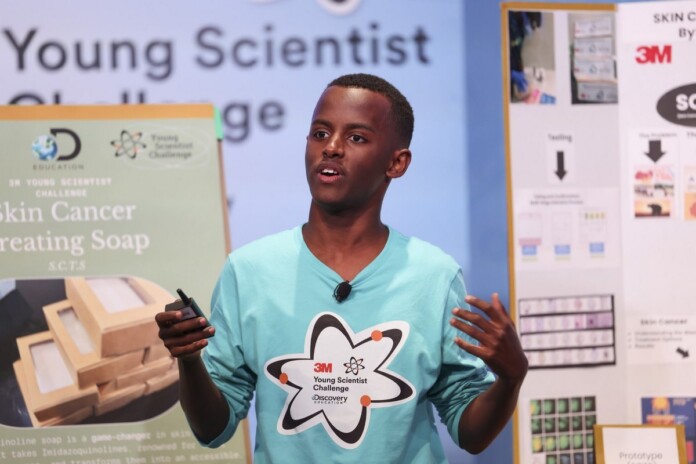
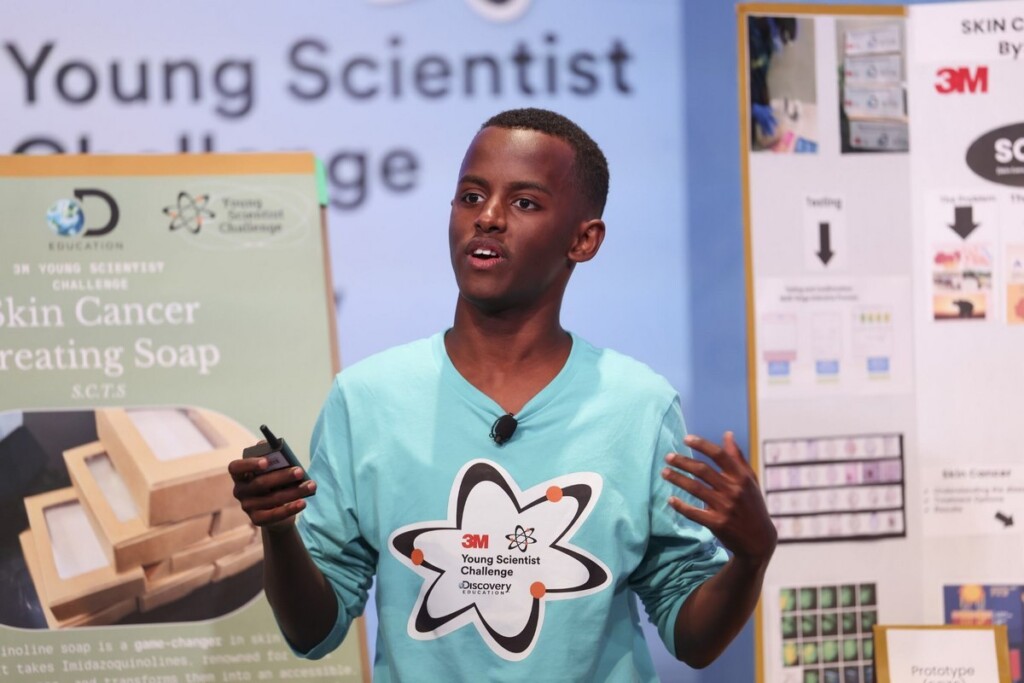
14-year-old Invents Soap for Treating Skin Cancer and Wins Top Honor as America’s Top Young Scientist

Heman Bekele - 3M
Heman Bekele – 3M

What if washing your hands to prevent getting a simple flu virus was all that was needed to prevent skin cancer? Bold as that sounds, it wasn’t an Anderson Center laureate who came up with the idea, but a 14-year-old.

Heman Bekele, a 9th grader at W.T. Woodson High School in Annandale, Virginia, was awarded the $25,000 grand prize as the winner of the 2023 3M Young Scientist Challenge, with a melanoma treatment in the form of a bar of soap.

As the winner of the nation’s premier middle school science contest, now in its 16th year, Bekele has been accorded the prestigious title of “America’s Top Young Scientist.”

He explains that his work was spurred on by discovering the recovery rate of melanoma in the US compared to sub-Saharan Africa (99% to 20%). By combining simple compounds in the soap that kept costs low he also was able to create a product that stimulates the activity of dendritic cells which act as protectors of skin cells.

“The need for scientists and innovators to develop solutions for the world’s biggest challenges has never been greater. This year’s Young Scientist Challenge finalists have demonstrated the skills required to reimagine what’s possible—intelligence, curiosity, collaboration, and resilience,” said John Banovetz, executive vice president and chief technology officer of 3M.

“The magnitude and complexity of the issues these young minds are working to solve is inspiring. Congratulations to this year’s finalists—we can’t wait to see what you do next!”

OTHER SCIENCE FAIR WINNERS: Youth is Fighting Microplastic Pollution with Magnetic Liquid After Winning Google Science Fair

Skin cancer is the most common cancer in the United States, with an average annual treatment cost of $8.1 billion. Inspired by this costly and widespread health issue, Heman developed an affordable soap solution that could positively impact skin cancer outcomes.

Over the next five years, he hopes to refine this novel innovation and create a nonprofit organization that will distribute this low-cost solution to communities in need.

WATCH Heman break it down… 

SHARE This Young Man’s Great Accomplishment And Reward… 

Chicago Marathon Runner Rescues Stray Kitten During the Race–Bystander Gives it a Home

Chicago Marathon runner Sarah Bohan (left) hands a stray kitten to Andrea Maldonado. She and her family (right) adopted Casper -credit Gia Nigro; Colleen Barkley/PAWS Chicago

A Chicago Marathon runner gave up a record finish in order to save a stray kitten she found on the course.

The story got sweeter when amid the spectators on the side of the road, she found Andrea Maldonado who called out that she would give the kitten a new home.

Marathoner Sarah Bohan was on track for a personal best when she made a mid-race decision that showed her sponsors PAWS Chicago they had backed the right runner.

Ditching the record, Bohan stopped when, within arm’s length of her place near the side of the road during the 2023 Chicago Marathon, she saw a tiny white face huddled under a pile of leaves. There was always a chance that the athlete might have put the little fellow down and hoped its momma would show up to take him away by the scruff of the neck, but with two rescue cats of her own at home, it was a slim one.

She instead decided to walk the rest of the course, gently nuzzling the 1 pound kitten until she ran into a friend and fellow animal lover Gia Nigro who helped Bohan try to find someone amid the crowds of onlookers to take the kitten off their hands so they could finish.

That’s when Nigro and Bohan came past a barbershop in the Pilsen neighborhood of Chicago and found a family group gathered there.

“We were on the sidelines having fun,” recalled the mom of 4 Andrea Maldonado, “and all of a sudden this girl came up to me with a kitten.”

PAWS Chicago, the rescue organization that Bohan was running to raise money for, posted on Instagram that they were looking to reach Maldonado to offer free vet services as a thank-you for supporting their runner, and the stray kitty.

Maldonado was informed of their offer and took them up, bringing in the little fellow for an examination. Although underweight, he was given a clean bill of health after receiving vaccinations, microchipping, and a flea/tick treatment.

YOU MAY ALSO LIKE: Firefighters Save Kitten Stuck in an ATM – And His New Name is Cash

“Casper” as he is now called in his home with Maldonado, her husband Tony, children Emma, Elise, Evelia, and Enzo, and their two cats and one dog, was the subject of more than 350 media stories in more than a dozen languages.

“Our girls love him,” Maldonado told Business Insider. “Our family loves him. Our dog loves him.”

MORE STORIES LIKE THIS: Nevada State Trooper Saves Kitten Cowering on a Busy Las Vegas Highway (WATCH)

Bohan finished the marathon at 3 hours 33 minutes this year and says next year she will go again for that record.

KEEP The Inspired Train Rolling By SHARING This Story On Social Media…

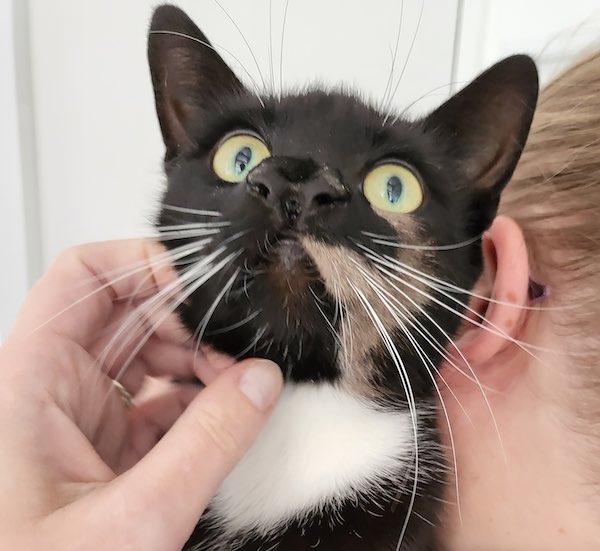
Orphaned Cat Surprises New Caregivers When They Discovered She Has Two Noses –She’s Called Nanny McPhee

The cat named Nanny McPhee who has two noses. Photo released October 19 2023. See SWNS story SWLNcat. The animal, who has been named Nanny McPhee after the fiction character, was given to Cat's Protection - who at first thought she just had a large nose.But after a checkup by one of the charity's vets, it revealed the four-year-old moggy actually had two noses which were caused by a congenital abnormality. The black and white cat has suffered no ill effects from her snout but Cats Protection’s field veterinary officer Fiona Brockbank says her nose is a 'real rarity.'She said: "This is a real rarity and, thankfully, it isn’t causing her any problems at all.
The cat named Nanny McPhee who has two noses – SWNS

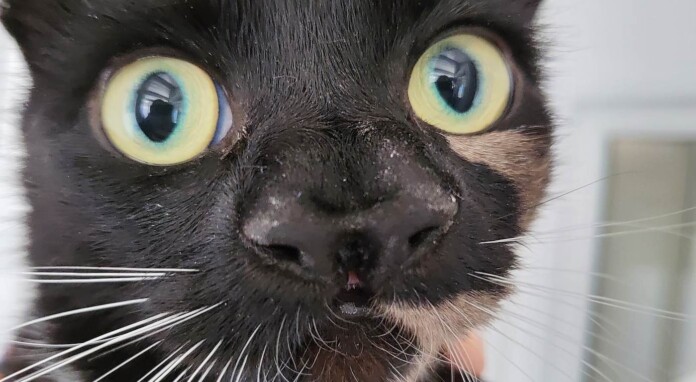
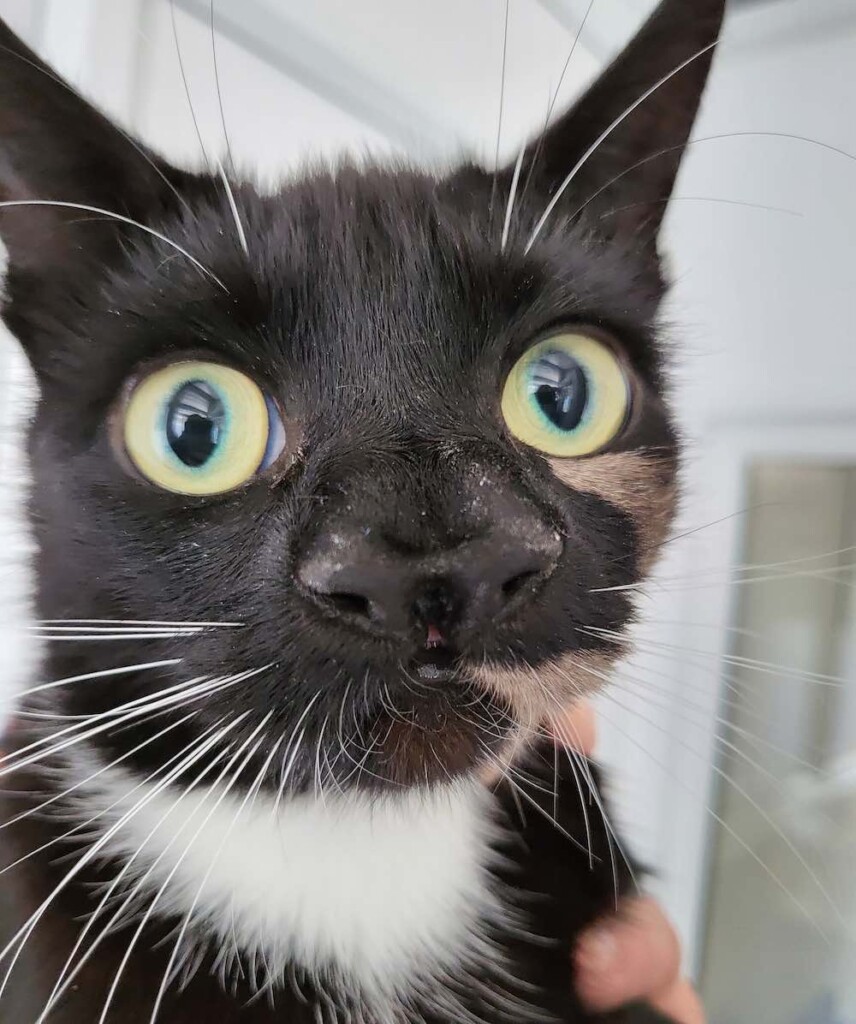
A unique cat with a huge nose has stunned her new caregivers at an animal shelter in England, after it was discovered she actually has two noses.

The feline is named Nanny McPhee after the fictional film character and was given to Cats Protection Adoption Centre in Warrington, Cheshire, after her owner’s ill health meant they could no longer care for pet.

Staff at first thought she just had a large nose, but a check-up by vets revealed the four-year-old moggy actually had two noses.

It is believed the ‘one-of-a-kind’ second schnoz was caused by a congenital abnormality—but the black and white cat has suffered no ill effects from it.

“A cat with two noses is a first for us,” said veterinary officer Fiona Brockbank. “This is a real rarity and, thankfully, it isn’t causing her any problems at all.

“Like all of our cats, Nanny McPhee will be neutered before re-homing so any concerns about inherited problems are resolved as she won’t have kittens.”

Shelter manager Lindsay Kerr believes the petite cat will find a new home quickly because of her two noses.

The four-year-old cat has two noses which was caused by a congenital abnormality – SWNS

WATCH: Little Boy Can’t Stop Giggling as Four Puppies Shower Him With Love

“We have all fallen in love with our one-of-a-kind Nanny McPhee,” she said. “We can’t stop looking at her two noses!

Other congenital malformations near the nose of a cat such as a cleft lip and cleft palate are not uncommon and can either be inherited or due to incidents while developing in the uterus.

“She has proven to be a gentle lady who adores a fuss and a cuddle and we are hopeful her newfound fame will mean she will have no shortage of potential adopters, so she can settle down and become the center of a loving family.”

Watch a cute video of Nanny M. below…

SO CUTE: Crow Believes He’s a Rabbit After Being Fostered With Broken Leg by Couple With Five Bunnies

DOUBLE the Cuteness By Sharing This Friday Funny on Social Media…

Ancient Library Scrolls Thought Ruined By Vesuvius Eruption Now Readable By AI

Vesuvius Challenge First Word winner

With the help of AI, a word written on a papyrus scroll 2,000 years ago and destroyed in a library in Pompeii has been deciphered, an astonishing feat that puts Roman scholars on the cusp of rediscovering knowledge from the era.

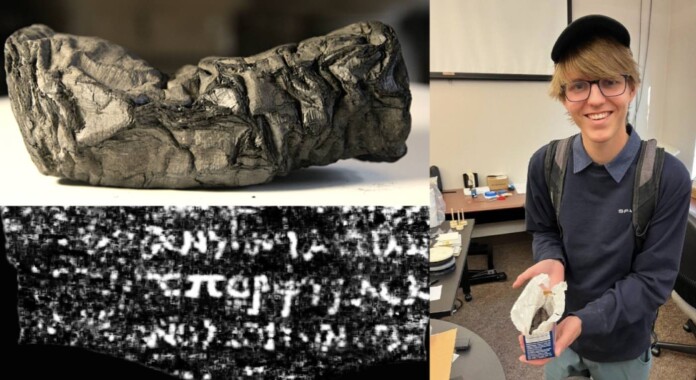
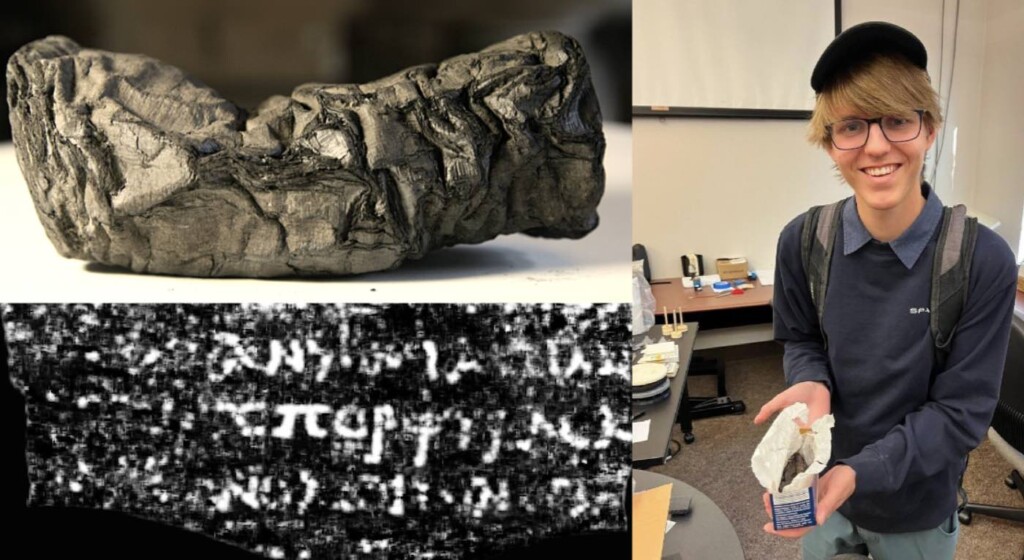
If you saw the Herculaneum scroll in question, you’d think it was a piece of charcoal, and in a sense it is. Carbonized by the heat and gases, but safe under rubble, it and nearly 2,000 others like it were discovered in 1,752, but have remained in museum storerooms ever since.

It has been believed for some time that technology could be used to access the writing on some of these scrolls. This year, Silicon Valley figures Daniel Gross and Nat Friedman created the Vesuvius Challenge, to place up to $1 million in cash prizes in the hands of any engineers who could program AIs to read the carbonized papyrus.

Luke Farritor, one such contestant of the Vesuvius Challenge, became the first person in two millennia to see an entire word from within an unopened scroll this August when his machine learning module found ink strokes, complete letters, and finally, πορφύραc.

Porphyras (πορφύραc) means purple, a color associated with royalty, but ‘papyrologists’ noted that it’s impossible at the moment to rule out either the noun, purple dye, clothes; or the adjective, purple.

Farritor, a college student and SpaceX intern, started working on the deep learning module after hearing about CT scans done of the papyrus scrolls on a podcast. Another contestant, Casey Handmer, had revealed “crackles” in the material through arduous study that he determined were the strokes of a stylus.

The Herculaneum is the largest known library that has survived from classical antiquity. Larger ones have been found in parts of Mesopotamia because the contents were written on clay tablets. It’s believed to have belonged to Julius Caeser’s father-in-law, and since the 1,700s, some of the papyrus scrolls have been shown to contain works from Greek philosophers like Epicurus and Philodemus.

YOU MAY ALSO LIKE: Artificial Intelligence ‘Can Help Spot Early Signs of Cancer in Chest X-Rays’

The contest still has a $700,000 grand prize available to anyone who can decipher four separate passages across two scrolls.

National Geographic, reporting on the speed at which the 2,000 contestants have been working on deciphering the scrolls, spoke with Brent Seales, a computer scientist at the University of Kentucky who has worked in this field for 20 years, started an initiative at the university for digital restoration of unreadable ancient texts, and co-directs the Vesuvius Challenge.

MORE POMPEII DISOVERIES: Alongside What Appears to Be Pizza, Recent Pompeii Excavations Reveal Yet More Hidden Treasures

“We’ve seen 10 or 20 person-years of work from these competitors,” Seals told Nat Geo. “Some people might think, ‘What are you going to all that trouble for?’ but I don’t believe that. This is an amazing period in human history. We’re talking about more works from that period.”

SHARE The Cusp Of Discovery That These Brilliant Minds Have Put Us On…

“The gain is not in the having of children; it is in the discovery of love and how to be loving.” – Polly Berrien Berends

Quote of the Day: “The gain is not in the having of children; it is the discovery of love and how to be loving.” – Polly Berrien Berends

Photo by: Fernando Jiménez

With a new inspirational quote every day, atop the perfect photo—collected and archived on our Quotes page—why not bookmark GNN.org for a daily uplift?

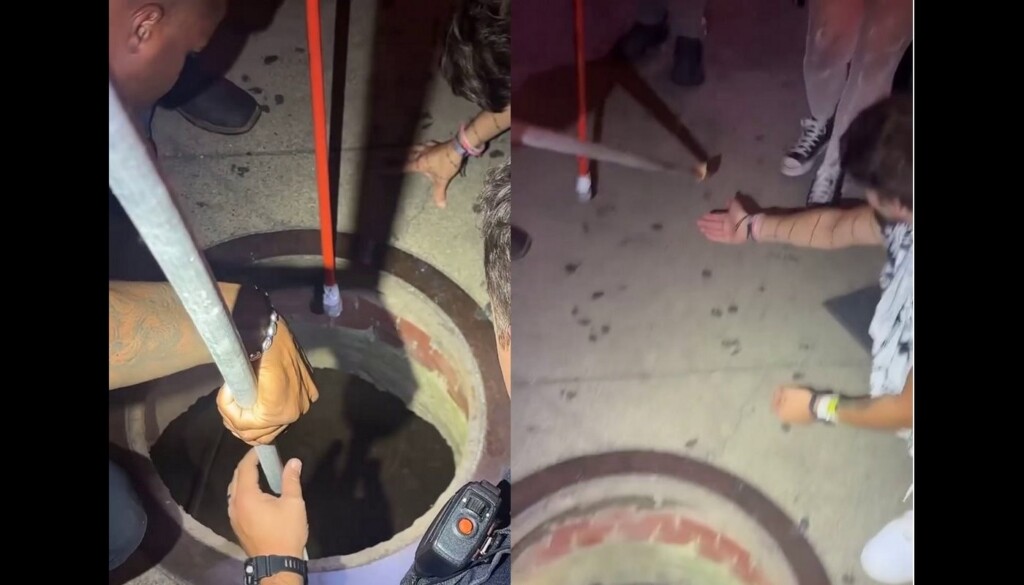
Police Officers Use A Metal Pole to Retrieve Couple’s Engagement Ring After it Fell Down Sewage Drain

Officer Briggs and Sargeant Robinson fishing out the ring, Pittsburgh, Pennsylvania. SWNS
Officer Briggs and Sergeant Robinson fishing out the ring, Pittsburgh, Pennsylvania. SWNS

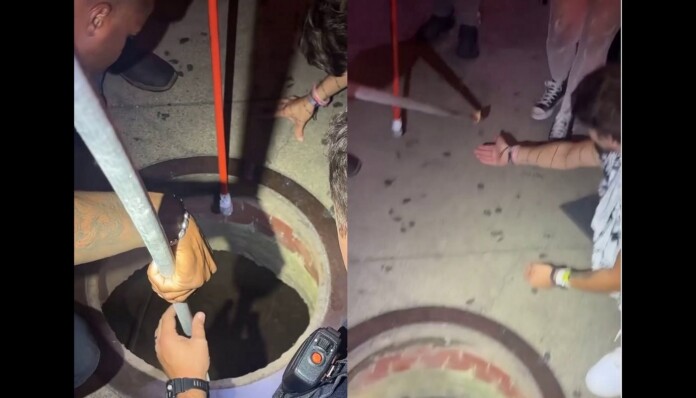
Officers in Pittsburgh were hot on the trail of a runaway, but they had to improvise in order to save the day.

The caper was an engagement ring that decided to make a break for it through the sewers, but Sergeant Andrew Robinson and Officer Kyle Briggs were not about to be sidestepped so easily.

Out on patrol, the two heard a woman saying she had lost her ring down a sewer as they walked down 16th Street. They decided to stop and help the young woman.

The officers fabricated a device that consisted of a metal pole—found on the street—masking tape and a paperclip attached to the end.

A video, released by the police, shows one of the officers slowly pulling the metal pole and the ring attached to it out of the drain.

“The officers overheard a woman and her fiance’ saying she had lost her ring down a sewer that had a tiny hole in the middle,” said the Pittsburgh Police Bureau in a statement.

“The sergeant who was there said it was a “one in a million shot” that it came off her finger and went into the hole.”

“We don’t know the person’s name. She and her fiance’ were very thankful, jokingly invited them to the wedding, and then drove off in a vehicle with out-of-state plates.”

All in a day’s work for Pittsburgh’s finest.

WATCH the MacGyvers go to work…

SHARE This Good Cop Good Cop Story With Your Friends… 

Evidence of Massive Solar Storm Found in Ancient Tree Rings Could Help Scientists Predict the Next One

artist's impression of a solar storm - Bard et al. via SWNS
Artist’s impression of a solar storm – Bard et al. via SWNS

An international team of scientists has documented the largest solar storm to have ever struck the Earth, hidden inside the trunks of ancient trees.

Such a massive storm today on the scale of the newly discovered one would cause total disruptions to global technology and infrastructure, from power transformers to satellites, but better understanding how they happen can help organizations predict and potentially protect the Earth from them.

A huge spike in radiocarbon levels was identified by an international team of scientists
who analyzed ancient tree rings found in the French Alps.

Radiocarbon is constantly being produced in the upper atmosphere through a chain of reactions initiated by cosmic rays. But we now know that sometimes, flares of activity can become storms of activity, so-called Miyake Events.

“Such super storms could permanently damage the transformers in our electricity grids, resulting in huge and widespread blackouts lasting months,” said Professor Tim Heaton, of the University of Leeds. “They could also result in permanent damage to the satellites that we all rely on for navigation and telecommunication, leaving them unusable.”

Nine such extreme events have now been identified as having occurred over the last 15,000 years.

The most recent confirmed Miyake Events occurred in 774 CE and 993 CE, the latter of which was actually used to accurately date the timbers that Leif Erikson and his Vikings used to construct their settlements in the New World, 500 years before Colombus arrived.

The newly identified 14,300-year-old event is the largest that has ever been found and roughly twice the size of the other two.

Scientists say the exact nature of Miyake Events remains very poorly understood as they have never been directly observed instrumentally.

“We do not know what causes such extreme solar storms to occur, how frequently they might occur, or if we can somehow predict them,” said Heaton. “Each new discovery not only helps answer existing key questions but can also generate new ones.”

The research team measured radiocarbon levels in ancient trees preserved within the eroded banks of the Drouzet River, near Gap, in the Southern French Alps.  The tree trunks were not quite fossilized yet, and the analysis of the material between tree rings revealed the never-before-seen amount of radiocarbons.

The tree in question – credit Bard et al. via SWNS

By comparing the spike with measurements of beryllium, a chemical element found in Greenland ice cores, the team suggests that the spike was caused by a massive solar storm that would have ejected huge volumes of energetic particles into Earth’s atmosphere.

“Radiocarbon measured in tree rings, used alongside beryllium in polar ice cores, provide the best way to understand the Sun’s behavior further back into the past,” said study lead author, Professor Edouard Bard of the Collège de France.

MORE PREDICTIVE SCIENCE: Scientists Discover Time Moving 5x Slower After Big Bang–Exactly as Einstein Predicted

The largest, directly-observed, Miyako event occurred in 1859 and is known as the Carrington Event.

It caused massive disruption on Earth—destroying telegraph machines and creating a night-time aurora so bright that birds began to sing, believing the Sun had begun to rise.

NASA has begun to take planetary defense as a serious funding priority, believing that the odds are essentially inevitable that some space-based event will threaten Earth in the long term. They have so far only investigated defending against asteroids that might impact Earth, but solar storms could become a priority too as more information becomes available.

SHARE This Wild Relationship Between The Sun And Earth With Your Friends… 

Native Wildlife Flourishing Again After Another Caribbean Island Banishes Invading Rodents

Sombrero Island - credit: Farah Mukhida/Anguilla National Trust
Sombrero Island – credit: Farah Mukhida/Anguilla National Trust

A tiny uninhabited island in the Caribbean waters of the territory of Anguilla was almost completely empty but for mice, but has recently been totally restored to a pre-colonial state of biodiversity.

Called Sombrero, the island has joined a number of case studies around the Caribbean and the world on how to completely eradicate invasive species and protect these unique ecosystems.

Caribbean islands account for only 0.16% of the Earth’s landmass, but rank in the top three in the world as a collective for biodiversity.

These isolated ecosystems have historically been vulnerable to invasive species like goats and rats, and on Sombrero the situation was critical, as mice were preying on native reptiles and nesting seabird eggs.

Several endemic species found nowhere else like the Sombrero wind scorpion, the Sombrero bee, and the Sombrero ground lizard were nearly extinct from a combination of mice, vegetation loss, and hurricanes, but a program launched by Anguillan conservationists with help from the large NGOs Flora & Fauna and Re:wild, was able to both eradicate the mice, and see rebounds in the populations of these animals in just 2 years.

For example, the ground lizard numbers nearly 900 individuals according to the most recent survey, compared to less than 100 when the program started in 2021.

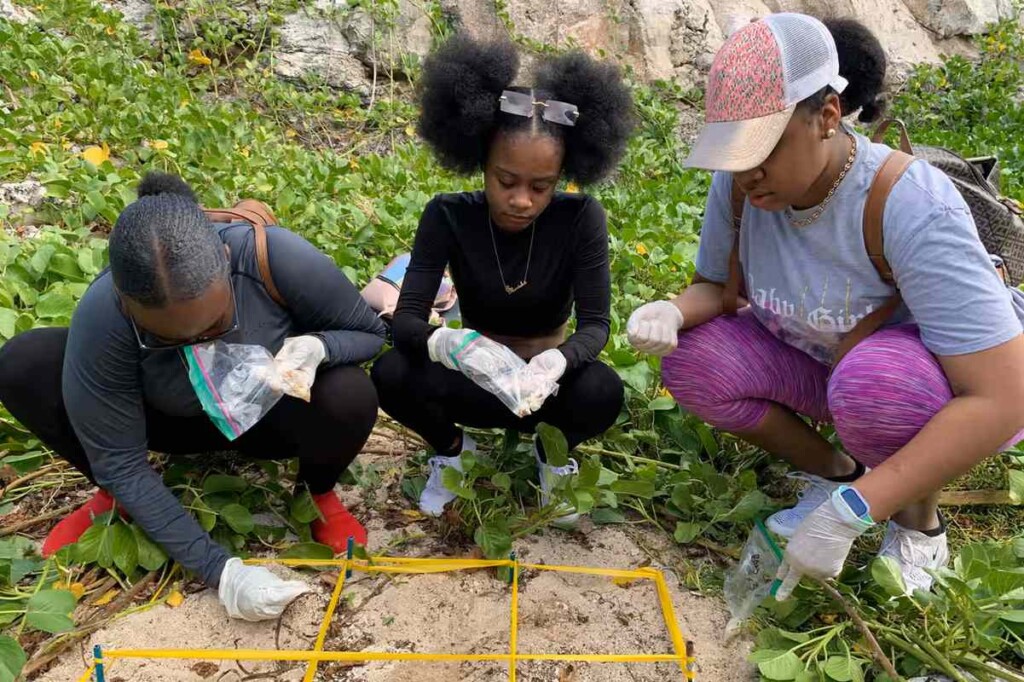
High schoolers planting native vegetation – credit: Farah Mukhida/Anguilla National Trust

After the mice were gone, the Anguillan National Trust began a replanting campaign to restore native vegetation to help ensure the island’s soil stays put under hurricane-force winds.

ANOTHER ISLAND MIRACLE: Rats Finally Eradicated from Caribbean Island as Huge Nature Reserve Rises in Their Place

“The more diversity you have in terms of the vegetation, the more resilient it will be to a changing climate,” said Anguillan conservationist Devon Carter. “Already, the island is looking greener and healthier. In the future we hope to see a whole different landscape and much more wildlife.”

Per Flora & Fauna, the Sombero project is just one of more than 30 successful offshore island restorations carried out by Fauna & Flora and Re:wild and their wide network of local partners, all of which have swiftly led to impressive improvements in vegetation cover and the recovery of numerous native species.

MORE STORIES LIKE THIS: Islanders Remain Dedicated to Conservation Above All, Living on the ‘World’s Best Beach’

It isn’t a trend happening merely across the Caribbean, but elsewhere as well. Several islands off the coast of Australia and the Pacific Ocean have experienced similar bouncebacks after rats or rabbits were eradicated.

SHARE This Wilderness Forever Naturalized Down In The Caribbean… 

Breakthrough in Recycling EV Batteries Can Recover 100% of Aluminum and 98% of Lithium Thanks to Swedish Scientists

Photo of Léa Rouquette by Henrik Sandsjö

Swedish researchers say they have developed a new method of recycling batteries from electric vehicles that allows recovery of 100 percent of the aluminum and 98 percent of the lithium.

Researchers at Chalmers University of Technology have presented the efficient way to recycle metals from spent batteries, and at the same time minimize the loss of valuable raw materials such as nickel, cobalt and manganese.

Furthermore, no expensive or harmful chemicals are required in the process because the researchers use oxalic acid—an organic acid that can be found in the plant kingdom.

“So far, no one has managed to find exactly the right conditions for separating this much lithium using oxalic acid, whilst also removing all the aluminum,” said Léa Rouquette, PhD student in the Department of Chemistry and Chemical Engineering. “Since all batteries contain aluminum, we need to be able to remove it without losing the other metals.”

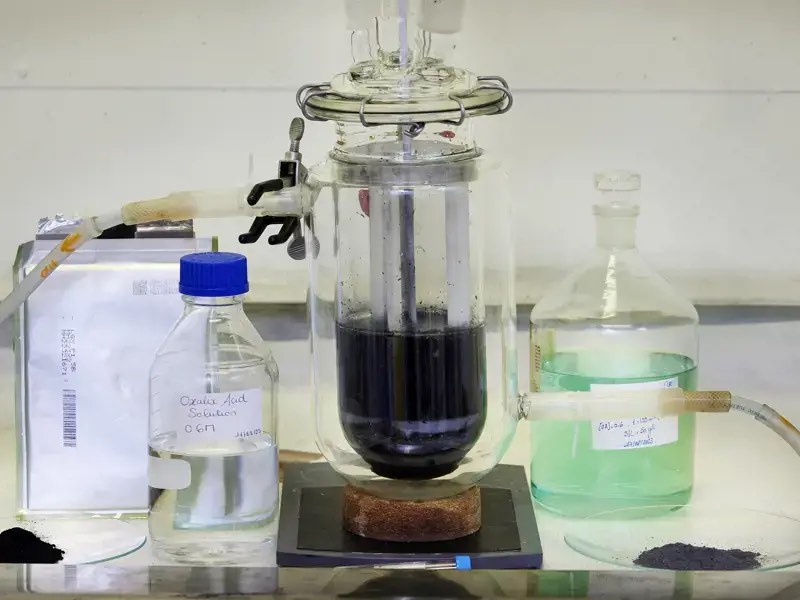
In the Chalmers battery recycling lab, Rouquette and research leader Martina Petranikova showed how the new method works—taking the pulverized components in the form of a finely ground black powder and dissolving it in a transparent liquid – oxalic acid.

Rouquette produces both the powder and the liquid in something reminiscent of a kitchen mixer. Although it looks as easy as brewing coffee, the exact procedure is a unique scientific breakthrough. By fine-tuning temperature, concentration and time, the researchers came up with a new recipe for using oxalic acid, an environmentally friendly ingredient that can be found in plants such as rhubarb and spinach.

“We need alternatives to inorganic chemicals. One of the biggest bottlenecks in today’s processes is removing residual materials like aluminum,” says Martina Petranikova, Associate Professor at the Department of Chemistry and Chemical Engineering at Chalmers. “This is an innovative method that can offer the recycling industry new alternatives and help solve problems that hinder development.”

CHECK OUT: As the World Runs on Lithium, Researchers Develop Clean Method to Get It From Water

Crushed car battery in powder on left is dissolved in transparent liquid and filtered for aluminum and lithium (green liquid), with other metals, like cobalt, nickel and manganese, remain in the dark solids (right) – Photo by Anna-Lena Lundqvist

The aqueous-based recycling method is called hydrometallurgy. In traditional hydrometallurgy, all the metals in an EV battery cell are dissolved in an inorganic acid. Then, you remove the “impurities” such as aluminum and copper. Lastly, you can separately recover valuable metals such as cobalt, nickel, manganese and lithium. Even though the amount of residual aluminum and copper is small, it requires several purification steps and each step in this process can cause lithium loss.

With the new method, the researchers reverse the order and recover the lithium and aluminum first. Thus, they can reduce the waste of valuable metals needed to make new batteries.

The latter part of the process, in which the black mixture is filtered, is also reminiscent of brewing coffee. While aluminum and lithium end up in the liquid, the other metals are left in the “solids”. The next step in the process is to separate aluminum and lithium.

“Since the metals have very different properties, we don’t think it’ll be hard to separate them. Our method is a promising new route for battery recycling – a route that definitely warrants further exploration,” says Rouquette, who published her results in the journal Separation and Purification Technology.

COOL IDEA: Scientists Power Tesla on 9,400-mile Journey With Rolled-up Printed Solar Panels

Petranikova’s research group is involved in various collaborations with companies to develop electric car battery recycling and is a partner in major research and development projects, such as Volvo Cars’ and Northvolt’s Nybat project.

The research was funded by the Swedish Energy Agency, BASE Batteries Sweden, Vinnova.

POWER The Positive By Sharing This With Naysayers on Social Media… 
“The greater your capacity for love, the more beauty you find in the world.” – Jane Smiley

Quote of the Day: “The greater your capacity for love, the more beauty you find in the world.” – Jane Smiley 

Photo by: James Wheeler

With a new inspirational quote every day, atop the perfect photo—collected and archived on our Quotes page—why not bookmark GNN.org for a daily uplift?


Amazon.com Now Builds Packaging to Fit Items And Cut Waste—With Weather-Resistant Paper

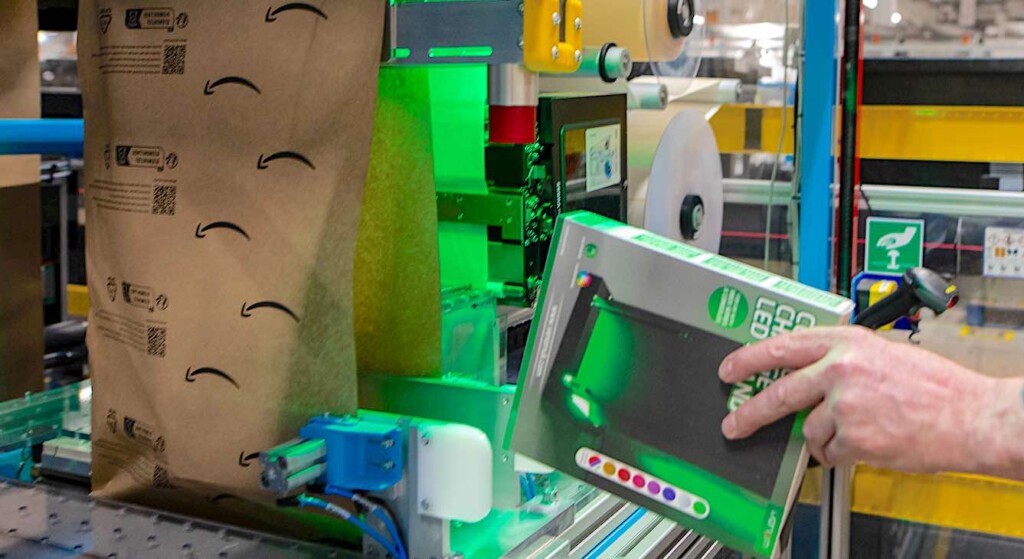
Amazon’s new automated packaging machine - SWNS
Amazon’s new automated packaging machine – SWNS

Retail giant Amazon.com has developed a weather-resistant paper that stretches into the shape of a package, in order to cut waste—and it can be heat-sealed like plastic, without using glue.

A sensor can scan the items such as video games, kitchen gadgets, sports gear, and office supplies that were previously sent in boxes and divert them to the new system.

The machine then cuts a paper bag to fit the item perfectly and minimizes the empty space around the contents.

Each bag is secured using glue-free, heat-sealing technology, enabling the machines to pack quickly and accurately.

MORE Good Packages: The Biggest EV Battery Recycling Plant Opens in the US

“Our material scientists developed a light but durable paper which can be heat-sealed like plastic – but is all easily recyclable in your household collections,” said Thais Blumer, head of sustainable packaging for Amazon Europe.

“Our trials already show that this technology is efficient, secure and reliable.”

The retail giant’s packaging engineers came up with this technology by redesigning machines that previously made plastic packages.

The original machines were decommissioned when Amazon stopped packing items in single-use plastic delivery bags at fulfillment centers across Europe.

To adapt the devices, engineers added new components, allowing them to process thin coated paper instead of plastic. The first of these, located in Mönchengladbach in Germany and Bristol in the UK, have already packed thousands of items for customers.

CHECK OUT: Jet Fuel Derived From Used Cooking Oil Certified Airworthy for Large-Scale Production in China

In the future, Amazon expects that automated packaging technology will be able to pack multiple items in strong paper or cardboard packaging, that’s made to measure with very little air space, while protecting items in transit.

Lighter shipments can lead to reduced delivery emissions per package, driving the company further towards its goal of achieving net-zero carbon by 2040.

GREEN GIFTS: Mattel Releases First Carbon Neutral Toys and Tesla Matchbox Car Made From 99% Recycled Materials

“On average, each shipment packed with this machine helps us avoid 26 grams (almost one ounce) of packaging,” saya Blumer. “Multiply this by millions of packages and you can imagine the impact.”

SEND This Good News Efficiently Through Social Media…

Tumor-Destroying Sound Waves Treatment Coming to a Hospital Near You For Liver Cancer

Zhen Xu, Professor of Biomedical Engineering, points to a bubble cloud generated by the Edison Platform’s transducer head during a histotripsy demonstration at HistoSonics. Image credit: Erica Bass, Rogel Cancer Center, Michigan Medicine.

Oncologists have a new tool to target liver cancers with thanks to an academia-marketplace-based solution that uses high-energy acoustics to destroy tumors with sound.

Known as “histotripsy,” the method and machinery have already been tested successfully in animals and humans, and has just been approved for use by the FDA.

HistoSonics is a company founded in 2009 to create an ultrasound device that both screens for tumors and administers histotripsy. It was born from the efforts of scientists at the University of Michigan who co-founded the firm.

“Histotripsy is an exciting new technology that, although it is in early stages of clinical use, may provide a noninvasive treatment option for patients with liver cancer. Hopefully it can be combined with systemic therapies for a synergistic therapeutic effect,” said Mishal Mendiratta-Lala, professor of radiology with Michigan Medicine.

Mendiratta-Lala was the principal investigator of an FDA human trial started in 2021 which confirmed that HistoSonic’s device, called Edison, can destroy cancer tumors.

MORE GOOD CANCER NEWS: Simple Blood Test for ‘Silent Killer’ Ovarian Cancer on the Horizon After Discovery of 3 Telltale Proteins

According to the U-Michigan press, histotripsy works by using targeted ultrasound waves to form microbubbles within the tumor. The forces created as those bubbles form and collapse cause the mass to break apart, killing tumor cells and leaving the debris to be cleaned up by the immune system.

Histotripsy avoids the damage and trauma of invasive surgery and the debilitating side effects of chemotherapy and radiation, thanks in no small part to the fact that the Edison device uses ultrasound—the same device used to see babies inside of wombs—and so the physicians can be very precise with targeting which tissues are destroyed.

In two trials in mice, another benefit of this tech was observed. The first was that even if Edison was able to destroy only 50% or 70% of the tumor tissues, subsequent immune responses in the mice were observed which further deteriorated the tumors.

Cancers are famous for hiding themselves in the host by using the host’s own biological signatures to avoid detection by immune cells. The blast from the ultrasound brought down that defense system it seems, and allowed the immune system to target and destroy the tumors.

CHECK OUT: Vaccine that Could Cure and Even Prevent Brain Cancer Developed by Scientists

Furthermore, this means in theory, and a trial confirmed, that in the case of a resurgence of the cancer, the immune system could treat it like any other disease and target it in its early stages.

“We want to leverage histotripsy’s immuno stimulation effects and hopefully combine them with immunotherapy or drug delivery,” said Zhen Xu, U-M professor of biomedical engineering, an inventor of the histotripsy approach and a co-founder of HistoSonics.

“That will move histotripsy from a local therapy into one that can treat tumors globally all over the body and eventually into a cure. In terms of the cancer treatment, that will be the next step, and I feel very excited about the potential.”

WATCH the story below from U-Michigan… 

SHARE THE Good News About Cancer On Social Media… 

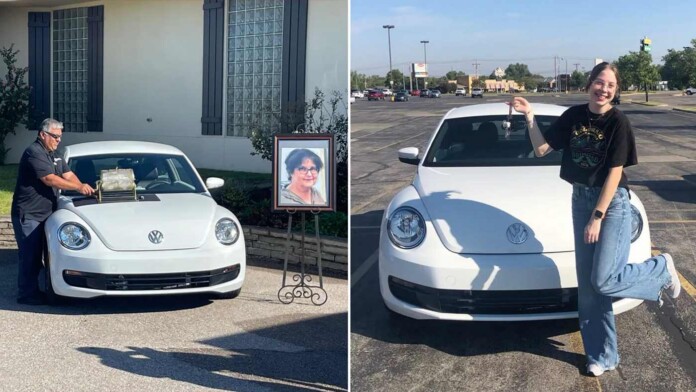
Oklahoma Teen Wins Volkswagen Beetle After Attending a Stranger’s Funeral: ‘Perfect winner was drawn’

Rudy Espinoza conducting the raffle, and Gabrielle standing next to her new car. (Michael Kelly/Gabrielle Bonham)

A generous woman decided to do something fun with her last wishes, offering her car to anyone who would come to attend her funeral.

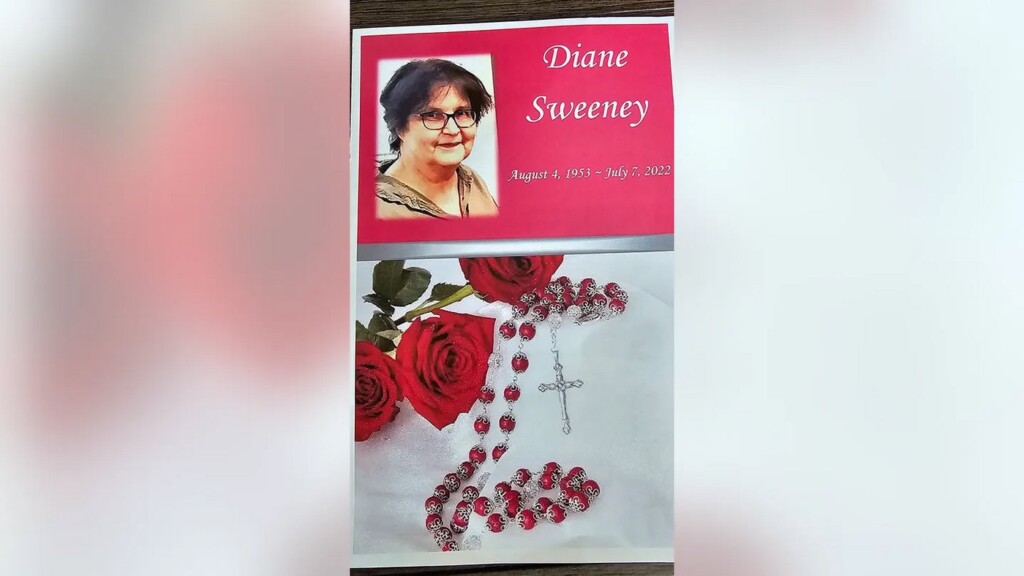
Her name was Diane Sweeney, a lover of family, faith, and her WV Beetle. Passing away suddenly in July of last year, she had told her nephew Rick Ingram about her plan to give away her car in a raffle if she died.

“She told a few of us her wish,” Ingram told Fox News Digital. “I remember it clear as day. She said, ‘Whoever comes to my funeral, I want them to have a chance to win my Volkswagen Beetle.’ And I said, ‘Oh, Diane, I’ll make that happen.’”

Ingram, along with his cousin, decided to really make a go of it and told Channel 4 News of Oklahoma City that they planned to take out an ad in the paper, and wanted to see if they were interested in covering the story: which they were, and which “packed” the funeral home.

One of the people answering that ad was Gabrielle Bonham of El Reno, Oklahoma, who joked with some of her friends that they should go, but then the more she thought about it, the more she really wanted to go.

She managed to convince her big sisters to take her there, and at the funeral, she got to experience firsthand the life and kindness of Ms. Sweeney who died without having ever married or had kids.

“It was very interesting not to know her and to see her life through her family’s eyes,” Bonham said.

Sweeney’s funeral program. credit Michael Kelly

Filling out a raffle ticket and really enjoying the experience besides, Bonham went home and heard nothing, figuring someone else had claimed the silver, 2016 Beetle. In reality, it was just taking a long time—more than a year—to organize the legal side of Sweeney’s estate, but two trusted keepers, Rudy Espinoza and Taylor Hurt, still had all the tickets with them from the funeral.

MORE GREAT LEGACIES: When Mortuary Intern Invites Strangers to Veteran’s Funeral, 3,000 People Travel From All Over for the Service

After everything was finally signed, sealed, and settled, Hurt and Espinoza spun the tombola, and out came Bonham’s ticket. The now 16-year-old was on a trip when she got the call, describing herself as freezing with her jaw open and confusing her whole family.

“Every person that I’ve told about it has said, ‘Oh my gosh. That’s what I should do whenever I pass away.’ Or, ‘I should do something like that at my funeral,'” said Bonham. “I think that it’s really cool to see something good happen and the effect that it makes on other people who weren’t directly involved in it. Just people want to do good things. It’s amazing.”

MORE STORIES LIKE THIS: Amid the Green Funeral Movement, Scattering Ashes Ensures These Forests Remain Pristine Forever

Meanwhile, Ingram, who made the call announcing the winner, said it went to the perfect person, a young woman in need of reliable transportation at the beginning of her adult life taking the keys from a woman who had finished hers.

SHARE This Charitable Woman And Her Creative Legacy With Your Friends… 

“How can I know what I think until I see what I say?” – E. M. Forster

Quote of the Day: “How can I know what I think till I see what I say?” – E. M. Forster

Photo by: Tim Mossholder

With a new inspirational quote every day, atop the perfect photo—collected and archived on our Quotes page—why not bookmark GNN.org for a daily uplift?

Artist Creates Iconic Landscapes From Food–Then Donates to Hungry People (LOOK)

Nathan Wyburn with his food art of iconic landscapes – SWNS / OnePoll

An artist used organic food to create these iconic landscapes—and they do look good enough to eat, because they were.

Made entirely from fruits and vegetables, the four tasty ‘paintings’ feature some of the UK’s best loved scenes—from Stonehenge, to Avon Gorge, with its famous suspension bridge, to Giant’s Causeway.

Marking the end of the 2023 harvest season, the edible exhibits were created by Welsh-based artist Nathan Wyburn to replicate the beloved landscapes in mouthwatering detail—along with the help of the Yeo Valley Organic’s chef, Ali Pumfrey.

The delectable scenes, which also includes the Ribblehead Viaduct, utilized fresh organic produce like strawberries, beetroot, and kale, and took the artist 48 hours to create.

“I like to bring people closer to the natural world through my work and relished the opportunity to take up this unique challenge,” said Nathan Wyburn.

“I used to visit the Avon Gorge as a child and was always in awe of the amazing natural landscape, so it was a really fun process thinking about how I could bring that to life through local products.”

He used almost 150 pounds of food (67 kilograms), which also including soup, yogurt, and butter to bring the scenes to life.

WATCH: Artist Creates Stunning Portraits Using Just Pebbles in Amazing Time Lapse Video

The iconic bridge was crafted using a colorful kaleidoscope of berries, including strawberries, blueberries, and raspberries, along with beetroot and broccoli, with added layers of texture from leeks and kale.

Food artist Nathan Wyburn recreates the iconic UK landscape Ribblehead Viaduct in Yorkshire – SWNS / OnePoll
Giant’s Causeway in Northern Ireland, made from Yeo Valley Organic’s Carrot, Parsnip, and Thyme Soup, Salted Butter, Cheddar Cheese, and peeled carrots and potatoes – SWNS

An atmospheric scene of the Ribblehead Viaduct was brought to life using a cream of vegetable soup, layered with cabbage, spiraled courgette, and finely sliced mint, and thyme.

Carrot, parsnip, and thyme soup were used to carve the sunset below the horizon at Giants Causeway—sculpted alongside curled butter, grated cheddar cheese, and potatoes.

The silhouette of Stonehenge was constructed from towering blocks of cheddar, lashings of natural yogurt and kefir, and decorated with leeks and cabbage leaves.

LOOK: Monet’s Water Lilies Masterpiece is Recreated Using 650,000 Lego Pieces

While most people revel in the picturesque beauty of rural landscapes, many people also find joy in admiring their food before taking a bite.

“Nature is beautiful and we think the food you eat should be too,” said Ali Pumfrey.

“We hope the landscapes we’ve created inspire people to support homegrown organic farming to help keep our landscapes natural.”

Nathan Wyburn recreates Stonehenge in cheddar cheese, yogurt, leeks and cabbage – SWNS

CHECK OUT: Artist Paints Charcoal Portraits on Giant Floating Blocks of Ice in Baltic Sea – LOOK

Following the creations, chef Ali repurposed the landscape ingredients into recipes and any unused ingredients were donated to food charity, City Harvest—helping to deliver 143 meals to families in need across the country.

SHARE The IDEA on Social Media With Artistic Youth Who Play With Their Food…

Good News for California Bees: Governor Signs Law to Help Protect Pollinators From Toxic Pesticides

Adonyi Gábor
Adonyi Gábor

Thanks to the persistence of state legislators, and a change of heart from Governor Gavin Newsom, California has passed a new law that will ban over-the-counter sales of lawn and garden neonicotinoid pesticides by 2025, limiting their use to trained professionals in the heavily agricultural state.

AB 363 restricts the sale of the pesticide class, also known as neonics, and directs the Department of Pesticide Regulation to conduct an analysis of the worst uses of neonics and take necessary steps to prevent environmental damage.

The bill, authored by Assembly member Rebecca Bauer-Kahan, also directs the California Department of Pesticide Regulation (DPR) to complete a timely and thorough review of non-agricultural neonic uses.

MORE GOOD BEE NEWS: World’s First Vaccine for Declining Honeybees Approved By the US for Conditional Use

It’s been five years since the EU and UK banned even farmers from using neonicotinoids unless the plants were inside of a closed greenhouse. In 2016, Ontario became the first region in North America to ban the neonics pesticides. Several US states have limited their use and companies like Lowes, Costco, Walmart, and Ortho have promised to phase them out.

“I’m thrilled Governor Newsom has signed AB 363 to eliminate harmful pesticides and protect our environment without limiting farmers,” said Assemblymember Bauer-Kahan.

In addition to being the world’s most widely used insecticides, neonics may be the most ecologically destructive pesticides since DDT. Toxic to bees and other insects, once in an environment, neonics can persist in soil for years and are easily carried long distances by rain or irrigation water. Today, neonics extensively contaminate California surface waters.

LOOK: Teen Rescues Bumblebee And Now it Won’t Leave Her Side –Even Sleeping in a Jar by Her Bed

“Public health and ecological wellbeing throughout California are better protected today because of this new law,” says Lucas Rhoads, with the Pollinator Initiative at NRDC (Natural Resources Defense Council). “California joins nine other states that have curbed neonic pollution in the places where people live and play, taking steps to safeguard the communities and species.”

While DPR recently completed a reevaluation of agricultural uses of neonics, it neglected to address non-agricultural uses happening right in many Californians’ backyards, which contribute to contamination of the state’s urban and suburban waters.

WOW! Bumblebees are Hitting Back at Asian Hornets With Top-Tier Combat Skills, Reveals Research

For this reason, AB 363 will now require DPR to perform a more rigorous review of remaining neonic uses and provide additional mitigation where needed—especially important for California’s 1,600 native bee species.

SPREAD The Buzz By Sharing This Good News on Social Media…
Sealed Jars of Wine From 5,000 Years Ago Uncovered in Egyptian Queen’s Tomb

5000-year-old wine jars in the tomb of Queen Meret-Neith in Abydos during the excavation. The jars are in their original context and some of them are still sealed. See SWNS story SWSCwine. Sealed jars of wine from 5,000 years ago have been uncovered in an Egyptian Queen's tomb. The find, one of the oldest ever, was amongst grave goods for Queen Meret-Neith in Abydos, from 3,000 BC. The researchers from the University of Vienna say she was the most powerful woman in the period and possibly the first female pharaoh of ancient Egypt. Queen Meret-Neith was the only woman to have her own monumental tomb in Egypt's first royal cemetery at Abydos.
5000-year-old wine jars in the tomb of Queen Meret-Neith in Abydos – SWNS

Sealed jars of wine from 5,000 years ago have been uncovered amongst the grave goods found in an Egyptian Queen’s tomb.

The stash once belonging to Queen Meret-Neith in Abydos, from 3,000 BC, and is one of the oldest ever.

Researchers from the University of Vienna say she was the most powerful woman in the period and possibly the first female pharaoh of ancient Egypt.

Queen Meret-Neith was the only woman to have her own monumental tomb in Egypt’s first royal cemetery at Abydos.

Although her true identity remains a mystery the excavation revealed hundreds of jars of wine, some still sealed, buried with her.

Meret-Neith’s monumental tomb complex in the Abydos desert, which includes the tombs of 41 courtiers and servants in addition to her own burial chamber, was built of unbaked mud bricks, clay and wood.

In addition, inscriptions testify that Queen Meret-Neith was responsible for central government offices such as the treasury, which supports the idea of her special historical significance.

The tomb complex of Queen Meret-Neith in Abydos during excavation – SWNS

Archaeologist Professor Christiana Köhler from the University of Vienna said that a lot of the finds are undergoing analysis to reveal their secrets.

“The wine was no longer liquid and we can’t tell if it was red or white,” she said. “We found a lot of organic residue, grape seeds and crystals, possibly tartar and all of this is currently being scientifically analyzed.

GIZA ALERT: Hidden Corridor Discovered Inside Great Pyramid of Giza by Non-invasive Imaging Tech

“It is probably the second oldest direct evidence for wine, the oldest also comes from Abydos.

Thanks to careful excavation methods and various new archaeological technologies, the team was able to show that the tombs were built in several construction phases and over a relatively long period of time.

This observation, together with other evidence, radically challenges the idea of a ritual human sacrifice as part of the royal burial in the 1st Dynasty, which was often assumed in early research but never really proven.

LOOK: Archaeologists in Egypt Discover Mummy With Gold Tongue

“The new excavations bring to light exciting new information about this unique woman and her time.”

The team is working in collaboration with the Egyptian Ministry of Tourism and Antiquities, the German Archaeological Institute in Cairo, the University of Vienna, and the Vienna University of Technology in Austria and Lund University in Sweden.

RELATED TO BEER: Archaeologists in Egypt have Unearthed the World’s Oldest Known Beer Factory, Thought to Date Back 5,000 Years

TOAST a Loved One With This Tasty Discovery By Sharing on Social Media…
“Happiness is not something ready made. It comes from your own actions.” – Dalai Lama

Quote of the Day: “Happiness is not something ready made. It comes from your own actions.” – Dalai Lama

Photo by: Sébastien Goldberg

With a new inspirational quote every day, atop the perfect photo—collected and archived on our Quotes page—why not bookmark GNN.org for a daily uplift?