













All News - Page 25 of 1714 - Good News Network
Home Blog Page 25

Mauritius Restores Reefs with Heat-Resistant Coral and Sees 98% Survival Rates

Aerial view of Mauritius island - credit, dronepicr
Aerial view of Mauritius island – credit, dronepicr

When a significant coral bleaching event swept across the reefs of Mauritius last summer, one small group of corals remained as vibrant as ever.

While neighboring wild reefs experienced bleaching rates as high as 80%, Dr. Nadeem Nazurally’s reefs experienced just as much, and often more, in survival rates

Nazurally is naturally breeding heat-resistant corals to resist just such events, and the first major acid test shows that such coral management methods hold real potential for protecting these vibrant marine ecosystems for decades to come.

The island nation of Mauritius, off Africa’s east coast, is home to nearly 250 coral and hydrozoan species. The reefs they form anchor the livelihoods of both humans and fish, supporting fisheries that produce to the tune of billions, and act as home for one-fourth of all Mauritius’ sea life.

Since 1998 when the islands recorded their first coral bleaching, the reefs have been thusly cooked on 4 more occasions, the most recent being last summer when water temperatures reached 88°F. Previous bleaching events gradually revealed that regular coral restoration strategies—of cloning from cut offs of robust individual colonies—was no longer viable.

With the government  and the UN subsidizing restoration efforts, new methods were needed. Organizations like the Mauritius Oceanography Institute, and the University of Mauritius, and Odysseo Oceanarium, now work to advance the science of heat-resistant coral breeding, and Nazurally’s success seen last summer is a testament to the progress the country’s marine science community has made.

The science of coral breeding has come a long way in the last decade. Corals being animals, they reproduce much like other marine invertebrates: exogenously—but in a way that is extremely difficult to predict, since it’s done in perfect synchronicity across entire reefs, often in single evenings and lasting for just hours.

Odysseo has leveraged advancements made worldwide in the science of predicting spawning events to create a program of timing coral reproduction and collecting eggs and sperm from the corals by boat.

These are then used to breed corals in protected nurseries, with those coral phenotypes that survive in warmer water being selected to reproduce.

MORE SCIENCE ALONG THESE LINES:

A study published by Dr. Nazurally in the summer showed that the hydrozoan genus (similar to coral) Millepora, when bred in this way, showed a 99.8% survival rate during the bleaching, compared to an 88% average rate across all coral genera, and a 10% survival rate for corals bred with previous methods and without a focus on heat-resistance.

The study also examined the differences in how coral grew when cultivated on a floating platform midway down the water depth, and when grown on the seabed. The results suggested that in areas of high development that are popular with tourists, floating platforms protect the corals from damaging sedimentation, while less frequented zones would merit a seabed nursery approach.

SHARE This Great Work Down In The Indian Ocean With Your Friends.. 

Archaeologists Unearth Wall Section at Important Silk Road City Which Traded in ‘Heavenly Horses’

Remains of the walls of Kuva - credit, provided by Liu Bin
Remains of the walls of Kuva – credit, provided by Liu Bin

A joint archaeological mission from China and Uzbekistan has uncovered the walls of an important Silk Road city.

After 2 years of excavations, the team has discovered the foundations of palaces, city gates, residential buildings, the layout of streets, and craft workshops in a settlement known as Kuva.

Located in the Fergana Valley of Uzbekistan, not far from the Chinese border, it would have been one of the first stops on the Silk Road beyond the scorching Tarim Basin.

Kuva is believed to have been inhabited between the 3rd century BCE and 10th century CE, over a period when it changed hands from the Achaemenid Persians to the Macedonians, then to the Parthians, the Sogdians, and finally to a new Persian dynasty.

In 2023, China’s Luoyang Archaeological Institute partnered with the Fergana State University in Uzbekistan to excavate the 110,000 square meter-area believed to contain the remains of the city.

Just recently the team found a section of standing walls buried beneath the soil, confirming earlier inferences that the walls had been rebuilt many times over the city’s long existence.

The head of the joint expedition from the Chinese side, Mr. Liu Bin, told Xinhua that gathering detail on how the walls were constructed can help put reliable timestamps on when each civilization controlled Kuva, as well as demonstrating the architectural styles of these varied groups.

Kuva, and the Fergana Valley where it’s found, have played an important role in Chinese history.

As the first rulers of a united China, the emperors of the Han Dynasty fought numerous wars with a tribal confederacy of nomadic horsemen to the north called the Xiongnu, in order to keep the way to the west open.

That way turned into the Great Silk Roads, one of the first stops on which was Fergana. It’s known by Chinese historians that part of the Han Dynasty’s success in fighting the Xiongnu lay in a trade agreement to secure horses from the Fergana Valley

These ‘Heavenly Horses’ as the Han called them, were stronger and faster than those found on the North China Plain—a vital addition to the Han army fighting the mobile Xiongnu, and Kuva would have almost certainly helped facilitate that trade of horses for silk and jade.

SILK ROAD TALES: Stunning Tang Dynasty Mural Unearthed in China Portrays a ‘Westerner’ with Blonde Hair

The Silk Roads were lined with successful trading outposts, which during times when the trade was prosperous grew to become princely city-states. But as soon as instability broke apart the delicate nodes of this distributed trans-Asiatic network, these cities could face bankruptcy and starvation remarkably quickly.

The paths of the Silk Roads are littered with ruins that date to these collapses in trade, one of which, World at Large reported last year, was surveyed in southeastern Uzbekistan near the border with Afghanistan for the first time. The two settlements, called Tugunbulak and Tashbulak, appear to have been centers of mining, iron smelting, and finished goods production for nomadic types that had made the cities something of a base camp.

Found as lately as 2015 in the valley of Mal’guzar, the cities were beyond the reach of any established kingdom, and so operated quite independently while sustaining themselves on the trade of the Silk Road’s southern branch which ran through Afghanistan and eastern Iran.

MORE STORIES LIKE THIS: Scientists Create a Google Maps of the Roman Empire–Plan Your Trip Along Their Famous Roads

Cities like Kuva and Tugunbulak are vital to understanding the history of the ebbs and flows of trade along this most famous of roads, and excavations in the former will continue for some time yet, with hopefully more exciting discoveries to come.

“Next year it is planned to conduct systematic excavations on the territory of the palaces in order to further get a complete picture of the layout and functional zoning of the settlement,” Liu Bin added.

SHARE This Fascinating History And Archaeological Success On Social Media…

“Accept what people offer. Drink their milkshakes. Take their love.” – Wally Lamb

Credit: Kateryna Hliznitsova for Unsplash+

Quote of the Day: “Accept what people offer. Drink their milkshakes. Take their love.” – Wally Lamb

Image by: Kateryna Hliznitsova for Unsplash+

With a new inspirational quote every day, atop the perfect photo—collected and archived on our Quote of the Day page—why not bookmark GNN.org for a daily uplift?

Credit: Kateryna Hliznitsova for Unsplash+

Good News in History, January 16

Frampton Comes Alive original cover.

50 years ago today, Frampton Comes Alive! was released in the US to critical acclaim. As arguably the most famous live album ever made, the versions it contains of Frampton’s singles “Do You Feel Like We Do” and “Baby, I Love Your Way” monopolized radio airtime such that many people have never even heard the studio recordings. Along with “Show Me The Way” all three were released as singles off the live record, and all three reached the top 15 on the US Billboard Hot 100. READ a bit more about this famous album… (1976)

Inspired by Asthma Attack, New Delhi Teens Recycle 2 Million Pounds of Waste Across 14 Indian Cities

Brothers in India recycled a million kg of trash in 14 cities – OneStepGreener's YouTube channel
Brothers in India recycled a million kg of trash in 14 cities – OneStepGreener’s YouTube channel

Youth comes with gifts: one of them is the inability to recognize when you should be intimidated.

When two teenagers in New Delhi wanted to do something to improve the city’s waste collection, age and experience would have told them that they were out of their minds.

Yet just a few short years later and their nonprofit runs segregated waste collection in 14 Indian cities, and the teens picked up the International Children’s Peace Prize in honor of their work in public sanitation and environmental management.

But before they were recognized among global youth movements for staring down the problem of trash and recycling, Vihaan and Nav Agarwal were just trying to deal with asthma.

Vihaan’s cough and shortness of breath was caused almost without a doubt by the Delhi air quality, which is worsened so substantially by routine garbage burning. In 2017, when his asthma was getting more severe, part of the steaming Ghazipur landfill, sometimes called a “garbage mountain,” collapsed and spilled its fetid mass all over the local streets. Then it caught fire, bathing the city in apocalyptic smoke.

Seeing it, Vihaan realized his cough would never get better unless Delhi did a better job recycling its garbage. He and his brother started by separating waste at home into the classic categories, only to be told that their small household bags wouldn’t be taken by trash collection.

In the face of their first rejection, many would surely have conceded, but not the Agarwal brothers. They instead canvased their neighbors and created a little union of waste separation. When 15 households demanded their separated waste be taken for recycling, the authorities relented.

BETTER INDIA: These Indian Cafes Let You Pay with Garbage: 1 Kilo of Plastic Gets You Rice, Two Curries and Dal

“The main issue in waste management is that everybody thinks it’s not their job, or if the waste is out of their house, it’s out of their mind,” Vihaan told Euro News.

From 15 households, their imitative, OneStepGreener, now manages the segregated waste of 3,000—all of it taken to warehouses where workers ensure it’s further divided—newspapers are separated from A4 printing paper, PET plastic from polypropylene, and computer screens from keyboards. The more precise the separation, the better chance it will be recycled properly.

MORE WASTE MANAGEMENT STORIES: Romania Hits 94% Recycling After Launching Largest Return Plan in the World

The initiative also plants trees in urban areas to help combat air pollution, and it recently finished recycling 2 million pounds of waste: officially the same amount as what New Delhi’s 33 million urbanites generate in a day.

Nav Agarwal tells Euro News that if it can be done in Delhi, one of the largest, most polluted cities in the world, it can be done anywhere.

WATCH their work first hand below… 

SHARE The Drive And Determination Of These Young Men To Change Their World…

Mummified Cheetahs Discovered in Saudi Arabia Show How the Country Could Bring The Cats Back

- Credit: National Center for Wildlife - Saudi Arabia
– Credit: National Center for Wildlife – Saudi Arabia

Between 2022 and 2023, scientists in Saudi Arabia began a survey of over 1,000 caves, hoping to find preserved remains of ancient animals to infer modern rewilding strategies.

Whatever modest results they might have allowed themselves to hope for, they almost certainly would not have expected to find 7 naturally mummified cheetah skeletons.

They had been preserved in incredible detail in the dry air of the caves and sinkholes, the doors of which acted both metaphorically and almost literally as windows into the past.

Cheetahs once inhabited much of Africa as well as Western and Southern Asia, but now live in just 9% of their historic range. In Asia, their range has decreased by 98%, and they are thought to have been locally extinct on the Arabian Peninsula since the 1970s.

The species (Acinonyx jubatus) is divided into 4 recognized subspecies, and the discovery of the cheetah mummies reveals that at least two subspecies of these endangered cats inhabited the Arabian Peninsula before their local extinction.

In a report on the mummies, published in Nature Communications Earth & Environment, the scientists extract paleo-DNA from the specimens to infer which species, if any, could be suitable to the Arabian landscape today.

– Credit: Ahmed Boug et al. / Communications Earth & Environment

Dr. Ahmed Boug and colleagues discovered the natural mummies along with the skeletal remains of 54 additional cats in 5 caves near the city of Arar in northern Saudi Arabia. The oldest skeletal remains date from approximately 4,000 years ago, while the mummified remains date from as recently as 130 to as old as 1,900 years ago.

3 subspecies of the cheetah are located in Africa, divided between Northwest, Northeast, and Southern Africa. There was once an East African cheetah, but in 2017, the east and southern populations were combined in taxonomy trees.

The Asiatic cheetah (Acinonyx jubatus venaticus) has long been thought to have been the only subspecies present in Saudi Arabia, as it was the only subspecies present in neighboring Iraq. The team extracted complete genome sequences from three of the seven sampled specimens—the first time this has been done in naturally-mummified big cats.

Once stretching from the Levant to India, only a single small wild population remains today in Iran. Therefore, the feasibility of reintroducing cheetahs to the peninsula is debated.

– Credit: Ahmed Boug et al. / Communications Earth & Environment

But while the most recent mummy specimen was genetically closest to the Asiatic cheetah, the two older cheetahs—including the oldest dated specimen—were found to be most similar to the northwest African cheetah (Acinonyx jubatus hecki).

This Critically-Endangered subspecies of cheetah is preset today only in Niger, Algeria, and tiny overlaps into Benin, Burkina Faso, and Mali, across Sahel and Sahara-like terrain. However, it once roamed across all of West Africa.

MORE ARABIAN NEWS: Discovery of Immense Fortifications Dating Back 4,000 Years Enclose Khaybar Oasis in Northwest Arabia

In recent decades, the authors write, Saudi Arabia has successfully restored ungulates to landscapes from which they were extirpated from, including the Arabian oryx, Arabian gazelles, Sand gazelles, and Nubian ibex. With so much prey and empty space, the authors suggest that a reintroduction of carnivore species would be “timely.”

Yet it would have been likely infeasible to capture and transport one of Iran’s Asiatic cheetahs for establishment in Arabia. In 2020, Iran made headlines around the world for the arrest and imprisonment of a team of wildlife biologists who were conducting a camera trap survey on the cheetahs, charging them with espionage.

CHEETAH STORIES: Six Baby Cheetahs Born in the Richmond Zoo’s Prolific Breeding Program – 167 Cats Since 2013 (WATCH)

Although they were eventually released, it certainly isn’t likely to inspire any confidence in cross-border conservation work.

The estimated 250 cheetahs of Northwest Africa aren’t in a much better place. Their protected haunts in the W-Arly-Pendjari Protected Area Complex was in 2022 a largely-lawless area stalked by terrorist groups who double as poachers.

Saudi might find the governments of Mali, Niger, Benin, and Burkina Faso, though, more willing to collaborate on a transfer of animals, as it would establish a well-funded and secure insurance population in Arabia that could be used in future decades to replenish the populations of West Africa.

Conservation of large carnivores is rarely straight forward, but as well as offering a major contribution to the science of genetic analysis, this remarkable discovery could be the basis that informs a program which could save this distinct cheetah species, and see the most famous sprinter of all return to a home from which it has long been separated.

SPRINT Over To Social Media And Share This Incredible Discovery… 

One Glacier Is Actually Growing–and Perplexed Scientists Hope to Discover its Secrets

The Vanch-Yakh Glacier in 1992 - credit CC 4.0. BY-SA Jaan Kunnap
The Vanch-Yakh Glacier in 1992 – credit CC 4.0. BY-SA Jaan Kunnap

Over the decades, a glacier in Central Asia appears to have been growing when almost every other glacier on Earth has been shrinking.

Now, a scientific expedition has recovered ice cores containing 30,000 years of frozen water in the hopes that somewhere inside lies some indication of how we can help these rivers of ice survive as the planet warms.

Located in the Pamir Mountains, the Kon-Chukurbashi high-altitude ice cap in Tajikistan defies convention. While a substantial number of glaciers have completely disappeared, it has grown in size, and scientists want to know how and why.

“If we could learn the mechanism behind the increased volume of ice there, then we may be able to apply that to all the other glaciers around the world,” Yoshinori Iizuka, a professor at the University of Hokkaido’s Institute of Low Temperature Science which received one of the two ice cores.

“That may be too ambitious a statement. But I hope our study will ultimately help people,” he told AFP.

An ice core is a long drilled sample of ice from a glacier. After a few meters, the ice thusly drilled formed hundreds, even thousands of years ago, and minute chemical differences, sediment inclusions, and other anomalies can give information about the climate and environment at the time the water froze.

The samples, usually about the same diameter as a soda can, were drilled across 100 meters of ice, equating to some 30,000 years of glacial history.

The glaciers in the Pamirs have proven more resilient than those in other high-altitude ranges, and in fact the Kon-Chukurbashi was the backup target for the international glaciological team who conducted the drilling earlier this year. Their chief aim was the Vanch-Yakh Glacier, but conditions there proved too hazardous for a helicopter ascent.

Vanch-Yakh is the longest glacier to survive beyond the polar regions, and like the Kon-Chukurbashi and other glaciers in the Pamir Mountains, has proved substantially resilient to the decline seen in glaciers elsewhere.

MORE MYSTERIES OF OUR PLANET: Huge Black Diamond Sold for $4.3 Million–and No One Knows Where it Came From or How it Was Formed

AFP were exclusively able to accompany the expedition, where scientists from Switzerland, Tajikistan, Russia, and Japan rucked the ice cores in 20-inch-long segments stacked in trays inside coolers on their backs, down to a 4×4, and finally to a refrigerated truck.

The expedition was funded by a Swiss climate institute, and the Ice Memory Foundation which operates a storage facility for ice cores in Antarctica.

ICY STORIES: ‘Mating Glaciers’ High up in Pakistan’s Mountains Could Yield Climate Change Gamechanger

Speaking with AFP, Russian scientist Stanislav Kutuzov said that he and his team analyzed the first 50 meters of cores in a single day. But starting from 70 meters onward, the ice become filled with dust particles—more than they had ever seen.

What this means—as well as the yellow coloration of the final 5 meters of ice core, will hopefully be revealed soon, as research is still ongoing at the Hokkaido Institute. Just maybe, it will reveal something that can be used to save glaciers before they disappear.

SHARE This Enigma Glacier And Its Unfolding Secrets…

First Solar Power Plant in Kyrgyzstan Will Save 120,000 Tons of Carbon Emissions Every Year

- credit, President.kg
– credit, President.kg

On Christmas Eve, the Central Asian nation of Kyrgyzstan inaugurated its first solar power plant, one that will power a small city and cut 120,000 tons of CO2 emissions annually.

The 100-megawatt installation will generate 210 million kWh of clean electricity annually, and represents one of the largest foreign investments into the country of any kind since independence.

It’s seen as the start of a big push to de-carbonize, with outside investors having inked 12 other agreements for solar and wind resources that will bring 5 gigawatts of clean energy online in the coming decades.

Kyrgyzstan’s energy mix is already one of the most renewable in the world, with some 72%-84% of demand met by hydropower. However, input from fossil fuels can climb just as high depending on demand level and season, since many rivers lose flow rate during winter.

Speaking at the launch ceremony, President Sadyr Japarov described the project as signaling a new phase in the country’s energy transition and its commitment to sustainable development.

“The opening of the solar power plant marks the beginning of an important stage in strengthening our country’s energy independence and developing renewable energy sources,” Japarov said.

MORE BIG SOLAR STEPS: Resourceful Singapore Finds Perfect Place for 86 MW Solar Farm–its Biggest Reservoir

“We now recognize that without the active development of renewables, it is impossible to fully ensure stable electricity supplies for both the population and economic sectors.”

The new solar plant was built in the most populous region of the country, approximately 60 miles east of the capital, Bishkek. The collapse of the Soviet Union left the local economy of Kemin district largely rudderless, but the recent urban growth in the district’s largest city led to increasing energy demand that this solar farm aims to satisfy.

SHARE Kyrgyzstan’s First Major Solar Project On Social Media…

“The sun does not shine for a few trees and flowers, but for the wide world’s joy.” – Henry Ward Beecher

Quote of the Day: “The sun does not shine for a few trees and flowers, but for the wide world’s joy.” – Henry Ward Beecher

Image by: Michael Niessl

With a new inspirational quote every day, atop the perfect photo—collected and archived on our Quote of the Day page—why not bookmark GNN.org for a daily uplift?

Credit: Michael Niessl

Good News in History, January 15

25 years ago today, Jimmy Wales and Larry Sanger launched Wikipedia. The collaborative online encyclopedia created and maintained by a community of volunteer editors, Wikipedia is one of the most-visited websites on the internet. The nonprofit funded primarily through donations has 6.2 million articles in English—and also features articles in 250 languages, altogether attracting 1.7 billion unique visitors monthly. Pages, particularly in English, get updated with remarkable speed to include deaths, sports results, and political events. READ a bit more… (2001)

Sunken Medieval Cargo Ship Found–The Largest Vessel of Its Kind Ever Found

Sunken ship’s frame was made of wood from the Netherlands – Credit: Viking Ship Museum

For 600 years, the waters off Copenhagen have hidden an exceptional secret.

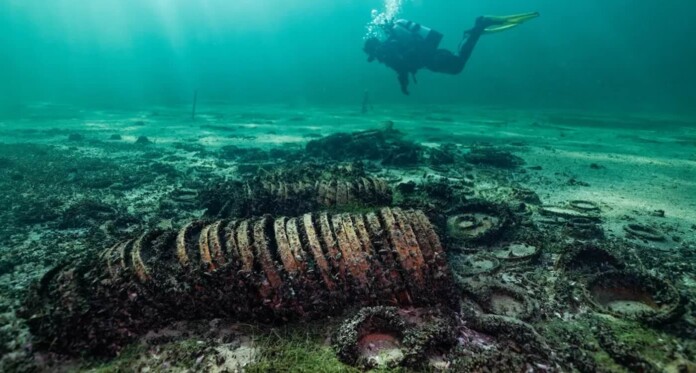
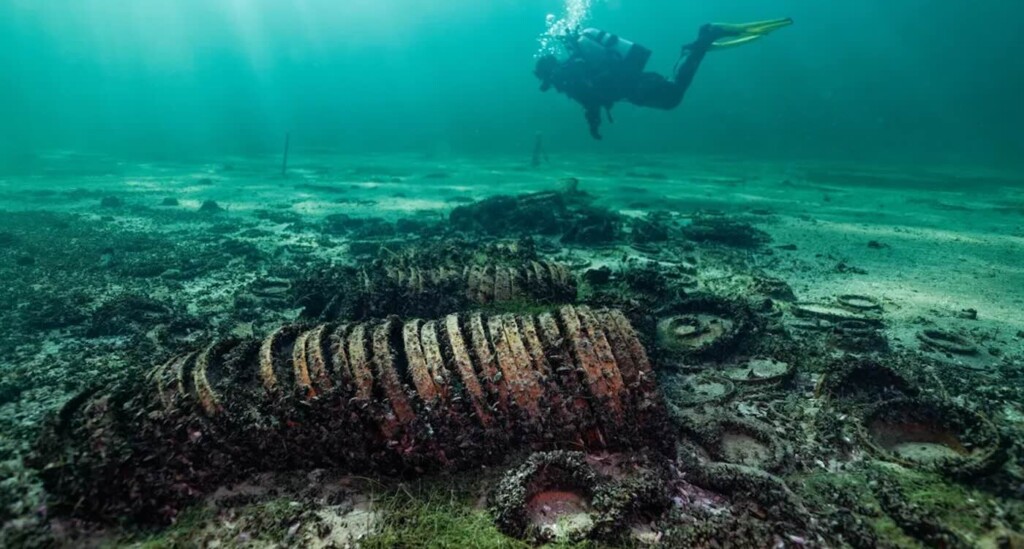
Now, maritime archaeologists from the Viking Ship Museum in Denmark reveal the discovery of the world’s largest “cog,” a medieval cargo ship whose size and previously unknown construction details offer new insight into the maritime technology and trade networks of the Middle Ages.

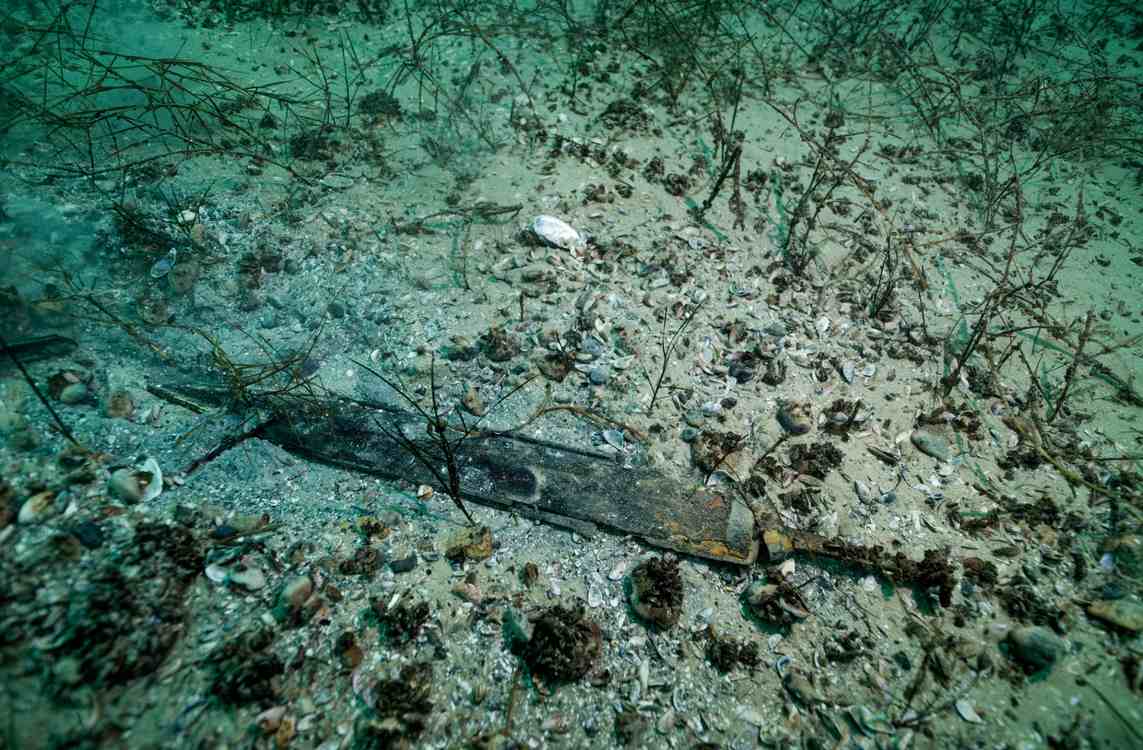
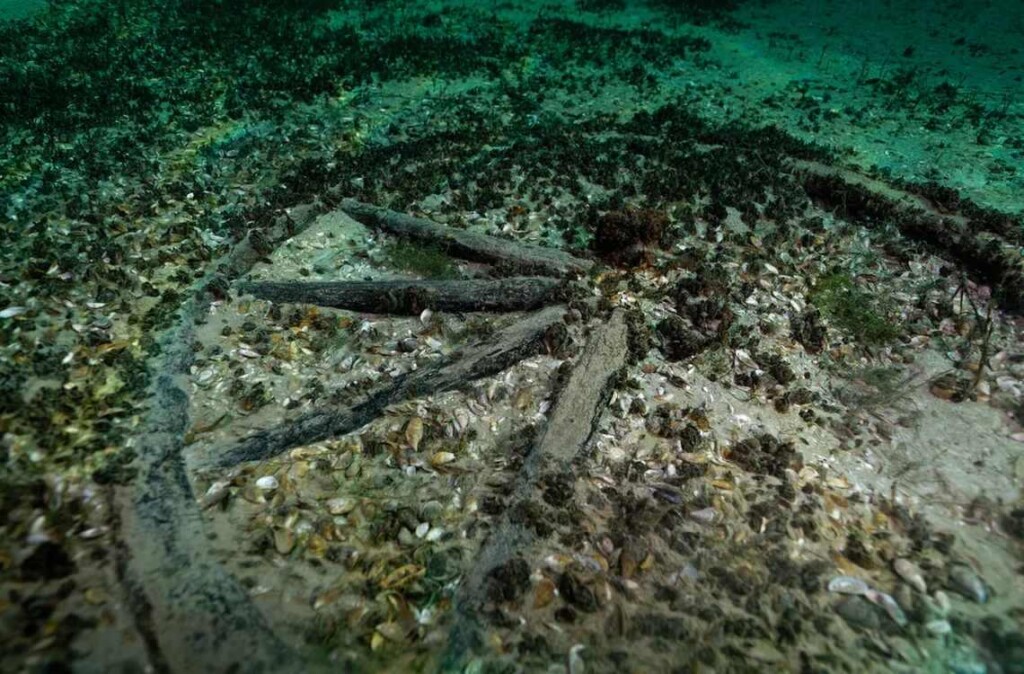
With the entirety of its starboard side buried within the mud of the Oresund strait, the body of water that separates Sweden from Denmark, its timbers, rigging, and even brick galley were preserved in excellent detail.

The ship, named Svælget 2 (Svaelget 2) after the channel where it was found, measures approximately 98 feet long, over 25 feet wide, and 18 feet high, with an estimated cargo capacity of 300 tons. It represents the largest example of a cog ever discovered anywhere in the world.

“The find is a milestone for maritime archaeology,” says archaeologist Otto Uldum, the leader of the excavation, in a statement. “It is the largest cog we know of, and it gives us a unique opportunity to understand both the construction and life on board the biggest trading ships of the Middle Ages.”

Tree-ring dating shows that the Polish oak cut to build the ship was felled around 1410. Sailors’ effects, such as combs and rosary beads, were found among the wreckage even as it seems to have sunk without a cargo on its way North from the Netherlands.

Cogs were the next step in medieval shipbuilding above the clinker-built longboats of the Viking age, called ‘knarrs.’ Cogs were larger, built to carry large cargos of raw materials like timber, salt, and bricks, but could be manned by small crews all the same.

Evidence of how with come in the form of the preserved rigging buried along with the timbers in the mud. The rigging was the arrangement of ropes and pullies that allowed the sailors and pilot to control, stow, and secure the sail.

The Hanse Cog on sail in Kiel, 2009 – credit CC 3.0. Wolfgang Fricke

The remains of Svaelget 2 included a covered platform known as a “castle deck” where sailors could hide from the weather.

“We have plenty of drawings of castles, but they have never been found because usually only the bottom of the ship survives,” Uldum says. “This time we have the archaeological proof.”

MORE MEDIEVAL SURPRISES: Exquisitely Preserved 1,000-yo Gaming Pieces Found in German Castle Offer Snapshot of Medieval Pastimes

Remains of a brick-built fireproof galley, including 200 bricks and more than a dozen tiles, were also found. Cogs came built with these fireproof rooms where sailors could cook their meals around an open fire—a huge quality of life improvement over the exposed longboats of their ancestors.

So much can be inferred from a vessel like this, and Uldum said in the statement that this includes the size and organization of the societies which financed, built, and used these vessels.

MORE SHIPWRECK NEWS: Shipwrecked Cargo of Roman Lead Bars Provides a Chance to Observe Dark Matter on Earth

“Perhaps the find does not change the story we already know about medieval trade,” Uldum says. “But it does allow us to say that it was in ships like Svaelget 2 that this trade was created. We now know, undeniably, that cogs could be this large—that the ship type could be pushed to this extreme.”

The only reason to build a ship so large is if there were a large enough trade to go with it, and the scope of Svaelget 2 demonstrates that it would have been large indeed to have merited such a large ship.

SHARE This Remarkable Find With Your Friends Interested In Sailing History…

Fiancé Surprises His Bride with Wedding Shower in the Preschool Where They First Met as Toddlers

Zoe Kampf and Sean Folloder - Courtesy of Zoe Kampf
Zoe Kampf and Sean Folloder – Courtesy of Zoe Kampf

Engaged to be wed this month, a young Texan wrangled the support of an entire preschool class to throw his fiancée a surprise bridal shower.

Walking into her preschool class at Shlenker school in Houston, Zoe Kampf was surprised by a troupe of children dressed in floral garlands and bow ties who handed her a tiara and a sash.

In the middle of it all was her hubby-to-be, Sean Folloder, in the very room where he had first met his beloved.

“When I walked in, I was really surprised,” Kampf told the Jewish Herald-Voice. “They had cookies and decorated the classroom. They gave me a sash and a veil and crown. It was really cute.”

Folloder’s grandmother, Barbie Freedman, was a teacher at Shlenker when both Zoe and Sean were attending as 4-year-olds.

Their paths reconnected again in summer camp of 2021. While working as the camp director, Freedman would send Folloder on little errands whenever Kampf needed something, and she cheekily suggested the pair go on a date.

One might say that Sean really Folloder advice.

Both teachers, with Folloder in charge of the geometry class at a nearby high school, the pair got engaged on the eve of Christmas Eve 2024, and should be tying the knot any day now.

MORE STORIES LIKE THIS: Two People from Minnesota Who Met in the Hospital After Waking up from Comas Are Getting Married

“They are a wonderful couple and really devoted to one another,” Freedman said. “It has been really fun to watch them grow up and grow together.”

“It was great to surprise her at school,” Folloder added. “She is such a great teacher and everyone, from her kids to her kids’ parents to the staff, loves her.”

Ah young love.

CELEBRATE This Long Love Story Coming To A Sweet Conclusion…

Just Like After 9-11, Town of Gander Shows Up to Help Stranded Airline Passengers During Ice Storm

Gander residents and volunteer drivers Dean Small, Samantha Barnes, Barbara Tibbo and Eddie Freake - credit, submitted by Eddie Freake.
Gander residents and volunteer drivers Dean Small, Samantha Barnes, Barbara Tibbo and Eddie Freake – credit, submitted by Eddie Freake.

When an Air Canada flight from Montreal to St. Johns was forced down on the tarmac in a small city during bad weather last week, the passengers were probably cursing their luck.

But that’s only because they didn’t know at the time where they had landed.

Gander, Newfoundland, has a history of showing up to stranded passengers in need, although it’s been 25 years since it was last called into action.

Following the September 11th terrorist attacks on the World Trade Center, flights across North America were grounded. Those who happened to be grounded in Gander were helped into the town’s hotels by a small army of volunteers showing up to the international airport to drive them there.

The story made international headlines at the time, and even manifested in a Broadway production, Come From Away. Now, 25-year later, the people of Gander are living up to that reputation.

An international flight crew stranded at Gander, pose with local ground crew on September 11th, 2001 – credit, Town of Gander

The flight to St. Johns was grounded due to freezing rain across its Ottawa flight path, and after spending more than an hour on the tarmac, the passengers were told they’d be staying in Gander.

With only a small number of taxis at the airport, the assistant manager of Quality Hotel and Suites posted on the Gander Connect Facebook page that, once again, their countrymen needed them.

“Locals were coming in their cars and in the taxis that weren’t being used to come and shuttle us to the hotel,” said Monet, a St. Johns resident stranded in Gander to VOCM.

“There’s probably about 150-200 of us, maybe even more, and you know, it was like experiencing Come From Away all over again. It’s nice to know that the heart of the community is the same.”

But that was only half of the spectacle. The following morning, each of the passengers naturally needed a lift back to the airport.

MORE AIRPORT AID: United Pilot Orders 30 Pizzas to Feed Passengers After Emergency Landing for Medical Care

Reports say that before they could even finish their continental breakfast, there were lines of volunteers outside the hotels waiting to chauffer the misfortunate visitors back to the airport.

It shows what’s possible—whether for a person, or a whole community—when they’re called to uphold a reputation for kindness. Would that we all have the chance.

SHARE This Inspiring Repeat Of Kindness 25-Years In The Making… 

Rare Twins Born to Mountain Gorilla Family in Virunga National Park

- credit, Virunga National Park
– credit, Virunga National Park

The Bageni family has a pair of blue balloons outside their mailbox, after this Congolese gorilla clan welcomed twins.

Now numbering 59 individuals, the twins were born to an adult female named Makufu, who will be closely monitored during the babies’ childhood.

Mountain gorillas are a critically-endangered subspecies of the eastern gorilla. Their strongholds concentrated in the sub-Saharan African countries of DRC, Uganda, and Rwanda.

Among their most guarded haunts is the Democratic Republic of the Congo’s Virunga National Park, considering the security environment in the country and the threat of the animals from poaching.

Makufu the now 7th-time mom, used to be part of the Kabirizi family of gorillas, which suffered from poaching, including of her mother.

Nonetheless, mountain gorillas now number around 1,000 individuals, up from 400 in the 1980s, the Independent reports.

“Twin births among mountain gorillas are rare and present additional challenges, particularly during the early months when infants are entirely dependent on their mother for care and transport,” park officials said in a statement.

MORE APES IN THE NEWS: Camera Traps Reveal New Babies Born to World’s Rarest Great Ape Species, Sparking Hope For its Survival

“Following the births, additional monitoring and protection measures will be deployed to closely observe the twins and support their health and survival during this critical early period.”

The boys are the first births of this year, and as they appear to be in healthy, robust condition, it’s hoped they will mark an auspicious year for the clan and the species at large.

SHARE This Precious Cargo With Your Friends On Social Media… 

“Everyone is a genius at least once a year.” – Georg C. Lichtenberg

By Daniel Clay

Quote of the Day: “Everyone is a genius at least once a year.” – Georg C. Lichtenberg

Image by: Daniel Clay

With a new inspirational quote every day, atop the perfect photo—collected and archived on our Quote of the Day page—why not bookmark GNN.org for a daily uplift?

By Daniel Clay

Good News in History, January 14

126 years ago today, Tosca debuted in Rome. A mainstay on opera calendars around the world, Giacomo Puccini’s enduring tale of feminine resilience and defiance in the face of corruption has featured some of the best-known singers in the art. Puccini’s arias in Tosca are some of his finest, and The Three Tenors often featured E Lucevan le stelle (And the stars shone) in their concerts. The story was originally written by a successful French playwright and Puccini felt it was born to be sung. In May of 1887, he wrote to his publisher begging to get the rights to make it into an opera, writing “I see in this Tosca the opera I need, with no overblown proportions, no elaborate spectacle, nor will it call for the usual excessive amount of music.” HEAR Tosca’s arias performed by legendary singers… (1900)

Number of London Homicides Falls to 11-year Low Equating to Record Lowest Homicide Rate Ever

- credit Anna Dziubinska on Unsplash
– credit Anna Dziubinska on Unsplash

Homicides in London have fallen to a decade low of 97 during the year just ended, a Metropolitan Police report revealed.

At a rate of 1.1 per 100,000 people, it’s lower than New York (2.8), Berlin (3.2) and Milan (1.6), according to the BBC. When measured in this way, it’s also the lowest homicide rate ever recorded in London.

Mayor Sadiq Khan and the Met Police Commissioner praised the results of a long-term effort to target criminal gangs and address climates that lead youth to commit violence.

“It’s the product of amazing police work as we attack with ever more precision the most dangerous men who carry weapons, who groom children into gangs, who prey on women,” said Commissioner Sir Mark Rowley, who added that preventative work also contributed to the fall in the homicide rate.

In 2019, Mayor Khan legislated the organization of London’s Violence Reduction Unit, a team of specialists working to help prevent young people falling into a life of crime, and address the issues that lead to just that.

“When we were set up more than six years ago, London’s homicide rate of young people was three times higher than it is today,” said VRU Director Lib Pec, in a comment to the BBC.

Although admitting petty crime, robberies, shoplifting, and phone theft were all far too high, Mayor Khan highlighted the implementation of CCTV cameras and live facial recognition software having created a database of known thieves as a first step to addressing these problems.

MORE STORIES LIKE THIS: New York City Had the Lowest Number of Shootings in its History Last Year

Additionally, the size of the police force in the West End, a particularly troubled part of the city, has been substantially increased.

“What we have to do is get sharper and more precise,” Sir Mark said. “That’s why we’re investing in data and technology, because it helps us find the most dangerous people, and if you get them off the streets it makes the biggest difference.”

SHARE This Story With People You Know Who Think London Is Dangerous… 

Former Google CEO Plans to Singlehandedly Fund a Hubble Telescope Replacement

Prototypes of the four proposed telescopes - Schmidt Science Institute
Prototypes of the four proposed telescopes – Schmidt Sciences

If you’re a billionaire looking to jump into philanthropy there are hundreds of different causes to support.

Fans of the seemingly always-cash-strapped NASA will certainly be cheering after news that a former Google CEO is going to foot the bill for a modern, updated replacement to the Hubble Space Telescope.

The 3-decade-old observatory which gave so many individuals among the Millennial and Generation X demographics their first views of the cosmos is still operational, but struggles over funding priorities and a new focus on physical exploration rather than photographic exploration will undoubtedly see it retired in the coming years.

Eric Schmidt, CEO of Google from 2001 to 2011, and the company’s executive chairman from 2011 to 2015, has announced together with his wife Wendy that their estate will philanthropically fund 4 telescopic observatories, one of which, called Lazuli, will be launched into space and bring capabilities that would outclass Hubble.

“For 20 years, Eric and I have pursued philanthropy to seek new frontiers, whether in the deep sea or in the profound connections that link people and our planet, committing our resources to novel research that reaches beyond what might be funded by governments or the private sector,” Wendy Schmidt said in a statement to Ars Technica.

“With the Schmidt Observatory System, we’re enabling multiple approaches to understanding the vast universe where we find ourselves stewards of a living planet.”

Ars speculated that the total investment could reach half-a-billion dollars, while detailing that the 4 separate telescopes were drawn from existing designs proposed to NASA by scientists.

Lazuli details – credit, Schmidt Sciences

“We sit on decades of technological developments since Hubble,” said Arpita Roy, lead of the Astrophysics & Space Institute at Schmidt Sciences, in an interview. “Lazuli is a very modern take on Hubble, with a larger mirror, swifter response, and different instruments.”

Lazuli would, if built and launched, orbit the Earth just like Hubble, but where the latter has a primary mirror of 2.4 meters in diameter, Lazuli’s would measure 3.1. It would image the universe in optical light, or the wavelengths that our own eyes can see, and is intended to launch as early as late 2028 and begin scientific operations in 2029.

Another number larger than Hubble’s would be Lazuli’s average distance of orbit around the Earth, (275,000 km to 77,000 km). The farther away from our planet, the less interference from heat and light seeps into the final data and images.

GOOGLE GIVING: Google Turns 2 Billion Smartphones into a Global Earthquake Warning System

With more than 5 decades of telescope development to review, the President of Schmidt Sciences, Stuart Feldman, said the philanthropic organization will act alone to try and meet a 5-year deadline for design, construction, and launch, as well as to help better control costs.

Despite the spectacular end product, NASA and ESA’s efforts on the James Webb Space Telescope were famously slow and expensive, and it’s something that, along with considerations over shifting political priorities for the space agency, convinced the institute’s staff it would be better to take on the project themselves.

Feldman told Ars Technia he had “moderate-high confidence” of success.

GREAT PHILANTRHOPY: Walmart Heiress Opens Medical School with a Focus on Preventative Medicine

“We are taking far more risks than NASA would be willing to do,” he acknowledged. “But we are doing things rigorously, and aiming for a very high probability of success.”

For most of human history, all observatories were projects of philanthropy. The pre-modern world’s most advanced astronomical instrument was located in Samarqand, and was basically the pet-project of the sultan Ulug Beg, born to extreme wealth, luxury, and a fascination with the stars.

SHARE This Great Home-Grown Philanthropy Soon To Launch Into Space… 

Endangered Species Are Bouncing Back to 90% on Kangaroo Island Thanks to Predator-Proof Fence

- credit, Australian Wildlife Conservancy
– credit, Australian Wildlife Conservancy

On Australia’s Kangaroo Island, cat-proof fencing is protecting native species from predation following a devastating wildfire and allowing them to recover in numbers that are shocking biologists.

The third-largest island controlled by Australia, Kangaroo Island saw a large fire burn through much of its scrub habitat in 2020, and conservationists knew this would leave native animals extremely vulnerable to attack from feral cats.

As soon as a week after the fires receded, employees of the Australian Wildlife Conservancy got to work surveying the landscape to see how feasible it would be to build a fence around the burned areas.

Their work immediately saw them come into contact with the impact of the cats on the native Kangaroo Island dunnart, a mouse-sized marsupial with no natural defense against them.

Erecting the fence around the Western River Refuge, however, has seen the number of dunnarts increase between 90 and 100%, shocking the conservancy staff and the traditional Ngarrindjeri owners who run cultural tours on the island.

– credit, Brad Leue / Australian Wildlife Conservancy

“So the dunnart has fared a lot better than I think a lot of people thought [they would] … especially me, six years ago,” Australian Wildlife Conservancy principal ecologist Pat Hodgens told ABC News AU, adding that another shock came from the reappearance of native birds.

MORE STORIES LIKE THIS: Birds Start to Show Signs of Recovery After Bee-Harming Pesticide Ban in the EU

“The western whipbird and also the Bassian thrush … these birds are also really predated upon by feral cats. We didn’t have any of those birds living within the feral cat exclusion fence at the time of construction, but they’ve found their way back there.”

Australia has in the past had some of the highest rates of extinction of native species seen anywhere on Earth, but this has slowed dramatically over recent years, such that even mainstream media doom and gloomsters have had to admit that anything which could even remotely be called a ‘6th mass extinction’ isn’t happening by any stretch of the imagination.

YOU MAY ALSO LIKE: The Greatest Conservation Story Ever Told Isn’t Really Being Told

Kangaroo Island, its cats, dunnarts, and shiny new fence, is something of a microcosm of the phenomenon. Animals native to isolated islands go extinct from invasive species, and if averaged year-over-year seem to indicate that the planet is losing species far faster than in previous periods of its history.

But small determined changes, such as eliminating invasive species and creating conservation areas have dramatically slowed even this very specific form of species loss.

SHARE This Uplifting Australian News With Your Friends… 

A Surgeon Saved His Life as a Teenage Immigrant. Now They Operate Together for Charity in Ethiopia

Mesfin and Kauten reunite - credit Allen Dollar
Mesfin and Kauten reunite – credit Allen Dollar

Each of these men had to walk a long hard road, paved with blood, sweat, and tears, to arrive at this moment, embracing each other as both patient-physician and colleague-colleague.

From his birth in a powerless, waterless village in Ethiopia 41 years ago, Mesfin Yana has often found himself at the mercy of the kindness of strangers; strangers like Jim Kauten, a cardiothoracic surgeon who first met Mesfin when he was wheeled into his Atlanta operating theater for open heart surgery.

This incredible tale of compassion and gratitude, documented by the Washington Post, reminds us all of the miracles that can come from just caring a little to help a young impoverished soul.

Msefin, according to the Post, was surrounded by love and wanted for nothing in his home country, but a cough that started just by slowing him down turned into rheumatic fever. Staggering into Mother Teresa’s Missionaries of Charity in Addis Ababa, the scrawny youngster met American doctor Rick Hodes.

Hodes, the Post reports, is credited with saving thousands of children with heart disease through his own generosity and a series of clever fundraising strategies to pay for surgery on the poorest among them.

Children’s Cross Connection International paid for Mesfin to fly to Atlanta to undergo open heart surgery at Piedmont Heart Institute. There, Dr. Kauten successfully repaired the boy’s mitral valve to improve his heart function, and recommended he stay with his host family nearby while he recovered.

His host happened to be a dentist, and seeing as how Mesfin would soon be back on his way to Ethiopia, recommended he take advantage of his surroundings and get his wisdom teeth pulled. This, after the young man returned to his family to tears of joy, actually developed into another heart problem called endocarditis, which Mesfin believed was certain to claim his life—even as he once again lay on Dr. Hodes’ physician’s table in Addis Ababa.

Both Christian men, Mesfin was happy to chalk his misfortune up to God’s will; Dr. Hodes was not. The American sent his patient back to Atlanta for a second surgery. God only knows who funded this time.

The diagnosis was that a valve repair wasn’t enough: it had to be replaced with a mechanical one, which meant he would have to live in the US where blood thinners and monitoring were readily available.

Mesfin Yana Dollar, his wife Lyreusalem, and their two kids – credit, Mesfin

It was at this time that he encountered the startling kindness of another stranger: Allen Dollar. Mesfin’s cardiologist, Dollar was also the adopted father to many children, and took Mesfin under his roof as well.

“I’m always grateful,” Mesfin told the Post. “I’m grateful for my family, for just being in the United States. It’s a resurrection for me. You know, I was once lost, dead, and I was resurrected and I’m living a new life.”

MORE STORIES OF GENEROSITY: Doctor Gave Free Care to Patients for Decades–Now They’ve Raised $280,000 to Pay for His Cancer Treatment

Resurrected, as he describes it, Mesfin Dollar threw himself into his studies, training to become a health care professional at Georgia State University. It’s there he met his wife Lyerusalem, with whom he has two children.

Mesfin would eventually move his family to Texas where he trained to become a perfusionist at the Texas Heart Institute before eventually getting a job at the Mayo Clinic in Minnesota, where he operates the heart-lungs machine for patients undergoing open-heart surgery in some of the most complex cardiac procedures.

ETHIOPIAN STORIES: Ethiopians Brew Success as Coffee and Cash Pile Up Thanks to Transformational Sustainable Forestry Program

One can imagine it didn’t take much for him to make room in his schedule to return to Ethiopia to do surgeries through the nonprofit Heart Attack Ethiopia. On the first surgery mission trip a couple of years ago, Mesfin surprised Dr. Jim Kauten, who was also there at the time.

“That was especially nice in my mind,” Kauten said. “For him to be able to pay back to his community services that he received in the United States, and he was able to pay it back in Ethiopia.”

ALSO CHECK OUT: Syrian Refugee Learning English Brings Food for His Class Every Week–Bringing the Nation’s Legendary Hospitality Home

As well as providing a key service in the operating theater, the native Amharic-speaker acts as the social glue between volunteer surgeons and patients, children like he once was, unable to understand or talk to his benefactors. His translations help put the patients at ease and stich both sides of the volunteer team together.

Mesfin has since relocated his family to the US, where they live together in what must be one of the most grateful family units in the country.

SHARE This Heartwarming Immigrant Story Of Christian Kindness With Your Friends…