Quote of the Day: “What can you seek now, to make your heart still sing?” – Langston Hughes
Photo by: glancs, CC license
With a new inspirational quote every day, atop the perfect photo—collected and archived on our Quotes page—why not bookmark GNN.org for a daily uplift?
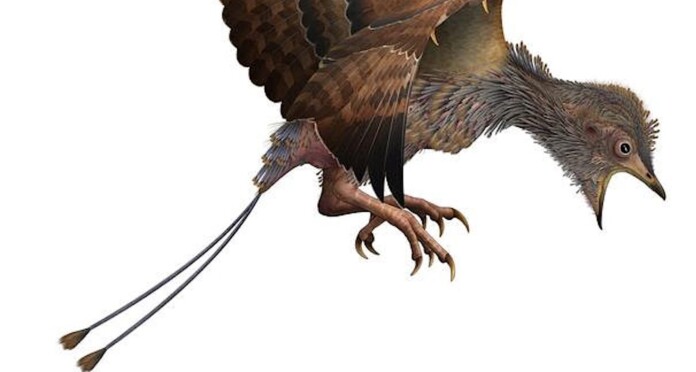
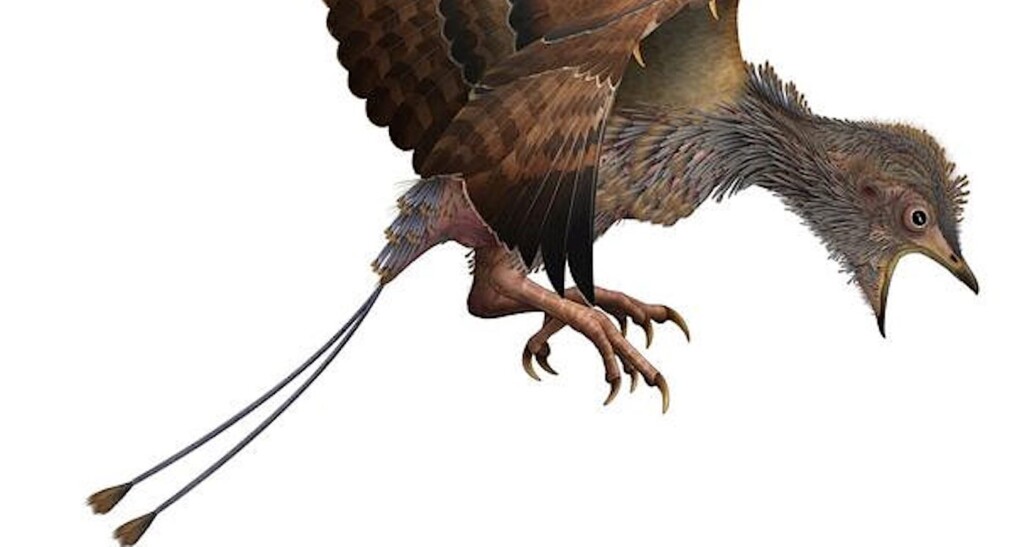
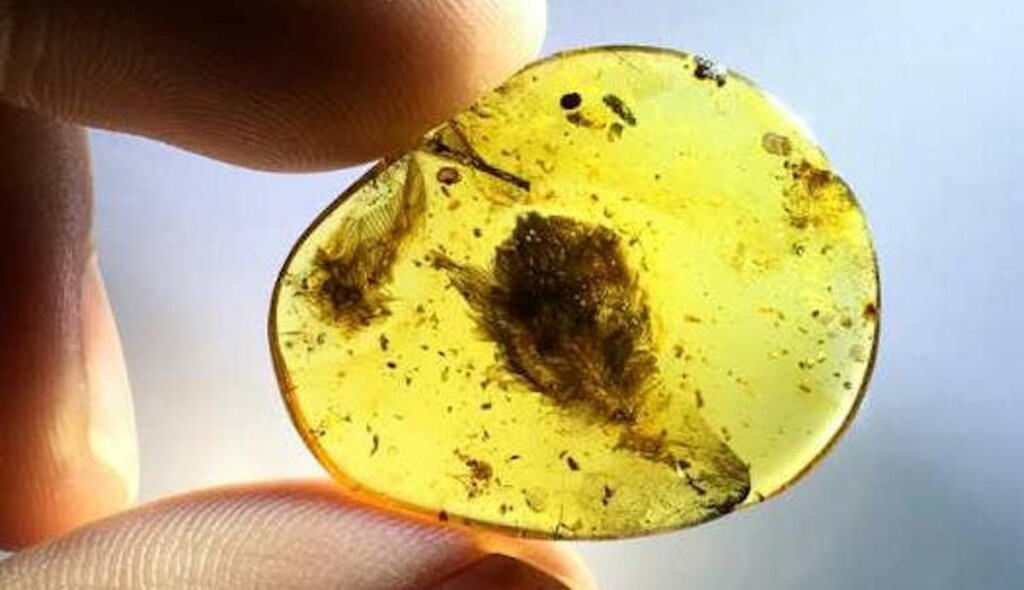
Bird feathers from 99 million years ago not only shows that modern birds are descended from dinosaurs but might also point to why some of their ancestors died out.
The feathers, found preserved in amber in Myanmar, show how molting was the key to some early extinctions.
It represents the first definitive fossil example of juvenile molting in birds, the only type of dinosaurs to survive the asteroid strike.
The bird, named Enantiornithine, had to keep itself warm while undergoing rapid shedding, a factor in the species’ ultimate doom, say scientists.
All non-avian dinosaurs were wiped out in the asteroid strike that hit the Gulf of Mexico 66 million years ago.
“Enantiornithines were the most diverse group of birds in the Cretaceous, but they went extinct along with all the other non-avian dinosaurs,” explained Professor Jingmai O’Connor of The Field Museum Chicago, who published the research in the journals Cretaceous Research and Communications Biology.
“When the asteroid hit, global temperatures would have plummeted and resources would have become scarce, so not only would these birds have even higher energy demands to stay warm, but they didn’t have the resources to meet them.”
The present consensus is that birds are a group of theropod dinosaurs that originated during the Mesozoic Era from 252 to 66 million years ago.
Feathers are made of a protein called keratin, the same material as our fingernails and hair and molting happens as they can’t be repaired.
Feathers from a baby bird that lived 99 million years ago – SWNS
“Molting is fundamentally such an important process to birds, because feathers are involved in so many different functions,” said Prof. O’Connor.
“We want to know, how did this process evolve? How did it differ across groups of birds? And how has that shaped bird evolution, shaped the survivability of all these different clades?”
Today there are two types, known as altricial or precocial birds. The former hatch naked so parents can transmit body heat directly to their skin. The latter are born with feathers and are fairly self-sufficient.
Molting takes a lot of energy, and losing a lot of feathers at once can make it hard for a bird to keep itself warm. As a result, precocial chicks tend to molt slowly. They keep a steady supply of feathers, while altricial chicks that can rely on their parents for food and warmth undergo a ‘simultaneous molt’ at roughly the same time.
Prof O’Connor explained, “This specimen shows a totally bizarre combination of precocial and altricial characteristics.
“All the body feathers are basically at the exact same stage in development, so this means that all the feathers started growing simultaneously, or near simultaneously.”
In modern adult birds, molting usually happens once a year in a sequential process, in which they replace just a few of their feathers at a time over the course of a few weeks. That way, they are still able to fly throughout the molting process. Simultaneous molts in adult birds are more common in aquatic birds like ducks.
They tested more than 600 skins of modern birds stored in the ornithology collection of the Field Museum to look for evidence of active molting.
“Among the sequentially molting birds, we found dozens of specimens in an active molt, but among the simultaneous molters, we found hardly any,” said first author Dr Yosef Kiat.
While these are modern birds, not fossils, they provide a useful proxy.
“In paleontology, we have to get creative, since we don’t have complete data sets,” said O’Connor.
“Here, we used statistical analysis of a random sample to infer what the absence of something is actually telling us.”
It is believed ancient birds simply weren’t molting as often as most modern birds—either doing it simultaneously or not on a yearly basis like today. Prehistoric birds and feathered dinosaurs, especially ones from groups that didn’t survive the mass extinction, molted differently, state the US team.
“All the differences that you can find between crown birds and stem birds, essentially, become hypotheses about why one group survived and the rest didn’t. I don’t think there is any one particular reason why the crown birds, the group that includes modern birds, survived. I think it is a combination of characteristics.
“But I think it is becoming clear that molt may have been a significant factor in which dinosaurs were able to survive.”
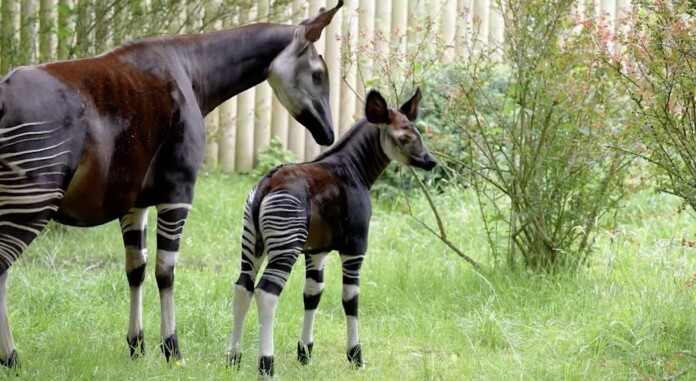
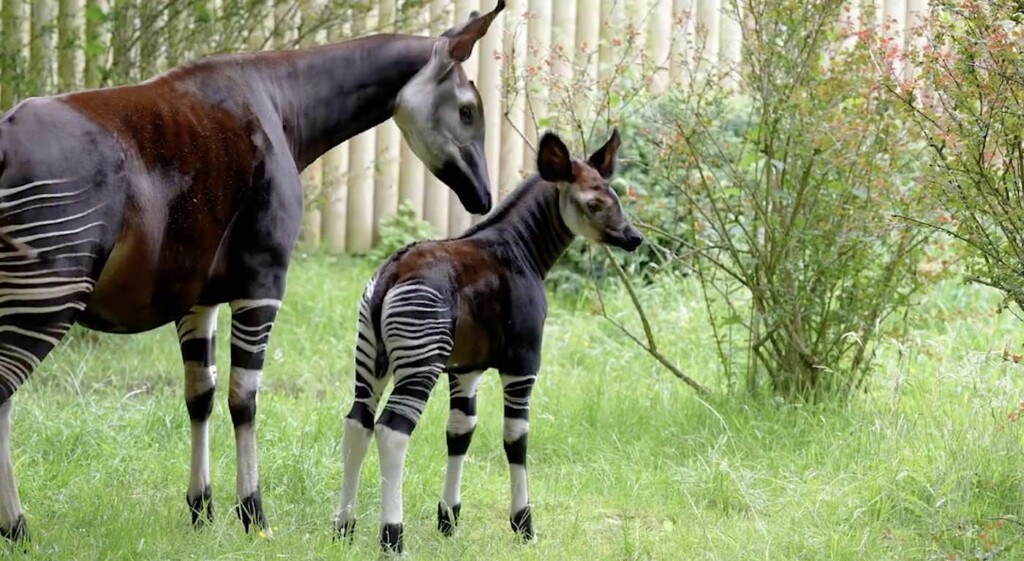
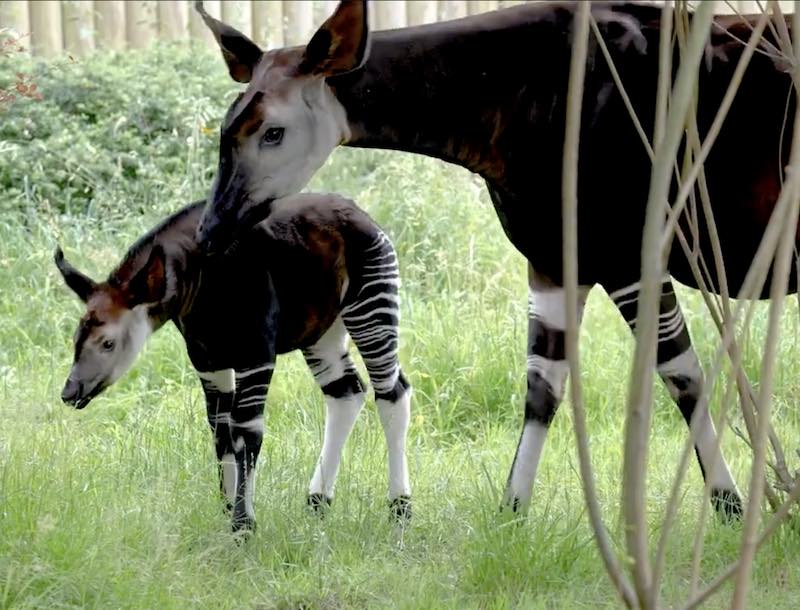
Zookeepers threw a coming-out party for the baby calf of an okapi couple—a rare birth of ‘one of the least known and understood species on the planet’.
Known as the forest giraffe, the endangered mammal was born at Chester Zoo on May 12 to a 10-year-old mother and a 20-year-old male named Stomp.
The adorable calf, named Arabi, has been snuggled up in a nest behind-the-scenes but has now taken her first tentative steps outside at six-weeks-old.
Heartwarming photos and the video below shows the leggy youngster exploring her enclosure for the first time with some gentle encouragement from mum.
Conservationists hope the birth will shed new light on this shy and elusive species, which is classified as endangered, but was only scientifically discovered in 1901.
Arabi’s namesake is a village located in the Okapi Wildlife Reserve, inside the only country where okapi are found—the Democratic Republic of Congo (DRC) in Africa.
It’s estimated that fewer than 10,000 remain in the wild, living in the dense rainforests in the DRC where their zebra stripes act as camouflage.
Chester Zoo
The English zoo and its partners say the new arrival will be considered a ‘vital’ part of the global population.
“Every birth is incredibly special indeed,” said Hannah Owens, an okapi keeper at Chester Zoo. “Mum has been doing a fantastic job of feeding and nurturing her calf every day.”
Mike Jordan, animal and plant director at the zoo, added: “The arrival of this okapi calf is not only a cause for celebration but also a significant milestone in our ongoing commitment to the conservation and protection of this charismatic species.
“Through our continued efforts, we hope to inspire others to join us in safeguarding these remarkable creatures.”
The okapi is the national symbol of the DRC and is protected under Congolese law. However, habitat loss, poaching, and prolonged periods of conflict have made conservation more challenging.
“Despite that, we’ve been supporting okapi conservation in the region for nearly 20 years and are now part of a global 10-year long project, in collaboration with the International Union for Conservation of Nature, to develop an action plan and investigate ways that we can help the last remaining populations thrive.”
A 95-year-old veteran became the first person to dance at a newly-reopened nightclub, 74 years after meeting his wife there.
Sprightly Kevin Topham took to the dance floor with his caregiver when Club X reopened after more than a decade in Nottinghamshire, last weekend.
The grandad-of-one was adamant that he wanted to go back to the venue where he remembers meeting his bride, Molly, in the 1940s, when it was known as the Corn Exchange—a hotspot for servicemen.
It was during a Royal Air Force dance that the retired airman and oil rig worker wooed Molly, before their happily married life with two children.
Kevin noticed the venue was being reopened in his local newspaper and asked his part-time caregiver Donna Harvey whether she would take him dancing.
Despite being warned there would be “booming music” and strobe lighting in a room full of 18-year-olds, the senior was undeterred.
But Donna had a better plan, and asked the club owner if they could come in early. He not only offered the dance floor but gave the veteran his choice of music.
Kevin was the first person to shuffle across the floor on Saturday night, July 1, to the song Chattanooga Choo Choo by the Glenn Miller Orchestra.
“It was just amazing, his face absolutely beamed,” Donna said. “It melted my heart, because it made him happy.”
“All of his memories came flooding back to him.
“He put on his medals and he talked about how all the Americans stationed nearby would come in and there would be fights over who could dance with the women.
“It was just so heart warming. He hasn’t stopped talking about it.”
Donna said Kevin had asked her what she was doing that coming Saturday and then explained he wanted to take her out dancing.
“I said ‘Kevin, it will be nothing like it was in 1949’. But he just kept asking me about it – he was determined.
“I thought if I didn’t take him he’s probably going to get in his car and go, which I didn’t want him to do. So when I was down there and saw the door of the club open, I went to go and see the manager.
“There was no umm-ing and ah-ing, the manager just said to bring him down at 8pm and that’s what we did.”
Kevin’s daughter, Karen Mason, said her dad had always loved dancing and found the whole event “quite emotional”. Kevin even spun Donna around.
“The new owners clearly care for their community, not just the young people but older members too.
They even put on a second slower song to close out the set.
The English club has since said it was inspired by Kevin and is looking at introducing an over-60s event each month where they will play music from the 1940s, 50s and 60s.
FREE WILL ASTROLOGY – Week of July 8, 2023
Copyright by Rob Brezsny, FreeWillAstrology.com
CANCER (June 21-July 22):
I wrote my horoscope column for over ten years before it began to get widely syndicated. What changed? I became a better writer and oracle, for one thing. My tenacity was inexhaustible. I was always striving to improve my craft, even when the rewards were meager. Another important factor in my eventual success was my persistence in marketing. I did a lot of hard work to ensure the right publications knew about me. I suspect, fellow Cancerian, that 2024 is likely to bring you a comparable breakthrough in a labor of love you have been cultivating for a long time. And the coming months of 2023 will be key in setting the stage for that breakthrough.
LEO (July 23-Aug. 22):
Maybe you wished you cared more deeply about a certain situation. Your lack of empathy and passion may feel like a hole in your soul. If so, I have good news. The coming weeks will be a favorable time to find the missing power; to tap into the warm, wet feelings that could motivate your quest for greater connection. Here’s a good way to begin the process: Forget everything you think you know about the situation with which you want more engagement. Arrive at an empty, still point that enables you to observe the situation as if you were seeing it for the first time.
VIRGO (Aug. 23-Sept. 22):
You are in an astrological phase when you’ll be wise to wrangle with puzzles and enigmas. Whether or not you come up with crisp solutions isn’t as crucial as your earnest efforts to limber up your mind. For best results, don’t worry and sweat about it; have fun! Now I’ll provide a sample riddle to get you in the mood. It’s adapted from a text by David Wallechinsky and Irving Wallace. You are standing before two identical closed doors, one leading to grime and confusion, the other to revelation and joy. Before the doors stand two figures: an angel who always tells the truth and a demon who always lies. But they look alike, and you may ask only one question to help you choose what door to take. What do you do? (Possible answer: Ask either character what the other would say if you asked which door to take, then open the opposite door.)
LIBRA (Sept. 23-Oct. 22):
I found a study that concluded just 6.1 percent of online horoscopes provide legitimate predictions about the future. Furthermore, the research indicated, 62.3 percent of them consist of bland, generic pabulum of no value to the recipient. I disagree with these assessments. Chani Nicholas, Michael Lutin, Susan Miller, and Jessica Shepherd are a few of many regular horoscope writers whose work I find interesting. My own astrological oracles are useful, too. And by the way, how can anyone have the hubris to decide which horoscopes are helpful and which are not? This thing we do is a highly subjective art, not an objective science. In the spirit of my comments here, Libra, and in accordance with astrological omens, I urge you to declare your independence from so-called experts and authorities who tell you they know what’s valid and worthwhile for you. Here’s your motto: “I’m the authoritative boss of my own truth.”
SCORPIO (Oct. 23-Nov. 21):
Is it a fact that our bodies are made of stardust? Absolutely true, says planetary scientist Dr. Ashley King. Nearly all the elements comprising our flesh, nerves, bones, and blood were originally forged in at least one star, maybe more. Some of the stuff we are made of lived a very long time in a star that eventually exploded: a supernova. Here’s another amazing revelation about you: You are composed of atoms that have existed for almost 14 billion years. I bring these startling realities to your attention, Scorpio, in honor of the most expansive phase of your astrological cycle. You have a mandate to deepen and broaden and enlarge your understanding of who you are and where you came from.
SAGITTARIUS (Nov. 22-Dec. 21):
I foresee that August will be a time of experiments and explorations. Life will be in a generous mood toward you, tempting and teasing you with opportunities from beyond your circle of expectations. But let’s not get carried away until it makes cosmic sense to get carried away. I don’t want to urge you to embrace wild hope prematurely. Between now and the end of July, I advise you to enjoy sensible gambles and measured adventures. It’s OK to go deep and be rigorous, but save the full intensity for later.
CAPRICORN (Dec. 22-Jan. 19):
Is there a crucial half-conscious question lurking in the underside of your mind? A smoldering doubt or muffled perplexity that’s important for you to address? I suspect there is. Now it’s time to coax it up to the surface of your awareness so you may deal with it forthrightly. You must not let it smolder there in its hiding place. Here’s the good news, Capricorn: If you bring the dilemma or confusion or worry into the full light of your consciousness, it will ultimately lead you to unexpected treasure. Be brave!
AQUARIUS (Jan. 20-Feb. 18):
In Larry McMurtry’s novel Duane’s Depressed, the life of the main character has come to a standstill. He no longer enjoys his job. The fates of his kids are too complicated for him to know how to respond. He has a lot of feelings but has little skill in expressing them. At a loss about how to change his circumstances, he takes a small and basic step: He stops driving his pickup truck and instead walks everywhere he needs to go. Your current stasis is nowhere near as dire as Duane’s, Aquarius. But I do recommend you consider his approach to initiating transformation: Start small and basic.
PISCES (Feb. 19-March 20):
Author K. V. Patel writes, “As children, we laugh fully with the whole body. We laugh with everything we have.” In the coming weeks, Pisces, I would love for you to regularly indulge in just that: total delight and release. Furthermore, I predict you will be more able than usual to summon uproarious life-affirming amusement from the depths of your enchanted soul. Further furthermore, I believe you will have more reasons than ever before to throw your head back and unleash your entire self in rippling bursts of healing hysterical hilarity. To get started, practice chuckling, giggling, and chortling for one minute right now.
ARIES (March 21-April 19):
Genius physicist Albert Einstein said, “The formulation of a problem is often more essential than its solution, which may be merely a matter of mathematical or experimental skill. To raise new questions, new possibilities, to regard old questions from new angles, requires creative imagination and makes real advances.” What he said here applies to our personal dilemmas, too. When we figure out the right questions to ask, we are more than halfway toward a clear resolution. This is always true, of course, but it will be an especially crucial principle for you in the coming weeks.
TAURUS (April 20-May 20):
“Every great advance in natural knowledge has involved the absolute rejection of authority.” So said Taurus biologist and anthropologist Thomas Huxley (1825-1895). I don’t think you will have to be quite so forceful as that in the coming weeks. But I hope you’re willing to further your education by rebelling against what you already know. And I hope you will be boisterously skeptical about conventional wisdom and trendy ideas. Have fun cultivating a feisty approach to learning! The more time you spend exploring beyond the borders of your familiar world, the better.
GEMINI (May 21-June 20):
Hooray and hallelujah! You’ve been experimenting with the perks of being pragmatic and well-grounded. You have been extra intent on translating your ideals into effective actions. I’m not sure I’ve ever seen you so dedicated to enjoying the simple pleasures. I love that you’re investigating the wonders of being as down-to-earth as you dare. Congratulations! Keep doing this honorable work.
WANT MORE? Listen to Rob’s EXPANDED AUDIO HOROSCOPES, 4-5 minute meditations on the current state of your destiny — or subscribe to his unique daily text message service at: RealAstrology.com
Quote of the Day: “He who loves, flies, runs, and rejoices; he is free and nothing holds him back.” – Henri Matisse
Photo by: Timon Studler
With a new inspirational quote every day, atop the perfect photo—collected and archived on our Quotes page—why not bookmark GNN.org for a daily uplift?
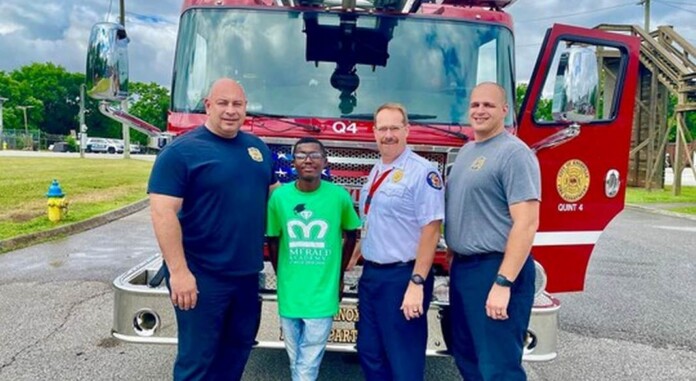
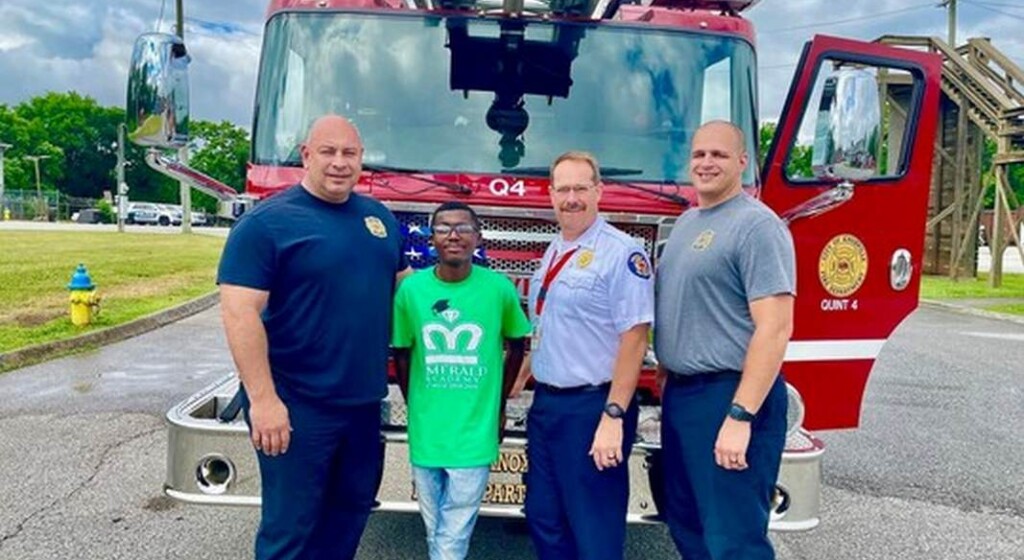
Kevin Faddis (far left) and Mark Wilbanks (far right) delivered young OT (in green) as a baby credit - Knoxville Fire Department
Kevin Faddis (far left) and Mark Wilbanks (far right) delivered young OT (in green) as a baby credit – Knoxville Fire Department
From a Knoxville fire department comes the bizarre story of a small-world encounter when a high school graduate named ‘OT’ was interning there and thought he was meeting the firefighters for the first time.
Unbeknownst to him, some of the firefighters already had had the pleasure of making his acquaintance—when OT was buck naked, quivering from the light from his mother’s bedroom after they helped deliver him 18 years ago.
O’Tavais (OT) Harris is the seventh son of Lateshia Hall, who at that point in her life knew when a baby was on its way. At a little before 7:00 pm on New Year’s Day 2005, Hall asked her mother to call 911, knowing this baby wasn’t waiting for anyone.
In came Kevin Faddis and Mark Wilbanks from the Knoxville Fire Department to help deliver Hall’s baby, clamp off and cut the umbilical cord, and hang around until an ambulance arrived to take Hall and OT to the hospital.
Fast-forward 18 years and O’Tavais had graduated from high school and was accepted into Knoxville’s Summer in the City program. A paid internship that allows departing students to intern at various civic departments.
One day, Lateshia received a video call from her son standing next to Kevin Faddis, the mentor of his internship program, and said that OT asked if she knew the man.
“He doesn’t even want to be a firefighter, so it was one in a million,” OT’s mom Lateshia told the Washington Post. “This man had delivered my baby, and now OT was standing next to him? Incredible!”
Telling the Post how the encounter went, OT said they put two and two together after Faddis learned where OT used to live.
“He asked me how many siblings I had, and I told him I had a lot—more than a lot,” Harris said. “Then he asked what part of town I lived in, and I told him some of the streets I’d lived on.”
At that point, Faddis exclaimed he had delivered a baby in that part of town, something which OT had always heard from his mom—at which point it all became clear.
Faddis said he remembered the day as clear as ever—the first time he got a call for such a thing. He recalled that Lateshia was as cool as a cucumber saying that there wasn’t time to go to the hospital. His colleague Wilbanks has delivered 6 in his career as a firefighter, but OT was the only spontaneous one, with the whole thing taking less than a minute.
It’s a small world, and though OT doesn’t have an interest in fighting fires (or delivering babies) he was very appreciative of the opportunity to thank the two men who have a unique place in his life story.
He plans to study English when he goes off to East Tennessee University, after which he hopes to work in education.
A new examination of dolphin vocalizations found that mother bottlenose dolphins whistle at a higher pitch when talking to their offspring, exactly like human mothers do with theirs.
While difficult to confirm in theory, a number of highlights from the study reveal the finding to be a robust one, including that the dolphins only used their “baby talk” voice with their calves, only in situations that weren’t stressful, and that human babies are known to prefer baby talk to adult speech.
The study was conducted off the Sarasota coast, Florida, with mother-calf pairings that were herded into a wide ocean-going enclosure. The animals were monitored to ensure they weren’t stressed or in poor health while the study commenced.
The researchers at the Sarasota Dolphin Research Program used spectrograms to study the contour and bandwidth of every call. Every dolphin has a unique whistle, and the spectrograms showed that the whistling directed at the calves had lower lows, and higher highs, just like the way humans tend to coo at their babies with whooping tones.
“It was very much like what human mothers do when they talk in a high-pitched voice to their infants,” Laela Sayigh, a biologist at the Woods Hole Oceanographic Institution and the study’s lead author, told Science News. “We have no idea of what they’re communicating, but likely, it’s, ‘I’m here. I’m here.’”
Sayigh’s reasoning is that the ocean is vast, and in a pod of dolphins, the whistles may be difficult to separate for the calf’s still-developing ears. The baby talk would make any mother’s whistle much more identifiable amid the racket.
Some scientists are seeing the study as a landmark: the touchstone of a future host of papers looking for baby speech in other animal vocalizations like parrots or primates.
In the video below, one can hear the recordings of their whistling slowed down. It first plays the call without calf, then the call with calf, then repeats this a second time.
LISTEN and hear for yourself…
SHARE This Touching Animal Fact With Your Friends…
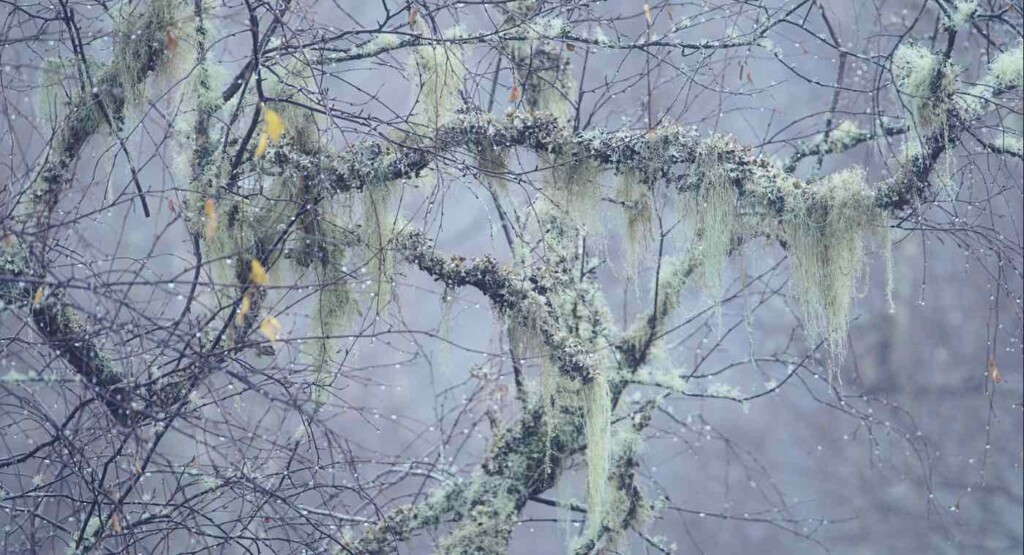
Scottish birch with lichen – by Spodzone, CC license
Scottish birch with lichen – by Spodzone, CC license
By yon bonny banks, and by yon bonny breaks, where the sun shines bright on Loch Lomond, the famous song goes. But while the loch may indeed be bonny, the hills around it were in trouble for decades.
Now however, invasive plants that outcompeted the natives have been removed, and the hills around Scotland’s Loch Lomond are set for a bonny transformation.
Over the past 5 years, the Royal Botanical Garden Edinburgh (RBGE) has been working to restore the oak woodlands around Loch Lomond and Trossachs National Park to their natural state of temperate rainforest like the ones so plentiful in Washington’s Olympic Peninsula.
Anyone familiar with the Pacific Northwest’s rainforests will know the ubiquitous presence of mosses and clinging lichens in the forests there—exactly what Scotland’s had before invasive Rhododendron poticum acidified the soil and shaded out other delicate epiphytes and bryophytes—two species that are always present in rainforests; temperate or tropical.
“When you get rid of the rhododendron, you are left with the trees—but a lot of the biodiversity that makes the rainforest special is missing,” Christopher Ellis at the RBGE told Inkcap. “Some of those species find it very hard to recolonize into recovered woodland, so that’s what the project is about.”
Applying what looks like tree paint but was actually a mixture of thousands of propagules onto the bark of trees didn’t really work, so instead, Ellis and his team started attaching netting to give the juvenile hornworts, liverworts, and lichens a scaffolding to work with.
The hope is to encourage massive and dense propagation to give the forests in Trossachs the tangled emerald mess that makes them so majestic and fantastical.
Loch Lomond and Trossachs National Park – CC 4.0. Alexey Komarov
In this image of a forest trail, what appears to be a rich and healthy forest is actually unbalanced, with the bare oaks on the left, and the invasive rhododendron flowers invading the picture on the right.
“When you enter into an intact rainforest, it has a sense of ancientness: you have these craggy old oaks, and they’re absolutely dripping in epiphytes,” Ellis said, explaining what they hope to achieve. “They’ve got a sort of fairytale feel.”
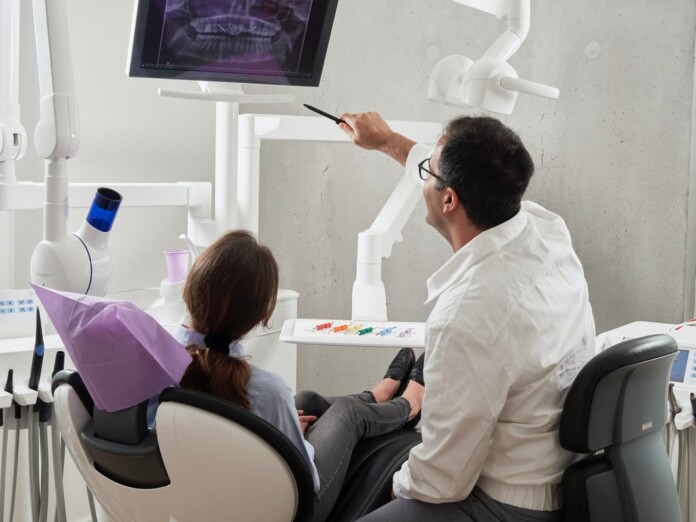
A drug showing promise in animal trials could provide the world’s first method to regrow human teeth, or create normal tooth development in children with congenital anodontia.
The breakthrough came from the identification of a gene-protein interaction in mice that resulted in the growth of fewer teeth. An antibody medicine that inhibited the protein’s ability to function caused teeth to grow in both mice and ferrets who were born with improper tooth formation.
The breakthrough was made by Katsu Takahashi, who studied advanced dentistry at Kyoto University as part of his post-graduate studies, and more besides in the United States.
“The idea of growing new teeth is every dentist’s dream. I’ve been working on this since I was a graduate student. I was confident I’d be able to make it happen,” Mr. Takahashi said.
Anodontia is a congenital condition present in about 1% of the population that impedes the development of teeth. About 10% of those patients have oligodontia, in which they lack 6 or more natural teeth.
Around 2005, and upon Takahashi’s return to Japan, literature began being published that pinpointed certain genes in mice that when deleted caused them to grow fewer or more teeth.
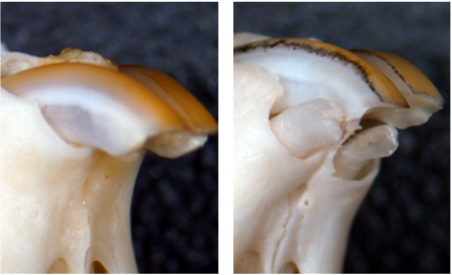
In mice deficient in USAG-1, an antagonist of BMP, the trace deciduous incisors survive and erupt as excess teeth (Kyoto University Katsu Takahashi)
Investigating the latter, Takahashi found that this gene synthesized its own protein called USAG-1, and that when he targeted it with a neutralizing antibody, the mouse’s teeth proceeded to grow like normal.
“Ferrets are diphyodont animals with similar dental patterns to humans. Our next plan is to test the antibodies on other animals such as pigs and dogs,” Takahashi told Kyoto University press.
Published in 2021, he is now leading the way to get the drug ready for use in humans. Our species, unlike many others on Earth, can’t regrow teeth constantly, and the regrowth of a third tooth at the loss of our adult teeth would revolutionize dentistry.
SHARE This True Breakthrough With Your Friends In Need Of A Tooth…
Quote of the Day: “Life ought to be a struggle of desire toward adventures whose nobility will fertilize the soul.” – Rebecca West
Photo by: Luca Bravo
With a new inspirational quote every day, atop the perfect photo—collected and archived on our Quotes page—why not bookmark GNN.org for a daily uplift?
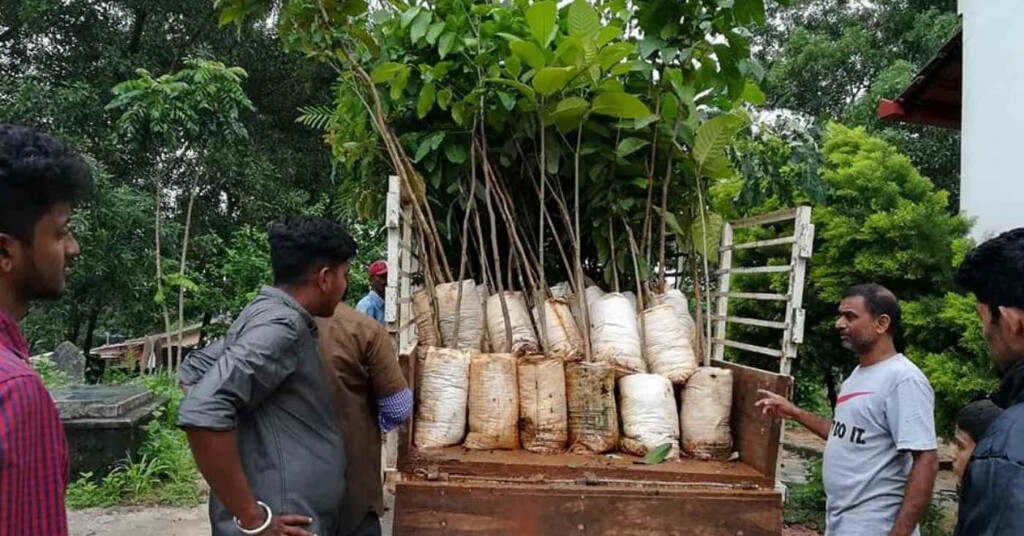
Jeeth Milan Roche (right) instructing his team on the planting of trees - credit Mr. Roche
Jeeth Milan Roche (right) instructing his team on the planting of trees – credit Mr. Roche
After leaving his IT job, a man from Mangaluru started greening city parks, growing food forests, and saving trees destined for the chop.
Describing his former office life as depressing, Mr. Jeeth Milan Roche was so energized by the tree planting that he took on the task of greening an infamous landfill where the stench was so bad it was driving people from their homes.
Every year around the time of the climate change panel meeting, news headlines become saturated with talk of environmental action on a global scale. But most people aren’t hardwired to think globally.
Yet, we can create impact locally that ripples throughout the environment—as Jeeth did when he started planting saplings in a park near his old IT job.
“I simply started to get out of my depression, and to date, I haven’t stopped,” the 48-year-old told The Better India. “I plant trees everywhere! If you ask me the strangest place, I would say the cemetery. I visit cemeteries of all religions and have planted trees in over 23 of them. I plant 12,000 trees in Mangaluru every year.”
He founded the Mangaluru Green Brigade in 2020 to pursue all kinds of tree-planting projects.
Jeeth lives in the city of Mangaluru (formerly Mangalore) in the Indian state of Karnataka located in the southwest tip of the subcontinent. One of the richest Indian states, economically and culturally, Karnataka is also the home of one of India’s notorious dumping grounds called Pachanady.
At 42 acres, Pachanady had grown so fetid with trash that it was poisoning the environment; it simply wasn’t a livable neighborhood anymore.
After planting trees in cemeteries, parks, and other places, Jeeth figured that a bit of greenery could turn the situation in Pachanady around, so he got to work planting the most fragrant trees he could find wherever it was possible to grow them.
He planted 3,074 saplings of teakwood, rosewood, banyan, fig, and peepal trees (more famously known as the Bodhi tree) with the help of his son and friends,
“Pacchanady was the most challenging site for us. We have not planted saplings of any commercial species,” he told Times of India. “Instead, we have chosen only medicinal plants and fruit-bearing trees that will help people and birds.”
He was able to create a buffer zone about 8 trees deep around 25% of the border with the dump, and is aiming, with the help of the forest department and Mangaluru Smart City Limited, to increase that perimeter in the future.
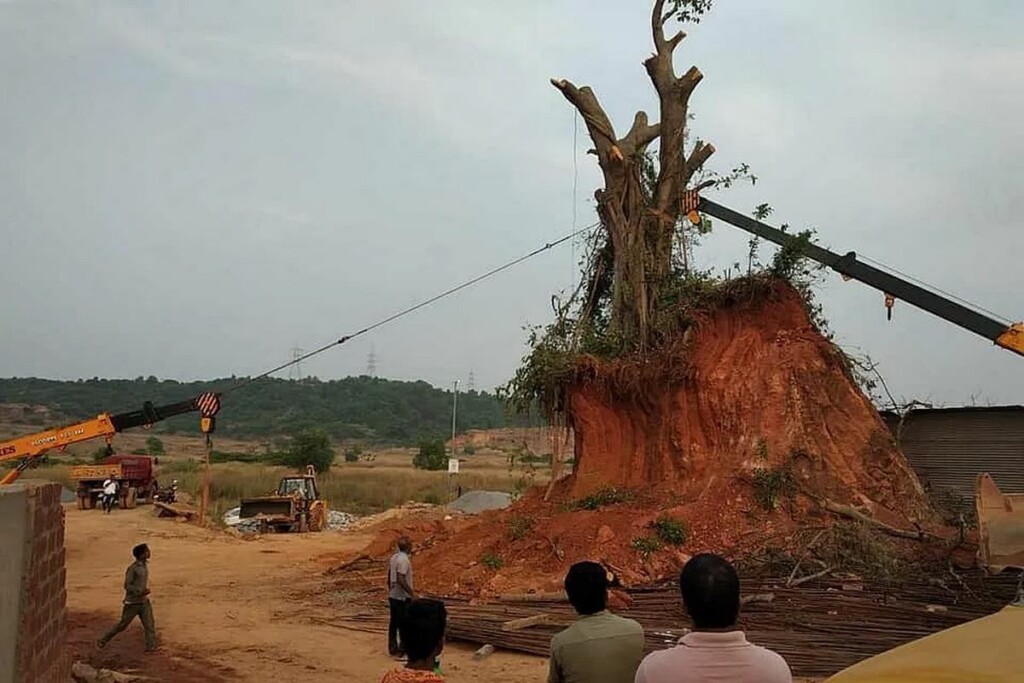
Jeeth’s team moving the tree out of the way of a development site – credit Mr. Roche
But this isn’t all Jeeth and Green Brigade invest their time and energy into. Another constant undertaking is the complete uprooting of large trees standing in the way of construction. Large machinery is rented to dig up the roots and move the tree to another location that needs it.
He’s also using the famous Akira Miyawaki method of growing forests full of food to encourage animal life. He uses around 170 species of trees, shrubs, and herbs to saturate an area of ground with far more than it can hold.
The Miyawaki method involves leaving this crowded area to have a competition to see who grows tallest the fastest. It’s a method perfect for creating a forest in a place where there hasn’t been one in decades, such as Jeeth’s project sites at Nanthoor, Gurupura, the Karnataka Polytechnic College, and Nandigudda.
One man can definitely change the world, but if there were a Jeeth Milan Roche for every community, the world wouldn’t even need changing.
SHARE This One Man’s Positive Environmental Crusade With Your Friends…
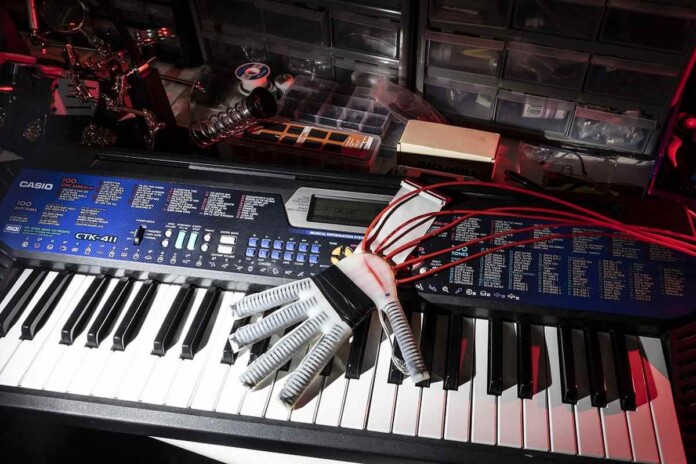
The robotic piano playing glove - credit Alex Dolce. Released
The robotic piano playing glove – credit Alex Dolce. Released
For those who have suffered a debilitating stroke, simple actions like tying shoes or brushing teeth can become a major challenge.
If, however, the person derived a significant amount of joy from life because they could play the piano, such injuries can become all the more significant to recover from.
But hope springs anew with a robotic glove specifically designed for playing the piano. Given life at Florida Atlantic University, the device uses AI to help pianists feel some of what they need to feel in order to play their instrument.
“Combining flexible tactile sensors, soft actuators, and AI, this robotic glove is the first to “feel” the difference between correct and incorrect versions of the same song and to combine these features into a single hand exoskeleton,” writes the university press in an announcement article.
Unlike other prosthetics, this is more like a robotic article of clothing rather than a robotic limb or organ. It uses polysynthetic fibers and hydrogel to encase five actuators that fit together onto a person’s hand.
Using AI to help coordinate the fingers, they programmed the glove to detect twelve different kinds of errors that can occur when striking a piano key, such as when a note is struck too hard, or held too long.
“Playing the piano requires complex and highly skilled movements, and relearning tasks involves the restoration and retraining of specific movements or skills,” said Erik Engeberg, Ph.D., senior author, a professor in FAU’s Department of Ocean and Mechanical Engineering.
“Importantly, although this study’s application was for playing a song, the approach could be applied to myriad tasks of daily life and the device could facilitate intricate rehabilitation programs customized for each patient.”
The results of a study to coordinate the three different deep-learning algorithms found that with the human subject present, the glove could perform Mary Had a Little Lamb with 97% accuracy, and even without the human manipulation, could do so at 94%.
Clinicians, the engineers suggest, could use the data from the mistakes and successes to pinpoint patient weaknesses in a particular song, of which the glove is theoretically capable of much greater complexity than nursery rhymes.
WATCH the glove do its stuff…
SHARE This Humanistic Approach To Robotics With Your Friends…
For those without green thumbs, it’s often a mystery why some plants thrive and others shrivel away.
For Des and Allie Brennan of Protective Solutions Ltd in England, it’s become a very, very big mystery.
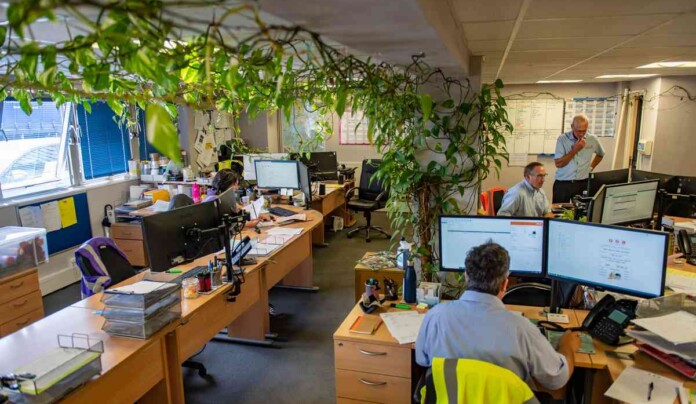
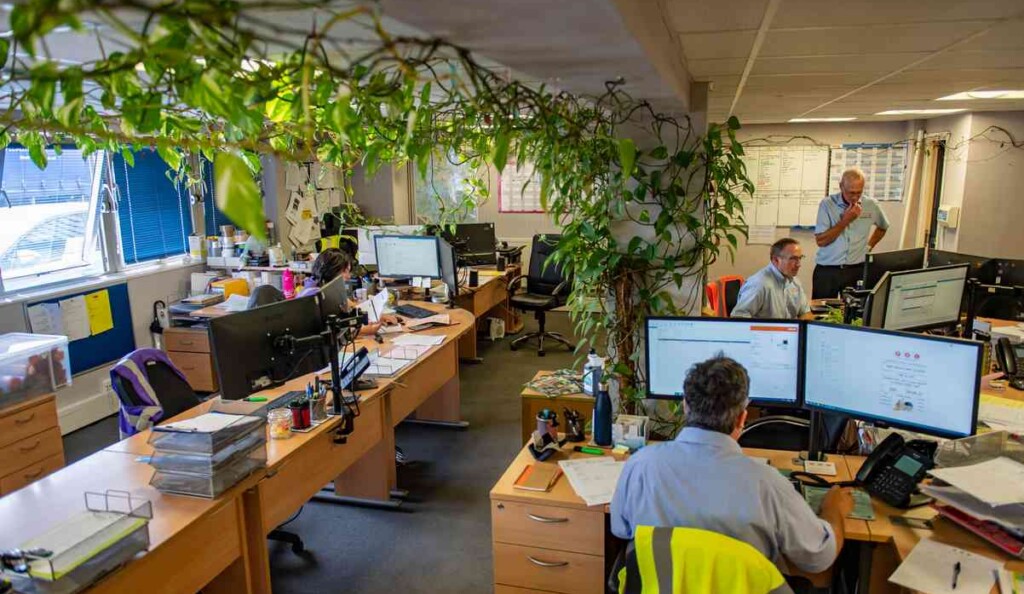
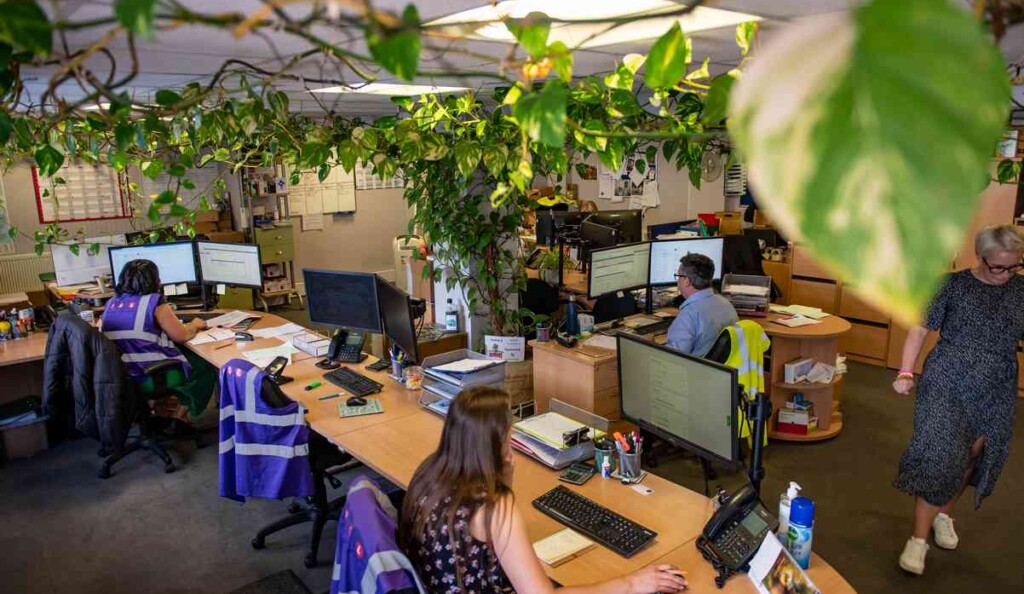
Bringing in a small potted pothos cutting in 2009, they merely wanted to brighten up the workspace. Now, more than 14 years later, the ivy has grown to almost 600 feet long—sprouting new shoots that require pinning up across the office walls and ceiling nearly every day.
It hangs from computer monitors—and even has its own sponsorship deal.
“It started off as a bit of a laugh but we wouldn’t be without it now. We’d have to get another one if it ever went,” Allie explains.
The ivy grows at an impressive rate of six inches per month and covers almost the entire office of the Brennans Gloucester-based packaging company Des founded in 2006.
“We try to keep it off the desks so it doesn’t get in the way but it hangs down and is joined onto the monitors,” said Allie. “It makes a massive difference to the office. We can’t envision the place without it—it would be dire.”
The open-concept office plan only measures 50 by 25 square feet, meaning that the monstrous ivy has to crisscross the ceiling back over itself a few times.
Steve Chatterly – SWNS
“It’s a big talking point when customers come in as well. People ask if it’s real but I’m not sure where we’d get a fake one this size.”
Allie added at the plant is very low-maintenance, requiring some feed and some water only once a week.
The plant has even received a sponsorship deal from a gardening company called Gardening Naturally, which provides seaweed extract food to the office.
Although Allie suspects if the plant continues to grow they’ll have to “bring machetes to the office” to hack through the growth—she says staff love the greenery.
“It changes daily. Sometimes it’s a bit creepy coming in and seeing it changing again,” said Allie. “The most time it takes up is taking the time to pin up the new shoots. Over lockdown the office was manned the whole time, according to guidelines. It was still looked after and the office air was probably purified for it.”
“Staff love it. If it was gone we’d all notice it and we’d just have to get another.”
CURL Your Vines Around Your Friends’ Social Media Walls With This Story…
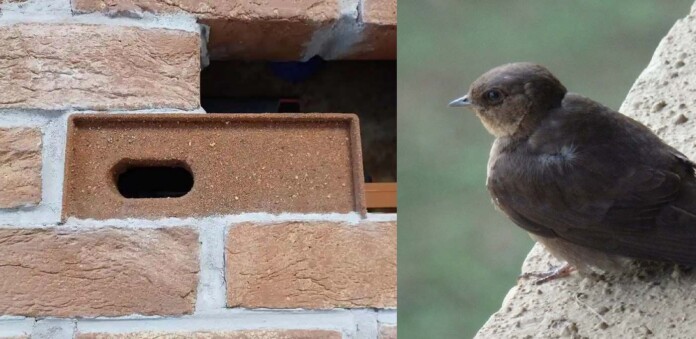
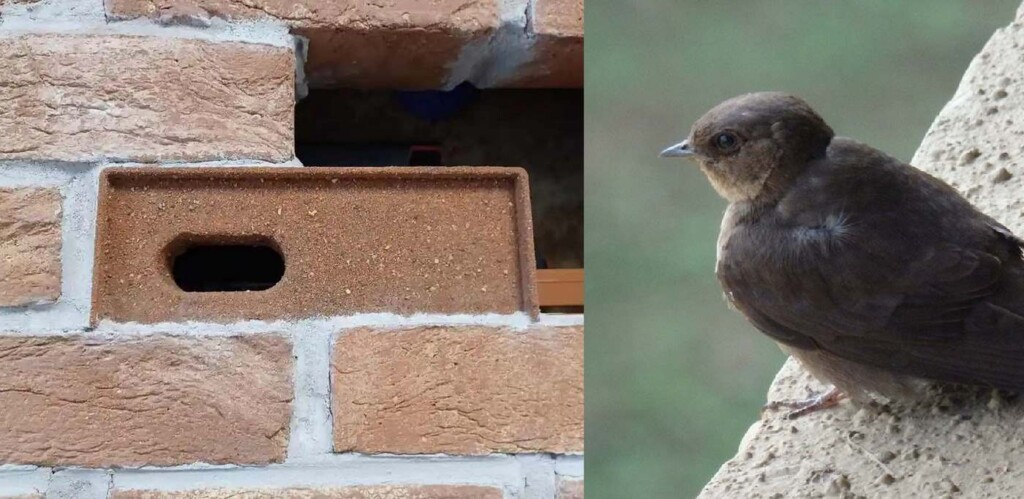
A Manthrope swift brick - Manthrope building products - a swift by sylvester alphonso from Pixabay
A Manthorpe swift brick – Manthorpe Building Products; a swift by Sylvester Alphonso from Pixabay
Tiny birds in the UK are being given free tenements from real estate development companies by installing “swift bricks” in new buildings around the country.
Over 30,000 swift bricks—essentially a normal building brick with a hollow inside—have been sold in the country, and more than 10,000 homes have been built with swift bricks incorporated into the design.
It’s bizarre the impact humanity can have on animal life. It wasn’t the sprawling British civilization that caused a 58% decline in the small migratory birds called swifts, but rather the renovation of old buildings.
In improving the energy efficiency of buildings to slow energy consumption and therefore climate change, British construction ended up sealing up all the small holes in the walls which these swifts used as nesting sites.
Now though, companies are making swift bricks which are bricks with a hole in the middle for the birds to nest in. One doesn’t need to put more than 3-4 in every wall to transform their housing project into a swift-friendly estate.
Nevertheless, some companies, like Manthorpe Building Products’ factory in Derbyshire, have already produced 20,000 swift bricks. Ibstock, another firm, has sold 7,000.
The bricks came about through brainstorming from the Royal Society for the Protection of Birds.
“The great advantage of swift bricks and boxes is that they can work just as well in inner city areas with very little green space as anywhere else,” Dr. Guy Anderson, the RSPB’s migratory birds program manager, told The Guardian. “Swifts can travel pretty long distances to find their insect food – all they need is a nest site.”
Swifts are amazing animals that spend 10 months of the year airborne. They do everything on the wing. To drink, they skim over rivers and lakes with their mouths open. They prey only on flying insects. To sleep, they close one eye and turn off one half of their brain. They fly all the way down to Africa before returning to the UK to nest.
At the moment there is a petition in the UK Parliament to make swift bricks mandatory for all UK buildings, something which the government feels by default is the kind of thing that should be left up to local government councils; however it did garner 104,000 signatures.
The swift bricks are similar to the “bee bricks” which were another idea of how British housing could make room for nature, and which were ruled as mandatory by Brighton and Hove council.
SHARE This Story Of Making Room For Nature With Your Friends…
Quote of the Day: “Summer is when laziness finds respectability.” – Sam Keen
Photo by: Etienne Girardet
With a new inspirational quote every day, atop the perfect photo—collected and archived on our Quotes page—why not bookmark GNN.org for a daily uplift?
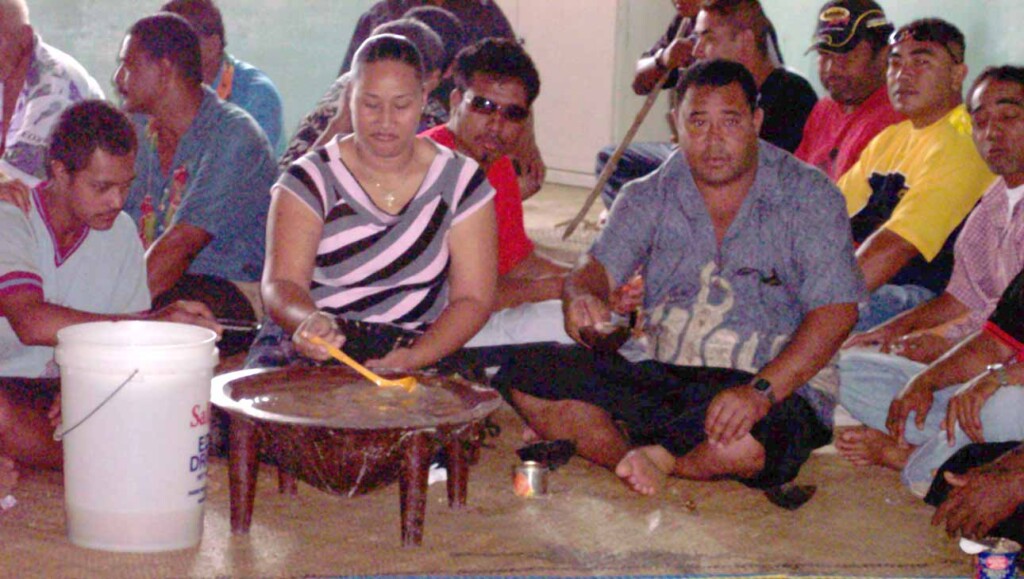
Kava ceremony on Samoa - University of California Digital Libraries
Kava ceremony on Samoa – University of California Digital Libraries
In New Zealand, Pacific Island scientists have just been given a large grant to run a study trial on the use of the traditional kava preparation and kava ceremony for treating PTSD.
Believing it could help treat PTSD and other trauma in soldiers and veterans, police officers, and corrections facility staff, the two scientists want to revise the reputation of kava, which was damaged by a pharmaceutical rush into the product some years ago.
Dr. Apo Aporosa of Fijian descent on his mother’s side, and Dr. Sione Vaka from Tonga, have received $1 million from the Health Research Council to combine kava drink with the traditional ceremony of conversation.
“I’m so stoked that Health Research Council has faith in us as a team to do this critically important work,” Dr. Aporosa told the NZ Herald. “It’s likely we’re going to spend a million dollars to prove what traditional Pacific knowledge has been trying to tell Europeans for the last 200 years.”
Kava comes in many traditional names, all relating to the root of the Piper methysticum plant. Across the islands of the Pacific, the root was stirred in water and drank for its subtle euphoric, but also sedative properties. Accompanying the drink was a Talanoa or what Dr. Aporosa is referring to as “talk therapy,” but what was essentially a heart-to-heart conversation.
Their study will take two groups of people and give them both the whole kava drink plus the talanoa, referred to as “the full package” while another group will receive just the talanoa, and another group just the kavalactones—the active ingredient in the plant.
In 2009, the Cochrane Institute confirmed that kava was probably more effective than placebo for treating anxiety. At the time, pharmaceutical and supplement companies had quickly isolated kavalactones and sold them as a natural relaxant.
The irony is that in this extracted form, it was mildly toxic to the liver, whereas when consumed traditionally in the ‘Ava Ceremony’ (to use the Samoan language) or the Faikava, in Fijian, that toxicity is not present.
An informal Faikava
Like most indigenous populations, New Zealand’s Māori population suffers from higher rates of stress, trauma, and anxiety than the national average, and the Health Research Council believes that the Kava ceremony is the most sensible way to fulfill this unmet need.
“We do know that… talk therapy works for some PTSD cases,” Dr. Aporosa said, adding that talanoa is basically talk therapy, done while sitting on the floor rather than in chairs.
“We know that kava has relaxant properties, that kava is a natural anti-anxiety medication, so we combine those two elements in a culturally influenced space, and we’ve got something here that’s unique.”
Aporosa understands the situation better than most. Not only is he from Pacific stock, but he was a police officer who had to leave the force due to PTSD from the line of duty.
His experience traveling the world speaking with former military and police got him the Fulbright Scholarship to study the kava ceremony in Hawai’i, another island culture that uses the plant.
His hope is to show that it works significantly in the trial, and then release a free e-book about how to perform the ceremony and intervention, in order to ensure the largest number of people can access the knowledge of this traditional Pacific medicine.
SHARE This Return To Our Literal Roots With Your Friends On Social Media…
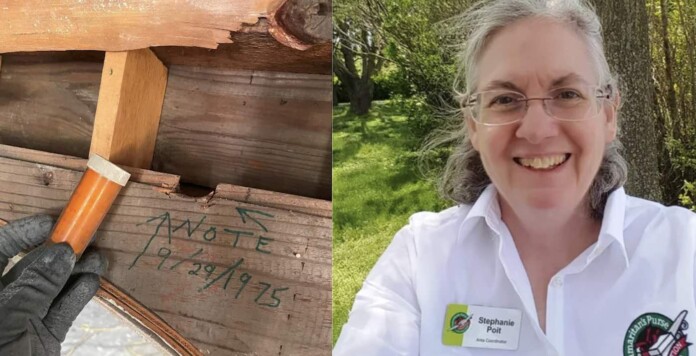
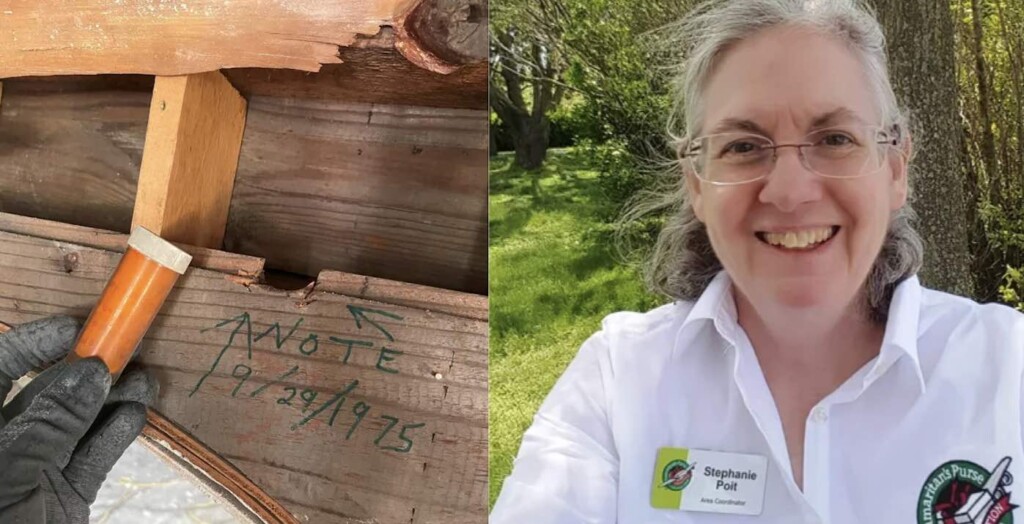
Images by Dakota Mohn (left) and Stephanie Poit (right)
Images by Dakota Mohn (left) and Stephanie Poit (right)
A 150-year-old house was being restored in a small town outside of Peoria when a construction worker found a message left in a bottle between the walls of the kitchen.
Written by a 14-year-old girl in 1975, a video of the note went viral on TikTok and created a mini interest-storm around the life of the woman, now 61.
In the town of Green Valley, a carpenter named Dakota Mohn was working in a house damaged by a fire. When he was pulling off the walls in the front living room he saw writing that said, “Note 9/29/1975” with arrows pointing to a small notch in the wood.
Inside was a message in a bottle—lost, but not at sea.
Signed by Stephanie Herron, this young woman, one of railroad lineman Earnest Herron’s five daughters, would move on to New York City where she took the name of her husband Poit, had five children of her own, and taught inner city kids.
“I was shocked, absolutely shocked, when I heard about the note,” Stephanie Poit told the PJ Star.
“Honestly, I forgot all about it. Life goes on, years go by… I can’t believe how much this has struck people. I’ve gotten notes from people who remember me as a kid growing up in Green Valley. It was a good place to grow up.”
It went like this: To whoever finds this:
Today is Sept. 29, 1975. My name is Stephanie Herron. I live here with my mother, father (Earnest), Becky and Valerie.
Gerald Ford is president. Mrs. Lay is our neighbor. Mom is pregnant and the baby is due any day now. As far as we know, this house was made in 1872. We are remodeling the house.
The Illinois Central Railroad is on the west side of the house. We have lived here for 8 years.
My dad works the Chicago Northwestern Railroad. Green Valley has about 650 people. I am 14, Val is 16 and Becky is 12.
I hope you have lots of happiness in this house.
Steph
PS: My mother’s name is Rose Herron. She is a registered nurse. She works at Hopedale Nursing home. She was born in Nebraska.
She is a very good mother.
Talking with the Star, Poit explains that time capsules were all the rage in 1975. She and her family moved into the house, built in 1872, which at the time sat next to a frequented railroad.
Already 100 years old when they moved in, the family was constantly making additions, including enclosing a porch into a kitchen/living room where Dakota pulled the time capsule from.
Mohn, who on his Facebook wall described the note as the coolest thing he’s found, is working with the house’s new owner to build a shadow box into the wall where the note was found, and that he and the owner would leave notes of their own for another carpenter to find 40 years from now.
SHARE This Tale Of Time Capsules With Your Social Media…
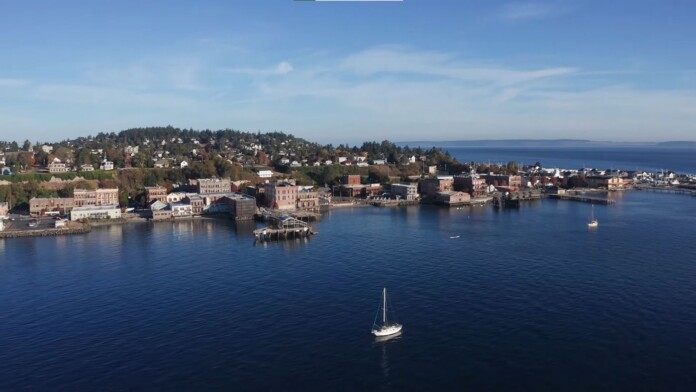
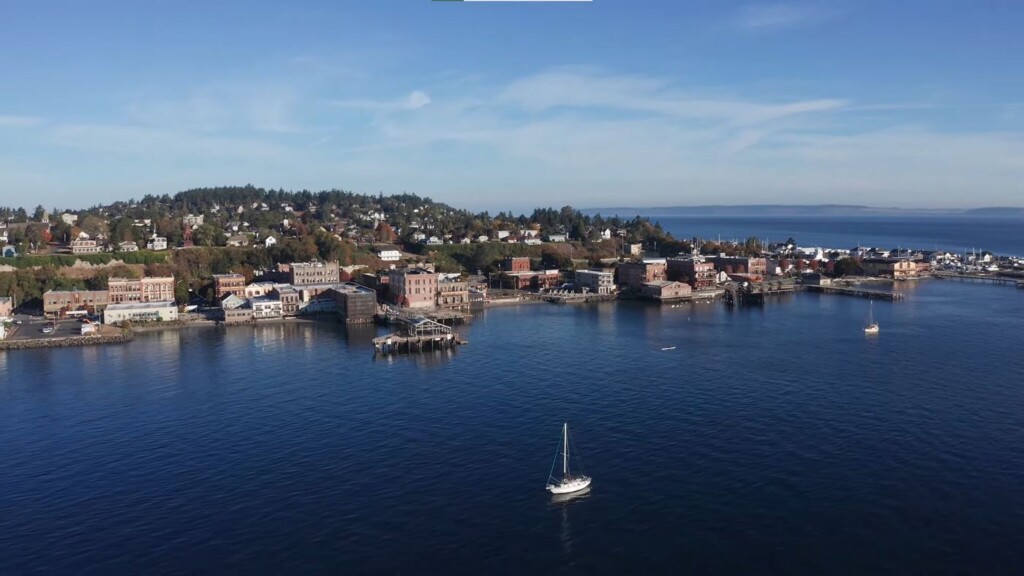
When vacationers were trapped in a historic Washington town after ferries were canceled due to weather concerns, they feared they might have to sleep on the streets.
That’s when ferry terminal worker William Patterson invited all ten of them to stay at his house for the night.
It was in the early evening that 79-year-old Kip Goodwin and his wife from Hawaii had finished calling every hotel and Airbnb in the Olympic Peninsula’s Port Townsend—they were all fully booked for the summer holiday season.
Neither had they luck at the YMCA or Red Cross—even the campgrounds were unavailable. Fearfully looking at each other amid the sound of howling wind, Patterson interrupted their worrying to tell them they would all be staying with him and his wife Arianna.
Nestled among the pines on the Admiralty Inlet, Port Townsend is serviced by the United States’ largest ferry network, but the Port Townsend-to-Coupeville route, which Goodwin and the others were hoping to take after a day trip to Port Townsend and Whidbey Island, was canceled after winds picked up and the ferries had to remain tied to their moorings.
All three round trips were canceled, starting at 6:45 pm and on to 9:00 pm.
Arianna Patterson joked with the Seattle Times that her husband always threatened he’d bring a “straggler” home one day. William called and asked if they could make space for the Goodwins.
“I said, ‘We have enough space for two, no big deal,’” Arianna said. “Then he called back and said, ‘We have eight or nine other people.’ I said, oh.”
Like the Goodwins, most of the passengers were over 60 years of age, so the Pattersons were just happy they could get the visitors out of the weather. At the home, there was space on the couch and an extra bed, but pretty quickly people were on the floor, borrowing blankets that their hosts had from their time welcoming foster kids.
Early the next morning, William went out to the cafe he runs along with his work at the ferry terminal to make pastries and coffee for them all.
“It was unbelievable,” said Fred Dente, 79, who lives in Langley and was visiting with his wife and their two friends from Hawaii. “It was the way humans should treat humans. In this day and age, it was exceptional.”
That morning was crisp and clear, and at 7:00 am the ferries set sail.
SHARE This Story Of American Hospitality Served Up Disaster-Style…
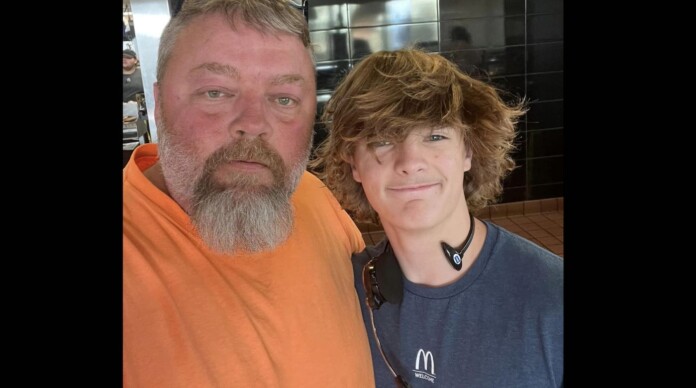
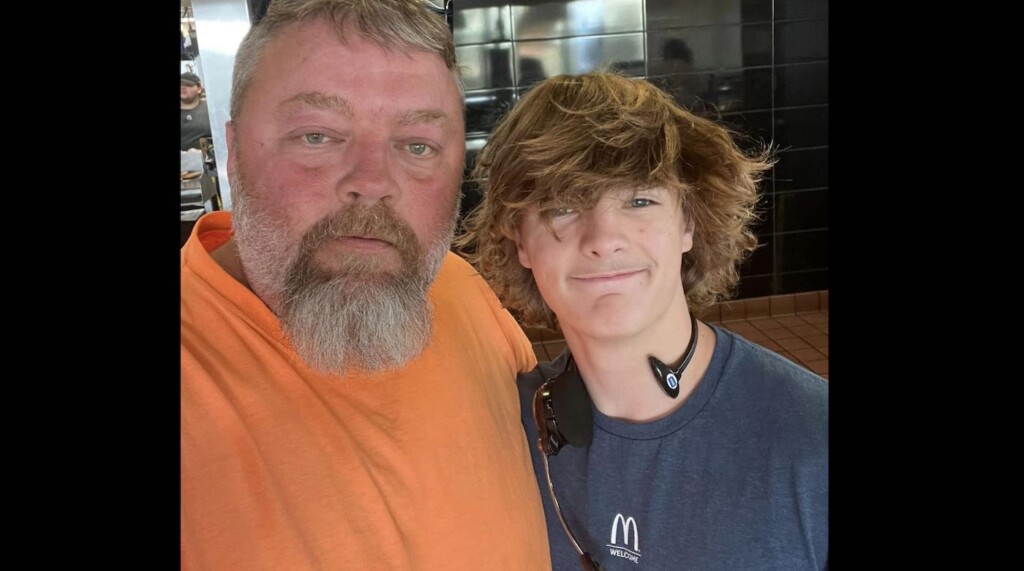
“I want to brag on this young man named Hayden working at McDonald’s at exit 8 on 25E near i81,” Jason Mosier wrote on Facebook last month.
Mosier had has mind set on bragging after experiencing what Hayden was prepared to do to help him out of even the most innocuous of jams.
Mosier had just tried to pay with a card, but the charge of $8,00 was declined. Before the customer even knew what was happening, Hayden had whipped out his own debit card to pay the bill, saying “I got you, don’t worry about it.”
“I said no no, just void it, please,” Mosier recounted on his Facebook page. “[Hayden] said, ‘No sir, I got it.’ The only cash I had was 4 one dollar bills, I made him take the 4 bucks and told him I would be back.”
Well, Hayden wasn’t backing down. He wanted to pay something forward, and ended up having the final word when he left a surprise for Mosier in his meal bag.
Another McDonald’s worker paying it forward was recorded at a store in Tile Hill, in the UK, where a drive-through worker named Enya who was making around $9.24 per hour paid for the meal of a customer after she heard him call his mom to ask if she wanted anything.
Josh Henry was having a “depressing day” when he arrived at the McDonald’s, and said Enya’s random act of kindness cheered him up.
“I’m at a high risk of redundancy, [but] I will pay this kind act forward tomorrow for sure.”
A girl called “Enya” who works at Tile Hill @McDonaldsUK just paid for my meal as her act of kindness for the day. Proper cheered me up after having a depressing day with the fact I’m at high risk of redundancy. I will pay this kind act forward tomorrow for sure. ❤️❤️❤️ pic.twitter.com/8puiCUAkKy