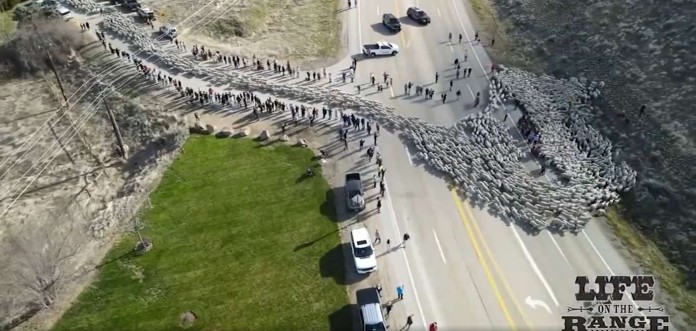
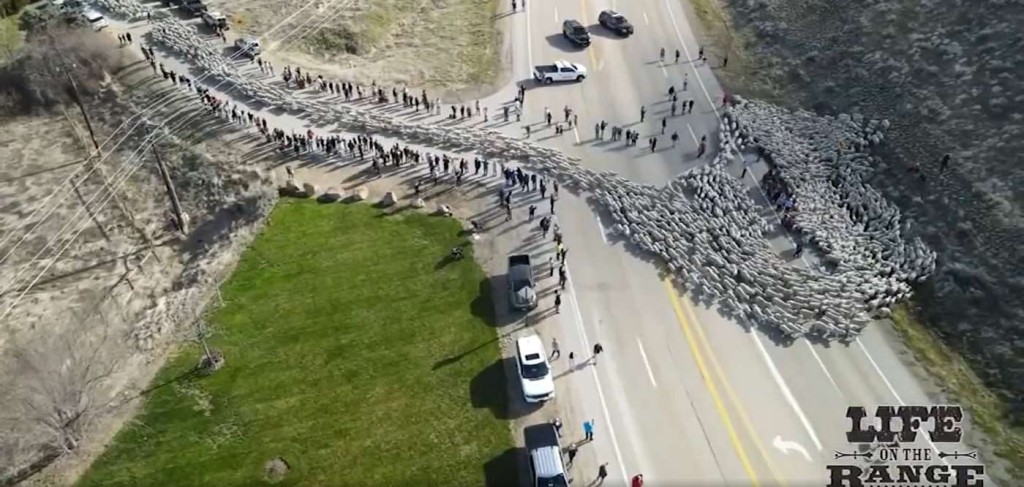
Some exceptionally-managed drone piloting allowed ranchers in Idaho to capture a video of thousands of sheep being herded along the road.
As many as 2,600 lambs and ewes were involved in the crossing in the town of Eagle, just one stop on their way toward the Table Rock area where they would reach the fresh pastures needed to sustain the large flock.
Locals gathered in what passes for droves in that rural part of the country. The crossing is a tradition that’s marked with a small festival.
The footage was organized, captured, and released by Life on the Range, an education outreach program organized by the Idaho Rangeland Resources Commission to help inform and connect Idaho residents and Americans in general with the life, times, and challenges of ranching.
Meaghan Martin has seen a lot of long faces in her years as a horse trainer, and it was this history that allowed her to turn a potentially-sad story into a happy ending.
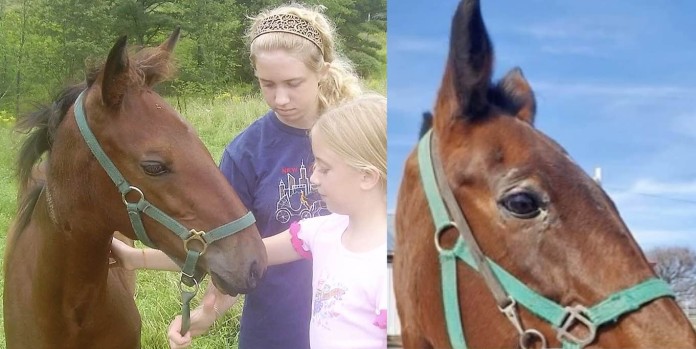
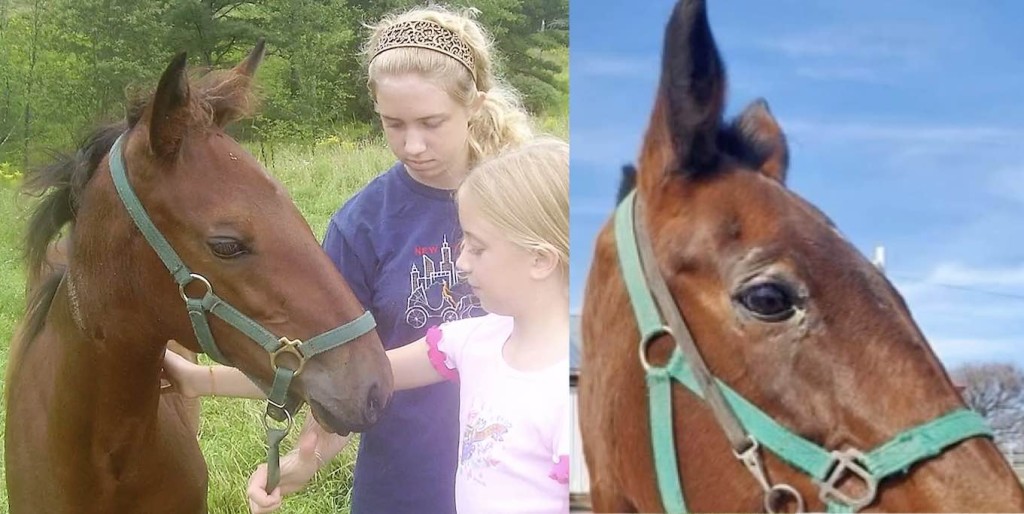
She was just a teenager when she met the young mare Saxy, a horse that was to be trained for racing. But having never made a name for herself, and collecting only a few thousand dollars in winnings, Saxy was sold on as a workhorse.
Retired equine athletes in America are often sold to the Amish communities, who use them to pull plows and buggies, and it was during this activity that Saxy was involved in a collision that left her marked for slaughter.
Around this time, Martin was all grown up and worked full-time at Red Lion Farm, in Gray, Maine. She was scrolling through Facebook and saw a mare with a brand on her neck that immediately jumped out at her.
“That number is actually what saved her,” Martin told the local NBC affiliate. “I recognized that brand and said ‘Oh, that’s one of the babies that I worked with.'”
Her friend and owner of Red Lion, Kendra Gorham, felt as Martin did that Saxy had to come home; that they couldn’t let her fall to such a tragic end. Agreeing to split the cost and raise money and supplies whenever possible, the two ladies set off to Pennsylvania to bring Saxy home.
Within 48 hours of reaching out to their community, they had enough money and supplies to ensure Saxy had a real chance of recovering from her accident.
“People donated blankets, people donated brushes, people donated boots for her feet before we had shoes on her to keep her more comfortable,” Martin said. “People were so incredibly generous with their energy, with their money, with their things.”
News Center Maine details the moment when, seeing her old trainer for the first time in years, Saxy wrapped her head around Martin after she entered her paddock, bringing immediate tears.
Once back home, it was clear that the mare would need slow and careful rehabilitation. Without shoes and with thin hooves, walking was difficult. Furthermore, she had spent her life with strict orders to run fast, or pull things. Gentle but precise maneuvering was never something she had to do, and must now learn.
Saxy now works for Martin as one of her horses for an equine-assisted psychotherapy program for humans suffering from trauma and PTSD.
WATCH the story below…
SHARE This Touching Story Of Reunion With Your Horse Friends…
Shakespeare once wrote “The fault, dear Brutus, lies not in our stars, but in ourselves.”
Concurring with the Bard, a recent paper in the journal Human Kinetics shows that the ratio between physical activity and sedentary activity has a greater impact on lifespan and healthspan than our genetic makeup.
The study was conducted with 5,446 older women who were separated into three groups relative to what was termed their genetic risk factor, or GRS, which was measured by a small selection of single-nucleotide polymorphisms that are well-known to affect longevity.
The authors point out that a sort of layman’s understanding of genetics and their importance in human health and well-being is a poor marker for the truth.
They cite studies which show that genes related to physical fitness had no bearing on the normal association between physical activity and coronary artery disease, and another that showed relationships between physical activity and cognitive decline and Alzheimer’s were not influenced by a person’s APOE-4 status—APOE-4 being a genetic mutation that is known to be commonly present in Alzheimer’s patients.
Perhaps with the advent of gene-modification technology like CRISPR, and the greatly reduced cost of doing genetic analysis along with the extension of this technology to the general population for familial history through products like 23 and Me or Prometheus, more people are spending more time focusing on their genes as a kind of Magic 8 Ball.
It’s not uncommon to hear people blame “bad genes” for any combination or number of health disruptions, but evidence is beginning to show that, as Shakespeare wrote, the fault is in ourselves, not our stars.
The study in older women boasts “a large, diverse, and well-characterized cohort of older women across the United States with long-term follow-up,” as the authors describe it.
They found conclusively that “among older women, higher accelerometer-measured light [physical activity] was associated with lower risk of mortality, and higher accelerometer-measured [sedintary behavior] was associated with a higher risk of mortality during an average follow-up of 6.1 years,” and that “findings were consistent across categories of a GRS for longevity.”
The authors then highlighted the necessity for communicating the importance of physical activity to older women.
SHARE This Inspiring Reminder To Stay Active With Your Friends…
Quote of the Day: “It is difficult to say what is impossible, for the dream of yesterday is the hope of today and the reality of tomorrow.” – Robert H. Goddard
Photo by: Olivier Mesnage (La Turballe, France)
With a new inspirational quote every day, atop the perfect photo—collected and archived on our Quotes page—why not bookmark GNN.org for a daily uplift?
An Indian architect was excited about the potential for AI to enhance the creativity of city architecture, and he asked an image bot to generate a vision for the future of cities.
All he had to do was enter a series of text prompts, for which he used some like ‘Utopian Technology’ and ‘Futuristic Towers’.
Delightfully, the AI software called Midjourney, didn’t produce a grey-sky mechanical utopia of humans trapped in battery pods like in The Matrix. Instead, it depicted buildings cloaked in vertical forests and vegetation while borrowing structural shapes from nature.
Manas Bhatia, like so many architects around the world, believes that the profession needs to make as much room for nature as possible to guarantee a more sustainable future. For his project “AI x Future Cities” he used Midjourney to create what the human minds at his firm, Ant Studio, might not be able to come up with on their own—a creative element he sees as offering huge potential for positive change in the field.
Working on the project, Bhatia would change the text prompts by putting new words in and taking other ones out, while both he and the AI worked together to refine their vision for future cities.
“The trial-and-error part is the most fun,” Bhatia told CNN. “We use AI to create images and, in the process, the AI trains itself and improves over time.”
Bhatia is extremely positive about the future of AI, as opposed to seeing it as something that will potentially put him out of a job.
Manas Bhatia – AI designed future city
“It has tremendous potential,” he said. “At our studio, we tried using AI to generate mood board images for a client presentation, and that went very well… In the near future, architects and designers combined with AI would be something to hope for.”
Courtesy of Manas Bhatia
He worked on another section for his project by using words like “symbiotic,” and “hollowed” and his AI created pictures of apartment blocks built into hollowed-out trees.
At Ant Studio, he works to replace existing building facades with nature-inspired skins that thermoregulate themselves, reducing the need for energy consumption in the building. His logic in asking the AI to imagine tree apartments stems from this work, which he assumes would be optimal if the building itself, and not just the facade, were made of living forms.
He also designs all manner of structures with nature and natural forms and functions at the center of the blueprints, including buildings built around trees.
SHARE This Awesome Vision Of The Future And Of AI With Your Friends…
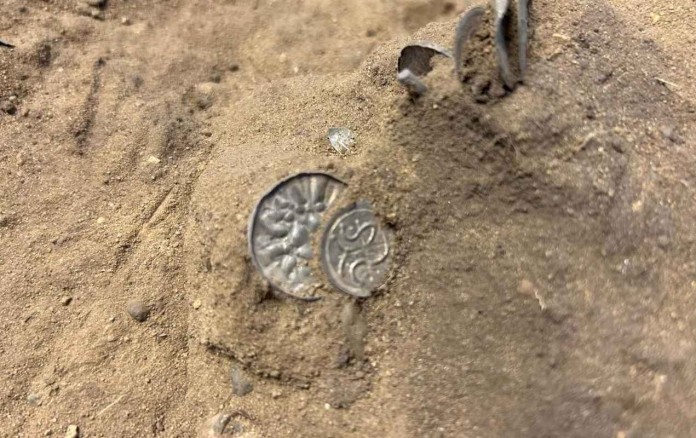
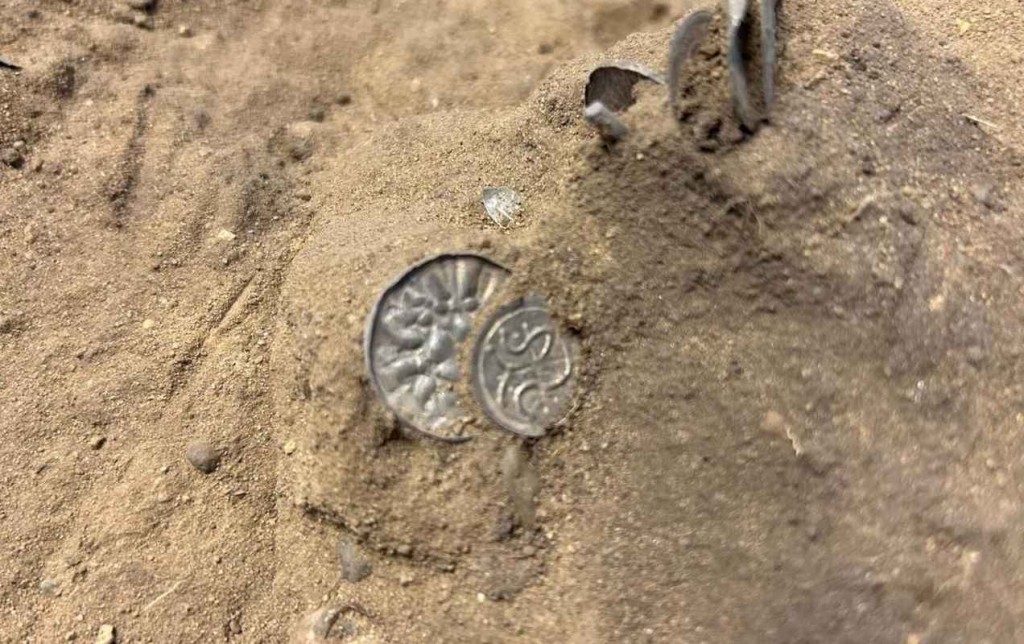
Bramslev Silver Coins - credit North Jutland Museum
Bramslev Silver Coins – credit North Jutland Museum
A girl metal detecting in northwestern Denmark discovered nearly 300 silver coins dating back more than 1,000 years ago.
The hoard was discovered in a farmer’s field at a place called Bramslev, near to the Medieval fort of Fyrkat built by the famous Viking warlord Harald Blåtand (Bluetooth), and was also found alongside a silver ring pin that had been cut in half.
The coins themselves are a mix of those from the Arab, Germanic, and Danish worlds. Of particular interest to the Danish archaeologists working on the site are those from Denmark, because they were struck—probably in the years 970-980—with crosses, suggesting Harald’s influence in the Christianisation of Denmark which began around ths time.
Coins struck earlier in Harald’s reign did not bear crosses, suggesting it was a gradual change of the man along with the people and country.
“The two silver treasures constitute a fantastic story in themselves, but to find them abandoned in a settlement only eight kilometers from Haralds Blåtand’s Viking fortress Fyrkat is incredibly exciting,” says archaeologist and museum inspector at North Jutland Museums, Torben Trier Christiansen.
Fyrkat is one of several “Ring Forts” built during Harald’s time at the top of the Viking totem pole. Being the only country connected to central Europe by land, Denmark was at much greater threat from invasion by the Christian kingdoms to the south than the Vikings in Norway or Sweden.
The proximity to the fort raises questions about whether the burying of the hoard was done in haste—after a battle at the fort perhaps. Vikings believed they could have access in death to the treasures they hoarded and buried in life, and so hoards weren’t always meant to be dug up later—the Middle Ages equivalent of stuffing a mattress with cash.
Although, that could be exactly why they were buried.
“Perhaps the castles were not given up entirely voluntarily,” says Christiansen. “The Bramslev treasures were apparently buried around the same time or shortly after the castles were abandoned, and if there have been disturbances at Fyrkat, it makes good sense that the local magnate here at Bramslev has chosen to hide his valuables out of the way.”
The girl who found the hoard gave it over to the North Jutland Museum, from which she received compensation for the discovery. The museum team will be returning after the summer harvest to look over the field for more clues.
There are probably no more silver treasures to be found, but during the investigations this spring, it was established that both of the two silver treasures found were originally buried inside or very close to buildings.
SHARE This Viking Age Discovery With The Viking Fans You Know…
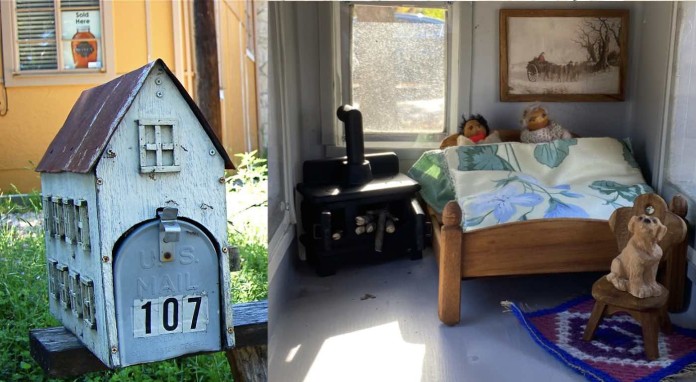
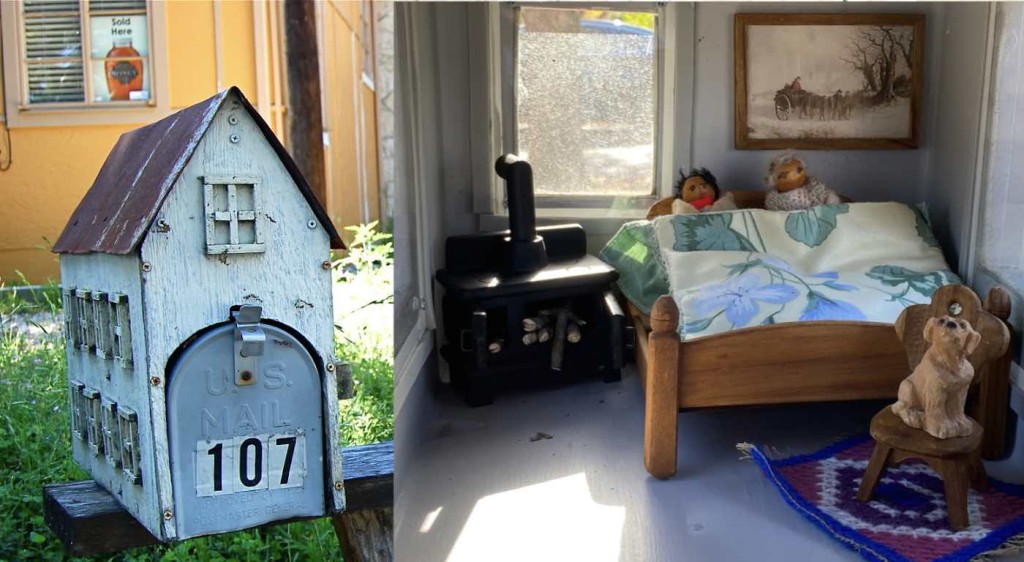
Photo credits: Will-travel (CC license) / Don Powell
Photo credits: Will-travel (CC license) / Don Powell
When a Michigan man went for a routine walk to his mailbox to collect unwanted supermarket papers and publicity, he discovered to his surprise he had some uninvited guests.
Two wooden dolls sitting on a miniature couch in the back of the box with a note between them that read “We’ve decided to live here. Mary and Shelley.”
Don Powell first thought, as he told news outlets, the dolls had been placed there by mistake, but a quick and befuddled interrogation of the neighbors in his cul-de-sac, including one named Shelly, turned up nothing.
A psychologist by training and president of a company that organizes corporate wellness retreats, Powell is all about a pick-me-up, and when he moved into his current home five years ago he and his wife Nancy ordered a custom mailbox that would mirror their house—with ample windows and solar-powered lightbulbs that would illuminate the mailbox after dark.
Evidently, some trickster believed it a perfect place for a doll to make their home. Powell at first disagreed, and ordered Mary and Shelly’s eviction—right into the garbage can. But a change of heart saw him put the dolls back to see what would happen next.
He was right to wait. The trickster returned bringing a dog, rug, and a four-poster bed for Mary and Shelly to sleep in.
By now, Powell was enamored with the game, and went on Nextdoor, a sort of Facebook exclusively for the people who live on one’s street.
“The response (on Nextdoor) was just incredible,” Powell told Hometown Life. “People were saying, ‘This is so much fun to read, I was ready to get off of Nextdoor, but this makes me want to stay.’”
Then Halloween rolled around, and Powell found that the dolls had been replaced with skeletons wearing black robes.
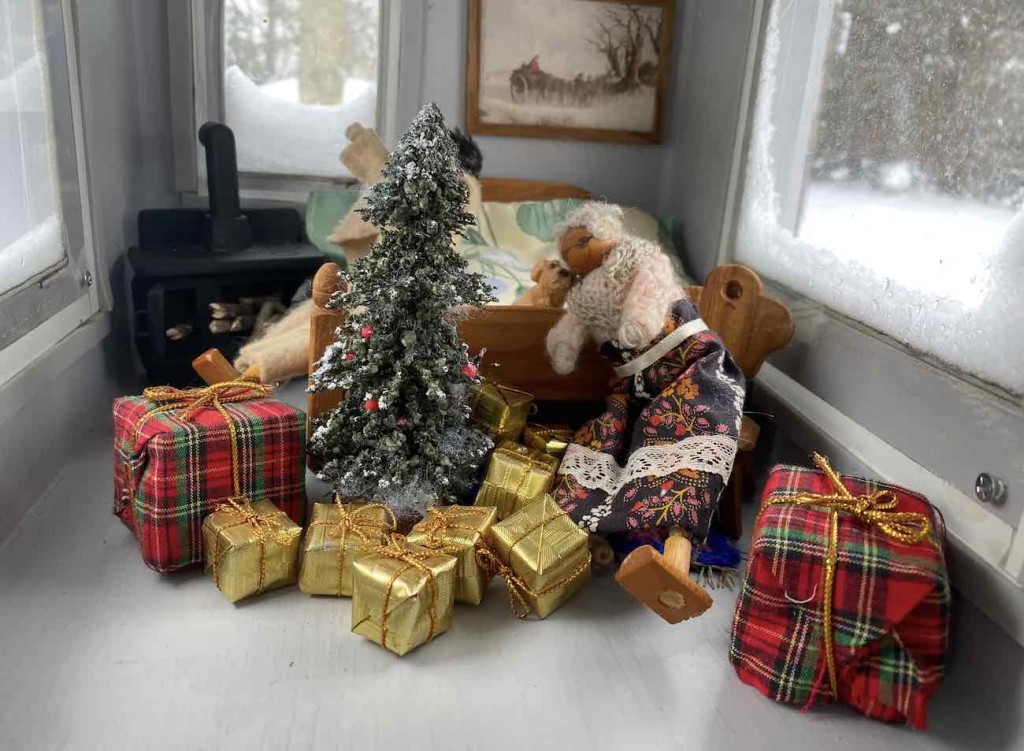
By Christmas time, Mary and Shelly’s Cousin Shirley with a broken leg had moved into the mailbox’s hall decked with presents and a tree. At that point, Powell was having just as much fun as the mysterious trickster.
“Then, after the ice storm, I did a post that said the family was locked in the mailbox and couldn’t get out,” Powell said. “Somebody asked if they lost power, I said ‘No, they don’t have power to begin with, but they do have a wood burning stove and were working from home.’”
He said the whole ordeal has awakened the desire to author a children’s book.
WATCH the story below from USA Today…
SHARE This Joyful Mischief With Your Friends… Maybe On Nextdoor…
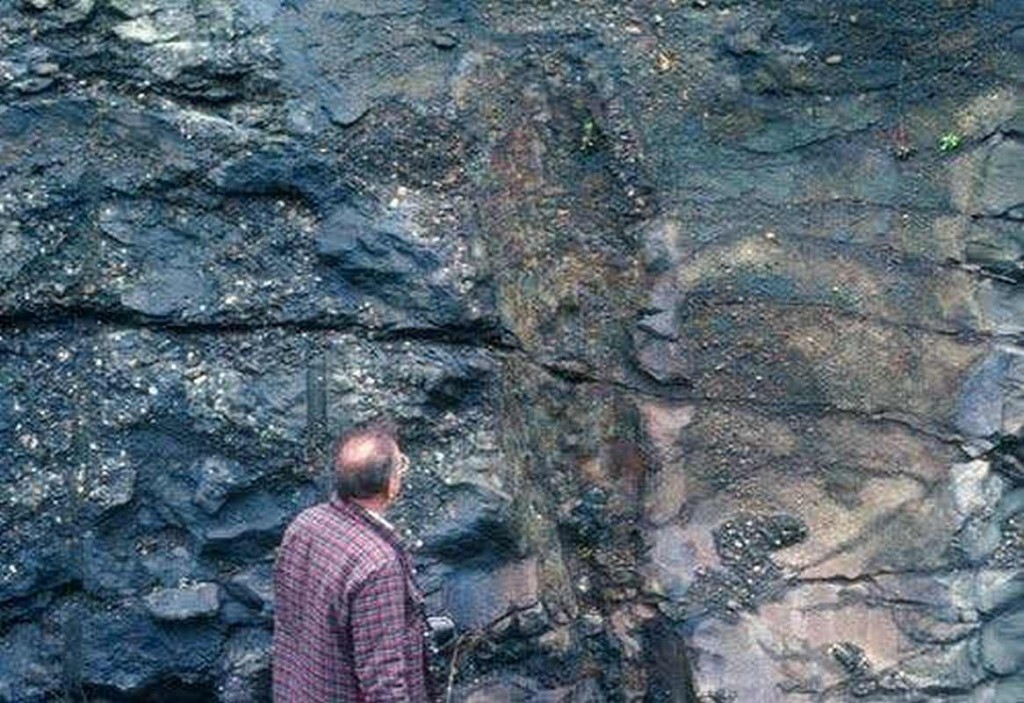
Francis Heuber peers up at a Prototaxites fossil – credit Carol Hotton
Cast a net back 450 million years ago to the Ordovician Era, and you wouldn’t capture anything more than the ancestors of millipedes and worms.
However, you might notice 29-feet-tall (8m) trunks without branches or leaves, towering over a landscape of newly-evolved vascular plants.
These trunks, which have been found as fossils all over the world, are now strongly believed to be mushrooms—giant fungal towers that mean the kingdom of fungi produced the first giant land organism.
The idea of a ‘fungal forest’ is one that’s often reproduced in fantasy and science-fiction writing. Mushrooms, for many, many reasons, are extremely attractive to the human eye and imagination. From Super Mario living in a mushroom-powered world at times, to the visual art in James Cameron’s Avatar, why have trees when you could have mushrooms?
In 2008, a large trunk-like fossil was uncovered in Saudi Arabia. Identified as a Prototaxite, it presented more evidence of the fact that these strange biological spires from the mists of evolutionary past are mushrooms. First found in 1843, Prototaxites have been called lichens, algae, trees, and even large mats of liverworts that had been rolled up before they were fossilized.
However, several key features have repeatedly brought scientists like C. Kevin Boyce, a geophysicist at the University of Chicago, who has published several papers on Prototaxites, back to the theory that they were fungi.
“A 6-meter-fungus doesn’t make any sense, but here’s the fossil,” he told New Scientist in 2007. “No matter what argument you put forth, people say it’s crazy.”
They are made up of narrow tube-like structures 20-50 microns in diameter that weave around one another, and filaments that are even thinner and have inner perforate walls—a trait found only in red algae and fungi.
World of Warcraft’s ‘Zangarmarsh’ zone full of giant mushrooms – Fair Use
Another aspect is their carbon content. Atmospheric CO2—carbon-12 and carbon-13 molecules—should be the same for all plants that live during the same period. Prototaxites is different in this regard; its carbon makeup is different compared to all other plants of the immediate stage in the Ordovician Era during which it lived.
Amazingly, even this far back, paleobotanists have been able to detect interactions with the giant fungal towers and their environment. Prototaxites mycelia, the thread-like root structures of a fungus, have been found invading the tissue of nearby vascular plants, and some of the spire fossils have been speckled with the bio-molecules often associated with the algae—suggesting it could have been subject to parasitism.
It’s amazing to imagine a world where fungus towered over a forest of moss, lichen, and the earliest plants, the whole landscape would seem quite miniaturized.
SHARE This Incredible Prehistoric Mushroom Story With Your Friends…
Quote of the Day: “One reliably resurrecting act of love and friendship is to pay the other person full attention.” – William Sebrans
Photo by: Andrea Tummons
With a new inspirational quote every day, atop the perfect photo—collected and archived on our Quotes page—why not bookmark GNN.org for a daily uplift?
An art lecturer and collector from Singapore went on the journey of a lifetime to reunite World War II memorabilia with its owner after buying them at auction.
The grand adventure begin in 2022 when 39-year-old Wesley Leon Aroozoo bid on a collection of antique stamps, postcards, and articles that included an unmarked set of booklets which he discovered belonged to a pair of laborers in Nazi Germany.
The adventure ended 8 months later with a beautiful ending, that had a sort of “what goes around comes around” moral of the story.
Aroozoo loves vintage everything, and the story of his internet sleuthing, as recounted by Mothership.sg, centers around the incredible insight he was able to glean into a German family separated by a continent, 10k miles, 80 years, and a world war.
Using the information he found within the booklets, Aroozoo determined they belonged to two brothers: Wolfgang and Woldamar Scheck.
The booklets were principally sheets meant for collecting a stamp at the end of a workday to prove they were employed—some horrible relic of Nazism’s fascist central planning efforts—but they also contained immigration papers and other family documents.
The stamp booklet – Photos courtesy of Wesley Aroozoo
“I think I’m a bit nuts when it comes to these things,” Aroozoo admitted to Mothership. “Most people would just look at it and go, ‘oh, that’s kind of cool’ and then keep it or sell it.”
“[But] if it was me—if I had interesting family documents from my great-grandfather or something—wouldn’t it be cool if someone gave it back to me?”
Aroozoo’s own family history is fairly impermeable, and would take a team of geneticists and bureaucrats to illuminate because in the misty past of poorly-managed government records, his surname had been misspelled; a hard end to all his attempts thus far to learn more about his own origins.
Tracking down the Schecks
The immigration papers contained within the booklets showed that Woldamar had immigrated to Australia in the 1950s. Aroozoo scoured social media for Australian residents with the surname Scheck, and sent messages gently explaining what he was trying to do.
After 8 months without any luck, Aroozoo came across an Excell spreadsheet that had made it onto Google and which contained the name “Michael Scheck” in the coding. He knew Michael was one of Woldamar’s 4 children, and so used a program to convert the code of the unopenable spreadsheet into a text document to try and confirm his findings.
Buried in code inside, he found Michael’s name alongside the address of his place of work. Calling and getting notification that Michael was on holiday but would be told of Aroozoo’s request for contact upon his return, Aroozoo felt a rush of excitement.
Wesley and his Wife with Mr Scheck – Photos courtesy of Wesley Aroozoo
“From that stage (of the search), it became a different battle, it became about convincing the person that I am not a crazy person,” Aroozoo told Mothership.
Eventually, he did earn that trust, and Aroozoo and his wife flew to Brisbane to meet Scheck in a public place to reunite the man with his family heirlooms.
The collector and now one-time successful sleuth is fairly philosophical about the strange dedication he bent toward the effort of finding Michael, believing it’s his own lack of ancestral context that sent him running after someone else’s.
WATCH the six-minute Mothership documentary below to see what happened next…
SHARE This Man’s Inspiring Tale Of Investigation And Discovery…
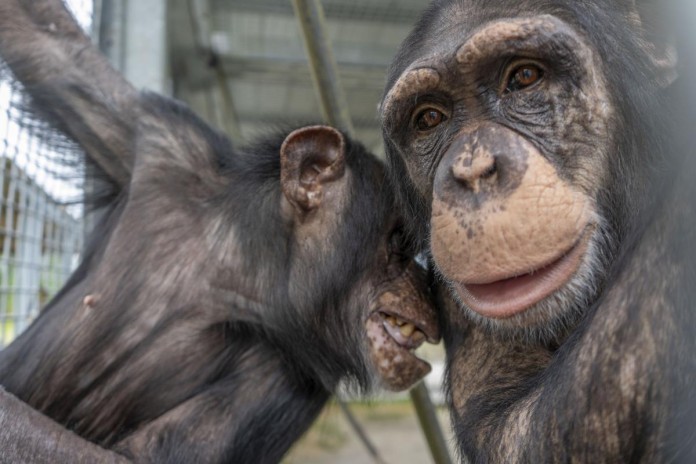
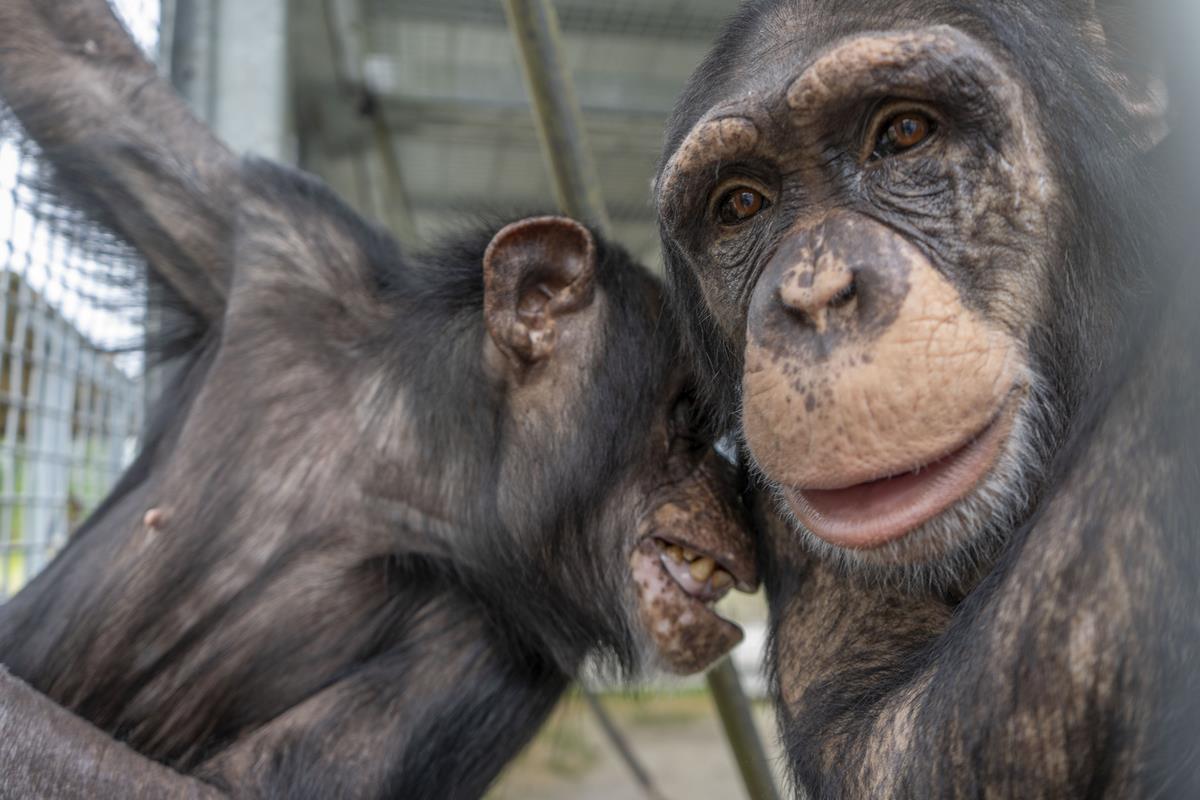
The rescued chimps seemingly taking a selfie - SWNS
The rescued chimps seemingly taking a selfie – SWNS
Four chimpanzees rescued from a roadside zoo were seen sharing a loving embrace as they set foot in a brand-new sanctuary.
Found in Ohio at a zoo called the Union Ridge Wildlife Center, they were kept indoors by an exotic animal keeper whose facilities were subject to repeated complaints on animal welfare, and who was recently sentenced to prison time.
The Ohio Department of Agriculture ordered the custody of the four chimps, named April, Anna, Cash, and Lucy, to be transferred to Florida’s Save the Chimps sanctuary in Fort Pierce, Florida.
Footage shows the four chimps joyously coming together with hugs and grooming sessions in the quarantine area, where they will remain in quarantine for two months before integrating into one of the sanctuary’s 12 chimp islands that in total span 150 acres.
“These are extremely intelligent chimpanzees who deserve the chance to explore a larger world,” said Save the Chimps’ Director of Chimpanzee Behavior and Care, Dr. Andrew Halloran.
The “very sweet” chimps range in age from 13 to 26, and are adjusting well to their new surroundings, the sanctuary said.
“We look forward to seeing them thrive on a vast island habitat with 15–20 new lifelong companions, with the freedom to choose where they want to be and who they want to be with,” said Halloran.
WATCH the celebrations below…
SHARE This Animal Rescue News With Your Friends On Social Media…
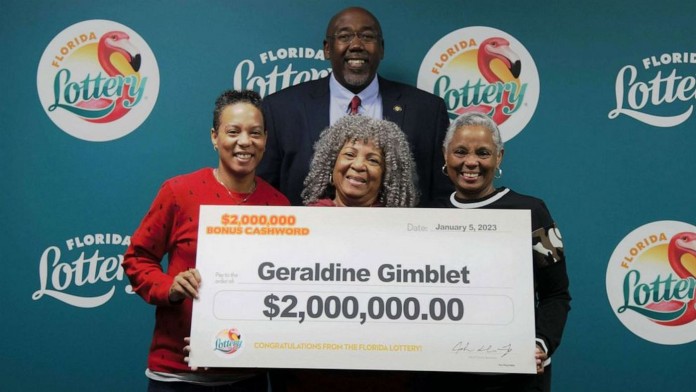
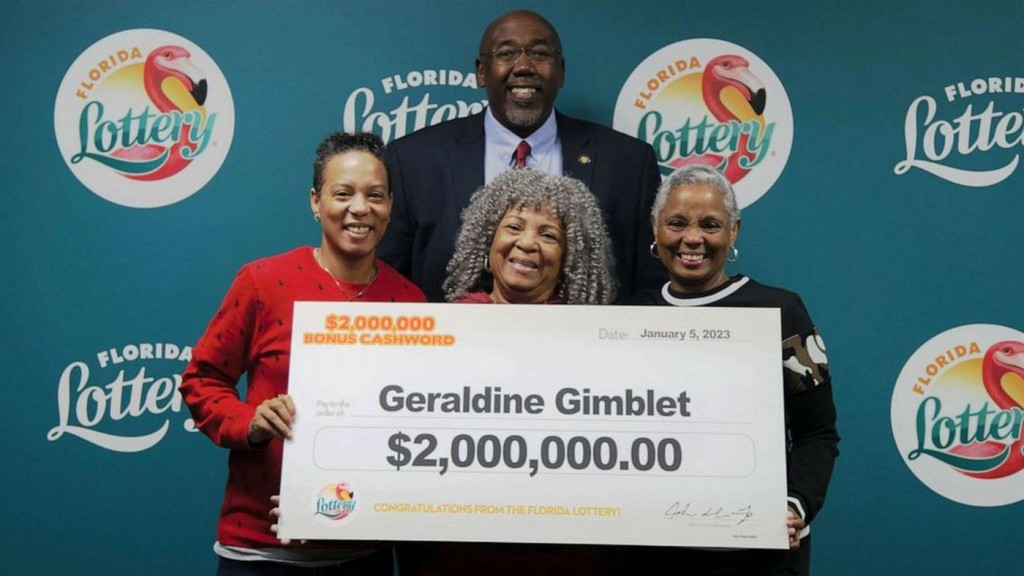
Geraldine Gimblet with her daughter and granddaughter - credit Florida Lottery
Geraldine Gimblet with her daughter and granddaughter – credit Florida Lottery
After shelling out her life savings to pay for her daughter’s breast cancer treatment, a Florida grandmother got a nod from the universe.
Buying the last available scratch-off from her preferred lottery game at the store, she landed a $2 million jackpot.
Geraldine Gimblet of Lakeland was celebrating the moment that her daughter, Lawrencia Jackson, rang a bell at the local hospital signifying she had finished her breast cancer treatment.
A long-time lottery player, Gimblet, 74, spent $10 on the last scratch-off card at the store, and it happened to be a winner.
“I just didn’t know,” Gimblet told Good Morning America regarding her reaction, “I was like, ‘Are you sure, would you check this on your phone?’ And, I won!”
Daughter Jackson, who accompanied Gimblet to the Tallahassee lottery offices to accept a lump sum of $1.6 million, described it as a “blessing.”
Gimblet didn’t hesitate to finance the cancer treatment, saying she just “did what I had to do,” with Jackson adding that she would “just have to keep loving her,” as a means to try and repay the kindness.
WATCH the story below from Good Morning America…
SHARE This Blessing On A Florida Family With Your Friends…
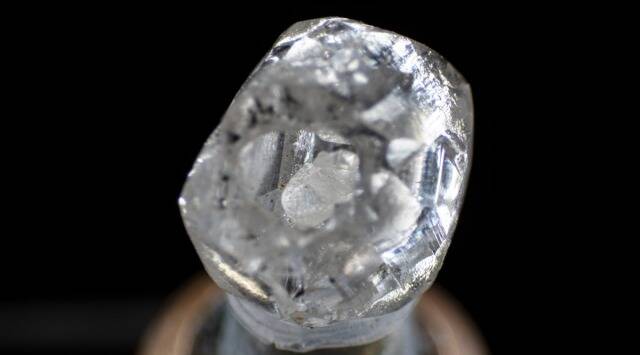
In India, a diamond company has its hands on a jewel that is rarer than rare—a large, hollow diamond, inside of which rests another, smaller diamond.
Dubbed the “Beating Heart,” there is enough room inside the cavity to allow the smaller diamond to tumble around. Only one other such discovery has ever been made, and the company hopes to leave it uncut and unpolished to promote the natural splendor of the gemology therein.
Vallabh Dhanjibhai Global in the west Indian state of Gujarat is a sightholder of the De Beers Group, the world’s largest diamond exchange.
“We found it unique as this diamond had a small diamond in its internal cavities,” said V D Global owner Vallabh Vaghasia, who explained it arrived in a container of normal unprocessed diamonds.
“We examined it for a longer time to understand the natural making of rough diamonds, and later we named it ‘Beating Heart’ due to its unusual composition.”
“We will not get it cut or polished,” Vaghasia’s nephew, who also works at the company, told The Indian Express. “My uncle promotes natural diamonds, so this unique piece of diamond will be used as a medium to promote natural diamonds.”
In 2019, Russian diamond handlers revealed the Matryoshka Diamond to the world, the only other one that’s ever been found with a cavity occupied by another, smaller diamond.
Vaghasia sent the Beating Heart to De Beers for research, who in turn produced a paper theorizing how such a unique material could come into being.
Watch | Surat firm finds rarest of rare ‘diamond within diamond’, names it ‘Beating Heart’ pic.twitter.com/MFwLQjZtwH
Conditions under the Earth that were just right for making diamonds produced the small inner stone, but as it continued to ‘grow’ as it were, conditions changed, leading to an outer shell of poor quality, fibrous diamond. Then, conditions returned to optimal, and a second layer of high quality diamond coalesced.
On its journey from the depths of the planet to the surface, the porous diamond layer eroded away, leaving one encased in the other, together totaling 0.329 carats.
India has produced more than a dozen of the world’s most famous diamonds. Though they are mined in Andhra Pradesh in the east, Surat, Gujarat’s capital, is known as the Diamond City of India because 8 of every 10 polished and cut diamonds traded worldwide were produced in Surat.
Quote of the Day: “To send light into the darkness of men’s hearts—such is the duty of the artist.” – Robert Schumann (composer)
Photo by: ToniVC, CC license
With a new inspirational quote every day, atop the perfect photo—collected and archived on our Quotes page—why not bookmark GNN.org for a daily uplift?
Need a gift for an outer space lover at home? Do you want to inspire a love of the cosmos in a classroom?
Thanks to the most successful space mission ever completed by a Middle East country, a new atlas of Mars is available for researchers based on 3,000 images stitched together.
It’s amazing to have an image of the second-best-researched planet in the solar system displayed in the same way we all picture our own world in our heads—it makes the idea of Mars as a neighbor so much more identifiable.
The atlas was created by a team from New York University Abu Dhabi (NYUAD) and the United Arab Emirates (UAE) Center for Space Science, and far from being merely a display piece for science classrooms, offers a lot of insight for senior scientists as well.
“We plan to make our map available to the entire planet, as part of the new and more advanced Atlas of Mars, which we have been working on, and will be available in both English and Arabic once published,” NYU Abu Dhabi (NYUAD) group leader and research scientist Dimitra Atri said in the statement.
“The hope is that this accessibility will make it a great tool for researchers, and also students to learn more about Mars, and showcase the possibilities that the space sector in the UAE can offer.”
The Emirates Mars orbiter Hope (Al-Mal) equipped with the Emirates Exploration Imager, launched in July 2020 from Japan, and the map thusly produced reveals the Red Planet in detail never before captured at this scale.
Every named and explored feature of Mars, such as Olympic Mons, the solar system’s largest volcano, is displayed on the atlas, as well as polar ice caps, extinct river, and lake systems with their deltas where NASA’s Perseverance rover has been exploring.
“The Hope probe is helping researchers to create this global image of the planet due to its strategic position,” Atri said. “Hope circles Mars in an elliptical orbit that allows it to observe from much further away than any other spacecraft. This strategic position is helping researchers to create a global image of the planet.”
The map also reveals the history of asteroidal bombardment of the planet, giving a wide-angle view of the conditions in the early solar system. Scientists can use the pattern of asteroidal bombardment to estimate the density and patterns of debris back 3.5 billion years ago.
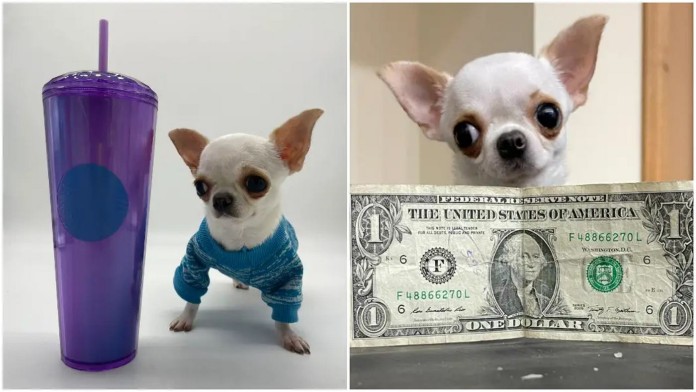
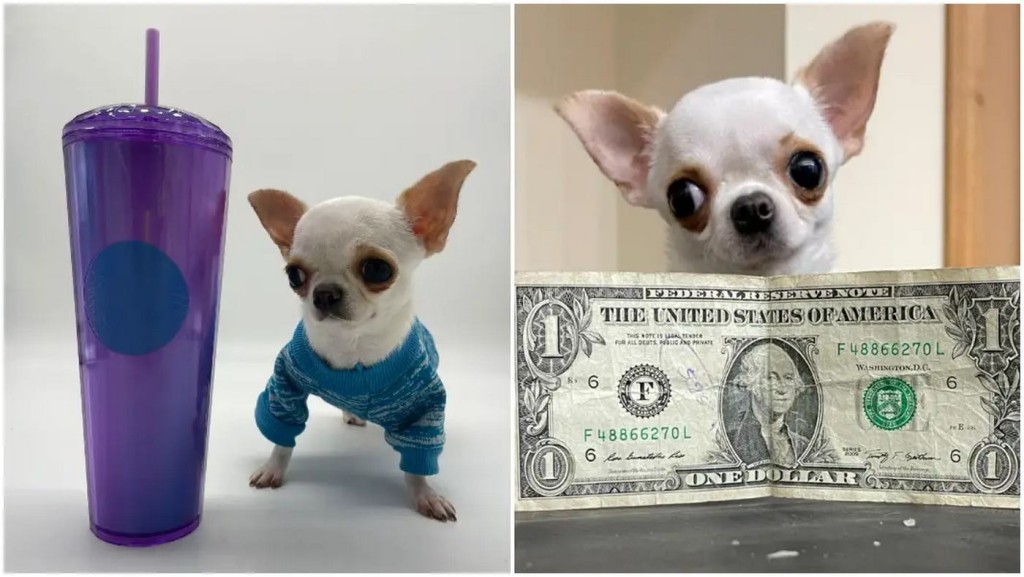
A 2-year-old Chihuahua named Pearl is officially the world’s shortest dog, as confirmed by her vet, and Guinness World Records.
Pearl measures 3.59 inches (9.14 cm) in height, meaning she’s shorter than a popsicle stick. She has her head to thank for being longer than a dollar bill, at 5 inches (12.7 cm).
She comes from a lineage of tiny and relatively calm Chihuahuas, with her ancestor Miracle Milly, being the previous Guinness World Record holder for shortest dog.
“We’re blessed to have her,” said Vanesa Semler, Pearl’s owner. “And to have this unique opportunity to break our own record and share with the world this amazing news.”
A diva at heart, Pearl is fond of high-quality pet food, wearing accessories like glittering collars and sweaters, and listening to classical music.
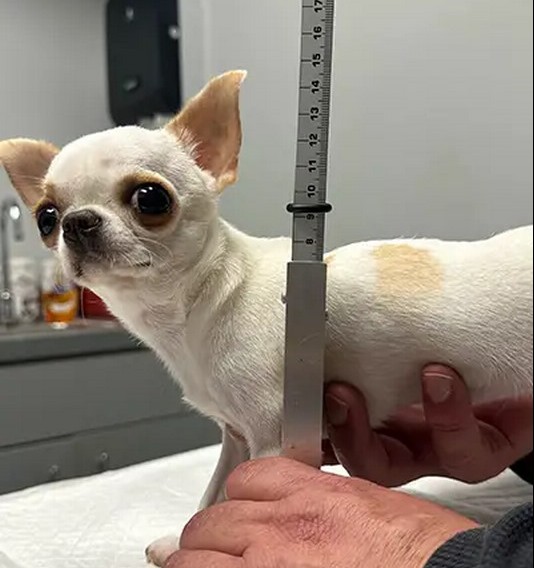
Pearl being measured by wicket – Guinness World Records
As is customary for dogs, her height was measured with a “measuring wicket,” and was carried out from the bottom of the foot to the “withers” which is a ridge between the shoulderblades present in all dogs.
Pearl loves the attention her short stature attracts, including from Vanessa’s three other dogs, who are all “normal” sizes.
GET to know Pearl more in the video below…
SHARE This Tiny World Record Holder With Your Friends And Chihuahua Owners…
Sometimes there are no limits to what a person will do for their family, and in the case of a NICU nurse that was true, seemingly, for one of her patients as well.
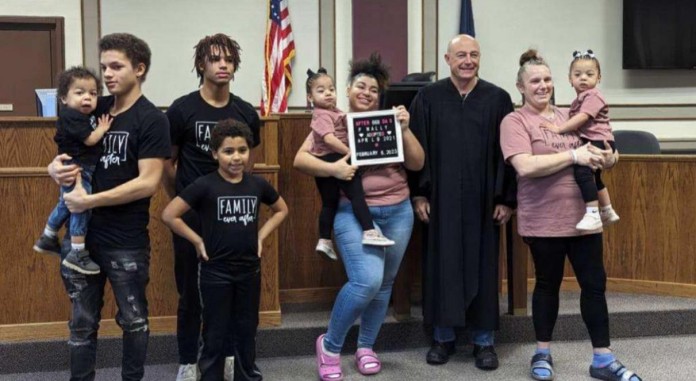
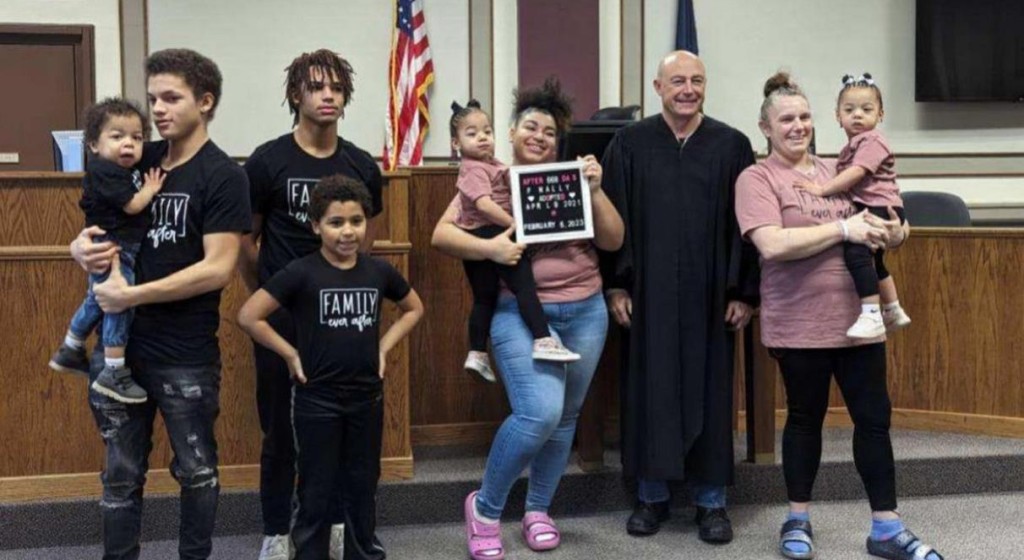
Nurse Katrina Mullen cared for a 14-year-old teen mom of premature triplets, named Shariya Small, and feared that the three babies would all be sent into foster care based on Small’s economic and familial situation.
“I am very familiar with how scary it is to be pregnant at a young age like that,” Mullen told Small, per the Washington Post’s report on the story. “If you need anything, if you need to talk, I’m here.”
Indeed, Mullen was herself a teenage mom and received her first pregnancy at age 16. Today, she is a single mom of 5 children. Small’s three infants stayed at the Community Hospital North in Indianapolis for a total of five months before being discharged, during which time Small and Mullen formed a close bond.
This continued after they left, as Small continued to call Mullen in moments of child-rearing stress after she went to stay with her aunt—the only person she had whose door was open. A trip to her house showed Mullen the economic side of the stress, as the kids all had one playpen and a single bassinet to share between them.
Then the call that Mullen feared would come arrived—Child Protective Services notifying that Small and her kids would be separated and put into foster care. So Mullen acted fast.
“I didn’t even think it through,” Mullen said. “Everybody in my life thought I was insane, and I probably was at that point, but I could not let her be separated from them.”
What she didn’t think through was the choice to foster, and then even to adopt, Small and all three of her kids.
Well wishes have poured into the new immense family of 9, and a GoFundMe set up by Mullen to raise money for a “financial cushion” accumulated over $80,000
“We are overwhelmed and overjoyed at all the love, kind words, and encouragement being showered on our family,” Mullen wrote in an update. “My mama ❤️ explodes every day.”
WATCH the story below from TODAY…
SHARE This Story Of Love And Sacrifice With Your Friends…
Quote of the Day: “Learn how to select your thoughts the same way you select your clothes every day. This is a power you can cultivate.” – Elizabeth Gilbert
Photo by: Amanda Vick
With a new inspirational quote every day, atop the perfect photo—collected and archived on our Quotes page—why not bookmark GNN.org for a daily uplift?
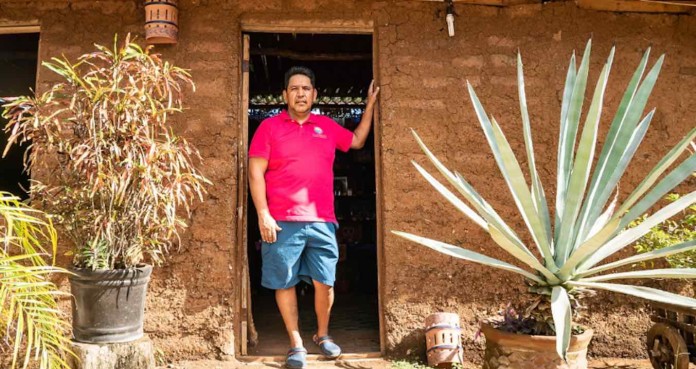
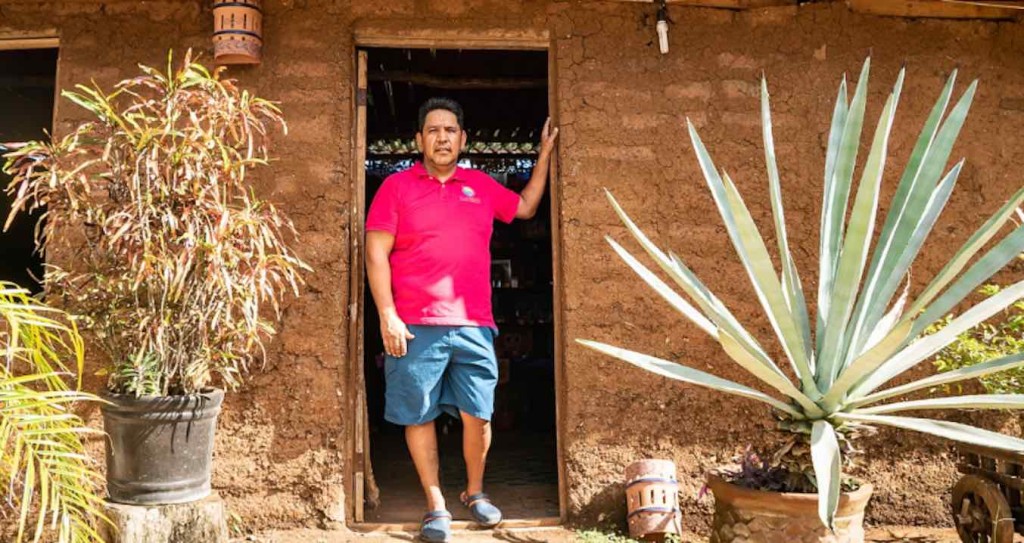
Founder Omar de Jesús Vazquez Sánchez with his Sargablock housing -CREDIT: Emily Mkrtichian for UNDP Mexico
Founder Omar de Jesús Vazquez Sánchez with his Sargablock housing -CREDIT: Emily Mkrtichian for UNDP Mexico
While tourists visiting Mexican beaches complain about piles of smelly seaweed, one Mexican gardener reckoned it was something like a gift.
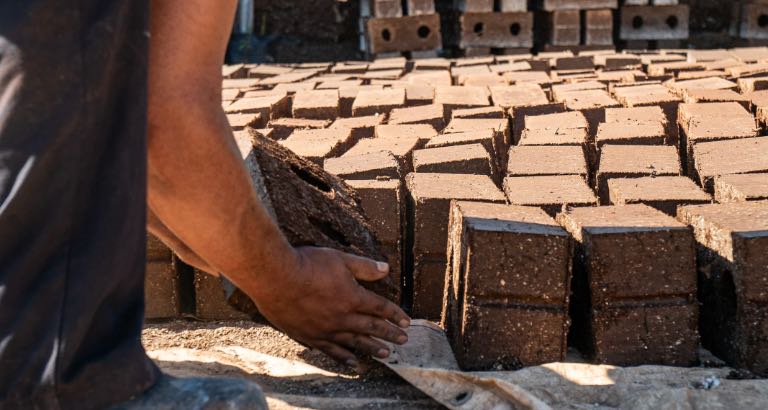
The governments in places like Cancun have been required to clear away as much as 40,000 tons of sargassum seaweed, which smells like rotten eggs, but Omar de Jesús Vazquez Sánchez is steering it away from the landfills and into a kiln, where he makes adobe-like blocks that pass regulation as a building material.
He started SargaBlock to market the bricks, which are being highlighted by the UN Development Program as a stroke of brilliance, and a sustainable solution to a current environmental problem.
His story begins back in 2015 when, like any experienced laborer, he found rich people were stuck with a job they didn’t want to do. In this case, it was cleaning up the sargassum on the beaches of the Riviera Maya.
Omar grew up in poverty, immigrated to the US as a child to become a day laborer, and eventually dropped out of school and became a substance abuser. The American dream never appealed to him as much as a “Mexican dream”—a mix of memories from his childhood and dreams of being a gardener back home, so he moved back.
His time feeling unwanted as an addict and immigrant gave him a unique perspective on the smelly seaweed.
“When you have problems with drugs or alcohol, you’re viewed as a problem for society. No one wants anything to do with you. They look away,” Omar told Christian Science Monitor in a translated interview.
“When sargassum started arriving, it created a similar reaction. Everyone was complaining, I wanted to mold something good out of something everyone saw as bad.”
His cleanup crew provided work for 300 families, and it was not long after that he found the sargassum could be used to make blocks. The blocks contain 40% sargassum, and from 2021 to present day, he’s used almost 6,000 tons of the stinky stuff to fire blocks which he’s used to build structures all around the state of Jalisco.
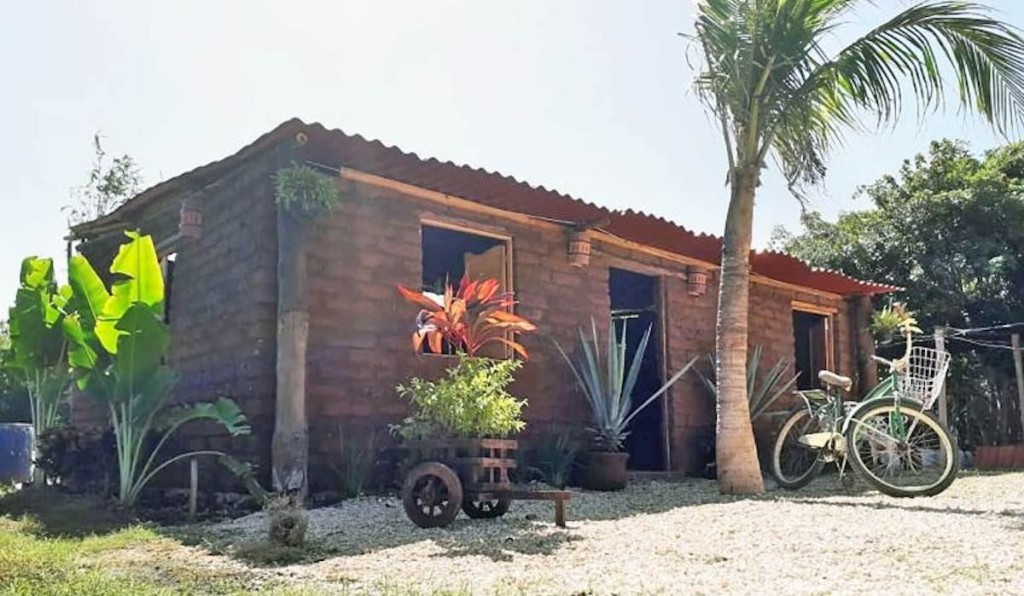
House of bricks made from sargassum – Credit: Emily Mkrtichian for UNDP Mexico
The ecology and environment offices of Quintana Roo, the legislative area that includes the city of Cancun, approved the SargaBlocks for use, and similar organic-based blocks have been reckoned as being capable of enduring 120 years.
The UN Development Program selected Omar’s work to be featured in their Accelerator Lab global broadcast to alert the world of its value and ingenuity.
Sargablock bricks – by Emily Mkrtichian for UNDP Mexico
There are all kinds of naturally-occurring pollutants or burdens that could be used in construction, and the UNDP hoped that by sharing Omar’s vision of the future of the Caribbean’s sargassum problem, it would inspire others to act in similar ways.
Omar has been fortunate enough to be able to donate 14 “Casas Angelitas,” or homes made of SargaBlock, to families in need, and seems to be exceedingly close to achieving his “Mexican dream.”
WATCH a bit of the story below…
SHARE This Inspiring Human And Ecosystem Story With Your Friends…
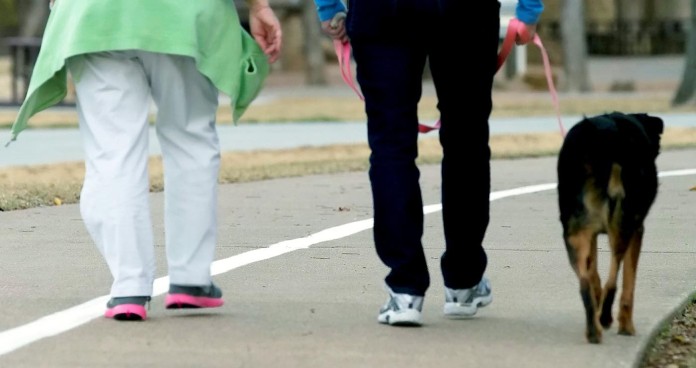
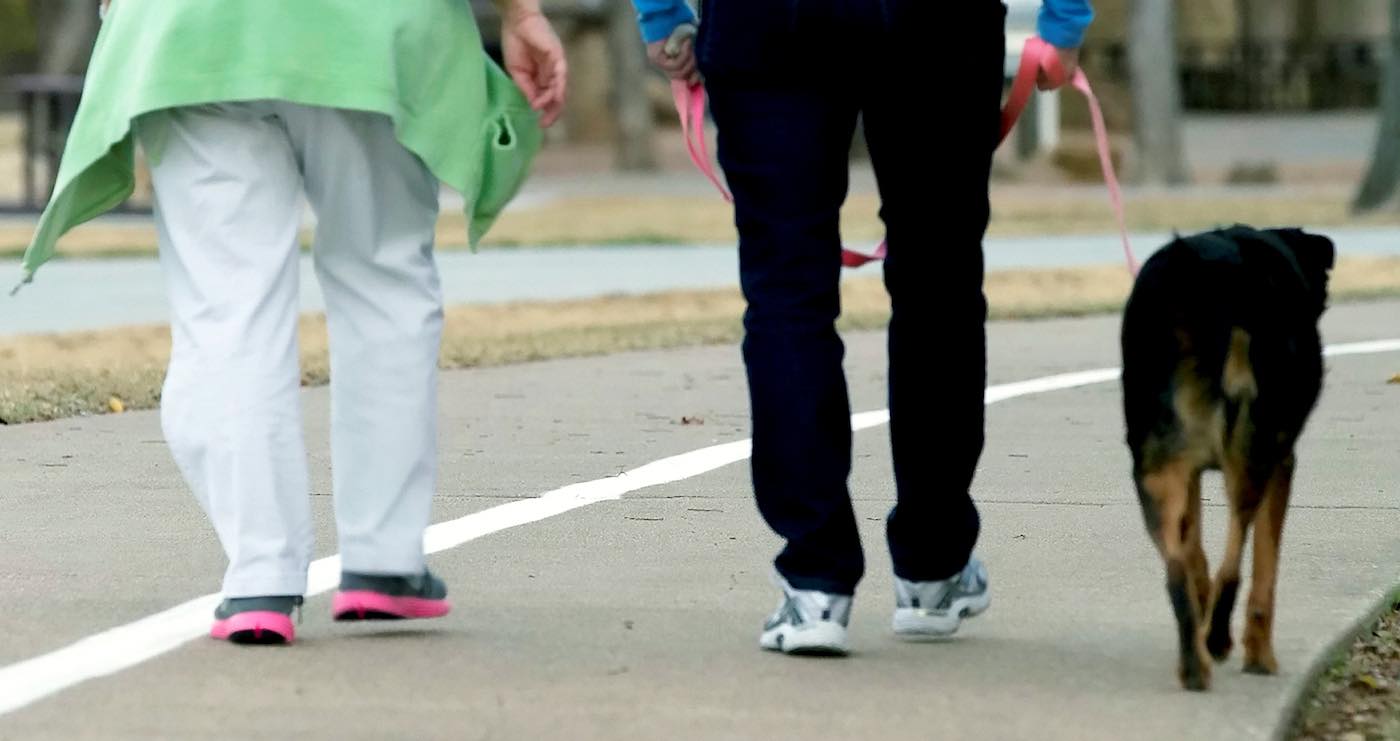
According to a recent study, researchers found that, for senior citizens, every 500 additional daily steps reduces the risk of heart trouble.
Compared to those who took less than 2,000 steps per day, adults who took around 4,500 steps per day had a 77 percent lower risk of experiencing a cardiovascular event such as a heart attack or stroke.
Only about 3.5 percent of the participants who took around 4,500 steps per day suffered a cardiovascular event, compared to 11.5 percent of those who took less than 2,000 steps per day, over the 3.5-year study period.
“Steps are an easy way to measure physical activity, and more daily steps were associated with a lower risk of having a cardiovascular disease-related event in older adults,” says lead researcher Dr. Erin Dooley, assistant professor of epidemiology at the University of Alabama.
“Most studies have focused on early-to-midlife adults with daily goals of 10,000 or more steps, which may not be attainable for older individuals.”
Participants were part of a larger study group of more than 15,700 adults originally recruited for the ongoing Atherosclerosis Risk in Communities (ARIC) study. The research team evaluated health data for any potential association between daily step counts and cardiovascular disease.
They analyzed information from 452 participants with an average age of 78 who used an accelerometer device similar to a pedometer, worn at the hip, that measured their daily steps. The devices were worn for three or more days, for 10 or more hours, and the average step count was about 3,500 steps per day.
Over the 3.5-year follow-up period, 7.5 percent of the participants experienced a cardiovascular disease event, such as coronary heart disease, stroke or heart failure.
The analysis found that, compared to adults who took less than 2,000 steps per day, those who took around 4,500 steps each day—about a quarter-mile more walking—had a 77 percent lower risk of experiencing a cardiovascular event.
Nearly 12 percent of older adults with less than 2,000 steps per day suffered a cardiovascular event, compared to 3.5 percent of the participants who walked about 4,500 steps per day.
Every additional 500 steps taken per day was incrementally associated with a 14 percent lower risk of cardiovascular disease.
“We were surprised to find that every additional quarter of a mile, or 500 steps of walking, had such a strong benefit to heart health,” Dooley told the American Heart Association.
“While we do not want to diminish the importance of higher intensity physical activity, encouraging small increases in the number of daily steps also has significant cardiovascular benefits,” she added.
“If you are an older adult over the age of 70, start with trying to get 500 more steps per day.”
The findings were presented last month at the American Heart Association’s Epidemiology, Prevention, Lifestyle and Cardiometabolic Health Scientific Sessions in Boston, Massachusetts.
SHARE The Important Health Tip With Seniors on Social Media…