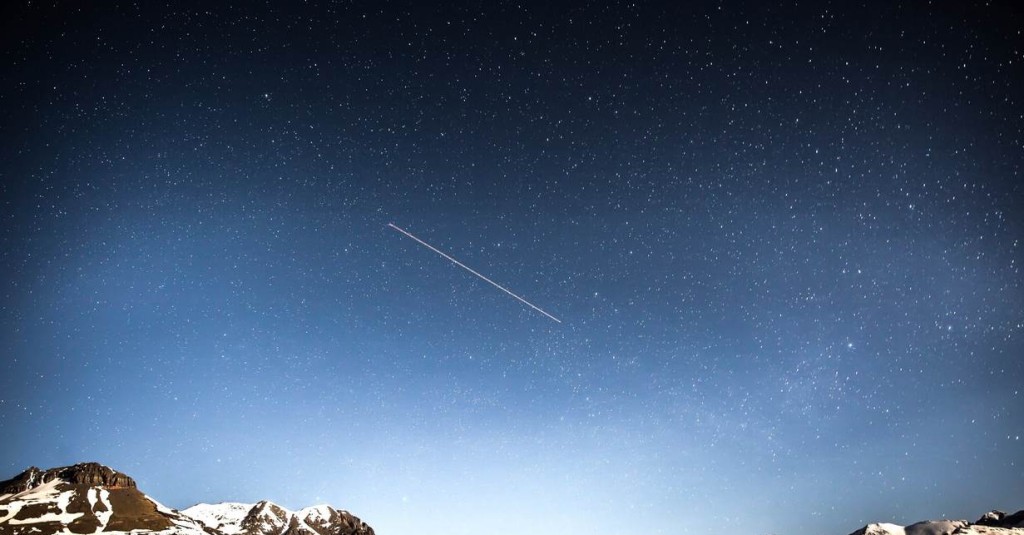
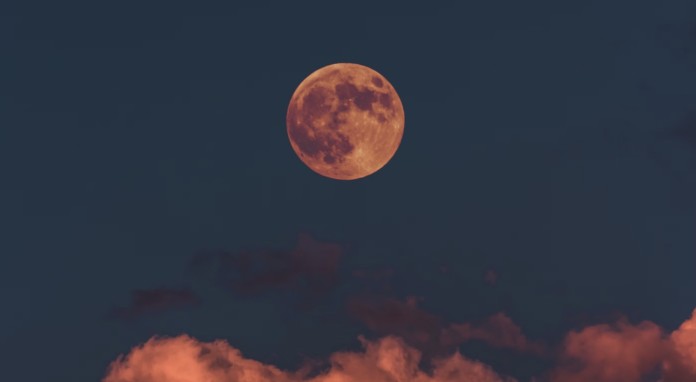
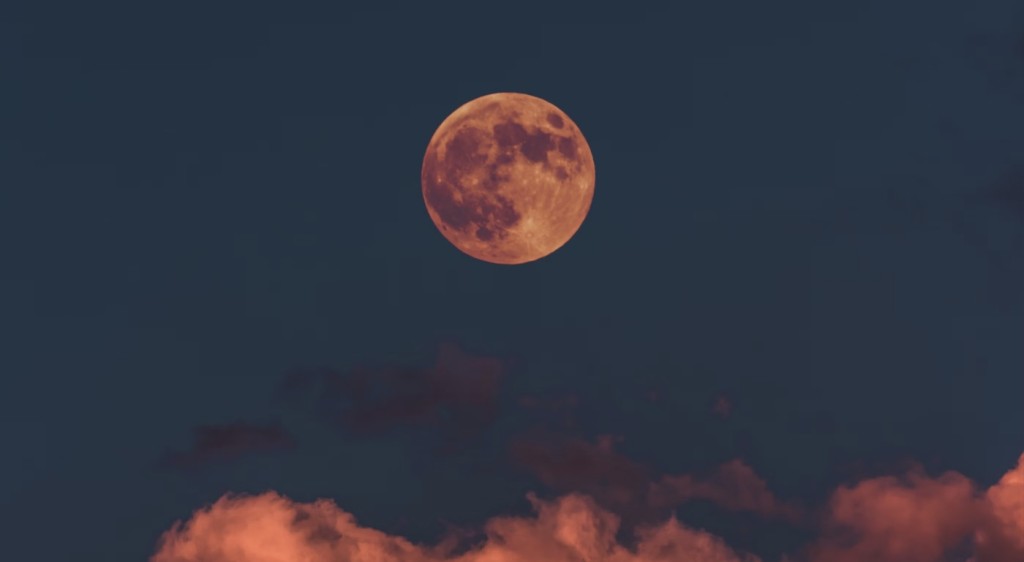
Quote of the Day: “It is so easy to give, and so exquisitely rewarding.” – John Steinbeck
Photo by: Rikonavt
With a new inspirational quote every day, atop the perfect photo—collected and archived on our Quotes page—why not bookmark GNN.org for a daily uplift?
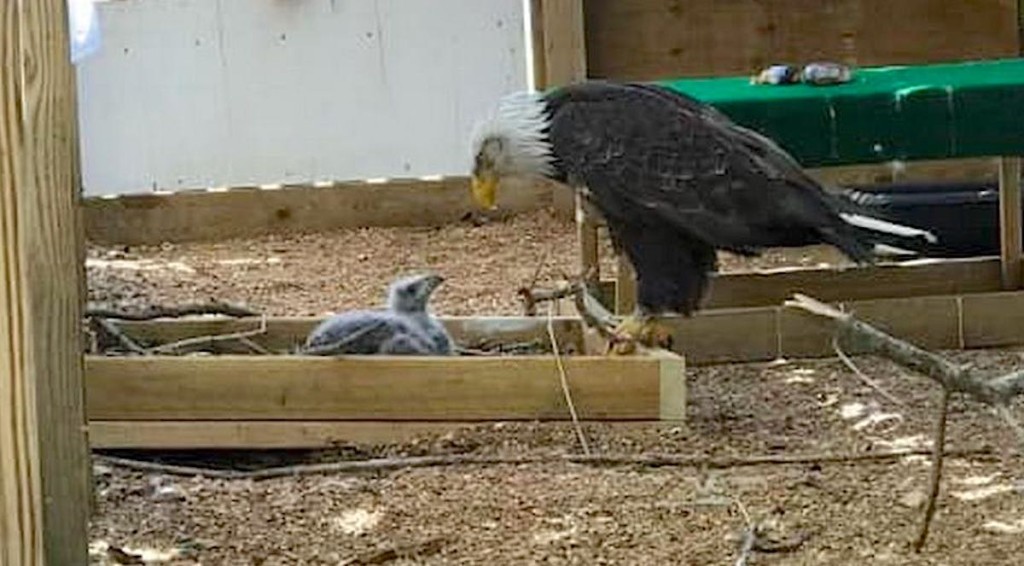
Murphy and Eaglet – World Bird Sanctuary on Facebook
A hard-working eagle “dad” recently made national headlines after adopting an eaglet, and abandoning the rock he had been caring for.
This is the story of Murphy, a beautiful male bald eagle, who, because of a wing injury, resides permanently at a Missouri sanctuary.
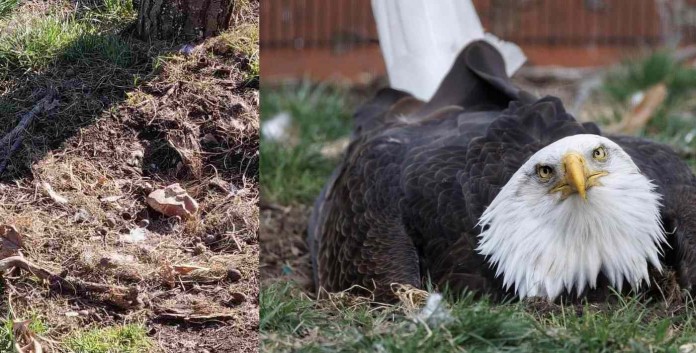
Recently, keepers noticed Murphy feathering a “very simple nest” and paying extremely close and doting attention to a single “egg,” that was inside.
“We wish Murphy all the luck in the world, but we’re not telling him the reality of the situation,” the World Bird Sanctuary wrote on Facebook. “We have yet to see a rock hatch.”
The story went viral, garnered national news coverage, and prompted the sanctuary to write a follow-up post to explain the farfetched situation in detail.
For starters they quashed any notions that Murphy was lonely (he lives with 4 other eagles) or insane, explaining that nesting hormones will run their, course, he will become bored of the rock, and move on to another pastime.
Murphy’s Rock – World Bird Sanctuary on Facebook
“Although it might make you feel sad that Murphy has built a nest and is nurturing a rock as an egg, it’s just his hormonal response to spring,” they wrote. “Murphy is not sad, so you don’t need to be. Male bald eagles take an equal part in raising young, so this is very natural behavior for a male.”
Murphy then received news of some interest to him. On April 1st, the sanctuary received its first bald eagle nestling in more than eight years. Bald Eagle 23-126 had broken its wing when the tree it was born in was blown over in a storm.
It took just a day for Murphy to transfer all those fathering instincts from the rock to Eaglet 23-126.
Everyone at the sanctuary is thrilled for Murphy. They noticed in the days after it arrived, the eaglet had a pile of untouched food, but a full belly. Murphy meanwhile gets a fish from a tube above his nest, which was all gone—ipso facto—Murphy fed the eaglet.
Raptors like falcons, hawks, and eagles have very strong parental instincts and have been known to adopt strays.
The nest cam project GROWLS, recently captured the whole adoption process on camera when a red-tailed hawk baby was brought back to an eagle nest as food, but became a sibling instead.
There was no mistaking the tears on Officer Emmanuel Walton’s face for the river water he had just climbed out of—having just watched a child be revived by CPR.
Miami-Dade police responded to an emergency call under a bridge where a car was sinking with a child inside. A request came from the first officers on the scene for backup, because despite heroic efforts from good samaritans and the driver, no one could get the child, strapped to his seat, out of the car.
Dramatic body came footage released by the department shows Officer Walton trying several unsuccessful rescues under the water.
“I couldn’t see through the water, so I had to come back up a couple of times,” Walton told Fox news adding that his instincts as a father drove him on without thinking.
He used his sense of touch to locate the car seat inside. Pulling with all his strength and without knowing how the seat was attached, it came off and he was able to pull the child out of the water.
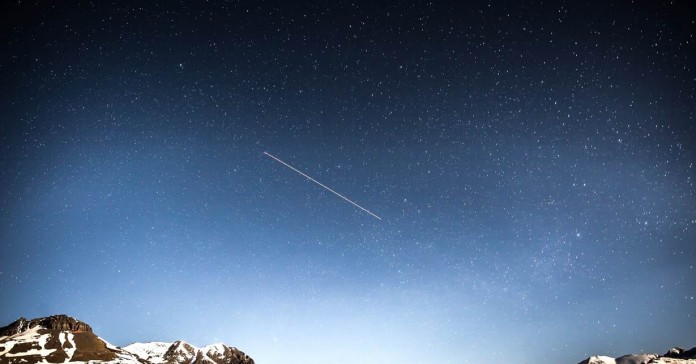
Just before noon on April 8th, a fireball streaked across the sunlit sky and burned up near Calais, Maine.
The rare event triggered a flurry of local news coverage, including that the Maine Mineral and Gem Museum in Bethel is offering a $25,000 reward for the recovery of any pieces 1 kilogram (2.2 pounds) or larger.
It’s unlikely a kilo could be recovered; meteorites are rarely so large. Smaller pieces, however, will also be paid for.
The museum hosts the largest pieces of Lunar and Martian-born debris on Earth, and they’re eager to expand their collection with what Maine astronomers theorized could be a “bolide” meteorite.
“Sometimes you can have meteorites that are visible during the daytime. A bolide is very bright and leaves a trail,” Shawn Laatsch, the director of the Versant Power Astronomy Center, told the Machias Valley News Observer.
“If it’s visible in the daytime, it’s usually a large meteor that hits that atmosphere and lights up. The different colors you see depend on what it was made up of.”
NASA’s radar assets were able to determine that there could be around 150-339 grams of remains that fell somewhere between Canoose Maine, and the Canadian territory of New Brunswick, thanks to some 100 mph winds that were whipping when the meteorite fell.
In the 21st-century world of mass tourism, it would be normal to imagine that money talks over all other voices, but the Thai people living on Koh Kradan island close their paradise four months every year, and only welcome tourists who maintain the highest environmental respect.
At the beginning of April, the tiny island park in Thailand was ranked #1 on World Beach Guide’s “Top 100 beaches on Earth 2023”. Despite the critical acclaim, residents and resort managers say they will maintain the current schedule of closing all tourism opportunities from June 1 to Sept 30.
The 1 square mile Koh Kradan island (2.5 sq. km.), is part of the Trang Islands chain, ensconced within Hat Chao Mai National Marine Park.
It’s everything one could wish for in a tropical island paradise. Pristine white sandy beaches, translucent turquoise water, and colorful coral reefs teeming with life.
One near-perfect beach on one side of the island features the dazzling sunset framed by the sea, while the other side is the place for a contemplative sunset.
“Regardless of the awards given, everyone is doing his best to protect the island. Hat Chao Mai National Park will now focus more on regulations to maintain the beauty of our environment,” Hat Chao Mai National Park chief Prit Narasrit told the Straits Times.
Narasit also said his department is planning to invest more in cleaner, less impactful infrastructure to support the tourists that will inevitably be drawn in greater numbers to the island, while each visitor is briefed on how and why it’s important to protect the fragile ecosystem that includes a variety of endangered fish species.
SHARE These Inspiring Workers Keeping Their Pristine Beaches Pristine…
Quote of the Day: “Unlike emotionality, feeling is a form of intelligence. It’s the body’s direct, holistic, intuitive way of knowing and responding.” – John Welwood
Photo by: Moritz Knöringer
With a new inspirational quote every day, atop the perfect photo—collected and archived on our Quotes page—why not bookmark GNN.org for a daily uplift?
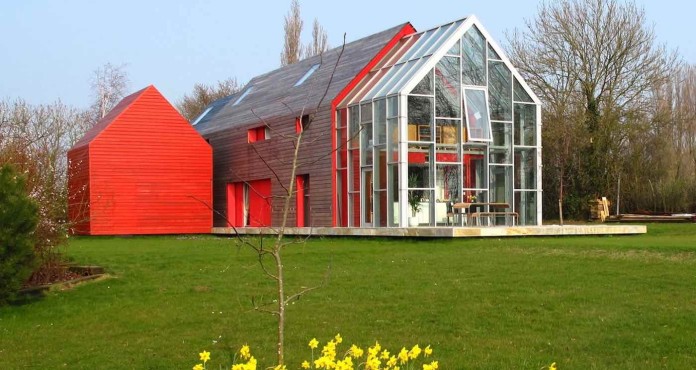
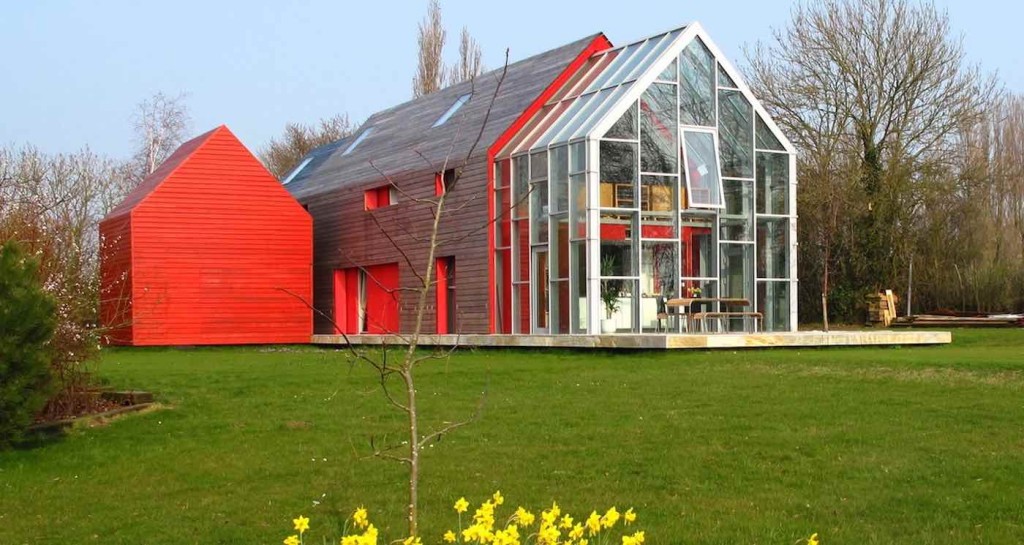
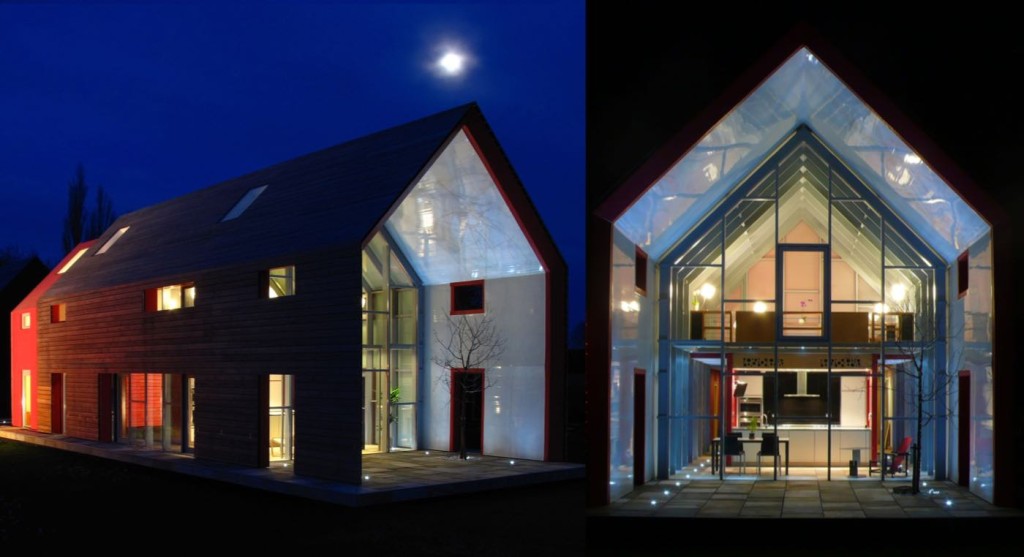
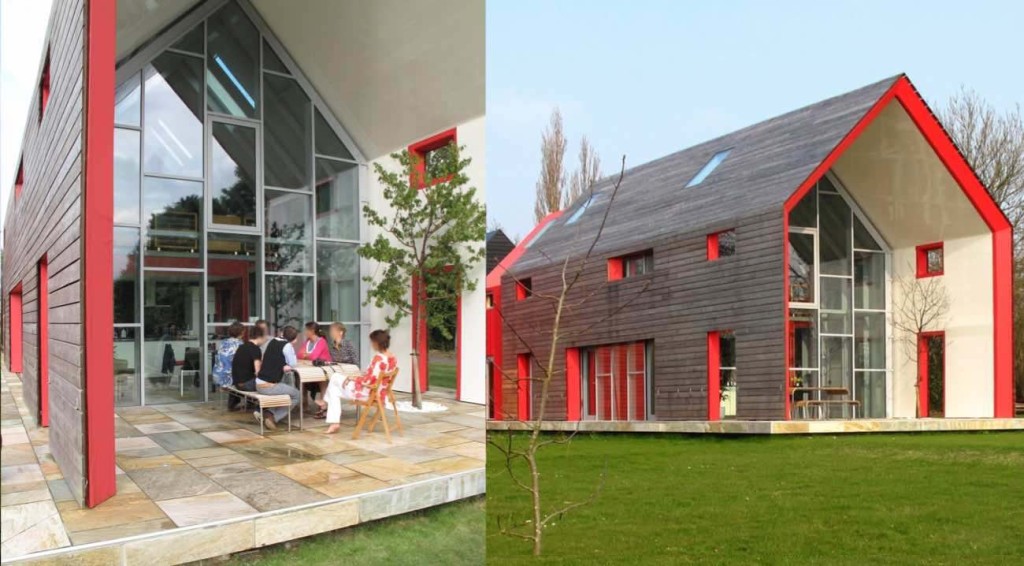
This $1 million ‘sliding home’ might have the perfect solution for temperamental weather—it adapts to the changing seasons by exposing its glass structure in summer and closing back up for a cozy winter.
The unique three-bedroom property in the English countryside of Suffolk, is covered by a moving ‘wooden casing’ that has been wowing house hunters since it went on the market April 5.
Footage shows the glass-fronted conservatory area sheltered by its innovative shell until the walls and roof slide backward to fully expose it to the sun.
The six-minute transformation also reveals an open-air bathroom on the first floor and a previously covered courtyard.
It ends its solar-powered retraction over a detached annex containing the third bedroom and another living area.
The architect behind the design, Alex de Rijke, described the moving shell as ‘like wearing a puffer jacket’ that can be retracted to let heat into the home and reinstated to trap it in.
The unusual home, which won Grand Designs’ ‘Home of the Year’ award upon its completion in 2009, was listed for sale at £1million on Rightmove earlier this month.
Kennedy News/dRMM – Alex de Rijke architects-SWNS
“It allows you to have the best of both worlds, shelter or openness,” says Alex. “The basis of the design is that you can transform a house in many ways. You can put the insulation where you need it when you need it.
“It differs from most designs that are fixed where you have to assume that the climate is the same all year round. This structure is like wearing a puffer jacket.
“The client wanted to build a glass house to enjoy the beautiful surroundings. An all-glass house would get too hot or too cold, but this design makes it possible.
“It’s not only about thermal control. It’s the joy of transformation. It’s not a static object. Everything changes because the roof serves to connect or disconnect the buildings.
“The perfect person for this house would be someone who not only understands it but looks after it and isn’t afraid to contact me in order to make changes if they want to.”
SWNS / Kennedy News/dRMM / Alex de Rijke
Alex claims the solar and wind-powered home doesn’t need to take any power from the national grid and the innovative shell can even be removed completely to make a ‘free-standing barn’.
The 60-year-old says the original owner, who built the home to his design, wants to retire to a house in a nearby town that has less land to manage than his current three-and-a-half-acre plot.
Alex, a director at dRMM Architects, was a judge on Channel 4’s Handmade: Britain’s Best Woodworker in 2021 where carpenters competed against each other in a series of challenges.
SLIDE This Cool Design to Architecture Fans on Social Media…
Time-restricted eating improved the health of firefighters by reducing the risks of heart disease linked with shift work, according to a new study.
Working long shifts, up to 24 hours at a stretch, could be behind a number of health issues, including higher rates of diabetes and heart attacks.
But firefighters who stuck to a time-restricted eating plan—wherein the time of day determines when a person can eat, in this case 10 hours daily—saw those risks reduced.
Researchers say that their findings, published in the journal Cell Metabolism, could help others who work long hours, such as military personnel, nurses, transportation drivers, as well as new parents, whose schedules go awry when caring for a new baby.
Little previous research had been done to identify lifestyle interventions that could help prevent the health risks of working shifts.
But a new American study found that time-restricted eating (TRE) could be safely practiced in shift workers.
The research team also showed that TRE provided benefits to participants who had indications of cardiometabolic disease, a group of common but often preventable conditions including heart attack, stroke, diabetes, insulin resistance and non-alcoholic fatty liver disease.
Called the Healthy Heroes Study, the intervention focused on firefighters in San Diego, California.
“Shift work is much more common than many people think,” said co-corresponding author Professor Satchidananda Panda, of the Salk Institute.
“Not only does shift work contribute to an increased burden of disease in our society, but it makes it hard for people with existing conditions like diabetes and cardiovascular disease to manage them.”
Co-corresponding author Professor Pam Taub, a cardiologist at the University of California San Diego School of Medicine, said, “Overall, firefighters are a pretty healthy group of people, but we found that for those who had underlying cardiometabolic risk factors like high blood pressure, high cholesterol, and hyperglycemia, there was some benefit to TRE, especially in terms of improvement in glucose levels and blood pressure.
Professors Panda and Taub have collaborated on research into TRE for several years. In January 2020, they published a study in Cell Metabolism that found that restricting the time of eating to 10 hours a day reduced body weight and improved blood pressure and cholesterol levels in people with metabolic syndrome.
In the current study, the team recruited San Diego firefighters, who work 24-hour shifts. There were 137 firefighters ultimately enrolled in the study; 70 followed TRE, eating all of their meals within a 10-hour time window, and 67 were in the control group.
All the participants were encouraged to follow a Mediterranean diet that was rich in fruits, vegetables, whole grains, and healthy fats. The subjects were followed for 12 weeks.
A barrier to conducting research studies with shift workers has been the subjects’ inability to attend the lab during regular business hours. The researchers got around that by going to the fire stations to apply wearable devices on the participants to collect their activity, sleep, and blood glucose levels.
They also customized an app that allowed the firefighters to log their food and sleep and answer study surveys; the app also enabled the researchers to send study materials and to guide the participants on following the recommended lifestyle.
The researchers found that the time-restricted eating pattern was both safe and feasible, as participants didn’t report any problems with concentration, reaction times, or other issues and their quality of life generally improved.
“Even those who were healthy with no underlying cardiometabolic risk factors had improvements in quality of life and in VLDL, which is a form of bad cholesterol,” said Taub.
The research team wants to conduct similar studies with healthcare workers.
Panda added, “Humans have been living with circadian rhythms for at least 200,000 years, and these rhythms clearly have a profound effect on us.
“Shift workers, whether they are astronauts or custodians, are vital to our society. It’s time to think about how we might help them improve their health.
“Doctors and researchers are always thinking about the magic pill that can cure or reduce disease.
“Our study showed that shift workers with high blood pressure, blood sugar, or cholesterol can benefit from a simple lifestyle intervention called time-restricted eating.”
SHARE THIS TIP With Firefighters and Nurses on Social Media…
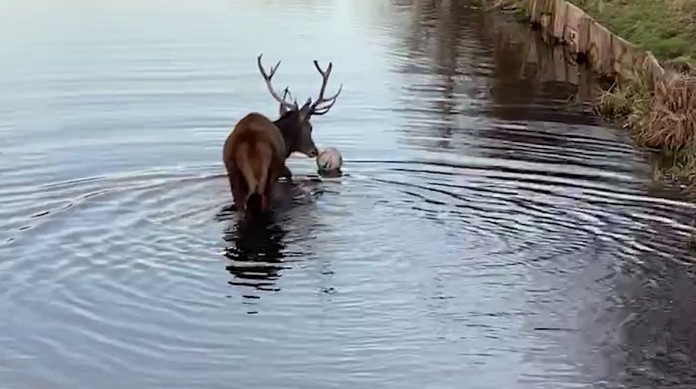
A stag was spotted trying out a new football technique in a south-west London park.
The lone animal pushed the stray ball in the water toward the shore with its nose, but then tried using its antlers to lift it back on land.
Katie O’Lone captured the video as she stumbled across the sporty animal in Bushy Park in Richmond-upon-Thames.
“The stags often wallow in the river here in early evening,” said Katie. “But today one dribbled upstream having found an abandoned football stuck in the reeds.”
She posted the video online calling it, “light entertainment before bed.”
There are around 320 Red and Fallow Deer that roam freely across Bushy Park but
so far only this one seems to have caught football fever.
Watch the video below…
KICK This Amusing Moment to Sports Fans on Social Media…
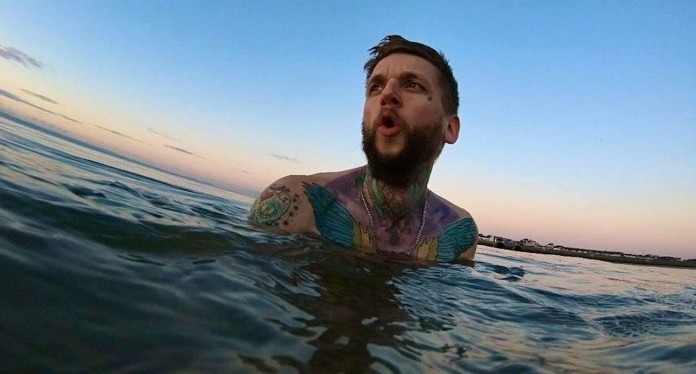
A man claims he has cured his depression by taking daily dips in frigid water.
The 30-year-old was suffering from severe depression, anxiety, and feelings of dread for years, which lead him to attempt ending his life last year.
Mitchell Bock was then hospitalized by a crisis team and discharged after 13 hours with a single follow-up call, which he described as a “tick-box exercise”.
After he was discharged, Mitchell felt disappointed by the care he received and started looking into alternative mental health treatments.
“I was feeling hopeless,” the young man from Wales recalled
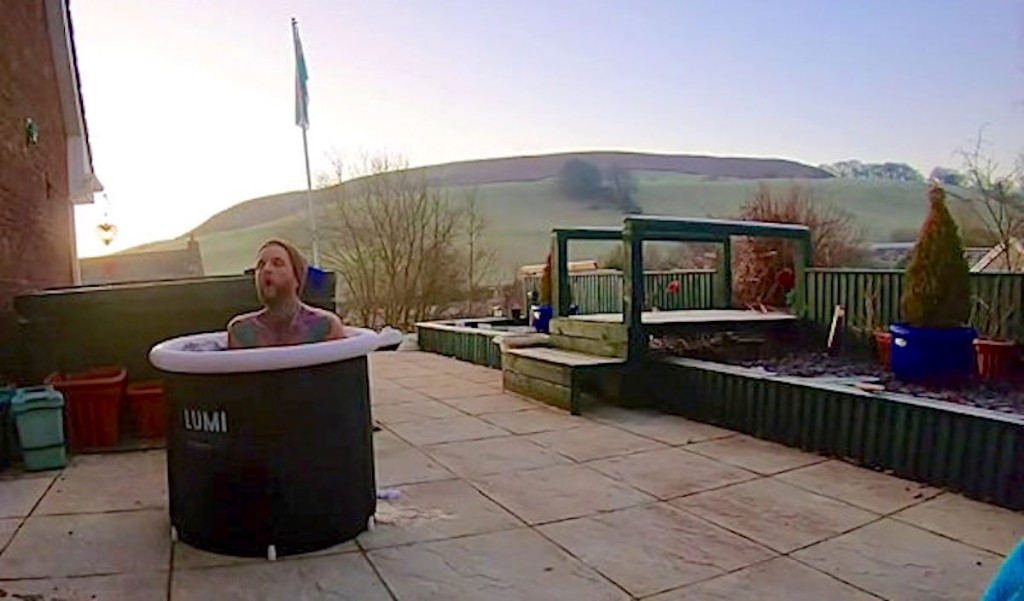
Then, in January, just weeks after his suicide attempt, Mitchell’s mother Melanie Aldridge sent him an ice bath—a tub designed to retain cold that he could use to submerge himself.
They had been looking into the benefits of ice-water therapy, so Mitchell started using it right away. Within a few days, he began to feel the effects.
“When I first did it, I remember waking up without the usual feeling of dread,” he said. “It was like going to bed with the flu and waking up completely cured.
The thought of jumping into an ice bath may put some people off, but Mitchell said it didn’t take long to acclimate to the extreme cold—and the benefits were undeniable.
Mitchell in his ice bath – SWNS
“At first your body panics. You feel tingling and your heart races, but once you control your breathing its fine. I don’t find it uncomfortable anymore.
“I see it as swapping out a whole day of discomfort for a few minutes. You come out feeling amazing. It really is an instant thing.”
Now, the finance worker from Caerphilly tries to have an ice bath, a cold shower—or leap into a lake—every day.
Quote of the Day: “The lesson that life constantly enforces is ‘Look underfoot ’. You are always nearer to the true sources of your power than you think.” – John Burroughs (naturalist and author)
Photo by: Sandro Gonzalez
With a new inspirational quote every day, atop the perfect photo—collected and archived on our Quotes page—why not bookmark GNN.org for a daily uplift?
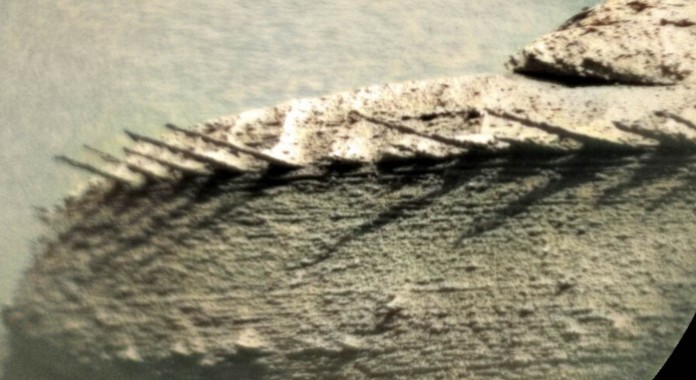
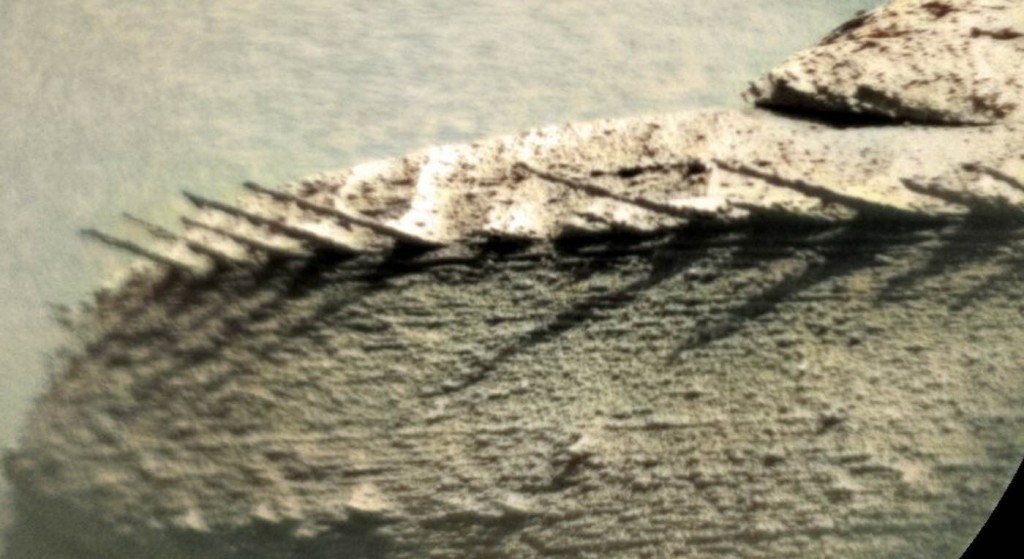
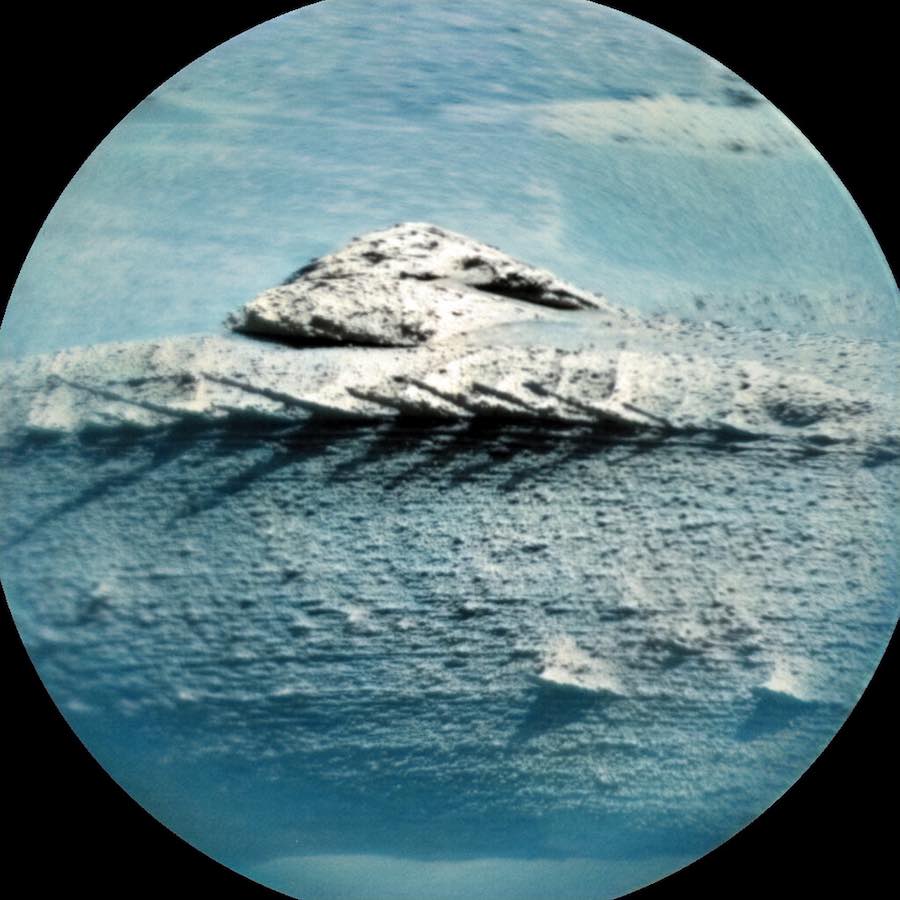
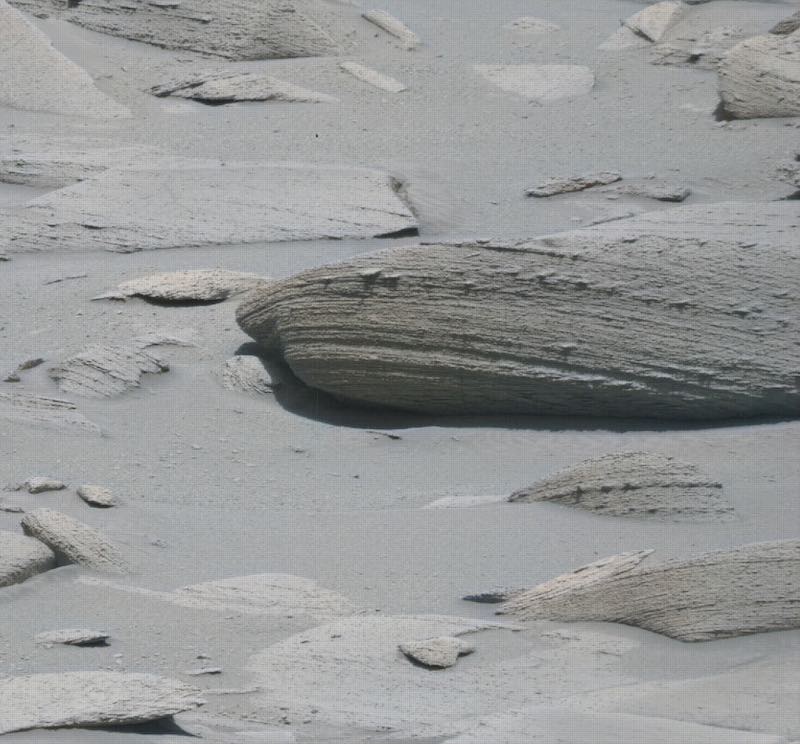
The Mars Curiosity rover has discovered some bizarre bone-like structures on the surface of Mars.
The photographs, released by NASA, appear to show strange protrusions from rocks on the Red Planet.
The observations, taken on Martian day Sol 3786 (April 1) by both the rover’s mast camera and ChemCam, shows a slab made presumably of rock with rows of equally spaced “spikes” sticking out of them.
Guesses at what is shown in the images range from fish bone fossils to a dragon-like creature. Others insisted the Martian winds probably eroded the rocks over a large expanse of time. One person reported that they never saw anything like this, even after “looking into Mars images since the Sojourner mission back in 1997.”
“In 20 years of studying Mars, that’s the most bizarre rock I have ever seen,” wrote astrobiologist Nathalie A. Cabrol. “I cannot wait to have a microscopic image of this one.”
“I think it’s the wind,” said Twitter user Martin Weil. “If it blows over loose sand for a sufficiently large number of eons, every geometric form known to us may eventually be created. We just need patience.”
Mars Curiosity rover’s ChemCam – SWNS / NASA
Excited online commenters thought it looked like fish vertebra, fish fossils, or the skeleton of some prehistoric creature.
But NASA’s Jet Propulsion Laboratory in California explained the phenomenon this way: “Often, the odd-shaped rocks have their origin in the ancient past, when liquid water seeped through the cracks in the rock, bringing minerals along with them.” He added, “These minerals were harder than the rock around them, so the wind eroded everything away except the minerals.”
Curiosity is a car-sized rover that has been exploring the Gale crater on Mars since August 2012 as part of NASA’s Mars Science Laboratory (MSL) mission.
Curiosity rover’s Mast Cam – SWNS / NASA
Its mission goals include an investigation of the Martian climate and geology, and to prepare for human exploration.
Gale is a crater, and probable dry lake, that is 96 miles in diameter (154 km) and about 3.5–3.8 billion years old. So we like to imagine these are the spine of a fossilized dragon in its final Martian resting place.
DON’T KEEP This One-of-a-Kind Mars Discovery to Yourself–Share on Social Media…
Three in five Americans care just as much about saving the environment as they do about saving money.
As part of a recent survey into the sustainability habits of 2,000 U.S. residents, 64% of those polled said they care about the health of the planet and their wallet in equal measure.
66% of respondents claimed they’d be “willing to try anything that can help save the environment”.
Certain sustainable habits proved much more popular than others.
75% said turning off the lights when leaving a room was a primary habit. Similarly, 66% make sure to turn off running water whenever possible, and 63% choose to shower rather than bathe in order to save water.
Conducted by OnePoll on behalf of Bosch, the survey suggests most of the sustainability was achieved in the kitchen.
60% of respondents supported recycling (60%), 46% use reusable water bottles, 43% use energy-efficient kitchen appliances, 34% use biodegradable bags for food storage, and 31% use a high-efficiency dishwasher instead of hand washing dishes.
According to the random double-opt-in survey, 39% percent don’t currently monitor the energy use of their home.
“People would be really surprised if they knew just how much energy is used throughout their homes,” said Cara Acker, senior brand manager at Bosch. “Even if people are turning off their thermostat or lights, there are still items in the home like appliances that need electricity constantly to operate. That’s why it’s so important—both for your utility bill and for the environment—to get ENERGY STAR rated appliances.”
“People tend to think that sustainable appliances are too expensive and cost prohibitive,” continued Acker. “But really, it’s the opposite. Sustainable and energy-efficient appliances are one of the best, hidden ways to save money long-term.
“Investing in an appliance with features that help keep your food fresh for longer means less money wasted on food. You’re also getting something that uses electricity efficiently, meaning less money wasted on over-use of energy. It’s a money-saving win in the end.”
FREE WILL ASTROLOGY – Week of April 15, 2023
Copyright by Rob Brezsny, FreeWillAstrology.com
ARIES (March 21-April 19):
I hope that in the coming weeks, you will keep your mind bubbling with zesty mysteries. I hope you’ll exult in the thrill of riddles that are beyond your current power to solve. If you cultivate an appreciation of uncanny uncertainties, life will soon begin bringing you uncanny certainties. Do you understand the connection between open-hearted curiosity and fertile rewards? Don’t merely tolerate the enigmas you are immersed in—love them!
TAURUS (April 20-May 20):
An old sadness is ripening into practical wisdom. A confusing loss is about to yield a clear revelation you can use to improve your life. In mysterious ways, a broken heart you suffered in the past may become a wild card that inspires you to deepen and expand your love. Wow and hallelujah, Taurus! I’m amazed at the turnarounds that are in the works for you. Sometime in the coming weeks, what wounded you once upon a time will lead to a vibrant healing. Wonderful surprise!
GEMINI (May 21-June 20):
What is the true and proper symbol for your sign, Gemini? Twins standing shoulder to shoulder as they gaze out on the world with curiosity? Or two lovers embracing each other with mischievous adoration in their eyes? Both scenarios can accurately represent your energy, depending on your mood and the phase you’re in. In the coming weeks, I advise you to draw on the potency of both. You will be wise to coordinate the different sides of your personality in pursuit of a goal that interests them all. And you will also place yourself in harmonious alignment with cosmic rhythms as you harness your passionate urge to merge in a good cause.
CANCER (June 21-July 22):
Some scientists speculate that more people suffer from allergies than ever before because civilization has over-sanitized the world. The fetish for scouring away germs and dirt means that our immune systems don’t get enough practice in fending off interlopers. In a sense, they are “bored” because they have too little to do. That’s why they fight stuff that’s not a threat, like tree pollens and animal dander. Hence, we develop allergies to harmless substances. I hope you will apply this lesson as a metaphor in the coming weeks, fellow Cancerian. Be sure the psychological component of your immune system isn’t warding off the wrong people and things. It’s healthy for you to be protective, but not hyper-over-protective in ways that shut out useful influences.
LEO (July 23-Aug. 22):
One night in 1989, Leo evolutionary biologist Margie Profet went to sleep and had a dream that revealed to her new information about the nature of menstruation. The dream scene was a cartoon of a woman’s reproductive system. It showed little triangles being carried away by the shed menstrual blood. Eureka! As Profet lay in bed in the dark, she intuited a theory that no scientist had ever guessed: that the sloughed-off uterine lining had the key function of eliminating pathogens, represented by the triangles. In subsequent years, she did research to test her idea, supported by studies with electron microscopes. Now her theory is regarded as fact. I predict that many of you Leos will soon receive comparable benefits. Practical guidance will be available in your dreams and twilight awareness and altered states. Pay close attention!
VIRGO (Aug. 23-Sept. 22):
You don’t know what is invisible to you. The truths that are out of your reach may as well be hiding. The secret agendas you are not aware of are indeed secret. That’s the not-so-good news, Virgo. The excellent news is that you now have the power to uncover the rest of the story, at least some of it. You will be able to penetrate below the surface and find buried riches. You will dig up missing information whose absence has prevented you from understanding what has been transpiring. There may be a surprise or two ahead, but they will ultimately be agents of healing.
LIBRA (Sept. 23-Oct. 22):
Visionary philosopher Buckminster Fuller referred to pollution as a potential resource we have not yet figured out how to harvest. A company called Algae Systems does exactly that. It uses wastewater to grow algae that scrub carbon dioxide from the atmosphere and yield carbon-negative biofuels. Can we invoke this approach as a metaphor that’s useful to you? Let’s dream up examples. Suppose you’re a creative artist. You could be inspired by your difficult emotions to compose a great song, story, painting, or dance. Or if you’re a lover who is in pain, you could harness your suffering to free yourself of a bad old habit or ensure that an unpleasant history doesn’t repeat itself. Your homework, Libra, is to figure out how to take advantage of a “pollutant” or two in your world.
SCORPIO (Oct. 23-Nov. 21):
Soon you will graduate from your bumpy lessons and enter a smoother, silkier phase. You will find refuge from the naysayers as you create a liberated new power spot for yourself. In anticipation of this welcome transition, I offer this motivational exhortation from poet Gwendolyn Brooks: “Say to them, say to the down-keepers, the sun-slappers, the self-soilers, the harmony-hushers, ‘Even if you are not ready for day, it cannot always be night.'” I believe you are finished with your worthwhile but ponderous struggles, Scorpio. Get ready for an excursion toward luminous grace.
SAGITTARIUS (Nov. 22-Dec. 21):
I periodically seek the counsel of a Sagittarian psychic. She’s half-feral and sometimes speaks in riddles. She tells me she occasionally converses by phone with a person she calls “the ex-Prime Minister of Narnia.” I confided in her that lately it has been a challenge for me to keep up with you Sagittarians because you have been expanding beyond the reach of my concepts. She gave me a pronouncement that felt vaguely helpful, though it was also a bit over my head: “The Archer may be quite luxuriously curious and furiously hilarious; studiously lascivious and victoriously delirious; salubriously industrious but never lugubriously laborious.” Here’s how I interpret that: Right now, pretty much anything is possible if you embrace unpredictability.
CAPRICORN (Dec. 22-Jan. 19):
“I’m not insane,” says Capricorn actor Jared Leto. “I’m voluntarily indifferent to conventional rationality.” That attitude might serve you well in the coming weeks. You could wield it to break open opportunities that were previously closed due to excess caution. I suspect you’re beginning a fun phase of self-discovery when you will learn a lot about yourself. As you do, I hope you will experiment with being at least somewhat indifferent to conventional rationality. Be willing to be surprised. Be receptive to changing your mind about yourself.
AQUARIUS (Jan. 20-Feb. 18):
People of all genders feel urges to embellish their native beauty with cosmetic enhancements. I myself haven’t done so, but I cheer on those who use their flesh for artistic experiments. At the same time, I am also a big fan of us loving ourselves exactly as we are. And I’m hoping that in the coming weeks, you will emphasize the latter over the former. I urge you to indulge in an intense period of maximum self-appreciation. Tell yourself daily how gorgeous and brilliant you are. Tell others, too! Cultivate a glowing pride in the gifts you offer the world. If anyone complains, tell them you’re doing the homework your astrologer gave you.
PISCES (Feb. 19-March 20):
I encourage you to amplify the message you have been trying to deliver. If there has been any shyness or timidity in your demeanor, purge it. If you have been less than forthright in speaking the whole truth and nothing but the truth, boost your clarity and frankness. Is there anything you could do to help your audience be more receptive? Any tenderness you could express to stimulate their willingness and ability to see you truly?
WANT MORE? Listen to Rob’s EXPANDED AUDIO HOROSCOPES, 4-5 minute meditations on the current state of your destiny — or subscribe to his unique daily text message service at: RealAstrology.com
Quote of the Day: “The lure of the distant and the difficult is deceptive. The great opportunity is where you are.” – John Burroughs (naturalist and author)
Photo by: Altınay Dinç
With a new inspirational quote every day, atop the perfect photo—collected and archived on our Quotes page—why not bookmark GNN.org for a daily uplift?
The Seine featuring the Saint Alexander III Bridge and the Eifel Tower - CC 2.0. ilirjan rrumbullaku
The Seine featuring the Alexandre III Bridge and the Eifel Tower – CC 2.0. ilirjan rrumbullaku
Parisians are beginning to get excited about the idea of swimming in the Seine again. To say ‘again’ is to really turn back the years, because for decades it’s been unthinkable.
Once the dumping site of so many houseboats and other creators of sewage and pollution, the race to prepare the City of Light for the 2024 Summer Olympics has seen the city “overwhelmingly” improve the quality of the water, making it all set for the triathlon, and plenty of recreation in the decades to come besides.
Despite being called the most romantic river in the world, the Seine was well on its way to being ecologically dead in the mid-2010s. Despite being immortalized in song, poetry, and art, the river had an unappealing green-brown color—typical of the waste it was subjected to.
The $2.3 billion project was started shortly after Paris was awarded the games, and by 2018 they had already passed a law to mandate the Seine’s many houseboats to moor by sewage access—they had been dumping right into the river before.
A graveyard of discarded bikes, shopping trolleys, tires, and god knows what else, a water quality survey in July and August of last year found it was “overwhelmingly good” and ready to host swimmers like French triathlete Thibaut Rigaudeau.
“We will be the ‘testers’ I hope we don’t get sick,” Rigaudeau told ABC News Australia, adding people are already asking him questions like ‘are you scared of swimming in the Seine? It looks disgusting.’
The Seine will feature as the centerpiece of the Olympic Games’ opening ceremony, which for the first time in history will take place along the banks of the river and upon it, rather than in the stadium.
More than half a billion euros will be going to huge storage basins and other public works that will reduce the need to let bacteria-laden water spill out into the Seine when it rains, while other government money is going to improve sewage treatment plants along the banks and at the tributary of the Marne.
One storage facility is located near Paris’ Austerlitz train station, and may save as much as 20 Olympic swimming pools of dirty water from being spat raw into the river.
But the project is looking beyond the games for five ideal bathing spots, promising to reinvigorate the entire Parisian community with a place to go swimming in the summer heat.
Fish have also been seen in greater numbers, and if the Seine is anything like the Thames or the Mersey in England, there are indeed romantic days ahead for the city.
FLOAT This Beautiful News Down To Your Friends On Social Media…
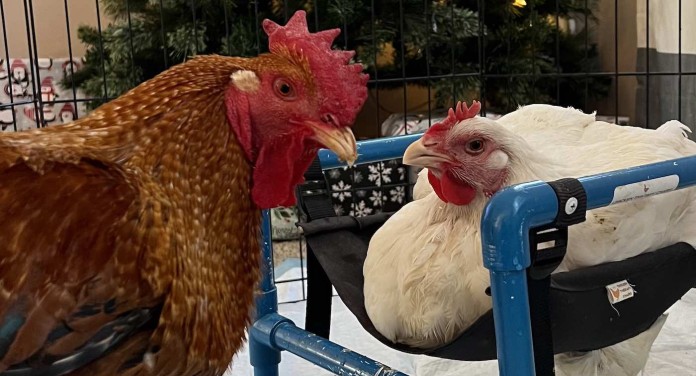
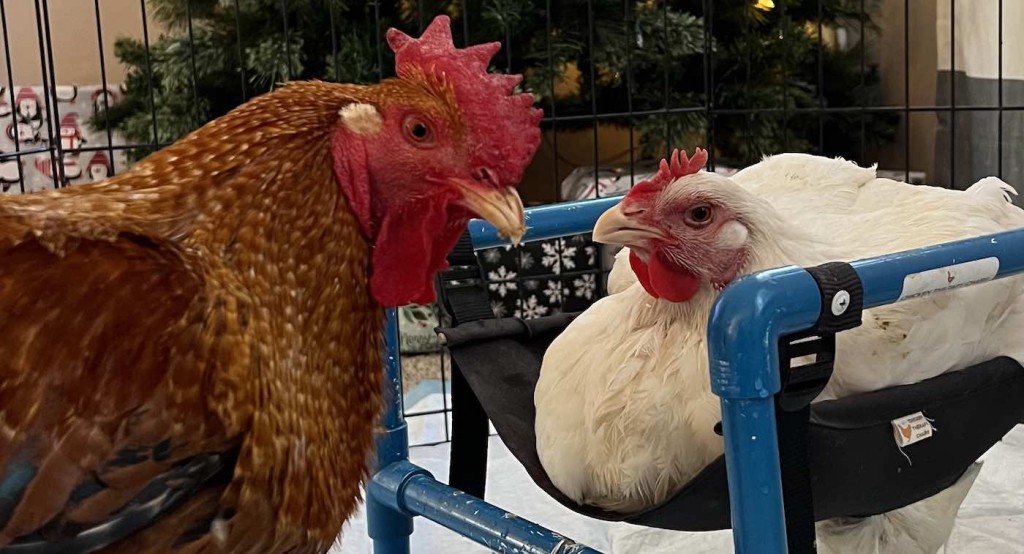
This is Shrimp, the rooster, and he’s fallen madly in love with the disabled hen Basil.
Shrimp and one-legged chicken Basil live together in their own enclosure made of mats and baby gates at the ‘Here With Us Animal Sanctuary’ in Shermans Dale, Pennsylvania, USA.
Basil was taken in as part of a large-scale chicken rescue, and Shrimp was saved just one day before his euthanasia date.
The two have been living in the same sanctuary for 18 months, but it wasn’t until October last year that they met and clicked.
In October 2022, Basil had to have one leg amputated due to an infection and had to be brought inside for her safety.
Around the same time, Shrimp was brought inside because he was being bullied by the other chickens in the coop.
This is when romance blossomed and – although Basil took a little longer to warm up to Shrimp, the pair are now a solid couple. Now they give each other treats, dance for each other, and even refuse to go to the vet separately.
“He was so interested in her through the baby gate, and did a little dance as soon as he saw her,” Amanda Clark, founder of ‘Here With Us.’ “It’s hard to believe their love is real – unless you see it.”
Shrimp is very affectionate toward Basil and gets very excited to see her whenever they are separated.
“It’s the cutest thing ever. Whenever he can, he’ll do a little dance in front of her and plop berries down so she can eat,” said Clark. “They don’t have any spats or anything like that. They really are the perfect couple.”
“Basil is a bit more standoffish, but she just shows her love in a different way. She gets really excited when she is going to see him. We have to send them to the vet together, I think they’d get stressed and nervous if we separated them,” she added.
“They are one hundred percent pets, it’s no different than having a cat or a dog running around the house.”
Cassiopeia A - NASA, ESA, CSA, Danny Milisavljevic (Purdue University), Tea Temim (Princeton University), Ilse De Looze (UGent)
Cassiopeia A – NASA, ESA, CSA, Danny Milisavljevic (Purdue University), Tea Temim (Princeton University), Ilse De Looze (UGent)
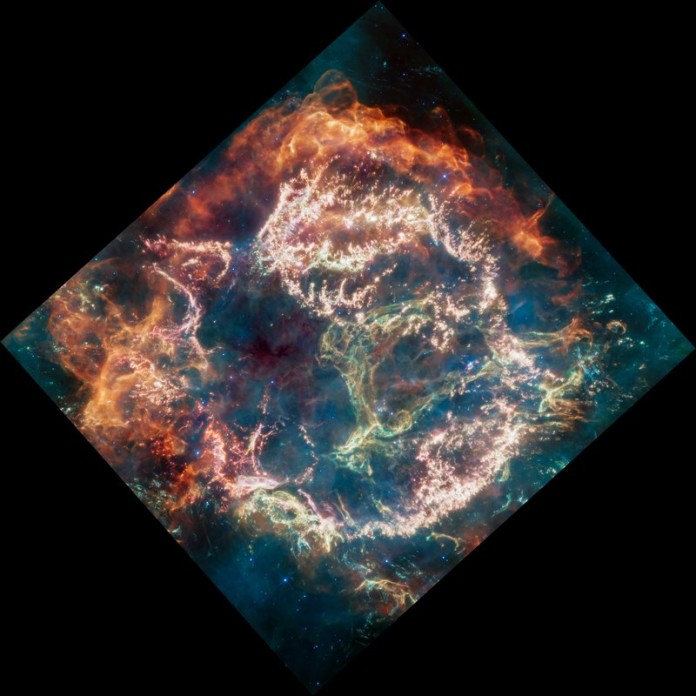
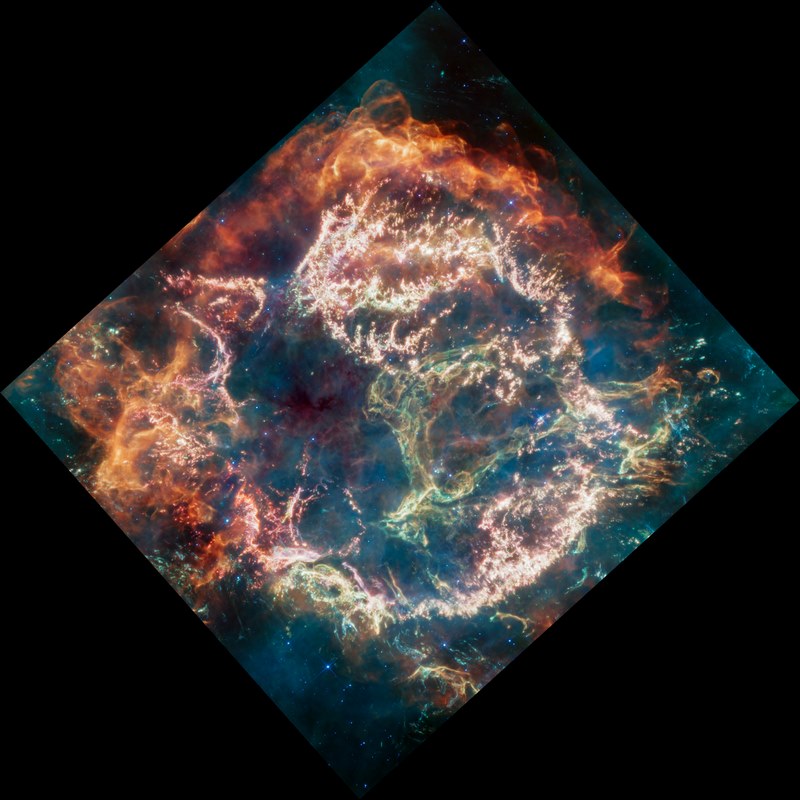
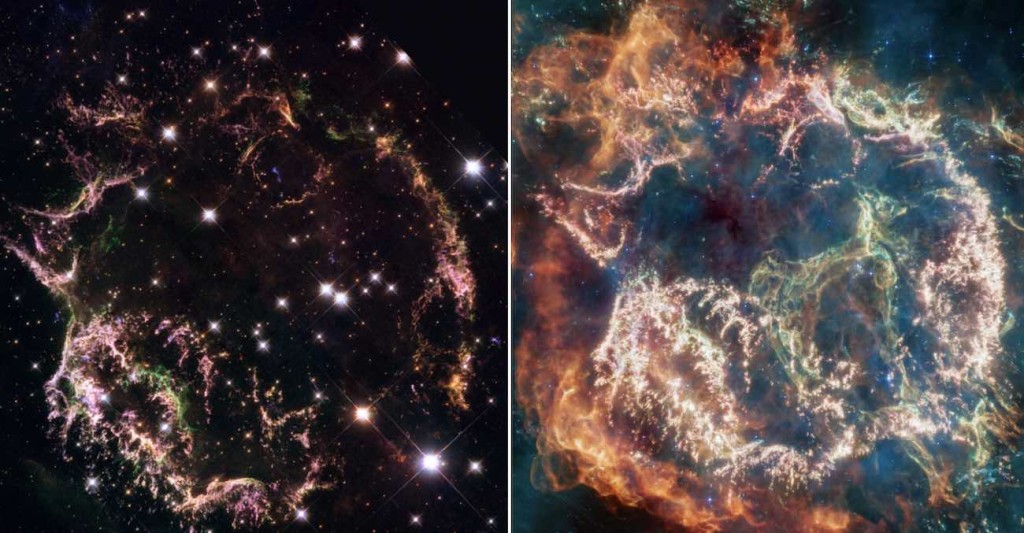
In a stunning new picture from NASA’s James Webb Space Telescope, a recently exploded star is lit up in a dozen colors, with each carrying a different explanation.
More than just beauty, the image helps scientists understand one of the most important phenomena in space: the presence of dust.
Scientists have known for decades that galaxies are filled with dust clouds of heavy metals, but they haven’t had conclusive evidence that their chief culprit, supernovae, is in fact the source.
In the new infrared image from James Webb, the supernova Cassiopeia A is dissected 340 years after its fuse first blew. Cas A is the youngest known remnant from an exploding, massive star in our galaxy, and as such offers an excellent opportunity to study one.
The top and left sides of the image are lit up in red and orange from the energy of the explosion impacting the surrounding gas and dust, while the inner, pink-white circle studded with knots is the remains of the star itself.
The inside is the so-called “Green Monster,” an ode to Fenway Park in Boston, which the scientists aren’t sure what to make of. The whole image is 10 light years from side to side.
Cosmic material leftover from exploding star Cassiopeia A (Credit: NASA, ESA, and Hubble Heritage)
The story of the explosion of a star is the story of humanity—and everything else for that matter, since all the heavy metals—the calcium in our bones, the iron in our blood, the gold in our investment accounts—came from the explosions of stars.
“By understanding the process of exploding stars, we’re reading our own origin story,” Danny Milisavljevic of Purdue University, lead investigator for the study of these images, told NASA news.
“I’m going to spend the rest of my career trying to understand what’s in this data set.”
Purdue and NASA released a zoomable version of the photo which you can see on this webpage.
The ingenious and unique feathers of a beloved African bird could provide the inspiration for space-age water bottles which keep liquid still whilst we move.
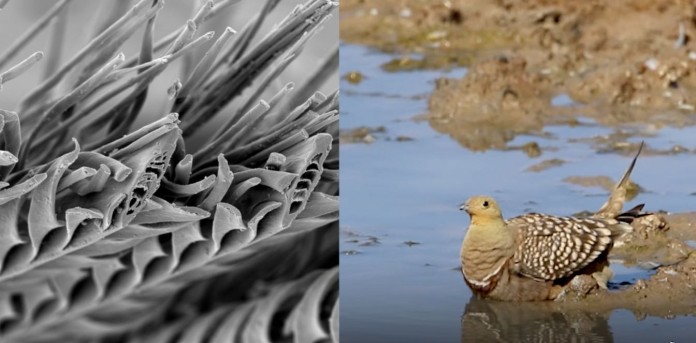
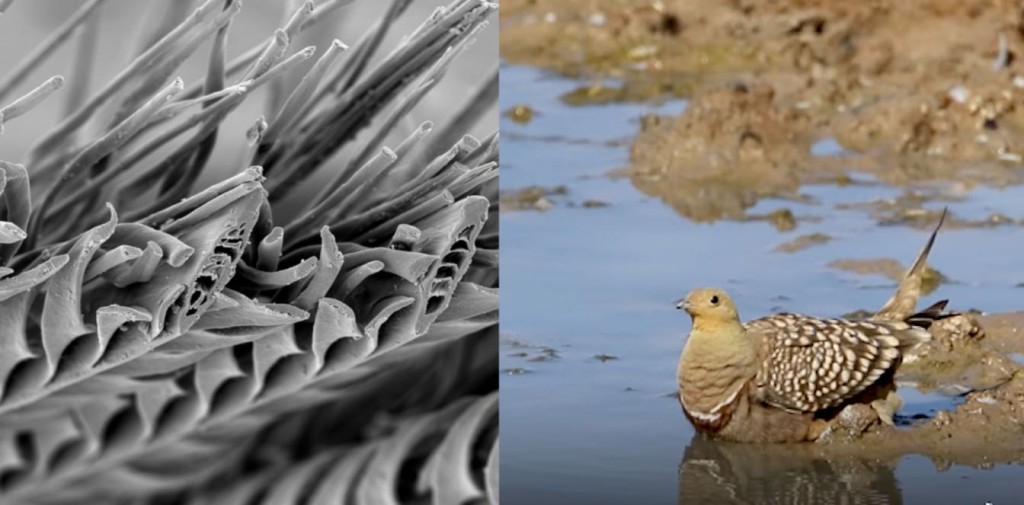
The Namaqua sandgrouse, or “kilkamaine”— an Afrikaans word for the sound they make, is a desert specialist whose breast feathers can soak up water like a sponge and keep it stored even while the bird is flying 40 mph.
This clever adaptation allows it to get water from pools and transport it 20 miles back to the nest for its chicks.
The fascinating bird has long been the subject of scientific interest due to this incredible water-carrying talent, and now a team of American researchers was able to demonstrate how these feathers work.
The study authors hope the new discovery could lead to innovative new products including water bottles that hold water to prevent annoying sloshing around, and netting which can collect and retain water from fog.
The collaborative research team, from both Johns Hopkins University in Baltimore, Maryland, and the Massachusetts Institute of Technology (MIT) teamed up to study how the feathers of the desert-dwelling sandgrouse so successfully store water by using scanning electron microscopes, microcomputed tomography, and 3D videography to see the feathers in the greatest detail.
The team looked at the details of each feather shaft, which measures just a fraction of the width of a human hair—as well as the even more minuscule individual barbules of the feathers.
Then they dunked the dry feathers in water whilst magnified, pulled them out, and submerged them again—emulating a male sandgrouse at a watering hole.
The study, published today in the scientific journal The Royal Society Interface, found that individual feathers held the water through a forest of barbules near the shaft, working together with the curled barbules near the tip acting almost like caps.
The authors write how the components in the feathers were optimized in several ways to hold and retain water, including the way they bend, how the barbules form protective, tent-like clusters when wet, and how tubular structures within each barbule capture water.
“It’s super fascinating to see how nature managed to create structures so perfectly efficient to take in and hold water,” said study co-author Jochen Mueller, an assistant professor at Johns Hopkins’ Department of Civil and Systems Engineering. “From an engineering perspective, we think the findings could lead to new bio-inspired creations.”
The products which could benefit from the research include fog nets to capture moisture from the air in desert regions, or medical swabs that would be better at holding the liquid they absorb.
The team additionally computationally modeled the water intake of the feathers and expects their findings to influence future engineering designs that require controlled absorption, secure retention, and the easy release of liquids.
SHARE This Nature-Inspired Work With Your Friends…