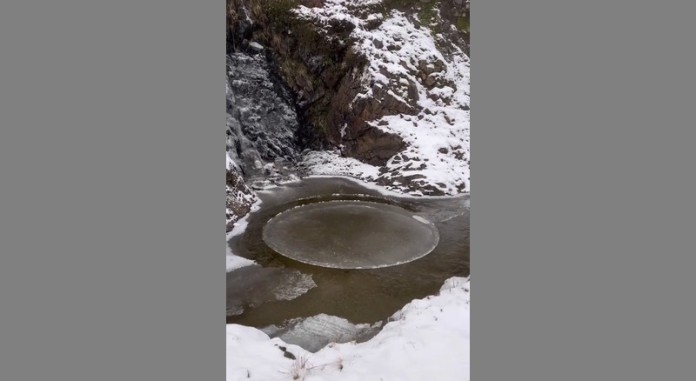
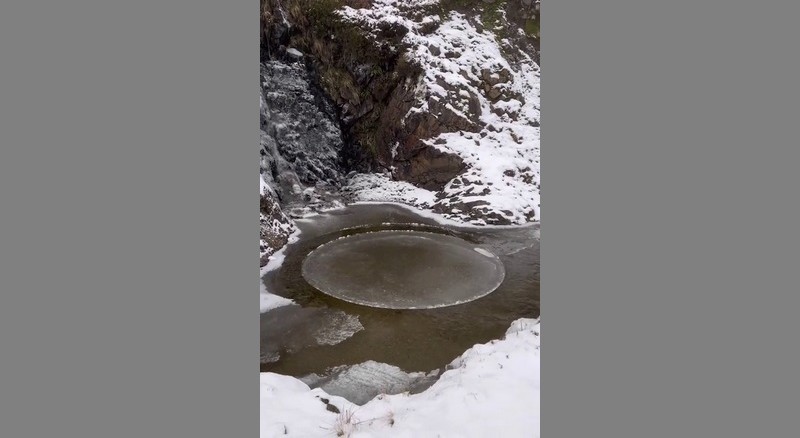
A hiker captured the incredibly rare phenomenon of an ice disk on a mountain walk in the Scottish Highlands.
32-year-old David Brown from Dunoon, Scotland was hiking up the “Munro,” a Scots word for a peak above 3,000 feet in elevation, when he came across the rare sight with his father.
“I was hiking Beinn Bhuidhe… with my father,” Brown recounts. Visibility wasn’t great, but after about an hour-and-a-half the snow stopped and cloud cover started to clear.”
“We took a break to fill our water bottles from the burn by the track—that’s when we noticed the ice disk slowly spinning at the foot of a small waterfall.”
Both David and his father had never seen or experienced an ice disk in the flesh and were taken aback.
The Meteorological Office lists ice disks as “a rare phenomenon that tend to occur in very cold oceans and lakes.”
They are the result of a naturally forming vortex when the water temperature in frozen areas rises and the ice begins to melt. As the warmer water sticks to the surface, the colder water sinks creating the vortex which spins the ice.
Brown said they are often seen in the Baltic Sea or the Great Lakes.
“Neither of us had ever seen anything like it: a perfect circle of ice slowly rotating in the water, so we thought it must be a rare occurrence and took some photographs and videos,” he said.
“We assumed at the time that it was caused by the flow of the waterfall meeting the current of the burn. We hadn’t encountered anyone else on the hike, it felt like we were the only people for miles around, so then to happen across something so serene and perfectly formed, it felt surreal.”
WATCH the phenomenon yourself…
SHARE This Majestic Happenstance Of Nature With Your Friends…
A vaccine for the lethal Marburg virus has shown huge promise in early human trials with all participants easily tolerating the shot, and showing robust antibody responses.
Developed by researchers at the National Institute of Allergy and Infectious Diseases (NIAID) an additional Phase 1 safety trial is set to be performed in Kenya, Uganda, the US, and Ghana as it moves towards a tentative, yet hopeful future.
If approved, it would be the only effective response to outbreaks of Marburg.
Marburg is a filovirus from the same family as ebola—to give some indication of its danger. Symptoms are largely the same, and the death rate is 23-90% depending on the indivudal’s constitution. It’s believed the virus made the jump to humans from infected bats in sub-Saharan Africa.
The US population has heard so much about mRNA vaccines during the COVID-19 pandemic that most people on the street could probably write a doctoral disertation on them. However NIAID’s new jab is a little more traditional, using a deactived copy of a virus, in this case a Chimpanzee adeno-virus called cAd3, with copies of the Marburg glycoprotein on its exterior.
In this study, 40 healthy adult volunteers were enrolled at the Walter Reed Army Institute of Research Clinical Trials Center in Silver Spring, Maryland. Because the first trial is to document safety, low doses were used in an escalatory manner.
One group of 20 took a low dose, and another took a relative high dose. Three participants received the lower dose. Then, when they did not exhibit severe adverse reactions after the first seven days, the trial proceeded to enroll the remaining 17 volunteers.
95% of the participents exhibited a robust immune responce to the Marburg glycoprotein, which declined to 70% over a 48-week time horizon. One participent of the higher dose group got a fever, but it dissipated the following day, report the researchers.
Quote of the Day: “You cannot meet someone for a moment, or even cast eyes on someone in the street, without changing.” – Carolyn Kizer
Photo by: Deva Darshan
With a new inspirational quote every day, atop the perfect photo—collected and archived on our Quotes page—why not bookmark GNN.org for a daily uplift?
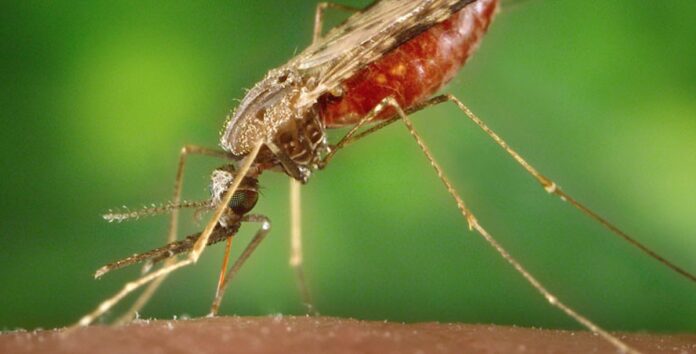
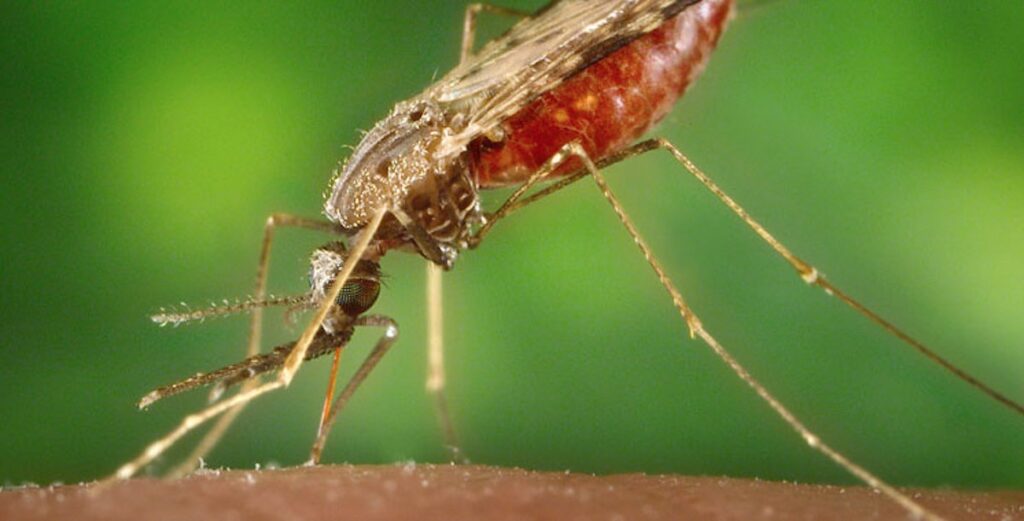
One of the most studied insect repellents in history, DEET has long been the first line of defense against mosquitoes for campers and field scientists alike.
Now however, a combination of plant compounds has proved more effective for longer, and less irritative than commerical alternatives like DEET or picaridan.
On its own, neither DEET, nor the second-most used mosquito repellent picaridan, provides all the desired effects: namely a high degree of protection at a low dose, a negligable degree of toxicity or immuno-sensitivity, a negligable or faint odor, and the ability to provide continous protection even when wet.
Italian scientists lead by Francesca Dani at the Univ. of Firenze started with a group of terpenoids—the second-largest family of plant metabolites, and the compounds that give many plants their unique health benefits, as well as their perfumes.
“Since most naturally occurring terpenoids endowed with an insect repellent activity show a short protection time against hematophagous insects, mainly because of their volatility, we hypothesized that derivatives of two well-known terpenoid repellents, menthone and citronellal, with lower volatility would have a longer protection time,” the authors wrote.
All formulas were tested against the Asian tiger mosquito A. albopictus, which is prevalent in the US and spreads dog heartworm, encephalitis, and denque fever.
Converting these terpenoids into groups of cyclic acetals and hydroxyacetals created a repellent that was as effective as DEET but without the unpleasent odor and short span of protection. In fact, their terpenoid-based repellent lasted 8 full hours, 6 more on than DEET-based repellents.
Picaridan, which also lasts about 8 hours, is sometimes known to cause immune reactions when applied directly onto skin. The two hydroxyacetals that were used were found to be less likely to cause immune reactions or to penetrate cell layers than picaridan.
The team also found that their cyclic acetals and hydroxyacetals could be synthesized from a variety of carbonyls—a huge family of organic compounds which includes carboxylic acid—one of the base components to dozens of different health and food products, including coconut oils, vinegar, palm kernal oil, valerian herbs, milk fat, chocolate, citric acid, and nutmeg, meaning that the cost to produce an insect repellent of this kind is as low as many household staples.
SHARE This Good Chemistry With Your Friends Who Hate Mozzys…
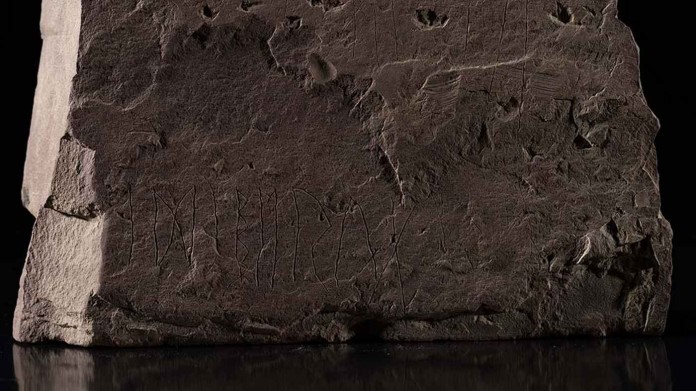
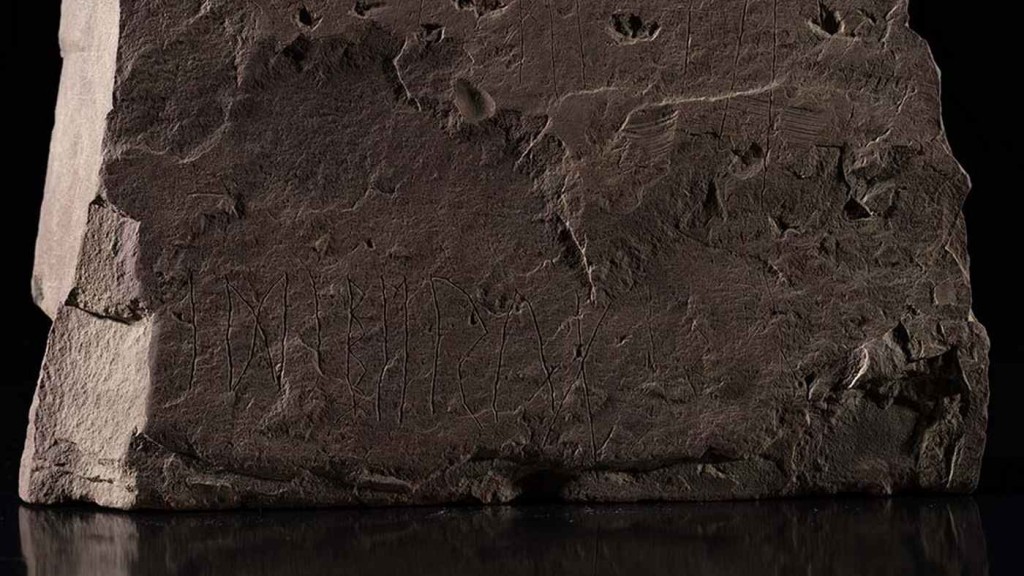
The Svingerudsteinen - released by Cultural University of Oslo
The Svingerudsteinen – released by the Museum of Cultural History, Univ. Oslo
A runestone was discovered in Norway recently that jumps back the origin date of runic writing by hundreds of years to a time before the fall of Rome.
Based on carbon-dated organic remains, the reddish-brown sandstone block may have been carved as far back as 250 to 1 CE—making it the oldest ever found.
Most runestones are named based on the location they were discovered, and this one is called the “Svingerudsteinen,” or “the Svingerud Stone.”
It was found in 2021 during the excavation of a cremation pit in the Tyrifjorden of Norway which has been the zip code of some truly monumental Viking Age discoveries, such as the Gjermundbu helmet.
Found alongside charred bones and charcoal, it may have been coupled with a funerary tradition.
“Having such a runic find fall into our lap is a unique experience and the dream of all runologists. For me, this is a highlight, because it is a unique find that differs from other preserved rune stones,” says runologist Kristel Zilmer, Professor of Written Culture and Iconography at the Museum of Cultural History, University of Oslo.
From runemasters to “runologists”
Inspired by the classical alphabets through contact with the Romans, the Germanic peoples created their own characters—runes. But exactly how old is the runic alphabet, and when were the first rune stones made are questions that researchers have been seeking to answer for many years.
The runic language, technically called “futhark”—a name formed out of the first characters in the alphabet, was widely distributed across Scandaniva from the period following the end of the Roman empire in the West, around the 440s CE, and the Viking Age, traditionally-dated from 793 to 1,066 CE.
Hundreds of runestones—tall monoliths with memorials carved in intricate patterns—have been found across Scandinavia, most of which use the “younger futhark” runic script, and nearly all bearing a memorial epitaph.
For example, the face of Runestone U 991, carved in the Urness Style between 1,045 and 1,075 CE, bears the runes: × ᚦᛁᛅᚴᚾ × [ᛅ](ᚢ)ᚴ × ᚴᚢᚾᛅᚱ × ᚱᛅᛁᛋᛏᚢ × ᛋᛏᛅᛁᚾᛅ + ᛅᚠᛏᛁᛦ × ᚢᛅᚦᚱ × ᛒᚱᚢᚦᚢᚱ + ᛋᛁᚾ + —which mean “Thegn and Gunnarr raised the stones in memory of Veðr, their brother.”
Runestone U 171 reads: “Gunni had this stone cut in memory of Eyndr, his good son, and in memory of himself. Fasti carved the runes.”
This pattern of epitaph is almost ubiquitous. But these Urness-style stones are about 1,000 years old, so it’s by no means obvious that the inscription on the Svingerud Stone follows the same pattern.
The one thing which the modern runemaster Zilmer knows for sure is that the inscription bears some kind of name: Idiberug.
The ways of writing older inscriptions varied considerably and the language changed a lot between the time when these runes were carved and the epoch of the Viking Age. Interpreting the messages on the stone is therefore a challenge, the University of Oslo which currently has the stone at their museum, wrote in a statement.
“The text may refer to a woman called Idibera and the inscription could mean “For Idibera,” says Professor Zilmer.
“Other possibilities are that Idiberug is the rendering of a name such as Idibergu, or perhaps the kin name Idiberung. And there are other possible interpretations—as common with early runic inscriptions.”
Runologists like Zilmer don’t have a large body of reference, as only 30 or so stones have been found with inscriptions dating from the 6th century or earlier.
SHARE This Amazing Discovery With Your Friends On Social Media…
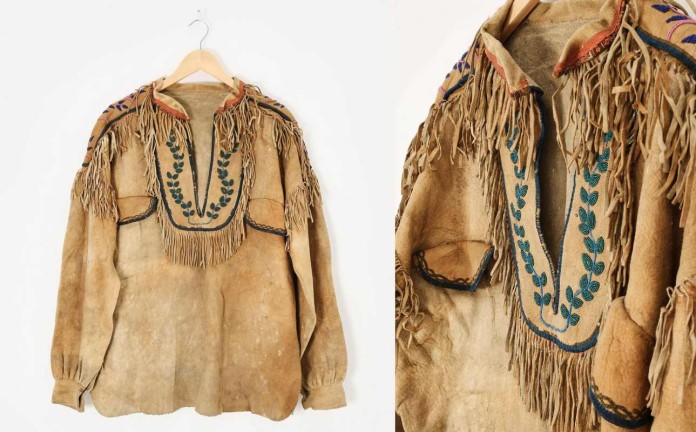
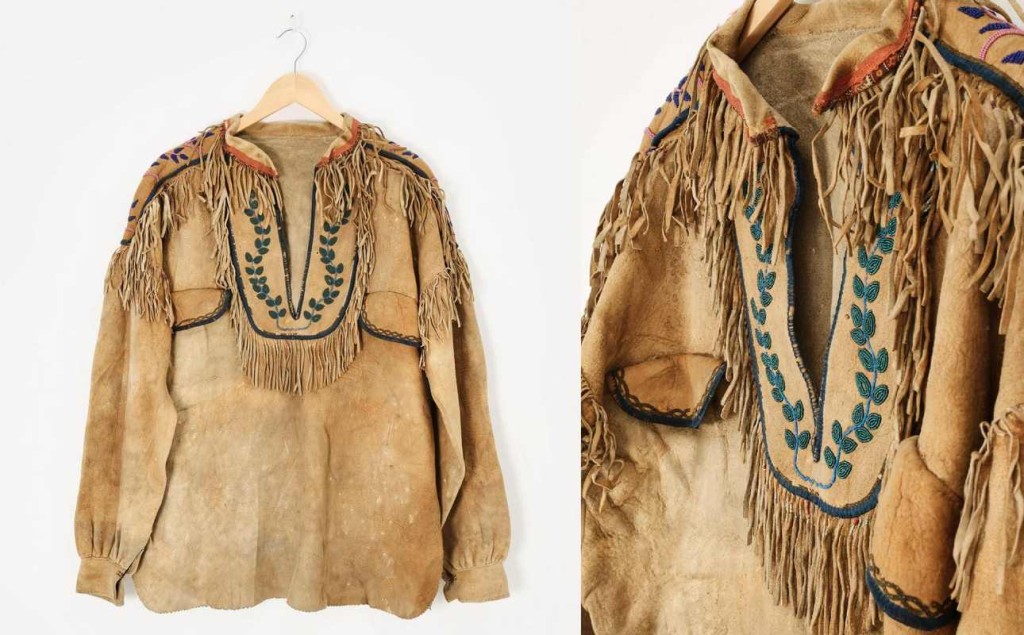
A jacket believed to belong to the Metis or Cree Nations - SWNS
A jacket believed to belong to the Metis or Cree Nations – SWNS
A rare Indigenous Canadian jacket believed to be more than 170 years old has turned up at a vintage clothing warehouse in the UK.
The brown fringe jacket arrived at the Glass Onion vintage warehouse in Barnsley, South Yorkshire after it was brought to the UK from a clothing bale from America.
After the authenticity was confirmed the store began thinking of ways to reunite its community rather than selling it.
It’s believed that the jacket was made in the 1850s by someone in one of the Métis or Cree First Nations in western Canada.
“The jacket was amongst hundreds of others that came in the bales, but thankfully our team are experts in vintage clothing and instantly knew this one was special,” said Alice Leadbetter, the shop’s head of marketing.
“We’ve been in the vintage business for over 15 years, and we have never seen a jacket quite like this one. Next to the other 60s and 70s fringe jackets, it was obvious that this one was extra special and had an amazing story to tell.”
“The super soft leather, incredible beadwork, and attention to detail in the design were what instantly stood out as soon as we saw it,” she added.
Consulting remotely with experts, a consensus took shape that it’s likely Métis or Cree from western Canada’s provinces of Manitoba, Saskatchewan, or Alberta.
Leadbetter noted that Certain design elements such as the olive-green chain stitch on the pockets indicate it was likely made around the 1850s, possibly by an artist for a family member or a fur trader.
“We’ve recently found out that the fringe tassels are wrapped in dyed porcupine quills too which is pretty crazy,” she said.
“The research is still ongoing but I’m constantly discovering something new about this incredible piece so feels like we’re one step closer every week to uncovering its history. It would be amazing to get confirmation of where the jacket is from and who made it so we can look at reuniting the piece with its community.”
Leadbetter put out a request to anyone who has additional means of confirming the origin of the jacket to get in touch with Glass Onion Vintage Warehouse.
KNOW Any Experts On Cree History? Share This Story With Them…
Quote of the Day: The genius inside a person wants to burn, and it wants to create and it has gifts to give. – Michael Meade
Photo by: Jr Korpa
With a new inspirational quote every day, atop the perfect photo—collected and archived on our Quotes page—why not bookmark GNN.org for a daily uplift?
A Mallorcan design company has come up with a water-absorbant mortar made from masonry waste on the island archipelago.
Not only does this green building material create zero additional waste products, but no additional emissions from transportation, since it’s created locally.
But how much construction waste could possibly be generated from a few islands? Sure Mallorca is a major holiday destination, but the rest of the islands in Spain’s Balearic Archipelago are very small.
According to LOOP, a design initiative from the Balearic Islands’s Institute for Business Innovation, these tiny islands nevertheless generate 250,000 tons of ceramic, stone, and concrete waste from construction and demolition.
With few sustainable landfill options, this waste has to be shipped to the mainland, involving a fleet of barges and trucks waiting on the shore, as well as tipper trucks and bulldozers to transfer it all.
To try and interrupt this wasteful supply chain and create something more circular, Loop tried to isolate the major waste products and identify their potential relationships. Mallorca produces a lot of ceramics—not just roof tiles but also bricks. When ground into power with crushed stone from walls and foundations, the addition of a natural white cement created a “hygroscopic” mortar.
Apart from paving stones, the mortar is suitable for all major construction projects that must adhere to strict EU energy standards, but also for the renovation of historic properties.
“Hygroscopic” means that, like those silica gel bead packs, the mortar attracts and holds moisture within it. Ideal for keeping humidity out of sensitive environments.
According to Loop, it also lends itself to drainage, allowing water to naturally seep into the ground, or be captured and retained in lower layers for subsequent reuse or controlled deposition.
How Cool Is This Circular Economic Idea? Let Your Friends Read It…
Photo: Archaeologist Dr. Zahi Hawass, courtesy of zahi_hawass Instagram
Photo: Archaeologist Dr. Zahi Hawass, courtesy of zahi_hawass Instagram
Near the Step Pyramid of Djoser, Egyptologists working on an ancient cemetery uncovered what has been called “the oldest and most complete mummy found in Egypt to date.”
Located at the bottom of a 45-foot (15-meter) shaft, a limestone sarcophagus contained the remains of a very rich man whom hieroglyphics named Heka-shepas, who was probably the oldest mummy ever found who wasn’t a blue blood.
How old was this Heka-shepas? Last year was the 100th anniversary of the opening of the “Boy King” Tutenkhamon’s tomb. During the Boy King’s reign, Heka-shepas had already been slumbering under the sands for more than 1,000 years.
The shaft containing him was found near the modern-day village of Saqqara, a location near the capital city of Egypt during the Old Kingdom, from 2,700 to 2,200 BCE.
His remains were found covered in gold leaf, with various jewelry pieces bedecking the body.
Near Heka-shepas’ tomb, other shafts were found that uncovered important wooden statues, some behind a false wall.
“The mission discovered three stone statues representing a person named Fetek,” Renowned Egyptologist Dr. Zahi Hawass detailed on his Instagram. “Beside these statues was an offering table and a stone sarcophagus that contained his mummy.”
Two other mummies were found with the discovery. The priests Khnum-djed-ef and Messi were found in the pyramid complexes of Unas, and King Pepi I respectively.
The Step Pyramid of Djoser is thought to be the oldest monumental stone building in Egypt, and the Saqqara cemetery nearby has yielded many outstanding treasures before. In 2021, the tomb of Queen Nearit, who was the wife of King Teti, the first king of the sixth dynasty of the Old Kingdom, was found there, as was the royal treasurer of Pharaoh Ramses II.
WATCH the CBS news report if you prefer…
SHARE An Always Fascinating Discovery From This Ancient Civilization Online…
When a plane begins to shake from turbulence, it’s hardly surprising that most people become nervous. However the last few years have been the safest in the history of aviation.
Between 2021 and 2022, the fatal rate of accidents aboard aircraft worldwide was 0.24 per million flights. In other words, 1 in 4,240,000.
In actual fact, the rate is realistically lower since the accounting method included fatalities from events like hard landings, tail swipes, or runway collisions where those killed included ground crews or others.
As for the nightmare scenario of going down in the sky, there was just one occurrence throughout all of 2022, and none within the Western Hemisphere.
Throughout the world’s newspapers, there is no limit to the printing paper they will use to explain the onrushing climate catastrophe, and no discipline or incentive to frame the situation in appropriate terms; namely global ones.
Despite doctors in Canada erroneously diagnosing a patient as suffering from “climate change” last year during a heatwave, the decadal rate of deaths per 100,000 people during extreme weather events worldwide has never been lower than it is at our present time, even as newspapers focus on the extremity of every heavy weather season.
Accounting for landslides, heavy fog, glacial lake outbursts, wildfires, heavy storms of snow, snow, and wind, droughts, earthquakes, extreme heat, dry mass movement, floods, and volcanic activity, the global average is 0.16 deaths per 100,000 people; the lowest ever recorded.
The unprecedented speed at which people are being lifted out of poverty, mixed with the rising of already developing countries in the Global South into an income bracket that can now afford things like air conditioning, means that those most vulnerable to weather events can now better withstand them.
The growth of heavy industries among the more rapidly developing countries like Malaysia, Indonesia, Nigeria, India, and Turkey means that communities at risk for destabilizing events like earthquakes and floods can replace earthen foundations for concrete, thatched roofs with metal ones, and wooden beams with steel girders.
SHARE These Truly Jump-For-Joy Statistics And Global Trends…
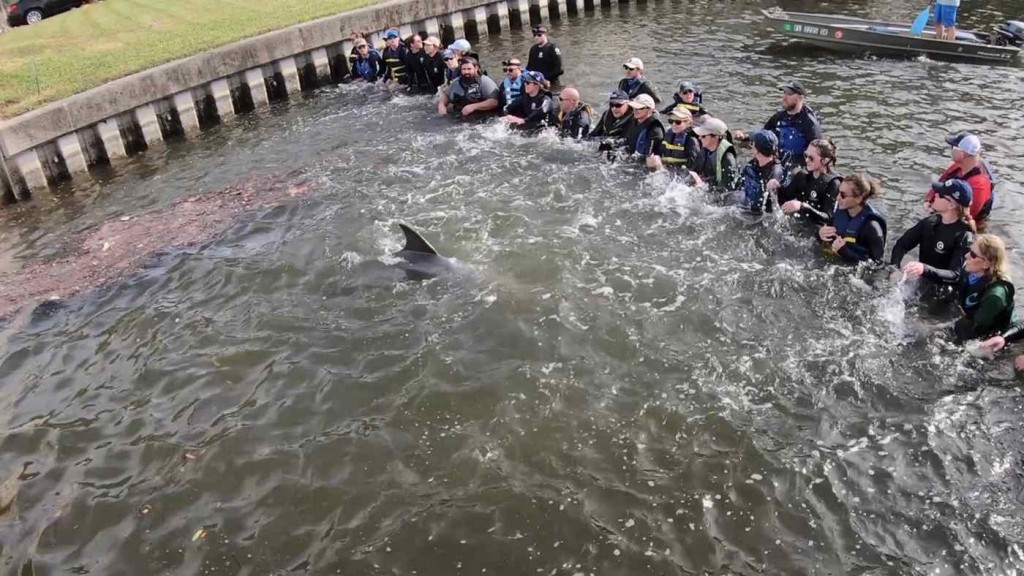
When a dolphin got lost and swam up a Florida canal, no less than 30 biologists and volunteers formed a human chain to block its passage further up the waterway.
Their efforts saw the dolphin flee the canal out into Tampa Bay, saving it from a life of losing its ability to fend for itself and eventually ending up as an aquarium resident.
Brittany Baldrica, a senior rescue biologist with Clearwater Marine Aquarium, got a call that a dolphin was hanging about in a canal in Clearwater, Florida. The caller was concerned that it was hurt or lost, as after four days, it had not moved beyond a small stretch of the artificial waterway.
The Marine Mammal Protection Act stipulates that feeding or harassing marine mammals like manatees, dolphins, or whales is illegal, however Baldrica had just recently rehabilitated a dolphin named Izzy who had been fed by humans after a boat strike left her stranded in a canal for so long that she forgot how to hunt.
She told a local Fox affiliate that following the call they monitored the dolphin for 18 days.
“He was behaviorally ok at that point and then upon talking to other people within the residency, they had said the animal may have been there for at least four days, so we were just concerned he got separated from other animals,” Baldrica said.
Eventually, Baldrica determined she needed to intervene. Last Wednesday she gathered a group of 28 biologists from the Clearwater Aquarium, the National Oceanic and Atmospheric Administration, and the Florida Fish and Wildlife Commission to enter the canal and form a “wall of sound” to encourage the dolphin to swim through a narrow culvert and out towards Tampa Bay.
“The goal was to not put hands on the animal. The goal was to just be a barrier that was novel to the animal, so we wanted to create a physical barrier as well as an auditory barrier, so we had somebody behind us that was banging on a boat, revving their engine and then we were splashing the water and moving forward towards the animal, so we were giving the animal the option to swim through the bridge on its own,” Baldrica said.
“We’re thankful to the residents in the area who worked with us to help protect the animal from harassment and provided access to their property while we monitored and rescued the animal,” CMA said in a press release.
WATCH the story below…
CHAIN This Story Of A Human Auditory Wall Onto Your Friends…
Quote of the Day: “Things that are most important for us are hidden because of their simplicity and familiarity.” – Ludwig Wittgenstein
Photo by: Rémi Walle
With a new inspirational quote every day, atop the perfect photo—collected and archived on our Quotes page—why not bookmark GNN.org for a daily uplift?
Mattel / Bessie Coleman in 1923 (pubdomain Wikipedia)
Mattel / Bessie Coleman in 1923 (pubdomain Wikipedia)
A brave young Black woman who became a pilot in the 1920s—and even walked on the wings of airplanes—has become the latest hero to be honored in the Barbie doll series featuring ‘Inspiring Women’.
Known for her daring adventures as a barnstorming stunt flyer, Bessie Coleman broke new ground in the field of aviation. She also inspired generations of Black, Native American, and female pilots.
Despite facing racial and gender discrimination, Bessie Coleman became the first Black and Native American female aviator.
She also became the first Black person to earn an international pilot’s license. She had to go all the way to France to get the license, because there were no pilot training opportunities for Black women in the US at the time.
The ‘Brave Bessie’ doll was sculpted to her likeness and dons a traditional olive-green aviator suit, including a cap with her initials “BC”.
“It was great to learn more about such a daring wonderful woman who was ahead of her time,” said the doll’s packaging designer Priscila Bara.
Bessie’s great niece, Gigi Coleman, teamed up with Mattel to make the Barbie. “Keeping Bessie’s legacy alive has always been a labor of love for my family. We hope through this doll more people will discover Bessie’s story and be inspired.”
Coleman was born on January 26, 1892 and grew up poor in Atlanta, Texas. She helped her mother pick cotton to earn money, but Coleman wanted to attend college. After she could only afford one semester, she heard that women in France had more rights—and could even fly planes.
Coleman made it her mission to become a pilot. However, American aviators would not teach her. So, she studied the French language and saved up her money. At age 29, she sailed to France, enrolled in a flight school, and received her international pilot’s license on June 15, 1921.
She returned to the U.S. and amazed crowds with stunts that earned her the nickname “Brave Bessie”. In 1922, she became the first African American woman to stage a public flight—and continued to make a living by showing off her barnstorming tricks.
Coleman’s stunts included making figure-8 shapes with her plane. She walked on her craft’s wings while in midair. She even shocked crowds by parachuting from the plane, while a co-pilot took the controls.
Coleman toured the country, giving flight lessons and speeches—and refused to perform for segregated crowds. At one event, Coleman learned that there would be separate entrances for Black and white people. She said she would not perform unless there was only one gate. The event leaders agreed.
Coleman died in 1926, at the age of 34, in a plane accident. However, the designers of the new Barbie released this month hope to raise her status as an American icon to new heights.
ELEVATE This Women’s History Icon By Sharing the Story on Social Media…
SEE SWNS STORY SWNAmars --- Is there life on Mars - in the form of a giant BEAR? Boffins at NASA have spotted what they say looks like a grizzly on the Red Planet. The quirky image was taken in December by the Mars Reconnaissance Orbiter from a height of 251 km. The spacecraft used its HiRISE (High Resolution Imaging Science Experiment) camera; the most powerful ever sent to another planet. The space agency explain: "A Bear on Mars? This feature looks a bit like a bear’s face. What is it really?"
NASA via SWNS
Fiction and non-fiction writers alike have imagined life on Mars. Now, you don’t need any imagination to picture the resident as a giant bear.
Scientists at NASA have spotted what they say looks like a bear on the Red Planet.
The quirky image was captured in December by the Mars Reconnaissance Orbiter from a height of 156 miles (251 km).
The spacecraft used its HiRISE camera (High Resolution Imaging Science Experiment), which is the most powerful camera ever sent to another planet.
The space agency quipped in a headline on its website, “A Bear on Mars? This feature looks a bit like a bear’s face. What is it really?”
Because they’re smarter than the average bear, the researchers explained that the photo shows a hill with a V-shaped collapse structure (the nose), two craters (the eyes), and a circular fracture pattern (the head).
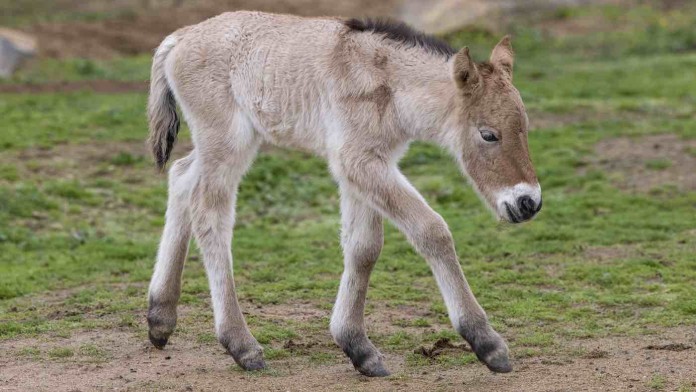
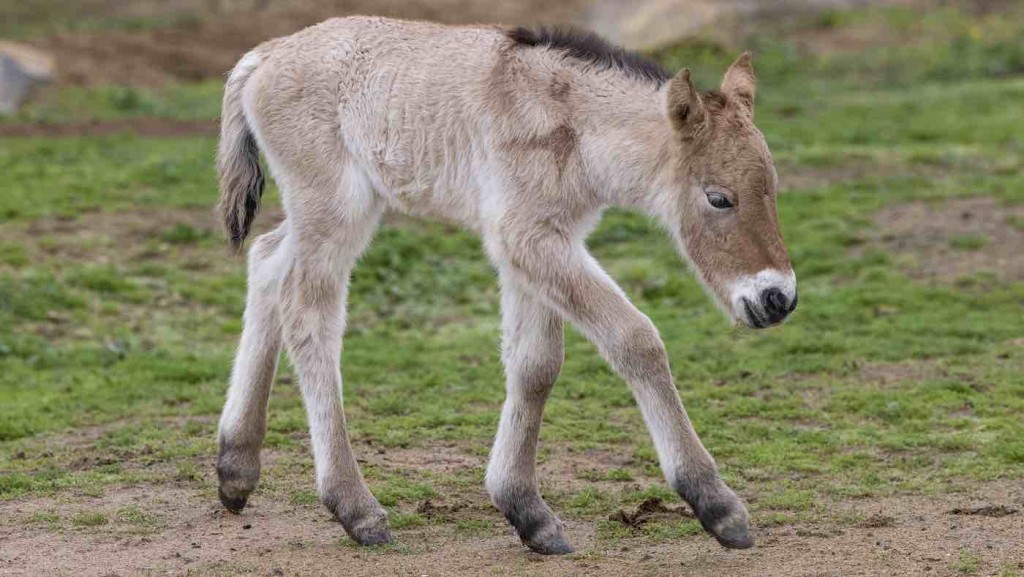
Przewalski’s Horse Foal by Ken Bohn / San Diego Zoo Wildlife Alliance
Przewalski’s Horse Foal by Ken Bohn / San Diego Zoo Wildlife Alliance
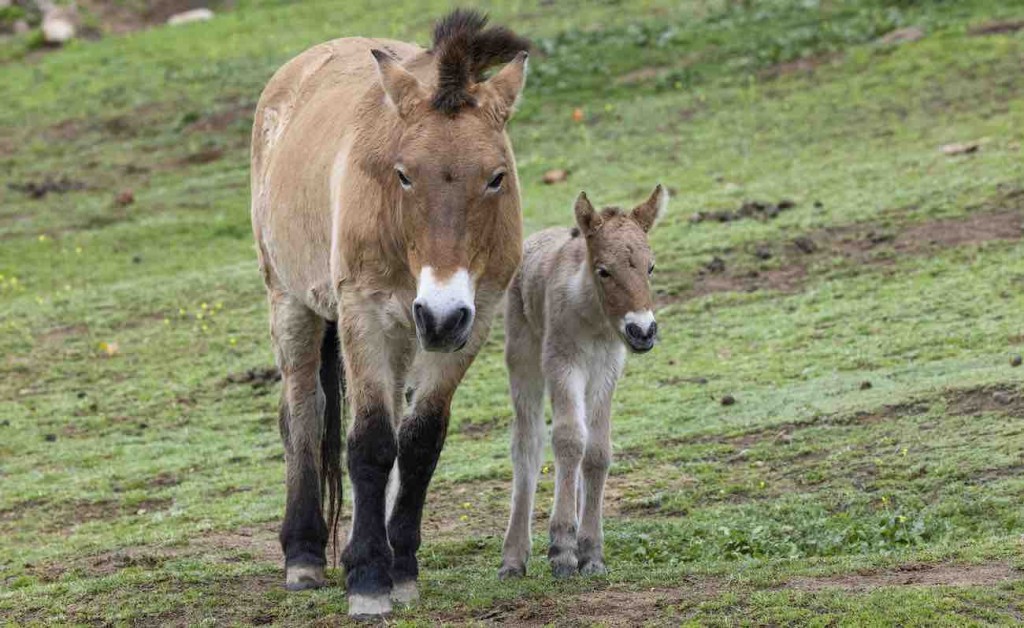
The San Diego Zoo Safari Park announced the birth of a critically-endangered Przewalski’s Horse—sometimes called ‘the Last Wild Horse’.
Conservationists say this species of wild horse was categorized as Extinct in the Wild until 1996.
The foal is the first Przewalski’s horse born at the San Diego Zoo Safari Park since 2014, and is one of only four individuals born in North America over the past year.
“Every birth is a tremendous moment, so we are elated by this new foal,” said Kristi Burtis, wildlife care director at the San Diego Zoo Safari Park. “They are an important wild horse species, and this new foal, along with each individual that was born at our parks, bolsters their fragile population—and represents our commitment to conserving them for future generations.”
The youngster was born as part of a program that ensures genetic diversity among Przewalski’s horse populations, which is overseen by conservationists nationwide. The California compound has seen more than 157 Przewalski’s horses born at the Zoo and the Safari Park.
Formerly extinct in the wild, the Przewalski’s horse has survived for the past 40 years almost entirely in zoos around the world, and nearly all of the surviving horses are related to 12 Przewalski’s horses born in native habitats. Ongoing reintroductions of Przewalski’s horses into their native habitats have established several herds in grasslands in China and Mongolia to maintain genetic variation.
Newly-born Przewalski’s Horse with its mom – Ken Bohn / San Diego Zoo Wildlife Alliance
In the past few years, scientists have started using new tools, such as San Diego Zoo Wildlife Alliance’s Biodiversity Bank, to expand the strength of the species’ population.
Through a collaborative effort, science teams from the nonprofit Revive & Restore, the animal cloning company ViaGen Pets & Equine, and San Diego Zoo Wildlife Alliance were able to achieve the world’s first successfully cloned Przewalski’s horse in 2020. Named Kurt, he was born to a surrogate mother—a domestic quarter horse—and is the clone of a male Przewalski’s stallion whose living cell line was cryopreserved 43 years ago, as part of the Wildlife Biodiversity Bank.
“Kurt is significant to his species because he offers the hope of bringing back lost genetic diversity to the population,” said Nadine Lamberski, chief conservation and wildlife health officer for San Diego Zoo Wildlife Alliance.
The colt was named Kurt in honor of Kurt Benirschke, M.D., who joined the Zoo’s research committee in 1970, and worked as the Zoo’s director of research from 1974 to 1986. Before his death at age 94, he was instrumental in founding the conservation research program at San Diego Zoo Wildlife Alliance, including the Frozen Zoo®, a critical component of San Diego Zoo Wildlife Alliance’s Wildlife Biodiversity Banking efforts.
Safari Park guests can visit Kurt in the Central Asia savanna habitat; and see the rest of the herd—including the new foal, who has not been named yet—in the Przewalski’s horse habitat next door.
GALLOP This Good News to Horse-Lovers on Social Media…
A 10-year study of Chinese adults over the age of 60, showed that a healthy lifestyle, in particular a nutritious diet, is associated with the slowing of memory decline in older people.
The major new research published in The BMJ, showed that the benefits of healthy living were even seen in those with a gene making them genetically susceptible to Alzheimer’s disease.
Carriers of the apolipoprotein E (APOE) gene—the strongest known risk factor for Alzheimer’s and related dementia—saw a slowing in memory loss associated with healthy habits, such as refraining from alcohol.
The Chinese research team said that memory continuously declines as people age, but evidence from existing studies was insufficient to assess the effect of a healthy lifestyle on memory in later life.
Given the many possible causes of memory decline, they explained that a combination of healthy behaviors might be needed for the best effect.
The researchers analyzed data from 29,000 adults over 60 with normal cognitive function. The group had an average age of 72 and almost half were women.
At the start of the study in 2009, memory function was measured using an Auditory Verbal Learning test (AVLT) and participants were tested for the APOE gene; 20 percent were found to be carriers. Follow-up assessments were then conducted in 2012, 2014, 2016, and 2019.
A healthy lifestyle score combining six factors—diet, regular exercise, active social contact, cognitive activity (such as reading and writing), non-smoking, and never drinking alcohol—was then calculated.
Based on their score, ranging from zero to six, participants were put into favorable (four to six healthy factors), average (two or three), or unfavorable (one or zero) lifestyle groups—and separated into APOE carrier and non-carrier groups.
After taking into account other health, economic and social factors, the researchers found that each individual healthy behavior was associated with a slower than average decline in memory over 10 years.
“A healthy diet had the strongest effect on slowing memory decline, followed by cognitive activity and then physical exercise,” said study lead author Professor Jianping Jia.
“Compared with the group that had unfavorable lifestyles, memory decline in the favorable lifestyle group was 0.28 points slower over 10 years based on a standardized score of the AVLT, and memory decline in the average lifestyle group was 0.16 points slower.
“Participants with the APOE gene with favorable and average lifestyles also experienced a slower rate of memory decline than those with an unfavorable lifestyle.
“What’s more, those with favorable and average lifestyles were almost 90 percent and almost 30 percent less likely to develop dementia or mild cognitive impairment relative to those with an unfavorable lifestyle—and the APOE group had similar results.”
He said the research was observational so can’t establish cause, but it was a large study with a long follow-up period, allowing for evaluation of individual lifestyle factors on memory function over time.
The researchers say their results provide “strong evidence” that sticking to a healthy lifestyle with a combination of positive behaviors is associated with a slower rate of memory decline, even for people who are genetically susceptible to memory decline.
DON’T FORGET to Share the Encouraging Results on Social Media…
Quote of the Day: “The older I grow the more I distrust the familiar doctrine that age brings wisdom.” – H. L. Mencken
Photo by: charles deluvio
With a new inspirational quote every day, atop the perfect photo—collected and archived on our Quotes page—why not bookmark GNN.org for a daily uplift?
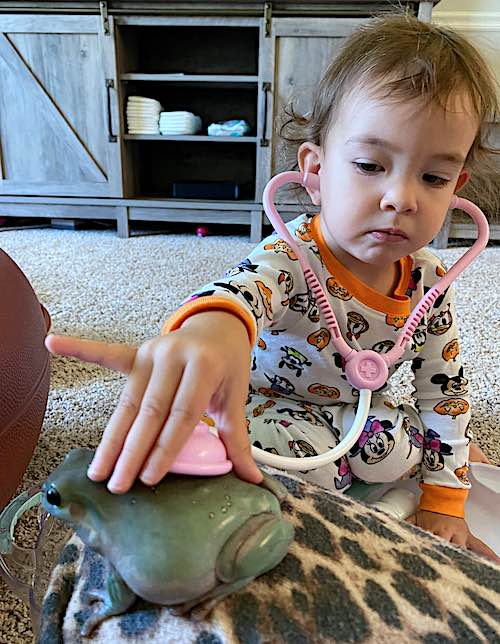
Little Juliana Allon begged her mom for a pet white tree frog from the pet store in Panama City, Florida after it had been given-up by its previous owner.
The mother-of-three eventually caved and purchased the frog for $40 last August.
“He was so fat and squishy-looking, and she wanted to hug him straightaway,”
“The store let her pick him up and hold him,” recalled Brandie. “Then she said, ‘Mommy, please, please, please!’ and I couldn’t say no.”
The two-year-old named it George—and the pair are now inseparable, doing everything together.
The frog perches happily on Juliana’s shoulder as she watches TV and eats breakfast, and sits in her stroller as she takes him on walks around the house. She’s even taken him in a car to her grandmother’s house to show him off.
“He just crawls to the top of her shoulder, and they walk around together. He manages to hang on somehow.”
Juliana Allon – SWNS
They already own a dog and a cat, but George sleeps in Juliana’s bedroom in a cage with a heat lamp, and gets fed with plenty of worms.
The family is unsure where the adopted frog is from or how old he is, but his species is found in Australia and New Zealand.
“She wakes up and the first thing she says is ‘baby frog’—and she wants to hold him right away.
“When she’s eating breakfast, he sits calmly next to her on the table, and before we leave the house, she always says ‘bye bye baby frog, I’ll be back’.”
When white tree frogs feel threatened or stressed, they turn dark brown. But when Juliana picks him up, he turns green and turquoise, so they know he’s happy.
SWNS
Looking after a frog has led to one or two sticky situations.
“Frogs can carry salmonella, so I had to teach Juliana not to kiss him. Hugging is fine, but she washes her hands afterwards because she knows the rules.”
He peed on Juliana once, which she “didn’t like very much,” said Brandie, who is quite amazed by the duo’s unbreakable bond.
“I never thought we would get a frog, but if you find an old soul like George, I’d definitely recommend getting a pet frog. He’s just a happy little fellow.”
WATCH the cute family video…
HOP TO IT! Share This With a Smile For Frog-Lovers on Social Media…
A new survey revealed that seniors are becoming more daring with their hobbies and interests—adding marathons, hang-gliding—and even getting a tattoo—to their bucket list.
The poll, of 2,000 adults over 50, found that 62 percent are keen to embrace things now, more than they used to.
47 percent have a new outlook on life. Writing a book, taking up skiing, or conquering a mountain are among the things on their list—confirming that 53 percent of respondents believe ‘age is just a number’.
Many want to become fluent in a new language and others want to finally learn how to play an instrument they’ve always wanted to try.
Ryan Howsam, founder and CEO at Staysure, which commissioned the survey, said, “It’s great to see people of this age adopting a zest for life and fulfilling life-long ambitions.”
“As the research suggests, this is because they now have more time for themselves and feel ready to take on new challenges.”
More than half (52 percent) think it’s important to have aspirations, and three in 10 are more likely to fulfill these now that they are at a later stage in life.
Reasons for this include having more spare time (62 percent), retirement (43 percent) and no longer having children who live at home (37 percent).
It’s also important for 73 percent to have these ambitions so there is something for them to aim for, while 35 percent are keen to show people that there are no restrictions once you turn the big 5-0.
Only 14 percent were able to achieve the ambitions they had during their 20s.
Since getting older, half have pointed to a new perspective that made them more driven to achieve their ambitions and try new experiences.
The OnePoll study also found a third are considered by others as someone who embraces life and are not afraid to do something new. 71 percent still consider themselves ‘young’— even 82 percent aged 75 or older agreed.
More than three in ten now find themselves feeling less bored compared to when they were younger, with 67 percent confident that time is still on their side to fulfill life-long goals.
Staysure / SWNS
When it comes to winter sports, 19 percent believe there is no age limit when taking up such activities—with one-tenth feeling liberated when they got on a pair of skis.
With ski season in full swing, Staysure decided to trial a ski school for the over-50s to promote its ‘no upper age limit’ beliefs.
“Age shouldn’t stop anyone or block them from trying out new things.”
WATCH the fun video below, showing seniors skiing for the first time…
TOP 30 ACTIVITIES ON THE BUCKET LISTS OF SENIORS
1. Travel more
2. Retire
3. Make new friends
4. Pay off the mortgage
5. Go to more gigs and concerts
6. Downsize my home
7. Master a foreign language
8. Overcome a fear
9. Move to the countryside
10. Write a book
11. Take up yoga
12. Eat in a Michelin-starred restaurant
13. Learn a musical instrument
14. Move abroad
15. Move to a different city
16. Upsize my home
17. Join a gym
18. Buy my dream car
19. Take up painting
20. Start dating again
21. Climb a mountain
22. Get a tattoo
23. Choose a new career
24. Run a marathon
25. Learn how to ballroom dance
26. Buy a motorbike
27. Get a personal trainer
28. Do a skydive
29. Drive on a racetrack
30. Try surfing
INSPIRE Your Silver Senior Friends By Sharing This on Social Media…