










Quote of the Day: “When in doubt, don’t.” – Benjamin Franklin
Photo by: Steve Rotman (cropped)
With a new inspirational quote every day, atop the perfect photo—collected and archived on our Quotes page—why not bookmark GNN.org for a daily uplift?



Quote of the Day: “When in doubt, don’t.” – Benjamin Franklin
Photo by: Steve Rotman (cropped)
With a new inspirational quote every day, atop the perfect photo—collected and archived on our Quotes page—why not bookmark GNN.org for a daily uplift?

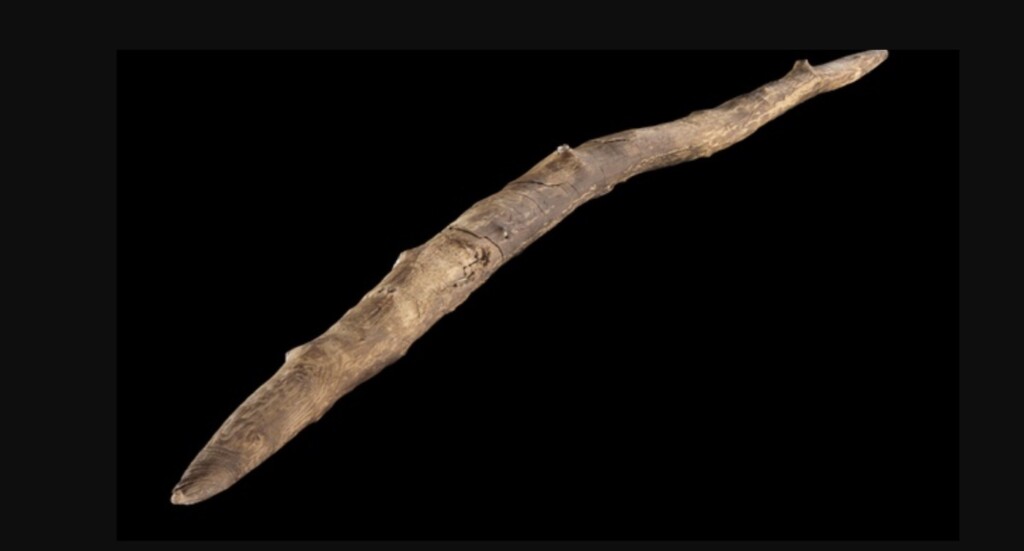
In the hands of a capable Ice Age hunter, this simple stick could be used to nail small mammals, or even assist in taking deer and horses.
It is supposed that the four-foot-long projectile could be hurled at beasts grazing up to 30 meters away, and with a point at either end, was twice as likely to do damage as a single-pointed dart.
It was dug up at the Schoeningen Palaeolithic site complex in Lower Saxony, a coal-mining area that has yielded a number of archaeological discoveries since the 1990s. Produced by early humans known as the ‘Heidelberg People,’ the skillful woodwork techniques show how they may have been more sophisticated and intelligent than previously thought.
“Our detailed analysis of the double-pointed stick leaves no doubt this was a well-planned, expertly manufactured, and finely finished tool,” said Dr. Annemieke Milks of Reading University, lead author of the paper published on the tool.
The Heidelberg People were the first recorded proper hominids to build homes and hunt big game, but they became extinct before the end of the last Ice Age. This stick was found amid a number of similar wooden tools found by a lakeside where it is believed they had a permanent encampment.
Throwing sticks have been recorded in dozens of ancient cultures, perhaps the most famous of which being the boomerang of the Australian Aborigines. They’re a rudimentary rung of the evolutionary ladder that took humans to the modern archery setup of carbon fiber, laser pointers, and razer-bladed mechanical broadhead tips, but could nevertheless be absolutely lethal if aimed properly.
OTHER NEWS LIKE THIS: Remains of Prehistoric BBQ Suggests Dinner was Served 780,000 Years Ago–600,000 Years Earlier than we Thought
“The hominins selected a spruce branch which they then debarked and shaped into an aerodynamic and ergonomic tool. They likely seasoned the wood to avoid cracking and warping. After a long period of use, it was probably lost during hunting,” wrote Dr. Milks.
An interesting, if less-likely scenario for this throwing stick is that it was a child’s toy—meant to fit their hands and allow them to gain experience with a larger, similar weapon they would eventually grow up to use. Other researchers have shown this to be common practice among early hominids.
MORE PREHISTORIC FINDS: Prehistoric ‘Axe Factory’ Found in Britain Triggers Search for More Artifacts
“The Schoeningen hominins thus had the capacity for remarkable planning depth, knowledge of raw materials, and considerable woodworking skill, resulting in an expertly designed tool,” Dr. Milks commented.
“The double-pointed sticks were potentially used to assist the hunting of larger prey but may have also been used for hunting birds and small mammals.”
Researchers can only guess how exactly the stick may have been used. Some hunter-gatherers alive today rely on wearing down their prey over long-distance chases. In such circumstances, a volley of these double-pointed sticks hurled at a target in the hope of a light wound could have made all the difference over the miles of the successive chase.
SHARE This Prehistoric Hunting Strategy With Your Friends…


Global merchant shipping leader Maersk is launching a bio-methanol-powered container ship this week as part of its fast-track decarbonization strategy.
Producing about the same emissions globally as the airline industry, merchant shipping is experimenting with several ways of cutting back emissions, including through the use of methanol gas, ammonia, and hydrogen.
While these fuels are anywhere between 200% – 400% more expensive than conventional fuel, because of the massive amounts of cargo the ships are capable of carrying, a pair of shoes might only accrue a related cost increase of five cents.
“There’s this fear, I think, of making the wrong bet or getting it wrong somehow,” Morten Bo Christiansen, who leads decarbonization at Maersk, told an audience at the TED Countdown Summit last week. “And of course, in the ideal world, we would spend a decade figuring out all the pros and cons and what is best. But we need to address this problem now.”
Green methanol is a combustible gas collected from decomposing plant waste and can reduce CO2 emissions and equivalents from a container ship by as much as 70%.
Maersk ordered the ship two years ago and has already placed an order for 25 more methanol-powered vessels in addition to retrofitting existing ships with methanol engines and turbines, according to Fast Company.
MORE LOW-CARBON TRANSPORT: World’s First 100% Hydrogen-Powered Trains Now Running Regional Service in Germany to Replace Diesel
By the end of the decade, the company plans to have low-carbon fuels transport a quarter of all tonnage across its 700-strong fleet.
Globally, shipping companies have 120 vessels with low-carbon or carbon-neutral propulsion systems on order.
Additionally, retrofitting of existing diesel ships with sails is also seen as a fast and easy way to decarbonize.
SHARE This Blue-Green Corporate Milestone With Your Friends…


A pair of Australian travelers got the word out from 35,000 feet that the flight attendant aboard their Air Asia flight was singing to them over the intercom.
With the inflight entertainment either absent or malfunctioning, the brief trip from Cambodia to Vietnam became a karaoke stage for the steward to demonstrate his familiarity with the Ed Sheeran song, Perfect.
Silence reigned apart for a few giggles as the East Asian-accented English rang out the speakers normally reserved for broadcasts on arrival times and weather, during which one of the Aussie travelers, Ashleigh, wrote on the screen on her TikTok that she has never felt “so confused and so happy at once.”
Comments on the video were overwhelmingly in favor of the man taking entertainment matters into his own hands, despite a few off-pitch notes.
“This is so sweeeet,” one commenter said on the video that has garnered over 1.5 million views. “Why is everyone so quiet, I would’ve been hyping that king uppppp.”
Others have said that it’s not once in a blue moon to experience this sort of thing aboard Air Asia, who regularly employs “some of the funniest people” as another commenter noted.
WATCH the video below…
@_ashwebster Ive never been so confused & so happy at once. #fyp #flightattendant #inflightentertainment #mustwatch ♬ original sound - Ashleigh
SHARE This Karaoke King Aboard Air Asia With Your Friends…
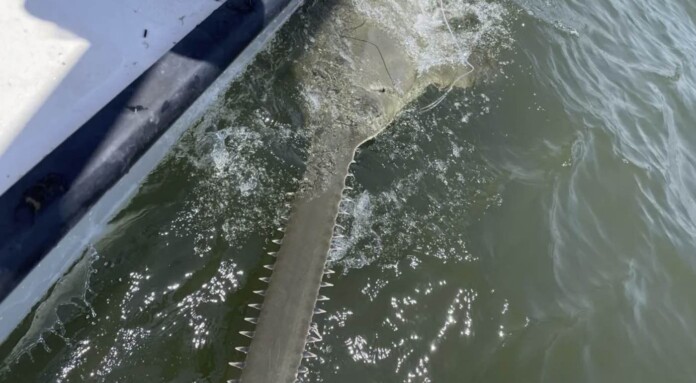
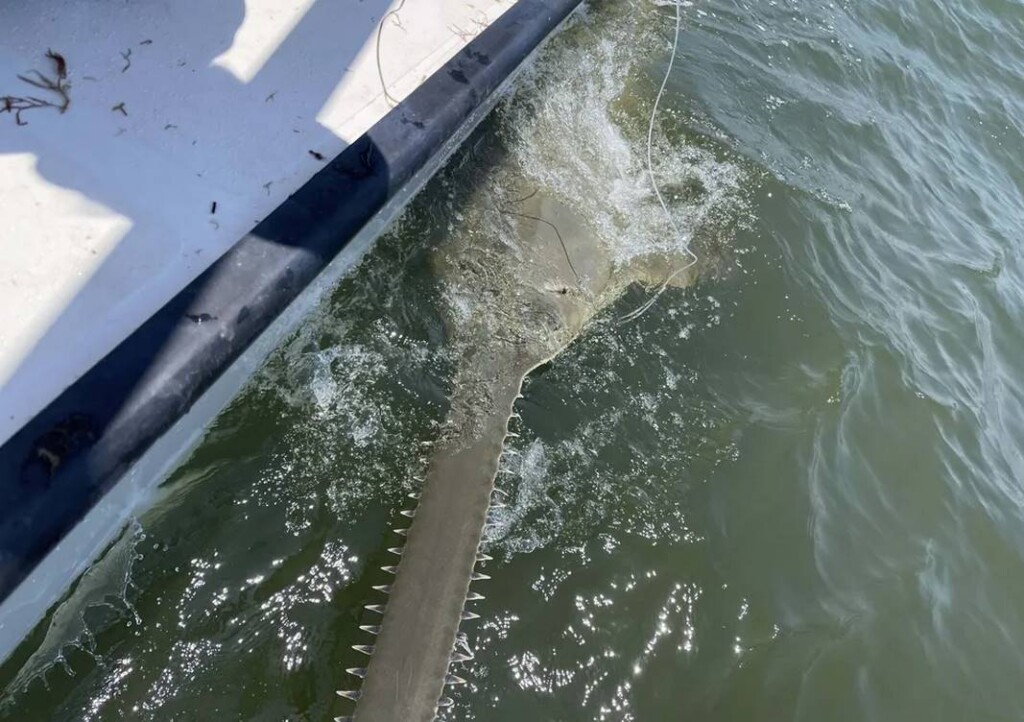
While on a fishing trip with some students, hoping to be able to teach them about the habits of sharks, a scientist in Florida landed 13 feet of jagged-faced hope.
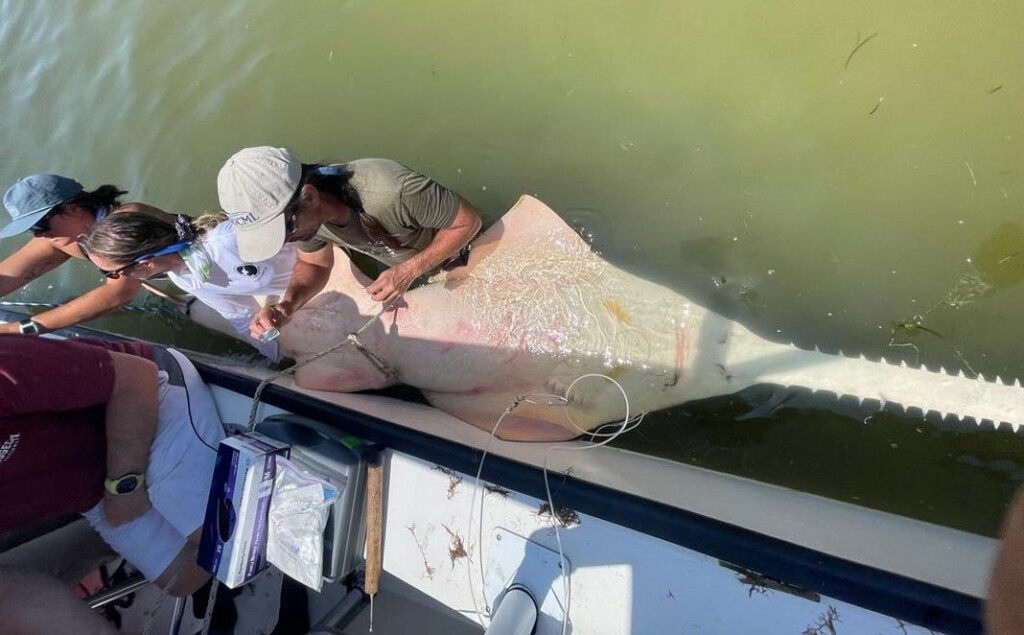
Up from the depths of Cedar Key came a mature female sawfish, a bizarre relative of the ray with a chainsaw for a nose (called a rostrum), and an animal that almost went extinct in the US.
Dean Grubbs, a marine ecologist at Florida State University, was hoping to be able to catch a juvenile shark, perhaps a nurse shark, for the students on board his boat. But when the line jerked in the sheltered gulf waters southwest of Gainsville, Grubbs had a hunch as to what was on the other end.
“I was pretty sure this was a sawfish, but I remained stone-faced because I didn’t want to disappoint the students if I was wrong,” Grubbs says in a statement. “I saw the tail before the rostrum, so I lost my calm at that point and screamed ‘Sawfish! It’s a sawfish!’”
Once they had it secured alongside their boat, one of the students returned to the shore to get a tagging device which they hadn’t imagined that they’d need for anything. It was the first sawfish to be tagged in Cedar Key in over 30 years.
Once widespread in the US southeast, sawfish numbers plummeted due to a variety of factors. They were the first native freshwater fish to be put on the Endangered Species List.
The tagging will allow the biologists to track the animal for 10 years to see where it spends its time. Grubbs and his colleague were encouraged to see that the animal was female and that she had mating scars: she was reproducing.
MORE GOOD FISH NEWS: True ‘River Monster’ of the Amazon Has Recovered Thanks to New Sustainable Fishing
Sawfish nurseries tend to be found in the calm waters under and around mangrove trees—like near Tampa Bay, south of Cedar Kay where three juveniles were recently found at a place called Rattlesnake Key.
Both Cedar and Rattlesnake keys would have had plenty of sawfish at the turn of the 20th century, and a belief is forming that they are returning to old haunts as part of a slow, steady recovery.
“What’s remarkable to me is that they’re creeping back into exactly the previous habitats and range from which they’ve been extirpated,” Gavin Naylor, director of the Florida Museum of Natural History’s shark research program, says in the statement. “It’s as if they have a deeply embedded knowledge of where to go.”
Grubbs told Newsweek that he believes the population is recovering after the ESL listing, as well as additional measures like increased protection for mangroves and a ban on gill nets which the sawfish rostrums were famous for getting trapped in.
SHARE This Remarkable Catch And Positive Trend With Your Friends…
Quote of the Day: “Love has no errors, for all errors are the want for love.” – William Law
Photo by: Nathan Anderson
With a new inspirational quote every day, atop the perfect photo—collected and archived on our Quotes page—why not bookmark GNN.org for a daily uplift?
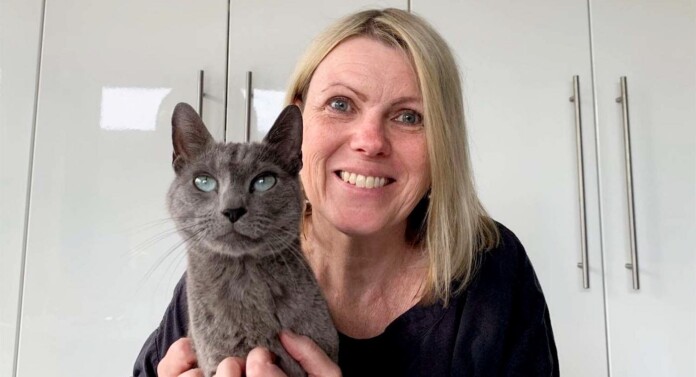
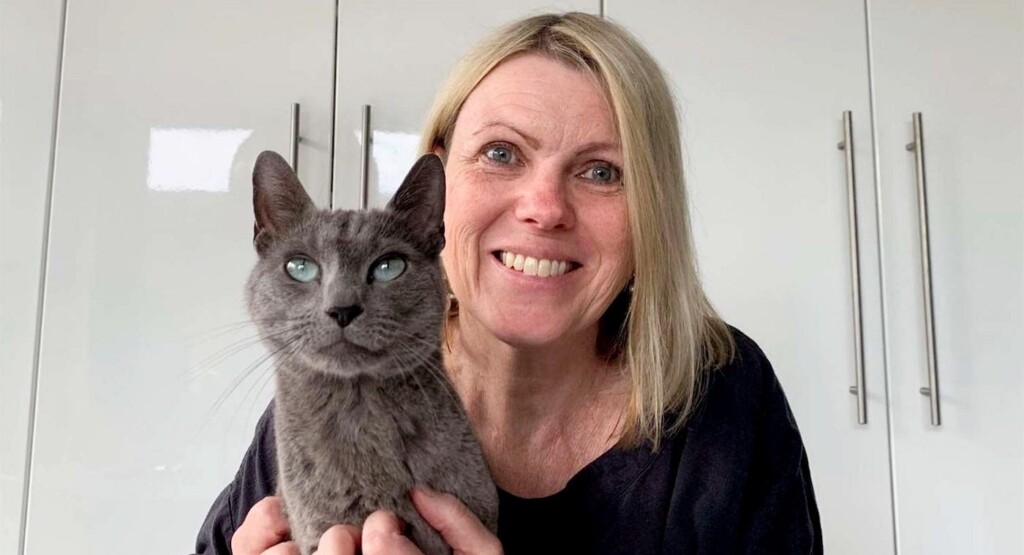
A “miracle” cat missing for five weeks was found still alive underneath a neighbor’s floorboards.
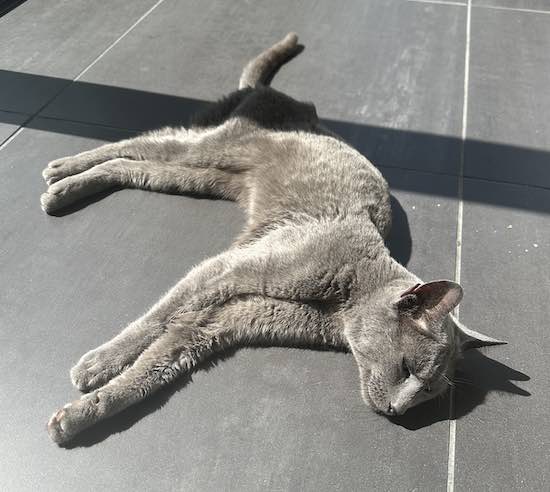
The Russian blue’s overjoyed owners believe he narrowly survived by eating spiders and bugs and licking condensation from pipes.
Arthur lost half his bodyweight while trapped in the English home, and he was only discovered when the neighbors heard distressed mewing and pulled up the floorboards.
For over a month, his owner Jo Rymill knocked on doors, stuck flyers to lamp posts, and posted on social media—never expecting she would find her missing pet just three doors down.
After five weeks of searching, the owner of an AirBnb who had recently renovated the home, posted a message on the neighborhood chat saying the tenants in her property heard a mewing beneath the floor.
Within 12 minutes nearby residents in Ramsgate, Kent, descended on the property and ripped up the floorboards to rescue frail and dehydrated Arthur.
Ms. Rymill was in line for popcorn at the cinema with her husband when the news came through.
“We jumped in the car and raced home,” she recalled. “They started sending pictures and on the way home I was saying ‘OMG! It’s him! It’s him!’
LOOK: Cat Has Gotten So Big He Now Measures Over 4-Feet and Gets Mistaken for Dog
“I thought after five weeks there’s no way he would have survived that because, logically, how could he? The first thing I did was burst into tears.
“I came out and all the neighbors were standing there holding him and it was the most amazing feeling. I still can’t believe he’s with us.”
She said their four-year-old kitty used up more than one of his nine lives after disappearing from their house on June 8.
The dirt-covered moggy was rushed to an emergency vet and spent 24 hours on a drip, while the 55-year-old feared he wouldn’t make it through the night.
CAT KINDNESS: Kind Stranger Rescues Kitty Frozen to the Ground in a Storm–and He Now Looks Amazing
Describing Arthur’s hospital stint, she said: “At the start, we were really worried his kidneys would have gone.
“The first round of blood tests on Friday night wasn’t very good, but the next day they settled out. It’s more than a miracle – nobody can believe he survived for five weeks.
“This is the best street to live in…The message went out and everyone went ‘oh my God’ and descended.
“If we weren’t all so close, nobody would have known who to contact. The speed of getting him out is what saved him.”
OUR FAVORITE FELINE: Cat Walks Across France to Their Old Home Before Being Reunited With ‘Stunned’ Owners 13 Months Later
However, within half an hour he was reportedly purring and meowing to his owner.
“He has the most resilient personality,” said Mrs Rymill, who now reminds owners to make sure their pets’ microchips are up-to-date and to report them on the database if they disappear. (Watch the video about the rescue below…)
SHARE the LUCKY Life of a Feline With Cat-Lovers on Social Media…
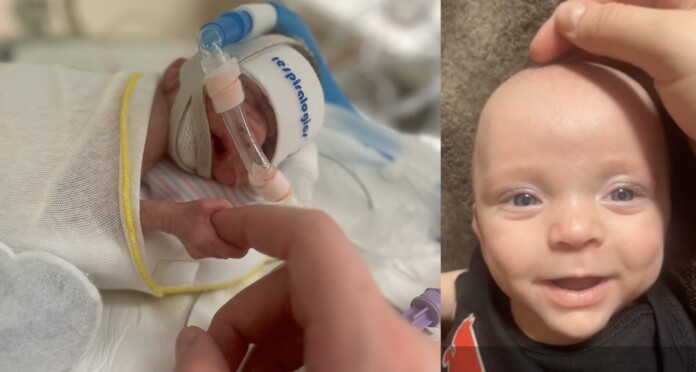
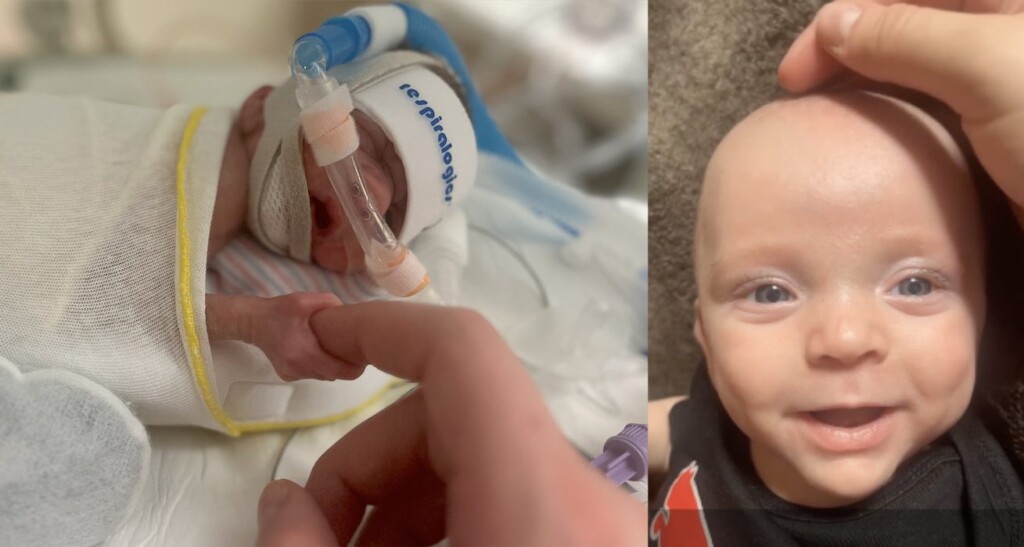
A first-time Pennsylvania mom who was told her baby “wouldn’t make it” because he was born so small, now says he is “thriving” at home following 181 days in hospital.
Zaylan was born when Krysten Risbon went into labor 16 weeks early.
He had a hole in his heart and needed constant oxygen, but he made it—and Krysten is now studying to become a NICU nurse, inspired by the care they received.
“When I first held him he could fit in my bra,” said the 22-year-old from Altoona. “Now only his foot fits in.”
“He’s a little fighter.”
The expecting mom and the young father Janerio Reed were over the moon when they found out they were expecting their first baby in August 2022, but she started bleeding at 23 weeks/six days and suddenly was in intense pain. Turns out, she was 4cm dilated.
“They said, ‘You’re going to have this baby today… He’s probably not going to make it’,” recalled Krysten.
WHO KNEW? Mom Became Pregnant While Already Pregnant, Conceiving Twins 28 Days Apart in Age
She was taken to a specialized neonatal intensive care unit at UPMC Magee-Womens Hospital by helicopter.
“It was scary because nobody could come with me.. I just kept thinking everything was going to be ok.”
They gave her steroids to help the baby’s lungs, and doctors were able to halt the birth for another two days, until December 23rd when he was born weighing 1-lb 6oz.
“He was so tiny he fit in the palm of my hand.”
He had surgery after being born with ROP—an eye disease which can occur when babies are born prematurely—to improve his eyesight.
Finally, Zaylan was able to come home June 21, 2023.
“It was unreal having him home, and pretty insane,” she said. “I can’t believe how small he was.

“He’s pretty funny now. He gives me the side eye. He smiles and laughs all the time.”
“He’s a miracle.”
RELATED: First of its Kind Brain Surgery on Baby Inside the Womb has Successfully Prevented Heart Failure
Krysten will start her studies to be a nurse at Mount Aloysius College this Fall.
MULTIPLY THE HOPE By Sharing This With Moms on Social Media…
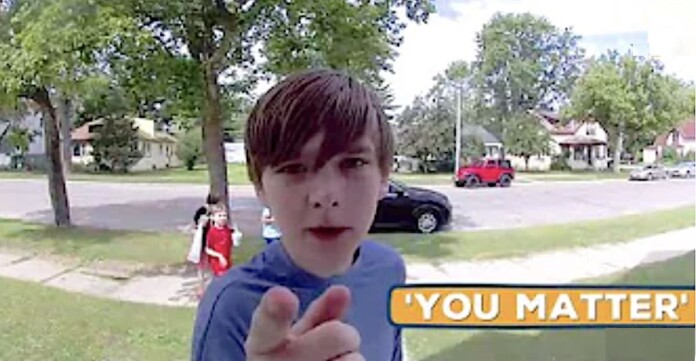
A young boy was headed down a neighborhood sidewalk when he made a stop at a random house with a doorbell camera—to leave a positive message of encouragement for a stranger.
The video, posted on YouTube by South West News Agency, does not identify the boy or the location, but the youth is an American walking with a few friends in a tree-lined neighborhood.
He looks directly into the camera with an earnestness and wisdom seemingly beyond his years.
“You matter, alright?
“There’s always going to be someone who cares about you.
“You’re a good person. No matter what people say about you; you matter.”
“I’m just trying to say something nice.
“You matter, man, or girl. Whoever you are, you matter to someone. Just keep that in mind. Don’t forget that.”
ALSO INSPIRING: 70 Million People Cheer on Young Boy Who Rang A Doorbell Asking for Help Finding Friends
Then he went on with his day, sauntering down the sidewalk with a small shopping bag, presumably headed home.
Watch the astonishing moment below…
PLEASE SPREAD THE MESSAGE With Friends Who May Need it on Social Media!
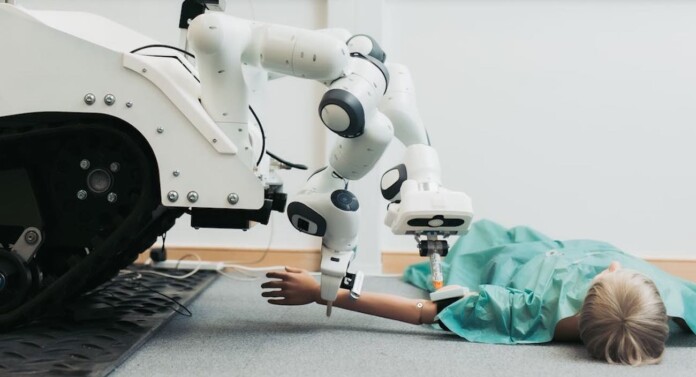
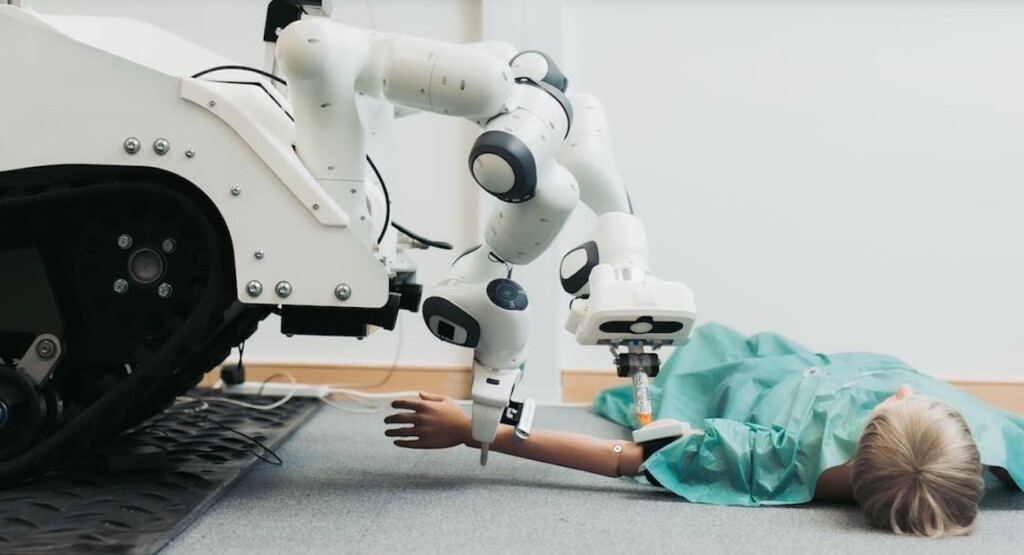
A new robotic medic could save lives in places like radiation zones that are too dangerous for nurses and doctors to operate.
Human medics can control the vehicle remotely and use the robot’s arms to check a patient’s temperature, blood pressure, heart rate, and even give injections.
The “game-changing” technology has potential to save lives in high-risk emergency environments, such as humanitarian disasters or war zones, say the University of Sheffield team who developed it.
And the first-of-its-kind system was developed in just nine months.
Using medical telexistence (MediTel) technology, researchers from the University’s Advanced Manufacturing Research Centre (AMRC), Sheffield Robotics and Department of Automatic Control and Systems Engineering, created the mobile, robotic-controlled un-crewed ground vehicle (UGV).
It boasts virtual reality (VR) capability, enabling medics and operators to assess critical casualties in hazardous environments, allowing them to perform a remote triage while also ensuring their safety.
It features two robotic arms which can effectively remotely operate medical tools to perform a critical initial assessment of a casualty within 20 minutes.
That includes temperature, blood pressure and heart rate checks. It can also carry out a palpation of the abdomen and administer pain relief through an auto-injector—all while streaming real time data to the remote operator. (Scroll down to see the video demonstration.)
LESS TECH is GOOD TOO: Automakers Are Bringing Back Buttons and Knobs as Touch Screens Become Scourge for Drivers
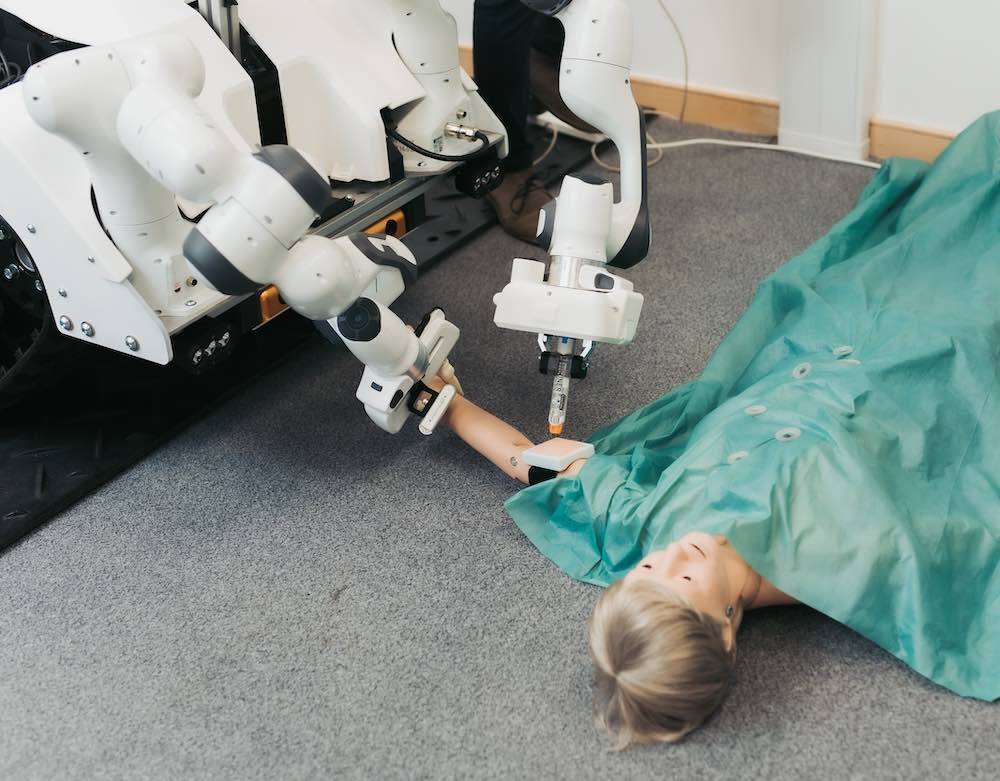
“Developing and field testing a state-of-the-art, complex system such as MediTel in just nine months has been an incredible achievement and a testament to the skills and capabilities of the entire project team,” said David King, Head of Digital Design at the AMRC.
“MediTel combined existing medical devices with state-of-the-art robotics systems to develop a platform capable of allowing a remote operator to navigate through difficult terrain and provide critical diagnoses of high-risk casualties.”
CHECK OUT: Device Pulls Dozens of Liters of Water from the Air–Already Being Installed in Desert Homes
Professor Sanja Dogramadzi, director of Sheffield Robotics, said: “This platform could be used by multiple emergency response services.
They will now integrate other sensing modalities to assist patient triage.
MediTel was one of three novel telexistence technologies funded by a £2.3 million innovation competition through the Defense Science and Technology Laboratory (Dstl) and the Nuclear Decommissioning Authority.
“The project has enabled us to demonstrate the art of the possible to end users, so that we can better understand where telexistence could add value to defense and security environments,” said Dr. Nicky Armstrong, technical lead at Dstl.
LUCKY TECH: Apple Watch Saves Woman from Pulmonary Embolism While She Slept
The Sheffield team hopes to build on the project’s success and explore the development of a large-scale medical emergency platform, capable of rapid deployment to humanitarian disasters.
WATCH this team do its magic…
SHARE the Awe-inspiring Technology on Social Media…

Quote of the Day: “Real knowledge is to know the extent of one’s ignorance.” – Confucius
Photo by: Matthew Feeney
With a new inspirational quote every day, atop the perfect photo—collected and archived on our Quotes page—why not bookmark GNN.org for a daily uplift?

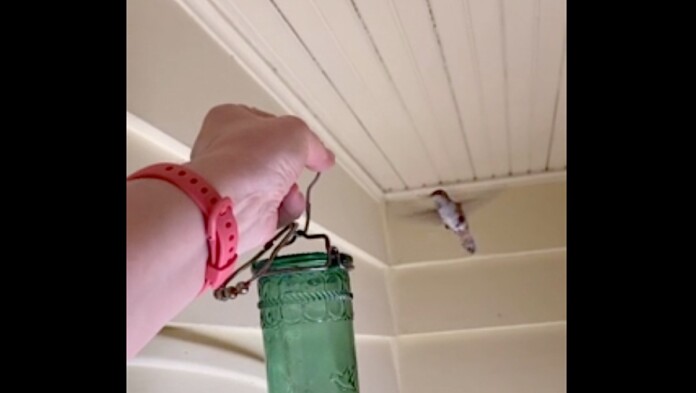
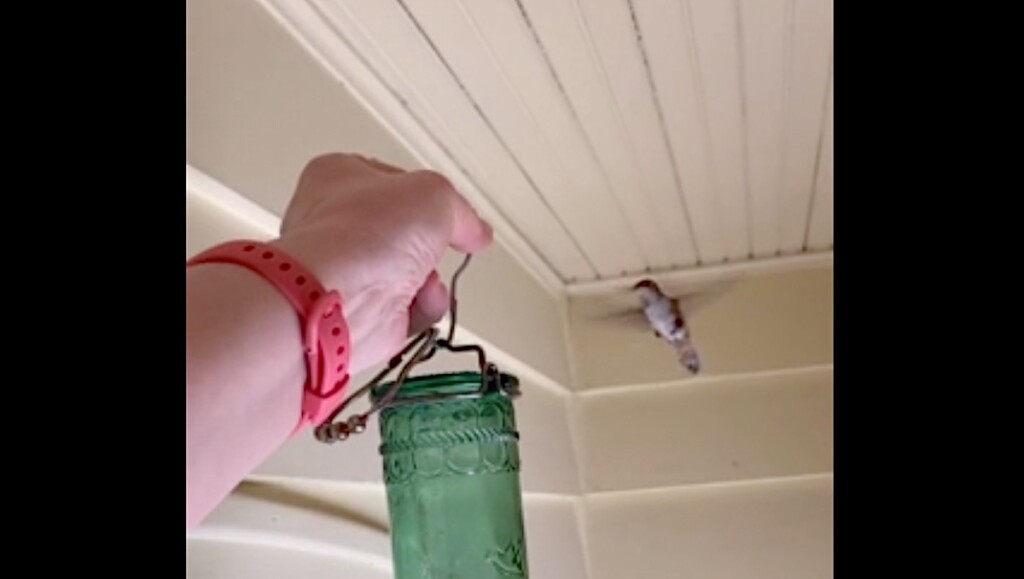
A woman had just arrived at the Judge Wickersham House, an historic 1898 home in Juneau, Alaska to get a tour, when she happened upon a high-flying crisis.
One of the employees at the site greeted her by immediately asking, “What do you know about hummingbirds?”
She explained that one of the tiny birds had been trapped in the house’s foyer all morning, flying close to the ceiling in a panic for about four hours.
The woman had tried different things to get the female bird to fly out without success.
“Let’s try getting a ladder and the hummingbird feeder high up where she might notice it,” said the clever tourist who had just arrived.
While standing on the ladder for 15 minutes, the hummer actually landed on her hand several times and began sipping from the feeder.
“I felt the wind from her wings on my face and had her poke her little beak between my fingers!”
But the plan finally worked, and the moment was captured in a video.
“I can’t believe I pulled out my phone to record at the exact right moment,” said Rumble user, meadowlinden.
POPULAR: Watching This Hummingbird Mama With Her Newborns is So Heartwarming
“It was one of those magical moments I’ll never forget!”
DID YOU KNOW? ‘Like a Beautifully-tuned Instrument’: 2000 Microphones Unlock the Mystery of Why Hummingbirds Hum
(NOTE: GNN has NO affiliation with any ads displayed by Rumble)
SHARE The Great Rescue Idea With Hummingbird Lovers on Social Media…

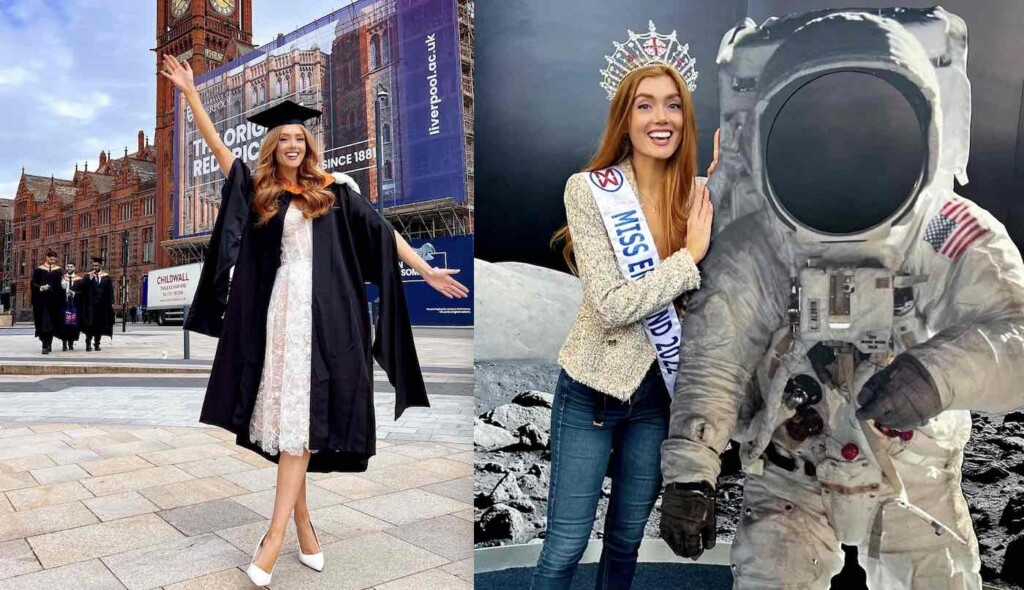
Crowned Miss England, Jessica Gagen is on a mission to become an astronaut, and has just graduated from university with a bachelor’s degree in Aerospace Engineering.
The 27-year-old became the first ever redhead winner of the prestigious beauty pageant last year in October and, after juggling competitions on the catwalk alongside her studies at the University of Liverpool, was delighted when she graduated alongside her classmates this week.
She now wants to use her degree and beauty queen title to inspire the next generation of female engineers and get more women into STEM subjects.
Her university journey was fraught with obstacles as she suffered insomnia and chest pains while combining her studies with being Miss England.
“I think it’s important that today’s youth know that sometimes things don’t go entirely to plan, and that’s perfectly okay,” said Jessica, who’s from Lancashire, near Liverpool.
“But I’m incredibly proud with what I have achieved. I don’t think it’s quite sunk in yet.
“Aerospace engineering was very challenging, covering topics like aerodynamics, structural mechanics, programming, and advanced materials. It equips candidates with a range of skills sought after by different industries, making them highly employable in the fields of science, technology and finance.
“I absolutely loved it. It certainly opens up a lot of opportunities for me and I can’t wait to see what the future holds.”
LOOK: ‘Brave Bessie’ is a New Barbie as Mattel Honors the First Black Female Pilot
She says she went out to celebrate “with the lads” after graduation because there weren’t many girls in her department.
When she started her college career she had no intention of entering Miss England, but after noticing the lack of females at school—only about 10 percent of her classmates were women—she made it her mission to advertise the subject to the next generation through social media, which subsequently lead her to be scouted for Miss England.
“There’s a lot of work that goes into becoming Miss England, and I really wanted to win because I knew I could use the platform to get more girls into engineering.”
Upon winning the contest, Jessica recalls, “I was ecstatic and life went crazy.
CHECK OUT: ‘Monumental Day’ as First-Ever Woman is Named the General Manager of Major League Baseball Team
“I had to protect my health and my grade – I was set to be traveling around the world with the Miss England team from February, a once in a lifetime opportunity. But was thrilled to be able to attend the graduation ceremony.
“The lads in class felt like little brothers, we had the best relationship and I missed them incredibly, so it was lovely still being able to graduate with them.

Jessica now spends a lot of time visiting schools up and down the country giving free talks about STEM subjects, aimed to advertise them to the next generation.
WAIT, WHAT? First U.S. Woman to Walk in Space Just Traveled Down to the Ocean’s Deepest Depth, Too
She plans to go back to school and get her Masters degree but will continue the pageant circuit by competing in the 71st annual Miss World Contest in December.
With an eye toward space her ambitions include becoming an astronaut—the first beauty queen in outer space.
INSPIRE Girls to Show Off Beauty AND Brains By Sharing on Social Media…


Whether enjoyed in a latte, Americano, or even a martini, espresso coffee provides an ultra-concentrated jolt of caffeine. But it might do even more for one’s alertness over the long run, according to new research.
In vitro laboratory tests shows espresso compounds can inhibit tau protein aggregation, which is one of the processes believed to be involved in the onset of Alzheimer’s disease.
Although the exact mechanisms that cause dementia are still unclear, a protein called tau plays a significant role. In healthy people, tau proteins help stabilize structures in the brain, but when certain diseases develop, the proteins can clump together into fibrils.
Scientists believe the ‘tangles’ are one of the key causes of dementia – slowing thinking and memory skills.
Some researchers propose that preventing this aggregation could alleviate symptoms. So, Mariapina D’Onofrio and colleagues at Verona University in Italy—where they drink a lot of espresso—wanted to see if compounds in the coffee could prevent tau clumping in lab experiments.
The researchers pulled espresso shots from store-bought beans, then characterized their chemical makeup using nuclear magnetic resonance spectroscopy. They chose caffeine and trigonelline, both alkaloids, along with the flavonoid ‘genistein’ and ‘theobromine’—a compound also found in chocolate—to focus on in further experiments.
RELATED: Drinking Coffee Might Give You a 64% Better Chance at Living Longer Than Those Who Don’t, Study Says
These molecules individually, along with the full espresso extract, were incubated alongside a shortened form of the tau protein for up to 40 hours. As the concentration of espresso extract, caffeine or genistein increased, fibrils were shorter and didn’t form larger sheets, with the complete extract showing the most dramatic results.
Shortened fibrils were found to be non-toxic to cells, and they did not act as “seeds” for further clumping.
In other experiments, the researchers observed that both caffeine and the espresso extract could bind pre-formed tau fibrils.
SHARE THIS: Good News For Pregnant Women Who Love Drinking Coffee
Italians knock back some 30 million espressos each day in little cups, and multiple studies in the last decade showed that the drink could have beneficial effects thanks to its antioxidants and plant chemicals which dampen inflammation.
Regular consumption has been linked to reduced risk of premature death—protecting against heart disease, type 2 diabetes, liver disease, Parkinson’s and some cancers.
Prof D’Onofrio said: “Coffee extracts contain a large variety of bioactive compounds exhibiting health-beneficial effects. We were able to identify the most abundant constituents.
“We have presented a large body of evidence that espresso coffee is a source of natural compounds showing beneficial properties in ameliorating tau-related pathologies.”
WHAT ABOUT TEA? Tea Drinking (and Coffee) May be Associated With Reduced Rates of Stroke and Dementia
Although much more research is needed, the team, which published their results in the American Chemical Society’s Journal of Agricultural and Food Chemistry, says that their preliminary in vitro findings could pave the way toward designing bioactive compounds that could protect against neurodegenerative diseases, including Alzheimer’s.
RAISE a Cup to Good Health By Sharing This With Coffee Drinkers on Social Media…

Our partner Rob Brezsny provides his weekly wisdom to enlighten our thinking and motivate our mood. Rob’s Free Will Astrology, is a syndicated weekly column appearing in over a hundred publications. He is also the author of Pronoia Is the Antidote for Paranoia: How All of Creation Is Conspiring To Shower You with Blessings. (A free preview of the book is available here.)
Here is your weekly horoscope…

FREE WILL ASTROLOGY – Week of July 22, 2023
Copyright by Rob Brezsny, FreeWillAstrology.com

LEO (July 23-Aug. 22):
Leo theologian Bernard McGinn defines mysticism as “the consciousness of the immediate presence of God.” In other words, people having a mystic experience are filled with a visceral sensation of the divine intelligence. It’s not just an idea or concept; it’s a deeply felt communion infused with intimate tenderness. You Leos will be more likely than usual to have such contact in the coming weeks—if you want it. If you don’t want it, or don’t believe it’s real, or don’t think it’s possible, well, then, you can of course resist it. But why not give it a whirl? There’s nothing to lose, and it could be fun.

VIRGO (Aug. 23-Sept. 22):
Here’s a parable for you. Once upon a time, there was a woman who could read the future in the night sky. She regarded the planets and stars as her divine informants. On one moonless evening, she took a walk down a dirt road near her home. It was so dark she could barely see two feet ahead of her. Oops! She should have brought a flashlight. Lost in wonder, she gazed up at the heavenly bodies, watching and listening for revelations they might have for her. Then one of the lights, the planet Saturn, whispered, “Stop and look down, friend.” The woman turned her eyes from the sky to the ground just in time to find she was two strides away from stepping into a deep, muddy hole. What’s the moral of the tale? Here are some possibilities. 1. Sometimes the heights provide useful information about the depths. 2. Soaring visions may help you tune in to practical details. 3. To become aware of important facts you’ve overlooked in your daily rhythm, consult your higher mind.

LIBRA (Sept. 23-Oct. 22):
A Libran writer I know received many rejection notices when he launched his career. I was amazed at how undaunted he was. In fact, he was the opposite of undaunted. He taped copies of his rejection notices to his bedroom wall. Seeing the evidence of his failures motivated him. It drove him to improve his writing and churn out even more articles. It fueled his search for a wider array of publications that might host his work. During the fourth year of this approach, luck and fate turned in his favor. Within the next eight months, 12 of his pieces appeared in print. My muses tell me, Libra, that you need to hear this story right now.

SCORPIO (Oct. 23-Nov. 21):
The cartoon character Bart Simpson is one of the stars of The Simpsons animated TV show. According to him, “Life is a paradox. You’re damned if you do and damned if you don’t.” While that principle may sometimes be true, I believe you will be exempt from it in the coming weeks. In fact, I suspect you will be as free as it’s possible for a human to be of grueling contradictions, frustrating oppositions, clashing truths, and paralyzing contraries. There’s a good chance you will also outwit and avoid annoying incongruities and silly arguments. Congratulations in advance, Scorpio! Take full advantage of this phase of simple clarity.

SAGITTARIUS (Nov. 22-Dec. 21):
The dragon has appeared in the myths and legends of many cultures. Europe, China, and Mesoamerica are just a few places where the fire-breathing flying reptiles have fascinated the human imagination. In some traditions, they are dangerous and predatory. In China, though, they have been harbingers of good fortune and symbols of great power. Emperors claimed the dragon as their special emblem. In assigning the dragon to be your soul creature, Sagittarius, I am drawing from Chinese lore. What would you like to accomplish that would benefit from you having access to fierce, dynamic, indomitable energy? Call on the dragon for help and power.

CAPRICORN (Dec. 22-Jan. 19):
“There is a world of people who will love you for who you are,” writes author Cheryl Strayed. “A whole, vibrant, fucked-up, happy, conflicted, joyous, and depressed mass of people.” In the coming months, one of your prime tasks is to specialize in communing with these folks. Make it your intention to surround yourself more and more with interesting, imperfect, ever-changing life-lovers who appreciate you for exactly who you are—and who inspire you to grow more and more into the full idiosyncratic glory of your authentic self.

AQUARIUS (Jan. 20-Feb. 18):
What psychic or prophet is most popular with a-list celebrities? I can assure you it’s not me. Few of my millions of readers are world-famous. What about the planet’s most scientifically accurate astrologer? Who might that be? It ain’t me. I don’t regard astrology as a science, and I mistrust those who say it is. In my view, astrology is a mythopoetic language and psycho-spiritual system that nurtures our souls and helps liberate us from our conditioning. We shouldn’t try to get “scientifically accurate” information from it. Now I encourage you to do what I just did, Aquarius. Have fun telling people who you are not, what you don’t believe in, and which goals you aren’t interested in pursuing.

PISCES (Feb. 19-March 20):
To come up with your astrological reports, I study the positions of the sun, moon, and planets in relation to your sign. That’s the technical part of the work, the framework within which I unleash my intuition and imagination. To augment this work, I meditate and pray, asking higher powers to guide me in providing useful information for you. I often consult books written by my favorite astrology writers. (Currently reading Steven Forrest’s The Elements Series.) I also ask my deep mind to slip me info that might not be accounted for by traditional factors. How about you, Pisces? How do you do the work that you love and care about? Now is a good time to take inventory and make necessary adjustments.

ARIES (March 21-April 19):
Your deep psyche will soon well up with extra creativity and fertility. I hope you will eagerly tap into these gifts. You should assume that you will be more imaginative and ingenious than usual. You will have an enhanced ability to solve problems with vigor and flair. In what areas of your life would you love to gently erupt with a burst of reinvention? Which of your habits might benefit from being cheerfully disrupted? Give yourself permission to change whatever bores you.

TAURUS (April 20-May 20):
My teacher Paul Foster Case said the color yellow is midway between warm, exciting red and cool, calming blue. “Yellow has an equilibrating influence,” he wrote. “It stimulates the finer functions of the brain, is of assistance in developing alertness and discrimination, and helps to establish emotional balance.” According to my astrological analysis, Taurus, you should emphasize this hue in the coming days. If you call on yellow to help strengthen the qualities Case describes, you will place yourself in sweet alignment with cosmic rhythms.

GEMINI (May 21-June 20):
Because I enjoy joking with you, I am slightly tempted right now to give you one of the following nicknames: Fidgety, Twitch, Jittery, Quivers, or Shakes. But I will take a more serious tack. Let’s instead see if we can influence you to slow down, stabilize your rhythm, get really steady and secure, and stand strong in your foundational power spot. Would you consider adopting any of the following nicknames? Anchor, Unshakeable, Sturdy, Rock Solid, Staunch, Steadfast, Resolute.

CANCER (June 21-July 22):
The sometimes overly clever author Oscar Wilde said, “When the gods wish to punish us, they answer our prayers.” I reject that warped view of reality and assure you it will have no bearing on your life in the coming weeks. If you formulate your prayers with care and discernment, they will lead you to rewards, not problems. Maybe not the exact rewards you imagined, but still close to your hopes and helpful in the next chapter of your life story. (PS: No sloppy, lazy, careless prayers, please. Be precise and clear.)
WANT MORE? Listen to Rob’s EXPANDED AUDIO HOROSCOPES, 4-5 minute meditations on the current state of your destiny — or subscribe to his unique daily text message service at: RealAstrology.com
(Zodiac images by Numerologysign.com, CC license)
SHARE The Wisdom With Friends Who Are Stars in Your Life on Social Media…
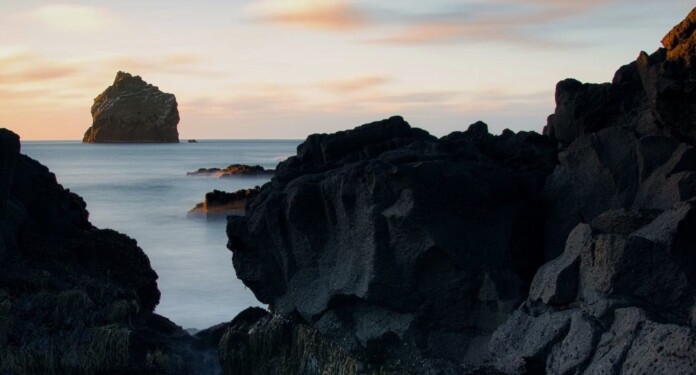
Quote of the Day: “Don’t brood. Get on with living and loving. You don’t have forever.” – Leo Buscaglia
Photo by: Jan Brennenstuhl
With a new inspirational quote every day, atop the perfect photo—collected and archived on our Quotes page—why not bookmark GNN.org for a daily uplift?


The discoveries yielded at a new excavation site at the Roman city of Pompeii have everyone talking—about the undeniably familiar shape in a beautifully preserved fresco.
Yes indeed, the item sitting on a silver platter in the depiction looks an awful lot like one of the other things the city of Naples is famous for: pizza.
The dig site is located in a 32,000 sq. foot (3,000 sq. meter) “insula” or neighborhood that was first excavated in the 19th century. Archaeologists at the time found what’s been identified as a laundry, and left the rest alone.
Returning to the insula on Via Di Nola, archaeologists have found a bakery oven, a kitchen shrine adorned with serpents, remains of a mattress, exquisite frescos, and skeletons.
“Every room in every house has its own micro-story in the grander story of Pompeii. I want to uncover those micro-stories,” Gennaro Iovino, the co-lead excavator, told BBC.
The building in which these treasures were found is suspected to be a wholesaler, but nevertheless, the wealth of the merchant(s) that ran it is conspicuous. The atrium of the building featured a skylight where lion-headed statues poured rainwater down into a basin, probably surrounded by plants.
The right-hand side of this area has a massive oven that could have baked 100 loaves of bread per day. Without a shop window, Iovino and his team believe the oven made bread for wholesale. It’s here that the fresco of the pizza was first discovered, making a splash worldwide after it was announced in June.
However, the archaeologists remind us, there’s almost no chance it’s pizza since tomatoes are native to South America, and mozzarella hadn’t been invented yet. They hypothesize it’s focaccia bread with toppings.
MORE NEWS FROM POMPEII: Astonishingly Wealthy Pompeii Home of Two Men Freed from Slavery Reopens to Public
In any case, the park director, Gabriel Zuchtriegel points out how the ancient pizza/focaccia sits upon a silver platter, representing pizza’s history as rising from a poor man’s food to crown jewel of culinary invention.
“How can we not think about pizza, also born as a ‘poor’ dish in southern Italy that has now conquered the world and is served in Michelin-star restaurants?” Zuchtriegel said in a statement.
Also in the building were discovered the charred remains of a mattress in a bedroom, and the skeletons of two women and one child. As often as the well-preserved ruins of Pompeii yield treasures, they also yield tragedies, and it’s all too clear that these three Romans sought shelter from the volcano under a staircase, only for it to collapse on top of them.
MORE ROMAN NEWS: “Incredibly Rare” Roman Mausoleum Uncovered Beneath London Construction Site
In the middle of the room, another fresco depicts the myth of Achilles who dressed up like a woman to avoid fighting in the Trojan War. In another area, designated as a kitchen, two beautiful yellow serpents coil along a shrine covered in a burnt burgundy background.
For all of the discoveries Pompeii has yielded, a whole one-third of its total space is unexcavated.
“Much of that will be for future generations,” Alessandro Russo, the co-lead archaeologist on the new dig, told the BBC. “We have a problem to conserve what we’ve already found. Future generations may have new ideas, new techniques.”
SHARE This Awesome New Discovery From The Famous City…
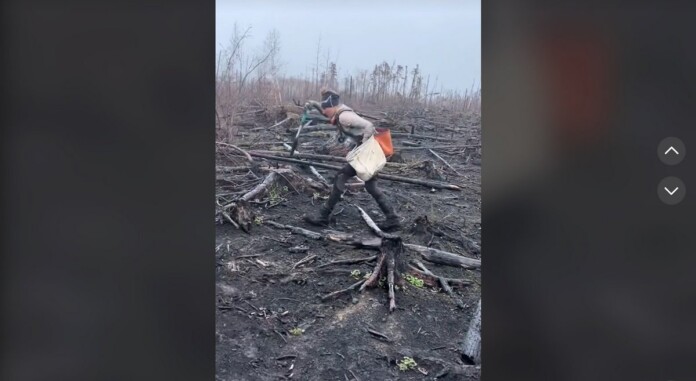
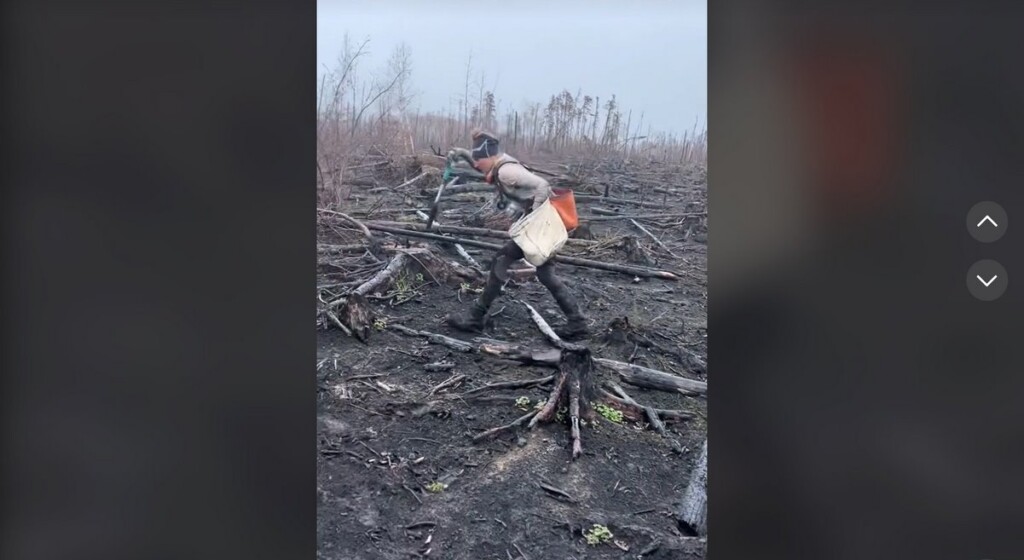
A young woman in Canada’s Saskatchewan Province recently garnered 8.7 million views on a TikTok video of her planting 4,545 trees in a single day.
The video’s author, Leslie Dart, doesn’t have a career in forestry, and rather recently entered the workforce in aerospace manufacturing, a field in which she recently graduated at Durham College in Ontario.
The tree-planting is simply a popular summer job for university students that can nevertheless absorb some people with its deeply-meaningful monotony.
For sometimes 15 hours a day, Leslie slams a spade into the ground, levers out the dirt, drops in a seedling, tamps it down with her boot, and moves on to the next one.
This kind of tree planting is mandated by certain provincial laws to be done in conjunction with logging. Pretty much every tree that’s logged for Canada’s prosperous timber industry is replanted by paid volunteers like Leslie, who makes between 17 and 44 cents per seedling planted, and has planted 372,290 trees over the past three summers.
Sometimes the work is on the desolate remains of an area scorched by wildfires, other times it’s in humid logged forest on uneven ground, filled with overgrowth of spikey Devil’s Club, and swarming with mosquitoes. Wherever her spade takes her though, she says it’s deeply rewarding work which becomes such a part of one’s life that they come back year after year to volunteer.
MORE GOOD FOREST NEWS: Planting Trees in a City 30 Years Ago May Have Lowered the Risk of Deaths From Diseases
“I think every parent in Canada should be sending their kid out tree planting because it will take your child and it’ll turn them into a worker,” Kenny Chaplin, a veteran planter of 35 summers and works in the film industry, as well as a substitute teacher, told the Terrace Standard.
“They’ll learn how to work, they’ll have responsibility. They’ll have money in their pockets.”
@lesliedart Another day, another 3,500 trees in the ground. 🌲 It’s kind of fun to think of every work day like planting a tiny forest :) #treeplanting #forestry #replant #planttrees #greenplanet #afforestation #treeplantingbc #planttreesgetdegrees #womeninforestry #helicopter #heliwork #treeplantertok #treeplantingtok #treeplanting2022 #treeplanter ♬ AIN'T GONNA STOP - Carol Kay
Another tree planter who spoke with the Terrace Standard was photographer and filmmaker Rita Leistner, who worked as a war reporter during Iraq War II.
OTHER MARATHON TREE PLANTERS: Turkey Will Declare a Holiday Dedicated to Planting Trees After Young Man’s Tweet Goes Viral
“When I worked in war zones, and people asked me: what prepared me for that work, I told them: tree planting in Canada,” she said.
Reforestation requirements for logging companies and following forest fires have seen 1.6 billion trees replanted in western Canadian provinces, and with devoted individuals like Chaplin and Dart, it’s easy to understand how.
WATCH her in action…
@lesliedart I planted 4,545 trees today 🌲 Going to do it all again tomorrow, yeehaw! #treeplanting #forestry #replant #planttrees #greenplanet #afforestation #treeplantingbc #planttreesgetdegrees #womeninforestry #heliwork #treeplantertok #treeplantingtok #treeplanting2022 #treeplanter ♬ Get It Get It Get It - Kalin And Myles
SHARE This Inspiring Individual Worker With Your Friends…


At a resort in Honolulu, sport’s ultimate softy Shaquille O’Neil decided to give a swarm of kids the absolute memory of a lifetime by pretending he was drowning and allowing him to ‘save’ him.
Although the water was less than waist height for the 7.1-foot-tall man, he flopped over on his side, floating listlessly as if he had a heart attack. The kids all pitched in, and 7 of them were needed to turn the giant over onto his back before swimming him to safety.
At that point, the man, the myth, the legend, stood up and thanked them for saving him.
The pair of videos obviously accumulated millions of views on TikTok.
Capturing this was Daniel Chavez, a self-identified Shaq fan, who nevertheless felt conflicted as to whether or not he should record the famous LA Lakers center-turned-sports analyst while on vacation.
“Part of me was like, hmm, should I film this?” he said. “Or, no. 2, should I just enjoy the moments? No. 3, I’m like, he’s relaxing, he’s on vacation, why am I gonna bother this guy’s privacy? But the journalist in me said, ‘No. No, this guy’s being real right now, he’s being such a cool guy. I’m sure people would love to see this side of him.’”
Later in the lobby, Daniel was able to meet Shaq in person, who was “so humble” and even agreed to have a photo with the TikToker.
GNN is always on the lookout for a Shaq attack of kindness, and has reported on his exploits of showering kids with Nintendo Switches and PS5s, tipping a waitress $4,000 because she asked, paying for a stranger’s engagement ring for a smile, converting a family home into one that’s wheelchair accessible for a young boy, and taking a young man with oversized feet to his personal cobbler to fit him with 10 pairs of size 18 kicks.
WATCH the ‘rescue’ below…
@incatico Shaq is such a cool guy tho #shaq #hawaii ♬ PAW Patrol Opening Theme - PAW Patrol
@incatico The kids brought back Shaq! 😂 #shaq #hawaii ♬ Sound Oh Oh Oh Oh Oh (Remastered 2022) - Official Sound Studio
SHARE This Wholesome Shaq Moment With Your Friends…
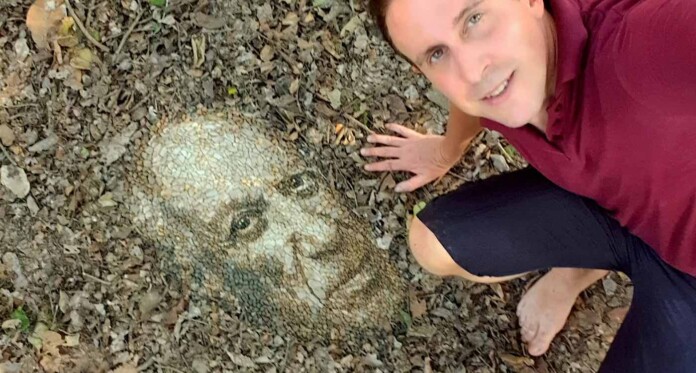
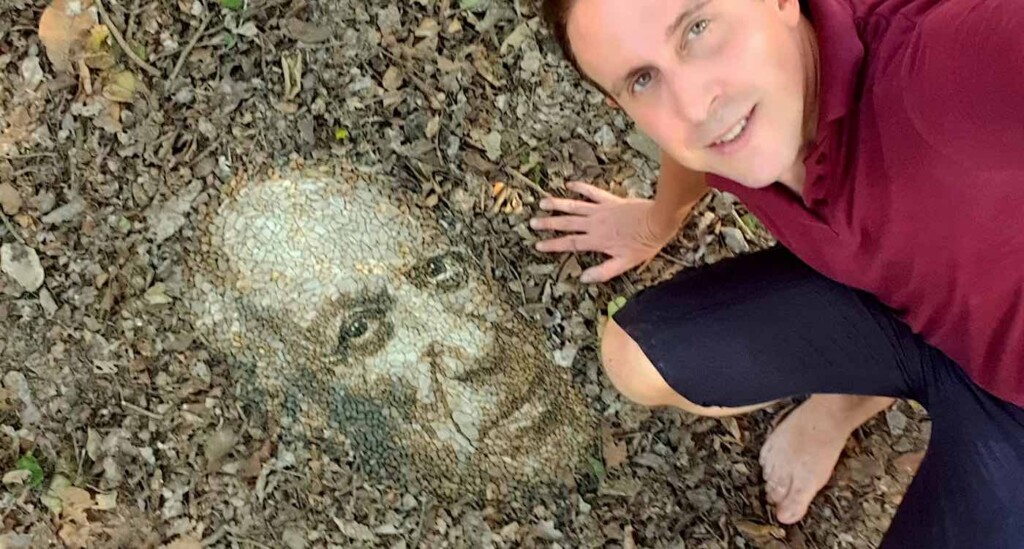
An artist in Portsmouth is creating mosaic portraits of famous figures like Gandhi, Cristiano Ronaldo, and Queen Elizabeth II using pebbles.
47-year-old Englishman Justin Bateman first started making abstract art in 2018 using organic materials and came up with the idea of using stone after tracing the outline of his bicycle with pebbles.
Since then Justin has created over 100 pieces and laid over a million pebbles in total, despite each piece taking up to five weeks to complete.
“Sometimes the stones in a particular location suggest an appropriate subject,” said the full-time artist who finds locations and then marks them on Google Maps for later.
“At other times the location is selected according to criteria such as proximity, layout, stone composition, and urban or natural aesthetics. If a suitable location and stones present themselves I will try to make the work.
Justin’s art is physically demanding. He can spend hours at a time on the floor creating his portraits, and says that he can’t think of doing anything else with his time until it’s finished.
MORE LAND ART: Check Out the Winners of the Stone-Stacking Championship in Europe – LOOK
Each piece can take between three days and five weeks to create depending on the size and complexity.
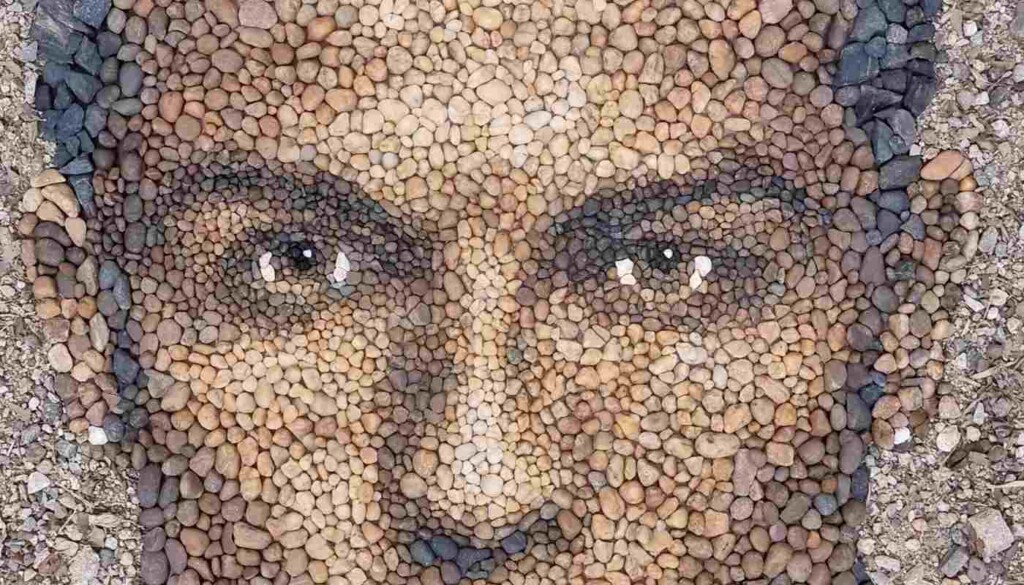
“The simplicity of the final outcome is deceptive because it takes a huge amount of time to conduct research, prepare color maps, collect stones, complete the work, and then photograph,” says Bateman.
MORE STORIES LIKE THIS: Artist Paints Charcoal Portraits on Giant Floating Blocks of Ice in Baltic Sea – LOOK
“Sometimes I will remake them countless times using different stones to find the right combination.”
Like a Tibetan sand mandala, he believes the greatest value in his work is its impermanence, and as such he first chose not to monetize it.
MORE UNIQUE PORTRAITURE: Artist Makes Spectacular Sand Art Portraits That Sell for Thousands After Quitting His Engineering Job–LOOK
“Sometimes I accept commissions or requests, if the timing is right or they align with my own intuition as something that should be made,” he said. “Not more than 10% of my work becomes permanent.”
In Europe, this style is known as “land art” and can be very popular at times. There’s even a land art festival in Scotland every year.
WATCH the masterpiece in timelapse below…
SHARE This Wild Art Form With Your Friends On Social Media…