All News - Page 334 of 1724 - Good News Network
Home Blog Page 334

Loss of Climate-Crucial Mangrove Forests Has Slowed to Near-Negligible Amount Worldwide, Report Hails

Mangrove Forests in Indonesia - Photo by CIFOR, CC 2.0 License

Reprinted with permission from World at Large, a news website of nature, politics, science, health, and travel.

Mangrove Forests in Indonesia – Photo by CIFOR, CC 2.0 License

They are one of the most unique and fundamental types of forest on our planet, and for a few decades they were being lost at a rate that seemed soon-to-be-fatal. But with the 2022 State of the Mangrove report, a new picture is emerging of changing trends and attitudes towards these trees, which have a crucial role in easing the effects of climate change.

This is the second annual report, and it uses brand new Global Mangrove Watch satellite maps that provide much better detail for this year’s analysis.

Globally today, 42% of all mangrove forests lie under some level of protection. The updated maps calculate that 147,000 square kilometers of the Earth’s surface (57,000 sq-miles) are covered in mangroves, more than previously thought.

Compared to the previous 14 years, the average loss rate between 2010 and 2022 dropped by 600%—to just 25 sq-miles per year (66 km2), or 0.04%.

Conditions for the coastal trees are also improving, not only because of dedicated efforts to reforest mangroves but also because, as climate change policy around the world has narrowed to a carbon-in carbon-out equation, aquatic ecosystems like mangroves have clearly become the most important ecosystems of all.

The report aims to present a clear and simple cost-benefit analysis to policymakers to show that for three key issues that face coastal populations, a mission of “halt loss, restore half, double protection,” is the most effective and achievable strategy available.

Mangrove forest on Lake Tabarisia in Papua – Photo by Mokhamad Edliadi / CIFOR, CC 2.0 License

Halt, Reverse, Protect

Conservation outlet Mongabay reported on the summary and detailed that in the aftermath of the December 2004 Asian tsunami that killed 200,000 people, Sri Lankan researchers estimated that—per hectare per household—mangroves, which Sri Lanka had very few of, conferred $14,500 in economic value, in part because they can absorb 70-90% of the kinetic energy of a tsunami wave.

RELATED: Mangrove Trees Can Save Americans Tens of Billions in Flood Damages–So a New Alliance Gets Planting

The State of the Mangrove 2022 estimates that coastal communities near mangroves around the world enjoy protections of property and real estate equal to around $65 billion through this protection from storms and waves.

For this and for other reasons, the report recommends countries and partners work to do three things: halt the loss of mangroves entirely, restore half of what was lost since 1996, which equates to some 1,580 sq-miles of restoration (4,092 km2), and double the area of protected trees worldwide.

With the addition of the new maps, the report has identified around 3,100 sq-miles of mangroves that can be restored (8,100 km2), with a particular focus on Southeast Asia and in countries like Papua New Guinea, Indonesia, and others, where much of the world’s mangroves can be found.

CHECK OUT: A Teen Plants Hundreds of Mangroves to Replace Trees Trampled by Hurricane Irma

More reasons to love mangroves

Worldwide, around 4.1 million working fishermen rely on mangroves to act as nurseries for all manner of creatures. The executive summary claims that more than 600 billion shrimp and fish, and 100 billion bivalves and crustaceans develop every year in mangrove forests.

Mangroves are critical to an estimated 893,000 small-scale fishers in Indonesia alone, while an estimated 82% and 89% of those in Bangladesh and Nigeria fish predominantly in and around mangroves.

LOOK: What Can One Person Do in 10 Years? This Man Got 152 Million Mangrove Trees Planted

But in the halls of power around the world, what will likely evolve to become the real value of mangroves is their potential power for storing carbon. Based on the chemical, geological, and biological reality of growing in waterlogged soil, mangroves are estimated to hold up to four times the amount of carbon as some other forested ecosystems.

Mangrove soils worldwide store the equivalent of 22.86 gigatons of CO2, or around 6.23 gigatons of soil carbon. This is more than half of what the human population currently emits every year.

“The loss of even just 1% of remaining mangroves could lead to the emission of 0.23 gigatons of CO2 equivalent—equating to over 520 million barrels of oil, or the annual emissions of 49 million cars in the US,” the authors write.

YOU MAY ALSO LIKE: Precious Rainforests Are Being Preserved at Highest Rate in 30 Years, After Palm Oil Moratorium in Indonesia

For this reason, the protection recommendations for an additional half of all mangrove forests is critical. The report’s recommended restorations would store another 1.27 gigatons of CO2 equivalent.

Some of the largest restoration programs going on in the world right now include Senegal— where in the regions of Casamance and Sine Saloum, 80 km2 has so far been reforested, totaling nearly 80 million trees—and Indonesia, where President Joko Widodo has attempted to reforest 6,000 km2. China has successfully restored 4 km2 of mangrove forests in Zhanjian, Guangdong province, totaling around 4 million trees.

PREACH Some Gratitude for the Mission of Mangroves On Social Media… 
Sharp-Shooting Farm Robot Can Treat 500,000 Plants Per Hour With 95% Decrease in Chemical Sprays

Verdant Robotics
Verdant Robotics

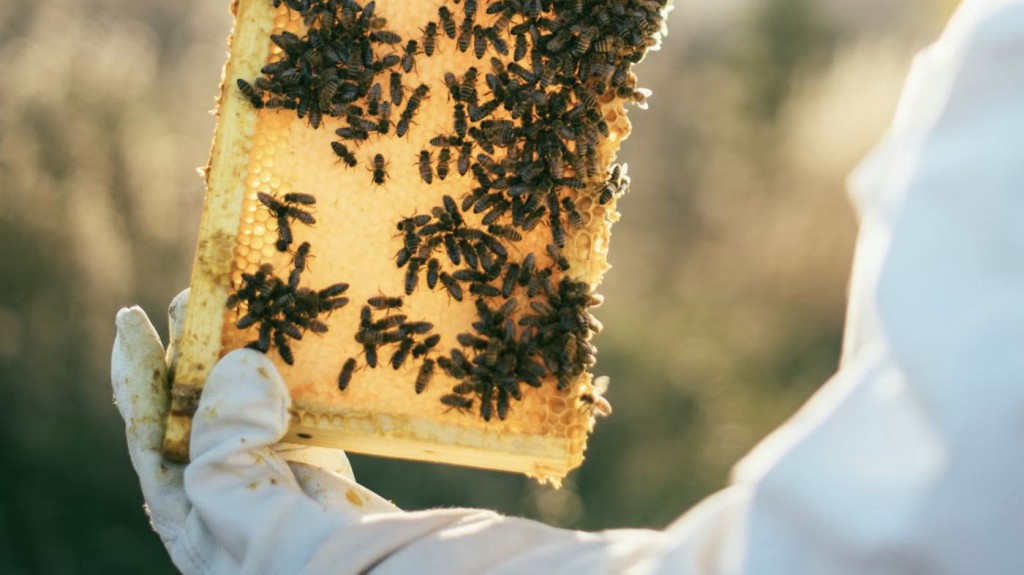
With 50 spray nozzles and a sophisticated computer system, tractors out in California’s central valley are towing artificially-intelligent robots behind them that look set to launch a fourth revolution in agriculture.

Passing over a field they can specifically target individual weeds and crops at a rate of 20 per second, before blasting them with either de-weeder or fertilizer within a millimeter of accuracy.

Verdant Robotics’ SprayBox robot can identify and treat 500,000 plants per hour while using 95% less chemical weedkiller.

Physically mobile robots are already probably more common on big farms than in most other sectors of the economy, but Verdant Robotics feel this is as much a step backwards as forwards.

“Increasingly folks are turning towards things like cover-cropping again, and inter-cropping and other regenerative agriculture techniques that allow us to keep the soil healthy,” said Gabe Siblev, Founder and CEO of Verdant Robotics, in a little mini-doc about their new technology.

“The challenges there have been that it’s difficult to do this at the same sort of scale that we can do monocropping, which is how we feed the world.”

But their robots have a party piece that could create a breakthrough—traditional management techniques that keep the soil healthier, produce more nutritious food and protect the environment, but at the scale currently enjoyed by monocropping.

SIMILAR: New John Deere Tractors Plow Day and Night With No One in the Cab: Autonomous Farming Debuts in 2022

The party piece is that when robots like the SprayBox identify a plant, they don’t simply fire and forget. Rather they’re actively building a centimeter-by-centimeter map of the whole field, complete with the geolocation and ID of every plant therein. This kind of mass data collection is thought to be key to making regenerative agriculture possible at a wide scale, where large numbers of workers would have to be employed otherwise.

“Ironically, it’s kind of returning to how we farmed you know, 100 years ago. Unlocking knowledge that a lot of older growers have, and bringing it back through technology,” said Siblev.

RELATED: Leaving No Molecule Behind: ‘Landfill of the Future’ Turns Farming Waste Into Soaps, Compost, and Candles

The labor shortage of farm workers is one of the reasons that a robotics company is targeting agriculture; another reason is to drastically cut the amount of chemical sprays that can impact our waterways and health.

In a 2019 California Farm Bureau Federation survey, 56% of participating farmers indicated that they had difficulty hiring the number of employees they needed for production of their main crop.

WATCH the mini-doc here… 

SHARE This Awesome Robotic Farmer With Your Friends… 

Great-Grandfather Dubbed ‘Super Mario’ Joined a Gym in Retirement and Still Pumps Iron at 94

A 94-year-old retiree still hits the gym twice a week to fit in a two-hour workout, and has no plans to stop.

“Super” Mario Sanna considers the gym a “second home,” and the gym rats there his “second family.”

The former railway engineer said his job laying train tracks kept him in good shape, but he fell in love with the gym when started going to stay fit post-retirement.

That was 30 years ago. His normal rigorous workout routine includes exercise bikes, rowing machines, leg presses, and biceps curls, but he’s not beyond a pilates class.

“I use everything the gym supplies—any type of machinery, from spinning classes to lifting weights and going on the walking machine,” said Sanna. “In my opinion, the body needs to be moving. I probably keep moving even when I’m asleep. It’s a machine itself. If you leave it idle, it begins to deteriorate.”

If the name didn’t give it away, Sanna began working for British Rail in 1954 after arriving in the UK from Sardinia, Italy two years earlier.

And during those early days, the physical exertion he needed to shift hefty tracks around had been enough to keep him in top shape.

When Mario finally downed his tools in the early 1990s, he recognized he needed a new way of staying fit and got his first gym membership.

Only an eye condition prevents him from driving to the gym as frequently as he’d like. He’s hoping to return more regularly after an operation, but for now a friend picks him up on Friday and Monday.

RELATED: 80-Year Old Powerlifter Can Still Pump 800 Pounds And Inspire Seniors to Hit the Gym

“I worked every Sunday because I was getting married, and I needed a lot of money at the time,” he recalls. “It was very manual work all the time.”

“I always think I need to stretch my legs as they’re carrying the rest of my body, and that’s one thing I’ll treat as the number one,” he said, detailing his normal routine. “Then I’ll do the other parts of the body—from legs to the arms.”

MORE LIKE THIS: Grandma Lost 250 Pounds and is Now a Bodybuilder After Saggy Skin Removal

“I also do Pilates and anything that helps me to be physically more fit than I am now. I’ll also lift a 25kg bar, and I go on the cables. I’ll normally spend between one and two hours at the gym. But if the coffee machine is working, I might stay two and a half hours.”

In America, there’s a shifting focus in senior healthcare away from cardiovascular exercise like brisk walking or swimming and towards weightlifting, which can not only elevate your heart rate like an execising bike, but helps maintain bone density and fight off muscle atrophy.

Mario said he regards the friends he’s made at the gym as a “family” and recently celebrated his 94th birthday with a group of them.

“They all wish to see you all the time. It’s like a family,” he said. “For my birthday they had a party—and this is the place. They celebrated it here.”

WATCH: 78-Year-old Iron Woman Is Powerlifting Champion Who Does 400 Squats and Holds 19 World Records

Mario said he was the oldest person that uses his gym, but recommended other oldies give it a try if they want to keep in shape.

“I think I’m the oldest one. I can recommend it to anybody to do it, especially if they’re on their own, to come out of their house and do something.”

If you don’t believe him, check him out yourself…

SHARE This Inspiring Senior With Your Friends Who Need A Lift…

“When you arise in the morning give thanks for the food and for the joy of living. If you see no reason for giving thanks, the fault lies only in yourself.” – Chief Tecumseh

Faith Goble, CC license

Happy Thanksgiving! 

Quote of the Day: “When you arise in the morning give thanks for the food and for the joy of living. If you see no reason for giving thanks, the fault lies only in yourself.” – Chief Tecumseh, Shawnee Nation

Photo by: Faith Goble, CC license

With a new inspirational quote every day, atop the perfect photo—collected and archived on our Quotes page—why not bookmark GNN.org for a daily uplift?

Faith Goble, CC license

Remains of Prehistoric BBQ Suggests Dinner was Served 780,000 Years Ago–600,000 Years Earlier than we Thought

A whopping 780,000 years ago, early humans sat down in front of a roaring fire for a BBQ of carp fish in what’s modern-day Israel.

The remains of their meal, now discovered by archeologists, pushes back the confirmed date of the first known use of fire for cooking by 600,000 years, back into the earliest periods of upright man.

It proved that fish was critical for Paleolithic diets, that neither cooking nor BBQ originated with homo sapiens, and that our evolutionary tendency to eat cooked food likely began far earlier than anyone thought.

The previous record for a fire-cooked meal was around 180,000 years ago, and made by homo sapiens in what is known as the Upper Paleolithic, the final stage before the evolution of civilization.

In this case the overwhelming likelihood would be that either Neanderthals or even potentially homo erectus, have been cooking their food as one of the earliest technological developments in our history.

The fish was found at the Gesher Benot Ya’aqov archeological site of Achulian hunter-gatherer communities in Israel.

In the study, the researchers focused on pharyngeal teeth (used to grind up hard food such as shells) belonging to fish from the carp family. These teeth were found in large quantities at different archeological strata at the site.

By studying the structure of the crystals that form the teeth enamel (whose size increases through exposure to heat), the researchers were able to prove that the fish caught at the ancient Hula Lake, adjacent to the site, were exposed to temperatures suitable for cooking, and were not simply burned by a spontaneous fire.

SIMILAR: Prehistoric Human Footprints Unearthed in Spain are Nearly 300,000 Years Old and Unique in All of Europe

The authors note that the transition from eating raw food to eating cooked food had dramatic implications for human development and behavior.

Eating cooked food reduces the bodily energy required to break down and digest food, allowing other physical systems to develop. It also leads to changes in the structure of the human jaw and skull. This change freed humans from the daily, intensive work of searching for and digesting raw food, providing them free time in which to develop new social and behavioral systems.

RELATED: Prehistoric People Created Art by Flickering Firelight, New Research Reveals

Some scientists view eating fish as a milestone in the quantum leap in human cognitive evolution, providing a central catalyst for the development of the human brain. They claim that eating fish is what made us human. Even today, it is widely known that the contents of fish flesh, such as omega-3 fatty acids, zinc, iodine and more, contribute greatly to brain development.

SHED Some Light On This Prehistoric BBQ With Social Media… 
Millions of Sharks Could be Saved from Fishing Hooks with Use of New Pulsing Device

SharkGuard via SWNS
SharkGuard via SWNS

Millions of sharks could be saved from being caught on fishing hooks with a recent invention that acts like a car’s hazard lights.

Called SharkGuard, the device fits onto the longlines used by fishermen and creates an electrical field around a baited hook, which sharks and rays pick up with their electroreceptors.

Tests have shown that it can reduce the bycatch of these animals by 91% for sharks and 71% for rays.

Sharks often don’t get the conservation attention they deserve due to their rare but occasional penchant for nibbling on swimmers. The inventors say this technology could reverse the dramatic decline of endangered sharks around the world.

“The main implication is that commercial longline fishing may continue, but it won’t always necessarily result in the mass bycatch of sharks and rays,” said Dr. Robert Enever of the conservation company Fishtek Marine, producers of SharkGuard.

Longline tuna fishing is the number-one threat for sharks living in the open ocean.

In looking to mitigate this threat to the animals, Dr. Enever and his colleagues thought that shark deterrents which worked for protecting scuba divers and surfers could also be applied to tuna fisheries to protect sharks from bycatch.

The team ran sea trials of their device in July and August 2021 in southern France and have published their results in the journal Current Biology.

Two fishing vessels fished 22 longlines on 11 separate trips, deploying a total of more than 18,000 hooks.

The researchers found that SharkGuard hooks significantly reduced the number of blue sharks and pelagic stingrays caught in comparison to standard control hooks.

The catch rate of these species per unit effort dropped by 91% and 71% for sharks and rays, respectively, whereas catch rates of bluefin tuna were not significantly influenced by the presence of SharkGuard on the hook.

READ ALSO: Simple Green LED Lights Save Sharks and Turtles from Accidental Bycatch in Fishing Nets

The researchers also said that if the use of SharkGuard was scaled up to the level of whole fisheries, it would mean much less sharks being caught on fishing gear.

It could therefore help to slow the dramatic decline of shark populations around the world.

With efficacy proven, Dr. Enever and colleagues said they are now working to overcome a barrier of battery life so fishers can “fit it and forget it.”

A full set of induction-charged SharkGuard devices for 2,000 hooks would cost around $20,000 (£16,790) and would last three to five years, which the researchers say is a modest annual cost for most commercial tuna fishing operations.

They are now encouraging fishers who experience high shark and ray bycatch, as well as retail companies who want to improve the sustainability of their supply chain, to seek contact with Fishtek Marine early as sea trials and engineering developments are planned for commercialisation.

RELATED: Floating ‘WALL-E’ Scarecrow Stops Seabirds from Diving into Fishing Nets

“There is hope! Against the relentless backdrop of stories of dramatic declines occurring across all species, it is important to remember that there are people working hard to find solutions,” said Enever enthusiastically.

“SharkGuard is an example of where, given the appropriate backing, it would be possible to roll the solution out on a sufficient scale to reverse the current decline in global shark populations.”

WATCH SharkGuard in action below…

SHOW Your Support For Sharks and Rays by Casting This Over to Social Media…
California Tribe Reignites Age-Old Practice of Intermittent Burns to Prevent Wildfires

Out in the Klamath Mountains of northern California, fires are rushing through the underbrush, lighting everything they touch between the trees ablaze.

However these aren’t a danger to the rich hardwood forests, they are deliberately set by the Yurok and Karuk tribal nations—as a wildfire prevention strategy of all things.

As strange as it might sound to literally fight fire with fire, it’s something the tribes of these mountains have done for at least 1,000 years according to oral tradition.

Low-level and controlled burnings are in fact an ancient and successful forest-management practice. A cleared forest floor and less fine fuels such as leaves and ferns, makes it more difficult for wildfires to ignite and spread.

Wildfires have raged across California over the last half-decade, and out of these ashes sprouted a partnership between the U.S. Forest Service and the tribal nations of the Klamath Mountains.

In 2018 they began collaborating on the Somes Bar Restoration Project to use traditional fire techniques to safeguard 5,570 acres (2,254 hectares) of land covered in white, black, and tan oaks, Douglas fir, red fir, and madrones on steep slopes.

So far, the project’s results have been encouraging. By removing the clutter of the forest floor, it allows mature trees to grow more fully and access the nutrients contained in that litter faster. It brings about increased seed germination of the larger species, and better visibility and paths in between the trees.

Mongabay reports that some forest managers have seen wildfires reach the edges of the forests managed by the Karuk and Yurok and simply go out on their own due to a combination of fuel-shortage and bigger, healthier trees.

MORE GOOD FIRE NEWS: Cardboard Habitat Pods Give a Fighting Chance to Animals Displaced by Wildfires

Scientists will brazenly state that wildfires are becoming more intense and destructive as the planet warms with climate change, but it’s known that from Australia to Europe to North America, people for thousands of years have been using traditional land management techniques to prevent large forest fires.

In Europe, this has been the case with shepherds, who allowed their flocks to pass through forest underbrush eating woody shrubs and leaves. In Australia, the Aborigines regularly burned areas both for forest management and for hunting, while the Native Americans are known to have done the same.

RELATED: Goats: The Surprising Solution to Saving a Country From Wildfires

Across all these traditional management strategies, the last 100 years have seen them disappear almost entirely. The Mongabay story bears witness to the red tape of government management laws that prevent the Yurok and Karuk from managing forests even after the Service requested them to.

By returning some of these practices to the land, it could be that Earth’s forests today escape the risk of wildfires even under the worst case scenarios of temperature rises.

SHARE This Tribal Power Story With Your Friends… 

First 3D Printed Neighborhood is Providing 100 Sturdy Affordable Solar Homes Near Austin For $400K+

Out in Austin, a 3D-printed neighborhood is taking shape, where 100 homes are being simultaneously made to start next year for around 30% less than comparabley-sized homes.

They will be built between 2 and 4 bedrooms and to much higher codes, and in addition will include solar paneled roofs.

Lennar, one of the nation’s largest home builders will be partnering with ICON, a 3D-printing firm to create what they’ve termed The Genesis Collection. Lennar was an early investor in ICON, which they saw as having the potential to bring down construction costs significantly.

ICON’s machines are fully-automated, and each building needs the attention of just three workmen. The printing can go on 24-hours a day, and the firm say they can print the entire wall system with electrical, plumbing and ventilation at around a third of what a normal team of builders would need.

All of this contributes to both low costs and timeframe.

ICON 3D-printed homes being printed on-site for Wolf Ranch Community in Texas

“This is the first 100 homes, but we expect to be able to bring this to scale, and at scale we really bring cycle times down and we also bring cost down,” Stuart Miller, executive chairman of Lennar, told NBC.

A floor plan is loaded into the Build OS on a computer, after which layer upon layer of cement is squeezed out like toothpaste to make the walls, leaving holes for all the necessary utilities.

Lennar 3BD home interior – ICON

Reporting on the builds, NBC staff described the proprietary mixture of cement as appearing like taffy, and having a texture like “cement corduroy.”

More energy efficicent than wood, they are also far sturdier homes, and are about 4x above the regulatory code for resistance to various elements like wind and water.

Expected to be available for reservations by next year in the first entirely 3D-printed community, the lack of strong commodity pricing means that even as mortage rates rise in conjuction with inflation and housing prices, Lennar hope to keep them priced at around 400K.

TAKE a video tour of the build site…

SHARE This Radical Housing Innovation With Your Friends… 

“Holiness is an infinite compassion for others.” – Olive Schreiner

Quote of the Day: “Holiness is an infinite compassion for others.” – Olive Schreiner

Photo by: Zac Durant

With a new inspirational quote every day, atop the perfect photo—collected and archived on our Quotes page—why not bookmark GNN.org for a daily uplift?

Chimpanzees Share Experiences With Each Other ‘Just Because’–A Trait Once Thought to Be Only Human (WATCH)

Screenshot of video from Comparative BioCognition at the University of Osnabrück

When you’re out with your friends, how often do you want to share an experience by saying something like, ‘Wow, look at that’?

Now we know that chimpanzees do this too—a behavior once thought unique to humans.

Scientists recently observed a young chimp nagging its mom for attention for the sole purpose of showing her a leaf—for no reason other than to say something like, “Look, isn’t this a cool leaf?”

In their study, the scientists called it “declarative referential gesturing,” showing something for the sake that another chimp can see it, and no more. They observed this in a mother-daughter pairing at the Ngobo Chimp Community at Kibale National Park in Uganda.

“Critically, she didn’t seem to want her mom to do anything with the leaf. … She seems to be showing it just for the sake of showing it. It’s like, ‘look, look, this is cool, isn’t it?’ And that is very humanlike and something that we thought was fairly unique to our species,” study coauthor Katie Slocombe, a professor of psychology at the University of York in the United Kingdom, told CNN.

RELATED: Chimps Show Researchers They’d Cook if Given the Chance (WATCH)

They contrasted this incident with the leaf to 84 other events all centered around the use of leaves, which the scientists detail are often the focus of groomers.

Chimps tend to pluck leaves from trees while grooming each other, which garners a lot of attention in the community. The generally-accepted belief is that since it happens during inter-indivudal grooming, they use the leaf as a sort of petri-dish to inspect the parasites they pull off each other.

Always however, with the study of our closest relatives, the video footage is the really convicncing argument. The video of daughter Fiona plucking a leaf and showing it to her mother Sutherland is a gesture we have all seen a hundred million times in the age of social media—a youth passing a phone infront of another’s face to direct their attention towards it.

SIMILAR: Birds Have Self Control Just Like Humans–And Some Have a Lot of It

“When Fiona was doing this, (Sutherland) didn’t really seem interested; she wasn’t watching and wasn’t giving her any attention. Fiona is then showing her the leaf to say, ‘look at it,’” Slocombe said.

“She is really persistent with trying to get her mom to look at it, and it’s only when her mom really visibly dropped her whole head to orient to the leaf that (Fiona) then seems satisfied.”

The study is the first recorded observation of this behavior in the wild and in any other animal, and Slocombe et al. hope their work will encourage the community to keep their eyes peeled for more displays like this so that a body of observational evidence can emerge.

WATCH and tell us you’ve not done that with your smartphone…

GRAB Your Friends Attention With This Awesome Story On Social Media… 
Oregon Pardons 45,000 People of Cannabis Possession Charges While Forgiving $14 million in Fines

Oregon Governor Kate Brown - Flickr, CC license
Oregon Governor Kate Brown – Flickr, CC license

Oregon Governor Kate Brown has announced she will be issuing pardons for 45,000 people that have been convicted of felony cannabis possession in the state.

All associated fines will also be wiped away, clearing more than $14 million in criminal charges. The state courts will now begin working to seal all possession charge records to ensure those that had been convicted won’t face economic or employment impediments.

It’s been several years since Oregon decriminalized simple possession of cannabis, yet many people continue to carry a felony charge on their record despite its current legality.

“No one deserves to be forever saddled with the impacts of a conviction for simple possession of marijuana—a crime that is no longer on the books in Oregon,” Brown said in a press release. 

“Oregonians should never face housing insecurity, employment barriers, and educational obstacles as a result of doing something that is now completely legal, and has been for years.”

SIMILAR: New Yorkers With Pot Convictions Will Now Be the First to Get the Opportunity to Sell It

The clemency comes weeks after President Biden issued presidential pardons for a few thousand possession charges that were held on the federal law books. The vast majority of such convictions however are done at the state level.

Brown also expressed an interest in opening up Oregon to the import and exportation of cannabis to and from other states—a bold vision, since cannabis is still classified by the federal government as a Schedule 1 drug.

RELATED: President Biden Pardons Thousands Convicted of Cannabis Possession Under Federal Law

The U.S. Constitution gives the federal government jurisdiction to regulate inter-state commerce, and they would need to change the laws so cannabis produced in one state could be sold in another state—which is currently illegal, even if the plant has been deemed legal to possess and sell in both states.

SHARE The Act Of Clemency On Social Media… 
Pacific Salmon Will Regain Access to Hundreds of Miles of Spawning Grounds as Historic Dam Removal Gets Green Light

The Iron Gate Dam - Klamath River Renewal Corporation
The Iron Gate Dam – Klamath River Renewal Corporation

It’s been twenty years of advocacy and legal challenges, but the decision was made to carry out the largest dam removal in history to return the Klamath River in California to its natural state.

Led by the Yurok, Klamath, and Karuk tribal nations, the demolition of four hydroelectric dams will allow wild salmon from the Pacific to run upstream and spawn again as they haven’t done for 100 years.

Last Thursday, the Federal Energy Regulatory Commission (FERC) approved a license to allow the Klamath River Renewal Corporation (KRRC) to decommission and remove the four dams and implement related restoration activities.

These four dams deny salmon access to hundreds of miles of historical habitat, degrade water quality, and foster the spread of fish diseases. Scientific studies and dam removal efforts in other watersheds demonstrate that removing dams can reverse these trends.

Demolition work is expected to begin next year, promising not only the return to ancestral ways of life for the various tribes on the Klamath River, but a robust increase in commercial salmon fishing.

“The Klamath salmon are coming home,” proclaimed Yurok Chairman Joseph James. “The people have earned this victory and with it, we carry on our sacred duty to the fish that have sustained our people since the beginning of time.”

SIMILAR: Chinook Salmon Introduced to Mountain Streams Not Inhabited for 100 Years

Today’s Klamath River salmon returns are less than 5% of their historical abundance with some runs of salmon completely eliminated by the dams. Potential production increases for fisheries, who were involved in the efforts to remove the dams, could be 10x-20x over the long run.

Upstream of the dams, the Karuk, the Yurok, and California, the Klamath Tribes of Oregon are eager to see salmon return.

RELATED: Conservation Groups Celebrate Dam Removal on Green River – Restoring Health of Fish and Humans After 70 Years 

“Our people have been without c’iyaals (salmon) for over a century. We welcome the fish home to the Upper Klamath Basin with open arms,” said Klamath Tribes Chairman Clayton Dumont.

The demolition is slated to be finished by the end of 2024 using funding from PacifiCorp, the Berkshire Hathaway Energy subsidiary company that manages the dams, and a California bond measure.

SHARE And Celebrate This Long Fought Victory For Native Rights…

“To be sensual is to respect and rejoice in the force of life …from the effort of loving to the breaking of bread.” – James Baldwin

Quote of the Day: “To be sensual is to respect and rejoice in the force of life …from the effort of loving to the breaking of bread.” – James Baldwin 

Photo by: Yael Hofnung

With a new inspirational quote every day, atop the perfect photo—collected and archived on our Quotes page—why not bookmark GNN.org for a daily uplift?

Livin’ Good Currency Ep. 21: Zoe Chance on How to Make Friends and Influence Others–and Embrace Intuition

The Lesson: Making friends and influencing people, as Carnegie described it, can be approached in several ways, but Zoe Chance feels that the modern influential person is the one that people want to say yes to—achieved in part by influencing others, and in part by influencing the self; influencing our inner dialogue between the intuitive mind and the rational mind, which she calls the Gater and the Judge.

Notable Excerpt: “Almost all of us struggle with trying to influence other people or trying to be influential, and many of us have mixed feelings because when we think of influence tactics, we think of the really super creepy used car salesman archetype. What we want is to have an influence on the world, ideally a good influence, and honestly we don’t want to have to work so hard that we feel like we’re pushing people, we ideally want to be in relationships with people who like us, and who want to say yes to each other. We have a good idea and we bring these good ideas to each other.”

The Guest: Zoe Chance is a writer, teacher, researcher, and climate philanthropist. She’s obsessed with the topic of interpersonal influence and her science-based but fun and life-changing book is called Influence Is Your Superpower: The Science of Winning Hearts, Sparking Change, and Making Good Things Happen. It’s being published in more than 20 languages.

Zoe earned her doctorate from Harvard and now teaches the most popular course at Yale School of Management (Mastering Influence and Persuasion). Her research is published in top academic journals and covered in global media outlets. She speaks on television and around the world, and her framework for behavior change is the foundation for Google’s global food policy.

Before joining academia, Zoe managed a $200 million segment of the Barbie brand, helped out with political campaigns, and worked in less glamorous influence jobs like door-to-door sales and telemarketing. She lives with her family in New Haven, CT.

The Podcast: Livin’ Good Currency explores the relationship of time to our lives. It focuses on learning how super-successful people align their purpose with their passions to do good for themselves and others daily, and features a co-host who knows better than anyone the value of time (see below). How do you want to spend your life? This hour can inspire you, along with upcoming guests, to be sure you are ‘Livin’ Good Currency’ and never get caught running out of time.

The Hosts: Good News Network fans will know Tony (Anthony) Samadani as the co-owner of GNN and its Chief of Strategic Partnerships. Co-host Tobias Tubbs was handed a double life sentence without the possibility of parole for a crime he didn’t commit. Behind bars, he used his own version of the Livin’ Good Currency formula to inspire young men in prison to turn their hours into honors. An expert in conflict resolution, spirituality, and philosophy, Tobias is a master gardener who employs ex-felons to grow their Good Currency by planting crops and feeding neighborhoods.

Subscribe to the Pod:  On iTunes… On Spotify… On Amazon Music… Or Google Play.

Episode Resources:

Are you ready to start your health journey today? Go to viome.com/goodcurrency to get $50 off Viome’s Full Body Intelligence test or bundle, the most advanced at-home health test currently available to consumers.

Use Promo Code: CURRENCY50

Join us and over 400,000 like-minded people who have already discovered the Viome difference. Get personalized and precise recommendations on how to optimize your health and help you function at peak performance.

Danish Artist Hides Enormous Trolls in Forests Around the World Using Recycled Wood—LOOK

Thomas Dambo Troll in Breckenridge, Colorado by Isak Heartstone / Courtesy of FORM
Thomas Dambo’s Troll in Breckenridge, Colorado by Isak Heartstone / Courtesy of FORM

Far out in Western Australia, the tranquil wetland forests are about to shake with the footsteps of giants.

That’s because a Danish artist has built a community of giant trolls out of recycled natural material for an exhibit that weaves Aboriginal tradition, modern eco-consciousness, pure childhood creative expression and joy together.

Thomas Dambo is the mastermind behind ‘Giants of Mandurah’, a cultural tourism attraction set in the Mandurah region of Western Australia about an hour south of Perth. The giant trolls, named Little Lui, Vivi Cirklestone, Seba, and Santi Ikto, are all made of recycled wood, just like the dozens of other giants that Dambo has built in forests around the world.

Their limbs are made of pallet wood, their bodies and other more detailed features are chopped up cast away furniture. Together they tell the creation story of the Bindjareb Noongar people, and the waterways and wetlands of their home.

“I grew up surrounded by fairytales and stories, and the troll is an important part of Danish folklore,” Dambo told The Guardian.

“For me, trolls represent the voice of nature. Sometimes they can be gentle and quiet. Other times they can be really violent and brutal, and that’s how nature is. If you’re not careful, nature will knock your whole house over.”

Santi Ikto, one of the Giants of Mandurah by Thomas Dambo – Photo by Duncan Wright, courtesy of FORM
Vivi Cirklestone, Giants of Mandurah by Thomas Dambo, photo by Duncan Wright courtesy of FORM.

Each one took about 750 hours of work to construct, but Dambo had the hand of some volunteers, and completed all the work on site to allow the inspiration and energy of nature to drive the team on.

KEEP EXPLORING: Artist Makes the Most Amazing Animal Sculptures From Trash – LOOK

“Why build in a warehouse if you can build here? It’s the best office in the world,” he said. “And coming from Denmark, the nature here is so different, it’s almost a bit trippy and unreal, like being in a fairytale.”

Stemming from a childhood spent obsessively building things in the yard, amongst his theater seamstress mother and blacksmith father, Dambo’s adult creations can be found in China, Wyoming, Colorado, Maine, Copenhagen, Chile, and beyond.

But it was the beautiful natural scenery of Mandurah that drew him in particular to this spot.

“Mandurah is a city renowned across Australia for its natural beauty, making it the perfect home for Thomas Dambo’s celebrated artworks,” said Mayor Rhys Williams.

Mamma Mimi, Jackson Hole WY. Photo by FORM.

“Thomas’ unique approach to promoting the protection of the natural world fits beautifully with our Mandurah story, and we feel very privileged to be part of such a special project.”

SIMILAR: Monumental Animal Sculptures Made From 35 Tons of Plastic Collected on Oregon Coast by Volunteers–LOOK

He’s even fashioned it into a game, called the Rhythm of Raindrops which is a little like the plotline of an Indiana Jones movie, involving searching for clues to the location of a hidden giant.

Little Lui, Giants of Mandurah by Thomas Dambo, photo by Duncan Wright courtesy of FORM

The entire art installation was produced by FORM — Building a State of Creativity Inc., which has produced and deliver cultural projects all around Western Australia for decades.

Here’s another troll hiding in the U.S., in the state of Maine—because we just can’t get enough of these creations!

Thomas Dambo sculpture in the Coastal Maine Botanical Garden – Photo by RØSKVA (via FORM)

MUST-SHARE These Exciting Giants With Friends On Social Media… 
Best Friends Win Million Dollar Lottery and Spread the Wealth in Hometown to Help Others

Lottery winners Joann MacQueen and Marlisa Mercer - released.
Lottery winners JoAnn MacQueen and Marlisa Mercer – released.

Besties JoAnn MacQueen and Marlisa Mercer won a million dollars playing the lottery, and immediately decided to keep the good vibes rolling by giving heaps and heaps of it away to the community.

Identifying several causes and charities in their hometown of Orillia, in the Canadian province of Ontario to give fat checks to, local news reports it making a huge difference.

First of all, MacQueen describes the moment that she scanned her ticket at the Lotto Max machine at her neighborhood Shoppers Drug Mart. There was no ring-a-ding-ding, indeed there were no sounds at all. The screen simply read $1,000,000,00 and a free play.

She recalls being stunned, and that she began to shake; “it was pretty cool,” she remembers.

They donated varying amounts to places that MacQueen’s brother, who died recently due to alcoholism, might have accessed during his life, which included Soldiers’ Memorial Hospital, the Orillia SPCA, and the Farley Foundation, an Ontario-based charity that helps low-income pet owners take care of their animals.

They also donated to the Salvation Army, the Royal Canadian Legion poppy campaign in Orillia, Mariposa House Hospice, the Comfie Cat Shelter, and the Sharing Place Food Center, which helps the economically disadvantaged get access to nutrient dense fruits and vegetables.

RELATED: Man Wins 200 Million on the Lottery and Donates Almost All of It to Save the Earth

“They are completely focused on how can they help to make this community a better place through this win,” Chris Peacock, executive director of the Sharing Place, told local news. “Not many people win a million bucks and have the core goal of spending it on others and improving this community.”

For the Comfie Cat Shelter, the $10,000 check they received was the fifth highest donation in this no-kill shelter’s history.

“It covers our vet bill for October, and it gives us money for more spay and neuters,” said shelter manager and founder Barb MacLeod, who described it as “fantastic” and bringing her to tears.

SIMILAR: Irish Woman Who Won $145M Lottery Has Given Over Half: ‘I’m Addicted to Helping People’

Orillia Matters reports that the pair plan to split the remainder among their family and friends, as well as take care of some renovations.

REVEL In These Two Generous Souls—Share Their Kindness With The World… 

A Baby Boom For Cutest Animal Not Seen in Australia for Decades: ‘Feels Like a Modern Jurassic Park’

Aussie Ark on YouYube

Though it’s still found in the wild on the island of Tasmania, an adorable animal that became extinct on the mainland of Australia in the 60s is now springing back to life in the outback—with 63 babies born in the wild this mating season alone.

It’s the ultimate sign of success, resilience and hope—that eastern quolls, a native marsupial predator that was once gone from the mainland, can have a baby boom like this in Barrington Wildlife Sanctuary, where they’re protected from threats.

It’s all down to the team at Aussie Ark, an organization that like the prophet whose name and deeds put the theme to theirs, is helping the most endangered of Australian animals recover from the brink.

“This quoll baby boom is truly incredible!” said Dean Reid, Aussie Ark Operations Manager. “It’s significant not only for our organization, but also Australia and the world.”

“You need to remember that eastern quolls have been extinct on mainland Australia since 1967! So, the birth of these joeys feels like a modern Jurassic Park; bringing a species back from the brink, to reclaim the Australian bush.”

Eastern quolls were part of the Australian landscape for millions of years, serving an important role as carnivores. But predation by feral animals as well as poisoning, trapping and land clearing resulted in its demise.

However a population remained on Tasmania, and the individuals bread in the 1,000 acre (400 hectare) Barrington Wildlife Sanctuary came from those island populations. They’ve now grown to number 250 quolls.

RELATED: Endangered Manning River Turtles Released into Wild After Egg Rescue During ‘Black Summer’

These animals, totally unique to Australia, breed in early winter and have a gestation period of 21 days. Females can raise up to six young, called “Joeys” the same as kangaroos. They remain suckling for about 10 weeks after which they detach and are nurtured by mom. Towards the end of November, when the quolls are between 18 to 20 weeks of age, they are weaned and become independent.

Aussie Ark Supervisor Tyler Gralton oversaw the pouch checks that revealed the record number of baby quolls.

“This is what our work is all about, this is the ultimate reward for all the years of care,” Mr. Gralton said in a statement. “To open pouch after pouch and see so many joeys is a sight I’ll never forget.”

YOU MAY ALSO LIKE: Bandicoots Return to Australian National Park After Being Locally Extinct For More Than a Century

GNN recently reported that the first-ever Manning River turtles bred in captivity were just released by Aussie Ark in the Manning River, the only place on Earth they are found.

Two years ago, these hard working conservationists reintroduced the Tasmanian devil to mainland Australia for the first time in over 3,000 years.

“This just goes to show that once you can get these animals back to where they belong in this 400 hectares of feral-free sanctuary, they can do all this hard work on their own,” said Gralton.

WATCH the conservationists in action…

SHARE This Awesome Aussie Animal News With Your Friends… 

Scientists Have Used Mushrooms to Make Biodegradable Computer Chip Parts

Ganoderma Lucidum - or Reishi - CC 2.0. GLJIVARSKO DRUSTVO NIS
Ganoderma Lucidum – or Reishi – CC 2.0.
GLJIVARSKO DRUSTVO NIS

The skin off the legs of a mushroom could potentially offer a sustainable alternative to insulative substrates in computing chips.

As production of electronic devices continues to increase, scientists are looking to insert a bit of nature and biodegradability into common components like the microchip, and believe it or not, peeling the skin off the mycelium of a mushroom can protect chips from heat up to 392°F (200°C.)

Once it’s dried out, scientists working on the project from Johannes Kepler University in Austria found that it’s not only heat resistant, but will last for years, and can withstand being bent and folded thousands of times without wearing or tearing.

The particular species of fungus is the Ganoderma lucidum, which grows on dead rotting wood in European mountains. As it reaches maturity, it creates a fibrous skin to protect its own substrate (the wood in this case) which if peeled off can instead protect microchips.

The substrate under a computing chip tends to be made with unrecyclable material like non-reusable plastic. The authors point out that the increase in the proliferation of electronics in modern times has not been paired with an increase in their lifespan, and throwing them away is much more economical for users than replacing individual parts.

“The vast number of devices produced every day along with the decrease of their lifetime inevitably results in the generation of enormous amounts of electronic waste,” the authors write in their paper, published in Science Advances.

MORE MUSHROOM NEWS: Processors in Tech Wearables like Fitbits Could Be Replaced Using Mushroom Mycelium

“Circular economy and recycling concepts alone cannot solve the growing waste crisis. Electronics research, and especially electronic materials research, thus must shift its focus from strictly high-functionality concepts to sustainable, cost-effective approaches.”

The mycelium skin, which protects the mushroom from the ingress of bacteria, breaks down in a normal compost pile even after being dried, in just about 10 days.

According to the researchers, the skin is slightly less-insulative than plastic, but can still withstand high temperatures, even at the same thickness as paper. Furthermore, it can be grown from the loads of cast off wood from lumber production.

RELATED: Stanford Designer is Making Bricks Out of Fast-Growing Mushrooms That Are Stronger than Concrete

At the moment, the team believe their mycelium could excel in products that don’t require a long-lasting electrical circuit such as wearable health monitors and near-field communication (NFC) tags for electronic devices. However more development time and work is needed.

SHARE This Wild Use Of Mushrooms In Tech With Your Friends… 

“Your past is over! Forgive yourself for what you think you did or didn’t do, and focus on what you will do, starting now.” – Caroline Myss

Quote of the Day: “Your past is over! Forgive yourself for what you think you did or didn’t do, and focus on what you will do, starting now.” – Caroline Myss

Photo by: Marcos Paulo Prado

With a new inspirational quote every day, atop the perfect photo—collected and archived on our Quotes page—why not bookmark GNN.org for a daily uplift?

Utah Man Jumps Into Icy River to Save Woman Attempting Suicide at the Same Spot Where he First Dated His Wife

Courtesy of Dane Entze

A Utah man’s heroic decision to jump into a freezing river has saved a woman after she attempted to end her life on the morning of November 12.

Dane Entze and his wife were returning from a weekend getaway to celebrate their anniversary. They were crossing John’s Hole Bridge in Idaho Falls, Idaho—the very spot where the couple had their first date—when they came upon the scene of what would be another “life-altering moment”.

“Upon looking down from the bridge above, looking down at the boat ramp below, my wife noticed a car driving down the boat ramp and entering the water,” the 36-year-old told Fox Weather.

While his wife called 911, Dane jumped out of the car, climbed a barbed wire fence, and ran to the boat launch.

He said he saw the car sinking into the Snake River, which is known for its dangerous undertow. But the woman emerged and he hollered to her asking if she was okay.

She then began swimming away from shore after telling Dane, ‘I’m committing suicide, and I don’t want to live anymore.’

Dane told her, ‘I don’t know who you are, but I’m here, and I love you, and I’m going to help you.

While the river swallowed up her car, he quickly swam approximately 120 feet from the shore to pull the woman back to the bank, risking freezing water conditions and outdoor temperatures of 19-degrees.

Entze said the woman didn’t have enough strength to resist him and wanted to be left alone, but he ignored her request.

WATCH: Florida Paramotor Pilot Helps Save Woman Clinging to Submerged Car That Crashed into Canal

“I knew we were out of time,” he told the Fox digital team.

The first responders arrived to render aid and transported the patient to the hospital in stable condition for a mental health evaluation and additional assistance. They also pulled out the submerged car.

“We would like to express our gratitude to the Good Samaritan who risked their own life to save another,” said the Idaho Falls Fire Department Public Information Officer. “We are incredibly thankful both parties were able to make it out of the freezing water.”

Bonneville County Sheriff’s Office

Dane said it caused him to appreciate the hardships others are going through, and has since spoken to the woman’s family who hopes to meet him soon.

LOOK: Young Man Makes Wrong Turn, Then Saves Sleeping Family From Fire: ‘They’re safe because of him’

BUOY People’s Faith in Humanity By Sharing The Hero Story on Social Media…