














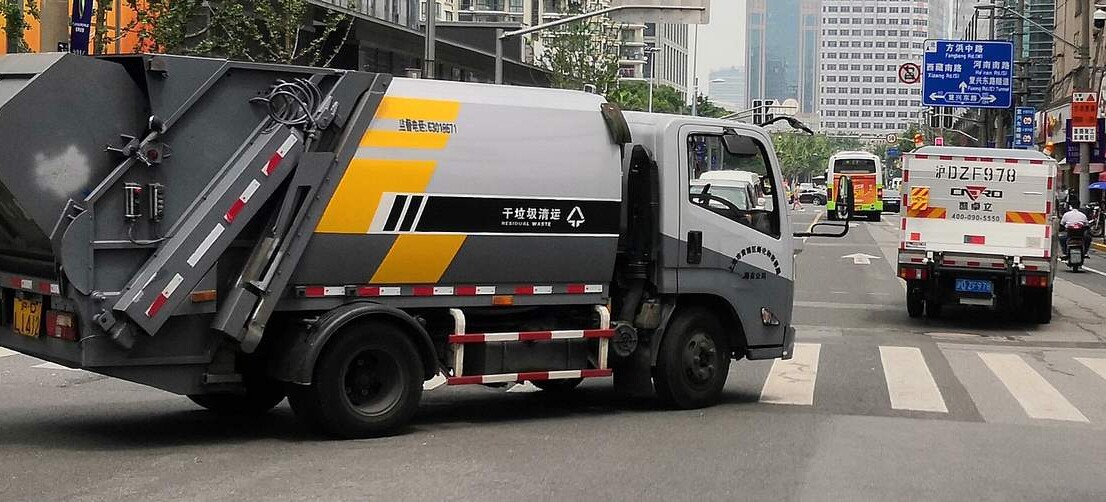
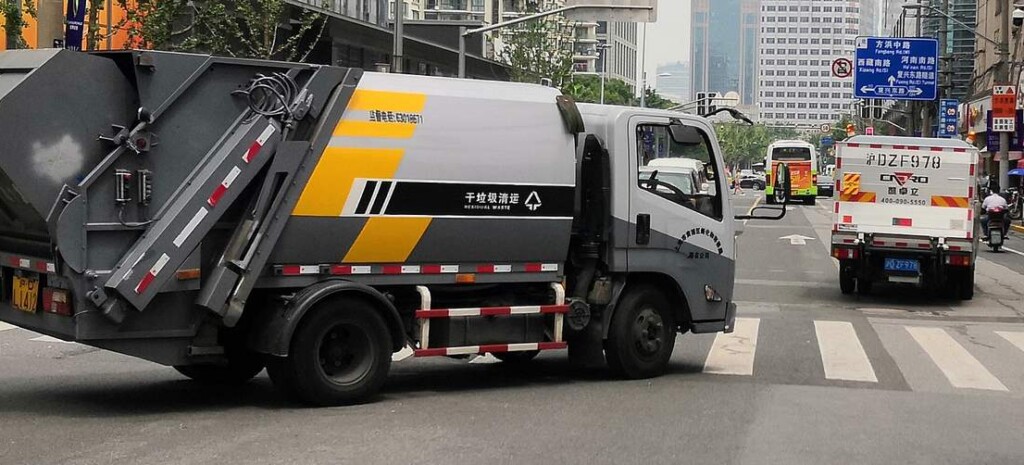
In 2019, the Chinese megalopolis of Shanghai began a full-steam-ahead approach to reducing solid waste generation in the city.
In that year, some 26,000 metric tons of waste was produced every day, but after 6 years of intensive investment, messaging, and habit-forming, the household recycling rate is up 10%, with 35 to 45% of all waste now finding its way to the proper collection facilities.
45% may not seem like much compared to some European successes—like that of Romania—but Shanghai is home to 25 million people, big enough to accommodate the Romanian capital of Bucharest 11 times over.
Other successes in this effort to reduce waste are more noteworthy, for example solid industrial waste has been reduced 98% in a triumph of efficiency.
Leading the way are firms like CSMET, a new materials enterprise in the city’s Jinshan district where the firm combines extra aluminum cuttings churned out by the manufacturing sector with household aluminum waste to create new aluminum products.
“We practice the concept of ‘solid waste in, resources out,’ turning waste aluminum into new resources,” said Chen Nan, vice-president of the company, who estimated that 36 million tons of CO2 and its equivalents have been prevented by the company, which use 130,000 tons of aluminum scraps and recycled items every year.
CSMET is outside the city center where much of the fabrication and manufacturing occurs, so collection is simple. Shanghai’s authorities have relied on sometimes small, “in-the-area operations” to reduce the logistical strain of moving waste around the city that’s more than thrice the area of Houston Texas.
In the district of Hongkou, a pilot composting operation is turning 220 pounds of organic household waste per day into fertilizer using microbial digestion. Lei Guoxing, a local community leader, spoke with China Daily on how it’s performing.
“Now, with kitchen waste being transformed into fertilizer for plants at their doorsteps, residents can directly experience how waste is turned into treasure… reinforcing their habit of waste sorting,” Lei said.
When the changes were being rolled out in 2019, fines for improperly sorted waste increased 10-fold for businesses, while residents could find their trash still sitting on the roadside if the collection workers determined it wasn’t sorted.
GREENER CHINA: How Beijing Restored its Aquifer and Reversed its Groundwater Depletion
Four simple categories of recyclables, hazardous waste, organic waste, and residual waste were established and new bins and vehicles were commissioned to help differentiate these.
Various restrictions on single-use, nonrecyclable objects like disposable slippers in hotels and disposable tea cups in offices came into place. This resulted in a boom for companies specializing in manufacturing eco-friendly disposable products.
One, Bluepha, utilizes used kitchen oil or “gutter oil,” a disgusting and rather unique source of urban pollution from street food vendors, as a source of carbon for the production of polyhydroxyalkanoates, or PHAs, which can then be used to make disposable tableware like take-away containers and flatware. The oils in this case are replacing petroleum products.
TACKLING GARBAGE: 6 Million Pounds of Compost Given to NYC Gardeners in 2025 in Ongoing Organic Waste Collection Effort
Each metric ton of kitchen waste oil can produce 0.67 to 0.8 tons of PHA, generating about $4,360 in value, or 4-times as much as if the oil went to make biodiesel. China Daily reported that the company claims replacing 1 ton of traditional plastic with 1 ton of PHA can reduce 1.54 tons in pollutant emissions, and their products are catching on worldwide, including in McDonald’s global packaging supplier TMS.
It’s not surprising then that out of a national waste management score of 100, Shanghai scored 86.9—the highest for a city of its size in the country.
SHARE This Impressive Effort To Get Waste Production Under Control In A Megacity…