Dramatic footage has captured the moment an endangered giraffe makes its grand entrance into the world—by falling more than 6ft (2m) to the floor.
The CCTV footage shows the adorable newcomer—a Rothschild’s giraffe—dropping onto a bed of straw, and causing such a commotion that the rest of the lounging herd immediately jumped to its feet.
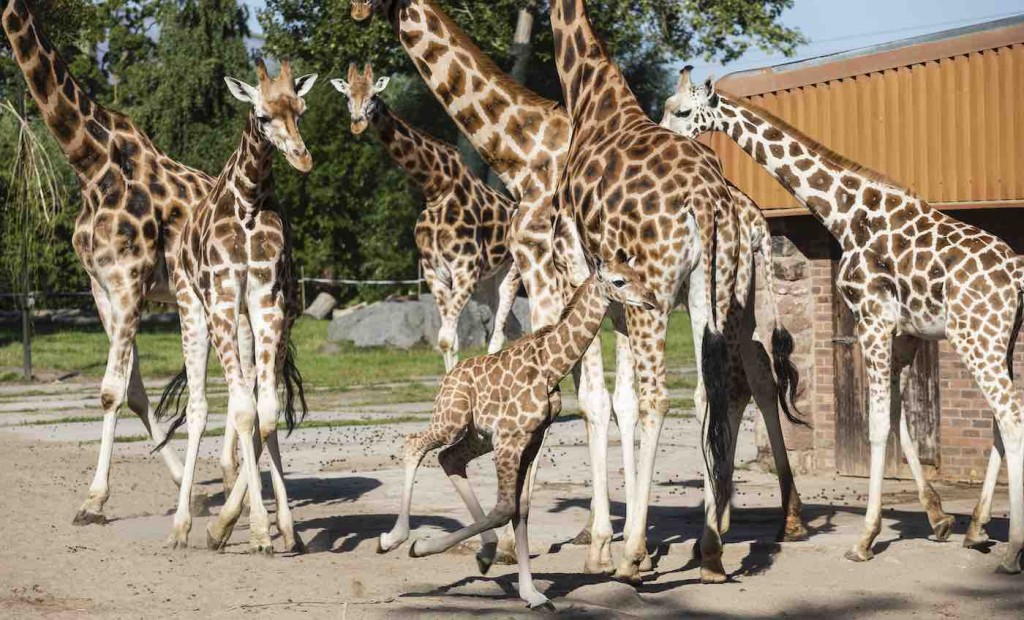
The calf, born last week at the Chester Zoo in England, looked tiny in comparison to its mother, Orla, who is 14-year-old. But the baby was born measuring 6ft tall and weighing a whopping 158 pounds (72kg).
“The excitement of a new calf suddenly appearing shortly before 3am certainly gave everyone quite the awakening!” said Giraffe team manager Sarah Roffe.
She said Orla stood next to Dagmar, an experienced mother, during the delivery as she readied herself for the final push.
“This high fall is a really important part of the birthing process as it’s what helps to break the umbilical cord and stimulates the calf to take its very first breath,” explained Roffe.
The footage below also shows the newborn standing up and taking his very first steps and enjoying his first feeding.
“Following the dramatic birth, it’s vitally important that the calf gets to its feet quickly and ventures over to mum for its first feed – it’s these precious early moments that help to cement that special bond between the two of them,” said the zookeeper.
The baby’s been named Stanley after the tallest mountain in Uganda, where the zoo’s conservationists are working to boost wild giraffe numbers in Africa.
Stanley frolicks at five days-old – Chester Zoo / SWNS
The Rothschild’s giraffe is listed as ‘vulnerable to extinction’, but their numbers are now increasing due to conservation efforts, with around 2,500 in the wilds of East Africa.
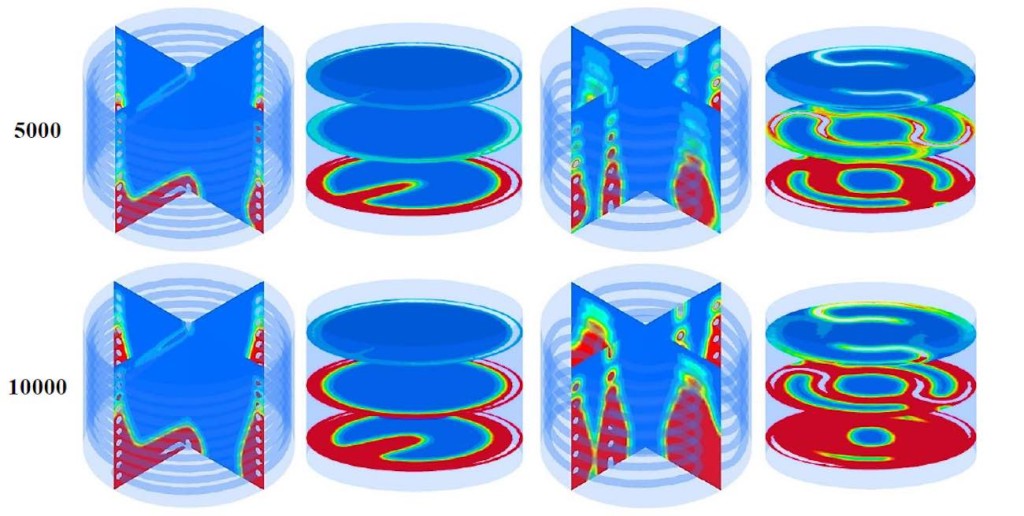
Comparison of hydrogen absorption concentration with different designs – credit: Puchanee Larpruenrudee
Comparison of hydrogen absorption concentration with different designs – Credit: Puchanee Larpruenrudee
Hydrogen is gaining significant attention as an efficient way to store ‘green energy’ from renewables such as wind and solar.
Now, an Australian team has developed a new method to improve solid-state hydrogen fuel cell charging times.
The most common form of hydrogen storage is using compressed gas. Liquid forms are also used, but researchers from the University of Technology Sydney (UTS) experimented with a superior method of storage—solid state.
Dr. Saidul Islam, from UTS, said solid hydrogen storage, and in particular metal hydride, is attracting interest because it is safer, more compact, and lower cost than compressed gas or liquid, and it can reversibly absorb and release hydrogen.
“Metal hydride hydrogen storage technology is ideal for onsite hydrogen production from renewable electrolysis. It can store the hydrogen for extended periods and once needed, it can be converted as gas or a form of thermal or electric energy when converted through a fuel cell.”
However, a problem with using metal hydride solid state for hydrogen energy storage has been its low thermal conductivity, which leads to slow charging and discharging times.
To address this the researchers developed a new method to improve solid-state hydrogen charging and discharging times.
First author Puchanee Larpruenrudee, a PhD candidate in the UTS School of Mechanical and Mechatronic Engineering, said faster heat removal from the solid fuel cell results in faster charging times.
A variety of internal heat exchangers were designed and tested—including straight tubes, spiral tubes, U-shape tubes, and fins. They found that using a helical coil significantly improves heat and mass transfer inside the storage.
“This is due to the secondary circulation and having more surface area for heat removal from the metal hydride powder to the cooling fluid,” explained Larpruenrudee. “Our study further developed a helical coil to increase heat transfer performance.”
The researchers developed a semi-cylindrical coil as an internal heat exchanger, which significantly improved heat transfer performance.
The hydrogen charging time was reduced by 59% when using the new semi-cylindrical coil compared to a traditional helical coil heat exchanger.
They are now working on the numerical simulation of the hydrogen desorption process, and continuing to improve absorption times. The semi-cylindrical coil heat exchanger will be further developed for this purpose.
Applications include rechargeable batteries, heat pumps, and heat storage. “It can also be used to store hydrogen in space, to be used in satellites and other ‘green’ space technology,” said Islam.
The researchers aim to develop a new design for hydrogen energy storage, which will combine other types of heat exchangers and hope to work with industry partners to investigate real tank performance based on their new heat exchanger.
The study, Design optimization of a magnesium-based metal hydride hydrogen energy storage system, was recently published in the journal Scientific Reports.
ENERGIZE Your Green Energy Friends By Sharing on Social Media…
Quote of the Day: “Don’t downgrade your dream just to fit your reality. Upgrade your conviction to match your destiny.” – Stuart Scott
Photo by: Oliver Cole
With a new inspirational quote every day, atop the perfect photo—collected and archived on our Quotes page—why not bookmark GNN.org for a daily uplift?
Researchers and entrepreneurs have developed an implant made of collagen protein from pig’s skin, which resembles the human cornea and restored vision to 20 people.
Prior to receiving the implant, most of the patients were blind due to diseased corneas. The promising result of the trial brings hope to those suffering from corneal blindness and low vision by providing a bioengineered implant as an alternative to the transplantation of donated human corneas, which are scarce in many countries.
“The results show that it is possible to develop a biomaterial that meets all the criteria for being used as human implants, which can be mass-produced and stored up to two years and thereby reach even more people with vision problems,” says Neil Lagali, professor at the Department of Biomedical and Clinical Sciences at LiU, one of the researchers behind the study.
An estimated 12.7 million people around the world are blind due to their corneas, which is the outermost transparent layer of the eye, being damaged or diseased. Their only way of regaining vision is to receive a transplanted cornea from a human donor.
But just one in 70 patients receives a cornea transplant. Furthermore, most of those who need cornea transplants live in low and middle-income countries in which access to treatments is very limited.
“Safety and effectiveness of the bioengineered implants have been the core of our work, says Mehrdad Rafat, the researcher and entrepreneur behind the design and development of the implants. He is an adjunct associate professor (senior lecturer) at LiU’s Department of Biomedical Engineering and founder and CEO of the company LinkoCare Life Sciences AB, which manufactures the bioengineered corneas used in the study.
“We’ve made significant efforts to ensure that our invention will be widely available and affordable by not just by the wealthy,” he says.
The cornea consists mainly of the protein collagen. To create an alternative to human cornea, the researchers used collagen molecules derived from pig skin that were highly purified and produced under strict conditions for human use. The pig skin used is a byproduct of the food industry, making it easy to access and economically advantageous.
In the process of constructing the implant, the researchers stabilized the loose collagen molecules forming a robust and transparent material that could withstand handling and implantation in the eye. While donated corneas must be used within two weeks, the bioengineered corneas can be stored for up to two years before use.
The researchers have also developed a new, minimally invasive method for treating the disease keratoconus, in which the cornea becomes so thin that it can lead to blindness. Currently, a keratoconus patient’s cornea at advanced stage is surgically removed and replaced by a donated cornea, which is sewn into place using surgical sutures. This kind of surgery is invasive and only done at larger university hospitals.
“A less invasive method could be used in more hospitals, thereby helping more people. With our method, the surgeon doesn’t need to remove the patient’s own tissue. Instead, a small incision is made, through which the implant is inserted into the existing cornea,” says Neil Lagali, who has led the research group that has developed this surgical method.
No stitches are needed with this new surgical method. The incision in the cornea can be made with high precision thanks to an advanced laser, but also, when needed, by hand with simple surgical instruments. The method was first tested on pigs and turned out to be simpler and potentially safer than a conventional cornea transplant.
The surgical method and the implants were used by surgeons in Iran and India, two countries where many people suffer from corneal blindness and low vision, but where there is a significant lack of donated corneas and treatment options. Twenty people who were either blind or on the verge of losing sight due to advanced keratoconus participated in the pilot clinical study and received the biomaterial implant.
The operations were free from complications; the tissue healed fast; and an eight-week treatment with immunosuppressive eye drops was enough to prevent rejection of the implant. With conventional cornea transplants, medicine must be taken for several years. The patients were followed for two years, and no complications were noted during that time.
None of the patients were blind any more
The primary purpose of the pilot clinical study, published in the journal Nature, was to investigate whether the implant was safe to use. However, the researchers were surprised by what happened with the implant. The cornea’s thickness and curvature were restored to normal. At the group level, the participants’ sight improved as much as it would have after a cornea transplant with donated tissue.
Before the operation, 14 of the 20 participants were blind. After two years, none of them was blind any more. Three of the Indian participants who had been blind prior to the study had perfect (20/20) vision after the operation.
A larger clinical study followed by market approval by regulatory authorities is needed before the implant can be used in healthcare. The researchers also want to study whether the technology can be used to treat more eye diseases, and whether the implant can be adapted to the individual for even greater efficacy.
LinkoCare Life Sciences AB, which is responsible for the production, certification, packaging, and sterilization of the implants used in the study, with the support of Care Group India, covered the cost of implant manufacturing, ISO-compliant preclinical testing, and clinical testing.
ENVISION How Many People Need to See This on Social Media–And Share it…
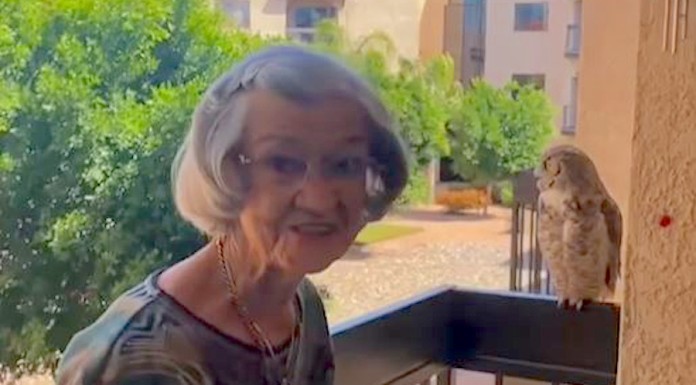
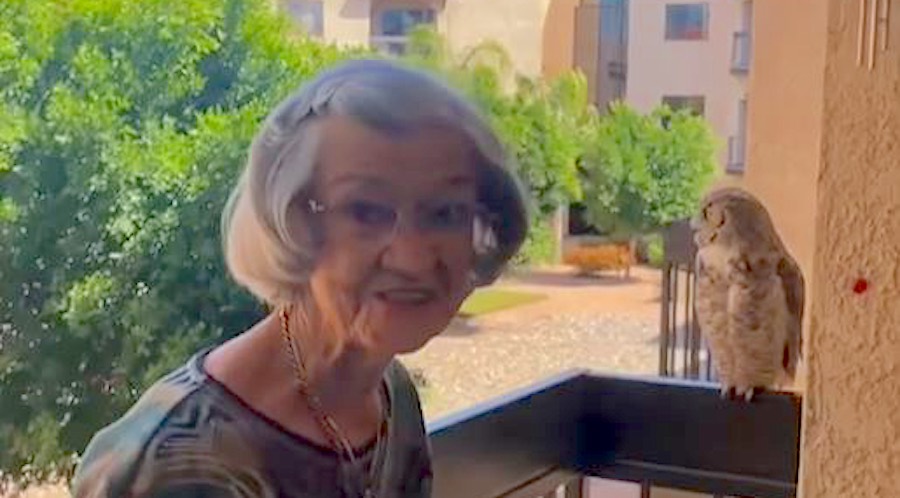
A grandmother receives weekly visits from a chatty owl that her family believe is a sign from her late husband.
The owl visits Ranna almost every day and sits on her balcony for hours. It even tries to hop on her lap and “chats” back to her when she hoots at it.
Granddaughter Shai Ward captured the wholesome footage when she visited the home in Phoenix, Arizona and saw the unique bond with the animal—and strongly believed he represented something truly special.
The owl’s first visit to Ranna’s balcony was on February 24 of this year—exactly two years after her beloved grandfather’s memorial ceremony.
Bob, who passed away in February, 2020, was Ranna’s husband for nearly 70 years—but the 98-year-old widow has yet to fully believe that her visitor is really a sign from the after-life.
However, her granddaughter says that the rest of their close-knit family is sure that Bob is keeping an eye on his love.
“My grandparents were best friends, who deeply respected one another. You felt the love around them and from them,” says Shai.
“My grandmother is the sweetest soul. She is a devout Catholic and attributes all that her life has become to the higher power.”
“Her sass and wit show that 98 is just a number… and her and my grandpa’s relationship was such a sight to see that our whole family just treasured them as one.”
SHARE the Touching Moments With Family and Friends on Social Media…
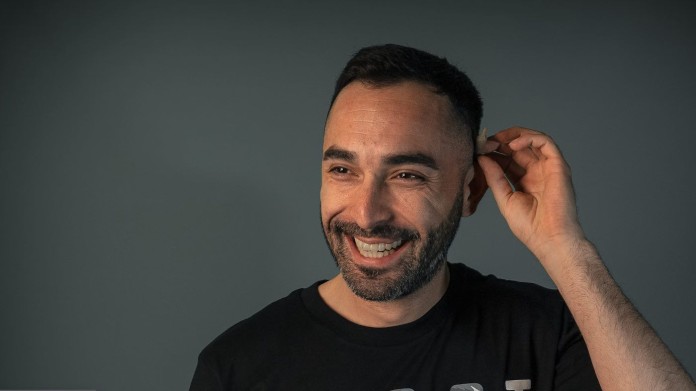
A new “life-changing” mobile phone therapy to stop tinnitus has been developed by researchers who spent 20 years searching for a cure.
There is no pill that can cure the phantom ringing inside the ear, and the disorder has so far defied treatments.
The team at the University of Auckland in New Zealand says 65 percent of participants reported an improvement, and for some people it was “life-changing”—because tinnitus was “taking over their lives and attention.”
Around five percent of the population experience it to such a distressing degree that they have trouble sleeping, difficulty carrying out daily tasks, and depression.
“This is likely to have a direct impact on future treatment of tinnitus,” said Audiology Professor Grant Searchfield.
Earlier trials have found that white noise, goal-based counseling, goal-oriented games, and other technology-based therapies are effective for some people, some of the time. The new treatment begins with an initial assessment by an audiologist who combines a range of digital tools, based on the individual’s experience of tinnitus.
“This is quicker and more effective, taking 12 weeks—rather than 12 months—for more individuals to gain some control.”
31 of the 61 study participants had “clinically significant” improvements using the new polytherapeutic after just 12 weeks. The remaining 30, who used a popular self-help app producing white noise, didn’t have these improvements.
“What this therapy does is essentially rewire the brain in a way that de-emphasizes the sound of the tinnitus to a background noise that has no meaning or relevance to the listener.”
Dr. Searchfield and audiology research fellow Dr. Phil Sanders said they found the results of the polytherapeutic prototype personally rewarding and exciting.
Searchfield says he was inspired by his patients’ distress and no options for affective treatment. “I wanted to make a difference.”
New research suggests the seven continents were created by giant meteorite impacts—similar to the one that wiped out the dinosaurs.
They happened more than three-and-a-half billion years ago, before life on Earth began— so the discovery sheds fresh light on evolution.
Scientists analyzed a mineral called zircon, the microscopic grains of which act like a ‘geological clock’.
They were dug from ancient rocks at Pilbara Craton in Western Australia, which has been dubbed ‘the oldest place on Earth’.
Lead author Dr. Tim Johnson studied the composition of oxygen isotopes in these zircon crystals and found a “top-down process”.
“It started with the melting of rocks near the surface and progressed deeper—consistent with the geological effect of giant meteorite impacts.
“Our research provides the first solid evidence the processes that ultimately formed the continents began with giant meteorite impacts. They were similar to that responsible for the extinction of the dinosaurs, but occurred billions of years earlier.”
It led to the huge regions we know today as Asia, Africa, North America, South America, Antarctica, Europe and Australia—in order of size.
Dr. Johnson, of Curtin University in Perth, said the study even has implications for combating global warming: “Not least, the continents host critical metals such as lithium, tin and nickel… essential to the emerging green technologies needed to mitigate climate change.”
Massive space rocks regularly smashed into the planet during the first quarter of its four-and-a-half-billion year history. It’s known as the ‘Late Heavy Bombardment’—and had it continued life as we know it would never have got started.
For decades it had been theorized the continents originally formed at these sites but there was no proof until now.
“The Pilbara Craton represents Earth’s best-preserved remnant of ancient crust,” says Johnson. “By examining tiny crystals of the mineral zircon in rocks we found evidence of these giant meteorite impacts.”
The study also pushes back on when the first continents—called cratons—emerged from the ocean.
It was believed to have happened roughly 2.5 billion years ago. The findings, published in the journal Nature, add to evidence it happened much earlier.
They eventually formed into one ‘supercontinent’ named Pangaea, which began breaking up 175 million years ago—with different segments drifting into those we see today.
A giant impact around 3.6 billion years ago would have triggered massive mantle melting to produce a thick nucleus, he explained. Data related to other areas of ancient continental crust on Earth appears to show patterns similar to those discovered in Western Australia. The researchers suspect their model is “widely applicable” and will continue testing in other areas.
“Earth is the only planet known to have continents, although how they formed and evolved is unclear,” added Johnson. “However, all along it seems the evidence was right beneath our feet.”
BREAK Up Boredom on Social Media By Sharing This Fascinating News…
Quote of the Day: “It’s never overreacting to ask for what you want and need.” – Amy Poehler
Photo by: Milada Vigerova
With a new inspirational quote every day, atop the perfect photo—collected and archived on our Quotes page—why not bookmark GNN.org for a daily uplift?
An aspirin a day cuts the risk of ovarian cancer in women most likely to develop the disease, according to new research.
It could protect those with a family history of the disease and carriers of the ‘Angelina Jolie gene,’ say scientists.
The painkiller is believed to block triggering proteins. It also douses inflammation, which plays a key role in ovarian cancer—the most fatal gynecologic cancer.
“Most known risk factors of ovarian cancer—such as family history, mutations in the BRCA1 and 2 genes, and endometriosis—can’t be modified,” said lead author Dr. Britton Trabert, of the University of Utah.
The US team described the findings as “promising.” It is an “actionable step” that vulnerable individuals may take.
Daily, or almost daily, aspirin use was associated with a 13% reduction in ovarian cancer risk and they found that aspirin benefitted most subgroups.
“Importantly, this research provides further evidence that ovarian cancer chemo-prevention with frequent aspirin use could benefit people in higher-risk subgroups,” Dr. Trabert added.
Four years ago, a Harvard University analysis of more than 200,000 women found
a daily low dose 75mg pill slashed case rates of the cancer by about a quarter. But individual studies have not been able to look at whether the drug benefits those with a higher risk of disease.
The Utah team pooled data from 17 studies, nine prospective cohort studies from the Ovarian Cancer Cohort Consortium, and eight case control studies from the Ovarian Cancer Association Consortium that included more than 8,300 cases.
“This gave us a more detailed and accurate look than if we used published data.”
They were defined by specific risk factors like family history of breast or ovarian cancer, endometriosis where womb tissue grows around the ovaries, obesity, pregnancy, oral contraceptive use, and sterilization where the fallopian tubes are tied.
“Aspirin use has been linked with major adverse events, including internal bleeding and stroke,” says Trabert. “Since aspirin helped people who had two or more risk factors, we hope patients and clinicians can use this research to have an informed conversation when it comes to potential preventive measures.”
She earned a Department of Defense Investigator-Initiated Research Award for work on aspirin use and lower ovarian cancer rates. Ovarian cancer is known as ‘the silent killer’ because there are few distinct symptoms until it is advanced.
Currently around a third of women are diagnosed early, and nine-in-10 women with early-stage disease survive. It drops to just one in ten if picked up late—one of the highest death rates of all cancers.
Aspirin has been used as a painkiller for thousands of years, since the Ancient Egyptians found an extract of willow bark helped mothers cope with child birth. But in recent years scientists have found the cheap drug has many more applications. It is commonly prescribed by doctors in lower doses to prevent heart problems, because it stops platelets in the blood clumping together to form clots.
Aspirin is a blood thinner. It comes with a risk of internal bleeding – particularly among people with certain conditions such as an abnormal heart rhythm. In can cause stomach bleeds and ulcers that may require hospital treatment, and in rare instances a stroke or a life-threatening hemorrhage. So, individuals should consult their health care providers before beginning new medication to balance any potential risks with these potential benefits.
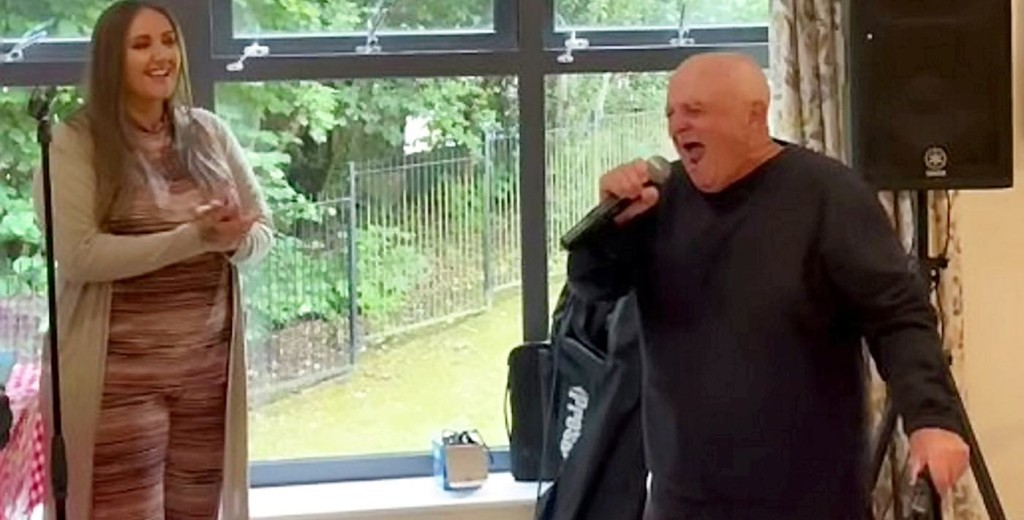
An 81-year-old stunned everyone with his note perfect rendition of ‘Unchained Melody’, by The Righteous Brothers, after asking to take the microphone at a nursing home party.
Guests at Park View Nursing Home in Liverpool had enjoyed a performance from local vocalist Toni Nesbitt, when Dave Williams asked if he could sing a song himself.
Dave then stood up and blew the entire room away.
“When I got up my daughter was begging me to sit back down,” admitted Dave. “But I’m glad I didn’t!”
“Someone in the audience was a patient with dementia—and after my performance I saw her singing the song to herself, which was brilliant.”
The performance would have come as no shock to those who know Williams, because he had sung with The Beatles a couple times.
As a teen, Dave played with his band called The Dices, and in 1958 they appeared alongside soon-to-be Beatles drummer Ringo Starr at the Morgue Skiffle Cellar in Liverpool, though the 18-year-old Ringo was not yet a superstar.
Dave decided to go solo when he was 17 and secured a gig singing on weekends for £3 a night at a small club. He then sang with The Beatles at Knotty Ash Village Hall in Liverpool in 1961—after his friend asked the band members if he could get up and join them.
He also performed in front of hundreds of people, including Mel C. of the Spice Girls, at Paul McCartney’s 58th Birthday in 2000 at the Linda McCartney Centre, in the Royal Liverpool University Hospital.
“It was all surreal and something I will never ever forget. The gig at Knotty Ash was a bit awkward. I may have been a bit out of key but I got a good clap! But, at Paul’s birthday, people from around the world came to be there.”
An employee at the nursing home described how stunned audience members were at his incredibly passionate performance and powerful voice.
“Words can’t explain how we all felt after his performance—and he has said he would love to perform for us again.”
She shared the video of Dave singing (see it below) to the Park View TikTok profile, where it amassed over 500,000 views. The incredible online reaction has been astounding for Dave—who doesn’t use social media, and had never heard of TikTok before.
The octogenarian, who retired as a medical assistant for the UK’s National Health Service after nearly 50 years, was dumbfounded when he went into his favorite local shop the following day and the whole place was clapping and cheering for him.
HAIL a Silver Senior By Giving His Viral Video a Lift on Social Media…
Simply wearing a fitness tracker encourages you to walk up to 40 minutes more every day, which results in shedding 2.2 pounds in weight in just a few months, according to a large study.
The new analysis looked at studies involving 164,000 people across the world who used the devices—and the data shows the relatively low-cost intervention had many benefits.
The team from the University of South Australia reviewed almost 400 studies and demonstrated wearable activity trackers (WATs) could prevent a host of health conditions caused by lack of exercise.
The lead researcher of the study published in Lancet Digital Health said there is widespread skepticism about WATs’ efficacy, accuracy and whether they fuel obsessive behaviors and eating disorders. But the actual evidence for WATs is overwhelmingly positive.
“Wearable activity trackers are effective across all age groups and for long periods of time,” said doctoral candidate Ty Ferguson. “They encourage people to exercise on a regular basis, to make it part of their routine—and to set goals to lose weight.”
“The other reported benefit is that WATs improved depression and anxiety through an increase in physical activity.”
Professor Carol Maher, co-author of the paper, added, “Bearing in mind these were not weight loss studies, but lifestyle physical activity studies, so we wouldn’t expect dramatic weight loss.
“The average person gains about 0.5 kg a year in weight creep so losing 1kg (2.2 lb) over five months is significant, especially when you consider that two-thirds of Australians are overweight or obese.”
Between 2014 and 2020, the number of wearable activity trackers shipped worldwide increased by almost 1500 percent, with purchases in 2020 alone worth $2.8 billion.
Quote of the Day: “We need to remember that failure is not the opposite of success… Failure is part of success.” – Arianna Huffington
Photo by: Gezy Pics, CC license
With a new inspirational quote every day, atop the perfect photo—collected and archived on our Quotes page—why not bookmark GNN.org for a daily uplift?
Training Camp for these big, burly football players is serious business, as athletes condition their bodies for the NFL season ahead.
But, these sweet superstars are winning hearts, too, with their spontaneous playfulness—especially when a wee lass sets up a tea party on the sidelines.
Dressed in her green and gold cheerleader outfit, Aria Rubens lifted her empty tea cup to each player as they entered Lombardi Stadium, asking, “Would you like some tea?”
The little pink cups decorated with a Disney princess had not a drop of liquid in them, but each player lifted their head, gulping down a pretend sip, and thanked their young fan.
“You make the best tea!” said one player. Little Aria always answered with “Go Pack, go!”
Mom Ashley Rubens posted the videos on social media and the cuteness went viral.
“It’s just crazy how many people just want a good story about people being kind to each other,” Ashley said. “Ultimately, I think that’s what the Packers community is about.”
The Wisconsin team is the only organization in the NFL that is owned by the citizens of its city, rather than wealthy individuals. The Green Bay Packers quarterback, Aaron Rodgers, has won back-to-back League MVP titles from 2020 to 2022.
Watch the sweet video below…
CONTINUE the Tea Party – Share With Packers Fans on Social Media…
Almost three-quarters of Americans believe college isn’t just about school—it also teaches important life lessons.
That’s according to a new poll of 2,000 adults, which revealed 73% agree that college educates you about adult life beyond coursework and the classroom.
While doing well in school and getting good grades was found to be the hardest part of college (46%), time management (45%), having more responsibilities (44%) and living on your own (43%) also were some of the top challenges.
Conducted by OnePoll on behalf of Texas Tech University, results also revealed that 44% of respondents are currently considering returning to college or going for the first time—with 42% saying they are interested in learning new skill sets or changing career paths.
Of the respondents who have attended college, 85% believe college prepared them for adult life, but 80% agree if they could go back, they would change some things about their college experience.
42% cited ‘helping with job interviews and applications’ as an area where colleges could improve. Being more affordable also ranked high on the list (39%).
When it comes to choosing a school, 41% of those surveyed are looking for classes or seminars that teach about life beyond the classroom.
“We all hear the national conversations about the costs of attending college, asking whether the experience is worth it,” said Texas Tech vice president for enrollment management Jamie Hansard. “While what students learn in the classroom can be foundational for the goals and careers they want to pursue, it’s important to understand that the value of college goes far beyond a person’s academic achievements.”
Of the life skills those respondents picked up during their time in college, organizational skills (53%) and discovering their passions (47%) ranked as the top two.
When asked what skills college taught them that they still apply to adult life, respondents highlighted, “how to be independent,” “how to arrive when instructed” and “how to approach people in the correct way.”
Nearly a third of respondents who attended college said the highlight of their experience was making friends.
Seventy percent of those who attended college work in the field associated with their degree, and agreed that their career goals are more attainable if they attend college.
“It’s nearly impossible to assign a dollar amount to the value of college,” Hansard said. “How do you put a number on discovering your passion? How do you put a value on the friendships you make in college, many that last a lifetime and may help you reach your goals later in life? How do you put a number on the personal growth and development you experience along the way? College can help you do all these things and give you an education. If you take advantage of those opportunities, it’s absolutely worth it.”
An enormous underground city has been discovered in Turkey that was created by persecuted Jews and Christians in Imperial Rome.
At 74 acres, the ancient city is believed to have been inhabited as early as the 1st century, and acted as a home and synagogue for 70,000 people.
It all started when workers found what appeared to be a small cave while conducting restoration work on nearby houses in the town of Midyat, southeast Turkey, in 2020. Midyat is often called an open air museum, as the city is just riddled with ancient stone structures.
Preliminary surveys found it was in fact not a cave, but a series of galleries, silos, chambers, and even areas of worship.
Excavations have only mapped 5% of the total area, which Gani Tarkan, director of the Mardin Museum in Midyat, explained has been named “Matiate” which means homeland, in ancient Assyrian.
Of that 5%, there have been dozens of silos for storing grain, olive oil, wine, and other foodstuffs. Artifacts have included wine and olive oil making equipment, coins, and lamps, as well as evidence that the area had begun at some point to be used as catacombs, possibly during the Byzantine period.
High on the vaulted stone ceiling of one chamber, archeologists found the Star of David engraved into the wall, with other carvings including human figures nearby.
Tarkan believes it could be the biggest underground city in all of Turkey, and even after it was abandoned as a living center, it continued to serve as a wine making center and burial catacombs.
Midyat and the Mardin Museum, along with the national government, intend to finish archeological work and turn the city into part of the city’s wealth of archeological tourist attractions.
Take a tour of the city with the TRT World News video below.
Excavations are under way in the Turkish town of Midyat to unearth an underground city believed to be the country's largest.
It all began with the discovery of a cave which simply turned out to be a gateway of intricate mazes and corridors pic.twitter.com/IdVlswz4WX
Contrary to what some people will say, nature-friendly methods of farming can significantly increase biodiversity without damaging food production, a long-term research project has found.
In the post-Brexit era, the Johnson government in England had focused a lot of its farming and nature policies on creating a situation where farmers and landowners would be rewarded for increasing biodiversity by returning some land to wilder states.
Now, after a massive study, it’s been shown that giving some land on the farm back to nature does not decrease the amount of food produced—and provides huge benefits to nature.
Scientists from the UK Centre for Ecology & Hydrology (UKCEH) spent a decade monitoring the impacts of the large-scale government-funded experiment at Hillesden, a 2,400 acre (1,000-hectare) commercial farm in Buckinghamshire.
Beginning in 2005, researchers created several wildlife habitats, including seed-bearing plants for birds, wildflowers for pollinators, and tussocky grass margins to support a range of birds, insects, and small mammals.
The experiment assessed the effectiveness of these agri-environmental measures in reducing biodiversity losses caused by the intensification of UK farming practices since WWII—including declines in species that are essential for agricultural production such as pollinators and predators of crop pests.
In the longest-running monitoring study of its kind, researchers found numbers of the majority of species did better at Hillesden than in other comparable farmed landscapes without agri-environment measures over the same timeframes.
More Pollinators and Birds
There were increases of a third across populations of all bird species between 2006 and 2016, compared to an average of just under 13% at other monitored sites, and 40% among all butterflies between 2009-2017, compared to 21% elsewhere.
A previous UKCEH study of six years found overall yields at Hillesden were maintained—even enhanced for some crops—despite the loss of agricultural land for habitat creation.
Butterflies that did particularly well at Hillesden over the period studied included the gatekeeper, which feeds on grasses and the green-veined white, which feeds on wildflowers in field margins. The numbers of both species doubled over the period studied.
Large blue butterfly photo by PJC&Co
Numbers of insect-eating birds like the great tit and blue tit rose around 80% on average.
Populations of 12 bird species and nine butterfly species rose significantly.
“Investigating changes in populations over a significant period of time, and comparing these with other sites, means we can be confident that agri-environment options can bring long-term term benefits for bird and butterfly populations,” said Dr. John Redhead of UKCEH, lead author of the new research paper.
“Hillesden is a typical, large arable farm with conventional agricultural practices, in an ordinary landscape with no large patches of natural habitat. Therefore, it is likely that the results of our long-term study indicate what can be achieved on other commercial farms with good planning, implementation and management of agri-environment measures.”
There are always parts of a farm that are less productive, or more prone to pests or flooding. The areas of land taken out of food production for the experiment at Hillesden were chosen because they were unprofitable or difficult to farm.
The new habitats also encouraged natural pest control, thereby boosting crop yield in those parts of the farm. Jake Fiennes, the head of conservation at the Holkham estate in Norfolk, explained why to the Guardian.
“Take a field. If on the southern edge of that field you have a woodland, invariably the first 15 to 20 meters of that edge won’t produce the average yield, it’ll produce anything up to 50% of average,” Fiennes said. “But when you have all the species that would benefit from that edge of woodland, it’s a no-brainer to give it to nature.”
Quote of the Day: “One cannot divine nor forecast the conditions that will make happiness. One only stumbles upon them by chance, in a lucky hour.” – Willa Cather
Photo by: Dale de Vera
With a new inspirational quote every day, atop the perfect photo—collected and archived on our Quotes page—why not bookmark GNN.org for a daily uplift?
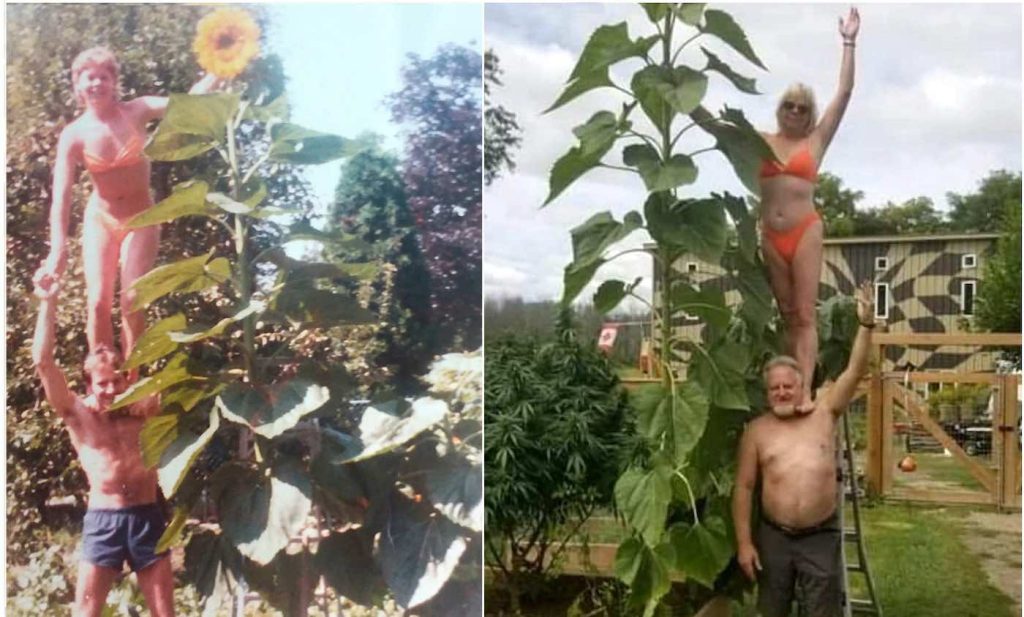
A couple has proved their love is still blooming 40 years on by recreating a photo they took when they first got together posing alongside a 12ft sunflower.
Paul Szewc and his wife Sandy met in 1982 when Sandy asked Paul to dance in a bar. He believed flowers were the key to a woman’s heart and felt his gigantic sunflower could be the key to wooing his new acquaintance.
He invited Sandy to his mom’s backyard to show her the plants he’d grown from seed, and one particularly impressive flower which towered 12ft above the young lovers.
Keen to impress, he got Sandy to stand on his shoulders and his mom, Marjorie, snapped a picture of the pair in 1984. The couple married two years later on 20 September 1986.
“I really wanted to woo her, and it clearly worked,” Paul said. “We both love gardening and sunflowers in particular—they bring back such happy memories.”
The couple who have two sons, Jason and Kyle, continued to grow sunflowers over the years and were delighted when another giant one appeared in July 2021.
In total it was 38 years since the gardening enthusiasts took the photo of the first whopper, and they decided to recreate the photo they took when they first got together.
“One of our sunflowers just so happened to shoot up again,” said Paul, a furniture maker, from Guelph, Canada. They decided to recreate the photo they took when they first met, with their son Jason, snapping them in the exact position four decades later.
“Paul lifted me onto his shoulders as if to say ‘look what I can do,'” Sandy recounted. “He charmed me as he didn’t have a car at the time but cycled to my work at a telecommunications company to deliver me a home-grown packed lunch.”
Health-conscious Paul, who learned from his grandma and mom, enjoyed growing his own food and encouraged Sandy to get into gardening.
“Sandy was a junk food addict before meeting me, but I sent her off to work with nutritious packed lunches and the rest is history,” said Paul. ”I got her hooked on my home-grown fruit and veg.”
Paul said lockdown got him and Sandy back out in the garden—after their busy lives took over.
“As soon as lockdown hit, and we had nothing to do I was reminded of the joys of gardening,” he said. “I’m so glad I re-found my love for gardening, and I hope my grandchildren will develop our green fingers too.”
Multidisciplinary Association for Psychedelic Studies (MAPS)
Photo by Multidisciplinary Association for Psychedelic Studies
City lawmakers of San Francisco have introduced legislation that would significantly move forward the decriminalization of psychedelic substances.
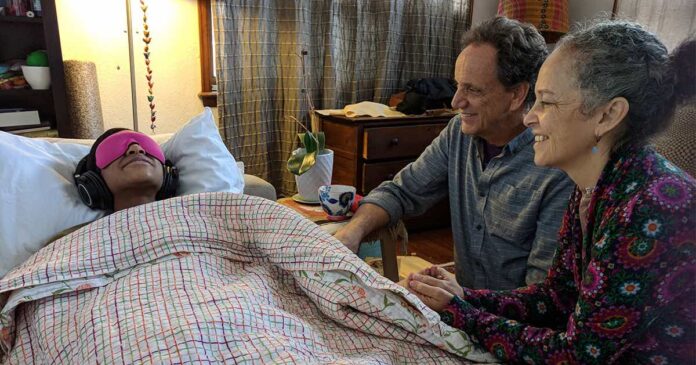
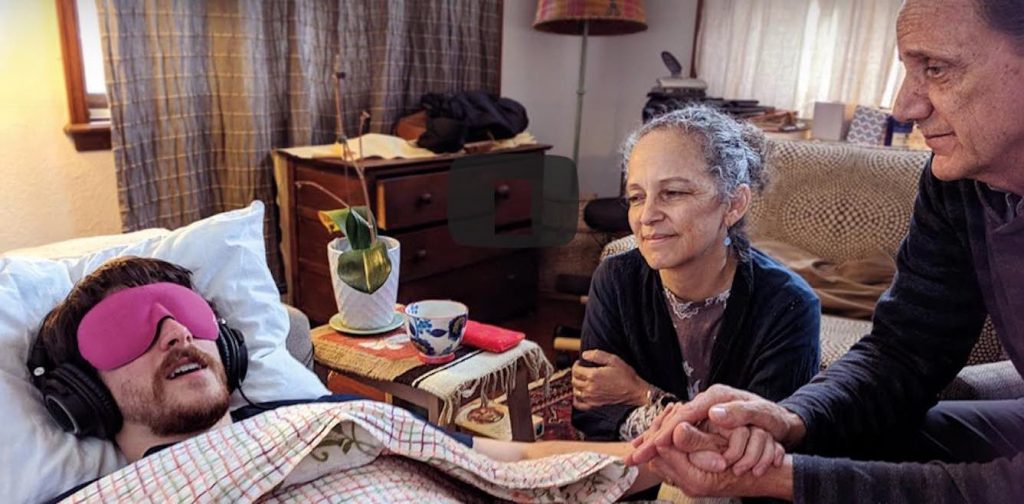
The bill will hopefully reduce non-violent drug prosecution, and make it easier for health practitioners to utilize the powerful therapeutic benefits which substances like psilocybin, ketamine, and DMT have been proven to have.
It’s not a total legalization of use and possession, nor even a total decriminalization of use and possession. The exact text of the bill is as follows.
“City resources not be used for any investigation, detention, arrest, or prosecution” related to use of “Entheogenic Plants listed on the Federally Controlled Substances Schedule 1 list.”
Supervisors Dean Preston (District 5) and cosponsor Supervisor Hillary Ronen (District 9) introduced the resolution on July 26, but with the state senate in recesses until September 1st, they will have plenty of time to consider the benefits amid an epidemic of mental health problems in America.
“We’re not in a position to turn away old and new healing modalities that are effective,” Marjorie Sturm, an advocate for Decriminalize Nature San Francisco, told Filter. “We know the set and setting matters, so this threat of persecution and illegality is really overbearing.”
Much of the nation’s pioneering research on psychedelics goes on in San Francisco, through institutes like the Translational Psychedelic Research Program, and the California Institute of Integrative Studies.
Decriminalize Nature hopes that if the law were to pass, it would score a major victory for decriminalization all over the country. It includes a call on the state of California to decriminalize state-wide and join cities like Oakland (and potentially San Francisco) who have already passed such legislation.
It also makes the rather noticeable if small change that the Speaker of the House, the third highest political office in the country, would come from a decriminalized district.
SHARE This Good Legislation With Your Friends On Social Media…
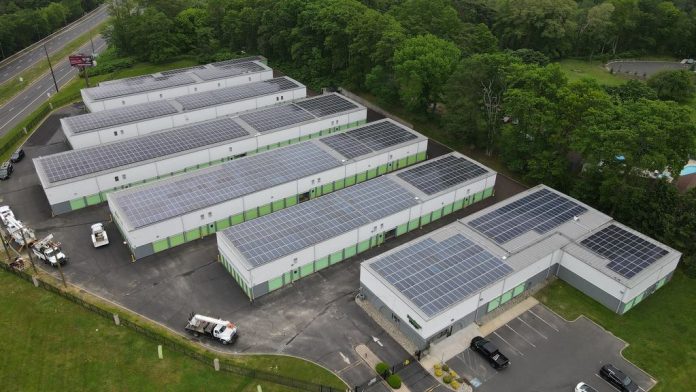
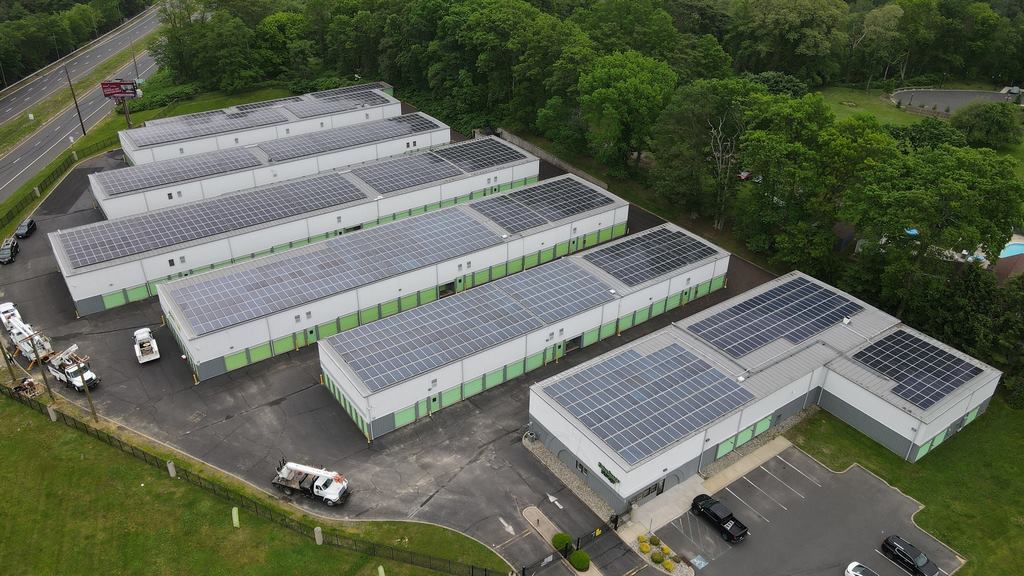
New Jersey’s largest community solar owner and operator had the bright idea to cover storage space with solar panels.
The project was seen through to its conclusion, and now an Extra Space Storage site in Neptune, NJ, boats a 6.5-megawatt (MW) community solar array totaling 800,000 square feet that will power over 1,400 nearby homes.
Solar Landscape, the solar operator, finished the project on August 1st, and it’s one of 10 sites owned by the company and the first completed one of 46 “community solar projects” approved by the New Jersey Board of Public Utilities (NJBPU) in year 2 of the Community Solar Energy Pilot Program.
“Partnering with Solar Landscape on this project aligns perfectly with our commitments to be good corporate citizens and to participate in environmental initiatives that are positive for our communities, customers, employees, and shareholders,” said McKall Morris, Senior Manager of Communications and Sustainability.
Community solar allows residents to subscribe to a nearby solar installation that is often hosted on a commercial property. The residents receive the electricity generated at a discounted rate, with extra savings for low-to-moderate income households.
NJBPU’s Community Solar Energy Pilot Program expands access to renewable energy for those who previously could not install solar panels for reasons such as high costs, lack of roof control, or a shaded property.
As part of the community solar program, Solar Landscape has partnered with dozens of schools, nonprofits and community organizations. Along with Sustainable Jersey City, an environmental education nonprofit, the company awarded $20,000 in scholarships to high school seniors Through its Community Sustainability Challenge scholarships.
“The promise of community solar in New Jersey has arrived, and it’s bringing guaranteed savings to residents at a time when many other costs are increasing,” said Solar Landscape CEO Shaun Keegan. “We’re proud to be partnering with Extra Space Storage on this project, which connects business leaders with the local community and saves residents money.”
LIGHT UP Your Friends’ Social Medias With This Good News…