


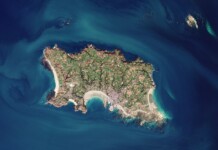












139 years ago today, The Rocky Mountains Park Act passed Canadian parliament, establishing Banff National Park, the nation’s largest and most famous park. It was modeled on the law that created Yellowstone National Park south of the border just a few years before. Before, there had been a small preserve of 26 square miles that included hot springs. The park was expanded under the law to 674 km2 (260 sq mi) and named Rocky Mountains Park. READ more about its history… (1887)
Man Enjoys ‘Accidental Time Capsule’ After Recovering a Wallet He Doesn’t Remember Losing
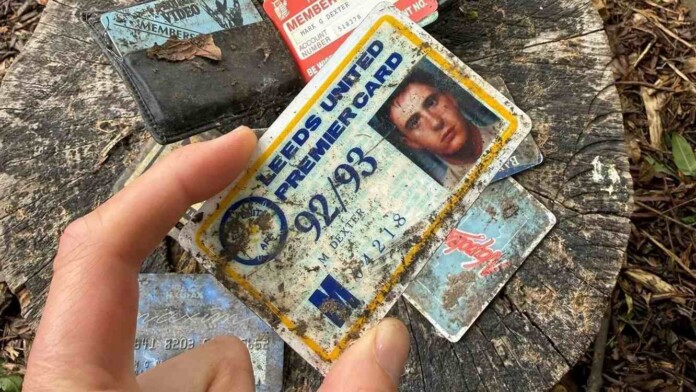
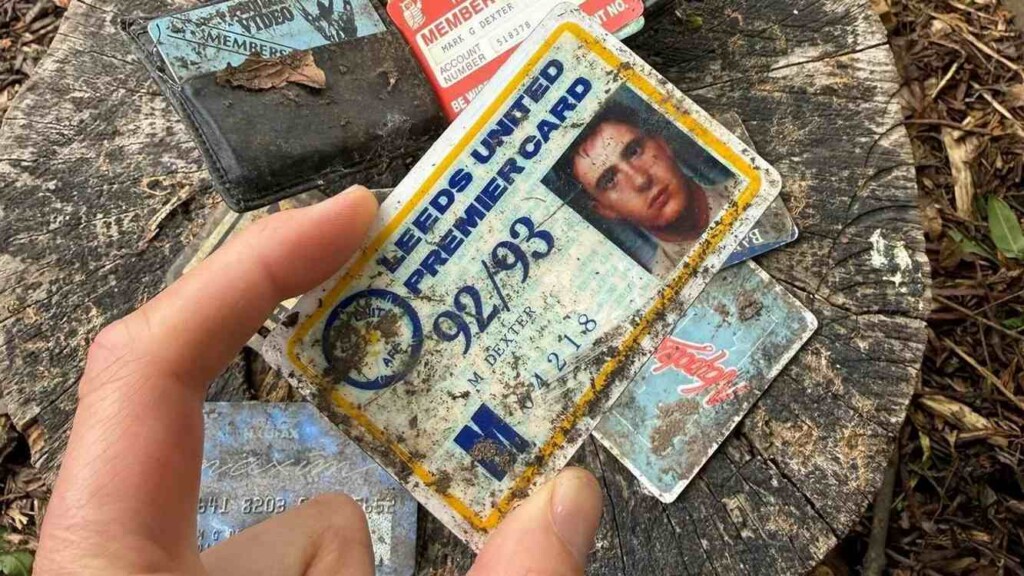
An English sports reporter has been reunited with a wallet that he never knew he’d lost more than 30 years ago.
Among the time capsule treasures was a Leeds United membership card from the 1992-93 Premier League season when he used to cover the Whites for the Yorkshire Evening Post.
Owner Mark Dexter used to live in the area of Rawden where it was found, and was a frequent patron in the local pub scene, but admitted he doesn’t remember losing a wallet, and was at a loss for how it turned up there.
The wallet was found by the organizer of a local forest school, “but I’ve no recollection of ever walking down there at any time in the past” said Dexter, “so I’ve no idea how it’s got there.”
Working assumptions are that it might have been stolen on a night when he had more than his fair share of brews, perhaps while attending a cricket match.
Claire Wilson, the school owner, found it and posted on Facebook some images of its contents asking if anyone was able to locate the person portrayed on the Leeds card—issued at the start of a season where Leeds were preparing to defend the English football title, which they had won the previous year over Manchester United.
“Given that I was a sports reporter, you would have thought I would have had more of a smile on my face on the Leeds card,” Dexter told the BBC.
Dexter’s wife saw the Facebook post and the pair went to retrieve the old wallet.
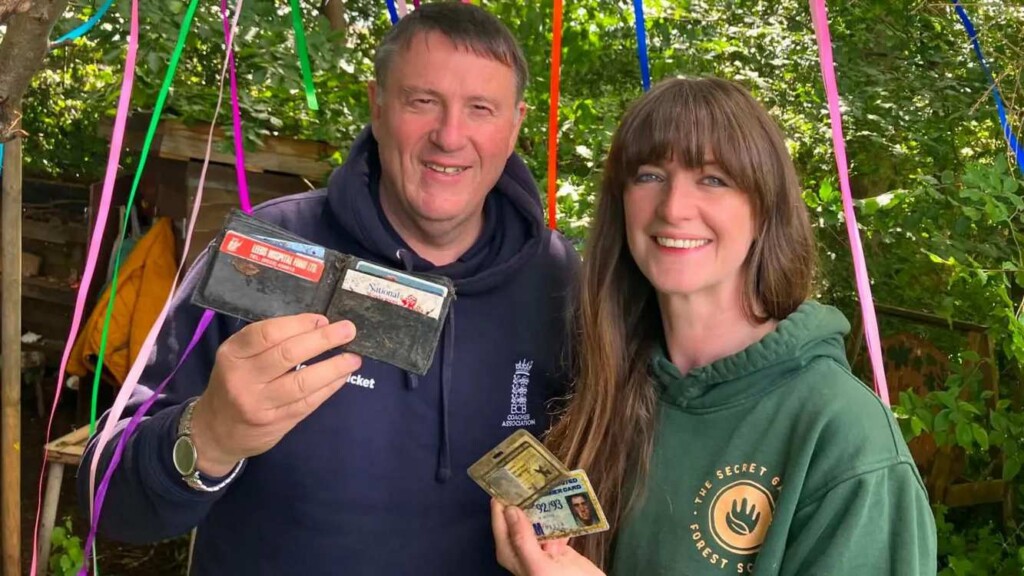
Wilson said the area where she found it had once been a private garden, and at another time was attached to a nearby hotel. The wallet had been swallowed up by the weeds and uncovered whilst cutting those back as part of a community project run through the forest school.
For 63-year-old Mark, it was a strange and serendipitous reason to take a moment and appreciate a life well-lived.
“In ’92 I was 30 and happy, having a good time, loving journalism, loving working in newspapers. It was just great.”
SHARE This Nice Story Of An Accidental Time Capsule With Your Friends…
A ‘Stonehenge Prototype’ Aligned with the Solstices Is a Once in a Lifetime Find for These Archaeologists
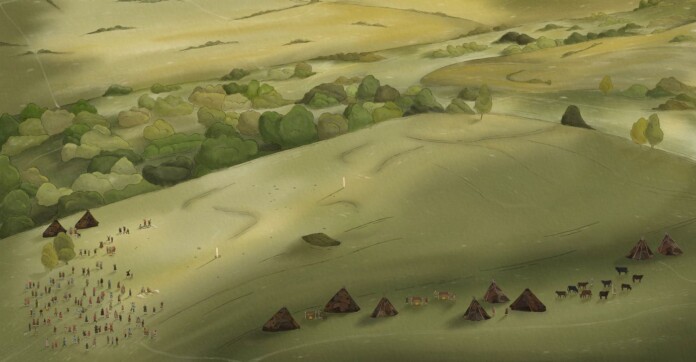
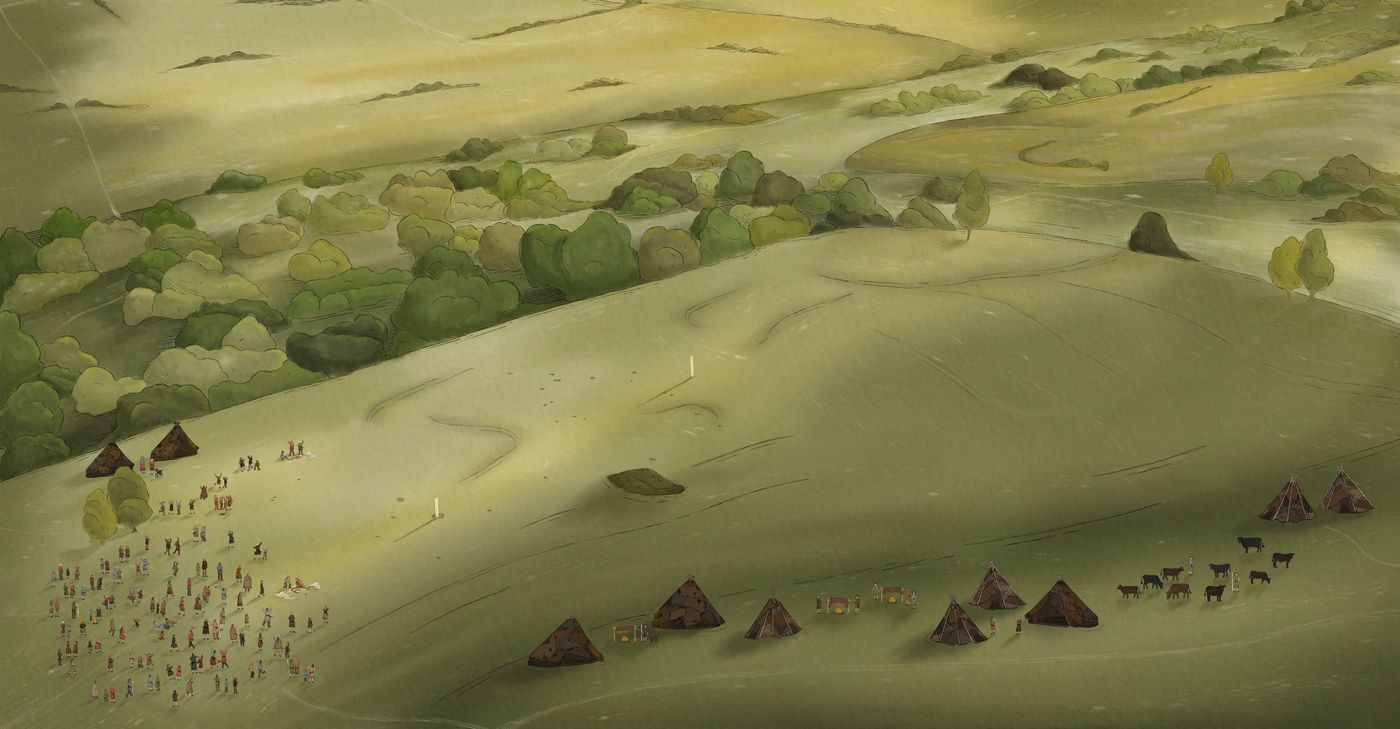
It was essentially two post holes in the ground and a couple of trash dumps: but it’s still one of the greatest finds of archeologist Phil Harding’s career.
Found near Wiltshire just 3 miles from Stonehenge, and dated to 2,950 BCE, Harding’s big find is a Stone Age monument that aligns to the summer and winter solstices as Stonehenge so famously does.
Harding was doing preservation archaeology work in advance of a Ministry of Defense building project in Bulford, and the evidence was so scant he almost passed it over. It was only when, examining his survey maps, he drew a line between the two post holes with a ruler and pencil and noticed it was about 50 degrees off true north, “which was pretty much the line of the midsummer sunrise,” Harding told the Guardian.
“And so I got really, really excited about that.”
Carbon dating of remains in the rubbish dumps and post holes strongly suggest the 2,950 BCE date, and based on the depths of the holes, it’s likely the wooden poles they supported were around 3-4 meters tall. They were placed 120 meters apart.
One hypothesis is that the poles were a prototype or trial run in advance of building the real thing, as the building date comes 500 years before the large trilithon stones the solstice Sun shines through were erected at Stonehenge.
Another is that it was a campsite of the same people who built the first stage of Stonehenge, but whatever it is, it has the defining feature of archaic life on the Wiltshire plain—alignment with the rising of the Sun on the summer and winter solstices.
MORE HENGY NEWS: A Circular Wooden ‘Stonehenge’ Discovered in Denmark Is 4,000 Years Old
Matt Leivers, the senior research manager at Wessex Archaeology, the organization that was contracted to do the work by the Defense Ministry, spoke extensively to the Guardian about the discovery and what it means for research into Stonehenge and its builders.
“What we’re seeing here is the religion of the Stone Age made manifest in the ground. Obviously we have no understanding of precisely what any of it meant, but the fact that time and again, over thousands of years, people are coming back to [the Stonehenge landscape] to build and rebuild and mark and remark this set of substantial events—it gives us an indication that this is religion. This is how they are understanding their place in the cosmos, how the universe works, what their deities are.”
ANCIENT ASTRONOMY: Ancient Chinese Astronomer’s Star Log is Found to Be World’s Oldest–Predating Greeks by 200 Years
“We don’t know what the sun meant to them. We don’t know whether they personified it as a deity. But the amount of effort that’s directed toward marking it and its movements leaves us in no doubt at all that this is a major religious event that’s inscribed over the whole landscape over millennia.”
SHARE This Great Expansion In Our Understanding Of Stonehenge And Its Builders…
Activist Wins 10-Year Battle to Ensure That Child Abuse Is Considered Above All Else in NY Custody Trials

New legislation that will compel New York judges to consider domestic violence or child abuse charges and risks—above all else—in child custody decisions, could soon become law.
Resulting from a decade of work from a dedicated mother, bills known as “Kyra’s Law” passed both the senate and house and is on Governor Kathy Hochul’s desk for signing.
The bill’s author is Jacqueline Franchetti, a resident of Long Island who had to rewrite the language several times to ensure that hearsay and unfalsifiable negatives—in other words, allegations of low-merit—would not influence decisions.
The result of her tireless campaigning was some 300,000 emailing their reps or participating in marches to bring Kyra’s Law to the Chamber floor for a vote, a moment that Franchetti admitted was “very emotional.”
“Kyra’s Law is going to move us lightyears forward in addressing the child custody crisis and protecting children from abusive parents,” she told CBS News.
The law is named after Franchetti’s daughter, Kyra, who was killed by her father in a murder suicide at the man’s home years ago. During a lengthy child custody battle, the judge had determined Franchetti’s ex to be of “low risk” even though she had furnished proof of activities like stalking and making threats, the merits of which the police testified to.
Franchetti was trying to win sole custody, but the judge ruled it should be jointly held.
“It will definitely be helpful for judges in family court to have this bill that states that child safety is the top priority in a child custody case or child visitation case,” said a family court career expert Patricia Pastor in a comment with CBS.
MORE STORIES LIKE THIS: Mexico City’s Ban on Bullfighting Could be Death Knell to the ‘Sport’
It will help tragedies like what happened to Kyra, and others Pastor cited—and others that may come to pass in the future—be prevented.
The Governor’s mansion said in a statement that Hochul is reviewing the legislation, something which she has until the end of the year to sign or send back to the congress.
SHARE This Woman’s Long March To Protect Children Like Kyra On Social Media…
‘Groundbreaking’ Potential Lupus Cure Sends Patients into Remission, Allowing Dreams to Be Fulfilled

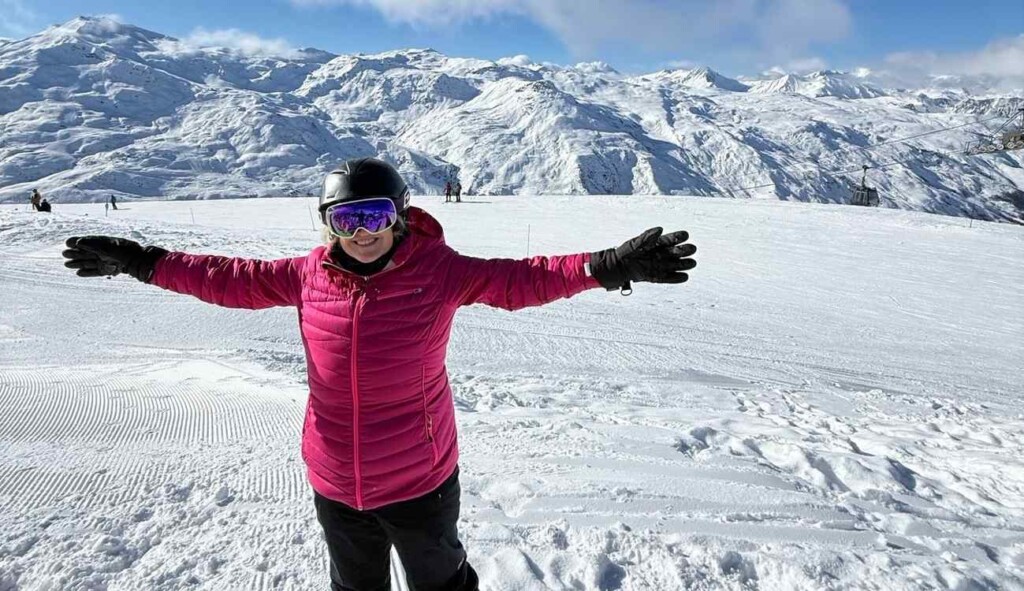
A genetic therapy that’s already revolutionized cancer treatment has now sent five patients of lupus into remission, allowing one to fulfill her dreams of skiing.
The uncurable autoimmune disorder lupus affects 1.5 million Americans, but a trial of CAR T-cell therapy for lupus recently concluded in the UK shows that the disease’s permanence may be at an end.
GNN has reported over a dozen times on the use of CAR T-cell therapy, a Nobel Prize-winning discovery that leverages human white blood cells for cancer targeting.
The white cells are withdrawn from the patient’s blood before receiving modified genetic coding that reprograms them to hunt malignancies. That new programing spreads to the rest of the immune system, and the patient’s own body becomes capable of destroying their cancer.
Cancers are mostly protected from human immunity because of a sort of invisibility cloak that convinces the immune cells like T lymphocytes (the T in CAR T-cell) that they are perfectly normal cells.
In complete contrast but with a similar outcome lupus, like other autoimmune disorders, sees the immune system identifying normal healthy cells as malignant intruders and targeting them for destruction. In the case of lupus it’s the kidneys, and sometimes other organs.
9 patients at University College London Hospital (UCLH) were treated for lupus nephritis, a life-threatening lupus-related condition that can result in debilitating fatigue, inflammation, joint pain, and organ failure. 5 went into a sort of lupus remission, including one named Katie Tinkler, who since recovering has fulfilled a dream of going Alpine skiing for the very first time, and was able to dance at her daughter’s wedding too.
Among the treatment group, 6 patients received a lower dose of CAR T-cell therapy, and 3 got a higher dose. 5 of those on the lower dose went into remission within just 3 months, and stayed there over the study’s 11 month follow-up period.
RARE GENETIC DISORDERS CURED:
- Boy with Rare Genetic Disorder Amazes Doctors After World-First Gene Therapy
- UPDATE Long-Term Follow-up in Babies Born with ‘Bubble Boy Disease’ Still Seem Cured
The higher-dose patients are still being monitored.
“These findings are truly groundbreaking and offer fresh hope to people living with lupus,” said Professor Karl Peggs, the director of UCLH’s biomedical research center, in a news release. “If these results are confirmed in larger studies, the prospect of a cure for lupus may no longer be out of reach.”
“While more research is needed, the possibility that CAR T-cell therapy could deliver an immune reset and potentially free patients from the cycle of chronic autoimmune disease marks a remarkable step forward.”
MORE STORIES LIKE THIS:
- CRISPR Used to Remove Extra Chromosomes in Lab Model of Down Syndrome and Restore Cell Function
- First Patient to Receive Gene Therapy ‘Cure’ for Beta-Thalassemia Living Pain-Free
The Guardian heard from Tinkler, who said that her lungs, heart, and kidneys were all deteriorating, and the lupus remission is lifechanging.
“My life two years ago versus now, it’s unrecognizable. I feel blessed.”
SHARE This Inspiring Potential Cure For A Truly Debilitating Disease…
“What I am looking for is a blessing NOT in disguise.” – Jerome K. Jerome
Quote of the Day: “What I am looking for is a blessing not in disguise.” – Jerome K. Jerome
Photo by: Getty Images For Unsplash+
With a new inspirational quote every day, atop the perfect photo—collected and archived on our Quotes page—why not bookmark GNN.org for a daily uplift?
Good News in History, June 22

76 years ago today, Walt Disney Productions released Lady and the Tramp, then advertised as Disney’s “happiest motion picture yet.” The film follows Lady, the pampered cocker spaniel, as she grows from puppy to adult, deals with changes in her family, and meets and falls in love with the homeless mutt Tramp. The story was cooked up by Disney himself and a friend of his, based on their own experiences with dogs given as presents to their wives. READ more about this timeless classic… (1955)
UK Startup is Making Electricity From Bacteria in the Soil – Maybe Your Garden Will Power Your Home Some Day


British startup Bactery says its battery, powered by bacteria, uses nature’s microbes to generate an unending trickle of power—and by stringing the prototypes together they can generate a stream.
Bactery founder and CEO Jakub Dziegielowski says the device complements standard renewable systems like solar, especially because it draws power even when the sun isn’t shining.
“In the labs we have six-times more powerful systems,” Jakub told Reuters News in a video about how it works. (Watch below…)
“The end goal is to get to 4 watts per cubic meter.”
The device is designed to be maintenance-free, and have a 30-year lifespan.
“You can scale the devices bigger and have them installed fully underground.
“Then you take an averaged size garden and all of a sudden you can offset most of your household electricity bills with your garden—all year round.”
WATCH the Reuters video below…
MORE ‘GOOD TECH’ NEWS:
• Batteries That Use Sodium Instead of Lithium Could Be Low-Cost Rival to Tesla’s
• 3 Teens Win Global Earth Prize for Inventing Tamarind Powder That Easily Removes Microplastics
SHARE THE POSSIBILITIES – By Sharing This on Social Media…
30,000 Scottish Descend on Boston for World Cup–And the Amazing Viral Videos Remind Us We’re All Neighbors

It’s estimated that 30,000 Scottish football fans descended on the city of Boson last week, and the ensuing shenanigans have been so generational that folk songs are being written about it.
The World Cup-winning friendships that developed between locals and the Scots went viral on social media throughout their stay, but it began at 6AM when a crew of lads staying in an Airbnb roused the neighbors “with the unfamiliar tone” of bagpipes.
Mike Morrison posted footage from his quiet Massachusetts suburb. Far from being an angry noise complaint, he adored the jet-lagged fans’ energy—even grilling some sausages for them—and the camaraderie went wild on Twitter.
In the dead of night the Scots arrived at the Airbnb across the street. Decked out and playing the pipes at 6:30 am. So it begins… pic.twitter.com/LczU1loVXp
— Mike Morrison (@MDMorrison82) June 11, 2026
Now Airbnb is sending the Boston neighbor to Miami for Scotland’s June 24 match against Brazil so he can reunite with the Tartan Army, which presented Mike with an honorary membership certificate—and persistent offers of a morning beer.
“No Scotland–No party”, was a familiar chant heard in the streets—and it was soon clear that Bostonians would not be able to keep up with the drinking habits of the Tartan Army.
The Samuel Adams Boston Taproom had to order four “emergency deliveries” to restock after fans drank 4,000 pints in four days—leaving the taproom with 90 empty kegs—four times as much as the pub would usually sell over the busy 4th of July weekend. ‘Boston is running out of beer’ became a cheeky refrain on social media.
It wasn’t just beer and football that bonded the cultures. An impromptu collaboration between a Scottish bagpipe player jamming with a street musician was captured outside historic Faneuil Hall. Without a single word or rehearsal, Neil Wilson joined bucket drummer David Bowdre, and their synchronicity drew a massive, cheering crowd. (Just click to see their amazing duet…)
After the Scottish team won their first match against Haiti (1-0), the Tartan Army was psyched, especially because the Scots were making their first appearance at the World Cup in 28 years. But they ended up losing their game in Boston’s home stadium against Morocco (0-1).
Throughout the week the city’s police department joined in, kicking soccer balls in the streets and trying on shirts with Tartan colors for visitors. Sgt. Connor Hardy stunned one crowd by doing flawless soccer juggling tricks in full tactical gear—and his captain bought him a kilt after the video went viral.
Hear what the cops are saying about the Tartan Army below…
What's the story behind Boston's keepy-up cop? Steven caught up with him to find out and ask when he was coming to Scotland to show off his skills!
— BBC Radio Scotland (@BBCRadioScot) June 19, 2026
Listen to more from The Saturday Show on BBC Sounds.#TheSaturdayShow #RSVis #RSWorldCup pic.twitter.com/TltweNfzTx
JAPANESE FANS WENT VIRAL, TOO: Japanese Fans Cleaned the Stadium After World Cup Match And the Players Cleaned Locker Room
The police chief in nearby Providence, Rhode Island, where an estimated 6,000 Scots were staying, admitted “We simply don’t want them to leave!”
— Gerry 🏴🆎️🔴⚪⭐⭐🏴 (@GerryinAberdeen) June 21, 2026
After the fun was over, the city’s newspaper The Boston Globe printed a full page farewell tribute to the Scots, and the mayor, Michelle Wu, announced plans for a new partnership between the two cities, building on historic ties and the goodwill that was created.
But the days will never be forgotten, thanks to the viral folk song celebrating the visiting Scottish fans, by musician David Law. Law posted his musical tribute on his social media accounts, with a montage of videos from the historic week, racking up hundreds of thousands of views.
Watch the Heartwarming Ode Below… (I’m not going to lie, I cried tears of joy. See the lyrics are at the bottom)…
When the Tartan Came to Boston – By David Law
When the Tartan came to Boston, All the city came alive.
And we danced upon the Common With a spirit we’d forgotten.
When the bars of Faneuil opened There was something that revived
Sharing pints and songs and anthems To remind us of our pride.
Oh, raise a glass and sing From the Highlands to the harbor,
Now we stand a little taller Since the Tartan came to Boston.
Now we laugh a little harder Since the Tartan came to Boston.
They were playing pipes at sunrise, At six on Sunday morning
And we threw open our windows, For the unfamiliar tone.
Every road became a ceilidh (party), As we drank on cobblestones
And our crowded little city Felt a little more like home.
Oh, raise a glass and sing From the Highlands to the harbor,
Now we stand a little taller Since the Tartan came to Boston.
Now we drink a little harder Since the Tartan came to Boston.
So pour another round And bring this song wherever you go.
Someday we will cross the ocean And we’ll meet again in Glasgow.
Oh, raise a glass and sing From the Highlands to the harbor,
Now we love a little harder Since the Tartan came to Boston.
Now we drink a little harder Since the Tartan came to Boston.
It took thirty thousand strangers To remind us we were neighbors.
And we haven’t been the same since
When The Tartan came to Boston.
RAISE A GLASS AND SHARE THE FUN By Posting This on Social Media…
Given Just 8 Months to Live, Teen Graduates Cancer-Free 4 Years Later Thanks to Doctor’s Promise (Watch)


At the age of 14, Dylan was diagnosed with Stage 4 kidney cancer—and doctors gave him just eight months to live.
But he’s alive today thanks to Dr. Mary Austin, who not only treated his disease, but transformed his thinking—through friendship and a solemn promise.
She urged him to persevere through 52 weeks of chemotherapy so she could attend his high school graduation.
Dr. Austin, who made time for lunch with Dylan, was there for the boy, checking-in during his darkest days, when there was serious doubt he would live long enough to get that diploma.
“I call her my second mom,” the Kansas City teen told CBS’s Steve Hartman.
“She just hyped him up,” Dylan’s mom says.
Dylan’s parents believe this human connection played a big part in saving their son.
“Just that trick of saying, ‘Hey, I’ll make it for your graduation,’ changed everything,” added Dylan’s dad. “He just decided, you know… to keep fighting.”
Now 4 years later, he’s cancer free, and this month he donned a cap and gown for a graduation ceremony—and there was a big surprise waiting at the end. (See the moment in the inspiring video below…)
MORE CANCER INSPIRATION:
• Bear Shocks Vets By Going into Remission From Terminal Cancer After Taking Meds in Honey–a Rare Treat That Delights Her
• Belgian Boy is the First Child in the World to Have Been Cured of Brain Stem Glioma, a Brutal Cancer
• Aussie Dad Recovers from Brain Tumor, Stroke, and Coma in 5 Month ‘Miracle’ to Spend Christmas at Home
Even though Dr. Austin now works at Seattle Children’s Hospital, 1,500 miles away from Missouri, she showed up—just like she did every week during his monumental travail.
Watch the moment, and the hug that says it all, in the CBS video below…
LOVE THIS? Please Share it to Uplift Others on Social Media…
A Golden-Ringed Jewel: Britain’s Longest Dragonfly Hitches Ride on Woman’s Thumb (LOOK and LEARN)
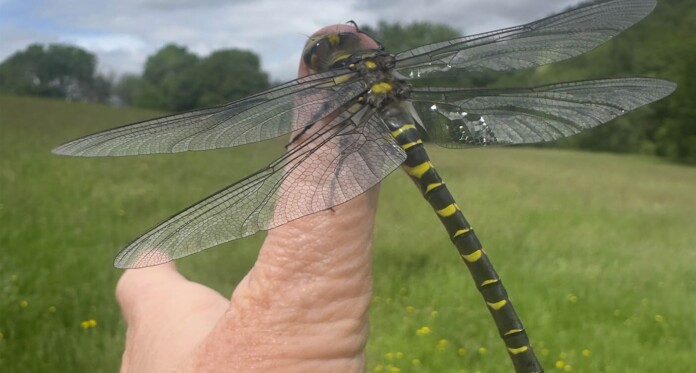

A woman was stunned when Britain’s longest dragonfly stopped to hitch a ride—on her thumb.
Sarah Hawkes came across the striking Golden-Ringed Dragonfly when walking near the Ceiriog River in Wales.
The insects can grow up to 4 inches (9cm) with a wingspan just as long.
Sarah, who happens to be a conservation officer of Buglife Wales, called the spectacular sighting a “gorgeous girl”.
“They are found mainly in Wales, Scotland and North West England because that is where their special habitat is found.
“They breed in the more acidic rivers and streams coming off peat and crossing sandy soils and rock types.”
“I was walking near the Ceiriog River in Wales, which tumbles down from the Berwyn Hills, and saw her clinging to a grass stem by a hedgerow.
“My dog and I go out early, so it was cool, and insects rely heavily on external heating from the sun, so she was still a bit lethargic—like me when I wake up!”


WHAT A MOMENT: Magical Footage Shows Stag Strolling up to Lick a Man’s Camera Then Calmly Walking Away – WATCH
“The Dee River Catchment, which the Ceiriog is part of, is in one of Britain’s ‘Important Insect Areas’ where there are some really special insects.”
The golden-ringed dragonfly can be seen on the wing from May to September, explained North Wales Wildlife Trust.
Despite their dainty wings, the dragonflies are voracious predators, feeding on large insects, like wasps, beetles, and bumblebees—and even other dragonflies.
They are fast, agile and powerful flyers, too. And even their larvae nymph-phase is menacing to other creatures.

“The larvae of the golden-ringed dragonfly live buried at the bottom of streams, ambushing prey as it passes by.
“They grow very slowly and may spend as long as five years in the water before they emerge to turn into a dragonfly.”
MORE NATURE FUN:
• Bird Snuggles into Photographer’s Chest And Stayed With Her for Warmth on a Snowy Day (LOOK)
• Comedy Wildlife Contest Unveils Wonderful Photos to Make Everyone Smile
EDUCATE AND DELIGHT Your Nature-Loving Friends By Sharing This on Social Media…
“Love and fear. Everything the father of a family says inspires one or the other.” – Joseph Joubert (Happy Father’s Day)

Quote of the Day: “Love and fear. Everything the father of a family says inspires one or the other.” – Joseph Joubert (Happy Father’s Day)
Photo by: Getty Images For Unsplash+
With a new inspirational quote every day, atop the perfect photo—collected and archived on our Quotes page—why not bookmark GNN.org for a daily uplift?

Good News in History, June 21
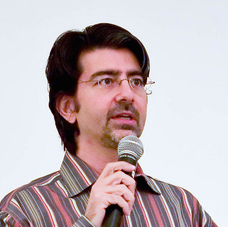
Happy 59th Birthday to eBay founder Pierre Omidyar. The computer geek entrepreneur became a billionaire at age 31 when the company’s stock was offered for sale to the public three years after the first eBay auction in 1995. READ more about Omidyar and his activities… (1967)
Thawing Permafrost Not Only Emits CO2, It Absorbs it Too, Shows Landmark Study
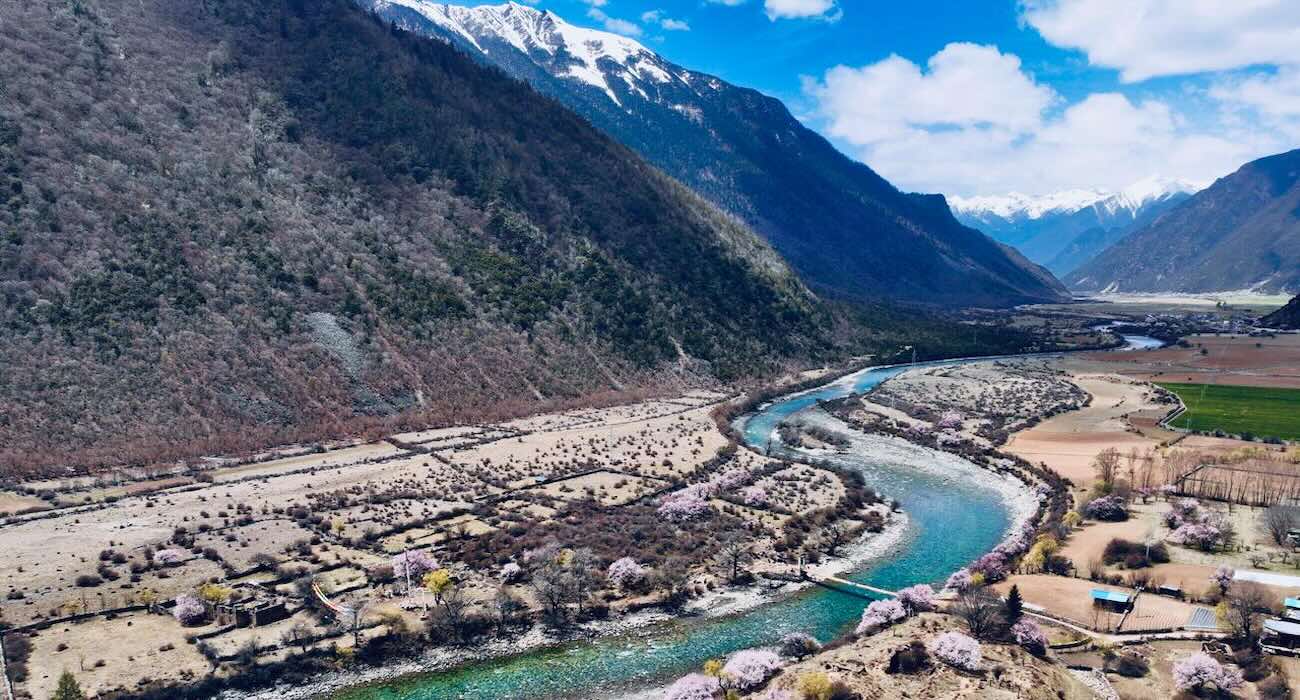
Thawing permafrost is considered a growing source of greenhouse gases as our climate warms and releases ancient carbon once stored in the frozen soils.
But a new study reveals an overlooked plus side: the process will also trigger a removal of emissions from the atmosphere as the landscape thaws.
The research, published in the journal Nature, shows that rock weathering increasingly counteracts river CO2 emissions, as permafrost degrades.
Rivers may develop a capacity to remove CO2 through intensified rock weathering. Researchers found that warming and permafrost degradation expose reactive minerals and increase water–rock interactions, accelerating chemical weathering processes that consume CO2.
In some river catchments, this geological carbon uptake is partially or even fully offsetting river CO2 emissions.
The research team from Umeå University in Sweden and East China Normal University investigated 50 rivers across the Qinghai–Tibet Plateau to understand how thawing permafrost reshapes carbon cycling. Outside of polar regions, the Plateau in southwestern China is Earth’s largest high-altitude cryosphere (areas with snow or ice year round). It’s often called “the Roof of the World”.
By combining measurements of river CO2 emissions, dissolved carbon, isotopic tracers, and geochemical modeling, the researchers found evidence that thawing landscapes intensify chemical weathering, transferring carbon into dissolved inorganic forms while consuming atmospheric CO2.
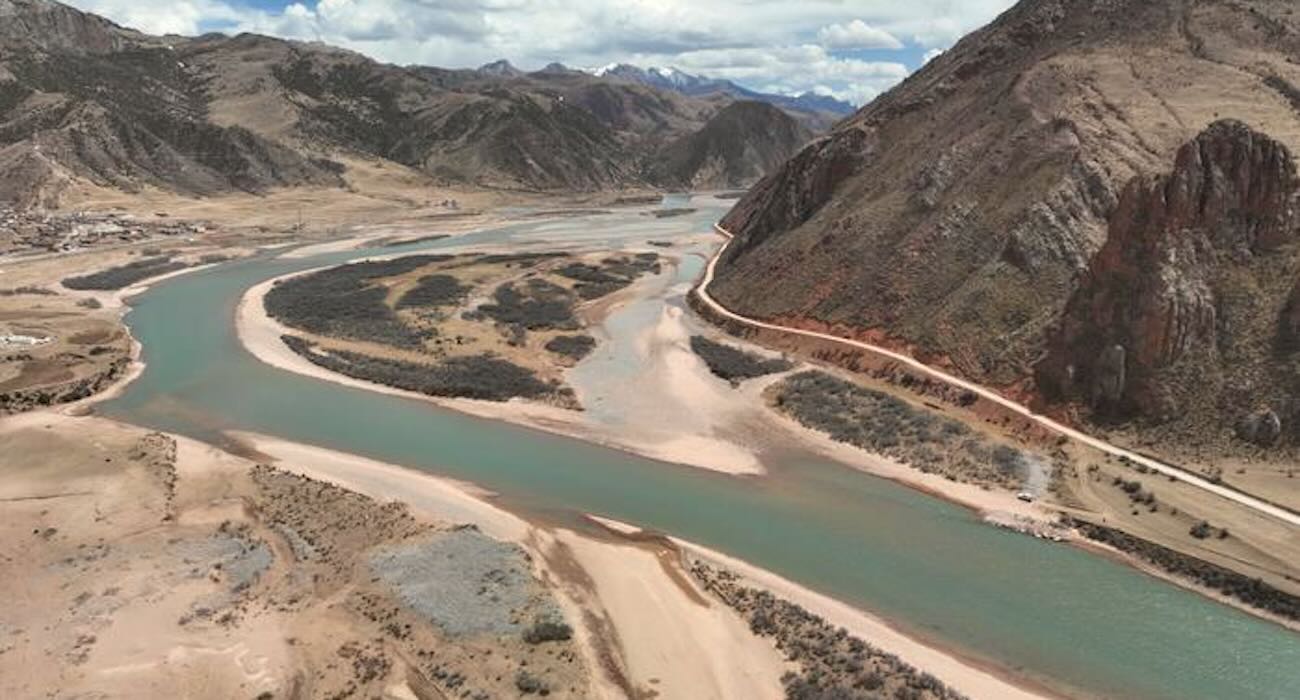
Carbon uptake can even exceed emissions
“We found that river CO2 emissions decline while carbon uptake through rock weathering increases as permafrost cover decreases,” said Liwei Zhang, biogeochemist at East China Normal University.
“In some catchments where permafrost has become patchier, weathering-driven carbon uptake was large enough to offset or even exceed river CO2 emissions.”
Across the study region, the team estimated that, on average carbon uptake from rock weathering offsets roughly 35% of river CO2 emissions.
However, in landscapes with discontinuous or isolated permafrost, weathering-driven carbon uptake sometimes exceeded 100 percent of river CO2 emissions, suggesting that geological carbon uptake can rival biological carbon release.
The findings challenge a simplified view of thawing permafrost as only a carbon source.
MORE CLIMATE GOOD NEWS:
• Polar Bears are in Better Physical Shape than 25 Years Ago, Despite Ice Losses
• One Glacier Is Actually Growing–Perplexed Scientists Hope to Discover its Secrets
• Pumping Water Onto Sea Ice Could Halt its Loss in the Arctic—Nonprofit Proves ‘Naive’ Idea Plausible
As frozen soils thaw, rivers receive large inputs of ancient organic carbon that microbes convert into greenhouse gases released to the atmosphere. But the new research suggests that geological processes operating alongside biological ones may partly counterbalance these emissions.
The researchers argue that future climate assessments should move beyond a sole focus on biological driven carbon emissions and, instead, incorporate geological carbon sources and sinks that emerge as frozen landscapes thaw.
SEND THE UNIQUE CLIMATE NEWS to Friends on Social Media…
Quarter Million N95 Respirators Headed to DRC as California Group Eases Ebola Strain on Health System


A California relief organization is sending more than a quarter million N95 respirators to help protect health workers on the front lines of the Ebola outbreak in the Democratic Republic of Congo.
Responding to widespread PPE shortages, the aid package, which also includes eye protection and protective coveralls—all donated by 3M—is the largest announced shipment of N95s to date in response to the Ebola crisis.
The nonprofit Direct Relief, now in its 69th year, shipped the aid from its warehouse in Santa Barbara headed for Bunia, in the eastern region where the outbreak is centered.
Friday’s shipment also contained essential drugs—including antibiotics, deworming treatments, medications for cardiovascular disease and diabetes, gastrointestinal drugs, oral rehydration salts, and water purification supplies—to ensure primary care continues unhindered by the current public health emergency.
“An effective Ebola response has to do two things at once: contain the virus, and help the broader health system keep functioning,” said Dr. Jeffrey Samuel, a clinical pharmacist and Direct Relief’s regional director for Africa.
In addition to deaths from the Ebola outbreak itself, many die from loss of access to primary medical care. For instance, during the 2014 Ebola crisis in West Africa, more than 10,000 people died from malaria, HIV/AIDS, and tuberculosis because clinics shut down, people stopped seeking care out of fear, and health systems buckled under the strain.
That death toll nearly matched the 11,325 lives Ebola itself claimed in the outbreak.
“That is why Direct Relief is delivering not only PPE and supportive care medicines for Ebola, but also medicines and supplies that help partners continue primary care, chronic disease care, maternal health services, and other essential healthcare during the outbreak.”

Since May, Direct Relief has shipped more than $10 million in medicine and medical supplies to DRC to treat patients, help protect health workers, and limit the spread of the disease.
They partner with VillageReach, a global health nonprofit working across Africa to transform health care delivery to reach everyone. VillageReach will coordinate the distribution with DRC’s Ministry of Public Health to ensure these critical resources reach frontline health workers wherever they are.
VillageReach will train and mobilize 600 community health workers and facilitators for early case detection and contact tracing, strengthen diagnostics through secure transport of lab samples, maintain routine immunization services, and combat misinformation about treatment.
“The arrival of this PPE is critical to protecting frontline health workers and stopping the spread of Ebola,” said VillageReach’s DRC Country Director Freddy Nkosi. “Working alongside the Ministry of Health, and with support from Direct Relief, VillageReach is helping ensure these supplies reach the last mile — so health workers can safely continue providing essential care to their communities.”
Since 2023, Direct Relief has provided $17.5 million in medical support for diabetes care in DRC, including insulin, needles, test strips, and refrigerators for cold storage of temperature-sensitive medications.
CARING COMPASSION: 6,500 Volunteers Build 10,000 Beds in 24 Hours for Kids Who Don’t Have One of Their Own (WATCH)
Headquartered in Santa Barbara, Direct Relief has quite an origin story:
William Zimdin, a wealthy Estonian businessman who had to flee Nazi Fascism in Europe, settled in the coastal California town in 1945, and began using his fortune to mail thousands of relief parcels containing food, clothing, and medicine to refugees and displaced people rebuilding their lives in postwar Europe.
He established the William Zimdin Foundation in 1948 and following his death three years later (obit below), his friend Dezso—a Hungarian wartime refugee whom Zimdin had helped rescue—took over management. Mr. Karczag expanded the mission globally and renamed the charity the Direct Relief Foundation in 1957.
NEIGHBORS WHO LOVE YOU: Waitress Has Fed 270,000 Meals to Homeless Floridians Thanks to a Family That Gives Their All

Since then, it’s consistently earned a perfect four-star rating from Charity Navigator and a perfect fundraising efficiency score from Forbes magazine.
According to its website, Direct Relief serves people affected by poverty or disasters across all 50 states and in more than 90 countries “without regard to politics, religion, or ability to pay”.
INSPIRE SOME GIVING By Sharing the Inspiring News on Social Media…
Thousands of Flamingo Chicks Hatch in Major Comeback From Climate Disaster in Turkiye (WATCH)
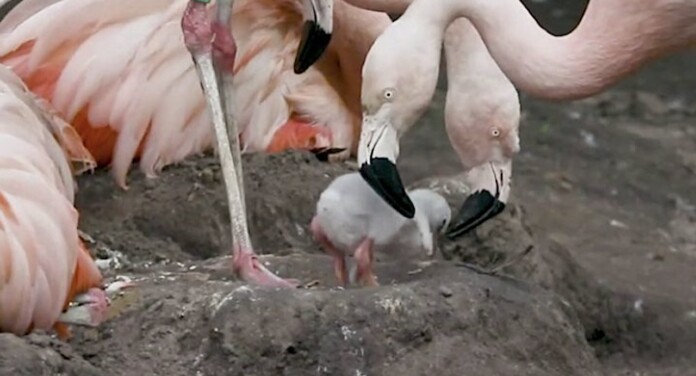
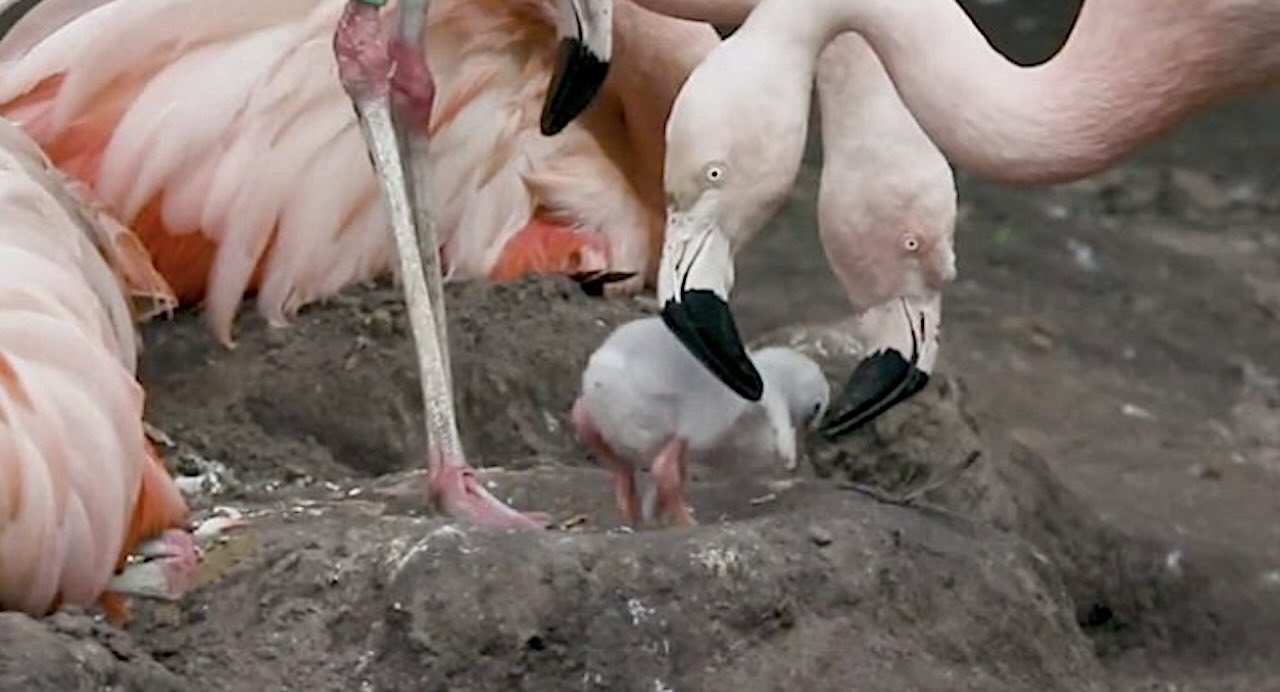
In a triumph for conservation, thousands of flamingo chicks have hatched at one of the world’s key flamingo breeding grounds—a salt lake that had nearly dried up five years ago.
Lake Tuz, once the second-largest lake in Turkiye (Turkey), faced desiccation due to high temperatures and a lack of rainfall which led to the deaths of thousands of greater flamingo hatchlings in 2021.
But after a number of initiatives to save the “climate change hotspot” located in the Central Anatolia plateau, the lake is now hosting a new generation of chicks.
Drone footage from June 10th shows about 5,000 of the young birds protected by their parents, learning essential survival skills like feeding and avoiding potential threats in their natural habitat. (See the video below…)
One of Turkiye’s most important wetlands, Lake Tuz (salt in Turkish) draws nature enthusiasts and wildlife photographers from around the world to witness the lake’s seasonal color changes and to steep in the mineral rich water, mud, and salt.
“We will more than compensate for the losses of previous years by raising the population with these chicks during the season,” said Fahri Tunç, President of the Bird’s Eye View and Ecology Association.
“This is great news.
“The current number is more than double that of last year, which was more than double that of the year before,” Tunç told Turkiye’s news outlet DHA.
NASA reported in 2021 that the Mediterranean Basin where the lake is located, is a climate change hotspot because it has warmed at a greater rate since the pre-industrial period compared to the global average.
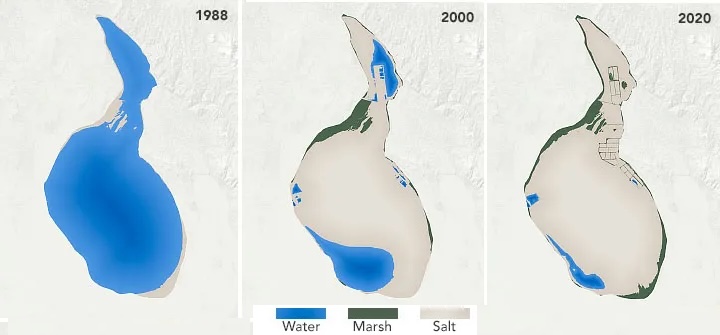
Satellite images showed the lake was almost completely drying up, threatening wildlife that relies on the algae food source and nesting habitat.
RELATED GOOD NEWS: Iconic Pink Flamingos Are Coming Back and Standing Tall in Florida
The lake, which has no outlet, is fed by groundwater that originates in the northern mountains, by two major streams, and rain that primarily falls in the springtime.
In 1988 water spanned 98% of the lake bed, according to findings published in Regional Environmental Change. But at the start of 2001 only 20% was covered with water and, in 2016, the lakebed was dry. The same happened in 2021, which caused the mass death of young flamingos.
The following year, Turkiye’s general directorate for the protection of natural assets launched a water supply project on the lake, which is 90 miles southeast of Ankara, the country’s capital.
Designed to protect new nestlings, it pumps water into the areas of the wetlands where the chicks nest.
In 2024, the project saw a huge success with no mass deaths of flamingo chicks reported—and this year’s success has wildlife conservationists, like Tunç hoping for a similar outcome this year.
ANOTHER FLY-AWAY SUCCESS: Bald Ibis ‘the Herald of Spring’ Saved from Extinction in Turkey Thanks to Semi-Wild Breeding
Watch the video from Anadolu, the state-run news outlet…
SHARE THE GREAT NEWS With Bird Lovers on Social Media…
Your Weekly Horoscope – ‘Free Will Astrology’ by Rob Brezsny

Our partner Rob Brezsny, whose latest book is Astrology Is Real: Revelations from My Life as an Oracle, provides his weekly wisdom to enlighten our thinking and motivate our mood. Rob’s Free Will Astrology, is a syndicated weekly column appearing in over a hundred publications. He is also the author of Pronoia Is the Antidote for Paranoia: How All of Creation Is Conspiring To Shower You with Blessings. (A free preview of the book is available here.)
Here is your weekly horoscope…

FREE WILL ASTROLOGY – Week of June 20, 2026
Copyright by Rob Brezsny, FreeWillAstrology.com

GEMINI (May 21-June 20):
Eastern monarch butterflies migrate annually from the American Midwest to central Mexico. The individuals who start the journey from Nebraska or Wisconsin die long before they reach the oyamel fir trees of Mexico. So do their children and their grandchildren. Their great-grandchildren finish the trip, though they have never been to the destination. Somehow they know where to go, navigating thousands of miles to trees they’ve never seen. Let’s apply this as a metaphor for you, Gemini. I suspect you are carrying navigational wisdom you didn’t realize you possessed. Inherited knowledge, encoded deep in your secret places, is ready to guide you. So pay attention to inexplicable certainties. Trust the directions that arrive without logical explanation.

CANCER (June 21-July 22):
A large earthquake doesn’t relieve stress evenly along a fault. Instead, it creates zones where stress is reduced and others where stress increases, making future ruptures more likely. So the stress is redistributed, but not uniformly. According to my reading of the omens, Cancerian, you recently experienced a metaphorical shake-up. I suggest you identify where stress has grown and where it has dissipated. Your next moves should account for this new distribution of pressure. Some areas of your life are now more vulnerable, while others have become more stable. Read the landscape accurately before proceeding.

LEO (July 23-Aug. 22):
Songbirds like zebra finches practice their melodies while asleep. Their vocal muscles move in ways that mirror daytime singing. These replay patterns help young birds learn their songs and adults maintain and refine their tunes over time. I suspect that you are engaged in a similar type of learning, Leo. You are enhancing skills and uncovering insights while asleep and dreaming. Bonus! Even when awake, you’re absorbing clues on a subconscious level. Your deeper intelligence is gathering information you will need for your upcoming breakthroughs. Hooray for mysterious help!

VIRGO (Aug. 23-Sept. 22):
Architects who design concert halls know that perfect sound isn’t achieved through perfect smoothness. The best acoustics come from strategic irregularities, textured walls, and angled surfaces that distribute vibrations in pleasing ways. Too much uniformity creates dead zones and echoes; too much chaos creates muddle. Pleasing resonance arises from organized complexity. In my estimation, Virgo, your life is currently too smooth in some areas and too haphazard in others. You may need more strategic irregularity. Consider introducing productive unpredictability into relationships that have become too routine. Add inventive structure to efforts that have become shapeless. Don’t aim for either total order or complete randomness. What will generate maximum beauty?

LIBRA (Sept. 23-Oct. 22):
Have you ever been ambushed by unexpected bursts of gratification emerging from subtle miracles? Maybe a loved one finally grasps a truth you’ve been trying to convey for eons. Or you feel balanced in a situation that once made you feel lopsided. Or you grasp, with shivers of awe, that you got uncanny spiritual guidance at a key crossroads. I foresee at least three such blessings for you in the coming weeks. To ensure you recognize them, don’t get distracted in the pursuit of splashy bonanzas and gaudy prizes. Be nimbly alert for subtle breakthroughs.

SCORPIO (Oct. 23-Nov. 21):
Poet Emily Dickinson rarely left her family home but bequeathed us a marvelous body of lyrical work as she roamed through vast inner worlds. Sci-fi novelist Octavia Butler rose early to write before long shifts at low‑paid jobs, imagining visionary futures during her limited hours to be creative. Lucille Clifton raised six children while shaping poems of distilled, luminous insight, showing us how to summon fierce originality from a life crowded with responsibilities. Moral of the story: Buoyant power can flourish even when circumstances are limited. This lesson may be relevant for you in the coming weeks. If conditions seem imperfect or incomplete, trust that your resilience and adaptability can compensate for external obstacles. I have faith in your ability to generate useful beauty.

SAGITTARIUS (Nov. 22-Dec. 21):
Our tongues are primed to heal astonishingly fast thanks to dense blood vessels, saliva’s repair proteins, and a rapid immune response. Wounds that would take more patience elsewhere can heal here in days. I suspect that your psyche now possesses your tongue’s high level of healing power. So I hope you will launch a phase of accelerated repair. Call on every possible form of therapeutic assistance, please!

CAPRICORN (Dec. 22-Jan. 19):
Now is an ideal time to clear out old romantic karma from the past. Please consider performing a DIY ritual to release painful memories, leftover grudges, and long-standing hurts that keep tugging at your intimate connections. The coming weeks will also be a favorable phase to discard rigid beliefs about gender and dismantle anything that blocks you from experiencing full-bodied sensual and sexual delight. Expect to be freed from at least some energies that have limited your ability to explore fun and vigorous ways of savoring your desires.

AQUARIUS (Jan. 20-Feb. 18):
I suggest you adopt a new honorary title like “Charm Weaver” or “Emissary of Radiance” or “Beauty Whisperer.” Why? Because I hope it will help inspire you to stir up delightful play and lyrical mystery wherever you wander. For instance: Infuse your conversations with sparkling harmony and sly, graceful humor. Burst into whimsical songs, fling out extravagant compliments, pose clever questions that spark fresh ideas, and call attention to systems and relationships in your world that are functioning wonderfully well. Many perks will flow your way as you do.

PISCES (Feb. 19-March 20):
Is there a dream from childhood that you’re ready to revive on a higher octave? Think of something you longed for before the world told you to be boringly realistic: an art you wanted to practice, a way you wanted to live, or the kind of person you hoped to become. The question isn’t “Can I go back and do it exactly the same?” but “What is the mature, wiser, present-day version of that dream?” You might write in your journal: “The childhood dream I’m ready to lift to a higher octave is ______,” and then add, “If I took one concrete step toward it, what would it be?”

ARIES (March 21-April 19):
Aries mathematician Paul Erdos lived without a permanent address, traveling the world to collaborate with other mathematicians. He owned little, claiming “property is a nuisance.” His life was structured around doing mathematics and helping others do mathematics. He published over 1,500 papers, more than any mathematician in history. Was his minimalism a form of deprivation? I prefer to think it was liberation from everything that didn’t serve his purpose. What would your life be like if you eliminated things that don’t serve your deepest purposes, Aries? In the coming weeks, you have permission to be ruthless about your priorities. What are you maintaining out of habit rather than conviction? What burdens masquerade as responsibilities?

TAURUS (April 20-May 20):
A friend told me about the creative writing class he took with renowned poet Brenda Hillman. “I recall being in class,” he says, “and having the thought, wow, this teacher works far harder at teaching than I do at learning.” Dear Taurus, please don’t indulge in a similar laziness anytime soon. Your educational opportunities are currently richer than usual. To extract the full benefit, you must match the verve and vigor of your teachers. (PS: The teachers may or may not think of themselves as teachers. They could even be animals, rainstorms, or ancestors.)
WANT MORE? Listen to Rob’s EXPANDED AUDIO HOROSCOPES, 4-5 minute meditations on the current state of your destiny — or subscribe to his unique daily text message service at: RealAstrology.com
(Zodiac images by Numerologysign.com, CC license)
SHARE The Wisdom With Friends Who Are Stars in Your Life on Social Media…
“We do not remember days, we remember moments.” – Cesare Pavese
Quote of the Day: “We do not remember days, we remember moments.” – Cesare Pavese
Photo by: Anne Nygård
With a new inspirational quote every day, atop the perfect photo—collected and archived on our Quotes page—why not bookmark GNN.org for a daily uplift?

Good News in History, June 20

31 years years ago today, Greenpeace activists bolstered by international pressure forced Shell Oil of the UK into a dramatic reversal of its decision to dispose of a massive oil rig by submerging it beneath the sea. READ what happened then… (1995)
World’s Largest ‘Whale Graveyard’ Teems with Deep-Sea Life Including Species Unknown to Science
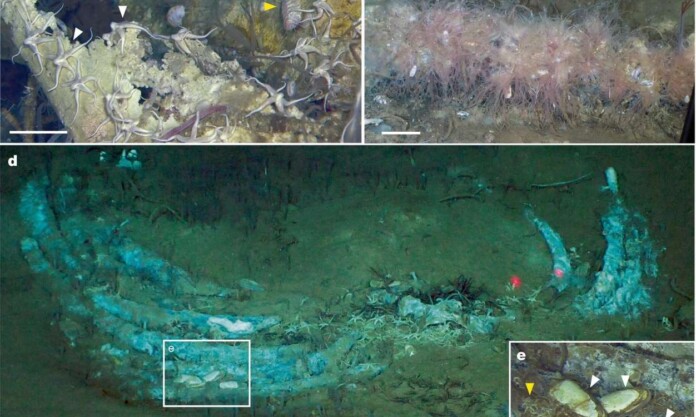
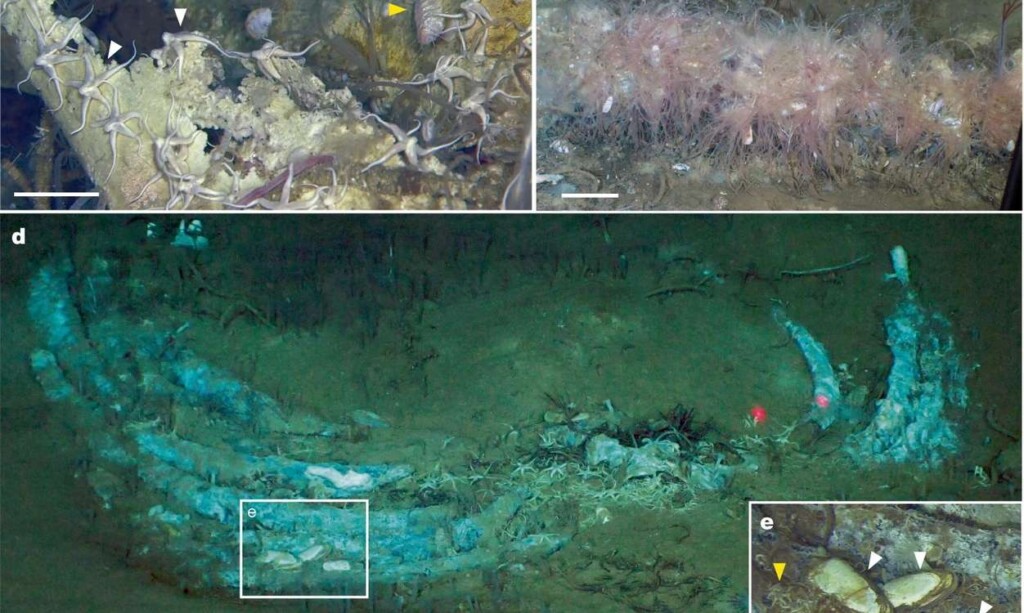
Chinese scientists have discovered the world’s largest “whale graveyard” in a trench deep below the Indian Ocean—and it teems with life.
Bivalves, brittle stars, different kinds of worms, and jellyfish—many of which may be new to science, thrived in what the scientists suggested might have acted as an “evolutionary hotspot.”
Since the phenomenon of “whale falls” was first discovered in the 1980s, it’s quickly become apparent that for dozens if not hundreds of deep-sea-dwelling species, the carcasses of whales that sink to the seafloor are the most important of lifelines.
Rich foraging habitat or other areas where whales congregate may also harbor so-called ‘whale graveyards—areas of sea where many whale falls can be found.
But nothing could have prepared Xiaotong Peng, Peng Zhou, and their co-authors for what they would find during submersible dives to the Diamantina Fracture Zone, 20,000 feet below the surface.
They had suspected to find whale remains, but admitted to AFP that it was more than they could have ever imagined.
“Discovering a necropolis of this scale was completely unexpected: the size of distribution, the depth and the age range were far beyond anything we had imagined,” Xiaotong Peng said.
They recorded almost 500 different skeletons and used a robotic arm on their submersible to bring some 485 individual bones—including fossils some 5.3 million years old—back to the research vessel. The team’s estimations suggest there may be 10 million dead whales across a 660-mile-long area, most of them various species of beaked whale.
Andrew’s beaked-whale and the strap-toothed whale are known to inhabit the southern Indian Ocean today, while an Antarctic minke whale was also identified. Two known but extinct species Pterocetus and Izikoziphius were identified via their skulls.
ALSO CHECK OUT: Another Trawling Ban, Another Big Recovery for Sea Life
A fossilized sei whale, alive today, was also found, as well as several unidentified bones—perhaps from undiscovered species.
Around these were thousands of sea creatures, some of them known to live around hydrothermal vents in other deep sea zones. That spawned the hypothesis that a whale carcass and a hydrothermal vent may be offering these simple organisms a similar bounty of sustenance, one which the sea life cannot do without, but both of which they can exploit equally well.
UNDERSEA WONDERS: 24 New Species Including a New Family of Amphipods Identified in Deep Sea Survey
“The vibrant ecosystems we saw offered a completely different perspective on this otherwise dark and cold ocean floor,” said co-author Zhou.
“The results support the hypothesis that deep-sea whale falls act as evolutionary hotspots and biogeographic stepping stones for sulfide-dependent fauna in the deep ocean,” the study’s authors write.
SHARE This Incredible Discovery Deep Below The Indian Ocean…