Quote of the Day: “Ninety-nine percent of the failures come from people who have the habit of making excuses.” – George Washington Carver
Photo by: Getty Images for Unsplash+
With a new inspirational quote every day, atop the perfect photo—collected and archived on our Quotes page—why not bookmark GNN.org for a daily uplift?
29 years ago today, the first installment of the Harry Potter book series – Harry Potter and the Philosopher’s Stone, was published in the UK under Bloomsbury. It won most of the British book awards that were judged by children. The book reached the top of the New York Times list of best-selling fiction in August 1999 and stayed near the top of that list for much of 1999 and 2000. It has been translated into at least 73 other languages, and sold 120 million copies, making it the third best-selling book of all time.READ more about the book’s acclaim… (1997)
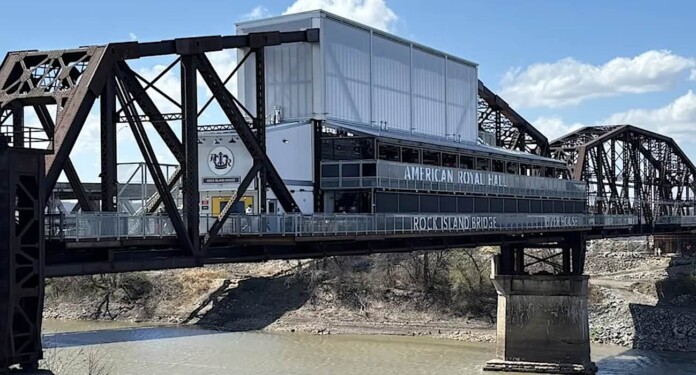
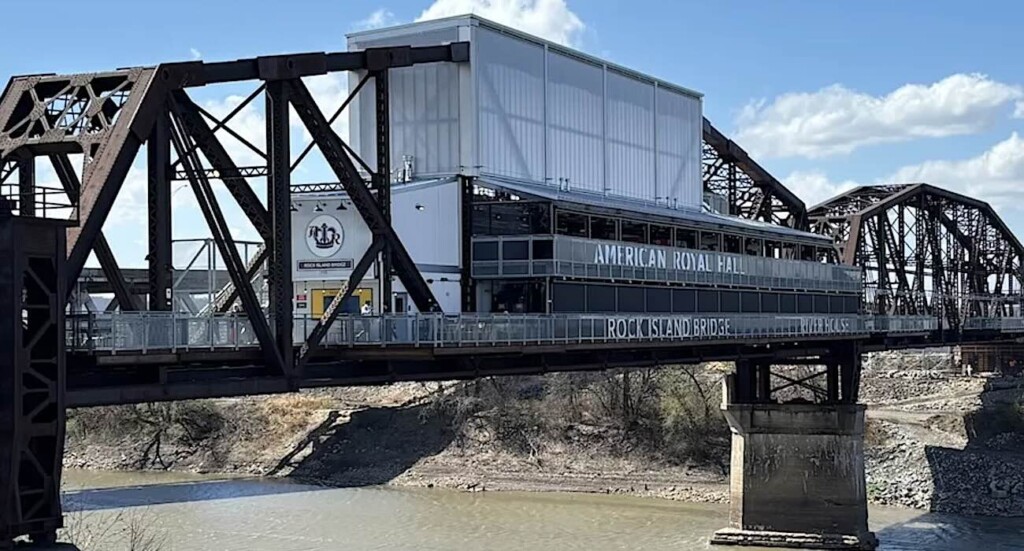
Former railroad bridge now serves as a public gathering space over the Kansas River – Credit: Thornton Tomasetti
Former railroad bridge now serves as a public gathering space over the Kansas River – Credit: Thornton Tomasetti
GNN has previously reported on heritage American architecture finding new life as hospitality and entertainment centers.
On the Kansas River, a 120-year-old railroad bridge has been infused with the labor and love of both states the trains used to pass through, and has been resurrected into a restaurant and event space plus walking path.
The Rock Island Bridge opened this April, with a full opening of all areas slated for mid-summer. Its CEO, Mike Zeller, holds a 66-year lease on the structure received from the united authority of Wyandotte County Kansas and Kansas City Missouri.
Zeller was the “band leader” behind the project, which started on a boat trip up the Kansas where he passed the old rail bridge which seemed like others he remembered loitering on as a young man; an object that something should be done with
10 years later, in 2017 he founded the company that would lead the bridge’s renovation: Flying Truss LLC, which after several years of begging, pitching, and brainstorming, managed to coalesce a coalition which Zeller called a “P6 approach” for public-private-philanthropy-people-purpose-process.
Speaking with Engineering News Record, Zeller said that some 35 local businesses donated materials and labor for the job—everything from the big neon entrance sign made by Hammer Out Design, to a local legal firm which worked pro bono for 7 years.
Many ideas were floated out, from being entirely a part of the city’s burgeoning trail network to a place were food vendors would work out of shipping containers. Eventually it was agreed that there’d be a two-story restaurant, an event venue, and an open-air space that would connect with the levee-top trails being built by Kansas and Missouri governments—costing $16 million.
A pretty standard rail crossing, the Rock Island Bridge was about 18-feet wide and utilized 3 steel trusses built by Andrew Carnegie’s steel firm. Trusses are those cage-like structures that sit atop flat river bridges to add stability.
After structural analysis found the bridge able to support 3.16 million pounds before any elements were removed, such as the old rail track and concrete, primary contractor. L.G. Barcus and Sons, Inc. determined that not much needed to be done to the original components. A few bolts needed to be replaced and some rust addressed, but that was it.
For the new structure, 15-foot cantilevers would support a wrap-around deck for restaurant space. Intriguing challenges awaited Barcus, such as what would happen if everyone moved to one side of the bridge to watch fireworks, and how to fit the second and first stories of the restaurant under the 300-foot-long central truss without covering them up.
As far as the trusses were concerned, existing machinery called lift gates had been well maintained, and Barcus was the original contractor on a 1952 project to raise the trusses to meet the heights of newly-built levees following a flood. With nothing more than a new motor and new grease, not only could the trusses be raised to accommodate the second story of the restaurant, but to satisfy the US Army Corps of Engineers’ standards for both a 750-year flood and the levees they were building along the Kansas River.
All the new support steel and cantilevers added up to around 680,000 pounds—well within the weight constraints.
Opened in April, it’s already one of the highlights of the city’s many venues. The truss beams occasionally plunge right through the walkway—even the tables, but they transmute the charm of the old architecture into the place—just like the steel railroad track acting as the footrests along the restaurant’s bar.
At the conclusion of the project, the cost was a mere $20 million, funded through a mixture of private investment (60%) public funding and grants (30%) and philanthropic donations (10%), which Zeller said had helped “create something spectacular for Kansas City that our kids and our grandkids are going to enjoy,” … “a gift from about 200 Kansas Citians to our city.”
Kansas City Magazine, attending the opener, wrote that Rock Island Bridge is free to enter and walk across, “and Zeller says visitors can also expect fun events, from farmers markets and live musicians to ticketed concerts and more.”
SHARE This Amazing American Renovation With Your Friends On Socials…
The world-famous Musée d’Orsay has opened the doors to a very unique gallery—its dream would be to get rid of all the paintings inside.
That’s because it exhibits a rotating selection of 225 works that were stolen when the Nazis occupied Paris during the Second World War. Currently 12 paintings, including works by Renoir and Degas, and a sculpture from Rodin are on display.
To Whom Do These Belong is part of the museum’s efforts to reckon with the city’s past, and, if at all possible, to find the rightful inheritors of these masterworks.
Though the north of France resisted Nazi occupation, the south, governed by the Vichy regime, collaborated with the Germans including in carrying out the Holocaust.
By the end of the conflict, over 100,000 items of cultural property had been looted. Some 60,000 works were recovered in Germany and Austria after the war; many of them had been sold on the art market and were easily traceable. 45,000 were restituted, while 15,000 went without identified owners according to a statement from the museum.
Most of these 15,000 were sold by France in the early 1950s, except for 2,200 of them, which were selected to be entrusted to the custody of various museums. Today, the museums are “duty-bound” to keep them in trust of their original owners and to investigate the provenance of their arrival in state hands.
Over the last thirty years, 15 of these works conserved at the Musée d’Orsay have been returned to their rightful owners. 225 others remain because of uncertain origin, and in a few case because it has been established that they were not stolen or plundered.
“The opening of this room on the permanent itinerary enables rotating exhibition with a view to providing a glimpse of the investigative work underway. A selection of 13 works is currently on exhibition there, highlighting the legacy’s complexity and the issues involved in it,” the statement read.
“Suspended between past and present, each of them testifies to ongoing provenance research, revealing the diversity of situations, both as regards quality and background. Others are on display in the Museum and are now identifiable by their special (purple) labels, or are on long-term loan to many other French museums.”
CNN spoke with a British man of German origin whose family inheritance was looted by the Nazis. He, like other individuals highlighted in the Musée d’Orsay, has worked for years to establish clear evidence for the return of his family’s stolen property—some of it identified in German museums.
“I think it’s great that its [the looted works] going on display and it’s going to be an actual room set aside for art that is stolen,” said the man, named Antony Easton.
The established facts accompany each work, including when it was sold in France, where it was brought in the Third Reich, and who painted it, but the key part—who owned it—is unknown for each of the 13 exhibited works apart from one.
That one is Le Souper au Bal (The Supper at Ball) by Edgar Degas and was acquired in 1919 by the Jewish collector Fernand Ochsé, who went on to be deported and murdered in Auschwitz. 22 years later, it arrived in Germany at the Brame gallery via a Mr. M. Coutot. It’s unknown if anyone from Ochsé’s family or extended family lives or was aware he owned the piece.
SHARE This Inspiring Work In The Famous French Museum With Your Friends…
The largest renewable energy infrastructure project in US history is fully operational.
The SunZia project is expected to generate and deliver more power than the Hoover Dam and be a reliable energy to the western United States for the next 30 years.
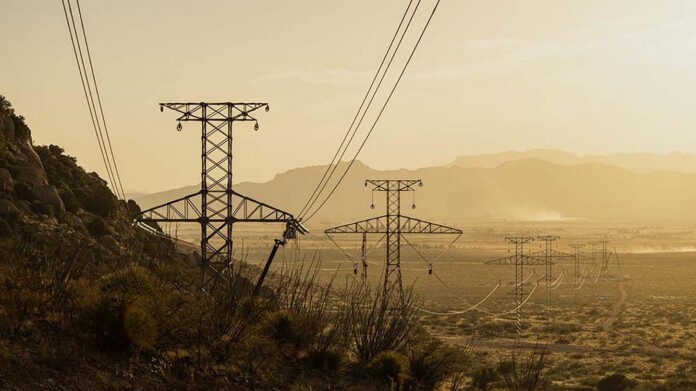
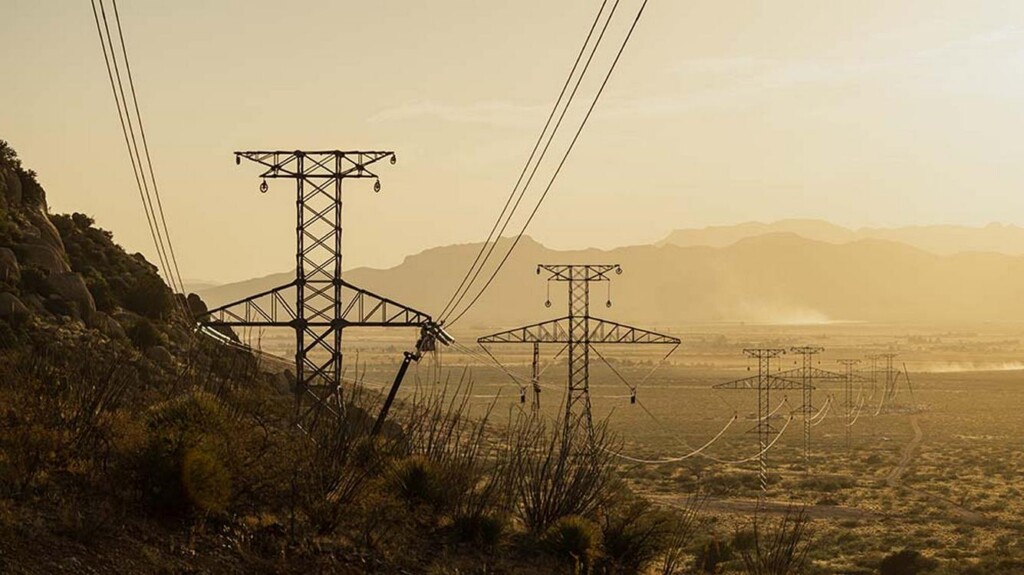
The approximately 3,650-megawatt (MW) wind project and 550-mile high-voltage direct current (HVDC) transmission line that comprise SunZia generate power in New Mexico to Arizona and deliver it to customers across the western grid.
At full capacity, the project can deliver enough energy to power approximately one million American homes annually.
The wind turbines are located between Torrance and Lincoln counties in New Mexico, while the transmission line runs to a station in Pinal County just south of Phoenix.
At the center of that solution is SunZia’s HVDC transmission system, which moves large amounts of electricity efficiently across long distances. With major converter stations at each end of the line converting power for delivery and then back for use on the grid, SunZia is deploying one of the first major HVDC systems built in the United States in a generation.
“SunZia proves that we can still build the consequential infrastructure this country needs,” said Hunter Armistead, CEO of Pattern Energy, which owns, funded, and built SunZia.
“We did this the right way, we did it on time and on budget—in genuine partnership with the local communities and landowners who trusted us, with the environmental stewardship this unique landscape deserves, and with the determination to see something through that many thought was too big and too complex to finish.”
Complexities included many, from an agreement to relocate existing mature saguaro cacti and large agave plants to building the tall HVDC towers is remote, environmentally sensitive areas supplied almost entirely by helicopter.
Construction on SunZia began in September 2023 and more than 2,000 quality jobs were supported at peak construction. The project also created more than 100 permanent operations jobs in New Mexico and Arizona.
Pattern Energy claims the facility will invest over $20 billion in New Mexico and Arizona communities including $1.3 billion in direct payments to local governments, schools, counties and private landowners over the first 30 years of operations.
“Large-scale transmission is essential to meeting the West’s growing energy needs and strengthening reliability across the grid,” said Elliot Mainzer, President and CEO of the California Independent System Operator (ISO).
“Projects of this scale help deliver energy reliably to areas of rising demand, improve the movement of power across states and support a more resilient, flexible, and affordable electric system. SunZia represents the kind of long-term infrastructure investment needed to serve customers today and prepare the grid for the future.”
RING In This Amazing Addition To The US Grid With Your Friends…
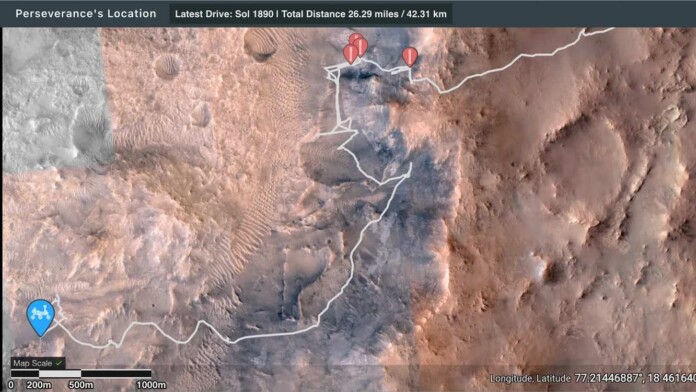
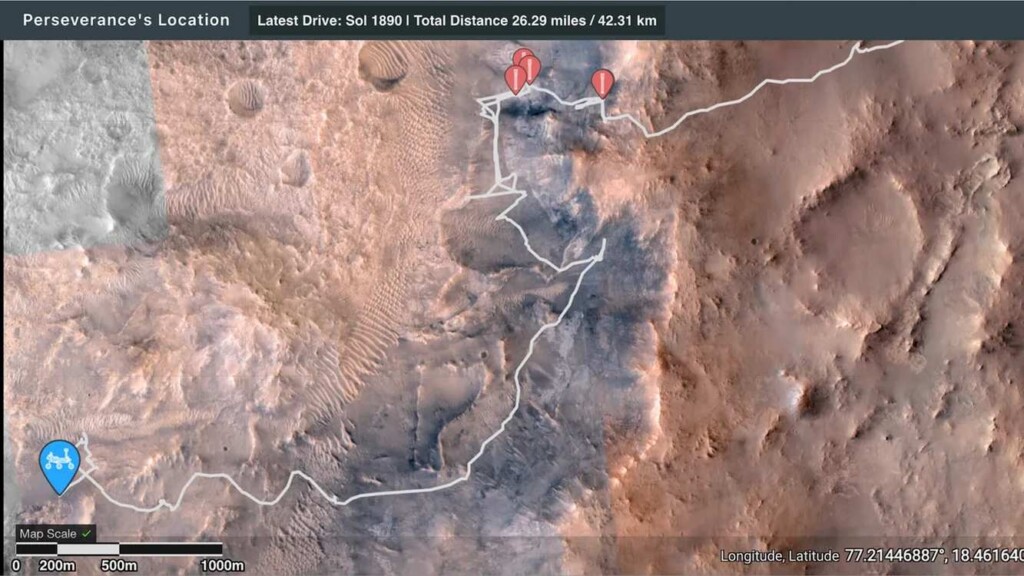
A map of the Perseverance Mars rover marathon - credit, NASA
A map of the Perseverance Mars rover marathon – credit, NASA
NASA’s Perseverance Mars rover just completed a special milestone as it recently marked 5 years on the Red Planet.
The robotic science lab has put 26.2 miles under its wheels: in other words, a marathon.
Having conducted hundreds of experiments so far, the rover’s data has already helped refine our understanding of the Martian surface, and in celebration of its marathon achievement, a summary of success is in order.
Through its drilling efforts at the bottom of Jezero Crater, where it landed, Perseverance has helped scientists confirm that the crater at some point was filled with water, leaving lake sediments at its base.
In 2022, the rover drove up from the crater floor onto the delta, a vast expanse of 3-billion-year-old sediments that, from orbit, resembles river deltas on Earth.
As the rover drove onto the delta, its Radar Imager for Mars’ Subsurface Experiment instrument (RIMFAX) fired radar waves downward at 10-centimeter intervals and measured pulses reflected from depths of about 65-feet below the surface (20 meters). With the radar, scientists can see down to the base of the sediments to reveal the top surface of the buried crater floor.
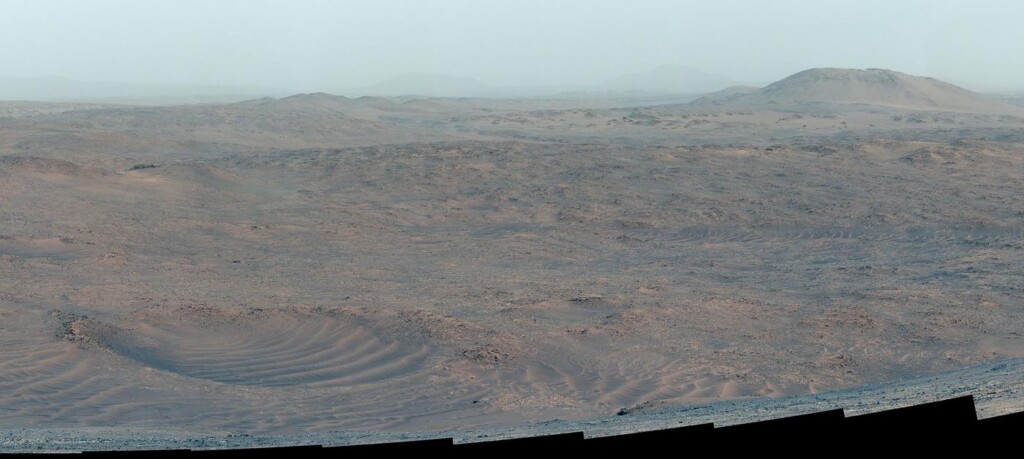
The Martian surface outside of Jezero Crater appears strikingly different compared to the sandy red bed of the crater floor – Credit NASAJPL-CaltechASUMSSS
The images showed that the sediments are regular and horizontal—just like sediments deposited in lakes on Earth.
That same year, the rover captured video footage of a Martian solar eclipse with the tiny moon Phobos. The potato-shaped sphere doesn’t block out the sun, but was still cool to watch.
Perseverance’s Mastcam-Z has a solar filter that acts like sunglasses to reduce light intensity. This allowed for unrivaled color and detail to appear in the eclipse video.
By the end of 2023, Perseverance had finished exploring Jezero crater, and began exploring the furthest reaches of the canyon where the river would have flown into the lake. Rich carbonate deposits had been spotted along the margin which stood out in orbital images.
“We picked Jezero Crater as a landing site because orbital imagery showed a delta—clear evidence that a large lake once filled the crater. A lake is a potentially habitable environment, and delta rocks are a great environment for entombing signs of ancient life as fossils in the geologic record,” said Perseverance’s project scientist, Ken Farley of Caltech.
In April 2025, Perseverance was back with its head down, studying the Martian geology at the fastest rate since the early sample gathering in Jezero.
By then it had summited the crater rim, and conducted almost 100 sampling efforts.
This included some of the earliest molten rock to form on Mars, and formerly underground boulders juxtaposed with well-preserved layered rocks and other masses that seem to have been sculpted by running water; a veritable rock bonanza that may have also included the oldest sample yet.
JPL / NASA video
As the rover passed the Marathon mark, there is still no concrete plan for how to get Perseverance’s cached samples back from Mars. The sample return mission seen as feasible when the rover launched saw its costs rise to $11 billion, prompting NASA to begin a complete overhaul of the plan and solicit new proposals from industry and academia to find a more affordable and faster way to return the samples to Earth.
NASA Administrator Jared Isaacman has floated the idea out of sending a manned mission to Mars and simply having astronauts pick them up by hand. Such a mission is an eventual goal of NASA and its sole rocket supplier SpaceX, which would like the costs of a robotic sample return mission rather redundant.
The samples were deposited in tubes of sterilized sapphire dubbed the “cleanest surfaces in the universe,” and so are therefore presumably durable enough to last a few decades provided a meteor doesn’t smash them to pieces.
WATCH the rover’s progress sped up below…
SHARE This Story With Your Friends Who Love Space…
Quote of the Day: “I love everything that’s old—old friends, old times, old manners, old books, old wine.” – Oliver Goldsmith
Photo by: mana5280
With a new inspirational quote every day, atop the perfect photo—collected and archived on our Quotes page—why not bookmark GNN.org for a daily uplift?
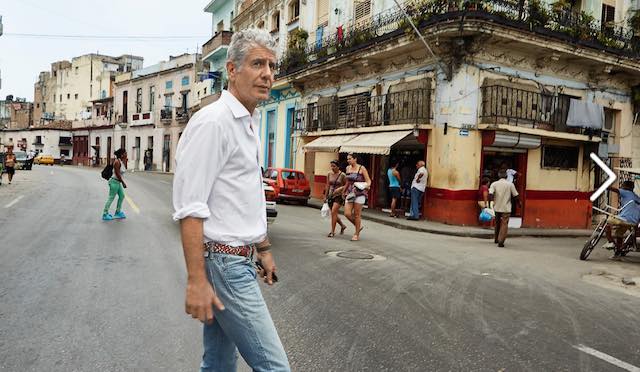
70 years ago today, the renegade travel host and chef Anthony Bourdain, was born. With his food and culture show, No Reservations, and the groundbreaking book, Kitchen Confidential: Adventures in the Culinary Underbelly, he became known as “the culinary bad boy”. The pair catapulted him to stardom, resulting Parts Unknown, the definitive American travel program on basic cable. It ran for over 60 episodes before being interrupted tragically by Bourdain’s death by suicide. READ more… (1956)
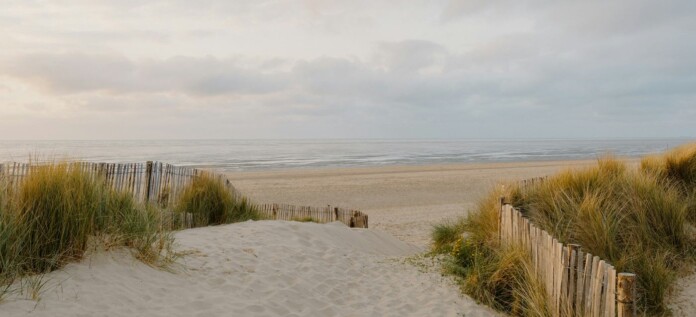
LA County used to be covered in vegetated dunes like these - credit, Annie Spratt, unsplash
LA County used to be covered in vegetated dunes like these – credit, Annie Spratt, unsplash
A group in Los Angeles is ensuring that the city’s famous beaches retain enough nature to protect wildlife and the city from harsher storms.
“Your beach is still your beach, only better.” That was Tom Ford’s message to any Angelinos who might be indignant at the sight on his nonprofit staking out and roping off big squares of Santa Monica Beach sand.
It’s part of The Bay Foundation‘s effort to rebuild the ecosystems of Southern California’s dune landscapes, lost, but not forgotten.
If you’ve never seen vegetated and wild coastal sand dunes bloom in springtime, you’re missing out on exactly what Ford is describing—a better beach.
So far the Bay Foundation has helped restore 8 acres of natural dunes on the Santa Monica beaches by creating big patches of vegetated sand halfway between the ocean and the coastal road.
“The native plants provide that habitat value for native wildlife. So, if you want to have endangered El Segundo blue butterflies, you need Sea Cliff Buckwheat, which is the plant that they count on,” Ford told CBS news.
As the plants grow and take root in the sand, grains blown about by the ocean wind catch and build up on the plants. These then must grow taller, allowing for more surface area, more sand, and higher dunes.
Higher vegetated dunes can reduce the impact of storm surges by absorbing wave energy, slowing erosion, and protecting coastal real estate. Early response to the 8 natural acres has been positive, and the Coastal Commission has permitted an additional 30 acres of natural dune creation all the way down to Venice Beach.
Unlike seawalls which protect only what’s behind them, these natural dunes protect what’s in front of them. And what’s in front of them is what helped make LA so famous—a “non-optional” feature of priceless necessity for the city and county, Ford says.
“We work extremely hard with the lifeguards, with the police, with the sports groups, with the various clubs down here to make sure that all that space for those activities is preserved,” Ford said. “Your beach is still your beach, only better.”
WATCH the story below from CBS News…
SHARE This Great Effort To Bring Nature Back To Santa Monica’s Beaches…
The Jindu Holon tower - credit, BROAD Group, released
The Jindu Holon tower – credit, BROAD Group, released
It was a rare snowy day in southcentral China’s Changsha—a city of ancient innovation—when flatbeds loaded with steel arrived at a building site.
On January 7th, 2024, workers began to arrange stainless steel modules on the empty site. Standing in its place just 5 days later was a 26-story high-rise apartment complex.
The nothing-short-of-remarkable demonstration of module construction on the grandest scale yet seen won major international engineering acclaim, but more than that, the Jindu Holon Tower fulfilled a company’s 17-year journey that started amid disaster.
A terrible earthquake rocked the province of Sichuan further south in 2009, killing tens of thousands of people and knocking down reinforced concrete towers in cities like Chengdu as if they were sand castles. Watching on was the founder of the Chinese construction firm BROAD Group. He realized something had to change.
BROAD Sustainable Building was formed as a direct response to the disaster, hoping to pioneer modular construction methods to make towers flexible and resistant to seismic events.
It can take 3 years to pour the concrete and install the utilities of a medium-height apartment building in New York or London. All the while, roads are disrupted, and gas-guzzling trucks move in and out every day bringing in concrete mix and sand, rebar and other components. Risks of accidents compound daily by the sheer number of days—in the rain, in the heat—that workers are assembling the structure.
Then, in 5-7 years, major concrete renovations may already be needed.
In Hunan, the event was totally different. Trucks rolled in carrying stainless steel shipping-container-like modules, each measuring 12 meters long, 3 meters high, and 2.4 meters wide. A crane stacked one atop the other, and workers bolted them into place. No concrete needed to be poured, nothing needed to be welded.
The interior of a Jindu Tower apartment – credit BROAD Group
In 5 days they had finished and were ready to start welcoming residents. That’s because each of these stainless steel modules had everything already built in: the plumbing, the windows, the HVAC, the lights, the kitchen cupboards even—all of it was assembled on a factory floor in the space of 21 days.
BROAD Sustainable Building uses a patented stainless steel “sandwich” called B-CORE that boasts high tensile strength that will allow the building to bend not break if faced with another magnitude 8 earthquake like in Sichuan. Stainless steel is also much more resistant to corrosion and weathering.
Andrew Zimman, marketing director at BROAD Group USA, spoke to the French Modular Building Institute, which gave it the Innovation of the Year Award back in 2022, about the decision.
“We switched to stainless steel about five years ago,” Zimman explained, “because we realized that the mechanical properties of stainless steel weren’t limited to corrosion resistance, which is good for facades, but that stainless steel also had great ductility. That’s why we chose stainless steel for our load-bearing elements. We’re the first to do so.”
“Even though our volumetric product is only two years old, we’re constantly innovating,” Zimman continued. “For example, in the first Holon building we built two years ago, the beams had to be installed on-site. Now, when we lower the modules, the beams are integrated into the floor system of those modules. So there’s no welding on-site. There are only bolts. The cranes are ready; all you have to do is select and position, stack, bolt, connect the utilities, and you’re good to go.”
Zhang Yanwei, a manager at BROAD Group Holon Jianan Co, which manages the actual building, told China Daily that the company furnished the units before handing them over with everything that isn’t portable. Washing machines, refrigerators, beds, etc. are not included.
There’s another party trick the Holon modular building system boasts that is especially interesting to those of an eco-friendly persuasion. When it’s time to go, there’s no demolition. The whole structure can be unbolted, unstacked, reloaded onto trucks, and driven off. No waste, no noise, no dust, no gas-guzzling excavators working dawn till dusk to clean up a collapsed building, and no landfill waste.
This is a game changer for municipalities balancing zoning laws, or insurance firms calculating for various disaster risks. If for legal or safety reasons the building has to go, it can, as it turns out, simply go.
Zimman told the institute that BROAD Group has projects in the pipeline for Ohio, Texas, and California, alongside work in the Philippines and the United Arab Emirates. Like many of the world’s great suspension bridges, the performance of stainless steel suggests that there isn’t a particular height limitation: as far as there is design and demand, their buildings can keep climbing.
SHARE This Achievement In Architecture Towards A World Without Concrete…
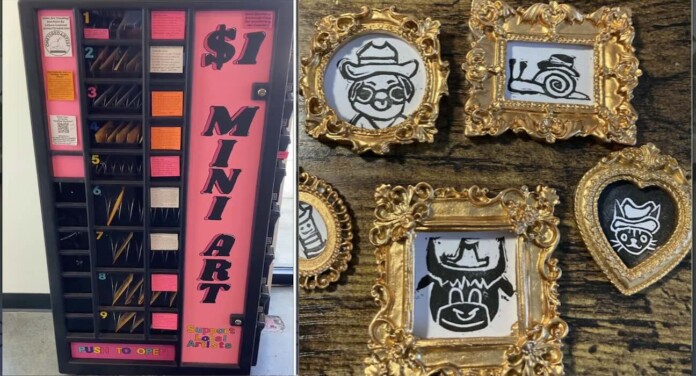
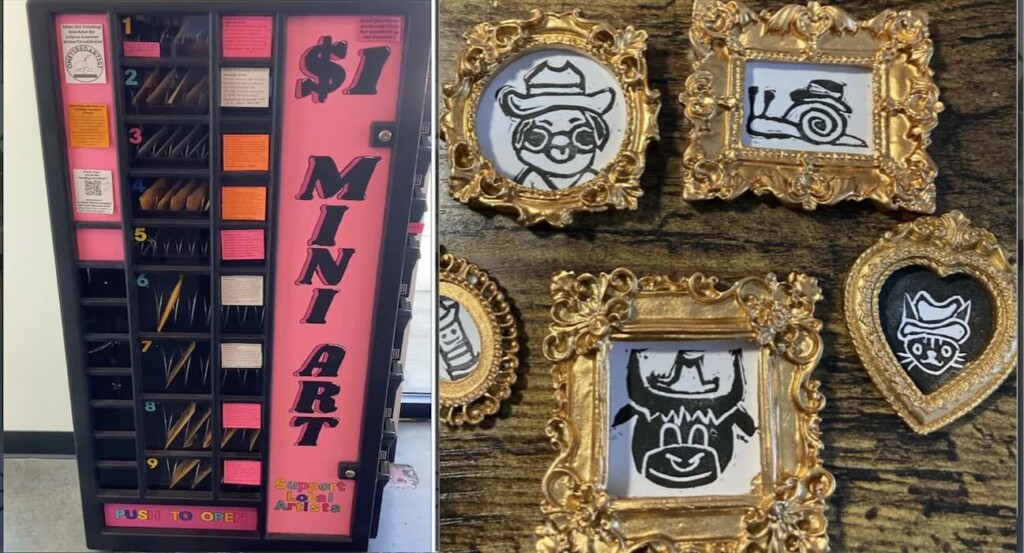
Mini Art Vending Machine with tiny art for $1 (at Inkwell Booksellers) - Credit: OneTiredArtist on IG
Mini Art Vending Machine with tiny art for $1 (at Inkwell Booksellers) – Credit: OneTiredArtist on IG
A Minnesota artist who wanted to do more to help her peers built and installed a “Mini Art Vending Machine” at a local book store.
Head inside Inkwell Booksellers at 426 E. Hennepin in Minneapolis, put 4 quarters in and turn the wheel, and a little envelope will fall down containing a mystery piece of art.
Each row features mini works by the same artist, whose bio can be read about on the left-hand side of the machine.
It might seem kitsch, but it’s a hit—almost 3,000 pieces of art have been sold in the vending machine, with every $1 going straight back into the artist’s pocket.
It was created by local artist Lilyan Lauzon, who goes by OneTiredArtist online and works as community engagement manager at Inkwell.
“For new and emerging artists, it’s really hard to find spaces to sell your artwork, and I wanted to make a project that was fun and collaborative for local artists,” said Lauzon.
The machine needs restocking every month with works from artists who apply for “gallery space” online. Lauzon told CBS news that she’s seen the vending machine be the catalyst that many artist’s can’t find elsewhere.
“Artists have told me that people have come to their art fairs to buy more of their artwork because of what they got in this snapshot of their portfolio,” said Lauzon. “There’s also been a few people who have had larger commissions come out from the mini art vending machine.”
After a marathon effort to digitize each of the 7.4 million plant and fungi samples in its herbarium, the Royal Botanic Gardens Kew has said the result will help “democratize knowledge” while leveraging AI’s incredible computation power to plan conservation strategies, discover new chemicals, and more.
The new archive is just one part in an international online archive of herbariums that are aiming to assess as many plants and fungi species as possible.
The effort has already revealed fascinating and important trends in these kingdoms, such as how flowers worldwide are blooming weeks earlier than in earlier decades.
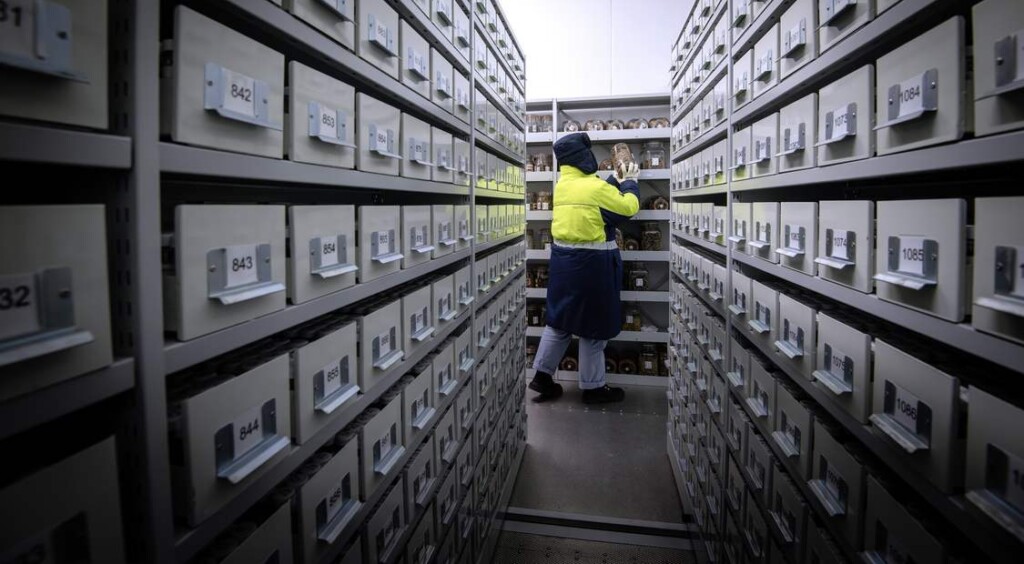
RBG Kew has one of the largest plant and fungi collections on the planet. Its scientists have been collecting samples since the time of Charles Darwin. But a 180-year-old pressed stem with a few leaves makes for a difficult ID job for a pair of eyes; not so for artificial intelligence models which have been trained to examine microscopic details.
With the advent of such technology, RBG Kew began a marathon effort to digitize every specimen: stem, leaf, seedhead, flower bud, and more. This has proven especially useful for mosses or forbs, plants which can have no perceptible difference between species.
“We can use digital assets, artificial intelligence and other technologies to really harness the information locked in many of these specimens that have been here for centuries, and use that to advance science and conservation at a global level,” said Kew’s executive director of science Alexandre Antonelli.
“We can use this digitized information to discover new species, and also to reveal species that have gone extinct or are likely to have done so.”
The possibilities are expansive. Thousands of plant and fungi species are identified every year, but nothing substantial is known about at least 300,000 plants which have already been identified. Additionally, it’s believed that there are still 100,000 plants and 2 million fungi species that are undescribed.
Each one could hold genomic secrets that could support or even transform agriculture, medicine, or materials sciences. Penicillin and statins were both isolated from fungi, to name the most obvious examples.
A broader, instantly accessible digital archive will supercharge environmental DNA gathering, a method of scientific observation that can identify species by biological material shed into the environment—invaluable for estimating ecosystem-wide populations of hard-to-find species like fungi which may only fruit a few times a year.
Efforts like Kew’s and others mean that an archive of 145 million plant, animal, and fungi samples is now freely available to anyone with an internet connection worldwide who might want to access them for any reason.
SHARE The News Of This Mammoth Undertaking With Your Friends…
Quote of the Day: “Yesterday is but today’s memory. Tomorrow is today’s dream.” – Khalil Gibran
Photo by: Jr Korpa
With a new inspirational quote every day, atop the perfect photo—collected and archived on our Quotes page—why not bookmark GNN.org for a daily uplift?
A pair of red Converse all-stars, also known as chucks - credit Lesekreis CC 0
125 years ago today, the shoe salesman Chuck Taylor was born in Indiana. While playing basketball in high school, Taylor began wearing the Converse All-Star shoe introduced way back in 1917. He became such a fan that he approached the company for a job, and traveled across America selling the shoes at basketball clinics he organized. He became so successful in promoting the shoes that he won an 80% share of the entire sneaker industry. READ more… (1901)
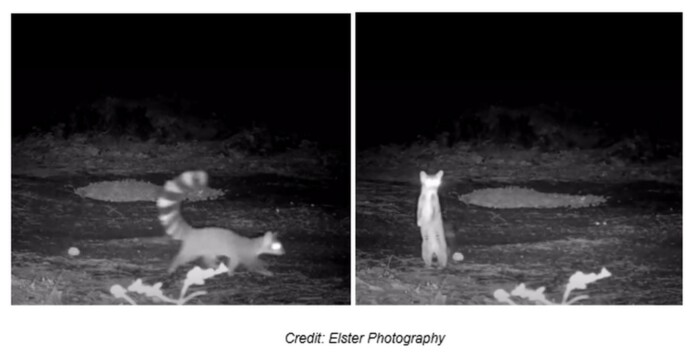
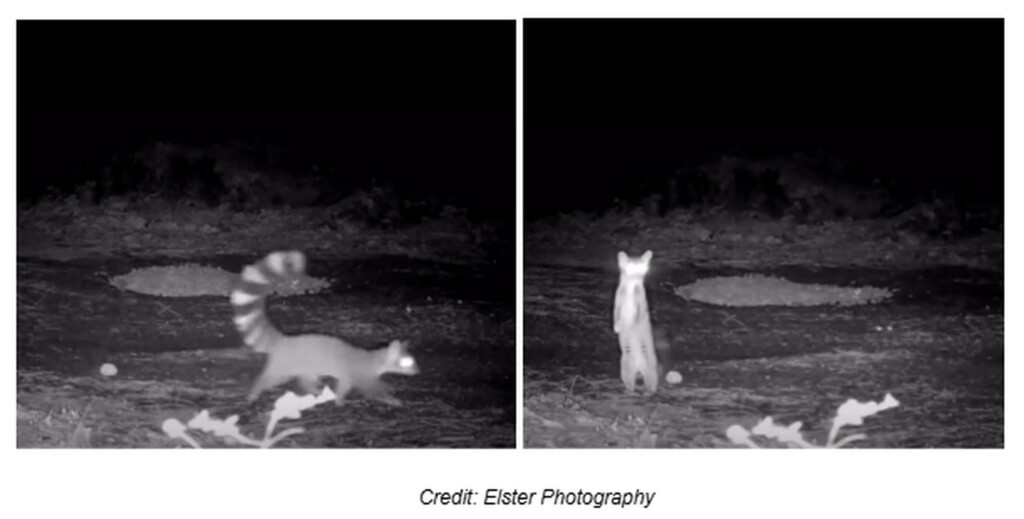
The ringtail, a North American mammal - credit, Elster Photography, released
The ringtail, a North American mammal – credit, Elster Photography, released
For a philanthropic couple in Oregon, the sighting on a trail camera of one of North America’s most elusive animals was both surprising and not.
Bill and Sarah Epstein had committed a large plot of family-owned land to conservation, and so the appearance of a “ringtail” or “miner’s cat” was a sign that their work has been a success.
The Epstein Family Forest, in Oregon’s Siskiyou Mountains, is described by the trust that manages it as “a rich mosaic of oak woodlands, conifer forests, riparian corridors, and wetlands—supporting rare wildlife and clean water.”
It doesn’t come much rarer than the ringtail, even if it’s not considered endangered.
Despite being the cousin of the common raccoon, don’t expect to see the ringtail digging through your garbage. Nocturnal, rarely studied, smaller than a house cat, and protected under federal law even before the Endangered Species Act existed, it can be seen in the video jumping into the camera’s view, rearing up to look about, and then walking away, the rings on its tail testifying to its namesake.
Because of their rodent-hunting abilities, they were often kept as pets in mining camps and cabins, earning them the name “miner’s cat” or “ring-tailed cat”—despite not being felines.
The sighting on the 405-acre Epstein Family Forest, located near Ashland, didn’t happen by chance. Landowners Bill and Sarah have spent decades restoring a heavily damaged forest and subdivision of country homes into a model for conservation and fire-resilient, ecologically managed forest.
They bought the land decades ago after it had been heavily logged and burned by a historic wildfire in 1973. The years of helping to return the ecosystem to a native state has seen hundreds of species of birds, amphibians, mammals come to range across that land as their habitats flow across the boundaries of public and private lands.
Since a member of the family received a stage-4 cancer diagnosis, they have been working with the Pacific Forest Trust to complete a “working forest conservation easement” on the land.
Such an easement is a permanent legal agreement that keeps forests in production while ensuring management practices support biodiversity and ecosystem health.
“It is a profound comfort to know the goals we have for our property will be steadfastly managed and protected in perpetuity,” the couple said in a statement.
A new study by scientists at Yale University suggests that older individuals can and do ‘improve,’ in all the senses of that word, over time.
Analyzing the results of a large study of older Americans that ran for a decade, a key data point was that the individual’s mindset toward aging plays a major part in their success.
If they believed aging was a process of decline, they declined. If they believed aging was a process of refinement, they improved.
Lead author Dr. Becca R. Levy, PhD, a professor of social and behavioral sciences at the Yale School of Public Health (YSPH) found that nearly half of adults aged 65 and older showed measurable improvement in cognitive function, physical function, or both, over time.
The improvements were not limited to a small group of exceptional individuals and, notably, were linked to a powerful but often overlooked factor: how people think about aging itself.
“Many people equate aging with an inevitable and continuous loss of physical and cognitive abilities,” said Dr. Levy, an international expert on psychosocial determinants of aging health. “What we found is that improvement in later life is not rare, it’s common, and it should be included in our understanding of the aging process.”
The findings are published in the journal Geriatrics.
For the study, the researchers followed more than 11,000 participants in the Health and Retirement Study, a federally supported longitudinal survey of older Americans. The research team tracked changes in cognition using a global performance assessment, and physical function using walking speed—often described by geriatricians as a “vital sign” because of its strong links to disability, hospitalization, and mortality.
Over a follow-up period of up to 12 years, 45% of participants improved in at least one of the two domains, according to the study. About 32% improved cognitively, 28% improved physically, and many experienced gains that exceeded thresholds considered clinically meaningful.
When participants whose cognitive scores remained stable over that period (rather than declining) were included, more than half defied the stereotype of inevitable deterioration in cognition.
“If you average everyone together, you see decline,” Dr. Levy continued. “But when you look at individual trajectories, you uncover a very different story. A meaningful percentage of the older participants that we studied got better.”
As for why, Levy and her co-authors hypothesized that an important factor could be participants had assimilated more positive or more negative views about aging by the start of the study. In support of this hypothesis, they found that those with more positive age beliefs were significantly more likely to show improvements in both cognition and walking speed, even after accounting for factors such as age, sex, education, chronic disease, depression, and length of follow-up.
The findings build on Dr. Levy’s stereotype embodiment theory, which posits that age stereotypes absorbed through a range of domains including social media and advertisements eventually become self-relevant and biologically consequential.
Credit: Getty Images for Unsplash+
Dr. Levy’s prior studies have found negative age beliefs predict poorer memory, slower walking speed, higher cardiovascular risk, and biomarkers associated with Alzheimer’s disease. The current study shows that those who have assimilated more positive age beliefs often show improvement, Dr. Levy said.
“Our findings suggest there is often a reserve capacity for improvement in later life,” she said. “And because age beliefs are modifiable, this opens the door to interventions at both the individual and societal level.”
The improvements were not limited to people who started out with impairments. Even among participants who had normal cognitive or physical function at baseline, a substantial proportion improved over time. That challenges the assumption that later-life gains reflect only people getting better after being sick or rebounding from earlier setbacks, the authors said.
The authors hope their findings will reverse the popular perception that continuous decline is inevitable and encourage policy makers to increase their support for preventive care, rehabilitation, and other health-promoting programs for older persons that draw on their potential resilience.
SHARE This Must-Read Story With Your Friends Who Need And Uplift…
Most industrial processes need heat, and most heat comes from burning fossil fuels, but armed with €400 million in grants, the European Commission is hoping to change that.
The commission has just seen the successful launch of its “industrial heat decarbonization project” auction, where it accepted 65 different projects presented from 10 different EU countries.
The proposals revolve around how to decarbonize the production of intense heat in industry, and involved such technologies as geothermal heat, plasma cutting, solar concentration, electromagnetic and dialectic heating, and heat pumps.
The proposals came from many of the largest manufacturing sectors, including paper and wood pulp, pharmaceuticals, ceramics, glass, iron and steel, construction materials, food and beverages, and textiles.
A total of €1.4 billion were requested through the grant application mechanism, according to PV Magazine, some 300% more than the commission had in its budget. Firms from Austria, Belgium, Portugal, Czechia, Slovenia, Denmark, Hungary, France, Germany, and Spain saw their proposals accepted.
By the numbers, if all proposed technologies succeed and are developed to nameplate capacity, it would hypothetically result in savings of heat equal to 1.5 billion cubic meters of natural gas burning over 5 years, saving 6.6 million tons of CO2 over 10 years, and generate 16.3 terawatt hours of heat.
Heat is a big topic these days as for the 4th summer in a row, a heat dome currently roasts most of continental Europe right as summer travel season begins.
“Waste heat” is a term used in urban planning and infrastructure that describes radiative heat from industry spilling out into the surrounding built environment and ratcheting up temperatures already sitting near records.
Some cities, like Germany’s Hamburg, or Finland’s Varanto, are looking at waste heat as a product that needs to be responsibly disposed of.
Last July, GNN reported that the Aurubis copper smelter in Hamburg which produces 400,000 tons of pure copper every year, now channels the radiative heat down into a nearby heating system that provides hot water for around 28,000 homes and buildings, and saves 120,000 tons of CO2 per year.
In Varanto, a city-wide thermal exchange heating system will take waste heat from data centers and home heat exchangers like heat pumps and store it in water which is then pumped deep underground into a massive cavern. There, it remains hot until the frigid Finish winter, when it’s brought back up to the surface to decarbonize home heating.
SHARE These Projects For A Decarbonized Future In Industry…
A conceptual graphic shows how growth factors BMP2 and FGF2 are applied to the injury site to stimulate tissue regeneration - credit, Melissa Bristow/Texas A&M University
A conceptual graphic shows how growth factors BMP2 and FGF2 are applied to the injury site to stimulate tissue regeneration – credit, Melissa Bristow/Texas A&M University
Some animals like salamanders can regenerate entire limbs, and by flipping a few genetic switches scientists have potentially unlocked innate human regeneration.
The key is essentially to deprogram the natural response to build scar tissue and reprogram cells to build back bone, ligaments, muscle, and skin.
“Why some animals can regenerate and others, particularly humans, can’t is a big question that has been asked since Aristotle,” said Dr. Ken Muneoka, a professor in the Texas A&M College of Veterinary Medicine and Biomedical Sciences (VMBS).
“I’ve spent my career trying to understand that.”
In their study, published in Nature Communications, Muneoka and his colleagues detail a newly developed 2-step treatment that led to the regeneration of bone, joint structures and ligaments in mice. While the results were imperfect, the team believes this approach could be used more immediately to reduce scarring and improve tissues repair after amputations.
In mammals, injuries typically trigger fibrosis, a process in which fibroblast cells rapidly close the wound and form scar tissue. This response prioritizes survival by sealing the injury quickly, but also limits the body’s ability to rebuild missing structures.
In regenerative species, like salamanders that can regrow lost limbs, those same types of cells organize into a blastema, a temporary structure that enables tissue regrowth.
“It’s as if these cells can move in 2 different directions,” Muneoka said. “They could either make a scar or make a blastema. Our research focused on redirecting the behavior of fibroblasts already present at the injury site.”
To test whether mammalian healing could be shifted toward regeneration, researchers developed a sequential treatment using two well-studied growth factors.
The first step involved applying fibroblast growth factor 2 (FGF2) after a wound had already closed. This timing allowed the body to complete its typical healing response, and then the team “changed what happens next.”
FGF2 stimulated the formation of a blastema-like structure—something that does not normally occur in mammals following this type of injury; several days later, a second treatment—using bone morphogenetic protein 2 (BMP2)—was applied, triggering those cells to begin forming new structures.
“This is really a 2-step process,” Muneoka said. “You first shift the cells away from scarring, and then you provide the signals that tell them what to build.”
A key implication of the study is that regeneration does not depend on adding external stem cells, as many current approaches in regenerative medicine attempt to do.
“You don’t have to actually get stem cells and put them back in,” Muneoka said. “They’re already there—you just need to learn how to get them to behave the way you want.”
The study also showed that cells can be redirected to form structures beyond their original location—a concept known as positional re-specification, which plays a critical role in development.
This means cells that would normally contribute to one part of the body can be instructed to rebuild a different structure after injury.
Although the regenerated structures were not exact replicas of the original anatomy, researchers were able to restore all the expected components removed during amputation, such as the bone, tendon, ligament and joint.
The results included both skeletal elements and connective tissues, organized in a way that reflects the natural structure.
“We regenerated what you would expect to see at that level of injury,” Muneoka said. “The structures are there, just not in a perfect form.”
The findings also revealed that regeneration occurs through multiple biological pathways, indicating that rebuilding tissue is more complex than relying on a single mechanism.
While the research is still in early stages, it may have more immediate applications in improving how wounds heal. Rather than focusing solely on regrowing entire structures, researchers believe the approach could first be used to reduce scarring and improve tissue repair.
“People should start thinking about using these signals during the healing process,” Muneoka said. “Even shifting the response slightly away from scarring could have real benefits.”
Because BMP2 is already FDA approved for certain medical uses and FGF2 is in multiple clinical trials, the pathway to clinical exploration may be more accessible for entirely new therapies.
Quote of the Day: “How beautiful the leaves grow old. How full of light and color are their last days.” – John Burroughs
Photo by: Getty Images for Unsplash+ (cropped)
With a new inspirational quote every day, atop the perfect photo—collected and archived on our Quotes page—why not bookmark GNN.org for a daily uplift?
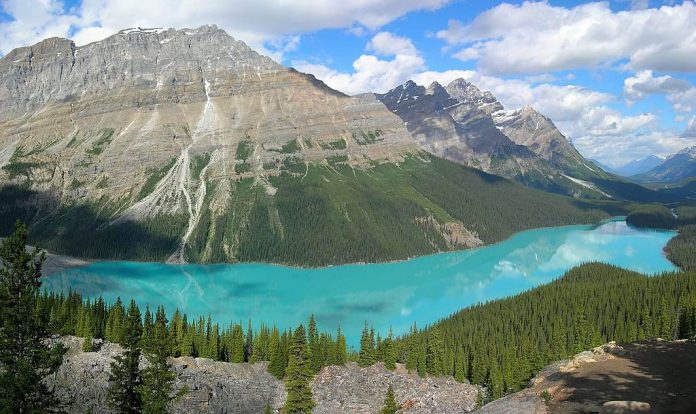
Banff National Park, one of Canada's true jewels - CC license.
139 years ago today, The Rocky Mountains Park Act passed Canadian parliament, establishing Banff National Park, the nation’s largest and most famous park. It was modeled on the law that created Yellowstone National Park south of the border just a few years before. Before, there had been a small preserve of 26 square miles that included hot springs. The park was expanded under the law to 674 km2 (260 sq mi) and named Rocky Mountains Park. READ more about its history… (1887)