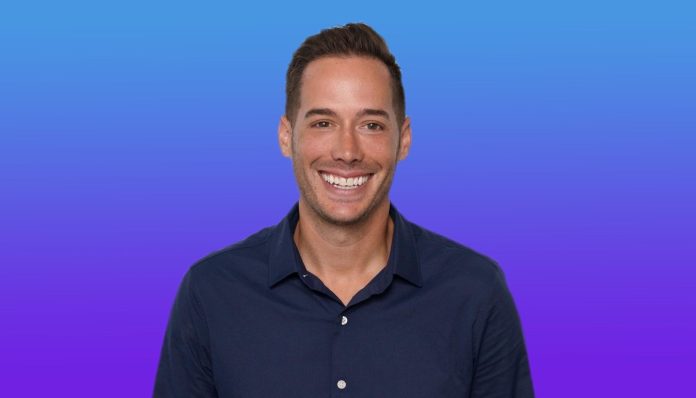
The Lesson: Being a good person, growing alongside one’s parents, enjoying the journey, not letting the highs be too high and the lows be too low, these are lessons for us all, but for serial entrepreneur Carter Reum, they have helped build a flourishing portfolio of profitable businesses, a strong personal foundation, and a life of gratitude.
Notable Excerpt: “I always say respect the process, but I think I’m going to add enjoy the process. It really is respect the process, meaning if you do the right things the right results tend to follow. But one of the things my brother and I learned from our first company was… that the highs are never that high, and the lows are never that low, and it’s really a defense mechanism… but by learning that muscle you tend to modulate it, and one of the things we found is that we actually don’t celebrate the highs enough.
“It is about the journey, and it is about enjoying it, but you’ve got to enjoy those good days. At M13, at our all-hands every week, we do gratitudes where we just stop and people can submit them and we read them, we do try to enjoy the journey, because win or lose at the end of the day you can have a lot of fun.”
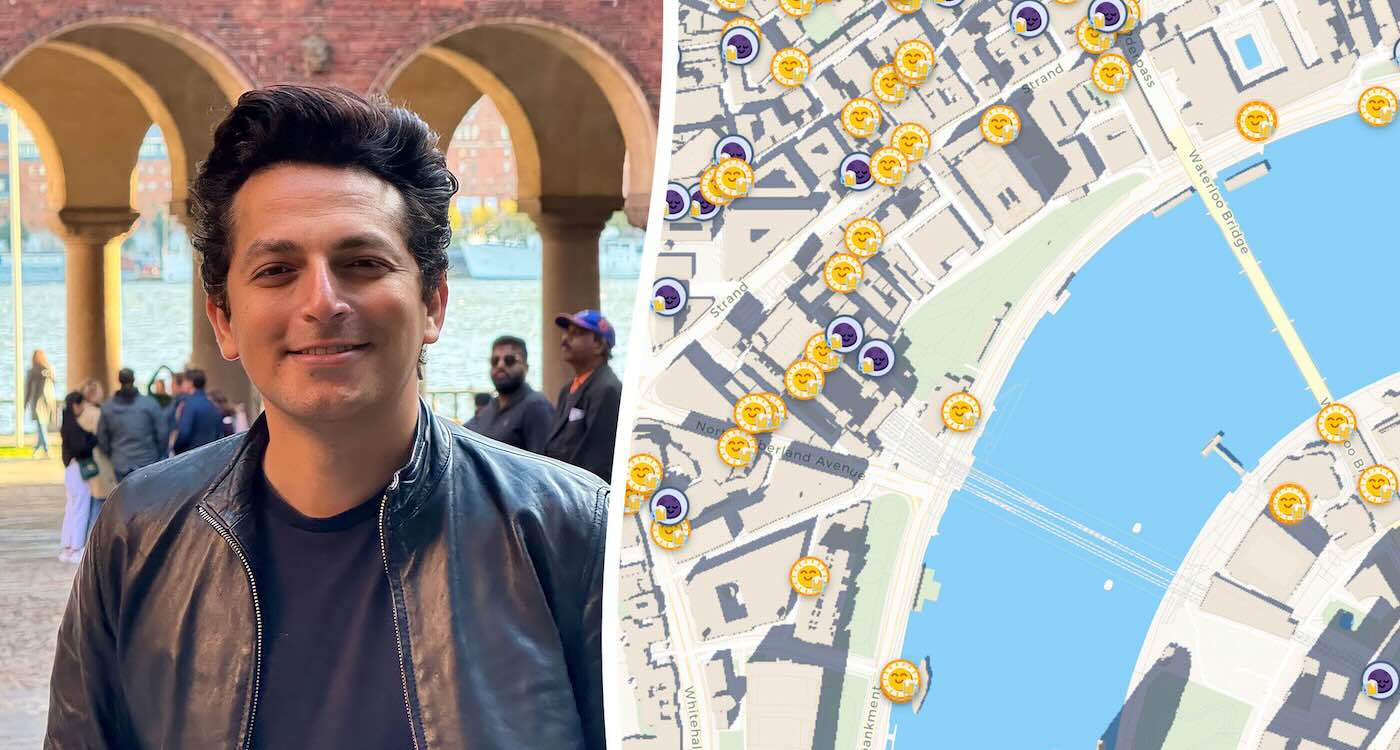
The Guest: Carter Reum is a Partner and Co-Founder of M13, a venture capital platform that invests in and incubates cutting edge consumer technology businesses. M13 now has over $1 billion over 3 funds and is currently launching its 10th incubated business co-founded with Tony Robbins and Peter Diamondis. M13’s portfolio includes, Ring, Daily Harvest, FabFitFun,Transfix, Rothy’s, Lyft, Capsule, Shef, Thrive Market, Cue, Capsule, Rho, Shef, and many others.
An investment banker at Goldman Sachs, in 2019, Carter and his brother Courtney were appointed the first-ever Executives in Residence for the City of Los Angeles, created in an effort to merge the arts and entertainment industries by Los Angeles Mayor Eric Garcetti.
Carter and his brother are the authors of the national bestseller Shortcut Your Startup (Simon & Schuster) that shares business insights to empower the next generation of entrepreneurs.
The Podcast: Livin’ Good Currency explores the relationship of time to our lives. It gives a simple, straight-forward formula that anyone can use to be present in the moment—and features a co-host who knows better than anyone the value of time (see below). How do you want to spend your life? This hour can inspire you, along with upcoming guests, to be sure you are ‘Livin’ Good Currency’ and never get caught running out of time.
The Hosts: Good News Network fans will know Tony (Anthony) Samadani as the co-owner of GNN and its Chief of Strategic Partnerships. Co-host Tobias Tubbs was handed a double life sentence without the possibility of parole for a crime he didn’t commit. Behind bars, he used his own version of the Livin’ Good Currency formula to inspire young men in prison to turn their hours into honors. An expert in conflict resolution, spirituality, and philosophy, Tobias is a master gardener who employs ex-felons to grow their Good Currency by planting crops and feeding neighborhoods.
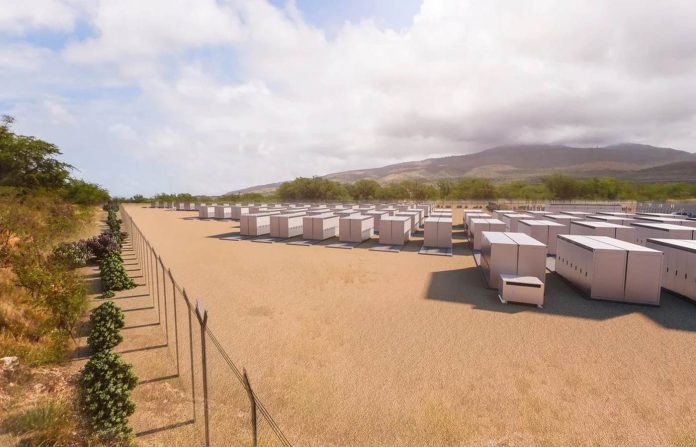
A rendered image of the Kapolei Energy Storage project - Released from Power Plus
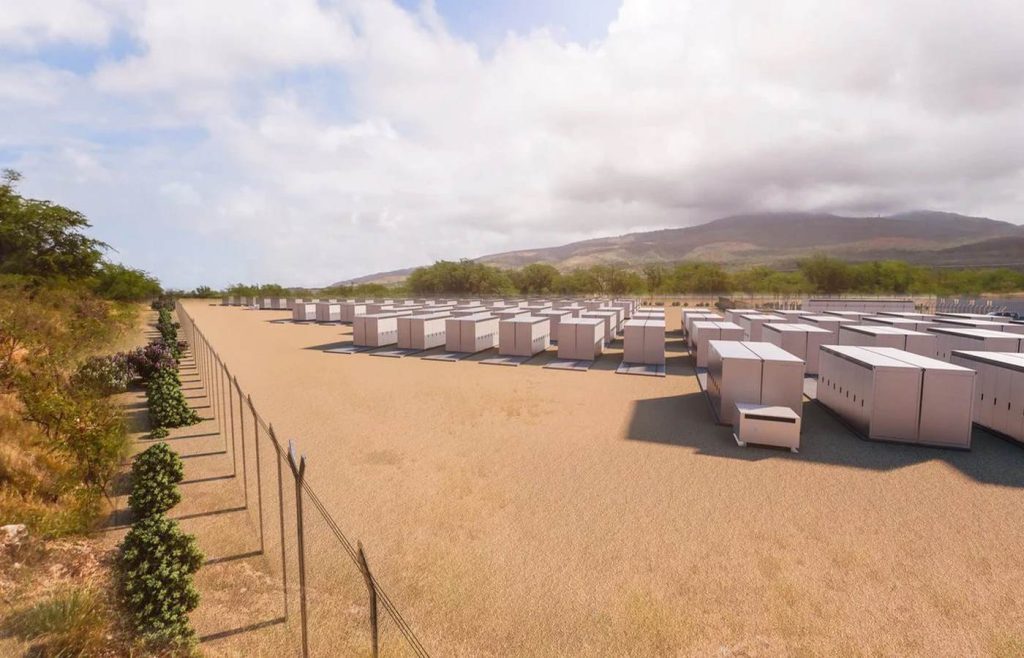
A rendered image of the Kapolei Energy Storage project – released by Power Plus
Oahu aims to free itself from the shadow of a major coal-fired power plant with the introduction of 158 Tesla Energy Megapacks to installed for a 565 megawatt-hours project.
Recently, state power company Hawaiian Electric selected 16 renewable energy and battery storage projects located across three islands. Among them was Plus Power’s Kapolei Energy Storage project (KES) located in Kapolei on the island of Oahu.
Oahu and Hawai’i as a whole are looking to accelerate a transition to 100% renewable energy, with the former set to decommission a coal power plant that generates 15% of the island’s electricity through its 180 megawatt capacity.
KES matches this capacity, and can provide 565 megawatt-hours in total, making it one of the largest autonomous batteries in the world. The project will provide load shifting and fast-frequency response services to Hawaiian Electric, enhancing grid reliability and accelerating the integration of readily available renewable energy.
The 158 lithium-ion Megapacks come from Tesla Energy, the car maker’s green energy subsidiary, and the battery project is ideally located on roughly eight acres of land in the Kapolei Harborside industrial project, where it will interconnect at a critical Hawaiian Electric substation.
With such a big leap away from trusted power sources, one of the most critical design features is to ensure that, in the case of disaster, the grid is prevented from shutting down, and that “black-start capacity” or the ability to jolt the entire grid to life in case of an interruption, is sufficient for a modern day society. KES can deliver 50 megawatts of capacity out instantaneously in such an occasion.
During the day, the batteries will be there as silent sentinels absorbing excess solar energy to be distributed back into the grid once the sun goes down. This potentially prevents curtailment in the use of electricity generated by renewable sources by 69%, and may increase renewable use in the grid by 10%.
“Plus Power’s selection as an energy storage provider for Hawaiian Electric is a very welcome and important step in meeting the state’s renewable energy needs. We’re excited to have them at Harborside,” said Steve Kelly, President of the Kapolei Properties Division.
KES is expected to go live on March 10th, 2023, with returns seen from taxpayer investment before the 20-year contract period is up.
Say Aloha To Your Friends By Sharing This Sunny Story…
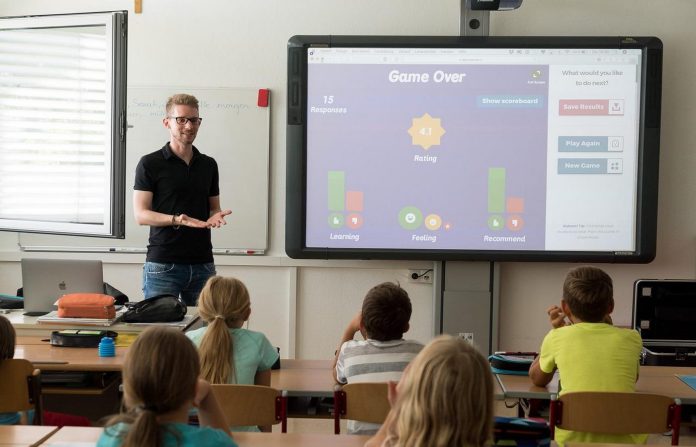
Gamifying classrooms was seen as a good way of increase engagement - pixabay
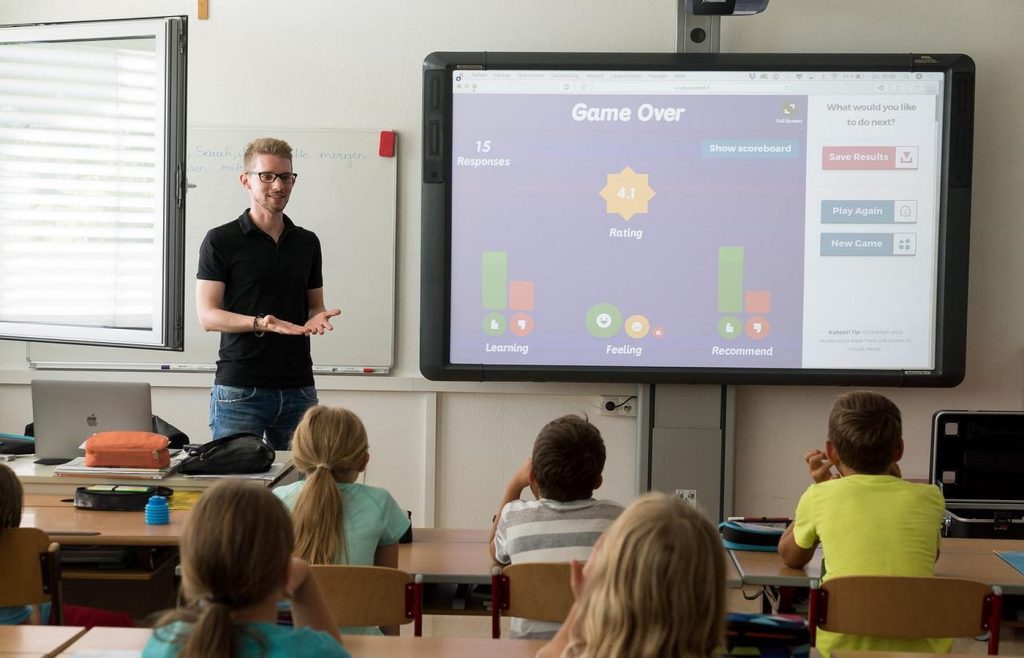
Gamifying classrooms was seen as a good way of increase engagement – pixabay
A recent survey of 1,000 parents with school-age children found that 52% believed there was a shortage of hands-on projects in the classroom that foster collaboration and interaction.
Maybe that’s why three in four parents have also observed their kids losing interest in school once they hit the middle grades (6th through 8th) even though they were excited about learning while in elementary school.
Conducted by OnePoll on behalf of LEGO Education, the survey found that hands-on learning is at the forefront of parents’ minds.
In addition, the survey polled 1,000 teachers to discover how they’re bolstering students’ excitement.
Fully 91% of the teachers say they are already bringing hands-on learning into the classroom.
Regardless of the grade they teach, 87% noted an improvement in student engagement when incorporating purposeful play, such as hands-on activities.
One way to make subjects more hands-on is through “gamification” or incorporating game-style elements into non-game activities. According to 74% of the teachers, the most important ways to gamify the classroom are by making learning fun. Half say they can do that by adding progress indicators such as points or badges or through competition.
Likewise, more than half of parents liked the idea of introducing progress indicators and level progressions with increasing difficulty, as game-style elements they’d like teachers to incorporate most.
However, the top skills parents hope their kids develop in school are learning to work under time pressure and deadlines (59%) and social-emotional skills like collaboration, resilience, empathy, and emotional regulation (57%).
“There’s never been a better time to rethink learning to make it more joyful, where classrooms are full of engaged students, ‘aha’ moments, and opportunities to build resilience and life skills,” said Dr. Jenny Nash, Head of Education Impact, U.S. for LEGO Education.
“This survey shows both teachers and parents want this for their kids, and it’s with hands-on learning that we can create these motivating, memorable, and meaningful learning experiences for our students.”
Boosting students’ confidence and curiosity in the classroom can be key. Teachers have found the most effective ways to do so are with hands-on projects (70%) and having students work together with others (70%), along with the opportunity to make mistakes without judgment (63%). The freedom to make mistakes was the top choice among high school teachers (68%).
Eight in 10 (82%) teachers also believe group projects should be introduced much earlier in students’ lives.
“Nearly eight in 10 teachers said these concepts help improve collaboration, critical thinking, and creativity, and seven in 10 believe they’ll improve students’ confidence,” Dr. Nash added.
TOP THINGS PARENTS WANT KIDS TO LEARN
Working under deadlines – 59%
Social-emotional skills – 57%
Problem-solving – 46%
Storytelling/creativity – 42%
Coding and programming – 28%
TOP WAYS TEACHERS WANT TO GAMIFY LEARNING
Fun – 74%
Competition – 49%
Progress indicators (e.g. points, badges, etc.) – 49%
Assignments/projects with increasing difficulty – 48%
Narrative/story – 31%
Time pressure – 19%
Collecting/trading – 16%
Get Hands-On With The Sharing To Social Media Buttons Below…
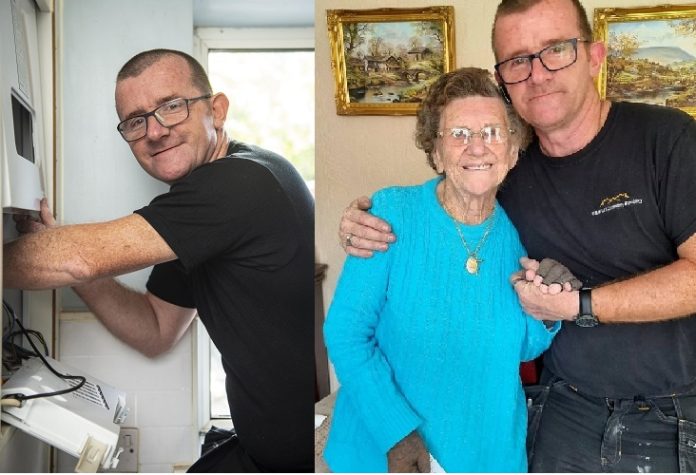
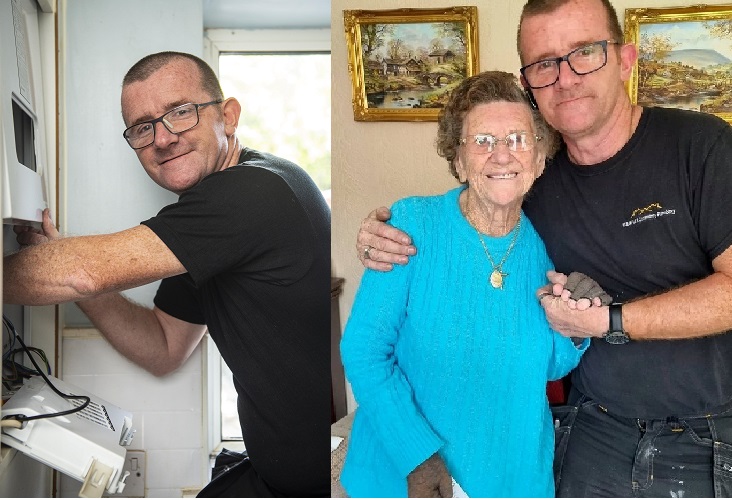
James Anderson, plumber, and founder of DEPHER - credit Steve Chatterly - released.
James Anderson, plumber, and founder of DEPHER – credit: Steve Chatterly – released.
A plumber in England is being hailed as a modern day hero after he founded a social enterprise which has helped more than two million of the UK’s most vulnerable people.
James Anderson, 54, runs DEPHER, the community interest company which provides heavily subsidized services for the those who are struggling with the rising cost of living, up as much as 54% since the beginning of April.
DEPHER stands for Disabled & Elderly Plumbing and Heating Emergency Repairs, and from paying people’s bills they can’t afford, to offering emergency plumbing and heating services, delivering food parcels and covering funeral payments, there is not a lot DEPHER, much like plumbers for that matter, can’t do.
Over the last six years Anderson and his team based in Burnley have helped more than 52,000 families—around two million people across the country.
“[W]hat we try to do is help people realize there is somebody out there who will help them,” said Anderson.
A father of six and grandfather of 4, Anderson has been called “Britain’s kindest plumber,” and an example of that went viral early last week.
“Today I was asked to help a 78-year-old lady, her card was refused because she only had £6.97 in her bank, the ENERGY COMPANY TOOK £765.89 out this morning,” James tweeted.
DEPHER stepped in and not only covered the elderly woman’s shopping costs but got the energy company to issue her a full refund.
Anderson got the idea to launch his catch all social enterprise when he went on a job one day to a gentleman’s house in his hometown of Burnley, in Lancashire. The man had asked James to take a look at his boiler after receiving a £5,500 quote from another company.
“This company had tried to scam this guy for thousands of pounds he didn’t have, for work that he certainly did not need,” Anderson recounts. “This guy was elderly and bed-bound— he was in an extremely vulnerable position. We stepped in and dealt with the company and gave the guy a £1,000 free boiler.”
“I just remember thinking something needs to be done about this,” admitted James. “This happens to so many people, and I thought if I could help just one at a time, I would be doing some good.”
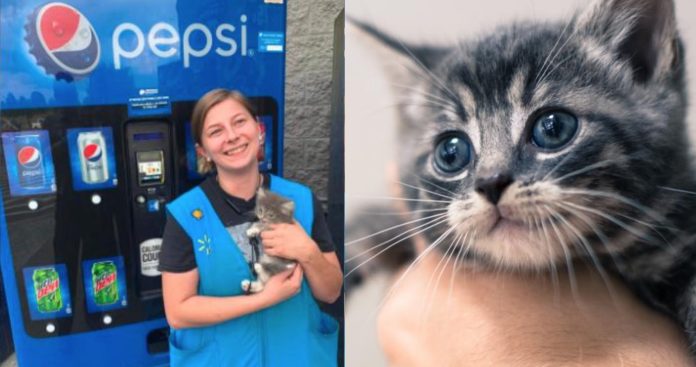
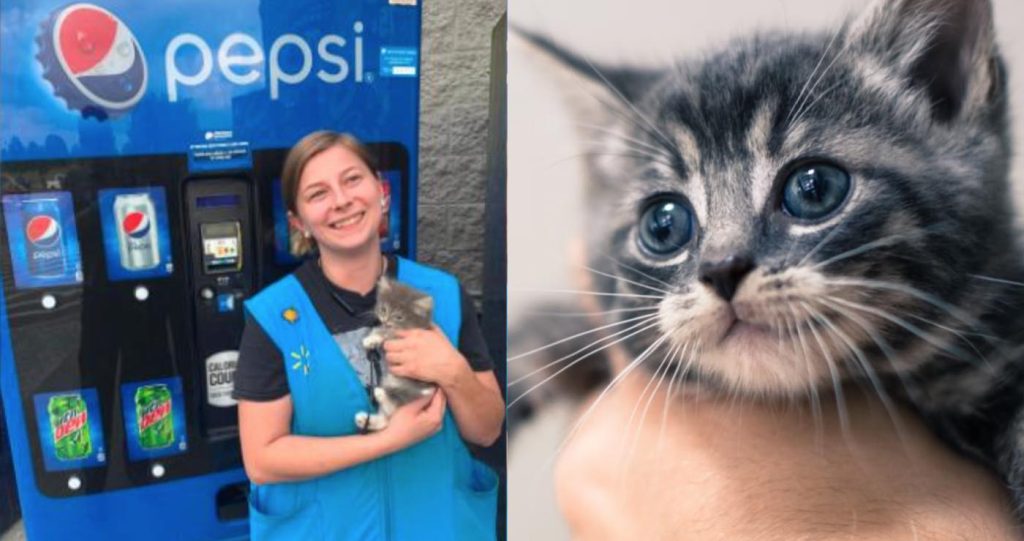
Photo by Morristown City Government and Manuel Rheinschmidt
Photo by Morristown City Government and Manuel Rheinschmidt
A tiny, blue-eyed kitten was saved thanks to a Walmart employee who happened to hear the thing meowing from the depths of a soft drink vending machine of all places.
Lindsey Russell, who works at the Morristown, Tennessee Walmart, tried all throughout her lunch hour to rescue the animal, after hearing its cries for help from inside the store.
Trying to get other employees to help, none of them managed to figure out A: how the kitten got into the machine, nor B: how to get it out again. Eventually they called fire and rescue who pried open some panels to allow the kitten to escape.
“We could hear it meowing as soon as we came up. We knew it was in there and kind of stressed out,” Morristown fireman Doug Allison told local news. “If we can help save a life, animal or human, we’ll do what we can do.”
After the potentially-lethal situation was averted, Russel, who along with her mom had rescued cats before, decided it was best to take the kitten, whom she described as “wiggly” and in good spirits, home before a necessary veterinary check.
Quote of the Day: “Humanity has won its battle. Liberty now has a country.” – Marquis De Lafayette
Happy Birthday, America! Today is Independence Day in the U.S., the anniversary commemorating the Declaration of Independence, ratified by the new congress on July 4, 1776.
Lafayette was a French military officer who joined George Washington as a general in the American Revolution, the war of independence that inspired him to help ignite the French Revolution at home.
Photo: Frank McKenna, CC license
With a new inspirational quote every day, atop the perfect photo—collected and archived on our Quotes page—why not bookmark GNN.org for a daily uplift?
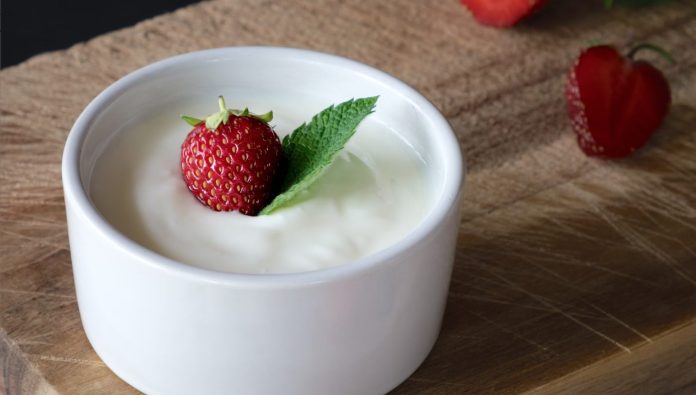
Because of its active cultures and probiotics, yogurt is one of those foods that can facilitate a healthy gut microbiome for most people. Now an intriguing comparison study offers more incentive to grab yourself a Chobani or Fage, as soon as possible.
Researchers have found a significant difference in the gut microbiota of men with prostate cancer, compared with those who had biopsies that turned out benign (negative).
A collection of trillions of microorganisms live in the human belly, both good and bad. The immune system and other bodily processes are intimately affected by the balance in the gastrointestinal tract.
The state of gut microbiota can fuel the growth of tumors or make them resistant to therapy, and they’re also associated with diseases—even inside organs that are far from your intestines. But their role in prostate cancer is not understood.
Scientists in Finland at the University of Turku used samples collected from patients in a clinical study, and sequenced the gut microbiota of 181 men who were suspected to have prostate cancer. The samples were collected at the time of their prostate biopsies after MRI scans.
60 percent of the men were diagnosed with prostate cancer, and their gut microbiota profiles were significantly different to those who had benign biopsies.
The men with cancer had increased levels of Prevotella 9, Erysipelotrichaceae and Escherichia-Shigella (bacteria that produces illness and diarrhea).
They also had lower levels of the microbes Jonquetella, Moryella, Anaeroglobus, Corynebacterium and CAG-352.
Prostate cancer is the most common male cancer globally, but varying rates in different parts of the world are little understood. It is known to be hereditary and is common in most Western countries, while less common elsewhere.
“This is a striking finding from a well-conducted trial,” said Lars Dyrskjøt Andersen, Professor of Molecular Medicine at Aarhus University, and member of the EAU22 Scientific Congress Committee of Urology.
“We should be careful with observed associations when it comes to complicated epidemiology, and no cause-and-effect measures can be determined based on this, but certainly the gut microbiota could be an important area to investigate further to enhance our understanding of prostate cancer risk.”
“More research is needed to look at the potential for using gut microbiota for both diagnostic and preventive strategies,” said the study presenter, Professor Peter Bostrom.
Once named ‘The Most Trusted Man in America’, Jon Stewart was honored recently as the 23rd recipient of the Mark Twain Prize for American Humor.
The gala event held annually at the Kennedy Center and broadcast on PBS stations nationwide, the award ceremony is the first since 2019 due to the pandemic.
Featuring hilarious tributes from comedians like Steve Carell, Dave Chappelle, Stephen Colbert, Pete Davidson, and Jimmy Kimmel, the evening makes us long for the days when Jon was in our living room anchoring the desk on The Daily Show.
Over his 16-year run as host and executive producer of the Comedy Central juggernaut, Stewart redefined political satire in American culture.
One by one, his peers took the stage reminding us of his comedy, but also his social activism. He testified before Congress and played an integral role in the passing of legislation such as the 9/11 Victim Compensation Fund Bill, which benefitted thousands of first responders and their families. Stewart also works on behalf of America’s wounded veterans and autism charities.
Dave Chappelle, the most recent winner of the prize (in 2019), led the parade of funny men and women, many of whom owe Jon their careers, after being hired as ‘correspondents’ for the Daily Show—like Colbert, Carell, Ed Helms, John Oliver, Olivia Munn, and Samantha Bee.
Sample a few of the great speeches below, along with Jon accepting the award. Learn more at PBS Twain Prize and see all the videos on The Kennedy Center YouTube channel.
DAVE CHAPPELLE
STEPHEN COLBERT
JOHN OLIVER
STEVE CARELL
PETE DAVIDSON
JON STEWART
* SEND Some Laughs to Your Friends Who Need a Smile–SHARE on Social Media…
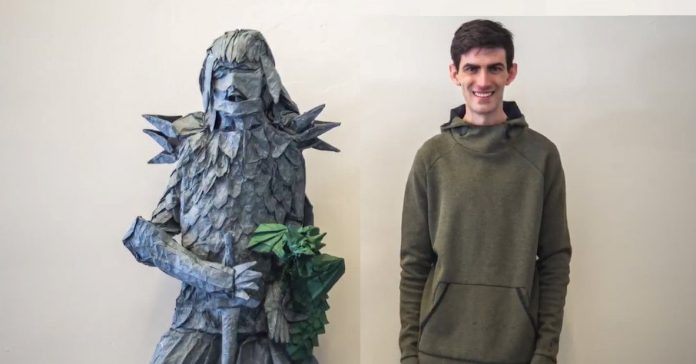
This amazing time-lapse video shows a student creating a five-foot-nine high statue from a single piece of paper.
Chris Conrad took around 65 hours to design and then fold the ‘dragon tamer’ figure out of a 19-foot square piece of paper.
The 22-year-old works as a researcher for political consults, but his passion is easy to ‘be-fold.’ He spends an average of 20 hours a week on his origami projects.
“Just making the 19-foot square to start with was exhausting!” said the precision folder from New York. “That was six hours for me.”
“Every part of the project took longer and was more physically taxing than I anticipated. That said, I think the most challenging part was right at the end because the model was so heavy, I had to stand it up using a lamp.”
The skills Chris demonstrated in making the piece he picked up over the last few years.
“I’ve been doing origami since I was in middle school – so around 12 years, which may seem like a while, but I only started folding super-complex origami in May 2020, and only started designing my own models in December 2020.”
He says he is happy with his current job in research, but definitely wants to make moves towards doing art full time.
“I’m hoping to spend a lot more time in the remainder of 2022 refining my skills as a designer and start submitting work to galleries in the next year.”
Chris Conrad origami / SWNS
“I think there’s something intensely satisfying about how tactile origami is—everything is done with your hands…you have a physical finished product to point to and think to yourself ‘I made that.'”
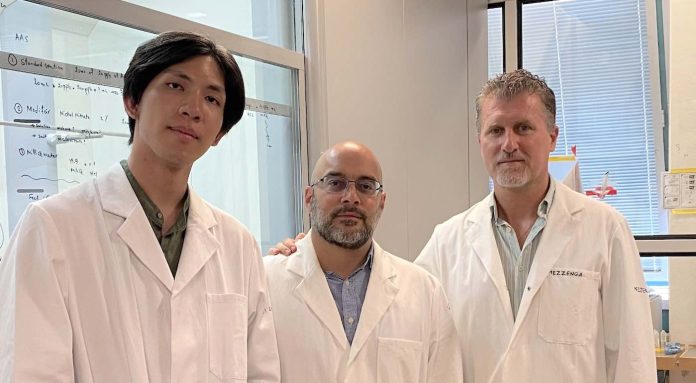
The scientists at Nanyang Technological University
Scientists just announced they have created a membrane made from a waste by-product of vegetable oil manufacturing, which can filter out heavy metals from contaminated water.
They discovered that proteins derived from the by-products of peanut or sunflower oil production can attract heavy metal ions very effectively.
The study showed that this process of attraction, called adsorption, was able to purify contaminated water so it meets international drinking standards.
Current technologies are energy-intensive, require power to operate, or are highly selective in what they filter. However, their membrane has the potential to be a cheap, low-power, sustainable, and scalable method.
“Heavy metals represent a large group of water pollutants that can accumulate in the human body, causing cancer and mutagenic diseases,” said Professor Ali Miserez at Nanyang Technological University in Singapore (NTU). Our work puts heavy metal where it belongs—as a music genre and not a pollutant in drinking water.”
The production of household vegetable oils generates waste by-products called oilseed meals. These are the protein-rich leftovers that remain after the oil has been extracted from the raw plant.
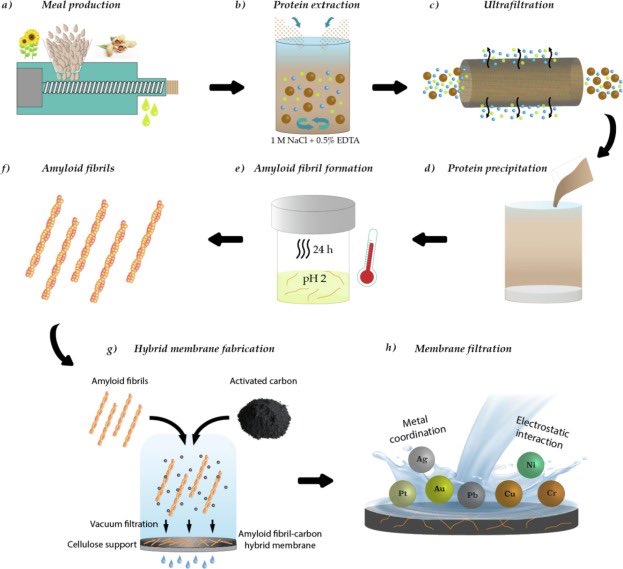
The NTU-led research team used the oilseed meals from two common vegetable oils—sunflower and peanut oils. After extracting the proteins from oilseed meals, the team turned them into nano-sized protein amyloid fibrils, which are rope-like structures made of tightly-wound proteins. These protein fibrils are drawn to heavy metals and act like a molecular sieve, trapping heavy metal ions as they pass by.
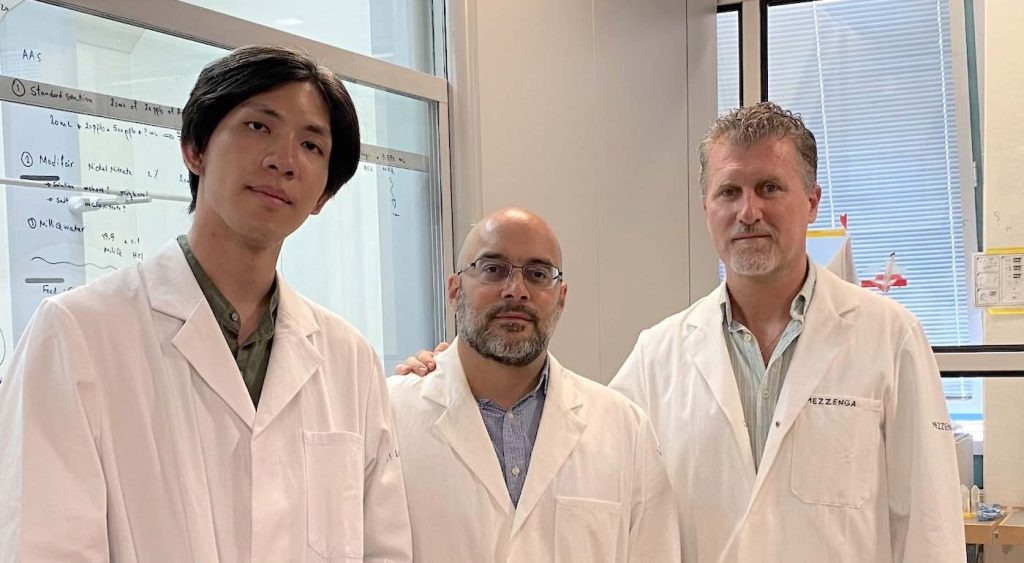
“This is the first time amyloid fibrils have been obtained from sunflower and peanut proteins,” said the paper’s first author, NTU PhD student Mr Soon Wei Long.
The researchers combined the extracted amyloid fibrils with activated carbon—a commonly-used filtration material—to form a hybrid membrane. They tested their membranes on three common heavy metal pollutants: platinum, chromium and lead.
As contaminated water flows through the membrane, the heavy metal ions stick onto the surface of the amyloid fibrils – a process called adsorption. The high surface-to-volume ratio of amyloid fibrils makes them efficient in adsorbing a large amount of heavy metals.
NTU
The team found that their membranes filtered up to 99.89 per cent of heavy metals. Among the three metals tested, the filter was most effective for lead and platinum, followed by chromium.
“The filter can be used to filter any sorts of heavy metals, and also organic pollutants like PFAS (perfluoroalkyl and polyfluoroalkyl substances), which are chemicals that have been used in a wide range of consumer and industrial products,” said Miserez. “The amyloid fibrils contain amino acid bonds that trap and sandwich heavy metal particles between them while letting water pass through.”
The researchers say the concentration of heavy metals in contaminated water will determine how much volume of water the membrane can filter out. A hybrid membrane made with sunflower protein amyloids will require only 35 pounds of protein (16kg) to filter drinking water from the equivalent of an Olympic-sized swimming pool contaminated with 400 parts per billion.
“The process is readily scalable due to its simplicity and minimal use of chemical reagents, pointing towards sustainable and low-cost water treatment technologies,” said Mr. Soon. “This allows us to re-process waste streams for further applications and to fully exploit different industrial food wastes into beneficial technologies.
The trapped metals can also be extracted and further recycled. After filtration, the membrane used to trap the metals can simply be burnt, leaving behind the metals.
Nanyang Technological University
“While metals like lead or mercury are poisonous and can be safely disposed of, other metals, such as platinum, have valuable applications in creating electronics and other sensitive equipment,” said co-author Professor Raffaele Mezzenga from ETH Zurich, Switzerland.
Recovering precious platinum, which costs $33,000 for 2.2 pounds (1 kg), only requires 70 pounds of protein (32 kg), while recovering gold, which is worth almost $60,000, only requires half as much protein.
“Considering that these proteins are obtained from industrial waste that is worth less than US$1/kg, there are large cost benefits.”
Another big advantage, the researchers say, is that this filtration requires little or no energy, unlike other methods like reverse osmosis that require electricity.
“With our membrane, gravity does most or all of the work,” said Mezzenga. “This low-power filtration method can be very useful in areas where there might be limited access to electricity and power.
Since publishing their paper three months ago in the journal Chemical Engineering, the researchers have been exploring the commercial applications of their membrane with BluAct, a European water filtration spin-off company of ETH Zurich.
QUENCH People’s Thirst For Innovation By Sharing on Social Media…
Quote of the Day: “Your head is a living forest full of songbirds.” – E. E. Cummings
Photo: Gouldian finches by David Clode
With a new inspirational quote every day, atop the perfect photo—collected and archived on our Quotes page—why not bookmark GNN.org for a daily uplift?
A new study unveiled a small, soft, flexible implant that relieves pain on demand and without the use of drugs. The first-of-its-kind device could provide a much-needed alternative to opioids and other highly addictive medications.
The biocompatible, water-soluble device works by softly wrapping around nerves to deliver precise, targeted cooling, which numbs nerves and blocks pain signals to the brain. An external pump enables the user to remotely activate the device and then increase or decrease its intensity. After the device is no longer needed, it naturally absorbs into the body—bypassing the need for surgical extraction.
The Northwestern University-led team of researchers believe the device will be most valuable for patients who undergo routine surgeries or even amputations that commonly require post-operative medications. Surgeons could implant the device during the procedure to help manage the patient’s post-operative pain.
“Although opioids are extremely effective, they also are extremely addictive,” said Northwestern’s John A. Rogers, who led the device’s development. “As engineers, we are motivated by the idea of treating pain without drugs — in ways that can be turned on and off instantly, with user control over the intensity of relief.”
The technology reported here exploits mechanisms that have some similarities to those that cause your fingers to feel numb when cold. The implant allows that effect to be produced in a programmable way, directly and locally to targeted nerves, even those deep within surrounding soft tissues.
How it works
Although the new device might sound like science fiction, it leverages a simple, common concept that everyone knows: evaporation. Similar to how evaporating sweat cools the body, the device contains a liquid coolant that is induced to evaporate at the specific location of a sensory nerve.
“As you cool down a nerve, the signals that travel through the nerve become slower and slower — eventually stopping completely,” said study coauthor Dr. Matthew MacEwan of Washington University School of Medicine in St. Louis. “We are specifically targeting peripheral nerves, which connect your brain and your spinal cord to the rest of your body. These are the nerves that communicate sensory stimuli, including pain. By delivering a cooling effect to just one or two targeted nerves, we can effectively modulate pain signals in one specific region of the body.”
To induce the cooling effect, the device contains tiny microfluidic channels. One channel contains the liquid coolant (perfluoropentane), which is already clinically approved as an ultrasound contrast agent and for pressurized inhalers. A second channel contains dry nitrogen, an inert gas. When the liquid and gas flow into a shared chamber, a reaction occurs that causes the liquid to promptly evaporate. Simultaneously, a tiny integrated sensor monitors the temperature of the nerve to ensure that it’s not getting too cold, which could cause tissue damage.
“Excessive cooling can damage the nerve and the fragile tissues around it,” Rogers said. “The duration and temperature of the cooling must therefore be controlled precisely. By monitoring the temperature at the nerve, the flow rates can be adjusted automatically to set a point that blocks pain in a reversible, safe manner.”
Precision power
While other cooling therapies and nerve blockers have been tested experimentally, all have limitations that the new device overcomes. Previously researchers have explored cryotherapies, for example, which are injected with a needle. Instead of targeting specific nerves, these imprecise approaches cool large areas of tissue, potentially leading to unwanted effects such as tissue damage and inflammation.
At its widest point, Northwestern’s tiny device is just 5 millimeters wide. One end is curled into a cuff that softly wraps around a single nerve, bypassing the need for sutures. By precisely targeting only the affected nerve, the device spares surrounding regions from unnecessary cooling, which could lead to side effects.
“You don’t want to inadvertently cool other nerves or the tissues that are unrelated to the nerve transmitting the painful stimuli,” MacEwan said. “We want to block the pain signals, not the nerves that control motor function and enables you to use your hand, for example.”
Previous researchers also have explored nerve blockers that use electrical stimulation to silence painful stimuli. These, too, have limitations.
“You can’t shut down a nerve with electrical stimulation without activating it first,” MacEwan said. “That can cause additional pain or muscle contractions and is not ideal, from a patient’s perspective.”
This new technology is the third example of bioresorbable electronic devices from the Rogers lab, including a biodegradable implant that speeds nerve regeneration, and a transient pacemaker.
All components of the devices are biocompatible and naturally absorb into the body’s biofluids over the course of days or weeks, without needing surgical extraction. The bioresorbable devices are completely harmless—similar to absorbable stitches.
At the thickness of a sheet of paper, the soft, elastic nerve cooling device is ideal for treating highly sensitive nerves.
“If you think about soft tissues, fragile nerves and a body that’s in constant motion, any interfacing device must have the ability to flex, bend, twist and stretch easily and naturally,” Rogers said. “Furthermore, you would like the device to simply disappear after it is no longer needed, to avoid delicate and risky procedures for surgical removal.”
The study, published this week in the journal Science, describes the device’s design and demonstrates its efficacy in an animal model.
SHARE This Innovation of Alternative Health With Friends on Social Media…
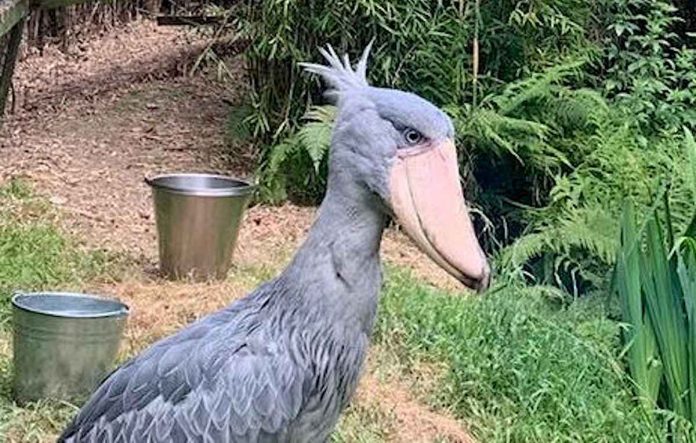
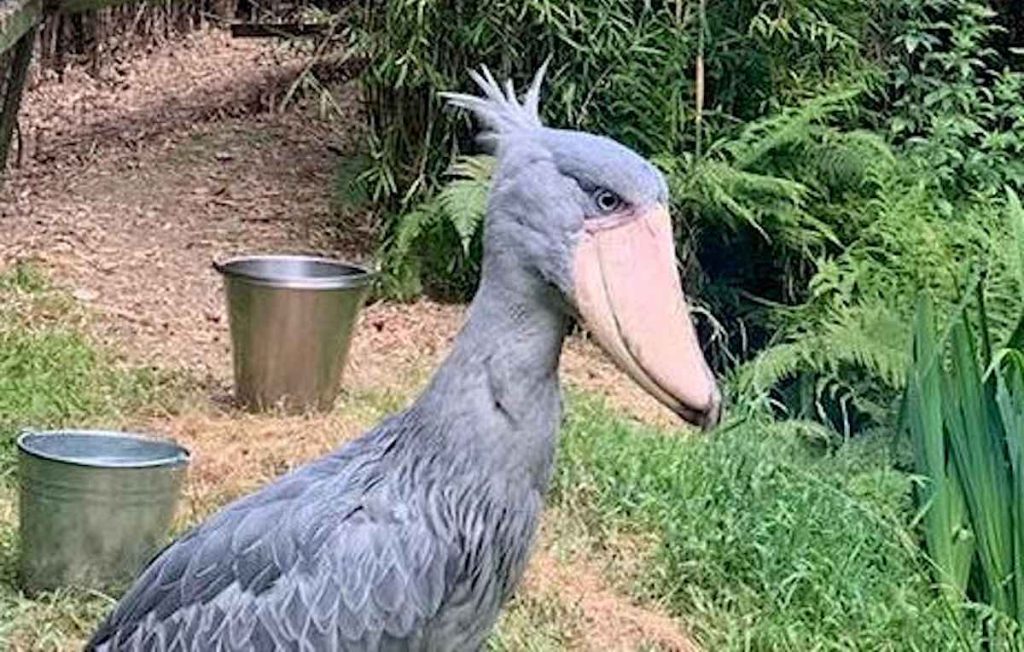
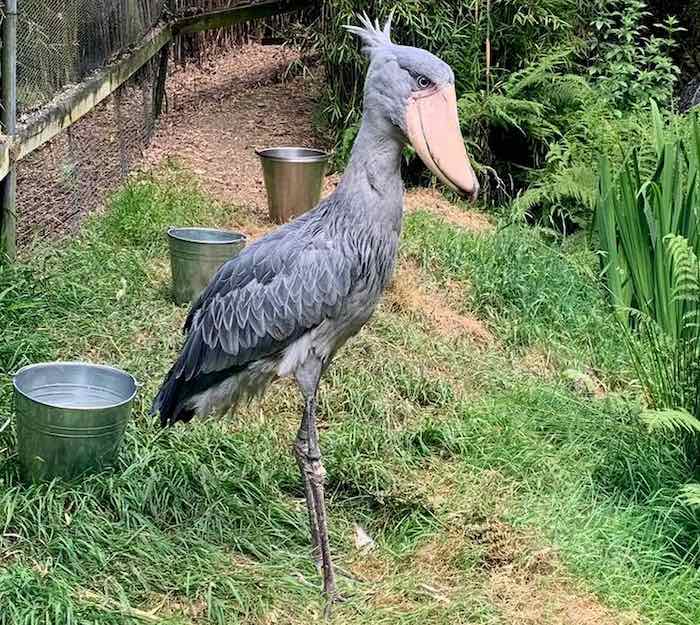
An extremely rare ‘dinosaur’ bird, the only one of its kind in the UK, is patiently awaiting a new mate while the Exmoor Zoo sets out to help save the shoebill species.
She recently arrived from the Pairi Daiza Zoo in Belgium where she was a newborn star in their international breeding program.
The unique-looking bird is one of only eleven shoebills that are currently in captivity around the world.
One of the reasons the species is under threat is because the birds are monogamous and normally rear only one chick. Also, climate change is affecting the population—with around 5,000 left in the wild.
Meanwhile, the 14-year-old bird called Abou has been greeting her keepers with displays of bowing and spreading her wings—a common courtship ritual.
But she’ll have to wait until the breeding program produces a male, so the pair can be matched and produce much-hoped-for offspring.
Exmoor Zoo Curator Derek Gibson, is beyond delighted to be in the same vicinity as one of these birds.
SWNS
“She is magnificent to behold…and if we can keep her well and she thrives – when a male does become available, then he will also come and join us at Exmoor Zoo.”
Weighing 12 pounds, Abou is 4-foot-tall (1.2m) and has a wing span double that.
Also known as whale heads, shoebills have one of the largest and most unusual bills in the birding kingdom, and live in the marsh lands of East Africa, where they hunt fish and small invertebrates.
Derek says he has been waiting 40 years for the ‘amazing moment’ when he finally got to see a shoebill ‘in the feather’.
“In reality, I’ve never been in a position to see these amazing birds in the wild.”
“They live in countries in central and eastern Africa—like Uganda, Zambia, Tanzania—which are prone to extended periods of drought, so there is a huge intensity on animals and people who are having to compete for the same environment.”
“These birds do have their work cut out for them, which is why it is so important to offer Abou a home and put ourselves forwards to try and do our bit.”
Arm and hand movements have been restored in paralyzed primates when researchers ‘zapped’ their spinal cord.
Rather than designing new, sophisticated equipment, electrical stimulation was applied to surviving nerves in severely damaged backbones, which improved motor control in the monkeys.
In the experiments, macaques with partial arm paralysis learned to reach, grasp, and pull a lever to receive a favorite treat. Importantly, they continued to improve over time as they adapted to the groundbreaking technique.
They were fitted with brain implants that detected electrical activity from regions controlling voluntary movement. A small array of electrodes were placed over the nerve roots sprouting from the spinal cord toward the muscles of the arm and hand.
“To perform even the simplest arm movement, our nervous system has to coordinate hundreds of muscles,” said senior author Dr. Marco Capogrosso, of Pittsburgh University. “Replacing this intricate neural control with direct electrical muscle activation would be very difficult outside a laboratory.”
“Instead of stimulating muscles, we simplified the technology by designing a system that uses surviving neurons to restore the connection between the brain and the arm via specific stimulation pulses to the spinal cord, potentially enabling a person with paralysis to perform tasks of daily living.”
Currently, for victims of spinal cord injury or stroke, there are no therapies or medical technologies that provide dexterity—skills that set primates and humans apart from other mammals.
The team’s method of stimulation was extensively verified using a combination of computational algorithms and medical imaging. While not enough to restore the arm function completely, the stimulation significantly improved precision, force, and range of movement, allowing each animal to move its arm more efficiently.
Importantly, the animals continued to improve as they adapted and learned how to use stimulation.
“By building a technology around the nervous system that mimics what it is naturally designed to do, we get better results,” said co-author Dr. Beatrice Barra.
The electrical spinal cord stimulation was described in the journal Nature Neuroscience, and will be tested on paralyzed stroke patients in the US later this year. The University’s Rehabilitation and Neural Engineering Labs is recruiting patients for the research.
SPREAD the Hope for Paralysis Patients By Sharing on Social Media… (File photo of green light by Victory of the People, CC license)
FREE WILL ASTROLOGY – Week of July 2, 2022
Copyright by Rob Brezsny, FreeWillAstrology.com
CANCER (June 21-July 22):
Filmmaker Jean-Luc Godard believes there’s only one way to find a sense of meaning, and that is to fill your life to the bursting point; to be in love with your experience; to celebrate the flow of events wherever it takes you. When you do that, Godard says, you have no need or urge to ask questions like “Why am I here?” or “What is my purpose?” The richness of your story is the ultimate response to every enigma. As I contemplate these ideas, I say: wow! That’s an intensely vibrant way to live. Personally, I’m not able to sustain it all the time. But I think most of us would benefit from such an approach for brief periods now and then. And I believe you have just entered one of those phases.
LEO (July 23-Aug. 22):
I asked Leo readers to provide their insights about the topic “How to Be a Leo.” Here are responses that line up with your current astrological omens. 1) People should try to understand you’re only bossing them around for their benefit.–Harlow Hunt. 2) Be alert for the intense shadows you may cast with your intense brightness. Consider the possibility that even if they seem iffy or dicey, they have value and even blessings to offer.–Cannarius Kansen. 3. Never break your own heart. Never apologize for showering yourself with kindness and adoration.–Amy Clear.
VIRGO (Aug. 23-Sept. 22):
It’s your birthright as a Virgo to become a master of capitalizing on difficulties. You have great potential to detect opportunities coalescing in the midst of trouble. You can develop a knack for spotting the order that’s hiding in the chaos. Now is a time when you should wield these skills with artistry, my dear—both for your own benefit and for the betterment of everyone whose lives you touch.
LIBRA (Sept. 23-Oct. 22):
One of my heroes died in 2021: the magnificent Libran author bell hooks (who didn’t capitalize her name). She was the most imaginative and independent-minded activist I knew. Till her last day, she articulated one-of-a-kind truths about social justice; she maintained her uncompromising originality. But it wasn’t easy. She wrote, “No insurgent intellectual, no dissenting critical voice in this society escapes the pressure to conform. We are all vulnerable. There is no special grace that rescues any of us. There is only a constant struggle.” I bring this to your attention, Libra, because I suspect the coming weeks will require your strenuous efforts to remain true to your high standards and unique vision of reality.
SCORPIO (Oct. 23-Nov. 21):
You now have the power to make yourself even more beautiful than you already are. You are extraordinarily open to beautifying influences, and there will be an abundance of beautifying influences coming your way. I trust you understand I’m not referring to the kinds of beauty that are worshiped by conventional wisdom. Rather, I mean the elegance, allure, charm, and grace that you behold in old trees and gorgeous architecture and enchanting music and people with soulful idiosyncrasies. PS: The coming weeks will also be a favorable time to redefine the meaning of beauty for yourself.
SAGITTARIUS (Nov. 22-Dec. 21):
It’s the Season for Expressing Your Love—and for expanding and deepening the ways you express your love. I invite you to speak the following quotes to the right person: 1. “Your head is a living forest full of songbirds.” —E. E. Cummings. 2. “Lovers continuously reach each other’s boundaries.” —Rainer Maria Rilke, 3. “You’re my favorite unfolding story.” — Ann Patchett. 4. “My lifetime listens to yours.” — Muriel Rukeyser.
CAPRICORN (Dec. 22-Jan. 19):
In the coming weeks, make sure you do NOT fit this description articulated by Capricorn novelist Haruki Murakami: “You’re seeking something, but at the same time, you are running away for all you’re worth.” If there is any goal about which you feel conflicted like that, dear Capricorn, now is a good time to clear away your confusion. If you are in some sense undercutting yourself, perhaps unconsciously, now is the time to expose your inner saboteur and seek the necessary healing. July will be Self-Unification Month.
AQUARIUS (Jan. 20-Feb. 18):
Ongoing goals: “Bridging the gap between me and my ideal self, one day at a time.” I’d love it if you would adopt a similar aspiration in the coming months. You’re going to be exceptionally skilled at all types of bridge-building, including the kind that connects you to the hero you’ll be in the future. I mean, you are already a hero in my eyes, but I know you will ultimately become an even more fulfilled and refined version of your best self. Now is a favorable time to do the holy work of forging stronger links to that star-to-be.
PISCES (Feb. 19-March 20):
A blogger named Lissar suggests that the cherry blossom is an apt symbol for you Pisceans. She describes you as “transient, lissome, blooming, lovely, fragile yet memorable and recurring, in tune with nature.” Lissar says you “mystify yet charm,” and that your “presence is a balm, yet awe-inspiring and moving.” Of course, like all of us, you also have your share of less graceful qualities. And that’s not a bad thing! We’re all here to learn the art of growing into our ripe selves. It’s part of the fun of being alive. But I suspect that in the coming weeks, you will be an extra close match for Lissar’s description. You are at the peak of your power to delight and beguile us.
ARIES (March 21-April 19):
In her poem Two Skins, Bahamanian writer Lynn Sweeting writes, “There is a moment in every snake’s life when she wears two skins: one you can see, about to be shed, one you cannot see, the skin under the skin, waiting.” I suspect you now have metaphorical resemblances to a snake on the verge of molting, Aries. Congratulations on your imminent rebirth! Here’s a tip: The snake’s old skin doesn’t always just fall away; she may need to take aggressive action to tear it open and strip it off, like by rubbing her head against a rock. Be ready to perform a comparable task.
TAURUS (April 20-May 20):
Japanese novelist Minae Mizumura tried to imagine a world where all people were required to express themselves only English—and lamented what a narrow world that would be. Even English speakers would agree with her, rejecting a world purged of diversity. I hope you share my passion for multiplicity, Taurus—especially these days. In my astrological opinion, you’ll thrive if you immerse yourself in a celebratory riot of variety. I hope you will seek out influences you’re not usually exposed to.
GEMINI (May 21-June 20):
Imagine you’re not a person, but a medley of four magical ingredients. What would they be? A Gemini baker named Jasmine says, “ripe persimmons, green hills after a rain, a sparkling new Viking Black Glass Oven, and a prize-winning show horse.” A Gemini social worker named Amarantha says she would be made of “Florence and the Machine’s song ‘Sky Full of Song,’ a grove of birch trees, a blue cashmere knee-length sweater, and three black cats sleeping in the sun.” A Gemini delivery driver named Altoona says, “freshly harvested cannabis buds, a bird-loving wetlands at twilight, Rebecca Solnit’s book Hope in the Darkness, and the Haleakalā shield volcano in Maui.” And now, Gemini, what about you? Identify your medley of four magical ingredients. The time is right to re-imagine the poetry of YOU.
WANT MORE? Listen to Rob’s EXPANDED AUDIO HOROSCOPES, 4-5 minute meditations on the current state of your destiny — or subscribe to his unique daily text message service at: RealAstrology.com
Quote of the Day: “The major work of the world is not done by geniuses. It is done by ordinary people…who have learned to work in an extraordinary manner.” – Gordon B. Hinckley
With a new inspirational quote every day, atop the perfect photo—collected and archived on our Quotes page—why not bookmark GNN.org for a daily uplift?
Photosynthesis has evolved in plants for millions of years to turn water, carbon dioxide, and the energy from sunlight into plant biomass and the foods we eat.
This process, however, is very inefficient, with only about 1% of the energy found in sunlight ending up in the plant.
Scientists at UC Riverside and the University of Delaware have found a way to bypass the need for biological photosynthesis altogether and create food independent of sunlight by using artificial photosynthesis.
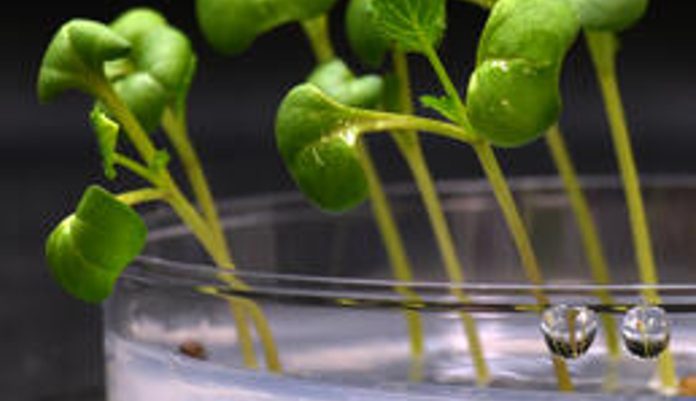
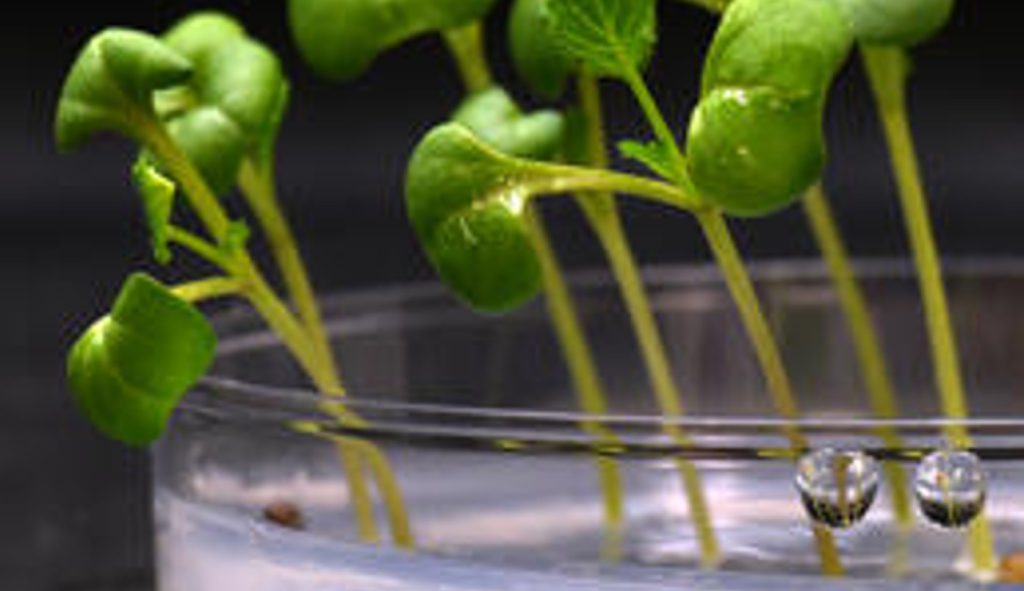
Plants growing in an electrolyzed medium containing acetate that replaces natural photosynthesis
The research uses a two-step electrocatalytic process to convert carbon dioxide, electricity, and water into acetate, the form of the main component of vinegar. Food-producing organisms then consume acetate in the dark to grow.
Combined with solar panels to generate the electricity to power the electrocatalysis, this hybrid organic-inorganic system could increase the conversion efficiency of sunlight into food, up to 18 times more efficient for some foods.
“With our approach we sought to identify a new way of producing food that could break through the limits normally imposed by biological photosynthesis,” said corresponding author Robert Jinkerson, a UC Riverside assistant professor of chemical and environmental engineering.
In order to integrate all the components of the system together, the output of the electrolyzer was optimized to support the growth of food-producing organisms. Electrolyzers are devices that use electricity to convert raw materials like carbon dioxide into useful molecules and products. The amount of acetate produced was increased while the amount of salt used was decreased, resulting in the highest levels of acetate ever produced in an electrolyzer to date.
“Using a state-of-the-art two-step tandem CO2 electrolysis setup developed in our laboratory, we were able to achieve a high selectivity towards acetate that cannot be accessed through conventional CO2 electrolysis routes,” said corresponding author Feng Jiao at University of Delaware.
Experiments showed that a wide range of food-producing organisms can be grown in the dark directly on the acetate-rich electrolyzer output, including green algae, yeast, and fungal mycelium that produce mushrooms. Producing algae with this technology is approximately fourfold more energy efficient than growing it photosynthetically. Yeast production is about 18-fold more energy efficient than how it is typically cultivated using sugar extracted from corn.
“We were able to grow food-producing organisms without any contributions from biological photosynthesis. Typically, these organisms are cultivated on sugars derived from plants or inputs derived from petroleum—which is a product of biological photosynthesis that took place millions of years ago. This technology is a more efficient method of turning solar energy into food, as compared to food production that relies on biological photosynthesis,” said Elizabeth Hann, a doctoral candidate in the Jinkerson Lab and co-lead author of the study.
The potential for employing this technology to grow crop plants was also investigated. Cowpea, tomato, tobacco, rice, canola, and green pea were all able to utilize carbon from acetate when cultivated in the dark.
“We found that a wide range of crops could take the acetate we provided and build it into the major molecular building blocks an organism needs to grow and thrive. With some breeding and engineering that we are currently working on we might be able to grow crops with acetate as an extra energy source to boost crop yields,” said Marcus Harland-Dunaway, a doctoral candidate in the Jinkerson Lab and co-lead author of the study.
By liberating agriculture from complete dependence on the sun, artificial photosynthesis opens the door to countless possibilities for growing food under the increasingly difficult conditions imposed by anthropogenic climate change. Drought, floods, and reduced land availability would be less of a threat to global food security if crops for humans and animals grew in less resource-intensive, controlled environments. Crops could also be grown in cities and other areas currently unsuitable for agriculture, and even provide food for future space explorers.
“Using artificial photosynthesis approaches to produce food could be a paradigm shift for how we feed people. By increasing the efficiency of food production, less land is needed, lessening the impact agriculture has on the environment. And for agriculture in non-traditional environments, like outer space, the increased energy efficiency could help feed more crew members with less inputs,” said Jinkerson.
This approach to food production was submitted to NASA’s Deep Space Food Challenge where it was a Phase I winner. The Deep Space Food Challenge is an international competition where prizes are awarded to teams to create novel and game-changing food technologies that require minimal inputs and maximize safe, nutritious, and palatable food outputs for long-duration space missions.
“Imagine someday giant vessels growing tomato plants in the dark and on Mars—how much easier would that be for future Martians?” said co-author Martha Orozco-Cárdenas, director of the UC Riverside Plant Transformation Research Center.
This research has been published in in Nature Food.
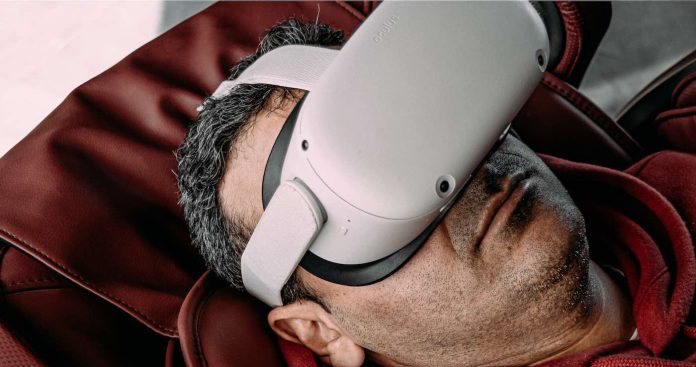
Previous research has described how virtual training produces acute cognitive and neural benefits. Building on those results, a new study suggests that a similar virtual training can also reduce psychosocial stress and anxiety.
Physical exercise benefits our overall well-being. But for some—such as neurological patients, people suffering from cardiovascular disease, and hospitalized patients—physical exercise is not feasible, or even too dangerous. However, similar effects may be brought about using Immersive Virtual Reality (IVR).
Despite initially designed for entertainment, IVR has attracted interest from the academic community because of its potential use for clinical purposes, since it allows the user to experience a virtual world through a virtual body.
In the previous study from researchers at Tohoku University’s Smart-Aging Research Center, they found that looking at a moving virtual body displayed in first-person perspective induces physiological changes. Heart rates increased/decreased coherently with the virtual movements, even though the young participants remained still. Consequently, acute cognitive and neural benefits occurred, just like after real physical activity.
In a followup study, the same benefits were also found on healthy elderly subjects after 20-minute sessions occurring twice a week for six weeks.
In the current study, the researchers explored the effect on stress, adding another level to the beneficial effects of virtual training. Young healthy subjects, while sitting still, experienced a virtual training displayed from the first-person perspective, creating the illusion of ownership over movements.
The avatar ran at 6.4 km/h for 30 minutes. Before and after the virtual training, the researchers induced and assessed the psychosocial stress response by measuring the salivary alpha-amylase—a crucial biomarker indicating the levels of neuroendocrine stress. Similarly, they distributed a subjective questionnaire for anxiety.
The results showed a decreased psychosocial stress response and lower levels of anxiety after the virtual training, comparable to what happens after real exercise.
“Psychosocial stress represents the stress experienced in frequent social situations such as social judgment, rejection, and when our performances get evaluated,” says Professor Dalila Burin, who developed the study.
“While a moderate amount of exposure to stress might be beneficial, repeated and increased exposure can be detrimental to our health. This kind of virtual training represents a new frontier, especially in countries like Japan, where high performance demands and an aging population exist.”
biochar released Kari Kohvakka _ Stockholm Batten och Avfall _Stockholm Biochar Project _ Nordregio.
Reprinted with permission from World At Large, a news website of nature, politics, science, health, and travel.
Kari Kohvakka/Stockholm Batten och Avfall/Stockholm Biochar Project/Nordregio
Imagine if every time you threw out your lawn and garden waste, you were actively fighting global warming? That’s the capacity a new soil amendment technology hopes to unleash across the world.
This potentially-revolutionary method of making fertilizer that almost completely removes greenhouse gas emissions has received a grant from Bloomberg Philanthropies to be incorporated into 7 major cities’ landscaping programs.
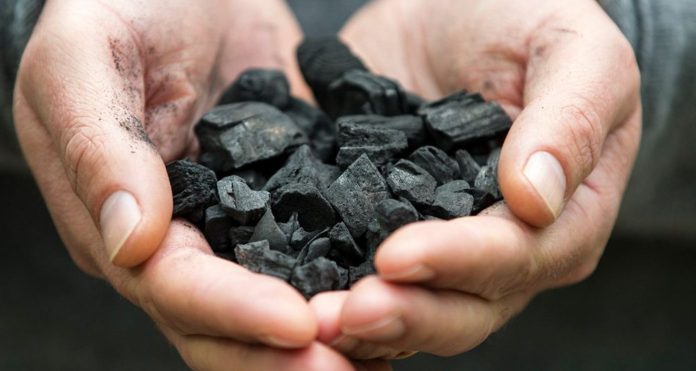
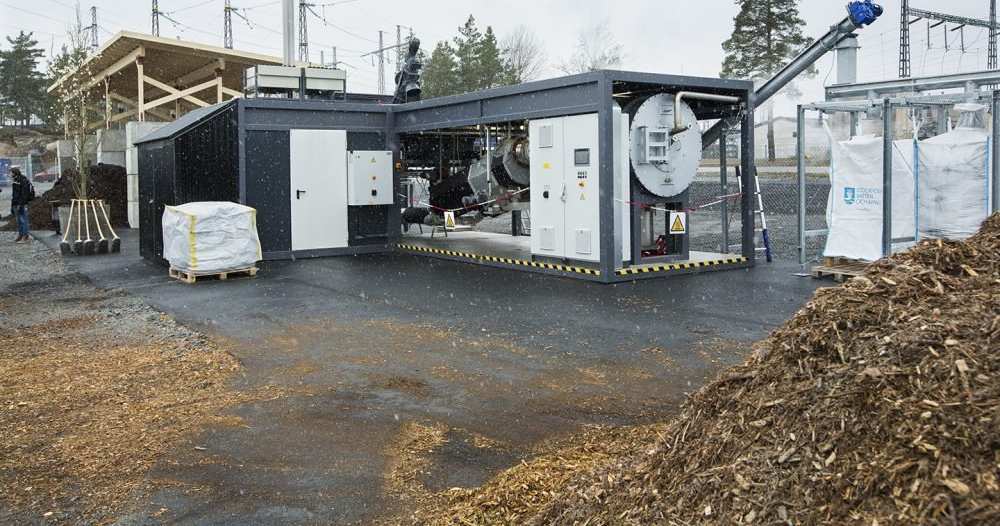
Making “biochar” as it’s called, has been modernized recently in Sweden, and is done by putting grass trimmings, hedge clippings, tree branches, or any other kind of yard waste, into an enclosed space and “pyrolyzing it” in such a way as to avoid the rapid oxidation of CO2.
Turned into a charcoal-like substance, it’s not only carbon negative, meaning it removes more CO2 than it produces, but also more effective soil nutrition than other traditional soil amendments like nitrogen-phosphorus fertilizer.
On Tuesday, Bloomberg Philanthropies announced it was awarding grants of $400,000 to seven major cities in Scandinavia and the U.S. to implement the winning-project of the charity’s 2014 Mayor’s Challenge: The Stockholm Biochar Project.
Each city will receive implementation and technical support from Bloomberg to develop city-wide biochar projects and engage residents in the fight against climate change. It’s expected to produce 3,750 tons of biochar, all from lawn and garden waste from city parks, median strips, and other green spaces, which would sequester almost 10,000 tons of CO2 per year—the equivalent of taking 6,250 cars off the roads.
Normally, municipal lawn and garden waste is trucked to landfills where it will decompose and release all the carbon it absorbed through its life back into the atmosphere, as well as other gasses from the bacteria feeding on it. With a biochar plant however, every branch and twig thrown into the sophisticated-yet-straight-forward furnace is having its carbon captured almost forever.
Stockholm success
This revolution started in Stockholm, where, after opening its first five biochar plants in 2017, the city began distributing this new fertilizer/soil amendment to citizens for free, if they merely bring whatever yard waste they might have.
“If you buy something from the store you want to do it correct from the beginning, but if you get something for free you can sort of play around with it, and see how it works in your garden,” Mattias Gustafsson, biochar expert, consultant, and original member of the Stockholm Biochar Project, told WaL.
Kari Kohvakka/Stockholm Batten och Avfall/Stockholm Biochar Project/Nordregio
“Biochar, if you look at it under a microscope, it looks a bit like a sponge, so that will absorb and absorb nutrients and water, so if you put that in the soil it’s like a nutrient-loaded battery,” says Gustafsson. “Let’s say you’re sowing potatoes: you dig a ditch where you have the potatoes and you put some biochar in there, then you put the potatoes, then you cover it with soil”.
Extensive scientific research has shown that compared to traditional soil amendments and fertilizer, biochar, when combined with animal waste such as cow urine or manure, can increase yields more than 100%. A meta-analysis of meta-analyses examining the benefits of biochar in agriculture found that, especially for acidic soils like those in the tropics, and especially when combined with other fertilizers, biochar can significantly increase crop yield.
Root length, mass, and number of tips all increased substantially in crops grown with biochar, which could significantly impact carbon-capturing forest farms. Microbial content in the soil was also increased substantially through the use of biochar.
Research done at the Ithaka Institute in Nepal showed that cow urine-enriched biochar blended with compost resulted on average in 123% greater crop yield compared to organic farming practices done with cow urine-enriched compost, and 100% greater crop yield compared to the use of nitrogen-potassium-phosphorus fertilizer.
Weekend carbon capture
The scalability, ease-of-use, and remarkable reduction in the emissions from fertilizer production puts biochar at a breakout moment. With governments routinely pledging to give scientists billions to develop new ways to prevent climate change, biochar imposes only an extra step during one’s bi-weekly yardwork chores.
“It’s unique because you put the biochar into an area with the absence of oxygen, and we get a very stable form so it can stay in the soil for hundreds up to thousands of years,” says Gustafsson. “We have more cities in Sweden that are following the Stockholm Biochar Project model and more are on the way, but we are trying to get more industries interested in using and producing biochar”.
In 2019, according to Bloomberg Philanthropies, Minneapolis had been “blown away” by how simple the biochar solution was, and has since been bringing truckloads into town from a biochar plant in Missouri.
“It was a lot simpler than I imagined it to be,” said Robin Hutcheson, Minneapolis’ public works director at the time. “I think I had imagined biochar as something that was chemical and complicated and difficult to produce and difficult to use. What I learned is that it is actually simple to produce and able to be used in a variety of settings”.
Minneapolis is looking at all kinds of ways of using biochar. They have given it to local Native American Tribal governments to boost agriculture—which it has, to the tune of 30%. They’ve looked into including it with roadway reconstruction projects to boost rainwater collection, another benefit of the sponge-like biochar. They want to open their own biochar plant, after being impressed how Stockholm’s turned the heat from the production process into energy for the city’s power grid.
Now, one of the most important steps is on the cusp of being completed: the transition from a government program into a market industry. Currently in Sweden one can simply walk into a garden store and buy biochar. Most critically in the age of e-commerce, various vendors on Amazon in a number of countries will ship biochar right to your house, and while the price is high for a soil amendment, the amount needed for sowing is quite low.
“I think it’s a really important point for cities to reach out to the public as well,” adds Gustafsson. “Thank you for bringing your sticks and branches to our biochar machine, please put the biochar in your garden.”
Gustafsson thinks there will be a day when, like a weekend-woodchipper rental, people will be able to rent a mobile-biochar plant for the end-of-season hedge trimming.
“We had the idea of a small machine going around making biochar that people can rent, so definitely a thing that could be possible, someone just has to make the economics around it”.
SHARE This Story With All Your Friends Who Love Stories of Real Innovation…
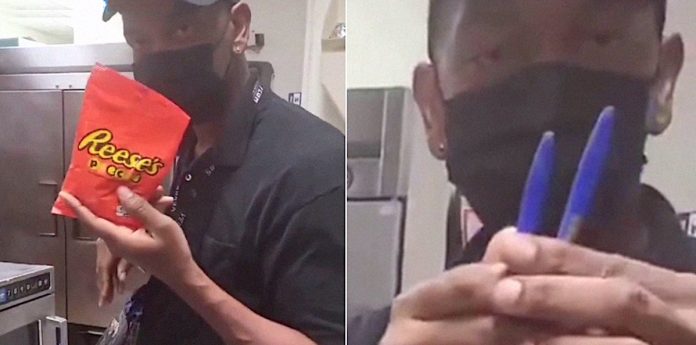
Social media was furious on behalf of Kevin Ford, a food service employee, who recently posted an Instagram video unwrapping of a thank you gift he received for 27 years of perfect attendance on the job.
Seeing how it contained a reusable Starbucks cup, a bunch of candy, a pen, and a single movie ticket, they decided to give Ford their own gift for his exemplary service—$270,000 in personal donations for the man so near to retirement.
The original unwrapping video was viewed 2 million times, though not everyone was as happy and understanding as Kevin, who said thank you for every item he received.
“The man in that video is my father. He originally began working at this job as a single father when he gained custody of me and my older sister 27 years ago,” Seryna added. “In no way are we asking for money or is he expecting any money but if anyone feels like blessing him he would love to visit his grandchildren.”
In just over a week, this delicate call for mutual appreciation of a good man who works at the Burger King at Las Vegas McCarren International Airport amassed a quarter-million dollars, including $5,000 from writer and comedian David Spade.
In a pair of statements, Burger King, the restaurant Mr. Ford works in, and HMSHost, the staffing company that mans it, explained the gift was a peer-to-peer recognition, and not a franchise award for 27 years of immaculate service.
“For all those years, you feel unappreciated, but you get up just like everybody else. You do your job, and for somebody to show this appreciation is just overwhelming,” Ford told TODAY in an interview. “It’s like I’ve been in a dream for almost two days now. It’s just so beautiful and awesome.”
(WATCH the video for this story below.)
SHARE This Story of True Generosity With All Your Buddies…