









All News - Page 378 of 1715 - Good News Network
Home Blog Page 378

New Hydrogen Fuel Cells Use Cheap Iron Instead of Costly Platinum for Green Vehicles

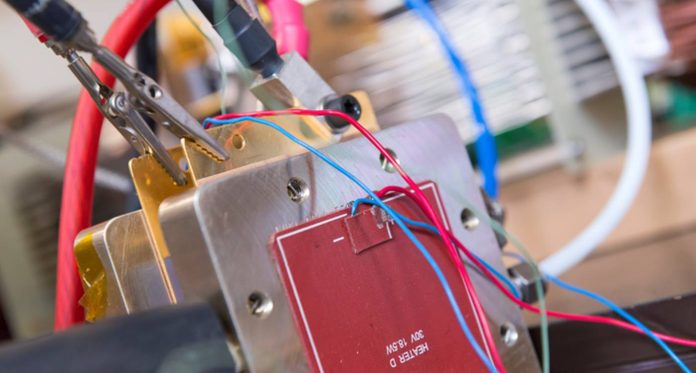
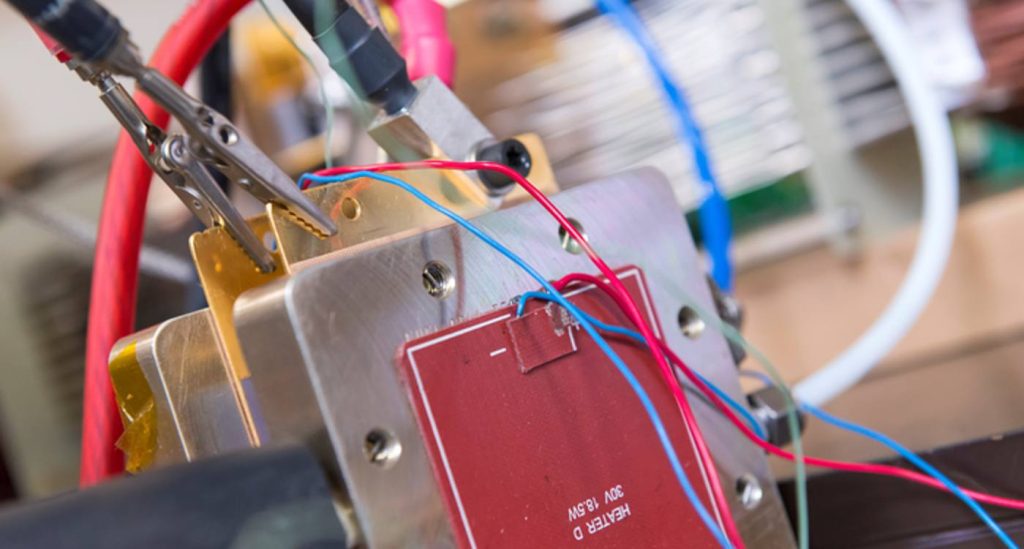
the fuel cell being tested in teh lab released Imperial College London
The fuel cell being tested in the lab; Imperial College London

Researchers have developed a hydrogen fuel cell that uses iron instead of rare and costly platinum, enabling greater use of the technology.

Hydrogen fuel cells convert hydrogen to electricity with water vapor as the only by-product, making them an attractive green alternative for portable power, particularly for vehicles.

However, their widespread use has been hampered in part by the cost of one of the primary components. To facilitate the reaction that produces the electricity, the fuel cells rely on a catalyst made of platinum, which is expensive and scarce.

Now, a European team led by Imperial College London researchers has created a catalyst using only iron, carbon, and nitrogen—materials that are cheap and readily available—and shown that it can be used to operate a fuel cell at high power.

Lead researcher Professor Anthony Kucernak, from the Department of Chemistry at Imperial, said, “Currently, around 60% of the cost of a single fuel cell is the platinum for the catalyst. To make fuel cells a real viable alternative to fossil-fuel-powered vehicles, for example, we need to bring that cost down.

RELATED: Scientists Develop Breakthrough Method for Recycling Industrial Plastics at Room Temperature in 20 Minutes

“Our cheaper catalyst design should make this a reality, and allow deployment of significantly more renewable energy systems that use hydrogen as fuel, ultimately reducing greenhouse gas emissions and putting the world on a path to net-zero emissions.”

An iron boost

The team’s innovation was to produce a catalyst where all the iron was dispersed as single atoms within an electrically conducting carbon matrix. Single-atom iron has different chemical properties than bulk iron, where all the atoms are clustered together, making it more reactive.

These properties mean the iron boosts the reactions needed in the fuel cell, acting as a good substitute for platinum. In lab tests, the team showed that a single-atom iron catalyst has performance approaching that of platinum-based catalysts in a real fuel cell system.

MORE: Solar Panels Built From Waste Crops Can Make Energy Without Direct Light

As well as producing a cheaper catalyst for fuel cells, the method the team developed to create could be adapted for other catalysts for other processes, such as chemical reactions using atmospheric oxygen as a reactant instead of expensive chemical oxidants, and in the treatment of wastewater using air to remove harmful contaminants.

Unique synthetic method

First author Dr Asad Mehmood, from the Department of Chemistry at Imperial, said, “We have developed a new approach to make a range of ‘single atom’ catalysts that offer an opportunity to allow a range of new chemical and electrochemical processes.

RELATED: Researchers Make ‘Giant Leap’ to Produce Affordable Renewable Hydrogen

“Specifically, we used a unique synthetic method, called transmetallation, to avoid forming iron clusters during synthesis. This process should be beneficial to other scientists looking to prepare a similar type of catalyst.”

The team, whose results are published Nature Catalysis, collaborated with UK fuel cell catalyst manufacturer Johnson Matthey to test the catalyst in appropriate systems and hope to scale up their new catalyst so it can be used in commercial fuel cells.

In the meantime, they are working to improve the stability of the catalyst, so it matches platinum in durability as well as performance. That’s an exciting development indeed.

Source: Imperial College London

GREEN UP Those News Feeds With the Good News…

Bartender Immediately Drops Beer to Save Family Swept By Rogue Wave Into Rip Current

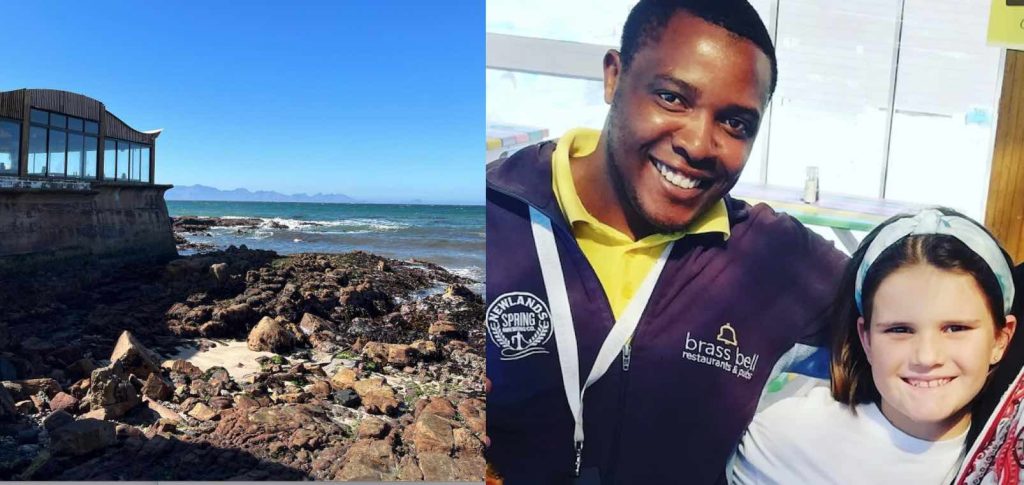
Tongai Matandirotya
Ayra with rescuer Tongai Matandirotya – Brass Bell Kalk Bay on FB

An ordinary shift at the bar became an exercise in heroism for one bartender in South Africa recently.

Tongai Matandirotya, who works at Brass Bell Restaurant near Cape Town left behind any thoughts of his own safety—and of the drink he was pouring for a customer—to dive into the cold Atlantic ocean to rescue a mother and daughter swept off the pier by a rogue wave.

It was a relatively calm day in the fishing village of Kalk Bay. Several people were walking by the window of Brass Bells looking out to the water. Then the scene changed dramatically.

“I saw this wave come over the harbor and it covered the people, dragging them into the ocean. I immediately ran outside, undressed myself, and dived into the water because I saw a child go in as well. I have a very soft spot for kids, and my instinct just kicked in to see if I could help,” Matandirotya told News 24 Cape Town.

37-year-old Clair Gardiner and her 8-year-old daughter Arya van Hilten were two of the people swept away. Gardiner knew they were being pulled into the water as soon as the wave rushed over them, and she managed to wrap her arms around little Arya.

RELATED: Wheelchair Tumbles into Lake, But 81-Year-old is Saved From Drowning By His Dog’s Barking

By now Matandirotya had dropped the drink he was pouring, taken off his belt and jumped into the water—followed by a tourist unnamed by the news reports.  By then the ferocity of the waves, even just a few meters from shore, had pulled Gardiner and Arya apart; he used his belt to rescue Arya who wasn’t able to stay afloat by herself.

MORE: Woman Ensures Safety of Passengers By Waving Her Red Sari to Stop a Train After Spotting Broken Track

“I recently went to the restaurant to thank him,” Gardiner told local news. “My daughter recognized him immediately, and we all embraced each other. We are so thankful to Tongai and the tourist man who risked their lives to save ours; we’ll forever be grateful to them.”

Tongai noticed he had been badly scratched up by the concrete wall of the pier, but only after finishing his heroics, and reckoned the mostly-cosmetic damage wasn’t anything to worry about.

Brass Bell congratulated their man on Facebook, saying they were “so proud” of him, and appreciative of his heroism, with several commenters adding reminders to “tip him well.”

MAKE SOME WAVES – Share This Hero Story on Social Media…

“Chaos in the world brings uneasiness, but it also allows the opportunity for creativity and growth.” – Tom Barrett

Markus Spiske - public domain.

Quote of the Day: “Chaos in the world brings uneasiness, but it also allows the opportunity for creativity and growth.” – Tom Barrett

Photo by: Markus Spiske

With a new inspirational quote every day, atop the perfect photo—collected and archived on our Quotes page—why not bookmark GNN.org for a daily uplift?


Friendship Ornaments From the Stone Age Were Crafted and Worn as a ‘Symbol of connection’

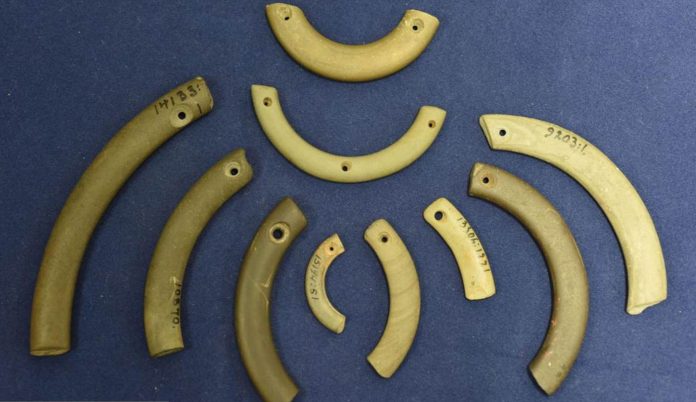
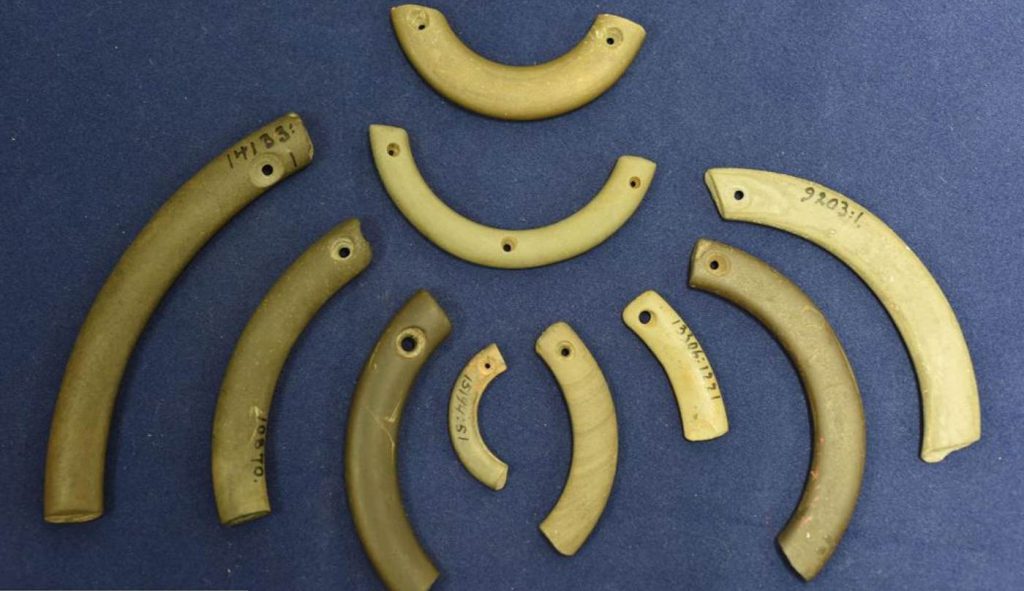
Ornamental slate rings from the Stone Age. (Image- Marja Ahola) released university of helsinki featured
Ornamental slate rings from the Stone Age; Marja Ahola, University of Helsinki

Roughly 6,000 years ago, hunter-gatherer communities in northeast Europe produced skillfully manufactured slate ring ornaments in great numbers. While these ornaments are commonly referred to as ‘slate rings’, they were rarely used as intact rings. Instead, the ornaments were fragmented on purpose, using pieces of rings as tokens. These fragments were further processed into pendants.

The fragments have most likely served as symbols of the social relations of Stone Age hunter-gatherers.

Purposeful fragmentation of ornaments

As most archaeological material is found in a fragmented state, the phenomenon has been considered a natural consequence of objects’ having been long buried underground. However, according to Postdoctoral Researcher Marja Ahola from the University of Helsinki, not all objects have necessarily been broken by accident.

Instead, it is possible some were fragmented on purpose as part of maintaining social relations, bartering, or ritual activities. The research now completed has demonstrated that a substantial number of ornaments have been found in extensive and central locations. As some of the ornaments originate in Lake Onega region and have been transported to Finland through a widespread exchange network, it is possible that they symbolize the connections established within the network.

By matching pieces of slate ring ornaments, analyzing their geochemical composition and investigating traces of use and manufacture in the objects, a research group at the University of Helsinki and the University of Turku demonstrated that the ornaments had not only been worn, but also intentionally broken.

RELATED: 10-Year-old Finds Medieval Priory Seal Within Minutes of Using Metal Detector and Gets $5,000 For it

Because fragments from the same ornament were found in two different locations, it is possible that they were worn by two different individuals. Another indication of this is the fact that one of the fragments had been worked on more finely than the other.

Handprints that tell a story

“These fragments of the same object may show the handprint and preferences of two individuals. Perhaps they wore the ornaments as a symbol of a connection established,” Ahola muses.

A similar link was found in slate ring ornaments created during the same manufacturing process, one of which was found in a settlement-site context and the other in a burial site investigated near the settlement.

RELATED: 10-Year-old Finds Medieval Priory Seal Within Minutes of Using Metal Detector and Gets $5,000 For it

“What we see here may be one way of maintaining connection between the living and the dead. This is also the first clear material connection between a certain place of residence and a burial site. In other words, the people who lived there most likely buried their dead in a site close to them,” Ahola explains.

An X-ray fluorescence analysis (XRF) of a little over 50 slate ring ornaments demonstrated that some of the ornaments or fragments thereof had been imported from Lake Onega region, Russia, hundreds of kilometers from the site where they were found. XRF analyses can be used to determine the element concentrations and raw materials of inorganic archaeological materials with a very high precision.

The technique can be applied as an entirely non-invasive surface analysis, which makes it perfectly suited to the study of archaeological objects.

MORE: Metal Detector Left Him Stunned After Unearthing Ancient Ring Belonging to the Sheriff of Nottingham

“By comparing the elemental concentrations of the objects under investigation with findings published on the basis of international datasets, we were able to demonstrate that some of the ornaments or the stone material used in them was transported to Finland through an extensive exchange network, primarily from the Lake Onega region.

There was also variation in the chemical composition of the objects, which correlates with their design. These factors indicate that the ornaments were produced at Lake Onega region in several batches, most likely in different locations and by a number of makers,” says Docent Elisabeth Holmqvist-Sipilä from the University of Helsinki, whose research on these ancient friendship ornaments has been published in the Journal of Archaeological Method and Theory.

Source: University of Helsinki

TAKE Friends Back in Time; Share This Story…

Family’s New Puppy is Seriously a Golden – After Digging Up Rare Coins Worth $8k

SWNS
SWNS

A family’s new puppy is already worth his weight in gold, after digging up sovereign coins worth nearly £6,000 ($7,564).

51-year-old Adam Clark bought Ollie, a lagotto romagnolo, as a surprise for his nine-year-old daughter Alicia last month.

The breed is known for digging—especially for truffles—and on March 30, on his first walk around the local English fields, the young dog stumbled upon a small fortune.

To his Blackpool-based owner’s delight and utter disbelief, Ollie instinctively dug up a total of 15 gold sovereign pieces likely dating back to the 19th century.

Adam, who works in property, took the gold coins to be examined by Chards, one of the leading gold dealers in the country—who valued them at a staggering £5,943.96 ($7,564).

RELATED: Vast Majority of Dog Owners Believe They Can Read Their Pooch’s Mind

The landlord is thrilled with the return from the treasure, but believes the real prize is Ollie himself, dubbing him his very own “gold hunter.”

SWNS

Adam said, “When we got him we thought he seemed special. Alicia was over the moon and we couldn’t wait to take him out for his first walk around the gala fields.

MORE: Miracle Dog Survives 12 Days Trapped in Badger Holes After Owner Refuses to Give Up, Camping in the Woods

“We’d literally been walking for around ten minutes when Ollie suddenly stopped and started frantically digging away at the soil. That’s when he uncovered the pile of gold pieces—I couldn’t quite believe it.”

SWNS

The proud pup’s owner said, “The treasure is one thing, but, the fact is, I’ve bought myself my very own gold hunter, and I cannot wait to take him out again. He is obviously a very special pup and I’m thrilled with what he brings to the table—quite literally!”

RAISE a PAW for This Gold Digger’s Story; Share it on Social Media…

Dutch Visionary Helps Refugee Camp Recycling All of its Plastic Trash into New Products

Precious Plastic
Precious Plastic

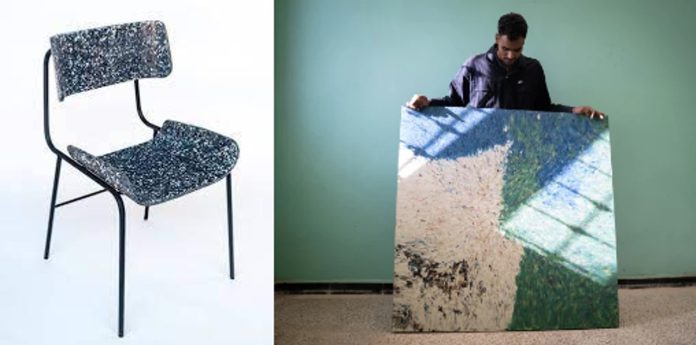
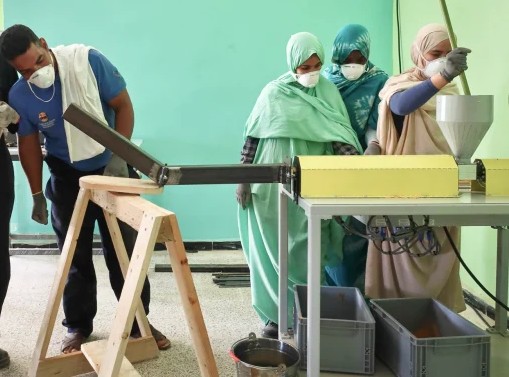
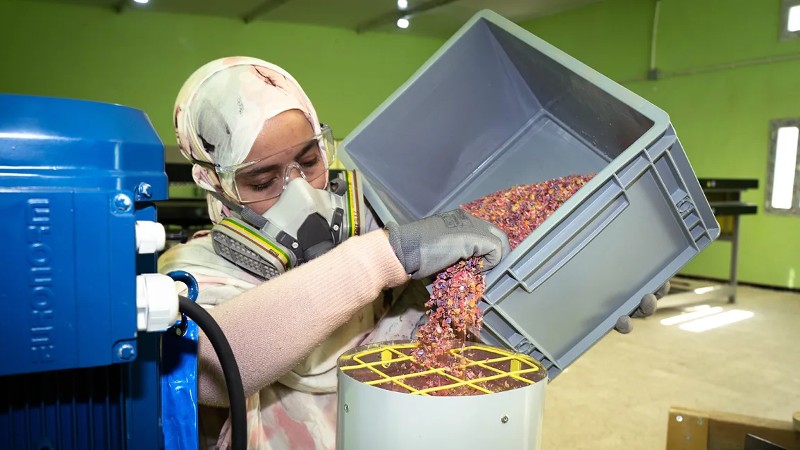
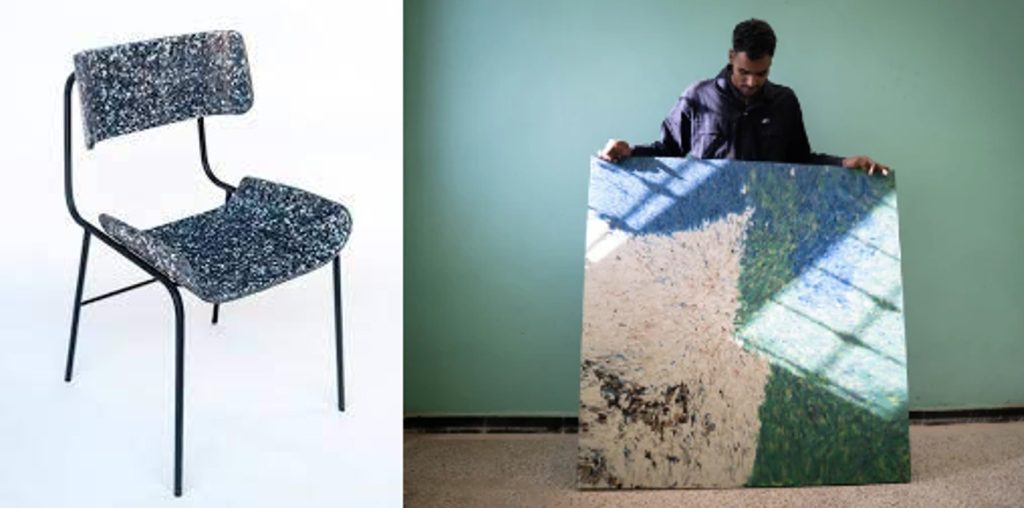
A refugee camp in the northern Sahara that relies on international aid for everything has gotten their hands on small, relatively-portable plastic recycling machines to turn the camp’s waste plastic into furniture, bricks, and other useful objects.

For years, pallets of supplies containing food, water, and medicine would arrive—then they went into a sandy, makeshift landfill. Now that waste is being placed in two machines, which either presses plastic waste into sheets, or melts itinto blocks.

Far from being just another line of government aid, Precious Plastic—which was started by Dave Hakkens as part of his studies at the Design Academy in Eindhoven in 2012—is fully-intending to train a workforce at the camp. It will donate the machines, and let the people build their own business there.

Entrepreneurship goes a long way in helping alleviate poverty, and the Precious Plastic project understands this.

At the camp there is a “large refugee population there with a high unemployment rate,” Joseph Klatt, managing director at Precious Plastic, told Adele Peters at Fast Company.

“Everything is brought into the camps, so there’s not a lot of economic activity going on. And secondarily, there’s a lot of waste in the camp. [This solution helps in the creation of] a new business from processing the plastic waste and providing some economic activity for the refugees.”

RELATED: Amazon Joins the U.S. Department of Energy and MIT to Tackle Plastic Waste With New Science

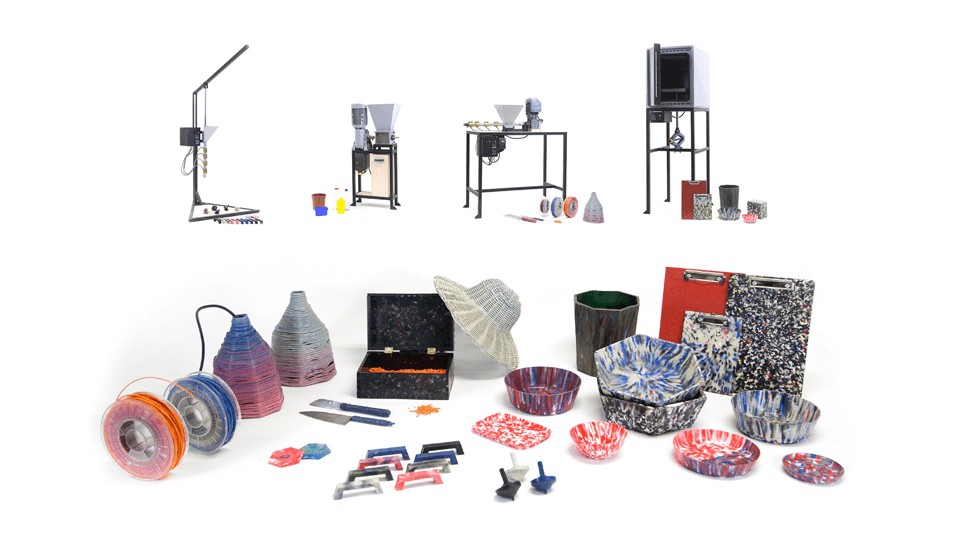
The machines were packed up into a single shipping container in 2021—which included shredders, washer/dryers, smelters, and presses.

Precious Plastic

After some introductory instruction, refugees at the camp got on with making benches, chairs, and desks for the school, and tea sets to support the Sahara’s most widespread drinking habit.

Precious Plastic

Precious Plastic isn’t a humanitarian aid group though; they call themselves an open hardware plastic recycling project, and they want anyone around the world who cares about the plastic pollution problem to start their own recycling business using their machines.

MORE: Texas Researchers Use Okra to Remove Microplastics from Wastewater

They even offer business starter kits, including work sheets and logos to help kickstart operations. All Precious Plastic businesses are connected to all others via the use of open source technology, allowing entrepreneurs to share best practices and operating data.

Precious Plastic

On their website, users can expand operations by purchasing more equipment, community-made molds for making products, and even shop for final products themselves, which far from looking like they’re made of LEGO bricks, tend instead towards looking like tie-dye artworks or watercolors.

(WATCH the video for this story below.)

SHARE This Visionary’s Story With All Your Buddies…

Facebook, Google, Stripe, Shopify Investing a Billion Dollars in Pre-Orders for Captured Carbon

Four gargantuan tech companies have put together a $1.2 billion fund to pull carbon out of the atmosphere with a unique model that could go a long way to preventing 1.5°C of warming.

The money will be fronted by companies looking to purchase a security which guarantees a certain amount of carbon removed from the atmosphere, but rather than bidding up prices for existing methods of carbon capture, Frontier will fund additional methods.

Set up by Meta (Facebook), Alphabet (Google), Shopify, and Stripe, their fund—called Frontier—has its own motto: Build and We Will Buy.

A wholly-owned subsidiary of Stripe, Frontier will also be funded by the tens of thousands of businesses who purchase carbon removal via Stripe Climate. This will make Frontier the world’s largest coalition of carbon removal purchasers through funding and membership.

MORE: Man Wins 200 Million on the Lottery and Donates Almost All of It to Save the Earth

The fund will build an eight-year, $925 million commitment to accelerate the development of permanent carbon removal technologies, by aggregating demand from buyers looking to offset the carbon emissions from their supply chain, before distributing that demand among suppliers—in this case firms with proven technology to pull carbon from the air.

Frontier, managed by McKinsey Sustainability, will focus on solutions with permanence, or the ability to store carbon for more than a thousand years; solutions which will be affordable at less than $100 per ton of carbon; can be verifiable; don’t rely on arable land, and remove carbon already in the atmosphere rather than relying on preventing carbon from entering it.

“Frontier aims to send a strong demand signal to researchers, entrepreneurs, and investors that there is a market for carbon removal,” Alphabet said in their release.

Following the recent report by the IPCC regarding the lack of progress made on carbon-cutting goals, McKinsey Sustainability joined up with the Frontier effort in support of developing carbon removal technology by offering pro-bono advisory support to carbon removal startups and businesses taking part in the initiative.

RELATED: Tiny Marine Microbe ‘Could Turn Out to be Secret Weapon in Battle Against Climate Change’

Carbon can be pulled from the air in various ways, some more effective than others, and some are more scalable.

Among these are strategies as varied as giant fans which suck up CO2, separate it from oxygen, and then deposit it deep underground—and vodka made from ethanol created with CO2 from the air.

Other methods trap carbon in building materials like concrete made by this Richard Branson-backed startup, or into lifeforms like algae before being made into household products.

DON’T CAPTURE Good News All to Yourself; Share It With Friends…
Livin’ Good Currency – Ep 7: The Big Record Executive Who’s Setting Innocent Prisoners Free

The Lesson: In many circumstances, the U.S. government, and those governing the 50 states, will place extraordinary, ruinous sentences on men and women who are simply in a difficult period of their lives socially, or who happen to be in the wrong place at the wrong time. Well these loaded convictions are not always the end of the story, as there are many people and organizations around the country, whose effort often goes unreported, working to free first-time or non-violent offenders.

Notable Excerpt: “It was Winston Churchill who said ‘we make a living by what we get we make a life by what we give,’ and it’s also true [that] at the end of the day I’ve been very fortunate in the music industry. I’ve discovered a lot of great artists, helped to launch their careers—but nobody really cares, it doesn’t matter. Nobody really cares next week. Nobody cares who discovered the Beatles! Who discovered the Beatles, do you guys even know? I don’t know, it doesn’t even matter! The Beatles matter, they’ll always matter. But what does matter is that I’ve helped so many people get out of prison, start their lives again, help put their families back together, that actually does matter.”

The Guest: Jason Flom was described by the New Yorker as one of the most successful record-men of the last 20 years, and serves as CEO of Lava Media. He held previous positions as chairman of Atlantic Records, Virgin Records, and Capitol Music Group, and played a major part in the breakouts of artists like Katy Perry, Lorde, Gretta Van Fleet, and Kid Rock. His other life is in criminal justice reform, and hosts the podcast Righteous Convictions, which features interviews of people working for change in criminal justice. His work with criminal defense attorneys has seen dozens of first-time, non-violent, or innocent convicts regain their freedom.

The Podcast: Livin’ Good Currency explores the relationship of time to our lives. It gives a simple, straight-forward formula that anyone can use to be present in the moment—and features a co-host who knows better than anyone the value of time (see below). How do you want to spend your life? This hour can inspire you, along with upcoming guests, to be sure you are ‘Livin’ Good Currency’ and never get caught running out of time.

The Hosts: Good News Network fans will know Tony (Anthony) Samadani as the co-owner of GNN and its Chief of Strategic Partnerships. Co-host Tobias Tubbs was handed a double life sentence without the possibility of parole for a crime he didn’t commit. Behind bars, he used his own version of the Livin’ Good Currency formula to inspire young men in prison to turn their hours into honors. An expert in conflict resolution, spirituality, and philosophy, Tobias is a master gardener who employs ex-felons to grow their Good Currency by planting crops and feeding neighborhoods.

Subscribe to the Pod:  On iTunes… On Spotify… On Amazon Music… Or Google Play.

“Proud-pied April, dressed in all his trim, hath put a spirit of youth in everything.” – William Shakespeare

Quote of the Day: “Proud-pied April, dressed in all his trim, hath put a spirit of youth in everything.” – William Shakespeare (Sonnet 98)

Photo by: Ali G Rashidi

With a new inspirational quote every day, atop the perfect photo—collected and archived on our Quotes page—why not bookmark GNN.org for a daily uplift?


Tourists Come to See Tulips in Holland Once Again, Grabbing Incredible Photos of Spring – LOOK

Tulip fields in Lisse, Netherlands by Matt Cooper – SWNS

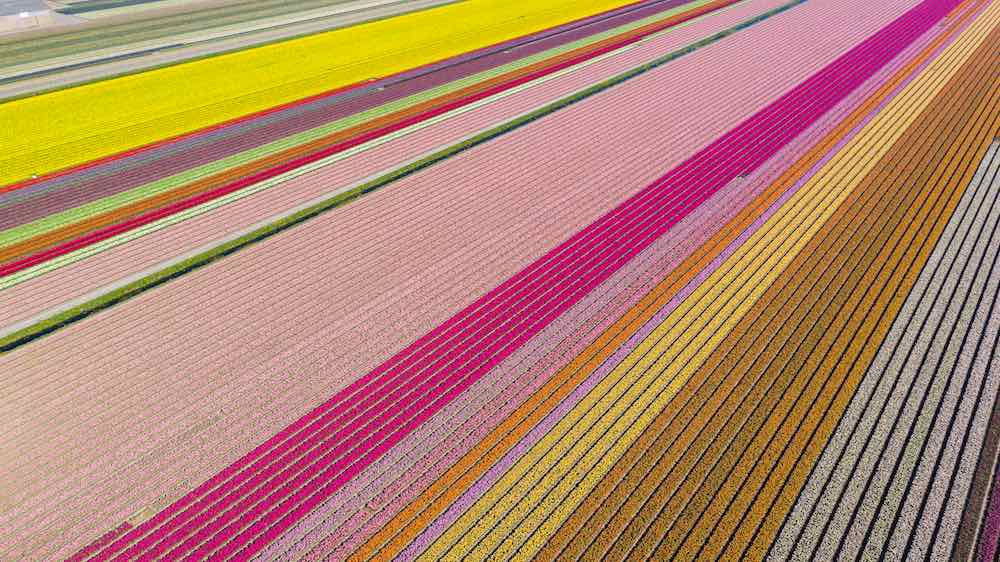
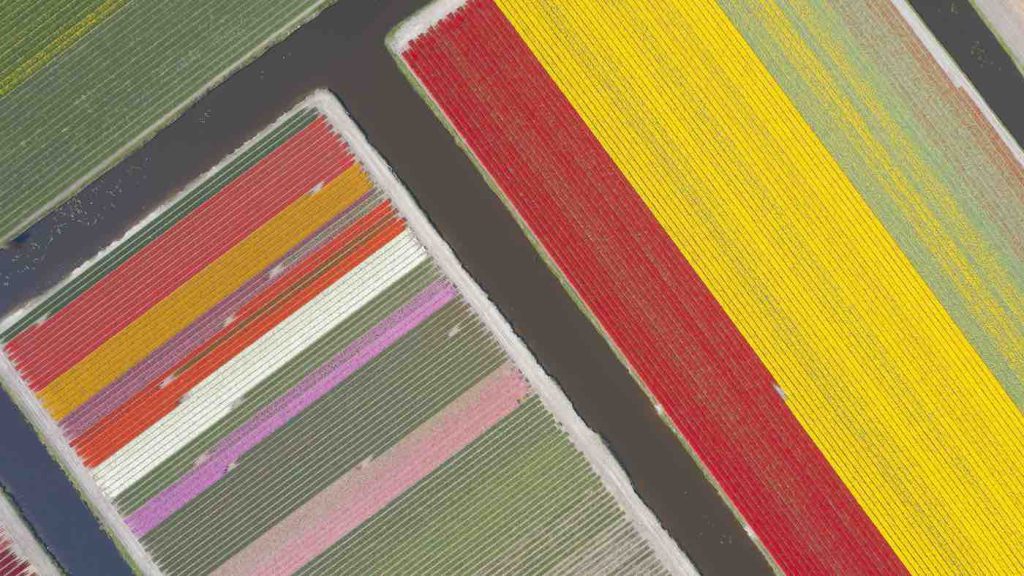
Photographs in the last few weeks show the stunning kaleidoscope of colors bursting into bloom in Holland’s tulip fields.

Beginning in late March, millions of blooms have been delighting visitors in the Netherland with their patchwork of color.

British photographer Matt Cooper was one of those visitors. The 48-year-old from London traveled over the Easter weekend and shared his images and drone footage.

The images show Holland’s famous flower field landscapes, which have become a rich blanket of tulips with row upon of row of vivid block colors.

Tulip fields by Matt Cooper – SWNS

“I went there especially to shoot the tulips,” he said. “This is the best time to shoot them, as they flower in April and May every year.”

Cooper’s 4-day trip took him all over the country capturing the iconic fields by drone—especially the famous Keukenhof Tulip Gardens, one of the world’s largest flower gardens.

Noordoostpolder, Netherlands, by Matt Cooper – SWNS

The Garden holds an annual festival—but 2022 is the first time the festival has been open to the public since the pandemic. It runs through 15 May.

Cooper said the Dutch people take their tulips very seriously, and across the small country “there are hundreds of millions of tulips’.

By Matt Cooper – SWNS

“The weather was beautiful too.”

SEE the scenes of the resurgent Keukenhof Tulip Gardens…

SHARE a Pop of Color on Social Media – And Start Planning a Trip!

Scientists Invent De-icing Coatings to Cut Airline Delays by Lasting Longer Without Toxic Runoff

University of Illinois video

Airports delays are common, but especially during winter when jets need to be dowsed with thousands of gallons of deicing fluids to prevent ice formation and maintain the plane’s aerodynamics to avoid fatal accidents like the tragic Air Florida flight that fell into the Potomac River in Washington, DC directly after lift-off in a 1982 snow storm.

But as soon as any de-iced airplane takes off, most of the liquid slides from the surface of the aircraft and ends up polluting streams, lakes, and oceans.

Now, endeavoring to make a more efficient product immune to ice for such demanding industries, a team at the University of Illinois Chicago have developed a longer-lasting and eco-friendly alternative to conventional deicers.

“Glycols dissolve very fast and get washed away before the plane takes off, and it’s a serious problem that costs hundreds of millions of dollars—most of which literally ends up in the drain,” said Sushant Anand, assistant professor of mechanical engineering. “We thought, why not improve such chemicals themselves, and make alternatives that can last longer while being more biofriendly. And that is what we ended up doing.”

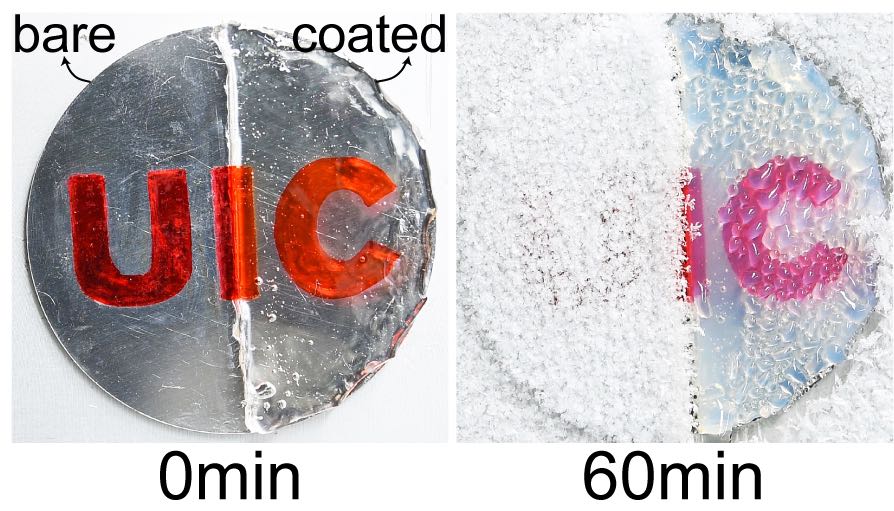
Working with Ph.D. student Rukmava Chatterjee, they accomplished their goal by developing 80 different anti-freezing coatings, which can be classified as polymeric solutions, emulsions, or gels. The formulations can be easily applied to aluminum, steel, copper, glass, plastic or any industrial surface without preconditioning or expensive surface treatments.

“Our coatings are an all-in-one package which can delay formation of frost for extended hours, and simultaneously cause any ice formed on its surface to easily shed off by a gentle breeze or simple substrate tilting,” Chatterjee said.

The anti-freezing gels are also transparent, which is critical for applications like traffic signals, runway lights that assist pilots during landings, automotive windshields, or building windows.

They worked with phase change materials because they had a melting point above the freezing point of water (0 degrees C). This means under sub-zero temperatures the materials are in their solid state, just like chocolate, butter, or water itself.

The multifunctional coatings can prevent the adhesion of ice (or bacteria) on surfaces, irrespective of their inherent material structure and chemistry. This was engineered by regulating how chemicals leach out of the material system and by creating a lubricating surface layer that is both slippery and non-freezing in nature.

Chatterjee told GNN that the idea came to him and his PhD advisor Prof. Anand back in 2016.

“It was February and I was flying out from Chicago to deliver a talk in an international conference on ice/frost protection technologies. Quite an irony! It was a frigid winter day and the flight was already delayed due to icing issues. As a plane full of frustrated passengers waited inside the aircraft for two hours, we watched the plane getting dowsed continuously with thousands of gallons to prepare it for a safe take-off. Later, I missed my next connecting flight due to this delay and had to drive overnight to the conference venue.”

“Since then we have been researching, formulating compositions & exhaustively testing them under real-life winter conditions to address this long standing issue. Being liquid, all these chemicals get easily dissolved away or sheared off, the moment the flight takes off. Our idea was to use certain materials which are solid when cold.”

POPULAR: Researchers Pull Carbon Out of the Sky And Convert it to Instant Jet Fuel, Reshaping Aviation For Good

“In our latest work we identified a family of these materials and encapsulated them in a polymer matrix. The objective being to preserve their native anti-icing property but to increase their lifetime,” he continued. “We prepared more than 80 such formulations in the form of sprayable solutions, emulsions, creams & gels. They can be easily sprayed or coated on any industrial surface (metal/ glass/ plastics) without the need for any special surface treatment.”

“A key point was to use materials which are bio-friendly. For example the anti-freezing gels we prepared are made of dimethyl sulfoxide (a by-product of plant industry and having miraculous medicinal properties) and gelatin (the stuff you use in making deserts and custards): so all very safe items.”

The gels are the best performing ones and have a significant edge amongst the developed formulations. They are easy to fabricate, require only two components, they can be easily cured/sprayed/painted/coated on any surface, regardless of shape. The best part is they are optically transparent even under icing/frosting conditions.

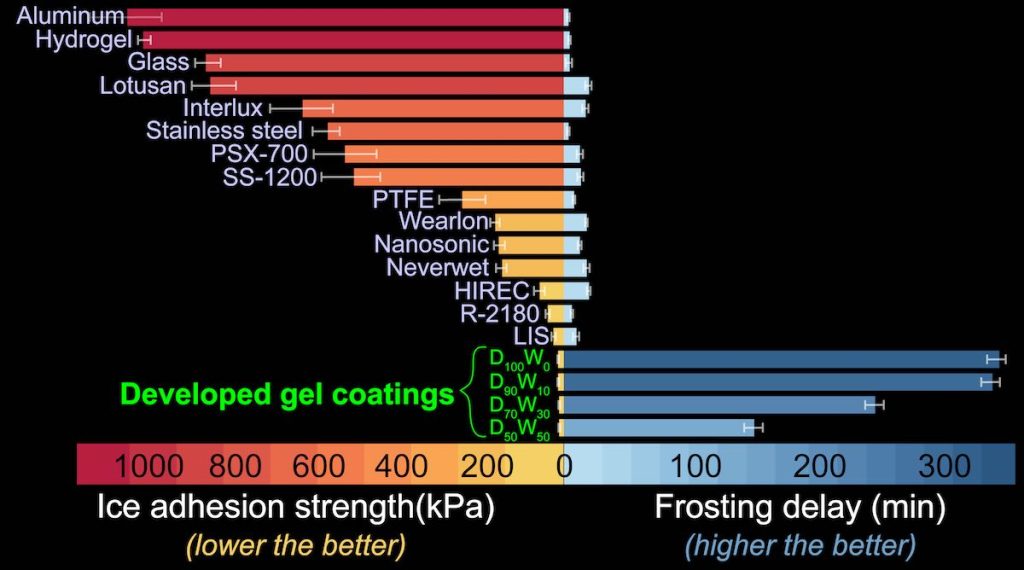
Their research published in Advanced Materials showed that, compared to commercial coatings available in today’s market, they perform better by an order of magnitude after exhaustive testing.

Chatterjee told GNN the gels are also anti-bacterial in nature. “Imagine coating your smart-watch (or any wearable electronic) with this gel and using it in winter. It can potentially prevent your watch’s battery from dying in the cold while also preventing it from bacterial contamination, thereby precluding the need for constant sanitization.”

RELATED: This Plant-Based Jet Fuel Can Reduce Emissions by 68% – Without Displacing Crops

For aerodynamic testing, the team coated a propeller blade and tested its anti-frosting performance under sub-zero winter conditions. They also subjected the coatings to very high shear airflow, simulating the conditions of a hurricane and tested their anti-frosting performance thereafter.

Of course, more exhaustive testing on actual airplanes in wind-turbines are needed to pass industrial test requirements before adopting them for real-life usage, but they do promise significant improvement over many commercial solutions available in the market presently.

“Since our anti-icing sprays are bio-friendly and anti-bacterial, we even think there is a potential to use them in agriculture to prevent crops from being ruined by severe frost,” Anand said. “But that is a pipe dream, and we need to do more studies to see if there will be any long-term adverse effect on the plants.”

MORE: A Flying Car Just Got Certified as Airworthy to Fly

A worldwide patent application titled “Compositions and Methods for Inhibiting Ice Formation on Surfaces” has been filed by UIC’s Office of Technology Management. Watch the video below for more information…

FLY THIS Great Idea to All Your Brilliant Friends on Social Media… 

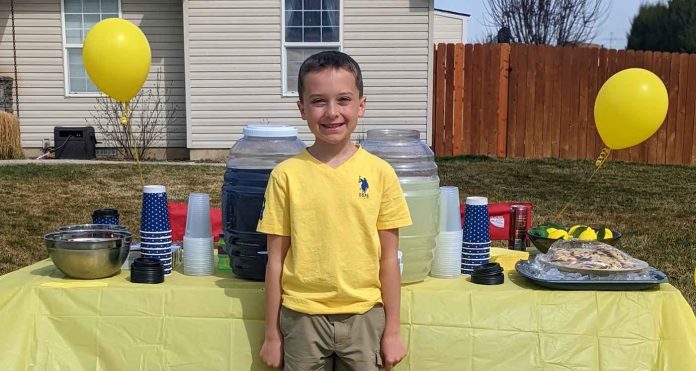
9-Year-old’s Lemonade Stand Raises $2,000 For Shelter Cats After He Saw They Had No Toys

Ben offered two kinds of lemonade including lavender - Miller family photo
Ben offered two kinds of lemonade including lavender – Miller family photo

A 9-year-old boy walked into his local animal shelter with a big plastic bag filled with cash, handing over all the proceeds he’d raised at a lemonade stand.

Ben Miller from Boise, Idaho, collected a whopping $1,150 in one weekend.

It was his third lemonade stand fundraiser since 2019, a year when he was visiting the Idaho Humane Society with his grandmother and noticed that some of the cats didn’t have toys.

So far, he’s donated a grand total $1,950 to support the cats he loves so much.

His mother helped him create an event on Facebook, which brought in people from across the valley. People also sent money without even visiting to get a drink.

“It was such a fun day meeting so many awesome people and their pets. We had a car full of people pull up saying they had just heard about it on the radio,” said Amy Miller on Facebook. And the highlight that topped off the day was Ben’s teacher coming by.

Ben says he has no plans to stop his charity work for the shelter, which makes his mother beam, even though she says he’s always had a big heart. “It really just blew me away.”

POPULAR: 8-Year-old Slips His Handwritten Book Onto a Library Shelf—And It Now Has a Years-Long Waitlist

Watch the local news coverage…

SHARE This Purr-fect Inspiration With Animal Lovers on Social Media…

“I love people who harness themselves, an ox to a heavy cart, who pull with massive patience to move things forward, who do what has to be done, again and again.” – Marge Piercy

Quote of the Day: “I love people who harness themselves, an ox to a heavy cart, who pull with massive patience to move things forward, who do what has to be done, again and again.” – Marge Piercy

Photo by: devn

With a new inspirational quote every day, atop the perfect photo—collected and archived on our Quotes page—why not bookmark GNN.org for a daily uplift?


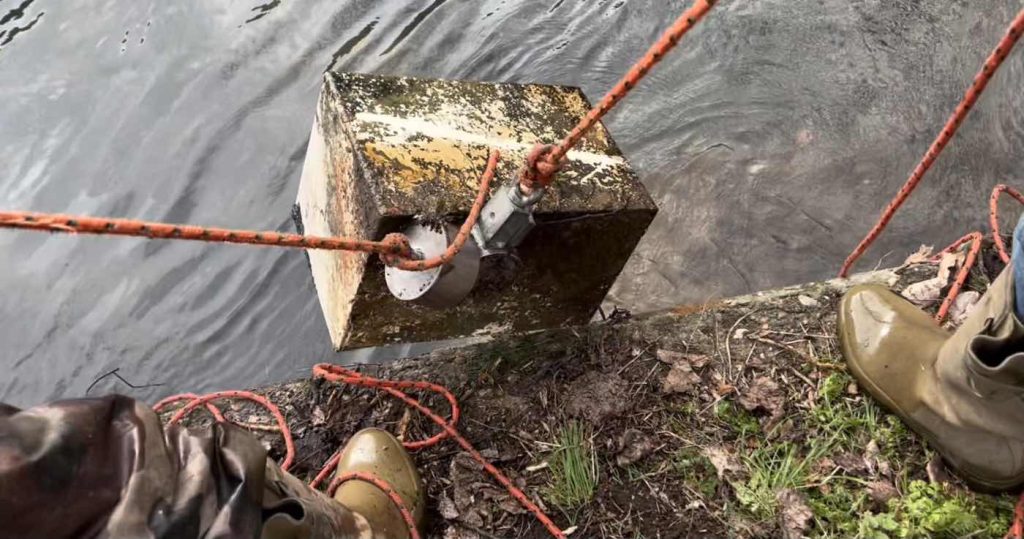
Teen Finds a Safe Containing Thousands on Bottom of River – Tracks Down Owner Who’d Been Robbed 22 Years ago

Magnet G YouTube channel - SWNS
Magnet G YouTube channel – SWNS

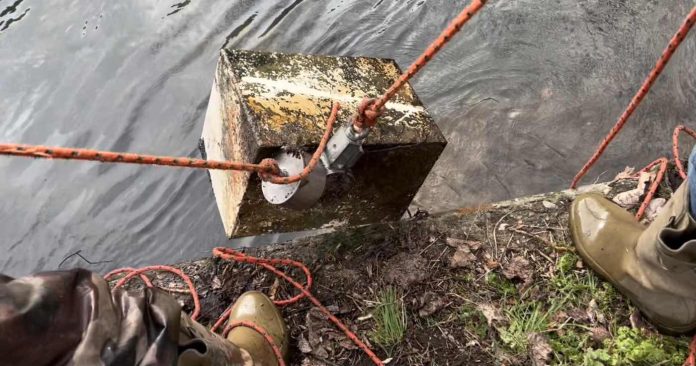
A teenage treasure hunter who combs river bottoms with a heavy-duty magnet pulled a safe containing thousands of dollars—and he captured hearts online after returning the money to its rightful owner.

George Tindale was scouring the River Witham in Grantham, Lincolnshire, with his dad when he made the incredible discovery three weeks ago. They followed a trail of clues to track down the cash’s owner, a businessman whose safe was stolen 22 years ago.

“I mean it was amazing really,” said the 15-year-old who lives in Newark, Nottinghamshire. “We pulled this safe out and it had all that money in.”

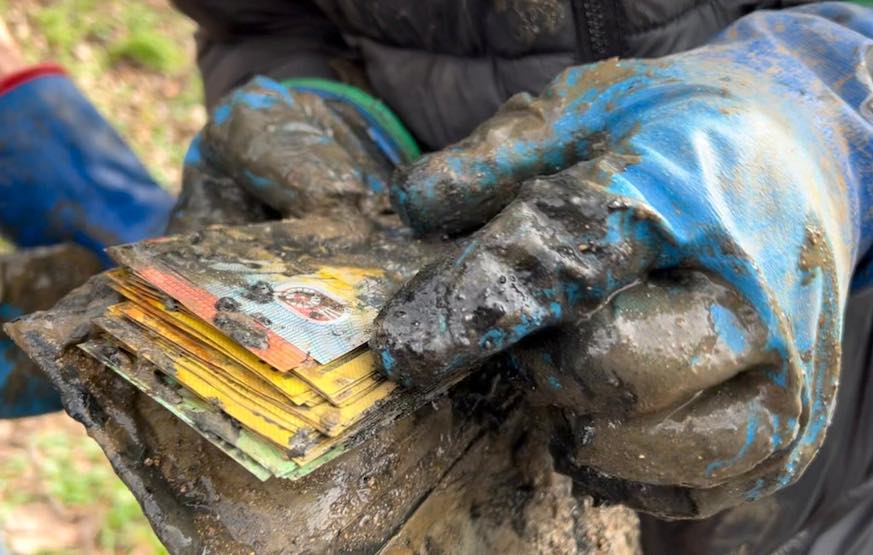
The father and son were left gobsmacked when among the mud and slime inside the small safe was a pouch containing $2,500 colorful Australian dollars (around $1,800 US).

Also inside were a certificate and expired bank cards that gave the magnet ‘fishermen’ enough information to track down Rob Everett.

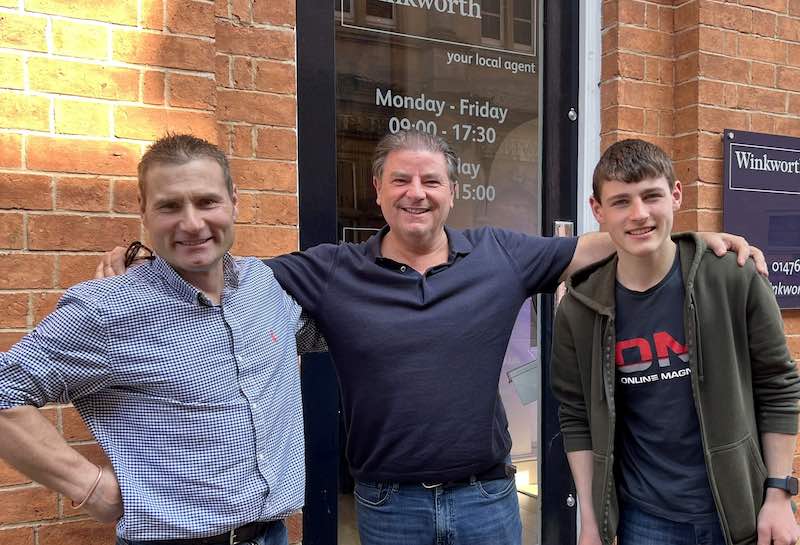
After contacting Rob to explain the amazing find, the kindhearted pair visited him last week at his business in Grantham to return the stolen property.

“I was just amazed that they’d been able to track me down,” said Rob. “There are some really nice and good people in this world. They could have kept the money, they could have said they attempted to get hold of me.

George was even offered a job after the business owner met him. “If I ever want work-experience when I leave school, he said the offer is always open.”

POPULAR: A Lost Sunken City of Gold and Jewels Found in the Mud of Indonesian River

Magnetic G Youtube channel / SWNS

Mr. Everett also gave George a small reward.

“They wanted to return the contents and the goods to the rightful owners and I think that says a lot about humanity… to go to all that trouble.”

Kev Tindale (left) with Rob Everett and George Tindale – SWNS

After seeing the video where George does a quick calculation regarding the stack of currency, Ron realized that the youth is a good mathematician. “What’s good about it is, I run a wealth management company and… I’d love him to work for us.”

RELATED: Historian Believes the Holy Grail and Lost Ark of the Covenant May be Hidden Under This House in English Countryside

“There’s a big lesson there. It teaches George that doing good and being honest and giving back is actually more rewarding than taking.”

Although George started magnet fishing three years ago to search for treasure, his hobby now also highlights river pollution and the harm it can have on wildlife. He regularly records his findings on his popular Youtube channel Magnetic G.

“We’re doing a follow up video because we’ve got people hanging off the edges of their seats if you read through the comments,” said George’s mom, Denise.

WATCH their Youtube video where he discovers the money at 12:44…

INSPIRE Someone to Find a New Hobby By Sharing on Social Media…

Watch the Moment a Guy Jumps Out of His Car to Give Umbrella to Couple Stuck in D.C. Downpour

Recently, a random act of kindness in the Nation’s Capital inspired a driver to share the video of a Good Samaritan.

Thousands were inspired by the moment that happened on April 14th, after it was shared on Reddit.

It may look like the woman, who was being drenched on the sidewalk, began holding the umbrella over a covered baby stroller, but upon closer inspection, you can see it was someone in a wheelchair holding a newspaper to cover their head.

Not only did the driver go out of his way, the woman used the umbrella to shelter the person in the wheelchair instead of herself.

The wholesome scene evoked other memories for people watching the video. One viewer recalled such a moment that happened to her outside Washington, DC.

“Once when I was living in Falls Church (Virginia) I was walking to school in the rain and a sweet lady picked me up and drove me the rest of the way,” wrote commenter, ParanoidAndrea. “I was, like, I’m gonna get your car all wet! She didn’t care.”

“Oh and just to add to her level of kindness I was big-time punky-looking, wearing mostly black and huge pants and all, the kind of kid some people love to judge negatively. A really good memory of mine.”

FunctionalERP_92 recalled the time he was trudging through a Brooklyn rainstorm when a car slowed down, lowered a window, and “chucked” an umbrella at him. “It was one of the nicest and most New York-ish ways of being helped out.”


“This happened to us in DC,” wrote ApotrAde. “Wife and I got stuck under a tree on the sidewalk with a stroller with 2 kids. A guy pulled over and threw an umbrella out the window, wont ever forget that.”

POPULAR: Woman Thanks Hero Who Found a Wallet in Snow, Then Drove it to Her House: ‘Juan is a Great Human!!!’ 

One viewer’s father worked for the New Jersey transit so he had a lot of umbrellas that came from lost and found. “If it was raining when my dad would pick me up from school he would slow down the car and give umbrellas to the kids who were walking home without,” says Evilgirlattack. “It was embarrassing then, but now that I’m older I think it’s awesome.”

SamSepiol-ER28_0652 keeps a car seat in his trunk even though he doesn’t have kids of his own. “I do it because once I stopped to help a mom and baby caught in the rain, but without a car seat (she just had a stroller) she couldn’t ride with me. I let them wait in my car with me.”

“Now I know that if it happens again I can safely transport a baby or toddler if I ever see someone in a similar situation.”

CHECK OUT: A ‘Trail Angel’ Sprinkles Good Deeds Along Appalachian Trail For Unsuspecting Hikers

SHARE the Sunny Moment With Anyone Needing Inspiration on Social Media…

Ultrasound That Takes a Baby’s First Pictures May Also Help the Blind to See

While there are currently no non-invasive therapies available for the treatment of vision loss in the retina, but researchers are now exploring a solution that could restore sight by using one of the other five senses: Sound.

Common retinal diseases cause degeneration of the light-sensitive photoreceptors in your eye. Currently, ophthalmologists use electronic technology to directly stimulate retinal neurons by implanting electrode devices inside the eye—a technique that requires expensive and invasive surgery.

To provide a better solution, the University of Southern California team is using the same technology that takes a picture of a fetus by sending and receiving sound waves through a pregnant woman’s stomach—using ultrasound stimulation to replace electric stimulation.

The research group includes Mark S. Humayun, professor of ophthalmology and biomedical engineering at USC, and one of the inventors of Argus II—the world’s first artificial retina.

Similar to how shapes and bright spots appear when you gently push on your eyeball with your eyes closed; researchers realized that applying pressure to the eye can activate neurons and send signals to the brain.

Unlike a normal eye that is activated by light, the blind eyes were stimulated by mechanical pressures generated by ultrasound waves in this study. A wearable ultrasound device, like a contact lens, would generate the ultrasound waves to stimulate the retina.

By Sarah Hopkins, CC license on Flickr

“The neurons present in the retina of the eye possess mechanically sensitive channels that respond to mechanical stimulation,” explained Gengxi Lu, a Ph.D. student working on the project. “These neurons are activated when we use ultrasound to generate mechanical pressure.”

RELATED: Red Light Therapy Could Improve Your Eyesight After it Declines Due to Age

How It Works

To test this ultrasound approach, in pre-clinical studies the team at USC stimulated a blind rat’s eyes using high-frequency ultrasound waves that are inaudible to humans.

In this case, for retinal stimulation the research group created a small ultrasound device that can be directed at a specific region of the eye to send sound waves to the retina, which is located in the back of the eye.

Using these high-frequency sounds that can be manipulated and focused on a specific area of the eye; the study demonstrated that when the ultrasound waves are projected as a pattern — for example, the letter ‘C’—the rat’s brain was able to pick up a similar pattern.

Unlike in humans, researchers are unable to get direct answers about the rat’s visual experiences during the ultrasound stimulation.

To answer these questions of what exactly the rat was able to visualize from the ultrasound waves, the team measured visual activity directly from the rat’s visual brain area known as the visual cortex by attaching a multi-electrode array.

WATCH: Firefighter Choke Back Tears After Seeing American Flag in Color for the First Time

Based on the visual activities recorded from the brain, researchers found the rat was able to perceive visualizations comparable to the ultrasound stimulation pattern projected to the eye. This work was just published in BME Fronters.

A Patent For the Future

The research is currently funded by a four-year, $2.3 million grant from the National Eye Institute (NEI). The team recently applied for another NEI translational grant to take their studies to the next level, testing the approach using non-human primate models prior to conducting human clinical trials.

“Right now, we are using a transducer placed in front of the rat’s eyeball to send the ultrasound signals to the retina, but our final goal is to create a wireless lens transducer” said Dr. Qifa Zhou, professor of biomedical engineering and ophthalmology at USC, who is leading the research.

While the team is currently analyzing the capabilities of ultrasound technology for vision study, their future goal is to generate sharper images and install the ultrasound transducer on a wearable contact lens for next generation.

POPULAR: Blind For 15 Years She Now Has 20/20 Vision And Sees Her Grandchildren For the First Time

There is also a pending patent for this novel ultrasound technology that hopes to change the way visual impairment is treated years down the road.

LET Your Friends See the Future By Sharing This on Social Media…

Your Inspired Weekly Horoscope From Rob Brezsny: A ‘Free Will Astrology’

Our partner Rob Brezsny provides his weekly wisdom to enlighten our thinking and motivate our mood. Rob’s Free Will Astrology, is a syndicated weekly column appearing in over a hundred publications. He is also the author of Pronoia Is the Antidote for Paranoia: How All of Creation Is Conspiring To Shower You with Blessings. (A free preview of the book is available here.)

Here is your weekly horoscope…

FREE WILL ASTROLOGY – Week of April 23, 2022
Copyright by Rob Brezsny, FreeWillAstrology.com

TAURUS (April 20-May 20):
In 1879, Taurus-born Williamina Fleming was working as a maid for astronomer Edward Charles Pickering, director of the Harvard Observatory. Impressed with her intelligence, Pickering hired Fleming to do scientific work. By 1893, she had become a prominent, award-winning astronomer. Ultimately, she discovered the Horsehead Nebula, helped develop a system for identifying stars, and cataloged thousands of astronomical phenomena. I propose that we make her your role model for the duration of 2022. If there has ever been a year when you might achieve progress like Fleming’s, it’s this one.

GEMINI (May 21-June 20):
For 2500 years, Egypt was a conquered territory ruled by non-Egyptians. Persians took control in 525 BCE. Greeks replaced them. In succeeding centuries, Egypt had to submit to the authority of the Roman Empire, the Persians again, the Byzantine Empire, the Arab Islamic Caliphate, the Mamluk Sultanate, the Ottomans, and the British. When British troops withdrew from their occupation in 1956, Egypt was finally an independent nation self-ruled by Egyptians. If there are any elements of your own life story that even partially resemble Egypt’s history, I have good news: 2022 is the year you can achieve a more complete version of sovereignty than you have ever enjoyed. And the next phase of your freedom work begins now.

CANCER (June 21-July 22):
During the next four weeks, some of the best lessons you can study and learn will come to you while you’re socializing and communicating. Even more than is usually the case, your friends and allies will offer you crucial information that has the power to catalyze dynamic decisions. Lucky encounters with Very Interesting People may open up possibilities worth investigating. And here’s a fun X-factor: The sometimes surprising words that fly out of your mouth during lively conversations will provide clues about what your deep self has been half-consciously dreaming of.

LEO (July 23-Aug. 22):
“Hold on tight, I would tell myself, but there was nothing for me to hold on to.” A character in one of Haruki Murakami’s novels says that. In contrast to that poor soul, Leo, I’m happy to tell you that there will indeed be a reliable and sturdy source for you to hold onto in the coming weeks—maybe more than one. I’m glad! In my astrological opinion, now is a time when you’ll be smart to get thoroughly anchored. It’s not that I think you will be in jeopardy. Rather, you’re in a phase when it’s more important than usual to identify what makes you feel stable and secure. It’s time to bolster your foundations and strengthen your roots.

VIRGO (Aug. 23-Sept. 22):
In the latter half of the 19th century, millions of bison living in America’s Great Plains were hunted. They were the source of food, clothing, shelter, bedding, and ropes for indigenous people. The beloved and useful creatures might have gone extinct altogether if it had not been for the intervention of a Virgo rancher named Mary Ann “Molly” Goodnight. She single-handedly rebuilt the bison herds from a few remaining survivors. I propose that we make Goodnight your inspirational role model for the rest of 2022. What dwindling resources or at-risk assets could you restore to health?

LIBRA (Sept. 23-Oct. 22):
British Admiral Horatio Nelson (1758–1805) was born under the sign of Libra. He was a brilliant and unconventional strategist whose leadership brought many naval victories for his country. Yet he was blind in one eye, was missing most of his right arm from a battle wound, and was in constant discomfort from chronic seasickness. I propose we make him one of your patron saints for the coming weeks. May he inspire you to do your best and surpass your previous accomplishments even if you’re not feeling perfect. (But also keep in mind: The problems you have to deal with will be far milder than Nelson’s.)

SCORPIO (Oct. 23-Nov. 21):
Anti-apartheid activist Bantu Stephen Biko (1946–1977) was profoundly committed to authenticity. The repressive South African government hated that about him. Biko said, “I’m going to be me as I am, and you can beat me or jail me or even kill me, but I’m not going to be what you want me to be.” Fortunately for you, Scorpio, you’re in far less danger as you become more and more of your genuine self. That’s not to say the task of learning how to be true to your deep soul is entirely risk-free. There are people out there, even allies, who may be afraid of or resistant to your efforts. Don’t let their pressure influence you to dilute your holy quest.

SAGITTARIUS (Nov. 22-Dec. 21):
“The artist must train not only his eye but also his soul,” said Sagittarian painter Wassily Kandinsky. Inspired by his observation, I’m telling you, “The practical dreamer should train not only her reasoning abilities but also her primal intuition, creative imagination, non-rational perceptivity, animal instincts, and rowdy wisdom.” I especially urge you to embody my advice in the coming weeks, Sagittarius. Now is a favorable time to make abundant use of the other modes of intelligence that help you understand life as it really is—and not merely as the logical, analytical mind conceives it to be.

CAPRICORN (Dec. 22-Jan. 19):
The language spoken by the indigenous Cherokee people is at least 3,000 years old. But it never had a written component until the 1820s. Then a Cherokee polymath named Sequoyah had a vision. He formulated a syllabary, making it possible for the first time to read and write the language. It was a herculean accomplishment with few precedents in history. I propose we name him your inspirational role model for the rest of 2022. In my astrological understanding, you are poised to make dramatic breakthroughs in self-expression and communication that will serve you and others for a long time.

AQUARIUS (Jan. 20-Feb. 18):
A study by psychologists concludes there is a good way to enhance your willpower: For a given time, say one week, use your non-dominant hand to brush your teeth, wield your computer mouse, open your front door with your key, or perform other habitual activities. Doing so boosts your ability to overcome regular patterns that tend to keep you mired in inertia. You’re more likely to summon the resolution and drive necessary to initiate new approaches in all areas of your life—and stick with them. The coming weeks will be an especially favorable time to try this experiment

PISCES (Feb. 19-March 20):
In his book Thus Spoke Zarathustra, philosopher Friedrich Nietzsche wrote, “You have your way. I have my way. As for the right way, the correct way, and the only way, it does not exist.” According to my reading of the astrological omens, you will be justified to say something like that in the near future. Now is a favorable time to honestly acknowledge differences between you and others—and accept those differences just as they are. The important point is to do what you need to do without decreeing that other people are wrong or misguided.

ARIES (March 21-April 19):
Aries author Marge Piercy writes, “I love people who harness themselves, an ox to a heavy cart, who pull like water buffalo, with massive patience, who strain in the mud and the muck to move things forward, who do what has to be done, again and again.” According to my analysis of the astrological factors, you’ll be wise to be like a person Piercy describes. You’re entering a phase of your cycle when diligent work and impeccable self-discipline are most necessary and most likely to yield stellar rewards.

WANT MORE? Listen to Rob’s EXPANDED AUDIO HOROSCOPES, 4-5 minute meditations on the current state of your destiny — or subscribe to his unique daily text message service at: RealAstrology.com

(Zodiac images by Numerologysign.com, CC license)

SHARE The Wisdom With Friends Who Are Stars in Your Life on Social Media…

“All growth is a leap in the dark, a spontaneous unpremeditated act without benefit of experience.” – Henry Miller

Greyson Joralemon

Quote of the Day: “All growth is a leap in the dark, a spontaneous unpremeditated act without benefit of experience.” – Henry Miller

Photo by: Greyson Joralemon

With a new inspirational quote every day, atop the perfect photo—collected and archived on our Quotes page—why not bookmark GNN.org for a daily uplift?


World’s Biggest Wildlife Crossing Breaks Ground on Earth Day

Living Habitats LLC/National Wildlife Federation

A landmark Earth Day ceremony just took place to celebrate the start of construction on the historic Wallis Annenberg Wildlife Crossing in Southern California.

Spanning over ten lanes of the 101 freeway in the Los Angeles area, when complete the crossing will be the largest in the world, the first of its kind in California, and a global model for urban wildlife conservation.

“California’s diverse array of native species and ecosystems have earned the state recognition as a global biodiversity hotspot. In the face of extreme climate impacts, it’s more important than ever that we work together to protect our rich natural heritage” said said California Governor Gavin Newsom of the project. Stating that the crossing will enable mountain lions and other wildlife to roam safely, he described the crossing as “an inspiring example of the kind of collaborative efforts that will help us protect our common home for generations to come.”

The crossing responds to two decades of study by the National Park Service that has shown roads and development are deadly for animals trying to cross and have created islands of habitat that can genetically isolate wildlife, from bobcats to birds and lizards.

It will preserve biodiversity across the region by re-connecting an integral wildlife corridor, and most critically, help save a threatened local population of mountain lions from extinction.

LOOK: After US Declared Largest Woodpecker Extinct, New Evidence Supports Belief They Are Still Here

“Wildlife crossings restore ecosystems that had been fractured and disrupted. They reconnect lands and species that are aching to be whole,” said Wallis Annenberg, Chairman, president, and CEO of the Annenberg Foundation in a statement from the National Wildlife Federation. “I believe these crossings go beyond mere conservation, toward a kind of environmental rejuvenation that is long overdue.”

MORE: Road in London Closes for Nearly a Month to Protect Migrating Toads as They Hop to the Other Side

The official ceremony took place this morning at 10 a.m. P.S.T, while a celebration for the general public happened early this afternoon at King Gillette Ranch in Calabasas.

Living Habitats LLC/National Wildlife Federation

For more information about the events, or about the #SaveLACougars campaign to build the Wallis Annenberg Wildlife Crossing, visit Save LA Cougars.

Also check out GNN’s initial reporting on this story in 2020—which details how 2,700 mostly private donors raised $15 million for the construction of this 165-foot crossing that will pass over the 101 in Liberty Canyon—an area where some of the wealthiest Hollywood celebs live.

HELP Good News Cross More Paths; Share This Story…

Watch a Stunning Solar Eclipse on Mars in Video Captured By NASA’s Perseverance Rover

JPL / NASA video
JPL / NASA video

NASA’s Perseverance Mars rover has captured dramatic footage of Phobos, Mars’ potato-shaped moon, crossing the face of the Sun.

These observations can help scientists better understand the moon’s orbit and how its gravity pulls on the Martian surface, ultimately shaping the Red Planet’s crust and mantle.

Captured with Perseverance’s next-generation Mastcam-Z camera on April 2, the 397th Martian day, or sol, of the mission, the eclipse lasted a little over 40 seconds—much shorter than a typical solar eclipse involving Earth’s Moon. (Phobos is about 157 times smaller than Earth’s Moon. Mars’ other moon, Deimos, is even smaller.)

The images are the latest in a long history of NASA spacecraft capturing solar eclipses on Mars. Back in 2004, the twin NASA rovers Spirit and Opportunity took the first time-lapse photos of Phobos during a solar eclipse. Curiosity continued the trend with videos shot by its Mastcam camera system.

But Perseverance, which landed in February 2021, has provided the most zoomed-in video of a Phobos solar eclipse yet—and at the highest-frame rate ever. That’s thanks to Perseverance’s next-generation Mastcam-Z camera system, a zoomable upgrade from Curiosity’s Mastcam.

“I knew it was going to be good, but I didn’t expect it to be this amazing,” said Rachel Howson of Malin Space Science Systems in San Diego, one of the Mastcam-Z team members who operates the camera.

Howson noted that although Perseverance first sends lower-resolution thumbnails that offer a glimpse of the images to come, she was stunned by the full-resolution versions: “It feels like a birthday or holiday when they arrive. You know what’s coming, but there is still an element of surprise when you get to see the final product.”

Color also sets this version of a Phobos solar eclipse apart. Mastcam-Z has a solar filter that acts like sunglasses to reduce light intensity. “You can see details in the shape of Phobos’ shadow, like ridges and bumps on the moon’s landscape,” said Mark Lemmon, a planetary astronomer with the Space Science Institute in Boulder, Colorado, who has orchestrated most of the Phobos observations by Mars rovers. “You can also see sunspots. And it’s cool that you can see this eclipse exactly as the rover saw it from Mars.”

As Phobos circles Mars, its gravity exerts small tidal forces on the Red Planet’s interior, slightly deforming rock in the planet’s crust and mantle. These forces also slowly change Phobos’ orbit.

As a result, geophysicists can use those changes to better understand how pliable the interior of Mars is, revealing more about the materials within the crust and mantle.

MORE: Hubble Telescope Spots Most Distant Star Ever Seen on Record, From 12 Billion Light Years Away

More About the Mission

A key objective for Perseverance’s mission on Mars is astrobiology, including the search for signs of ancient microbial life. The rover will characterize the planet’s geology and past climate, pave the way for human exploration of the Red Planet, and be the first mission to collect and cache Martian rock and regolith (broken rock and dust).

Subsequent NASA missions, in cooperation with ESA (European Space Agency), would send spacecraft to Mars to collect these sealed samples from the surface and return them to Earth for in-depth analysis.

LOOK: Are We About to Witness a Super-Massive Black Hole Merger?

The Mars 2020 Perseverance mission is part of NASA’s Moon to Mars exploration approach, which includes Artemis missions to the Moon that will help prepare for human exploration of the Red Planet.

(WATCH the NASA video for this story below.)

Source: NASA

SHARE This Far Out News With All Your Buddies…