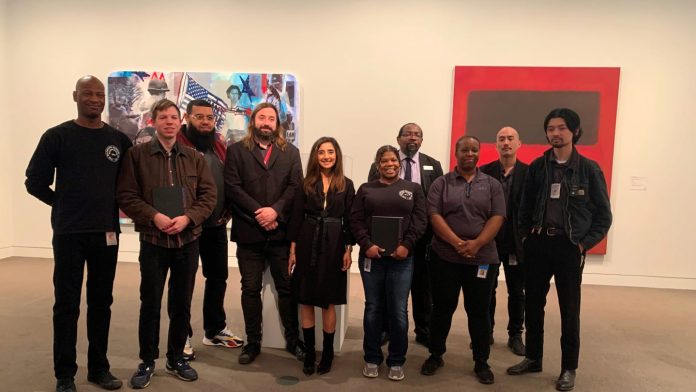
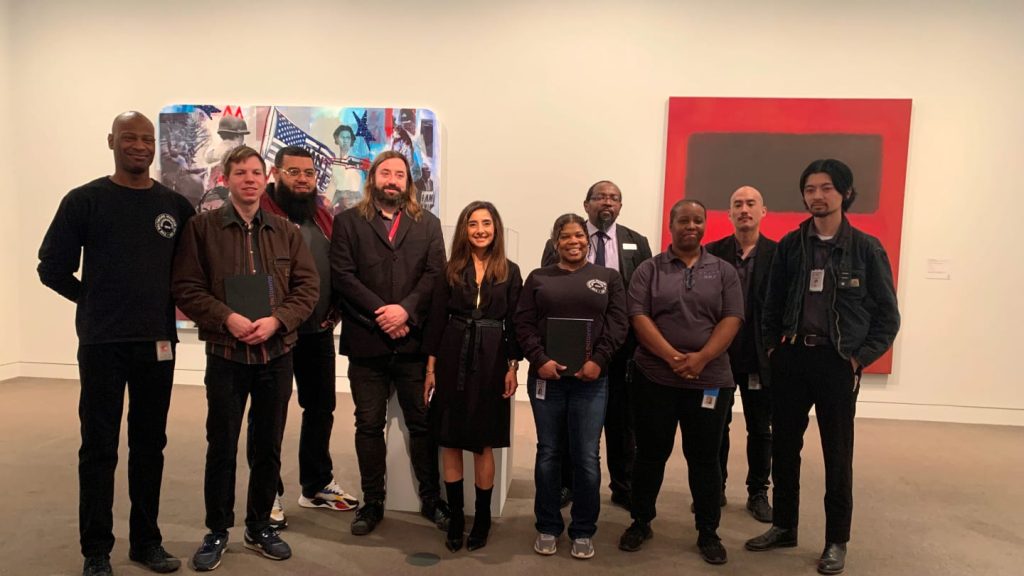
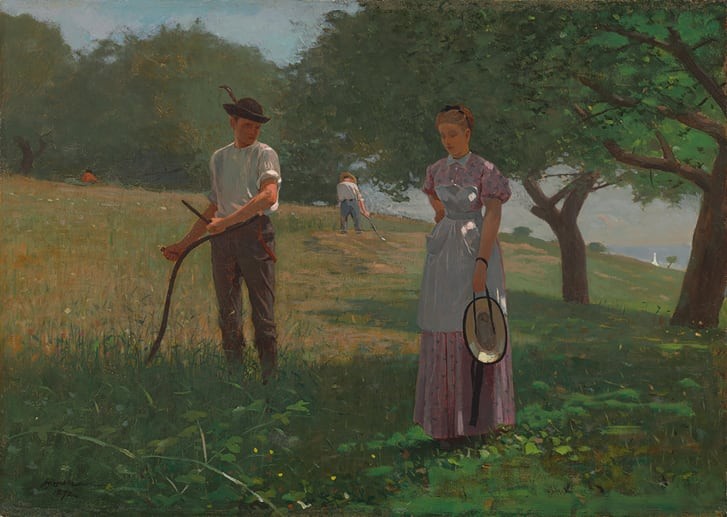
Security guard and guest curator Alex Lei Winslow Homer's painting, Waiting for an Answer (1872). released The Baltimore Museum of Art
The Baltimore Museum of Art
The security guards at the Baltimore Museum of Art get asked a lot in an average day: “Where’s the bathroom,” “Where’s the Impressionist wing,” or “How do I get back to the lobby?” are all standard.
So when their bosses asked them, “Which pieces of art were the most meaningful to you?” It was a change of pace for the 47-strong security team, but one they took to like a gaggle of artistic geese to water.
Guarding the Artis a special exhibition at the BMA curated entirely by the security detail. 17 members were each asked to select three pieces that they wanted to exhibit, and over the early days of the pandemic they were tutored on how to curate, set lighting, and write placards.
Guarding the Art was first imagined back in February 2020 when BMA trustee Amy Elias and Chief Curator Asma Naeem were talking over dinner about how to get the security guards more involved, and how to get different perspectives into the museum.
What they found is that the team had more than enough love, curiosity, and knowledge of the art profession to curate an entire exhibition.
With 95,000 pieces in the museum’s collection, and only 1,800 on display at any given period, it’s no wonder the men and women who spend all day looking at them did an excellent job.
“Our guards are always looking at the art and listening to people as they talk about the art,” Naeem told the Washington Post. “People enjoy talking to them, and their education is really a ‘hands on’ gallery experience. We wanted to see things from their perspective.”
“There are certainly pieces of art that haven’t been seen in decades,” she said, noting the 95,000-piece collection. “That’s part of what makes all of this so fascinating.”
A different perspective
Among guard Alex Lei’s three chosen works was Winslow Homer’sWaiting for an Answer (1872). He stated of the painting, “it’s strangely reflective of the experience of being a guard — a job mostly made up of waiting.”
Waiting for an Answer (1872), The Baltimore Museum of Art
“I’ve always thought that these are the best moments to create conversation among visitors, where we can have a commonality already,” said another guard, Rob Kempton, who selected two abstract paintings, Interior ‘The Creek’and Evening Glow, as they were paintings he often felt drawn to.
“I hope that visitors come away from this with a new experience, and that they’re sort of challenged and inspired by seeing such disparate objects in conversation with each other,” he told CNN.
“It’s a simple idea,” Naeem said of the exhibition. “But it’s asking some very profound questions about who is art for? Who are museums for? Who gets to talk about the arts? Who holds the knowledge? Are there other kinds of people who have knowledge about art that we want to be hearing from? And the answer is: Yes, absolutely.”
The exhibit runs from now until mid-July.
FOR the Love of Art; Share This Story From Baltimore With Your Friends…
In a Da Vinci Code-esque moment of discovery, archaeologists have uncovered multiple stone tombs and a lead sarcophagus under the floor of the Notre Dame Cathedral in Paris.
They are described as a “remarkable scientific discovery,” and consist of several slot tombs and a “completely preserved, human-shaped sarcophagus made of lead,” which the excavators believe still contains human remains.
Suspected as originating in the 13th century, the find was uncovered under the floor during preparatory work to reconstruct the cathedral’s spire above where the transept crosses the nave, which was destroyed by the 2019 fire.
Lead is so much part of the story of the cathedral, and so it’s perhaps unsurprising to find a sarcophagus made of the stuff—restorers have been spending years cleaning the toxic metal off of stones and timbers onto which the heavy metal melted during the fire.
The sarcophagus had buckled under the weight of debris falling from the ceiling, but it was still intact, and researchers used a mini endoscopic camera to peer inside it.
#Maddow Science break. Notre-Dame Repair Crews Discover an Ancient Graveyard With a Sealed Lead Sarcophagus. Items included painted sculptures, including the bust of an unidentified bearded man, carved hands and vegetables, and could date to as early as the 13th century. pic.twitter.com/gdWy85kYi8
“You can glimpse pieces of fabric, hair and a pillow of leaves on top of the head, a well known phenomenon when religious leaders were buried,” said Christophe Besnier, the lead archaeologist.
Along with the tombs and sarcophagus, remains of painted sculptures were also found, including a nearly undamaged bearded male head, some hands with painted sleeves, and sculpted vegetables. A 19th-century hot water heating system was also found.
The discovery offers excellent insight into funerary practices in France during the Middle Ages, and it’s another reminder of the value of that magnificent building, currently on course to be reopened in 2024.
UNEARTH These Fascinating Discoveries for Friends; Share the News From Paris…
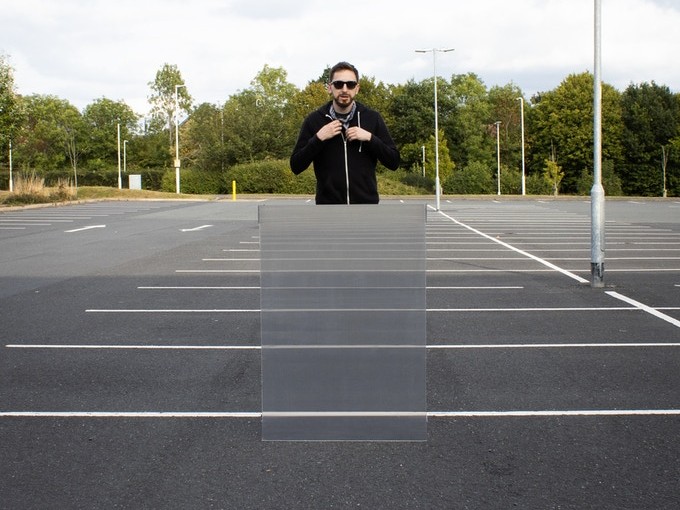
Forget Harry Potter’s cloak, a British company claim to have made a real-life invisibility shield.
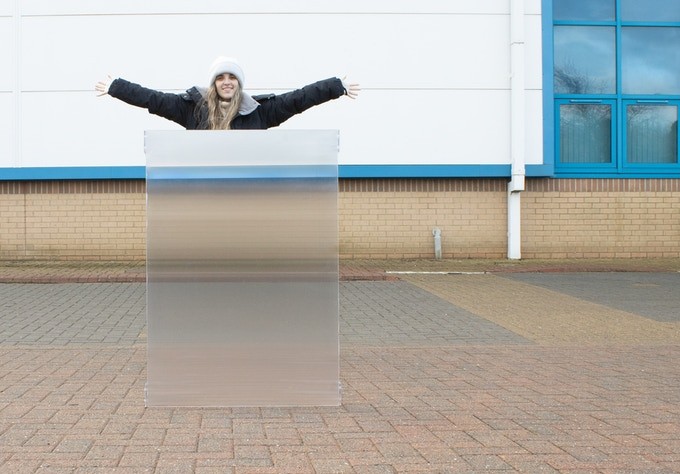
London-based Invisibility Shield Co. say the fully functional shields can hide a whole person.
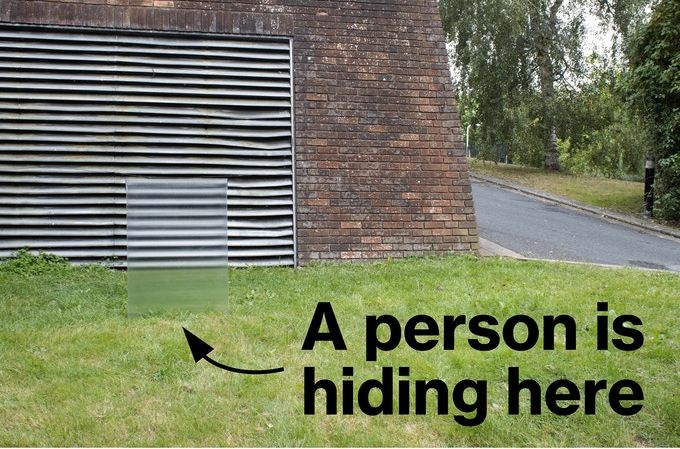
The firm explains the innovation uses a precision engineered lens array to direct much of the light reflected from the subject away from the observer. This sends it sideways across the face of the shield to the left and right.
From the observer’s perspective, background light is effectively smeared horizontally across the front face of the shield, over the area where the subject would ordinarily be seen.
Invisibility Shield Co. say, “The shields perform at their absolute best against uniform backgrounds such as foliage, grass, rendered walls, sand, sky, and asphalt.
“Backgrounds with defined horizontal lines work really well too and these can be natural features such as the horizon or man-made features like walls, rails, or painted lines.”
Invisibility Shield Co,
The makers are offering a small shield (310 x 210mm) to hide ‘everyday items for £49 ($64).
SWNS
There is also a full-size 950 x 650mm version that can hide a person. Estimated delivery is expected by December.
Currently, 25 shields have been developed, and the team is funding on Kickstarter to ramp-up capacity to develop more.
Invisibility Shield Co,
They explain, “Disappointed by the lack of progress and the continued unavailability of actual working invisibility shields, we decided to step things up and go all in on our project to create one.
Invisibility Shield Co,
“We went through countless iterations, tested a lot of materials, and experienced a lot of failure.
Invisibility Shield Co,
“But along the way, we managed to develop a reliable, scalable, and efficient manufacturing process and created what we believe are the best invisibility shields ever made.”
(WATCH the USA Today video for this story below.)
DON’T Hide the Innovation; Share This Story With Friends…
Drinking coffee—particularly two to three cups a day—is not only associated with a lower risk of heart disease and dangerous heart rhythms but also with living longer, according to new studies.
These trends held true for both people with and without cardiovascular disease. Researchers said the analyses—the largest to look at coffee’s potential role in heart disease and death—provide reassurance that coffee isn’t tied to new or worsening heart disease and may actually be heart protective.
“Because coffee can quicken heart rate, some people worry that drinking it could trigger or worsen certain heart issues. This is where general medical advice to stop drinking coffee may come from. But our data suggest that daily coffee intake shouldn’t be discouraged, but rather included as a part of a healthy diet for people with and without heart disease,” said Peter M. Kistler, MD, professor and head of arrhythmia research at the Alfred Hospital and Baker Heart Institute in Melbourne, Australia, and the study’s senior author.
“We found coffee drinking had either a neutral effect—meaning that it did no harm—or was associated with benefits to heart health.”
Kistler and his team used data from the UK BioBank, a large-scale prospective database with health information from over half a million people who were followed for at least 10 years.
Benefitting the heart
Researchers looked at varying levels of coffee consumption ranging from up to a cup to more than six cups a day and the relationship with heart rhythm problems (arrhythmias); cardiovascular disease, including coronary artery disease, heart failure and stroke; and total and heart-related deaths among people both with and without cardiovascular disease. Patients were grouped by how much coffee they reported drinking each day: 0, <1, 1, 2-3, 4-5, >5 cups/day.
Coffee drinking was assessed from questionnaires completed upon entry into the registry. Overall, they either found no effect or, in many cases, significant reductions in cardiovascular risk after controlling for exercise, alcohol, smoking, diabetes and high blood pressure that could also play a role in heart health and longevity.
For the first study, researchers examined data from 382,535 individuals without known heart disease to see whether coffee drinking played a role in the development of heart disease or stroke during the 10 years of follow up. Participants’ average age was 57 years and half were women.
In general, having two to three cups of coffee a day was associated with the greatest benefit, translating to a 10%-15% lower risk of developing coronary heart disease, heart failure, a heart rhythm problem, or dying for any reason. The risk of stroke or heart-related death was lowest among people who drank one cup of coffee a day.
Researchers did observe a U-shaped relationship with coffee intake and new heart rhythm problems. The maximum benefit was seen among people drinking two to three cups of coffee a day with less benefit seen among those drinking more or less.
The second study included 34,279 individuals who had some form of cardiovascular disease at baseline. Coffee intake at two to three cups a day was associated with lower odds of dying compared with having no coffee. Importantly, consuming any amount of coffee was not associated with a higher risk of heart rhythm problems, including atrial fibrillation (AFib) or atrial flutter, which Kistler said is often what clinicians are concerned about.
Of the 24,111 people included in the analysis who had an arrhythmia at baseline, drinking coffee was associated with a lower risk of death. For example, people with AFib who drank one cup of coffee a day were nearly 20% less likely to die than non-coffee drinkers.
“Clinicians generally have some apprehension about people with known cardiovascular disease or arrhythmias continuing to drink coffee, so they often err on the side of caution and advise them to stop drinking it altogether due to fears that it may trigger dangerous heart rhythms,” Kistler said. “But our study shows that regular coffee intake is safe and could be part of a healthy diet for people with heart disease.”
Although two to three cups of coffee a day seemed to be the most favorable overall, Kistler said that people shouldn’t increase their coffee intake, particularly if it makes them feel anxious or uncomfortable.
“There is a whole range of mechanisms through which coffee may reduce mortality and have these favorable effects on cardiovascular disease,” he said. “Coffee drinkers should feel reassured that they can continue to enjoy coffee even if they have heart disease. Coffee is the most common cognitive enhancer—it wakes you up, makes you mentally sharper and it’s a very important component of many people’s daily lives.”
So how might coffee beans benefit the heart? People often equate coffee with caffeine, but coffee beans actually have over 100 biologically active compounds. These substances can help reduce oxidative stress and inflammation, improve insulin sensitivity, boost metabolism, inhibit the gut’s absorption of fat and block receptors known to be involved with abnormal heart rhythms, Kistler said.
In a third study, researchers looked at whether there were any differences in the relationship between coffee and cardiovascular disease depending on whether someone drank instant or ground coffee or caffeinated or decaf. They found, once again, two to three cups a day to be associated with the lowest risk of arrhythmias, blockages in the heart’s arteries, stroke or heart failure regardless of whether they had ground or instant coffee. Lower rates of death were seen across all coffee types. Decaf coffee did not have favorable effects against incident arrhythmia but did reduce cardiovascular disease, with the exception of heart failure. Kistler said the findings suggest caffeinated coffee is preferable across the board, and there are no cardiovascular benefits to choosing decaf over caffeinated coffees.
There are several important limitations to these studies. Researchers were unable to control for dietary factors that may play a role in cardiovascular disease, nor were they able to adjust for any creamers, milk or sugar consumed. Participants were predominantly white, so additional studies are needed to determine whether these findings extend to other populations.
Finally, coffee intake was based on self-report via a questionnaire fielded at study entry. This should be considered when interpreting the study findings, though Kistler noted that research suggests people’s dietary habits don’t change much in adulthood or over time. Kistler said the results should be validated in randomized trials.
Quote of the Day: “Every great and original writer must himself create the taste by which he is to be relished.” – William Wordsworth
Photo by: Darius Bashar
With a new inspirational quote every day, atop the perfect photo—collected and archived on our Quotes page—why not bookmark GNN.org for a daily uplift?
The production of the first prototype 100% recyclable wind turbine blade has just been unveiled.
The 62m (203-foot) blade was made using Arkema’s Elium resin, which is a thermoplastic resin well known for its recyclable properties.
Launched in September 2020, the Zero wastE Blade ReseArch (ZEBRA) project is a unique partnership led by French research center IRT Jules Verne and brings together industrial companies including Arkema, CANOE, Engie, LM Wind Power, Owens Corning, and SUEZ. Its purpose is to demonstrate the technical, economic, and environmental relevance of thermoplastic wind turbine blades on a full scale, with an eco-design approach to facilitate recycling.
Within the project, LM Wind Power has designed and built the world’s largest thermoplastic blade at its Ponferrada plant in Spain. This milestone is achieved after a year of material development and testing backed by sub-component level process trials by the consortium partners.
The liquid thermoplastic resin is perfectly adapted for the manufacturing of large parts by resin infusion, combined with Owens Corning-high performance fabrics. The resulting composite material is delivering similar performances to thermoset resins but with a key unique benefit: recyclability.
Elium-based composite components can be recycled using an advanced method called chemical recycling that enables to fully depolymerize the resin, separate the fiber from the resin, and recover a new virgin resin and High Modulus Glass ready to be reused, closing the loop.
This method, developed by Arkema and CANOE partners, are tested on all composite parts including waste generated from production. Owens Corning is also in charge of finding solutions for fiberglass recycling through remelting or reusing in various applications.
In addition to material testing and process trials, the companies have also made progress on developing and optimizing the manufacturing process by using automation, to reduce energy consumption and waste from production.
LM Wind Power will now start full-scale structural lifetime testing at its Test and Validation Centre in Denmark, to verify the performance of the composite material used in making the blade and its feasibility for future sustainable blade production. Once these tests are finished, the End Of Life recycling methods will also be validated.
The next steps are the recycling of production waste, the dismantling and recycling of this first blade and the analysis of the test results. By the end of the project in 2023, the consortium will have met the challenge of bringing the wind energy sector into the circular economy loop in a sustainable manner, according to the principles of eco-design.
“The manufacture of this first blade is a great success for the entire consortium and for the wind industry in general,” Céline Largeau, Project Manager, at IRT Jules Verne, said. That’s good news indeed.
The Lesson: The beliefs we reserve for ourselves and about our spirit can be particularly damaging. Without knowing who we are, it’s nearly impossible to know what we want or what we need. Furthermore, without truly knowing oneself, it’s almost impossible to truly know someone else or to give or not give the credit they deserve or don’t. Recognizing this humanness unlocks a true appreciation for ourselves, for others, and forgiveness for the two.
Notable Excerpt: “We talk about how people should be more open-minded and listen to each other, and I’m curious what about ourselves, what about our own beliefs? Why do we immediately believe that we’re not worth it, why do we immediately believe we’re not good enough? When I can see me, I see you: so until I can fully see me, I can’t see the gift and the beauty in you, I can’t see the struggle, the humanness in you. As soon as I realized I was this small and fragile human, then I was able to give you the same gift.”
The Podcast: Livin’ Good Currency explores the relationship of time to our lives. It gives a simple, straight-forward formula that anyone can use to be present in the moment—and features a co-host who knows better than anyone the value of time (see below). How do you want to spend your life? This hour can inspire you, along with upcoming guests, to be sure you are ‘Livin’ Good Currency’ and never get caught running out of time.
The Hosts: Good News Network fans will know Tony (Anthony) Samadani as the co-owner of GNN and its Chief of Strategic Partnerships. Co-host Tobias Tubbs was handed a double life sentence without the possibility of parole for a crime he didn’t commit. Behind bars, he used his own version of the Livin’ Good Currency formula to inspire young men in prison to turn their hours into honors. An expert in conflict resolution, spirituality, and philosophy, Tobias is a master gardener who employs ex-felons to grow their Good Currency by planting crops and feeding neighborhoods.
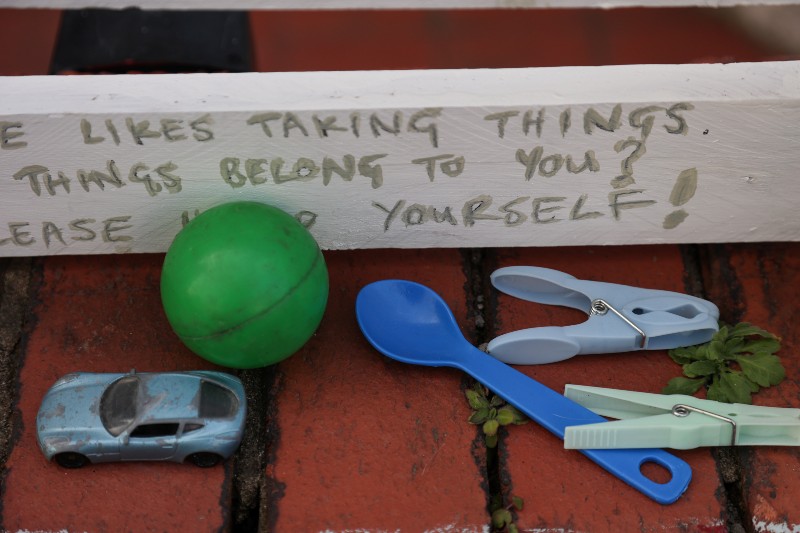
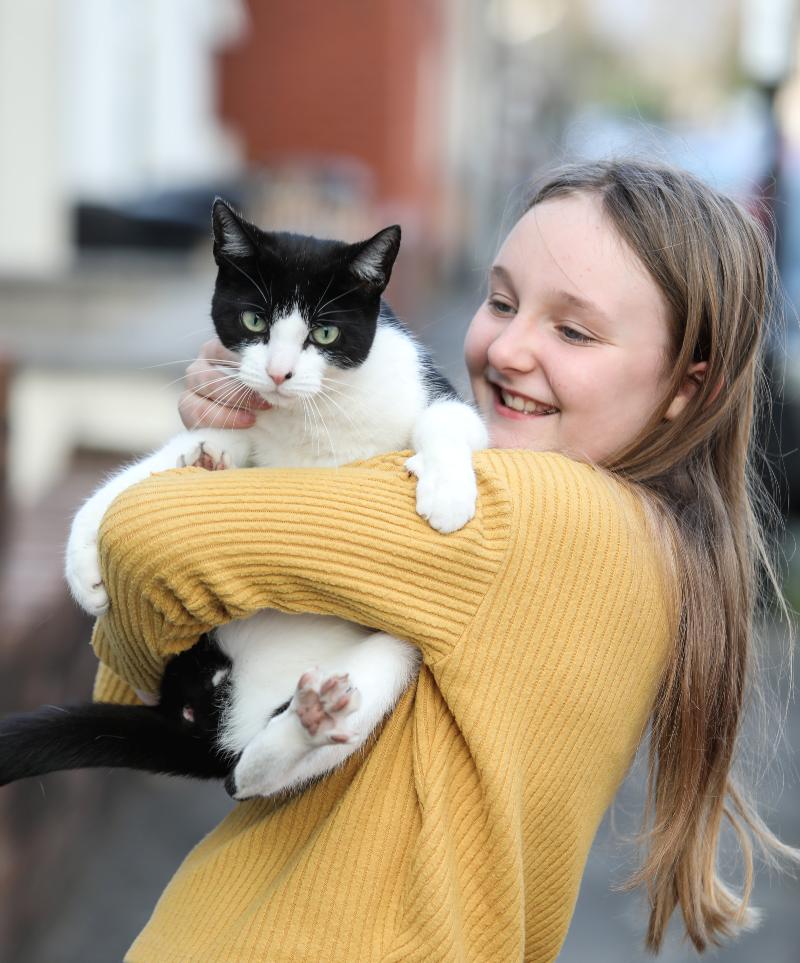
Alice, who teaches A-Level film at St Brendan’s sixth form college in Brislington, said, “He’s well into clothes pegs at the moment.
SWNS
“He brought back a rubber duck recently, which was quite large and I have no idea how he managed that—and got it through the cat flap.
“He went through a phase of coming back with those little mini-skateboards too.”
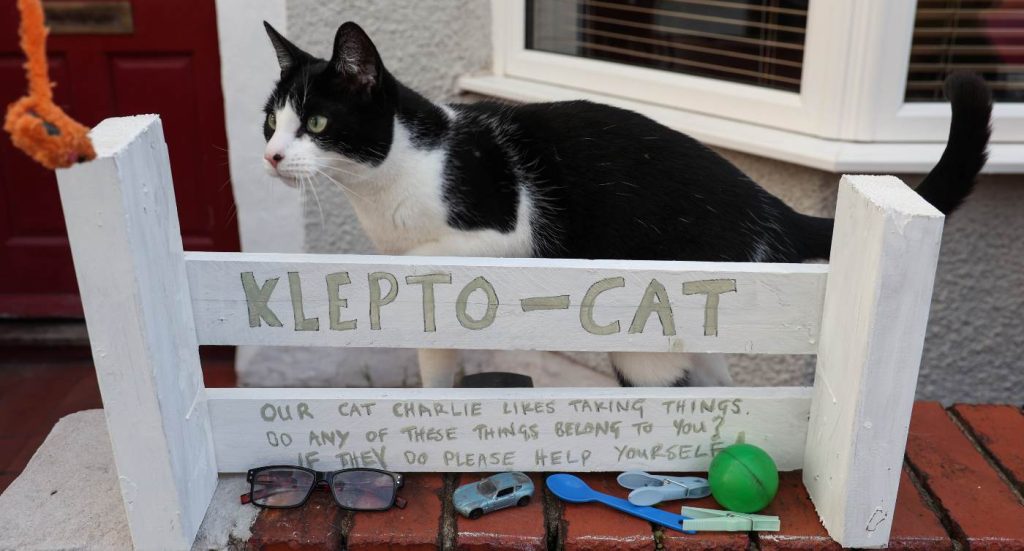
Charlie brings all of his ‘finds’ back to the Bigges, who took him and his sister Smudge in as rescue cats after were abandoned as kittens.
Alice admitted, “He wasn’t allowed out for three months or so. But it was almost as soon as he was allowed out that he began bringing things back. Over the course of a week or so, loads of toy dinosaurs kept appearing in the house which was really weird. I saw a green stegosaurus one day and wondered if one of my mate’s kids might have dropped it here.
”The following day, I saw a red stegosaurus, and they just kept coming!
“I woke up with a diplodocus right next to my head on my pillow—which made me think of that moment from The Godfather. Charlie just sat there looking proud of himself.”
Alice says she has discovered Charlie was nabbing the toy dinosaurs from a kid’s nursery at the end of her road.
She said, “It turned out he’d been going there and picking them all up and bringing them back here one by one.
”He has never caught a bird or a mouse or anything like other cats do… he just goes off and finds whatever he can.”
SWNS
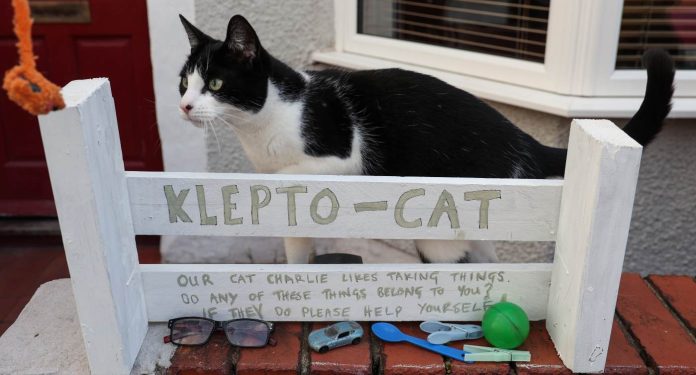
Her 11-year-old daughter Martha has now made a sign for their wall headlined ‘Klepto-Cat’.
Alice said “I think there’s something about the quest that he enjoys. Whether it is discovering something new or just wanting to please me and bring his family a present. It’s so funny now that people are loving his story because we’ve been laughing about him for over a year.
“Whatever it is, we still love him to bits!”
PAW This Fun Story Over to Your Feline-Loving Pals…
John Deere, the world’s largest farming implements producer, just unveiled a self-driving tractor to plow America’s acreage by day or night without a driver.
Unveiled at the Consumer Technology Association (CES) convention 2022 in Las Vegas, John Deere have said that the 8R autonomous tractor will enable farmers to till hundreds of acres of soil without ever having to touch the steering wheel.
It’s a technological revolution that’s been creeping up on us all, with the introduction first of lane assist, auto parallel parking, and then of the self-driving modes on various makers like Tesla.
For a tractor, there are no intersections, pedestrians, tall buildings to block GPS signals, traffic, or balls rolling into the road, and so an autonomous vehicle has much less to contend with.
As large and segmented as America’s hinterlands are, farmers often have to plough, cultivate, seed, spray, and harvest many thousands of acres on separate paddocks miles away from each other. With an autonomous tractor, they can plow one field robotically, and another the old-fashioned way, giving farmers more time to do more sensitive work.
“The driverless tractors are equipped with six pairs of cameras that work like human eyes and can provide a 360-degree image,” AP reports. “When filtered through computer algorithms, the tractor is able to determine where it is in the field and will abruptly stop if there is anything unfamiliar in its path.”
Given changing climatic conditions, the opportunity to double or triple the labor inputs to capitalize on short periods of ideal temperature and moisture can mean thousands of dollars more per acre for farmers.
John Deere maintains that advanced technology has always been on the farm, and those thought of as some of the most rustic of Americans are actually now capable of wielding some of the richest fruits of technological innovation: commanding a 22-ton tractor to perform a 10-hour plowing job with a touch on a smartphone while he or she spends time with their family is the epitome of that.
The company haven’t released an official price yet, but $500,000 is thought to be a ball park estimate.
(WATCH the video for this story below.)
DIG UP the Good News For Your Buddies—Share This Story…
For those one or two of you in the audience who grew up watching Swiss Family Robinson, a new resort in Tennessee will jump to the top of your destination list.
130 tree houses are slated to be built over the next few years in the woods near Great Smokey Mountains National Park, representing the largest tree house resort on earth.
Called Sanctuary Treehouse Resort, the idea came when an inter-generational, entrepreneurial Tennessee family called the Jensens decided that since their children were all grown up, they would rent out their childhood tree fort as such things were becoming popular glamping opportunities.
Once they saw how popular it was becoming, they decided to turn 40 acres into the largest collection of tree houses and forts in the world.
There are plans for three types of treehouse rentals: Tree Fort, Tree Fort Double, and The Luxe. Tree Fort will accommodate 2-6 guests and feature unique amenities such as a spiral slides. Doubles will feature unique ways to link the rooms mounted on different trees, such as rope bridges, and even drawbridges.
The Jensens are working with a mountain-modern architecture firm called MossCreek designs to fulfill their dreams. The first group of apartments will be ready and available for rental by the end of summer 2022, and each year will feature a few more until the resort is finally completed.
For visiting employee groups and conferences, sections of the forest floor will be turned into enchanted woods filled with lights and amenities for such group activities.
“We are cultivating a unique resort like no other anywhere for guests to stay, play, and retreat for a one-of-a-kind experience,” said Amanda and Brian Jensen, the heads of the family told Travel and Leisure.
“We hope to provide our guests with lasting memories, breathtaking views, and customizable options to leave them with a desire to come back and stay with us year after year.”
If this wasn’t an excellent-enough idea for a vacation with the kids, every spring in the Great Smokey Mountains, a lottery is held to win one of 800 parking passes to witness one of the largest gatherings of fireflies in the country.
Combining an enchanted forest with a treehouse apartment and watching a “life-changing” natural light show sounds like the experience of a lifetime.
(WATCH the video for this story below.)
SHARE This Story With Friends Who’d Love to Visit This Resort Up High…
Quote of the Day: “Anybody who has survived his childhood has enough information about life to last him the rest of his days.” – Flannery O’Connor
Photo by: Janko Ferlič
With a new inspirational quote every day, atop the perfect photo—collected and archived on our Quotes page—why not bookmark GNN.org for a daily uplift?
As millions of Ukrainian women and children take refuge in other European nations, one inspiring act of kindness by workers at a Denmark office of Mediabrands Content Studio is warming hearts and going viral.
With Denmark already haven taken in thousands of refugees, the Mediabrands branch was inspired to write and create a free children’s book for Ukrainian-speakers called “Welcome to Denmark”.
The charming booklet introduces refugees to the country, while highlighting the cultural similarities of the two cultures, to help make the new refugees feel safer and more at ease.
The publishing team was thrilled to be connected with a Ukrainian female refugee who agreed to translate the copy.
20,000 copies were printed, and the book’s availability was announced through social media, hoping people or local organizations might be able to use them.
72 hours later, all 20,000 copies were distributed. Their office was inundated with requests, so 20,000 more are currently being printed. [UPDATE: Following this GNN article’s publication, the company said they’ve received a total of 100,000 orders.]
Queries came in from Danish train, bus, and ferry companies that want to give them to newly arriving Ukrainian passengers. At the same time, it acts as a mini-phrasebook that can make it easier to make friends and understand many new things around them.
After reading the beautiful text below—translated into English—and seeing some of the lovely drawings, maybe more European countries will be inspired to create their own books for refugees.
American company, Mediabrands Content Studio
What is Denmark?
Denmark is a small kingdom with only 5.8 million inhabitants, located approx. 1,250 km. from Ukraine. Although we are the oldest kingdom in the world, we have no king. Our queen is Her Majesty Margrethe the 2nd, but she does not decide so much. In Denmark, we all decide equally, and therefore there is room to be exactly who you want to be. Welcome!
We have much in common…
The trip to Denmark may feel long, but Denmark is not too far from Ukraine. Neither in distance nor in spirit. In fact, there are as many as 3 Ukrainian princesses who have been married to Danish kings and princes, and the capital of Ukraine is as old as Lejre – one of Denmark’s largest Viking cities. There were also many Danes who moved to Ukraine in the Viking Age.Maybe you already know something from Denmark. LEGO bricks come from here, and Hans Christian Andersen, who wrote fairy tales such as The Emperor’s New Clothes, The Ugly Duckling, and The Little Mermaid.
In Denmark there are no mountains or large forests. The whole country is flat as a pancake. The highest point in Denmark is only 172 meters high, and because here there are neither steep nor large distances to cross, there are many who cycle in Denmark.
In Denmark, we are very proud of our coasts. It is our wilderness, and although we are a very small country, we have the 16th longest coastline in the world. No matter where you are in Denmark, you are never more than 52 km from the sea, and everyone has the right to be on the beaches and swim in the water. We also have many small forests that are completely light green in the spring. Everyone must be there. In many places there are campfires and shelters that you are welcome to use. And you are welcome to take firewood from the forest floor.
Children in Denmark…
There are many children living in Denmark, and we take good care of each other. Children in Denmark go to kindergarten if they are under 6, and to school if they are over. In kindergarten, the children play and learn to be with other children. In school, they learn to read and count and to speak other languages. There are only 6 million in the world who speak Danish. The Danish language is famous for being a bit difficult. Our letters are different from the ones you are used to. And in addition, we have three extra letters called Æ, Ø and Å, which sound funny. The hardest thing to say in Danish is ‘red porridge with cream’, but until you have learned to say it, you can enjoy eating it.
Do you want to play?
When the children are free from school, they go to sports or go out and play. There are
many children in Denmark who play either football, handball or ride skateboards and
scooters. Many people also like to play on computers. Even if you can not speak Danish, you can easily join. Sport is the same across borders, and a smile means the same thing in all languages.
We eat this in Denmark…
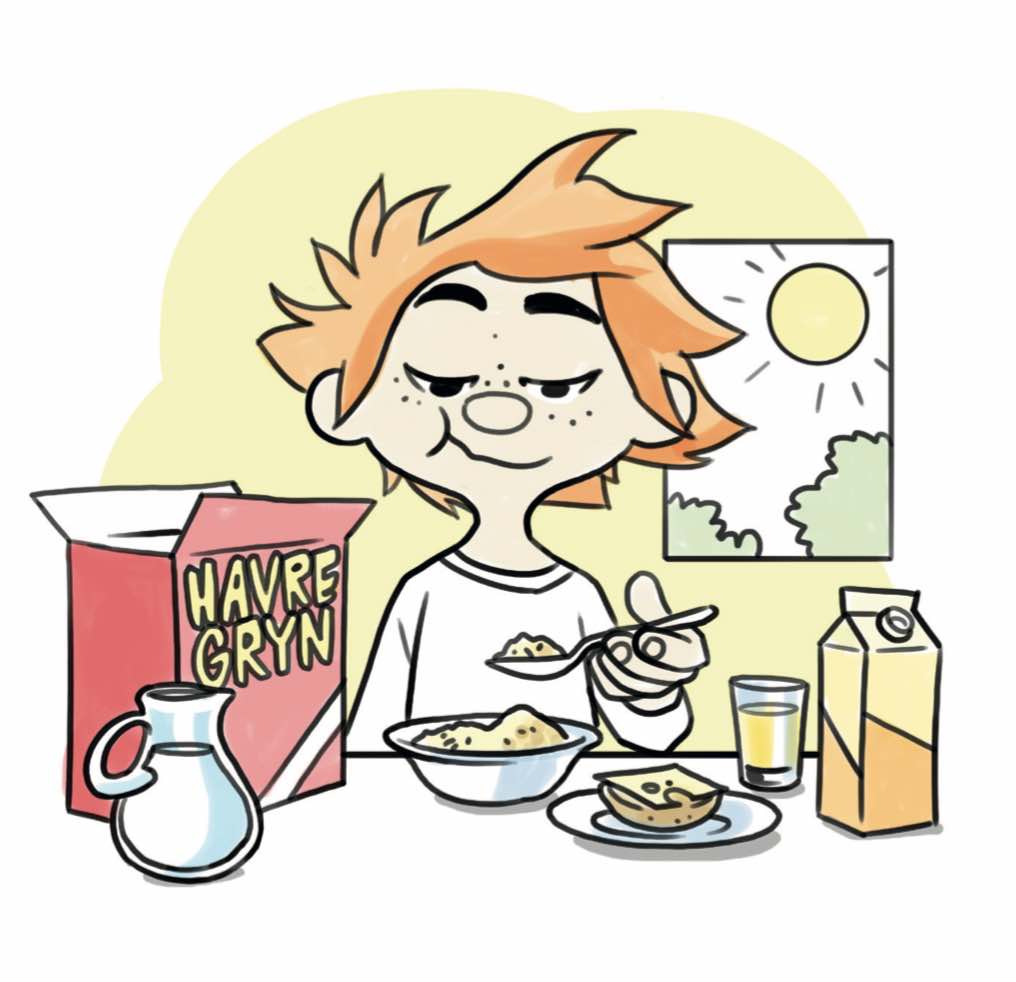
We love eating oatmeal with milk or a bun with cheese for breakfast. Sometimes we also get pastry, but it’s mostly on the weekends. For lunch, we often eat sandwiches or rye bread with different cold cuts such as. eggs, sausage or liver pate. Rye bread is very common in Denmark. Tonight we eat food from all over the world, especially pasta and pizza. But there are also popular Danish dishes, such as meatballs or ground beef with boiled potatoes.
We talk a lot about the weather
In Denmark, the weather changes often and that is why we always talk about it. In the
spring, everything grows out, and even though it’s cool, everyone is looking forward to summer. Therefore, we go outside as soon as the sun shines. In the summer, Denmark really comes to life. Everyone meets in parks, cafes and on the beach. It can get very hot in the summer, but it also rains a lot. In the fall, when everything turns orange and the leaves fall from the trees, it is often windy weather. It is very beautiful, but many Danes go inside and meet for coffee and coziness. But there are also many who are outside cooking over a campfire or something. In winter it is cold and wet. Sometimes it snows, and then you can sled, build snowmen or do snowball fights.
We like cozy…
Cosiness is a Danish word that we use about the feeling you get when you are with good
friends, drink hot cocoa or watch TV together. It may be a little hard to say, but we all know the feeling. It is the heat that spreads in the stomach. The calm that falls over us. The smile that finds its way to the face. We look forward to having fun with you and your family. Welcome!
SHARE the Inspiring Danish Kindness on Social Media…
A short-handed school cafeteria manager called into a BBC Radio 2 talk show asking for help in her kitchen—and everyone was stunned by what happened next.
Tina Clarke had been listening to celebrity chef Gordon Ramsay talk about his latest TV show, Future Food Stars.
Tina told the host Vernon Kay she was “cooking on her own” at Edward Peake Middle School. One of her cooks was out sick and the alternate staff member was unavailable after testing positive for COVID.
Tina then cheekily asked for Ramsay to come help her in the kitchen later today, when she needed to prepare school meals for 300 pupils.
Tina told the radio show: “I’m cooking here on my own, I work in a school kitchen and my chef has gone off sick and I have another one off with covid, and I just wondered if Gordon would help me today and give me a hand?”
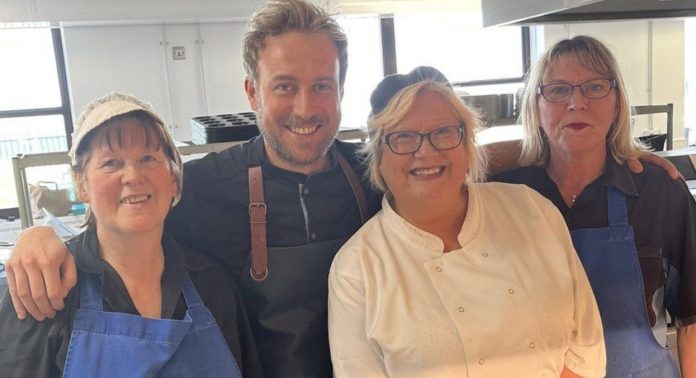
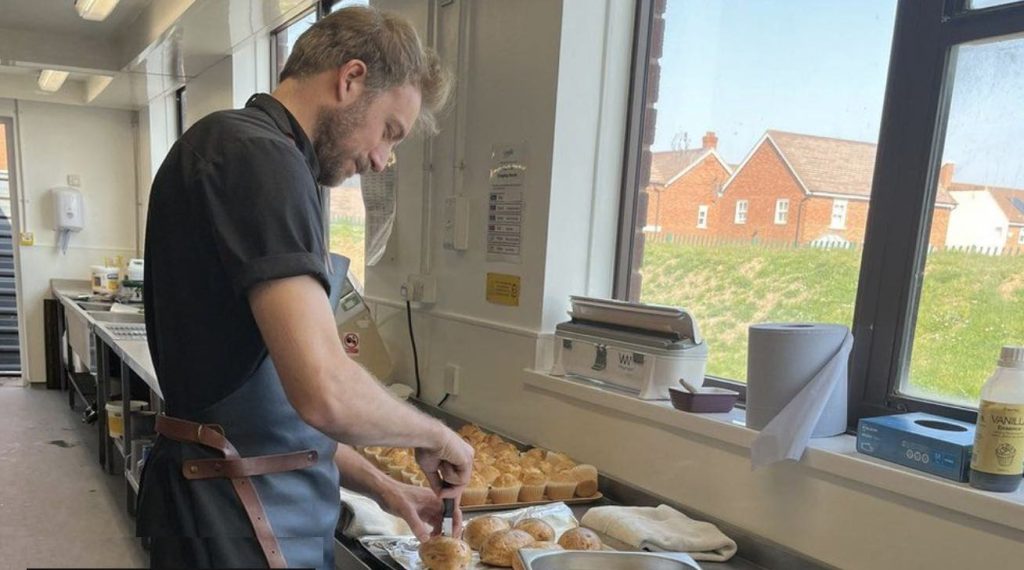
Ramsay had to decline—but he sent one of his chefs, Rob Roy Cameron, directly to Bedfordshire to assist.
Tina was nervous about what school officials would say.
But, the head teacher, Miss Linington, welcomed Rob Roy into the kitchen, which “sent a huge buzz around the school”.
He was put to work straight away making cauliflower cheese for the Church of England school that teaches pupils in Year 5 to Year 8, according to BBC News.
Tina told them, ‘his food tasted “amazing” even though he was not allowed to use salt—to his shock.’
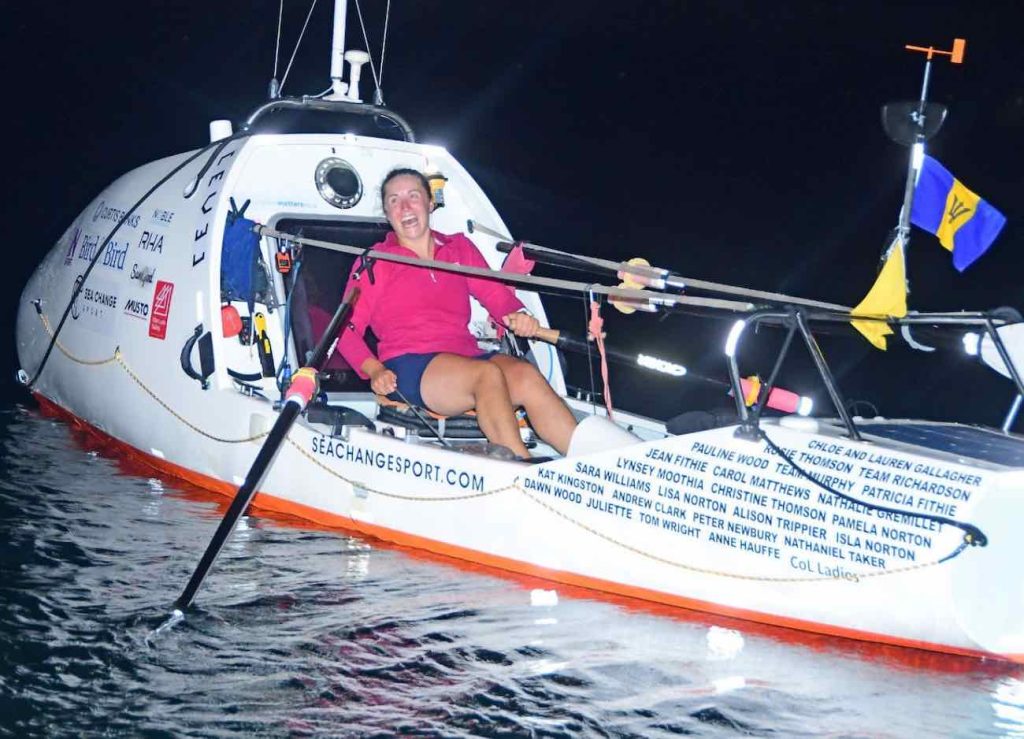
A London lawyer has set a new world record for the fastest ever female solo row across the Atlantic in an effort to “show women and girls anything is possible.”
Victoria Evans rowed into Barbados on Thursday aboard her 22-foot-long rowing boat (7m), after 40 days at sea.
The 35-year-old began her race in the Canary Islands on February 11 with no idea that she would slash the current standing World Record by nine days.
The journey also raised money for the UK charity Women in Sport.
“Taking on this epic challenge was about driving positive change, inspiring others and using the achievement as a platform to progress the narrative about women in sport,” said Evans at the finish line, where she was welcomed by friends and family who travelled from the United Kingdom.
In total, Victoria rowed 2,559 nautical miles in a world-record time of 40 days and 19 hours, smashed the previous record of 49 days and 7 hours.
Victoria, who had never rowed before, spent three years training for the challenge, gaining the required qualifications and preparing to get seaworthy.
According to ExplorersWeb, she rowed 12 to 14 hours a day to become the fastest of the 11 women who have successfully crossed the Atlantic from east to west.
“A solo expedition is about so much more than one person.
“Completing the crossing is just the start of this work… I can use this experience to show that we are capable of anything.”
Victoria is the founder of Sea Change Sport, and her adventure has raised £24,000 for Women in Sport, a charity that aims to give every woman and girl the chance to transformational and lifelong benefits of sport.
“How mind-boggling to be at sea with sharks and dolphins for company and to overcome such massive obstacles to reach the finish line?” said the CEO of Women in Sport, Stephanie Hilborne.
ROW This Achievement Over to Women and Girls on Social Media…
Are you a skilled botanist or weed killer? A new quiz could help you to find out which plants match your personality, giving you results that could help choose your next leafy roommate.
The series of questions were created to help those who struggle to keep a plant alive but hope to acquire a green thumb in the future.
Developers worked with gardening guru, Kate Turner, to reveal the perfect plant pairing based on their unique qualities—taking into consideration personality traits such as whether they’re caring, busy, outgoing, or love a challenge.
The quiz comes after a survey of 2,000 adults found more than a fifth (22 percent) find it difficult to keep plants alive, despite 60 percent feeling more relaxed when they’re surrounded by them.
As a result, 77 percent would like to have more knowledge on what plants suit their persona and lifestyle the best.
The research, commissioned by Miracle-Gro, found that around half of respondents feel productive when in the presence of plants, and report a positive impact on their mental health.
But when it comes to buying a new plant, most people base their choice on how easy they are to care for (56%), how colorful they are (47%) and how big they get (39%).
“It’s clear that we love plants, both indoors and out, but we often struggle with keeping them alive,” said Turner.
It’s easy to assume all plants need the same care, but they can differ greatly, which often leads to mistakes and sad looking leaves. More than half of adults admitted to killing an average of five houseplants. Overwatering was the most common cause, while 41 percent believe they didn’t water them enough.
The fun, informative quiz was created for these people to easily match their lifestyle with suitable plants.
“There’s something for everyone whether they’re a night owl, a home worker, or a parent.”
The poll also revealed that most people are familiar with the benefits of plants, including improving the air quality, but half of those surveyed via OnePoll would like to learn more about looking after different plants.
Two-thirds of those polled currently own an average of six houseplants each, but 47 percent would like to own more greenery.
“As plants vary so much in terms of the level of care required, there truly is a perfect plant for every person, whether you’re particularly busy and forgetful, or have the time to care for the more delicate varieties.
Amazon.com has joined the international BOTTLE consortium to develop the technologies needed to reduce plastic pollution through innovation in materials and recycling.
Imagine a new technology that breaks down existing plastic materials to create a new, innovative type of material. This new material could then be broken down more easily when recycled—and even biodegrade in natural environments.
That scenario does not have to be imaginary. In fact, it is the mission of a research initiative under the U.S. Department of Energy, launched in 2020 to bring these new technologies and materials to life. BOTTLE stands for “Bio-Optimized Technologies to keep Thermoplastics out of Landfills and the Environment.” The consortium, led by the National Renewable Energy Laboratory, has brought together cutting edge talent from both the public and private sectors—now including Amazon.
Amazon has joined to speed up its progress in developing chemical upcycling. The research collaboration is a way of handling today’s plastics and ensuring tomorrow’s plastics are recyclable by design.
“Finding a way to better recycle single-use plastics while reducing and ultimately eliminating their use is a grand challenge of our time, and we’re committed to pursuing scientific advancement to this end,” said Gregg Beckham, BOTTLE’s CEO and a senior research fellow at the NREL. “With Amazon’s innovation expertise, we’re excited to work together to find solutions that have the potential to have vast, positive impacts.”
As part of the consortium, Amazon’s growing team of materials scientists and experts hopes to develop technologies and materials that will enable the full life cycle of plastics to be net-zero carbon. Amazon’s team will work with the consortium to create new energy-efficient technology that will break down different kinds of plastics and turn them into valuable materials that can be used to make the same types of plastics or new plastics. In cases where the materials don’t make it back into the recycling stream, the molecular structure of the new materials will be designed to biodegrade in natural environments.
This research is another step in Amazon’s efforts to eliminate or reduce packaging waste. As of 2021, Amazon had reduced the outbound weight of packaging per shipment by 36%, a total of one million tons, while increasing the use of recyclable materials.
“In partnership with BOTTLE, we plan to make significant progress in developing new technologies and materials that will lead to less material in landfills and more back into the circular economy,” said Alan Jacobsen, principal materials scientist at Amazon.
Amazon Aware, for instance, is a new line of everyday essentials, such as a bathroom counter and towel rack, all designed and made from materials such as recycled polyester.
Today, the most commonly used plastics are polyolefins, which include polyethylene (plastic film and sheeting) and polypropylene (thermoplastics formed into shapes), both of which are commonly used in packaging. Recently, Raoul Meys and collaborators published an article in Science describing the feasibility of achieving net-zero, or even net-negative, carbon emissions for the full life cycle of these and other existing conventional plastics.
The research by Meys and team shows a challenging yet feasible path toward net-zero carbon emissions for plastic.
Effecting that shift is a daunting task, but the movers-and-shakers who are partners in the BOTTLE consortium include scientists from UK’s Portsmouth University’s Centre for Enzyme Innovation, the Los Alamos National Laboratory, Oak Ridge National Laboratory, SLAC National Accelerator Laboratory, Argonne National Laboratory, MIT, and Colorado State, Montana State and Northwestern Universities.
Moreover, knowing that Amazon started out as an online bookstore serving customers out of a garage provides hope that even daunting tasks are achievable.
“We’re committed to using our size and scale to reduce and eliminate our use of materials and find new ones that can be applied to our operations and other industries around the world.”
DELIVER This Great News to Eco-Friends on Social Media…
Quote of the Day: “Youth is a gift of nature, but Age is a work of art.” – Stanislaw Jerzy Lec
Photo by: Inga Shcheglova
With a new inspirational quote every day, atop the perfect photo—collected and archived on our Quotes page—why not bookmark GNN.org for a daily uplift?
Living near a leafy green area cuts your risk of a stroke, scientists have found.
Their research shows that people who live less than 328 yards from a green space (300 meters) are at 16 percent lower risk from a stroke.
“People who are surrounded by greater levels of greenery at their place of residence are protected against the onset of stroke,” said study co-author Dr Carla Avellaneda.
The findings indicate there is a clear relationship between levels of pollutants in the atmosphere and the risk of having a stroke.
For every ten micrograms per cubic meter of nitrogen dioxide in the air, the risk increases by 4%—and every extra cubic microgram of soot in the air raises the risk by 5%. Both of these are linked to car traffic.
These risks are across the board—unaffected by your age, smoking habits, or socioeconomic factors.
In contrast, having an abundance of green spaces near your home cuts your risk from a stroke by up to 16%.
For the study, the team analyzed the exposure of 3.5 million people in Catalonia, Spain, to the atmospheric pollutants. The collaboration—led by the Hospital del Mar Medical Research Institute and the local governing Catalan Health Quality and Assessment Agency—used geographic referencing and designing models to measure exposure to the nitrogen dioxide and soot, using population data.
Everyone they looked at was an adult who had not suffered a stroke before the study began.
The researchers say that, in light of their findings published in the journalEnvironment International, recommendations about the levels of nitrogen oxide and fine particulate matter in the atmosphere deemed ‘safe’ by the European Union should be tightened.
Living near lots of leafy land is believed to help people exercise, reduce stress, and help people socialize with friends.
“Despite compliance with the levels set by the European Union, we are faced with the paradox that there is still a health risk, such as the one we identified in this study, where there is a direct relationship between exposure to pollutants in our environment and the risk of suffering a stroke,” said the study’s lead author Dr Rosa Maria Vivanco.
Boston researchers have found that trees and soils on the outermost edges of urban wooded areas and city parks may also play a greater role in fighting climate change than previously imagined, so cities of all sizes should continue planting more trees.
SHARE The Good News With City Dwellers on Social Media…
Scientists who helped pioneer the use of enzymes to eat plastic have taken an important next step in developing nature-based solutions to the global plastics crisis.
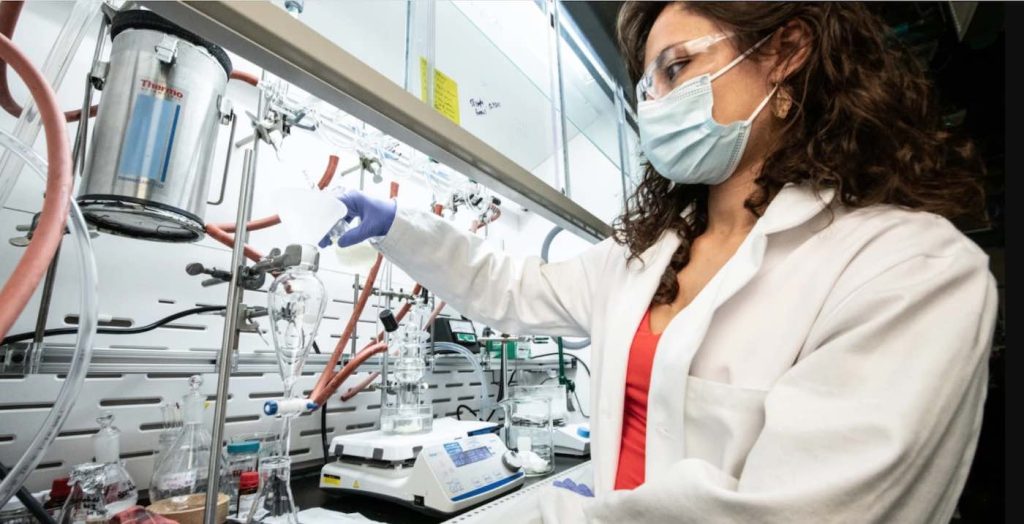
They have characterized an enzyme that has the remarkable capacity to break down terephthalate (TPA)—one of the chemical building blocks of polyethylene terephthalate (PET) plastic, which is used to make single-use drinks bottles, clothing and carpets.
The research was co-led by Professor Jen DuBois of Montana State University, and Professor John McGeehan from the University of Portsmouth in England.
In 2018, McGeehan led the international team that engineered a natural enzyme that could break down PET plastic. The enzymes (PETase and MHETase) break the PET polymer into the chemical building blocks ethylene glycol and TPA.
This new research, published in the peer-reviewed publication, Proceedings of the National Academy of Sciences, describes the next steps, specifically for managing TPA.
“While ethylene glycol is a chemical with many uses—it’s part of the antifreeze you put into your car, for example—TPA does not have many uses outside of PET, nor is it something that most bacteria can even digest,” said Professor DuBois. “However, the Portsmouth team revealed that an enzyme from PET-consuming bacteria recognizes TPA like a hand in a glove.”
Her team at MSU then demonstrated that this enzyme, called TPADO, breaks down TPA and pretty much only TPA, with “amazing efficiency”.
“The last few years have seen incredible advances in the engineering of enzymes to break down PET plastic into its building blocks,” said Professor McGeehan, who is the Director of Portsmouth University’s Centre for Enzyme Innovation.
“This work goes a stage further and looks at the first enzyme in a cascade that can deconstruct those building blocks into simpler molecules. These can then be utilized by bacteria to generate sustainable chemicals and materials, essential making valuable products out of plastic waste.”
Using a powerful X-ray, they were able to generate a detailed 3D structure of the TPADO enzyme, revealing how it performs this crucial reaction.
“This provides researchers with a blueprint for engineering faster and more efficient versions of this complex enzyme,” says McGeehan.
With more than 400 million tons of plastic waste produced each year, it is hoped this work will open the door to improve bacterial enzymes, such as TPADO. This will help tackle the challenge of plastic pollution and develop biological systems that can convert waste plastic into valuable products naturally.
The study was undertaken as part of the BOTTLE Consortium, an international collaboration between the US and UK, bringing together researchers from across a wide range of scientific areas to tackle plastic recycling and upcycling.
UPCYCLE This Breakthrough News With Eco-Friends on Social Media…
Philanthropist MacKenzie Scott, the ex-wife of Amazon founder Jeff Bezos, has donated $436 million to Habitat for Humanity.
Calling it a “transformational donation”, Jonathan Reckford, CEO of Habitat for Humanity International, said:
“This incredibly generous gift will allow us to dramatically increase capacity and implement programs that will have a multi-generational impact on communities around the U.S. and our global mission for many years to come.”
Ms. Scott has given away $8 billion in the past two years to hundreds of charities, after a divorce from Jeff Bezos left her with 4% of Amazon’s shares. She has signed the Giving Pledge, through which many billionaires have promised to donate more than half their wealth.
84 Habitat affiliates in the U.S. will receive the bulk of the donation, while the International nonprofit will use its $25 million portion to fundamentally increase the supply of affordable housing, and advocate for policy proposals and legislation that enable access to affordable housing through its Cost of Home campaign.
Funding also will be used to advance research and measurement efforts to identify best practices in areas such as preserving home affordability and housing innovation, and to explore how new and existing programs lead to better outcomes for individuals and families.
Additionally, the unrestricted gifts support the nonprofit’s global work through the organization’s tithe program. U.S. Habitat organizations tithed nearly US$14 million to support Habitat’s work around the world last year, and the Tithe International Disasters Fund has already committed $200,000 in support of Habitat’s initial response to refugees fleeing Ukraine.
Since its founding in 1976, the Christian housing organization, for which former US president Jimmy Carter has provided countless days of manual labor with his hammer, has expanded to all 50 states in the U.S. and in more than 70 countries.
Families and individuals who need a hand-up partner with Habitat to build or renovate their own homes alongside volunteers—and they always pay an affordable mortgage, which helps to build more housing for others.