“Sometimes,” said Winnie the Pooh, “the smallest things take up the most room in your heart.”
And nowhere is that more true than the aptly named ‘Bearbnb’ that bears his name.
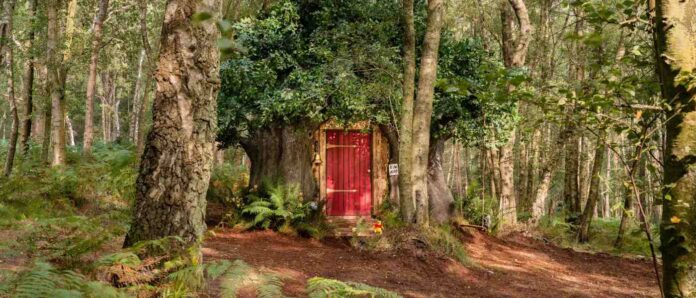
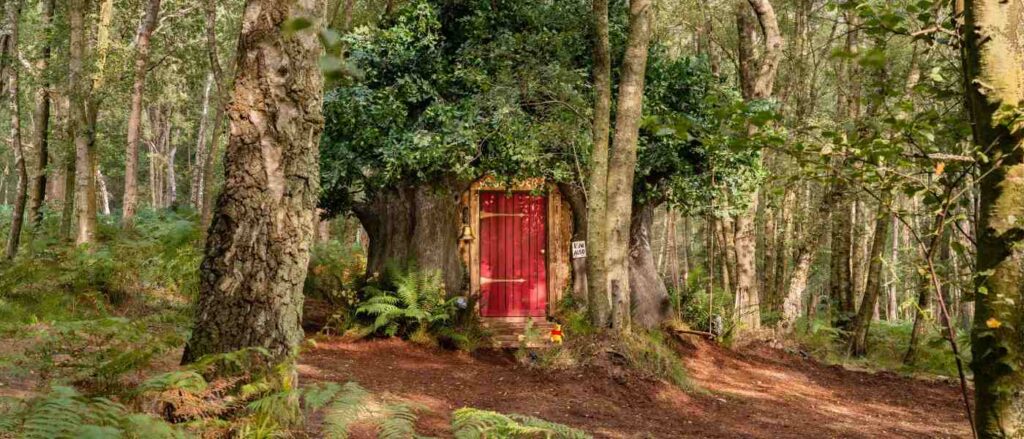
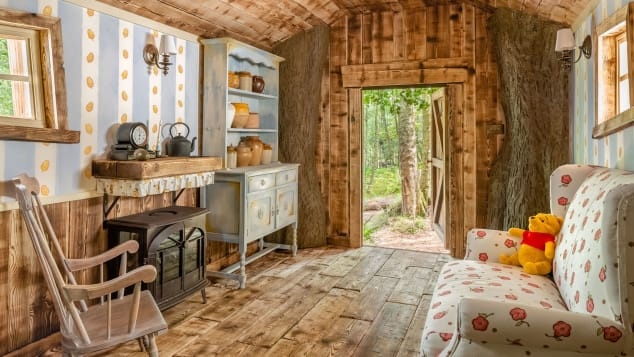
Tucked away in a lush corner of the Sussex countryside that inspired A. A. Milne’s original Hundred Acre Wood, Pooh’s trademark treehouse has been lovingly replicated and is set to host its inaugural guests as part of a Disney celebration marking the beloved Bear’s 95th anniversary.
The custom-built tiny home, based on E.H. Shepard’s classic drawings from Milne’s original books, is overseen by Kim Raymond.
He’s a Disney illustrator who’s been creating images of the iconic bear for three decades.
“I have been illustrating Winnie the Pooh for 30 years and I continue to be inspired by the classic decorations of E.H. Shepard and the more recent Disney stories,” Raymond said in a statement.
“The ‘Bearbnb’ is a unique experience that brings the charm of Pooh to life for fans, whilst honoring the original adventures that have been so important to many people for 95 years.”
Henry Woide, Airbnb
Per the Airbnb listing, during their visits, Pooh lovers will get “a guided tour of the original Hundred Acre Wood (a.k.a. Ashdown Forest), play Poohsticks on the iconic Poohsticks Bridge, and enjoy locally sourced hunny-inspired meals.”
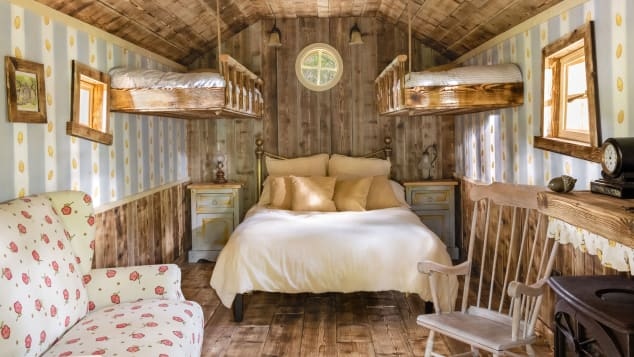
As with its literary prototype, the Bearbnb’s whimsical décor includes a ‘Mr. Sanders plaque’ above the arched tree branches surrounding the front door, plenty of comfy spots for napping, and a plethora of “hunny” pots lining the kitchen shelves.
Henry Woide, Airbnb
Apart from the “bear necessities,” the new House at Pooh Corner also boasts modern amenities including yoga and wellness products designed to aid travelers in communing with the true Tao of Pooh.
This magical domicile dedicated to Piglet’s BBFF (best bear friend forever) is the perfect spot to bring a family for a once-in-a-lifetime, immersive Winnie the Pooh experience.
Henry Woide, Airbnb
But as you can imagine, guests of even an enchanted destination must observe proper house etiquette, so…
• Strictly no heffalumps inside the house
• Hands are to be kept out of the honey pots
• A snack of “a little something” encouraged at 11 o’clock in the morning
• Poohsticks is mandatory
• Multiple naps are permitted
• No pets (other than Roos, Tiggers, Eeyores, Piglets and Pooh Bears)
• No smoking, you’ll upset the bees
Even for a “silly old bear,” that seems fair enough.
ADD A Little Honey to Those Social Feeds—Share This Sweet Spot With Others…
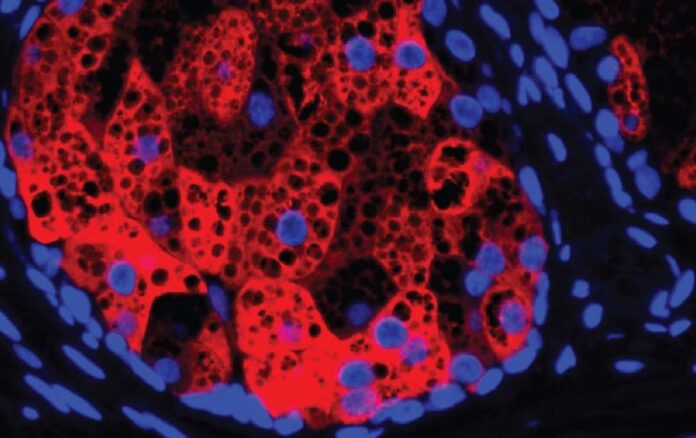
HSD3B1, red, within a human sebaceous gland cell neclei (blue) and lipid droplets (black circular areas)/Harris Tyron/UT Southwestern Medical Center
A study led by UT Southwestern dermatologists suggests that a common inflammatory skin condition may stem from poorly regulated hormones. The finding could offer an unexpected new target to fight this condition.
Atopic dermatitis (AD) is a form of eczema. AD affects up to 13% of children and 10% of adults, with an annual treatment cost of $5.3 billion in the U.S. alone.
“We often think of eczema as a dry-skin condition and treat mild cases with moisturizers,” said corresponding author Tamia Harris-Tryon at UTSW. “Here, we’re showing that a gene that’s important for making hormones seems to play a role in the skin making its own moisturizers.
“If we could alter this gene’s activity, we could potentially provide relief to eczema patients by helping the skin make more oils and lipids to moisturize itself.”
Dr. Harris-Tryon explained that previous research has linked AD to overactivity in genes responsible for the production of two inflammatory immune molecules, interleukins 4 and 13 (IL-4 and IL-13).
A relatively new drug called dupilumab—a monoclonal antibody that reduces the amount of the inflammatory molecules—has been extremely effective in many patients with moderate to severe AD. However, the molecular mechanisms behind how IL-4 and IL-13 contribute to this form of eczema was unknown.
To investigate this question, Dr. Harris-Tryon and her colleagues focused on sebocytes, the cells that make up sebaceous glands. These glands produce an oily, waxy barrier that coats the skin, helping it retain moisture.
The researchers dosed human sebocytes growing in petri dishes with IL-4 and IL-13, then used a technique called RNA sequencing to get a readout on gene activity for the entire genome and compared it with gene activity in sebocytes that weren’t treated with these immune molecules.
They found that a gene called HSD3B1, which makes an enzyme called 3b-hydroxysteroid dehydrogenase 1, became up to 60 times more active when exposed to the two interleukins.
The finding was a surprise, Dr. Harris-Tryon said, because this enzyme is well known for playing a key role in the production of hormones such as testosterone and progesterone, but it had never been linked to atopic dermatitis and skin lipid production.
Databases of human gene activity showed that HSD3B1 tends to be overactive in patients with eczema; a single study of patients on dupilumab showed that this drug appears to lower HSD3B1‘s activity. Both pieces of evidence suggest that IL-4 and IL-13 drive up the activity of this gene.
To determine how this gene affects sebum output, the researchers manipulated HSD3B1‘s activity in sebocytes growing in petri dishes. They found that when they made this gene less active, the levels of hormones decreased, and skin sebum production increased.
The reverse was also true, with more gene activity leading to higher amounts of hormones and less sebum. The researchers made similar findings in a mouse model of AD, with hormone production decreasing the production of skin lipids.
Together, Dr. Harris-Tryon said, these findings—published in TNAS, suggest that HSD3B1 could be a new target for fighting AD and potentially other forms of eczema.
“Changing the output of this gene could eventually offer a way to treat AD that’s completely different from any treatment that currently exists,” she added. That’s an exciting breakthrough indeed.
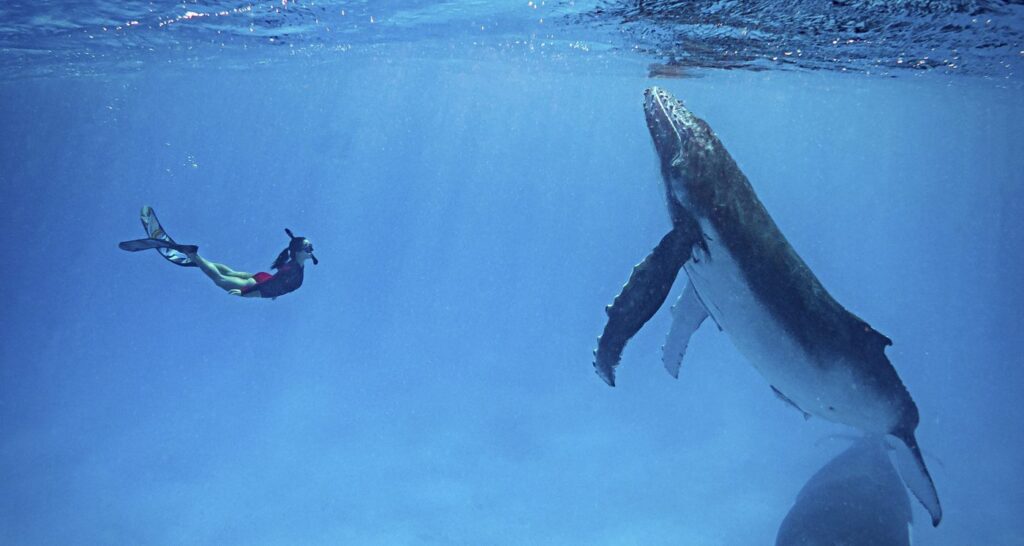
This incredible video shows a husband and wife’s amazing encounter with a group of humpback whales.
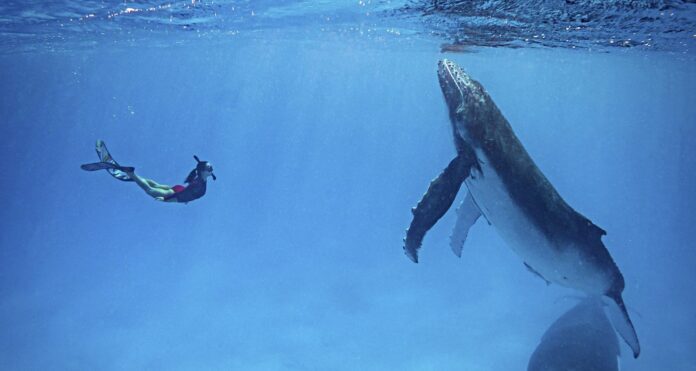
32-year-old David Edgar and his wife Alice, were diving in the beautiful crystal-clear waters off the islands of Tonga in the South Pacific.
The couple were following a group of three humpback whales—a mother, her calf, and a male escort.
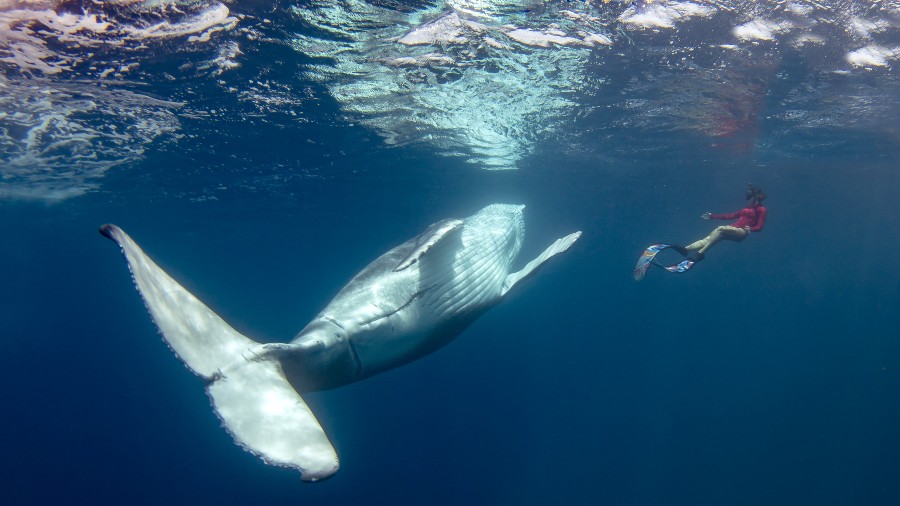
Amazingly, the curious calf came right up to Alice.
Professional underwater photographer David was able to capture these gorgeous images and video that showed the ‘little’ humpback seemingly ‘dancing’ with his wife.
David, who’s from Sydney, Australia, said, “It was one of those amazing days in the South Pacific where the water was perfectly flat and there was hardly a breath of wind.”
“We followed a group of three humpback whales who were swimming slowly around a shallow reef for about an hour.
SWNS
“The video captures the moment where a young humpback calf swims toward Alice in a moment of mutual curiosity.
The Kidney Project’s implantable bioartificial kidney, one that promises to free kidney disease patients from dialysis machines and transplant waiting lists, took another big step toward becoming reality—earning a $650,000 prize from KidneyX for its first-ever demonstration of a functional prototype of its implantable artificial kidney.
KidneyX is a public–private partnership between the U.S. Department of Health and Human Services and the American Society of Nephrology, founded to “accelerate innovation in the prevention, diagnosis, and treatment of kidney diseases.”
The Kidney Project, a nationwide collaboration, combined the two essential parts of its artificial kidney, the hemofilter and the bioreactor, and successfully implanted the smartphone-sized device for preclinical evaluation.
For this advance, the team was awarded KidneyX’s Phase 1 Artificial Kidney Prize and was one of six winning teams selected out of an international field.
In the last few years, The Kidney Project successfully tested the hemofilter, which removes waste products and toxins from blood, and the bioreactor, which replicates other kidney functions, like the balance of electrolytes in blood, in separate experiments.
For the Artificial Kidney Prize, the team married the two units into a scaled-down version of the artificial kidney and evaluated its performance in a preclinical model. The units worked in tandem, powered by blood pressure alone, and without the need for blood thinning or immunosuppressant drugs.
“The vision for the artificial kidney is to provide patients with complete mobility and better physiological outcomes than dialysis,” said Roy, who is a faculty member of the UCSF Schools of Pharmacy and Medicine. “It promises a much higher quality of life for millions worldwide with kidney failure.”
Chronic kidney failure, also known as end-stage renal disease, leads to the progressive and dangerous loss of kidney function. Most patients with kidney failure must visit dialysis clinics multiple times every week to have their blood filtered, a process that is time-consuming, uncomfortable, and risky.
A minority of patients live with transplanted kidneys, thanks to a pool of donated kidneys that are constantly in high demand. But even these patients must contend with a lifetime on immunosuppressant drugs that can have severe side effects.
The Kidney Project’s artificial kidney will not only replicate the high quality of life seen in kidney transplant recipients—the “gold standard” of kidney disease treatment, according to Roy—but also spare them from needing to take immunosuppressants.
“Our team engineered the artificial kidney to sustainably support a culture of human kidney cells without provoking an immune response,” said Roy. “Now that we have demonstrated the feasibility of combining the hemofilter and bioreactor, we can focus on upscaling the technology for more rigorous preclinical testing, and ultimately, clinical trials.”
The KidneyX Artificial Kidney Prize called on scientists and engineers to submit “continuous kidney replacement therapies that provide transformational treatment options beyond current dialysis methods,” a high bar that UCSF’s artificial kidney is poised to clear in the coming years.
“This award is a testament to The Kidney Project’s bold vision and execution of a viable solution for millions of patients with kidney failure,” said UCSF School of Pharmacy Dean B. Joseph Guglielmo, PharmD.
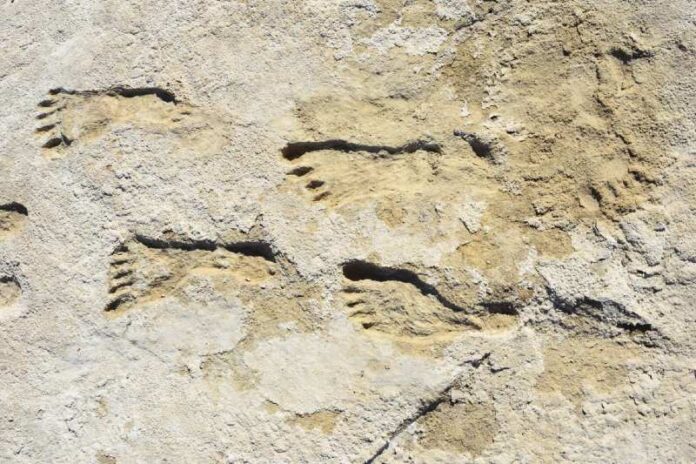
New scientific research conducted at White Sands National Park in New Mexico has uncovered the oldest known human footprints in North America.
David Bustos, NPS
The discovery reveals evidence of human occupation in the Tularosa Basin beginning at least 23,000 years ago, thousands of years earlier than previously thought.
“These incredible discoveries illustrate that White Sands National Park is not only a world-class destination for recreation but is also a wonderful scientific laboratory that has yielded groundbreaking, fundamental research,” said Superintendent Marie Sauter.
The fossilized human footprints were buried in multiple layers of gypsum soil on a large playa in White Sands National Park.
Seeds embedded in the footprints were radiocarbon dated and analyzed by the U.S. Geological Survey to establish their age.
The research dramatically extends the range for the coexistence of humans and Pleistocene (ice age) megafauna and confirms that humans were present in North America before the major glacial advances at the height of the last ice age closed migration routes from Asia.
“This study illustrates the process of science—new evidence can shift long held paradigms,” said USGS Acting Rocky Mountain Regional Director Allison Shipp.
White Sands National Park contains the world’s largest-known collection of Pleistocene age (ice age) fossilized footprints in the world and has been recognized as a megatracksite since 2014.
Those footprints havebeen given the intriguing nickname “ghost tracks.” Each footprint marks the spot where an ancient ancestor once stood many thousands of years ago.
New stories from the past
Karen Carr, NPS
The newly discovered “ghost tracks” tell an interesting tale of what life was like at this time.
“The footprints left at White Sands give a picture of what was taking place, teenagers interacting with younger children and adults,” said lead study author, Matthew Bennett from Bournemouth University, in a statement. “We can think of our ancestors as quite functional, hunting and surviving, but what we see here is also activity of play, and of different ages coming together. A true insight into these early people.”
In addition to human footprints, tracks from the Columbian mammoth, saber-toothed cat, dire wolf, and other ice age animals have been discovered at White Sands.
Scientists from White Sands National Park, the National Park Service, U.S. Geological Survey, Bournemouth University, University of Arizona, and Cornell University, in connection with the park’s Native American partners, have collaborated and consulted on this research. The findings are detailed in an article published in the journal Science.
White Sands National Park protects and preserves the world’s largest gypsum dunefield, at least 23,000 years of archaeology, adaptive flora and fauna, as well as Works Progress Administration-era historic pueblo buildings.
Quote of the Day: “The will to win, the desire to succeed, the urge to reach your full potential… these are the keys that will unlock personal excellence.” – Confucius (born 2,571 years ago)
Photo: by Bobby Johnson
With a new inspirational quote every day, atop the perfect photo—collected and archived on our Quotes page—why not bookmark GNN.org for a daily uplift?
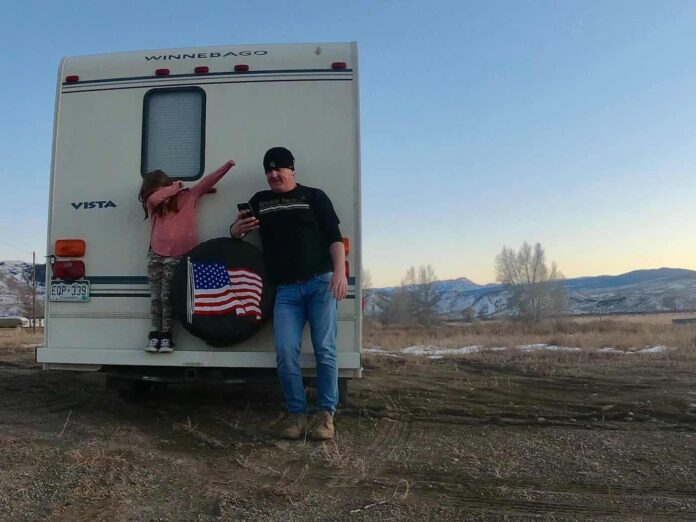
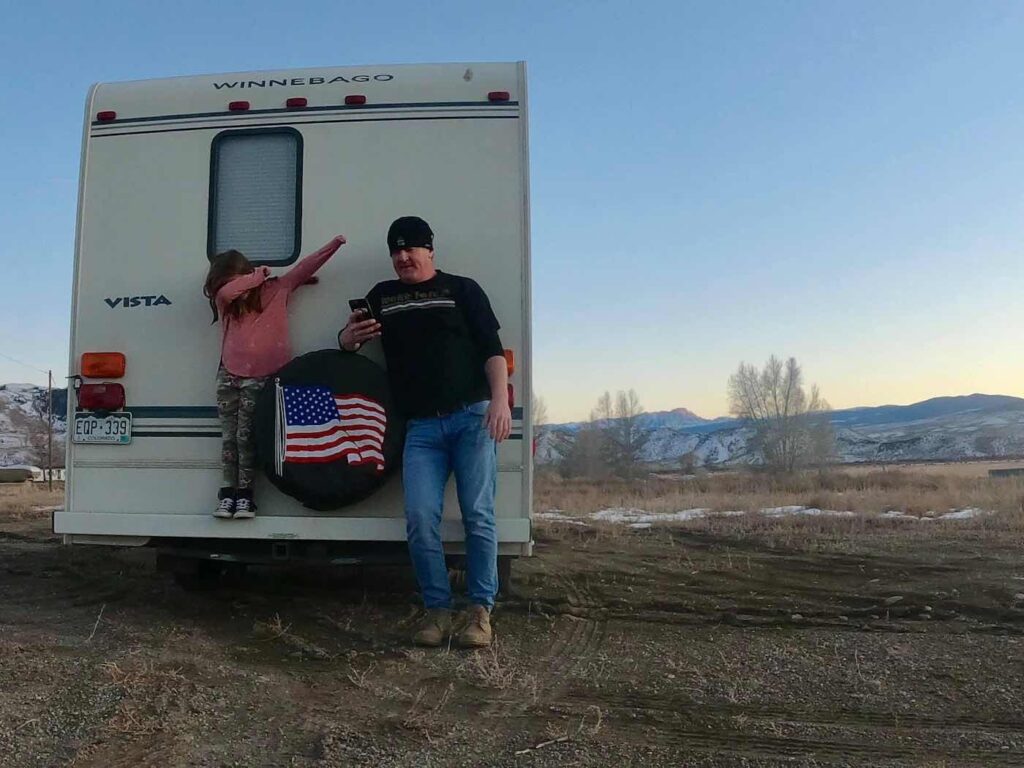
Recreational vehicles are a great way to tour the country and see the sights, but thanks to the efforts of one dedicated father-daughter team, they’ve also become a lifeline for people who’ve lost their homes to California’s latest spate of devastating wildfires.
The brainchild of Woody Faircloth, the nonprofit EmergencyRV.org pairs folks who are willing to donate their campers to a worthy cause with those in need.
To date, Faircloth—often with his 9-year-old daughter Luna along for the ride—has delivered 95 motorhomes to California area wildfire victims who otherwise might wait months for emergency housing. (The organization currently has 100 families on its waiting list.)
Faircloth first got the idea for the charity in 2018. Like many that year, the Colorado-based father was tuned to news coverage of California’s deadly Camp Fire that incinerated 153,336 acres and destroyed hundreds of homes during Thanksgiving week.
The story of a man who’d lost pretty much everything but managed to escape the inferno in his mobile home resonated with Faircloth.
Inspired by how blessed that man felt just to have a place to spend the holiday, he asked Luna what she thought about finding an RV and delivering it to a family so they could have a place to call home for Christmas.
“We were watching some of what’s going on out there and talking about what if that was us and what would we do,” Faircloth told Denver 7 at the time. “And I told (my daughter) what the idea was and she was 100 percent on board. She said, ‘God and Santa Claus would be really proud of us for this.’”
Faircloth launched a GoFundMe campaign to finance the first RV that he and Luna delivered dropped off in California.
As word of their journey spread, people started reaching out to him via social media, offering to donate their motorhomes—and from there, EmergencyRV soon took shape.
A father of four who works in the telecom industry, Faircloth says even though juggling the many facets of his life has its challenges, he plans to expand EmergencyRV’s outreach to include more fire and other natural disaster sites and hopes to beef up response times as well.
Over the last two months, Faircloth and Luna have made the 40-hour-roundtrip from Denver to California and back on three separate weekends.
Many of the mobile home recipients are firefighters and other first responders whose tireless efforts battling the blazes did not prevent their own homes from going up in flames.
One such man is George Wolley, who lost his own home to the Dixie Fire on August 4th.
“We fought the fire until we couldn’t fight it no more. We couldn’t stop it. We did our best,” Wolley told the Associated Press. “Before I got that RV, I felt like I was a burden on everybody that helped me… I slept a lot in tents and in my car. It gave me a place to go.”
While his organization continues to grow and evolve, the original sentiments behind Faircloth’s humanitarian efforts remain constant. He’s grateful for the many blessings he has—and blessed to be in a position to help others.
“Presently collapsed in the back of an old RV beside this little kid with no front teeth who gets me up and moving every day determined to do something better than yesterday,” Faircloth wrote in a 2018 post when Luna was 6.
“We are so lucky to be exhausted. We are so lucky to be able to go home soon. There are so many thanks yous to say that have not yet been said so to all of you—thank you.”
And we’re lucky to have a world with people like Woody and Luna Faircloth in it.
REV UP Your Social Media Accounts With This Inspiring Story…
In Vancouver, a new supermarket is opening specifically to get unwanted food and produce into the hands of people who need or want it, thereby sparing it from being dumped into the landfill.
The Food Stash Foundation’s “Rescued Food Market” is opening its doors on October 1st. Located on 340 West 2nd Avenue, for three hours every Friday, their surplus produce and food is available to anyone, whether they’re food insecure, looking to reduce their environmental impact, or simply need to cut down on grocery costs, on a “pay what you feel” rather than “what you can” basis, ensuring there’s as little moral impediment to getting the food out the door and onto dinner tables around Vancouver.
Shoppers are encouraged to bring their own bags, but if it slips one’s mind, they offer reusable totes at a limit of one per person.
And getting it out the door is both the major challenge and goal, as Food Stash Foundation’s executive Carla Pellegrini would explain to GNN, 58% of all food produced in Canada becomes waste. The UN reports household food waste in the Great White North is 20 kilograms more per capita than the United States, and rivals poorer nations that have limited access to refrigeration and have to deal with tropical heat and humidity.
“There’s food waste at every level [of the supply-chain], whether it’s over-ordering, cancelled orders, the shape of the produce isn’t meeting the customer expectations, or approaching best-before dates,” says Pellegrini, who took over the position of director last July.
“I was really, really surprised by how much food waste there is, how much food insecurity there is in Vancouver.”
By any means necessary
The Food Stash Foundation collects food from wholesalers, grocers, and farms, and delivers it to other organizations that combat food waste and food insecurity. There was a time when all the unwanted food that was left would be put into boxes and delivered to food insecure families for a small price.
But hauling in 70,000 pounds of food per month meant they needed more ways to get rid of it, hence the Rescued Food Market.
“85% of that 70,000 pounds of food doesn’t even make it back to our warehouse, it goes right back out the same day with our drivers to other organizations,” says Pellegrini.
“We even end up with surplus at the end of our weekly operations; after the organizations and the boxes, we still sometimes have surplus, so we’re interested in offloading that.”
Furthermore, a piece of B.C. legislation releases donators of the liability of risk posed by donating food that’s past a best-by date, and has encouraged more donations also of packaged food and not only produce.
Enormous amounts of CO2 are generated every year around the world from food decaying in landfills, and by rescuing it we’re not only saving money, we’re saving the planet.
Among what must have been hundreds of thousands of stories of sacrifice, heroism, and courage that played out among the Jewish communities across Europe during World War Two, the story of ‘Mr. Radio Philips’, aka ‘The Angel of Curaçao’, has never been well told.
But 45 years after his death, Jan Zwartendijk, an ordinary Dutch company man-turned-real hero, is now the subject of a new biography called The Just: How Six Unlikely Heroes Saved Thousands of Jews from the Holocaust,which details his life-saving bravery that saved perhaps 10,000 Jews from annihilation during the Holocaust by helping them flee Europe.
In 1939, Zwartendijk took over duties as consulate in the then-capital of Lithuania, Kaunas, on behalf of the Dutch government-in-exile after the Netherlands was occupied by Nazi Germany.
A loyal company man for the home goods brand Philips, he sold gramophones, lightbulbs, and other goods out of the Kaunas branch before his reliability earned him the unpaid position as consul.
Soon after taking over, Jewish refugees from Poland—who fled following the Red Army’s invasion in 1940—began to arrive at his door seeking help.
Confronted with a dangerous choice, Zwartendijk did what “everyone would have done… if they had been in this position,” according to his son, recounting his father’s words to the Guardian.
He ended up issuing 2,139 passport visas to Jewish families for entry into the Dutch Caribbean colony of Curaçao, knowing that his signature of fountain pen script and green stamp could get them as far as the island—after which he could only hope the local authorities, whose approval was also needed for the Jews to enter the country, would allow them in.
Zwartendijk’s gamble would end up saving more people than Oskar Schindler—subject of the Academy-Award winning Schindler’s List—says journalist Jennifer Rankin in the Guardian.
While it was the Dutchman whose visas allowed those fleeing the war to find a new home, he was not the only brave soul working as a consul in the Lithuanian capital at the time.
Japan’s Chiune Sugihara helped ensure, through the long arm of the Trans-Siberian Railway, that the refugees had a reliable way of escaping Europe.
Sugihara and Zwartendijk were both denounced by their governments, but would later be honored as heroes—though it took quite a bit longer for Zwartendijk to be recognized.
Sugihara was named ‘Righteous Among the Nations’, the highest honor accorded to non-Jews by the state of Israel, two years before he died in 1986. Furthermore, he has a section in Japanese school curriculums, a decent Wikipedia page, memorials, and more.
Zwartendijk, on the other hand, was largely forgotten and did not receive the ‘Righteous Among the Nations’ honor until 1997. Yet a week after his death in 1976, writes Jan Brokken, author of The Just, research was published which estimated that 95% of all the people leaving Europe on a Zwartendijk visa escaped to freedom.
Since then, the Kaunas municipality has raised a memorial for Mr. Radio Philips in front of the corporate office he used to occupy. It’s a worthy recognition of a man the history books will not forget again. On reading the biography of his life, Stephen Spielberg wrote, “If I had known Jan Zwartendijk’s story before, I would have had filmed that.”
SHARE This Unsung Hero’s Story So Friends Can Know It Too…
When one man just couldn’t find the perfect pasta shape, he did what so many great Americans have done before him: he made his own.
The story of this fun adventure raises many important food-isophical questions, such as “What is the best pasta shape?” and “What attributes do the best pasta shapes have?” and “Who decides what represents an official pasta shape: is there even such a thing?”
Dan Pashman, James Beard Award winner, food personality, and podcast host, decided that whether it was penne, rigatoni, tagliatelle, or tortellini, there was no pasta form which he thought satisfied his desire for “sauceability,” “forkability” and “tooth-sinkability.”
Along the way towards his ultimate goal of the perfect pasta, Pasta.com reports that Pashman traveled to something called the Pasta Lab in North Dakota State University, where he learned at the knees of pasta elders about the science behind the worldwide staple.
Afterwards he went to the factories of Sfoglini, a Brooklyn pasta brand that uses more refined drying and packaging techniques, as well as the finest organic durum wheat to make their shapes. Pasta.com also details that they use bronze plates to roll and cut their pasta on, giving it an imperfect texture that allows sauce to stick more readily.
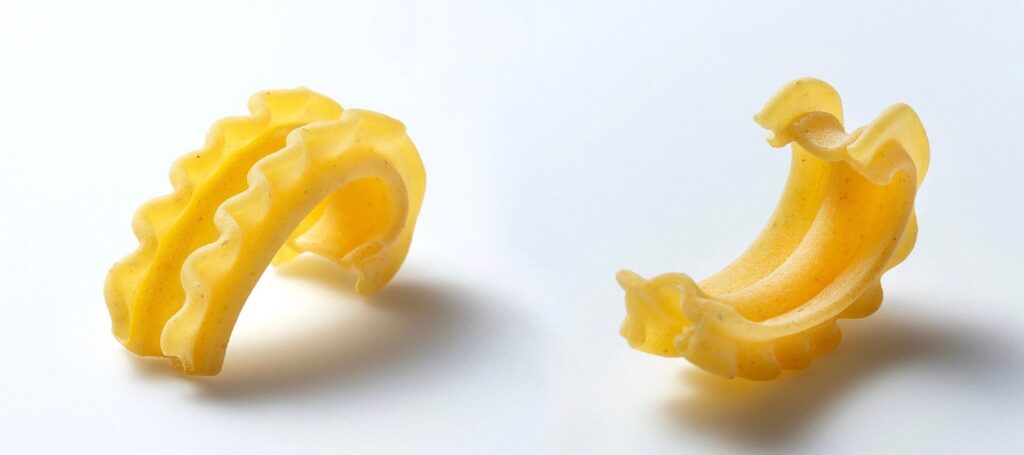
In a five-part podcast series called Mission ImPASTABLE, Pashman documented the birth of his scientifically and culturally-informed attempt at the perfect pasta. Called Cascatelli, which translates to something like ‘Little Pasta Waterfalls’, they combine Pashman’s favorite aspects of various different pasta forms.
Ruffled edges create a “sauce trough” into which sauce can accumulate, while the use of Sfoglini’s bronze plates give cascatelli that special rustic texture. Forkability, or the ease at which someone can press a fork and lift a pasta without it falling apart, is high, as there are overlapping elements that created more area for deeper penetration.
Lastly, tooth-sinkability has been enhanced by right angles on the formations both above and below the noodle, giving it that lovely al dente nature which Italians need in their pasta.
Altogether, cascatelli gave Pashman his perfect dream pasta, it gave the Sfoglini company a new hit to sell—but they’re so popular they are already backed up by 6-8 weeks, but can be ordered here.
The new form of wheat-born noodle seems to be so good it likely deserves its own Michelin star.
HELP Pals to Sink Their Teeth Into a Little Good News; Share This Story…
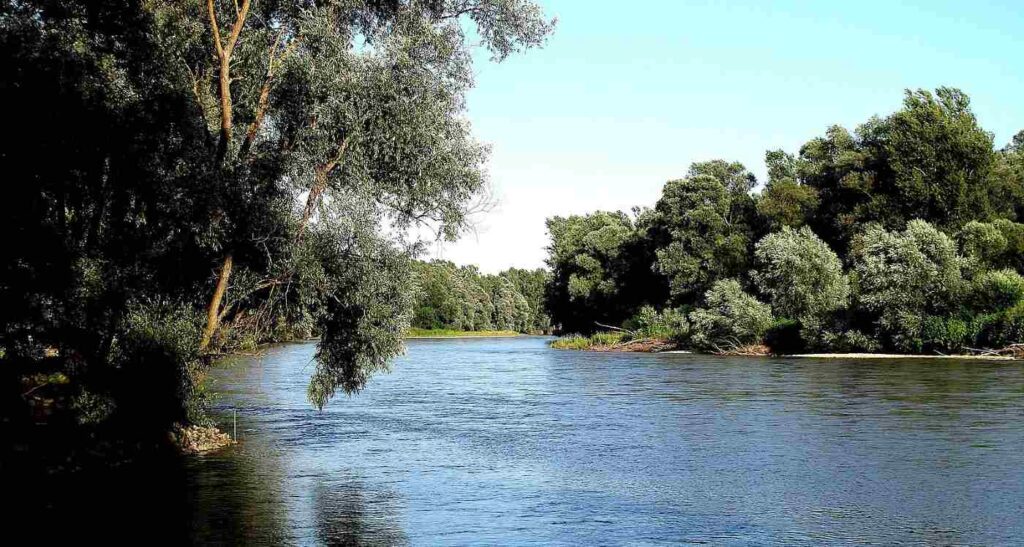
The ‘Amazon of Europe’—a victory for nature 12 years in the making, has finally come to pass as a transboundary UNESCO Biosphere Reserve covering five nations.
Protecting the valuable and vulnerable riverine and estuarine ecosystems of the Rivers Danube, Mura, and Drava, the reserve spans Croatia, Serbia, Hungary, Austria, and Slovenia.
Similar to its famous “World Heritage Sites,” UNESCO Biosphere Reserves represent a high level of international protection and recognition for the finest ecosystems in the world, and ones which are critical to maintaining the biosphere—the global web of life.
The Mura-Drava-Danube Transboundary Reserve (MDD) covers 1,150 square-miles (300k ha) of core wilderness, and 2,700 square-miles of transitionary and buffer zones (700k ha).
The buffer zones contain relatively pristine and related microsystems like wetlands, fish ponds, and oxbow lakes, while the transitionary zones maintain modest human habitation such as villages, ecotourism businesses, and agriculture.
“This is the most valuable connected river landscape in Central Europe and does not need to shy away from being compared with the Amazon,” stated WWF project coordinator Arno Mohl, who advocated for the MDD for over a decade.
The seed for the project was sown in 2009 when Croatia and Hungary signed a joint declaration stating their shared desire to see such a reserve come into being, which was followed just two years later by Serbia, Slovenia, and Austria.
In 2011, UNESCO began reviewing borders and habitat in each country before designating a biosphere in each one, always with the idea of combining them.
Even in a continent as crowded as Europe, the reserve is a sign that nature can maintain bastions around us, and the MDD is the first Biosphere Reserve to cross the borders of so many nations.
“The five countries involved prove that nature conservation can overcome country borders for the benefit of everyone. In the context of the current climate crisis and massive species extinction, protecting the last natural areas has become a matter of our survival,” Mohl continued.
Representing such an important body of water, it’s unsurprising perhaps that it’s a refuge for imperiled species like the black stork, otter, beavers, little tern, sturgeon, and the highest density of European white eagles, along with 36 species of native Slovenian fish on the IUCN Red List.
In Slovenia, the River Mura is the only stretch of water not separated by dams, meaning fish can migrate from its headwaters all the way to the Danube Delta where it flows into the Black Sea.
Quote of the Day: “Laughter is carbonated holiness.” – Anne Lamott
Photo: by sean hall
With a new inspirational quote every day, atop the perfect photo—collected and archived on our Quotes page—why not bookmark GNN.org for a daily uplift?
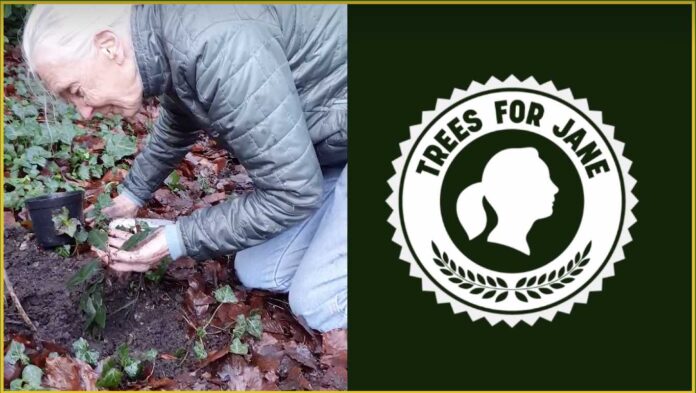
World Renown primatologist Dr. Jane Goodall launched a grassroots movement this week, during the United Nations Climate Week to support their ecosystem restoration project the Trillion Tree campaign.
Trees for Jane, organized by the inspiring founder of the Jane Goodall Institute, aims to stop deforestation and help replenish the world’s dwindling stock of trees and forests through community-based protection and reforestation programs.
She narrated a film called A Trillion Trees, in which calls on every person and every business to plant and care for a tree in their backyards, on rooftops or communities.
Their website aims to inspire, educate, and engage a global audience to act now, “as the world nears a tipping point in the fight against climate change”.
They hope that Trees For Jane will galvanize a global audience—from students and teachers, to activists, to corporations and governments—to support the UN’s goal to plant one trillion trees by 2030.
While Goodall encourages all viewers to plant a tree, the film also reinforces the importance of protecting and restoring trees. Anyone can join the cause by planting a tree or donating at TreesforJane.org.
WATCH her talk about it in a new interview…
SHARE the Trillion Trees Campaign For Jane on Social Media…
Millennials are more adventurous with food than Baby Boomers—eating more foreign fare, experimenting with unusual ingredients, and even catching their own dinner—according to a new survey.
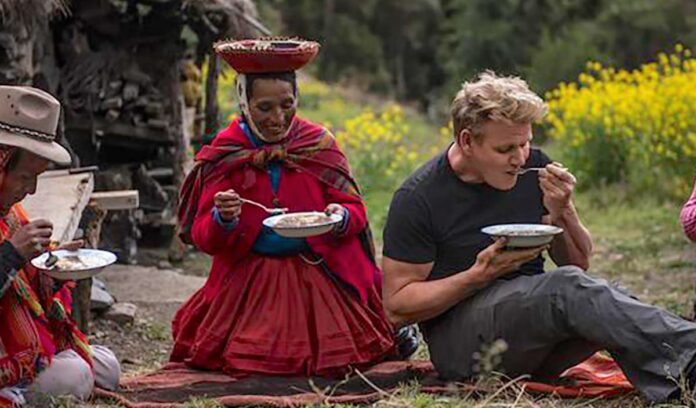
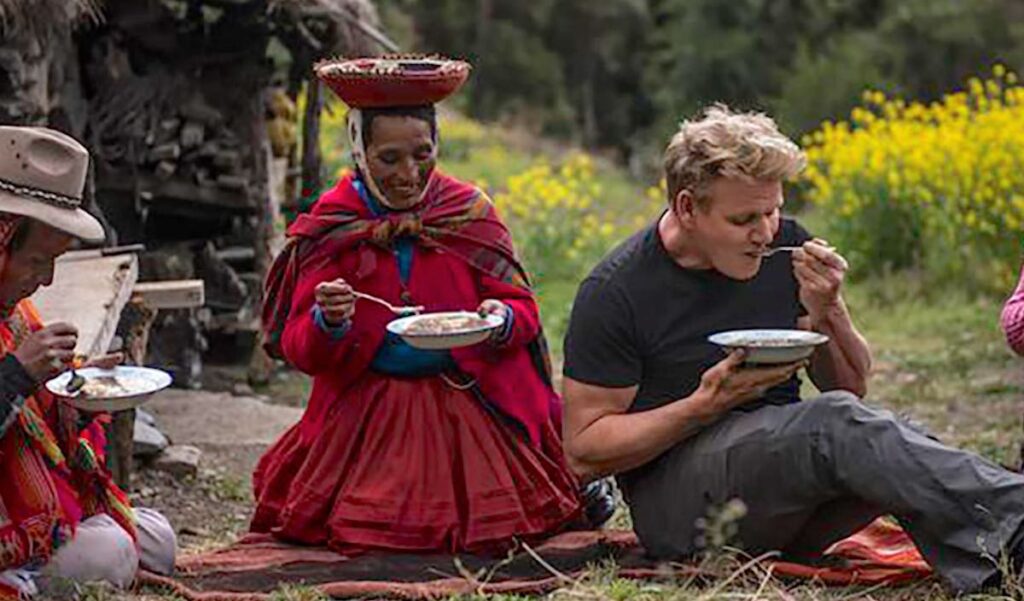
Gordon Ramsay: Uncharted – Nat Geo
The study of 2,000 British adults found that during an average week just 36 percent of food eaten by 25-40-year-olds is traditional to their own culture.
Seven in 10 of these Millennials say they cook with rare or unknown ingredients, compared to just 7% of those aged 57-75.
One-third of younger adults said they’d been fishing and served up their catch that same evening, compared to only about one-quarter of older generations who had the same experience.
It also emerged that as many as 6 in 10 Millennials love cooking and use it as a great way to escape.
The survey was commissioned by National Geographic to launch the third season of Gordon Ramsay: Uncharted, which aired the first episode on September 15th at 9pm.
It features Gordon Ramsay foraging for food, traveling the globe in pursuit of culinary excellence.
A spokesperson for National Geographic said, “The research has been interesting to see the varying levels of adventure when it comes to food across the generations.”
“And it’s been intriguing to see the numbers of people that would love to push to the next level and travel somewhere more remote for experiences of taste.”
The study also found that despite those aged 25-40 being more daring in the kitchen at home, they’re not quite as adventurous when abroad.
Although millennials are more likely to deliberately travel to a country where food is exciting and new, when they get there, they’re also likely to eat in a well-known fast-food restaurant – with 37 percent saying it’s nice to have something comforting and familiar.
At home, the average respondent estimated 38 percent of the dishes they eat each week are British, with boomers consuming the most (42 percent).
Gen Zs are most likely to share their love of food with those around them, with three quarters saying they’ve been known to introduce new dishes to family members.
In fact, across all respondents polled via OnePoll, 36 percent have a recipe or way of cooking that has been passed down the generations to them—with an average of two secret ingredients.
When asked what is considered ‘adventurous’ when it comes to food, eating local cuisine abroad, ordering something unusual off the menu they’ve never tried before, and adding something new to a dish were all mentioned. One-third believed trying a new store-bought sauce counts as being daring.
If you’re not quite as daring as others, you can get inspiration from the professionals on cooking shows such as Gordon Ramsay’s or Stanley Tucci’s Searching For Italy.
In this upcoming season, Ramsay hits the road and feasts his way through Portugal, Croatia, Mexico, Texas, Maine, Puerto Rico, Iceland and America’s Smoky Mountains, looking for global cuisines and unique culinary customs.
Tucci is traveling through the 20 regions of Italy exploring their local traditions and ingredients, with season two coming soon on CNN, after six shows from Naples, Bologna, Sicily, Tuscany, and elsewhere.
TOP 10 COUNTRIES BRITS THINK OFFER THE BEST FOOD
1. Italy
2. Britain
3. India
4. Greece
5. France
6. America
7. Spain
8. Mexico
9. Thailand
10. China
J. Paul Bruton U.S. Army Corps of Engineers Sacramento District
[By USACE]– Temperatures were pushing 100 degrees in East Sacramento on July 9. Still, U.S. Army Corps of Engineers Sacramento District’s contractors and construction workers made steady progress on the Sacramento River East Levee project, until a contractor noticed something out of place.
U.S. Army Corps of Engineers Sacramento District
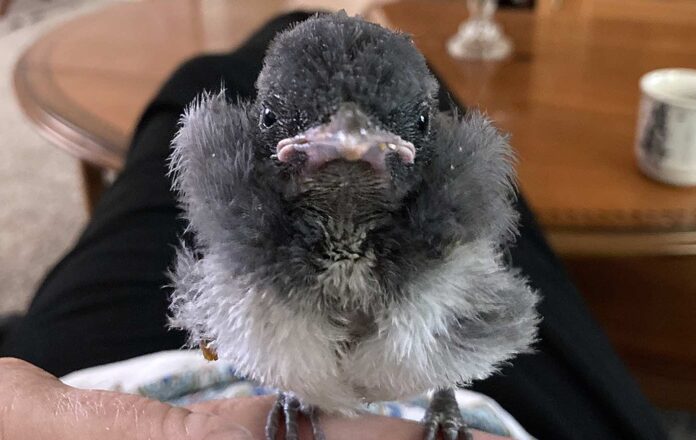
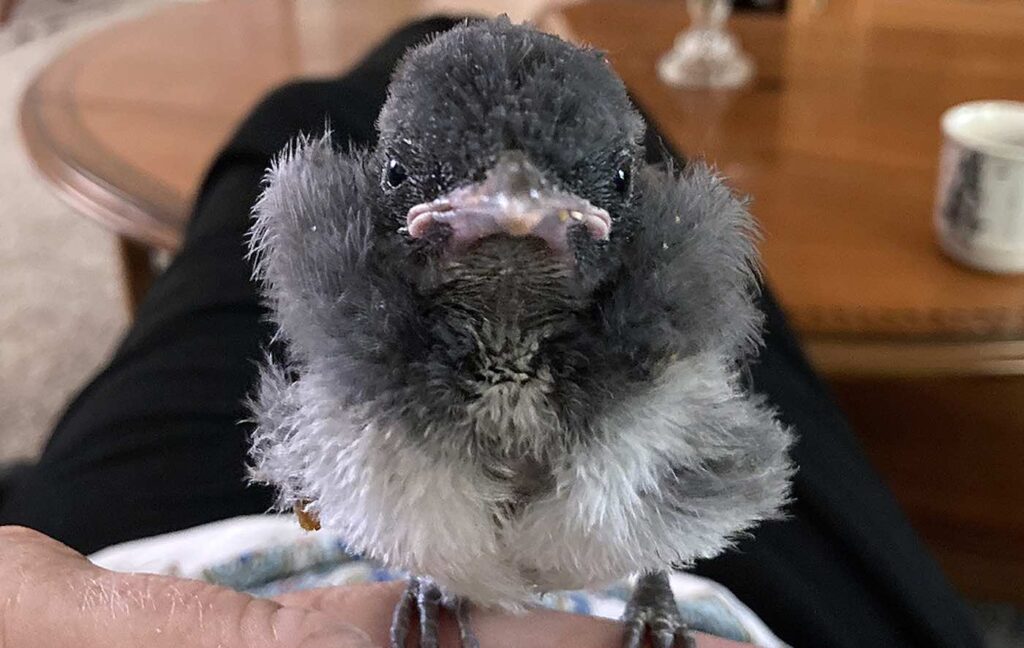
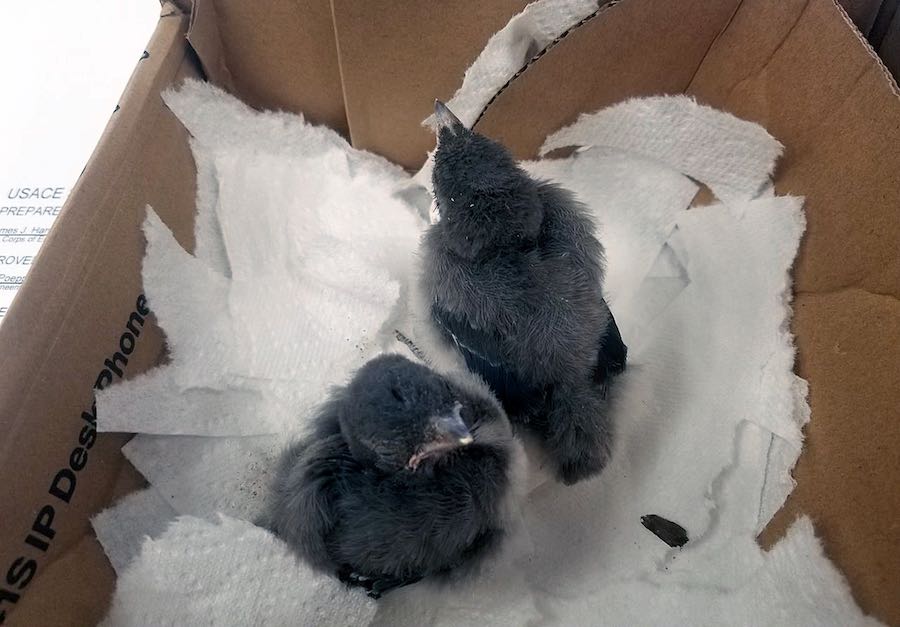
Among the bustle of activity, contract worker Roberto Navarez spotted two gray, baby birds sitting on the levee, right in the path of a massive bulldozer shoving along a mound of dirt. He noticed several long branches from a huge oak tree stretched over the levee, but he couldn’t see a nest anywhere in the tree.
Assuming the chicks had fallen or jumped out of their nest, Navarez continued to watch the pair, hoping they would soon be rounded up by their parents. Unfortunately, neither the mother nor father bird appeared.
With construction equipment rumbling past and the mid-day heat now topping 104 degrees, Navarez knew the chicks needed to be moved out of harm’s way, and fast. Feeling apprehensive about moving them himself, he reached out to wildlife biologist Pete Morris of Nordic, the SREL Contract 2 project contractor.
Arriving on scene, Morris observed the birds and decided the pair of chicks must be taken out of the withering heat if they were to have a chance of survival. He then retrieved a small cardboard box, and the two rogue chicks were gently scooped up and taken back to the Army Corps of Engineering (USACE) trailer.
Once inside the air-conditioned building, the larger of the two chicks immediately managed to get out of the box and began hopping around, interacting with rescuers and “chirping its lungs out.” The smaller sibling, however, seemed to be struggling. It remained quiet and listless, hunkered down in the makeshift nest.
Unsure of what to do next, someone brought up the name of Lee Roork. Working on the levee as a Quality Assurance Representative for USACE, Roork was known to be an avid birder. He could often be seen on his breaks or at lunchtime checking out birds and nests with his binoculars. Roork had also been known to take injured owls or hawks to various wildlife sanctuaries around Sacramento in the past, so he seemed the right person to contact.
J. Paul Bruton U.S. Army Corps of Engineers Sacramento District
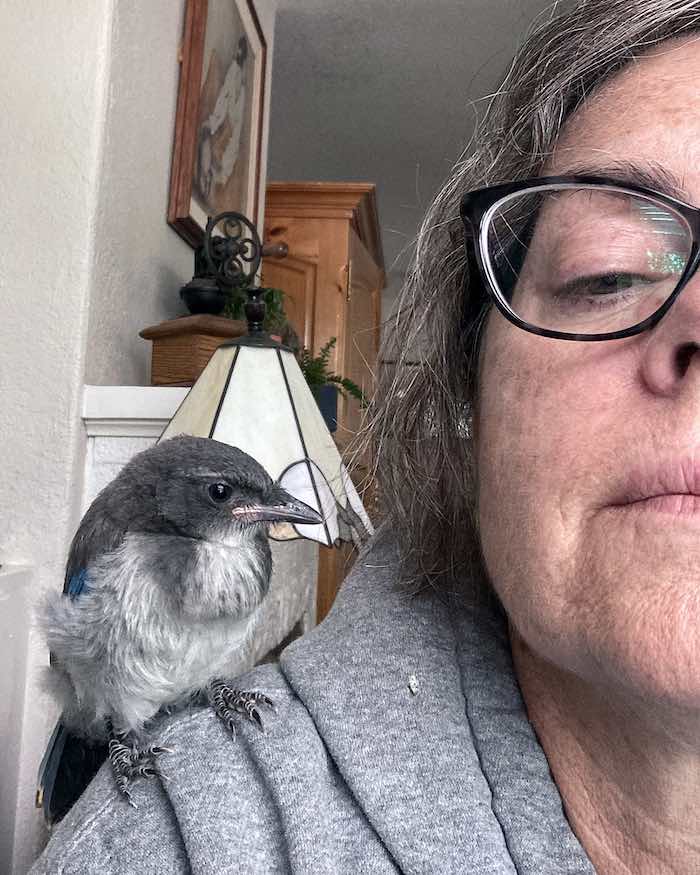
Roork knew the ideal fix was to return the wayward chicks back to the tree they had fallen from in hopes that one of the parent birds would return to collect them. He mashed up some blackberries and seeds, providing some nourishment for obviously ravenous babies, then returned to place the box and birds back in the tree. But as soon as the cardboard “nest” was attached to a branch, the larger of the two chicks leapt from the box. An adult scrub jay immediately swooped down and started interacting with the chick as both hastily scampered into nearby brush.
As Roork returned to work, the smaller, weaker bird remained in the nest, but Roork wanted to give the parent birds time to return and take care of their baby. He said he made intermittent checks throughout the rest of the day, but found that neither parent would go near the “nest” containing the abandoned baby Jay.
By the end of the business day, it was looking pretty grim for the lone nestling, said Roork.
“I was certain the little bird wouldn’t survive another 24 hours unless someone helped it. It was in pretty bad shape, so I decided to try to help it, rather than leave it to die,” said Roork.
He then sent a one-sentence text to his wife, Susan Roork (also a USACE employee, who was teleworking from home not far from the SREL site). “Want to raise a baby scrub jay?” the text read.
Susan, an animal enthusiast who also has plenty of experience with rescues, sent back a one-word response … “Definitely!”
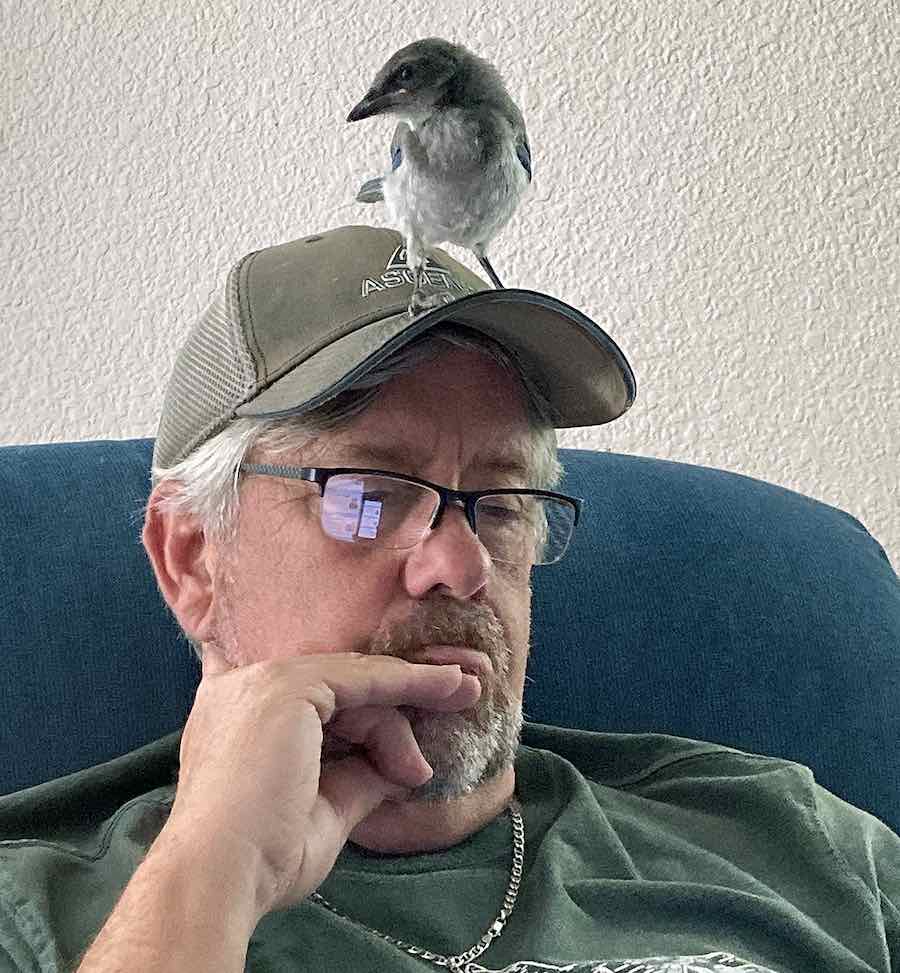
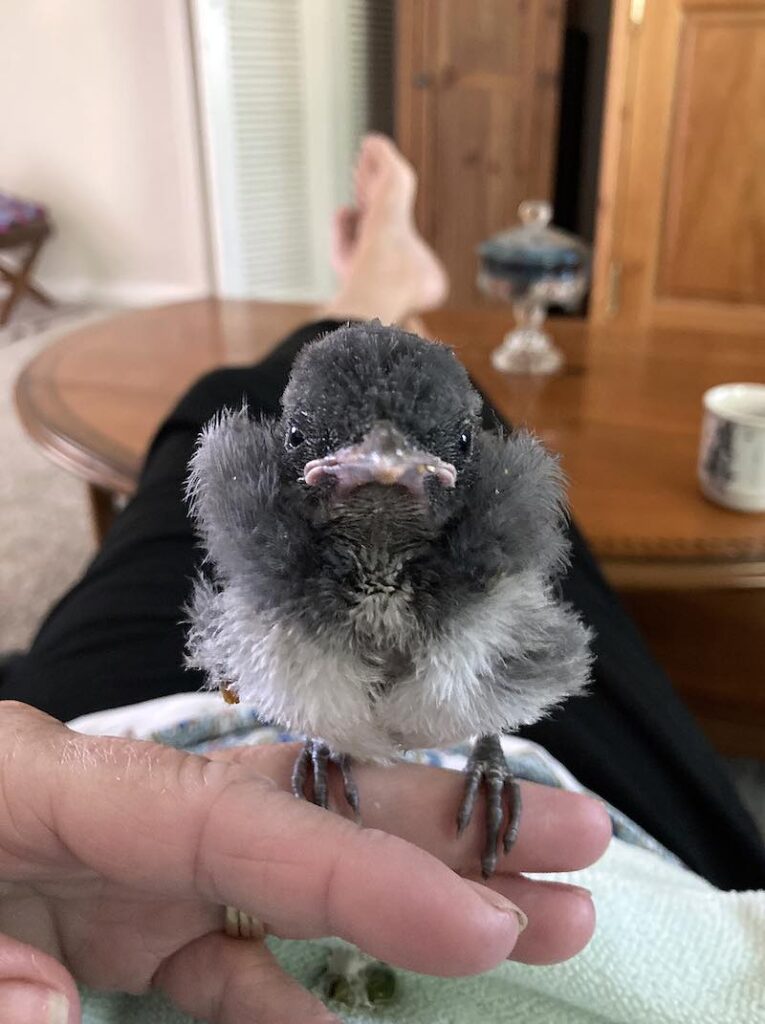
Susan went into research mode, scouring bird rescue sites for pertinent information and discovered that scrub jays eat everything from soft cat food and meal worms to local berries, fruits, and seeds. What they never did discover was whether “Blu Blu” (the name that stuck) was a male or female.
“Their coloring and markings look extraordinarily similar,” said Susan.” So, we just went with ‘her’ most of the time.”
A bigger question remained, however: would Blu even pull through? For the first 24 hours, Blu barely moved. She sat limply, hunkered down in her newly created home-nest. But by the second day, Susan was able to get some food and water into her.
“She started wholeheartedly interacting with us, eagerly taking water through a little hypodermic dispenser, gobbling down healthy portions of food, acting alert, responsive and curious – she was making her way,” said Susan.
Lee Roork – U.S. Army Corps of Engineers Sacramento District
From that point on, Blu’s future never seemed in doubt. She continued to grow stronger, increase in appetite and grow faster than Susan and Lee thought possible.
“We were absolutely amazed by how quickly she grew,” said Susan. “We would go to bed and when we’d check on her the next day it was like looking at a new bird – feathers appearing where there were none before, her tail feathers would be an inch longer, her feet and little talons growing fast.”
From the very beginning, Susan, Lee and their teenaged daughter, Jillian, approached taking care of Blu with an end goal in mind – releasing her back to the wild. To do so, they tried to nudge Blu into doing things it would have to do in the wild, such as finding its food, cracking nuts, capturing flies, and building her flying prowess. But they also found that Blu had many of these traits ingrained in her DNA, and she quickly began taking food and hiding it in various locations inside the house for eating later.
“Our biggest concern was whether Blu would be able to learn all the things she would need to survive out in the real world,” said Susan. “We felt that it was important to make sure she had challenges and tasks to figure out, as she would when we released her, so we regularly came up with problems for her to work out. We were always amazed at how quickly she figured out each one and mastered the skills involved.
Blu Blu – Susan Roork
In the first weeks, little Blue was literally Susan’s pet project. As Lee worked on the levee, and Jillian attended school, Blu was teleworking with Susan, pecking at the keyboard to help her type, hopping about and creating mischief – along with the occasional typo – tugging on her earrings, flitting about, stealing sticky-notes … only to suddenly snuggle into a ball of fluff, falling asleep on her wrist, or snuggling warmly against her neck.
“Blu had become a great companion, and I knew I would miss her dearly when we released her,” said Susan. “But even though we had all become very attached to Blu and loved the experience of raising her, the ultimate plan to release her was not in question.”
With two months of the Roork’s care, Blu’s transition was stunning. As of late August, she had made the full transition from a chick on the edge of death to a strong and smart scrub jay ready for the great outdoors. Blu had attained expert aerial acrobat status, regularly zooming throughout the house, finding stashed peanuts, catching flies in mid-air, messily bathing in a blue frisbee, and generally acting like an adult bird. And she was spending more and more time staring out the window …
Recognizing Blu’s progress, Susan and Lee decided that Blu’s launch-to-nature date would be over the Labor Day holiday. And even knowing from the start that they would give Blu her freedom to fly, both admitted that they were entirely smitten by the feisty, feathered creature.
“For a brief moment, we considered turning our large chicken coup into a bird sanctuary for her … but we knew it wouldn’t be fair,” said Susan. Lee quickly agreed.
They planned to take Blu’s dog crate-sized sanctuary into the backyard, sit with her for a while, let her acclimate to being outside, and, when they could finally swallow their doubts (and their hearts), they would open the door and see if Blu was ready for the big blue sky.
Then, just as unexpectedly as the little bird had come into their lives, Blu was gone. During a visit from a neighbor, Blu made the decision for all involved, and darted through the slightly opened front door and into nearby trees. She squawked and fussed at Susan for a few moments, but continued to move from tree to tree, getting further and further from the house. Finally, Susan saw Blu join some other scrub jays and begin flying along with them.
“Even though the plan was always to release her, we were both heartbroken. But only because we were disappointed we didn’t get to make it an official goodbye,” said Susan.
Still, despite the way it ended, both Susan and Lee said it was a wonderful, once-in-a-lifetime experience.
“This has been a unique experience to say the least,” said Lee. “I would never have brought this baby bird home unless I truly believed it was not going to make it. I had no idea how demanding these little guys could be and how much care they need. But I do believe we have done what we could to help her survive in the wild.”
Offering a bit of closure, Blu returned to some trees alongside the Roork’s home shortly after her departure. Susan said they had a final “conversation,” as Blu jumped from branch to branch, excitedly chittering and shadowing them as they walked down the street.
– By J. Paul Bruton, US Army Corps of Engineers – SACRAMENTO DISTRICT
The grant from the Rob and Melani Walton Foundation was pledged to African Parks, which manages parks in eleven African countries
One of the largest contributions ever made to conservation in Africa, this commitment will help to expand African Parks’ reach, preserving a significant portion of Africa’s biodiversity for the long-term benefit of local people and the animals.
Founded in 2000, African Parks takes on the long-term management of protected areas in partnership with governments to protect wildlife, restore landscapes, and ensure sustainable livelihoods for surrounding communities. Currently managing 19 parks measuring almost 57,000 square-miles (14.7m hectares), they take on the complete responsibility and are accountable for all aspects of protected area management, including law enforcement, community development, sustainable financing, infrastructure, and overall governance.
With more than 3,200 full-time staff, 98% of whom are from local communities, and thousands of part-time staff, African Parks has become the largest employer in many regions in which they work. Poaching has been curtailed and practically eliminated in most of the parks under their management, where more than 80% of key wildlife populations are on the rise.
In the last year alone, 110,000 people received healthcare from the hospitals and mobile clinics they support, and over 100,000 children had access to education provided by the schools they support around the parks. Their goal is to directly manage 30 parks measuring over 30 million hectares by 2030. This would bolster African governments’ efforts to help reach the global target of protecting 30% of the planet for nature.
Rob and Melani Walton are longtime supporters of sustainability and conservation efforts around the globe and have been invaluable partners to African Parks since its inception. “As global citizens, we have a responsibility to protect our planet and the people and species that create our dynamic, fragile ecosystems. We are honored to continue to work alongside African Parks, governments across the continent, and community leaders in support of their sustainability goals,” said Melani Walton of the Rob and Melani Walton Foundation, an African Parks Board Member.
The $100M commitment will be allocated over the next five years, with $75M going to the creation of an endowment, which ensures long-term funding. The remaining $25M will go to sustaining parks under African Parks’ management that need it the most. A portion of these funds will be used for five-year matching grants in conjunction with the Legacy Landscapes Fund—to both Iona National Park in Angola and to Odzala-Kokoua National Park in the Republic of Congo, with an additional $10M for each park over the subsequent 10 years.
“This could not come at a more important time… providing a source of stable long-term funding that will contribute enduring protection for some of the most biodiverse, threatened landscapes on the planet,” said African Parks CEO Peter Fearnhead.
“This extraordinary gift will help to realize our vision of protecting vast ecosystems and their ecological functions for humanity in perpetuity.”
Fearnhead said the gift was the largest-ever to its endowment, following a 2017 donation of $65 million from the Wyss Foundation to support several parks.
With the new funding, African Parks will be able to continue to increase their impact by bringing more parks under management, continue to reduce poaching, increase wildlife populations, and improve livelihoods for hundreds of thousands of people across Africa.
SWING From the Trees With This Good News—and Share With Your Friends…
Quote of the Day: “Grace is the face that love wears when it meets imperfection.” – Joseph R. Cooke
Photo: by Photoholgic
With a new inspirational quote every day, atop the perfect photo—collected and archived on our Quotes page—why not bookmark GNN.org for a daily uplift?
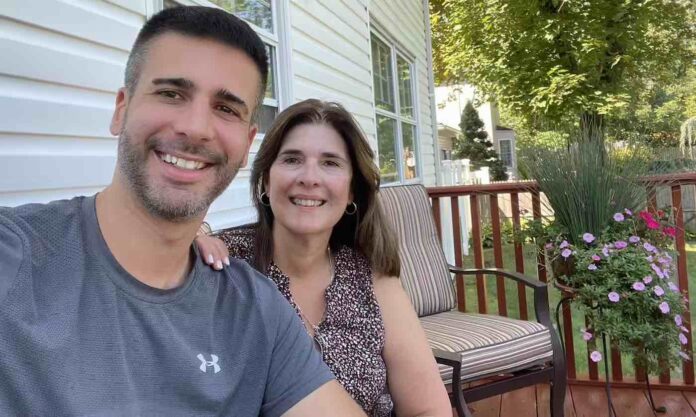
Javier Folgar was brainstorming ways to celebrate the first anniversary of his business, and decided to create a blog post highlighting all the wonderful events that happened this past year—and he knew just where to get the photos.
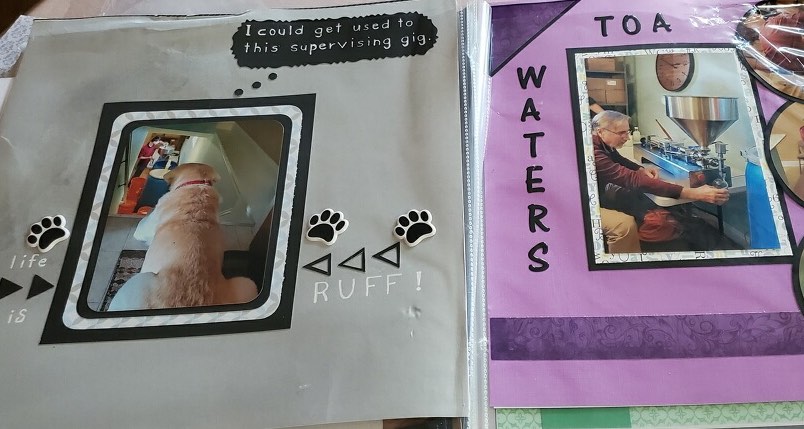
His mother Carmen had given him a special gift at Christmas last year. She created a scrapbook for the company that captured all his trials and triumphs—the special milestones that brought TOA Waters to where it is today.
“Let me tell you, this scrapbook meant the world to me! Not only was it magnificently laid out, but it was also designed by my mother,” Javier told GNN. “It’s something that she spent hours of her time piecing together.”
The business, which makes invigorating bubble bath products that “nourish the body, and smell amazing,” was only a few months old at Christmas. Carmen’s plan was to hold on to the scrapbook adding additional memories throughout the year and return it to Javier at the end of September 2021 when the company hits its one-year anniversary.
A few weeks ago, he drove to her home in Wayne, New Jersey, to fetch the book.
“I packed up my car and prepared to make the drive back home to Frederick, Maryland,” recalled Javier. “I carefully placed the scrapbook on the top of my vehicle. I didn’t want my luggage to damage the book in any way.”
He intended to put the scrapbook back into the car once everything was packed.
Well, that didn’t happen—and without even realizing, he drove off with the scrapbook on top of his car.
While stopping to fuel up his tank at a gas station, he checked his phone for any new emails.
“I received one new message from a woman I didn’t know. She said she found a scrapbook scattered across Valley Road. She wasn’t sure if it was mine, but she decided to reach out and give it a shot in case she could find the owner. That’s when I realized the terrible mistake that I made.”
The kind Samaritan tried her best to salvage the pages and offered to bring them back to his parent’s house.
“Within the next few minutes, my mother received a knock on the door. Alyssa Fiorellini was standing in front of her with the torn-up pages.”
Most of them were recovered, except for five, so Carmen and her husband proceeded out to search for the missing pages, and found three more.
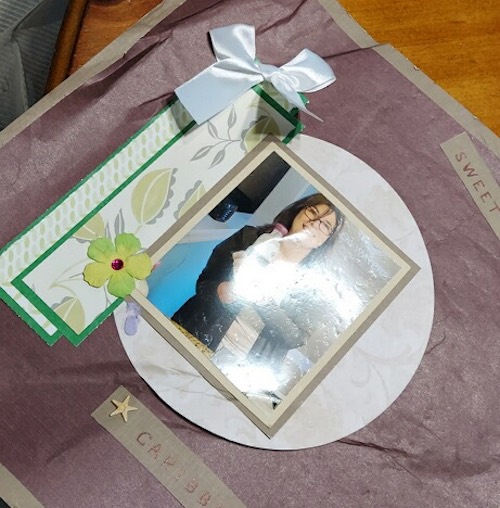
“We were still missing my mother’s favorite page. It was a photo of her with a white bow on it. At that point, we thought it was lost forever.”
“About an hour later, my parents received another knock on the door. This time it was Alyssa’s mother. Apparently, she heard the story of how her daughter recovered a scrapbook from their busy road. She looked around and also found a page, and decided to bring it back to my parents.”
It was the page Javier’s mother was searching for.
“I am still in awe of the kindness shown by these two ladies. I can’t believe a mother and daughter would go out of their way to return these precious memories to us—people they have never met before.”
“On top of that, I was blown away by the love of my parents. Even though I accidentally destroyed my mother’s work, my dad and mom took the time to retrieve the missing pieces.”
“When I think about it, it was very symbolic of how my parents have always looked after me, even as an adult. My mother, without hesitation, even offered to remake that scrapbook for me because she knew how much it meant to me.”
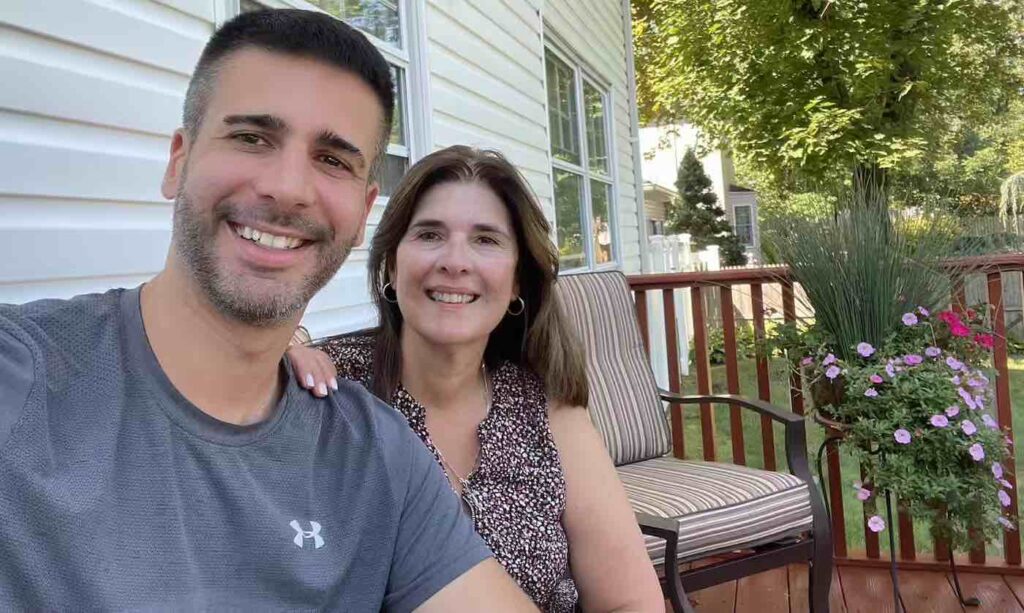
Javier Folgar and his mom Carmen, September 2021
“There truly is kindness around every corner,” Javier concluded.
SCATTER Some Kindness By Sharing This Good News on Social Media…
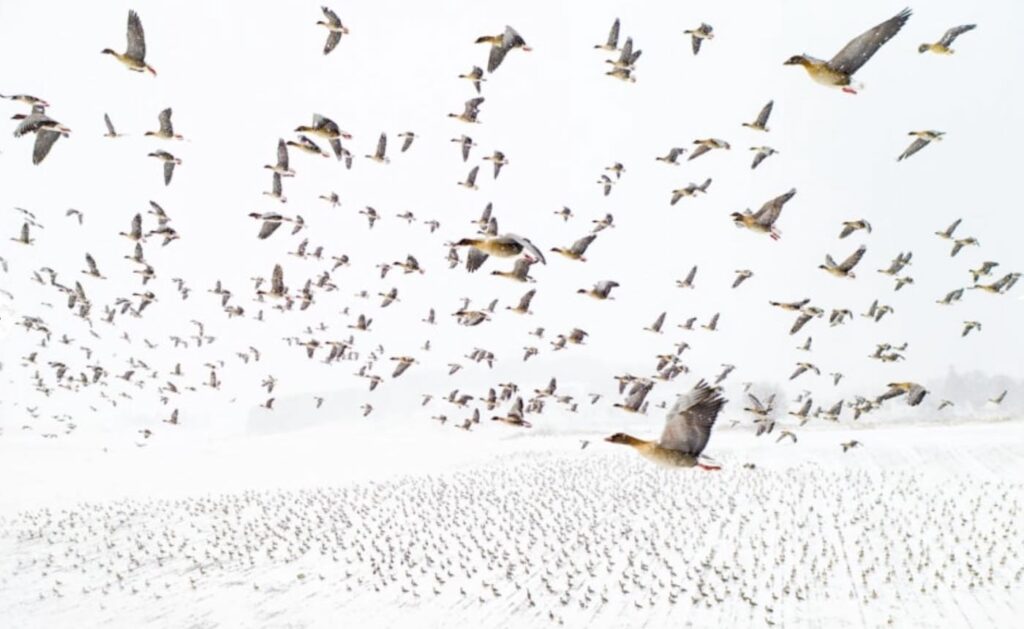
Pink-footed Geese in Norway on spring flight to Arctic breeding grounds by Terje Kolaas / Siena Awards
A flock of thousands of Pink-footed geese taking flight at their breeding grounds in Norway captured by local photographer Terje Kolaas won the top prize of the 2021 Drone Photo Awards.
The popular international contest of aerial photography last year received nearly 14,000 images for their 2020 edition from amateur and professional photographers from 104 countries. The Siena Awards also curate some amazing winners every year in still photography.
First prizes in the Drone Awards are presented in the eight categories—Nature, Wildlife, Urban, People, Sport, Abstract, Storyboard, and Wedding. Here are some of our favorites:
First place in the Urban category was won by the photo titled “Metaphorical Statement About City and Winter,” by Russian photographer Sergei Poletaev. The image portrays an old monastery near Moscow with a large power plant in the background.
A 500-year-old monastery near Moscow with a power plant behind it – Sergei Poletaev / Siena Drone Awards
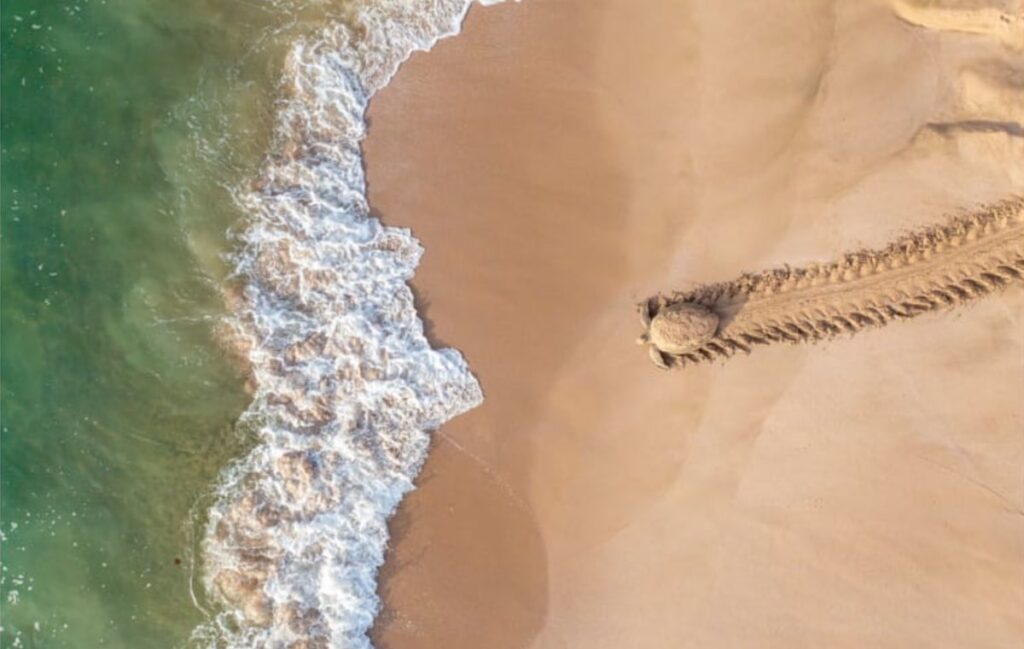
Oman photographer Qasim Al Farsi won the Wildlife category with “Back to Adventure,” an aerial shot that immortalizes a green turtle ready to return to the water after laying its eggs on the coast of Oman.
Qasim Al Farsi / Siena Drone Awards
“Gold at the End of the Rainbow” by Australian photographer Phil De Glanville, which captures a striking rainbow above surfer Ollie Henry taming a frightening wave, is the winning image in the Sport category.
A surf shot from Australia won the Sport category – Phil De Glanville / Siena Awards
Pierluigi Orler of Italy was runner up in the Sport category with this image of a snowmobile in Bernau, Germany.
Pierluigi Orler / Siena Drone Awards
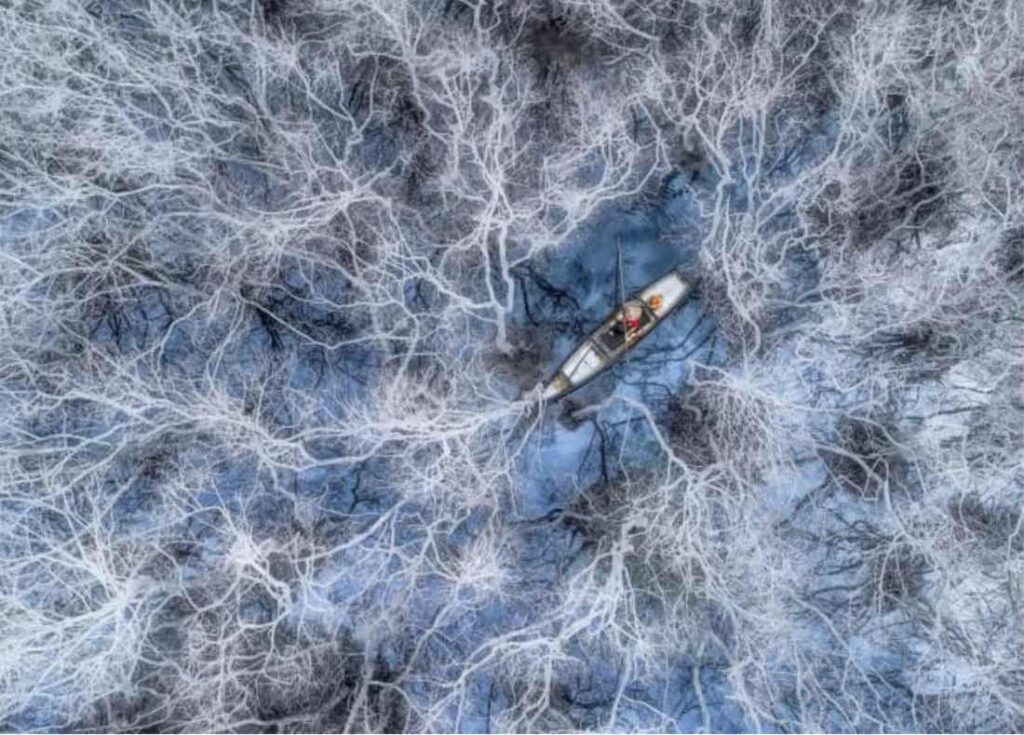
“Fishing in Mangrove Forest,” taken by Vietnamese photographer Trung Pham Huy, won in the People category. It portrays a fisherman who begins his working day in the mangrove forest of the Tam Giang lagoon, in a white winter atmosphere.
Fisherman in mangrove forest by Trung Pham Huy / Siena Drone Awards
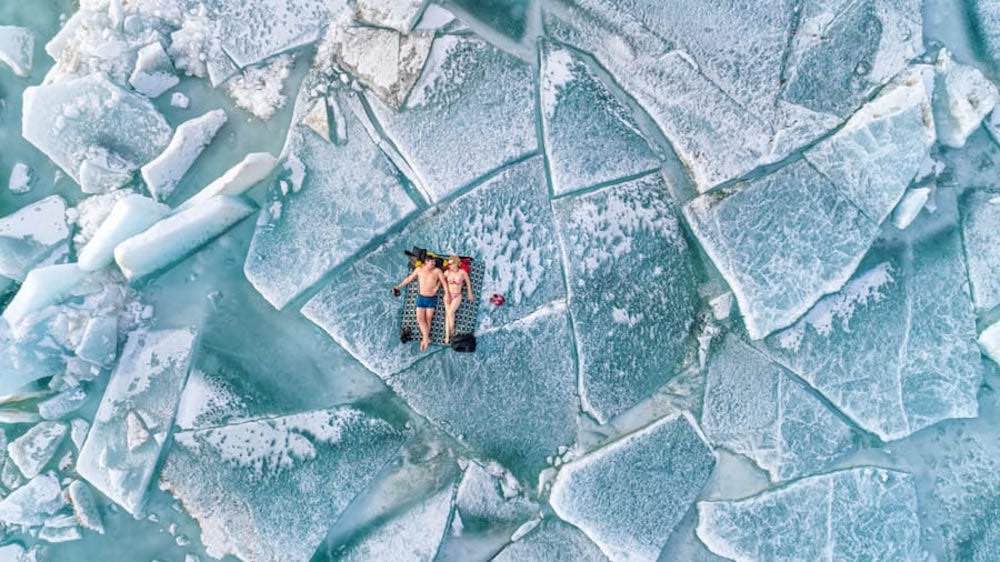
A runner up in the People category was taken by Alexandr Vlassyuk in Kazakhstan, a shot of people lying on the ice in the Kapchagai reservoir.
Kazakhstan photographer Alexandr Vlassyuk / Siena Drone Awards
This shot by Chinese photographer Wujiang Zhu captured in a flower garden in Dafeng Jiangsu was a runner-up in the Wedding category
Wujiang Zhu-Siena / Drone Awards
The image that portrays many small tributaries, shot by the Romanian photographer Gheorghe Popa won first place in the Abstract category. The photo documents water channels in the mountains of Transylvania.
The images will be featured in an exhibition which will run in the Italian city of Siena from October 23 to December 5 as part of the Siena Awards festival dedicated to the visual arts.
FLY These Beautiful Shots Over to Photography Fans By Sharing on Social Media…
FREE WILL ASTROLOGY – Week beginning September 24, 2021
Copyright by Rob Brezsny, FreeWillAstrology.com
LIBRA (Sept. 23-Oct. 22):
Happy Birthday sometime soon, Libra! As gifts, I have collected six useful mini-oracles for you to meditate on during the rest of 2021. They’re all authored by Libran aphorist Yahia Lababidi. 1. Hope is more patient than despair and so outlasts it. 2. Miracles are proud creatures; they will not reveal themselves to those who do not believe. 3. A good listener is one who helps us overhear ourselves. 4. One definition of success might be refining our appetites, while deepening our hunger. 5. With enigmatic clarity, life gives us a different answer each time we ask her the same question. 6. Temptation: seeds we are forbidden to water, that are showered with rain.
SCORPIO (Oct. 23-Nov. 21):
Pioneering psychologist Carl Jung wrote, “I must also have a dark side if I am to be whole.” But it’s important to add that some dark sides tend to be destructive and demoralizing, while other dark sides are fertile and interesting. Most of us have a share of each. My reading of the planetary omens suggests that you Scorpios now have extra power to upgrade your relationship with the fertile and interesting aspects of your dark side. I hope you will take advantage! You have a ripe opportunity to deepen and expand your wholeness.
SAGITTARIUS (Nov. 22-Dec. 21):
Sagittarian poet Rainer Maria Rilke was a complicated person with many mysterious emotions and convoluted thoughts. And yet, he once wrote that life occasionally brought him “boundless simplicity and joy.” I find it amazing he could ever welcome such a state. Kudos to him! How about you, dear Sagittarius? Are you capable of recognizing when boundless simplicity and joy are hovering in your vicinity, ready for you to seize them? If so, be extra alert in the next two weeks. I expect there’ll be a visitation or two. Maybe even three or four.
CAPRICORN (Dec. 22-Jan. 19): Baltasar Gracián was not a 21st-century New Age self-help teacher. He was a 17th-century Jesuit philosopher born under the sign of serious, diligent Capricorn. I hope you will be extra receptive to his advice in the coming weeks. He wrote, “Know your key qualities, your outstanding gifts. Cultivate them. Redouble their use.” Among the key qualities he gave as examples were disciplined discernment and resilient courage. I bring his thoughts to your attention because the coming weeks will be a rousing time to heed his counsel. It’s time for you to identify and celebrate and give abundant expression to your key qualities.
AQUARIUS (Jan. 20-Feb. 18):
After studying the genes that create feathers in birds, scientists found that humans have all the necessary genes to grow feathers. (I read about it in National Geographic magazine.) So why don’t we grow feathers, then? Well, it’s complicated. Basically, the feather-making genes are not fully activated. Who knows? Maybe someday, there’ll be technology that enables us to switch on those genes and sprout plumage. In the coming weeks, it might be fun for you to imagine having bird-like qualities. You’re entering a high-flying phase—a time for ascension, expansion, soaring, and seeing the big picture from lofty vantage points.
PISCES (Feb. 19-March 20):
Are there experimental approaches on the frontier of your desires that would be intriguing to consider? Might there be lusty experiences you’ve barely imagined or don’t know about—but that could be fun to play with? According to my analysis of the astrological omens, the coming weeks will be a favorable time to explore such possibilities. Be safe and prudent, of course. Don’t be irresponsible or careless. But also be willing to expand your notions of sensuality.
ARIES (March 21-April 19):
Aries author Steve Maraboli says, “The best way to love someone is not to change them, but instead, help them reveal the greatest version of themselves.” If that strategy appeals to you, the next eight weeks will be an excellent time to put it to maximum use. You’re entering a phase when you can have an especially beneficial effect on people you care for. You’ll be at peak power to help them unleash dormant potentials and access untapped resources.
TAURUS (April 20-May 20):
It’s a good time to ruminate about things you wish could be part of your life but aren’t. You will be wise to develop a more conscious relationship with wistful fantasies about impossible dreams. Here’s one reason why this is true: You might realize that some seemingly impossible dreams aren’t so impossible. To get in the mood for this fun exercise, meditate on a sample reverie: “I wish I could spend a whole day discovering new music to love. I wish I owned a horse and a boat and a vintage brown and orange striped bohemian cardigan sweater from the 1970s. I wish I knew the names of all the flowers. I wish I felt more at ease about revealing my hidden beauty. I wish I could figure out how to eliminate unnecessary stress from my life.”
GEMINI (May 21-June 20):
Poet, essayist, and translator Anne Carson calls her husband Robert Currie the “Randomizer.” His role in her life as a creative artist is to make quirky recommendations that help her avoid being too predictable. He sends her off in directions she wouldn’t have imagined by herself. Here’s an example: At one point in her career, Carson confessed she was bored with her writing. The Randomizer suggested, “Let’s put dancers into it.” In response, she repurposed the sonnets she had been working on into a live theatrical performance featuring many dancers. I think you would benefit from having a Randomizer in your life during the coming weeks. Know anyone who could serve? If not, look for one. Or be your own Randomizer.
CANCER (June 21-July 22):
If you so desired, you could travel to Munich, Germany and eat beer-flavored ice cream. Or you could go to Rehoboth, Delaware and get bacon-flavored ice cream. If you were in Taiwan, you could enjoy pineapple shrimp ice cream, and if you were in London, you could sample haggis-flavored ice cream, made from sheep innards. But my advice right now is to stick with old reliables like chocolate, vanilla, and strawberry ice cream—which are still delicious even if they’re not exotic. What’s my reasoning? In general, the astrological aspects suggest that during the coming weeks, you’re most likely to thrive on trustworthy standbys and experiences you know and trust.
LEO (July 23-Aug. 22):
Celebrated novelist Jane Austen (1775–1817) wrote, “Sometimes I have kept my feelings to myself, because I could find no language to describe them in.” People who aren’t as articulate as Austen experience that problem even more often than she did. But the good news, Leo, is that in the coming weeks, you’ll be extra skillful at expressing your feelings and thoughts—even those that in the past have been difficult to put into words. I invite you to take maximum advantage of this grace period. Communicate with hearty poise and gleeful abandon.
VIRGO (Aug. 23-Sept. 22):
“When you know what’s important, it’s a lot easier to ignore what’s not,” writes author and life coach Marie Forleo. Let’s make her thought the basis of your work and play in the coming weeks. Get vibrantly clear on what is of supreme value to you, which influences bring out the best in you, and which people make it easy for you to be yourself. Then compose a second list of trivial situations that are of minor interest, influences that make you feel numb, and people who don’t fully appreciate you. Next, Virgo, formulate long-term plans to phase out the things in the second list as you increasingly emphasize your involvement in the pleasures named in the first list.
WANT MORE? Listen to Rob’s EXPANDED AUDIO HOROSCOPES, 4-5 minute meditations on the current state of your destiny — or subscribe to his unique daily text message service at: RealAstrology.com