











All News - Page 434 of 1715 - Good News Network
Home Blog Page 434

Rare Rhino Species Sees Dramatic Population Growth – From Just 100 to 3,700 Today – as Poaching Falls

Vaughn Wright

The populations of several species and subspecies of rhinoceros are increasing, some dramatically, while poaching rates in east Asia have plummeted over the decade, a new report from the International Rhino Foundation (IRF) reveals.
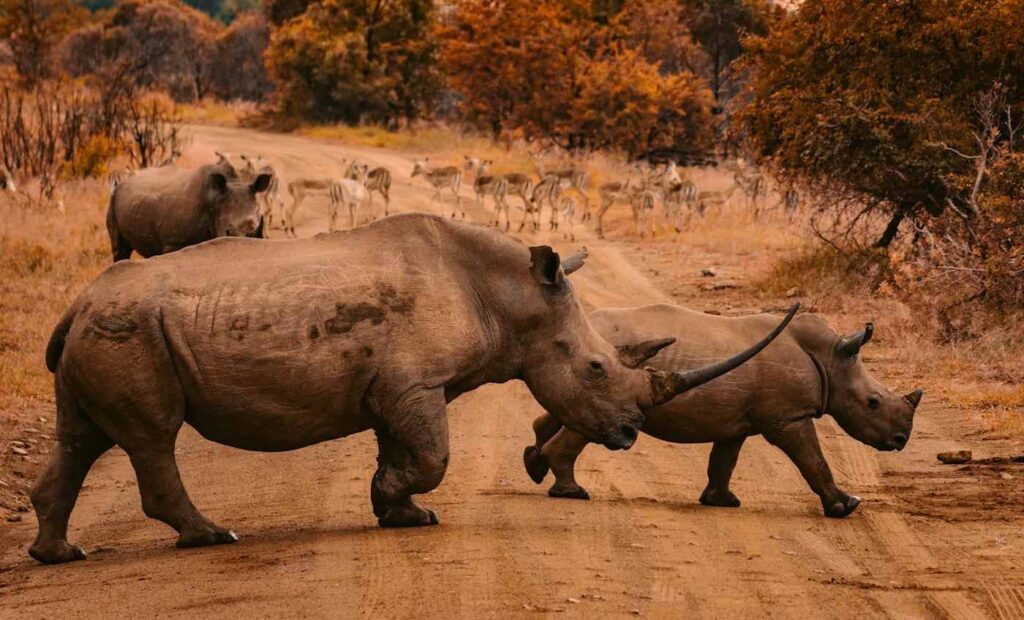
Involved in all things rhino, the IRF releases an annual report known as The State of the Rhino, which this year highlights that even in the midst of a rare pandemic, dedicated individuals in a dozen countries are working to keep rhino numbers healthy and recovering.

Indeed, the IRF has invested $20 million worldwide into rhino conservation projects over the last 10 years, and in many countries their work is paying off.

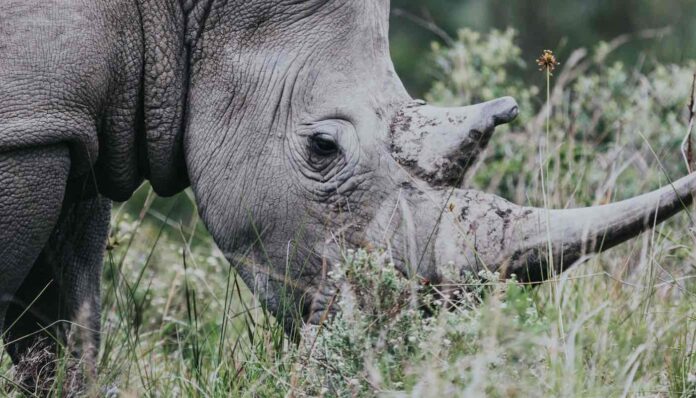
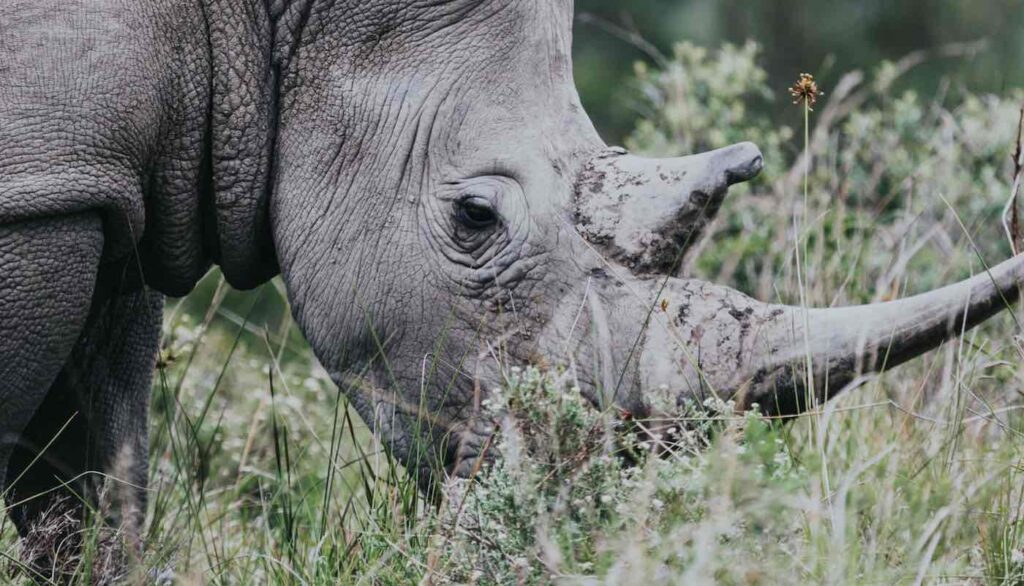
The largest success has no doubt come by way of the greater one-horned rhino. Native to India and Nepal, during the early 1900s there were a mere 100 individuals left. Today there are 3,700 and ever increasing in number. Over the last eight years, poaching incidents have fallen from 41 in 2013, to just 1 at present day.

In the Indian state of Assam, rhinos can be found in four protected areas, and this year the population in the magnificent Manas National Park on the border with Nepal had reached 47 individuals having only been established with 4 just a few years ago.

RELATED: Herd of Elephants to be Moved from UK to Kenya in Rewilding ‘World First’

Nepal also saw an increase of 107 greater one-horned rhinos in their country.

Javan rhinos in Indonesia welcomed four new calves into the world, increasing the critically-endangered species to 75, greatly offsetting the rate of natural death. This is almost double the number of Javan rhinos from 2011.

In Africa, the black rhino has seen an encouraging population increase of 16-17% over the past decade, while South Africa’s “Rhino court” established to hear exclusively poaching cases was reopened in April of this year, giving rangers the opportunity to testify against suspects without expensive travel to a major city, and without poaching cases falling into a court backlog.

LOOK: New Zealand Penguin Hospital Saves Endangered Birds That Were Facing Extinction

In Zimbabwe, black rhino were reintroduced after a 30-year absence and are growing steadily, while in Kenya, anti-poaching efforts have dropped the number of rhinos killed to 0 this year, down from a high of 59 in 2013.
Vaughn Wright

“We must act today, to ensure these marvelous creatures can thrive for future generations,” said Nina Fascione, executive director of IRF. “Let’s continue to build on our successes of greater one-horned, black, and Javan rhinos and reverse the declines for Sumatran and white rhinos, working together so rhinos can continue to thrive on Earth.”

MORE Great News: 100-Year-Old Galápagos Giant Tortoise Found on Fernandina Island is Indeed Member of ‘Extinct’ Species

CHARGE Over to Your Social Media Pages to Hail This Good News…

Have We Detected Dark Energy? Cambridge Scientists Say It’s a Possibility

Betmari, CC license
Betmari, CC license

Dark energy, the mysterious force that causes the universe to accelerate, may have been responsible for unexpected results from the XENON1T experiment, deep below Italy’s Apennine Mountains.

A new study, led by researchers at the University of Cambridge and reported in the journal Physical Review D, suggests that some unexplained results from the XENON1T experiment in Italy may have been caused by dark energy, and not the dark matter the experiment was designed to detect.

They constructed a physical model to help explain the results, which may have originated from dark energy particles produced in a region of the Sun with strong magnetic fields, although future experiments will be required to confirm this explanation. The researchers say their study could be an important step toward the direct detection of dark energy.

Everything our eyes can see in the skies and in our everyday world – from tiny moons to massive galaxies, from ants to blue whales—makes up less than five percent of the universe. The rest is dark. About 27% is dark matter—the invisible force holding galaxies and the cosmic web together – while 68% is dark energy, which causes the universe to expand at an accelerated rate.

“Despite both components being invisible, we know a lot more about dark matter, since its existence was suggested as early as the 1920s, while dark energy wasn’t discovered until 1998,” said Dr Sunny Vagnozzi from Cambridge’s Kavli Institute for Cosmology, the paper’s first author. “Large-scale experiments like XENON1T have been designed to directly detect dark matter, by searching for signs of dark matter ‘hitting’ ordinary matter, but dark energy is even more elusive.”

To detect dark energy, scientists generally look for gravitational interactions: the way gravity pulls objects around. And on the largest scales, the gravitational effect of dark energy is repulsive, pulling things away from each other and making the universe’s expansion accelerate.

MORE: Astronomers Spot Light From Behind a Black Hole for the First Time – Proving Einstein Right Again

About a year ago, the XENON1T experiment reported an unexpected signal, or excess, over the expected background. “These sorts of excesses are often flukes, but once in a while they can also lead to fundamental discoveries,” said co-author Dr Luca Visinelli, from Frascati National Laboratories in Italy. “We explored a model in which this signal could be attributable to dark energy, rather than the dark matter the experiment was originally devised to detect.”

At the time, the most popular explanation for the excess were axions—hypothetical, extremely light particles—produced in the Sun. However, this explanation does not stand up to observations, since the amount of axions that would be required to explain the XENON1T signal would drastically alter the evolution of stars much heavier than the Sun, in conflict with what we observe.

We are far from fully understanding what dark energy is, but most physical models for dark energy would lead to the existence of a so-called fifth force. There are four fundamental forces in the universe, and anything that can’t be explained by one of these forces is sometimes referred to as the result of an unknown fifth force.

However, we know that Einstein’s theory of gravity works extremely well in the local universe. Therefore, any fifth force associated to dark energy is unwanted and must be hidden, or screened, when it comes to small scales, and can only operate on the largest scales where Einstein’s theory of gravity fails to explain the acceleration of the Universe. To hide the fifth force, many models for dark energy are equipped with so-called screening mechanisms, which dynamically hide the fifth force.

Vagnozzi and his co-authors constructed a physical model, which used a type of screening mechanism known as chameleon screening, to show that dark energy particles produced in the Sun’s strong magnetic fields could explain the XENON1T excess.

“Our chameleon screening shuts down the production of dark energy particles in very dense objects, avoiding the problems faced by solar axions,” said Vagnozzi. “It also allows us to decouple what happens in the local very dense Universe from what happens on the largest scales, where the density is extremely low.”

The researchers used their model to show what would happen in the detector if the dark energy was produced in a region of the Sun called the tachocline, where the magnetic fields are particularly strong.

“It was really surprising that this excess could in principle have been caused by dark energy rather than dark matter,” said Vagnozzi of the study results. “When things click together like that, it’s really special.”

RELATED: Listen to the First Eerie Sounds From Mars: China’s Rover Films Itself Driving on Red Planet, Making History

Their calculations suggest that experiments like XENON1T, which are designed to detect dark matter, could also be used to detect dark energy. However, the original excess still needs to be convincingly confirmed. “We first need to know that this wasn’t simply a fluke,” said Visinelli. “If XENON1T actually saw something, you’d expect to see a similar excess again in future experiments, but this time with a much stronger signal.”

If the excess was the result of dark energy, upcoming upgrades to the XENON1T experiment, as well as experiments pursuing similar goals such as LUX-Zeplin and PandaX-xT, mean that it could be possible to directly detect dark energy within the next decade.

Source: Cambridge University

BRING Your Space-Minded Chums News of This Far-Out Research…

Six in 10 Americans Agreed They’re More Financially Confident Than They Were Before the Pandemic

Gen Z and millennial Americans are “cashing in” on lost time due to the pandemic and applying new financial lessons from these life-changing years, according to a new survey.

The new poll asked 2,000 Gen Z and millennial Americans (born in the years 1981-2003) and asked about their new spending and saving habits during the ongoing impact of the pandemic.

The results found that nearly seven in 10 (69%) are getting back to spending money on things they missed because of COVID-19. And, 75% are focusing their spending on activities that allow them to catch up with friends and family.

When lifted restrictions and re-openings began in early summer, Gen-Z and millennials took advantage, with 51% of respondents splurging on a trip away, while 49% have been spending money on drinks and dinners at bars and restaurants.

Conducted by OnePoll on behalf of Laurel Road, a digital banking platform of KeyBank, the survey also found that 58% created new savings goals because their spending habits have changed.

Six in 10 respondents agreed they’re more financially confident than they were before the pandemic and they credit their need to be more financially responsible to COVID-19.

It’s translated to a shift in how Gen Z and millennial Americans manage their personal finances, as just over 30% admit they’re budgeting for the first time, while a further 39% are using new methods, like apps or dedicated spreadsheets to keep track of their budget.

Saving more

The survey found that 61% of respondents managed to save at least $1,000 from the start of the pandemic through the start of summer 2021 and one in 10 saved over $5,000.

RELATED: Nurse With No Experience Trading Stocks Wins $10,000 Playing a New Fantasy Stock Pick Game

With those new savings, Gen-Z and millennials say they’ll put that towards paying off their student loans (38%), spend it on a vacation (37%), pay their rent (32%) and make payments on their credit cards (29%).

“It’s encouraging to see that young Americans are feeling more financially confident throughout what continues to be a very difficult and challenging time, and that so many are focused on maintaining their hard-earned savings,” said Alyssa Schaefer, Chief Experience Officer at Laurel Road.

The survey found that 77% of those with private loans now feel prepared to start paying again, compared to 62% who have federal student loans.

Respondents’ confidence in their ability to save remains high, with two-thirds (66%) noting they believe they can achieve their savings goals moving forward.

MORE: This is the Surprising Outcome When a California City Gave Struggling Folks Free Money for a Year

In fact, this is top of mind for many, as over one in five (22%) of those surveyed noted that if they had an extra $1,000 to spend for the rest of 2021 they would put it in their savings account.

TOP CHANGES TO PERSONAL FINANCE

1. Began using a new method of budgeting (apps, spreadsheets, etc.) – 40%
2. Created new savings goals – 31%
3. Now budgeting for the first time – 30%
4. Spoke with a financial advisor – 24%
5. Planning to pay off more of my student loans – 20%

INCREASE Your Friends’ Good News Budget—Share This Story…

Cozy Dining Cabins Made From Plastic Bottles Withstood the NYC Hurricane And May Be Future of Disaster Relief

Jody Kivort/Friendship Products LLC

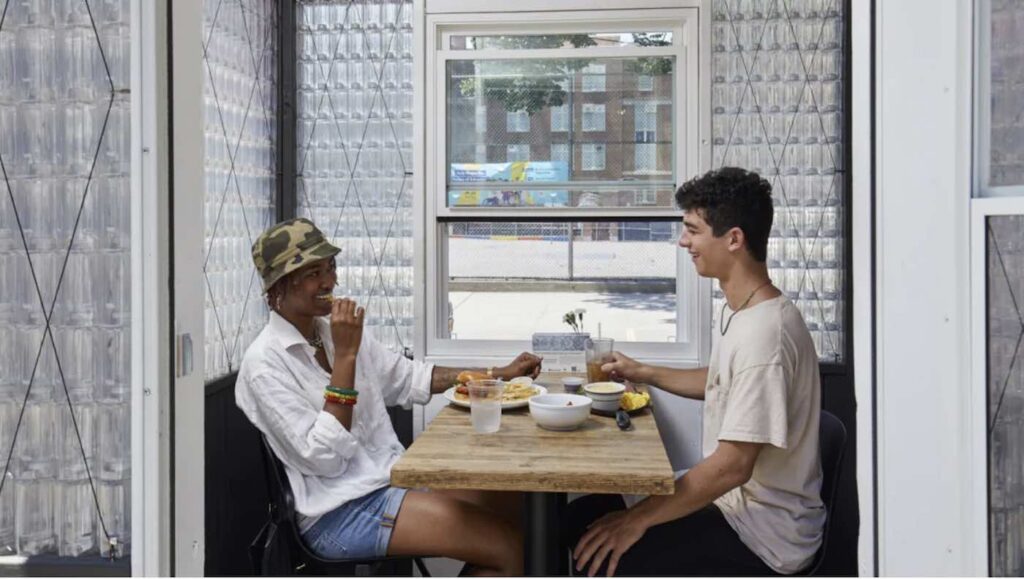
A design for plastic bottles that can be linked together has caught on as a revolution in disaster relief. Called Friendship Bottles, they have been used to construct small dining cabins that are also able to withstand Category 2 storm winds.

Jody Kivort/Friendship Products LLC

Among the most common resource shipped on pallets to disaster-stricken areas is water. If that water were to arrive in Friendship Bottles, those whose houses were destroyed could use them to create a temporary shelter.

This function of use as sustenance-shelter is a no-brainer, according to the inventor of the Friendship Bottle Tim Carlson.

Carlson had been developing the design for the bottles for a decade before COVID-19 hit his home state of New York. But when he was seeing all the makeshift outdoor seating arrangements making his way to the pandemic-hit city, he realized it was the perfect opportunity to test his design.

According to Fast Company, he contacted Peaches Kitchen & Bar and teamed up to assemble two small cabins of Friendship Bottles with wooden support beams.

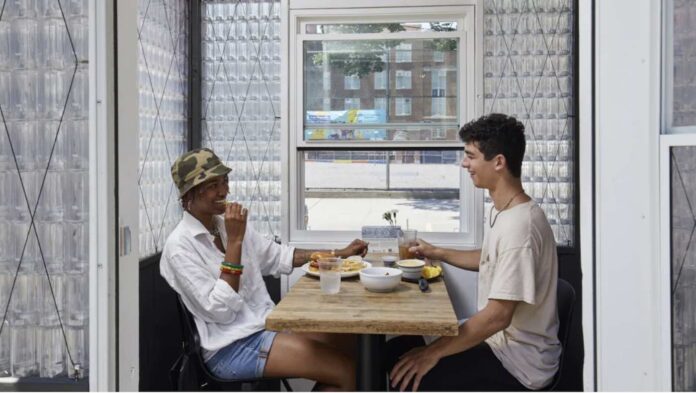
Along with being quite a striking atmosphere to sit inside, because they acted like a big prism from passing cars, the cubbies stood up to the storms that recently smashed the Big Apple, proving the concept as a disaster-ready building material.

MORE: Thailand is Making COVID-19 Protective Gear From Upcycled Bottles

Through a partnership with the Center for Architecture Science and Ecology, Friendship Bottles are being compared to other shelters used by the Red Cross and Red Crescent, including the scenarios and logistics of disaster relief efforts that might use them as delivery containers for water and subsequently as building material.

Jody Kivort/Friendship Products LLC

Elsewhere, plastic bottles are also being made into homes and shelters that are proving to be both bulletproof and earthquake resistant in Nigeria, where they are filled with sand and pressed together with readily available mud.

Friendship Bottles require no mortar or wire of any kind, offering a different kind of solution.

One thing the Friendship team feel they have as an advantage is that there are far fewer limits on what can be assembled using the bottles after they are emptied.

RELATED: New Solar-Powered Beach Robot Filters Even Tiny Plastic – And 30x Faster Than Humans

Rather than a prefabricated shelter with instructions, the bottles can be turned into bricks, which can then be made into anything.

(WATCH the video for this story below.)

WHY BOTTLE UP the Good News? Share It Wide and Far…

Kuwait is Transforming its Massive ‘Tire Graveyard’ into a New Green City

Rendering of the future city/LH

A landfill of 42 million tires in the sands of Kuwait is finally being cleaned up and recycled.

This news in itself would be a major relief to locals who have to suffer from the clouds of black smoke arising during fires. But the government isn’t stopping there. They are aiming to create a green city of 25,000 homes in line with a post-oil Persian Gulf, with a focus on sustainability and tourism.

The first step is to clear the ground. The Salmiya area, nicknamed “Rubber Mountain,” consists of hundreds of small ziggurat-like mounds of spent tires—a reaction from the one million cars which were added to Kuwait’s roads over the decade.

EPSCO Global General Trading has opened a recycling facility for the tires, where they’ve been collected, shredded, and pressed into other materials like tiling and playground flooring.

The plant opened in January of 2021, and has high hopes for exporting the recycled material out to nearby gulf neighbors.

In their place will be South Saad Al-Abdullah City, a green city characterizing a new era in the Middle-Eastern country.

MORE: New Solar-Powered Beach Robot Filters Even Tiny Plastic – And 30x Faster Than Humans

“We have moved from a difficult stage that was characterized by great environmental risk,” says Oil Minister Mohammed al-Fares. “Today the area is clean and all tires have been removed to begin the launch of the project of Saad Al-Abdullah city.”

Expected to cost €3.3 billion and require 30 years to complete, the city hopes to feature green technology presumably like the kind one can see in other cities on the Persian Gulf, both existing and not.

RELATED: Mountains of Garbage in Russia are Being Turned into Fashionable Accessories

Saudi Arabia is planning to build a zero-emissions, car-less future city that’s centered around access to big data rather than water or crops.

(WATCH the video for this story below.)

DON’T WASTE Hope for Our Future—Share This News…

“Let us live so that when we come to die even the undertaker will be sorry.” – Mark Twain

Quote of the Day: “Let us live so that when we come to die even the undertaker will be sorry.” – Mark Twain

Image: by GNN

With a new inspirational quote every day, atop the perfect photo—collected and archived on our Quotes page—why not bookmark GNN.org for a daily uplift?


Babies Mixed Up in Hospital, But Then Families Decide to Raise Them Together and They’re All Best Friends Now

Melissa (L) and Caterina (R); Facebook

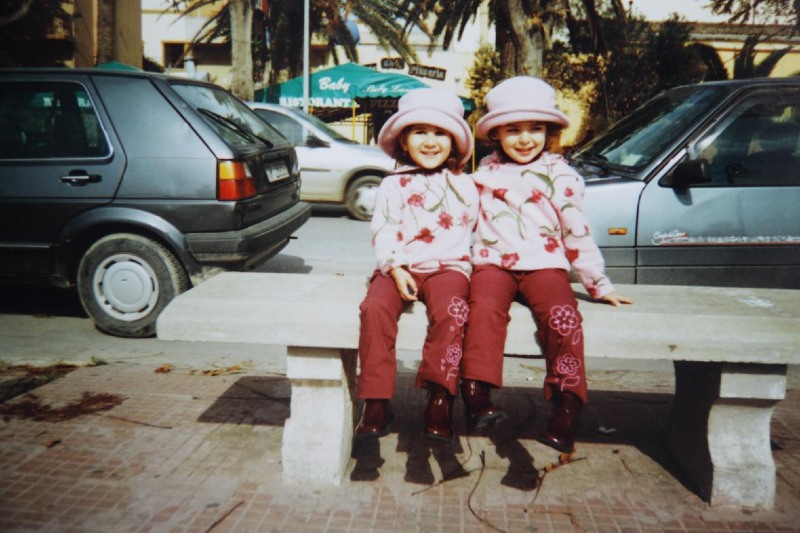
From the truth is stranger than fiction files comes this story of two babies swapped at birth due to a hospital error. The mixup was discovered when the toddlers were 3, and then, the biological parents were faced with the agonizing prospect of taking the little girls away from the only families they’d ever known.

As gut-wrenching as the scenario sounds, this one has a plot twist that’s anything but a tearjerker. Rather than rip the families apart, the collective parents found a way to raise their daughters together—under one roof.

Sicilian moms Caterina Alagna and Melissa Fodera, from the fishing village of Mazara del Vallo, were both 23 years old when they gave birth to baby girls 15 minutes apart as the clock ticked toward midnight on December 31, 1998.

During the New Year’s Eve celebrations, the on-duty nurses somehow managed to switch out their two tiny charges.

When it was time for the mothers and newborns to head home, Alagna and Fodera both questioned why the infants weren’t wearing the clothing they’d brought, but the hospital staff assured them it was merely a wardrobe snafu.

Three years later, as Alagna was picking up her daughter Melissa from nursery school, she saw something that shook her to the core. Another child, Caterina by name, bore an uncanny resemblance to Alagna’s two other biological daughters.

When she recognized the little girl’s mother Fodera as the woman she’d shared the maternity ward with, the clothing incident popped into her mind—and something clicked.

The swaddling hadn’t been switched… the babies had.
MORE: Mom’s Zoo Pic is Adorably Photo-bombed by Stingray With Remarkable Resemblance to Her Daughter

15 days later, DNA tests confirmed her suspicions. It was a choice neither one of them wanted to face.

“I challenge anyone to raise a daughter for three years then give her up over a simple mistake,” Fodera said in an interview reported by the Times UK.

But rather than simply make the swap back, the families decided it would be best to let everyone acclimate to the new situation slowly. Both girls and both sets of parents began spending time together in one house. The arrangement worked out so well that, when the two families separated on the advice of experts for a six-month trial, the plan was quickly scuttled.

Caterina (L) and Melissa (R); Facebook

The switch was explained to Melissa and Caterina when they were 8 years old. The only real complication they’ve faced is the issue with their legal names. Emotionally, however, the two girls, now grown to young adulthood, couldn’t be better.

LOOK: Sweet Proposal: A Premature Newborn Baby Just Helped His Dad Ask His Mom to Marry Him

Mauro Caporiccio, author of the book Sisters Forever, also recently released as a film by RAI TV told the Times, “The girls effectively grew up with four parents and eight grandparents, and the experiment worked… Today they are more like twins than sisters and there is a kind of love which binds the two families.”

Caterina (L) and Melissa (R); Facebook

The moral of the story? We may not be able to choose the families we’re born into, but we can choose the families we make—and if that choice is made with love, that can be a special thing indeed.

SEND This Story to the Favorites In Your Life….

This Nissan Worker With ‘Enhanced Senses’ Has a Job to Ensure the Perfect ‘New Car Smell’

SWNS
SWNS

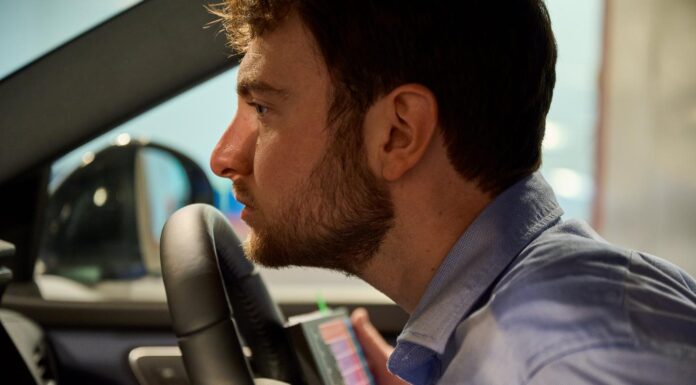
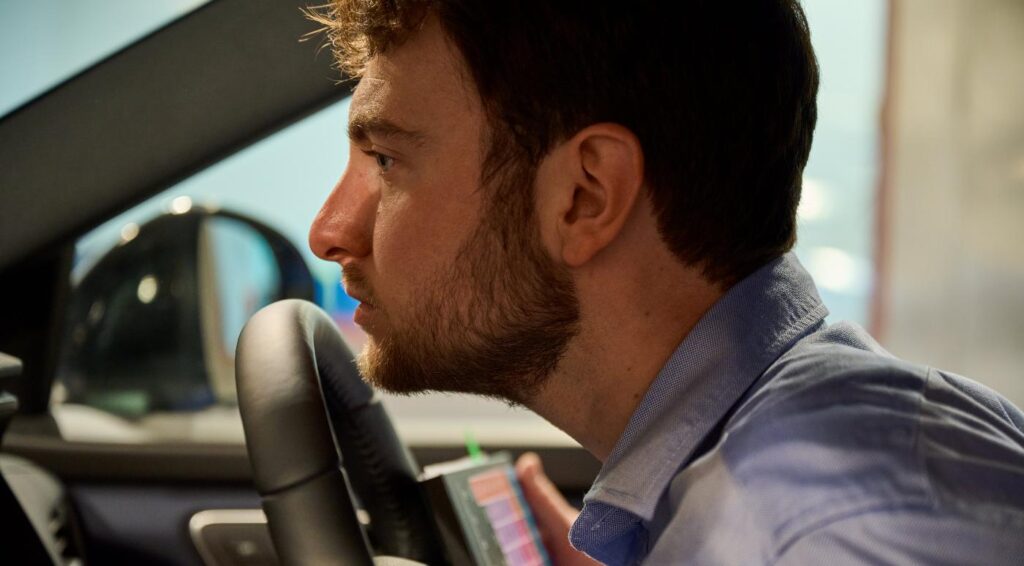
Car manufacturer Nissan employs a member of staff who has ‘enhanced senses’—to ensure its products have the all-important ‘new car smell’.

Peter Karl Eastland has a master’s degree in chemistry and forensic science from Leicester University. But he also possesses an extremely acute sense of smell, a gift he realized he had from an early age, which allows him to identify more than 15 smell categories.

Nissan recognized he has the ‘nose for the job’ and appointed him as the ‘odor evaluation lead engineer’ at its European Technical Centre in Bedfordshire.

His job is to ensure the consumer experience in the new Qashqai model isn’t compromised by any unappealing odors.

Peter, dubbed the ‘Nose of Nissan’, said: “I remember as a young kid playing games where we had to identify different food stuffs, like flavours of crisps [chips], sweets, or drinks by their smell alone.

“I was able to correctly identify the difference between the own-brand supermarket items and the leading brands’ products, even when the flavor was meant to be the same.

“At Nissan, I work with a lot of different materials, for example polymers, rubbers, and adhesives.

“Having a trained nose means that I can tell the difference between fake and real leather, or cloth and fabric.

MORE: NASA-Designed Perfume Gives You The Smell Of Outer Space – Without Leaving Orbit

“We aim to provide the best sensory experience for the customer. While tastes and preferences evolve over time, smell remains a constant.

“Therefore, it is part of our job to make sure that any material we use is always going to be perfect in terms of odor and that all of the senses are harmonized.”

Liaising with the Nissan engineering and manufacturing teams, Peter and his team test all the materials, such as the soft material used for the new 3D diamond quilted seats in a variety of conditions to replicate real-world environments.

They have to consider that the chemical properties of these materials, such as odor, can change according to temperature.

Where a potential new material or chemical is found to negatively affect the overall cabin ambience, Peter and his colleagues will identify alternatives to ensure the ‘sanctity’ of the new-car smell.

The evaluation process blends objective and subjective assessment, culminating in a rigorous process that leaves no stone unturned in the pursuit of that perfect new-car smell.

David Moss, senior vice president, region research & development, added, “That new car smell isn’t just a consequence of the manufacturing process.

RELATED: What Makes the Sea Smell So Unique?

“Months of work are devoted throughout the development phase of the new vehicle to carefully analyze the use of materials and chemicals, such as seat fabric, adhesives, and polymers, to ensure that they don’t combine to generate an unpleasant odor for the car’s occupants.

“It reflects the lengths Nissan goes to in order to make the ownership experience of any new Nissan exactly what our customers hope and expect—even in this very specialiszd area.”

SNIFF OUT Fascinating Stories for Your Mates, Share This One…

Standing More Often May Help Prevent Chronic Diseases Like Type 2 Diabetes, Researchers Say

In a Finnish collaborative study, researchers noticed that standing is associated with better insulin sensitivity. Increasing the daily standing time may therefore help prevent chronic diseases.

Insulin is a key hormone in energy metabolism and blood sugar regulation. Normal insulin function in the body may be disturbed by, for example, being overweight, leading to decreased insulin sensitivity and increased risk of developing type 2 diabetes and cardiovascular diseases.

Type 2 diabetes is one the most common lifestyle diseases worldwide, and its onset is usually preceded by impaired insulin sensitivity, or insulin resistance. This refers to a state in which the body does not react to insulin normally, and the blood glucose levels rise.

Lifestyle has a strong impact on insulin resistance and the development of type 2 diabetes, and regular physical activity is known to have an important role in the prevention of these issues.

However, so far, little is known about the impact of sedentary behaviour, breaks in sitting, and standing on insulin resistance.

In a study of Turku PET Centre and UKK institute, the researchers investigated the associations between insulin resistance and sedentary behaviour, physical activity and fitness in inactive working-age adults with an increased risk of developing type 2 diabetes and cardiovascular diseases.

In the study, the researchers observed that standing is associated with better insulin sensitivity independently of the amount of daily physical activity or sitting time, fitness level, or being overweight.

“This association has not been shown before. These findings further encourage replacing a part of daily sitting time with standing, especially if physical activity recommendations are not met,” says Doctoral Candidate Taru Garthwaite from the University of Turku.

New Findings

The study also emphasizes the importance of healthy body composition on metabolic health. The results show that increased body fat percentage was a more important factor in terms of insulin sensitivity than physical activity, fitness, or the amount of time spent sitting.

Standing, on the other hand, was associated with insulin sensitivity independently, irrespective of body composition.

“Regular exercise is well known to be beneficial for health. It seems that physical activity, fitness, and sedentary behaviour are also connected to insulin metabolism, but indirectly, through their effect on body composition,” Taru Garthwaite explains.

Causal effects cannot yet be predicted based on this study, published in Journal of Science and Medicine in Sport, but according to Garthwaite, the results suggest that increasing daily standing time may help in prevention of lifestyle diseases if physical activity recommendations are not met.

Next, the researchers aim to investigate how changes in daily activity and sedentariness impact cardiovascular and metabolic disease risk factors and metabolism by comparing two groups in an intervention study of a longer duration.

“Our aim is to study if reducing daily sitting time by an hour has an impact on energy metabolism and fat accumulation in liver and the whole body, for example, in addition to insulin sensitivity and blood sugar regulation,” says Garthwaite.

A Significant Win for the Planet: Leaded Gasoline Finally Eliminated Worldwide

Leaded gas, one of our species’ great pollutants, is no longer made or used.

The last country which sold leaded gasoline, Algeria, ceased to do so this month, 41 years after the first country—Japan—made the decision.

It was in the early days of the automobile’s ascension that gasoline producers began to add different chemicals to prevent damage to the interiors of their engines. Lead quickly began to represent the superior choice, which over the next 80 years was shot out through the exhaust pipes of cars around the world.

U.S. researchers were already certain of lead’s toxic effects by the time the EPA was created in 1973, at which time the U.S. began a 25-year phase out. Japan only needed seven years following those initial reports to ban leaded gas, with Austria, Canada, Slovakia, Denmark, and Sweden following shortly after. The U.S. and UK finally removed leaded gas in the late ’90s, after which most countries followed.

“The elimination of lead from gas is one of the great environmental achievements of all time,” Carol Browner, administrator of the EPA during the year 1996 said. “Thousands of tons of lead have been removed from the air, and blood levels of lead in our children are down 70 percent. This means that millions of children will be spared the painful consequences of lead poisoning, such as permanent nerve damage, anemia or mental retardation.”

MORE: Solar-Powered Refrigeration Trucks Will Cut Pollution From Idling Diesel Engines

Indeed the global ban is projected to prevent 1.2 million premature deaths worldwide, and save a total of $2.4 trillion in medical costs for treating lead poisoning, which can damage pretty much every major system in the human body.

A detailed summary of the leaded-gas story, published by National Geographic, claims it took 10 years after the turn of the millennium to convince 107 countries to ban it, but 10 more years to convince the holdouts. By 2016, only the war-ravaged nations of Iraq and Yemen, and the last major exporter, Algeria, were left.

“The successful enforcement of the ban on leaded petrol is a huge milestone for global health and our environment,” said Inger Andersen, executive director of the UN environment program.

RELATED: Rubber Made From Dandelions is Making Tires More Sustainable – Truly a Wondrous Plant

“Overcoming a century of deaths and illnesses that affected hundreds of millions and degraded the environment worldwide, we are invigorated to change humanity’s trajectory for the better through an accelerated transition to clean vehicles and electric mobility.”

REV UP the Hope—Share This Story Worldwide…

Chinese City Builds a ‘Food Court’ for Elephants – to Feed Future Migrating Herds, After Recent Escapades

Yunnan Forest Brigade

In order to cut back on the conflicts between humans and elephants, Chinese wildlife authorities have constructed a massive “food court” along established elephant migratory routes.

Stocked with five salty ponds, and many different kinds of plants that can satisfy their dietary needs, the elephant food court of Jinghong Nature Reserve spans 670,000 square meters, the same size as Porche’s Stuttgart car assembly plant, or around 62 European football fields.

Elephants roam vast distances every year, whether they live in China, India, or Africa. They have no concept of land ownership or borders, and can often bring economic ruin to any unlucky farmer whose fields are close at hand when an elephant determines it’s time for lunch.

Since the end of the last century, Asian elephants in Jinghong have enjoyed protected status, and have grown in number from 85 to 185. This has led to greater conflict with locals during migrations.

The food court was started last December and finished in May, and its position in a national forest reserve was cleverly selected to ensure they would pass it every year during migration. The “food base,” or “dining hall” as Cha Wei, deputy director of Jinghong Reserve, described it is meant to eliminate the need for the pachyderms to raid nearby farms.

MORE: Baby Elephant Rescued After Falling Into Indian Well 30-Feet Deep

“If provided with enough food, the elephants will not break into villages and croplands to forage, which can help resolve conflicts between local people and wild elephants,” Mr. Cha was quoted as saying by the Xinhua news agency.

RELATED: 35 Circus Elephants Arrive in Amazing Florida Sanctuary to Retire Among Forest, Grassland, and 11 Watering Holes

Last year 14 elephants trekked 500 kilometers during a migratory period that lasted 17 months, report Xinhua.

They’ve now returned to their traditional habitat of Mojiang County in Yunnan where all, including a calf born along the way, are stable and accounted for.

RAISE a Trunk for the Good News and Share This Story…

“Seize the moments of happiness–love and be loved! That is the only reality in the world, all else is folly.” – Leo Tolstoy

Quote of the Day: “Seize the moments of happiness–love and be loved! That is the only reality in the world, all else is folly.” – Leo Tolstoy (War and Peace)

Photo: by JOSHUA COLEMAN

With a new inspirational quote every day, atop the perfect photo—collected and archived on our Quotes page—why not bookmark GNN.org for a daily uplift?

In World First, Top Beef Supplier Approves Methane-Busting Feed Additive That Reduces Gas by 55%

In response to global warming concerns across the planet, the world’s largest beef exporter has approved the sale of a feed additive that cuts methane emissions from beef and dairy cattle.

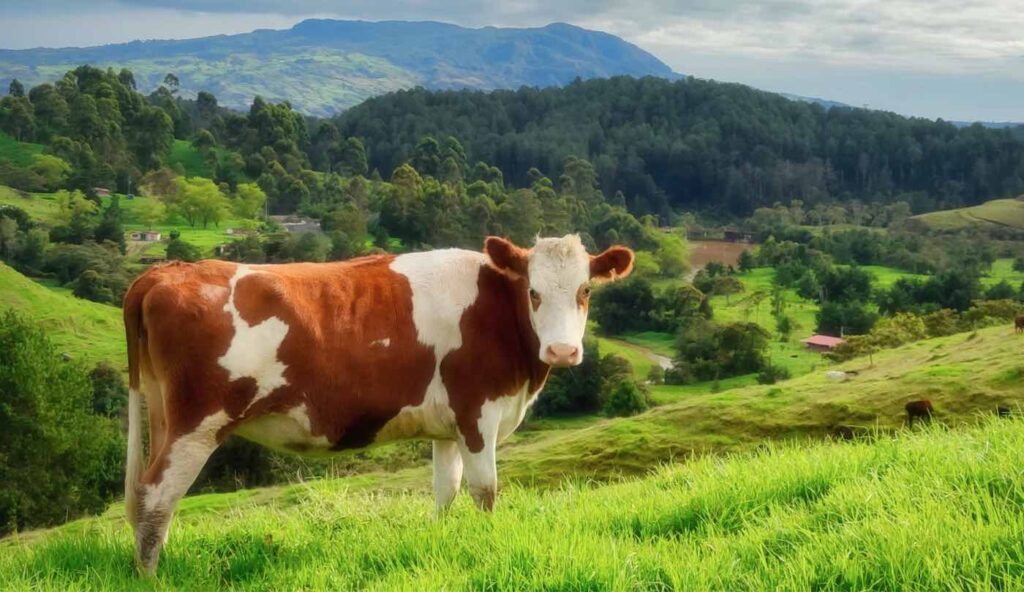
Cow in Colombia, By Gabriel Porras

Regulators in Brazil and Chile have granted full market authorization for Royal DSM’s Bovaer to be given to cows as well as sheep and goats, the company said recently in a statement.

The methane-reducing additive obtained this first approval after a 10-year collaboration called Project Clean Cow, and its success in 48 scientific trials on farms in 13 countries across 4 continents—peer-reviewed studies (such as this one in 2020 at UC Davis) that were published in scientific journals

“A beef trial with Bovaer at Sao Paolo State University (UNESP) in Brazil conducted in 2016-2017, showed enteric methane emission reductions up to 55%, which highlights the potential for radically more sustainable cattle farming in Latin America to further lower their carbon footprint,” said Mauricio Adade, president DSM Latin America.

RELATED: Australian Scientists Create Seaweed Supplement for Cows that Reduces Methane Emissions by 80%

And the additive comes “without adverse effects on performance”, says São Paulo State University Professor Ricardo Reis.

”The IPCC (Intergovernmental Panel on Climate Change) stated that a rapid reduction of methane emissions could reduce the spread of global warming in the near term and have a positive effect on air quality,” said DSM’s Mark van Nieuwland. “We know the agricultural and livestock sectors recognize this opportunity for change and are eager to act.”

Just a quarter teaspoon of Bovaer per cow per day consistently reduces burped methane emission by approximately 30% for dairy cows and even higher percentages (up till 90%) for beef cows. After suppressing methane production in the stomach, it is broken down into compounds already naturally present in the cow’s stomach.

MORE: To Save the Planet, Cows are Being Potty-Trained – And Animal-Loving Researchers are Moo-ved by the Results

SHARE More Climate Good News With Your Herd on Social Media…

Polish Girl With Down Syndrome Sends Painting to Queen Elizabeth and is ‘Over the Moon’ Receiving a Reply – LOOK

12-year-old Wanessa Bąkowska has been pouring her sensitivity through paints and onto canvas since she adopted as a little girl with Down syndrome.

The Earth by Wanessa Bąkowska was painted for the Queen – FB

From Lipka, Poland, the 6th grade student has also been enchanted with all things royal, and recently decided to make a painting for the queen. With her tutor’s help in translating to English, she wrote a letter and sent it off to the palace:

“Your Majesty, my name is Wanessa and I am 12 years old. I live in Poland, in the small town of Lipka.

“I have wonderful teachers and many friends. I have mum Karolina, dad Rafał, brother Alan and sister Nutka. I love them very much.

“I am a person with a disability and Down Syndrome. Nevertheless, I paint pictures. I would like to give you one of them, Your Majesty. The title of this painting is ‘Earth’. Greetings from Poland.”

She posted on Facebook about sending the painting, saying in Polish:

“I like breaking stereotypes and I like to pretend to myself that the impossible doesn’t exist… Although in real life I will not have such an opportunity, I visited the royal court through a letter I wrote to Queen Elizabeth… Beloved dreams are there to make them come true, even if they seem unreal.”

RELATED: 10-Year-old Girl is Mini-Monet, Fetching Tens Of Thousands For Her Paintings – And Donating All The Money

Wanessa Bąkowska – FB

Well, the ‘unreal’ did come true on September 6, as they received a reply from the royal court in their mailbox.

The Queen’s response, dictated by an assistant, spoke of how ‘touched’ she was with the effort she put into the painting, describing it as “splendid”.

LOOK: Amazing Bubble Wrap Artist Creates Masterpieces by Injecting Paint Into Each Bubble

The letter said Her Majesty was thankful to the 12-year-old for her “thoughtfulness for taking the time to write” and wished her success in the future.

Pictures of the official reply was posted to her daughter’s Facebook page with the words, “Dreams are made to be fulfilled. Today I got a reply to my letter from Queen Elizabeth.”

Pictures Painted With Heart – FB

Her mom shares the canvases from her talented young daughter to social media at ‘Pictures Painted With Heart’ (Obrazy malowane sercem), which has over 2000 followers.

There you can see details about how Wanessa uses every day objects, like plastic cups, balloons, beads, and plastic wrap, to move paint in unique and ethereal ways.

Pictures Painted With Heart – FB

She’s creating more complex and beautiful works every week.

In fact, the Labirynt gallery in Pila hosted an exhibition of her works and one of her paintings was even shown in the National Theatre in Warsaw last year.

Pictures Painted With Heart – FB

“We didn’t expect an answer. Nobody was set on it,” Karolina Bąkowska told the Polish news outlet, Fakt. “Regardless of whether the lady of the court responded to it on behalf of the queen, or someone else, it was a huge surprise for us, and above all for Wanessa.”

POPULAR: Giant Lizard Raises Money for Bushfire Relief by Painting Massive Artworks With His Claws

SHARE Wanessa’s Regal Artistry With All Creatives on Social Media…

Teen Who Lost His Gaming Partner When Dad Died Brings The Power of Play–and Connection–to Kids Facing Illness

Nick Priest (left) with Power of Play officers Kylie and Jack

As a little boy, Nick Priest loved playing video games with his dad, Joe, who was a wiz at all things tech and gaming. They started off with Nick holding a controller and pretending to play, and moved on to Lego games and Mario Galaxy.

Nick Priest (left) with Power of Play officers Kylie and Jack

Joe was diagnosed with cancer when Nick was three, and after that, they played more than ever. The last time he made it down to the basement for gaming, Joe was so weak that he couldn’t even walk—he had to go down the stairs, step by step, on his rear end—but it was worth it and the pair had a blast.

When he passed away, Nick was just six, but the boy didn’t just lose his dad, he lost his gaming partner. When friends or family would visit and play with him, it took his mind off his sadness and brought back happy memories of playing.

Nick told his mom then that no kid should ever be without someone to play video games with. That’s when the Power of Play was born.

He started working on the project as a freshman in high school, at Salesianum School Wilmington, Delaware. Now a junior, he rallies teens to bring the “power of play” (particularly video games) to kids who are affected by cancer or other illnesses

At first, Nick recruited volunteers to go to the local children’s hospital, Alfred I. Dupont Hospital for Children, to play games with kids one-on-one. Then COVID-19 hit, making in-person events impossible.

Determined to keep going, he raised $1,000 that he used to buy 2 Playstation 4 gaming systems and a few controllers. Then, he interviewed a girl who had gone through childhood cancer and her mom, and they told him how isolating and lonely cancer treatment can be, even before COVID.

Nick learned that kids in treatment are often unable to leave their rooms or are in isolation rooms, meaning even if there were a gaming system to play, there wasn’t anyone to play with. And although most of these young patients have phones and tablets, they usually aren’t allowed to use the hospital’s WIFI to link up with each other to stream and play.

RELATEDStudy During Lockdown Shows Playing Video Gaming–Even For Hours–Can Help Your Mental Health

He brainstormed to find a way his volunteers could play with kids online and a way that kids in the hospital could play with each other. He told hospital officials about his idea, and together, they developed a system where the kids on a floor can communicate with each other while playing.

“Hospitals have a lot of privacy laws and regulations,” Nick told GNN, “It took a long time but we finally got there!”

“No, video games do not cure any disease, but as my dad always used to say, ‘Laughter is the best medicine!’”

RELATED: Nintendo is Partnering With a Nonprofit to Bring Gaming Consoles to Hospitalized Kids

Joe Priest and Nick

The Power of Play team also helps those who have parents or siblings that are going through something tough.

Realizing that there were kids who weren’t in the hospital but still could benefit from playing video games, Nick and his NPOP volunteers developed a Buddy System. Parents reach out to NPOP and share the games their child likes and other interests, and then Nick assigns one of his teen volunteers—like Kylie or Jack who are both officers in the project (pictured above)—to be a buddy, based on their interests. For example, he buddied up a kid who loved football with a varsity football player.

POPULARVideo Game-Streaming Grandma is Making Profound Impact on the Lives of Strangers Across the Internet

The kids and their buddies decide how often and when to play, but usually it is once every week or so. They log in and compete with each other and talk, just connecting and having fun.

The kids and buddies are really enjoying it, so NPOP really wants to expand and reach as many kids as they can. Currently, they have more volunteers than kids who want to play, because so many teens want to help.

Nick asked GNN to encourage readers to reach out, if they have a child or teen who could benefit from a gaming buddy, and to spread the word to anyone who NPOP may be able to help. NPOP’s website is nickspowerofplay.com and from there, parents can email and get the buddy process started.

“If I can bring smiles to children’s faces, and bring laughter into their hospital rooms, I will do whatever it takes to make that happen.”

MORE: Teen Saved From Seizure After Online Gaming Friend Calls Police From 5,000 Miles Away

Nick told GNN that he is “very close” to getting his 501c3 nonprofit finalized, but he did set up a GoFundMe page for anyone who wishes to contribute to the purchase of more controllers and gaming systems.

SHARE the Power of Play and Kindness on Social Media…

This New Mixed-Income Housing Complex Comes with its Own Farm Near San Francisco

Courtesy of Core Companies

Have you ever wanted to live on a farm, but without having to do all the hard work or needing to drive an hour to reach a major city?

In San Francisco, a mixed-income apartment complex has gone up in the neighborhood of Santa Clara that comes with its own 1.5 acre farm, managed by a professional urban farming company, which also welcomes help from residents.

The Agrihood building consists of 361 units, 181 of which are priced below market rate— 10% are reserved for moderate income renters, and 165 for low-income seniors and veterans. The complex also contains 30 townhomes and features a central 1.5 acre organic farm that can produce 20,000 pounds of food every year.

Each week the produce is brought to an on-site location and sold at a deep discount for residents. The full list of produce is on Agrihood’s website, and includes superfoods, comfort foods, orchards, perennial foods, and native foods.

“Our goal throughout this endeavor has been to provide the affordable housing that we urgently need in Santa Clara through a truly creative, community-driven process,” writes the brochure.

POPULAR: Realtor Transforms Abandoned Properties into Tiny Home Villages That Give Permanent Housing to Chronic Homeless

Courtesy of Core Companies

“Not only are we providing a really unique living experience for the residents that live on the property, but we’re also taking a very deliberate approach to encouraging the health and wellness of our residents by incorporating the farm, hopefully, into their daily and weekly lifestyles,” Vince Cantore, who is vice-president of Core Companies, the firm leading the Agrihood project, told Fast Company.

Attempting to address the housing shortage in San Francisco, Agrihood is actually built on the site of what used to be one of the many orchards that covered Santa Clara in decades past.

RELATED: How One Developer is Turning Farm Storage into Soaring Yet Affordable Apartments

Urban farming and gardening is growing in popularity, with some cities, parks, or neighborhoods attempting to include community gardens, forest gardens, or urban farms into development plans.

It’s a critical way that urban areas can increase food security, reduce the carbon footprint that food racks up during transportation, and increase access to healthy food for low-income communities in food deserts.

LOOK: Town Near Rome is Selling Old Homes for $1, a Trend Across Italy in Many Beautiful Villages

SHARE the Unique Housing Model on Social Media…

“A path is only a path, and there is no affront, to oneself or to others, in dropping it if that is what your heart tells you.” – Carlos Castaneda

Quote of the Day: “A path is only a path, and there is no affront, to oneself or to others, in dropping it if that is what your heart tells you.” – Carlos Castaneda

Photo: by ActionVance

With a new inspirational quote every day, atop the perfect photo—collected and archived on our Quotes page—why not bookmark GNN.org for a daily uplift?

Arkansas Researchers Find Potential Cause of ‘Long Haul’ COVID-19 Symptoms

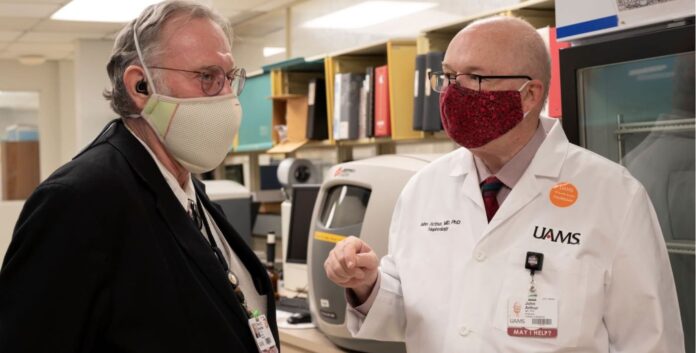
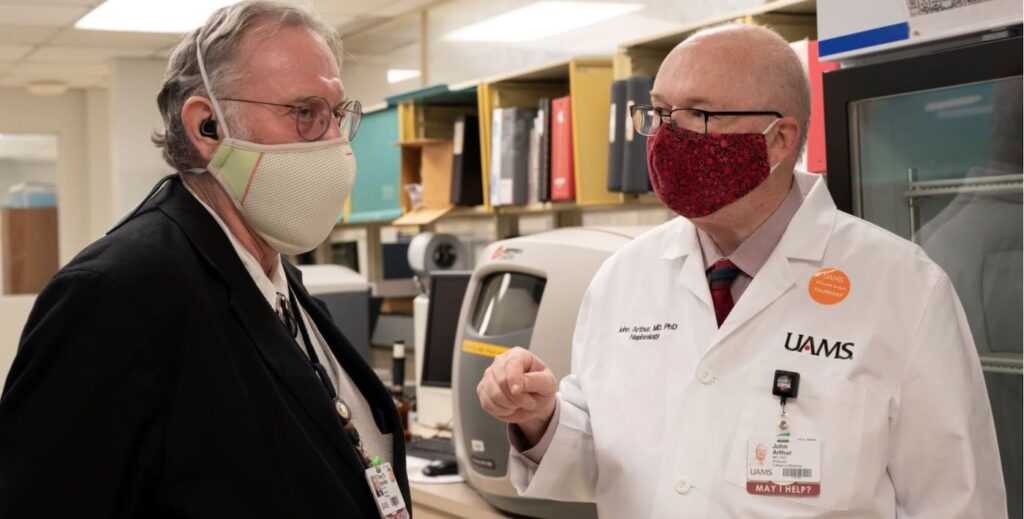
Dr Terry Harville consults in lab with Dr John Arthur – UAMS News

A research team at the University of Arkansas for Medical Sciences has identified a potential cause of long-lasting symptoms experienced by COVID-19 patients, often referred to as ‘long-haulers’.

Dr Terry Harville consults in lab with Dr John Arthur – UAMS News

At the heart of the team’s findings is an antibody that shows up weeks after an initial infection and attacks and disrupts a key regulator of the immune system, said lead researcher John Arthur, M.D., Ph.D., professor and chief of the Division of Nephrology in the UAMS College of Medicine, Department of Internal Medicine.

As many as 30% of COVID-19 patients experience lingering fatigue, brain fog and shortness of breath. The cause of long COVID-19 has eluded scientists, but the UAMS team’s discovery sheds important new light on the molecular-level mechanisms behind it.

“Everything that we’ve found is consistent with this antibody as the instigator of long COVID, so it’s an exciting development,” Dr. Arthur said.

The antibody creates problems for the immune system by attacking the angiotensin-converting enzyme 2 (ACE2). The ACE2 enzyme helps regulate the body’s response to the virus by metabolizing a peptide that activates the immune system.

The attacking antibody interferes with ACE2’s work, which makes the antibody a prime suspect for the long-lasting illness.

RELATED: New Plant-based Biodegradable Mask Closes the Recycling Loop with Free Return of Used Ones to Be Remade

The multidisciplinary research team was brought together quickly this spring to test the hypothesis that developed through discussions between Arthur and UAMS’ Terry Harville, M.D., Ph.D., a professor in the Department of Pathology and medical director of the Histocompatibility and Immunogenetics Laboratories.

Researchers tested plasma or serum for ACE2 antibodies in 67 patients in Arkansas and Oklahoma with known SARS-CoV-2 (the virus that causes COVID-19) and 13 with no history of infection. In 81% of blood samples from patients with a history of COVID-19, the samples had the antibody that attacked the ACE2. In participants with no history of COVID-19, no antibodies were created to attack the ACE2 enzyme.

“If we show that the whole hypothesis is right, that this interference of ACE2 really does cause long COVID, then it opens up many potential treatments,” said Arthur. “There are medications that should work to treat them.”

POPULAR: Cure for Osteoarthritis Could Be ‘No Further Than the End of Your Nose’, Researchers Find

The next step would be to test the drugs that might relieve the symptoms people are having.

The Little Rock scientists published their findings this month in the journal, The Public Library of Science ONE (PLOS ONE).

“This is true team science,” Arthur said. “We put together a great group of investigators that had never worked together to produce these very exciting results.”

Watch some local news coverage from THV-11 below…

SHARE the Development—Some Good News—on Social Media…

This Week’s Inspiring Horoscopes From Rob Brezsny’s ‘Free Will Astrology’

Our partner Rob Brezsny provides his weekly wisdom to enlighten our thinking and motivate our mood. Rob’s Free Will Astrology, is a syndicated weekly column appearing in over a hundred publications. He is also the author of Pronoia Is the Antidote for Paranoia: How All of Creation Is Conspiring To Shower You with Blessings. (A free preview of the book is available here.)

Here is your weekly horoscope…

FREE WILL ASTROLOGY – Week beginning September 17, 2021
Copyright by Rob Brezsny, FreeWillAstrology.com

VIRGO (Aug. 23-Sept. 22):
“There’s nothing wrong with reading a book you love over and over,” writes Virgo author Gail Carson Levine. Adding to that encouragement, I offer you the following authorizations: There’s nothing wrong with seeking a pleasure you love over and over; or doing a necessary task you love over and over; or performing an energizing ritual you love over and over; or expressing key truths you love over and over. And these permissions will be especially crucial for you to exult in during the coming weeks, dear Virgo: because it’s a time when mindful repetition will be one of your strengths and a key to stimulating the deepening experiences you need.

LIBRA (Sept. 23-Oct. 22):
“If I’m a bitch and a fake. Is there nobody who will love a bitch and a fake?” Libra author Graham Greene wrote that in his novel The End of the Affair. Here’s my extrapolation: I believe that every one of us, including me, is a bitch and a fake now and then. We all go through periods when we are not at our best, when we fail to live up to our own high standards. Is it possible that you have recently flirted with such a phase? If so, the cosmos has authorized me to absolve you. You are free to reclaim your full exquisite beauty. And if you haven’t been a bitch and a fake, congratulations. It means you have weathered a gnarly storm.

SCORPIO (Oct. 23-Nov. 21):
Poet Yves Olade writes, “I’ve started thinking of people as wounds that don’t heal.” To me, that idea is idiotically cynical. Moreover, I think it’s wrong for most of us. The truth is, humans have a natural instinct for healing. They are predisposed to attract experiences that might aid their recovery from difficulties—that might teach them the healing lessons they need. I believe this will be especially true for you in the coming weeks. (PS: Dr. Andrew Weil writes, “Any level of biological organization that we examine, from DNA up to the most complex body systems, shows the capacity for self-diagnosis, for removal of damaged structure, and for regeneration of new structure.”)

SAGITTARIUS (Nov. 22-Dec. 21):
Research suggests that most people think everyone else has more fun than they do. But I’m guessing that only a small percentage of Sagittarians feel that way. You tend to be extra alert for fun, and you have intuitive skill at tracking down fun. In addition, you often take the initiative to precipitate fun. You understand you have a responsibility to generate fun, and you have a talent for generating it. All these capacities will serve you well in the coming weeks. I recommend you raise your mastery of the art and science of having fun to a new level. Be the Champion of Fun and Games for your entire circle.

CAPRICORN (Dec. 22-Jan. 19):
I’m not engaging in empty flattery when I say that you are unlike anyone else who has ever lived in the history of the world. Your absolute uniqueness is a fundamental fact. Maybe you don’t reflect on this truth very often. Perhaps you feel that it’s not helpful to think about or that it’s irrelevant to your daily decision-making. But I propose that in the next three weeks, you give it a central place in your understanding of your destiny. Allow it to influence everything you do. Make it a major factor in your decision-making.

AQUARIUS (Jan. 20-Feb. 18):
Welcome back from the underworld, Aquarius. I hope your time wandering through the maze-like twilight brought you as many fascinating mysteries as confusing questions. I trust you took advantage of the smoky riddles and arresting dilemmas to fortify your soul’s wisdom. I suspect that although your travels may have at times seemed hard to fathom, they have provided you with a superb education that will serve you well in the immediate future.

PISCES (Feb. 19-March 20):
In Oscar Wilde‘s novel The Picture of Dorian Gray, the lead character says to a friend, “You filled me with a wild desire to know everything about life.” Is there a person who might inspire you like that, Pisces? Maybe a person from your past with whom you’ve fallen out of touch? Or is there a person hovering on the outskirts of your life who could stimulate you to have such feelings? Now is a favorable time to seek these influences. I advise you to be bold in your quest to associate with allies who will stimulate your lust for life and teach you crucial lessons. (PS: For extra credit, make abundant use of another theme from Wilde’s book: “The search for beauty is the real secret of life.”)

ARIES (March 21-April 19):
“Books are mirrors: You only see in them what you already have inside you,” wrote author Carlos Zafòn Ruiz. Let’s take that a step further: “Other people are mirrors: You only see in them what you already have inside you.” And even further. “The whole world is a mirror: You only see in it what you already have inside you.” Have fun playing with these meditations, Aries. The coming weeks will be a fertile time to explore how thoroughly your experiences reflect the activity transpiring in your own brain.

TAURUS (April 20-May 20):
Some spiritual teachers say things like “I am not my body” or “This body is not me.” I don’t understand that. It’s an insult and disparagement. It’s dismissive of our bodies’ sublime beauty and our bodies’ inspired role in educating our souls. I agree that we are not ONLY our bodies. I agree that a part of us is eternal, not confined to flesh and blood. But hell yes, I am my body. You are your body. It’s a glorious aspect of who we are. It’s a miraculous creation that has taken millions of years to evolve into the masterpiece it is. So yes, you are your body, and yes, this body is you. I hope you love your body. Are in awe of it. Are pleased to be inside it. If anything is lacking in this department, now is an excellent time to make corrections.

GEMINI (May 21-June 20):
“I know someone who kisses the way a flower opens,” wrote poet Mary Oliver. I’d love for you Geminis to have that experience. The astrological omens suggest it’s more likely than usual to occur sometime soon. Other experiences with a better-than-average chance of unfolding in the coming days: allies who speak of intimate subjects in ways that resemble a flower opening; partners who co-create with you in ways that resemble a flower opening; spiritual helpers who offer guidance and help in ways that resemble a flower opening.

CANCER (June 21-July 22):
“I lie to myself all the time, but I never believe me,” writes Cancerian author S. E. Hinton. Ha! As a Cancerian myself, I confess to the same crime. But I am looking forward to a shift in the coming weeks. I suspect we Crabs will be inspired to cut way back on the fibs we try to get away with. You know what that means, right? We’ll be more inclined to trust ourselves, since we’ll be more likely to tell ourselves the truth. Our decisions will be shrewd, and our self-care will be rigorous. Hallelujah!

LEO (July 23-Aug. 22):
My object in this horoscope is to stimulate your imagination in ways nobody else in your life will. You need an influence like me, from outside your inner circle, to administer friendly, playful shocks to jolt you out of habitual ways of thinking. Here we go. 1. If you were to stow seven parts of your soul in seven objects, what objects would they be? 2. If you could change one thing about your past, what would it be? 3. If you were a character in a fairy tale or a movie, who would you be? 4. If you could travel to a place that would teach you what you most need to know, where would it be? 5. If you had a magical animal as your special ally, what animal would it be? 6. If you could sing a song with uncanny healing power for someone you care about, what song would it be? 7. If you could improve your relationship with some part of your body, what would it be?

WANT MORE? Listen to Rob’s EXPANDED AUDIO HOROSCOPES, 4-5 minute meditations on the current state of your destiny — or subscribe to his unique daily text message service at: RealAstrology.com

(Zodiac images by Numerologysign.com, CC license)

SHARE The Wisdom With Friends Who Are Stars in Your Life on Social Media…

Brilliant Bruce the Disabled Parrot Uses Pebbles to Clean Himself With Broken Beak—Something Never Before Observed

Animal Minds / University of Auckland

There’s never been an insult to convey a greater misconception than the phrase ‘bird-brained’, because our feathered friends routinely use their high levels of intelligence, and soar to surprising heights demanding admiration.

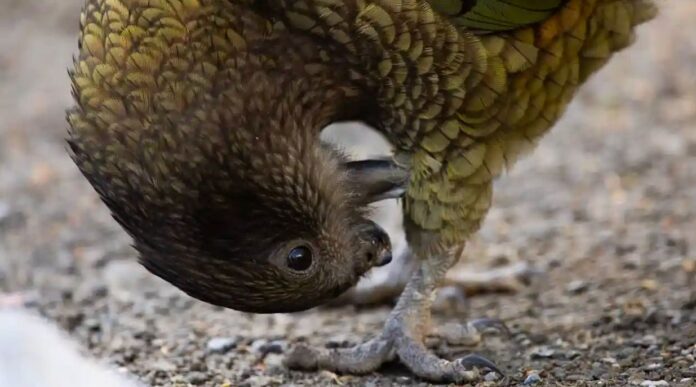
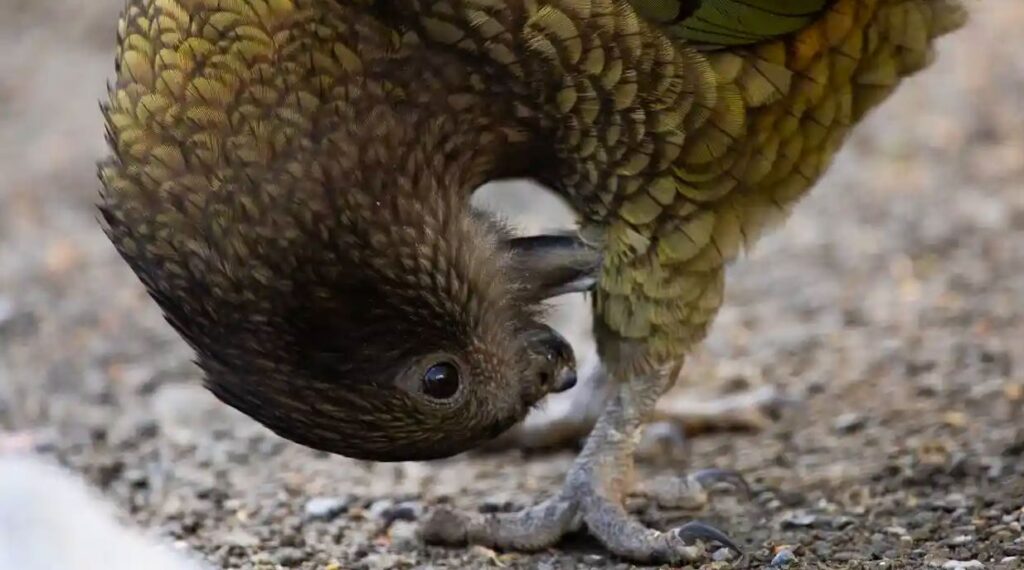
Take Bruce for example, the 8 year-old Alpine parrot from New Zealand. Bruce is missing the top half of his beak and is considered disabled, but that doesn’t stop him from doing all the things a normal parrot does.

He has adapted to use his tongue in place of the missing upper beak to lift tools, and, most notably, to grasp a pebble to clean dust and mites from between his feathers—something never before observed in the species.

Alpine Kea are the world’s only alpine-dwelling parrots, and they’ve been known to be ‘bird-brained’ in this new sense. They’re very pensive, and have even been shown to weigh up probabilities before making a decision.

POPULAR: Clever Cockatoos Craft 3-Piece Tool Set to Extract Fruit – Becoming Only 4th Animal Species to Do So

Bruce was found at Arthur’s Pass on the South Island in 2013 when he was a juvenile. Scientists at the South Island wildlife hospital assume he lost his beak during an encounter with a pest trap.

Now housed at the Willowbank Wildlife Reserve, he was first observed using a pebble in lieu of his beak for preening purposes back in 2019, a behavior so extraordinary that a group of scientists set out to observe him.

Animal Minds / University of Auckland

They found that in 90% of instances where he grabbed a pebble, he used it to preen himself, which constitutes tool usage in animals. In 95% of instances when a pebble was dropped, he retrieved or replaced it to continue grooming himself, seriously ruling out the ‘fooling around behavior’ exhibited by crows.

Amalia Bastos had the fortune of observing this “big personality” for the research, and she spoke to The Guardian about the experience.

“Because Bruce’s behavior is consistent and repeated, it is regarded as intentional and innovative,” Bastos said. “It is Bruce’s own unique tool-use, and this is the first scientific observation of that.”

LOOK: After Years of Helping Crow Family, Man Was Left ‘Mind-Blown’ Over Their Homemade Gifts in Return

“He’ll pick up a piece of carrot and push it against a hard piece of metal or rock and use that to scrape with his lower bill, which again is a feeding behavior we haven’t seen in the other birds.”

The green and red birds have been documented to use sticks to clean themselves before, but lacking the dexterity the rest of his beak would have afforded him, Bruce has had to make do.

MORE: Birds Bring Shiny Gifts to Little Girl Who Feeds Them

SEE it in action in the video below… (NOTE: Audio is only music so feel free to mute.)

FLY This Able-Bodied Parrot to Your Flock on Social Media…