











All News - Page 435 of 1733 - Good News Network
Home Blog Page 435

This Week’s Inspiring Horoscopes From Rob Brezsny’s ‘Free Will Astrology’

Our partner Rob Brezsny provides his weekly wisdom to enlighten our thinking and motivate our mood. Rob’s Free Will Astrology, is a syndicated weekly column appearing in over a hundred publications. He is also the author of Pronoia Is the Antidote for Paranoia: How All of Creation Is Conspiring To Shower You with Blessings. (A free preview of the book is available here.)

Here is your weekly horoscope…

FREE WILL ASTROLOGY – Week beginning November 19, 2021
Copyright by Rob Brezsny, FreeWillAstrology.com

SCORPIO (Oct. 23-Nov. 21):
“Some people become so expert at reading between the lines they don’t read the lines,” wrote author Margaret Millar. That’s not a common problem for you Scorpios. You are an expert at reading between the lines, but that doesn’t cause you to miss the simple facts. Better than any other sign of the zodiac, you are skilled at seeing both secret and obvious things. Given the astrological omens that will be active for you during the rest of 2021, I suspect this skill of yours will be a virtual superpower. And even more than usual, the people in your life will benefit from your skill at naming the truth.

SAGITTARIUS (Nov. 22-Dec. 21):
Storyteller and mythologist Michael Meade believes that each of us has an inner indigenous person—a part of our psyche that can love and learn from nature, that’s inclined to revere and commune with the ancestors, that seeks holiness in the familiar delights of the earth. The coming weeks will be a favorable time for you to cultivate your relationship with your inner indigenous person. What other experiences might be available to you as you align your personal rhythms with the rhythms of the earth? What joys might emerge as you strive to connect on deeper levels with animals and plants and natural forces?

CAPRICORN (Dec. 22-Jan. 19):
Capricorn novelist Haruki Murakami writes, “I was always hungry for love. Just once, I wanted to know what it was like to get my fill of it—to be fed so much love I couldn’t take any more. Just once.” Most of us feel that longing, although few of us admit it. But I will urge you to place this desire in the front of your awareness during the next two weeks. I’ll encourage you to treat your yearning for maximum love as a sacred strength, a virtue to nurture and be proud of. I’ll even suggest you let people know that’s what you want. Doing so may not result in a total satisfaction of the longing, but who knows? Maybe it will. If there will ever be a time when such fulfillment could occur, it will be soon.

AQUARIUS (Jan. 20-Feb. 18):
An article published in the journal Scientific American declared, “Most people don’t know when to stop talking.” Conversations between strangers and between friends typically go on too long. A mere two percent of all dialogs finish when both parties want them to. That’s the bad news, Aquarius. The good news is that in the coming weeks, your sensitivity about this issue will be more acute than usual. As a result, your talk will be extra concise and effective—more persuasive, more interesting, and more influential. Take advantage of this subtle superpower!

PISCES (Feb. 19-March 20):
Since 1996, Ira Glass has produced the renowned radio series This American Life. In 2013, as a reward for his excellence, he was offered a raise in his annual salary from $170,000 to $278,000. He accepted it for one year, but then asked that it be lowered to $146,000. He described the large increase in pay as “unseemly.” What?! I appreciate his modesty, but I disapprove. I’m always rooting for Pisceans like Ira Glass to embrace the fullness of their worth and to be aggressive about gathering all the rewards they’re offered. So I’m inclined, especially right now, to urge you NOT to be like Glass. Please swoop up all the kudos, benefits, and blessings you deserve.

ARIES (March 21-April 19):
Aries poet and philosopher Friedrich Hölderlin (1770–1843) had many ups and downs. He was one of Germany’s greatest poets and philosophers, but he also endured more emotional distress than most people. His biographer wrote, “Sometimes this genius goes dark and sinks down into the bitter well of his heart, but mostly his apocalyptic star glitters wondrously.” You may have been flirting with a milder version of a “bitter well of the heart,” Aries. But I foresee that you will soon return to a phase when your star glitters wondrously—and without the “apocalyptic” tinge that Hölderlin harbored.

TAURUS (April 20-May 20):
Author David Foster Wallace felt sad about how little of our mind’s intense activity can be shared with others. So much of what goes on inside us seems impossible to express. Or if it is possible to express, few of our listeners are receptive to it or able to fully understand it. That’s the bad news, Taurus. But here’s the good news: In the coming weeks, I believe you will experience much less of this sad problem than usual. I’m guessing you’ll be especially skilled at articulating your lush truth and will have an extra receptive audience for it.

GEMINI (May 21-June 20):
“I never resist temptation,” declared playwright George Bernard Shaw. Why did he dare to utter such an outlandish statement? “Because I have found that things that are bad for me do not tempt me,” he said. I propose that you aspire to embody his attitude during the next eight weeks, Gemini. Make it your aspiration to cultivate a state of mind wherein you will only be tempted to engage with influences that are healthy and educational and inspiring. You can do it! I know you can!

CANCER (June 21-July 22):
While still a teenager, Cancerian cowboy Slim Pickens (1919–1983) competed in the rodeo, a sporting event in which brave athletes tangle with aggressive broncos and bulls. When America entered World War II, Pickens went to a recruiting office to sign up for the military. When asked about his profession, Pickens said “rodeo.” The clerk misheard and instead wrote “radio.” Pickens was assigned to work at an armed forces radio station in the American Midwest, where he spent the entire war. It was a safe and secure place for him to be. I foresee a lucky mistake like that in your near future, Cancerian. Maybe more than one lucky mistake. Be alert.

LEO (July 23-Aug. 22):
To create your horoscope, I’ve borrowed ideas from four famous Leos. They all address your current astrological needs. First, here’s Leo author P. L. Travers (Mary Poppins): “More and more I’ve become convinced that the great treasure to possess is the unknown.” Second, here’s Leo author Sue Monk Kidd: “There is no place so awake and alive as the edge of becoming.” Third, Leo poet Philip Larkin: “Originality is being different from oneself, not others.” Finally, Leo author Susan Cheever: “There is no such thing as expecting too much.”

VIRGO (Aug. 23-Sept. 22):
I encourage you to adopt the perspective expressed by spiritual author Ann Voskamp. She wrote, “I want to see beauty. In the ugly, in the sink, in the suffering, in the daily, the moments before I sleep.” I understand that taking this assignment seriously could be a challenging exercise. Most of us are quick to spot flaws and awfulness, but few have been trained to be alert for elegance and splendor and wondrousness. Are you willing to try out this approach? Experiment with it. Treat it as an opportunity to reprogram your perceptual faculties. Three weeks from now, your eyes and ears could be attuned to marvels they had previously missed.

LIBRA (Sept. 23-Oct. 22):
Libran educator and anthropologist Johnnetta Cole wrote, “The first sign of an educated person is that she asks more questions than she delivers answers.” I agree and would also say this: A prime attribute of an intelligent, eager-to-learn person is that she asks more questions than she delivers answers. I encourage you to be like that during the coming weeks, Libra. According to my astrological estimation, you are scheduled to boost your intelligence and raise your curiosity. An excellent way to meet your appointments with destiny will be to have fun dreaming up interesting questions.

WANT MORE? Listen to Rob’s EXPANDED AUDIO HOROSCOPES, 4-5 minute meditations on the current state of your destiny — or subscribe to his unique daily text message service at: RealAstrology.com

(Zodiac images by Numerologysign.com, CC license)

SHARE The Wisdom With Friends Who Are Stars in Your Life on Social Media…
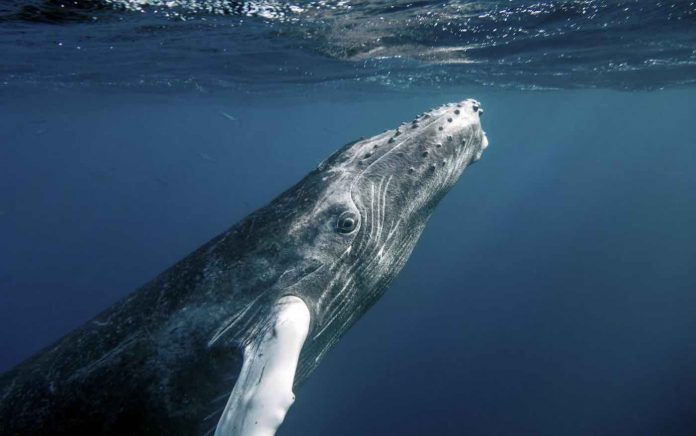
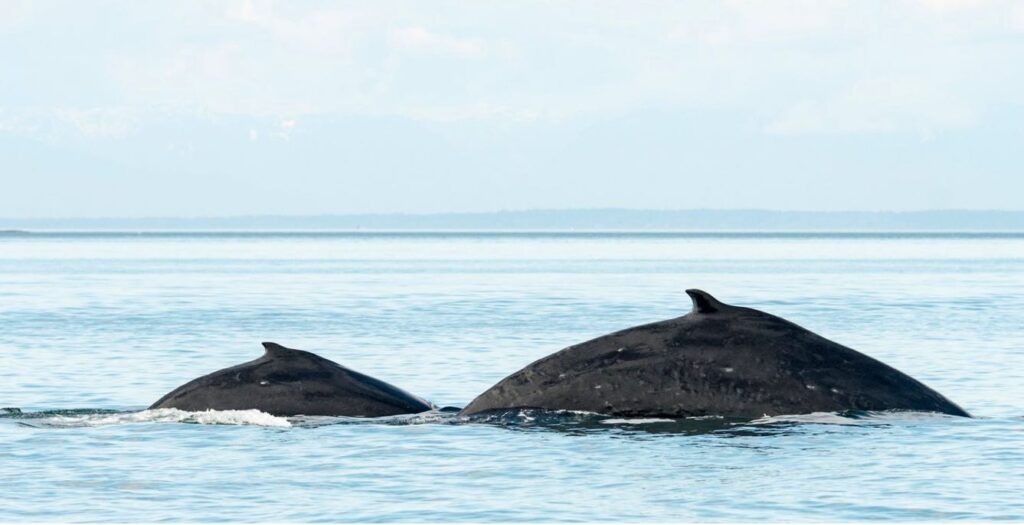
Zero Humpbacks Off Seattle Coast 25 Years Ago – Now 500 Return With Record Number of Calves

Photo by Christopher Michel, CC license
By Sara Hysong-Shimazu / Pacific Whale Watch Association

A record number of calves have been recorded in the Salish Sea this season, marking a significant rebound for a species that was endangered just 25 years ago.

Whale watchers and researchers off the coasts of Washington and British Columbia near Vancouver, documented 21 calves, according to the Pacific Whale Watch Association (PWWA).

According to Mark Malleson of Center for Whale Research, that is the highest annual number on record so far for the region, and is nearly twice as many as were reported last year, when 11 calves were documented.

“2021 has been a banner year for female humpbacks coming into the Salish Sea with new calves,” says Wendi Robinson, naturalist with Puget Sound Express. “Calves only travel with mom for a year or so and then they’re on their own. Once they’re familiar with our waters, they will often return year after year to feed.”

As to the cause of this year’s baby boom, Erin Gless, Executive Director of the Pacific Whale Watch Association, can only speculate.

“We’re not sure why there were so many calves this year,” she says. “It’s possible the last two years had an abundance of food for the whales.”

“25 years ago, here off of inland B.C. waters, we had zero humpback whales, so this is a new phenomenon in our waters … they’ve made up for lost time. We are seeing lots and lots of whales, which is super exciting.”

WATCH: Curious Whale Nudges Paddle Boarder in Argentina in Stunning Video

Salish Sea from orbiting ISS

Fall brings the peak of humpback activity in the Salish Sea as the whales seize their last feeding opportunities before traveling south for winter. In the coming months—after eating 2,000 pounds (900 kg) of fish and krill every day—humpbacks will swim to breeding grounds near Hawaii and Mexico to mate, give birth, and return in late spring.

Humpbacks have also bounced back in the South Atlantic. After the population had diminished to only 450 whales, 2019 research showed numbers have has rebounded to 25,000—an estimate now close to pre-whaling numbers.

WATCH: Friendly Humpback Whale Gives Woman the Experience of a Lifetime

In June, the U.S. Biden administration announced it would be officially protecting 116,098 square nautical miles of the Pacific Ocean as critical habitat for three populations of endangered humpback whales.

Evidence shows that endangered or threatened species that have protected critical habitat are twice as likely to be recovering as those without it—so we can expect these positive trends for Pacific humpbacks to continue.

LOOK: Humpback Whales Herd Salmon With Their Fins in Never-Before-Filmed Feeding Behavior

SHARE This Whale of a News Story With Everyone on Social Media… (Featured photo by Christopher Michel via Flickr, CC license)

“Life is like a play: it’s not the length, but the excellence of the acting that matters.” – Seneca

Quote of the Day: “Life is like a play: it’s not the length, but the excellence of the acting that matters.” – Seneca

Photo: by Gwen King

With a new inspirational quote every day, atop the perfect photo—collected and archived on our Quotes page—why not bookmark GNN.org for a daily uplift?


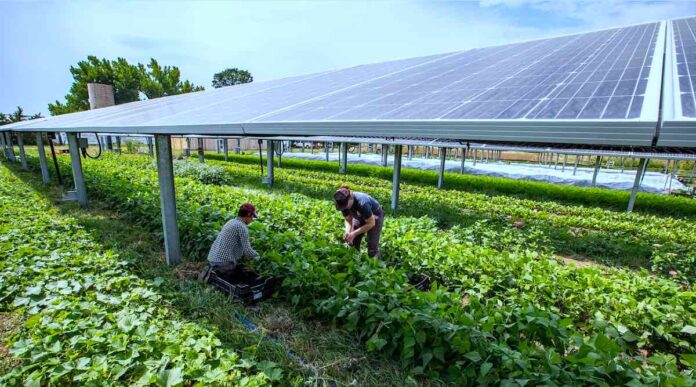
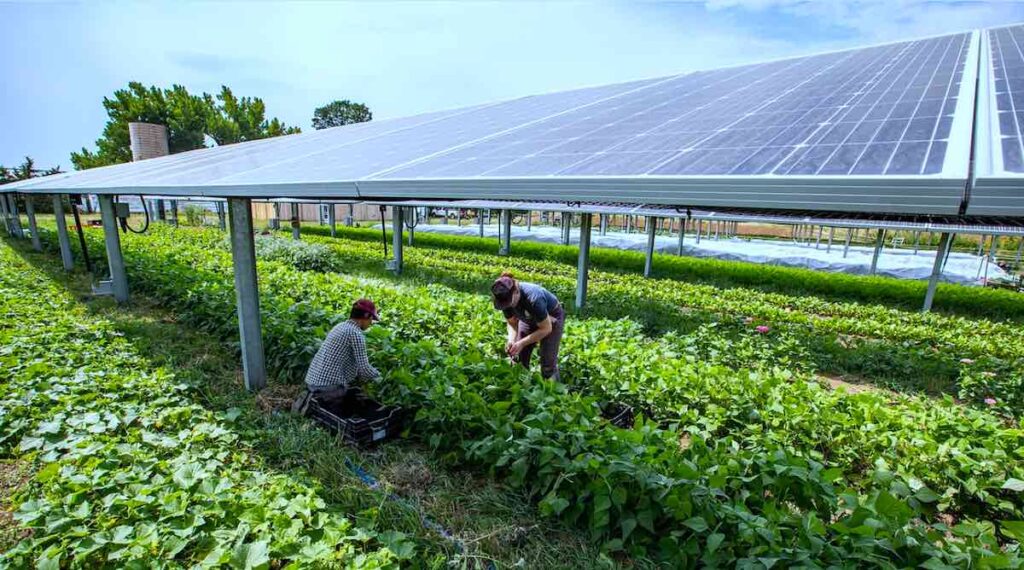
Largest Farm to Grow Crops Under Solar Panels Proves to Be a Bumper Crop for Agrivoltaic Land Use

Jack’s Solar Farm - Photo by Werner Slocum: NREL

Agrivoltaics is a field of study that’s blooming with knowledge: how to combine the harvesting of agriculture with solar energy in a way that augments the performance of both.

Jack’s Solar Farm – Photo by Werner Slocum: NREL

Exciting researchers, farmers, and solar businesses, alike, is the fact that when planting crops under solar panel arrays, the plants grow better and need less watering, while the panels produce more electricity.

In Boulder, Colorado, visit Jack’s Solar Garden and you will likely see a man driving a tractor under rows of solar panels, with people tending, harvesting, or sowing in the nearby furrows. Jack’s represents a dozen such projects in the US—some commercial and some only for research.

The man on the tractor is Byron Kominek. Following a career in both the Peace Corps and USAID, Kominek is now one of the most innovative farmers in the country. His 24-acre farm which used to harvest only alfalfa and hay was in his family for 50 years, after it was bought by his grandfather Jack, the namesake of the thriving ‘solar garden’.

After taking over the farm, he realized that it was losing money—and the county wasn’t keen on his solar-powered idea.

“They said, ‘land’s for farming, so go farm it,’” Kominek told NPR. “I said, well, we weren’t making any money, you all want to be 100% renewable at some point so how about we work together and sort this out.”

POPULAR: Students Build Solar-Powered Pop-Up Van For Touring in a Brilliant Mobile Home That Has Zero Emissions

Betting the farm

Together with Boulder city and county, he got permission to build an agrivoltaic solar farm on his historic farmland.

He turned to an expert solar-panel firm, Namaste Solar, to plan and erect 3,200 panels over one of his major paddocks. Even having built all manner of arrays before, it would be a first for Namaste to mount one high above row crops.

Solar Power World reports that Namaste selected sophisticated trackers to follow the sun across the sky, and mounted them according to strategically-measured heights and spacing to allow enough sun to reach the crops below. For each row mounted 8-feet off the ground, providing enough room to drive a tractor under, two were mounted at 6-feet.

Jack’s Solar Garden in Boulder Colorado – Photo courtesy of Namasté Solar

Now finished, the electricity Kominek’s farm generates is enough to power 300 private homes, 50 of which are now his energy clients—including the city, and the county. Underneath there are tomatoes, turnips, carrots, squash, beets, lettuce, kale, chard, and peppers.

This success wasn’t obvious, and it required a major leap of faith to reap the rewards.

“We had to put up our farm as collateral as well as the solar array as collateral to the bank,” he told. “If this doesn’t work, we lose the farm.”

RELATED: Aptera Solar-Powered Car With ‘1,000-Mile’ Range Gets 7,000 Preorders for Delivery in 2021

Agrivoltaics: i.e. Sun-flowering

Unfortunately for Kominek, a lot of the research in America that has shown how effective agrivoltaics can be was generated over the same period he was “betting the farm.”

GNN has reported on some solar farms that are using agrivoltaics to grow pasture for grazing animals and native pollinators. In India, solar panels are being constructed over canals, which, as they lose water through surface evaporation, cool the panels, and increase their efficiency.

In 2019, a study from the universities of Arizona and Maryland found great benefits in combining solar panels and crops. Up above, the solar panels were found to be kept 16°F cooler by evaporation from the crops below, enough to increase their energy generation by 2%.

Underneath, the few crops tested were 100% to 300% more productive depending on the species, and the shade provided by the solar panels reduced irrigation-water use by 15%, and reduced water consumption by a whopping 157 percent.

The crops are also protected from intense rain or hail from the overhead panels.

LOOK: Aptera Solar-Powered Car With ‘1,000-Mile’ Range Gets 7,000 Preorders for Delivery in 2021

In the last 8 years, agrivoltaic (or agrophotovoltaic) farms have grown in size from 5MW to 2.9GW, and research from the National Renewable Energy Laboratory estimate that if just 1 million acres of farmland was covered in solar panels, the nation would meet its renewable energy goals.

HELP This Amazing Story Grow By Shedding Light on it Via Social Media…

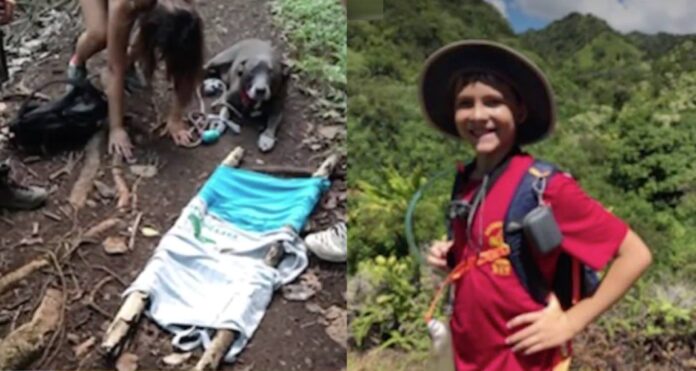
12-year-old Uses Boy Scout Know-How to Rescue Lost Couple and Injured Dog on a Hike

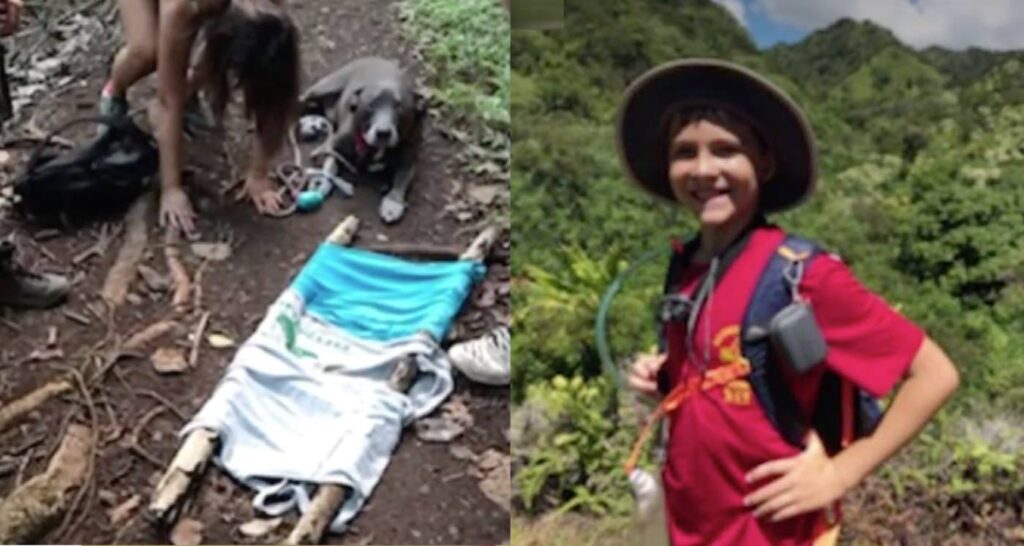
David and his handmade stretcher by Christine King
David and his handmade stretcher/Christine King

It’s the textbook beginning of a nightmare: lost on a hiking trail, with no water, and an injured dog too heavy to carry. Fortunately for the family of three this story happened to, they literally ran into a boy scout.

For JD, Aimee, and their dog Smokey, a two-mile hike had become a seven-mile disaster on the Waimanu Trail above Pearl City, Honolulu.

Their phone was dead, and it was getting dark.

That’s when they came across 12 year-old David King and his mom Christine.

“We asked ‘oh do you need any help?’ They said ‘yeah,’ they showed us the dog’s paws had some cuts on it,” David told local reporters. “When the dog would walk, it would just be really painful.”

David was just three miles short of getting his 15-mile-hike merit badge, but despite having done that and played a soccer match earlier in the day, David did what all boy scouts do: he lent a hand.

CHECK OUT: Heroic Dog Gets Award for Saving Over 100 Koalas From Australia’s Bushfires

First, he suggested they build a stretcher by using two lengths of wood and stringing their t-shirts across it—a technique David had learned from his eagle scout older brother.

“It was his idea to make the stretcher,” said Christine. “We didn’t think it would work because we didn’t think the dog would get onto the stretcher. Smokey was just happy to, and we just carried him out.”

Someone (presumably David) knew the way back to the parking lot as well, and so they all worked together, sometimes in twos, sometimes in fours, to get Smokey to safety, who despite his injuries occasionally hopped off to give some relief to the exhausted hikers.

MORE: Sikh Men Created a Lifeline Using Turbans to Rescue Hikers at a Canadian Park

David would later take the opportunity to tell KHON2 News when you’re off on a hike, a good way to be prepared is to imagine what could go wrong, and plan for that.

Good on ya, David.

(WATCH the KHON2 video for this story below.)

RESCUE the Good News—Share This Great Story…

How the Mind Can Be ‘Trained Like a Muscle’ to Focus – Try Using These Simple Exercises

When people say “I get distracted easily,” what they’re really saying is, “I receive less of the absolute miracle that is “focus” than other people.” Because when we consider the 10 million bytes of imagery data that the eyes give the brain every second or the 6,000 spontaneous thoughts we have each day, it truly seems like a miracle we can focus on anything at all.

As it turns out, far from being a miracle, focus can actually be trained and developed, just like a human muscle after months of pumping iron.

That is according to a professor of behavioral neuroscience named Dr. Amishi Jha, who has written a book called Peak Mind: Find Your Focus, Own Your Attention.

Her research shows that when people in high-demand jobs like soldiers, elite athletes, or emergency personnel invest 12 minutes a day for four-weeks doing simple mindfulness exercises, many aspects of cognitive and emotional health—including attention—are improved.

“The first step to better focus is accepting a key truth: you cannot just decide to have unfettered attention,” says Jha in a book review piece for The Guardian.

A lot of western ideas about mindfulness are drawn from eastern religious mediation practices. Some Buddhist meditations, for example, involve focusing on nothing—the supreme emptiness that pervades all other things, while Zen mediation focuses on thinking about nothing, but being aware of all things happening around you. Some Zen practitioners will even keep their eyes open.

RELATED: Stories or Music Can Synchronize the Heartbeats of Everyone Listening into a Single Rhythm

That’s not the kind of thing most people are able, or willing, to do. Yet Jha explains that attention can be trained through simple exercises.

Specifically, they involve daily steps that “exercise the brain in ways that it is prone to being weakened,” such as when we are brushing our teeth and immediately turn our attention to thinking about other things. One can develop the mental muscle to observe the present, instead of becoming lost in our monkey minds.

MORE: The Best Way to Eliminate Procrastination is Easier Than You Think, Says New Research

Jha’s book contains a lot of brain workouts, all centered around this sort of wisdom.

1: Paying attention to your breath and where in your body you feel it passing the most. Use your focus like a flashlight (a physical challenge of hers).

2: Don’t think of these exercises as peaceful reflection, or time to say “Om,” but rather a rigorous mental workout.

3: Don’t think of being calm, and instead try to imagine the goal of being alone in the middle of a four way intersection, watching people (your thoughts) pass along the crosswalks under each set of lights.

4: As with the breathing focus, spend three minutes a day focusing on the sensation of doing exactly what it is you are doing. If that’s showering, focus on that experience alone.

FOCUS Those Social Feeds on the Positive—Share This Story…

“Keep company with people who uplift you, whose presence calls forth your best.” – Epictetus

Quote of the Day: “Keep company with people who uplift you, whose presence calls forth your best.” – Epictetus

Photo: by Dim Hou

With a new inspirational quote every day, atop the perfect photo—collected and archived on our Quotes page—why not bookmark GNN.org for a daily uplift?


Sisters Recreate Adorable Photo – With Daughters Stepping into Roles That Dreamed of Motherhood

SWNS
SWNS

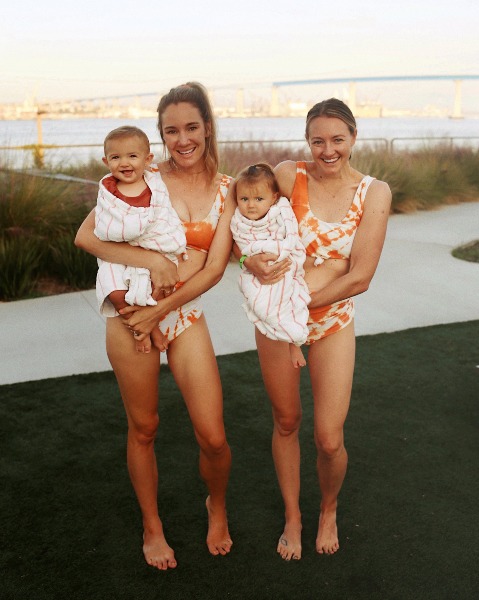
Two sisters got pregnant around the same time—enabling them to recreate this adorable childhood photo of them, when they were dreaming of becoming mothers, and placed balloons under their nightgowns.

35-year-old Bri Dietz and her 33-year-old sister, Chaulet Barba, were ecstatic when they discovered they were both expecting.

Then, Bri immediately remembered a photo taken when the pair were just four and six years old, pretending to be pregnant with balloon bumps.

She knew that moment had to be recreated—so once they were both sporting bumps, they took a matching snap.

Bri gave birth to her daughter Goldie Dietz first, and a few months later Chaulet had Gemma.

To complete the circle, the new toddler cousins posed with balloons tucked under clothes in a photo identical to their moms’.

On Instagram Bri said, “It was so special to go through it together. It was actually a dream come true.

RELATED: Babies Mixed Up in Hospital, But Then Families Decide to Raise Them Together and They’re All Best Friends Now

SWNS

“It made it feel not only like it came full circle from playing as a kid, but it felt like a special sister moment. We got lucky to have a chance to recreate that.”

Bri and Chaulet were very close growing up, playing dolls and pretending to be mommies, and even now they talk on the phone every day.

“We chose to share a twin bed every night even though we each had our own,” said Bri, from San Diego, California.

LOOK: Puppy Siblings Adopted by Different Families Immediately Recognize Each Other During Walks One Year Later

Nurse Chaulet lives in Walnut Creek, about seven hours away from her sister, but they both knew they had to recreate that one funny photo from their childhood.

It immediately cropped up in her brain, 25 years later and she dug around until she found it.

SWNS

Today’s little girls are now as close as their moms are, and also love playing with their dolls together.

POPULAR: Long-Lost Sisters Reunite And Discover Their Tattoos, Jobs, and Hobbies Match Exactly

Bri said of the image, “I hope it makes people remember that sweet time when you’re in this little world of your own with your siblings—a bond and a core is always there between us.”

SHARE a Snapshot of This Sweet Sibling Story…

The Best Way to Eliminate Procrastination is Easier Than You Think, Says New Research

They say procrastination is the thief of time—actually deadlines are.

New research from the University of Otago has found that if you want someone to help you out with something, it is best not to set a deadline at all. But if you do set a deadline, make it short.

Professor Stephen Knowles, from the Otago Business School, Department of Economics, and his co-authors tested the effect of deadline length on task completion for their research.

Participants were invited to complete an online survey in which a donation goes to charity. They were given either one week, one month, or no deadline to respond.

Professor Knowles says the research began because he and his team—Dr Murat Genç, from Otago’s Department of Economics, Dr Trudy Sullivan, from Otago’s Department of Preventive and Social Medicine, and Professor Maroš Servátka, from the Macquarie Graduate School of Management—were interested in helping charities raise more money.

However, the results are applicable to any situation where someone asks another person for help. This could be asking a colleague for help at work or asking your partner to do something for you, Professor Knowles says.

RELATED: Embrace Your Darker Moods And You’ll Feel Happier in the Long Run, Say Scientists

The study found responses to the survey were lowest for the one-month deadline, and highest when no deadline was specified.

No deadline and the one-week deadline led to many early responses, while a long deadline appeared to give people permission to procrastinate, and then forget.

Professor Knowles wasn’t surprised to find that specifying a shorter deadline increased the chances of receiving a response compared to a longer deadline. However, he did find it interesting that they received the most responses when no deadline was specified.

“We interpret this as evidence that specifying a longer deadline, as opposed to a short deadline or no deadline at all, removes the urgency to act, which is often perceived by people when asked to help,” he says.

“People therefore put off undertaking the task, and since they are inattentive or forget, postponing it results in lower response rates.”

He says of the research, published in Economic Inquiry, that it is possible that not specifying a deadline might still have led participants to assume that there is an implicit deadline.

MORE: Meditation Training Reduces Long-Term Stress, Hair Analysis Shows

Professor Knowles hopes his research can help reduce the amount of procrastinating people do.

“Many people procrastinate. They have the best intentions of helping someone out, but just do not get around to doing it.”

Source: University of Otago

DON’T PROCRASTINATE; Share This Research With Friends…

Australian Firefighters Pose With Adorable Rescued Wild Animals for Sizzling Charity Calendar – LOOK

SWNS
SWNS

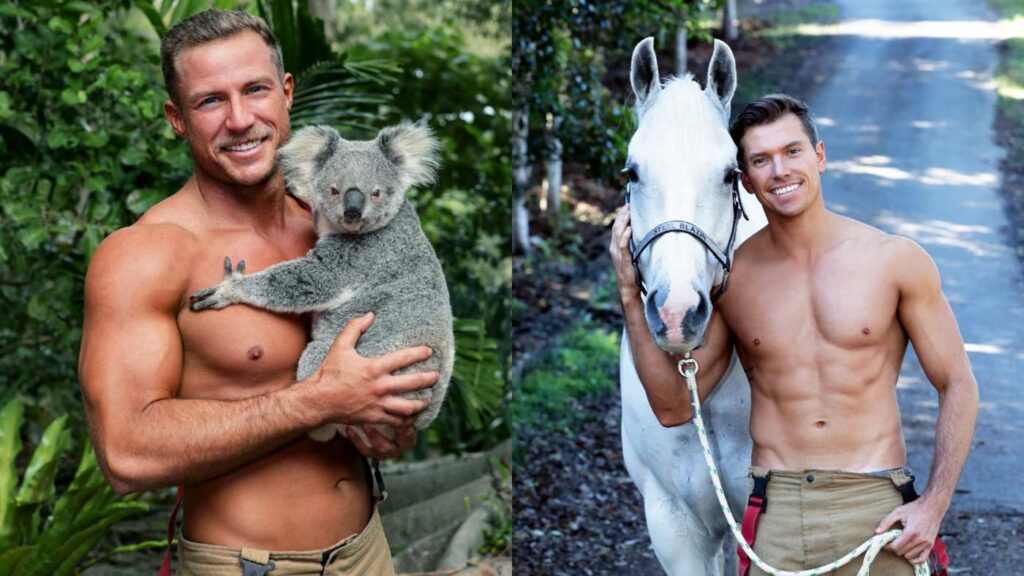
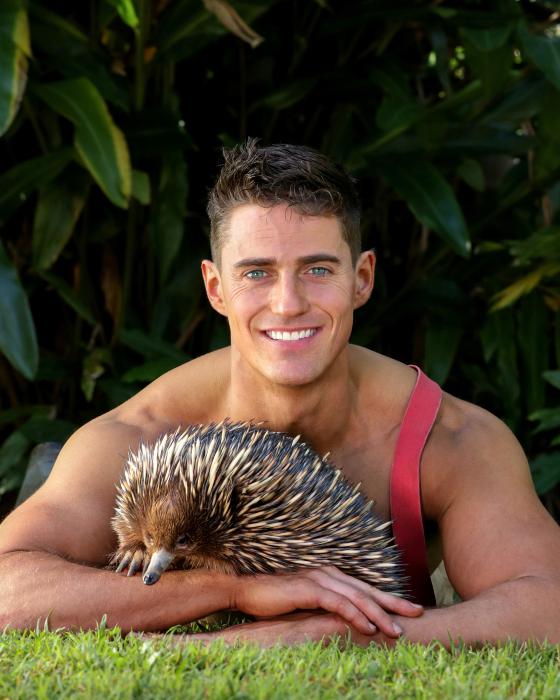
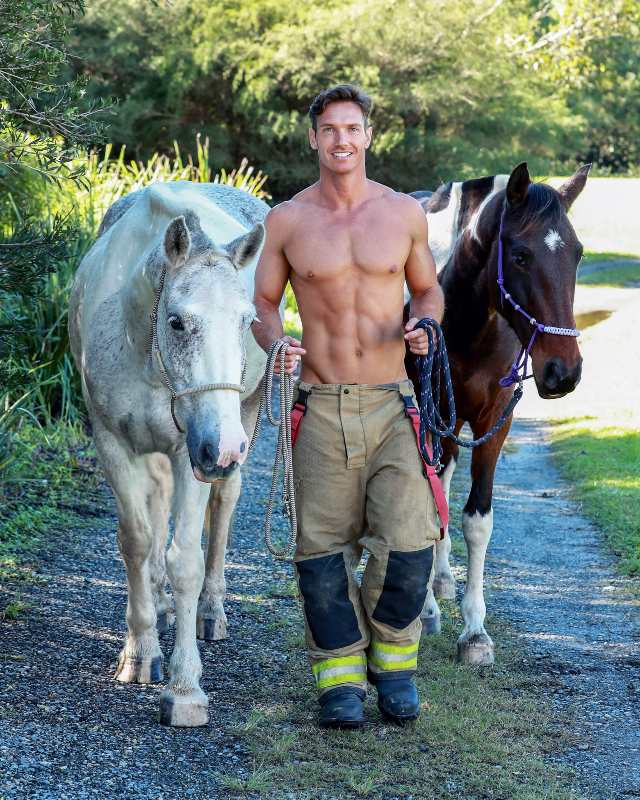
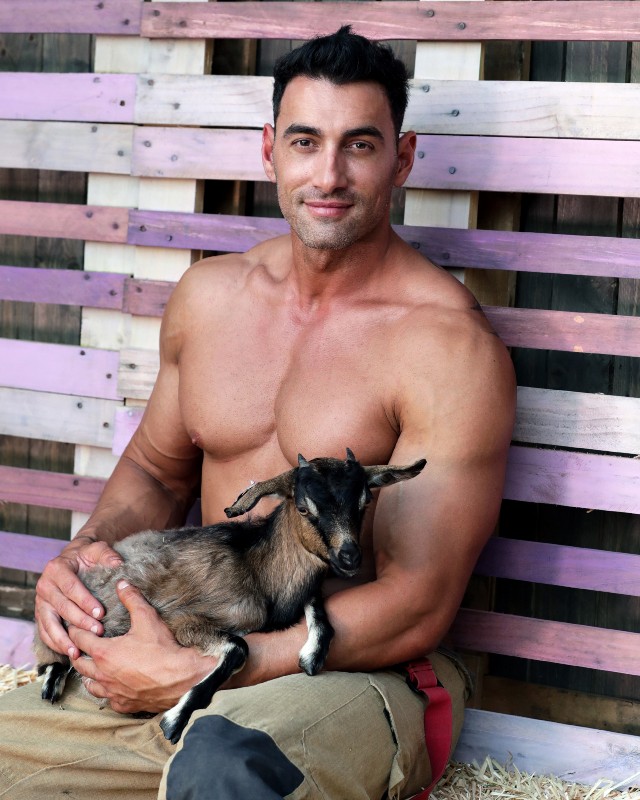
Australia’s firefighters are raising money for wildlife foundations by posing with their kit off for an annual calendar featuring adorable pets and endangered native wildlife.

The internationally acclaimed Australian Firefighters Calendar, now in its 29th year, is setting hearts on fire again.

With over 750 million Facebook views and distributed in over 100 countries last year, the world’s most iconic calendar is back bigger and better than ever.

The photoshoot is a 25-day animal lovers’ extravaganza. Much loved pets, Australian wildlife, farm animals, therapy, and rescue horses from all over the Southeast Queensland come together to take part in the photoshoot.

This year the usual five fan favourite editions will be available: the Classic, Cats, Dogs, Horse and Mixed Animal editions will be made available.

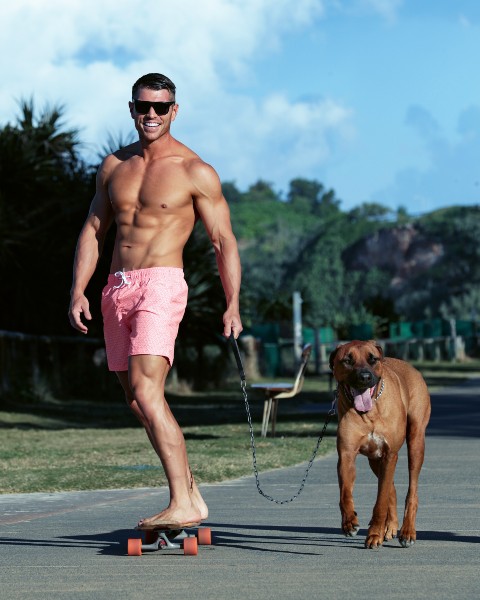
For the first time ever, the firefighters are also heating things up with a summer edition calendar featuring firefighters having fun in the sun on some of Australia’s most iconic beaches.

SWNS

The inaugural Summer calendar cover features Australia’s fittest firefighter, Matt Haydon.

MORE: Australian Firefighters Pose With Adorable Rescued Animals for Sizzling Wildlife Charity Calendar

This year the owners of much-loved cats and dogs entered their pets to take part in the photoshoot.

Crystal Doohan, Australian Firefighters’ Calendar Creative Director, said, “We received over 5,000 photos of every type of animal you can imagine to take part in the photoshoot and they entered from all over world.

“We even had a lady from Moscow that wanted fly her cat to Australia. It takes one month to sort through all the eligible entrants.”

There are many new faces in the 2022 editions. Ben Church is a firefighter from Western Australia that was selected to take part in the photoshoot.

Ben said, “I wanted to do it for my grandma and mom. They were so proud that I was selected to take part in the photoshoot.

“They embarrassed the heck out of me by emailing the calendar co-ordinators advising them I was the most handsome firefighter in Western Australia and the guys have not stopped reminding me of that! Thanks grandma and mom!”

SWNS

Another new face is Ricky Smith, a Brisbane-based Firefighter, who said, “I received a phone call congratulating me that I had been selected for the 2022 Australian Firefighters Calendar.

“I thought to myself that I had never sent an application in? What is this guy talking about?

“I found out later that my girlfriend had done it without me knowing. Before I knew it I was standing in front of seven members of the photography team. I was absolutely terrified. I have never even taken a selfie!”

The recipients of donations from this year’s calendar are heavily focused on community animal welfare groups.

RELATED: World’s Last Known ‘Dinosaur Trees’ Saved From Australian Bushfires Thanks to Determined Firefighters

These include Native Animal Rescue, Wildcare Inc, Safe Haven Animal Rescue, Australian Seabird Rescue, Fauna Rescue of SA, Healing Hooves, Reason to Thrive, Kids with Cancer Foundation, and the Currumbin Wildlife Hospital.

David Rogers, Director of the Australian Firefighters’ Calendar, said, “The unsung work that many of these volunteer-based organizations do is outstanding.

“Without these dedicated wildlife warriors, many sick and injured domestic and wildlife animals simply would not survive.

“These wonderful people are the reason we try so hard to produce calendars that not only help raise funds and awareness but also honor their work.”

Time to check out some of 2022’s photos.

You know what they say: Everybody needs good neighbors…

SWNS

Don’t this sweet pair look like the best of pals?

SWNS

These two seem to enjoy the skating life.

SWNS

That’s some lap dog.

SWNS

Who’s cuter? It really is hard to say.

SWNS

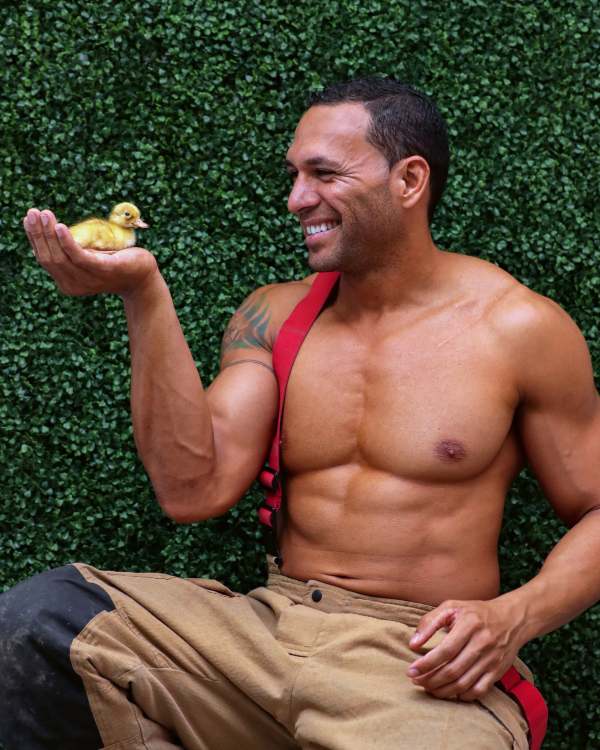
How could this little duckling not raise a grin?

SWNS

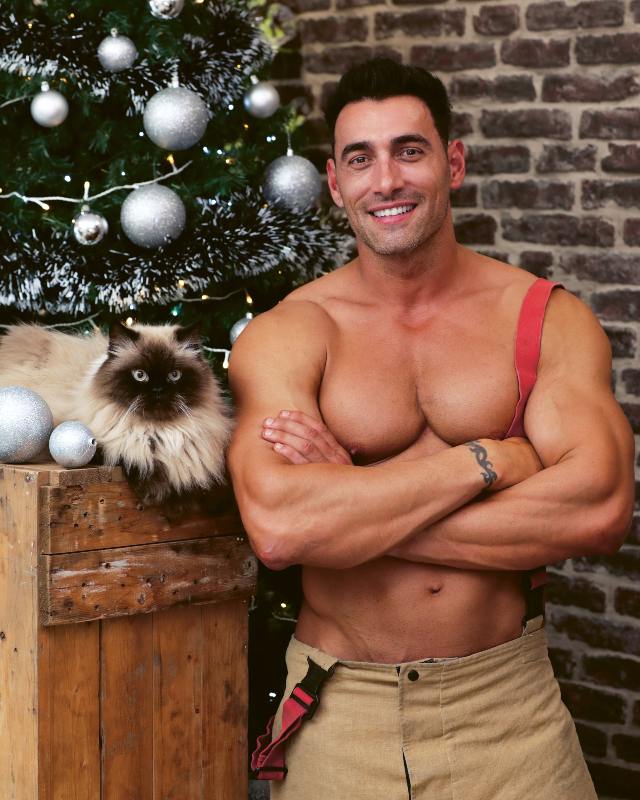
If you look under the Christmas tree, you’re in for a giant smile.

SWNS

GO ON, SHARE This Sizzling Story on Social Media… 
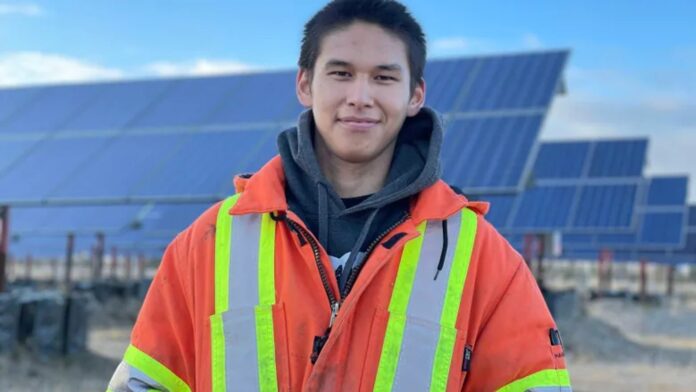
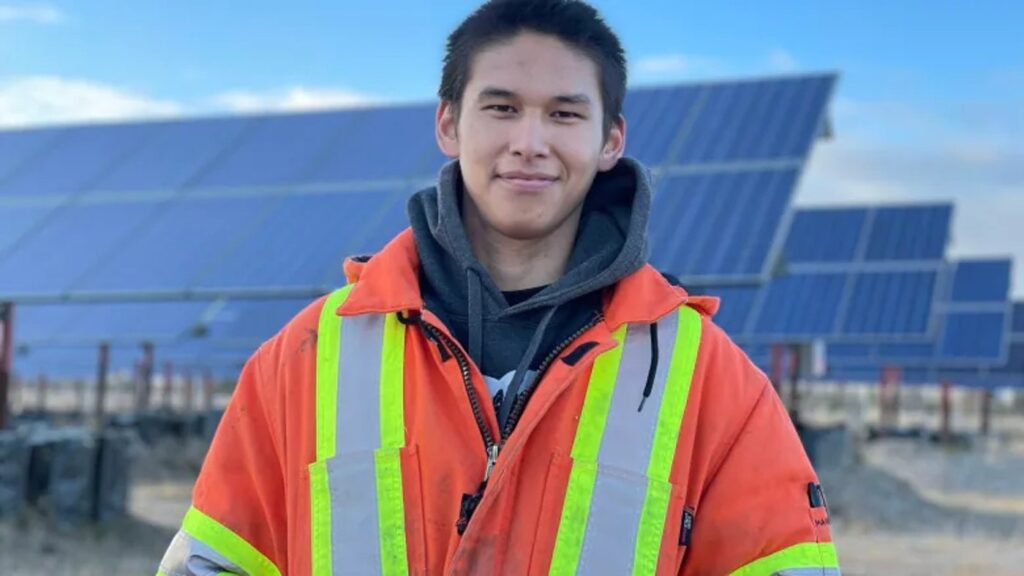
Inspired to Save Their Arctic Home, This First Nation Installs 300KW Solar Station

Owen Miles by Michael Wrinch/Hedgehog Technologies

Ontario’s northernmost First Nation has switched on a 300 kilowatt solar power station, freeing them from the burden of flying diesel by charter plane 500 miles up the Canadian coastline.

The station will generate money, power, and jobs for the community of Fort Severn, and reduce their consumption of fuel for both electricity and fuel transportation by around 400,000 liters of diesel a year.

Did you ever watch the program Ice Road Truckers on the Discovery Channel? The season finale could easily have been a trip to Fort Severin. The grueling 480-mile road trip through what is thought the world’s longest winter road, the Wapusk Trail, is a frozen wilderness during the winter, and a mud slog during the summer—that season is becoming onger and warmer, and thus the road is becoming muddier for longer periods of time.

Small planes loaded with diesel have until recently been the only reliable means of energy delivery. After decades of enduring this frontier-of-all-frontiers living, in 2016 the recently-elected Chief Paul Burke decided to embark on the solar power project despite huge challenges.

“If you want something for your community, you got to go and get it,” Chief Burke told CBC over the phone. “You can’t just sit there twiddling your thumbs and waiting for something to happen. So that’s what I did.”

Just getting humans to Fort Severin, let alone the materials and parts for a big solar energy project, was a major challenge on its own. The only way to get materials to the community was by the Wapusk Trail, or on one single barge trip per year, which places an expensive toll on simple human error.

RELATED: Solar is Now the Cheapest Electricity in History and Just Met 100% of Demand in South Australia For First Time

“Say you don’t have enough wire or you’re missing a special tool. Well, you immediately have to charter a plane three hours south to pick something up and then fly back,” said Michael Wrinch, the project manager and president of Hedgehog Technologies. “If you forget anything, it’s an expensive mistake. And then next is getting the big items up there.”

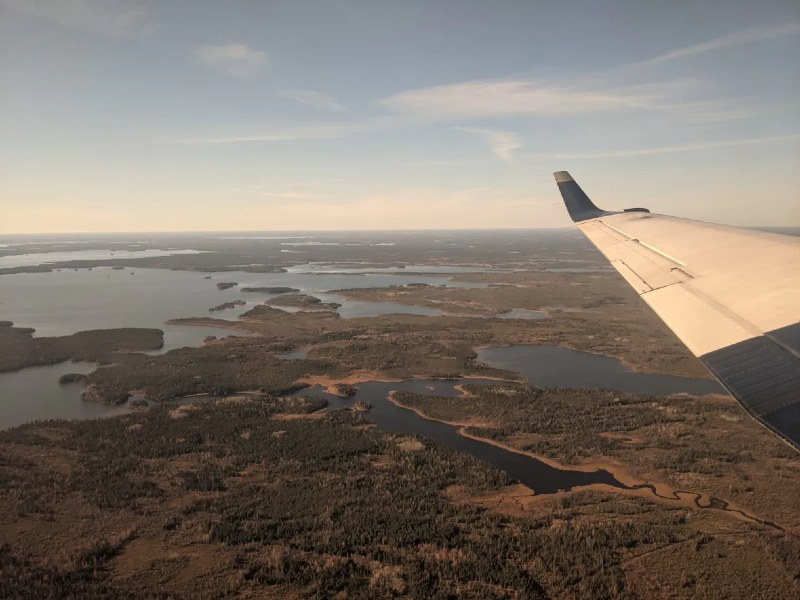
Fort Severn from the sky by Charles Lewthwaite/Hedgehog Technologies

Now, however, the power station is finished and operating, giving power to around 550 people and generating income, enough to help tackle a real estate issue in the community, which needs around 40 houses for people.

MORE: Breakthrough 3D Solar Panel Design Increases Light Absorption By 125% – A Potential Game-Changer

Arctic Zones are just as temperamental with their cloud patterns and precipitation as Temperate Zones, and so Chief Burke is already digging into the next sleep-losing challenge: wind power.

It’s a story that reminds the world what renewables can do, and how few excuses federal governments and municipalities have for installing them. If Fort Severin can do it, anyone can.

RENEW the Hope And Share This Good News From the North…

“We must not confuse dissent with disloyalty… We cannot defend freedom abroad by deserting it at home.” – Edward R. Murrow (launched See It Now 70 years ago)

Quote of the Day: “We must not confuse dissent with disloyalty… We cannot defend freedom abroad by deserting it at home.” – Edward R. Murrow (70 years ago he launched See It Now)

Photo: by @mhrezaa

With a new inspirational quote every day, atop the perfect photo—collected and archived on our Quotes page—why not bookmark GNN.org for a daily uplift?


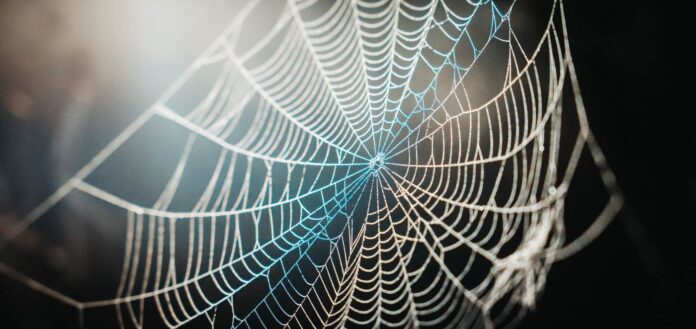
Scientists Discover How Intricate Spider Webs Are Made By Brains That Are a Fraction of the Size of a Human’s

Johns Hopkins University researchers discovered precisely how spiders build webs by using night vision and artificial intelligence to track and record every movement of all eight legs as spiders worked in the dark.

Their creation of a web-building playbook or algorithm brings new understanding of how creatures with brains a fraction of the size of a human’s can create structures of such elegance, complexity, and geometric precision.

“I first got interested in this topic while I was out birding with my son,” said senior author Andrew Gordus, a behavioral biologist in the Department of Biology in the Krieger School of Arts and Sciences. “After seeing a spectacular web, I thought, ‘if you went to a zoo and saw a chimpanzee building this you’d think that’s one amazing and impressive chimpanzee.’ Well this is even more amazing because a spider’s brain is so tiny and I was frustrated that we didn’t know more about how this remarkable behavior occurs. Now we’ve defined the entire choreography for web building, which has never been done for any animal architecture at this fine of a resolution.”

Web-weaving spiders that build blindly using only the sense of touch have fascinated humans for centuries. Not all spiders build webs but those that do are among a subset of animal species known for their architectural creations, like nest-building birds and puffer fish that create elaborate sand circles when mating.

The first step to understanding how the relatively small brains of these animal architects support their high-level construction projects is to systematically document and analyze the behaviors and motor skills involved, which until now has never been done, mainly because of the challenges of capturing and recording the actions, Gordus said.

CHECK OUT: MIT Scientists Spin Some Music Out of Spider Webs

Here his team studied a hackled orb weaver, a spider native to the western United States that’s small enough to sit comfortably on a fingertip. To observe the spiders during their nighttime web-building work, the lab designed an arena with infrared cameras and infrared lights. With that set-up they monitored and recorded six spiders every night as they constructed webs. They tracked the millions of individual leg actions with machine vision software designed specifically to detect limb movement.

“Even if you video record it, that’s a lot of legs to track, over a long time, across many individuals,” said lead author Abel Corver, a graduate student studying web-making and neurophysiology. “It’s just too much to go through every frame and annotate the leg points by hand so we trained machine vision software to detect the posture of the spider, frame by frame, so we could document everything the legs do to build an entire web.”

They found that web-making behaviors are quite similar across spiders, so much so that the researchers were able to predict the part of a web a spider was working on just from seeing the position of a leg.

RELATED: Company Mimics Spiders to Create Lustrous Faux Silk That is 1,000x More Energy Efficient

“Even if the final structure is a little different, the rules they use to build the web are the same,” Gordus said. “They’re all using the same rules, which confirms the rules are encoded in their brains. Now we want to know how those rules are encoded at the level of neurons.”

The findings, now available online, are set to publish in the November issue of Current Biology.

Future work for the lab includes experiments with mind-altering drugs to determine which circuits in the spider’s brain are responsible for the various stages of web-building.

“The spider is fascinating because here you have an animal with a brain built on the same fundamental building blocks as our own, and this work could give us hints on how we can understand larger brain systems, including humans, and I think that’s very exciting,” Corver said.

Source: Johns Hopkins University

SPIN Some Beautiful News for Your Friends—Share This Story…

Rare Canadian Cat Has Thumbs Making His Paws Look Like Cute Mittens

SWNS
SWNS

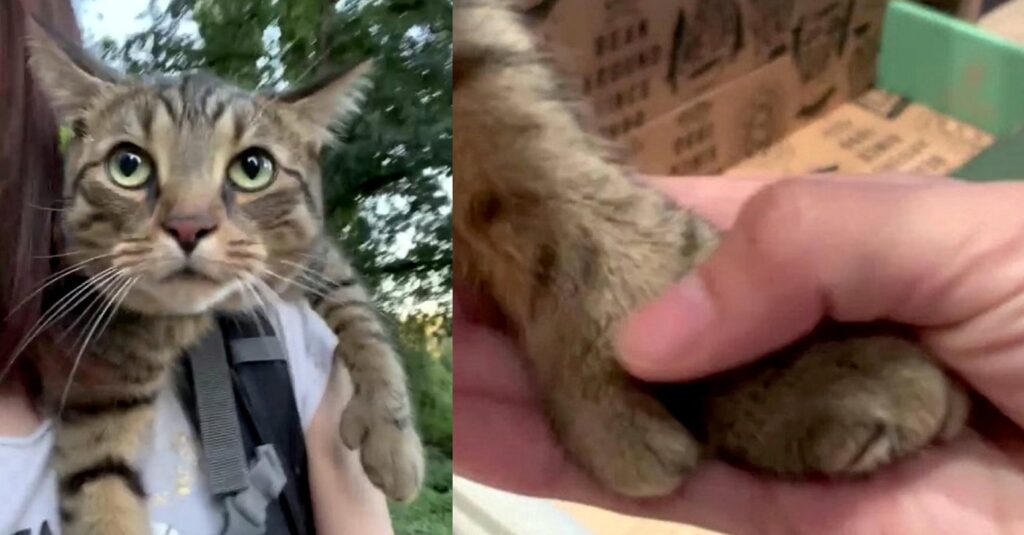
Meet Teddy, the adorable polydactyl cat who was born with extra toes that make his front paws look, like human hands.

Three-year-old domestic shorthair Teddy is a polydactyl, which means he has extra toes on his hind feet and two thumbs which makes his front paws look like mittens.

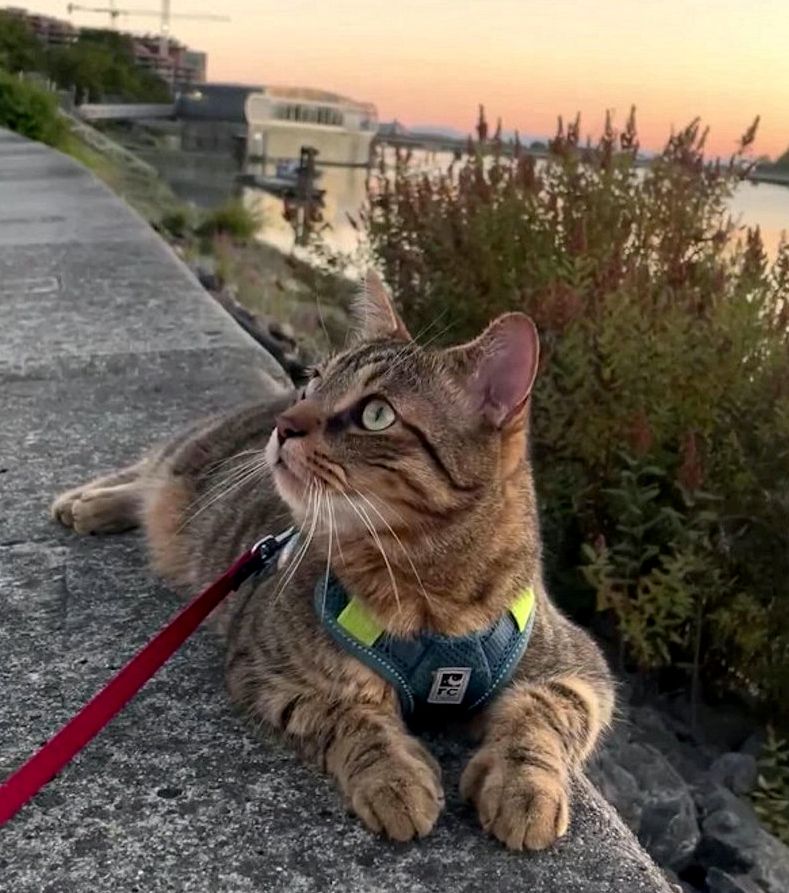
Teddy, who lives with his owner Selvynna Tang in Vancouver, British Colombia, has his own Instagram page and his adorable condition brings joy to his thousands of feline  followers.

Selvynna said, “Teddy is my little buddy! We spend a lot of time together, from working and relaxing at home, to walks and road trips! Teddy is used to going on adventures, so we get to do a lot of things together.

“The extra toes do not affect him too much. If the claws grow too long, it makes a tapping sound when he walks on my wood floors, and I will have to trim it, like any other claw. If the claw is too long it can sometimes get stuck on his scratching post too.

“On the grand scheme of things, Teddy is fairly low maintenance. He likes to sleep a lot, particularly during the work hours, which works out for me!

RELATED: Doberman Dog Nurses Tiny Abandoned Kitten Alongside Her Pups – the Adorable Photos Will Melt Your Heart

Normal cats have a total of 18 toes, with five toes on each fore paw, and four toes on each hind paw.

SWNS

Polydactyl cats may have as many as nine digits on their front or hind paws.

SWNS

Both Jake, a Canadian polydactyl cat, and Paws, an American polydactyl cat, were recognized by Guinness World Records as having the highest number of toes on a cat, 28.

MORE: Minnesota Teen Builds Free Wheelchairs for Disabled Dogs and Cats – And Soon a Duck (WATCH)

“Cats are very adaptable,” said Selvynna, “and they don’t know they are any different because that’s all they know. Even cats who are blind or deaf or even missing a limb can live very full lives.”

PAW This Little Story Over to Your Chums…

Bee Expert Finds 800,000 Wild Honeybees Thriving in Ancient English Forest, Now Naturalists are Buzzing With Hope

Filipe Salbany

Even in a place as populated and developed as southeast England, there are still ecological surprises waiting for those willing enough to be patient and wander far enough.

Filipe Salbany

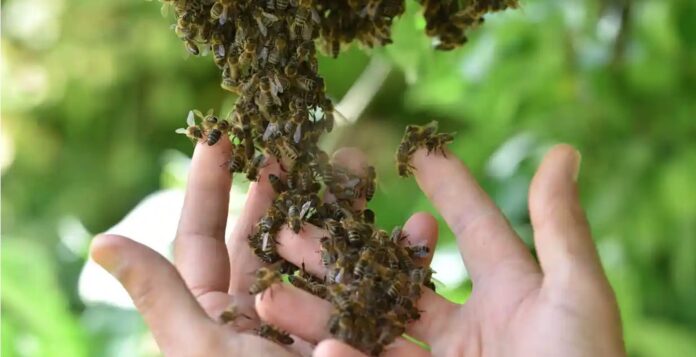
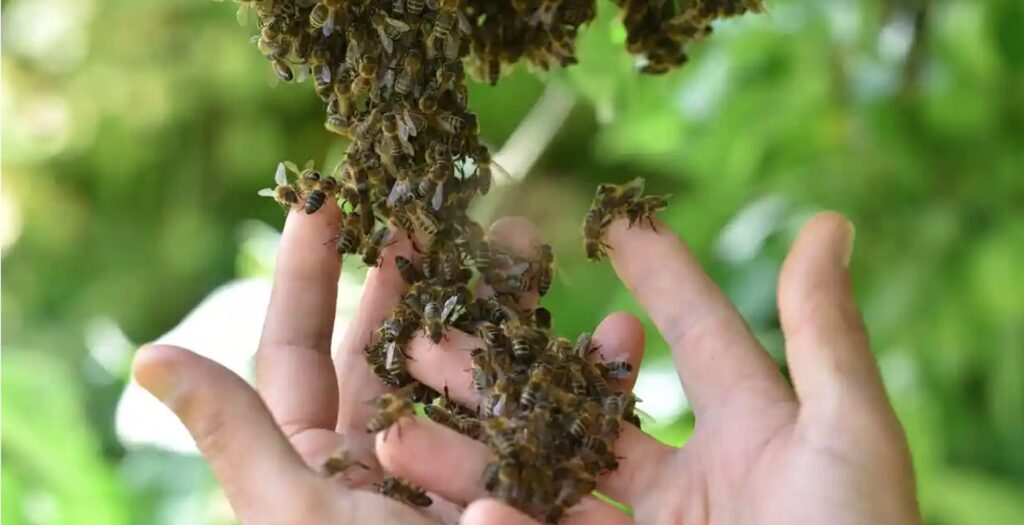
800,000 native honeybees, which some thought to be extinct, were found in an ancient oak woodland at Blenheim Palace in Oxfordshire, England. Experts said they could be the last remaining descendants of the British isle’s original forest honeybee populations.

If true, this would represent one heck of a second chance for the subspecies—because they are thriving.

The insects were found living in the hollow of some oak trees—typical for this forest bee species. The hollow was tiny, and quite high in elevation. Curiously, there had been no record of any bees living in Blenheim before, and immediate thoughts turned to escaped swarms of domesticated bees from nearby hives.

A bee-keeping veteran with more than 40 years experience, Filipe Salbany, would end up finding 50 separate colonies of bees in the estate’s forest. The grounds have had no gardening activity and the property isn’t open to the public, so this has truly been a ‘rewilding’ area.

He’s convinced they belong to the subspecies that probably should be called ‘Ye Olde Englishe Bee.’

“A wild bee that has adapted to the environment is called an ecotype, and this bee could be a very precious ecotype—the first wild bee that is completely adapted to living in the oak forest,” Salbany told the Guardian. 

RELATED: These Homegrown Mushroom Hives Could Save Ireland’s Bees

Smaller, darker, and furrier than imported European honeybees, the hermit hive members also displayed a resistance to temperatures as low as 39 °F (4 °C), about ten degrees lower than what causes normal bees to stop flying. The low temps also ward off the bee’s nemesis, the Varroa mite.

Blenheim Palace

“They are not from the imported stocks of bees that people bring in. The wings are smaller and their veins are very distinct,” says Salbany, who has almost finished his physical examinations. “They have had no treatment for the varroa mite—yet they’re not dying off.”

MORE: Orchids Make Fake Pollen to Tempt the Bees – But Scientists Discover it’s as Valuable as the Real Thing

The woods are a paradise of biodiversity, and no managed hives within the 400 acre estate are the main reasons which Salbany is giving for why the bees have likely remained strong through at least 200 years of history, that figure being the chronological age of the oldest tree-hollow hive found so far.

Featured image: Danny Perez, CC license

HELP Those News Feeds Buzz With Good News; Share This Story…

“Success is the ability to go from failure to failure without losing your enthusiasm.” – Winston Churchill

- credit: Quinn Dombrowski, CC 2.0. via Flickr.

Quote of the Day: “Success is the ability to go from failure to failure without losing your enthusiasm.” – Winston Churchill

Photo: by Quinn Dombrowski, CC license on Flickr

With a new inspirational quote every day, atop the perfect photo—collected and archived on our Quotes page—why not bookmark GNN.org for a daily uplift?


Kindness Book is a Perfect Holiday Gift, With Proceeds All Going to Charity

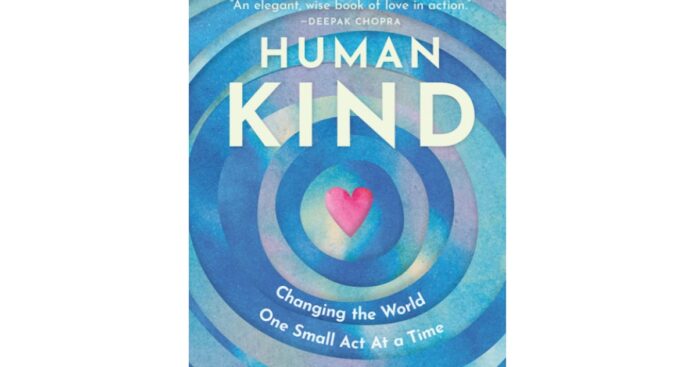
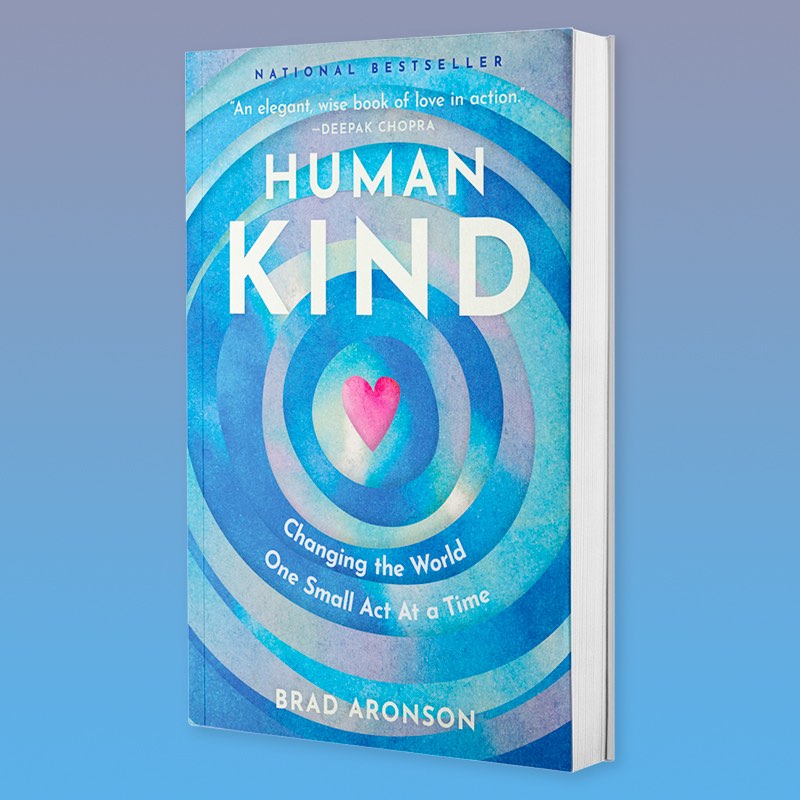
We’re always looking for books that inspire us to feel optimistic and positive about the world, and we are loving this one: HumanKind: Changing the World One Small Act At a Time.

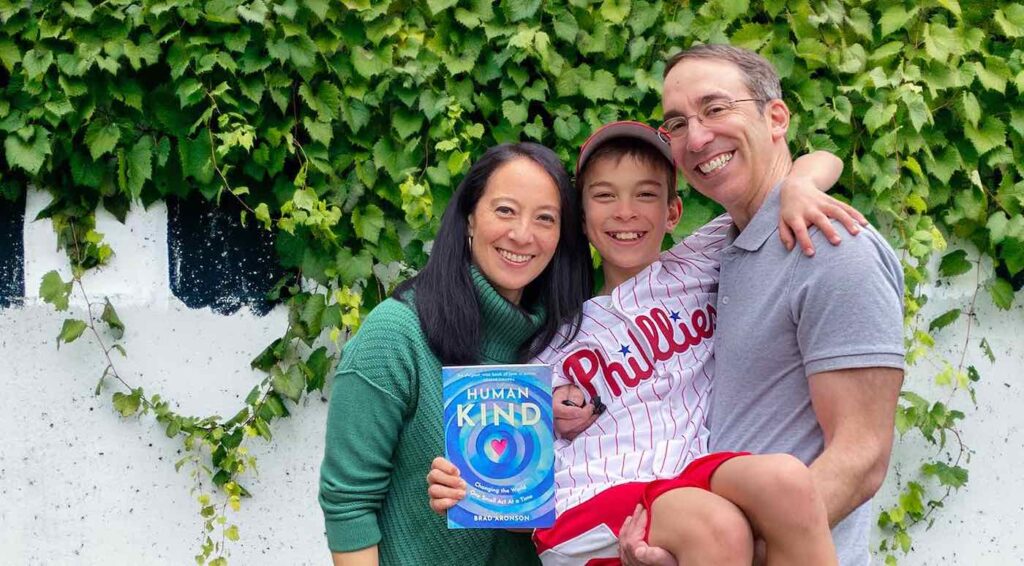
Author Brad Aronson was inspired to write HumanKind when his family went through one of the most difficult times of their lives. His wife, Mia, was in the middle of two and a half years of treatment for leukemia when a patient advocate suggested that Mia, Brad, and their five-year-old son, Jack, create projects to provide a purpose, a distraction and a focus for the hours they were spending in the hospital every week.

Brad Aaronson and family

For Brad’s project, he wrote about the small acts of kindness by friends and strangers that carried his family through that difficult time.

But when he was done, he felt compelled to keep going. What about all the other stories out there? Other stories about seemingly small acts of kindness that had an extraordinary impact, often changing thousands of lives? He decided to seek them out—and those are the golden threads that weave a heartfelt tapestry in this book.

In HumanKind you’ll meet Rita Schiavone, who decided to cook an extra portion of dinner every night to feed to someone in need. Her evening ritual led to a movement that now provides more than 500,000 meals a year. You’ll also meet Larry Stewart, who was homeless when he received a $20 gift that inspired him to become a Secret Santa when he got back on his feet. He went on to give a total of $1.5 million to strangers in need and build a team of thousands who serve their own communities as Secret Santas. Then there’s 6-year-old Gabriel, whose simple request started a global kindness movement. You’ll meet many, many more heroes like these, as well.

HumanKind will inspire you to see the good in the world—and join in. Each chapter concludes with a ‘What We Can Do’ section, containing practical opportunities for how we can all help. And the ‘Hall of Fame’ at the end of the book has a well-vetted list of nonprofits that can guide you to easily channel your energies for good.

The pages will leave you feeling warm and grateful. And in keeping with the book’s theme, all proceeds from this national bestseller go to the nonprofit Big Brothers Big Sisters.

HumanKind is a popular gift for friends, family, employees, clients and board members. You can order five or more copies from the author and pay only $9.50 for each book (40% Discount).

You can buy HumanKind on the book’s website or Amazon or Barnes and Noble or other retailers.

SHARE the Inspiring Gift Idea With Friends on Social Media…
How an Oyster Can Form a Perfectly Symmetrical Pearl – Better Than We Humans, With All Our Technology

Manfred Heye, CC license

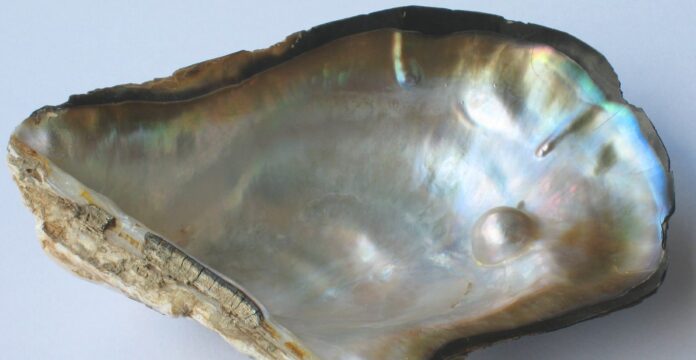
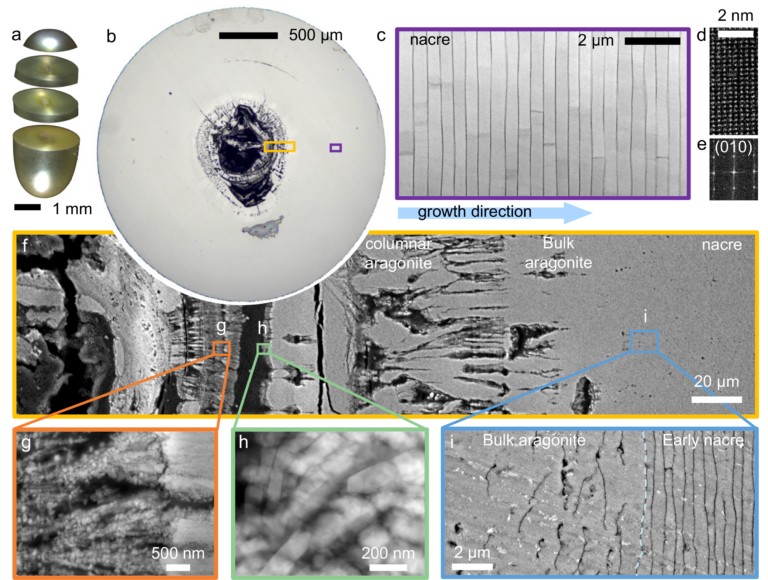
In research that could inform future high-performance nanomaterials, a University of Michigan-led team has uncovered for the first time how mollusks build ultradurable structures with a level of symmetry that outstrips everything else in the natural world, with the exception of individual atoms.

“We humans, with all our access to technology, can’t make something with a nanoscale architecture as intricate as a pearl,” said Robert Hovden, University of Michigan assistant professor of materials science and engineering and an author on the paper. “So we can learn a lot by studying how pearls go from disordered nothingness to this remarkably symmetrical structure.”

The study found that a pearl’s symmetry becomes more and more precise as it builds, answering centuries-old questions about how the disorder at its center becomes a sort of perfection.

Layers of nacre, the iridescent and extremely durable organic-inorganic composite that also makes up the shells of oysters and other mollusks, build on a shard of aragonite that surrounds an organic center.

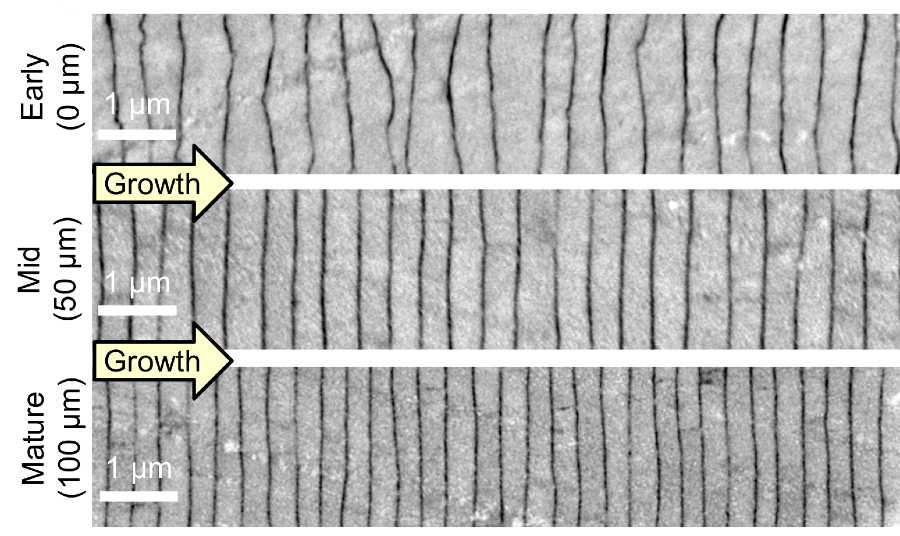
The layers, which make up more than 90% of a pearl’s volume, become progressively thinner and more closely matched as they build outward from the center.

CHECK OUT: The Incredible Mathematics of Snowflakes

Perhaps the most surprising finding is that mollusks maintain the symmetry of their pearls by adjusting the thickness of each layer of nacre. If one layer is thicker, the next tends to be thinner, and vice versa. The pearl pictured in the study contains 2,615 finely matched layers of nacre, deposited over 548 days.

University of Michigan

“These thin, smooth layers of nacre look a little like bed sheets, with organic matter in between,” Hovden said. “There’s interaction between each layer, and we hypothesize that that interaction is what enables the system to correct as it goes along.”

The team also uncovered details about how the interaction between layers works. A mathematical analysis of the pearl’s layers show that they follow a phenomenon known as “1/f noise,” where a series of events that seem to be random are connected, with each new event influenced by the one before it. 1/f noise has been shown to govern a wide variety of natural and human-made processes including seismic activity, economic markets, electricity, physics and even classical music.

RELATED: New Mathematical Formula Unveiled to Prevent AI From Making Unethical Decisions

“When you roll dice, for example, every roll is completely independent and disconnected from every other roll. But 1/f noise is different in that each event is linked,” Hovden said. “We can’t predict it, but we can see a structure in the chaos. And within that structure are complex mechanisms that enable a pearl’s thousands of layers of nacre to coalesce toward order and precision.”

Electron microscopy shows how a pearl’s layers of nacre become more precise as they build outward from the pearl’s center/University of Michigan

The team found that pearls lack true long-range order—the kind of carefully planned symmetry that keeps the hundreds of layers in brick buildings consistent. Instead, pearls exhibit medium-range order, maintaining symmetry for around 20 layers at a time. This is enough to maintain consistency and durability over the thousands of layers that make up a pearl.

The team gathered their observations by studying Akoya “keshi” pearls, produced by the Pinctada imbricata fucata oyster near the Eastern shoreline of Australia.

They selected these particular pearls, which measure around 50 millimeters in diameter, because they form naturally, as opposed to bead-cultured pearls, which have an artificial center. Each pearl was cut with a diamond wire saw into sections measuring three to five millimeters in diameter, then polished and examined under an electron microscope.

MORE: The Mind-Blowing Mathematics of Sunflowers 

Hovden says the study’s findings, published in Proceedings of the National Academy of Sciences, could help inform next-generation materials with precisely layered nanoscale architecture.

“When we build something like a brick building, we can build in periodicity through careful planning and measuring and templating,” he said. “Mollusks can achieve similar results on the nanoscale by using a different strategy. So we have a lot to learn from them, and that knowledge could help us make stronger, lighter materials in the future.”

Source: University of Michigan

SHAPE Those News Feeds Towards the Good, Share This Pearl of a Story…
World’s Most Premature Baby Defies 1% Survival Odds to Break Guinness Record

This article has been reprinted with permission from Guinness World Records

Guinness World Records

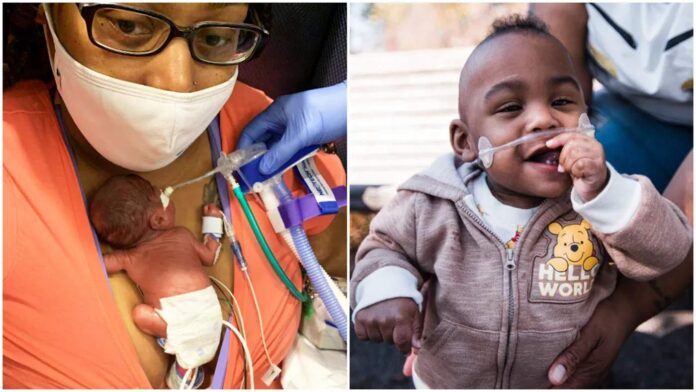
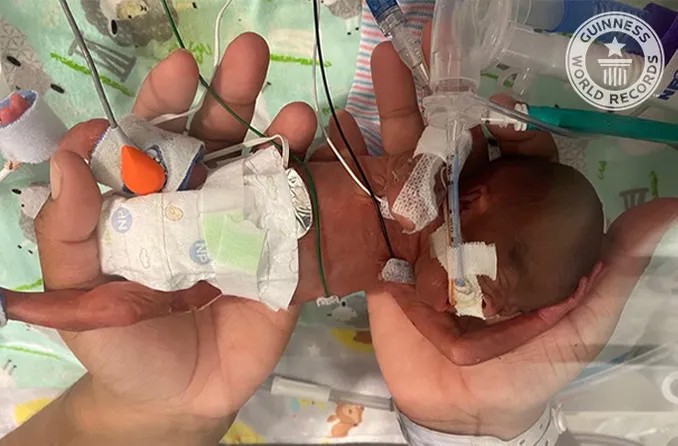
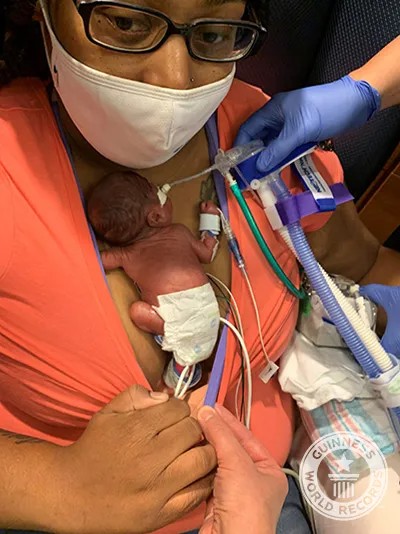
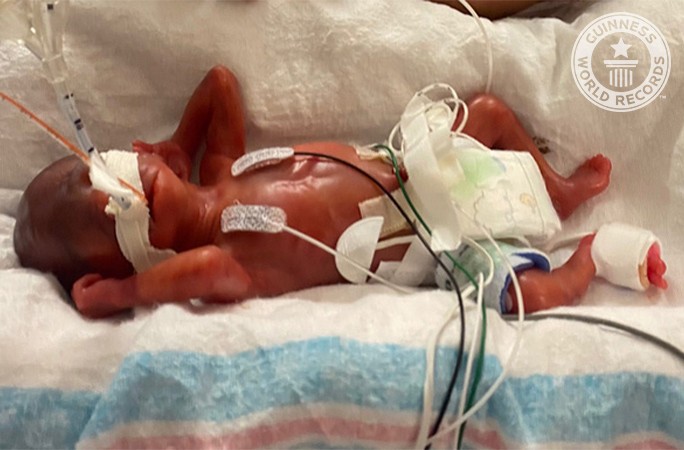
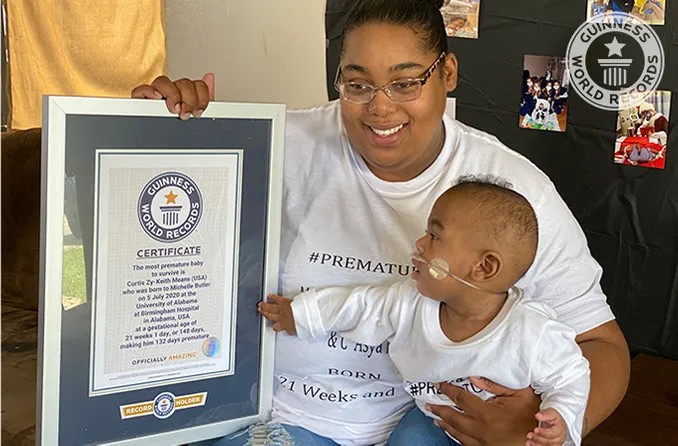
Born in July 2020, exactly one month after the previous world’s most premature baby, Curtis Zy-Keith Means from Alabama, USA, would go on to make history.

Initially, Michelle “Chelly” Butler’s pregnancy seemed to be progressing well and on track to go to full term. But on 4 July 2020, she had to be rushed into hospital for emergency surgery.

She was quickly transferred from her local hospital to the University of Alabama at Birmingham (UAB), which is heralded for having one of the leading neonatology and paediatric departments in the country.

Thanks to the quick response of the experienced medical team at the Regional Neonatal Intensive Care Unit (RNICU), following his mother’s wishes, Curtis was delivered at a gestational age of 21 weeks 1 day (148 days) at around 1 p.m. on 5 July.

His original due date had been 11 November. A full-term pregnancy is typically 40 weeks, or 280 days, making Curtis 132 days—almost 19 weeks—premature.

Guinness World Records

As a newborn, Curtis weighed only 420 g (14.8 oz), which is about the same as a soccer ball.

RELATED: Babies Mixed Up in Hospital, But Then Families Decide to Raise Them Together and They’re All Best Friends Now

“The medical staff told me that they don’t normally keep babies at that age,” Chelly told Guinness World Records in an exclusive interview. “It was very stressful.”

To everyone’s amazement, Curtis responded extraordinarily well to treatment and, as the days and weeks went on, he grew stronger and stronger.

That said, there were many challenges along the way and he required around-the-clock care for many months.

This incredible story of joy and beating the odds is tempered with heartache because Curtis was one of twins.

Also delivered at 21 weeks 1 day, his sister—C’Asya Means—was less developed and did not respond to the treatment in the way her brother did. Tragically, she passed away just a day after birth.

Guinness World Records

For the vast majority of preterm babies born this early on, the chances of a long-term future are vanishingly slim. This is what makes Curtis’ recovery all the more exceptional.

Dr Brian Sims, the neonatologist on duty who oversaw the twins’ delivery and who was greatly involved with Curtis’ subsequent treatment, told us, “The numbers say that babies at this age will not survive. Mom’s question to me was: ‘Can we give my babies a chance?'”

LOOK: First Neonatal Wearable Could Provide Real-time Detection of Jaundice and Vital Signs

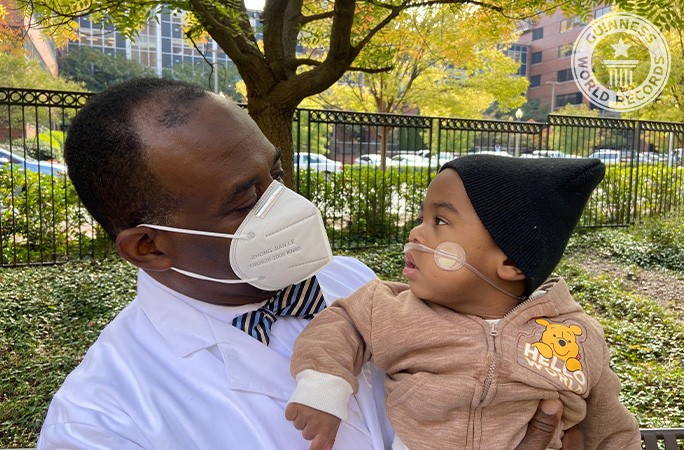
After 275 days (about nine months) of being looked after by a huge team at the RNICU and the wider Women and Infants Center, it was determined that Curtis was fit enough to go home on 6 April 2021.

His discharge from the hospital was only made possible with a tailored course of medication and special equipment such as bottled oxygen and a feeding tube, but it was nevertheless a major milestone on his extraordinary journey.

Guinness World Records

Curtis, or “Poodie” as his family also call him, celebrated his first birthday on 5 July 2021. At this point he qualified as the most premature baby to survive.

He has three siblings, the eldest of which love to help out with day-to-day care such as bathtime, getting dressed and feeding.

MORE: Lullabies Can Actually Improve the Health of Premature Babies in Hospital –And Their Family’s Health Too

“He’s very active. I’m tired already!” Chelly told us with a grin when asked about her son’s energy levels.

“I’m very proud of him because where he came from and where he at now, I can tell the difference.

READ: Research Shows Babies Are Relaxed By Lullabies Even in Foreign Languages: The Frère Jacques Response

“Having this record is a blessing that he has accomplished and I’m thankful that [Guinness World Records] accepted him.”

Guinness World Records

Now in November—which is aptly Prematurity Awareness Month—Curtis is about to see in what would have been his first birthday (11 November) had he gone to full term.

Of course, setting records was the last thing on the mind of his mother and the doctors at the time of his delivery.

At that point, it was all about getting through those extremely challenging first minutes, hours and days.

CHECK OUT:  ‘Mind-blowing’ Surgery in Mothers’ Wombs Spared Dozens of Babies From Spina Bifida Paralysis

“He showed initially that he responded to oxygen, his heart rate went up, his numbers went up…” Dr Sims informed us.

“He was giving us a lot of positive feedback that… he wanted to survive.”

From the very beginning, Dr Sims was astounded by Curtis’ resilience. “I’ve been doing this almost 20 years… but I’ve never seen a baby this young be as strong as he was… There was something special about Curtis.”

(WATCH the video for this story below.)

SHARE This Story of Defying the Odds With Friends…

13-Year-old Boy Granted a “Make-A-Wish” and Uses It to Feed the Homeless Every Month for a Year

Abraham Olagbegi family photo Make a Wish YouTube
Abraham Olagbegi; family photo/Make-a-Wish;YouTube

When life hands you a miracle, you can bask in its glow—or you can pay it forward.

Abraham Olagbegi was 12 years old when he and his family learned that without a bone marrow transplant, the rare blood disease he’d been born with might prove fatal.

Fast forward one year, one successful transplant, and an intense schedule of chemotherapy later, and Abraham is out of the hospital and his prognosis is promising—but that’s not the only good news.

Over the course of his illness, Abraham learned he’d qualified as a recipient for Make-A-Wish, a charitable organization whose purpose is to make the dreams of seriously ill children come true one wish at a time. Rather than something for himself, Abraham chose to show thanks for his good fortune by passing it along to others.

On their way home from one of his many doctor’s appointments, the Mississippi teen shared his decision with his mom, Miriam. The wish Abraham asked for was to feed the homeless in his area one day a month for an entire year.

While she couldn’t have been more proud of Abraham, Miriam did wonder if perhaps he wouldn’t rather have something for himself—like a PlayStation—but really, she wasn’t surprised by her son’s selflessness. Prior to his diagnosis, Abraham and his family regularly volunteered in their community handing out hot meals to the homeless.

MORE: Boy Raises $700,000 For Hospice By Camping Out For 500 Nights After Dying Man Gives Him a Tent

“It was always a good thing to do, and that’s what I grew up doing that,” Abraham told WLBT-News 3. “So, I go back to my roots to do what I was taught to do.”

Make-a-Wish

“When he so easily gives to others at a time where everybody should really be supporting him, you just have to say, that’s a remarkable young man,” Linda Sermons, an assistant with Make-A-Wish Mississippi said in an interview with WAPT-News 16.

On the third Thursday of each month, Make-A-Wish’s Mississippi chapter has committed to helping Abraham coordinate with local organizations and businesses to feed up to 80 homeless people in Jackson’s Poindexter Park. As of October, Abraham has helmed two successful “Abraham’s Table” events, distributing the donated goods to folks in need.

“When the homeless people get the plate, some of them would come back and sing to us and thank us,” Abraham told CBS News. “It just really feels good, it warms our hearts—and my parents always taught us that it’s a blessing to be a blessing.”

“We were excited,” Sermons told WLBT News 3 during the first event in September. “This is our first philanthropic wish in our 20-plus years of the chapter in the state. [It’s] a huge milestone for us, but also this is the first meal that Abraham is able to serve.”

RELATED: Remarkable 10-Year-old Inspires the World to Donate Half a Million Books For Kids: ‘A Catalyst’ For Kindness

While a dozen days of giving is admirable, when the year is up, Abraham plans to keep his mission going. “We’re very excited to be able to continue on this endeavor. It’s just so rewarding,” Miriam told CBS. “If I was out there on the streets, homeless, I would want somebody at some point to think of me and to do something special for me, so, that’s what I try to instill in my kids.”

Abraham still receives weekly checkups to monitor his condition, but he has faith in his future. “I am a person of hope,” he told WLBT. And as the type of person who not only has hope but gives it as well, he’s a true inspiration.

(WATCH the CBS video for this story below. Editor’s Note: Viewers outside the US can view this video on the CBS website, here)

CURE Those News Feeds of Negative News—Share This Story of Kindness…