












All News - Page 436 of 1716 - Good News Network
Home Blog Page 436

A Town Near Rome is Selling Old Homes for $1, a Trend Across Italy in Many Beautiful Villages

Maenza Comune
Courtesy of the Maenza Comune

If you’re the mayor of a rustic 800 year-old town with just 1,000 people, how can you stop the town from fading away as young people move to the major cities? How about you sell all the empty properties for one euro?

44 towns in Italy are currently listed under the €1.00 House Project, which serves the triple-purpose of saving old abandoned real estate from condemnation, repopulating historic towns with dwindling populations, and allowing young people a super-easy entrance into the real estate market for the purposes of investment or starting a family.

These towns are the kinds of places that we Americans could never believe could be abandoned, and that delight us with their antiquity.

The €1.00 House Project allows mayors of small towns to put their empty properties up for sale for just one euro. Housing agreements are for three years typically, and struck with a deposit of €5,000 euro from the buyer to ensure the property will be restored.

A detailed plan of the restoration, be it for the purpose of a restaurant, a B&B, or a normal home, must be agreed upon, and at least semi-permanent residence is encouraged, reports CNN, who took a look a Maenza in Lazio.

Here are some other towns looking for fresh oxygen.

Pignone – La Spezia – Liguria

Pignone/Davide Papalini, CC license

The beautiful town of Pignone, or “feather,” is located in the La Spezia Province of southeast Liguria, near the Cinque Terre National Park, made famous by Rick Steves.

“Ancient is the history of Pignone that dates back to some finds in the Bronze Age,” writes the listing on the €1.00 House Project website. “The village is without walls but the compactness of the houses, leaning against each other, forms a defensive barrier along the canal that crosses it. To enter the village you have to cross a characteristic Romanesque bridge in the form of a “donkey’s back” built around 1500.”

CHECK OUT: These Beautiful Italian Towns Will Pay You to Move There if You Work Remotely

As part of the Valley of Vara, Pignone is the sight of corn, legume, and potato cultivation, the former of which is very important as it goes towards the production of polenta, a regional staple. Every year at the end of summer, a farmer’s festival is held in town attended by hundreds of people to showcase the local products.

Sambuca – Agrigento – Sicily

Sambuca/Mboesch, CC license

A hilly town about 900 feet above sea level, Sambuca is inhabited by around 6,000 people and has the honor of being included in the club of the most beautiful villages in Italy.

Founded by Arabs around 1,000 CE, the city center still carries many of the architectural motifs of the Islamic travelers. It was one of the first towns to offer old houses for €1.00, and it’s famous for sheep cheese, focaccia, and is part of the National Association of Wine Cities.

RELATED: Island Paradise Created for Digital Nomads is a Village With Free Wifi and Workspace

There’s regular theater, hiking on the nearby mountain, and a short drive to the beach. Literally what’s not to love?

Oyace – Aosta – Valle D’Aosta

Oyace/ Patafisiki, CC license

Located in one of the lesser-known regions of Italy, Oyace is a tiny little mountain hamlet that offers perspective home buyers a totally different kind of Italy.

“The mayor Stefania Clos is eager to repopulate her mountain village, where 200 people currently reside,” reads the listing on the website. “From Roman times, the town of Oyace has its main economic resource in the breeding of livestock and [is] an excellent producer of Fontina.”

MORE: Top Cities For Digital Nomads Looking to Work While Traveling the World

A hearth and stove in Oyace gives the strong-legged homeowner access to the highest massifs in Europe, for trekking, stargazing, camping, skiing, and more.

Romana – Sassasri – Sardinia
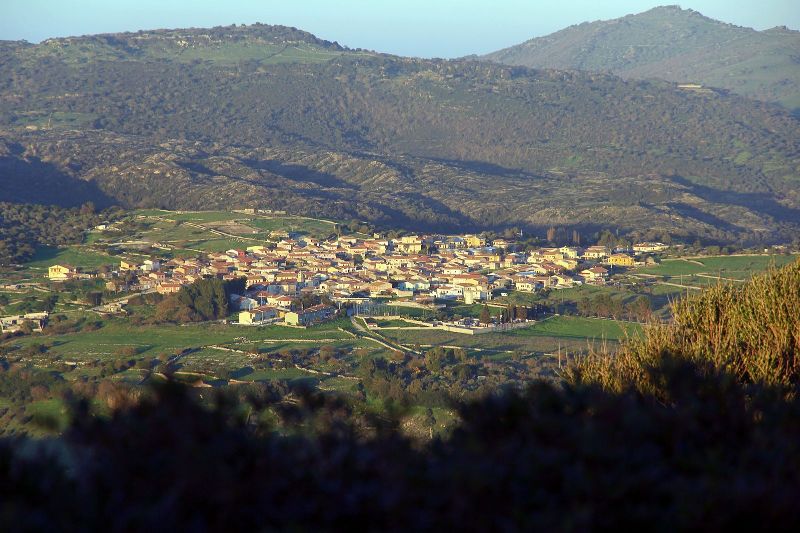
Romana/Gianni Careddu, CC license

Surrounded by karst rock landscapes and evidence of prehistoric civilizations, Romana is not your average island town. Instead a house in Romana, with its muraled streets and walls will make one feel part of a very old way of life.

Numerous nearby churches lie carved into the walls of cliffs or established in caves, while the agropastoral life which dominated this elevated volcanic plain means that amazing local meat and cheese is available for cheap.

“For those who love nature and immersion in ancient history, Sardinia and the municipality of Romana are the right place to plan your dream 1 Euro House Project,” writes the website. “We must not forget that you are only a 45-minute drive away from the most beautiful sea in Sardinia.”

BUILD Up the Idea of New Opportunities in Chums’ Feeds…
“I’m a believer in belief. Faith is something that works—it causes people to do things, it has results. It’s an intangible, indefinable, very real thing.” – Tommy Lee Jones (turns 75 today)

Quote of the Day: “I’m a believer in belief. Faith is something that works—it causes people to do things, it has results. It’s an intangible, indefinable, very real thing.” – Tommy Lee Jones (turns 75 today)

Photo: by Jay Mullings

With a new inspirational quote every day, atop the perfect photo—collected and archived on our Quotes page—why not bookmark GNN.org for a daily uplift?

Locals Are ‘Interrupting Violence’ in Minneapolis – One Lawn Chair at a Time

21 Days of Peace/Facebook 

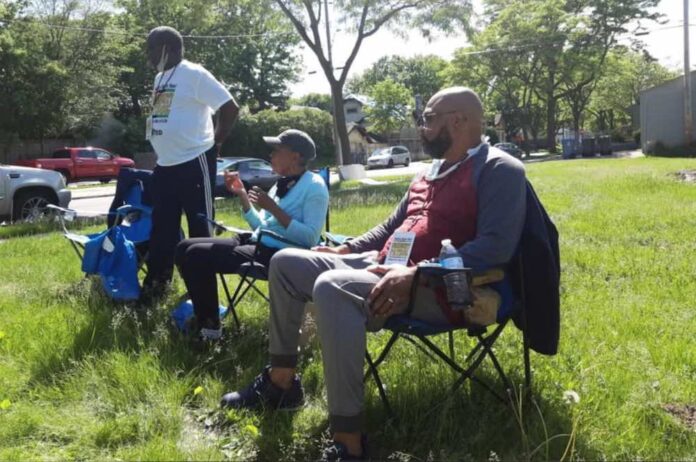
As city officials wrangle under the pressure to reduce urban violence and deal with demands from police unions, homeowners’ associations, and gun lobbyists, residents in some of the most violent neighborhoods in the country have opted instead to pull up a chair, and have a sit down.

One such movement has been the 21 Days of Peace event in Minneapolis, a place where, even before the death of George Floyd, sometimes saw 11 homicides a month.

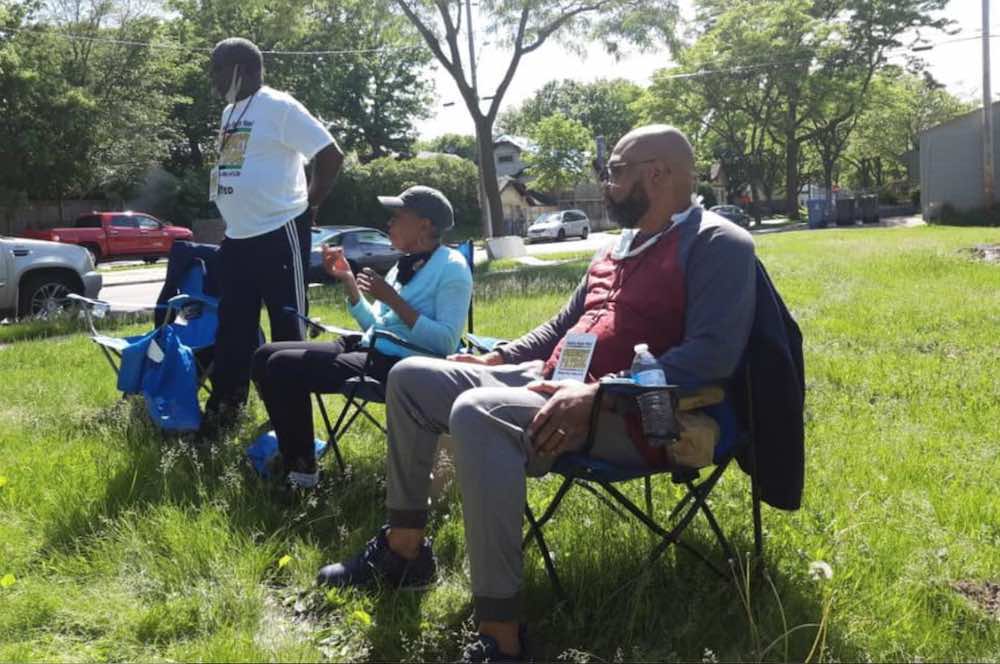
Here, community and church congregation members are simply seating themselves in lawn chairs on street corners in the most dangerous neighborhoods, and acting as “violence interrupters”—and police statistics show it’s working.

Compared to last summer, in June 2021 homicide numbers took a dive during the 21 Days of Peace, and continued to stay low in the following months, along with incidents of rape and aggravated assault.

“Our group asked the Minneapolis Police Department to identify the most dangerous spots in our neighborhood, the 4th Precinct, and then we went there, pulled out our chairs and sat down,” write Louis King and Jerry McAfee, in an op-ed in the Washington Post.

King is president and chief executive of Summit Academy OIC in Minneapolis, and McAfee is pastor of the city’s New Salem Missionary Baptist Church, but both are part of this new wave of violence interrupters.

“Too many leaders are responding by adopting a Nixonian ‘tough on crime’ stance—which usually translates into over-policing and under-supporting these communities,” they wrote. “The people sitting on these corners in their chairs are members of the community. We know our young people, and they know us.”

MORE: Judge Gave Drug Dealer a Second Chance. 16 Years Later He Swears Him In As a Lawyer

Similar movements of violence interruption have broken out with success in Nashville, where the groups Gideon’s Army and West Nashville Dream Center are working through community outreach to rebuild trust and using successful de-escalation to decrease crime by 40%, while arrests plummeted.

AP reports that in the areas where the Dream Center operates, crime has fallen 40%, giving a totally new perspective to police departments that for years had adopted tough-on-crime policies.

“We thought that was going to make it safer, and what we ended up doing was breaking down trust in those communities,” said police Lt. Jason Picanzo, who works with West Nashville Dream Center. Now, he says, it is the community that has made these neighborhoods safer.

Back in Minneapolis, King and McAfee believe that the moral bastion of the Black Church gives them a unique advantage over the police forces. They site similar examples in Baltimore where church groups are doing more for underserved communities, and at the same time reducing violence.

“We draw on the power of congregation—of family, of friends, and of community to try to interrupt the violence. And our faith gives us the courage to put ourselves in harm’s way,” they wrote.

LOOK: Study of Surveillance Cameras Proves That Strangers Will Almost Always Intervene to Help

It’s a strong gesture to unfold and lawn chair and simply sit where many people fear even to drive. Violence of any kind, whether it involves us or not, is a difficult situation to risk being caught up in, but desperate times also call on our ‘better angels’—and these Minnesotans are stretching their wings.

21 Days of Peace/Facebook 

“We’re not declaring victory, by any means. But as elected officials look for answers to end the violence, they would be wise to pull up a chair and take a look at what’s working.”

MORE: Buddha Statue Brings Tranquility to Oakland Neighborhood

BRING Peace to Inner City News Feeds By Sharing the Great News…

Abandoned Airport Turned into Sensory Experience Park Providing Green Refuge in Crowded Taiwan City

Humidifiers within the park, Mosbach Paysagistes
phase-shifts-park-mosbach-paysagistes-landscape-architecture-taiwan released
Mosbach Paysagistes

An abandoned airport in Taiwan has been chosen as the stage for an exciting project in landscape architecture, blending green spaces with sensory experiences to create a refuge in one of the island’s biggest and most crowded cities.

The Phase Shift Park in Taichung will include 200 different plant species, and 10,000 trees to shade residents from humidity, but the real spectacle will be 12 urban landscape installations, corresponding with the philosopher Rudolf Steiner’s ‘Principle of the 12 Senses’.

Taichung’s air isn’t actually that bad, as most neighborhoods are labeled as “good” on the World Air Quality Index, however sitting just beneath of the Tropic of Cancer, and warmed by the Kuro-Shio, one of the largest marine currents on Earth, the hot, humid, and sticky air can be stifling in the summertime, holding water vapor and toxic particulates from car exhaust down near the ground.

The trees were chosen to offer maximum shade, and are built alongside winding lanes going from north to south, and through unique installations that play on Steiner’s senses of speech, taste, hearing, equilibrium, thinking, vision, movement, ego, touch, warmth, smell, and life.

Passing through the park, there’s a lake designed specifically to create lifelike echoes, and a field of flowers cultivated specifically to envelope it with an intoxicating curtain of perfumes.

MORE: Stunning Train Station Being Built in Mexico Uses Mayan Design to Bring Sea Air in and Keep Rain Out

Designed by French architecture firm Mosbach Paysagistes, the topography was carefully designed to maximize water permeation during the wet monsoon season. Underneath the soil lies complex flood control and irrigation measures that will ideally allow the rains to refuel the trees year-round.

The sound of dragonfly wings shoo mosquitoes away, Mosbach Paysagistes

The concept art and preliminary images show a futuristic landscape rather than a natural oasis.

Humidifiers within the park, Mosbach Paysagistes

It will do as much to bring tourists to the city as offer shelter, fresh air, and a play space for local residents.

RELATED: How One Developer is Turning Farm Storage into Soaring Yet Affordable Apartments

Steiner believed that the world was essentially an indivisible entity, and that it’s our consciousness which divides it into split realms of sensory experience.

Solar panels power air-purifying technology within the park, Mosbach Paysagistes

It’s a fascinating guide with which to experience something like a park, and one which speaks to the breadth of our potential to connect with nature even in somewhere as dense as the urban center of Taichung.

GREEN Up Those Social Networks and Share the Good News…

Astronaut Brings Ashes and Photos of 9/11 Victim to Space to Fulfill His Lifelong Dream of Orbiting For NASA

NASA

At age 6, Chad Keller already knew he wanted to be an astronaut, but his vision wasn’t sharp enough to pass the military requirements to become a fighter pilot.

Instead, never losing sight of his dream, Keller pursued a degree in aerospace engineering, hoping to someday make it into space.

On September 11, 2001 the 29-year-old U.S. Department of Defense and National Reconnaissance Office satellite propulsion specialist was on his way home to California after attending a series of launch meetings at the Pentagon.

At 9:37 a.m., the plane he was on—American Airlines Flight 77—crashed into the Pentagon.

Keller’s life ended that day, but thanks to the efforts of NASA astronaut Chris Cassidy, close to 20 years on, his space mission dreams were finally made a reality.

A former Navy SEAL platoon commander, Cassidy spent two tours in the Middle East in the aftermath of 9/11. He began training to become an astronaut in 2004 at the end of his second deployment.

Cassidy’s NASA career highlights include crewing aboard the Endeavor shuttle in 2009, two tours on the International Space station, and 10 spacewalks.

NASA

According to Cassidy, NASA allows astronauts to bring a selection of small personal keepsakes—such as photos, patches, or pins—along with them on their missions. For his first two space outings, Cassidy concentrated on mementos from his family but for his final mission in 2020, he wanted to share the unique and meaningful opportunity with someone who’d truly appreciate it.

After reading about Chad Keller’s lifelong passion for space travel at New York City’s National September 11 Memorial & Museum, Cassidy knew he’d found a kindred spirit.

Cassidy reached out to Keller’s father, Richard, with a proposition: He was heading into space soon and wondered if Chad would like to tag along. Richard’s answer was a resounding, “Yes!”

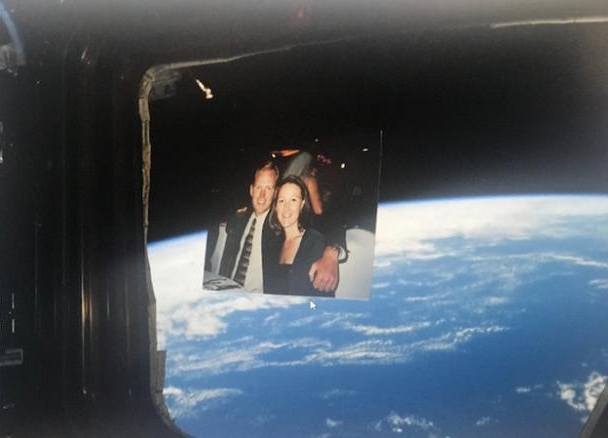
On April 2020, when Cassidy and the rest of his crew lifted off, pins from Chad’s days at Boeing and the University of Colorado, a program from his memorial service, a snapshot of Chad and his wife Lisa, and some of his ashes went with him.

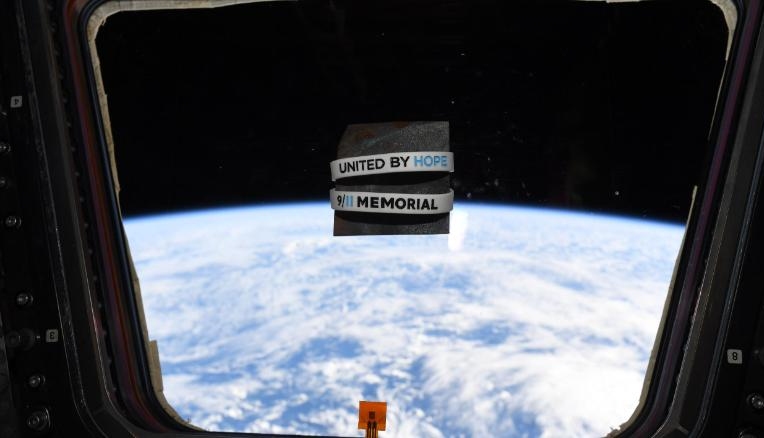
To round out the collection, Cassidy also brought commemorative items from the 9/11 Museum.

NASA

Over the course of the mission, with a stunning backdrop of the Earth behind them, Cassidy photographed each item from his inventory in the space station’s observatory cupola.

NASA

Along with documenting moments in history, he also sent out messages of hope to the people on the planet below.

MORE: She Came to the US to Study With Only $300 in Her Pocket — Now She’s a NASA Director For the Mars Rover

“With each item that I pull out, I always pause for a second to think a little bit about the story to that particular item,” Cassidy told CNN. “It’s kind of special to think about the story and the path, the journey of that object from the hands that it was in to my hands to this window.”

In the 20 years since Chad Keller’s passing, his family had a mission of their own—to scatter his ashes at the places that held the greatest meaning to him. Thanks to Cassidy, they were finally able to send them to the one place he’d always most wanted to go—space.

Now retired from NASA, Cassidy is currently overseeing the construction of the National Medal of Honor Museum and Medal of Honor Leadership Institute in Arlington, Texas, and the National Medal of Honor Monument in Washington, D.C.

While Cassidy and the Kellers have yet to meet in person, the bond they forged in bringing Chad’s dream to life is a testament to the resilience of the human spirit in the face of tragedy; one told from a perspective that’s both humbling and hopeful.

RELATED: She Survived Cancer at 10, Now She Will Be the Youngest Person to Be Launched Into Space

“The world would be a better place if every human being got five minutes to look out that window of the space station,” Cassidy told CNN. “It made me more appreciative for everything that Earth offers to us. Friendships, connections, and shared experiences are all that much more meaningful to me now.”

And that is a take-away that’s universal.

“The Cosmos is all that is or ever was or ever will be,” Carl Sagan wrote. If we can simply remember that we’re part of something larger than ourselves, then whether we’re earthbound or breaking the bonds of gravity, in the here and now or part of what’s come before, all of us are sailing among the stars.

ROCKET This Inspiring Story Into Friends’ Feeds…
Cows are Being Potty-Trained to Save the Planet – Animal Loving Researchers are Moo-ved by the Results

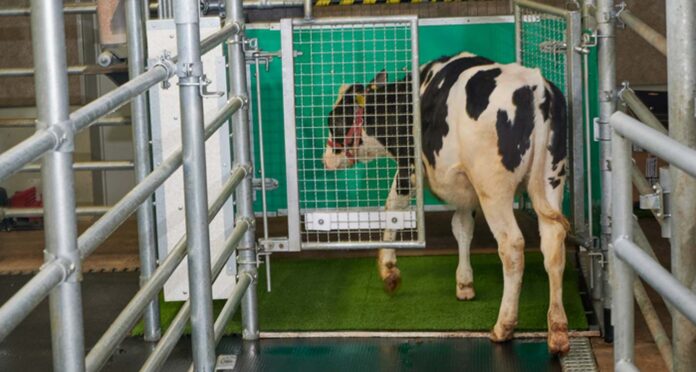
FBN
FBN

On a farm where cows freely relieve themselves as they graze, the accumulation and spread of waste often contaminates local soil and waterways. This can be controlled by confining the cows in barns, but in these close quarters their urine and feces combine to create ammonia, an indirect greenhouse gas. In an article published on September 13 in the journal Current Biology, researchers show that cows can be potty-trained, enabling waste to be collected and treated, thereby cleaning up the barn, reducing air pollution, and creating more open, animal-friendly farms.

“It’s usually assumed that cattle are not capable of controlling defecation or urination,” says co-author Jan Langbein, an animal psychologist at the Research Institute for Farm Animal Biology (FBN) in Germany, but he and his team questioned this thinking. “Cattle, like many other animals or farm animals are quite clever and they can learn a lot. Why shouldn’t they be able to learn how to use a toilet?”

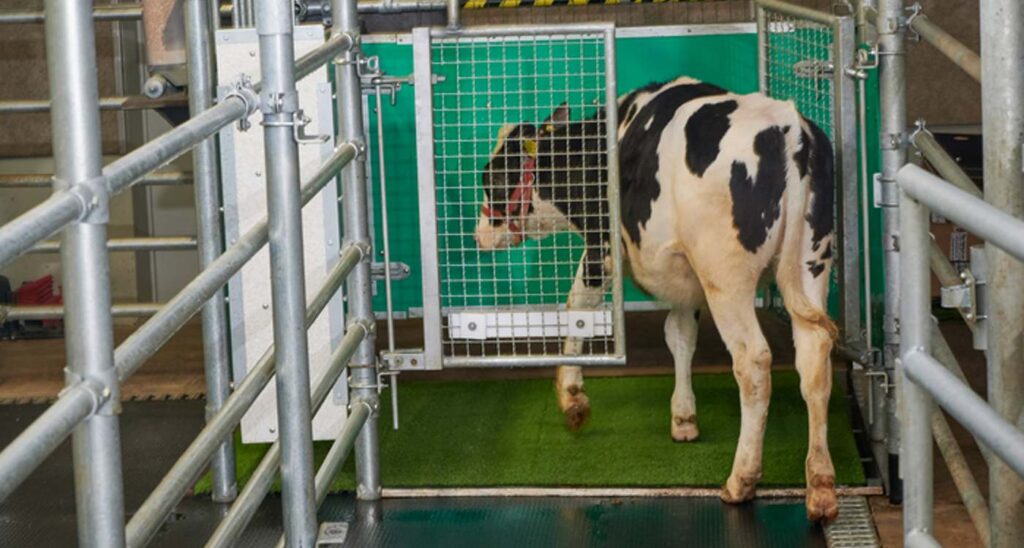
To potty-train the calves, a process they dubbed MooLoo training, the research team with scientists from FBN, FLI (Germany) and the University of Auckland (New Zealand) worked backward. They started off by rewarding the calves when they urinated in the latrine, and then they allowed the calves to approach the latrines from outside when they needed to urinate.

The ammonia produced in cow waste doesn’t directly contribute to climate change, but when it is leached into the soil, microbes convert it into nitrous oxide, the third-most important greenhouse gas after methane and carbon dioxide. Agriculture is the largest source of ammonia emissions, with livestock farming making up over half of that contribution.

MORE: Australian Scientists Create Seaweed Supplement for Cows that Reduces Methane Emissions by 80%

“You have to try to include the animals in the process and train the animals to follow what they should learn,” says Langbein. “We guessed it should be possible to train the animals, but to what extent we didn’t know.”

To encourage latrine use, the researchers wanted the calves to associate urination outside the latrine with an unpleasant experience. “As a punishment we first used in-ear headphones and we played a very nasty sound whenever they urinated outside,” says Langbein. “We thought this would punish the animals—not too aversively—but they didn’t care. Ultimately, a splash of water worked well as a gentle deterrent.”

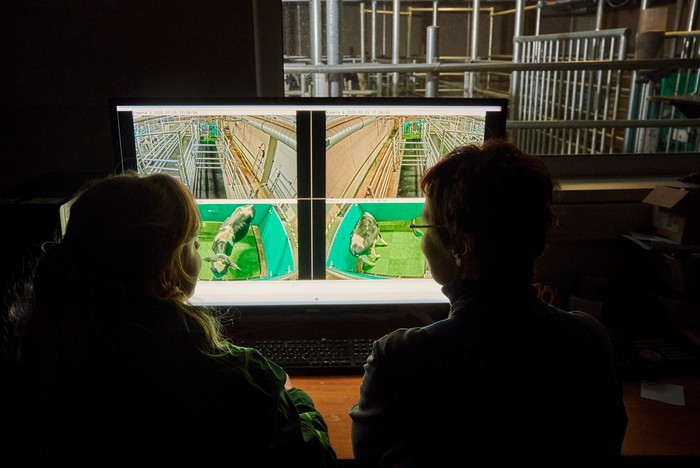
FBN

Over the course of a few weeks, the research team successfully trained 11 out of the 16 calves in the experiment—which has been published in Current Biology.

Remarkably, the calves showed a level of performance comparable to that of children and superior to that of very young children.

CHECK OUT: Topping Soil With Rock Dust Could Suck Billions of Tons of CO2 From the Air and Increase Crop Nutrients–Study

Langbein is optimistic that with more training that this success rate can be further improved.

“After ten, fifteen, twenty years of researching with cattle, we know that animals have a personality, and they handle different things in a different way. They are not all the same.”

Now that the researchers know how to potty-train cows, they want to transfer their results into real cattle housing and to outdoor systems. Langbein hopes that “in a few years all cows will go to a toilet,” he says.

Source: Cell Press

MOOve Good News Further—Share This Research…

This Asteroid is a $10,000-Quadrillion Lump of Iron and a Potential Opportunity to Study an Exposed Planetary Core

Artist’s concept/Maxar_ASU_P.Rubin_NASA_JPL-Caltech

Out between Mars and Jupiter in the solar system’s asteroid belt, there’s a lump of iron and nickel called 16 Psyche that has a value of $10,000 quadrillion: that’s 70,000-times more than the entire world economy.

With measurements of its density paired with its 140 mile-diameter, recent telescopic surveys with different spectrums of UV light have confirmed the asteroid to be around 90% iron, adding the last value in the equation to give 16 Psyche its whopping price tag.

Sitting 230 million miles from Earth, it offers a much different kind of value to scientists, namely to study one of the largest entirely-metal objects in the solar system, one which scientists believe could be a protoplanet that was disrupted during natural formation.

It’s now the subject of a 2022 NASA mission that will send an orbiter on a 3.5 year-mission to study a new type of world made of metal.

The orbiter will try to determine whether it’s simply a mass of iron and nickel, or indeed a planet’s core, as well as its age, and whether it can contain lighter elements found in Earth’s high-pressure core.

“We’ve seen meteorites that are mostly metal, but Psyche could be unique in that it might be an asteroid that is totally made of iron and nickel,” said Dr. Tracy Becker, an expert on 16 Psyche from the Southwest Research Institute.

CHECK OUT: Astronomers Spot Light From Behind a Black Hole for the First Time – Proving Einstein Right Again

“Earth has a metal core, a mantle and crust. It’s possible that as a Psyche protoplanet was forming, it was struck by another object in our solar system and lost its mantle and crust.”

Becker, who published a UV-light observation study of the asteroid last year, considers it a chance “to understand what really makes up a planet and to potentially see the inside of a planet.”

RELATED: Massive Balloon the Size of a Soccer Stadium to Launch Telescope to Edge of Space to Study How Stars Form

But how is it that so much heavy metal should congregate outside of a festival ground in Germany?

Vice President of Arizona State University’s interplanetary initiative, Lindy Elkins-Tanton, spoke with NASA on a radio program in early July to explain.

“It’s not the Death Star,” says Elkins-Tanton. “It turns out that we know this from meteorites; that the most primitive material, the building blocks of planets [are] little bits of metal and little bits of rock all mixed together.”

“And when you put all that material clumped together into a [a tiny planet] they’re heated up by early short lived radioisotopes,” she said.

This melting forces the metal down, as it’s denser than the comparatively porous rocky material present on the asteroid or planet, forming the metallic core.

MORE: Cold Planets Exist Throughout Our Galaxy, Even in the Galactic Bulge, Scientists Discover

“We’ve got a big clump of metal, our core, inside of the Earth,” said Elkins-Tanton. “There’s one inside of the Moon, amazingly, inside of Mars, inside of Mercury, inside of Venus, but we never, ever get to see them. So Psyche gives us, we think, a way to see the core of a planetesimal, maybe the only way humans will ever see a core if our ideas are right.”

This would be the true price tag of 16 Psyche, because even if we could somehow bring back all that iron, the supply-demand laws of economics would bring the price of iron down to levels in the hundredths of a cent.

SHARE This Far Out Story With More Astronomy Fans…

“Ah, but a man’s reach should exceed his grasp, or what’s a heaven for?” – Robert Browning

Quote of the Day: “Ah, but a man’s reach should exceed his grasp, or what’s a heaven for?” – Robert Browning (Men and Women and Other Poems)

Photo: by Steve Halama

With a new inspirational quote every day, atop the perfect photo—collected and archived on our Quotes page—why not bookmark GNN.org for a daily uplift?

From Cheeky Bears to Goofy Gophers, See the Fun Finalists of the Comedy Wildlife Photo Awards

This young Kodiak brown bear in the sand before lying down and appearing to smile for the camera. Wenona Suydam_Comedy Wildlife Photography Awards 2021

The finalists for the 2021 Comedy Wildlife Photo Awards have just been unveiled.

The chosen images, from smiling seal pups to secretive racoons, are quite wonderful.

The competition received more than 7,000 entries from across the globe all in all.

Now the judges are to choose between the final 42.

We’d love to hear which photos gave you the biggest grin, so do let us know in the comments.

MORE: It’s ‘The Oscars’ for iPhone Photography: See the Stunning Winners for 2021

Here’s a selection of GNN favorites, taken everywhere from India to the UK.

1. A young Kodiak brown bear found the perfect spot to chill in the sand.

Wenona Suydam, Comedy Wildlife Photography Awards 2021

2. This boxfish was caught pouting perfectly off the Curaçao coast.

hilipp Stahr, Comedy Wildlife Photography Awards 2021

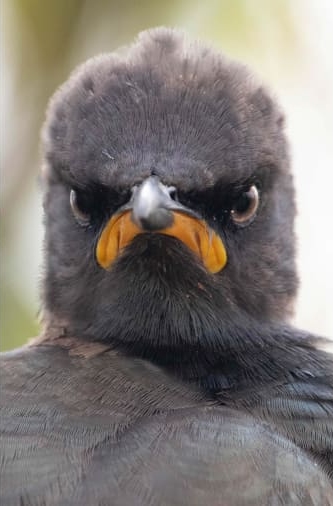
3. You wouldn’t want to mess with this pied starling in Rietvlei, South Africa.

Andrew Mayes, Comedy Wildlife Photography Awards 2021

4. These goofy gophers in Hungary seem to be having a thrilling time.

Roland Kranitz, Comedy Wildlife Photography Awards 2021

5. This dragonfly looks quite happy to see the camera.

Axel Bocker, Comedy Wildlife Photography Awards 2021

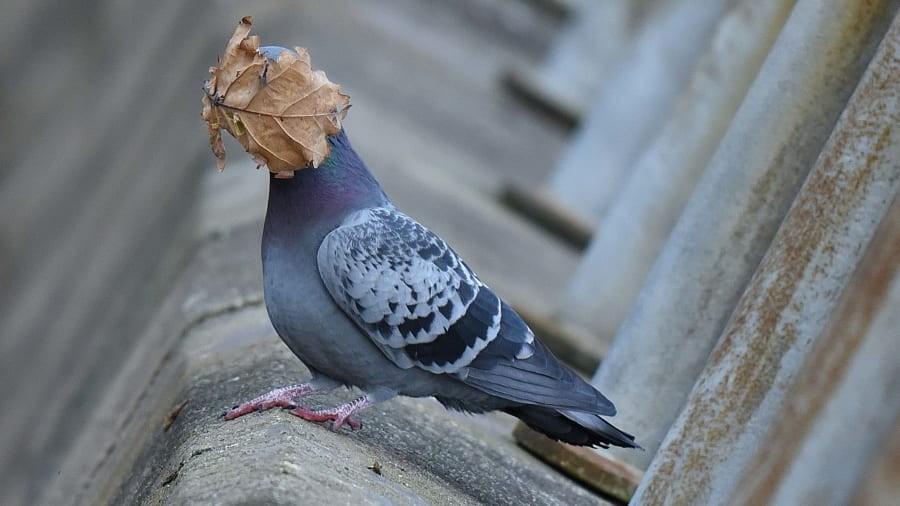
6. This pigeon was caught out by a leaf on Oban in Scotland.

John Spiers, Comedy Wildlife Photography Awards 2021

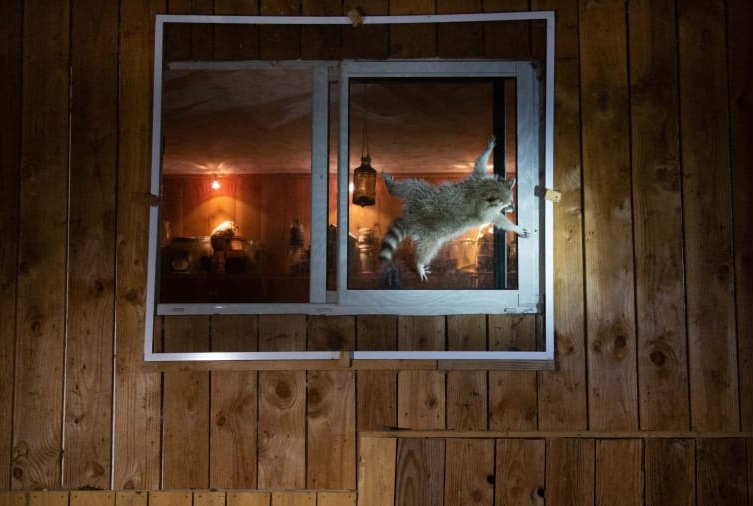
7. This racoon is giving its best starfish impression.

Nicolas de Vaulx, Comedy Wildlife Photography Awards 2021

8. What do you think these raccoon cubs in Kassel, Germany are thinking?

Jan Piecha, Comedy Wildlife Photography Awards 2021

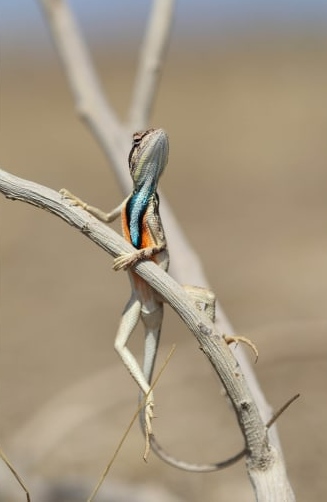
9. A fan-throated lizard in India was spotted perching haughtily.

Aditya Kshirasagar, Comedy Wildlife Photography Awards 2021

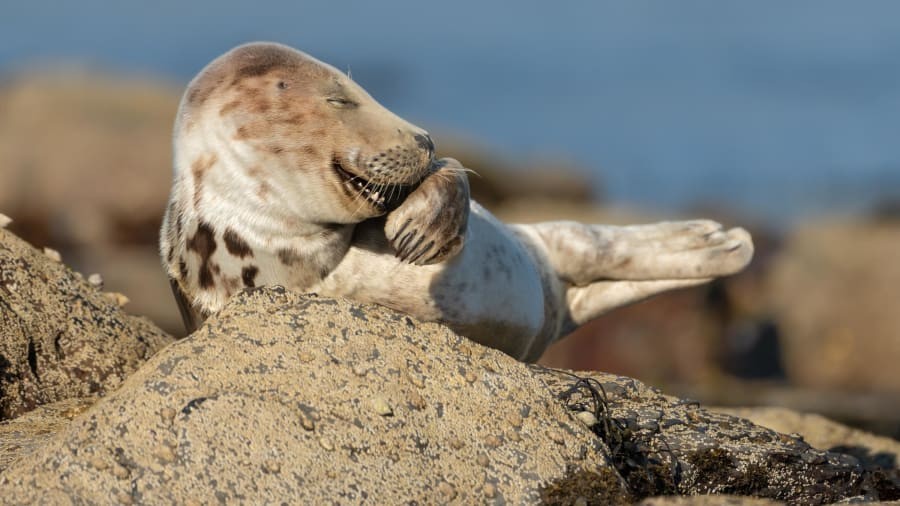
10. A gray seal pup in Ravenscar, England seems to be having a giggle of a time.

Martina Novotna, Comedy Wildlife Photography Awards 2021

PASS On That Big Smile to Buddies, and Share This Piece…

The Greatest Technological Hurdle to Making Nuclear Fusion Possible – the Magnet – Just Powered Up

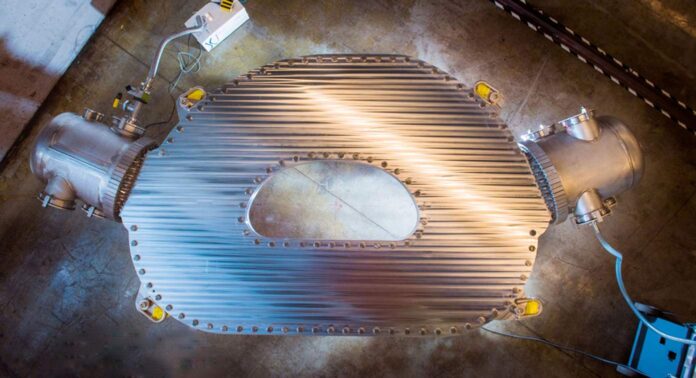
MIT_Fusion-Magnets-01-PRESS_0 Credits-Credit- Gretchen Ertl, CFS_MIT-PSFC, 2021 press release
Gretchen Ertl, MIT

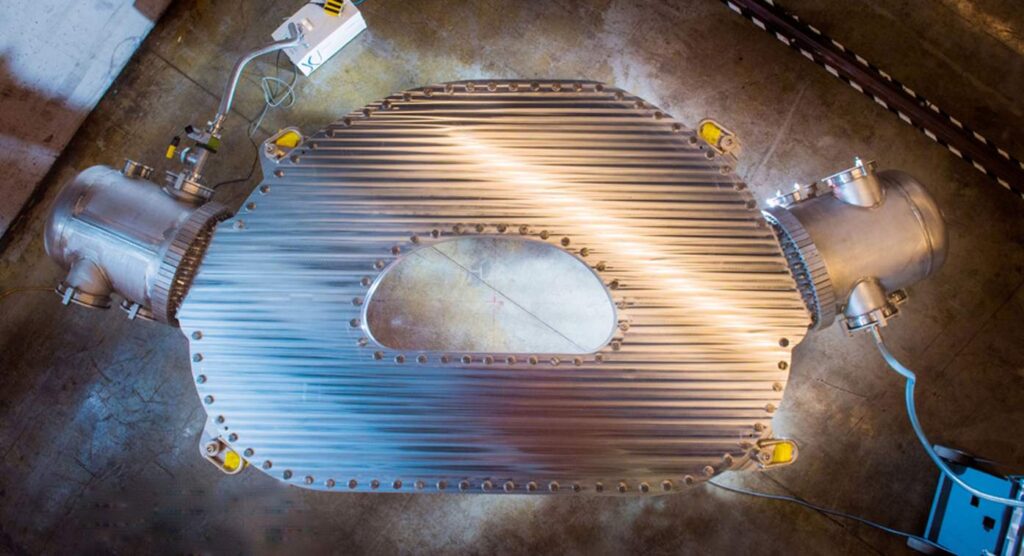
The superconducting magnets which could be a key to powering an efficient nuclear fusion reactor were just turned on in the labs of an American firm.

Commonwealth Fusion Systems (CFS_ generated an electrical field of 20 tesla—the most powerful ever created on Earth; 50,000 times-stronger than the magnetosphere—for five hours.

This gave scientists at CFS the confidence to say that a working prototype of their fusion reactor could be ready by 2025; a huge leap forward from a government paper that reckoned on a 2040 arrival time.

Nuclear fusion is perhaps the world’s most dynamic engineering challenge, and the magnets are one method by which humans may be able to make it work. With them, CFS believe the reactors of the future could be small, and dramatically cheaper than the billions Western governments are currently spending on fusion projects.

The goal of any reactor is to create a plasma—the forth state of matter, which is essentially a superheated gas. The heavy isotopes inside a hydrogen atom, deuterium and tritium, are heated inside the reactor to hundreds of millions of degrees until they convert to helium. The energy they give off is converted to electricity.

If such a powerful machine can produce more electricity than it uses, unlimited clean energy can be achieved, which means it doesn’t matter if the sun is shining or the wind is blowing, it means coal, oil, and gas can all remain in the ground, that never again would a war be fought over oil resources, and that global climate change could be rapidly scaled back.

MORE: A Giant Fusion Reactor Hotter than the Sun to Provide Unlimited Clean Energy Without Waste Marks Milestone

In fact, the CFS research and development team boasts that their reactor will be able to turn a glass of water into the electricity usage of one human for their entire lifetime.

But…how

Superconducting magnets make achieving those extreme temperatures much easier. 18 of CFS’ magnets will be arranged like a big metal donut to create pressures in the fusion chamber, known as a tokamak, of up to two-times as much as at the deepest point in the ocean. This immense squeezing causes the immense heat needed for fusion to occur.

“Three years ago we announced a plan to build a 20-tesla magnet, which is what we will need for future fusion machines,” says Bob Mumgaard, CFO of CFS, in a story to the MIT university press.

“We now have a platform that is both scientifically very well-advanced, because of the decades of research on these machines, and also commercially very interesting. What it does is allow us to build devices faster, smaller, and at less cost.”

RELATED: World’s Biggest Liquid Air Battery – ‘The Climate Emission Killer’ – is Now Under Construction in England

The magnets are wrapped with 300 kilograms (660 pounds) of superconducting tape made from a barium copper oxide.

This tape has taken decades to develop, and when cooled to -253 °C, which used to take a refrigerator the size of a house, it removes all the natural barriers to superconductivity, and can easily handle nearly all of the 40,000 amps passing through the tokamak at any one time, and very efficiently.

All of this work, and the successful test, means that CFS can begin work on their SPARC, a sort of miniature version of a full-scale nuclear fusion plant. The facility to house the SPARC is already under construction.

(WATCH the MIT video about the magnet and how it works below.)

POWER UP the Good News—Share This Piece…

Huge Field is Planted With More Than 100,000 Sunflowers to Read the Word ‘Hope’ – LOOK

SWNS
SWNS

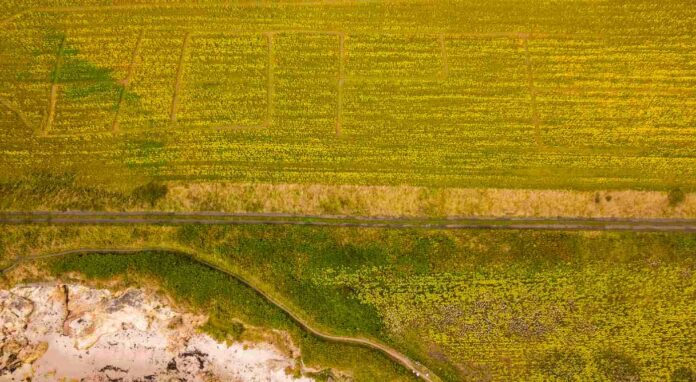
These stunning drone pictures show a huge field filled with more than 100,000 sunflowers—planted to read the word ‘hope’.

The breathtaking field at Ardross Farm in Scotland spans 1.5 hectares—the size of four football pitches—and recently came into bloom five months after it was planted.

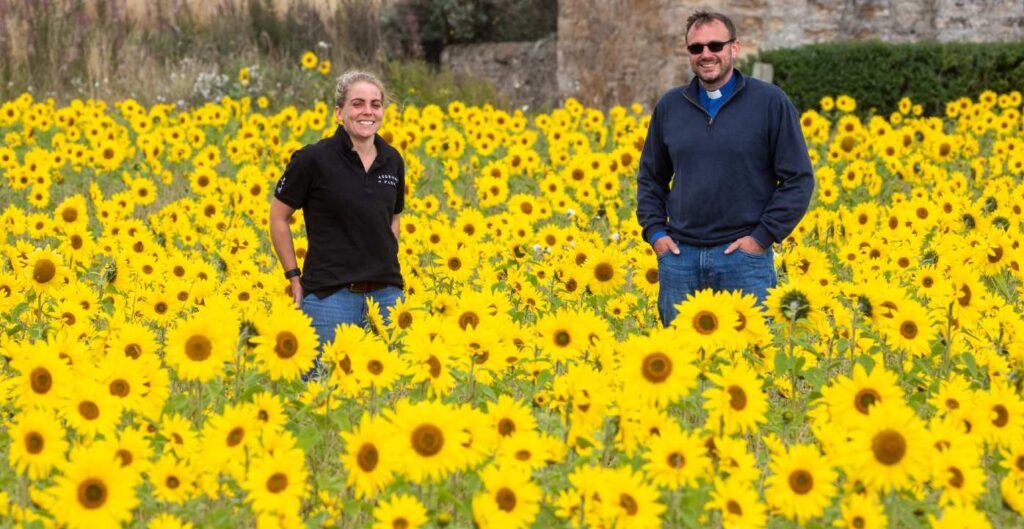
Reverend Douglas Creighton from East Neuk Trinity Church came up with the idea for a sunflower field in a bid to bring people joy during the pandemic.

He asked farmer Claire Pollock to help get it off the ground, and she agreed to planting more than 100,000 sunflowers at the start of May.

The pair hope the maze will bring joy to the local community, with 500 people walking through it when it opened last weekend.

It takes 20 minutes to complete the huge maze, and £2,000 ($2,766) has already been raised for local charities.

SWNS

Reverend Creighton said of the project,  “It’s something bright and cheerful for everyone in the community—we sowed a bit of hope and optimism to show it’s not all doom and gloom.

MORE: Artist Makes the Most Amazing Animal Sculptures From Trash – LOOK

“I even hosted a live planting during lockdown where people joined in on Zoom to watch.

SWNS

Farmer Claire said, “We have always grown wildflowers to help the birds and spread a bit of cheer,” saying it’s been great to do something that would make people smile and get local people involved.

RELATED: This Simple 10-Question Word Test Reveals How Creative You Are

“It’s a maze of hope in a field of hope and we want it to be something fun and different.”

BRING This Sunny Art into Your Friends Lives; Share This Article…

Mexico Led the Way For 7 US States to Cooperate in Sharing Water Amid the 22-Year Drought

Kijolb, CC license
Kjkolb, CC license

The story of the Southwest suffering under the second-driest period in 1,200 years is being turned into another one, of cooperation and dedication to preserving as much water as possible.

Lake Mead, the site of the Hoover Dam, and the chief water resource of a sprawling series of desert communities and metropolises, is falling.

But revealed in its falling to the lowest levels ever recorded is not only the “bathtub ring” of calcium buildups seen here, but decades of cooperative drought contingency planning and water conservation infrastructure implemented not only through the seven states that rely on the Colorado River Basin and Lake Mead, but Mexico too.

It was in 2007 that the seven states of California, Arizona, Nevada, New Mexico, Utah, Colorado, and Wyoming, as well as many tribes, and Mexico all agreed on a framework for use of the mighty Colorado River and Lake Mead, but in the face of the current 22-year drought, which led the federal government last Monday to declare the first ever shortage of water from Lake Mead, something more had to be done.

After years of tough negotiations, each state agreed to share the burden of future potential water shortages, pursuant to the 2019 Drought Contingency Plan. As Lake Mead is expected to drop below a depth of 1,075 feet next year, the first round of water cuts will come into effect in the states of Nevada and Arizona, and for Mexico. At 1,045 feet, it would be California’s turn to take a cut.

“We haven’t had litigation. If you look at any other river basin, they have litigation going like crazy,” Patricia Aaron, spokeswoman for the U.S. Bureau of Reclamation, told the Christian Science Monitor. “Everybody is in this together. It gives me a lot of hope and a lot of confidence. There are a lot of dedicated, smart people working on this problem.”

RELATED: Endangered Trout May Soon Return to Los Angeles

Mexico for their part led the way in a bilateral contingency plan in 2017. Under current agreements Mexico is delivered at minimum 1.5 million acre feet of the total volume of the Colorado River ever year.

“We knew it was the correct thing to do,” CSM also heard from Roberto Salmon, former- Mexican commissioner of the International Boundary and Water Commission. “We are all trying to save the [Colorado River] basin. The livelihood of millions of people depends on it, including Mexico.”

Not waiting around

Several states have already invested millions into ensuring that when a water shortage in the Colorado or Lake Mead did arrive, they wouldn’t be caught out.

CHECK OUT: Harvesting Air Conditioning Condensation Could Replace Cities’ Potable Water Use

In Nevada for example, Las Vegas recently described a seven-billion gallon reduction in water use from Lake Mead as having “little impact.” This is a result of sophisticated water recycling that sends spent water back to Lake Mead, as well as the use of ornamental desert foliage for public parks and real estate.

In California, which draws about three times as much water as Mexico, water authorities built up reserves during the wet years of 2017 and 2019, while implementing additional storm drain and wastewater recovery methods to boost supply. The 19 million people living in Southern California now use 40% less water than they did in 1990, CSM reports.

Arizona has also “banked” water in Lake Mead, pre-delivering a 50% store of its yearly share through savings accumulated over a decade of diversifying its supply, for example by drawing on the Salt and Verde Rivers. Phoenix, which has exploded in size over the past two decades, has also reduced its water consumption by 30%.

MORE: Researchers Use Wastewater to Generate Electricity – While Cleaning It Up

South of the border, Mexico’s agreement to be first on the chopping block for cuts from Lake Mead was penned alongside promises from California, Nevada, and Arizona to invest $31.5 million in conservation and infrastructure projects in the Mexicali Valley which will save 200,000 acre feet of water per year.

This U.S. citizen is accustomed to feeling there was no plan in the aftermath of natural disasters or dangerous natural phenomena, but in the deserts of the Southwest that is certainly not the case, and the inter-cooperation between state, tribe, city, and nation is something to behold.

PREVENT a Good News Drought by Sharing This Story…

Moths’ Rippled Forewings Are Actually a Sophisticated Defense System Against Echo Location

Bernard Spragg/CC license

The folds and ripples at the front of a moth’s forewings are a sophisticated defense system against the echolocation of hunting bats in the darkness, a new study reveals.

Moths have developed several forms of sonic decoys to throw hunting bats off their scent, but a thorough examination done at the University of Bristol has shown the decoys developed on the forewing tips have a unique success rate.

Bats create ultrasonic clicks with their mouth that bounce off of objects in the dark and return to be picked up by their hyperdeveloped auditory organs, giving them a picture of the world around them.

Luna moths have been known to develop long gown-like hindwings with screwed-up tips. It’s been shown that these hindwings are very strong reflectors of sound, such that it’s actually more likely a bat would end up attacking the decoy rather than the vulnerable body of the moth.

Some large silkmoths though, like the Atlas moth or the ailanthus silkmoth have rippled and folded tips on their forewings, which have been revealed as the superior method of defense.

“We noticed that on many of the larger silkmoths, the forewing tips are actually folded and rippled, in a way not to dissimilar to the hindwing decoys we looked at earlier,” said Thomas Neil, a bioacoustics researcher at School for Biological Sciences, Bristol U.

MORE: Smithsonian Says These Moths Are So Gorgeous, They Put Butterflies to Shame

He and his colleague Marc Holdereid bombarded the wings of an Atlas moth with different frequencies of ultrasonic sound from over 10,000 directions to test how well they might reflect the clicks from a hungry bat.

The results, published in Current Biology, were that forewing folds and ripples bounced off incoming sound, releasing it back into the environment in 180 degrees around the wing.

This made them more reflective of sound, and therefore a better sonic defense, even than the hindwing decoys used by the Luna moths.

The folds reflected the sound by sending it into a series of ninety-degree angles within the fold, which the ripples acted as hemispheric reflectors of sound like a bowl or an amphitheater.

Another benefit of the decoys being in the forewings is that they are rigid in structure, and so any bat attacks would likely knock a moth off its flight path, rather than damage the wing.

POPULAR: Man Single-handedly Repopulated Butterfly Species in a City Using His Backyard

Dr Thomas Neil and Professor Marc Holderied

Another fascinating detail of this fascinating evolutionary defense system is that it may have evolved independently more than four times across the entire Saturniidae genus, and 36 of the 72 species Neil and Holdereid examined had either folded or rippled forewings, yet never together with a wing decoy.

RELATED: Farms in UK Saved This Beautiful Duke of Burgundy Butterfly From Extinction

Perhaps because two decoys, being present at each end of the moth, might clue the bat into the fact that something of interest might be in the middle.

It’s a perfect example of nature’s ability to pair graceful form with life-saving function. Watch the video below…

FLUTTER a Little Fascination Into Those News Feeds, Share This…

“What we do see depends mainly on what we look for. In the same field the farmer will notice the crop, the geologists the fossils, botanists the flowers, artists the color.” – John Lubbock

Quote of the Day: “What we do see depends mainly on what we look for. In the same field the farmer will notice the crop, the geologists the fossils, botanists the flowers, artists the color.” – John Lubbock

Photo: by Dave Beasley

With a new inspirational quote every day, atop the perfect photo—collected and archived on our Quotes page—why not bookmark GNN.org for a daily uplift?


What Are the Top Sounds Most Likely to Trigger Your Happy Memories? Poll Names Top 40

Avery Nielsenwebb

Sound is what sets off the best memories—ahead of sight and even smell, according to a new poll.

Birds singing and waves crashing on the shore were among the top sounds most likely to trigger people’s fond memories.

A study of 2,000 adults, aged 50 and over, found four in 10 people experience sounds that prompt nostalgic thoughts a couple of times a week.

For some, rain on the windows, sheep bleating, and a train going down the tracks are enough to make them smile.

Other respondents said these sounds transport them to another place in another time, including trees blowing in the wind, a crackling fireplace, and church bells.

Gordon Harrison, chief audiologist at Specsavers, which commissioned the survey, said, “Sound impacts most aspects of our lives, so it is no surprise that certain sounds trigger happy youthful memories.”

This is particularly true when it comes to sounds of the outdoors. These trigger memories of good times for 67 percent of adults. No wonder 78 percent of those polled said they tend to spend lots of time outside.

Joshua J. Cotten

And of the 94 percent who have access to their own outdoor space, they’ll spend an average of five hours in it every week – with 72 percent referring to it as their ‘happy place’.

The kettle whistling, the radio playing, and cats purring also featured in the top 40 positively-triggering sounds, according to the over 50s. More than three quarters said that as they grow older, they treasure their happy memories more.

RELATED: Americans Choose the Best Road Trip Tunes Of All Time — For Your Summer Playlist

However, more than half of respondents admitted their hearing has deteriorated with age, yet only 26 percent have had it checked by an audiologist.

A full 90% confessed they took their hearing for granted in their younger years, according to the survey, carried out through OnePoll. And 45% worry about their hearing getting worse, especially when being questioned about losing the ability to have some of these pleasurable memories triggered by the sounds around them.

TOP 40 MEMORY-TRIGGERING SOUNDS FOR THESE OVER 50s:

1. A specific song or piece of music
2. Waves crashing on the shore
3. Birdsong
4. A crackling fireplace
5. Walking on fresh snow
6. A waterfall
7. Cat purring
8. Trees blowing in the wind
9. Rain on the window pane
10. Rustling leaves
11. Church bells
12. Bees buzzing
13. A thunderstorm
14. Rain patter on leaves
15. Children playing outside
16. Lawns being mown
17. A fountain
18. The radio playing
19. Sheep baaing
20. Seagulls squawking
21. A train going over tracks
22. Cows mooing
23. A cork popping
24. Dinner being served up
25. Pouring a drink
26. Mail being delivered
27. Food cooking on the hob
28. Cicadas humming
29. Sports stadium/arena
30. The kettle boiling
31. An airplane flying overhead
32. A crowd cheering
33. Horses galloping
34. A beer bottle/tin being opened
35. Dog barking
36. Fish jumping out of water
37. Street entertainers
38. A toaster popping
39. A coffee grinder
40. A garden sprinkler

Do you have a different sound that puts you in your happy place?

CHECK OUT: Fresh Sheets or Great Books? These Are The Top 50 Simple Pleasures That Americans Love the Most

Indiana Boys Hop Off Their Bikes to Stand at Attention For Military Funeral Happening on Their Route

Jacqi Hornbach

Two Indiana boys riding their bikes past a funeral ceremony for a military veteran last week and immediately pulled over.

Jacqi Hornbach was in the Batesville neighborhood when the boys got off their bikes, dropped their backpacks and stood in solemn formation.

She was enjoying the nice weather outside when the funeral procession arrived at the cemetery across the street.

“These two young men were riding their bikes and saw the flag of the deceased military man. They immediately stopped riding, got off their bikes, and stood with respect as TAPS was being played,” she wrote on Facebook.

“I had to snap a pic as I was so proud of these two young men.”

POPULAR: 4-yo Learns Piano in Lockdown, Wins Elite Competition But Can’t Play Carnegie Hall as She’s Too Young for Vaccination

She told Fox news, “It was as if they didn’t even have to discuss it before doing it, it was so natural for them…without any prompting or knowledge of anyone watching. It was just so touching to see.”

Jacqi Hornbach

She debated whether or not to post the photo, but decided to: “With all the negative things going on, I thought this was needed.”

LOOK: Watch This 4-Year-old Jump Into Action When Air Fryer Catches Fire in Kitchen

“I’m sure the serviceman was in heaven smiling down on them.”

SALUTE These Kiddos by Sharing to Your Social Media Pages…

Hiker Reaches Top of Summit and Has the Most Beautiful Encounter With Mountain Goats

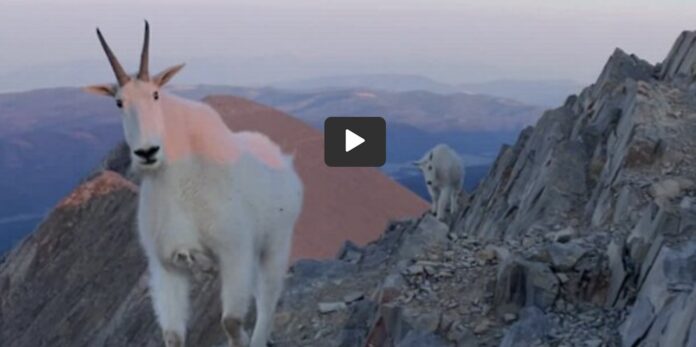
On September 1, a hiker in Bozeman, Montana, got the surprise of a lifetime when a wild beast and its baby walked around the bend.

“I had a close encounter with mountain goats on the summit of a peak in the Bridger Range.”

“I went for a sunset hike,” said the anonymous hiker, ”and they suddenly approached me on top.”

It was so quiet when the video was shot, you can hear every hoof step.

Breathtaking…

KICK This Amazing Moment to Friends on Social Media…

Need More Self Compassion? Researcher Suggests These 4 Simple Steps to Overcome Our ‘Negativity Bias’

When you look at yourself in the bathroom mirror, do you focus in on your favorite feature and give yourself a compliment? Do you think about how grateful you are to be alive, and fortunate to have a bathroom with hot and cold running water? Or do you focus on something you wish were different, and hear a critical inner voice?

If you tend to find fault and criticize yourself, know that you have plenty of company among your fellow humans. In fact, our tendency to focus attention on negative issues instead of positive ones is a shared characteristic we carry from our earliest evolutionary survival needs.

This ‘negativity bias,’ as science has labeled it, is our typical default orientation. Moving toward a more loving, appreciative, and grateful way of being—both towards ourselves and towards others—is something we are all capable of doing. But it does require awareness and repetition.

If we are ready to be kind to ourselves and willing to send that negative voice away on permanent vacation, how do we begin to build our capacity for self-compassion?

Kristin Neff, PhD, the world’s leading researcher of self-compassion, identifies three elements of self-compassion that offer a roadmap to strengthening our self-compassion skills.

Let’s investigate the three elements—mindfulness, self-kindness, and recognition of our common humanity—to create a self-compassion toolkit.

1. Start with mindful awareness

Circle back to the first mention of the bathroom mirror chat with yourself. We asked you to notice whether your positive or negative voice was more dominant. Noticing, paying attention, and being aware of how you are already treating yourself is really the first step. Mindfulness, which simply means paying attention to what is happening in the present moment, allows us to be aware of what our inner dialogue is doing.

It’s most helpful to approach this awareness gently, and without judgment. In other words, if you want to be gentler to yourself, you can’t get angry with yourself for being angry with yourself. Begin by simply naming what you are feeling and what your inner voice is saying to you. Use your actual name as you describe what you are doing, seeing, and feeling, “Laura is really upset with herself for looking so tired and for the bags under her eyes since she went to bed super late the last few nights.”

Then, instead of judging and blaming yourself, be curious about what you did and the motivation. Recognize that our actions generally arise from a place of wanting to feel safe and wanting to do the right thing. Name that positive motive, “I am upset with myself and the way I look because I want to get all my assignments complete on time.” Remind yourself that you are doing the best you can with what you’ve got. And keep your attention on the positive aspects of the situation.

RELATED: How to Deal With Your Biggest Critic – That Inner Voice That Attacks You Regarding Self-Improvement

2. Practice Kindness

For many people, once they tune in carefully to that inner voice, it can be jolting to notice how we regularly speak to ourselves. Recognizing that you speak to yourself in ways that you would never speak to a friend is the next step to deepening your self-compassion by ramping up our self-kindness.

One of the challenges of self-compassion is that compassion itself is a relational skill, i.e,. it’s easier to offer compassion to someone else. It’s hard to acknowledge our primary relationship with ourselves, and to view it through the lens of a loving relationship. Know that we all are worthy of love, we are all enough. With a little practice, showing loving kindness to yourself might first seem awkward, but will begin to come more easily. Soon the positive feeling you receives from self-kindness will provide its own sense of wellbeing and become self-reinforcing.

CHECK OUT: People are Making Self-Care a Priority After One of the Most Stressful Years Ever

At The Center for Compassionate Leadership, one of our favorite practices to strengthen your self-kindness is called “Note to a Dear Friend.” It’s a straightforward way to turn the kindness that you can naturally offer others toward yourself. When you are facing a challenge or hardship, write a note to a friend as if they were facing the same problem. Write down what is in your heart that you think would help comfort your friend. Then, take the note and replace your friend’s name in the salutation with your own. The full practice is available here on the Center’s website.

3. Recognize That You Aren’t Alone

A very natural response to our own suffering is to screen it off from friends and family so that they don’t see our troubles. We might feel ashamed, embarrassed, or just not perfect enough. We want others to see our wonderful, happy life.

It is very important to remember that no one is immune – we all meet suffering at some point, and some of us unfortunately suffer more than others, Everyone faces challenges and makes mistakes. Not one of us leads a picture perfect life! In this age of social media it is particularly difficult to grasp that we all have troubles. The social feeds of other people are the “highlight reels” of their lives, and our daily life is going to be very challenged to compare to that “highlight reel.”

When we recognize that suffering is a common human trait, a couple of valuable things happen. First, our suffering gets a little bit less lonely. I can acknowledge I am not the only person suffering, and that takes a weight off my shoulders, knowing I am not alone. Second, it becomes a little easier to open up to others, and say, “I’m hurting or I need help.” We don’t have to pretend that everything is great when it isn’t. It’s OK to take off the masks and let people know exactly how we are. In fact, being honest about our feelings is the best way to develop more closeness and intimacy, because we all understand these difficult moments happen!

MORE: 5 Growth Hacks To Help You Adapt And Thrive During Challenging Times

4. Keep practicing

Self-compassion is a skill that gets better and better the more you practice it. Like any new habit development, repetition is key for the brain to establish new neural connections. Like muscles in your physical body, training is important to strengthen and sharpen your skills.It also gets easier.

So start with small steps, and keep on moving forward. Be patient and celebrate every success, large or small. Every time you recognize how you treat yourself makes the next recognition smoother and easier. Each word of self-kindness you offer yourself reinforces how valuable it is to do. And every time you see your own suffering in the context of the suffering of the world builds deeper connections to others, which make healing and wellbeing easier. Taking up an intentional practice of self-compassion becomes a fulfilling, self-reinforcing path towards greater wholeness and happiness.

ALSO: The Science of Kindness: Biology Proves How We Are All Connected

Just imagine looking at yourself in that mirror and feeling the warmth of love toward yourself as you do for a partner, child, best friend, or pet. Try on some self-compassion skills, and see yourself in a whole new light.

Laura Berland and Evan Harrel founded the Center for Compassionate Leadership to catalyze a global movement and advocate for compassion—for ourselves, each other, and the greater whole, as a necessary and urgent remedy for these challenging times. The Center’s groundbreaking approach to supporting leaders unites evidence-based principles of modern leadership with the latest neuro-scientific research and the time-honored wisdom of contemplative practices.

HELP Someone Who Needs Compassion By Sharing This on Social Media…

“Going to see my grandparents was the highlight of my childhood…. I was doted upon, admired, entertained and overfed. I was never more content and happy.” – Carolyn Anthony (It’s Grandparents Day in U.S.)

Photo by Ekaterina Shakharova

Quote of the Day: “Going to see my grandparents was the highlight of my childhood summers…. I was doted upon, admired, entertained and overfed. I was never more content and happy.” – Carolyn Anthony (Today is Grandparents Day in the U.S.)

Photo: by Ekaterina Shakharova

With a new inspirational quote every day, atop the perfect photo—collected and archived on our Quotes page—why not bookmark GNN.org for a daily uplift?


This Week’s Inspiring Horoscopes From Rob Brezsny’s ‘Free Will Astrology’

Our partner Rob Brezsny provides his weekly wisdom to enlighten our thinking and motivate our mood. Rob’s Free Will Astrology, is a syndicated weekly column appearing in over a hundred publications. He is also the author of Pronoia Is the Antidote for Paranoia: How All of Creation Is Conspiring To Shower You with Blessings. (A free preview of the book is available here.)

Here is your weekly horoscope…

FREE WILL ASTROLOGY – Week beginning September 10, 2021
Copyright by Rob Brezsny, FreeWillAstrology.com

VIRGO (Aug. 23-Sept. 22):
Between 37 and 41 BCE, Virgo-born Caligula served as third Emperor of Rome. To do so, he had to disprove the prophecy of a renowned astrologer, Thrasyllus of Mendes. Years earlier, Thrasyllus had predicted that Caligula, despite being well-connected, “had no more chance of becoming emperor than of riding a horse across the Bay of Baiae”—a distance of two miles. Once in power, Caligula arranged to have a series of pontoon boats arrayed across the bay, enabling him to ride his favorite horse Incitatus from one shore to the other across the Bay of Baiae. I foresee the possibility of a comparable turn of events for you, Virgo. Is there a curse you want to undo? A false prophecy you’d like to cancel? Someone’s low expectation you would love to debunk? The coming weeks will be a favorable time.

LIBRA (Sept. 23-Oct. 22):
College student Amelia Hamrick studied the right panel of Hieronymus Bosch’s 15th-century painting The Garden of Earthly Delights. It depicts a hellish scene. Cities are on fire. Weird beasts devour sinful humans. There are demons and torture chambers. Hamrick did what no one in the history of art had ever done: She transcribed the musical score that the artist had written on a man’s naked hindquarters. Her work inspired a composer to create a recording entitled “500-Year-Old Butt Song from Hell.” In the coming weeks, I invite you to perform feats comparable to Hamrick: 1. Explore the past for useful, overlooked clues. 2. Find or create redemptive transformations out of stressful situations. 3. Have fun telling stories about your past misadventures.

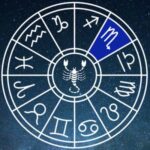
SCORPIO (Oct. 23-Nov. 21):
Born on one of the Galapagos Islands, Diego is a giant tortoise who has lived for over 100 years. He’s a member of a species that had dwindled to a population of 15 by 1977. That’s when he and his tortoise colleague, whose name is E5, became part of a breeding program with 12 female tortoises. E5 was reserved in his behavior, but Diego was a showboat who vocalized loudly as he enjoyed public mating rituals. Together the two males saved their species—producing over 2,000 offspring in subsequent years. According to my astrological analysis, you could be as metaphorically fertile as Diego and E5 in the coming months—even if you prefer to adopt an approach more akin to E5’s.

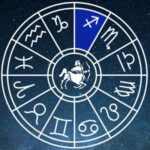
SAGITTARIUS (Nov. 22-Dec. 21):
“The meaning of my existence is that life has addressed a question to me,” wrote psychologist Carl Jung. “Or, conversely, I myself am a question that is addressed to the world, and I must communicate my answer, for otherwise, I am dependent upon the world’s answer.” These are superb meditations for you Sagittarians during the coming weeks. Between now and October 1, I invite you to keep a journal where you write about two subjects: 1. What is the main question that life asks you? 2. What is the main question that your life asks the world?

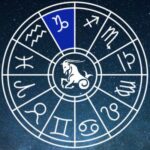
CAPRICORN (Dec. 22-Jan. 19):
North Korea’s Capricorn leader Kim Jong-un has an amazing résumé, if you believe the official state media that boasts he learned to drive at age three, was an accomplished sailor at nine, and became a skilled musician, artist, and scientist. Is it possible you have unexpressed powers like these, Capricorn? If so, the coming weeks will be a favorable time to identify them and start tapping into their potential. It’s time to develop your dormant talents.

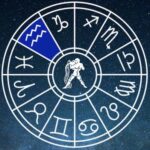
AQUARIUS (Jan. 20-Feb. 18):
Aquarian author Toni Morrison testified, “I think of beauty as an absolute necessity. I don’t think it’s a privilege or an indulgence. It’s almost like knowledge, which is to say, it’s what we were born for.” I urge you to adopt her perspective during the next four weeks, Aquarius. In my astrological opinion, a devoted quest for beauty will heal exactly what most needs to be healed in you. It will teach you everything you most need to know.

PISCES (Feb. 19-March 20):
Poet and translator Anne Carson periodically joins with her husband Robert Currie to teach a workshop called “EgoCircus.” It’s an ironic title, because the subject they teach is the art of collaboration. To develop skills as a collaborator, of course, people must lay aside at least some of their egos’ needs and demands. In accordance with current astrological potentials, I encourage you to stage your own version of EgoCircus in the coming weeks. The time is ripe for you to hone your creative togetherness and synergistic intimacy.

ARIES (March 21-April 19):
“We need to become more unreasonable but in an intelligent way,” says Aries politician Jerry Brown. Yes! I agree! And that’s especially true for you right now, Aries. To Brown’s advice, I will add this message from Aries fashion designer Vivienne Westwood: “Intelligence is composed mostly of imagination, insight—things that have nothing to do with reason.” Here’s one further suggestion to help you take maximum advantage of cosmic rhythms, courtesy of Aries historian Arnold J. Toynbee: “The supreme accomplishment is to blur the line between work and play.”

TAURUS (April 20-May 20):
“I have become whole and complete, like a thundering cloudburst in summer,” wrote Taurus poet Miklós Radnóti. I love that metaphor for fullness: not an immaculate icon of shiny, sterile perfection, but rather a primal, vigorous force of nature in all of its rumbling glory. I hope you like this symbol as much as I do, and I hope you use it to fuel your creative spirit in the coming weeks. PS: Keep in mind that many indigenous people welcome rainstorms as a source of fertility and growth.

GEMINI (May 21-June 20):
“Pandiculation” is a word that refers to when you stretch and yawn at the same time. According to my understanding of the astrological omens, you will benefit from doing a lot of pandiculations in the coming days. I also recommend gazing lazily out the window and looking at the sky a lot. Keep your shoes off as much as possible, get a massage or three, and let yourself sleep more than you customarily do. Did you know that sighing deeply is good for your lungs’ health? Here’s your homework: Dream up all the things you can do to relax and renew yourself. It’s prime time to indulge in generous acts of self-healing.

CANCER (June 21-July 22):
The ancient Roman author Pliny’s ten-volume Natural History, written in the first century, was a monumental encyclopedia of the natural world, unprecedented in its own time and for centuries afterward. It offered compilations of facts about astronomy, geography, zoology, botany, mineralogy, and many other subjects. There was one big problem with it, however. It contained a great deal of erroneous information. For example, Pliny described in detail many non-existent animals, including dragons, flying horses, and giant serpents that swallowed bulls and snatched birds out of the sky. My reason for telling you this is to inspire you to be extra discerning in the coming weeks. Be especially skeptical of authorities, experts, and other know-it-alls who are very confident despite being inaccurate or erroneous. It’s time for you to increase your trust in your own authority.

LEO (July 23-Aug. 22):
“There are those fortunate hours when the world consents to be made into a poem,” writes Leo poet Mark Doty. That’s great for a poet. But what about for everyone else? My variation on Doty’s comment is this: There are fortunate hours when the world consents to be made into a holy revelation or a lyrical breakthrough or a marvelous feeling that changes our lives forever. I expect events like those to come your way at least twice in the immediate future.

WANT MORE? Listen to Rob’s EXPANDED AUDIO HOROSCOPES, 4-5 minute meditations on the current state of your destiny — or subscribe to his unique daily text message service at: RealAstrology.com

(Zodiac images by Numerologysign.com, CC license)

SHARE The Wisdom With Friends Who Are Stars in Your Life on Social Media…