All News - Page 451 of 1716 - Good News Network
Home Blog Page 451

Chemists Find Breakthrough Treatment for Alzheimer’s and Parkinson’s That Protects Brain Cells From Amyloid Plaque

Bret Kavanaugh

Alzheimer’s and Parkinson’s are diseases of the brain in which gradual degeneration of neurons leads to loss of speech, memory, and thinking.

Existing remedies are aimed only at suppressing symptoms, but cannot stop the process of neurodegeneration itself.

Now Russian scientists have synthesized chemical compounds that can stop the degeneration of neurons in Alzheimer’s, Parkinson’s, and other severe brain pathologies.

New molecules of pyrrolyl- and indolylazine classes activate intracellular mechanisms to combat one of the main causes of “aged” brain diseases—an excess of so-called amyloid structures that accumulate in the human brain with age.

Experts from various institutes including Ural Federal University took part in the study, published in the European Journal of Medicinal Chemistry.

“Our compounds activate the synthesis of specific heat shock proteins and cause their accumulation in the cell,” said research co-author, professor of the Department of Organic and Biomolecular Chemistry at UrFU Irina Utepova.

CHECK OUT: TikTok Users Rallied to Design a Better Pill Bottle for People With Parkinson’s

“Proteins of this type make it possible to protect neuronal tissue from an excess of toxic amyloids and to protect cells from various types of stress, including proteotoxic stress characteristic of neurodegenerative diseases.”

Important advantages of compounds from the series of pyrrolyl- and indolylazine classes are a profitable synthesis technology and low toxicity.

RELATED: New Study Says Infrared Lasers Destroy Harmful Plaques in Alzheimer’s Brains

The obtained compounds were tested in cellular models of Alzheimer’s disease and secondary injuries after traumatic brain injury.

In both cases, the new substances demonstrated a significant therapeutic effect, increasing the survival of neuronal cells. The most effective compound has been tested in living tissues of rats with secondary injuries after traumatic brain injury.

MORE: Coffee is Now Linked to Reduced Risk of Many Ailments, Including Liver Disease, Parkinson’s, Melanoma, Even Suicide

According to scientists, the use of pyrrolylazine in rehabilitation therapy allowed the animals to avoid the appearance of movement disorders and degeneration of hippocampal neurons.

The research team—made up of experts from the Institute of Cytology of the Russian Academy of Sciences, the Institute of Organic Synthesis of the Ural Branch of the Russian Academy of Sciences, and the Ural Federal University took part in the study—has been continued to study the mechanism of action of new compounds and is preparing for their preclinical testing.

We’ll keep you updated on what happens next with this hopeful research.

Source: Ural Federal University

CURE Your Friends’ Feeds of Bad News—Share This Story on Social Media…

‘We heard a faint tapping’: Goose Finds Injured Mate at Wildlife Hospital and Won’t Budge From the Door

Cape Wildilfe Center

No one writes romance novels about geese, but maybe they should.

Unlike many of their fickle human counterparts, geese mate for life. So, when they honk, “ ’Til death do us part,” they mean it—which would explain why when a Canada goose named Arnold wound up in the hospital, his Mrs. marched up to the threshold demanding visitation rights.

The pair of wild geese are longtime residents at a pond close to the Cape Wildlife Center (CWC) in Barnstable, Massachusetts.

Though well-known to the facility’s crew, the avian inhabitants have generally declined human interaction, preferring to keep to their own company. When the crew noticed Arnold was limping and injured, however, they stepped in to intervene.

After a literal wild goose chase that eventually ended in his capture, an exam revealed the wounded gander had two open fractures on one of his feet, likely caused by an underwater predator. With the webbing and skin pulled away leaving the bones exposed, an operation to repair the damage was in order.

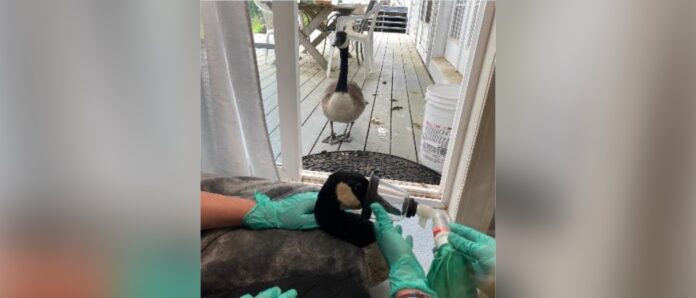
The following day, as they were prepping Arnold for surgery, staff members heard a faint, inexplicable tapping at their door.

“We turned to see that his mate had waddled up onto the porch and was attempting to break into our clinic,” Cape Wildlife Center posted to their Facebook page. “She had somehow located him and was agitated that she could not get inside.”

Once she’d tracked him down, Arnold’s stalwart missus stood watch throughout the entire procedure, refusing to budge from her vantage point by the doors.

MORE: Vet Successfully Sews One Stitch in Tiny Tree Frog Whose Lung Was Exposed, Loving ‘all Creatures Great and Small’

In post-op after the successful procedure, Arnold was placed in close proximity to his grateful spouse. The natural order was soon restored as she quickly settled in to attend to the needs of her still-wobbly hubby.

“His mate immediately calmed down and began to groom him through the door,” CWC wrote. “They both seemed much more at ease in each other’s presence.”

RELATED: Man Gives His Terminally-Ill Dog One Last Walk Up Their Beloved Mountain in a Wheelbarrow (PHOTOS)

Although it will take some weeks for Arnold to recuperate, he’s expected to make a full recovery. When he’s deemed sound, the staff will return him to the wild, and then he and his mate can get back to the business of living their honking happily ever after.

WADDLE This Sweet Story Over to Pals on Social Media…

$10 Million in Student Debt is Wiped Out for 2,500 South Carolina Students Using Stimulus Funds

With money received from the stimulus bills, South Carolina State University decided that it wasn’t such a big deal if some of the students there didn’t finish paying their student loans.

Last week, South Carolina’s only Historically Black College or University (HBCU) announced it would renounce their claim to around $9.8 million in incoming student loan repayments from the accounts of 2,500 continuing students after having received the difference from the federal government, offering vital relief to students trying to work them off in the hardships of the post-pandemic economy.

“We are committed to providing these students with a clear path forward so they can continue their college education and graduate without the burden of financial debt caused by circumstances beyond their control,” said acting SCSU President Alexander Conyers.

The accounts could be cleared after the university was able to access around $4 million from the Trump CARES Act, and another $5.8 from the American Rescue Plan, passed under Biden.

The cleared accounts overwhelmingly belonged to students with very high existing balances, or who had not registered for the next semester as a result of outstanding debt.

“This is a tremendous weight I won’t have to carry,” Romaun Myers, a junior at SCSU, told the university press. “I’m a first-generation college student, one of the only boys on my mom’s side of the family. I have to make it so I can provide for my family.”

Other students mentioned the news was “a really big blessing” and brought “tears to [the] eyes,” and that it would allow them to “realize their dreams.”

Freshman Leslie Young said in the press release that without the cancellation she would have had to sit out the next semester due to outstanding account balances.

MORE: University Cancels $700,000 in Debt for Graduates Hit By Pandemic

“I was in a deep depression because school means everything to me. Without it, I felt like I was giving up on my dreams.”

Well now the chase is back on Leslie, go get ’em!

SPREAD the Good News—Share This News Story With Friends…

9 Unique Ways to Use Rosemary – Backed by Mom and Science

Like many wild herbs, the number of uses for rosemary are nearly endless. A nutritional supplement, an herb, a cleaning agent, a pest repellent, and even in part of burial traditions, the spikey Mediterranean aromatic has been in use for at least 7,000 years.

For some, rosemary is a weed accessible in four or five different places within a 100 yard radius of the house. For others, it’s an aromatic that one must pay two to three dollars for at the grocery store.

Rosemary can be picked at anytime in the plant’s life, and pruning it actually increases its growth rate and vitality.

However you acquire your rosemary, you’ll be growing it on your windowsill by the end of this article, as the number of uses it has can eliminate a lot of different things from your shopping lists.

Infusions

Adding rosemary to a bit of olive oil in an airtight glass container helps preserve the scent and flavor of the herb for later use.

Another way to make a tasty infusion with rosemary is by adding sprigs of rosemary, oregano, and marjoram into white vinegar to create an excellent salad dressing.

Rosemary is also perfect for adding an even more herbaceous flavor to already-herbaceous gin. Simply put some rosemary (and maybe a bit of lemon) into an airtight jar with a bit of gin (or whichever booze you prefer) and let it sit for a week.

Butter

Rosemary can be used to re-create boring butter to make an extra-special spread for toast or bread. Simply make the butter soft, add some herbs like rosemary, and reshape into a log or brick before cooling again.

This French recipe goes into more detail and includes things like garlic and chartreuse.

Deodorant

A lot of deodorants have pretty wretched chemicals in them like parabens (an endocrine disrupter) and aluminum chlorohydrate (a carcinogen), which begs the question: why we don’t use what nature made pleasant smelling to combat our own B.O.?

Rosemary essential oil can help in this sense—but this article contains a lot of information about deodorant chemicals, and their scientifically discovered harms—as well as plenty of tips to stay smelling fresh and piney, including how to use rosemary as a natural deodorant.

Hair Care

Herbs often have cosmetic and beautification properties, and rosemary is no exception. Along with unblocking follicles and clearing dandruff with its antimicrobial properties, rosemary essential oil can stimulate blood flow in the scalp, increasing the speed of hair growth.

This article suggests using lavender, thyme, mint, nettle, and cedarwood together with rosemary.

Cognitive performance 

If you’re studying for an exam, rushing to meet a work deadline, moving house, or dealing with a tough project in the office, spending a few minutes inhaling deeply of rosemary oil, as “woo-woo” as that sounds, is scientifically proven to help.

“Here we show for the first time that performance on cognitive tasks is significantly related to concentration of absorbed 1,8-cineole following exposure to rosemary aroma, with improved performance at higher concentrations,” wrote the authors of a study testing this hypothesis. “Furthermore, these effects were found for speed and accuracy outcomes, indicating that the relationship is not describing a speed–accuracy trade off.”

Dentistry

At this point, if you haven’t stolen some rosemary cuttings from your neighbor or run and bought a plant from the shop, the idea that rosemary oil might save you from a trip to the dentist’s office might

Breath MD reports that rosemary oil in regular toothpaste or four rosemary sprigs and four whole cloves mixed into 2 cups of boiling water to make a homemade mouthwash can really increase the protection against bacteria that cause gingivitis and bad breath.

Home aromatherapy 

A simmer pot is a great way of getting that delicious pine-fresh scent of rosemary into your house. Fill a saucepan with water, bring to a boil and add your favorite herbs and spices. Reduce to a simmer, topping up the water whenever it runs too low.

Cranberries, oranges, cinnamon, cardamom, and rosemary are all great choices to make the house smell great.

Additionally, drops of rosemary oil and lavender onto your pillow at night will help keep sinuses clear and induce deeper, more restorative sleep.

Home pest control

Adding 10 drops of essential rosemary oil per one cup of water to a spray bottle will help keep pests from entering your house. During insect-laden months, spray a little of this around the doors and windows of your home.

Alternatively, keeping sprigs of dried rosemary in the backs of your cupboards is said to deter mice.

Healing of all sorts

The aforementioned antimicrobial properties of rosemary make the oil perfect for treating wounds and skin ailments like eczema, cuts, mosquito bites, rashes, mild infections, or even acne.

For congestion, boil water and transfer it to a heat-poof bowl. Heat plenty of rosemary in said bowl and, covering bowl and head with a towel to seal in the steam, breath deeply for some minutes until your sinuses are cleared.

SHARE: Psychedelic Found in Magic Mushrooms Spurs Growth of Neural Connections Lost in Depression, Landmark Study Finds

When enjoyed as a tea, rosemary is proven scientifically, and approved in Germany, to treat heartburn and indigestion, muscle pain, and even arthritis.

How to make different rosemary products at home

Now that you know all the different things you can do with rosemary, it’s time to learn how to turn this common plant into the delivery mechanisms discussed above.

Rosemary essential oil

There seems to be a severe disconnect in online guides between distilled essential oil from rosemary and rosemary-infused oil. Infused oil is quite easy, but many guides will say “how to make rosemary essential oil” when what they are actually showing you is how to make infused oil.

READ: 4-Day Work Week is a Huge Success in Iceland

Distilled oil involves equipment not often found in a normal house, while infused oil requires a simple jar, saucepan, cheesecloth, oil, and rosemary.

Step 1: Sterilize the jar and lid by boiling it in water and allowing it to dry thoroughly. If using fresh rosemary wash thoroughly and let dry completely.

Step 2: Heat 2 cups of oil in a saucepan and cook around 1 cup of rosemary on low heat without letting the oil bubble around the rosemary leaves. Some guides say one hour, others say three.

Step 3: Placing a cheese cloth over the jar, strain the oil/rosemary mixture in and refrigerate immediately. Use when completely cool.

MORE: The Best Time to Eat Protein and Build Muscle Health? You May Want to Rethink Breakfast

Olive oil bases made in this way have about a 2-3 week shelf life, but can become rancid, while others made with industrial seed, vegetable, or beauty-sector oils like jojoba or argan will last about 2 months.

Dried rosemary 

Used for several things, including to make rosemary oil, or to allegedly keep mice away, dried rosemary takes longer to create, but it’s not so much work.

Take up to 8 sprigs of rosemary, preferably the straighter ones, and tie the bases together with twine or a rubber band. Make sure they are not covered in dew after you cut them.

RELATED: Are You Utilizing Your 8 Forms of Capital? From Social to Spiritual and Intellectual, Capital is More Than Money

Hang them in a cool dry place for 2 weeks, such as inside a high-up cupboard. Tying a brown paper bag perforated with holes around the rosemary will stop the light bleaching the leaves or dust from settling on them.

You could also use your oven at the lowest temp setting, cooking the sprigs well-spaced out for about 2-4 hours. Enjoy.

SEND These Wildcrafting Tips to Friends…

“Everything we shut our eyes to, everything we run away from, everything we deny, denigrate or despise… can become a source of beauty, joy, and strength, if faced with an open mind.” – Henry Miller

Quote of the Day: “Everything we shut our eyes to, everything we run away from, everything we deny, denigrate or despise… can become a source of beauty, joy, and strength, if faced with an open mind.” – Henry Miller

Photo: by Matthew Henry

With a new inspirational quote every day, atop the perfect photo—collected and archived on our Quote of the Day page—why not bookmark GNN.org for a daily uplift?

Canada is Opening Its Borders to Fully Vaccinated Americans in Early August

If you’ve been dreaming of that next vacation, you’ll be excited to know that thanks to Canada’s rising vaccination rates and declining COVID-19 cases, the government has given exact dates for when U.S. and international travelers will be able to freely cross the border.

As a first step, on August 9 Canada plans to begin allowing entry to fully vaccinated American citizens and permanent residents who are currently living in the States.

On September 7, the government intends to open Canada’s borders to any fully vaccinated travelers.

According to a statement, fully vaccinated, eligible travelers will not have to quarantine upon arrival in Canada.

“Canadians have worked hard and sacrificed for each other, and because of that work, we can take these next steps safely,” Patty Hajdu, Minister of Health, explained.

From August 9, in addition to landing at Montréal-Trudeau International Airport, Toronto Pearson International Airport, Calgary International Airport, and Vancouver International Airport, international flights carrying passengers will be permitted to land at the following five additional Canadian airports:

  • Halifax Stanfield International Airport;
  • Québec City Jean Lesage International Airport;
  • Ottawa Macdonald–Cartier International Airport;
  • Winnipeg James Armstrong Richardson International Airport; and
  • Edmonton International Airport.

All travelers, regardless of vaccination status, will still require a pre-entry COVID-19 molecular test result.

However from August 9, Canada is adjusting its post-arrival testing strategy for fully vaccinated travellers. The government states that: “Using a new border testing surveillance program at airports and land border crossings, fully vaccinated travellers will not need a post-arrival test unless they have been randomly selected to complete a Day 1 COVID-19 molecular test. There are no changes to the mandatory testing requirements for unvaccinated travellers.”

MORE: More Americans Now Consider Themselves to be ‘Thriving’ Than at Any Point in 13 Years: Gallop

This strategy allows the Government of Canada to continue monitoring variants of concern in Canada and vaccine effectiveness. Using these layers of protection, the Government of Canada can monitor the COVID-19 situation in Canada, respond quickly to threats, and guide decisions on restricting international travel.

Finally, with the advent of increased vaccination rates in Canada, declining COVID-19 cases and reduced pressure on health care capacity, the three-night government authorized hotel stay requirement will be eliminated for all travellers arriving by air as of August 9.

Fully vaccinated travellers who meet the requirements will be exempt from quarantine; however, all travellers must still provide a quarantine plan and be prepared to quarantine, in case it is determined at the border that they do not meet the necessary requirements.

RELATED: Laid Off During COVID, Dad Wants to Work at Costco: ‘I told Twitter about it—cue social media explosion’

“We have been fully engaged with our American counterparts given the deep economic and family ties between our two countries,” Bill Blair, Minister of Public Safety and Emergency Preparedness, said. This “announcement is another big step in our approach to easing border measures.”

Sounds like it’s time to start planning your next vacation.

HELP Good News Travel—Share This Story on Social Media…

3 Women Found Out the Same Guy Was Cheating on Them. They Dumped Him and Took Epic Road Trip Together

Instagram/@the.bam.bus

Three unsuspecting women. One cheating boyfriend. And the epic road trip of a lifetime. Can this plucky trio of former flames bond over the man who ‘done ’em wrong’ to find love, laughter, adventure, and friendships that will last a lifetime?

Cue the uplifting soundtrack because this sounds like a Hollywood movie, right? But this tale of three women who went from hoodwinked GFs to unlikely BFFs is true.

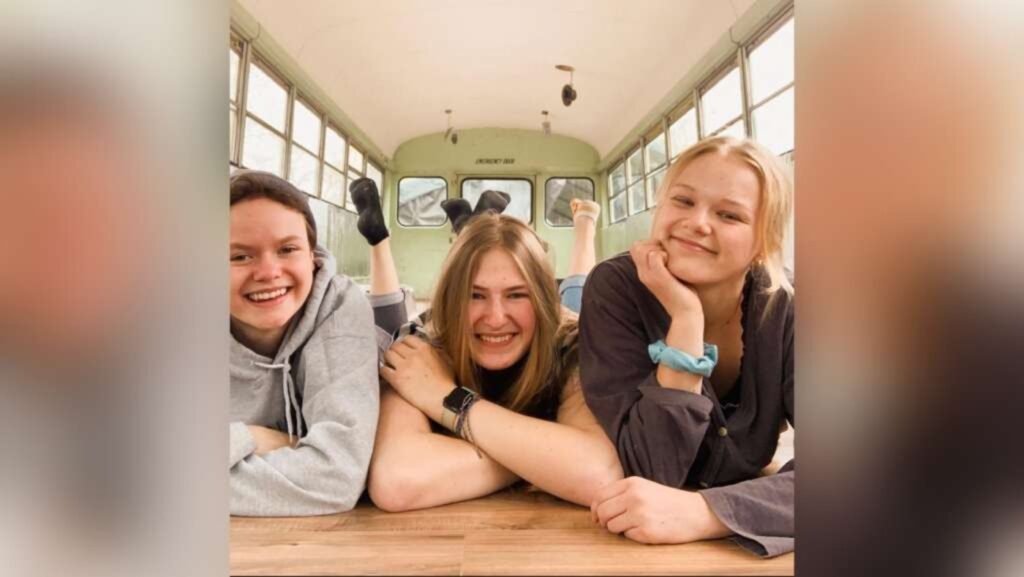
Abi Roberts, Bekah King, and Morgan Tabor were all dating someone they thought was a great guy—only it turned out their Prince Charming happened to be dating all three of them at the same time.

Around last Christmas, some too-friendly texts and flirtatious photos led Tabor to believe something strange might be going on. As it turned out, her less-than stalwart lover’s social media accounts confirmed her worst suspicions.

The 21-year-old in Boise, Idaho, reached out to one of the girls via Instagram to share the bad news that their “exclusive” boyfriend was less than exclusive. They began to bond as the shared their mutual feelings of shock and dismay.

But that relationship was just the tip of the proverbial iceberg. Tabor’s further sleuthing revealed that in addition to the other Idaho woman she’d already contacted, “the boyfriend who shall remain nameless” had also been simultaneously dating an art student from Salt Lake City.

“We were having a great time, and then around December, I got a text from two girls,” Roberts told The Salt Lake City Tribune. “One of them… basically said, ‘Hey, are you dating this person?’ And I said yes. And they’re like, ‘Well, we’re both dating him, too.’ So that was a huge shocker.”

In a moment straight out of the movies, the guy was busted when he showed up on Tabor’s doorstep, a courtly bouquet of flowers in hand, during a revelatory FaceTime chat between Tabor and Roberts.

While he tried to talk his way around his dodgy dating agenda, the girls weren’t buying the sorry line of defense he was trying to sell.

Following a hunch there might be more members in their strange and growing sisterhood, Tabor and Roberts followed the evidence, eventually tracking down and telling the truth to another half-dozen women he was also seeing.

After a brief confab, the three women summarily dumped him, but rather than become bitter over the experience, they eventually decided to meet up.

“We did a lot of trauma processing and memory sharing, and it was obvious that we were all really cool, fun people who had a lot in common,” Roberts told the Washington Post. “Right away, we became good friends.”

During their initial get-together, the three compared relationship stories about their departed beau. They also learned they had a lot in common as he was attracted to women with similar interests—and he’d told all of them about his romantic dream of traveling the country in an old VW bus.

While they laughed over his predictability they had a lightbulb moment. Why not take that dream and turn it into a reality?

With the help of friends and family, they obtained an old school bus and parked it in Boise, where they up-fitted it into a modern-day tiny house on wheels straight out of the pages of a glossy magazine.

This summer, they hit the road.

The trio’s travel itinerary includes Washington State; Yellowstone, Glacier, and Grand Teton National Parks, and a drive south along the West Coast. The women all take turns at the wheel, and to finance the journey they worked remotely several hours per week.

MORE: Two Dogs Rescued From the Streets Now Live Their Best Life on the Road—Seeing the Sights of Europe

To say the trip has been transformational is an understatement.

None of the three women could have foreseen how sweet the eventual outcome of their journey would be. Rather than getting mad, and getting even, they’ve chosen instead to take ‘the high road’.

“At face value, a lot of people think we’re just doing this [to spite our ex], but no,” Roberts told SLT. “This is very authentically us following our dreams and taking opportunities.”

RELATED: Amputee Who Can Only Walk for 20 Minutes at a Time Climbs England’s Three Highest Peaks

“We all feel really blessed that we found each other,” Roberts told Washington Post. “We’re friends for life.”

SHARE This Wild Adventure of a Story With Pals on Social Media…

Stem-Cell Based ‘Cure’ for Type-1 Diabetes Draws Nearer, With FDA Trials Launched

Beta cell image; SALK

While type-2 diabetes is largely preventable, type-1 diabetes is a disruptive autoimmune disorder that was once thought incurable. ‘Once’ is the keyword here, as a new and uncontroversial form of stem cell treatment should be able to cure the disease once and for all.

Relying on transforming a small piece of adult skin tissue into beta-cells in the pancreas— the ones which produce the insulin hormone illusive in diabetics—the treatment bypasses the genetic mutation that causes the immune system to attack these cells which creates the disease.

Diabetes, especially type-1, severely limits quality of life, and if not carefully managed can result in serious complications like foot amputations and early mortality.

Furthermore, it costs the U.S. medical care industry around $85,000 per patient per lifetime’s worth of treatment—an enormous burden that if lifted could save the entire sector hundreds of millions.

Researchers at the Salk Institute for Biological Studies, an avant-garde force in all forms biology, have pioneered a new way to produce beta-pancreas cells for this type-1 treatment—and now the only thing standing in the way of it becoming available in a hospital setting is safety trials in humans.

“Stem cells are an extremely promising approach for developing many cell therapies, including better treatments for type-1 diabetes,” Salk professor Juan Carlos Izpisua Belmonte, senior author of the corresponding paper, told the Salk press department.

“This method for manufacturing large numbers of safe and functional beta cells is an important step forward.”

CHECK OUT: Excited Scientists Make Type-2 Diabetes Breakthrough With First-Ever Glimpse At How Protein Behind Disease Works

The reason that stipulation is important is that while their paper gives 11 citations to the concept of using stem cell therapy to cure diabetes, going all the way back to 2007, there are challenges, as yet unsurmounted, with manufacturing beta-pancreas cells.

Growing a cure

Before stem cells were used, patients could receive transplanted islet cells from donors with a totally functioning insulin system, but low donor rates made this treatment a slow burner, even though it was successful.

Existing methods of stem cells only successfully convert around 10-40% of the human-pluripotent stem cells (PSCs) into beta-pancreas cells. Additionally, beta-pancreas cells from PSCs tend to be heterogenous and contain unwanted cell types that can impede or disrupt the maturation and function of the desired beta-pancreas cells.

Previous methods for utilizing PSCs to create beta cells also sometimes results in dysfunction, or in some cases the formation of (sometimes enormous) teratomas, or cysts.

MORE: No More Pricks: Scientists Are Rolling Out First-of-its-Kind Blood Sugar Test for Pain-Free Delivery to Diabetics

“In order for beta cell-based treatments to eventually become a viable option for patients, it’s important to make these cells easier to manufacture,” co-first author Haisong Liu, a former member of Dr. Belmonte’s lab, told Salk. “We need to find a way to optimize the process.”

And they did just that. Utilizing a 3-dimensional petri dish allowed the cells to interact and grow in an environment similar to how they would naturally, and within two weeks of being transplanted into diabetic mice, their blood sugars dropped to normal levels like those seen in non-diabetic mice.

RELATED: Walmart Unveils Low-Priced Insulin to Diabetes Patients Who Can’t Easily Afford it

To test the safety and efficacy of the manufactured beta cells, the team transplanted them at different stages and observed the effects. At the highest stages of growth, the cells did not result in cyst formation even 20 weeks after implantation, and exhibited proper functionality in vivo and in vitro.

The method of three-dimensional stem cell production will continue to be refined at Salk, with the only remaining hurdle human trials and FDA approval. At least one pharmaceutical company has already embarked this year on the trials to test a stem cell therapy for type-1 diabetes, so it seems the medical condition’s days are numbered.

SHARE This Hopeful Research With Pals on Social Media…

New Netflix Series ‘Cat People’ Seeks to Elevate Stereotypes of Cats And Their Adoring Owners

Maybe nobody else understands, maybe they call you “crazy,” maybe they hold onto many of the old superstitions that still persist about the animal, but when you look into the eyes of your cat, you understand; you understand completely.

Treasured once for their ability to catch vermin, and now as (sometimes) faithful companions, cats are an inseparable and beloved part of not only our lives, but our species, and a new Netflix mini-documentary series called Cat People aims to equally educate and entertain, and give credit for man’s other best friend.

“Cat People explores our fascinating relationship with cats through the lens of some the most remarkable, and surprising “cat people” in the world, defying the negative stereotypes of what it means to be a cat person while revealing the fundamental truths of what it means to have deep bonds with these fiercely independent, mysterious creatures,” wrote Netflix in a press statement.

Featured in Cat People are some fantastic felines, including Maverick the surfing cat, and DJ Ravioli—a cat who plays music for TikTok rapper Moshow.

“This goes beyond my music,” said the rapper during an interview on This Morning. “It’s so much bigger than me, my message is to save as many cats as possible, to make cats look cool and to break that stereotype of black cats being bad luck due to how they’re shown in certain lights.”

MORE: Animator Makes Adorable Short of Dog and Stray Cat Who Are ‘Better Together’ Than Sad Alone (MUST-SEE)

“My thing is to break that stereotype. Cat ladies aren’t crazy, you’re all beautiful…”

Of all shades

God only knows how much data has been used creating, uploading, and sharing cat videos on the internet, but the documentary doesn’t only focus on the charming and delightful side of felines.

While trying to dispel the myth of the “crazy” part of a “cat lady,” it also explores the human component of the relationship, including the darker paths to reveal stories of generosity and kindness towards cats in need—particularly in one episode on the Greek island of Syros.

RELATED: Pet Owners Say Taking Care of Their Furry Friend Encourages Taking Better Care of Themselves

Other episodes seek to break stereotypes about cats being unruly and independent. Acro-Cats founder Samantha features as a professional cat trainer and mom to some seriously talented felines.

Surfing through the hashtags on Twitter, the general consensus towards the six, 30-minute episodes is something like: “You’ll laugh, you’ll cry, you’ll want to adopt every cat in your neighborhood.”

For cat people, that sort of reaction is no surprise—for as the first paragraph above details, we’ve known all along.

(WATCH the trailer for the new Netflix show below.)

SHARE The News of This Fun Show With Pals on Social Media…

Vet Successfully Sews One Stitch in Tiny Tree Frog Whose Lung Was Exposed, Loving ‘all Creatures Great and Small’

Meaghan Barrow
Meaghan Barrow

In the bitcoin community, there’s a phrase that someone has “diamond hands,” which means they will never drag the price down through selling. Well that’s nothing compared to the hands of one Australian veterinarian who performed surgery on a tree frog the size of a fingertip.

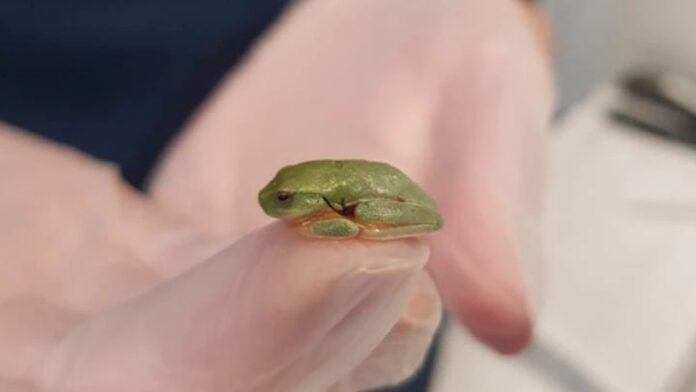
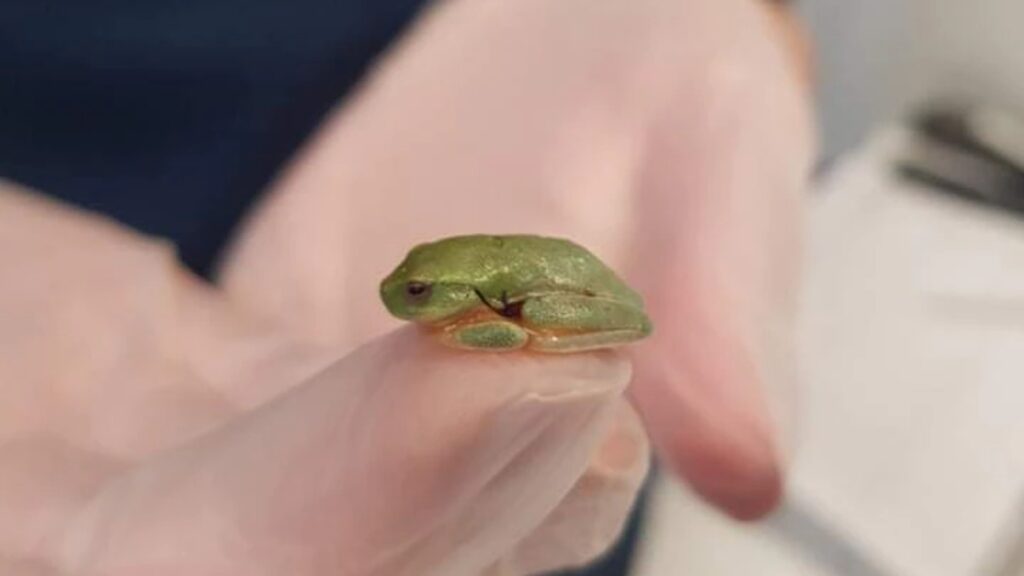
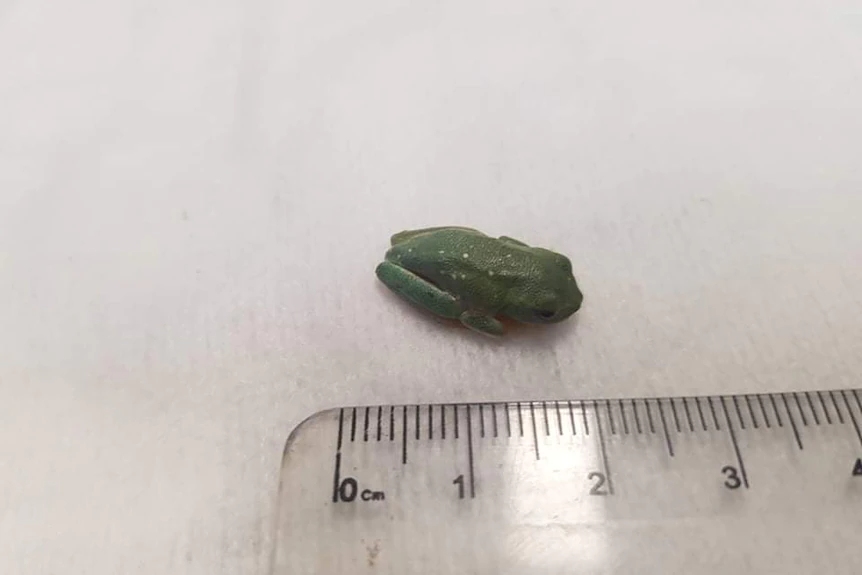
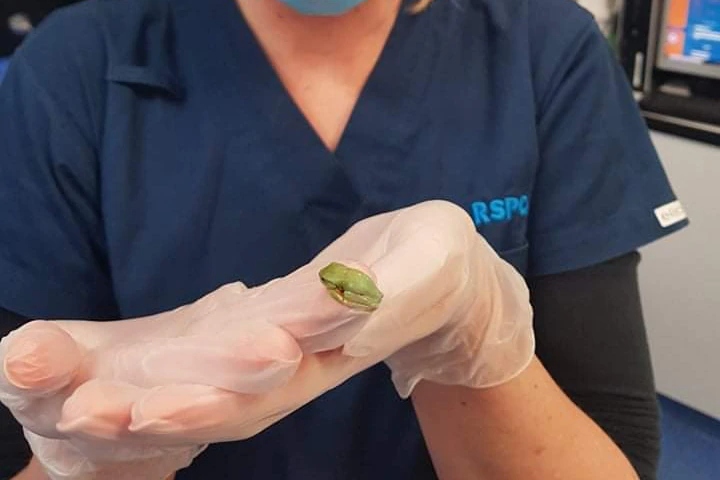
Brought in by accident on some of the eucalyptus meant to feed the koalas at the RSPCA facility in Wacol, Brisbane, the tiny green tree frog wasn’t doing so well when wild animal vet Meaghan Barrow got a hold of him.

Meaghan Barrow

“[A colleague] brought him into the clinic to me and she was really worried, she said ‘he seems to have a lump on the side of his body,'” she told ABC news Australia

“I had a close look and he actually had a little hole, it was only a couple of millimeters but on a tiny frog that’s only two centimeters long, that’s quite a big hole inside of his chest.”

Some of the frog’s internal organs were poking out of the hole, and so the treatment plan was pretty straightforward—the frog needed a stitching up. And so administering anesthesia diluted to one one-thousandth of a dose to compensate for his tiny size, Barrow set to work.

MORE: Scientists Discover a New Brown Species They Named the ‘Chocolate Frog’ – And it’s Adorable

That wasn’t the end of the compensation, as all the surgical tools—the needle and the suture material, had to be miniscule.

Meaghan Barrow

Furthermore, the normal application of pressure Barrow might apply when giving stitches to larger animals couldn’t work with the frog given how thin amphibian skin is. Amphibians like frogs sometimes draw oxygen through their skin, and so it’s very delicate.

CHECK OUT: New Species, Devil-eyed Frog, and Satyr Butterfly Not Seen For a Century Found in Forests 30 Miles From the Capital

Steadying her diamond hands, Barrow successfully applied a single dissolvable suture and declared the operation a success.

Indeed the frog was happily hopping around again the very next day, and even had his bright green color back, though that may have been a result of the painkillers, diluted again to one one-thousandth.

“You learn to treat so many different animals that you have to be adaptable and try the skills that you’d apply to a dog or a cat, to any species,” Barrow commented, noting that she had done surgery on tiny frogs before, and that she was happy to help the little guy.

HOP the Good News Over to Pals on Social Media…

“I am seeking, I am striving, I am in it with all my heart.” – Vincent van Gogh

Quote of the Day: “I am seeking, I am striving, I am in it with all my heart.” – Vincent van Gogh

Photo: by Brian Erickson

With a new inspirational quote every day, atop the perfect photo—collected and archived on our Quote of the Day page—why not bookmark GNN.org for a daily uplift?


The ‘Wizard of Paws’ Makes Prosthetics to Fit Any Animal – Lending a Human Hand of Compassion

Facebook/Bionic Pets

When an animal faces the loss of mobility—especially when there’s an amputation involved—the impact can be devastating. Until not all that long ago, chances for a normal life were slim. If only someone could come up with a solution, imagine the difference it could make to countless lives?

Well, someone has.

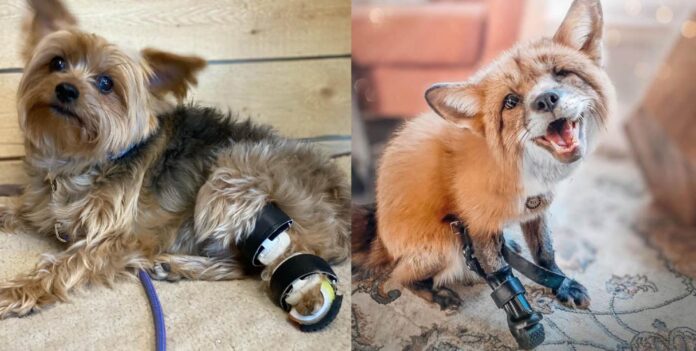
Derrick Campana, star of BYUtv’s Wizard of Paws, a pioneer in the field of prosthetics and orthotics for animals, is kind of like what you’d get if you crossed Dr. Dolittle with the Six Million Dollar Man.

Since 2005, Campana’s “pet fitters” Bionic Pets, along with Animal Ortho Care, have been building custom-made mobility devices for animals of all sizes and descriptions from cats and dogs, to eagles, tortoises, cows, foxes, camels, goats—and even a six-ton African elephant.

In Wizard of Paws, with his wing-dog, Henry riding shotgun, Campana travels the U.S. creating custom-designed devices to help pets with a variety of mobility issues.

“It’s about making families whole again,” Campana told People. “I get to build these prosthetics at their houses. I get to experience the joy on the animals’ faces and [those] families’ faces as they walk again.”

At his home base in Sterling, Virginia, Campana spends much of his time doing fittings and casting molds in order to create the forms he painstakingly hand-sculpts; finishing the devices with vacuum-formed plastic and a variety of other materials.

Animal Ortho Care also currently ships casting kits all over the world. Compana hopes to broaden his outreach with advances in cost-effective 3-D printing technology—and since every animal that comes to him presents its own unique puzzle, expanding horizons and searching for new solutions is what Campana is all about.

“It’s always interesting, never boring and I’m constantly learning,” he told VPM-News. “Being able to combine [my] passion for building with helping animals is just an awesome thing. I’ve created my own industry here, so it’s kinda living the dream.”

MORE: When Prosthetic Makers Said it Couldn’t Be Done, Dentist Gives Orphaned Koala a New Foot

One of the most important parts of Campana’s mission is educating both pet owners and veterinarians about new and emerging options for care. He admits when he first started out, he got push-back from veterinary doctors trained in more traditional methods who didn’t fully grasp the potential benefits of orthotics and prosthetics for animal applications.

However, since then, he’s been steadily been striving to show how such devices can actually offer better outcomes—including less post-surgical downtime, and in some cases, eliminating the need for surgery altogether. These days, the feedback he’s getting is pretty much resoundingly positive.

For Campana, it’s easy to be a cheerleader when you truly love what you’re doing.

RELATED: This Athlete Could Become the First American Amputee to Compete in the Olympics

“Seeing dogs wag their tails; their eyes kind of sparkle again, that moment when they haven’t walked in the last couple of years or maybe they’ve never walked before in their lives… You see them just run and get up and those are the moments that I kind of live for, and that’s why I do what I do,” he told VPM.

“I never thought in my wildest dreams I’d be helping animals all over the world or even helping animals in general. It’s not something you think of as a child because it never existed but if you have that idea, go for it. And if you’re passionate about it, go as hard as you can for as long as you can and you can make a huge difference in your life and in the life of so many [others].”

(WATCH the VPM video for this story below.)

RAISE a Paw For This Great Story by Sharing on Social Media…

The Best Time to Eat Protein and Build Muscle Health? You May Want to Rethink Breakfast

Photo by Kelly Sikkema

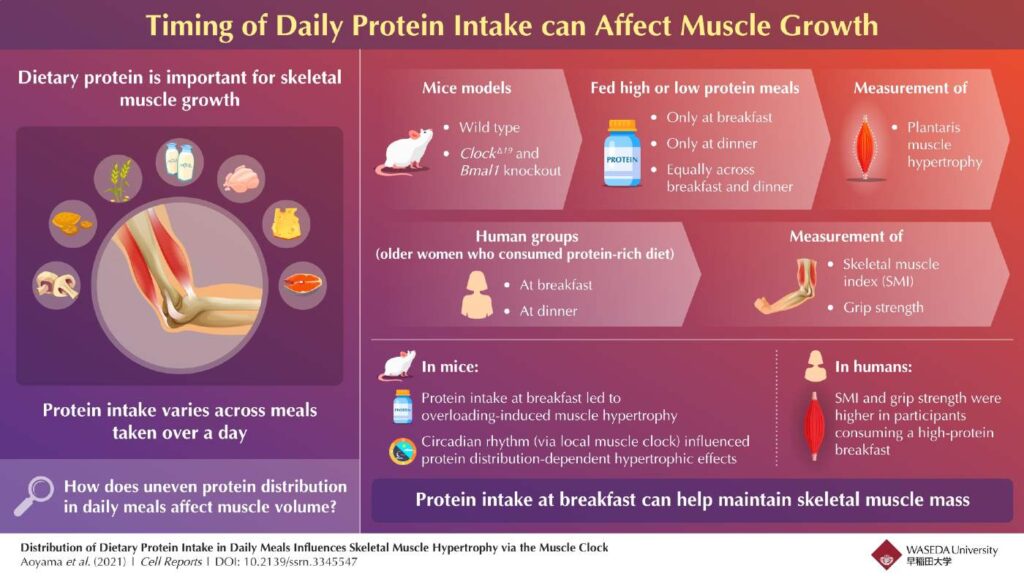
Proteins constitute an essential dietary component that help in the growth and repair of the body. Composed of long chains of amino acids, they promote the growth of skeletal muscles—which is the group of muscles that help us move.

Humans have been aware of the benefits of proteins for a long time. However, recent studies have shown that having the right amount of protein at the right time of the day is essential for proper growth.

This is called Chrononutrition—which looks at how when you eat is as important as what and how you eat.

The reason behind this is the body’s internal biological clock.

Called the circadian rhythm, this rhythm is followed by all cells and controls life functions like metabolism and growth.

Interestingly, protein digestion and absorption have been found to fluctuate across day and night according to this clock.

Moreover, earlier studies have reported that intake of protein at breakfast and lunch promotes skeletal muscle growth in adults.

However, details on the effect of the time of protein intake on muscle growth and function have remained elusive until now.

Fortunately, researchers from Waseda University, led by Professor Shigenobu Shibata, recently endeavored to understand the effect of the distribution of protein intake through the day on muscles.

They fed laboratory mice two meals per day containing either high (11.5% by proportion) or low (8.5% by proportion) protein concentrations.

The researchers noted that protein intake at breakfast induced an increase in muscle growth, determined by assessing induced hypertrophy of the plantaris muscle in the leg, when compared with the effects of protein intake at dinner.

Waseda University

Specifically, the ratio of muscle hypertrophy determined against the growth of the control muscle was 17% higher in mice fed 8.5% protein at breakfast, than that in mice fed 11.5% protein at dinner, despite the former group consuming a low proportion of protein overall.

They also found that early-in-the-day intake of a type of protein called the BCCA—short for branched-chain amino acids—increased the size of skeletal muscles specifically.

They repeated diet distribution experiments on these mice but did not observe similar muscle change, which confirmed the involvement of the circadian rhythm in muscle growth in the context of protein intake.

Excited about the findings of their study, published in a recent issue of the Cell Reports, Professor Shibata emphasizes, “Protein-rich diet at an early phase of the daily active period, that is at breakfast, is important to maintain skeletal muscle health and enhance muscle volume and grip strength.”

To check if their findings were applicable to humans, the team recruited women in their study and tested if their muscle function, determined by measuring skeletal muscle index (SMI) and grip strength, varied with the timing of the protein-rich diet consumed.

MORE: Study Says Combining a Daily Protein Shake With Exercise Doesn’t Just Make You Stronger, It Makes You Smarter Too

Sixty women aged 65 years and above who took protein at breakfast rather than at dinner showed better muscle functions, suggesting the possibility of the findings to be true across species. Additionally, the researchers also found a strong association between SMI and the proportion of protein intake at breakfast relative to total protein intake through the day.

Professor Shibata is hopeful that the findings of their study will lead to a widespread modification in the current diet regime of most people across the Western and Asian countries, who traditionally consume low amounts of protein at breakfast.

He therefore stresses, “For humans, in general, the protein intake at breakfast averages about 15 grams, which is less than what we consume at dinner, which is roughly 28 grams.

RELATED: Exercise in the Morning May Stave Off Cancer, As Opposed to Later in the Day, New Study Says

“Our findings strongly support changing this norm and consuming more protein at breakfast or morning snacking time.”

Relatively protein-rich foods that won’t feel too off-putting in the early hours include eggs, tofu, hempseed, oatmeal, chia, and nut butters.

It seems, a simple change in our dietary regime can be our key to ensuring healthy muscles.

Source: Waseda University

POWER UP Friends’ Feeds With This Fascinating Research…

What Color is it? Photographer Captures Varied Luminescence of One of UK’s Rarest Butterflies

SWNS

One of Britain’s rarest and largest butterflies will remind readers of that time a few years ago when the internet got all in a flutter over whether ‘The Dress’ was black and blue or white and gold.

SWNS

After decades of decline, the Purple Emperor is making something of a comeback in England’s woodlands.

Despite its magnificent appearance, the species, affectionately dubbed His Imperial
Majesty, is attracted to smelly cheese, human sweat, fish paste, and even dog and fox poo.

But it is the strange colors of the wings of the male—which can appear blue to some people but brown to others—which is most amazing.

SWNS

Wildlife photographer Andrew Fusek Peters has been busy snapping the same butterfly from different angles.

Andrew, who photographed the butterfly in Oversley Woods in Warwickshire, said: “They are ultra-rare, you do see photographs of them but like all British butterflies their numbers have declined catastrophically.

SWNS

“Conservation means their numbers are on the rise but they are still one of the rarest British butterflies.

“They have this unbelievable quality where if you look at them from behind they are a brown butterfly and when you go round to the front of the wing it looks purple or blue.

“This is the effect of the light on the thousands of scales that make up their wings.

RELATED: Farms in UK Saved This Beautiful Duke of Burgundy Butterfly From Extinction

“The scales refract the light in different ways which is why you see the different colors.

“It was amazing to think I was looking at the same butterfly when it looked completely different from either side, it is really, really extraordinary.

“It was really special to be able to get so close—it was so relaxed. I had the lens four foot above the butterfly as it lay on the ground.

MORE: A Monarch Visitation After Girl’s Death Has Dad Now Sending Milkweed Seeds to All Who Want to Help Butterflies

“I had never seen one before in the four years I’ve been photographing butterflies,” he said.

We’re grateful Peters finally got the chance to do so—thanks to local conservation efforts bringing Purple Emperor numbers back to healthier levels.

GET YOUR Friends a Flutter With This Fun Story…

Student Invents Toilet That Converts Poop into Energy – And Pays in Digital Currency if You Help to Fill it!

UNIST
UNIST

One man’s trash is another man’s treasure, they say. Well, in a South Korean school, one man’s poo is another man’s pennies.

The invention of a toilet that composts human excrement and turns it into methane biogas for use in the school’s energy system has the students there re-evaluating waste like never before, as the amount of waste they contribute to the electric bills is returned to them in the form of a digital currency.

The dirty mind behind the brilliant invention was Cho Jae-weon, an urban and environmental engineering professor at the Ulsan National Institute of Science and Technology (UNIST), who insists that humanity can solve all kinds of problems if we think “outside the box.”

Known as the BeeVi toilet, a condensed form of “bee” and “vision,” the compost/currency commode uses a powerful vacuum to pull feces down into a composting tank, thereby eliminating all water usage.

Next, bacteria breakdown the feces and the methane is channeled into a solid-oxide fuel cell which powers several building functions such as the hot water heater.

On average, a human’s daily excrement can generate around 0.5 kilowatt hours of electricity.

MORE: Whale Feces Represents One of the Greatest Allies Against Climate Change—Even More Than Trees

“If we think out of the box, feces has precious value to make energy and manure. I have put this value into ecological circulation,” Cho told Reuters.

Along side the BeeVi, Cho created a digital token, called the “Ggool,” or honey in Korean, which students can earn by using the toilet.

They can then take their feces financing and spend it on coffee and other items in the school cafeteria.

CHECK OUT: Dutch Guy Famous for Cleaning Up Pacific Garbage Patch is Now Clearing the World’s Rivers Too

“I had only ever thought that feces are dirty, but now it is a treasure of great value to me,” postgraduate student Heo Hui-jin told Reuters, in what must have been a fairly uncomfortable conversation.

(WATCH the Reuters video about this story below.)

CONVERT Friends’ Feeds Into Sources of Good News—Share This Story…

‘Future Belongs to Renewable Energy’ Says India’s Largest Oil Baron and Greenland, Which Ended Search for Oil

“The future belongs to renewable energy,” is a big thing for Big Oil’s fourth biggest player, and Asia’s richest energy baron to say, but Mukesh Ambani is letting his money do the talking—all $10.1 billion of it.

In late June the Chairman of Reliance Industries, one of the largest oil companies on the planet, announced a 750 billion rupee investment in a brand new renewable energy supply chain.

While oil majors like Reliance, Shell, or ExxonMobil are often the chief targets of climate activists’ attentions, the resources these energy giants can bring towards stimulating renewable investment and production are sometimes greater even than national governments. Furthermore, their decades of experience in the energy industry lends them certain insights into energy supply and demand trends that few others possess.

“The age of fossil fuels, which powered economic growth globally for nearly three centuries, cannot continue much longer,” Ambani stated. “The huge quantities of carbon it has emitted into the environment have endangered life on Earth.”

600 billion of the rupees will produce four “gigafactories” where solar arrays, hydrogen fuel cells, and battery grids will be produced, and another 150 billion will help reinforce the value chain through strategic partnerships.

MORE: Researchers Use Wastewater to Generate Electricity – While Cleaning It Up

When large firms like Reliance get involved, especially in production, manufacturing costs for renewable energy as a whole go down, not only because of investments in research and development, but also through market competition, as providers undercut each other’s prices to offer the best deal for consumers or government energy agencies.

‘Green’land

The forecast for a renewable future is one shared by Greenland, which has announced that all future oil and mineral exploration will cease, citing climate concerns and desires to invest in green energy.

Tens of billions of barrels of oil and hundreds of trillions square-feet of natural gas are predicted to lie under receding ice sheets, but keeping them in the ground is the new edict from the recently elected Inuit government of the Ataqatigiit.

“The future does not lie in oil. The future belongs to renewable energy, and in that respect we have much more to gain,” the Greenland government said in a statement, before adding it “wants to take co-responsibility for combating the global climate crisis.”

RELATED: Huge Supply of Water is Saved From Evaporation When Solar Panels Are Built Over Canals

Inhabited by 57,000 people, AP’s sense is that the country is dreaming of independence, as it receives two-thirds of its national wealth from Denmark as charity.

In a sign of maturity from the fledgling state, Greenland has decided that a near-future of possible independence is not worth a long-term future of worsening climate change.

SHARE These Crucial Climate Change Realizations With Friends…
“In the end you can’t always choose what to keep. You can only choose how you let it go.” – Ally Condie

Quote of the Day: “In the end you can’t always choose what to keep. You can only choose how you let it go.” – Ally Condie

Photo: by J. Balla Photography

With a new inspirational quote every day, atop the perfect photo—collected and archived on our Quote of the Day page—why not bookmark GNN.org for a daily uplift?

Unsuspecting Pedestrians Trigger a Dance Party By Standing on Decal That Says ‘Stand Here For Dance Party’ (WATCH)

Ari Scott for Improv Everywhere

What do you get when you surprise random people with an unexpected dance party on the streets of New York?

Pure joy, community, and connection.

Ari Scott for Improv Everywhere

The inspiring street performance group Improv Everywhere placed a decal on the pavement in a park that read, “stand here for dance party.”

Designed in the style of the ubiquitous social distancing circles, most passersby ignored it, or took photos, once they read its appealing message.

But whenever anyone followed the instructions and put their feet directly on the decal in Grand Army Plaza in Manhattan, they instantly found themselves surrounded by a 100-person dance party featuring a vintage 1980s boombox.

The group that specializes in large-scale surprise moments in public was eager to get back to their joyful antics, so they kicked off their first post-pandemic project by partnering with a fully-vaxed professional b-boy dance crew, the Dynamic Rockers, and the Museum of the City of New York, which opened a new music-themed exhibit—New York, New Music: 1980-1986.

100 undercover dancers recruited by Improv Everywhere were blending in the area, walking around the sidewalks or sitting on benches, just waiting for someone to stand on the decal, triggering a massive dance party.

Ari Scott for Improv Everywhere

Music immediately began blaring from Kid Glyde’s boombox as he walked from around the corner and up to the unsuspecting person to get the party started.

The people standing on the sticker were shocked, but quickly got on board with the fun.

WATCH the ebullient video…

Watch More Improv Everywhere:
Watch People’s Reactions Suddenly Seeing Their Messages of Love Broadcast on Huge Screen
Four Sets Of Twins Stage Time Travel Prank on NYC Subway
New Yorkers Say Something Nice!

SHARE the Perfect Dance Gag With Your Friends on Social Media…

More Americans Now Consider Themselves to be ‘Thriving’ Than at Any Point in 13 Years: Gallop

Photo credit: Andre Hunter

Despite hardships from Covid, drought, heatwaves, wildfires, and resurgent inflation, three in five Americans say they are pretty happy with their lot, according to the latest Gallup Live Evaluation Index.

Photo credit: Andre Hunter

The percentage of Americans who evaluated their lives to be ‘thriving’ reached 59.2% in June, the highest in over 13 years of ongoing measurement—and exceeding the previous high of 57.3% from September 2017.

During the initial COVID-19 outbreak and economic shutdown, the thriving percentage plunged nearly 10 percentage points to 46.4% by late April 2020, tying the record-low measured during the recession that began in 2008.

The June 2021 results are based on 4,820 U.S. adults surveyed online as a part of the Gallup Panel, a probability-based, non-opt-in group of about 120,000 adults across all 50 states and the District of Columbia.

For its Index, Gallup classifies Americans as “thriving,” “struggling” or “suffering” according to how they rate their current and future lives on a scale from 0 to 10. Those who rate their current life a 7 or higher, and their anticipated life in five years an 8 or higher, are classified as thriving.

RELATED: 7 in 10 Americans Agree That 2020 Made Them a Better Person – Here’s How

The percentage of Americans estimated to be “suffering” has remained steadily low throughout the pandemic and in line with pre-COVID estimates, said Gallop in a news release. In June, just 3.4% of respondents were classified as suffering, according to their own assessments.

The major drop in the thriving percentage last year was characterized by a severe drop in current life satisfaction ratings. By late April, the percentage of U.S. adults who rated their current lives a “7” or higher had plunged about 11 percentage points, even as the anticipated life satisfaction five years forward had improved.

“The rapid recovery of current life satisfaction, coupled with the sustained elevated level of anticipated life satisfaction, has fueled the thriving percentage to its current heights.”

Spikes in Daily Stress and Worry Retreated to Pre-COVID Levels

In addition to the general life ratings, Gallup tracks whether Americans have recently experienced specific emotions, including stress and worry, in their daily lives.

The percentage of people who reported experiencing significant stress and worry “a lot of the day yesterday” showed unprecedented increases at the beginning of the pandemic, with stress rising 14 percentage points to 60% and worry rising 20 points to 58%.

Reports of experiencing these emotions have subsequently fallen to pre-pandemic levels in both cases.

CHECK OUT: With Time to Pursue New Hobbies, 6 in 10 Have ‘Leveled Up’ – And 40% Think They’ll Make Money From it

Significant daily enjoyment has also markedly improved. In 2018-2019, about 80% of U.S. adults reported significant enjoyment the day before, which plunged to 61% at the onset of the pandemic. By June, enjoyment was back up to 73% of the adult population.

More than being a result of the vaccination rollout or improving economic conditions, the authors of the study theorize that the happiness boom was a result of the critical psychological benefit of renewed social interaction.

Reuniting in person with family and friends and joining in large gatherings of people such as at sporting events is a crucial part of social wellbeing. Past research has shown that those who spend six to seven hours a day in social time experience about one-fifth the stress and worry on any given day as those with no social time at all. These effects are likely on display as the levels of these negative emotions have improved to pre-pandemic levels in recent months.

RELATED: People are Making Self-Care a Priority After One of the Most Stressful Years Ever

It just goes to show: life’s ups are more powerful after you’ve been through the downs.

SHARE Your Own Satisfaction By Sharing This on Social Media…

Innkeeper’s Kindness to House People After Storms is Contagious – With Everyone Pitching in and Sharing

This story was chosen as one of the top ten nominations to win the Reader’s Digest annual “Nicest Places in America” contest: a crowd-sourced effort to uncover nooks where people are still kind and compassionate in an era of global pandemic and political divide. You can see all ten Nicest Places for 2021 here, at Reader’s Digest. As a judge in the contest for three consecutive years, GNN chose this story to be one of the best.

Sean Patel, photo by STEPHEN SMITH

When friends try to hold you back from being too generous and kind, you know you’re doing something right.

When icy temperatures this past winter froze Kodak, Tennessee, shutting power down and freezing pipes, Sean Patel, owner of the local Quality Inn, wanted to do something to help his neighbors: open his hotel to all comers, even if he ran out of rooms, and provide them food and warmth until the power came back on.

“I frequently ask him to dial it back a bit because I know he’s spending so much of his own money and energy to help others, but he has such a big heart, I know he will only give more,” says his friend Steve Smith, who nominated the Quality Inn for Nicest Places in America.

But Patel wouldn’t listen. The immigrant from India, who came to America in 2004, saw goodness in the people around him when he settled in Tennessee—and wanted to be a part of it.

“I saw how much people helped each other in the South and it got to me,” explains Patel. “It’s not always about money. Sometimes you just need to talk. I always wanted to be that kind of person.”

RELATEDInnovative Renovations of Old Hotels Make Perfect Affordable Housing –Including Great Amenities

So, he did what came naturally: Patel took to social media to say, “If you can get here, we will take care of you.” Even at maximum capacity, Patel would make space for those who needed it whether that be in the lobby or around the pool area, just so they could have someplace warm to be.

Between Christmas and New Years of 2020, all 60 rooms in the hotel were completely booked with some rooms housing as many as eight or nine adults. Some guests even stayed in the lobby or meeting rooms just to have a warm place to be. A couple rooms under maintenance were used so guests in the lobby could take a shower, which Patel’s team sanitized thoroughly after each user.

People came together in ways that Patel has never seen before. Everyone pitched in. Some guests even paid for each other’s rooms. Everyone was sharing food. The hotel staff turned on their breakfast station so people wouldn’t have to worry.

Later in the winter, when a similar freeze hit Texas, Patel did the same with another hotel he owns, the Segovia Lodge. Power lines came down and pipes froze over as the cold engulfed an unprepared Texas. Patel waived all fees so anyone who could get to the hotel could stay and eat for free all week. Guests even walked to the hotel because their cars couldn’t get through.

The hotel eventually lost electricity and stranded truckers took turns staying up all night to keep a fire going. All of the rooms were full, yet Patel opened the lobby floor so more guests could be sheltered.

With over 200 people at the hotel, there wasn’t any fuss. No one argued. Everyone made sure the others were comfortable, warm, and fed as they took turns cooking for each other.

CHECK OUT: Hotel Stays Open During Lockdowns to House Homeless Locals; And They’re Repaying the Favor With Odd Jobs

“It wasn’t about who was Black, White, Democrat, Republican. COVID, or no COVID, everyone was a family,” says hotel manager Shelly Shirley.

All the guests who were at the Segovia Lodge during the freeze have even kept in touch via a Facebook group! They check in on each other and keep up with news from each other’s lives.

“Business is down, but I still have clothes on my back, the kids were safe, we had a shower and food,” says Patel. “We all have to look out for each other.”

That’s why GNN voted for Patel’s hotels to be the Nicest Places in America this year, and why, if you are ever in need of a hotel room in Kodak, Tennessee (30 minutes from Knoxville), or Junction, Texas (1.5 hours outside of San Antonio), you should definitely vote with your wallet and visit Sean.

MORE: Canada Buys Hotels to House Homeless People—And Also Rehire Workers

SHARE One of the Nicest Places in America With Travelers on Social Media…