Quote of the Day: “There were two ways to be happy: improve your reality or lower your expectations.” – Jodi Picoult
Photo: by Na Inho
With a new inspirational quote every day, atop the perfect photo—collected and archived on our Quote of the Day page—why not bookmark GNN.org for a daily uplift?
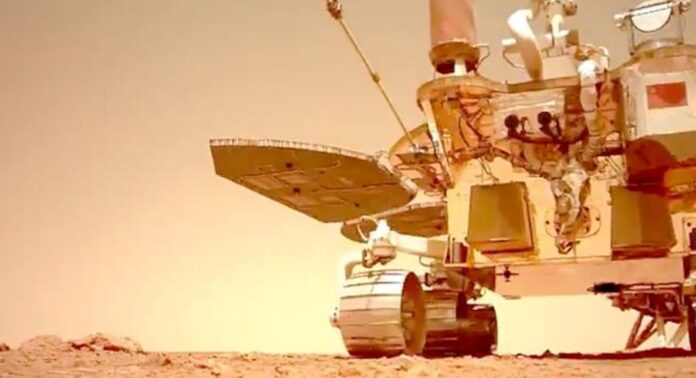
It brought to Mars a suite of scientific instruments including a weather station, ground-penetrating radar, and a laser spectroscopy device for blasting rocks apart to measure their mineral content.
It also brought a deployable Wi-Fi camera, which it left in the dust before driving off, to create footage of it driving down from the landing module and doing a series of maneuvers. This was the first footage of a rover driving on Mars which any nation has produced.
Audio clips of its metal wheels scraping against the disembarking ramps were also collected, which Chinese space authorities say demonstrates the characteristics of the Martian atmosphere.
“With the files we released this time, including those sounds recorded when our Mars rover left the lander, we are able to conduct in-depth analysis to the environment and condition of Mars, for example, the density of the atmosphere on the Mars,” Liu Jizhong, deputy commander of China’s first Mars exploration program, told Chinese media.
Earlier this year, NASA’s Perseverance collected video of its Ingenuity Martian Helicopter performing a flight test, and of the dramatic parachute deployment and landing dubbed the “7 minutes of terror.” China also collected its own video of the parachute deployment and landing.
Huge Zhurong update: Here's full footage of the Zhurong rover's EDL, showing parachute deployment, backshell separation, and landing, including very cool hover during hazard avoidance phase. [CNSA/PEC] pic.twitter.com/iWUXrFKf40
The solar-powered Zhurong, which was the name of an ancient Chinese fire god, has traveled 236 meters since it landed on June 15th, and it continues to perform system checks before heading off in search of data.
It was landed as part of the Tianwen-1 interplanetary mission, which also included a lander and an orbiter, all three of which were first of their kind for the nation—making China the world’s first nation to succeed with all three at the first go-around.
Some of the video taken may remind some readers of pre-Special Edition footage of Star Wars: A New Hope, when a young and plucky Luke Skywalker is traversing his desert home of Tatooine in his landspeeder. Enjoy the show.
SHARE This Far-Out Story With Pals on Social Media…
Is there anything better than the beginning of a beach vacation when you get your first sniff of the ocean? That chilled, briny, slightly sulfurous smell is almost better than the first sight of the sea.
But what makes the sea smell like the sea, or seafood taste like seafood? I once managed a gourmet cheese shop, and felt like I was detecting the scent of the sea whenever I pulled out the riper cheeses. Why is that?
Turns out there are several chemicals, abundant in marine life and processes, that give saltwater environments their signature smell.
Dimethyl sulfide, or DMS, is the classic sulfur smell of the sea, and is produced en masse by the bacteria species that eat phytoplankton. These tiny marine food web anchors are essentially plants that use photosynthesis to draw energy from the sun.
The DMS comes from the plankton’s self-generating sunscreen, which upon their death, is converted into DMS gasses by the bacteria that eat them. One article points out that seabirds follow the smell of DMS to locate areas for hunting, since the marine food web begins with plankton, which are eaten by tiny fish, which are eaten by bigger fish, which the seabirds then have for lunch.
As well as being produced by bacteria that eat cheese proteins, dimethyl sulfides are also quite pungent in the air of coastal saltmarsh and tidal wetlands. This, rather than plankton, is due to various species of saltmarsh cordgrass. Plankton may be absent from an area of ocean, but saltmarsh is filled with cordgrass species, and this is one of the reasons the salt marshes on the California coast smell much more strongly of the sea than the coast does.
National Marine Sanctuaries
Another food web compound that gives the sea its smell is bromophenols. This chemical is often described as smelling fishlike, and in high concentrations can smell of iodine. It also likely gives a lot of the iconic flavor to fresh crustaceans, fresh fish, or the best oysters.
Acquired through the diet of these animals, often through eating marine worms, other bottom feeders or fish eggs, bromophenols are actually added to farm-raised fish to try and give it the more identifiable taste of the ocean.
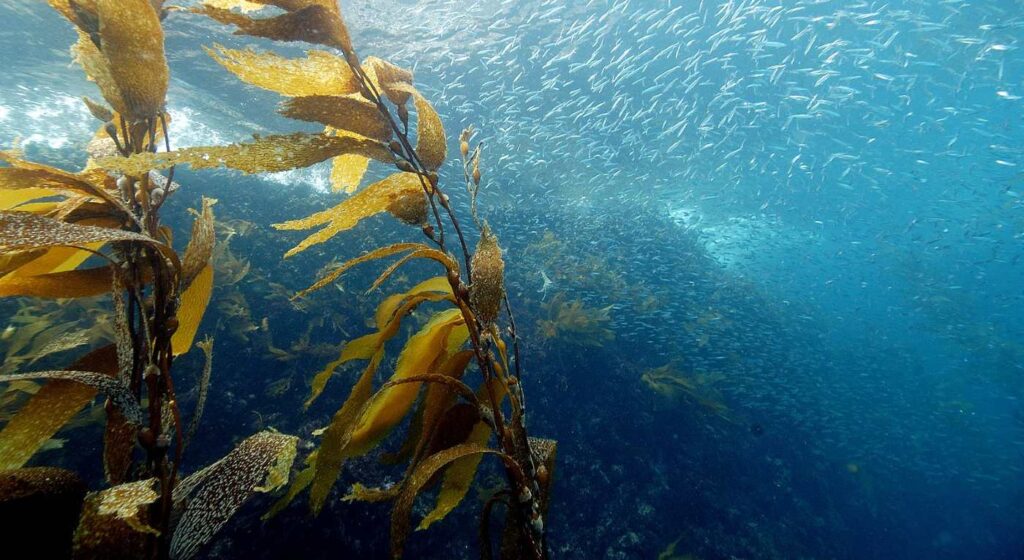
Lastly, a chemical produced in the eggs of seaweed species was found to have a very strong “beach odor” and that it was the calling card for seaweed sperm to follow. When isolated it smells strongly of seaweed, unsurprisingly, and if you’re relaxing on a beach where a lot of seaweed and kelp has washed up on, you could be smelling the pheromones of the plant.
The three of these together, along with a few others, account for the distinctive, unmistakeable aroma of a day spent at the seashore—with coconut-scented tanning lotion also wafting in the breeze if you’re lucky.
BREATHE FRESH AIR into Pals’ News Feeds; Share This Story…
For thousands of cross-country tourists, the Mississippi River is one which is for crossing, not seeing. But what if the crossing bridge was a beautiful pedestrian walkway filled with American bison?
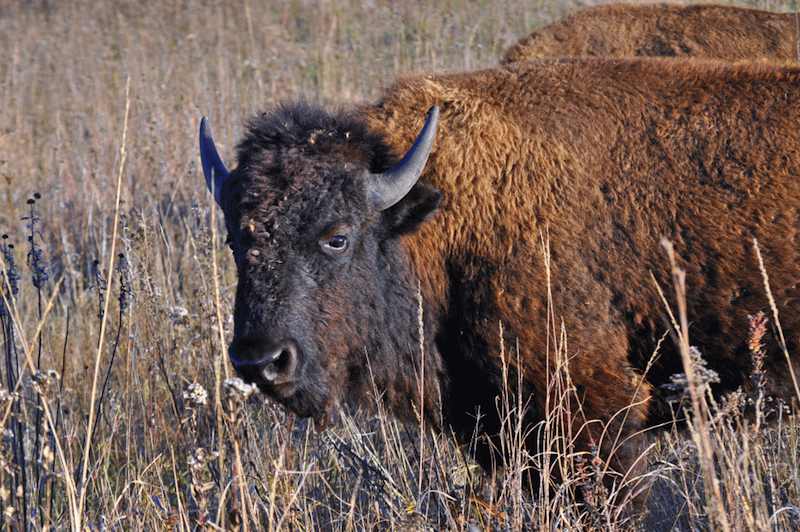
The aptly named Bison Bridge is a proposition to reconnect America’s most iconic animal with its historic habitat in the most creative of ways—by repurposing an aged bridge slated for demolition as a wildlife crossing which provides safe passage for bison herds.
When local Mississippi River advocate and President & Founder of Living Lands & Waters Chad Pregracke proposed the idea for a Bison Bridge National Park to span the river and connect the Quad Cities spanning the states of Iowa and Illinois, it caught on immediately, and quickly earned endorsements and publicity.
Along with saving Illinois millions in demolition costs, city authorities and regional planners hope re-purposing Fred Schwengel Memorial Bridge on the I-80 will draw tourists to a part of the country where the population hasn’t risen in 30 years.
“It’s a fantastic idea, a heck of a vision,” Kevin Marchek, who worked over 39 years for Illinois Department of Transportation, told local news last month. “We’ve just got to keep pushing this until it comes to fruition.”
The Chicago Tribune described the project as “a dream” and “too charming and creative to reject out of hand,” in an editorial, and several Tribal Nations also see it as a great way to shine a spotlight on the area.
Uniquely American
Rendering, Bison Bridge Foundation
The bridge, which would be the longest wildlife crossing on Earth, would feature an enclosed strip of prairie running across it, with viewing stations where passing pedestrians can observe the bison. Artist renderings put the bridge guardrails in glass, with chic cafes alongside them, to offer a comfortable and unobstructed view of the mighty Mississippi and the roaming animals.
For the Eastern Shoshone, the project offers a reconnection for both themselves and for other Americans to the heritage of the Plains Indians.
Jason Baldes, a tribal member, works for the National Wildlife Federation non-profit as tribal bison coordinator.
“The bison was known as the life commissary for my grandmas and grandpas,” Baldes told The Guardian. “It was food, clothing, shelter, and was also central to our cultural and spiritual belief systems.”
They were also essential to the plains as an ecosystem, acting as a “keystone species,” meaning that like the keystone in an arch, they held all the bricks together.
The vast herds which once totaled between 30 and 60 million stampeded across the landscape, trampling rampant growth, spreading seeds hither and yon, and allowing a very diverse mix of plants to grow, creating rich biodiverse soils. Their fur once shed is an important nesting material, and borrowing owls used to rely on their dung for making nests.
They’re living history, not only for the Native Americans, but for the history of American conservation, which one could say started with the bison when reckless overhunting brought their numbers down to just 300.
“But it’s not only important to Native American tribes, but it’s important to the American people to at least have an opportunity to learn about this history,” said Baldes. A true statement indeed.
(WATCH the video pitching the Bison Bridge project below.)
HELP Good News Roam—Share This Story on Social Media…
Pressure to feel upbeat can make you feel downbeat, while embracing your darker moods can actually make you feel better in the long run, according to new research.
“We found that people who habitually accept their negative emotions experience fewer negative emotions, which adds up to better psychological health,” said study senior author Iris Mauss, an associate professor of psychology at UC Berkeley.
At this point, researchers can only speculate on why accepting your joyless emotions can defuse them, like dark clouds passing swiftly in front of the sun and out of sight.
“Maybe if you have an accepting attitude toward negative emotions, you’re not giving them as much attention,” Mauss said. “And perhaps, if you’re constantly judging your emotions, the negativity can pile up.”
The study, conducted at UC Berkeley and published in the Journal of Personality and Social Psychology, tested the link between emotional acceptance and psychological health in more than 1,300 adults in the San Francisco Bay Area and the Denver, Co., metropolitan area.
The results suggest that people who commonly resist acknowledging their darkest emotions, or judge them harshly, can end up feeling more psychologically stressed.
By contrast, those who generally allow such bleak feelings as sadness, disappointment and resentment to run their course reported fewer mood disorder symptoms than those who critique them or push them away, even after six months.
“It turns out that how we approach our own negative emotional reactions is really important for our overall well-being,” said study lead author Brett Ford, an assistant professor of psychology at the University of Toronto. “People who accept these emotions without judging or trying to change them are able to cope with their stress more successfully.”
Three separate studies were conducted on various groups both in the lab and online, and factored in age, gender, socio-economic status and other demographic variables.
“It’s easier to have an accepting attitude if you lead a pampered life, which is why we ruled out socio-economic status and major life stressors that could bias the results,” Mauss said.
In the first study, more than 1,000 participants filled out surveys rating how strongly they agreed with such statements as “I tell myself I shouldn’t be feeling the way that I’m feeling.” Those who, as a rule, did not feel bad about feeling bad showed higher levels of well-being than their less accepting peers.
Then, in a laboratory setting, more than 150 participants were tasked with delivering a three-minute videotaped speech to a panel of judges as part of a mock job application, touting their communication skills and other relevant qualifications. They were given two minutes to prepare.
After completing the task, participants rated their emotions about the ordeal. As expected, the group that typically avoids negative feelings reported more distress than their more accepting peers.
In the final study, more than 200 people journaled about their most taxing experiences over a two-week period. When surveyed about their psychological health six months later, the diarists who typically avoided negative emotions reported more mood disorder symptoms than their nonjudgmental peers.
Next, researchers plan to look into such factors as culture and upbringing to better understand why some people are more accepting of emotional ups and downs than others.
“By asking parents about their attitudes about their children’s emotions, we may be able to predict how their children feel about their emotions, and how that might affect their children’s mental health,” Mauss said.
Source: UC Berkeley
SHARE This Fascinating Story With Friends on Social Media…
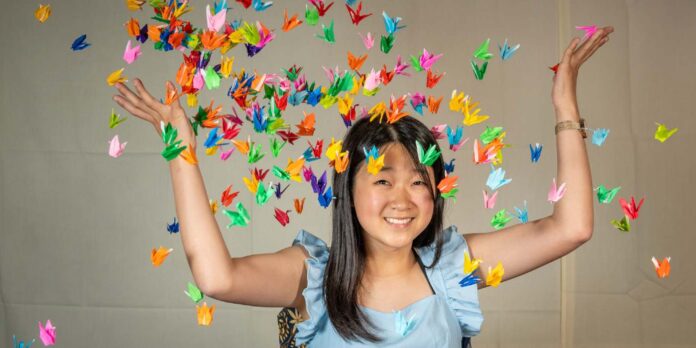
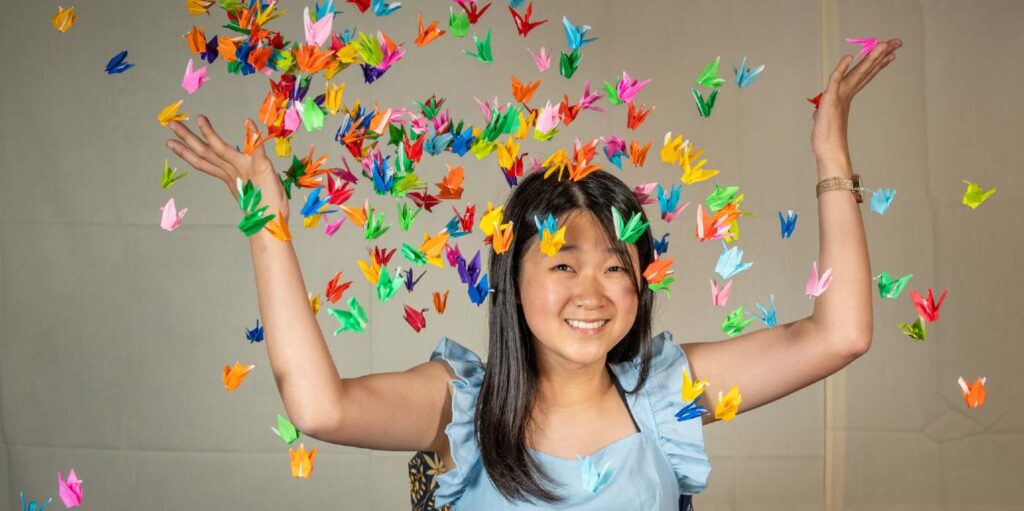
A schoolgirl didn’t fold under pressure and set a new world record for the fastest ever origami, by making 1,000 paper cranes.
15-year-old Evelyne Chia spent nine hours and 31 minutes creating the neat little paper birds, smashing the previous record of 12 hours.
She spent six months in training for the record attempt which also raised over £2,300 ($3,189) for NHS Charities Together.
Origami is traditionally associated with Japanese culture, and folding 1,000 cranes is supposed to bring good fortune.
But even skilled origamists don’t usually accomplish the impressive milestone in just one sitting.
Evelyne has just finished her GCSEs at Colchester County High School for Girls in Colchester in Essex.
SWNS
She began folding the little paper birds at 9am on Tuesday, and folded her 1,000th crane at 6.31pm.
She said: “I wanted to do a fundraiser as I have a long summer now as I’ve just finished my GCSEs.
“I wanted to do something that would get people’s attention, so I thought what better way than by trying to set a Guinness World Record at the same time?
“I applied to do this in January, and was told I had to beat a time of 12 hours.
“In ancient Japanese culture, there is a legend that says if you fold 1,000 paper cranes you can make a wish to the Gods and it will come true.
“When I completed the challenge, I made a wish that I would raise enough money to make a difference for healthcare workers, and I do feel like I’ve done that.”
Evelyne was taught by her mother Ivy how to do origami when she was just six years old.
She said: “It’s been a hobby of mine for a long time. I like making little animals, like rabbits or cats. Sometimes I’ll make them as gifts for my friends.”
But despite her proficiency in the paper-folding art, she said she “surprised” herself with how quickly she was able to fold 1,000 paper cranes.
She explained: “I’ve had practice sessions over the last six months where I’ll time myself for an hour and see how many I can fold in that time.
“At first it took me about two minutes to fold one crane, but then I started to get quicker and quicker, and eventually my average speed was about 30 seconds for each one.”
The determined teen did not take a break once during the nine and a half hours to eat, drink, or even to go to the bathroom.
She said: “After a while I kind of went into autopilot, and I was doing it from muscle memory.
“It helped that there was people around me on the day of the attempt to act as witnesses to the record.
“There were people wandering around and coming up to talk to me, so I could distract myself by talking to them, and I wasn’t just working in silence.
“There was so much going on around me that it helped to push me to work faster.
“During the last hour, I was on a Zoom call with a member of the British Origami Association, and she was talking to me about the significance of origami and paper cranes.
“That really helped to push me through to the end.”
Quote of the Day: “In the noisy confusion of life, keep peace with your soul. With all its sham, drudgery and broken dreams, it is still a beautiful world.” – Max Ehrmann, Desiderata
Photo: by Jeffery Erhunse
With a new inspirational quote every day, atop the perfect photo—collected and archived on our Quote of the Day page—why not bookmark GNN.org for a daily uplift?
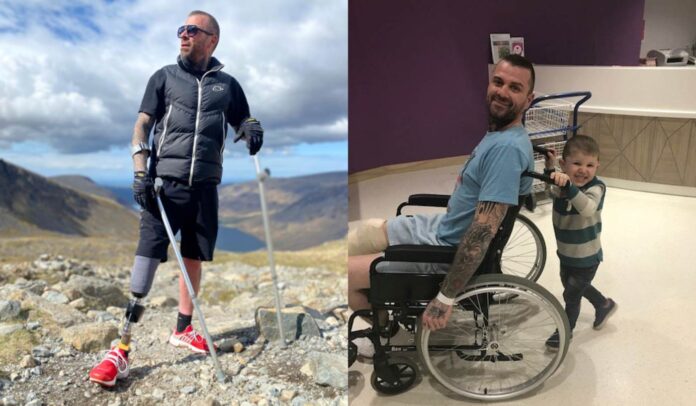
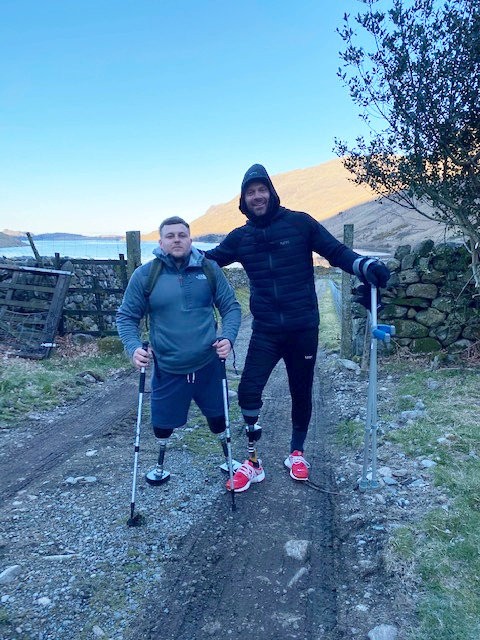
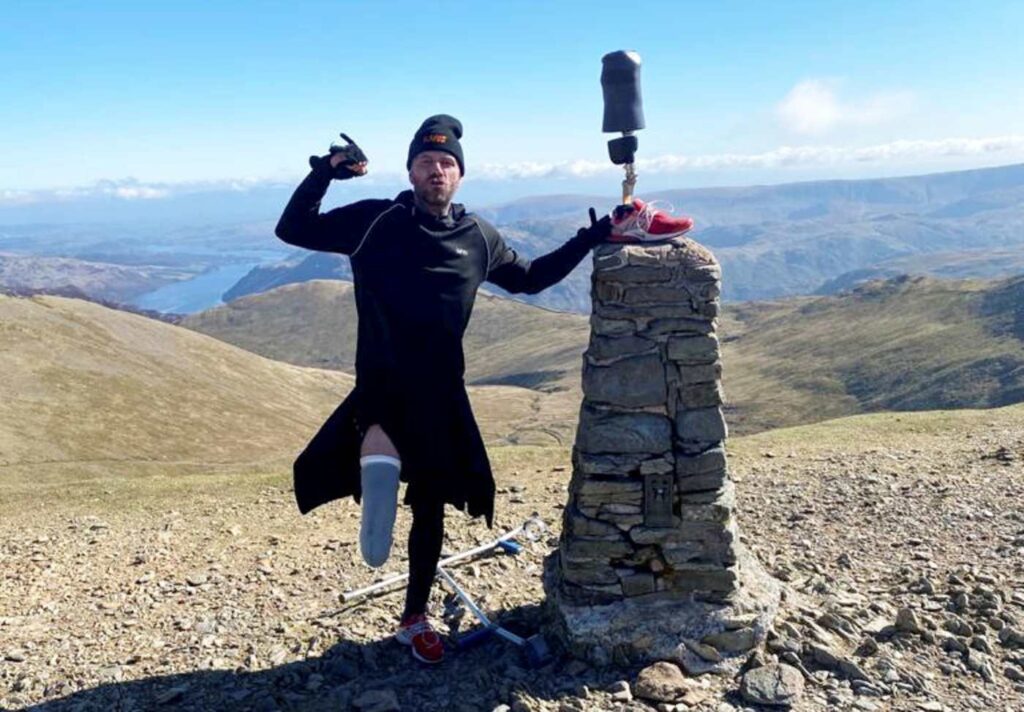
An amputee who can only walk for 20 minutes at a time has climbed England’s three highest peaks—a feat that took him 27 hours.
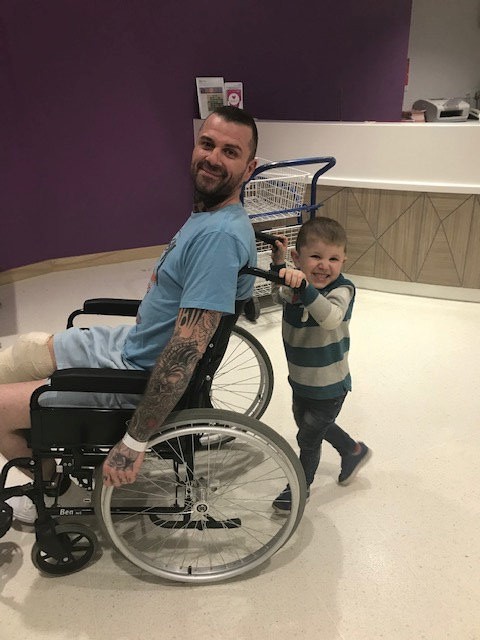
42-year-old Ben Lovell had never climbed a mountain—and in 2017 he had to have his right leg amputated due to a blood clot.
SWNS
These days the strain on his leg means he can walk 20 minutes, covering about a mile, before he has to take off his prosthetic and rest before climbing again.
But the former road worker scaled the Lake District’s Helvellyn in seven hours, Scafell in nine hours, and Scafell Pike after another 11 hours of trekking.
The father-of-two raised thousands of pounds to pay for kids with prosthetic limbs to join his fitness boot camp and holiday retreat in Tenerife, called AmpCamp.
The Yorkshire man said: “It’s never about how long it takes me; it’s just about getting it done.
SWNS
“Helvellyn was really hard and pretty scary because we lost the track and ended up climbing the side of the peak.
SWNS
“I was in a lot of pain but that’s a mental thing and you’ve just got to get past it.”
Of walking on boggy ground, he explained: “It puts such a strain on your other joints and other leg, and using crutches, which I have to do, is really hard on your back and shoulders.”
After Ben’s amputation four years ago, he suffered anxiety and depression, but now goes to the gym five or six times a week.
In the past few years, he’s completed a sponsored 13-mile walk round a reservoir on crutches and a 15,000-foot parachute jump.
The reason he founded AmpCamp? “With these holidays we just want to give people a place to go where they can feel safe and confident, and where they can relax without stigma, and if you need to take your leg off for a bit everyone understands.”
SHARE the Uplifting Adventures With Daring Friends on Social Media…
Does life imitate art or does art imitate life? In one stunningly decorated Russian coffee shop, the answer is a bit of both.
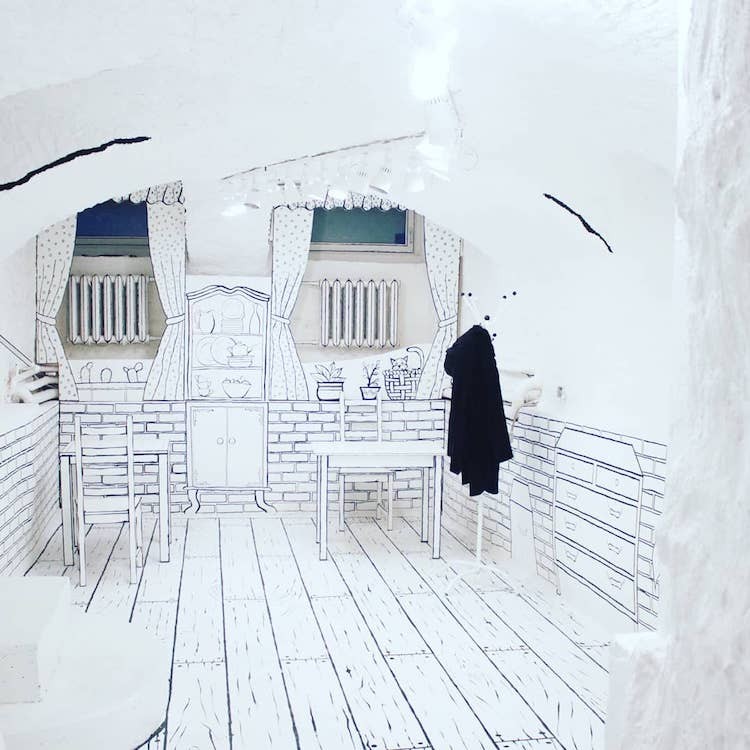
Café Bw, whose interior is designed to mimic a two-dimensional cartoon world, lets its 3D patrons step into the pages of their very own black-and-white comic book and thereby become part of the art.
Cafe BW
“The idea came up to create a place that would be interesting mainly due to its interior—of course, with a good coffee,” Bw creator and owner Solon told My Modern Met.
The café’s stylized two-dimensional renderings of everything from cats, cacti, and laundry drying on a line—to a full-size flat piano—form perfect backgrounds for Instagram-worthy photo ops.
“Our customers have been delighted!” Solon told MMM. “People deliberately come to us to take unusual pictures. Our employees are also delighted with the work and some even waited months for vacancies to open.”
Cafe BW
Bw has locations in Moscow and Saint Petersburg, but it’s not the only venue to offer fantasy fans a two-dimensional dining experience.
Cafe BW
In Seoul, at Café Yeonnam-dong 223-14 (an homage to the Korean TV show, W, whose “IRL” and webtoon protagonists move between the two worlds), it’s the clientele who put the “animated” into the bistro’s anime ambiance.
Cafe BW
Of course, for anyone who came of age in the 1980s, this particular “toontastic” intermingling of dimensions is already a familiar part of the pop culture landscape.
Back when MTV was all about the music, one of its most frequently played videos was a-ha’s iconic Take on Me, where boy and girl meet, they fall in love, and fight wrench-wielding bad guys on both sides of the comic book/real-world divide.
Cafe BW
Like its 21st-century counterparts, Take on Me is set in a coffee shop—which leaves us to wonder, does too much caffeine lead to comic book fantasies, or does life really imitate art?
There’s a ‘wonder tree’ in Honduras that’s acting as a game-changer—creating organic farming livelihoods, climate resistance, and hope to farmers in the Central American nation and elsewhere.
Because of this tree, the oft-used method of tropical land clearance—which tragically tends to yield one good crop, without another one ever following—is being replaced with another form of agroforestry that ticks every box, and which has rural farmers running towards regenerative farming methods.
This form is called Inga alley cropping. It has been pioneered by a British surveyor in Honduras named Dr. Mike Hands, and the method is built around one special tree class called Inga. This member of the legume family contains over 300 varieties, and its endemic characteristics gave Hands the basis of his revolutionary form of agroforestry.
It would go on to be described as the tropical equivalent of ‘turning water in to wine’ by the Independent and the Guardian—who named Hands one of the top 50 humans saving the planet.
“In the 80s, he worked in about a dozen tropical countries and everywhere it was the same story of slash and burn, where a family could raise a crop one year, and the next year the crop failed; and scientists couldn’t explain why,” says Lorraine Potter, a spokesperson for the Inga Foundation, a non-profit looking to transform the lives of rural Honduran families through Inga alley cropping.
250 million farmers worldwide are estimated to practice slash and burn agriculture—the carbon released from the burned trees and soil is calculated to contribute to 73% of greenhouse gas emissions from the developing world’s agriculture.
“He was trying to figure out why these systems failed, and why families had to keep burning three acres one year and another acre the next year… and he made a breakthrough and found out it was the phosphorus that was depleted,” says Potter.
One of the 17 essential nutrients for plants, and one whose functions cannot be performed by any other, plants can’t last long without adequate phosphorus, and it would turn out the phosphorus in the soil was being depleted or washed away without properly being replenished.
The breakthrough
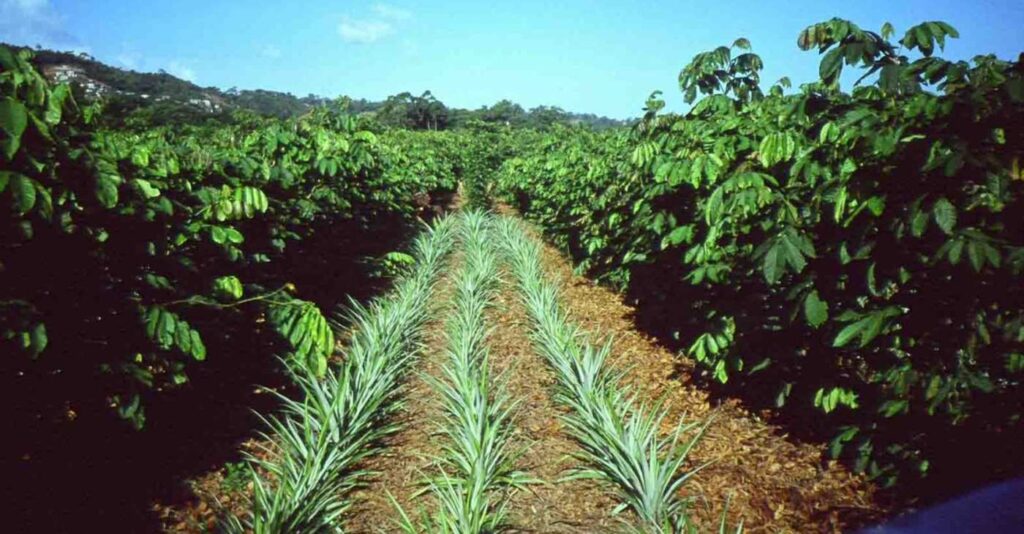
Pineapples growing in an Inga alley, Inga Foundation
Dr. Hands would go on to trial a dozen different species before settling on Inga, despite being cautioned against it.
Potter explains that an Inga alley is like a bowling alley—where the gutters are is where the trees grow, and in the lane is where the crops grow. Hands’ configuration of placing the trees just 20 centimeters apart, less than what most seed packets will advise for cabbage plants, created the perfect conditions for both food crops and cash crops.
But why and how does it work? It starts with the sheer uniqueness of the Inga tree.
Inga can grow up to 25 feet in the first year of its life, and is tolerant of poor soil conditions, heat and drought, and flooding. Its broad leaves partly shadow the ground below—enough to prevent crops from overheating and weeds from taking over, but not enough to block out the sunlight from reaching the crops.
Being a member of the legume family, Inga is a nitrogen fixer. This means it pulls nitrogen out of the air, and stores it in its roots, where a family of bacteria add a hydrogen atom and convert it to ammonia, allowing plants to consume it. All plants need nitrogen. It’s why fertilizer is made, and nitrogen fixers are a necessary part of any permaculture or regenerative agricultural model.
At about 16-18 months of life, the Inga trees in the alley are cut to chest height, giving families all the firewood they need, and covering the ground in the leaves, which decompose and re-energize the soil below.
“The first year they recruited 40 families. The families were concerned: How does planting trees give them food?” says Potter, explaining the infancy of the Inga Foundation, which recently won the Ray C. Anderson NextGen Award along with a $100,000 grant to practice Inga alley cropping.
“So they planted half their crop with the Inga alleys and the other half they did their normal slash-and-burn planting. There was a horrific storm of about six inches of rain. It washed away all their slash-and-burn crops, [but they got] a crop with their Inga alleys,” said Potter. “So everyone immediately wanted to plant the rest of their land with Inga alleys.”
After that, she would say, no more families would have to be recruited, and now there are 300 families in the surrounding valleys practicing Inga alley cropping.
So far the methods of Inga alley cropping have been adopted by farmers in Honduras, Peru, Belize, Bolivia, Costa Rica, Guatemala, Mexico, Nicaragua, Madagascar, DR Congo, Uganda, Sierra Leone, Cameroon, Laos, and Sarawak.
Green for green
Following the realization that they could plant all their normal food crops with the Inga alleys, the farmers turned towards cash crops. They’ve so far grown black peppercorns, cacao, turmeric, chilis, cardamom, vanilla, citrus, and others produce.
This generates legitimate revenue, allowing the farmers to improve their lives. These products are awaiting ‘Organic’ certification, which they meet easily due to the regenerative nature of the model—both in terms of natural weed control ending the need for pesticides and herbicides, and the use of organic fertilizer during the trimming season.
Interestingly enough, as the success of the Inga alley cropping has grown, the farmers have begun pushing the envelope. Some have started growing low-maintenance fruit trees, while others are actually reforesting the areas of land they used to decimate with fire.
Others are planting hardwoods to augment the forest environment and provide further opportunities for income and food security. These include Cordia megalantha, which is used to make high-quality furniture, but also produces sweet-ish tasting fruit, and other luxury hardwoods like mahogany and Dalbergia.
It may be largely about generating food and an income for the farmers, but the world benefits from their efforts, as between 2012-2019, the Inga Foundation has calculated that over 284,000 tons of CO2 have been sequestered or avoided through the use of Inga alleys. This number will come to 450,000 tons by the end of 2021.
It’s truly amazing what one man, in the right place, next to the right tree, can do.
(WATCH the Inga Foundation video about their work below.)
GROW the Good News in Your Friends’ Feeds—Share This Story…
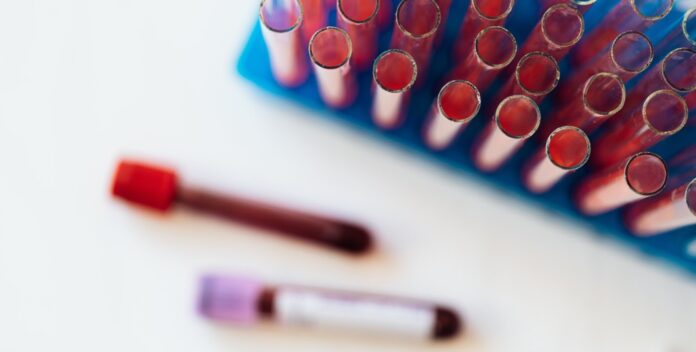
Whereas a cancer screening requires making an individual appointment with a physician, this simple blood test can screen for 50 separate cancers and detect them at a rate well above the average for tests.
Researchers have been working on this for years. Reporting on a large study released in March 2020, GNN learned that if we could achieve earlier detection for just half of cancer patients, we could save millions of lives every year worldwide
Aimed at individuals who are age 50+, the ease and thoroughness of the test process can help detect some difficult-to-diagnose cancers when they’re in their early stages, such as some blood cancers, ovarian, head and neck, and pancreatic cancer.
Developed by a U.S. biotech company called Grail, the trials of around 3,000 people looked for small leaks of altered DNA that seep from tumors into the bloodstream.
The test uses machine learning, a type of artificial intelligence, to look for changes in DNA “methylation.” DNA Methylation is a record of the changes—often damage—which DNA experiences over its lifetime—and is being theorized as a possible detector of cancer, but also as the truest marker of biological aging.
Some cancers, like pancreatic, were detected with 63% accuracy even at stage 1.
Critically, the most successful rates of detection were found in non-solid tumors, i.e. tumors for which there are no screening methods, like liver, pancreatic, and oesophageal cancers.
Best of all, the false-positive rate was less than .07%, compare this to 10% for mammography, and the test was able to detect the location in the body where the cancer was growing at a rate of 90%.
Another trial of the Grail test conducted by the UK’s National Health Service and of 140,000 volunteers recently wound up, and those results are expected in 2023.
In a statement, the NHS cancer chief Peter Johnson said: “This latest study provides further evidence that blood tests like this could help the NHS meet its ambitious target of finding three-quarters of cancers at an early stage, when they have the highest chance of cure.”
“The data is encouraging and we are working with Grail on studies to see how this test will perform in clinics across the NHS, which will be starting very soon.”
CURE Friends’ Feeds of Bad News—Share This Hopeful Breakthrough…
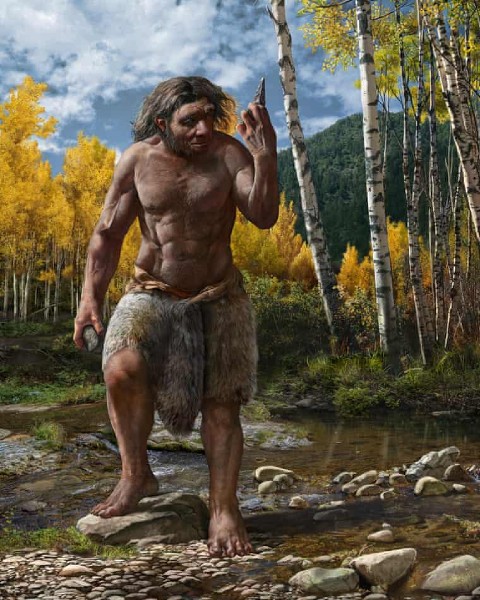
Paleontology has a way of throwing curveballs at science more than other disciplines. For example, these days we have the fascinating case of the “Dragon Man,” after a Chinese family has donated a complete human cranium that’s far bigger than any other cranium seen in the Homo genus.
The skull—which was kept hidden in a wall for 90 years—is now being theorized as a new species in our genus, and one that shares more commonalities with us than the Neanderthal.
It was three years ago that a farming family donated the skull, which had been found in the province of Harbin in China’s far north, to Harbin GEO University. The story goes that it was discovered by a family member in a muddy bank during construction of a bridge, and that unsure of what to do with it, they hid it inside a wall for almost a century.
Now, after painstaking chemical detective work and analyses against other Homo sapien craniums, researchers Ji Qiang and Ni Xijun are positing it is a new species, Homo Longi or “Dragon Man.” He is dated as having lived 136,000 years ago during the Middle Pleistocene, and the mineral contents found within the bone are strikingly similar to other human remains dated from the same period found in Harbin.
“The discovery of the Harbin cranium and our analyses suggest that there is a third lineage of archaic human [that] once lived in Asia, and this lineage has [a] closer relationship with H. sapiens than the Neanderthals,” lead-author Ni Xijun told Smithsonian.
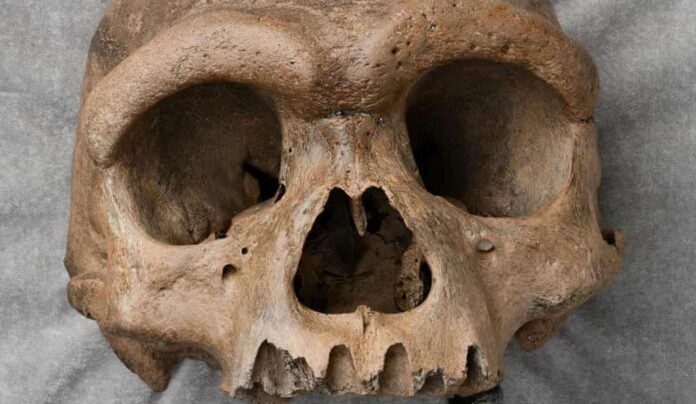
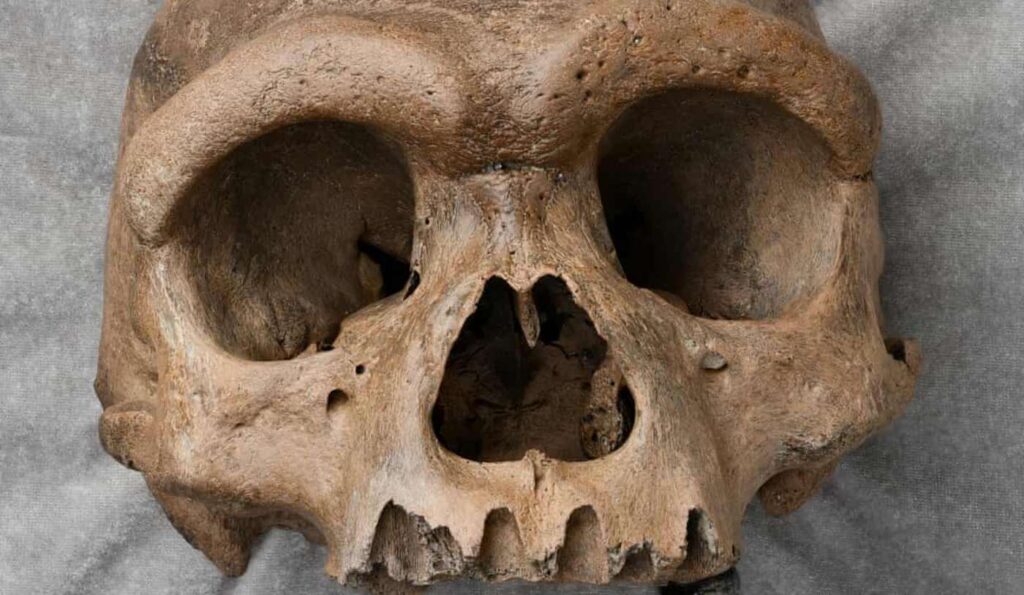
The basic routes to the new species conclusion were that it’s the largest of all known Homo skulls. It has a comically thick brow, and square-shaped eye sockets. More advanced work included comparing 600 morphological characteristics of the Longi skull with 95 other skulls from varies species.
Dragon Man, Chuang Zhao
A following mathematical analysis suggested that modern humans evolved down through three separate lineages, one being H. longi and a number of other Pleistocene Asian humans like those found in Hualongdong and Dali.
Another possibility is that the skull is actually what scientists have for years been calling a “Denisovan,” a mysterious group of humans that existed in Siberia but who left behind only a few teeth and two bone shards.
Chris Stringer at the Natural History Museum in London contributed to the project, but he feels it’s not worth creating a new species name, as it’s generally understood that shapes of skulls, shoulder-width, nasal cavity size, or any of the characteristics we use to distinguish species today weren’t important at the time when it came to breeding. There are individuals today who carry a surprising amount of Neanderthal DNA.
“I prefer to call it Homo daliensis, but it’s not a big deal,” Springer said, speaking with The Guardian. “The important thing is the third lineage of later humans that are separate from Neanderthals and separate from Homo sapiens.”
“Certainly this specimen could be Denisovan but we have to be cautious. What we need is much more complete skeletal material of the Denisovans alongside DNA,” he added.
One thing’s for certain—the huge skull housed a big brain, and both were fitted to a big body. The skull belonged to a man in his 50s, and would have been as tall as modern adult males. His grossly enlarged nasal cavity fits the needs of a high-octane hunter-gatherer lifestyle, and is typical of animal adaptations necessary to survive in the brutal cold of the northern winters.
The other Asian species like H. dalinesis lived down in the tropical south. Paleoanthropologists feel that the large brain cavity inherent in both skulls would suit the challenges of surviving in two different harsh climates, and that other adaptations developed later.
SHARE This Amazing Find With Pals on Social Media…
Quote of the Day: “If you get up in the morning and think the future is going to be better, it is a bright day. Otherwise, it’s not.” – Elon Musk (turns 50 today)
Photo: by Frosty Ilze
With a new inspirational quote every day, atop the perfect photo—collected and archived on our Quote of the Day page—why not bookmark GNN.org for a daily uplift?
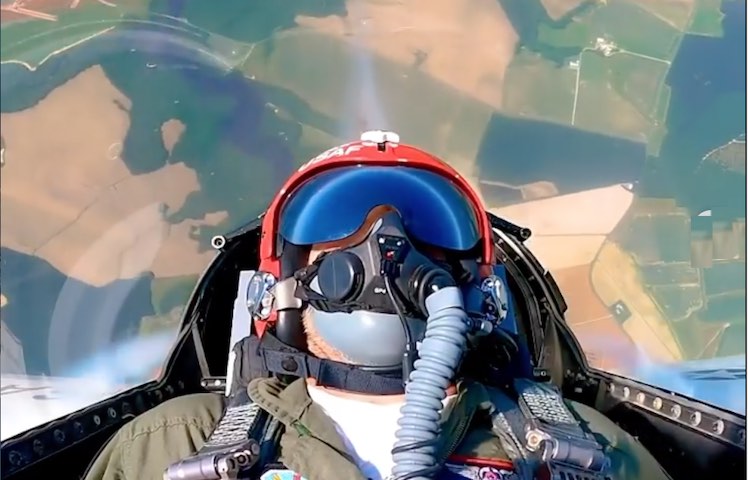
The hero who jumped into a Maryland bay last month to save a toddler was honored by the U.S. Air Force Thunderbirds acrobatic jet team, who gave him an unforgettable ride on Friday.
“Jonathan Bauer is our hometown hero for the Ocean City Air Show,” declared the group’s official Instagram account.
“His selfless act shows the best America has to offer, and we’re proud to have honored him with a flight today.”
On his 45-minute flight, Bauer continued to defy his fear of heights, experiencing “the thrill” of hitting up to seven G’s, along with accompanying twists and spins of the “best roller coaster ride imaginable.”
“I am incredibly excited to be given this opportunity,” said Bauer, the native of southwest Pennsylvania who works at Atlantic General Hospital in Maryland, and was also was awarded a governor’s citation for his actions.
SHARE the High-Flying Good News Hero on Social Media…
This blog was submitted to GNN by one of our readers for publishing. If you have an interesting story of kindness or positivity, be sure and send it to us for review.
Every year, thousands of hikers attempt to complete the 2,000-mile Appalachian Trail, stretching from Georgia to Maine, but only one-in-four are able to conquer the mountainous terrain that has an elevation gain and loss equivalent to hiking Mt. Everest from sea-level and back 16 times.
Hikers typically carry only three days of food and sometimes run short, as they endeavor to reach the next town to resupply. Fortunately, trail angels sprinkle their magic along the way to provide weary hikers food, drink, and a comfy chair in which to rest.
Michele Staudenmaier had never heard of trail angels or trail magic before her son Zach began a thru-hike of the Appalachian Trail (A.T.) in March. Zach told her how hikers so appreciated real food and drinks from volunteers, nicknamed “trail angels” by the hiking community.
And so Michele decided she would become one such angel.
She and her husband Dave, had already arranged to stay in Airbnb’s along the A.T—in Georgia, Tennessee, West Virginia, Pennsylvania, Vermont and Maine—during the 6 months Zach had planned to hike.
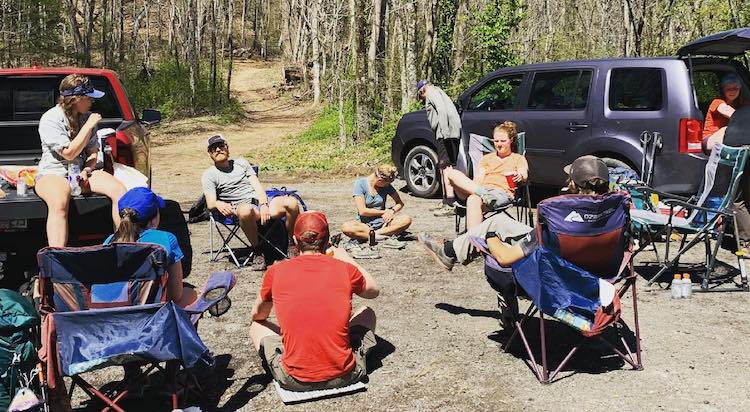
There are many remote places where the trail crosses a road, which offers a perfect place to set up some ‘trail magic’—a term coined by long-distance hikers to describe an unexpected occurrence that lifts a hiker’s spirits. There, typically an hour or so from any town, she would often encounter other trail angels spreading their own magic.
Trail Magic in Bristol, Tennessee
“I was very surprised”, said Michele, “when I realized there was a massive community of volunteers that spend their time and money to support Appalachian Trail hikers. I had no idea!”
An average hiker will burn as much as 600 calories per hour hiking up and down mountains carrying a 30-pound pack—and they are always ravenous.
One time Michele cooked and wrapped 50 hot dogs to serve along with chips, fruit, sweet treats, sodas, and Gatorade.
Michele Staudenmaier
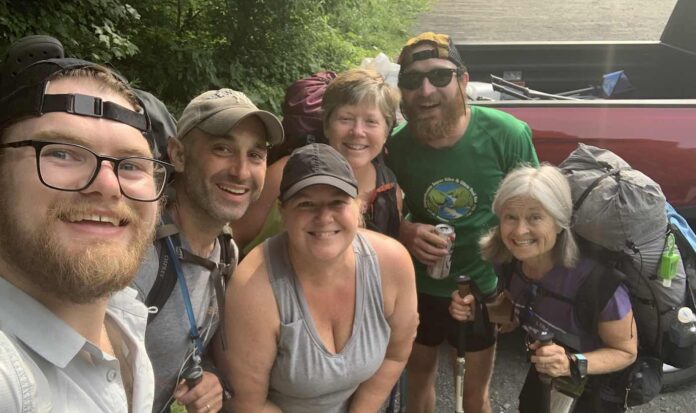
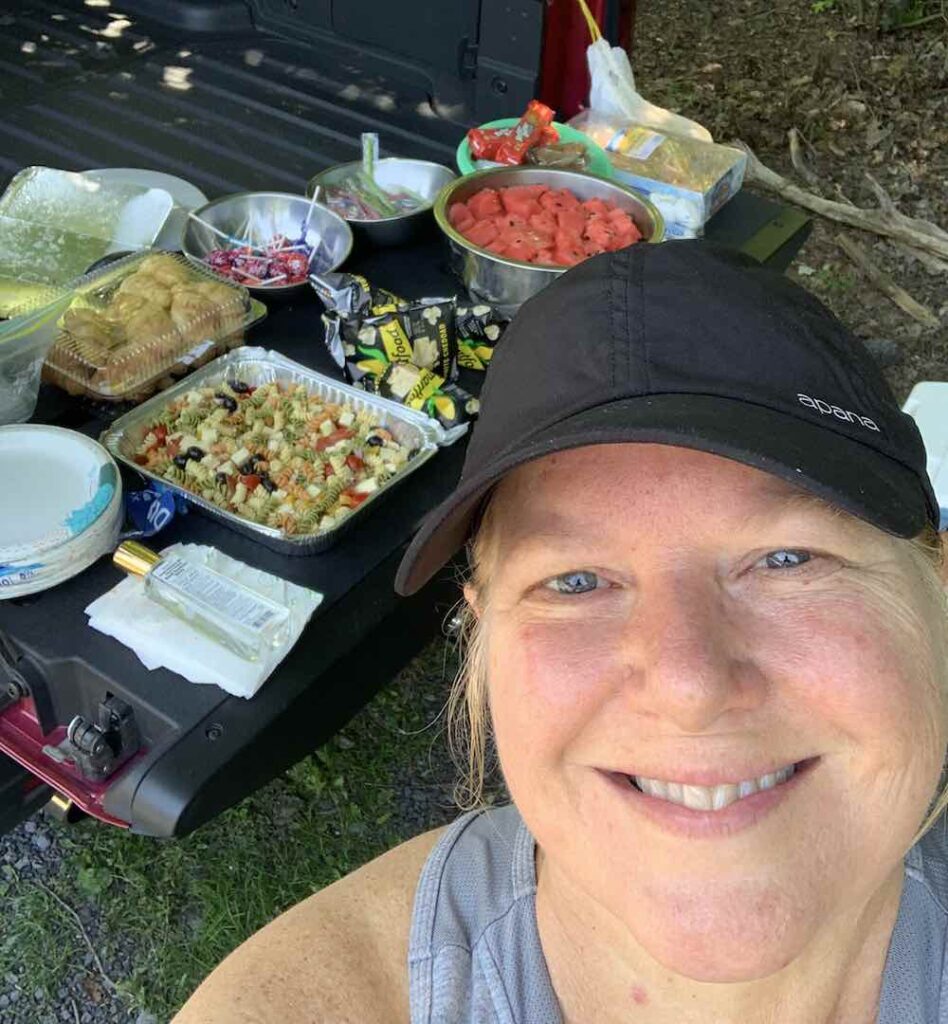
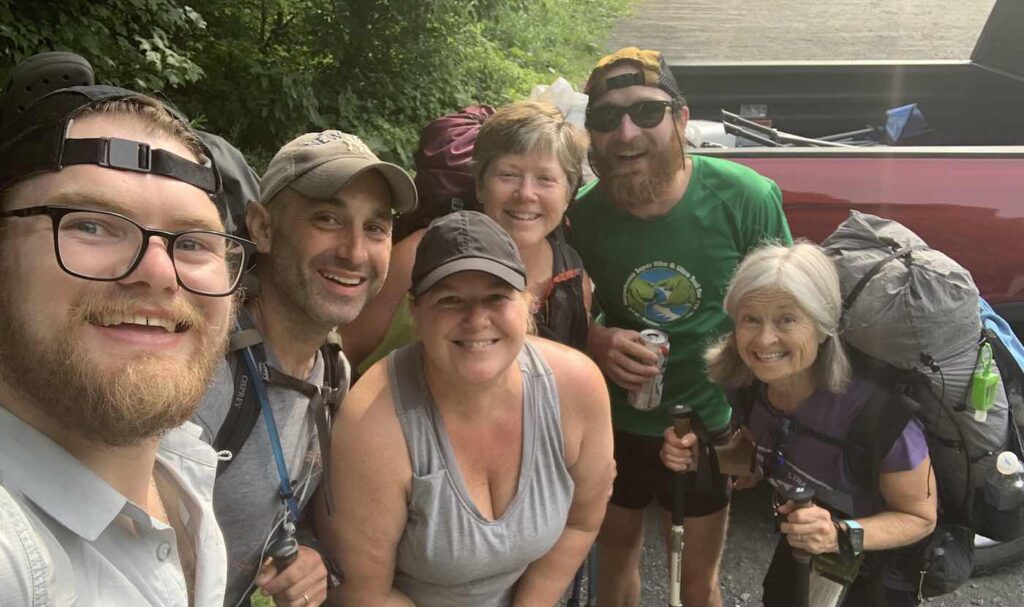
Another time she served up buckets of Kentucky Fried Chicken and pasta salad to delighted hikers. Typically as many as 20 or 30 hikers come through and spend a half hour or so resting, eating and telling stories of the A.T. before resuming their hike.
One hiker had completely run out of food the day before and expressed undying gratitude while quickly devouring six hot dogs.
Another said “you have no idea how good this chicken tastes after eating camp food!” It is unusual to have any food left over from a trail magic excursion.
Michele looks forward to spreading more trail magic and hearing the stories from hikers and other trail angels as she works her own way towards Maine.
SEND This to Friends Ravenous For Good News on Social Media…
FREE WILL ASTROLOGY – Week beginning June 25, 2021
Copyright by Rob Brezsny, FreeWillAstrology.com
CANCER (June 21-July 22):
“I was so flooded with yearning I thought it would drown me,” wrote Cancerian author Denis Johnson. I don’t expect that will be a problem for you anytime soon. You’re not in danger of getting swept away by a tsunami of insatiable desire. However, you may get caught in a current of sweet, hot passion. You could be carried for a while by waves of aroused fascination. You might find yourself rushing along in a fast-moving stream of riled-up craving. But none of that will be a problem as long as you don’t think you have something better to do. In fact, your time in the cascading flow may prove to be quite intriguing—and ultimately useful.
LEO (July 23-Aug. 22):
In my opinion, psychology innovator Carl Jung, born under the sign of Leo, was one of the 20th century’s greatest intellects. His original ideas about human nature are central to my philosophy. One of my favorite things about him is his appreciation for feelings. He wrote, “We should not pretend to understand the world only by the intellect; we apprehend it just as much by feeling. Therefore, the judgment of the intellect is, at best, only half of the truth, and must, if it be honest, also come to an understanding of its inadequacy.” I bring this to your attention, Leo, because the coming weeks will be a favorable time to upgrade your own appreciation for the power of your feelings to help you understand the world.
VIRGO (Aug. 23-Sept. 22):
For the indigenous Ojibway people, the word Adizokan means both “story” and “spirit.” In fact, story and spirit are the same thing. Everything has a spirit and everything has a story, including people, animals, trees, lakes, rivers, and rocks. Inspired by these thoughts, and in accordance with cosmic omens, I invite you to meditate on how your life stories are central elements of your spirit. I further encourage you to spend some tender, luxurious time telling yourself the stories from your past that you love best. For extra delightful bonus fun, dream up two prospective stories about your future that you would like to create. (Info from SweetWaterVisions.com.)
LIBRA (Sept. 23-Oct. 22):
Author Aslı Erdoğan writes, “It had been explained to me from my earliest childhood that I would know love—or that thing called ‘love’—as long as I was smart and academically brilliant. But no one ever taught me how to get that knowledge.” I’m sorry to say that what was true for her has been true for most of us: No one ever showed us how to find and create and cultivate love. We may have received haphazard clues now and then from our parents and books and movies. But we never got a single day of formal instruction in school about the subject that is at the heart of our quest to live meaningful lives. That’s the bad news, Libra. The good news is that the rest of 2021 will be one of the best times ever for you to learn important truths about love.
SCORPIO (Oct. 23-Nov. 21):
Before he journeyed in a spaceship to the moon in 1971, Scorpio astronaut Alan Shepard didn’t think he’d get carried away with a momentous thrill once he arrive at his destination. He was a manly man not given to outward displays of emotion. But when he landed on the lunar surface and gazed upon the majestic sight of his home planet hanging in the sky, he broke into tears. I’m thinking you may have similar experiences in the coming weeks. Mind-opening, heart-awakening experiences may arrive. Your views of the Very Big Picture could bring healing upheavals.
SAGITTARIUS (Nov. 22-Dec. 21):
Sagittarian author Clarice Lispector observed, “In a state of grace, one sometimes perceives the deep beauty, hitherto unattainable, of another person.” I suspect that this state of grace will visit you soon, Sagittarius—and probably more than once. I hope you will capitalize on it! Take your time as you tune in to the luminescent souls of the people you value. Become more deeply attuned to their uniquely gorgeous genius.
CAPRICORN (Dec. 22-Jan. 19):
Trailblazing Capricorn psychoanalyst Ernest Jones (1879–1958) said, “There is no sense of contradiction within the unconscious; opposite ideas exist happily side by side.” In other words, it’s normal and natural to harbor paradoxical attitudes; it’s healthy and sane to be awash in seemingly incongruous blends. I hope you will use this astrologically propitious time to celebrate your own inner dichotomies, dear Capricorn. If you welcome them as a robust aspect of your deepest, truest nature, they will serve you well. They’ll make you extra curious, expansive, and non-dogmatic. (PS: Here’s an example, courtesy of psychologically savvy author Stephen Levine: “For as long as I can remember the alternate antics of the wounded child and the investigations of the ageless Universal played through me.”)
AQUARIUS (Jan. 20-Feb. 18):
Aquarian guitarist Django Reinhardt was a celebrated jazz musician in occupied France during World War II. Amazingly, he was able to earn good money by performing frequently—even though he fit descriptions that the rampaging Germans regarded as abhorrent. Nazis persecuted the Romani people, of which he was one. They didn’t ban jazz music, but they severely disapproved of it. And the Nazis hated Jews and Blacks, with whom Reinhardt loved to hang out. The obstacles you’re facing aren’t anywhere near as great as his, but I propose we make him your role model for the next four weeks. May he inspire you to persist and even thrive in the face of challenges!
PISCES (Feb. 19-March 20):
Piscean author Richard Matheson believed we’ve become too tame and mild. “We’ve forgotten,” he wrote, about “how to rise to dizzy heights.” He mourned that we’re too eager to live inside narrow boundaries. “The full gamut of life is a shadowy continuum,” he continued, “that runs from gray to more gray. The rainbow is bleached.” If any sign of the zodiac has the power to escape blandness and averageness, it’s you Pisceans—especially in the coming weeks. I invite you to restore the rainbow to its full vivid swath: red, orange, yellow, green, blue, indigo, and violet. Maybe even add a few colors.
ARIES (March 21-April 19):
Author Albert Camus advised everyone to “steal some time and give it freely and exclusively to your own self.” That’s excellent advice for you to heed in the coming days. The cosmos has authorized you to put yourself first and grab *all* the renewal you need. So please don’t scrimp as you shower blessings on yourself. One possible way to accomplish this goal is to go on a long stroll or two. Camus says, “It doesn’t have to be a walk during which you’ll have multiple life epiphanies and discover meanings no other brain ever managed to encounter.” But I think you are indeed likely to be visited by major epiphanies and fantastic new meanings.
TAURUS (April 20-May 20):
Robert Mugabe was Zimbabwe’s leader for 37 years. In the eyes of some, he was a revolutionary hero. To others he was an oppressive dictator. He was also the chancellor of the University of Zimbabwe, where his wife Grace received her PhD just two months after she started classes. I suspect that you, too, will have an expansive capacity to advance your education in the coming weeks—although maybe not quite as much as Grace seems to have had. You’re entering a phase of super-learning.
GEMINI (May 21-June 20):
“We were clever enough to turn a laundry list into poetry,” wrote author Umberto Eco. Judging from astrological omens, I suspect you’re now capable of accomplishing comparable feats in your own sphere. Converting a chance encounter into a useful new business connection? Repurposing a seeming liability into an asset? Capitalizing on a minor blessing or breakthrough to transform it into a substantial blessing or breakthrough? All these and more are possible.
WANT MORE? Listen to Rob’s EXPANDED AUDIO HOROSCOPES, 4-5 minute meditations on the current state of your destiny — or subscribe to his unique daily text message service at: RealAstrology.com
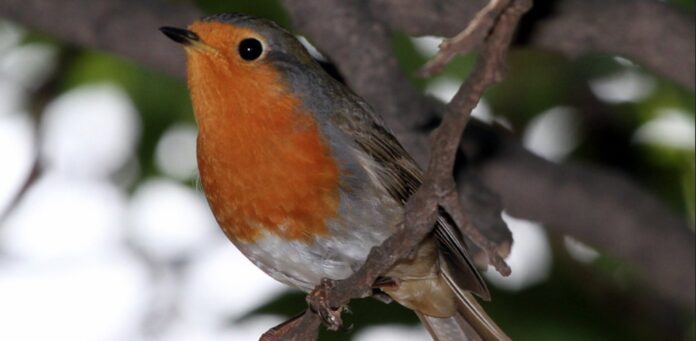
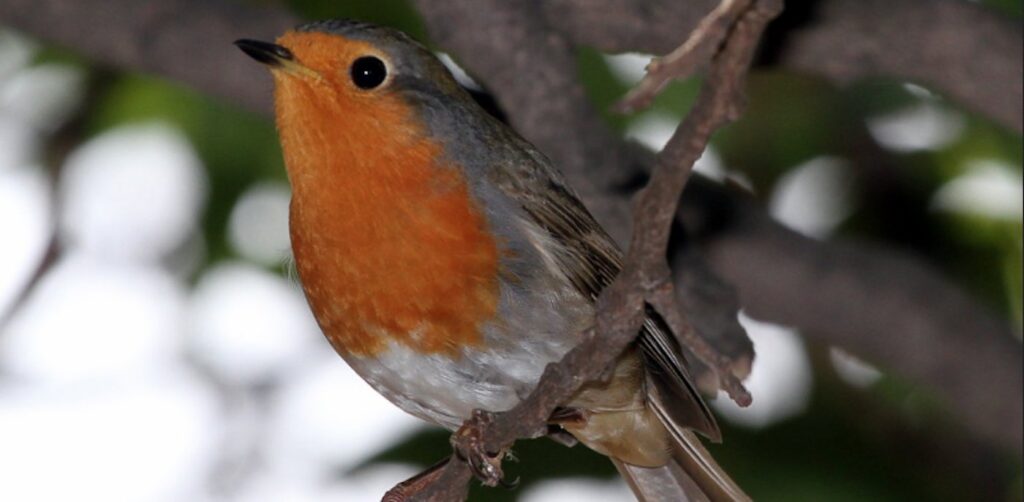
European robin by Greg Schechter, CC license on Flickr
Birdwatchers may compliment each other by saying “you have the eyes of a hawk,” but now they might want to say “you have the eyes of a robin”.
European robin by Greg Schechter, CC license on Flickr
Within the European robin’s eye, scientists have identified a protein which they believe acts as the bird’s biological attunement to Earth’s magnetic field, the key to the long-sought mechanism behind how they are able to migrate mass distances.
Whether it was in school or from parents, or through watching Mutual of Omaha’s Wild Kingdom and Planet Earth, everyone learns that birds migrate, but rarely does one ever learn how birds manage it.
‘Cryptochromes’ are not a new form of digital currency, but rather a group of light-sensitive flavoproteins found in the retinas of birds and other groups of animals. Cryptochrome 4 (cry4) is posited in a new study to be the organ behind magneto-sensitivity.
Following an experiment using quantum mechanics, The Scientist reports that researchers at the University of Oxford, searching for such a means, were left with “overwhelming evidence that cry4 [is] the hottest candidate.”
One of the reasons for this was that, of the three other cryptochromes in the robin’s eye, cry4 was the only one that bound to a particular molecule which gave it the ability to sense light, an important first step in the ability to sense magnetic fields.
Furthermore, unlike the other three which had 24-hour responsiveness, cry4 was not attuned to the day-night cycle, but instead had seasonal variation, which in turn the other three did not possess.
The cryptochrome proteins in chickens and pigeons, birds which don’t migrate, could not detect the magnetic field generated in the laboratory, further reinforcing the theory.
While there is still debate about the conclusion, the theory is that cry4 detects light and the position of the earth during the seasons. How does this create an ability to sense magnetism?
When bound with molecules, the cry4 are known to create a pair of free radicals. These free radicles have unpaired electrons, which lead them to hop along a string of tryptophan amino acids. It was the quantum spin of these radicles that was thought to give the birds their ability to detect the magnetic fields of the earth, through a photo-chemical reaction.
Some Reddit commenters in the heavily-moderated science forum, suggested that one half of the Robin’s field of vision would possess a different shade of color to the other.
Research from the Theoretical and Computation Biophysics Group at the University of Illinois at Urbana-Champaign produced a series of images after researcher Klaus Schulten first predicted magnetoreceptive cryptochromes years ago, positing that they might provide a magnetic field “filter” over the bird’s field of view—like in the images above.
Writing to The Scientist, the authors of the paper responded directly to peers who disputed the relevance of their findings, and explained that none of the evidence put forward to disprove their findings were replicable in their lab.
So, though there are unanswered questions currently, this chemical reaction created by the missing electrons seems to be the strongest existing theory on how birds are able to travel thousands of miles without getting lost.
FLY This Fascinating Finding to Friends on Social Media…
Quote of the Day: “The greatest thing in the world is to know how to belong to oneself.” – Michel de Montaigne
Photo: by Dollar Gill
With a new inspirational quote every day, atop the perfect photo—collected and archived on our Quote of the Day page—why not bookmark GNN.org for a daily uplift?
A Portland man’s adorable animated short about friendship, love, and ‘getting through tough times’ is generating thousands of smiles.
Steve Cowden
Born of grief, when his nephew died unexpectedly, Steve Cowden spent most of 2020 working on the video during lockdown, and now hopes to pitch it as a heartwarming series.
After a family gathering to honor the nephew, Cowden’s 22-year-old son Trent began spontaneously playing chords on the old piano.
“My twin brother Scott joined in with singing the words ‘Chocolate Cake and Ice Cream.’ We had just eaten dessert and he sang the silly words, I think, to lighten our hearts,” Cowden told GNN.
“I was upstairs with my mom and the tune was so sweet that I ran downstairs to be part of the moment. We all sang in harmony together. It kind of felt magical and seemed to help us. It was just a jingle at the time but it stuck with me.”
Chocolate Cake and Ice Cream, Some things are just better together
After returning to Oregon, while commuting to work, he began singing it and adding more words. He pulled out his voice memo app and made some recordings. By the time he had arrived at work (about 40 minute drive) the song was complete, and he and Trent later recorded the final version using another old piano.
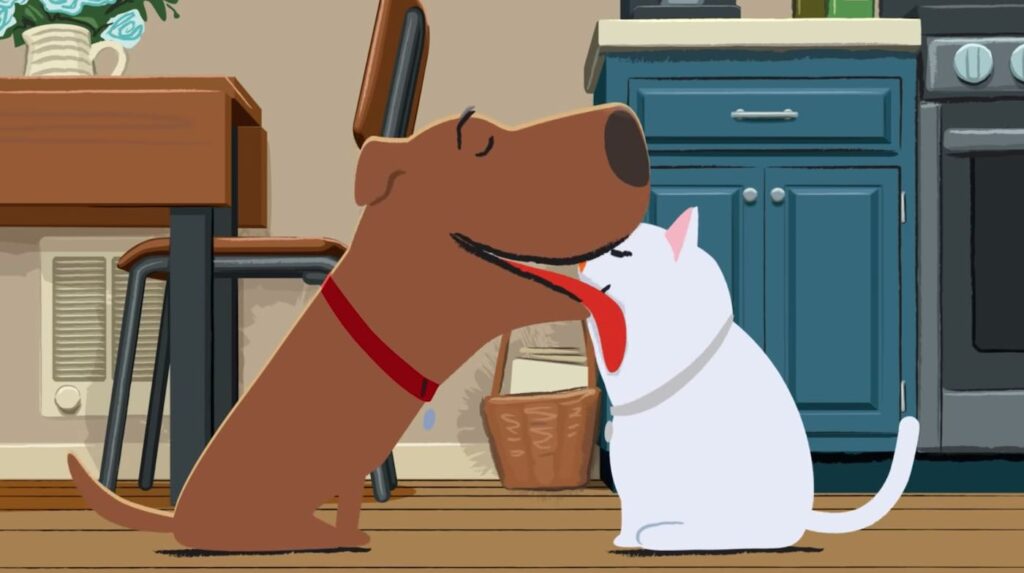
“The song was so catchy, I almost immediately had the idea of making it into an animated short about a dog and cat.”
Steve Cowden
Cowden’s cute animation includes a moment when the cat, in order to amuse the doggie in the window, dances the moonwalk across a fence top.
“The response has really been amazing. One woman told me she shared the video with her network of 400 families who have experienced the loss of a loved one.”
I’ll always treasure these times forever, and whenever I see your smile. Some things are better when they’re together, so let’s never say goodbye. Chocolate cake and ice cream—I hope we never part.
Cowden has been an illustrator for 30 years, and in 2000 he did the art for a children’s book entitled Cheese Louise. Since releasing the video, Steve has dreamed up additional characters, and written more episodes that he hopes can be make them into a series.
(Watch ’til the end to get all the ‘feels’!)
SHOW Your Friends How Much You Care – Share the Love on Social Media…
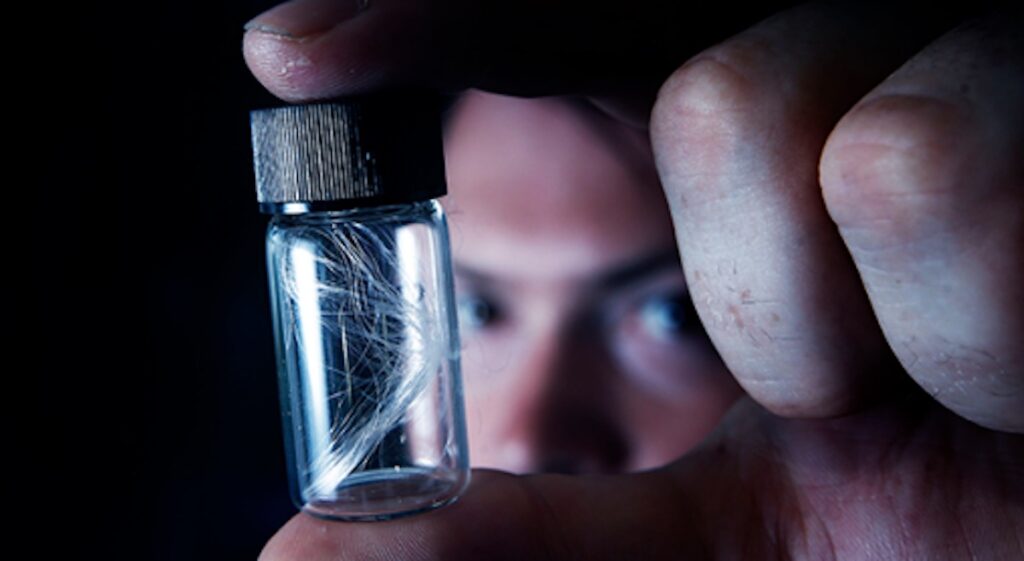
By mimicking how a spider spins silk at room temperature, an Oxford University venture has created a high performance, biodegradable textile that is 1,000 times more efficient than current methods for making man-made fabrics, which emit tons of carbon.
Biomimicry Institute
Over the course of millions of years, spiders have evolved the ability to create one of the world’s strongest and most adaptable materials—silk.
The secret to a spider’s ability to create silk lies within their spinnerets, a specialized organ that turns the liquid silk gel within the spider’s abdomen into a solid thread.
After years of research into this unique mechanism, Spintex has managed to mimic the spider’s amazing ability: The company has created a process to spin textile fibers from a liquid gel, at room temperature, with water and biodegradable textile fibers as the only outputs.
Last week, the nonprofit Biomimicry Institute awarded $100,000 to the English researchers, naming Spintex the winner of this year’s Ray of Hope Prize, which honors the world’s top nature-inspired startups.
“By learning from nature, Spintex is creating new products, materials, and processes that solve fundamental sustainability challenges,” says the media release.
“The textile industry is searching for sustainable technologies and solutions that will reduce waste, greenhouse gas emissions, and pollution, and enable a circular economy. Spintex is uniquely positioned to replace not only silk used in fashion, but also oil-derived synthetic fibers. As they scale, their goal is to expand upon their textile capabilities, creating high-performance textiles with properties, such as stretch and embedded color, all while creating biodegradable and non-bioaccumulating textiles.”
More than 50% of silk’s environmental footprint lies in the raw material processing, which uses thousands of liters of water that must be boiled every day, so it’s very energy intensive. Currently, there are no sustainable alternatives to traditional silk.
“Spintex provides the only truly sustainable option for silk production that can produce fibers with the quality, performance and luster of traditional silk,” says the company website. “The room temperature processes completely remove the high-energy costs seen in the silk industry, while providing an equivalent or superior product.”
“Going through the Ray of Hope program has been a fantastic experience,” said Alex Greenhalgh, CEO and co-founder of Spintex. “All of us are deeply honored to be selected as the winners of the 2021 prize and are so grateful for the opportunity given to us.”
Spintex told GNN they currently have ongoing development projects with some big fashion and textile brands, but nothing is yet commercially available.
Besides fostering the growth of top nature-inspired startups, the Biomimicry Institute hosts a cool website called AskNature.org, which is a free online tool that contains strategies found in nature and examples of ways they’re used in design.
SPIN This Yarn And Share it With Your Friends on Social Media…