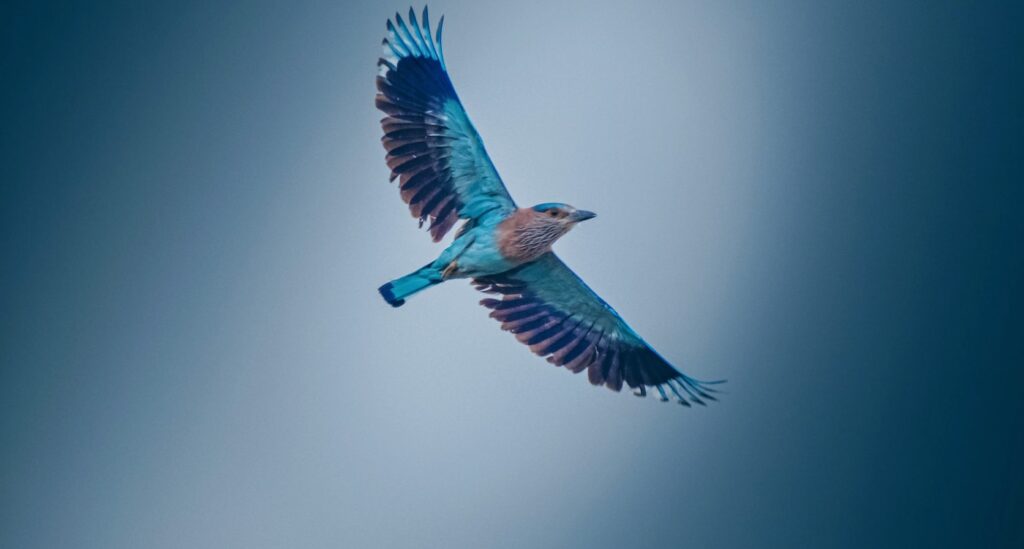
Quote of the Day: “The reason birds can fly and we can’t is simply because they have perfect faith, for to have faith is to have wings.” – J.M. Barrie, The Little White Bird
Photo: by Navi Photography
With a new inspirational quote every day, atop the perfect photo—collected and archived on our Quote of the Day page—why not bookmark GNN.org for a daily uplift?
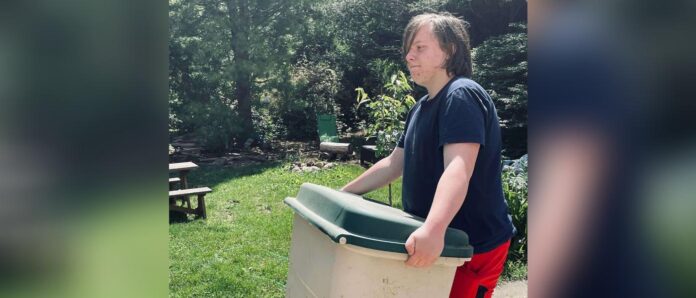
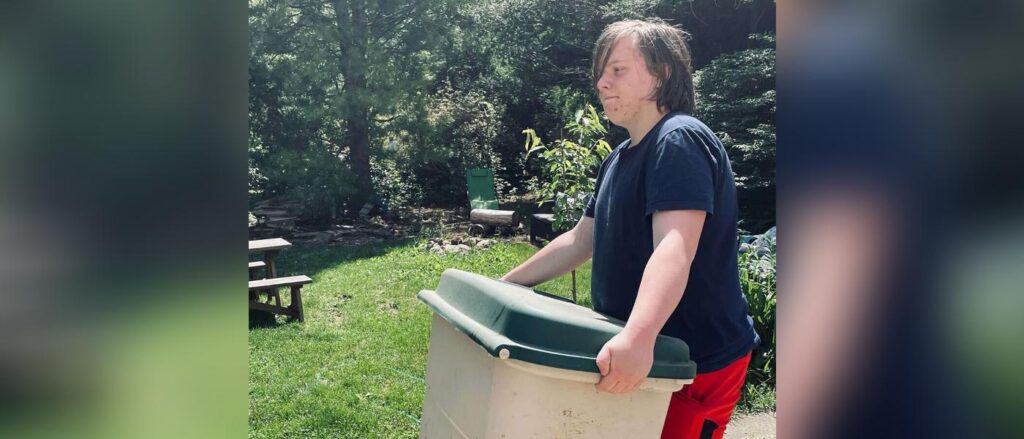
Lots of teens look for novel ways to supplement their summer income. After surfing YouTube for ideas, this 16-year-old came up with a plan and is now uplifting people who are down on their luck.
It was only after setting the wheels in motion, however, that Shane Jones discovered turning his money-making scheme into a nonprofit venture would earn him a lot more satisfaction.
A DIY video detailing the steps for buying repossessed storage units online and selling the contents appealed to the Rhode Islander’s entrepreneurial spirit. Taking $100 he’d saved up from his job at a used bookstore, last August, he put in a bid on his first unit—and won.
Per the terms of the auction, the youth from Wakefield bought the unit sight unseen—but when he realized the contents contained a raft of personal treasures likely worth more to their former owners than for any potential resale value, the experience was eye-opening.
“I started out thinking that bidding at a storage auction was kind of like a yard sale, but now I know that’s not true,” Shane told The Washington Post. “These people didn’t choose to give me this stuff. They didn’t have a choice. It’s almost like a duty to give it back.”
A little sleuthing revealed the original owner of the unit was in prison. Sensing the man hadn’t given up the batch of mementos and documents voluntarily, with the help of his parents, Shane was able to track down the incarcerated man’s mother and return his possessions to her.
The thankful mom was so thrilled by Shane’s thoughtful actions, he was inspired to keep the momentum going. While the owners of the second unit Shane bought had passed away, clues inside led him to heirs to whom he was able to pass along a passel of family heirlooms.
The owner of Shane’s third storage auction win turned out to be a woman whose life had taken a downward spiral. After losing a baby to sudden infant death syndrome, she eventually lost her job as well. Even though the locker contained the precious keys to her past—baby items and family photos—she’d been unable to afford its upkeep.
Shane contacted the locker’s former owner, who’d since relocated to Connecticut, and made arrangements for a front-porch rendezvous at his home to return her belongings. When she arrived, she was moved to tears by the teen’s kindness.
The high school sophomore was recently recognized for his amazing good deeds with a shout-out on the South Kingstown School District’s Facebook page. While the kudos are appreciated, his mom, Sarah Markey, hopes her son’s compassion and caring actions will motivate others to follow his example.
“I couldn’t be more proud of this kid, for going the extra step, for people he doesn’t know. It is actually a lot of work that he puts into this effort,” Sarah told the Post. “And I think that part of what he has learned by meeting people who he gifted with this kindness is that putting good into the world is one of the most gratifying things that he can do.”
A simple lesson, perhaps, but certainly one we could all benefit from learning.
On Wednesday, philanthropist and investor Warren Buffett announced he would be donating $4.1 billion to various charitable foundations.
Fortune Live Media, CC license
The world’s seventh-richest person explained how in 2006 he pledged to distribute all of his Berkshire Hathaway shares—more than 99% of his net worth—to philanthropy. With his latest $4.1 billion distribution, he’s already more than halfway there.
The rest of his 238,624 shares, worth about $100 billion, remain destined for charity—with Buffett planning to continue giving to the Susan Thompson Buffett Foundation, the Sherwood Foundation, the Howard G. Buffett Foundation, the Novo Foundation, and the Gates Foundation.
Buffett puts his generosity simply: “Over many decades I have accumulated an almost incomprehensible sum simply by doing what I love to do. I’ve made no sacrifice nor has my family. Compound interest, a long runway, wonderful associates, and our incredible country have simply worked their magic. Society has a use for my money; I don’t.”
He states, “A much more admirable form of philanthropy than mine involves the giving of personal time and effort. I’ve done little of that. Those who give their love and time in order to directly help others—perhaps adding a monetary gift that requires them to give up the purchase of something meaningful for their own use—are the heroes of philanthropy. America has millions of such givers.
“These people receive no recognition whether they mentor the young, assist the elderly or devote precious hours to community betterment. They do not have buildings named after them, but they silently make those establishments—schools, hospitals, churches, libraries, whatever—work smoothly to benefit those who have received the short straws in life.”
Buffett joined the exclusive club of people worth more than $100 billion in March, after shares in Berkshire Hathaway rose to history levels in 2021.
Though some of the advice in Buffett’s latest statement goes out only to the few, it’s still wise and worth heeding: “After much observation of super-wealthy families, here’s my recommendation: Leave the children enough so that they can do anything but not enough that they can do nothing.
“I’m delighted that my three children—now in their mid-60s—pursue philanthropic efforts that involve both money and time. More important, they are happy that they can be involved in helping others. They have their mother’s genes.”
A co-founder of the Giving Pledge—which encourages the uber-rich to give their wealth away—the billionaire businessmen finishes his latest release on a hopeful note: “America’s best days most certainly lie ahead.
“What’s happened here since 1776 has not been a historical fluke. Philanthropy will continue to pair human talent with financial resources. So, too, will business and government. Each force has its particular strengths and weaknesses. Combined, they will make the world a better place—a much better place—for future generations.”
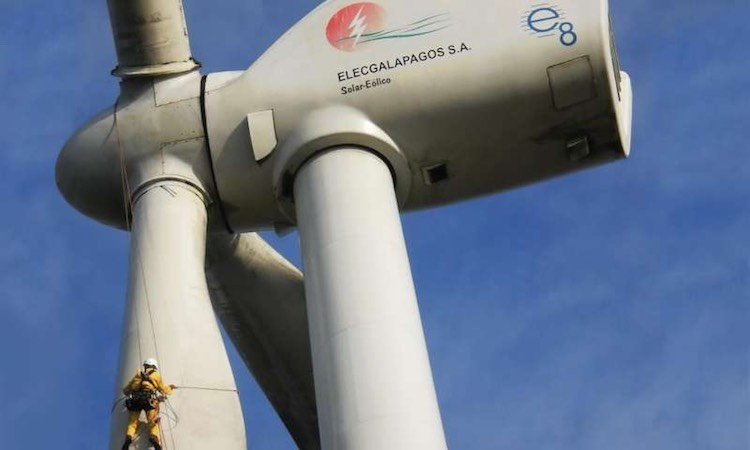
As fast as old wind turbine blades are becoming a recycling problem, there are solutions being presented to solve it.
Courtesy of EOLICSA
In Ireland, used wind turbine blades are being repurposed to build bridges, reinforce concrete, and are being proposed as potential highway noise barriers and coastal wake walls.
The first generation of wind farms are retiring their turbine blades. Cast from a fixture of plastic and fiberglass, they are essentially unrecyclable. Their predicted waste in tonnage is expected to reach 2 million by 2050.
However the fiberglass they’re made up is a valuable material used to make things strong and light, and reusing them as raw materials means less new fiberglass needs to be produced. Furthermore, as next generation blades look to increase size, strength, and lifespan, manufacturers are switching from fiberglass to carbon fiber.
The situation is perfect for innovative uses to remove a problem permanently, as next generation carbon fiber blades will be more recyclable.
Enter University College Cork in Ireland, and their plan to build a bridge out of old wind turbine blades. That can only be a good thing, as the Emerald Isle will get weighed down by 11,000 tons of decommissioned blades over the next 4 years.
“The blades are from a decommissioned Nordex N29 turbine, 14 meters long,” said Paul Leahy, lecturer in wind energy engineering to Euro News. “For this bridge, which has a span of 5m, we cut a short section from the blade. The blades are used as the main structural element of the bridge and are functional in the design.”
“However, they are also aesthetically attractive due to their gently curved shape, so we believe this will become a feature of interest on the greenway route. We are also looking at additional repurposed blade products such as outdoor furniture.”
UCC is working with schools in the States on the “Re-Wind” project—which aims to employ old blades for other uses, such as coastal wake barriers to protect soils from erosion, or to build electrical transmission towers.
Another blade recycling initiative is to use them as part of the UK’s developing high-speed rail network built by Skanska Costain Strabag.
Using the blades to reinforce concrete for various infrastructure constructions such as access roads, project developers say this should help cut carbon costs by 90%.
POWER UP the Good News—Share This Story With Friends on Social Media…
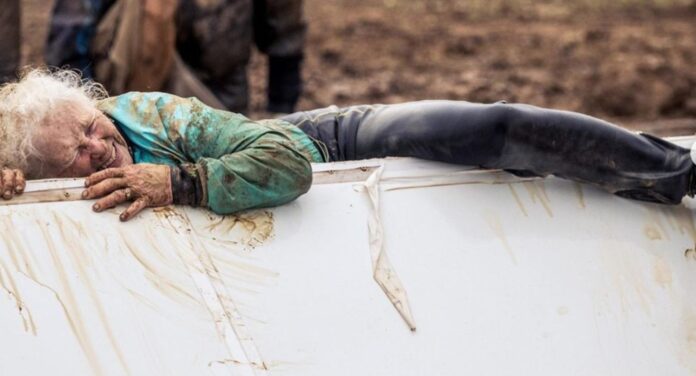
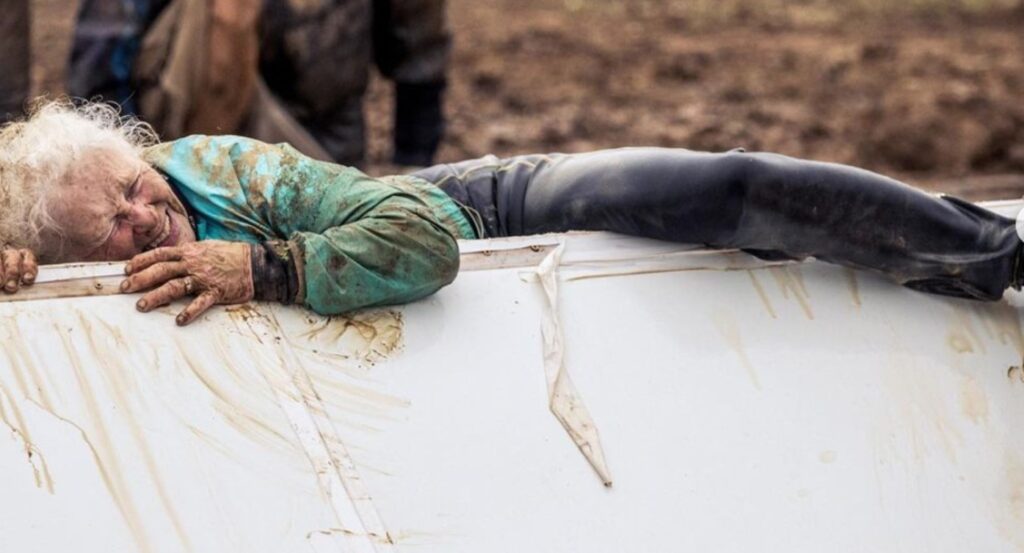
Okay, so an 81-year old widow just finished her second Tough Mudder Race. What’s your excuse?
Mildred Wilson from Sikeston. Missouri crossed the finish line of a Tough Mudder 5k obstacle course, muddy and elated earlier in March. Despite being an octagenarian, this was Wilson’s second completed Tough Mudder.
In 2019, shortly after her 80th birthday, Wilson was asked by her son if she wanted to do a race, after he himself had just finished one. The race is famous for immediately requiring participants to army crawl through pits of muddy water before tackling a several mile run interspersed with obstacles.
“I had watched him do the World’s Toughest Mudder in Vegas,” Mildred said, according to local news reports. “He asked me last fall if I would like to do one. I said yes, but, if I do it, I want to be able to really do it. Not just be out there.”
She had to get the thumbs up from her doctor first, she said, and began training at the YMCA after getting the medical all-clear. It paid off big time, as she would crush every obstacle in her path, remarking that the Missouri course was a little easier than she expected.
“Except for the wall! I always wanted to try that wall. I realized it wasn’t a piece of cake. It took a whole village to get me up,” she said, referring to a sheer wall of an obstacle called “Everest” requiring ascent by rope.
Wilson’s husband, Farrell, supported her the whole time and cheered her across the finish line in 2019 before passing away the next year. It was in his honor she crossed the line once again in 2021.
Tough Mudder’s official celebratory post included an open question to their readers: when was the last time you did something for the first time? In light of Mildred Wilson’s accomplishment, I think we could all afford an answer to that question.
The rose may be one of the most iconic symbols of the fragility of love in popular culture, but now the flower could hold more than just symbolic value.
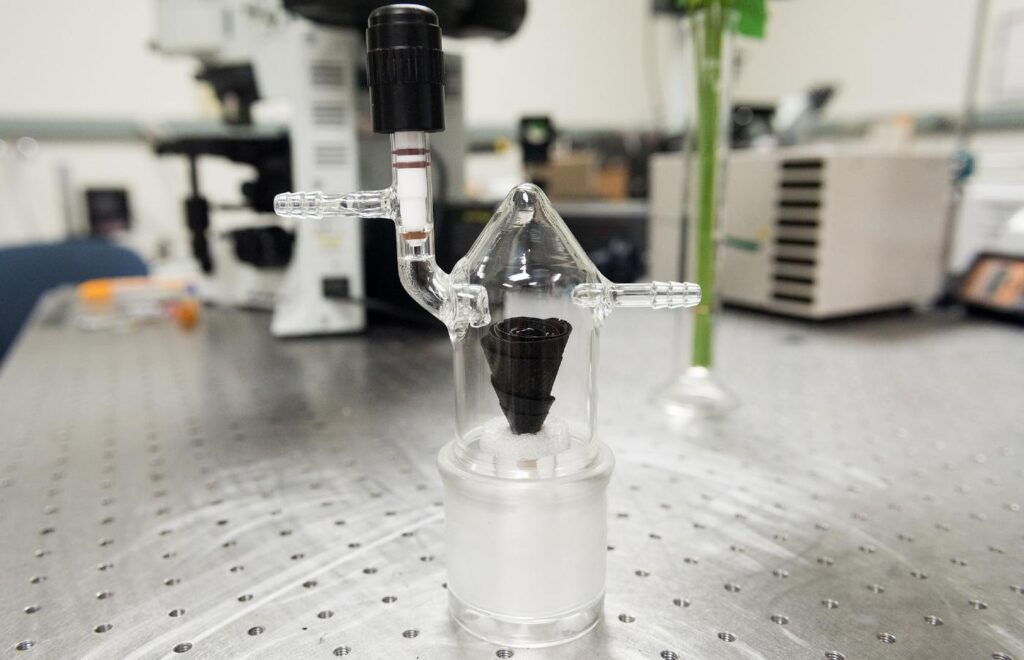
A new device for collecting and purifying water, developed at The University of Texas at Austin, was inspired by a rose and, while more engineered than enchanted, is a dramatic improvement on current methods.
Each flower-like structure costs less than two cents to make and can produce more than half a gallon of water per hour per square meter.
A team led by associate professor Donglei Fan developed a new approach to solar steaming for water production—a technique that uses energy from sunlight to separate salt and other impurities from water through evaporation.
The authors of the study outline how an origami rose provided the inspiration for developing a new kind of solar-steaming system made from layered, black paper sheets shaped into petals. Attached to a stem-like tube that collects untreated water from any water source, the 3D rose shape makes it easier for the structure to collect and retain more liquid.
Current solar-steaming technologies are usually expensive, bulky and produce limited results. The team’s method uses inexpensive materials that are portable and lightweight. Oh, and it also looks just like a black-petaled rose in a glass jar.
Cockrell School of Engineering, The University of Texas at Austin
Those in the know would more accurately describe it as a portable low-pressure controlled solar-steaming-collection “unisystem.” But its resemblance to a flower is no coincidence.
“We were searching for more efficient ways to apply the solar-steaming technique for water production by using black filtered paper coated with a special type of polymer, known as polypyrrole,” Fan said.
Polypyrrole is a material known for its photothermal properties, meaning it’s particularly good at converting solar light into thermal heat.
Fan and her team experimented with a number of different ways to shape the paper to see what was best for achieving optimal water retention levels. They began by placing single, round layers of the coated paper flat on the ground under direct sunlight. The single sheets showed promise as water collectors but not in sufficient amounts.
After toying with a few other shapes, Fan was inspired by a book she read in high school. Although not about roses per se, The Black Tulip by Alexandre Dumas gave her the idea to try using a flower-like shape, and she discovered the rose to be ideal.
Its structure allowed more direct sunlight to hit the photothermic material—with more internal reflections—than other floral shapes and also provided enlarged surface area for water vapor to dissipate from the material.
The device collects water through its stem-like tube—feeding it to the flower-shaped structure on top. It can also collect rain drops coming from above.
Water finds its way to the petals where the polypyrrole material coating the flower turns the water into steam. Impurities naturally separate from water when condensed in this way.
“We designed the purification-collection unisystem to include a connection point for a low-pressure pump to help condense the water more effectively,” said Weigu Li, a Ph.D. candidate in Fan’s lab and lead author on the paper. “Once it is condensed, the glass jar is designed to be compact, sturdy and secure for storing clean water.”
The device removes any contamination from heavy metals and bacteria, and it removes salt from seawater, producing clean water that meets drinking standard requirements set by the World Health Organization.
“Our rational design and low-cost fabrication of 3D origami photothermal materials represents a first-of-its-kind portable low-pressure solar-steaming-collection system,” Li said.
“This could inspire new paradigms of solar-steaming technologies in clean water production for individuals and homes.”
BLOOM the Good News in Friends’ Feeds by Sharing This Story…
Quote of the Day: “Travel is about the gorgeous feeling of teetering in the unknown.” – Anthony Bourdain (born 65 years ago)
Photo: by Jairph
With a new inspirational quote every day, atop the perfect photo—collected and archived on our Quote of the Day page—why not bookmark GNN.org for a daily uplift?
When American artistic icon Andy Warhol made the 1968 pronouncement, “In the future, everyone will be world-famous for 15 minutes,” no-one knew how close to the truth he’d come.
While these days, the Internet regularly delivers instant gratification and overnight fame, there’s little chance Florida A&M University student Jabari Richardson was thinking about getting “likes” or retweets when he pulled his car over, opened the trunk, and passed out shoes, clothing, and other items to a homeless man standing by the side of the road.
The college senior, who was in the process of moving, decided giving his things away rather than selling them was good karma. Thankful to have more than he needed, he was simply passing it forward.
“As I was growing up, my mom always taught me there’s a lot of people that are in need. Not everyone’s blessed as I am,” Richardson told WXTL-Tallahassee. “My mom always had clothes and shoes on my back. I can definitely take that for granted. Anything can be gone in the blink of an eye.”
Unbeknownst to Richardson, his selfless act hadn’t gone unnoticed. The driver in the car behind him captured the entire event on video and posted it to TikTok with the caption: “I don’t know this young man but he deserves to go viral.”
Not only has the video garnered more than 6 million views to date, but local reporters also tracked Richardson down and the story made the evening news.
The 2021 winners of a major international environmental award have just been announced, and the list includes a Vietnamese conservationist who’s known for his vital work helping protect the pangolin—the world’s most trafficked animal.
Awarded annually to environmental heroes from each of the world’s six inhabited continental regions, the Goldman Environmental Prize honors the achievements and leadership of grassroots environmental activists from around the world, inspiring all of us to take action to protect our planet.
The Prize was founded in 1989 in San Francisco by philanthropists and civic leaders Rhoda and Richard Goldman.
In 32 years, the Prize has had an immeasurable impact on the planet—to date, it’s honored 206 winners from 92 nations, and has shined a light on many of the critical issues facing the Earth.
“When it comes to the environment, the global community of… leaders, thinkers, and philanthropists is only growing and becoming more sophisticated, more united, more powerful,” said Susie Gelman, vice president of the Goldman Environmental Foundation said in a statement.
“These Prize winners have so much to teach us about the path forward and how to maintain the balance with nature that is key to our survival. These phenomenal environmental champions remind us what can be accomplished when we fight back and refuse to accept powerlessness and environmental degradation.”
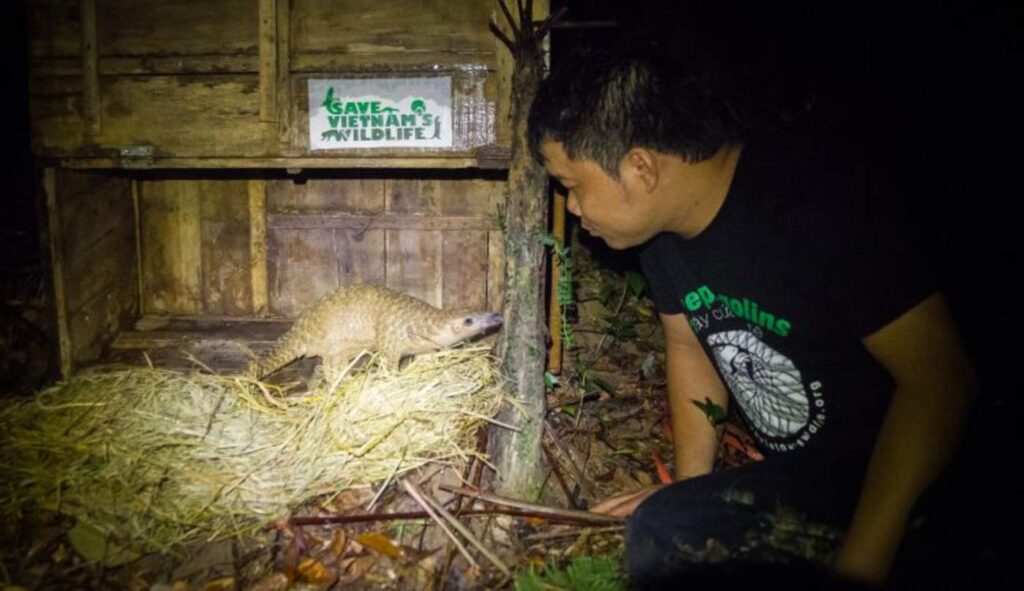
Thai Van Nguyen won the Asia award this year for his work in founding Save Vietnam’s Wildlife, which rescued 1,540 pangolins from the illegal wildlife trade between 2014 and 2020.
Nguyen also established Vietnam’s first anti-poaching unit, which, since 2018, has destroyed 9,701 animal traps, dismantled 775 illegal camps, confiscated 78 guns, and arrested 558 people for poaching—leading to a significant decline in illegal activities in Pu Mat National Park.
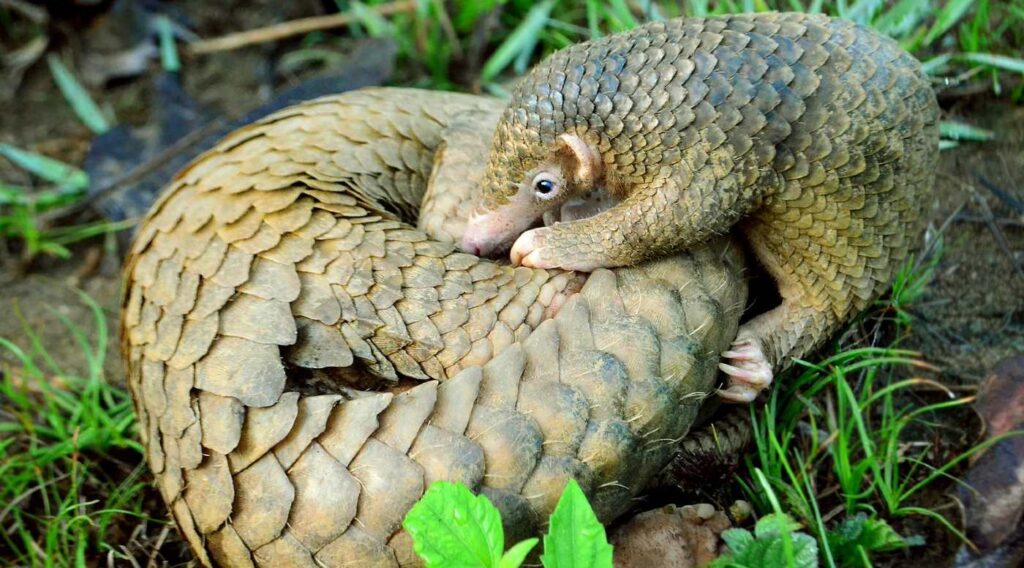
Pangolins are the world’s most heavily trafficked mammal despite an international trade ban. Heavy demand for their meat, scales, and blood threatens pangolins with extinction; all eight pangolin species are on the IUCN Red List.
The Posterchild of the Illegal Wildlife Trade
Gregg Yan, CC license
Similar in appearance to armadillos, pangolins are the world’s most heavily poached and trafficked mammal—and three out of four Asian pangolin species are critically endangered.
Because their scales are believed to cure everything from asthma to cancer, pangolins are heavily used in Chinese and Vietnamese traditional medicine. While pangolin scales are a perfect defense against predators, when stressed or threatened, pangolins curl up into a ball, making them an easy target for poachers.
Research about pangolins is challenging, as they are highly susceptible to stress and notoriously picky eaters—and rarely survive in captivity for more than a few days.
They are also difficult to observe in the wild, and little data exists about their reproductive behavior and life span. Because of these gaps, there are no clear estimates about how many pangolins are left in the wild.
In the past decade, an estimated 1 million-plus pangolins were poached worldwide, and Vietnam is a particular hotbed: in 2004, 60 tons of live pangolins were seized in Vietnam.
A Total Commitment to Pangolin Protection
According to a bio released by The Goldman Foundation, 39-year-old Van Nguyen grew up near Cuc Phuong National Park and, as a child, witnessed a mother and baby pangolin being caught and killed by neighbors in his village. Nguyen resolved to make pangolin conservation his life’s work.
In order to reverse the fate of the pangolins, Nguyen set out to stop poaching and educate the Vietnamese public on the importance of pangolin conservation. His efforts began with a sophisticated outreach and education campaign: he wrote husbandry manuals for rescued pangolins, published research in peer-reviewed journals, attended international workshops, and developed Vietnam’s first reintroduction and tracking protocols for pangolins.
Nguyen also opened the Carnivore and Pangolin Education Center, the first of its kind in Vietnam, in order to provide wildlife conservation courses to students and the general public. And he educated customs officials, border guards, and rangers on wildlife laws and how to properly care for seized pangolins.
Nguyen didn’t stop there; he established Vietnam’s first Asian Pangolin Rehabilitation Center, which focuses on rehabilitating pangolins in captivity.
To care for rescued pangolins, which often arrive in critical condition, he used grant funds to build two fully equipped veterinary clinics with hematology and ultrasound capabilities.
He’s had an 80% survival rate among pangolins with severe and septic wounds. The clinics also serve as research facilities, where his team has learned how to improve medical care for injured pangolins and identified 12 species of parasites in pangolins—and corresponding treatment plans.
SVW collaborates directly with other rescue centers and has successfully rehabilitated and released nearly 500 animals. Nguyen has expanded his rescue center to also rescue carnivores, primates, and turtles.
To better understand the poaching supply chain, Nguyen worked with poachers to take him into the forest to show him how they track and capture pangolins. He also visited markets, restaurants, and doctors of traditional medicine to better understand the demand for pangolins.
In 2018, Nguyen created Vietnam’s first-ever anti-poaching unit, which is co-managed by a local NGO and government, through which he personally trains rangers on wildlife conservation, animal identification, GPS skills, basic martial arts, and survival skills.
The unit cooperates with government rangers on missions throughout 235,000 acres of primary forest in Pu Mat National Park; on trips lasting up to six days, teams destroy illegal camps and wildlife traps, confiscate weapons, and arrest poachers.
SVW is the first organization in the world to implement monitoring of released pangolins using drone technology.
Nguyen has also looked to global strategies and worked with the management authority of the Convention on International Trade in Endangered Species (CITES) in 2016 to upgrade pangolins to Appendix I, a designation that bans international trade for animals most threatened with extinction.
Between 2014 and 2020, Nguyen’s leadership raised awareness of pangolin poaching and resulted in the rescue of 1,540 pangolins from the illegal wildlife trade.
SVW staff report an 80% decrease in illegal poaching activities since the unit’s establishment. His partnerships with government, law enforcement, scientists, veterinarians, and fellow activists have been critical to his success.
As one of the few people in the world working on pangolin conservation and rehabilitation, Nguyen is filling a crucial space for understanding and protecting this critically endangered animal.
(MEET Nguyen in the video below.)
SCALE UP the Good News in Friends’ Feeds—Share This Story…
There are more possible connections between neurons in the brain than there are stars in the galaxy, making the ole’ noggin the most complex supercomputer we know of.
To map the connections in just one millimeter of cerebral cortex tissue required over a million gigabytes of data, and 225 million images.
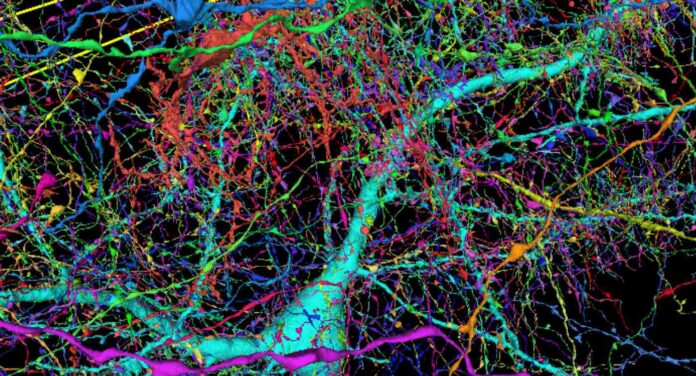
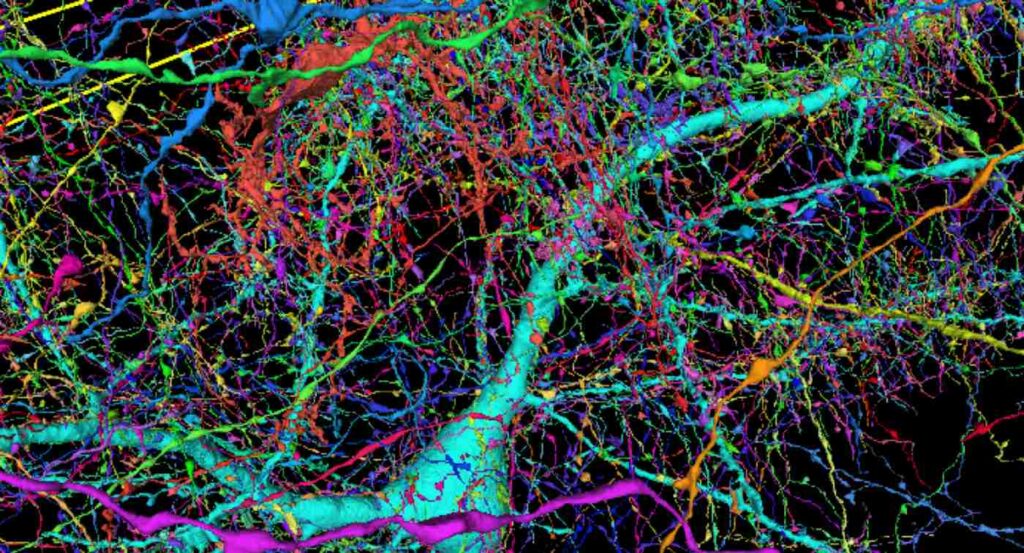
Now assembled by researchers from the Lichtman Lab at Harvard and Google, the 3D image is the most detailed ever taken of our neurology. The hope is to replicate this method enough to create a puzzle of the human brain which is being called the “connectome.”
To say the connectome could take our entire lives to complete is no exaggeration. To complete the connectome of a C. elegans worm that possesses just 302 neurons required 12 terabytes of data. Google has also made a swing—along with the Howard Hughes Medical Institute, at a fruit fly connectome—which has around 100,000 neurons. It took a year and 100 terabytes to manage about half the fruit fly brain.
Here a 2D image of the C. elegans brain matter is extrapolated by machine learning and other science gubbins into a 3D map.
Rather more detailed
With between 100 and 86 billion neurons and 100 trillion synapses—electrical interchanges and signals between cells, the human brain is rather more detailed than its invertebrate neighbors’.
Nevertheless, taking a one millimeter cubed section of cerebral cortex, the researchers coated it in resin, and cut it into about 5,300 individual slices each about 30 nanometers thick in order to reduce the detail low enough to image with an electron microscope. After all that, they still needed over 200 million images before they could reassemble it into a completed 3D map.
The H01 dataset, as it’s called, measures 1.4 petabytes, more than the Pentagon gathers in a month, and contains 50,000 cells and 130 million synapses, making it the most complete picture of a part of the brain ever made.
Interesting observations were made, for example that glial cells, a brain-specialized immune cell, outnumbered neurons two to one, and are available to study in a pre-review accompanied paper on BioRxiv.
Bangladesh’s floating gardens, built to grow food during flood seasons, could offer a sustainable solution for parts of the world prone to flooding because of climate change, a new study has found.
The study suggests that floating gardens might not only help reduce food insecurity, but could also provide income for rural households in flood-prone parts of Bangladesh.
“We are focused here on adaptive change for people who are victims of climate change, but who did not cause climate change,” said Craig Jenkins, a co-author of the study and academy professor emeritus of sociology at The Ohio State University. “There’s no ambiguity about it: Bangladesh didn’t cause the carbon problem, and yet it is already experiencing the effects of climate change.”
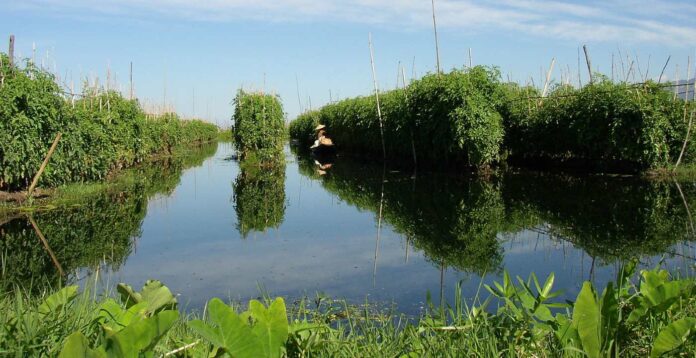
Bangladesh’s floating gardens began hundreds of years ago. The gardens are made from native plants that float in the rivers—traditionally, water hyacinths—and operate almost like rafts, rising and falling with the waters. Historically, they were used to continue growing food during rainy seasons when rivers filled with water.
The farmers—or their families—layer the plants about three feet deep, creating a version of raised-bed gardens that float in the water. Then, they plant vegetables inside those rafts. As the raft-plants decompose, they release nutrients, which help feed the vegetable plants. Those vegetable plants typically include okra, some gourds, spinach, and eggplant. Sometimes, they also include spices like turmeric and ginger.
Floating gardens are also in use in parts of Myanmar, Cambodia, and India. The United Nations Food and Agricultural Organization has named Bangladesh’s floating gardens a Globally Important Agricultural Heritage System.
But as climate change has affected the volume of water in those rivers—creating extreme highs and floods, along with extreme lows and droughts—floating gardens have become a way for rural farmers to keep producing food during unpredictable weather. Climate change increases weather extremes and the severity of flooding, and droughts as well.
The researchers—whose study was published recently in the Journal of Agriculture, Food and Environment—wanted to understand whether Bangladesh’s floating gardens could be a sustainable farming practice as climate change continues to cause floods and droughts, and to see whether the gardens bring better food security to individual households.
“They’ve got to be able to grow specific crops that can survive with minimal soil,” said Jenkins, a research scientist and former director of the Ohio State Mershon Center for International Security Studies. “And in Bangladesh, a lot of small farmers that had typically relied on rice crops are moving away from those because of the effects of climate change and better returns from alternative crops.”
For this study, the researchers interviewed farming families who use floating gardens, and found strong evidence that floating gardens provide stability, both in the amount of food available to feed rural populations and in a farming family’s income.
They found that farmers typically use hybrid seeds, which must be repurchased each year, to grow a diverse range of vegetables in the floating gardens. The gardens are also susceptible to pests, so farmers end up spending some money on both pesticides and fertilizers. But even with those expenses, they found, benefits outweighed costs.
Generally, entire families work on the gardens, the researchers found: Women, children and the elderly prepare seedlings and collect aquatic plants to build gardens. Men cultivate the gardens and protect them from raiders. Some families also farm fish in the waters around their floating gardens.
One farmer told the research team that he earns up to four times as much money from the gardens as from traditional rice paddies.
Still, the system could use improvements, the researchers found. Farmers often take out high-interest loans to cover the investment costs of building the beds and stocking them with plants.
Lower-interest loans from responsible government or non-governmental organizations could alleviate that burden, they found.
(SEE the floating gardens of Bangladesh in this United Nations video.)
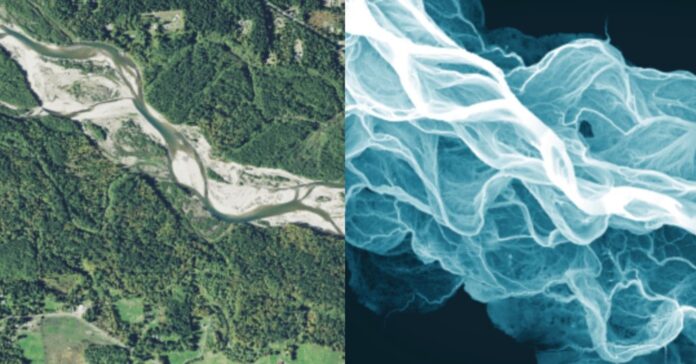
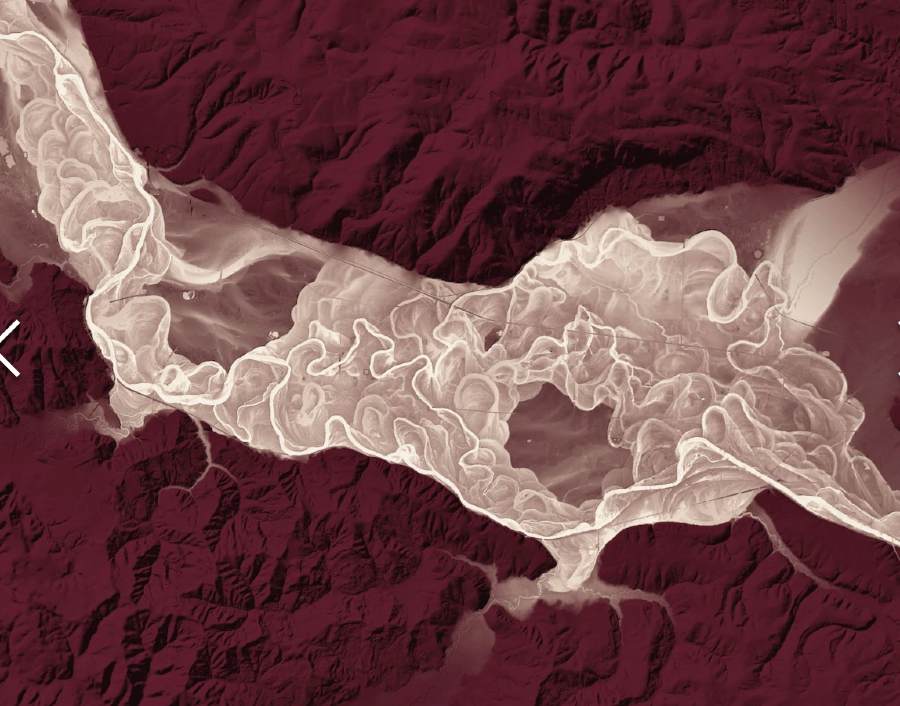
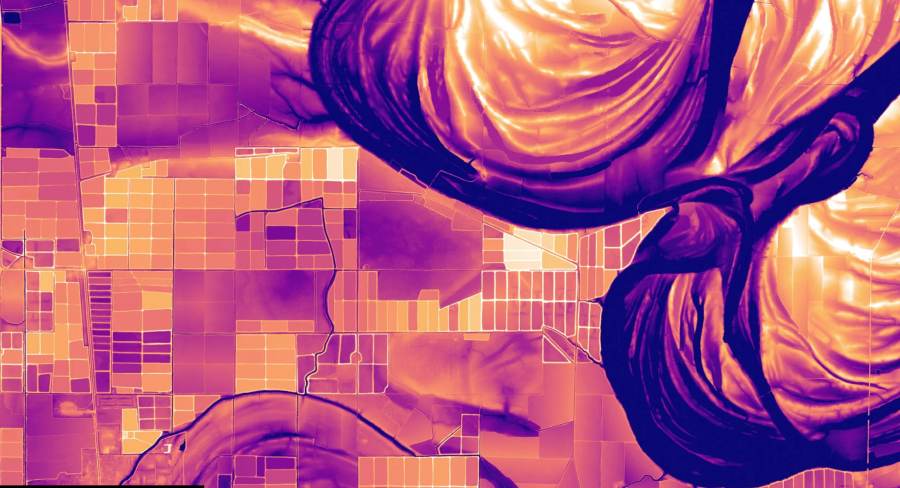
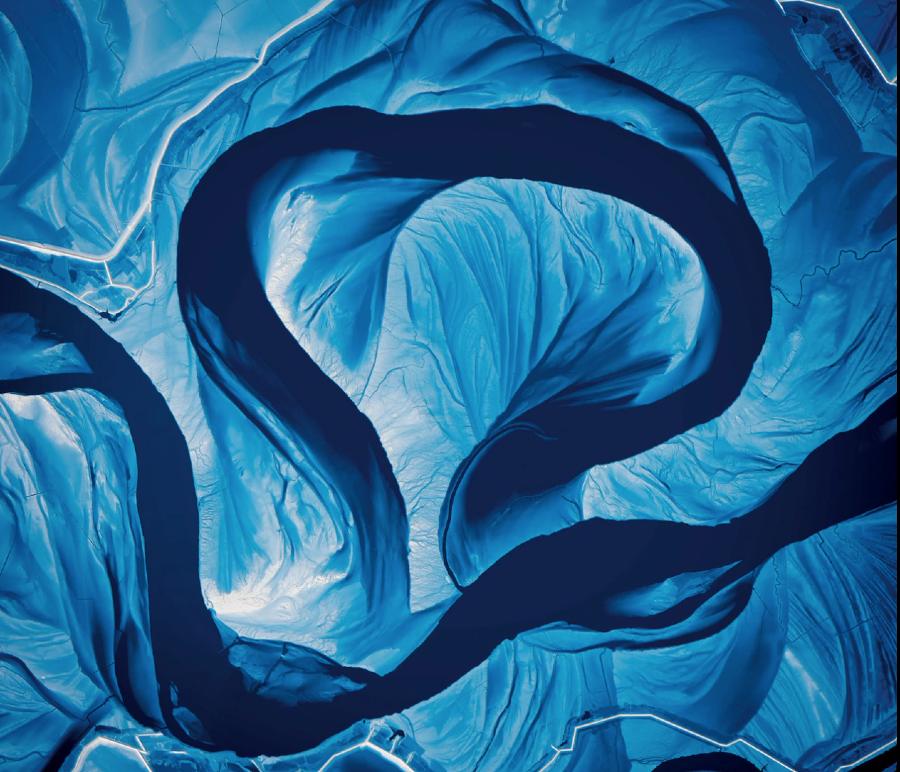
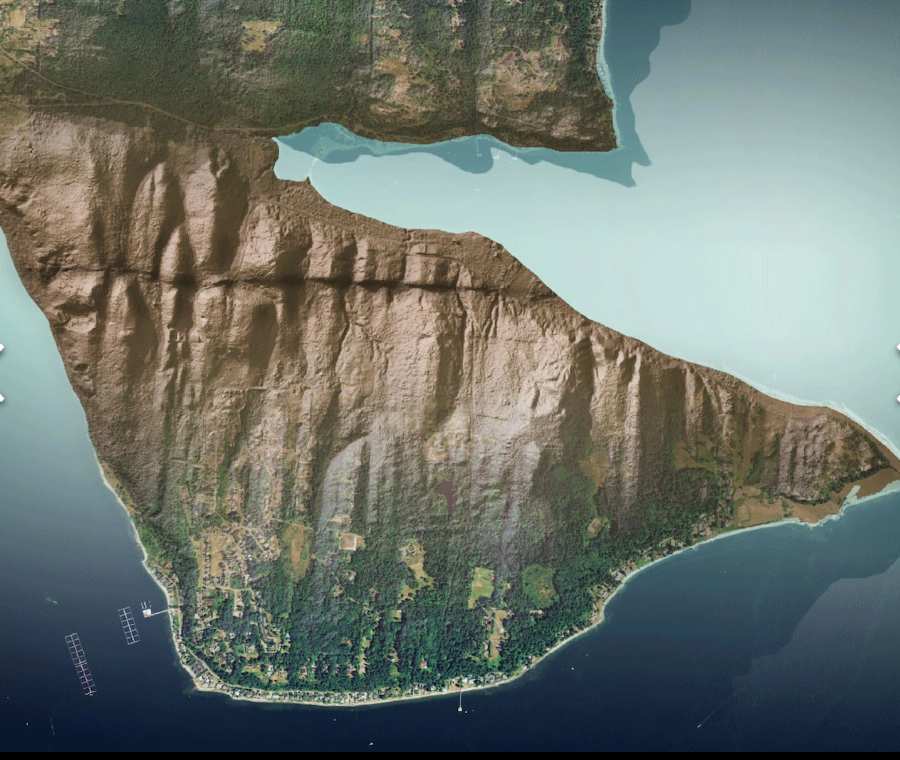
Staggering images taken from planes using forest-penetrating radar are mapping the geology of Washington state.
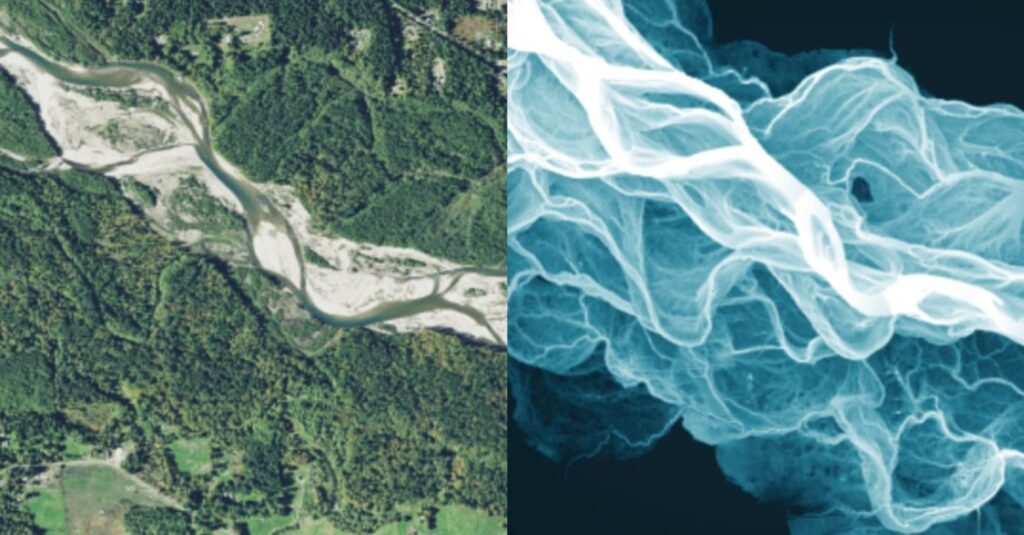
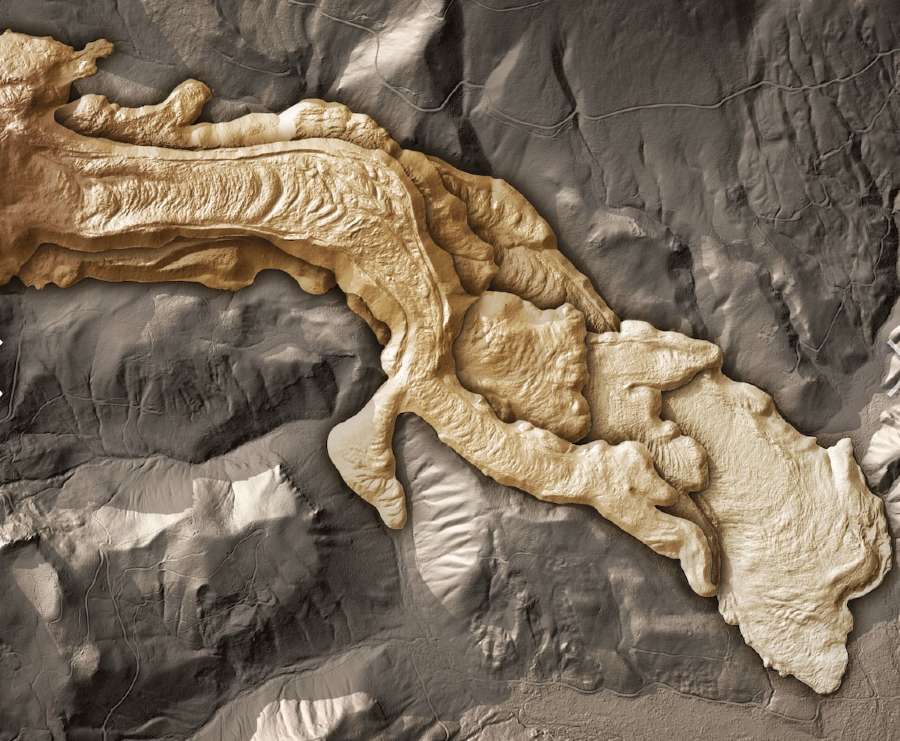
Intriguing, artsy, beautiful, and outright bizarre, “The Bare Earth” presentation on the Washington state Department of Natural Resources (DNR) website uses shading and added color to present underlying geological features like lava flows, glacial moraines, drumlins, tsunami inundation, mudslides, eruptions, fault lines, river patterns, and much, much more.
Washington Geological Survey
LIDAR, which stands for Light, Detection and Ranging, is a laser-guided mapping system that fire billions of laser pulses at an object, and like sonar or radar, gathers information about the object as the beams return.
Washington Geological Survey
The information in this case is the time it takes each pulse to arrive back.
Some of the light is reflected off the tree tops, but enough will reach the ground below to reveal the underlying geography as if the trees simply didn’t exist.
Washington Geological Survey
The light also penetrates the soil strata, meaning that while the first reading of the return pulse indicates the surface topography, the final return pulse is the bare earth below, giving unparalleled pictures of the landscape.
Washington Geological Survey
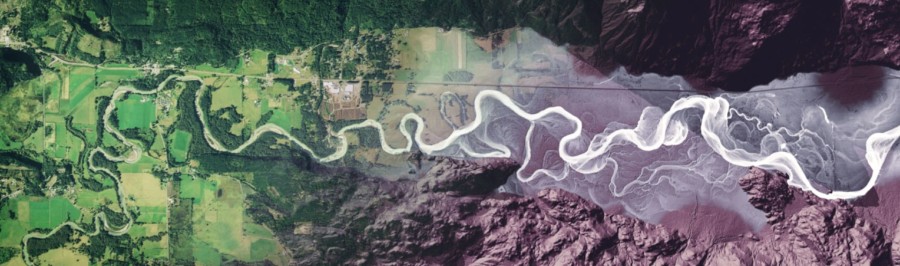
This technology was used to produce a fascinating series of images by a cartographer at the U.S. Geological Survey of the Mississippi.
Washington Geological Survey
LIDAR revealed hundreds of years of subtle changes in flow, flooding, and bending of the mighty river.
Washington Geological Survey
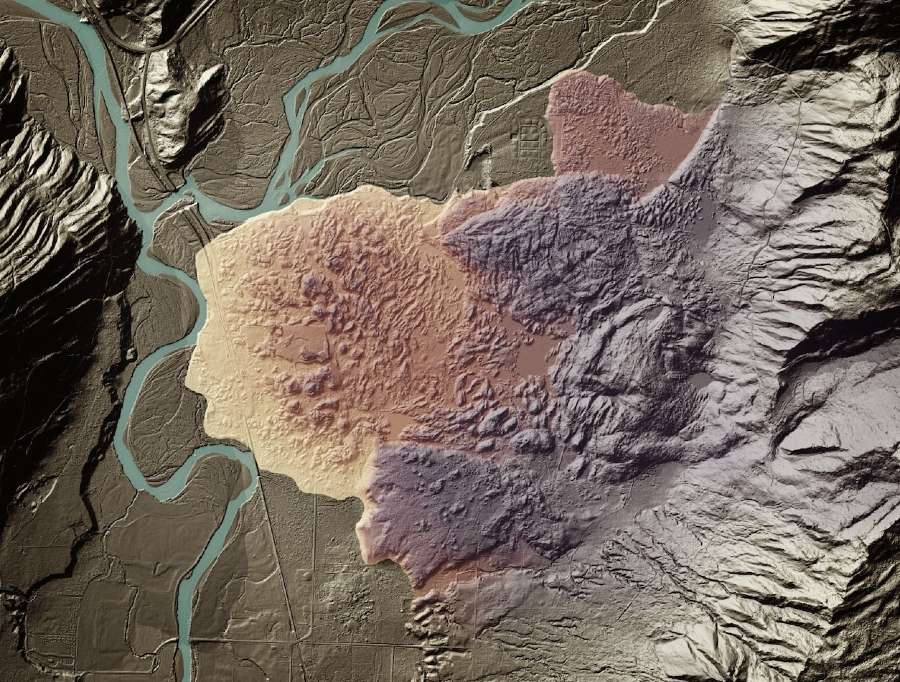
Following a deadly landslide in 2014 that destroyed parts of a small town about 50 miles outside of Seattle, the Washington Geological Survey realized it would behoove them to map out potential landslide sites to provide early warning for people living there.
Washington Geological Survey
As it turned out, the same method of discovery geological and climatic hazards using LIDAR can help state authorities plan for all manner of emergencies, such as volcanic eruptions, tsunamis, earthquakes, and more.
The Bare Earth presentation records all the findings LIDAR has made in a state that has a seriously varied geomorphology—the change and evolution of the surface and underlying geology over time.
Washington Geological Survey
It records the use of LIDAR to map the state’s landslides, geological curiosities, bedrock, fault lines, tsunami reach and erosion, volcanoes, glaciers, and riverways.
Washington Geological Survey
You’ll definitely want to spend a little time looking over the images.
Quote of the Day: “Why are you trying so hard to fit in, when you’re born to stand out?” – Oliver James
Photo: by Darryl W, CC license
With a new inspirational quote every day, atop the perfect photo—collected and archived on our Quote of the Day page—why not bookmark GNN.org for a daily uplift?
The gods of the Twitterverse are mercurial and unpredictable. All hashtags aside, why some tweets trend and others tank is anyone’s guess. So when a doting daughter’s random tweet recently scored a dream job interview for her dad, it came as a huge cosmic surprise to everyone involved.
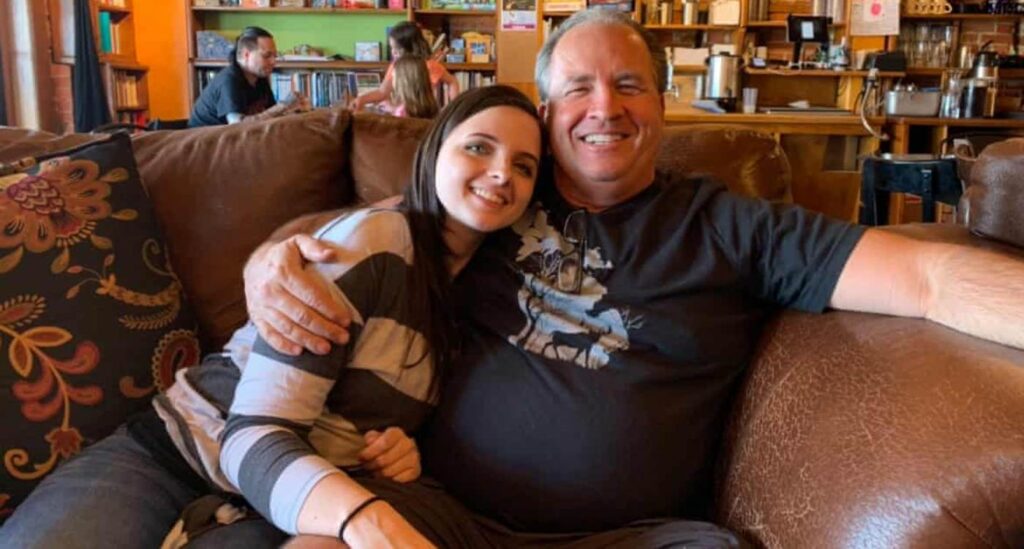
Like many, Rebecca Mix’s 58-year-old dad, Jeff, was laid off from his last job due to coronavirus-related cutbacks. As an older worker, finding employment was likely going to be tough, but resolute Jeff, not ready to retire, was determined to land a new gig.
His dream job? Something public-facing that would keep him on his feet. For Jeff, who’d done his homework on the company culture, that meant Costco.
Knowing he was likely out of his depth, Jeff turned to Rebecca for guidance in navigating the current job market. After promising to help him update his resumé and gently teasing him that a 21st-century email might be in order, Rebecca posted a few humorous tweets about her dad’s “weirdly particular” job ambitions—and then says she forgot about them.
my dad has been laid off due to covid and now that he's vaccinated he's itching to go back to work, so i told him i'd help him with his resume. i asked him where he wants to work, and he said, SO earnestly, "costco seems like a nice place" i'm gonna cry lol
— rebecca mix, proud daughter of a costco employee (@mixbecca) May 6, 2021
While the tweets might have slipped Rebecca’s mind, the powers of social media were paying close attention.
Mix’s messages somehow hit the radar of Costco CEO Craig Jelinek, who contacted several store managers close to Jeff’s Michigan home, requesting they bring him in for an interview. One of those managers reached out to Rebecca via Facebook to let her know her serendipitous tweet had hit its mark in a big way.
— rebecca mix, proud daughter of a costco employee (@mixbecca) May 19, 2021
“I called my dad, who didn’t answer, texted him a screenshot, and called him again. As someone who only FaceTimes by accident, he didn’t really understand why I was freaking out,” Rebecca recalled in a piece for The Guardian. “The sheer ridiculousness of a random tweet making it to the desk of the Costco chief executive mostly escaped him.”
While Jeff was excited by the prospect of a job interview, he remained cautious about the final outcome. Even after his first meeting—in which the enigmatic topic of Twitter never came up—he still wasn’t sure he was going to be hired.
However, while it took some time for the offer to come through, Jeff nailed his second interview. He texted a photo of his brand-new employee badge to Rebecca with thanks.
After his first shift, Jeff checked in with Rebecca to let her know the job looked to be pretty much everything he’d been hoping for. She couldn’t have been happier.
“The past year has not been a kind one to my family,” Rebecca wrote. “Like many, we didn’t emerge from the pandemic without the loss of loved ones. It’s a gift to have this odd, wonderful, weird spark of joy amid a time of grief and chaos.”
And on a final positive note, Rebecca reports that when one of her dad’s new co-workers joked, “I wonder when they’re going to hire the Twitter guy?” while the complexities of social media might still escape him, Jeff had the satisfaction of being able to say, “I am the Twitter guy.”
Aw… Isn’t that tweet?
ADD Positive Vibes to Your News Feed by Sharing This Story…
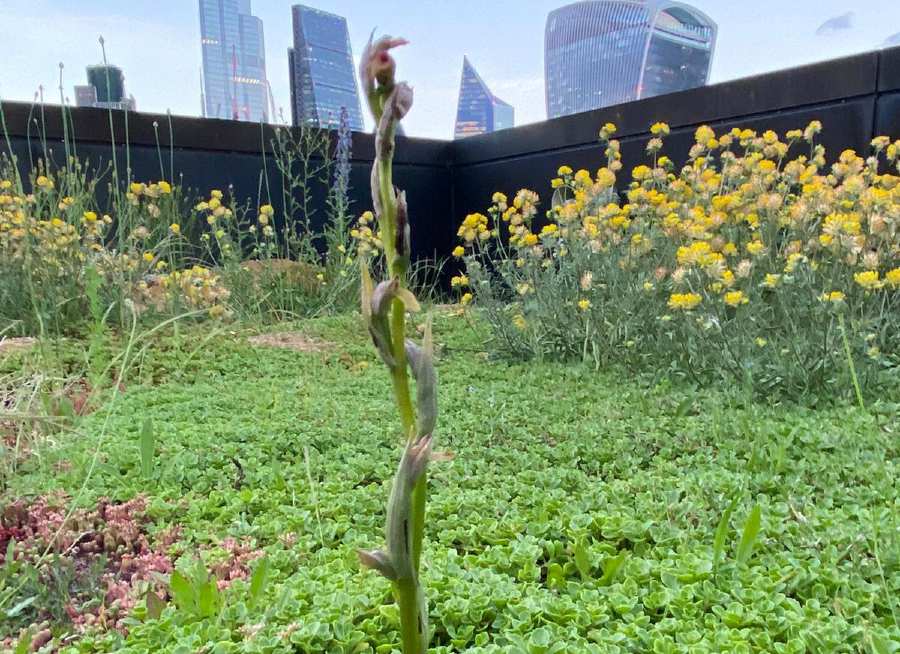
An extremely rare colony of orchids previously believed to be extinct in Britain has been discovered growing on a City of London rooftop.
The small-flowered tongue orchid, or serapias parviflora, is normally found in the Mediterranean, and hasn’t been seen in the UK for over a decade.
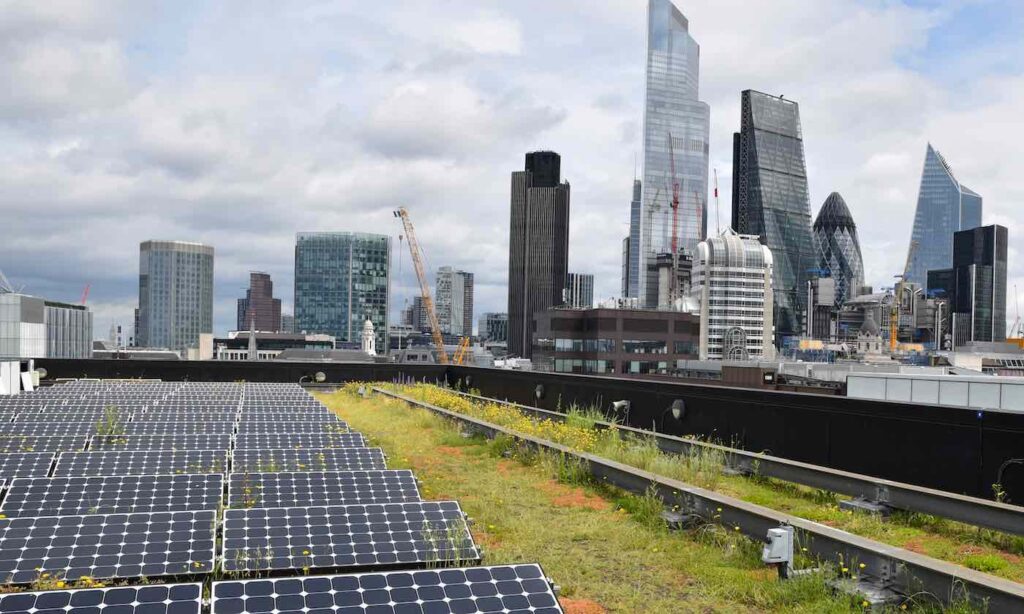
But 15 plants have been found on the 11th floor garden of the Japanese Investment Bank Nomura in the City.
It is only the second time the rarity has been recorded in Britain, with a previous colony being found more than 200 miles away Rame Head in Cornwall in 1989.
Unfortunately the Cornish colony was destroyed in 2009, and the species was thought to have gone extinct as a wild plant in the UK.
It’s not known for certain how the orchids arrived on the Nomura roof, but Mark Patterson —who manages the roof garden—believes it’s plausible they spontaneously colonized naturally without assistance.
SWNS
He said: “Orchid seeds are incredibly small and can travel great distances by wind. The plants could have originated on the Continent and been brought over the Channel on the southerly winds that frequently bring Saharan dust deposits to the capital.
“Once settled on the Nomura roof the seeds would have formed a symbiosis with a mycorrhizal fungus, enabling them to germinate and grow. While possible, the odds are astronomical.”
Another possible explanation, he said, is that the seeds or young plants could have been brought to the roof in the soil used to create the green roof over a decade ago.
The plants can take many years to mature when growing in dry poor soil conditions, which would explain why we are only now seeing the plants in bloom. However, he explained, this was less likely.
It is not the first time rare orchids have been found on green roofs in the City. Three years ago, Patterson also discovered London’s largest colony of green winged orchids growing on the Nomura roof.
Two other green-winged orchids have been found on a rooftop in Carnaby Street, and another plant appeared on a roof in busy Islington.
Wild orchids as rare as these face many threats to their survival, including poor land management, over-grazing, trampling by walkers, and being uprooted and stolen by illegal plant collectors.
The previous known colony in Cornwall had to be kept top secret to protect the plants.
Growing on the roof of a bank in the center of the City, this newly discovered colony plants should be well protected.
Orchid expert Mike Waller, author of Britain’s Orchids: A Field Guide to the Orchids of Great Britain and Ireland, said: “To find Britain’s second colony of small-flowered tongue orchid is exciting in itself, but to find them on a green roof in the City of London is extraordinary on another level.”
He noted that: “This is clear evidence that with patience and dedication, even the most unlikely places can become havens for some our rarest wildlife.”
The orchids share the Nomura roof with other rare wildlife including breeding black redstarts—one of the UK’s rarest breeding birds.
In 2019, the bank and its charity partner St. Mary’s Secret Garden, secured a Bees Needs Award from DEFRA for their work improving the roof environment for bees and other wildlife.
The company has also won numerous London in bloom awards for their roof gardens.
GROW the Good News in Friends’ Feeds—Share This Story on Social Media…
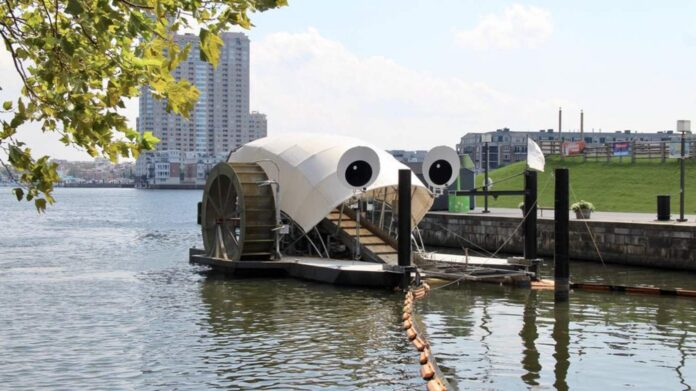
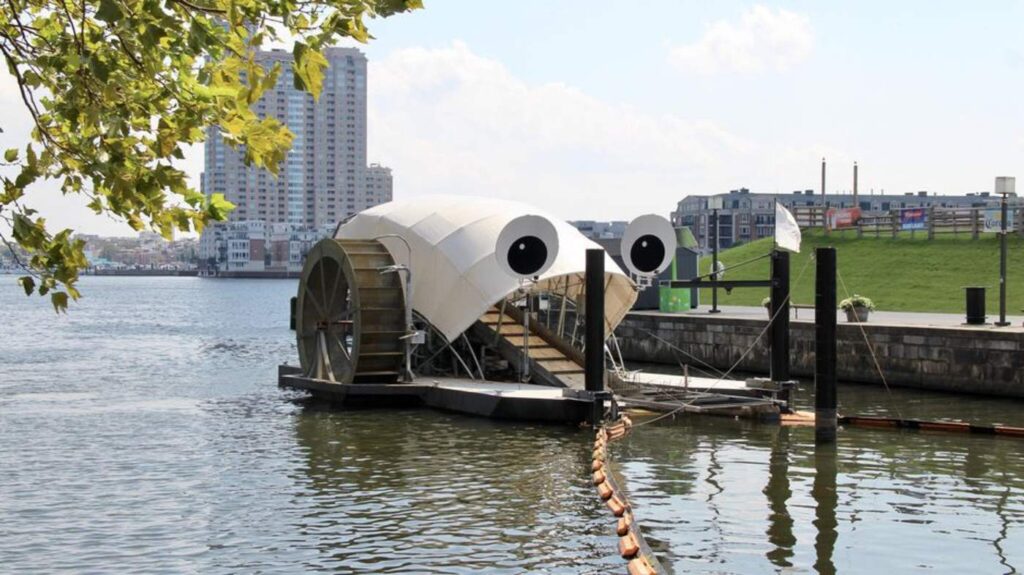
For years, the ambiguous yet contented face of Mr. Trash Wheel has been an icon of Baltimore’s Inner Harbor.
The googly-eyed trash collector has been gobbling up millions of pounds of the city’s river-borne garbage for years, and led to the creation of several water-wheel allies like Capt. Trash Wheel, and Prof. Trash Wheel.
The idea for some sort of garbage collector came from local inventor John Kellet, who would walk across the footbridge spanning the Jones Falls stream that feeds the Baltimore harbor—and be disturbed on seeing the unabated flow of garbage floating towards it.
Kellet looked around to see if there were any potential solutions to the problem, but found none. He would end up not only giving the harbor a more sparkling, trash-free appearance, but one of the city’s biggest celebrities and social media icons—though he admitted it wasn’t his idea to put googly eyes on the barge.
GNN reported in 2017 that Mr. Trash Wheel rotates based on power drawn from the river’s current. If not enough electricity can be generated from the river alone, the wheel uses solar energy instead.
Kellet, who runs Clearwater Mills, also makes specially designed cages to fit into storm drain outfalls—which is the source of most of the garbage pollution into the harbor.
His idea has been so successful that several other organizations are building their own Mr. Trash Wheel. Coming soon to the Gwynns Falls River in Maryland is Gwynda the Good Wheel of the West, while Oakland, California is building one called Trasharella.
The first international Mr. Trash Wheel is coming to Panama, with “Mrs. Wheel” or “Doña Rueda.”
“I never envisioned we would have googly-eyes on this machine, with a name for it and a beer [named after it], and the trash wheel t-shirts and a trash wheel fan club and a trash wheel fan fest, it’s kind of beyond my wildest dreams,” said Kellet in the documentary on CNET.
Behind the Mr. Trash Wheel brand is one of the most important concepts of modern pollution theory—that rivers deposit the bulk of the garbage existing in the oceans. Non-profit The Ocean Cleanup, which operates sophisticated green energy river trash interceptors, explains on its website that one thousand of the world’s rivers source 80% of all the trash found in the ocean.
The documentary suggests lobbying your local politicians into installing a Mr. Trash Wheel by sending them some of the facts—such as the technology’s ability to collect 38,000 pounds of trash per day—or even the fact that it has the ability to become a social media influencer for your city.
(WATCH the CNET documentary below.)
DON’T TRASH the Good News—Share It On Social Media…
Many of us have some cure for the hiccups, whether that’s drinking water upside-down or holding our breath, but a peculiar type of drinking straw, developed by a peculiar type of scientist, seems to be impressively effective.
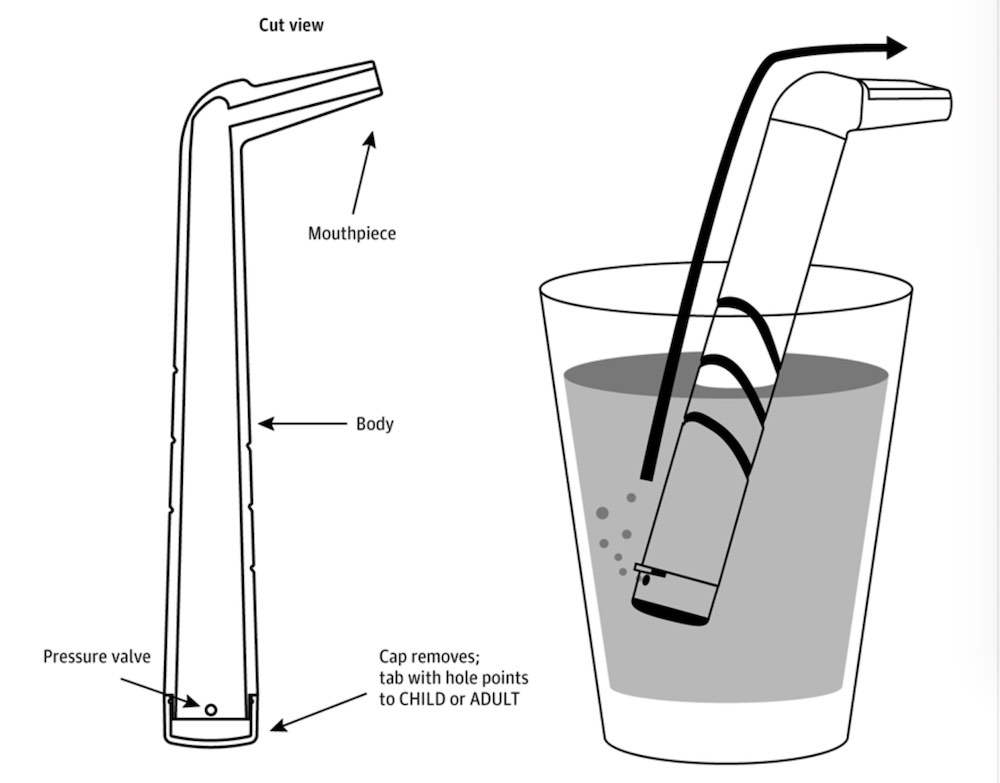
Stopping 92% of attacks on the spot, the L-shaped drinking straw requires a suction and swallow motion and is available as a patented product for around fifteen bucks.
Dr Ali Seifi, University of Texas Health Science Center
Singultus, as hiccups are known, are contractions of the diaphragm and the muscles between the floating ribs, known as the intercostals. The sharp intake of air causes the vocal folds to resonate, creating the sound which give singultus their common name.
While often presenting nothing more than a nuisance, one group of scientists mention in a study that hiccups can last in some people for days, even weeks. A terrifying prospect.
When the straw is placed inside a glass of water, a pressure valve on the bottom of the straw blocks the water from moving upward as fast as the strength of the human-generated suction would normally allow. This causes the phrenic nerve to activate all of the diaphragm’s capacity, while swallowing uses something called the vagus nerve.
These two parts of the nervous system are the cause for the contractions in the first place, and so keeping them busy prevents them from doing so.
The COVID-19 pandemic has put life as we knew it on hold for more than a year, but as things finally settle back into a new normal, people are returning to the workplace. For two co-workers catching up during a chance encounter, swapping news serendipitously turned into a life-saving exchange.
Susan Ellis and Tia Wimbush both work at Children’s Healthcare of Atlanta. Ironically, both Tia’s husband, Rodney, and Susan’s husband, Lance, were on a waiting list for kidney transplants.
As the two compared notes talking over the ups and downs of their husbands’ conditions, the subject of blood types came up. Thanks to a piece of random information, the women suddenly realized they might be potential donor matches for the other’s husband.
“My thought immediately was that we could help each other and stop the suffering of two families,” Tia told Good Morning America. “I called Rodney immediately and he and I were both just committed to moving forward and trying to help two families.”
When the tests were run, it turned out Tia and Susan were indeed matches made in heaven for one another’s husbands. Both wives were granted donor approval last October, but before the December surgeries could be performed, Lance suffered a setback and had to be hospitalized.
Once his condition was stable, the procedures were rescheduled for January. Then Susan tested positive for COVID-19 and was forced into a mandatory quarantine. The procedures were postponed again.
After Susan got the all-clear, the operations were rescheduled, this time for March 19th.
As the old saying goes, the third time was the charm, and both transplants were successful. The couples convalesced in close proximity on the same hospital floor, visiting each other as soon as they were able.
While Tia and Susan’s downtime was a little more protracted than they’d originally envisioned, Lance and Rodney’s marked postoperative improvement more than made up for any short-term discomfort they might have felt.
The two thankful husbands, freed from hours of crippling dialysis, are looking forward to spending many happy years of quality times with their loved ones—which now includes their extended “kidney families.”
“Our story is a story of kindness. It ended up in a kidney exchange, that was the result of it, but it started with human beings just human beings and checking on each other,” Susan told GMA. “We’re so busy with social media and texting and thinking, that’s not my business that we can self-isolate and we don’t check in on our neighbors.”
In addition to reminding folks to reach out to one another on a human level, both families hope their story will inspire others to think about being living transplant donors. You can learn more about the process at organdonor.gov.
SHARE This Story of True Kindness With Others on Social Media…
Quote of the Day: “Sometimes it is the people no one can imagine anything of who do the things no one can imagine.” – Alan Turing, the father of computer science (born 109 years ago)
Photo: by Eliabe Costa
With a new inspirational quote every day, atop the perfect photo—collected and archived on our Quote of the Day page—why not bookmark GNN.org for a daily uplift?