All News - Page 461 of 1716 - Good News Network
Home Blog Page 461

“I don’t think of all the misery, but of the beauty that still remains.” – Anne Frank

Quote of the Day: “I don’t think of all the misery, but of the beauty that still remains.” – Anne Frank, The Diary of a Young Girl

Photo: Siberian iris by GWC

With a new inspirational quote every day, atop the perfect photo—collected and archived on our Quote of the Day page—why not bookmark GNN.org for a daily uplift?


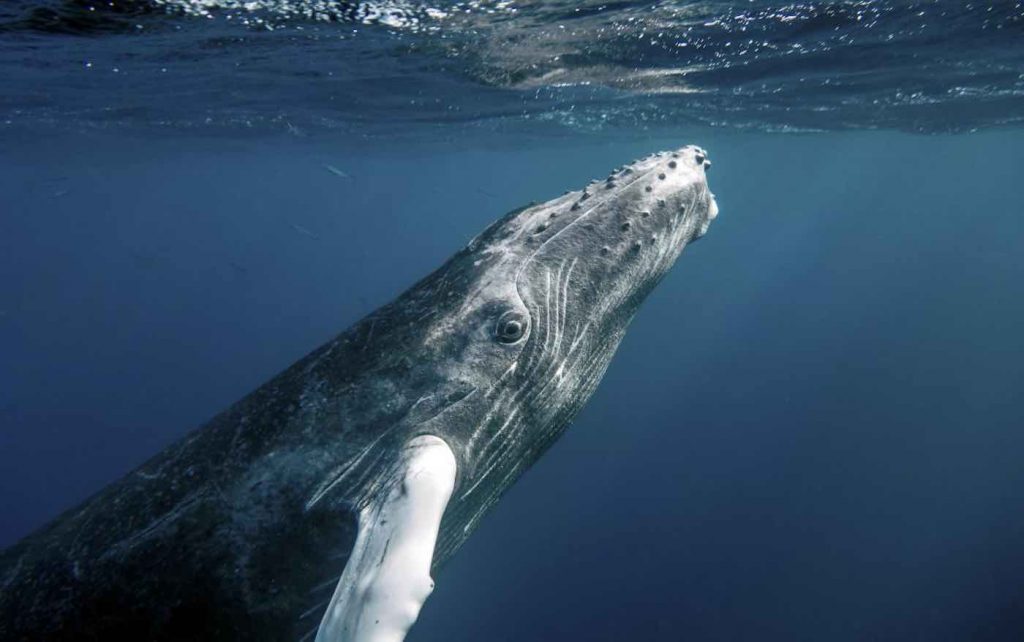
Diver Emerges Unscathed From the Mouth of Humpback Whale: ‘I was completely inside’

Packard Family
Packard family

In the Bible, God’s unwilling messenger Jonah is cast into the sea and swallowed up by the Leviathan, where he spends three days and three nights rethinking the error of his ways before being tossed on Nineveh’s shore to complete his appointed mission.

On Friday, June 11th, 56-year-old Wellfleet, Massachusett’s resident Michael Packard wasn’t fleeing the wrath of the Lord when he dove into the waters of Provincetown’s Herring Cove Beach. He was diving for lobster.

But in a straight out of Jaws scenario, like Jonah before him, in one fell swoop, Packard found himself seemingly in ‘the belly of the beast’—a humpback whale’s mouth.

“All of a sudden, I felt this huge shove and the next thing I knew it was completely black,” Packard told the Cape Cod Times. “I could sense I was moving, and I could feel the whale squeezing with the muscles in his mouth.”

Packard’s first terrifying thought as he struggled in the darkess was that he’d been scarfed down by great white shark. While it didn’t take him long to realize the gullet in which he was uncomfortably lodged belonged to a whale rather than a toothy shark, his prospects for survival still didn’t look good.

Christopher Michel, CC license

As panicked as Packard was, the whale was more than a little distressed as well. A humpback’s usual diet consists of fish, krill, and other small marine animals. Cumbersome humans are definitely not on their preferred menu.

According to marine biologists, the most likely explanation for the feeding faux pas was the medium-sized humpback, dining on a school of sand lances on the ocean floor whilst moving with great momentum, unintentionally vacuumed up the stunned commercial diver along with his morning meal.

“They can basically open their mouth through 90° and kind of unlock their jaw and have it drop down,” New England Aquarium’s lead whale researcher Peter Corkeron said in an interview NBC News-10 Boston.

“The water off the Cape is pretty murky,” Corkeron added, “and when whales are doing these feeds, they’re moving really fast… This [was] just an accident. I imagine the whale had this, ‘Oh my goodness!’ moment and probably got rid of him as quickly as it could.”

MORE: Watch Quick-Thinking Kayakers Save Pair of Rare Eagles Drowning in the Danube River

Thrashing its head, the whale made for the surface in a major hurry, where it speedily spat the gobsmacked Packard back into the briny water. The entire episode took under a minute, but it was enough for Packard to see his life flash before his eyes.

“I was completely inside; it was completely black,” Packard told Cape Cod News. “I thought to myself, ‘there’s no way I’m getting out of here. I’m done, I’m dead.’ All I could think of was my boys—they’re 12 and 15 years old.”

CHECK OUT: Brave 7-Year-old Boy Swims an Hour to Rescue His Dad and Little Sister

Although he suffered a dislocated knee and a great deal of soft tissue damage, for a lobsterman who’d been recently ingested and disgorged by a 25-ton marine mammal, Packard survived the encounter remarkably intact—and thankful to be alive.

While it’s a story that’s likely to take on biblical proportions in the retelling, at least for everyone concerned—man and Leviathan—this is one whale of a tale that’s got a happy ending.

MAKE A SPLASH in Friends’ News Feeds—Share This Story…

80-Year-old Bonsai Master Creates Incredible Tiny Forests As a Rebel in the Ancient Art – LOOK

Omiya Bonsai Art Museum

Bonsai is the Japanese art of growing ornamental, artificially dwarfed trees.

Masahiko Kimura began creating his first bonsai designs in his mid-teens.

Featuring dead wood sculpted by tools of his own design, they broke traditional rules dating back centuries.

Perhaps Kimura’s rebellious rule breaking shouldn’t be too surprising: His first dream? To be a rock and roll star.

Over the decades, Kimura’s unique style has gone on to become accepted and even revered—with fans nicknaming him “The Magician.”

These days Kimura—who is now in his 80s—is one of the country’s rare bonsai masters, and he has apprentices all over the globe.

(WATCH the video to tour Kimura’s bonsai garden below.)

(MEET Kimura in this interview with the great bonsai master.)

GROW the Good News—Share This Story…

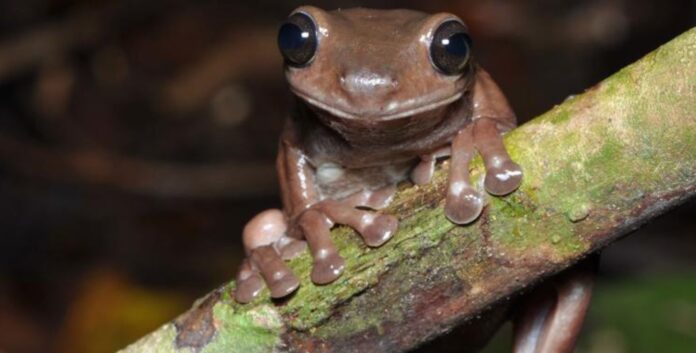
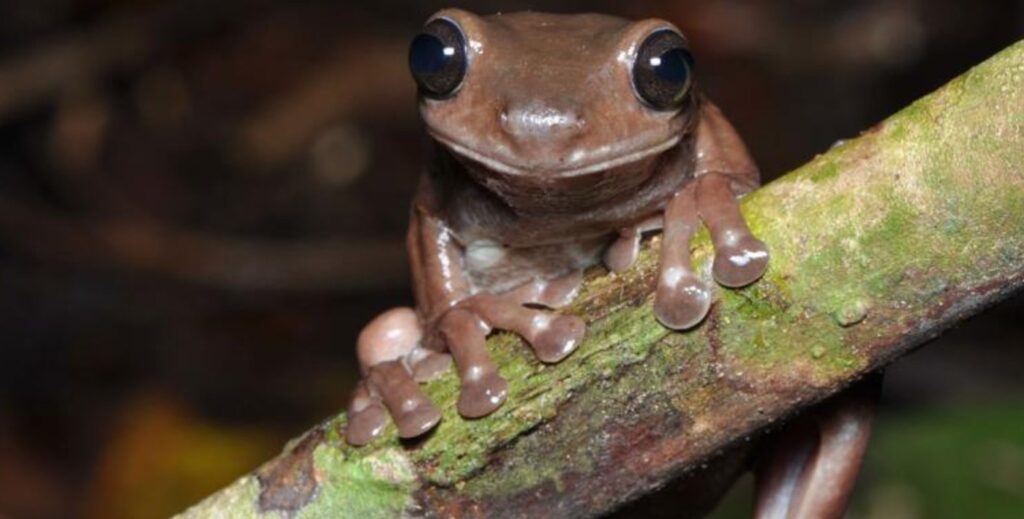
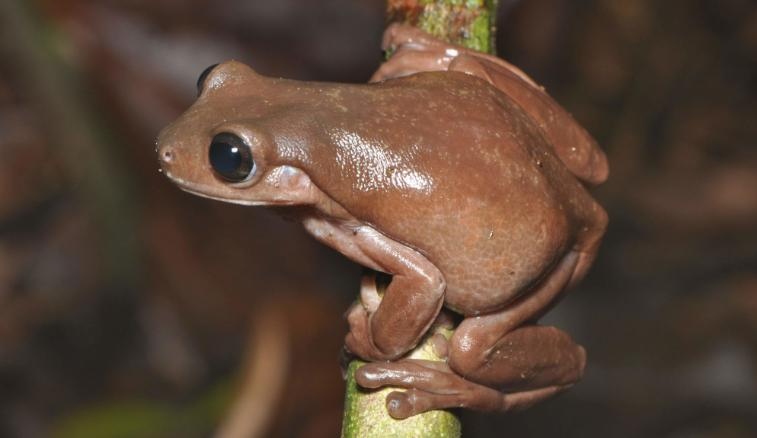
Scientists Discover a New Brown Species They Named the ‘Chocolate Frog’ – And it’s Adorable

Queensland Museum Network

In the “nasty” swamps of New Guinea, a frog specialist has discovered a new species which he decided to call the “chocolate frog.”

Far from the fugitive confectionaries containing famous witch or wizard trading cards from the Harry Potter series, the real thing is a close relative of the Australian green tree frog, only coated in a chocolate brown skin.

Steve Richard’s home of South Australia can be a paradise, but the same can’t necessarily be said for the environment he decided to work in. New Guinea is covered in dense jungle and mangrove swamp. It’s one of the least-explored jungles on Earth, and filled with poisonous plants and animals.

Nevertheless, despite nightmarish conditions, Richards has discovered 200 frog species in its depths.

The chocolate frog, or Litoria mira, was found by Richards and his team in 2016, but analysis had to be given time to stack up before it was confirmed that, rather than being a population that migrated to New Guinea somehow, L. mira was its very own species.

Part of the difficulty is that Australian green tree frogs have been known to both exist in New Guinea and turn brown. But subtle difficulties helped the herpetologists make the call, including small patches of lavender skin around the eyes, and the fact that the chocolate frog was a bit smaller.

Queensland Museum Network

Profiled by The GuardianRichard’s explains that he accidentally disturbed an overhanging nest of giant hornets during the course of collecting the frog specimens, and had to sprint in order to escape the insects’ wrath.

MORE: New Species, Devil-eyed Frog, and Satyr Butterfly Not Seen For a Century Found in Forests 30 Miles From the Capital

“…It took so long to find this frog,” he told the British newspaper. “It’s swampy, it’s spiky, there are lots of malaria-carrying mozzies, it floods, there are crocodiles and not many roads. It’s a really unpleasant place to work.”

HOP the Good News Over to Pals by Sharing This story on Social Media…

Nigerian Homes Built From Thousands of Plastic Bottles –12x Stronger Than Brick And Earthquake Strong

YouTube/Al Jazeera
YouTube/Al Jazeera

New Mexico is known for its adobe dwellings, Kyoto for its wooden temples, and now, in rural Nigeria, there are villages making waves for their plastic bottle houses.

Discarded plastic bottles can be found along too many miles of Earth roads—and in Nigeria, one of the most populated African countries, there are enough to create a new sustainable construction business.

In fact, there are now houses being built with discarded plastic bottles that are filled with sand and set into a wall via a lattice pattern. The homes are offered for lower prices which helps rural villages.

And, this greener construction method is strong and durable, able to withstand earthquakes—and even bullets.

Called bottle-brick technology, Al Jazeera reports that the walls are 18-times stronger than regular bricks.

In the central state of Kaduna, the project employs out-of-school or jobless youth filling bottles with sand before stacking them amid a glue of traditional mud technology, and securing the outside with a net. The result looks quite striking and can cost a third less than traditional housing in the region, with raw materials being almost free.

MORE: Scientists Create ‘Super Enzyme’ That Eats Plastic Bottles Six Times Faster than Previous Enzymes

As many as 14,000 plastic bottles will go in to making a house, and staff at the Development Association for Renewable Energies are hoping to pitch the project to the Nigerian government in order to secure some additional funding and expand the enterprise.

One thing is certain, the harvesting of bottles from rubbish-strewn roadsides is benefitting the neighborhood and the planet.

(WATCH the Al Jazeera video…)

DON’T BOTTLE Up the Good News—Share it With Friends on Social Media…

The Lifestyle of This Amazonian Tribe May Hold a Key to Healthy Aging

Chapman University
Chapman University

Although people in industrialized nations have access to modern medical care, they are more sedentary and eat a diet high in saturated fats. In contrast, the Tsimane have little or no access to health care but are extremely physically active and consume a high-fiber diet that includes vegetables, fish, and lean meat.

“The Tsimane have provided us with an amazing natural experiment on the potentially detrimental effects of modern lifestyles on our health,” said study author Andrei Irimia, an assistant professor of gerontology, neuroscience, and biomedical engineering at the USC Leonard Davis School of Gerontology and the USC Viterbi School of Engineering. “These findings suggest that brain atrophy may be slowed substantially by the same lifestyle factors associated with very low risk of heart disease.”

The researchers enrolled 746 Tsimane adults, ages 40 to 94, in their study. To acquire brain scans, they provided transportation for the participants from their remote villages to Trinidad, Bolivia, the closest town with CT scanning equipment. That journey could last as long as two full days with travel by river and road.

The team used the scans to calculate brain volumes and then examined their association with age for Tsimane. Next, they compared these results to those in three industrialized populations in the U.S. and Europe.

The scientists found that the difference in brain volumes between middle age and old age is 70% smaller in Tsimane than in Western populations. This suggests that the Tsimane’s brains likely experience far less brain atrophy than Westerners as they age; atrophy is correlated with risk of cognitive impairment, functional decline, and dementia.

MORE: Drinking This Juice Could Help Promote Healthy Aging, Scientists Find

The researchers note in their study, pubilshed in The Journals of Gerontology last month, that the Tsimane have high levels of inflammation, which is typically associated with brain atrophy in Westerners. But their study suggests that high inflammation does not have a pronounced effect upon Tsimane brains.

According to the study authors, the Tsimane’s low cardiovascular risks may outweigh their infection-driven inflammatory risk, raising new questions about the causes of dementia. One possible reason is that, in Westerners, inflammation is associated with obesity and metabolic causes whereas, in the Tsimane, it is driven by respiratory, gastrointestinal, and parasitic infections. Infectious diseases are the most prominent cause of death among the Tsimane.

RELATED: From City to Countryside, Study Suggests Wisdom Can Protect Against Loneliness

“Our sedentary lifestyle and diet rich in sugars and fats may be accelerating the loss of brain tissue with age and making us more vulnerable to diseases such as Alzheimer’s,” said study author Hillard Kaplan, a professor of health economics and anthropology at Chapman University who has studied the Tsimane for nearly two decades. “The Tsimane can serve as a baseline for healthy brain aging.”

Healthier hearts and healthier brains

The Indigenous Tsimane people captured scientists’—and the world’s—attention when an earlier study found them to have extraordinarily healthy hearts in older age.

That prior study, published by the Lancet in 2017, showed that Tsimane have the lowest prevalence of coronary atherosclerosis of any population known to science and that they have few cardiovascular disease risk factors. The very low rate of heart disease among the roughly 16,000 Tsimane is very likely related to their pre-industrial subsistence lifestyle of hunting, gathering, fishing, and farming.

READ: Drug Reverses Age-Related Mental Decline Within Days, Suggesting Lost Cognitive Ability is Not Permanent

“This study demonstrates that the Tsimane stand out not only in terms of heart health, but brain health as well,” Kaplan said. “The findings suggest ample opportunities for interventions to improve brain health, even in populations with high levels of inflammation.”

Source: University of South Carolina

SHARE This Fascinating Research on Social Media…

“What do we live for, if it is not to make life less difficult for each other?” – George Eliot

by juan pablo rodriguez

Quote of the Day: “What do we live for, if it is not to make life less difficult for each other?” – George Eliot

Photo: by juan pablo rodriguez

With a new inspirational quote every day, atop the perfect photo—collected and archived on our Quote of the Day page—why not bookmark GNN.org for a daily uplift?

by juan pablo rodriguez

Scientists Created a Mint That Whitens Teeth (Better Than Gels) And Rebuilds Tooth Enamel at the Same Time

Before too long, you may be able to buy a breath mint that rebuilds your tooth enamel while it whitens your teeth, thanks to a team of researchers.

The University of Washington team is preparing to launch clinical trials of a lozenge that contains a genetically engineered peptide, or chain of amino acids, along with phosphorus and calcium ions, which are building blocks of tooth enamel. The peptide is derived from amelogenin, the key protein in the formation of tooth enamel, the tooth’s crown. It is also key to the formation of cementum, which makes up the surface of the tooth root.

Each lozenge deposits several micrometers of new enamel on the teeth via the peptide, which is engineered to bind to the damaged enamel to repair it while not affecting the mouth’s soft tissue.

The new layer also integrates with dentin, the living tissue underneath the tooth’s surface. Two lozenges a day can rebuild enamel, while one a day can maintain a healthy layer. The lozenge—which can be used like a mint—is expected to be safe for use by adults and children alike.

The researchers have been discussing commercial applications with potential corporate partners, according to Professor Mehmet Sarikaya, the team leader.

The lozenge produces new enamel that is whiter than what tooth-whitening strips or gels produce. It has another distinct advantage: Conventional whitening treatments rely on hydrogen peroxide, a bleaching agent that can weaken tooth enamel after prolonged use. Since tooth enamel can’t regrow spontaneously, the underlying dentin can be exposed, with results ranging from hypersensitivity to cavities or even gum disease. The lozenge, on the other hand, strengthens, rebuilds, and protects teeth.

MORE: The Simple Habit of Flossing Reduces Your Risk Of COVID-19 Complications, Says New Study

While fluoride can also fortify tooth enamel, it does not actively rebuild it. It also dilutes relatively quickly, and its overall effectiveness depends largely on diligent oral hygiene. At the same time, the lozenge can also be used in conjunction with fluoride, Dr. Dogan said. The fluoride can be in a very low concentration, he added—about 20 percent of what is found in most fluoride toothpastes.

“We have three objectives in the clinical trial,” Professor Sarikaya said. “First, demonstrate efficacy. Second, documentation. Third, benchmarking—seeing how the whitening effect compares to existing commercial treatments.” The researchers have already tested the lozenge on extracted teeth from humans, pigs, and rats, and also on live rats.

RELATED: World’s First Plaque-Identifying Toothpaste Significantly Reduces Inflammation Throughout the Body

The team also plans to develop related products for use in dental offices, Dr. Dogan said, expecting this phase of trials to start in March or April. “Each study will take two weeks, and we expect these trials to take no more than three months,” he said. The team is also developing a toothpaste for over-the-counter use, but has not fixed a timetable for its introduction.

In addition, the researchers are investigating a gel or solution with the engineered peptide to treat hypersensitive teeth.

This problem results from weakness in the enamel that makes the underlying dentin and nerves more vulnerable to heat or cold. Most common products currently on the market can put a layer of organic material on the tooth and numb nerve endings with potassium nitrate, but the relief is only temporary. The peptide, however, addresses the problem permanently at its source by strengthening the enamel.

Source: University of Washington School of Dentistry

CLEAN UP Friends’ News Feeds With Good News—Share This Story…

She Spent Her Vacation Picking Up Trash Across the U.S., and Strangers Chipped in With Help and Gas

SWNS

A Colorado woman has spent 23 days picking up 126 bags of trash across the country.

Having over a month off from her job at a campus recreation center, 24-year-old Stefani Shamrowicz decided to take a trip to help clean up the environment.

She’s now driven over 70 hours through Colorado, New Mexico, Arizona, Texas, Louisiana, Florida, Georgia, Tennessee, Kentucky, Ohio, Pennsylvania, and New York—cleaning up everything from pee-filled bottles to lawn ornaments.

“About 80 per cent is drinking bottles and face masks have been pretty common,” said the Fort Collins local. “I’ve found a few fast-food toys and a tire with a pair of cowboy boots in it.”

Stefani said her aim isn’t to shame, but rather encourage people to do what they can.

“When I post it’s never ‘this is disgusting or we’re awful,’ it’s ‘hey I’m cleaning up this city’ and keeping a positive light on it,” she said.

“I’m not going to be able to pick up everything, but if everyone starts picking up some on walks or runs, that’s where the magic is.”

Collecting anywhere from one to 16 bags at a time, Stefani’s been discouraged when she felt she wasn’t doing enough.

“There was a place that had an ocean of trash and I pushed out four bags, but then I broke down because I realized how much there was and it felt like four bags didn’t do anything,” she said.

But she remembers to just do what she can, especially since she surpassed her goal.

MORE: Americans Choose the Best Road Trip Tunes Of All Time — For Your Summer Playlist

“My monumental day was bag 100 in Ohio on day 16,” she said.

“I dedicated that to my parents because they raised me to be this independent person and have been very supportive on the trip.”

People donate $10 a bag for Stefani to clean up in their name, which she uses for lodging and gas. The person’s name is written on how many bags they’ve donated towards and Stefani posts a picture on her Instagram when they are filled, thanking them for helping clean up the city she’s in.

People online and in person have responded positively to the project.

“I’ve had people send me pictures of bags of trash they picked up,” Stefani said.

“I was walking on the beach in Florida, and I started doing a bag, these two ladies saw me and nonchalantly started helping me fill the bag.”

CHECK OUT: Devoted Son Took His Mom With Alzheimer’s on Incredible Round-the-World Adventure–And She Improved

With her job resuming June 1, Stefani is now back home but she has so many good things to say about her unique U.S. road trip.

“There’s litter everywhere, so I’m just happy to be able to make a little bit of an impact everywhere I go,” she said.

“I’ve been to 23 national parks in the U.S., so me cleaning up this litter is a huge thank you for all the joy and good times national parks and nature in general has brought to my life.”

PICK UP the Good News For Your Friends—Then Share It With Them…

Ancient Chicken Laid An Egg That Lasted 1,000 Years Without Being Broken

Yoli Shwartz/Israel Antiques Authority

And now from the files of our ‘Too Much Information Life Hacks Department’… While you might have heard pickling eggs is a great way to extend their shelf life, did you know preserving them in poo can keep them in near-mint condition for 1,000 years?

Well, in near-mint archaeological condition, at any rate.

Yoli Shwartz/Israel Antiques Authority

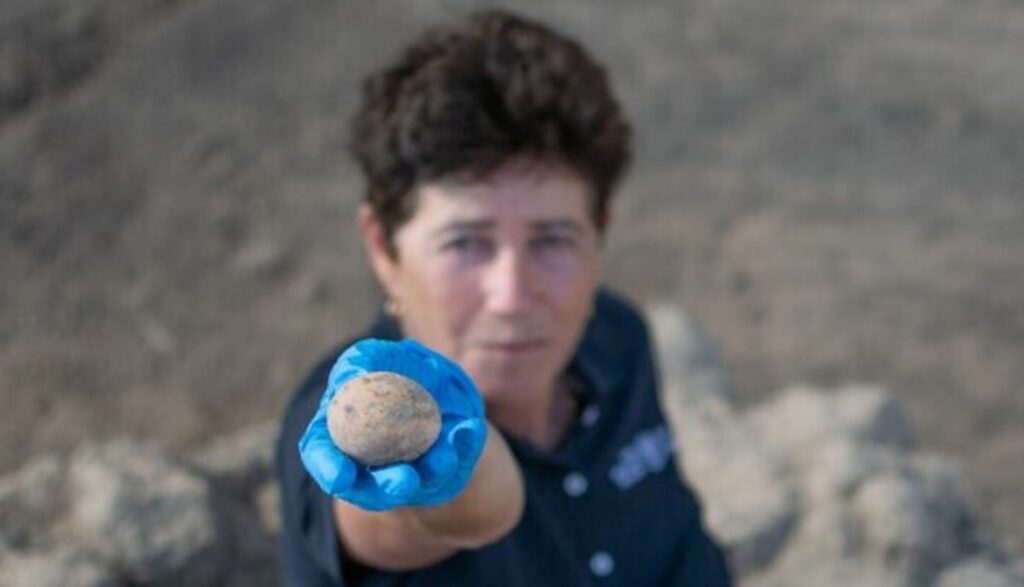
While in no way fit for human consumption, a centuries-old chicken egg in a near-pristine state—or as pristine as an object that’s been cocooned in ca-ca for 10 centuries can be—was recently discovered during an Israel Antiquities Authority-led excavation of a Byzantine-era cesspit in the city of Yavne.

For those unfamiliar, back in the day, a cesspit served as your basic open-air septic tank/dumpster. In addition to human excrement, cesspits served as the repository for all manner of waste products.

MORE: Astounding Fossil Discovery in California After Man Looks Closely at Petrified Tree And Finds Bones of Great Beasts

Along with the superannuated egg, a trio of Islamic Period bone dolls was also recovered from the site. (Giving new meaning to the phrase, “Holy crap!” we suppose.)

Archaeologists report it’s not all that unusual to find ostrich eggs of this vintage still intact, however, with much thinner shells, unearthing—or in the case, un-dunging—a whole hen’s egg from this period is an extremely rare occurrence.

“Even today, eggs rarely survive for long in supermarket cartons,” IAA archeologist Alla Nagorsky told The Times of Israel. “It’s amazing to think this is a 1,000-year-old find!”

RELATED: Newly Discovered Species of Saber-Toothed Cat Was So Big It Hunted Rhinos in America

Since it’s a good bet that, like their modern-day counterparts, Byzantine chickens likely crossed the road to get to the other side rather than to lay their eggs in oversized community chamber pots, scientists were initially a bit baffled as to how an unscathed specimen (versus the more customary shell fragments) came to be ensconced in the stool pile in the first place.

But no matter how the little clucker got stuck in the muck, save for a hairline fracture, the eggshell was structurally sound. “[It] had a small crack in the bottom so most of the contents had leaked out of it,” Nagorsky said. “Only some of the yolk remained, which was preserved for future DNA analysis.”

Well, better that than an omelet.

HATCH This Eggceedingly Fantastic Find By Sharing the News With Your Pals…

Pet Owners Say Taking Care of Their Furry Friend Encourages Taking Better Care of Themselves

SWNS

Nearly seven in 10 Americans admit they take better care of their pet than themselves, according to a new poll.

The survey of 2,000 American pet parents revealed 67% prioritize their pet over themselves—but results revealed it’s a reciprocal relationship.

Eight in 10 respondents said taking care of their pet actively encourages them to take better care of themselves.

In what ways do Americans’ pets help respondents with their own health? Respondents said the biggest benefit their pet provides is reducing their stress, depression and/or anxiety (72%).

In addition to that, respondents said their pet helps them to exercise (62%)—by taking their pets for walks, playing in their house, an so on—and their pet helps them to be more cautious of the food they eat (44%), too.

Conducted by OnePoll on behalf of Stella and Chewy’s, a natural pet food brand, the survey looked at all the things our pets do for us, and the relationship between people and their four-legged friends.

Results found 61% would be willing to pass up on date nights or vacations if their pets aren’t by their side, and it’s due to the unbreakable bond between humans and their pets.

Two-thirds (65%) admitted being closer to their pet than their immediate family members. And a dog really is a man’s best friend—at least according to 76% of respondents.

MORE: Puppies Are Born Ready to Communicate With And Understand Humans

Because of this, pet parents aren’t shy about showing their appreciation for their pets.

In fact, results revealed 94% make a concerted effort to show their furry friend appreciation on a regular basis, and 26% do so by celebrating them on pet-themed holidays such as Pet Appreciation Week (the week of June 6) or National Dog Day (on August 26).

Some of the common ways are playing with them every day (62%), feeding them food they are excited to eat (57%), and letting their pet sleep in bed with them (48%).

Additionally, when it comes to showing our pets how much we appreciate them, many respondents use food as a means to do so.

RELATED: Chernobyl Guards Have Befriended Abandoned Dogs, Feeding Them and Bringing Medical Care

Fifty-six percent show their pets they love them by feeding them healthy, nutritious food, while more than half of respondents (54%) admit they always keep their pet’s favorite treats on hand and nearly three-quarters (73%) of pet owners make an effort to buy natural food for their pet whenever possible.

Most Americans (84%) also look to their pet for support, love, and companionship and are thankful for their pet for helping them through some of the most difficult times of their life (83%).

“The results of this survey further emphasize what we already know to be true: our pets are our family,” said Stella & Chewy’s CEO Marc Hill. “The bond we share with them is strong, and our pets provide us with so much joy and emotional support on a daily basis. It is imperative that we reciprocate that love by showing them how much they mean to us, too.”

PAW This Fascinating Poll Over to Pals on Social Media…

Ford’s New Affordable Small Hybrid Truck: Maverick Gets 40 mpg and Starts at $19,995

Ford
Ford

The ink is hardly dry, so to speak, on the last announcement of a Ford electric F-150 and already they automaker has rolled out another option to satisfy another chunk of the enormous market share of American truck buyers.

The Blue Oval’s latest green offering is the new Ford Maverick, a hybrid that starts at just $19,995, about half the price of the F-150 Lighting.

The hybrid outfit consists of a 162 hp, 2.5 liter, four-cylinder engine with a 126 hp, permanent magnet electric motor that together can provide 255 lbs. feet of torque and almost 200 hp to the front wheels. This standard setup allows for 2,000 lbs. of maximum tow, 1,500 of maximum carry, but 40 mpg city.

MORE: Daimler Trucks is Now Accepting Orders for All-Electric Freight Trucks, Having Tested Them on America’s Highways

Ford’s EcoBoost option can be fitted for another thousand dollars to take these statistics up to 250 hp with 4,000 lbs. towing capacity.

New construction methods allowed Ford to build a chassis that’s three feet shorter than the F-150, significantly reducing the blind spots, while a tailgate that sits 30 inches off the ground should allow shorter people to load the 33 cubic feet bed with little difficulty.

The bed is designed to accommodate oft-used construction essentials like 4x8s. Inside are 12 volt power outlets, which can be upgraded to 110 volts, and slots into which owners can insert wooden beams to act as dividers to keep loose cargo more secured.

RELATED:  Long-lasting Solid-state Lithium Battery From Harvard May Solve a 40-year Problem

Inside the cabin a variety of triangular cubbies hold different accessory configurations, like additional cup holders or phone recharge stations, for which Ford owns 3D printing plans. They’re offering to share these plans to any customers who want them for 3D-printing their own triangular modules.

“Maverick challenges the status quo and the stereotypes of what a pickup truck can be,” Todd Eckert, Ford truck group marketing manager, said according to CNN. “We believe it will be compelling to a lot of people who never before considered a truck.”

Preorders are available now, with deliveries slated to begin in the fall.

RUN This Good News Over to Friends on Social Media…

“Lack of direction, not lack of time, is the problem. We all have twenty-four hour days.” – Zig Ziglar

Quote of the Day: “Lack of direction, not lack of time, is the problem. We all have twenty-four hour days.” – Zig Ziglar

Photo: by Michael Coury

With a new inspirational quote every day, atop the perfect photo—collected and archived on our Quote of the Day page—why not bookmark GNN.org for a daily uplift?


Man Who’s Able to Talk Backwards Stuns Strangers on the Street (WATCH)

John Austin has been delighting people his whole life with a talent for talking backward.

Since the age of five, when he accidentally played the Mary Poppins record backwards and learned to sing with it, this 51-year-old has been speaking apparent gibberish—but now with smartphones, he can play it backward so others can confirm that his translation is spot-on.

For instance, instead of ‘How are you doing?’, he says it backward: “Gniod uoy era woh“?”

Austin uses an iPhone app, Reversercam, and records himself saying something backwards. When anyone hears the playback, that’s when they become true believers.

Living in Charlotte, North Carolina, he created a name for himself, Backwords Dude, on YouTube, and has captivated audiences on TV and the internet with his incredible ability to take phrases—and even entire songs—and flip them around in his brain to recite them backwards.

Like Elon Musk, John says he has Asperger’s, which is on the autism spectrum: “I have always been ashamed of this talent because it shows I am different and I was told that was bad by family, teachers, friends, and peers,” writes Austin on his YouTube channel.

WATCH: Mama Black Bear Struggles Hilariously to Get All Four Cubs Across The Road

But then he typed ‘talking backwards’ into a google search and was “shocked” at what he found: A couple of guys in Hollywood were doing the same thing, and becoming known for their talent.

So John started making his own videos, and now his YouTube channel has over 16,000 subscribers.

In this video John visits New York City where he shows off his skill for people in Union Square who are stunned and amazed…

ALSO: Watch What Happens When An Octopus Steals a Tennis Ball From a Border Collie

E-R-A-H-S (SHARE) The Talent With Your Friends on Social Media…

New Sustainable Roofing Material Can Naturally Keep Buildings Cool Without A/C

Cooling paper by Ruby Wallau/Northeastern University

Turning on the air conditioning to its highest setting can bring sweet relief. But your resulting energy bill? Not so much. What if your home could stay cool all on its own—no electricity required?

Cooling paper by Ruby Wallau/Northeastern University

That’s the premise of Yi Zheng’s new invention. The associate professor of mechanical and industrial engineering at Northeastern University in Boston has created a sustainable material that can be used to make buildings or other objects able to keep cool without relying on conventional cooling systems.

Zheng envisions this material, dubbed “cooling paper,” covering the roofs of houses, warehouses, and office buildings.

Not only does the light-colored material reflect hot solar rays away from the building, it also sucks heat out of the interior, too—heat that is emitted from electronics, cooking, and human bodies.

RELATED: How an Indian Architect is Sucking Carbon Emissions Out of the Air and Turning it into Stylish Tiles

Cooling paper is, in fact, made of paper, and the porous microstructure of the natural fibers inside absorbs the indoor warmth and re-emits it away from the building.

Zheng, who studies nanomaterials, got the idea when he looked at a bucket full of used printing paper. He recalls thinking to himself, ‘How could we simply transform that waste material into some functional energy material, composite materials?’

So, with the help of a high-speed blender from his home kitchen, Zheng made a pulp out of paper waste, mixed with the material that makes up Teflon. Then he formed it into water-repelling “cooling paper” that could coat homes. Then, he and his team tested its capacity to keep cool under various temperature and humidity conditions.

LOOK: Not Only Does New Solar Chimney Design Cut Energy Costs By 50%, It Can Also Save Lives During a Fire

Zheng and his colleagues found that the cooling paper can reduce a room’s temperature by as much as 10 degrees Fahrenheit (6 C). He selected materials that would reduce the cost of deploying the new technology to cool homes.

Yi Zheng (center) by Ruby Wallau/Northeastern University

The cooling paper isn’t just eco-friendly in its ability to reduce your energy footprint. It’s also recyclable. The material can be used, exposed to solar radiation, weather, and varying temperatures, then reduced to a pulp (again) and reformed without losing one iota of its cooling properties. Zheng has tried it. And the recycled cooling paper performed just as well as the original.

“I was surprised when I obtained the same result,” Zheng says. “We thought there would be maybe 10 percent, 20 percent of loss, but no.”

The process for creating and testing the new material was described in a paper published last month in the American Chemical Society journal Applied Materials & Interfaces—and Zheng was awarded a National Science Foundation CAREER Award grant for his research.

POPULAR: New Power Plant Turns Waste into Energy—and Doubles as a Ski Slope and Climbing Wall

Zheng doesn’t just aim to reduce your utility bills through his research. He also hopes that his work will help combat climate change.

“The starting point is to reduce the use of carbon-based materials and also to reduce global warming,” Zheng says.

(Edited from article in Northeastern University News)

SHARE This Hot Solution With Science Nerds on Social Media…

Innovative Plant Recycles Polystyrene Foam and Recover Valuable Resources, Using All-Wind Power

Courtesy PolyStyreneLoop

Even though styrene occurs naturally in foods such as strawberries, cinnamon, and coffee, when it is strung together with other chemicals to create foam insulation or packaging to protect sensitive electronics, it becomes almost impossible-to-recycle. A second new plant is set to change that in Europe.

Courtesy PolyStyreneLoop

Being 98% air, polystyrene foam is not cost-effective to store or ship, but a huge new recycling plant in the Netherlands has overcome this issue in order to recycle expanded polystyrene (EPS) waste.

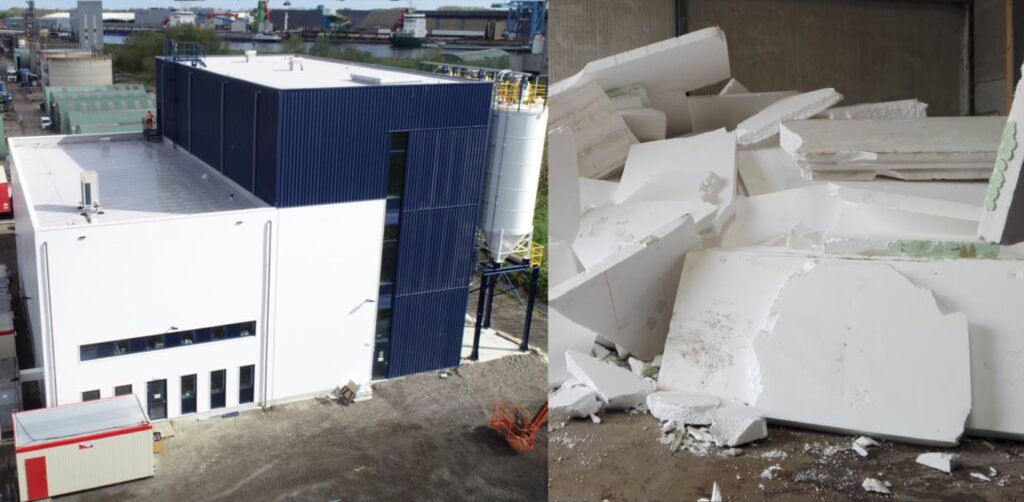
The PolyStyreneLoop plant in Terneuzen, Netherlands, scheduled to open this week, was built to prove the technical and economic feasibility of a large-scale, closed-loop solution for the recycling of EPS waste.

The PSLoop facility will start by recycling EPS foam insulation using a process based on a technology that turns it into a new high quality raw material. All kinds of impurities, such as cement or glue residues, as well as the additive HBCD, will be safely removed while the valuable bromine is recovered.

RELATED: World’s Largest Wind Turbine Manufacturer Says All Its Blades Will Soon be Fully Recycled

“This plant showcases how the EPS industry is always looking for ways to boost its recycling capabilities,” said Lein Tange, Co-Director of PolyStyreneLoop. “The purpose of this plant is to pave the way for the construction of similar EPS recycling plants in the rest of Europe.”

Benefitting from a European Union grant, it has been built by a Dutch nonprofit organization whose members comprise more than 70 industry representatives from the whole polystyrene foam value chain.

The Terneuzen plant will have the capacity to recycle 3,300 metric tons of polystyrene foam demolition waste coming from Netherlands, Germany, and other countries, proving the technical, and economic viability of a new recycling process in which polystyrene foams containing HBCD can be fully integrated in the circular economy rather than filling up landfills.

CHECK OUT: How to Turn Plastic Waste From Your Recycle Bin Into Profit

“It’s a real plus that we can do this with about the same energy input as mechanical recycling and the energy we use comes solely from windmills,” said Jan Noordegraaf, co-director of the plant.

Though the PSLoop plant will recycle EPS building and construction waste, later, it will also recycle extruded polystyrene, also known as Styrofoam, used to make cups, plates, and packaging.

The Netherlands isn’t the only place EPS is being recycled, in the UK, Molygran has been recycling that nation’s polystyrene, accepting any grade of white expanded polystyrene, “undecorated, clean and dry”. They reported in January 2020 that enthusiastic recyclers were mailing EPS from around the UK, contributing to their staggering total of 37 tons removed from landfills the previous year.

And, because EPS is 98% air, 37 tons is a lot to celebrate…

LOOK: California Highway Has Just Become the First State Road Made From Recycled Plastic in the US

DELIVER This Fantastic Good News to Social Media, Where it Can Be Recycled…

“If there is any one secret of success, it lies in the ability to get the other person’s point of view and see things from that person’s angle, as well as from your own.” – Henry Ford

Quote of the Day: “If there is any one secret of success, it lies in the ability to get the other person’s point of view and see things from that person’s angle, as well as from your own.” – Henry Ford

Photo: Jusdevoyage

With a new inspirational quote every day, atop the perfect photo—collected and archived on our Quote of the Day page—why not bookmark GNN.org for a daily uplift?


Native American Tribe in Maine Gets Back Sacred Island Taken 160 Years Ago

Vladi-private-islands.de

The Passamaquoddy Tribe reacquired 140 acres of their ancestral territory, thanks to help from The Nature Conservancy which granted them funds to purchase Pine Island, known to them as Kuwesuwi Monihq.

Vladi-private-islands.de

The largest island on Big Lake, Maine, the place has deep historical and cultural significance to the Passamaquoddy community. The small tribe of 3,700 Native Americans had lived there for at least 10,000 years.

“The Tribe felt this land loss was an injustice,” explains Indian Township’s Chief William Nicholas. Today with the island’s return, he continues, “There is no doubt that the Ancestors are jumping all over the place over there.”

Because of its cultural significance, regaining this stolen treaty land has been a high priority for the Tribe. Then, the island came up for sale.

“For $449,000 you could buy 143 acres of forests with sweeping views of the rugged shoreline of Big Lake in Maine… a unique property steeped in history … with only two owners in the last 95 years,” wrote the real estate agent.

POPULAR: South Korea Sends 10K Masks to Navajo Nation to Honor Their Service as ‘Code Talkers’ During Korean War

Chief Nicholas contacted First Light—a collective of advocates working to serve as a bridge between conservation organizations and tribal communities. First Light and The Nature Conservancy in Maine partnered with the Tribe to remedy an historical injustice and reacquire the island.

In March, they used the $355,000 raised to finally bought the island back.

RELATED: At Long Last, Native Californian Tribe Has Land To Call Their Own

“The Passamaquoddy People have dwelled on and cared for Kuwesuwi Monihq for countless generations,” said Corey Hinton, Esq., Passamaquoddy Citizen and Lead Attorney.

“The return of the island to the Tribe will allow us to return home and to resume our stewardship of this special place.”

SHARE the Good News on Social Media…

Firefighters Get Creative to Help Baby Raccoon With its Head Stuck in a Sewer Cover

Firefighters near Detroit came to the rescue of a small raccoon struggling with quite the predicament.

By Lt. Brian Lorkowski – Harrison Township Fire Department

Macomb County Animal Control called the Harrison Township Fire Department and when they arrived they were perplexed to see the raccoon with its head stuck in a sewer cover.

Veteran firefighter Lt. Brian Lorkowski took a photo while they figured out what do do.

First, they tried putting soap around the animal’s neck, but that didn’t work. They considered cutting into the cast iron cover, but it would be too risky.

“We were trying all different kinds of options to not try and hurt it, but it was stuck in there really good,” Lorkowski told MLive.

Finally, they asked a homeowner bring some cooking oil. They were able to pull out the body, and free the animal at last, without any injury.

WATCH: Quick-Thinking Kayakers Save Pair of Rare Eagles Drowning in the Danube River

“We get ducks all the time that fall in the storm drains,” he said. “(But) I can’t remember any raccoon rescues. I think this is my first”

DON’T Stick Your Head in the Sand—Share This With Friends on Social Media…

This Week’s Inspiring Horoscopes From Rob Brezsny’s ‘Free Will Astrology’

Our partner Rob Brezsny provides his weekly wisdom to enlighten our thinking and motivate our mood. Rob’s Free Will Astrology, is a syndicated weekly column appearing in over a hundred publications. He is also the author of Pronoia Is the Antidote for Paranoia: How All of Creation Is Conspiring To Shower You with Blessings. (A free preview of the book is available here.)

Here is your weekly horoscope…
FREE WILL ASTROLOGY – Week beginning June 10, 2021
Copyright by Rob Brezsny, FreeWillAstrology.com

GEMINI (May 21-June 20):
I’m glad you’re not on the planet Saturn right now. The winds there can blow at 1,000 miles per hour. But I would like you to feel a brisk breeze as you wander around in nature here on Earth. Why? Because according to my interpretation of the current astrological omens, winds will have a cleansing effect on you. They will clear your mind of irrelevant worries and trivial concerns. They’ll elevate your thoughts as well as your feelings. Do you know the origin of the English word “inspire”? It’s from the Latin word inspirare, meaning “blow into, breathed upon by spirit.” Its figurative meaning is “to inspire, excite, inflame.” The related Latin word spiritus refers to “a breathing of the wind” and “breath of a god”—hence “inspiration; breath of life.”

CANCER (June 21-July 22):
Cancerian author Franz Kafka put his characters into surreal dilemmas. In his novella The Metamorphosis, for example, the hero wakes up one day to find he has transformed into a giant insect. Despite his feral imagination, however, Kafka had a pragmatic relationship with consumerism. “I do not read advertisements,” he said. “I would spend all of my time wanting things.” In accordance with astrological omens, I invite you to adopt his earthy attitude for the next two weeks. Take a break from wanting things, period. Experiment with feeling free of all the yearnings that constantly demand your attention. Please note: This break in the action won’t be forever. It’s just a vacation. When you return to wanting things, your priorities will have been realigned and healed, and you’ll feel refreshed.

LEO (July 23-Aug. 22):
Author Umberto Eco declared that beauty is boring because it “must always follow certain rules.” A beautiful nose has to be just the right shape and size, he said, while an “ugly nose” can be ugly in a million different unpredictable ways. I find his definition narrow and boring, and prefer that of philosopher Francis Bacon, who wrote, “There is no excellent beauty that hath not some strangeness in the proportion.” Poet Charles Baudelaire agreed, saying, “That which is not slightly distorted lacks sensible appeal: from which it follows that irregularity—that is to say, the unexpected, surprise and astonishment—is an essential part and characteristic of beauty.” Then there’s the Japanese concept of wabi-sabi, which reveres beauty that’s imperfect, transitory, and incomplete. Beginning now, and for the rest of 2021, Leo, I encourage you to ignore Eco’s dull beauty and cultivate your relationship with the more interesting kind.

VIRGO (Aug. 23-Sept. 22):
One of the more evocative passages in J. R. R. Tolkien’s novel The Return of the King is about the warrior Éowyn. It says, “Then the heart of Éowyn changed, or else at last she understood it. And suddenly her winter passed, and the sun shone on her.” I’m predicting a comparable transformation for you in the near future, Virgo. There’ll be some fundamental shift in the way your heart comprehends life. When that happens, you will clearly fathom some secrets about your heart that have previously been vague or inaccessible. And then the sun will shine upon you with extra brilliance.

LIBRA (Sept. 23-Oct. 22):
Libran actor and author Carrie Fisher had more than the average number of inner demons. Yet she accomplished a lot, and was nominated for and won many professional awards. Here’s the advice she gave: “Stay afraid, but do it anyway. What’s important is the action. You don’t have to wait to be confident.” I hope you’ll employ that strategy in the coming weeks, dear Libra. The time is favorable for you to work hard on your number one goal no matter what your emotions might be at any particular moment.

SCORPIO (Oct. 23-Nov. 21):
Scorpio author Fyodor Dostoevsky (1821–1881) had a gambling addiction for many years. At one point, he lost so much money betting on roulette that he had to take drastic measures. He wrote a novella in record time—just 16 days—so as to raise money to pay his debt. The story was titled The Gambler. Its hero was a not-very-successful gambler. Is there a comparable antidote in your future, Scorpio? A gambit that somehow makes use of the problem to generate the cure? I suspect there is.

SAGITTARIUS (Nov. 22-Dec. 21):
In her poem “Escape,” Michelle Tudor addresses a lover: “Inside of you: a dream raging to be set free.” She implies that she would like to be a collaborator who provides assistance and inspiration in liberating her companion’s dream. The coming weeks will be an excellent time for you to make a similar offer to an ally you care for—and to ask that ally to do the same for you. And by the way: What is the dream inside you that’s raging to be set free? And what’s the dream inside your comrade?

CAPRICORN (Dec. 22-Jan. 19):
Author Martha Beck has helpful counsel for you to keep returning to during the coming weeks. “It isn’t necessary to know exactly how your ideal life will look,” she writes. “You only have to know what feels better and what feels worse. Begin making choices based on what makes you feel freer and happier, rather than on how you think an ideal life should look. It’s the process of feeling our way toward happiness, not the realization of the Platonic ideal, that creates our best lives.”

AQUARIUS (Jan. 20-Feb. 18):
Aquarian author James Dickey celebrated “the holy secret of flowing.” But he added, “You must be made for it.” In other words, he implied that the secret of flowing is a luxury only some of us have access to. And because we “must be made for it,” he seemed to suggest that being in possession of the secret of flowing is due to luck or genetics or privilege. But I reject that theory. I think anyone can tap into the secret of flowing if they have the desire and intention to do so. Like you! Right now! You’re primed to cultivate a robust relationship with the holy flow.

PISCES (Feb. 19-March 20):
Why do humans enjoy much longer life spans than other higher primates? Here’s one reason: grandmothers. Anthropologists propose that earlier in our evolution, families with elder females especially thrived. The grandmothers helped care for children, ensuring greater health for everyone as well as a higher rate of reproduction than grandmother-less broods. Their longevity genes got passed on, creating more grandmothers. Lucky! Having older women around while growing up has been key to the success of many of us. In accordance with astrological omens, I invite you to celebrate and honor the role your own grandmothers and female elders have played in your life. And if you’re a grandmother, celebrate and honor yourself!

ARIES (March 21-April 19):
Aries actor Leonard Nimoy became mega-famous by playing the role of Spock, an alien from the planet Vulcan in the Star Trek franchise. He always enjoyed the role, but in 1975 he wrote an autobiography called I Am Not Spock. In it, he clarified how different he was from the character he performed. In 1995, Nimoy published a follow-up autobiography, I Am Spock, in which he described the ways in which he was similar to the fictional alien. In the spirit of Nimoy’s expansive self-definition, Aries, and in accordance with current astrological potentials, I invite you to make it clear to people exactly who you and who you aren’t.

TAURUS (April 20-May 20):
The poet Rumi declared, “A lover has four streams inside, of water, wine, honey, and milk.” With that in mind, Taurus, I will recommend that you seek a boost in the honey department. Your passions and feelings have been flowing along fairy well, but lately they’ve lacked some sweetness. As a result, you’re not receiving as much of the sweetness you need from the world around you. So your assignment is to intensify the honey stream within you! Remember the principle, “Like attracts like.”

WANT MORE? Listen to Rob’s EXPANDED AUDIO HOROSCOPES, 4-5 minute meditations on the current state of your destiny — or subscribe to his unique daily text message service at: RealAstrology.com

(Zodiac images by Numerologysign.com, CC license)

SHARE The Wisdom With Friends Who Are Stars in Your Life on Social Media…