All News - Page 465 of 1716 - Good News Network
Home Blog Page 465

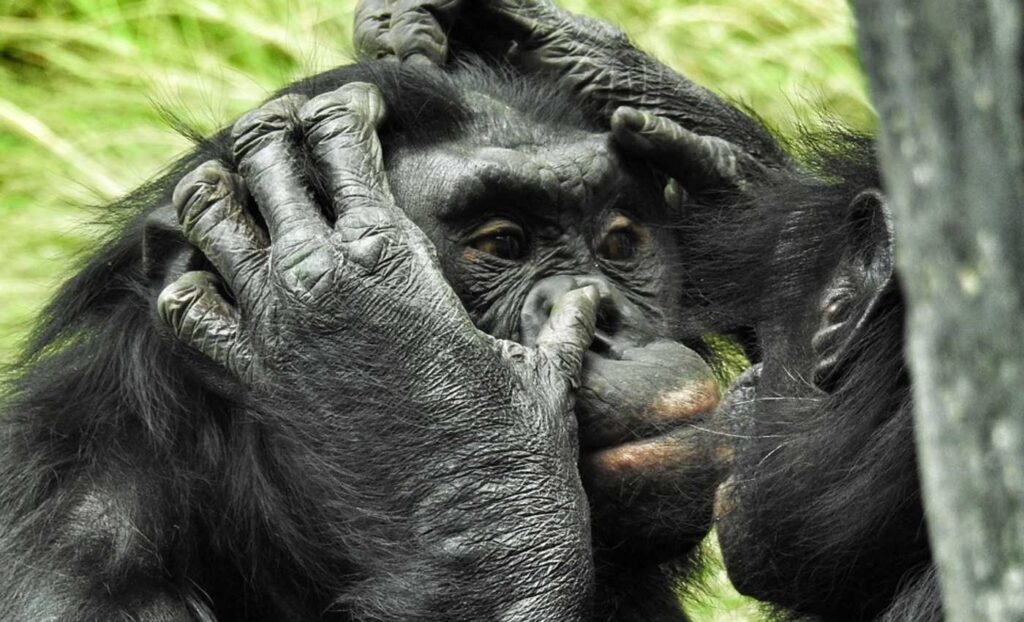
Some Generous Apes May Help Explain The Evolution Of Human Kindness

Nautical Voyager

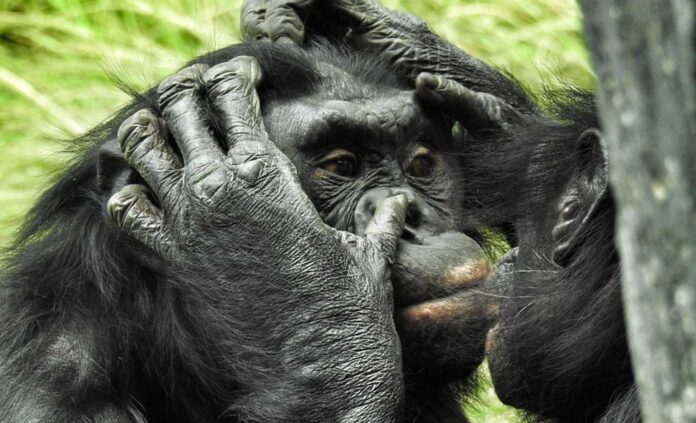
New research suggests that among bonobos, giving is seen as good—and they may just have given the trait of generosity to us.

Nautical Voyager

While chimps are hostile and competitive, bonobos, their lesser-studied ape relatives, share about the same amount of DNA as us—and live in the polar opposite society of the blood-and-guts chimp dominance hierarchy.

A recent paper—based on research conducted by Duke University researchers in the Democratic Republic of the Congo—found that given a plate of prized fruit and the decision to eat it all on their own, bonobos preferred to unlock an unrelated bonobo from a room with a locked door in order to share the food.

Later, the researchers found that when the bonobos were in groups of three—composed of a bonobo with food, their friend, and a stranger—the subject with food would generally share with the stranger first, followed by the friend.

While humans can be more like chimps this regard, sometimes perceiving strangers as not even of the same species depending on just how far outside their group the stranger is, this bonobo beneficence of treating strangers before in-group members can be found in certain Asian customs, or in the Roman writings on Germanic Tribes of Northern Europe like the Suebi, of whom, the historian Tacitus wrote:

“The host welcomes his guest with the best meal that his means allow… No distinction is ever made between acquaintance and stranger as far as the right to hospitality is concerned.”

MORE: Everyone is Celebrating Congo’s Massive New Park Since Similar Preserve Saved Gorillas From Extinction

NPR details that the bonobo sanctuary in DRC has produced 75 published studies, as the country is the only place on Earth where bonobos can be found in the wild. Here, just as in the wild, the leader of any social circle is the female. Females keep it that way by banding together to banish aggressive males.

When all is quiet, such as when it’s time to chow down, the hierarchy is enforced through sharing, cooperation, tolerance, and lots and lots of sex, in every capacity imaginable, though usually only for about 13 seconds.

Other similarities include the simple tendency observed in both bonobos and humans to yawn following the observation of another social group member yawning, which was suggested as being derived from empathy.

CHECK OUT: Once Thought to Be Extinct, First Ever Photograph of the Tree-Kangaroo Proves Its Survival

It’s likely humans’ early ancestors acquired many similar strategies, as we now share and cooperate on a massive scale to accomplish things no other species has been able to do— despite the fact that we left behind many of our chimp tendencies.

The research was captured well in a book co-written by the lead author of the first mentioned study, in Survival of the Friendliest: Understanding Our Origins and Rediscovering Our Common Humanity.

GO APE for the Good News—Share This Story With Friends…

End-of-Life Specialists are Surging in Number – Helping American Families to Better Process Death and Dying

There are special caregivers in society who feel their place in the world is at the side of the bed of a dying person, helping to comfort and calm them and their family during a difficult time.

Alongside the rise in green funerals, these ‘death doulas’ are there to help in challenging, end-of-life moments—because making plans and doing research is often the last thing people can think to do at such a moment, and having someone to simply be present with a calming perspective, or to offer insight and information, can be a big relief.

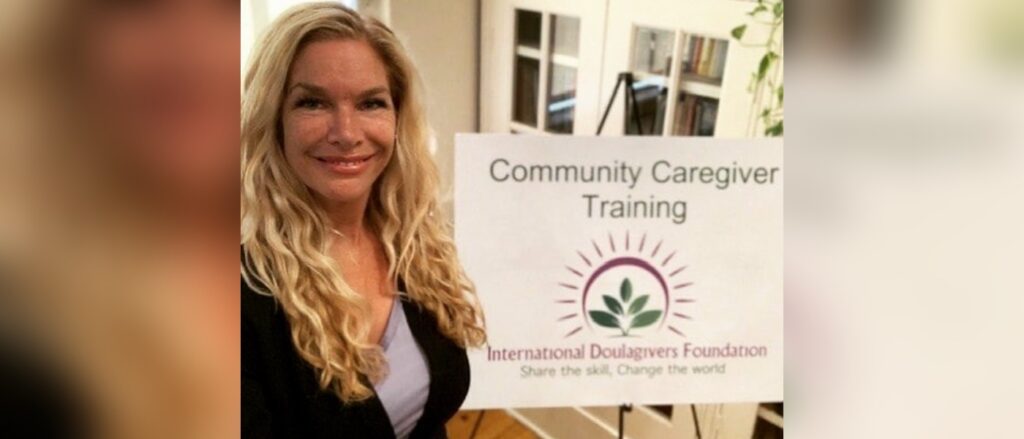
“Being a doula and a giver, is reflective of what we do,” explains Suzanne O’Brien, founder of the International Doulagivers Institute. “We are non-medical holistic practitioners.”

Having trained over 100,000 people as doulagivers, she explains how the work “calls people forward.”

MORE: A Monarch Visitation After Girl’s Death Has Dad Now Sending Milkweed Seeds to All Who Want to Help Butterflies

“They [doulagivers] have a comfort level with those at the end of life,” says O’Brien. “It’s a relatively new movement, but it’s really picked up steam in the last few years.”

Suzanne O’Brien; Instagram/@suzanneobrien

From ‘dead’ restaurant… to death doula

Newly qualified death doula Lindsay Laubenstein was working as a manager in a not-for-profit restaurant in Cincinnati, training people with traditionally high barriers to employment to get jobs in the hospitality industry.

“The restaurant industry is basically everything-proof, or at least we thought it was,” Laubenstein told me, but her place of work was ultimately impacted by the pandemic.

“One morning after all the shutdowns I said: ‘I’m going to look [death doula work] up, I’m going to see what’s going on,'” she said.

Laubenstein, who also described it as a “calling,” recently finished her level 1 training.

“I said, ‘This is it, this is what I need to be doing,'” She told me. “I’ve always felt called to death work, I’ve always felt called to the transitions in life.”

Tools of the trade

How does a doulagiver go about their work? It depends on the individual doula and the client before that relationship begins, says Laubenstein. O’Brien concludes that the most important aspect is being present, adding that while modern life tends to have us living in the past and the future, on our phones, and in the digital space generally, there’s nothing more present than watching someone fade away over the space of several hours.

“There are groups [like] the Threshold Choir where people go in and sing bedside to dying people,” says Laubenstein. “I could technically bring that in if someone wants me to sing to them, that’s something I could do.”

It’s a special kind of person that is comfortable voluntarily spending hours with a person in their last few moments of life, and then singing to them.

“Is dying a medical experience? It’s not: it’s a human one, and it’s only in the last 100 years that we’ve become so far removed from having death being a natural part of the lifecycle,” O’Brien chimes in to remind me.

RELATED: Amid the Green Funeral Movement, Scattering Ashes Ensures These Forests Remain Pristine Forever

“It’s the hardest work I’ve ever done, and the most rewarding work I’ve ever done,” she told me.

O’Brien would go on to explain that she and her institution, and the practice of death doulas as a rule of thumb, tries to avoid hospital administration or the American health insurance marketplace altogether.

CHECK OUT: The First State in the U.S. Approves Human Composting; Local ’Green Reaper‘ Has Your Guide to Eco-Friendly Burials

They prefer instead to build and resource doula programs at the community level, and harness individual doulas’ skills as private contractors, rather than lease their services to be included in a health insurance policy—as it would generally exclude lower-income families, who O’Brien feels are just as deserving of a pleasant end-of-life experience.

“We’ve trained in Thailand, Zimbabwe… We had people on from Japan, Singapore, and Australia. People stay up until the middle of the night to have this webinar,” she says, referring to her online training programs.

O’Brien sees this as a paradigm shift.

“Dying is so expensive, but we’ve literally removed what is most effective [from end-of-life care]. Your body knows what to do… and we forget that the end of life does not have to be an embalming, a $20,000 ring-a-ma-rang.”

SHARE This Story With Others On Social Media… (Featured image: Cori Salchert)

“He who has felt the deepest grief is best able to experience supreme happiness.” – Alexandre Dumas 

Quote of the Day: “He who has felt the deepest grief is best able to experience supreme happiness.” – Alexandre Dumas

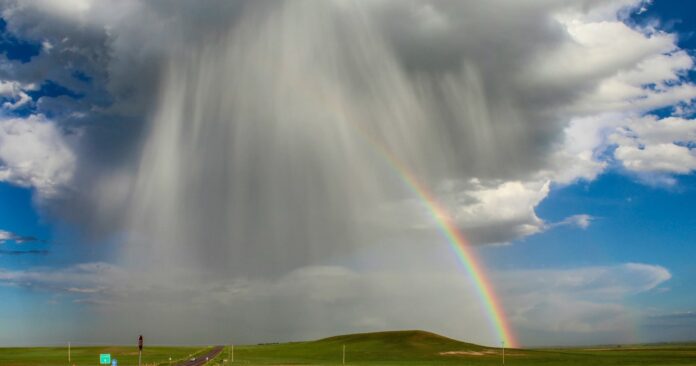
Photo: by NOAA

With a new inspirational quote every day, atop the perfect photo—collected and archived on our Quote of the Day page—why not bookmark GNN.org for a daily uplift?

Childhood Sweethearts Marry In Real-Life Version of The Notebook – Reunited After 22 Years

SWNS
Clare Gelderd Photography via SWNS

Childhood sweethearts have married in a real-life version of The Notebook after 22 years apart—he even proposed with the engagement ring he gave her when they were 15.

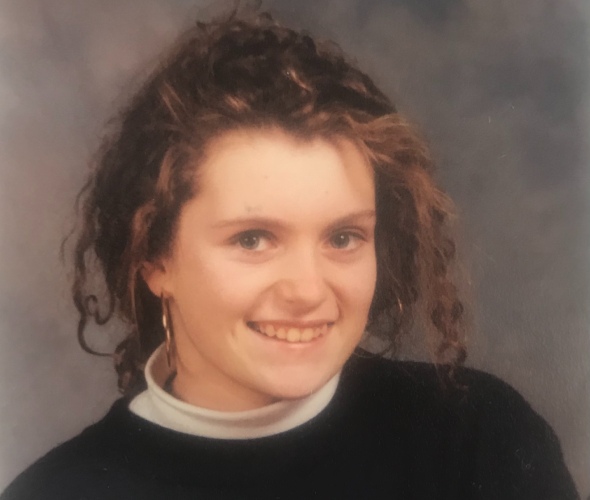
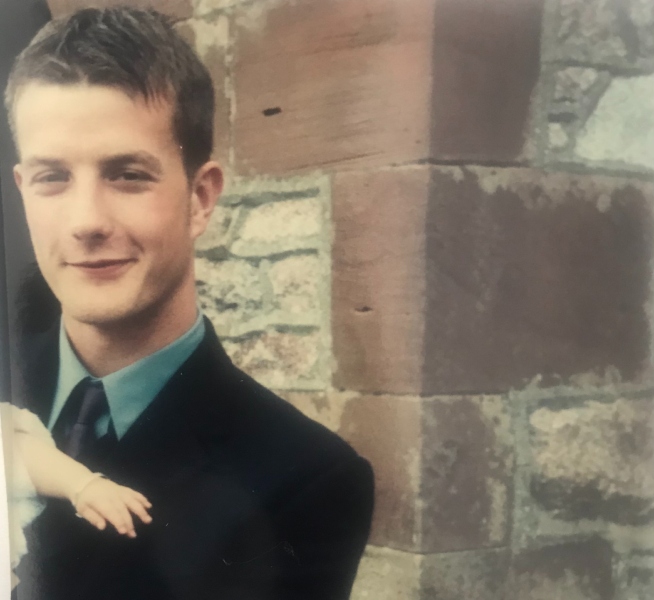
Helen Marshall and Graeme Richardson are both in their early forties. They met in school and admired each other from across the hallways before they fell head over heels in young love as teens.

Helen as a teen; SWNS

After nine months of romantic walks, school discos, and sneaking off for a wee kiss round the back of the bike sheds, young Graeme got down on one knee and proposed.

But their parents worried they were too young and the engagement never happened. Graham went off to college in 1994, and the pair drifted apart.

Just like the movie with Ryan Gosling and Rachel McAdams, their letters proclaiming their lost love never reached each other, and they got on with their lives separately.

Graeme as a teen; SWNS

Both went on to have long-term relationships and kids, and were even reunited from afar— catching glimpses of each other—when their children attended the same school.

When both split up with their respective partners, Helen reached out to her first boyfriend via Facebook, and they fell in love all over again 20 years later.

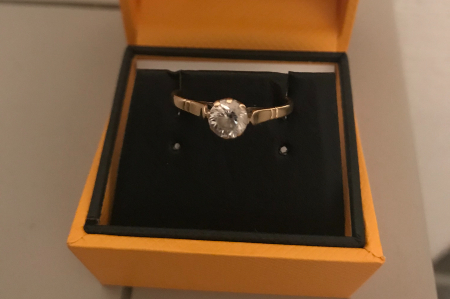
She discovered he had pined for her for years after their forced split, and got down on one knee again—proposing with the same ring he used more than two decades earlier, only this time they were vacationing together in Croatia.

SWNS

The smitten pair eloped and tied the knot last month. “We just feel so content now,” Helen said from the farm they’re now living on together. “We’re the other half of each other. I just feel like I’m home. Like I’m whole. He’s my soul mate, and I’m his.”

MORE: Muddy Bride Sacrifices Dress to Deliver Calf During Wedding Reception

Graeme said, “Helen’s the other half of me. She’s the opposite to me; the extravert to my introvert. It just feels like the right ending. My friends have never known me as the happy and content man I am now.”

Clare Gelderd Photography via SWNS

A love story that was simply meant to be

In high school Graeme was popular with the girls, and the boys all liked Helen, but neither plucked up the courage to ask each other for a date.

One lucky day, a friend of Helen’s promised her a chocolate bar if she dared to ask Graeme out.

Romance blossomed from day one, and grew into true love as they walked in the Lake District and sat by picturesque waters.

They knew they wanted to be married, and Graeme worked hard at weekends for £3 an hour to buy her a diamond engagement ring.

RELATED: He Saved a Stranger From Drowning in India, Now They’re Married in the Netherlands

It’s beautiful that the ring has finally been put to use as was first intended all those years ago. Cheers to Helen and Graeme.

SHARE This Real-Life Hollywood Love Story With Friends…

11-Year-old Girl With Autism Earns Guinness World Record for Mental Math Skills

Guinness World Records

Just because you’ve got “higher math” in your name, doesn’t necessarily mean you’ll have an aptitude for arithmetic, but for 11-year-old Sanaa Hiremath, numbers are her special gift.

Sanaa, who was diagnosed with autism at age 2, is so proficient at multiplication she recently took home an award from Guinness World Records (GWR) for ‘largest mental arithmetic multiplication problem’.

Her parents learned their daughter was a math whiz when she was just 7 years old. The first time Sanaa was introduced to the concept of multiplication, she grasped it almost immediately.

“[Sanaa] was able to instantly type in the answers for math problems—some of which I had a hard time [even] understanding the question itself!” her mother Priya told Guinness World Records.

Yet due to her autism, Sanaa failed Second Grade math at school.

“They tested her on math. They gave her pencil and paper and told her to write one to 20 and she could not because she can’t hold the pencil because she has fine grip, she has poor motor issues,” Sanaa’s father, Uday, explained to Bay News 9, “She was different from the other kids. That was obvious—but what was not obvious was how gifted she was.”

To earn her Guinness World Record, Sanaa was timed while multiplying a dozen randomly generated digits. She completed the daunting task in under 10 minutes.

Perhaps the most amazing aspect of Sanaa’s gift is that she solves all of her equations strictly in her head. No paper. No pencils. No calculator.

“She’s not just being a human calculator, she can actually solve complex problems,” Uday told News 9. “I don’t think she has any limitations… Six digits, seven digits, who knows how many digits. I don’t think she has those limitations.”

MORE: 14-Year-Old Girl Wins $25,000 For a Scientific Breakthrough That Could Lead to COVID-19 Cure

Even so, Priya and Uday are trying to make sure the life their daughter leads is that of a normal 11-year-old—and in many ways, Sanaa is like your average pre-teen who enjoys music, swimming, and bike-riding.

However, since a conventional education wasn’t suited to her special needs, it was decided home-schooling would be Sanaa’s best option. Under Priya’s tutelage, Sanaa has blossomed.

Although she’s made tremendous advances, her parents prefer to keep her at grade level with her peers as they strive to maintain a cautious balance between Sanaa’s special talents and the verbal, social, and motor skills with which she continues to struggle.

“Sanaa has worked every day of her life to pull herself up to where she is now,” Priya told GWR. “Whether it is her speech, gross and fine motor skills, and every little thing we take for granted in our daily lives, she has worked hard for all of those. She is now able to do things which were considered impossible during her early childhood.”

RELATED: Nigerian-Irish Teens Develop a Dementia App for Sufferers Coping With Lockdown–and It’s Won Awards

Albert Einstein once said of conventional education: “Most teachers waste their time by asking questions that are intended to discover what the pupil does not know, whereas the true art of questioning is to discover what the pupil does know or is capable of knowing.”

For Sanaa—and others like her—when solving the genius equation, a brilliant mind must be multiplied by unconventional wisdom—which means it’s up to the rest of us to learn to ask the right questions.

MULTIPLY the Good News and Send This Story to Friends on Social Media…

New Australian Marine Parks Will Protect an Area Twice the Size of the Great Barrier Reef

Belle

This article has been re-printed with permission from Mongabay.

The Australian government has moved to create two new marine protected areas that cover an expanse of ocean twice the size of the Great Barrier Reef Marine Park.

Belle

The two parks will be established around Christmas Island and the Cocos (Keeling) Islands in the Indian Ocean to the northwest of continental Australia. The new parks cover 740,000 square kilometers (286,000 square miles) of ocean.

The decision was immediately welcomed by conservation groups.

“Christmas and Cocos (Keeling) Islands are uniquely Australian and globally significant – there’s nowhere like them on Earth,” said Michelle Grady, Director of The Pew Charitable Trusts, in a statement. “Most famous for its annual red crab migration, Christmas Island was referred to as one of the 10 natural wonders of the world by David Attenborough himself. Its thriving rainforests, deserted beaches and fringing reef provide a haven for unique and rare seabirds, land crabs and marine life.”

“Christmas and the Cocos (Keeling) Islands are recognized as globally significant standout natural wonders,” added Darren Kindleysides, CEO of the Australian Marine Conservation Society, in a statement. “Oceans across the globe are in deep trouble from pollution, overfishing, habitat loss and the very real and immediate impacts of climate change. Establishing marine parks to provide a safe haven for our marine life is critical in helping stop our oceans reaching a tipping point.”

Christabel Mitchell, Director of the Save Our Marine Life Alliance, applauded the move but urged the Australian government to work “collaboratively” with local communities to “co-design” the protected areas.

MORE: Floating ‘WALL-E’ Scarecrow Stops Seabirds from Diving into Fishing Nets

“Healthy oceans and sustainable fishing are central to the Christmas and Cocos Islanders’ way of life, their culture, and their livelihoods,” said Mitchell in a statement.

“Creating world-class marine parks for this region will provide crucial protection for a wealth of marine life, make a significant global contribution to the health of our oceans and support the local communities’ culture and aspirations,” said Mitchell. “We look forward to working with the government and the island communities to preserve this unique part of Australia, for our marine life and future generations.”

RELATED: 79-Year-old Diver and This Fish Have Been BFFs for Nearly 30 Years After He Nursed Her Back to Health

The new parks will bring the percentage of Australian waters under protection from 37% to 45%. Conservation groups around the world are pushing for the protection of 30% of global oceans and land mass by 2030.

CONSERVE the Good News—Share This Story With Friends…

100-Year-old Dreams of Airship Travel Through Europe are Revived With This Modern Zero-Emissions Dirigible

Airlander
Airlander

“Royalty and dignitaries, brandy and cigars. Grey Lady-giant of the skies you hold them in your arms… ” — Bruce Dickinson.

It’s not every day GNN starts a story with a quote from an Iron Maiden song, but this line perfectly describes a development that could revolutionize short-distance flight by heralding the return of helium-filled dirigible airships to Europe’s skies.

Hybrid Air Vehicles (HAV) are within 4 years of their first-planned commercial flight of the Airlander10—a hybrid-electric airship that produces 75% fewer emissions per mile traveled than a passenger jet.

Designed for short hops on oft-taken business trips—like Oslo to Stockholm or Liverpool to Belfast—it offers the Greta Thunbergs of the world a chance to return to the convenience of the air travel.

Rigid airships never became the dream that so many scientists, inventors, and fiction writers imagined they would be at the turn of the 20th century. The parallel development of fixed-wing aircraft, and eventually jet-powered flight, paired with the immolation of the Hindenburg, meant that beyond the Goodyear Blimp over football stadiums, the dream of the dirigible never became a reality.

But the Airlander10 offers so much of what a passenger jet flight cannot, meaning those dreams have a real chance of becoming reality. With unpressurized cabins made possible by lower flying altitudes, the trip is silent, and with floor-to-ceiling windows all passengers, whether window or aisle, have unimpeded views of the world below and beyond.

A gentle giant

According to HAV, a jet from Seattle to Vancouver amounts to 55kgs of CO2 per passenger, while an Airlander10 drops that number to about 4.12kgs, less even than rail travel.

MORE: This Guy Missed Traveling and Has Recreated Airplane Meals to Get Through Lockdown

Furthermore, thanks to the airship’s abilities of vertical takeoff and landing, there’s a significant long-term reduction in CO2 cost from plane/train infrastructure requirements (paving runways or laying rail track isn’t green by any measure).

But it’s the concept art of the cabin arrangements that really brings the old European idea of dirigible travel alive again—with luxurious couches, tables, bars, workstations, and food service.

HAV told GNN they expect ticket prices to fit within the range of numbers from other modes of transport like planes, trains, and ferries.

The company’s short-term goals are to finish legal requirements on the Airlander10, and get their UK factory operational to produce 12 aircraft per year while working towards the all-electric motor outfits which would take the dirigible to zero-emissions, as well as on their Airlander50—designed for air freight transportation.

The combination of vertical take off/landing, floor-to-ceiling windows, and silent journey means that HAV is looking to introduce their airships for adventure travel in places like the Arctic, across Africa, where hot-air balloon tours are already common, and among archipelagos.

Doing something useful

Bruce Dickinson, the lead singer for Iron Maiden and captain of the band’s personal Boeing 757, has invested $380,000 in the company. Perhaps this isn’t a surprise. The band is famous both for long songs, and songs about flying, and their longest-ever song—Empire of the Clouds—is about airships.

RELATED: Researchers Pull Carbon Out of the Sky And Convert it to Instant Jet Fuel, Reshaping Aviation For Good

GNN reported on the news back in 2016 that the Maiden frontman, whose knowledge about aviation history is exceptional for a man who, along with fronting one of the world’s biggest rock bands, competes at Olympic levels in fencing and writes children’s books, had put such faith in what was then only a project.

“I’m not expecting to get my money back anytime soon, I just want to be part of it,” Bruce told the New Yorker. ”Being a rock person, I could put it up my nose, or buy a million Rolls Royces and drive them into swimming pools, or I could do something useful. There are very few times in your life when you’re going to be part of something big.”

(SEE inside an Airlander Cabin in the video below.)

FLY This Fascinating Story Over to Friends on Social Media…

A World Food Prize Winner Wants You To Reconsider Anchovies – Here’s How Nutritious They Are

Olya Kobruseva
Olya Kobruseva

Anchovies and sardines are, as it turns out straight superfoods—especially for kids.

Dr. Shakuntala Thilsted was recently awarded the 2021 World Food Prize—described as the Nobel Prize for food and agriculture—for her work integrating small fish into developing nations diets: primarily she focused on this because of the incredible nutrient density of small fish, and the imperative role it plays in brain development in the first 1,000 days of a child’s life, as well as in pregnant and nursing mothers.

Anchovies, sardines, and in fact many small fish species are rich in the unsaturated fats omega 3 and 6 also known as EPA and DHA, which are critical for brain health. Since sardines only eat plankton, they also contain only very low levels of mercury.

There’s also evidence they help prevent aging, and can reduce inflammation in a variety of organs. They also contain vitamin B12, a nutrient found most often in meat and particularly seafood, but that’s almost absent in all other food groups.

B12 deficiency is common in children in the developing world, a challenge that Thilsted sought to tackle with increasing access to smaller fish, which involved a little bit of stigma-breaking, since most consumers would prefer to eat larger fish like tuna, salmon, or carp species.

MORE: Drinking This Juice Could Help Promote Healthy Aging, Scientists Find

Her work started in Bangladesh, and spans Sierra Leone, Malawi, Cambodia, India, Myanmar, Zambia, and Nepal. One of the principal ways she’s increasing access to small fish is by utilizing a cultural feature of Bangladesh—the backyard “homestead pond.”

In an interview with NPR, Thilsted explains that since Bangladesh is such a low-lying country, many people choose to build their houses on raised earth. The hole the homeowners dig to acquire the dirt to lift up their property becomes a pond, which they normally stock with larger fish species.

There are four million of these homestead ponds in Bangladesh alone according to Thilsted, but she’s also found them in India, Zambia, and Malawi. Small fish are faster growing, and produce more food weight than larger fish traditionally raised in ponds, since their bones, which contain plenty of nutritional value, are thin enough to chew right through.

Thilsted developed programs to expand awareness of dietary uses of small fish in the kitchen, helping families find more ways to get vital nutrients to their kids. One method is by drying the fish and pulverizing it into a sort of supplement that can then be added to rice or porridge to supercharge the nutrient values therein.

“Dr. Thilsted’s work on nutrition, fish, and aquatic foods challenges us to think very critically about the scope of agricultural research and the urgent call to action to transform global food systems towards healthy and sustainable diets for all,” said WorldFish Director Gareth Johnstone. Thilsted has worked for WorldFish for 10 years.

RELATED: To Help Protect Your Heart When Stressed, Scientists Suggest Eating or Drinking These Things

Taking inspiration from his new home country of Italy, this reporter dissolves one or two dried anchovies in olive oil, adds herbs and spices, and stores it for use as a deep flavoring agent.

SWIM This Fascinating Research Over to Your Friends…

“When you come out of the storm, you won’t be the same person who walked in. That’s what this storm’s all about.” – Haruki Murakami

Quote of the Day: “When you come out of the storm, you won’t be the same person who walked in. That’s what this storm’s all about.” – Haruki Murakami

Photo: by Breno Machado

With a new inspirational quote every day, atop the perfect photo—collected and archived on our Quote of the Day page—why not bookmark GNN.org for a daily uplift?


Science Has Debunked Top 20 Myths We Commonly Believe to Be True – Get Ready to be Surprised

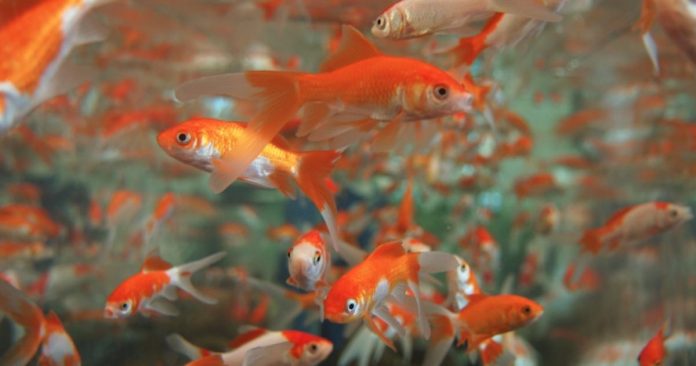
Researchers have already debunked the top 20 myths that we all commonly believe to be true—such as, ‘the most heat escapes through your head’, ‘we only use 10 percent of our brains,’ and ‘goldfish only have three-second memory’.

A new survey of 2,000 adults found nearly four in 10 aren’t even sure how they came to believe these fraudulent bits of trivia—but 49 percent have shared them with others, in the belief they were accurate.

Nearly half believe that most human heat escapes through your head, but experts claim only around 10 percent of body heat is lost this way, due to its relatively small surface.

And, far from the notion that goldfish only remember things for a few seconds, they, in fact, are thought to have memories that last as long as three months.

Regarding our brain power, even something as simple as clenching and unclenching our fist uses far more than 10 percent of the human brain, according to scientific studies.

RELATED: Retirees Share Top 40 Pearls of Wisdom With Our Younger Generations

Other misconceptions we often pass on include the color red sends bulls into a rage, yet the animals can’t even see the color. Similarly, you might have said that it takes seven years to digest swallowed chewing gum, which isn’t true because we can’t digest it at all.

More than one in five (22 percent) believe that if a penny were dropped from the top of New York’s Empire State Building it would generate enough force to kill anyone it landed on—however, it’s simply too lightweight to do such a thing.

A spokesman from Scrivens Opticians & Hearing Care, which commissioned the poll to help expose misperceptions about contact lenses, said, “If enough people tell us the same thing we’re inclined to believe it, and for many of us we will have believed these tidbits of incorrect information to be true since childhood”

The myths around contact lenses getting lost behind your eye, as well as freezing to your eye in cold weather made the top 30 list: 10 percent of respondents believe it’s possible for contact lenses to get lodged behind the eyeball, but that is a scientific impossibility. Discover more about contact lens myths, here.

Other falsehoods we frequently believe include the old wives’ tale about adding salt to a pot of water to make it boil more quickly—but salt is actually said to raise water’s boiling point.

CHECK OUT: Trust in Science Has Actually Shot Up Around the World as a Result of Pandemic, Says New Poll

Conducted by OnePoll, the survey does have a bright spot. We are learning to be wary of things we read on social media: just 25% of respondents believe what they see online is actually based in fact.

But, plausible-sounding ‘facts’ seem to take on a life of their own. For example, why would anyone believe that we swallow eight spiders each year, per person? If you think about it, how would that even be tested?

TEN MORE MYTHS WE SHOULD GIVE UP

1. Chameleons change colors to blend in with their surroundings. (Though they make small color adjustments, the primary function of the color shift is to alert neighbors of danger.)

2. Sugar causes hyperactivity in children. (Over a dozen large studies have not shown that sugar causes hyperactivity.)

3. You should urinate on it if someone gets stung by a jellyfish. (This myth might even worsen the sting.)

4. Bats are blind. (Bats have small eyes with very sensitive vision, which helps them see in conditions we might consider pitch black.)

5. You’ll get cramps if you go swimming right after you eat. (The Mayo Clinic says there is really no scientific basis for this.)

6. Dogs only see in black and white.
(They are not as bright, but they do see colors.)

7. If you touch a baby bird with your bare hands, its mother will reject it. (False. This prevalent belief is ‘for the birds’)

8. Shaving your hair makes it grow back thicker. (This will not change its thickness, color or rate of growth, though it gives it a blunt tip, which might feel coarse or “stubbly” for a time as it grows out—and it may appear darker or thicker, but it’s not.)

9. Cracking your knuckles too much will cause arthritis. (Cracking your knuckles does no harm at all to our joints and does not lead to arthritis.)

10. Going out in the cold will give you a cold. (False. The viruses that cause colds may spread more easily in lower temperatures, and exposure to cold and dry air may adversely impact the body’s immune system to fight off viruses.)

MORE: Americans Who Drink This Much Water a Day Were More Likely to Report Feeling ‘Very Happy’

ARE you relieved, shocked, or ready to argue with these myth-busting facts? Tell us about it in the comments.

TELL the Truth – SHARE These Amazing Factoids on Social Media…

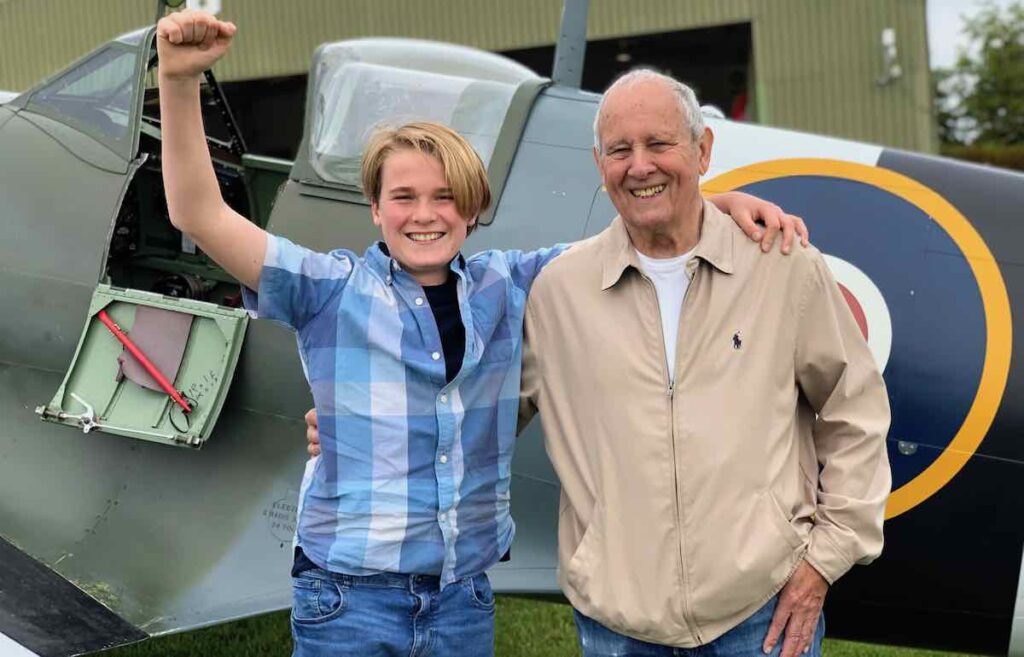
12-year-old Gives Grandpa His Dream of Flying in Spitfire By Sending Heartfelt Notes to Airfields

Harrison Gurney and Malcolm Hanson - SWNS

His wife of 57 years had just been moved into a care home last summer due to Alzheimer’s disease, and sadness was his only companion—until his grandson surprised him by fulfilling a lifelong dream.

Harrison Gurney and Malcolm Hanson – SWNS

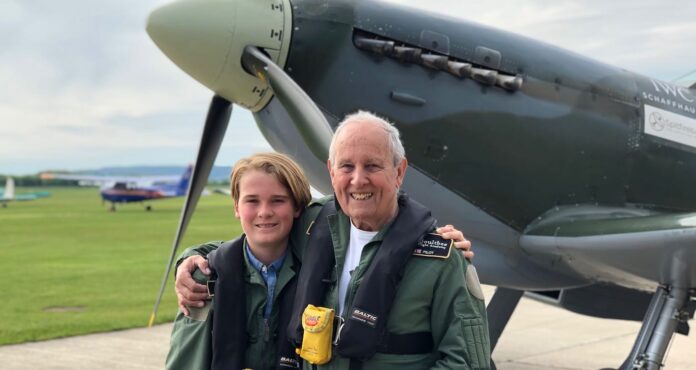
12-year-old Harrison Gurney wanted desperately to cheer up his grandad and came up with a plan to give him the surprise of a lifetime.

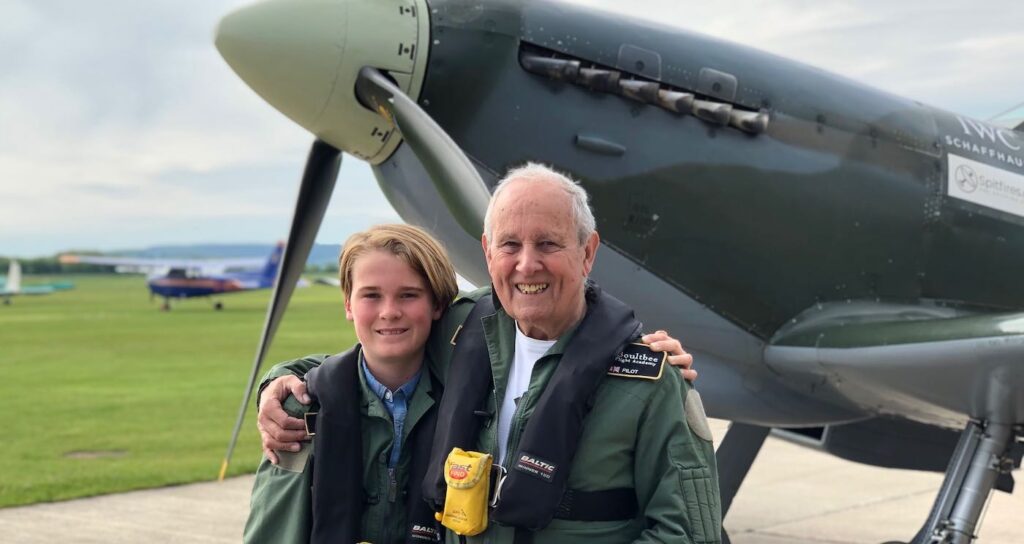
Malcolm Hanson had loved Spitfires ever since he witnessed a ‘dog fight’ over his head involving one of the vintage aircrafts as a boy living in 1945 London during World War II.

Harrison knew that he dreamed of flying in one, so, to help him celebrate his 80th birthday, the boy wrote letters to airfields and private Spitfire owners across the UK asking for help.

“It breaks my heart to see him so sad. I want him to smile again,” read part of the letter.

Bosses at Goodwood Aerodrome in West Sussex were so touched that they offered to fly the two of them in the classic aircraft.

Harrison managed to raise enough money to fuel his granddad’s surprise by doing chores around the house and offering to do garden work for other family members.

On Friday, Mr. Hanson finally got to live out his fantasy of taking to the skies—and even got to take control of the aircraft.

Harrison Gurney and Malcolm Hanson before their flights –SWNS

“It was absolutely fantastic, it was the most amazing experience I have ever had. To have been allowed to take control on the Spitfire,” said Hanson, whose dad was in the Royal Air Force during the War. ”The pilot did barrel rolls and some dives, it was great fun—a brilliant day out, all thanks to Harri.”

WATCH: Medals Found in Dumpster Reveal Her Dad Was a WWII Hero But Never Told Anyone

“It’s a life-long dream come true. Harri knew that and went and made it happen. He sets his mind on something and follows it through. We’re very proud of him.”

“While I was up there I was thinking, ‘When am I going to do a barrel roll?’ and then I got to do one and even take control, turning left and right and up and down. It was a great feeling.”

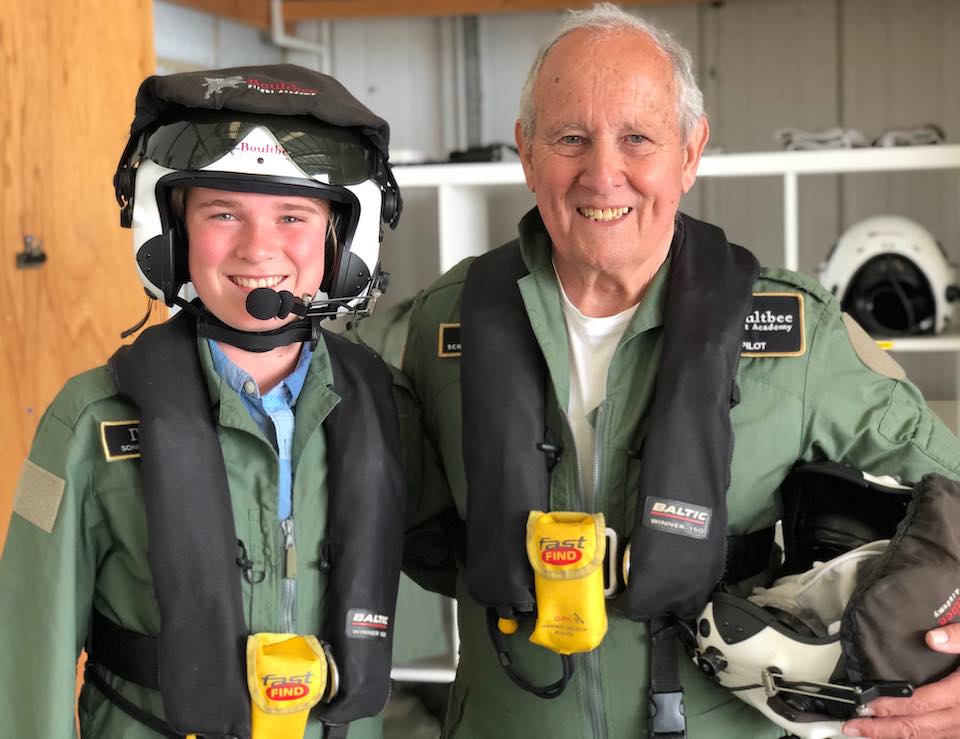
Staff at Boultbee Academy flight school were also touched by the youngster’s letter and they offered to also send him up in the 1940s Harvard.

Harrison and Malcolm at Goodwood Aerodrome – SWNS

“Harri and his granddad are like two peas in a pod,” said his mum. “He wrote a letter and wanted me to help him find a place to send it. When I read it, it just made me bawl my eyes out.”

POPULAR: Instead of Putting Him in Nursing Home, Grandson Brings 95-Year-old WWII Vet on Epic Bucket List RV Trip

“It said ‘can you help me mend my grandad’s broken heart’. He was worrying and wanted to help him smile again.”

LAUNCH This Inspiring Story to Friends and Family On Social Media…

The World Achieves its Target to Protect More Land, Adding 42%—the Size of Russia—in Last Decade

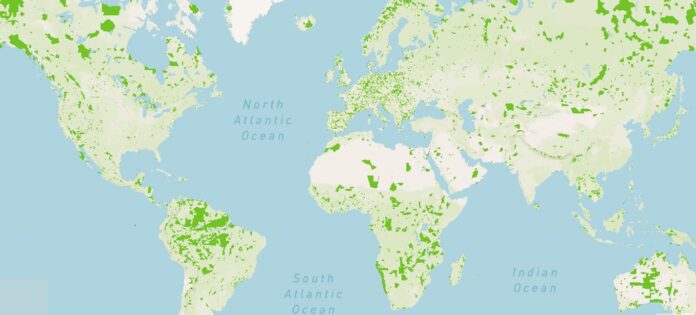
Since 2010, over 8.1 million square miles have been added to the world’s network of national parks and conservation areas, an area greater than the land mass of Russia.

That means about 17% of land and inland water habitats and 8% of marine areas—especially those with particular importance for biodiversity—are now within formal protected areas being conserved and managed, with the total coverage (21m km2) increasing by 42% in the last decade.

A lot has changed since the Aichi 11 targets were set at the 10th Biodiversity Conference in Japan in 2010. Protected and conserved areas have proliferated, with new protected areas being added every month as national governments and other stakeholders expand their efforts—like Australia’s recent announcement to pledge $100 Million to protect the ocean.

The greatest growth in protected areas over the 10-year period has been in marine and coastal areas, where 68% of the current network’s area is less than ten years old.

RELATED: 100-Year-Old Galápagos Giant Tortoise Found on Fernandina Island is Indeed Member of ‘Extinct’ Species

“The international community has made major progress towards the global target,” says the new report from the UN Environment Programme World Conservation Monitoring Centre (UNEP-WCMC) and the International Union for Conservation of Nature (IUCN), produced with support from the National Geographic Society.

“The latest edition of the biennial Protected Planet Report is the final report card on Aichi Target 11,” says the executive summary. “It is clear that coverage on land will considerably exceed the 17% target when data for all areas are made available, as many protected and conserved areas remain unreported.”

Cambridge, UK: UNEP-WCMC and IUCN

RELATED: Multinational Corporations join the UK and US in New $1Billion Plan to Preserve Tropical Rainforests

The next global biodiversity framework is due to be agreed at the UN Biodiversity Conference in Kunming, China, in October and is anticipated to include the ambition to scale up coverage and effectiveness of protected and conserved areas.

The Protected Planet Report concludes that the challenge will be to improve the quality of both existing and new areas, including making them better connected to each other, to allow species to move and ecological processes to function.

The report also finds that more needs to be done to manage protected and conserved areas equitably, so that the costs of conservation are not borne by local people while its benefits, including the mitigation of climate change, are enjoyed by others. This is key to building conservation networks that have the support and participation of people everywhere.

CHECK OUT: This Interactive Map Showing All the Conservation Land Near You in the U.S.

“IUCN welcomes the enormous progress made, particularly over the last decade, with protected areas covering a growing proportion of the globe,” says IUCN Director General Dr Bruno Oberle.

SPREAD the Love of Nature and Good News on Social Media… (Featured image: MapBox OpenStreetMap)

“Promise to be so strong that nothing can disturb your peace of mind; to talk health, happiness, and prosperity to every person you meet.” – Christian D. Larson

Quote of the Day: “Promise to be so strong that nothing can disturb your peace of mind; to talk health, happiness, and prosperity to every person you meet.” – Christian D. Larson, from the book Your Forces and How to Use Them

Photo: by Yuya Hata

With a new inspirational quote every day, atop the perfect photo—collected and archived on our Quote of the Day page—why not bookmark GNN.org for a daily uplift?

girlfriends talking in window

Baby Elephant Rescued After Falling Into Indian Well 30-Feet Deep

Shashikant Verma

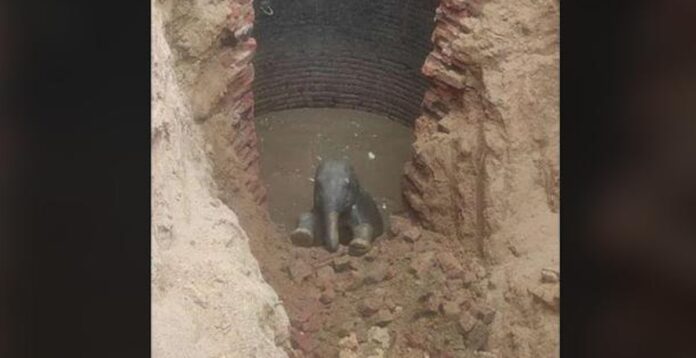
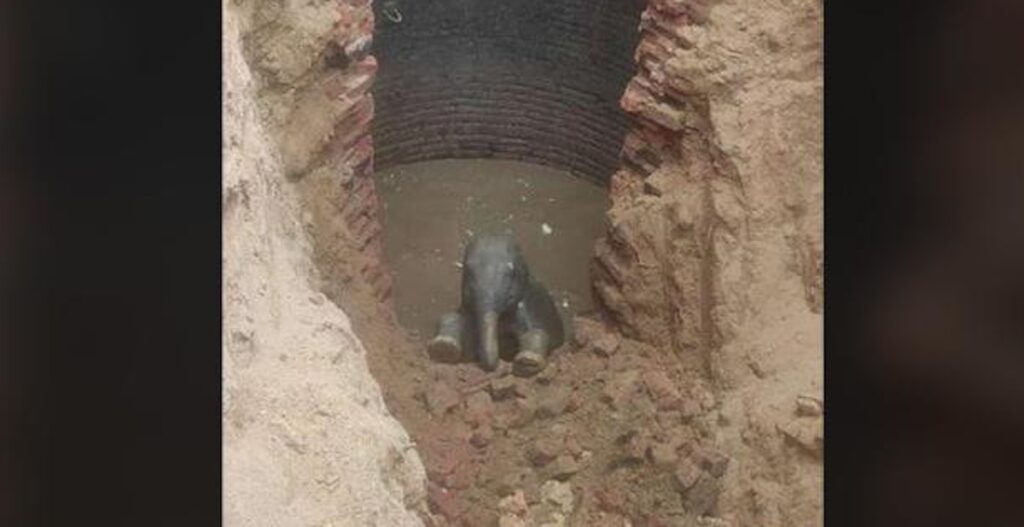
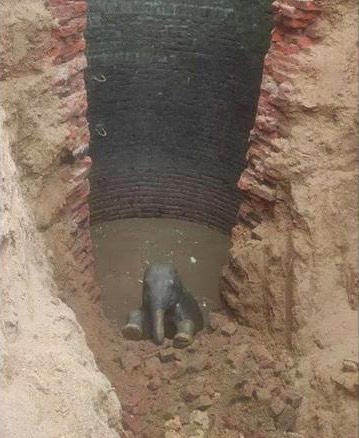
A small Indian village had this baby elephant’s back after it tumbled into a well nearly 30 feet (9 meters) deep.

Shashikant Verma

Arriving with its herd from a nearby forest, the baby made the misstep in Giridih district, in the eastern state of Jharkhand, earlier this month.

After the townspeople of Nimatand chased off the herd, the calf was discovered the following morning at the bottom of the well.

In an elaborate rescue mission, the local forest department was called in and used three backhoes to break down the wall of the brick well, and excavate a sloping trench for the pachyderm to walk on.

POPULAR: 35 Circus Elephants Arrive in Amazing Florida Sanctuary to Retire Among Forest, Grassland, and 11 Watering Holes

The local government official Shashikant Verma photographed the rescue and reported the calf sustained no injuries.

Eight hours later, the calf was able to walk out on its own, instead of being lifted vertically.

Shashikant Verma

Presumably, someone will rebuild the well, while there’s one lucky elephant roaming India once again.

GIVE Your Friends a Lift — Share This Cute Baby on Social Media…

This Week’s Inspiring Horoscopes From Rob Brezsny’s ‘Free Will Astrology’

Our partner Rob Brezsny provides his weekly wisdom to enlighten our thinking and motivate our mood. Rob’s Free Will Astrology, is a syndicated weekly column appearing in over a hundred publications. He is also the author of Pronoia Is the Antidote for Paranoia: How All of Creation Is Conspiring To Shower You with Blessings. (A free preview of the book is available here.)

Here is your weekly horoscope…
FREE WILL ASTROLOGY – Week beginning May 27, 2021
Copyright by Rob Brezsny, FreeWillAstrology.com
GEMINI (May 21-June 20):
A blogger named Valentine Cassius reports, “A tiny old woman came into the deli where I work and ordered a ‘wonderful turkey sandwich.’ When asked what she wanted on the sandwich other than turkey, she said ‘all of your most wonderful toppings.’“ Here’s my response to that: The tiny old woman’s approach usually isn’t very effective. It’s almost always preferable to be very specific in knowing what you want and asking for it. But given the current astrological omens, I’ll make an exception for you in the next three weeks. I think you should be like the tiny old woman: Ask life, fate, people, spirits, and gods to bring you all of their most wonderful toppings.
CANCER (June 21-July 22):
“I am tired of trying to hold things together that cannot be held,” testifies Cancerian novelist Erin Morgenstern. “Tired of trying to control what cannot be controlled.” Here’s good news for her and all Cancerians. You have cosmic permission to surrender—to no longer try to hold things together that can’t be held or try to control what can’t be controlled. Maybe in a few weeks you will have gained so much relaxed new wisdom that you’ll be inspired to make fresh attempts at holding together and controlling. But that’s not for you to worry and wonder about right now. Your assignment is to nurture your psychological and spiritual health by letting go.
LEO (July 23-Aug. 22):
Philosopher Georges Bataille wrote, “The lesson of Wuthering Heights, of Greek tragedy and, ultimately, of all religions, is that there is an instinctive tendency towards divine intoxication which the rational world of calculation cannot bear. This tendency is the opposite of Good. Good is based on common interest, which entails consideration of the future.” I’m going to dissent from Bataille’s view. I agree that we all have an instinctive longing for divine intoxication, but I believe that the rational world needs us to periodically fulfill our longing for divine intoxication. In fact, the rational world grows stale and begins to decay without these interludes. So the truth is that divine intoxication is crucial for the common good. I’m telling you this, Leo, because I think the coming weeks will be a favorable time for you to claim a healthy dose of divine intoxication.
VIRGO (Aug. 23-Sept. 22):
Virgo actor Ingrid Bergman (1915–1982) won the most prestigious awards possible for her work in films, TV, and theater: Oscars, Emmys, and a Tony. She was intelligent, talented, and beautiful. Life was a challenge when she was growing up, though. She testified, “I was the shyest human ever invented, but I had a lion inside me that wouldn’t shut up.” If you have a sleeping lion inside you, Virgo, I expect it to wake up soon. And if your inner lion is already wide awake and you have a decent relationship with it, I suspect it may soon begin to come into its fuller glory.
LIBRA (Sept. 23-Oct. 22):
Libran author Antonio Tabucchi described the frame of mind I recommend for you in the coming days. I hope you’ll be eager to embrace his far-reaching empathy. Like him, I trust you will expand your capacity to regard the whole world as your home. Here’s Tabucchi’s declaration: “Like a blazing comet, I’ve traversed infinite nights, interstellar spaces of the imagination, voluptuousness and fear. I’ve been a man, a woman, an old person, a little girl, I’ve been the crowds on the grand boulevards of the capital cities of the West, I’ve been the serene Buddha of the East. I’ve been the sun and the moon.”
SCORPIO (Oct. 23-Nov. 21):
Author James Frey writes, “I used to think I was tough, but then I realized I wasn’t. I was fragile and I wore thick armor. And I hurt people so they couldn’t hurt me. And I thought that was what being tough was, but it isn’t.” I agree with Frey. The behavior he describes has nothing to do with being tough. So what does? That’s important for you to think about, because the coming weeks will be an excellent time to be tough in the best senses of the word. Here are my definitions: Being tough means never letting people disrespect you or abuse you, even as you cultivate empathy for how wounded everyone is. Being tough means loving yourself with such unconditional grace that you never act unkind out of a neurotic need to over-defend yourself. Being tough means being a compassionate truth-teller.
SAGITTARIUS (Nov. 22-Dec. 21):
Fragile intensity or intense fragility? Ferocious gentleness or gentle ferocity? Vulnerable strength or strong vulnerability? I suspect these will be some of the paradoxical themes with which you’ll be delicately wrestling in the coming days. Other possibilities: sensitive audacity or audacious sensitivity; fluidic fire or fiery fluidity; crazy wisdom or wise craziness; penetrating softness or soft penetration; shaky poise or poised shakiness. My advice is to regard rich complexities like these as blessings, not confusions or inconveniences.
CAPRICORN (Dec. 22-Jan. 19):
Birds that live in cities have come up with an ingenious adaptation. They use humans’ abandoned cigarette butts to build their nests. Somehow they discovered that nicotine is an insectide that dispels pests like fleas, lice, and mites. Given your current astrological aspects, I’m guessing you could make metaphorically comparable adjustments in your own life. Are there ways you could use scraps and discards to your benefit?
AQUARIUS (Jan. 20-Feb. 18):
A blogger named Raven testifies, “My heart is a toddler throwing a tantrum in a store and my brain is the parent who continues to shop.” I’m pleased to inform you, Aquarius, that your heart will NOT act like that toddler in the coming weeks. In fact, I believe your heart will be like a sage elder with growing wisdom in the arts intimacy and tenderness. In my vision of your life, your heart will guide you better than maybe it ever has. Now here’s a message to your brain: Listen to your heart!
PISCES (Feb. 19-March 20):
The Voyager 1 space probe, launched by NASA in 1977, is now more than 14 billion miles from Earth. In contrast, the farthest humans have ever penetrated into the ground is 7.62 miles. It’s the Kola Superdeep Borehole in northwest Russia. Metaphorically speaking, these facts provide an evocative metaphor for the following truth: Most humans feel more confident and expansive about exploring the outer world than their inner realms. But I hope that in the coming weeks you will buck that trend, as you break all previous records for curious and luxurious exploration into your deepest psychic depths.
ARIES (March 21-April 19):
“Open your mouth only if what you are going to say is more beautiful than silence,” declares an Arab proverb. That’s a high standard to aspire to. Even at our very best, when we’re soaring with articulate vitality, it’s hard to be more beautiful than silence for more than, say, 50 percent of the time. But here’s a nice surprise: You could exceed that benchmark during the next three weeks. You’re primed to be extra expressive and interesting. When you speak, you could be more beautiful than silence as much as 80 percent of the time.
TAURUS (April 20-May 20):
Here’s the definition of an emotional support animal: “a companion animal that provides therapeutic benefit to a person with a mental or psychiatric disability.” I don’t mean to be flippant, but I think every one of us has at least one mental or psychiatric disability that would benefit from the company of an emotional support animal. If you were ever going to acquire such an ally, the coming weeks would be prime time to do so. I encourage you to also seek out other kinds of help and guidance and stimulation that you’d benefit from having. It’s the resource-gathering phase of your cycle. (PS: Cesar Chavez said: “You are never strong enough that you don’t need help.”)

WANT MORE? Listen to Rob’s EXPANDED AUDIO HOROSCOPES, 4-5 minute meditations on the current state of your destiny — or subscribe to his unique daily text message service at: RealAstrology.com

(Zodiac images by Numerologysign.com, CC license)

SHARE The Wisdom With Friends Who Are Stars in Your Life on Social Media…

Good Deed Takes Flight at Airport as Man Buys Ticket For Someone Desperate to Get Home

File Photo by Bidgee, CC

This blog was submitted to GNN by one of our readers for publishing. If you have an interesting story of kindness or positivity, be sure and send it to us for review.

My wife came home from work yesterday and shared a very heartwarming story that one of her office colleagues told her about a recent trip to the airport. (Be sure you read to the end!)

File Photo by Bidgee, CC

While he and his wife were waiting in the ticketing line, he overheard a man at the counter trying to get a ticket to Las Vegas. He was having trouble. He only had $150 and that wasn’t enough. The ticketing agent was pretty unhelpful and told him he needed to go online and look for other options.

The man kept trying to explain his situation to her but wasn’t getting anywhere. His English language abilities were limited, so it was difficult for him to communicate. He was becoming increasingly frustrated—and she was becoming increasingly indifferent.

After he finally, despondently, turned away from the counter, my wife’s colleague, Fernando, went up to the man and asked what was up. He speaks Spanish so was able to understand his story.

The man had lost his job here in the San Francisco area, had no place to live, and only $150 in his pocket. He had family who were living in Las Vegas and was trying to get there. He was told he could get a ticket for $150, but told Fernando that he couldn’t read, didn’t have a computer, and didn’t know how to access the internet from the airport—let alone navigate how to purchase a low fare ticket.

LOOK: Instead of Dirty Looks, a Kind Stranger Laid on the Ground to Calm Boy With Autism Amid His Meltdown

Fernando believed him and wanted to help him. They walked back to the counter and Fernando purchased a $330 ticket to Las Vegas for the man.

Fernando didn’t ask for anything and trusted that this guy’s story was true. He followed his heart, because he wanted to help him. And most importantly, he did.

RELATED: As Couple Flies Home With Newly-Adopted Daughter, Strangers on Plane Throw Impromptu Baby Shower

May this incredibly kind gesture from a stranger, who paid attention and cared enough to listen to this man’s story and take some action, be a turning point for him to get back on track.

It was a Good Samaritan helping another who was down on their luck—most likely an immigrant, most definitely a human being—so he might have some safety, better his life, and be with his family.

Not only that, a month later when Fernando’s wife was going through the credit card statement, she saw the charge and asked her husband, “Wasn’t that ticket $240? Why is the bill $330?”

Fernando sheepishly replied, “I upgraded him.”

FLY This Inspiring Story to Your Friends and Family on Facebook…

Young Man With Autism Finds His Jam at Local McDonald’s, Singing Every Order at ‘Best Drive Thru Ever’ –WATCH

Sign photo by Ashley Sicora

A high school graduate is serving up huge smiles with his unique brand of customer service, which includes a musical ditty with every order.

Sign photo by Ashley Sicora

Daniel Marshall’s cheerful singing and joking with customers at the Arden Hills McDonald’s near Minneapolis, Minnesota has earned him five star reviews like, “Best Drive Thru Ever!”

He has been taking center stage at the restaurant for the last year, greeting every drive-thru customer with his vocal talents and good cheer.

He always personalizes his tunes if he knows a customer’s name, or he will just give you a nickname like “Superstar”, “Boss”, or “Captain”.

The owner of the burger establishment recognized Daniel’s infectious personality recently by surprising him with a personal message on the restaurant’s massive sign out front.

“WE ARE LOVING DANIEL!!!!,” read the sign, preceded by Daniel’s signature greeting, “BA, DA, BA, DA, DA.”

WATCH to see Daniel in action, and read more, from KARE-11 News, here… [Note: If you are having technical issues with the video below, see it at the link above.]

RELATED: Incredible Customer Service Note Arrives Next Day After Phone Call

Drive This Over to Cheer-up Your Friends on Social Media…

“As you grow older, you will discover that you have two hands: one for helping yourself, the other for helping others.” – Sam Levenson 

Quote of the Day: “As you grow older, you will discover that you have two hands: one for helping yourself, the other for helping others.” – Sam Levenson

Photo: by Lina Trochez

With a new inspirational quote every day, atop the perfect photo—collected and archived on our Quote of the Day page—why not bookmark GNN.org for a daily uplift?


Judge Gave Drug Dealer a Second Chance. 16 Years Later He Swears Him In As a Lawyer

Edward Martell
Edward Martell

The difference between finding justice and following the letter of the law sometimes takes a simple act of compassion. Where others might have seen an incorrigible offender, one judge saw promise—and following a hunch, he acted on his intuition.

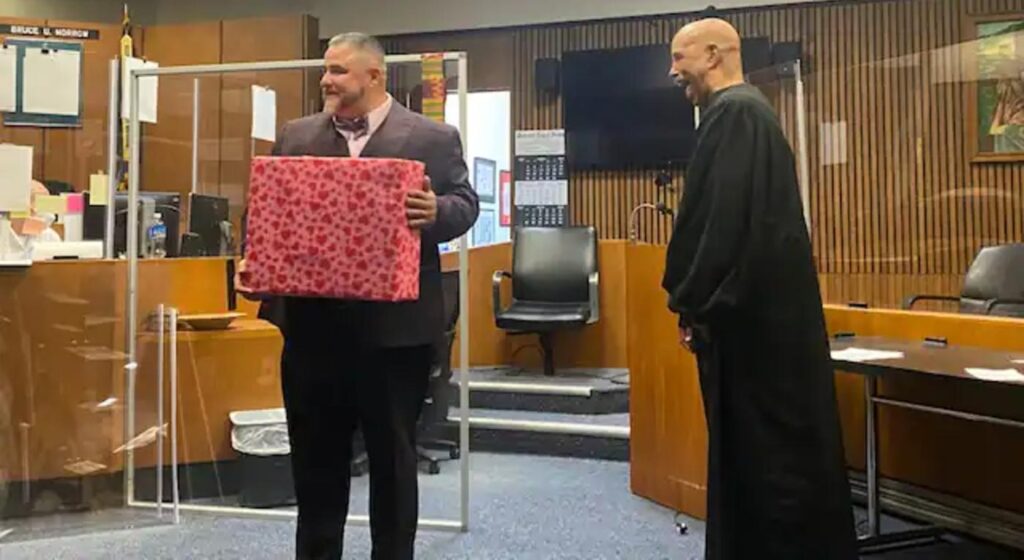
At first glance, Edward Martell, a 27-year-old high school dropout with an extensive arrest record might not have seemed a prime candidate for rehabilitation, but when he was facing a 20-year drug conviction, instead of meting out the maximum sentence, presiding judge Bruce Morrow gave Martell probation—and a challenge.

Morrow told Martell the next time he stepped into the courtroom, he expected him to have made something of himself—something big.

“He said, ‘I challenge you to be a CEO of a Fortune 500 company instead of being out here selling drugs,’” Martell told Deadline Detroit. “And I love a challenge.”

“It was kind of in jest,” Morrow recalled in an interview with The Washington Post, “but he understood I believed he could be anything he wanted to be.”

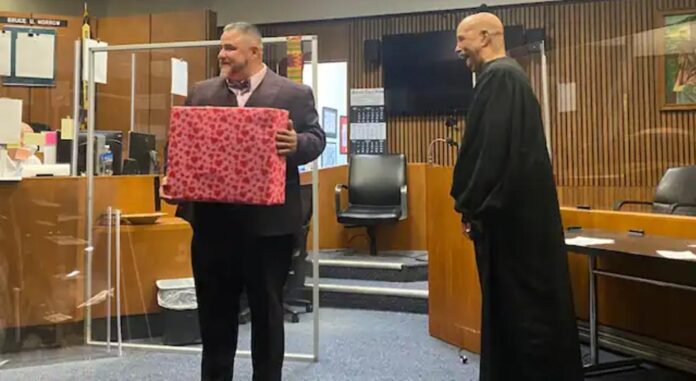
Fast forward 16 years and Martell is standing in front of Judge Morrow again—only this time, he’s being sworn in as an attorney after passing the Michigan state bar. While the outcome is sweet, Martell’s path wasn’t easy or assured.

Since there was a very real possibility that his prior criminal record might scuttle his future plans, as he was completing his GED, Martell’s guidance counselors discouraged him from pursuing a legal career. But he refused to give up.

After obtaining his associate’s degree, Martell went on to score scholarships for both his undergraduate studies and law school. He then clerked at the District of Columbia’s Federal Public Defender’s office, and eventually was hired by the Perkins Law Group as a researcher and writer.

When it came time to take the bar exam, Martell had plenty of supporters in his corner—including Judge Morrow, with whom he’d kept touch over the years.

With the help of his law firm mentors, Martell submitted a 1,200-plus page application detailing the steps he’d taken to turn his life around.

MORE: ‘I’m Not a Cat,’ Lawyer Tells Judge When He Can’t Change The Zoom Filter – Hilarious Video

“The main thing they look for is candor. I let them know I am remorseful—that I’m downright embarrassed,” Martell told WAPO. “I am the same person, but I don’t think like that anymore. I’ve evolved.”

His approval took only 15 minutes. The seeds of a dream he’d planted had finally come to fruition. Martell still has a job with the Perkins Group, only now, he’ll be a practicing attorney rather than a researcher—and all because one man was willing to take a chance and made a challenge Martell couldn’t walk away from.

CHECK OUT: After Illegally Bulldozing Historic London Pub, Developers Were Ordered to Rebuild it ‘Brick by Brick’

“It’s a crazy cliché, but some defendants, that’s what they need,” Morrow told DD. “If you believe like I believe, that there but for the grace of God go you and me… It took some intelligence to get in and out of the kind of trouble he got into. I told him, ‘You could be my son. Let’s see how far you can go.’ And man, he hasn’t finished yet.”
Which is just the kind of sentencing recommendation we could likely use a lot more of these days.

HELP Your Pals’ Be the Judge of the Good News—Share This Story…

Ingenious Musician Turns Rain Drops Into Otherworldly Music – LISTEN

YouTube

Music can be made with all sorts of things—including, it would seem, rain drops.

For today’s moment of Zen, listen to this video. Made in Japan and titled Amaoto No Yurai, it’s beautiful.

After listening, do you find you’re perceiving the world about you differently?

MORE: MIT Scientists Spin Some Music Out of Spider Webs – And it Sounds Otherworldly (Listen)

Do you think you’ll hear the next rainstorm differently—with extra awareness, curiosity, and a sense of play? That’s what the best music does. It moves us, and it binds us quietly to where we are.

(WATCH the video below.)

SHARE Nature’s Percussion Music With Friends…