













All News - Page 482 of 1735 - Good News Network
Home Blog Page 482

Puppies Are Born Ready to Communicate With And Understand Humans

Miro Schnichenko
Miro Schnichenko

In a bit a dreamland research, animal behaviorists at the University of Arizona got to study how 375 golden and Labrador retriever puppies performed at human communication tests.

The study was done to examine whether human-canine communication, specifically pointing gestures, was an onboard biological ability, a learned trait through exposure to humans, and whether the skill was passed through genetic heritage.

Ever since the metaphorical first wolf came within the light of the campfire, humans have been selectively breeding canines as companions. The pointing to a piece of food, a shot duck, a thrown stick, or a means of passing an obstacle is a method of human/canine communication that works well, but is extremely rare in the animal kingdom.

Even chimpanzees, one of our closest relatives, can’t understand pointing gestures. In contrast, this study showed that 8-week-old puppies could reliably follow pointing gestures as good as adult dogs.

Furthermore, their skill at following a human finger to a hidden treat did not improve over time, but stayed consistent at about a 67% success rate. This suggested to the authors that the puppies were born with the ability and didn’t have to learn it.

Puppy see puppy do

Service dogs have to be animal geniuses in order to help people with disabilities or blindness get around a complex environment like a city, while those raised to help trauma survivors have to have an extreme ability for empathy.

MORE: Prancer the ‘Demonic Chihuahua’ Who Went Viral Finds Dream Forever Home

Discovering where these skills come from, can they be inherited, and whether they vary breed to breed and individual to individual is a key step towards being able to breed and raise the most effective service dogs.

The researchers teamed up with Canine Companions for Independence, a service dog breeding center that keeps records of genetic history of the animals going back decades.

At eight weeks old, the nearly 400 puppies, all with genetic breeding histories, spend all day with their siblings and mother—making them perfect for the study aims, Evan MacLean told Smithsonian Magazine

“They’re adorable and it’s fun to work with them,” says MacLean. “But they’re puppies, they have short attention spans and they pee and poop on everything. At the start of this project, it was like, ‘Puppies!’ And by the end it was, ‘Puppies.’”

In contrast to the immediate success of pointing to a hidden treat under upturned cups, researchers also subjected the puppies to a 30-second script of praise in a high-pitched voice to see how long the puppies could keep their attention on the speaker’s face.

RELATED: Deaf Sheepdog Returns to Herding Her Flock After Learning ‘Sign Language’

They averaged only 6 seconds, which was less than adult dogs, suggesting that while pointing is instinctive, facial contact is learned. Furthermore, when presented with difficult, or unsolvable tasks, such as getting to kibble in a locked container, the puppies might not look even for one second at the human’s face for help, which is behavior well-documented in adult dogs.

Comparing each puppy’s success in the four trials with those of generations past (thanks to those records at Canine Companions for Independence) found that the heritability of success at following human instructions was 40%—huge—according to geneticists speaking with Smithsonian on the topic.

CHECK OUT: Six Puppies Are All Determined to Fit Into One Small Bucket – And They Succeed (WATCH)

About half of the dogs that enter the service program don’t become service animals, and this discovery, as well as a follow-up piece of research planned by MacLean and colleagues, could lead to much better programs, saving time and resources, and getting more of the most empathetic dogs into service programs to help people.

(WATCH the puppies playing for science in the video below.)

PAW This Fascinating Research Over to Pals on Social Media…

“The past is a place of reference, not a place of residence; the past is a place of learning, not a place of living.” – Roy T. Bennett

Quote of the Day: “The past is a place of reference, not a place of residence; the past is a place of learning, not a place of living.” – Roy T. Bennett, The Light in the Heart

Photo: by Timothy Eberly

With a new inspirational quote every day, atop the perfect photo—collected and archived on our Quote of the Day page—why not bookmark GNN.org for a daily uplift?


Siri and Alexa Don’t Support African Languages But This Nonprofit Swooped in to Offer 60 New Voices – Including Welsh

Mozilla
Mozilla

Not Apple’s Siri, Google Home, Amazon’s Alexa, or any other speech platform can hear or respond to a single African language, but as speech interaction gradually takes over basic functions from typing to touch, the non-profit Mozilla—which created the free web browser Firefox—is working to bring voice-integrated technology to the continent.

Mozilla’s Common Voice platform, which receives support from the German and UK governments, as well as the Bill and Melinda Gates Foundation, is an open-source initiative that’s already creating voice datasets for Kiswahili—a language spoken in Rwanda, Burundi, Kenya, Ugana, Tanzania, and South Sudan.

As Remy Muhire details for the Mozilla Foundation, most voice datasets used in voice-activated software are siloed, meaning they are contained within a very small number of companies, stifling innovation.

Common Voice wasn’t started exclusively to serve Africa, it merely wanted to create an open-source platform to enable voice-activation tech in any of the 7,100 “living” languages currently spoken. To date they’ve recorded more than 9,000 hours of audio from 160,000 different speakers of 60 different languages, including Welsh, which should help people looking for directions to “Llanfairpwllgwyngyllgogerychwyrndrobwllllantysiliogogogoch.”

The Common Voice platform is incredibly simple, and as soon as you arrive on its homepage your voice is welcomed with open arms into the datasets if you only want to take a moment to record it.

The spirit of togetherness

The language of Kinyarwanda is spoken by about 12 million people in Rwanda. Last year, Common Voice hosted a hackathon in Kigali to create a starting dataset for Kinyarwanda. It’s now the fastest growing language on Common Voice, with over 1,700 hours of submission.

MORE: $14 Billion Raised For Great Green Wall to Continue Planting Trees Across Africa, Keeping Sahara From Destroying Villages

The response to the hackathon gave rise to an AI solutions startup called Digital Umuganda—which takes the name from Kinyarwanda word for a kind of cooperation and community.

The final Saturday of every month sees people take to the streets to pitch in on community projects like building or repairing roads—this is Umuganda, and the startup wants to take it to the digital space to create digital infrastructure.

They’ve created an AI-powered ChatBot named Mbaza that uses the Common Voice Kinyarwanda dataset to enable citizens to access information adn guidance while using the local language.

Mbaza provides text-to-speech and speech-to-text functionality, removing the barriers of illiteracy from citizens accessing important information, such as getting in contact with local governments.

Just recently, Mozilla received a $3.4 million grant to expand the Common Voice platform across Africa, and Chenai Chair, Special Advisor on Africa explained that Kiswahili is just the beginning.

“The next steps are… building up the community engagements, and the community supports because Common Voice is about people donating their voice and we want to do it right,” Chair tells GNN. “We don’t want to do it in a way that we end up with the same issues that other technology platforms have.”

RELATED:  Nigerian Entrepreneur Invents Giant Solar-Powered Refrigerators That Cut Spoilage to Help Farmers Earn 25% More

“We are initially starting off with the East African community… then we want to strategically build up those other communities of other African languages so they can make use of the Common Voice or the Common Voice toolset.”

Chair explains that traditional illiteracy is a problem in the agriculture sector, and is also highlighted within the female half of African populations. Potential Common Voice applications—such as interacting with the increasingly digital functions of government, or within the financial sector such as online banking—will be made much easier.

No language left behind

Language contains far more than a few unique words or concepts: it acts as the decoding tool for speakers to know their history; all their stories, fables, and culture.

UNESCO, for example, is promoting voice technology to document Indigenous knowledge, save Indigenous languages, and increase access to information.

Like the large voice datasets of Microsoft, Google, and Apple, Wikipedia contains a version of the historical, spiritual, cultural, and indeed linguistic record of the African continent, and here also, community-driven initiatives are working to bridge the divide in access to information—particularly in African languages.

The WikiAfrica Education Program, created by the Moleskine Foundation, is an effort to foster creativity and an interest in culture in African school curriculums by teaching students how to prepare, submit, and edit articles on Wikipedia—especially in their own languages.

READ: We’ve Made Massive Progress Educating Girls Around the World in the Last 25 Years, Says Report

Adama Sanneh, Founder of the Foundation, has helped organize or been a part of community-driven events that have seen tens of thousands of entries on Wikipedia in different African languages. This proved particularly helpful, he told GNN, during the pandemic’s early days.

Adama Sanneh (far left)

“When we started the situation was very grim, there was only one article in Luba, or something like that,” said Sanneh in March. “We launched a campaign to ask people to translate… ten articles around COVID-19 that would allow the sparking of creative solutions.”

“In a couple of months we passed from one to more than 300 articles in more than 20 different African languages. That gave access to more than 300 million people when we look at the composition of the languages,” he said.

FOR the Love of Language—Share This Story on Social Media…

‘Let’s Do It:’ Alzheimer’s Patient Asks Wife to Marry Him After Falling in Love for a Second Time

NBC New York/YouTube screenshot

Love is wonderful the second time around, but it can be all the more special if you don’t remember the first time. For Peter Marshall, who suffers from early-onset Alzheimer’s, forgetting his past has meant a bittersweet chance to fall in love with his wife Lisa and ask her to marry him all over again.

Peter and Lisa have been married for 12 years. At 56, his illness has progressed rapidly, but no matter what turn his condition takes, Lisa remains steadfastly by his side because even if he can’t remember her name, he knows that he loves her and that she loves him.

“He doesn’t know that I’m his wife. I’m just his favorite person,” Lisa told NBC News 4 New York’s Ida Siegal. “I don’t need to have a label. I don’t need a name because our hearts are connected.”

Last winter, as the Connecticut couple sat on the couch watching a televised wedding, Peter had an inspiration. Not realizing they were already married, he proposed—and a surprised Lisa happily accepted.

And so a date was set. Vendors who knew Lisa’s event planner daughter donated their services to make the day perfect. Throughout the touching ceremony Peter beamed at his bride, while sometimes through tears, Lisa smiled back as she made her vows.

MORE: Childhood Sweethearts Marry In Real-Life Version of The Notebook – Reunited After 22 Years

“It was so perfect. I couldn’t have dreamt for a better day. It was so magical,” Lisa told NBC. “I can’t remember seeing him so happy for so long… I’m the luckiest girl in the world. I [got] to do it twice.”

RELATED: Muddy Bride Sacrifices Dress to Deliver Calf During Wedding Reception

Though the ceremony took place only a few months ago, Peter has no recollection of the event, but what he’s not forgotten is the woman who’s never going to leave him; the women he loves who loves him back—and when hearts are truly connected, sometimes remembering love can be more than enough.

(WATCH the NBC video about this story below.)

SAY ‘I DO’ to Good News—Share This Story on Social Media…

95-Year-old Widowers Who Found Love in The Time of COVID Get Married

With social distancing and limited face-to-face interaction, dating in the time of coronavirus has proved a challenge for everyone, but when Cupid’s dart struck one spirited pair of nonagenarians, they refused to say no to love.

When John Shults, a widower twice over, met Joy Morrow-Nulton who’d also lost two previous spouses, he knew he was smitten—and the feeling was mutual. Unfortunately, it seemed as if the pandemic was conspiring to keep the would-be lovers apart.

While it took some doing, the upstate New York couple continued to pursue their mutual attraction despite COVID-19’s shelter-in-place protocols. “She was worth it. It was a pain in the neck, though,” John quipped to CBS’s Steve Hartman during a segment of On the Road.

Eventually, after receiving their vaccinations, and with restrictions lifting, the pair was finally able to get back to the business of courtship. The more time they spent together, the stronger their bond grew until John, being an old-fashioned gentleman, finally proposed.

MORE: See Couple Adorably Recreate Their Wedding Album 50 Years Later, at the Same Church in the Same Dress

Joy accepted. When the couple wed in a recent ceremony, both the bride and groom were 95.

In traditional romance sagas, the hunky hero and the spunky heroine must face a gauntlet of obstacles before finally arriving at their happy ending. For John and Joy, it didn’t take being young or hunky to find true love, but being spunky sure paid off.

RELATED: Flood Waters Couldn’t Stop This Australian Miracle Wedding From Happening

When asked what was the key to his dad and new stepmom’s successful romance, Shults’ son Pete had a ready answer: “Perseverance,” he told Hartman. “They’d call every day. They’d find a way to get together. They did whatever it took.”

Proving that if you have the courage to follow your heart, you’re never too old to say, “I do!”

SPREAD THE LOVE—Share This Story on Social Media…

As Incarceration Rate Falls, U.S. Prisons Are Being Repurposed into Homeless Shelters, Farms – Even Movie Studios

GrowingChange.org / FB

U.S. prison populations are declining. This is not only attributable to the easing of drug laws across the country, but also in rising standards of living in previously poorer states.

The gradual shuttering of prisons in the U.S. has also led to a creativity boom in the form of redesigning old correctional facilities for other purposes.

Associated Press reports that the inmate population in Connecticut has fallen by about half from its peak of 20,000 in 2008, and that while one former prison now locks up only important documents for banks and law firms, others remain empty but unused.

Here are a few more of new uses for America’s jails.

GRACE Marketplace

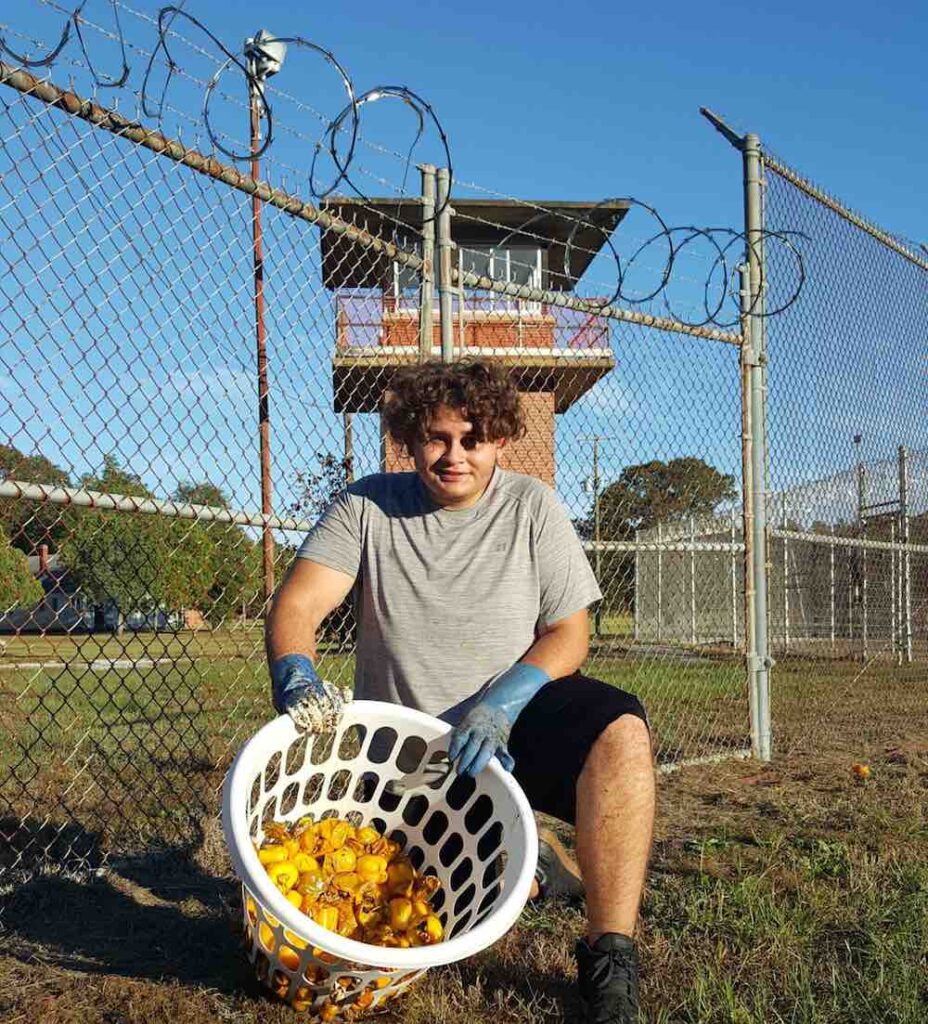
Gainesville and Alachua County has a new homeless shelter, found within the converted Gainesville Correctional Institute. Shuttered due to budget cuts, locals found the building ideal for converting into a homeless shelter, and got straight to work planting trees and painting the walls bright colors.

Existing infrastructure like an industrial size kitchen and plumbing were already there, saving the organization money. Since 2009, GRACE Marketplace has served three quarters of a million meals, seen 1,500 residents rehoused, and serviced more than 15,000 homeless in the area while reducing chronic homelessness by 38%.

While offering medical care, financial, mental health, and domestic abuse services, they also have a garden, computer lab, and host cooking classes and even yoga.

CHECK OUT: Former Prisoners Turn Waste Into Beautiful Furniture, Re-Building Their Lives At the Same Time

“We’re the only homeless shelter in the universe that improved the property values when we moved in,” Jon DeCarmine, the executive director of GRACE told AP. “There were adaptations that were required to make it something that worked. But, overall the benefits for the community and people we serve have far outweighed any hassles of moving into a facility that had been used in a different way previously.”

Farming prisons

GrowingChange.org / Facebook

In 2020, GNN reported on the “flipping” of North Carolina correctional facilities in an area where at-risk youth and veterans were driving up crime rates to worrying levels.

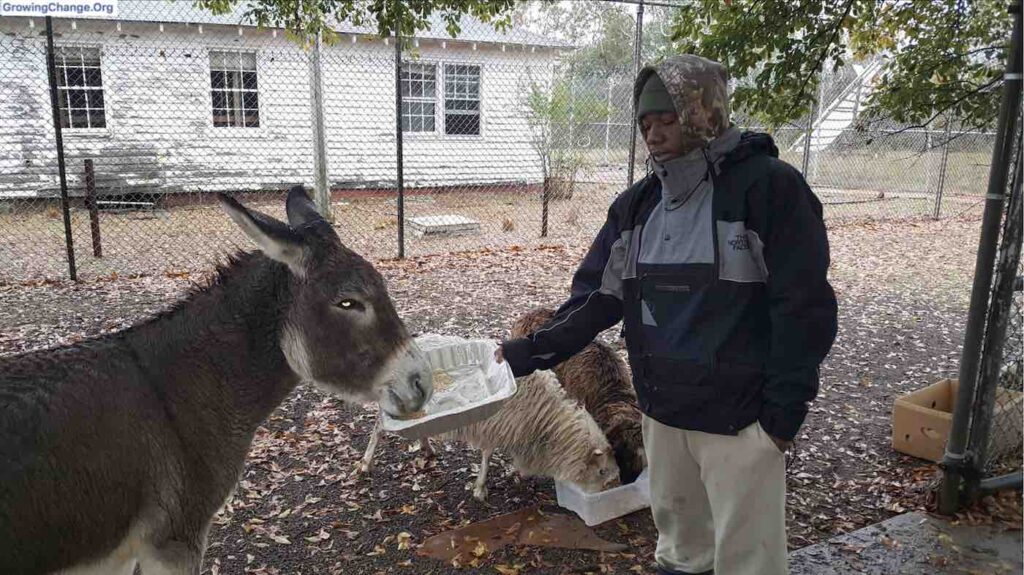
In converting old prisons to year-round-farming and education centers, Growing Change solves several problems at once. The program synergistically brings together young men on the edge of the criminal justice system and jobless wounded veterans returning from deployment.

Recruiting the discipline and leadership skills of the latter to teach and guide the former, Growing Change creates an environment whereby at-risk youth who need to fulfill long hours of community service can learn life skills, sustainable farming practices, and animal husbandry, with an opportunity to receive clinical therapy in an environment much more suited to young men.

Meanwhile, the veterans work toward university degrees in environmental sciences and sustainable agriculture. Together, these individuals young and old who may have been on the fringes of society work to rehabilitate abandoned brownfields (land that might be contaminated and must be cleaned before future use), and to keeo the prison property decaying into dysfunction.

MORE: Instead of Responding With Cops, Denver Sends Health Care Teams to Non-Criminal Calls — and It’s Already Saving Lives

The myriad societal benefits are augmented by the fact that the counties Growing Change operates in grow almost none of their own produce. The flipping of prisons into organic farms also increases the access to nutrient dense fruits and vegetables.

Orange is the new black

One prison, a former correctional facility on Staten Island, has actually been turned into a full-service movie studio by Broadway Stages. The 69-acre waterfront campus has already seen action in Hollywood, and was used in the filming of the Netflix series Orange is the New Black, and the heist movie Ocean’s Eight.

The authentic prison set includes everything a director or screen writer could want; a gymnasium, visitor center, admission buildings, infirmary, kitchen, recreation yard, guard towers, and all of the housing blocks.

The facility now has 40 permanent employees, and every production arrives with hundreds of people.

“And to the extent that they can, they [the production] like to use local restaurants for food, local businesses for craft services—anything that they need,” said Samara Schaum, a spokeswoman for Broadway Stages. “That’s part of the identity of Broadway Stages. I know that it has had a positive impact on local businesses there.”

LOOK: When a Student Couldn’t Pay Tuition Fees, Prison Inmates Rallied to Raise $32k to Help

Just as an inmate one day has to prepare for life beyond the walls of a penitentiary, the United States is gradually getting used to life beyond the days when the simplest answer to any criminal problem was throw someone in prison.

The number of people incarcerated in U.S. prisons and local jails dropped from around 2.1 million in 2019 to 1.8 million by mid-2020—a drop of 300,000, or a 14% decrease.

Since 2011, 22 states have closed correctional facilities, amounting to 94 fewer state prisons and juvenile detention centers, and bags of creativity are needed to ensure these places are reclaimed by the community.

BREAK Your Friends Out of the Cycle of Bad News—Share the Hope, and This Story…

New Shipping Material Made From Popcorn Can Replace Styrofoam ‘Peanuts’

University of Göttingen

In a stroke of scientific genius, a German researcher enjoying a box of popcorn in a dark movie theater realized that the overpriced, butter-soaked concession had the exact same size and consistency as Styrofoam packing peanuts.

University of Göttingen

Considering Styrofoam is made from polystyrene, which requires fossil fuel extraction and takes centuries to break down into yet smaller bits of harmful micro-plastic, Alireza Kharazipour thought it was worth experimenting with puffed corn kernels as a replacement for them.

Annually, in the U.S. alone, around 3 million tons of polystyrene is produced, which is a lot considering it’s 95% air. It’s a popular choice because it has enabled packaging to take on very precise forms and provides excellent packing safety for fragile electronics on the move, for instance—while costing pennies to manufacture.

One of its worst qualities is that most recycling facilities don’t have the capability to process it.

“Our popcorn packaging is a great sustainable alternative to polystyrene which is derived from petroleum,” said Stefan Schult, Managing Director of Nordgetreide.

“The products are very light because popcorn granules are filled with air like honeycombs,” Kharazipour tells Fast Company. “When grain maize expands into popcorn, the volume increases by 15% to 20%.”

University of Göttingen

Taking corn waste products produced from making corn flakes, then filling them with steam creates what Kharazipour and his team at Gottingen University call “granulated popcorn.”

MORE: 150 Brands Unite to Clean Up Our Paper Supply – Saving Global Forests and Improving Recycling

The popcorn packing can be made from any type of corn, and is completely biodegradable.

Large pieces can be compressed into shapes to hold different products, and can be easily sawed into pieces, either for cutting into precise shapes, or for shredding at the end of its life.

The brilliance of Kharazipour’s idea has landed him an exclusive licensing agreement with a medium-sized grain and cereal company in Europe called Nordgetreide for manufacturing various popcorn packing products.

RELATED: World’s Largest Wind Turbine Manufacturer Says All Its Blades Will Soon be Fully Recycled

SHARE the Good Green News With Friends on Social Media…

“Be like the bluebird who never is blue. For he knows from his upbringing what singing can do.” – Cole Porter (born 130 years ago)

Joshua J. Cotten

Quote of the Day: “Be like the bluebird who never is blue. For he knows from his upbringing what singing can do.” – Cole Porter, Anything Goes (born 130 years ago today) LEARN more

Photo: by Joshua J. Cotten

With a new inspirational quote every day, atop the perfect photo—collected and archived on our Quote of the Day page—why not bookmark GNN.org for a daily uplift?

See Rare Sunrise Spectacular As Solar Eclipse Hits Parts of U.S. and Canada This Week

The lighted whisps in this image of a solar eclipse are just a tiny portion of the Sun's corona - credit: Drew Rae

It’s time to dig out the solar glasses from the back of the cupboard, because on the morning of June 10—that’s this Thursday—the Sun, Moon, and Earth will bring us a highlight of the summer stargazing season as a solar eclipse hits the Northern Hemisphere.

If you’re in the Lower 48 you’ll want to be in the northeast, or in parts of the Midwest and Mid-Atlantic, to glimpse a surreal sunrise where the sun has ‘solar horns’. Maine will see 78% coverage of the sun; in Washington, D.C. it will be 55% covered—creating a fascinating crescent shape.

If you’re in Ontario, Nunavut, or Quebec in Canada, if the skies are clear you’ll see an impressive ‘Ring of Fire’ solar eclipse a little after sunrise—but only if you’re north of Lake Superior (sorry, Torontonians.)

Drew Rae

If you’re further in the west of Canada or the U.S? You may as well have a lie-in, as the eclipse will begin and end its show before sunrise hits.

The Weather Network has great maps containing more info on what you’ll see, and when, in your location in North America.

If you’re in Europe, here’s what you can expect to see.

So how do solar eclipses work? According to NASA, “A solar eclipse happens when the Moon moves between the Sun and Earth, casting a shadow on Earth, fully or partially blocking the Sun’s light in some areas.

MORE: Mind-Bending Pictures of the Moon With Inverted Colors Show Where Magma Once Flowed

“During an annular eclipse, the Moon is far enough away from Earth that the Moon appears smaller than the Sun in the sky. Since the Moon does not block the entire view of the Sun, it will look like a dark disk on top of a larger, bright disk. This creates what looks like a ring of fire around the Moon.”

P.S. It’s not just up in the direction of the sun you’ll want to look at during Thursday’s spectacular sunrise. Look on the forest floor, according to The Washington Post, and you could see crescent-shaped patches of light tucked among the trees’ shadows as the sun’s image gets projected on the ground.

(WATCH NASA’s visualization of Thursday’s eclipse in the video below.)

GET Your Friends’ Ready for the Solar Eclipse—Share This Story…

5 Experiments Proving Invertebrates Are Much More Aware than We Think

Pia

Swat a fly; who cares, it’s not like they have feelings. Or do they?

Jonathan Balcombe is an English ethologist—a studier of animal behavior—and has published several books on the subject, the most recent of which was called Super Fly: The Unexpected Lives of the World’s Most Successful Insects

In it, he begins to try and unravel our natural born prejudice towards anything with more than two legs, and shows that many of the most well-established intelligence tests we use for mammals and birds can also be passed by bugs and cephalopods.

In a Literary Hub excerpthe argues that this should at least leave us revisiting whether these tests prove intelligence as such, or if we need to reexamine the concept of animal intelligence at large.

Let’s take a look at just how intelligent invertebrates really are.

Bees

Bees are known to have a mind-bogglingly complex sensory interconnectivity through the use of pheromones that allows them to seemingly move as if controlled by a single mind.

And yet individual bees can recognize individual human faces. They understand the concepts of something “same” and something “different,” which was demonstrated in tests with shapes and colors.

Honeybees seem to know they know things as well: One cited study suggested bees would not participate in tasks that were very difficult if failure meant receiving a bitter tasting liquid at the end. Researchers took this to mean the bee would only participate in tasks it knew it was capable of finishing.

LOOKFlowers Can Hear Buzzing Bees—And it Makes Their Nectar Sweeter

Wasps

Low on the sting-o-meter, paper wasps score high on other tests, such as the ability to recognize individual members of their colony by the distinct marks on their little heads. By digitally altering features of a colony-member’s face, researchers were able to observe that they would choose their comrade’s face over the doctored image.

Tool-use, a generally accepted form of higher intelligence, is found in digger wasps, who, after paralyzing their prey, bury it underground and use flat stones to tamp down the dirt they moved in order to disguise it from other insects that have learned an easy meal lies within the borrow.

One of the distinguishing features here is that they selected flat stones in particular, and not any such hard object, such as a nut, that might have been lying around.

Ants

Ants can recognize themselves in a mirror.

We’re not kidding. In what Balcombe describes as his favorite insect intelligence test, Brussels researchers found ants behaved differently when looking at their own face in a mirror than colony mates viewed through a pane of glass. This “MSR” test was the same one that caused a scientific reevaluation in the ’70s when chimpanzees were found to do the same.

When a blue dot was applied to their forehead, the ants, upon seeing themselves in the mirror, and like so many humans before going out in public, busily scrubbed away until the pesky stain was removed. This preening wasn’t observed if the blue dot was placed on the back of their head where they couldn’t see, or if it was applied and they were not given a mirror to gaze into.

Since 1970, just apes, dolphins, elephants, magpies, and as Balcombe points out, a type of cleaner fish, have passed this test.

RELATED: Size Doesn’t Matter to a Dolphin Mom As She Adopts a Whale Calf

Octopuses

Pia

This animal has garnered a lot of attention recently through a string of now-iconic videos on YouTube, as well as from several experts talking to the eclectic mind of America’s biggest broadcaster: Joe Rogan.

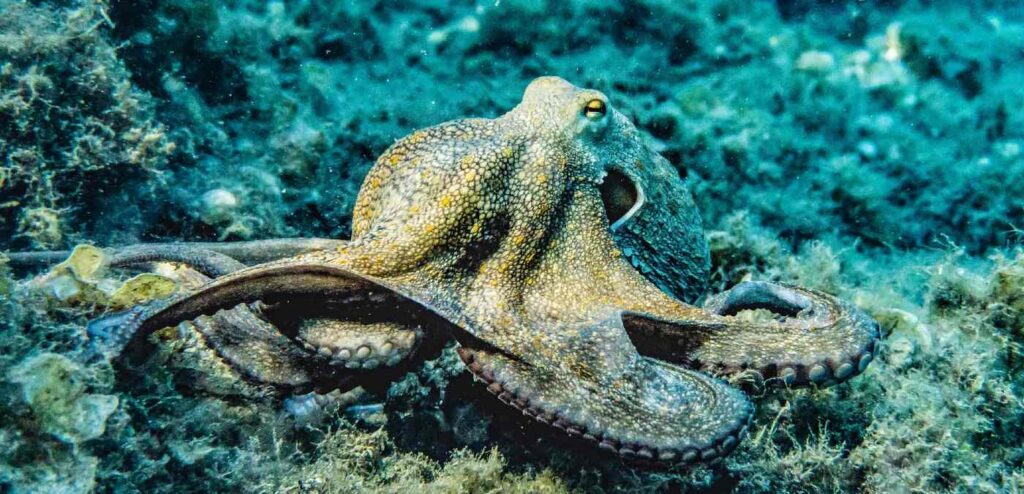
An octopus can open child-proof containers and untie knots, is a master of escape, has emotion, and demonstrates play behavior. They even have unique personalities, and can actually learn skills by watching others.

This has led researchers to suggest that, given the evolutionary distance between mammals and octopuses, consciousness was first developed by the eight-legged curiosities, and that therefore, consciousness has evolved on Earth on two separate occasions at least.

Spiders

We saved this species for last so that arachnophobes who may not enjoy hearing that spiders are more intelligent than we thought can leave having enjoyed the rest of the article.

MORE: New Research Shows Why Crows Are So Intelligent and Even Self-Aware—Just Like Us

Object permanence was found in various jumping spider species when researchers observed them moving out from behind a rock if a prey species passed out of sight behind it. They knew the prey was still there, it’s just that something was blocking its view.

Spiders, again the jumping variety, were also found to display very advanced methods of approach, and would back away from its prey if it thought it had a better chance of approaching undetected elsewhere.

CHECK OUT: New Bird Song That ‘Went Viral’ Across This Species of Sparrow Was Tracked by Scientists For the First Time

The reason this was found in jumping spiders and not those that rely on ambush, like trapdoor or web-weavers, could be the same reason that wolves and leopards are smarter than crocodiles.

Actively seeking and stalking requires complex sensory and mental arrays to parse information from the environment in order to avoid detection, whereas a camouflaged lizard or spider need only wait until something wanders close enough to its mouth.

In his book, Balcombe quotes Jane Goodall’s professor in the moments after he learned of her documenting of advanced tool use in chimps: “Now we must redefine tool, redefine Man, or accept chimpanzees as humans.”

Perhaps it’s time we do a little redefining in invertebrates. If you’d like, you can take a look at and order Balcombe’s new book here. (His 2016 book is What a Fish Knows: The Inner Lives of Our Underwater Cousins.)

SHOW Pals the Intelligence of Others—Share This Story…

To Respond to Rising Sea Levels, The Maldives is Building a Floating City

Rendering, Maldives Floating City

Late 19th and early 20th century fiction was filled with visions of a brave new world where science, technology, and machinery would come together to build metropolises under the sea, floating in the air, or out in space.

Now a Dutch planning and architecture firm is working with the Maldives to create a 200-hectare floating city. It’s modeled on the structure of coral reefs and powered by green energy to help fortify the nation against climate change.

Averaging less than 1 meter above sea level, the Maldives, a collection of 25 atolls in the Indian Ocean, is the lowest-lying nations on Earth and at a real risk of becoming uninhabitable as the planet warms.

Fortunately, with 300 years of Dutch know-how on controlling their wet environments, Dutch Docklands is working with the Maldives government to create a solution.

Planned to drift upon a 200-hectare warm water lagoon just a 10-minute boat ride from the capital of Malé, the Maldives Floating City (MFC) will be built along a flexible grid and surrounded with larger islands to act as wave and water breaks.

“Up top, traditional Maldivian architecture sets the tone of MFC’s design plan, supported down below by the most eco-friendly construction possible,” state Dutch Docklands. “MFC offers an approachable, scalable, sellable solution for truly sustainable water-front development.”

Rendering, Maldives Floating City

“As a nation at the front-lines of global warming, the Maldives is perfectly positioned to reimagine how humankind will survive—and, indeed, thrive—in the face of rising seas and coastal erosion.”

MORE: Saudi Arabia is Building a Zero-Carbon City With No Cars or Pollution: ‘A new era of civilization’

Rather than industry or agriculture, the Maldives is powered by tourism, and the hexagonal, modular building segments are inspired by the rich corals that attract the visitors that fuel the country’s economy.

The plan also includes the building of artificial coral structures in and around the neighborhoods to attract sea life, and further protect the town from storm surges.

“Our adaptation to climate change mustn’t destroy nature but work with it, as the Maldives Floating City proposes,” said Mohamed Nasheed, former president of the Maldives and speaker of parliament. “In the Maldives, we cannot stop the waves, but we can rise with them.”

The housing modules will be connected by a series of canals and flexible bridges, while docks will allow people parking and access to services and shops. Construction is slated to begin next year, and finished in five.

RELATED: Eco-Friendly Behavior In This Finnish Town Gets You Free Cake

A school and hospital will be added, a renewable energy grid will power the city, and prices for homes are said to be set to accommodate all income brackets.

(WATCH the project launch video for Maldives Floating City below…)

SHARE the Innovative News With Pals on Social Media…

150 Brands Unite to Clean Up Our Paper Supply – Saving Global Forests and Improving Recycling

Canopy's Executive Director Nicole Rycroft standing on a huge stack of waste wheat straw/Canopy

Pack4Good, a campaign by the NGO Canopy, is one of the fastest growing corporate responsibility platforms in America for ensuring paper packaging is not coming from virgin, endangered, or valuable forests.

Canopy’s work in auditing supply chains and providing recycled or sustainable packaging solutions has attracted 750 brands across all its campaigns, including e-commerce giants Amazon, fashion empires like Gap, H&M, Marks and Spencer, and others, and publishing and media firms like Mansfield Press, Penguin, and the New York Times.

Only 18 months since launching Pack4Good, and the campaign has welcomed 29 new brands from food and beverage products, to the printing, fashion, and e-commerce sectors.

“The companies that are joining Pack4Good are the out of the box thinkers we need—leaders ready to transform paper packaging supply chains and scale up solutions to save forests and our climate,” stated Nicole Rycroft, Executive Director of Canopy. “We have so many solutions just waiting to be implemented, it’s time to take them from the margins to the mainstream.”

Pack4Good’s selection of solutions for companies looking to reduce their forest impact are varied. They help connect companies to providers of waste pulp material like wheat straw that can be turned into fibrous packaging, while their stamp of approval—Ancient Forest Friendly—denotes the highest adherence to supply chain practices, and that the certified material contains no endangered, controlled, or ancient wood.

MORE: The Area of Forests Regrown Since 2000 Covers the Size of France, Potentially Absorbing a Full Year of U.S. Emissions

90 million tones of rice straw is burned every year in India, which in the fields surrounding Delhi accounts for 40% of the air pollution in the metropolitan area. Canopy wants to take take that rice straw and put it in the hands of recycled-paper mills, flooding the market with supply and adding a little more income to farmers. A win-win.

Canopy’s Executive Director Nicole Rycroft standing on a huge stack of waste wheat straw/Canopy

Pack4Good claim these solutions are everywhere, it’s just a matter of helping business get started down the road to sustainable paper supply chains.

RELATED: Amid the Green Funeral Movement, Scattering Ashes Ensures These Forests Remain Pristine Forever

Some modern investing strategies, like those recently implemented by BlackRock, target companies based on their degree of sustainability. The logic is that polluting companies will be pushed out of the market by conscious investors and squeezed by government regulations.

As more corporations look for ways to reduce their impact on the world environment, it’s up to groups like Canopy to ensure their energy is directed.

SHARE This Good Green News With Friends on Social Media…

Download Free Coloring Books From 100 Museums, Libraries, and Iconic Collections

New York Academy of Medicine Library

Adult coloring can relax the fear center in your brain known as the amygdala, reducing stress, and helping improve your sleep and focus. It’s also fun.

To get as many as people involved in arts—and the joys of coloring—as possible, the New York Academy of Medicine Library has been hosting an annual #ColorOurCollections project since 2016, with global museums, libraries, archives, and academic institutions participating in the creation of completely free, downloadable coloring pages inspired by their collections.

The coloring books from 2021 and the five years prior remain accessible year-round for free download. You can check out the different options here (note that the website is a little tricky to navigate: To get to the PDF you’d like to download, you’ll want to click on a title, for example ‘Eton College Library Coloring Book 2021’. On the new page that click takes you to, click on the hyperlink with the same title, and that’s your PDF).

You could draw over vintage motorcycle posters from the archives at Harley-Davidson. You could color in ancient book pages from Barcelona. Victorian flora and fauna illustrations, old medical sketches—it’s all available, so just take your pick.

And if none of these printable PDFs are really striking you?

RELATED: From Miniature Sushi to Tiny Cakes, Mom Makes Exquisite Dollhouse Food — LOOK

Over the past year, everyone from West Elm to illustrator Johanna Bashford—who popularized adult coloring with her books like Secret Garden and The Enchanted Forest—have been creating free books for anyone to download and color in. And they’re wonderful.

Johanna Bashford

SHARE These Free Finds With Your Pals on Social Media…

“When people don’t express themselves, they die one piece at a time.” – Laurie Halse Anderson

Quote of the Day: “When people don’t express themselves, they die one piece at a time.” – Laurie Halse Anderson, Speak

Photo: by Giancarlo Corti

With a new inspirational quote every day, atop the perfect photo—collected and archived on our Quote of the Day page—why not bookmark GNN.org for a daily uplift?

8 in 10 Youth Think Gardening is Cool, and Half Would Rather Visit a Garden Center Than a Nightclub

Eight in 10 young people think gardening is cool—and it turns out that more than half would rather go to a garden center than a nightclub.

A poll of 2,000 people found horticulture has enjoyed a renaissance among 18 to 34 year-olds during lockdown.

The appeal appears to be rooted in young people having a desire to make their homes and gardens a nicer place to be, to improve mental health, and create a space they can escape to.

It also emerged gardening is so popular that young adults spend close to two hours during a typical week taking care of their beloved plants.

Kev Smith, head of marketing at Draper Tools, which commissioned the survey, said: “The popularity among young adults is fantastic to see, we knew it was popular, but even we were surprised by the outpouring of love for it.

“There’s a tendency to think of gardening as an activity for older people, but this poll proves that gardening really is for everyone, whatever your age.

“Gardening is a very calming activity, as well as a rewarding one—everyone can enjoy the benefits it brings.”

The survey found the most popular houseplants among those polled are cacti, orchids, and aloe vera, followed by basil, spider plants, and peace lilies.

Outdoors, the most common are daffodils, roses, and lavender, along with tulips, mint, and hydrangea.

While the act of gardening itself is one of the biggest appeals—it appears to be bigger more than that.

Two thirds (66 percent) also said they love shopping for gardening items, whether that’s plants, seeds, or tools.

To date, the Brits polled have spent £318.56 ($452) on such items—with 58 percent revealing they’ve spent more on gardening during the past 12 months or so than ever before.

MORE: 8 Cheap Gardening Hacks For Plants – Using Wine and Plastic Bottles, Orange Peels and Coffee Grounds

In fact, 56 percent said gardening is one of the things which has kept them going in the wake of the pandemic.

But this doesn’t mean their interest looks likely to shrivel up like an unloved plant—72 percent intend to keep on investing in plants, tools, equipment, and more to fulfil their vision for their garden.

Carried out through OnePoll, the study also found 60 percent wish they had access to more outside space than they do currently, so they could be even more green thumbed.

However, 78 percent believe you don’t need a big outdoor area to experience the benefits of gardening.

READ: Step Inside the Magical World of An Ancient Tradition: Growing Rhubarb by Candlelight

The most popular place to grow plants is on the kitchen windowsill, while living rooms, bathrooms, and balconies are also popular locations for all things green.

Kev Smith added: “Gardening is incredibly accessible which might in part explain its increasing popularity.

“Wherever you live, whatever your space, anyone can give growing plants a go—and we’re seeing more and more people embracing this.

CHECK OUT: Paul McCartney is Helping People Grow Their Own Fruits and Vegetables in the UK for Better Health and Wellbeing

“The transformative effect of plants on areas big or small is just one of many great things about having plants in your home—both inside and out.” Cheers to that.

MOST POPULAR HOUSEPLANTS AMONG YOUNG ADULTS

1. Cactus
2. Orchids
3. Aloe Vera
4. Basil
5. Spider Plant
6. Peace Lily
7. Tomatoes
8. Chilli
9. Money Plant
10. Parsley
11. Snake Plant
12. Ivy Houseplant
13. Cress
14. Monstera (cheese plant)
15. Chives
16. Air Plant
17. Lucky Bamboo
18. Fiddle Leaf Fig
19. Prayer Plants
20. Umbrella Plant

MOST POPULAR GARDEN PLANTS AMONG YOUNG ADULTS

1. Daffodils
2. Roses
3. Lavender
4. Tulips
5. Mint
6. Hydrangea
7. Clematis
8. Geranium
9. Magnolia
10. Hyacinth
11. Snowdrops
12. Honeysuckle
13. Jasmine
14. Chrysanthemum
15. Iris
16. Hibiscus
17. Lupins
18. Wisteria
19. Ornamental Grass
20. Waterlilies

PLOT Some Good News for Your Friends—Share This Story…

Teacher Swaps Shoes With Student To Save Him From Missing His Graduation Ceremony

John Butler

High school graduations are one of the most important rites of passage in a teenager’s life. Four years of hard work, friendships, and dreams for the future all culminate in a shining moment that will be remembered long after the caps and gowns are collecting dust.

So imagine Daverius Peters’ dismay when on May 19, as he headed into the ceremony to receive his diploma, he was stopped at the door by the fashion police. Although his black-topped, white-soled sneakers were anything but outrageous, Peters learned they were in violation of the school’s dress code and he was denied entry.

It looked as if Peters was about to miss his chance to walk across the stage with his classmates—until someone stepped in with both feet—and shoes—to turn things around.

When the distraught senior caught sight of a friendly face he went looking for help. John Butler, a para-educator at Boutte, Louisiana’s Hahnville High School was on hand for the graduation as a parent, not a staff member, but once he learned the details of Peters’ predicament, he accompanied the young man he’d come to know and respect back to the entry to see if he could change the gatekeeper’s mind.

“[I was] hoping that maybe if she saw me with him, she would let it go, but she insisted on not letting this young man in, and I didn’t have time to go back and forth with her,” Butler told The Washington Post. “It was a no-brainer… This was the most important moment in his life up to that point, and I wasn’t going to let him miss it for anything.”

MORE: Couple Hides $1000 Cash Inside Baby Supplies at Target to Help Other Families – After Recalling Their Own Struggle

Without missing a beat, Butler simply swapped his size-11 loafers for Peters’ size-9 athletic shoes. With seconds to spare, Peters made it inside the venue just as the doors closed and was able to keep his place in the graduation line.

Although his family was initially confused by the last-minute wardrobe substitution, they were thrilled that Butler’s quick thinking kept a joyful celebration from turning into an ugly situation.

RELATED: Good Deed Takes Flight at Airport as Man Buys Ticket For Someone Desperate to Get Home

“I wasn’t surprised because Mr. Butler is that type of person,” a grateful Peters told The Washington Post. “At school, if you’re having a bad day, he’ll be the one to take you out of class, walk around the school with you and talk to you.”

It’s said that a truly generous man will give the shirt off his back to someone in need. Now it seems, the adage also applies to the shoes off his feet.

BE GENEROUS With the Good News by Sharing This Story…

Man Grows 18ft-Tall Plant – The Biggest in Britain – After Saving It From a Dumpster

SWNS
SWNS

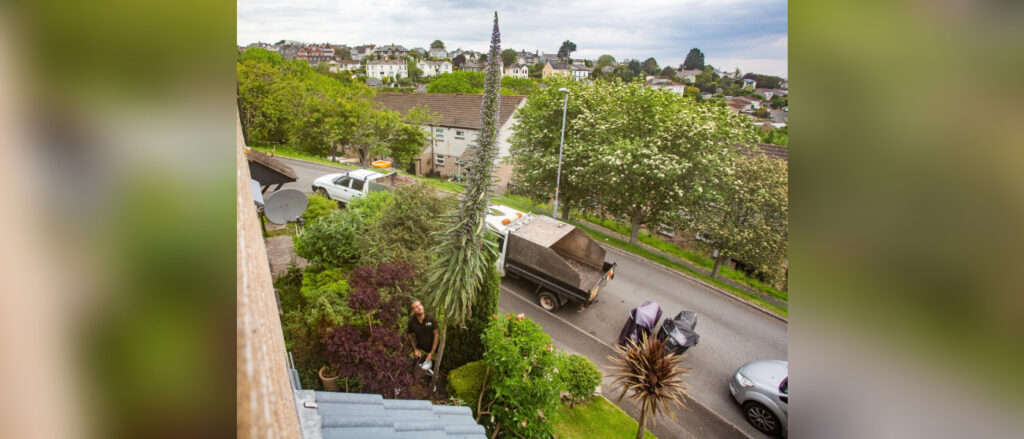
A man has grown Britain’s biggest echium plant after saving it from a dumpster.

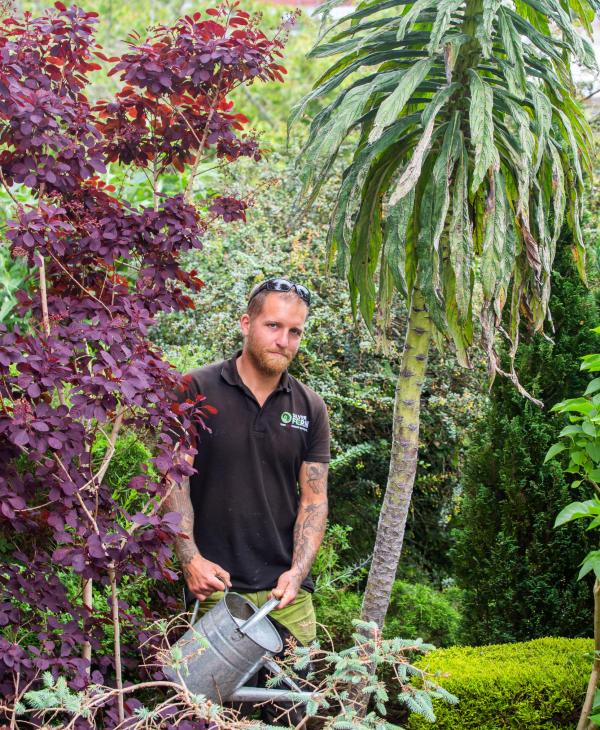
Tree surgeon Darren Wilson took the plant home three years ago after he saw it had been chucked away on a job he was working on.

He saved it and planted it in front of his house, and it has now grown to be the tallest in Britain—at 18th feet, it’s even taller than his house.

Echium plants are generally biannual, which means they usually flower in their second year.

However, Darren’s echium plant has flowered in its third year, meaning it had a whole extra year of growing before it flowered.

The 39-year-old from Saltash, Cornwall, believes a combination of good sunlight and a winter fleece during the cold months have helped it grow.

MORE: Gardener Grows Britain’s Biggest Tomato… Using Pantyhose

He said that after he and his wife measured the enormous plant, they decided to do some research online and try to find out how tall the biggest one was.

SWNS

Their research revealed that the tallest known echium in the UK was 16-feet tall—two whole feet shorter than Darren’s.

“We measured it Sunday and it had already grown three inches from Friday. It should stop growing once it’s finished flowering. Al the flowers will turn to seeds and the whole thing will die… But I reckon it’s still got another month’s growth.”

CHECK OUT: This Green-Fingered Gardener Has Grown Something Amazing – A Sunflower With 27 Heads

Darren stumbled upon the echium, which was much smaller at the time, in a clearance job he was doing. Since then, he’s been protecting the magnificent plant and wrapping it up in winter.

As for what the neighbors think of the tree-like plant?

Darren says: “One guy actually said he’s pretty sure it runs around the street at night when we’re all in bed.

“When you come up the road it’s just right there in your eyeline, so it stands out—it looks good, very impressive.” We could never deny that.

PASS On The Fun And Share With Your Gardening Friends on Social Media…

These Homegrown Mushroom Hives Could Save Ireland’s Bees

YouTube/James Dyson Foundation

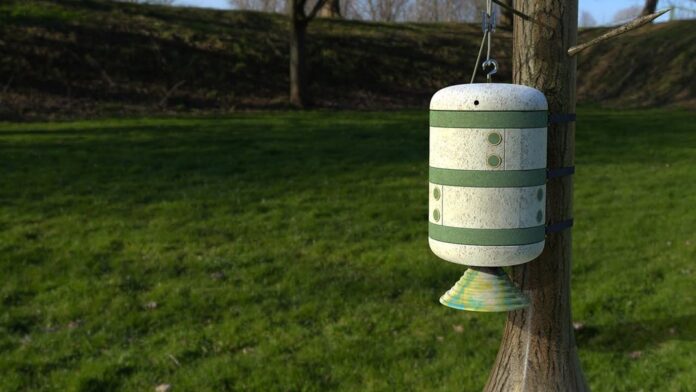
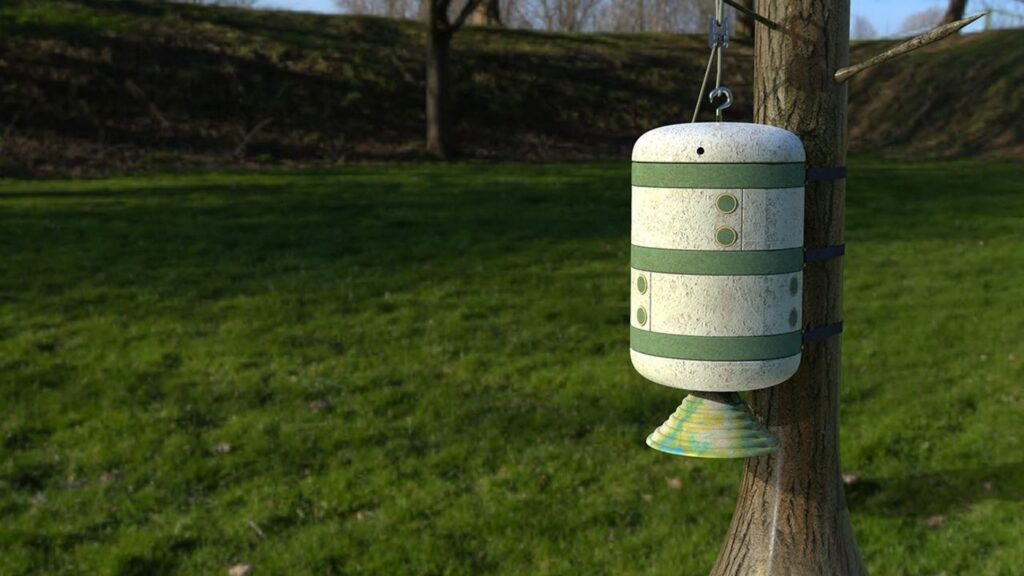
An Irish designer is hoping to save her island’s native bee species by creating special hives grown from mushrooms.

Placing on the world Top 20 for the James Dyson Design Award for Sustainability, the prototype hive, called Econooc, is being designed specifically by Niamh Damery for the Irish black bee, as well as to get more people involved in conservation.

Plummeting bee populations in Ireland are not only the result of habitat loss or pesticide use as is common elsewhere, but also because for years the country imported bee populations from warmer climates that have a hard time surviving the Irish weather.

Those introduced species bred with native bees to create hybrids that invaded black bee hives, but that still couldn’t cope with the weather. Econooc hives are grown from mycelium spores spread onto an agricultural byproduct, like wood shavings or straw, called a substrate.

Mycelium is the fibrous underground structure the supports the fruiting body—the mushrooms we see on walks—and is emerging as a potential super design tool. GNN has reported on its use to make things as varied as bricks, canoes, and even coffins. The mixture of mycelium and substrate is stuffed into a mold to mimic the natural structure of a beehive, before going in the oven to preserve the shape.

MORE: Eating Mushrooms a Few Times a Week Could Dramatically Reduce Dementia Risk, Says 6-Year Study

Econooc simulates the hollow of a native tree where black bees tend to build their hives in order to shelter themselves, their food, and their young from the rain. A landing pad where owners can watch bee activity in and out of the hive is made from recycled plastic, while the straps that secure it to the tree are old car seatbelts, making it almost entirely recycled or otherwise sustainable.

Damery also worked to create a calendar, which will be included in the purchase of every hive, that each month educates the owner on the different native plants growing in that period that require Irish black bees for pollination, as well as what exactly is happening inside the hive during that season.

CHECK OUT: Bees Actually Bite Plants to Make Them Flower Early – Surprising Scientists

In addition, once the month is finished, the owner can rip the calendar’s bottom part off, which is filled with wildflower seeds, and place it under an inch of soil in their garden to further aid in the efforts to save black bees and other Irish pollinators.

As soon as the Econooc is ready for market, we’ll be sure to let you know.

(WATCH the James Dyson Foundation video about this story below.)

BUZZ This Innovative Design Over to Pals on Social Media…
Astounding Fossil Discovery in California After Man Looks Closely at Petrified Tree And Finds Bones of Great Beasts

EDMUD

One of the biggest California fossil discoveries ever made has been found to include the remains of ancient mastodon, fish, and other mammals.

Encased amid the fossilized remains of a petrified forest, they were discovered by a local government ranger in the Mokelumne River watershed south east of Sacramento—and are now making headlines around the world of paleontology.

Thought to be from the Miocene Era of around 10 million years ago, ranger Greg Francek at the East Bay Municipal Utility District was in the area for work when he found the first fossilized tree, half buried in the soil.

Petrified wood, EBMUD

“I looked around the area further and I found a second tree,” Francek said in an EBMUD statement released this week. “And then a third and so on. After finding dozens of trees I realized that what I was looking at was the remains of a petrified forest.”

After millions of years, forests and trees buried in the ground become “petrified” or turned to minerals; coming from the Greek word “petra” which means stone. There are 19 petrified forests in the U.S., ranging in size from merely stands of trees to national park-sized forests.

It took three weeks of surveying the area for Francek to find his first vertebrate fossil; a piece about twice as big as his folding knife, broken in three places.

“What I didn’t comprehend at the time [of the initial find]” he said, “was the amazing fact that I was looking at the bones of great beasts that had roamed this landscape millions of years ago.”

Francek then reached out to every geology and paleontology expert in the area as fast as he could. Soon a team arrived from California State University, Chico, to begin excavating the fossils.

CHECK OUT: Woman Collecting Shellfish Discovers Dinosaur Footprint of ‘Jurassic Giant’

The bones of two elephant cousins, camel, rhino, horses, tortoises, and even a toothed-salmon weighing 400 pounds were all subsequently discovered there in what is one of the largest single discoveries in the state’s history.

Great Beasts

Most charismatic of Francek’s ‘Great Beasts’ was undoubtedly the complete skull of an American mastodon with all its teeth and magnificent tusks intact—the first discovery in the area since 1947. Needing over four days of work and eight people to load it into a truck, the two-tusked mastodon roamed Earth more than 10 million years ago before becoming extinct during the Pleistocene, just 12,000 years ago.

Mastodon tooth, EBMUD

A gomphothere was also discovered—a shorter cousin to the mastodon that sported four tusks, but that died out around 6 million years ago. It’s massive jaw required the assistance of a backhoe to heave it from the ground.

MORE: Newly Discovered Species of Saber-Toothed Cat Was So Big It Hunted Rhinos in America

Beyond this pair of tusked-titans, remains of merychippus, the three-toed progenitor of the modern horse, tapirs, single-hump camels, and even rhinoceros were all discovered there as well. One of the most challenging excavations was a Miocene salmon species, that judging by the skeleton, which was equipped with a mouth full of teeth, and could reach 400 pounds.

RELATED: Irish Farmer Stumbles Onto ‘Untouched’ Ancient Underground Tomb of Stone Near Dingle

Both state and federal government protections for the area have kicked in since its discovery, and the next step in the story is to try and parse out the classic scientific questions: why are the finds there, and how did they die.

You can learn more at EDMUD and Chico University, who both have excellent reports with stunning images of the finds.

SHARE the Astonishing Finds From California With Pals…

“Why didn’t I learn to treat everything like it was the last time. My greatest regret was how much I believed in the future.” – Jonathan Safran Foer

Nelson Santos Jr

Quote of the Day: “Why didn’t I learn to treat everything like it was the last time. My greatest regret was how much I believed in the future.” – Jonathan Safran Foer, Extremely Loud & Incredibly Close

Photo: by Nelson Santos Jr

With a new inspirational quote every day, atop the perfect photo—collected and archived on our Quote of the Day page—why not bookmark GNN.org for a daily uplift?

Nelson Santos Jr