










All News - Page 502 of 1736 - Good News Network
Home Blog Page 502

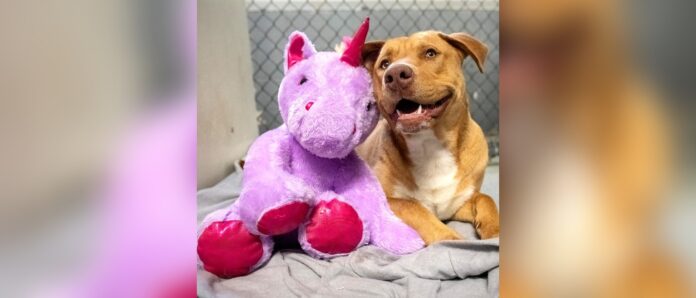
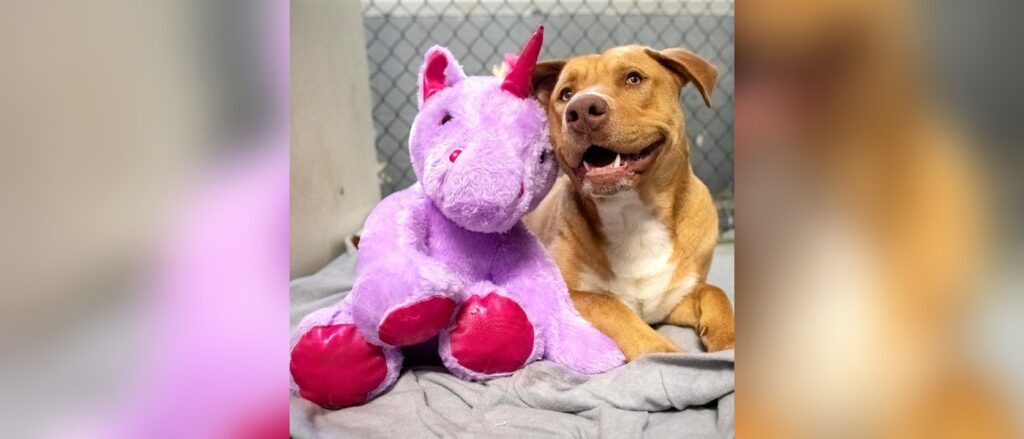
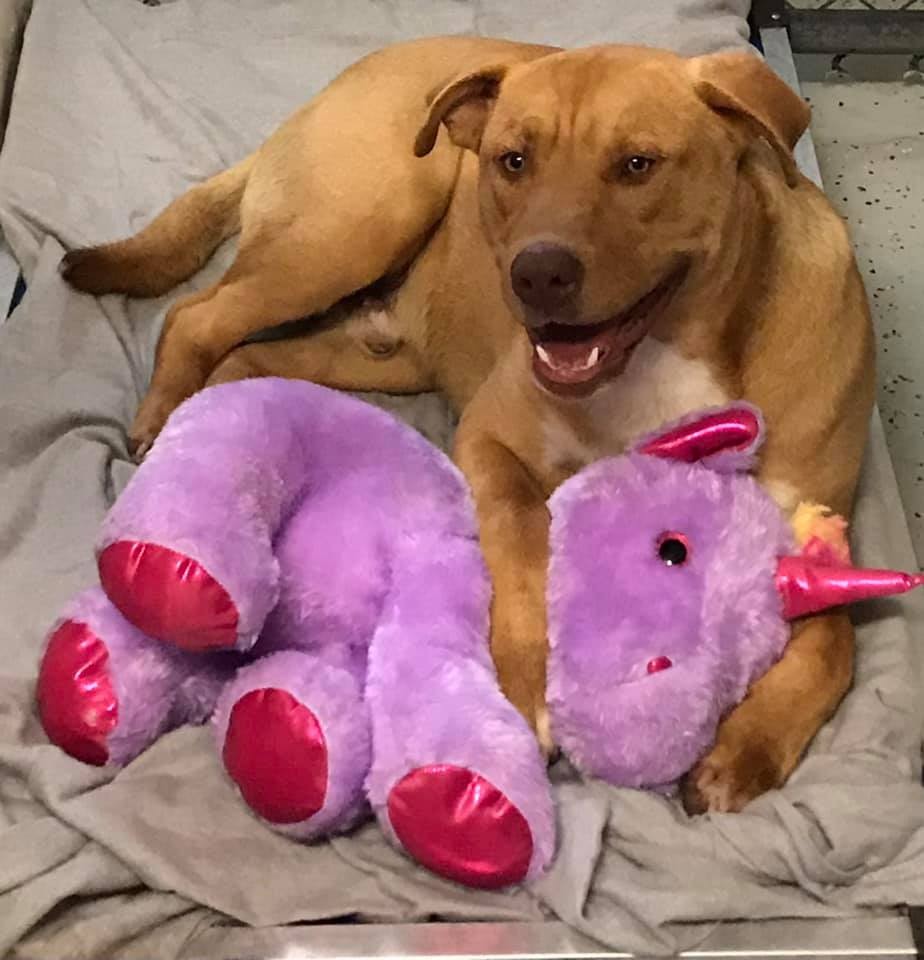
Stray Dog Kept Sneaking Into Dollar Store For a Stuffed Unicorn – Now He and the Toy Have a New Forever Home

Mary Shannon Johnstone, Duplin County Animal Services/Facebook

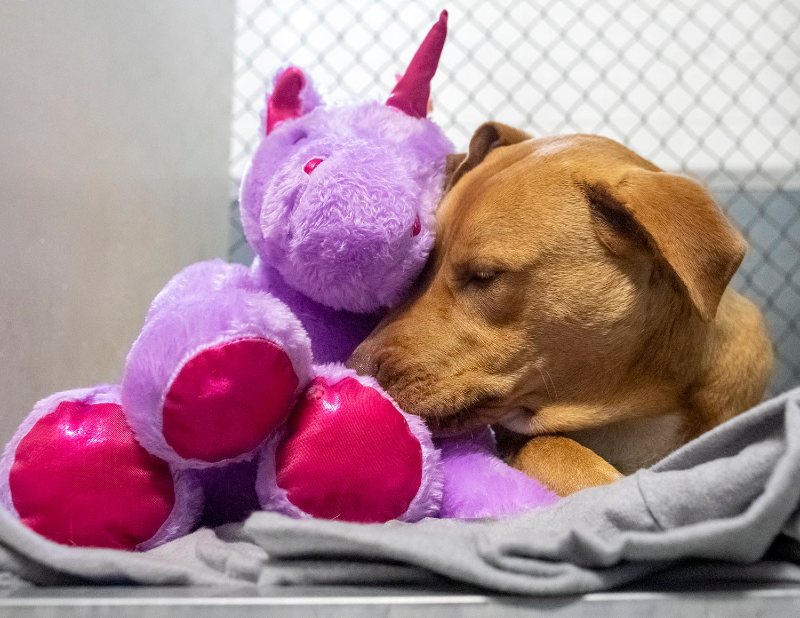
Shoplifting and petty theft are no laughing matter—except when the culprit is a cute canine kleptomaniac determined to liberate a certain stuffed purple unicorn from the confines of a North Carolina Dollar General store.
Mary Shannon Johnstone, Duplin County Animal Services/Facebook

According to the store staff, the dogged doggo was a repeat offender—making five separate attempts to be reunited with his favorite cuddle-buddy.

“The store called and said they had a stray dog in the parking lot that kept coming into the store,” Joe Newburn, head of the County Animal Services Department, told McClatchy News. “He’d walk in, go to that unicorn and try to get it. He did it four or five times before they locked the door and called us to come get him. Maybe he had a stuffed animal like that in his original home. I don’t know, but he wanted that purple unicorn bad.”

The persistent “pup-a-traitor” was eventually collared but rather than the hoosegow, he found himself at the local animal shelter, where he was booked in as a stray and given the name Sisu (a nod to a character in Disney’s Raya and the Last Dragon).

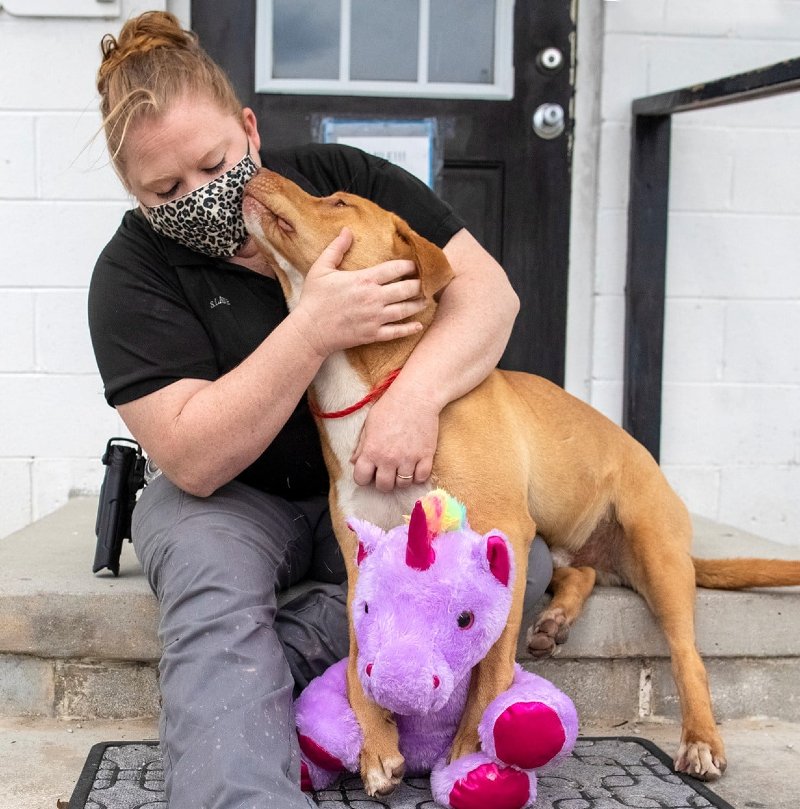
While Dollar General might have been hard-pressed to sell a plushie covered in doggie drool, Samantha Lane, the animal control officer tasked with escorting Sisu to the shelter decided it was in everyone’s best interest to keep the pair together, so she purchased the $10 toy and took it along.

“He kept going to that one particular unicorn,” Lane told Inside Edition. “He likes to sleep on it, lay on it… He just loves his unicorn.”
Mary Shannon Johnstone, Duplin County Animal Services/Facebook

Not long after his arrival, the shelter posted pictures of Sisu and a report of his exploits to their Facebook page, saying: “This is what happens when you break into the Dollar General consistently to steal the purple unicorn… but then get Animal Control called to lock you up for your B&E and larceny.”

MORE: This Teen Makes Tiny Bow Ties for Shelter Dogs to Help Them Look Spiffy and Get Adopted

Almost immediately, they were inundated with praise for the thoughtful animal control officer as well as interest from potential adopters.

RELATED: Cuddling in Freezing Temperatures, Newborn Calf and Collie Become Adorable Best Friends

Although he’ll have to wait out his stray hold, shelter updates indicate that Sisu has new pet parents waiting in the wings to bring him—and his BFF unicorn—home.

Along with a thank-you gift for Officer Lane and a pet food donation to Duplin County Animal Services, Dollar General plans to send a “few extra purple unicorns for the adoptive family,” company spokesperson Crystal Luce told People.
Mary Shannon Johnstone, Duplin County Animal Services/Facebook

Now, while we firmly believe in the adage “crime doesn’t pay,” for this heart-stealing hound with an unwavering devotion to stuffed his unicorn, we’re willing to make an exception.

WOOF Your Approval of This Good News—Share the Story With Pals…

North Carolina-based writer Judy Cole has a new rom-com murder mystery debuting on Amazon: And Jilly Came Tumbling After (from Red Sky Presents).

French Connoisseurs Just Tasted the Bordeaux Wine That Spent a Year in Space: ‘Beautiful!’

Bottles of wines recently brought back from the International Space Station were finally opened and drank—several of them—for research purposes.

Having drifted 273 miles above the surface of the Earth for a year, a dozen bottles of Petrus Pomerol, as well as 320 snippets of grape vines, were brought back down as part of an experiment to study the changes in plants within environments of minimal gravity, light, and moisture.

Having the honor of uncorking and sharing a glass of wine at the Institute for Wine and Vine Research in Bordeaux is a lovely thing, but the special space wine tasting was something so unique as to invoke tears among the organizers and tasters.

The program is not just an exercise in excess, but an important scientific experiment to understand how plants react to stress.

Here on Earth, we’re familiar with many of the ways in which plants protect themselves from bugs, heat, water, and more. But things like zero gravity or radiation are not understood in most plants, but must be for several reasons.

MORE: 50 Years Ago NASA Sent a Map Into Space to Help Aliens Find Earth—Now They’ve Got An Awesome Update

If human beings cannot slow or reverse the warming of the planet, more radiation from the Sun will reach the surface of the Earth. If we expect to enjoy wine in space, or amid a changing climate, wine makers must be able to understand what is lethal stress to the plants and what is manageable stress.

The cosmic vintage

Announced on Wednesday, the experiment confirmed that the cold, weightless confines of the ISS do not ruin the wine, but they seem to make it age faster.

Likewise, the vine snippets survived the journey and grew faster, even under the restrictive conditions.

RELATED: She Came to the US to Study With Only $300 in Her Pocket — Now She’s a NASA Director For the Mars Rover

12 connoisseurs tasted the bottles blinded alongside an identically aged vintage from a normal cellar. Delightfully, no two tasters described the same experience, with some of the notes reporting the smell of campfires, cured leather, and burnt orange.

“The one that had remained on Earth, for me, was still a bit more closed, a bit more tannic, a bit younger. And the one that had been up into space, the tannins had softened, the side of more floral aromatics came out,” said Jane Anson, a wine expert and writer, according to AP.

CHECK OUT: Scientist Thinks He Finally Knows Why People Hear Sounds Coming From the Northern Lights

“The wine of Bordeaux is a wine that gets its singularity from its history but also from its innovations,” Christophe Chateau of the Bordeaux Wine-Makers’ Council, who welcomed the research, told AP directly. “And we should never stop innovating.”

SHARE a Taste of the Good News With Your Friends on Social Media…

Chef Drives 6 Hours to Vermont to Cook Her Favorite Meal—Soothing a Customer In Her Final Days

Brandon Jones

During the COVID-19 pandemic, takeout food has come to feel like an essential rather than a luxury.

Of course, if your best-loved dining spot isn’t close to where you live, that generally puts the kibosh on a delivery… Unless there happens to be a generous chef who’s willing to go the extra miles—roughly 530 of them—to ensure a loyal customer gets to enjoy her favorite meal one more time.

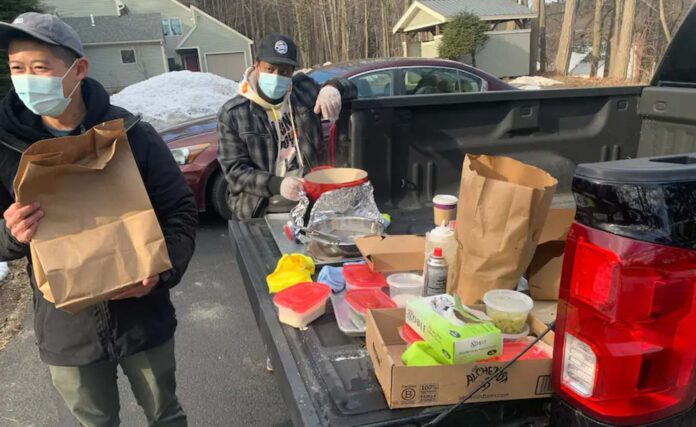
When Baltimore restaurant owner Steve Chu learned one of his longtime patrons (whose name is being withheld for reasons of privacy) was losing her battle with cancer, rather than share the recipe for her go-to dish per son-in-law’s Brandon Jones’ request, the chef offered instead to make the six-hour drive to Vermont to cook it for her in person.

The woman’s daughter, Rina, knows just how much the tempura broccoli from Chu’s Asian-Fusion restaurant Ekiben means to her mom. Even though her mom was teasing, the 72-year-old made sure to put in her takeout order for Rina and Brandon’s upcoming visit.

“She always told us, ‘When I’m on my death bed, I want to have that broccoli,’” Rina said in an interview with The Washington Post. “In fact, when I was packing on Friday to drive up to Vermont, I called my mom to see if she wanted us to bring anything special and she jokingly said, ‘tempura broccoli!’”

After confirming his plans with Rina and Brandon, Chu provisioned his pickup truck, and with business partner Ephrem Abebe and restaurant worker Joe Anonuevo in tow, the three men made the trek to Vermont. The next morning, Chu and his crew bivouacked in the parking lot of his unsuspecting patron’s condo, where they proceeded to fire up the grill, and get cooking.

When the woman opened her door and saw Chu’s familiar figure standing there with a takeout order, she could hardly believe her eyes. It was almost impossible for her to fathom that he’d be willing to travel from Baltimore to Vermont just to cook her a meal.

Brandon Jones

But for Chu, the gesture didn’t seem far-fetched at all. Unlike many other restaurants, thanks to its devoted clientele, Ekiben was able to ride out the pandemic with relative ease. Knowing how lucky he was, Chu felt it was only right to pay back some of the kindness he’d been so fortunate to receive.

Chu recognized his longtime customer the minute he set eyes on her as well. While patrons come and go, he says she’d made a lasting impression, not only in the way she enjoyed his cooking but in always making a point of praising the cuisine to his restaurant staff.

MORE: Tex-Mex Restaurant Owner Spends $2,000 of His Own Money to Promote Competitors Who Are Struggling

Their mission accomplished, Chu and his crew turned down an offer to stay for dinner and headed back to Baltimore—also refusing to take any payment for their time and trouble. Rina Jones reported Chu’s generosity left her and her mom with tears of gratitude—and enough leftovers to stand them to lunch the following day.

After a thankful Brandon Jones reported the events to Facebook his post was deluged with thousands of likes, including one from Baltimore City Council member Zeke Cohen who said: “I always point to Ekiben as a business that always models respect for community and treats people with love. Plus their food is amazing! Read this, eat their tofu nuggets and try not to cry!”

While Chu says he’s enjoying an uptick in business since the details of the long-distance delivery became known, his reason for reaching out had nothing to do with grabbing glory.

CHECK OUT: Restaurant Serving Thousands of Free Meals to Homeless Is Saved by Donations from D.C. Community: ‘Tears of joy’

“She’s a lovely lady, who has showered us with love at our restaurant for years,” he told The  Washington Post, adding it was an honor to help fulfill the family’s wishes. “It was a powerful experience, and I’m happy that we could make it happen.”

And that’s the best takeaway we’ve had in ages.

DELIVER This Beautiful Story to Friends in Faraway Places—Share it on Social Media…

North Carolina-based writer Judy Cole has a new rom-com murder mystery debuting on Amazon: And Jilly Came Tumbling After (from Red Sky Presents).
Stunning Lava Show Captured by Drone as Icelandic Volcano Erupts for First Time in 6,000 Years

SWNS
SWNS

Fagradalsfjall volcano in Iceland began its much-anticipated eruption a couple of weeks ago—marking the first eruption on the Reykjanes Peninsula in over 800 years.

Luckily, drone videographer Vilius Petrikas was there to capture history in the making by flying his camera over the site.

The stunning footage shows the main volcanic cone and surrounding smaller cones erupting—while a valley surrounded by mountains slowly fills with lava.

30-year-old Vilius, who lives in Reykjavik, described first seeing the eruption site: “I was speechless… It’s very hard to describe how it looked and felt in person, the power was overwhelming.

“I’m still in disbelief to what I saw, and can’t wait to get back there to feel the energy of our powerful nature.”

CHECK OUT: Stunning Aerial Video of Iceland’s Green Volcano Can Soothe Your Lockdown Stress

By viewing Vilius’ work, you’re seeing the first time Fagradalsfjall volcano has erupted in 6,000 years.

(WATCH Vilius’ stunning drone video below.)

SHARE The Lava Show From Iceland With Friends…

“It takes two flints to make a fire.” – Louisa May Alcott

Quote of the Day: “It takes two flints to make a fire.” – Louisa May Alcott

Photo by: Jonathan Forage, cropped

With a new inspirational quote every day, atop the perfect photo—collected and archived on our Quote of the Day page—why not bookmark GNN.org for a daily uplift?


Endangered Condors to Return to Northern California Skies After Nearly a Century

Jon Myatt/USFWS

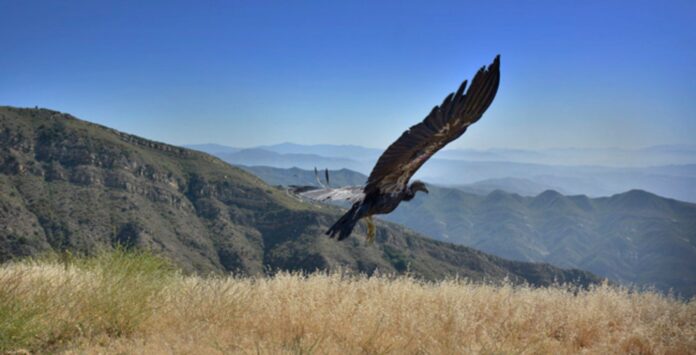
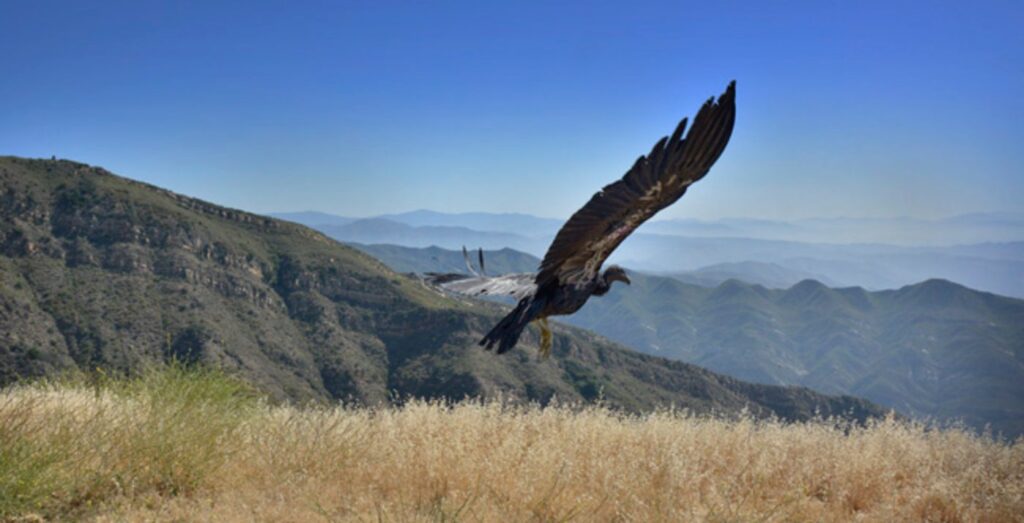
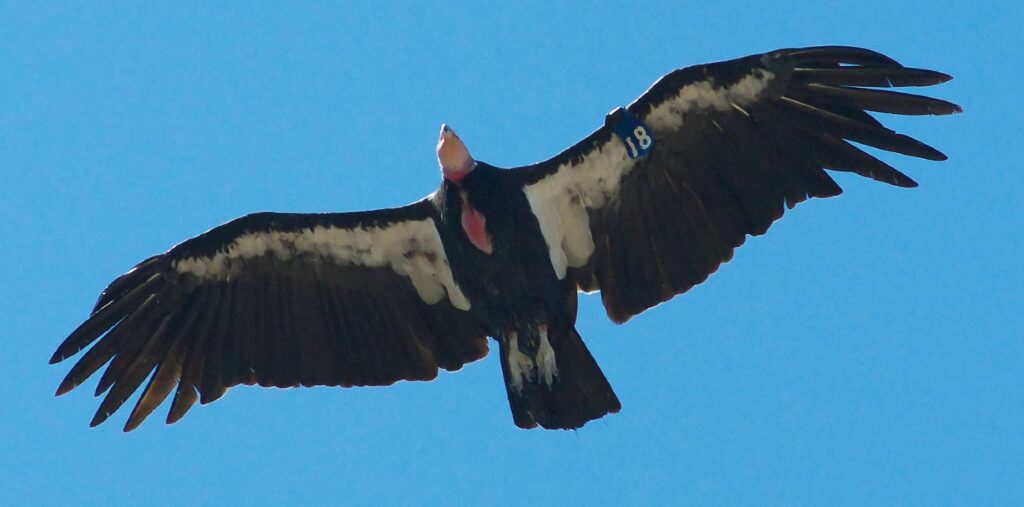
For the first time in 100 years, the endangered California condor will return to the Pacific Northwest.

Jon Myatt/USFWS

Once on the brink of extinction, this iconic species has made significant steps towards recovery.

This month, the U.S. Fish and Wildlife Service, National Park Service, and the Yurok Tribe announced a final rule that will help facilitate the creation of a new California condor release facility for the reintroduction of condors to Yurok Ancestral Territory and Redwood National Park, which is in the northern portion of the species’ historic range.

The rule will designate the condors affiliated with this program as a nonessential, experimental population under the Endangered Species Act.

This status will provide needed flexibility in managing the reintroduced population, reduce the regulatory impact of reintroducing a federally listed species, and facilitate cooperative conservation.

“The California condor is a shining example of how a species can be brought back from the brink of extinction through the power of partnerships,” said Paul Souza, Regional Director for the U.S. Fish and Wildlife Service’s California-Great Basin Region. Together, we can help recover and conserve this magnificent species for future generations.”

Brian Sims, CC license

With a wingspan of almost 10 feet, the California condor is the largest soaring land bird in North America. These massive vultures are essential members of their ecosystems and play a significant role in the spiritual and cultural beliefs of the Yurok Tribe, as well as many other Tribes throughout northern California and the Pacific Northwest.

MORE: Being Around Birds Makes Us Much Happier Says New Science

Over the past twelve years, the Yurok Tribe has led this reintroduction effort and completed a tremendous amount of legwork to prepare for the return of condors to the Pacific Northwest.

Extensive environmental assessments, contaminant analyses, and community outreach were just a few of the requisite tasks. The Tribe completed this endeavor because the condor is an irreplaceable part of a sacred cultural landscape. Pending completion of the condor release facility, the anticipated release of condors would be fall of 2021 or spring of 2022.

“We are extremely proud of the fact that our future generations will not know a world without prey-go-neesh,” said Joseph L. James, Chairman of the Yurok Tribe.

California condors prehistorically ranged from California to Florida and, in contemporary times, from Western Canada to Northern Mexico.

RELATED: 400 Years After Being Wiped Out by Hunters Britain’s Wild Cranes Make a 
Comeback

By the mid-20th century, condor populations drastically declined due to poaching and poisoning. In 1967, the California condor was listed as endangered. In 1982, only 23 condors survived worldwide. By 1987, all remaining wild condors were placed into a captive breeding program. Thus began an intensive recovery program to save the species from extinction.

As a result of exemplary conservation partnerships, and intensive captive breeding and reintroduction efforts, there are now over 300 California condors in the wild in California, Arizona, Utah, and Baja California.

CHECK OUT: One Simple Change Cut Accidental Albatross and Seabird Deaths by 98%: ‘Absolutely amazing’

“The return of condors to the skies above Redwood National and State Parks is a critical step toward recovery of this majestic landscape,” said Steve Mietz, superintendent of Redwood National and State Parks. “Working with our friends and partners… we will continue the unparalleled success story of condor recovery allowing all Americans to visit the tallest trees in the world while watching one of the largest birds in the world soar overhead.”

MAKE Good News Soar—Share This Story on Social Media…

Navajo Nation Reports No New Covid Cases or Deaths

For the second day in a row, on Monday the Navajo Nation reported no new COVID-19 cases or deaths.

Tribal health officials say over 191,000 vaccine doses have already been distributed among the community—with more than 87 percent of people already receiving their first-round dose.

Tribal President Jonathan Nez said in a statement, “Once again, the Navajo Nation is exemplifying what can be accomplished when we listen to the public health experts and work together.”

He continued, Our hard work is paying off and our prayers are being answered.”

MORE: Anyone in These States Can Get a Covid-19 Vaccine, Thanks to Several Native Tribes

Last week, the Navajo Nation—which covers parts of Arizona, New Mexico, and Utah—had a soft re-opening, with some businesses opening their doors at 25% capacity.

(WATCH the KOB4 video about this story below.)

Featured image: Massimo Catarinella, CC license 

SHARE the Good News and Send This Story to Friends…

After Massive Wildfires, DroneSeed is Replanting Forests 6x Faster By Using Special Drones

DroneSeed
DroneSeed

When a wildfire destroys the forest on your property, what are your options for restoring what has been lost?

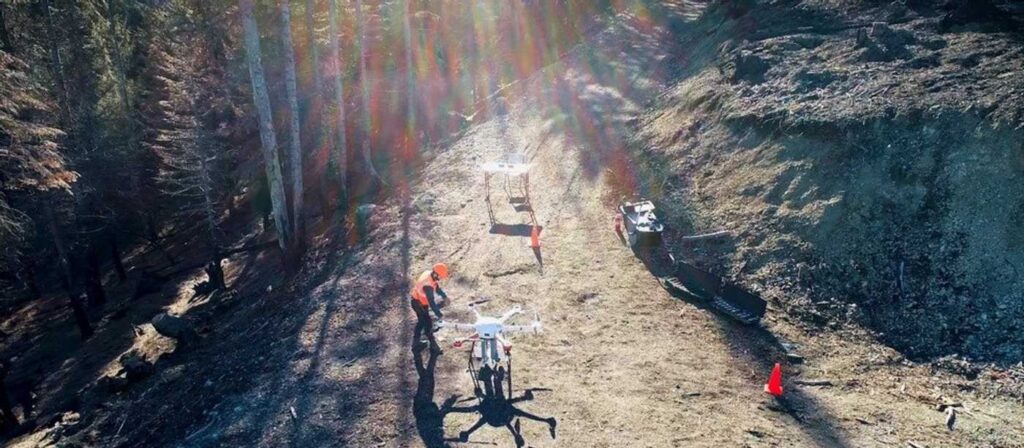
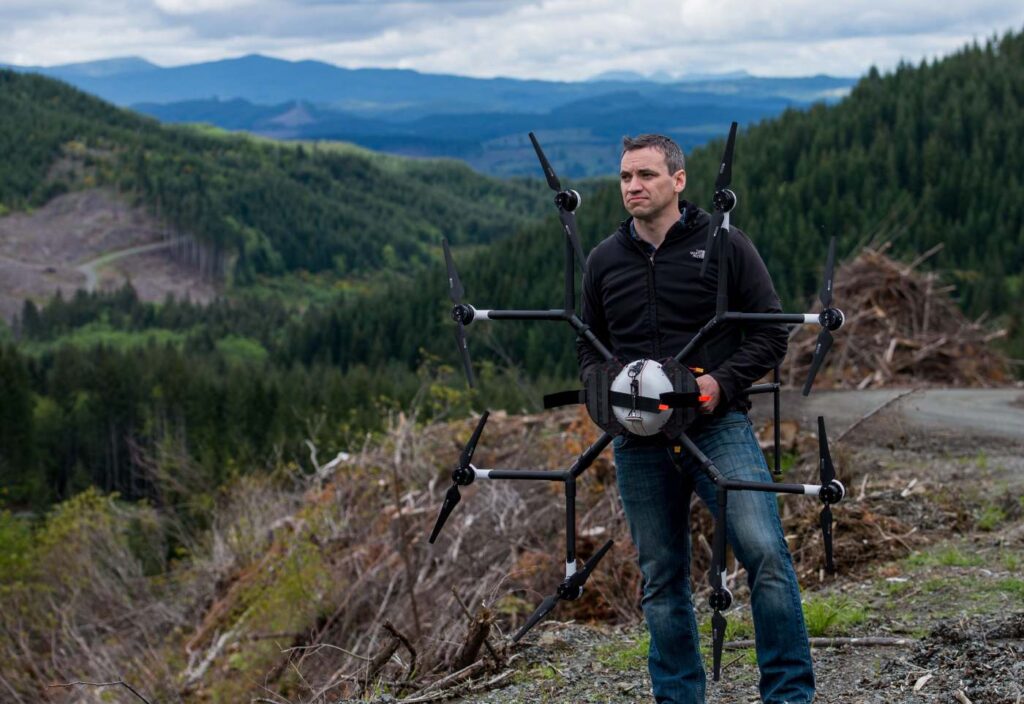
DroneSeed will fly a squadron of seed-dispersing aerial robots to lay the foundations for a new forest atop ones that have been torched.

Carrying 57 pounds of tree seeds, the drones weigh over 100 pounds in total, and operate in teams of five using satellite-guided software to identify hundreds of “microsites”—areas where trees will be expected to grow the best.

Holders of the only Federal Aviation Administration license for operating “heavy lift drone swarms,” DroneSeed can seed the ground 6x faster than hand-planting seedlings can—covering around 40 acres per day at a cost of around $275 to $400 per acre.

This may seem like a lot, but as well as saving a huge amount of time—a lot of the cost can be offset with discounts offered by DroneSeed if they can successfully offer the land’s reforestation as carbon credits on the global carbon market. This can help make the cost of planting seedlings 60-70% less than traditional reforesting.

DroneSeed

“We are always looking for ways to innovate, especially when it can help us increase the pace and scale of habitat restoration to benefit both nature and people,” says Jay Kerby, Project Manager at The Nature Conservancy, which was able to contract DroneSeed for Oregon state reforestation after a recent fundraising event.

MORE: Wombats Hailed as Heroes for Digging Down Under, Revealing Water Well During Drought

Right now the company is in beta-testing for their software, but the team feels it’s a game changer that can be used to totally update the playbook for how to combat global climate emissions.

“Across the world there’s been a lot of slash and burn agriculture, so how do you go out and replant those in a cost effective way? And that’s where our technology comes in,” says Grant Canary, CEO of DroneSeed.

An obvious implication is restoration after wildfires on public land, for which DroneSeed would save a lot of taxpayer dollars if contracted. But not all American forests are owned by the government, and for a private owner DroneSeed could be a real help.

CHECK OUT: This Non-Profit is Hard at Work Designing New Forests to Cure California’s Wildfire Curse

For those to whom forests act as a livelihood as sources of lumber, honey, resin, mushrooms, or other agroforestry products, there’s every chance that their business is over if a wildfire moves across their land. But the sheer amount of labor, time, and costs saved by DroneSeed’s technology gives a chance for not only their forests to regrow, but their lives too.

(WATCH the Mashable video about DroneSeed below.)

PLANT Good News in Your Friends—Share This Story With Them…

This High Schooler Invented Color-Changing Sutures to Detect Infection

Society for Science

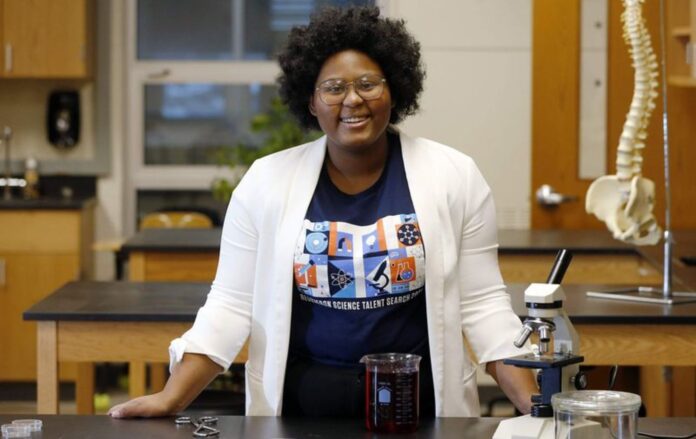
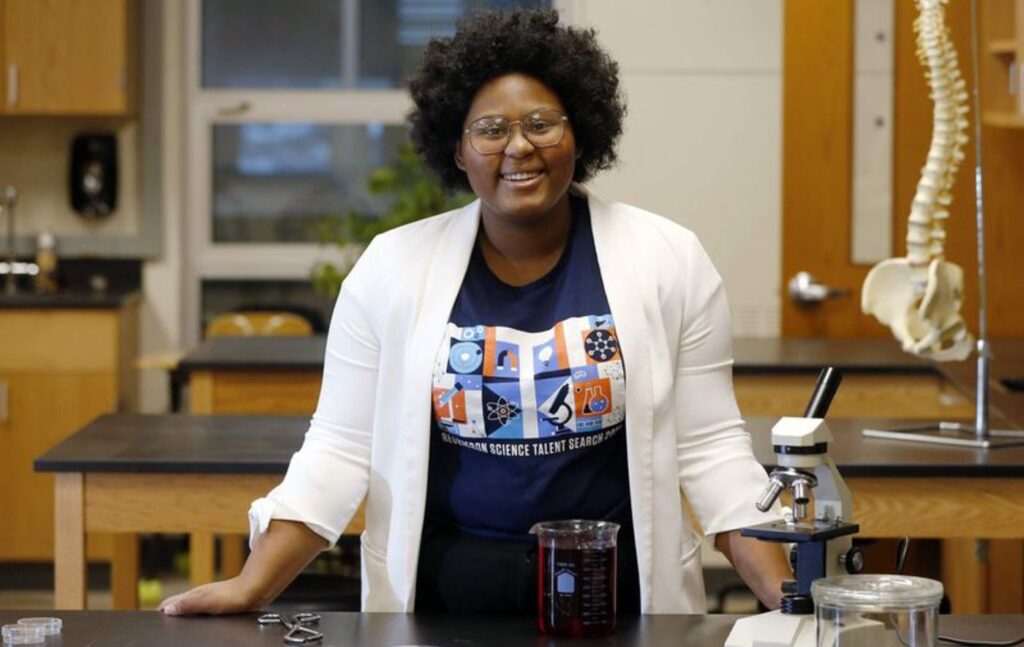
In the country’s oldest science fair, 17-year old high schooler Dasia Taylor submitted a surgical suture that changes colors to warn of possible infections.

Society for Science

This invention, aimed at helping surgery patients in Africa detect infections before they become serious, elevated Dasia into the 40 finalists of the national Regeneron Science Talent Search. 

The sutures are the perfect solution to a problem which Smithsonian Magazine summarizes—where not only are post-surgical infection rates typically higher in Africa, but expensive, smartphone-based infection early warning systems aren’t practical in many African countries where basic cell phones are widely used, but not smartphones.

Beginning her project back in 2019 in her chemistry class at Iowa City West High School, the process from theory to practice ended up winning Dasia several regional science fair prizes.

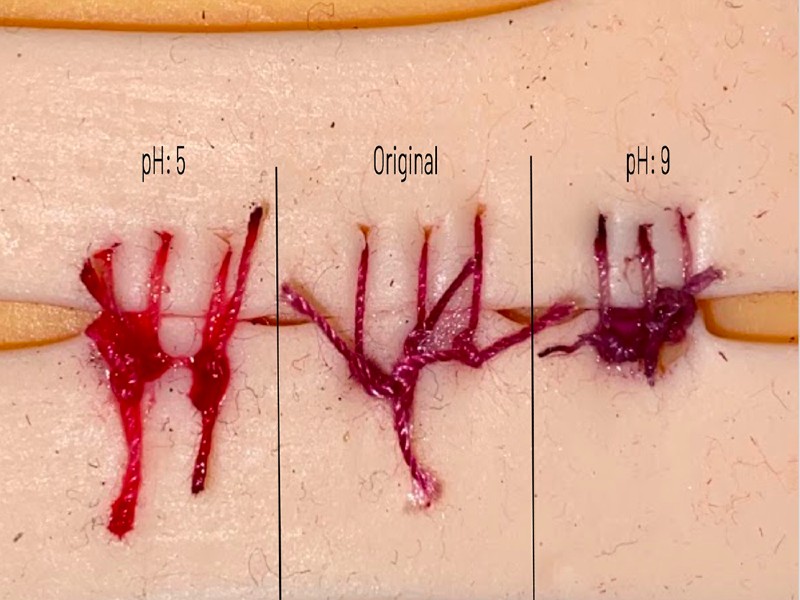
Her method uses beetroot, famous as any cook knows for turning everything red and purple. The pH of our skin is acidic and averages at 5, while an infected wound raises that pH to a level of 9, and as it turns out beets change color from candy apple red to deep purple as the pH level of its environment grows.

“I found that beets changed color at the perfect pH point,” Taylor tells Smithsonian. “That’s perfect for an infected wound. And so, I was like, ‘Oh, okay. So beets is where it’s at.’”

MORE: New Mexico Girl Wins $250,000 Top Prize in Teen Science Fair For Inventing Tool That Could Prevent Starvation in Africa

After concluding beets were where it’s at, the next step was to find which material held the dye from the beet juice in while also fulfilling the natural requirements of suture thread. A cotton-polyester blend eventually proved to be the ticket.

Suture thread turning from red to purple after 5 minutes under an infection-like pH/Society for Science

After five minutes of infection, the red suture began to turn purple, suggesting patients would be aware of infection immediately, perhaps even before being discharged from a hospital.

While outside of the top ten, Dasia’s sutures won her $25,000, as well as the Seaborg Award, given by the 40 finalists to whichever student most embodies the spirit of their class. Taylor was also given the honor of speaking on behalf of the Regeneron Science Talent Search Class of 2021.

“I have so much school pride because when somebody in our school does something great, they’re celebrated to its fullest extent,” says Taylor. “And being able to be one of those kids has been so amazing.”

CHECK OUT:  Teen from Wildfire-Hit Town Wins $250k Scholarship for Awesome Explanation of Quantum Tunneling

Curiously enough, Taylor sees her fortunes elsewhere, and wants to study political science at Howard University, before becoming a lawyer when her time at high school comes to an end.

(MEET Dasia and learn about her project in the video below.)

Editor’s Note: this story has been altered to better reflect the characteristics of pH.

SHARE News of This Inspiring Teen With Friends on Social Media… 

Scientist Thinks He Finally Knows Why People Hear Sounds Coming From the Northern Lights

Emily Hon
Emily Hon

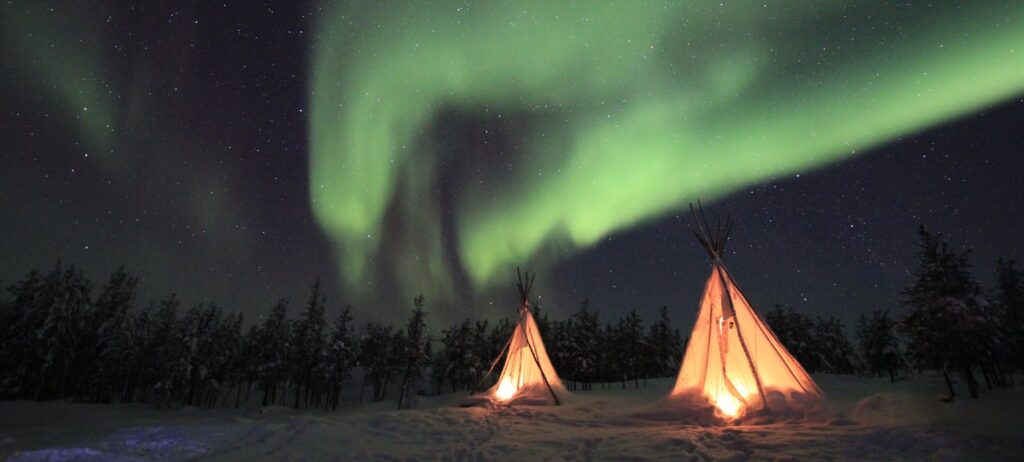
Epitomizing the old adage of “where there’s smoke, there’s fire,” a group of volunteers and scientists in Finland have set out to prove or disprove that the aurora borealis, or northern lights, make sounds.

For hundreds of years reports of sizzling, cracking, or whooshing sounds abound, especially from Indigenous people living in the Arctic, but also from non-Indigenous people living in Canada, Finland, and other northern countries.

A belief among some groups of Canadian First Nations is that the aurora consists of the spirits of their ancestors, and the noise is their singing.

However, very little science exists which would suggest that the solar radiation moving in the magnetosphere is capable of producing anything more than visuals of famous green, pink, and purple lights.

MORE: Jaw-Dropping Footage of Northern Lights Pulsing Across Entire Canadian Sky–With Southern Lights, Too

But just as there’s a line of reasoning among people who look for species presumed extinct that if so many people are reporting sightings, there must be something there, one scientist figures that for years people have described sounds coming from the aurora, so it’s at least worth exploring the possibility.

Auroral Acoustics

Robert Snache, CC license

A professor in acoustics at Finland’s Aalto University, Unto Laine, who himself heard slight sounds while watching the northern lights in remote Lapland, looked at the mountain of anecdotal reports and sought to construct a hypothesis that might explain them.

He came up with the idea in 2016 that the sounds were electrical discharges resulting from a “temperature inversion,” which happens when cool air, rather than floating above the earth, clings to the ground, and when warm air which normally radiates near the level of dirt, rises to cover the cold air at altitudes around 60-400 meters—a reversal of their normal positions.

When this warm air rises, it carries negatively charged electrons with it to the bottom of the inversion. The field of static electrical potential expands up towards the sky and down towards the earth, and as the northern lights bombard the magnetosphere with positively charged electrons, they coalesce at the top of the inversion.

RELATED: See the Stunning Winners of the Northern Lights Photographer of the Year Competition

“I tested it with two hours of material I recorded in Fiskars in 2013,” Laine wrote in his university press. “The model fitted the hypothesis beautifully and at the same time gave the height of the inversion layer more precisely at 78–80 meters.”

This would at least explain why the sounds are described as “sizzling” by one First Nations photographer, and of “bubbles popping” by Laine himself, as well as why plenty of people never hear anything when standing under the aurora—since if there were no temperature inversion the electrical conditions would be absent.

The data was gathered by Laine over nearly two decades with a setup of three microphones recorded over certain periods, but now his research has inspired a new citizen science project at the Hankasalmi Observatory in Jyväskylä, Finland that will record potential aurora sounds 24 hours a day with four microphones.

The project was funded by 200 separate donors, as well as a science grant from the EU.

“We are trying to hear the same sound with three or four microphones located a few meters apart,” said Arto Oksanen, the observatory’s president. “By measuring the time delay in each recording, it is possible to calculate the three-dimensional position of the sound source—or at least the direction to the sound source.”

CHECK OUT: Star-Gazer Reveals Stunning Pictures of Space He Takes From His Back Garden

This would allow researchers to place a distance on the genesis of the sound, and to a large part would help prove or disprove Laine’s theory. We’ll be sure to keep you updated on the eventual findings of this intriguing project.

(LISTEN for claps in the northern lights video below.)

SHARE This Story With Other Aurora Fans on Social Media…

“There is immense power when a group of people with similar interests gets together to work toward the same goals.” – Idowu Koyenikan

Quote of the Day: “There is immense power when a group of people with similar interests gets together to work toward the same goals.” – Idowu Koyenikan

Photo by: Carl Jorgensen

With a new inspirational quote every day, atop the perfect photo—collected and archived on our Quote of the Day page—why not bookmark GNN.org for a daily uplift?


Startup’s New Method to Recycle CO2 into Protein-Rich Animal Feed Gets $9 Million in Funding

Deep Branch
Deep Branch

An agriculture feed startup has received $9.4 million in initial funding for its technology that produces pure protein from CO2.

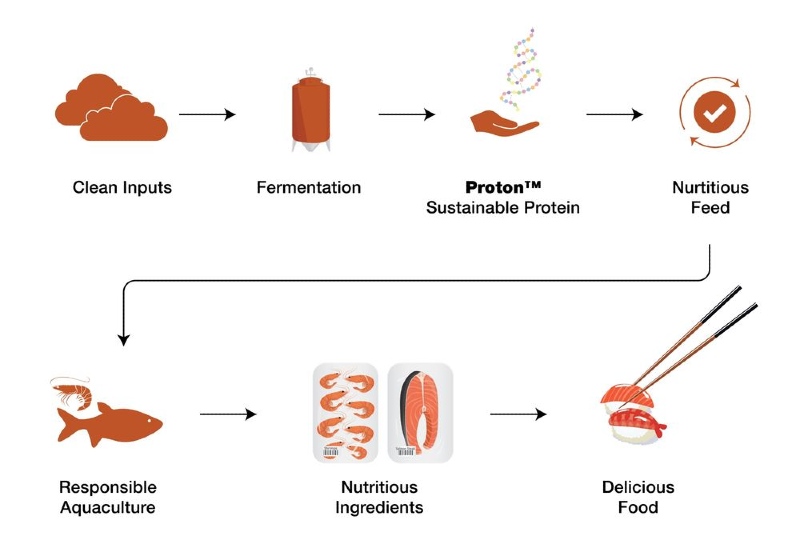
The protein would come from carbon dioxide generated by industrial exhaust, and would be combined with hydrogen to create scalable, cheap animal feed to replace soybeans—a major feed crop linked heavily with deforestation.

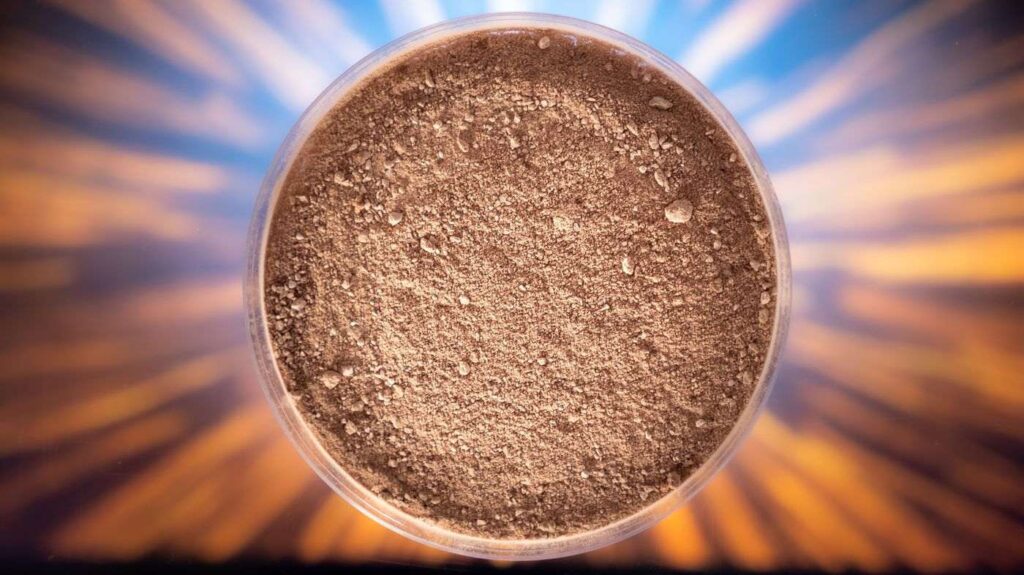
Deep Branch combines some of the most basic chemical building blocks, present in everything from stars to skyscrapers—like carbon, oxygen, and hydrogen—inside a fermentation chamber where it produces high-value protein called “Proton.”

This Proton is then dried, mixed with other nutrients, and turned into pellets at a 90% CO2 savings rate compared to other feed sources.

Attracting support from the biggest feed producers in Europe, as well as carbon-control/sustainable investment funds from financial institutions like Barclays, a Series-A funding round has now been completed with multiple long-term investment commitments.

Deep Branch

James Ferrier, an investment director at Barclays, said in a statement that “Deep Branch’s technology has the potential to be part of the solution to overcome the biggest environmental challenges of our time.”

Unlike fishmeal or soy, there is no fluctuation in price or yield caused by seasonality, food security, or reliance on favorable weather conditions.

The resulting stable prices and reliable manufacturing means that every link in the supply chain can calculate costs with much more precision.

MORE: Inspired by Marvel’s Mythical ‘Wakanda’, Ugandan Village is Built on Shea Butter and Solar Power

Deep Branch, which operates in the UK and Netherlands, is currently looking for a suitable location for its first large-scale production facility.

Their hope is that the product will cut into the market share of soybeans, but also fishmeal produced normally from wild-caught salmon leftovers—another source of protein for animal feed. Their first scouted location is in Norway, the world’s largest exporter of salmon.

RELATED: This Brilliant Low-Income Housing in Colombia is Made From Coffee Waste

Deep Branch is looking to begin commercially trialing their feed with hatchery salmon and chickens next year, with the only remaining major production hurdle being where to find sources of the other vitamins and minerals needed for healthy animal growth.

SHARE This Story of Real Innovation With Friends…

See Couple Adorably Recreate Their Wedding Album 50 Years Later, at the Same Church in the Same Dress

SWNS
SWNS

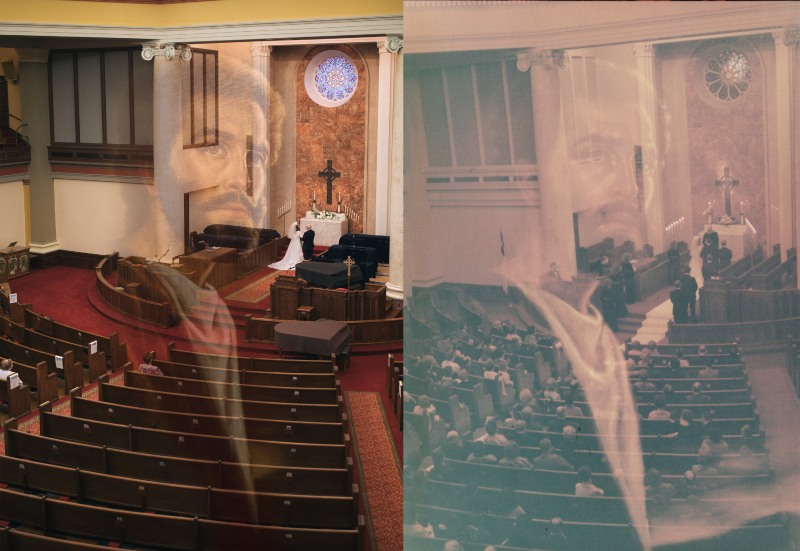
A couple have recreated their wedding album half a century later—at the same church, and in the very same dress.

Carolyn and Kelly Gay, who are now in their seventies, got married in March 1971 with a white wedding at their local church.

To celebrate their golden anniversary, the couple returned to DSM First Church in Des Moines, Iowa, to recreate their pictures—exactly 50 years later to the day.

The church had the same alter, cross, and candelabras as was present at their first ceremony so many years before, so the photos were a perfect match.

SWNS

Grandmother-of-four Carolyn spent three years growing out her hair for the shoot and was even able to wear the same dress she wore in her twenties.

SWNS

The new photos were taken by Sam Hoyle from Two Hoyles Photography—who even managed to edit in Carolyn’s late father Rolland Swalking her down the aisle.

Carolyn said, “It took about an hour to an hour-and-a-half to take the new pictures and it was just a fun time. They’ve had the church painted a couple of times since, but not long ago they scraped it back and have taken it back to the original colour… it’s amazing.”

MORE: Flood Waters Couldn’t Stop This Australian Miracle Wedding From Happening

As part of the shoot, Carolyn and Kelly dug out receipts from the original big day and rediscovered the entire thing—including honeymoon and feeding nearly 200 guests—came to around $340.

Carolyn’s dress cost $46.35, with an extra $8.24 for alterations, while catering for 193 guests totaled $63.82.

Flowers, the biggest expense, came to $131.84, while their four-night honeymoon to New Orleans came in at $91.20, with $0.36 for gas.

RELATED: Cancer Ward Sets Up Dream Wedding For Patient in 3 Days: ‘We’ll totally figure it out for you’

But why go to all the trouble of recreating their wedding after all these years? Carolyn says, “I have one wedding picture I really, really loved when they took it from in the balcony overlooking all the people that came, and you can see a picture of Jesus overlooking the wedding.

SWNS

“I wanted so badly to recreate that picture in particular.

The overlaid image took weeks to produce after the wedding, because it was a novel photography technique, but this time the photographer “whipped it out in no time.”

CHECK OUT: They Canceled Their Big Wedding But Took a $5k Catering Deposit And Served Thanksgiving Meals To The Needy

Carolyn hasn’t made plans for the 60th anniversary because, after all, “we’ve got to get there first”.

SAY ‘I DO’ to This Story—Share On Social Media…

Scott Kolbrenner Won $145,000 on ‘Wheel of Fortune.’ Now He’s Giving It All to Charity

Wheel of Fortune

Wheel of Fortune players have been buying vowels and filling in the blanks on “America’s game” since 1975. With stakes determined by the luck of the spin combined with contestants’ puzzle-solving prowess, it’s a formula that ensures pretty much anything can happen—including one winner who recently gave away his entire $145,000 prize earnings to charity.

Wheel of Fortune

That’s just what Encino, California resident Scott Kolbrenner did on the Wheel episode that aired March 18, 2021—and it was what he’d planned to do all along should he win.

“When I went on the show, I was doing it for the fun of it,” he told Good Morning America. “I said to my wife… ‘…Anything that I get, let’s give it to charity. We’re very fortunate. Let’s see if we can support some others who aren’t as fortunate as we are.”

The luck of the wheel was with Kolbrenner throughout the entire show. After scoring a $3,500 wedge, he landed next on the Express Wedge, which he parlayed into another winning answer.

Kolbrenner kept the momentum building, finishing the game with a total of $45,000 to ace out the other contestants. Along with the show’s pre-set letters, R, L, S, T, N, and E, Kolbrenner chose P, H, G, and O for his chance at solving the grand-prize puzzle in the category “What Are You Wearing?”

Once Vanna White was finished turning tiles, all only six letters remained hidden. The 10-second clock had barely begun ticking when Kolbrenner correctly guessed: “Flowing white gown.”

Pat Sajack revealed the bonus amount—$100,000. With winnings totaling $145,000, Kolbrenner became the fifth-biggest winner in Wheel’s 46-year history.

MORE: Oklahoma Goodwill Employee Finds $42,000 Hidden in Donated Clothing –And Her Integrity Pays Off

Kolbrenner split the booty between two local charities with which he’s long been affiliated: Uplift Family Services, a comprehensive behavioral health treatment provider (of which he is a board member), and Los Angeles Regional Food Bank, whose outreach supports thousands of California families facing food insecurity.

“While I hoped I would do okay, I never thought that anything like this could happen,” Kolbrenner told Yahoo News, “I got lucky that day and knew right away that I wanted to share my good fortune. The fun and memories from the day will stay with me forever, but the urgent need in our community cannot wait.”

In a statement from Uplift Family Services, Kolbrenner revealed that “his ‘good fortune’ came long before he ever spun the Wheel, having grown up an intact, secure family where he never had to worry about his next meal or for his safety.” He credits his grandfather with instilling the values of “charity and civic duty as a critical part of life.”

RELATED: Elon Musk’s Brother Starts ‘Million Garden Movement’ to Plant a Garden For Every Household Living in a Food Desert

We’ll bet you don’t need to buy a “U” to know that makes Scott Kolbrenner, a TR_E H_MANITARIAN.

SHARE the Generosity—Send This Story to Your Buddies…

North Carolina-based writer Judy Cole has a new rom-com murder mystery debuting on Amazon: And Jilly Came Tumbling After (from Red Sky Presents).
A Team of Maverick Engineers Want to Roll the Geological Clock Back on Sinai and Replace Desert with Lush Greenery

Sinai Desert/Florian Prischl, CC license

A pioneering Dutch land engineer wants to turn the Sinai Desert into the Sinai Forest, using techniques demonstrated on a mass scale in China.

Theorizing that since it’s been confirmed that even primitive human activity can  permanently degrade a landscape, with effort it should be perfectly plausible to return a landscape to a greener, more watered state too.

Green Gold, a documentary covering the transformation of the dry, arid deserts of the Loess Plateau in China into green productive farmland, has Dutch morphologist and former dredger—whose CV includes work on Dubai’s artificial islands—thinking he might do the same in the Biblical land of Sinai, where Egypt meets Asia.

While working as a dredging specialist, Ties Van der Hoeven, founder of The Weather Makers Holistic Engineering, was contacted by Egyptian colleagues who asked him if it were possible to try and dredge Lake Bardawil in the Sinai Peninsula back to a normal state. Where once the waters reached down 20-40 meters, the lake had become so filled with sediment as to be not much deeper than a community diving pool.

In surveying for the project, Van der Hoeven came to realize the bottom of the lake was essentially acting as a sewer for the entire peninsula’s soil runoff for thousands of years. This runoff is evidence of an emerging scientific theory that Sinai, and in fact all of North Africa, was green at one point, with Van der Hoeven discovering ancient monastery records that tally timber exports, and cave paintings of trees and grass.

While the unique relationship of the region to solar weather patterns already means that the Sahara needs no unique reason for why it became the world’s largest hot desert,  ancient human shepherds across North Africa could have disrupted the delicate plant cover which was critical for keeping the soil alive and the landscape watered, “desertifying” the area much faster.

One of Van der Hoeven’s colleagues is Professor Millán, a 79-year-old Spanish meteorologist whose life’s work has been investigating the change in weather patterns off the Iberian coast and their relationship to the loss of wetlands.

MORE: Nothing Restores a River or Local Economy Like Removing a Dam

Millán, and in fact the director of Green Gold—with whom Van der Hoeven also collaborates—both arrived independently at the same conclusion about the impact of humans’ tinkering of the landscape. Essentially, if one chops down trees and degrades the ecosystem, rains will eventually disappear, since vegetation is necessary for holding water in the land, and returning it to the sky.

“Water begets water, soil is the womb, vegetation is the midwife,” goes Millán’s simple maxim, according to The Guardian.

Rain in the desert

So with the Sinai, Van der Hoeven aims to start with restoring the cycle of water. After the lake, he wants to work to return the surrounding area to wetlands to ensure the landscape can retain at least some water.

Next they want to take to the heights, 700 meters (2,100 feet) above sea level, where fog catchers can be employed to collect the moisture condensing at high altitudes.

RELATED: 12 Countries Have Built Roads Out of Plastic – And They Can Perform As Well or Better Than Asphalt

Next, using the billions of tons of lake sediment from Bardawil, terraces can be constructed for agriculture where steep hills and valleys prevent it. The sediment also contains a huge amount of organic material and can be used, in certain cases, to re-fertilize desolate earth as long as whatever is going to grow is tolerant of salt.

Then a unique kind of technology—a large drum of water turned into a sort of “vivarium,” would be deployed to the Sinai ecosystem under cover of greenhouses. Containing what looks like a pond, they would also use the sediment from the lake, while growing plants around them as the water component slowly evaporates, leaving the salt behind—dripping down into the sand for days and days.

After a while, the drums can be moved to a new location after the area becomes a stable growing environment. The process of greening would allow more localized moisture to enter the atmosphere, resulting in more rain for the region.

CHECK OUT: Spanish City is Squeezing Green Electricity From Leftover Oranges

“If vegetation comes back, you increase cover, you reduce temperature, you reduce solar reflection, you start creating a stable climate,” Van der Hoeven tells the Guardian. “If we want to do something about global warming, we have to do something about deserts.”

Deserts act like the color white in summer—they reflect heat, unfortunately right back into the atmosphere. Areas covered in vegetation use that heat to evaporate water and create clouds and rain.

The unique geological placement of the peninsula means it acts as a rain funnel, channeling moist air from the Mediterranean out to the Indian Ocean. A wetter, greener Sinai would instead absorb and trap some of that moisture, dispensing it in the form of rain across the Middle East and Africa.

READ: Formerly Vacant Lot in Milan Wins ‘Reinventing Cities’ Contest With Vineyard Atop Building With Public Sidewalk

Not only bringing boon to the farmers of the ancient and holy peninsula of Sinai, The Weather Makers are looking to improve the prospects of the entire region.

SHARE Bright Ideas With Others—Send This Story to Pals…

Boys Who Play Video Games Linked With Lower Depression Risk, UK Shows Study

By ulricaloeb, CC license on Flickr

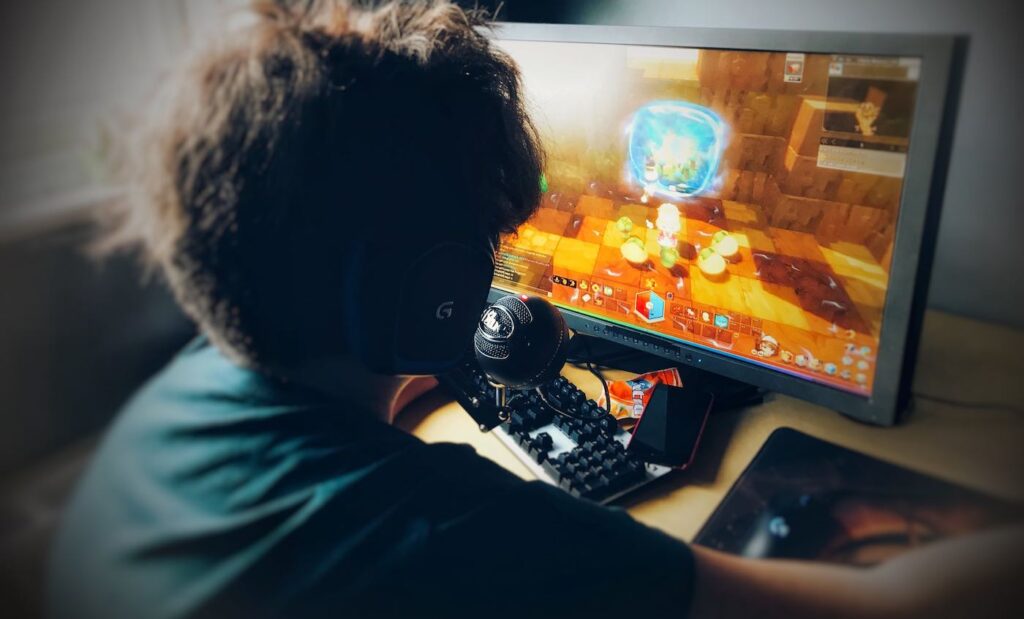
Boys who regularly played video games at age 11 were less likely to develop depressive symptoms three years later, finds a new study led by a University College London researcher.

By ulricaloeb, CC license on Flickr

The findings published in Psychological Medicine demonstrated that boys who played video games most days had 24% fewer depressive symptoms three years later, than boys who played video games less than once a month.

This effect was only significant among boys with low physical activity levels, so researchers assert this might suggest that less active boys could derive more enjoyment and social interaction from video games.

While their study cannot confirm if the relationship is causal, the researchers say there are some positive aspects of video games which could support mental health, such as problem-solving, and social, cooperative and engaging elements.

“While we cannot confirm whether playing video games actually improves mental health, it didn’t appear harmful in our study and may have some benefits,” said lead author, PhD student Aaron Kandola. “Particularly during the pandemic, video games have been an important social platform for young people.”

SEE ALSO: Study During Lockdown Shows Video Gaming–Even For Hours–Can Help Your Mental Health

“Screens allow us to engage in a wide range of activities. Guidelines and recommendations about screen time should be based on our understanding of how these different activities might influence mental health and whether that influence is meaningful,”

Kandola previously led studies finding that sedentary behavior (sitting still) appeared to increase the risk of depression and anxiety in adolescents.

To gain more insight into what drives that relationship, he and colleagues chose to investigate screen time as it is responsible for much of sedentary behavior in adolescents. Other studies have found mixed results, and many did not differentiate between different types of screen time, compare between genders, or follow such a large group of young people over multiple years.

The research team from UCL, Karolinska Institutet in Sweden, and the Baker Heart and Diabetes Institute in Australia, reviewed data from 11,341 adolescents who are part of the Millennium Cohort Study, a nationally representative sample of young people who have been involved in research since they were born in the UK in 2000–2002.

POPULAR: Next Time You’re Feeling Particularly Stressed or Anxious, This Study Says You Should Play Tetris

The study participants had all answered questions about their time spent on social media, playing video games, or using the internet, at age 11, and also answered questions about depressive symptoms, such as low mood, loss of pleasure and poor concentration, at age 14. The clinical questionnaire measures depressive symptoms and their severity on a spectrum, rather than providing a clinical diagnosis.

In the analysis, the research team accounted for other factors that might have explained the results, such as socioeconomic status, physical activity levels, reports of bullying, and prior emotional symptoms.

RELATED: Taking Up Hobbies Can Prevent—Or Reduce Symptoms of—Depression by One-Third

There may also be other explanations for the link between video games and depression, such as differences in social contact or parenting styles, which the researchers did not have data for.

“We need to reduce how much time children – and adults – spend sitting down, for their physical and mental health, but that doesn’t mean that screen use is inherently harmful.” adds Kandola.

Senior author Dr Mats Hallgren from Karolinska has conducted other studies in adults finding that mentally-active types of screen time, such as playing video games or working at a computer, might not affect depression risk in the way that more passive forms of screen time, like looking at social media, appear to do.

“The relationship between screen time and mental health is complex, and we still need more research to help understand it,” said Hallgren.

CHECK OUT: Johns Hopkins is Offering Free Online Course in Psychological First Aid

But, any initiatives to reduce young people’s screen time should be “targeted and nuanced,” he said. “Our research points to possible benefits of screen time; however, we should still encourage young people to be physically active and to break up extended periods of sitting with light physical activity.”

(SOURCE: University College London)

LEVEL UP Your Friends’ Knowledge By Sharing This on Social Media…

“It does not astonish or make us angry that it takes a whole year to bring into the house 3 great white peonies…” – May Sarton

Quote of the Day: “It does not astonish or make us angry that it takes a whole year to bring into the house 3 great white peonies.” – May Sarton

Photo: copyright GWC

With a new inspirational quote every day, atop the perfect photo—collected and archived on our Quote of the Day page—why not bookmark GNN.org for a daily uplift?


Top 20 Things We Want to Do on a Post-Covid Vacation – And Airline Change Fees Are Crucial

Peter Conlan

Lounging on the beach may have been the No.1 destination in the past, but after a year of much sitting around, it is set to play second fiddle for more active adventures.

Peter Conlan

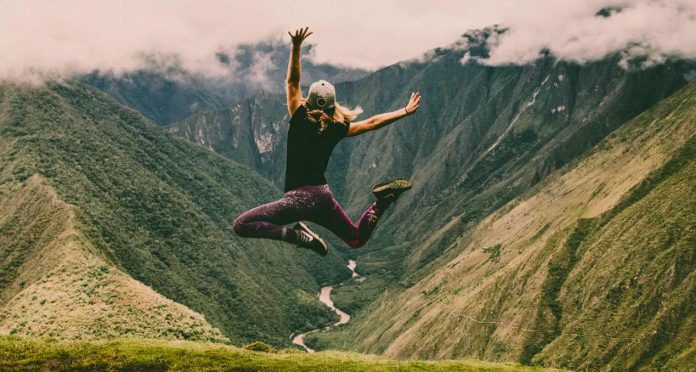
A survey of 2,000 adults revealed 67 percent have spent too much of the past 12 months laying around doing nothing—as a result, if they’re given the chance to get away, more than a third want to avoid sunbathing and do something more adventurous instead.

Almost one third (32 percent) would like to see the Northern Lights, but the most popular holiday activity longed-for this year is exploring the countryside on a walking adventure.

More than half (56 percent) want to go somewhere on holiday where they can take photographs of stunning scenery, or would like to visit a new country. 29 percent of respondents have already drawn up a list of locations to visit while in lockdown, dreaming of the future.

The poll, by Icelandair, found that 37 percent of those surveyed have booked a trip already.

Most people, though, are still worried about booking airline tickets in case they need to cancel—something just 27 percent were ever worried about prior to Covid.

The ability to postpone a holiday without charge is now more important than the hotel, food, drink or attractions at the destination.

LOOK: Stunning ‘Bubble Hotel’ Under the Icelandic Stars is Truly the Perfect ‘Socially Distancing’ Destination

Being able to get a refund is as important as the weather, while being able to postpone without charge is now four times more important than it was before the pandemic.

Almost three quarters (72 percent) also said they will not book a holiday this year if there is a possibility that they can’t cancel it or postpone it without being charged.

“If you need to change your booking, we’re flexible,” said Bogi Nils, CEO of Icelandair. “You can switch the date of your travel without any additional change fees on top of fare differences, or you can cancel and receive a voucher valid for three years.

Most major US airlines have policies in place that will waive change fees for any new travel booked by March 30-31, 2021, including American, Delta, Frontier, Jet Blue, and United—and through April if you book with Air Canada or WestJet.

Overall, six in 10 of those polled by OnePoll admitted they didn’t fully appreciate how important it was to get away until the Covid outbreak curtailed freedoms last year.

RELATED: Good News on Epic Bike Trail Stretching Coast to Coast Across USA, as Cycling Popularity Soars During Pandemic

And more than two-thirds (69 percent) say the last twelve months have made them want to experience more in life.

THE TOP THINGS PEOPLE WANT TO DO ON A HOLIDAY POST-COVID
1. Walking in the countryside
2. Visit castles and other historic buildings
3. Beach lounging
4. See the Northern Lights
5. Swimming pool lounging
6. Boat trip
7. Visit museums
8. Whale watching
9. Visit a rainforest
10. Visit a theme park
11. Safari /exotic animal spotting
12. See a volcano
13. Climb a mountain
14. Watch a geyser erupt
15. Cycling
16. Zip wire
17. Rafting / Kayaking
18. Visit a desert
19. Cave exploration
20. Off-road driving

CHECK OUT: These 6 Cities and This State Will Pay You to Move There

DISCUSS Vacation Plans With Friends By Sharing This on Social Media…

Software Exec Walks 12 Miles Every Day in D.C. to Pick Up Trash During Pandemic

Caroline Miller

Billy Adams has found a lockdown ritual that not only benefits his health, but the mental health and beauty surrounding others in his beloved Washington, DC.

Billy Adams on his morning walk – Caroline Miller

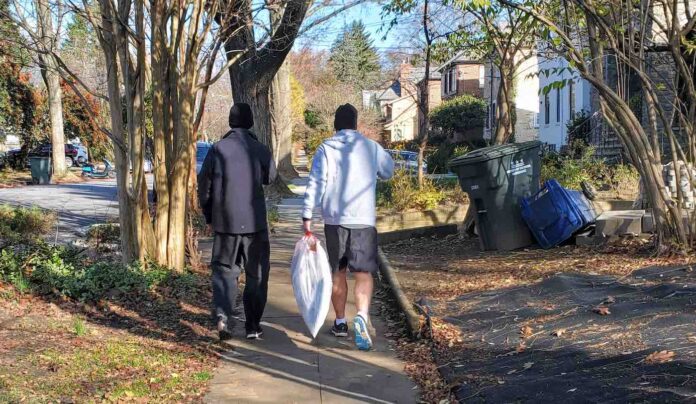
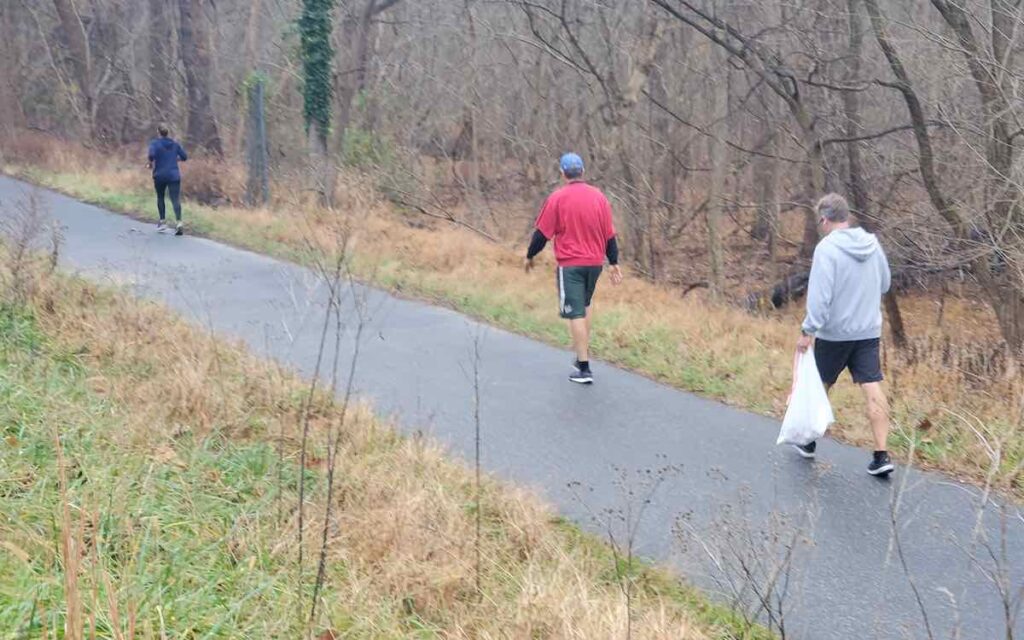
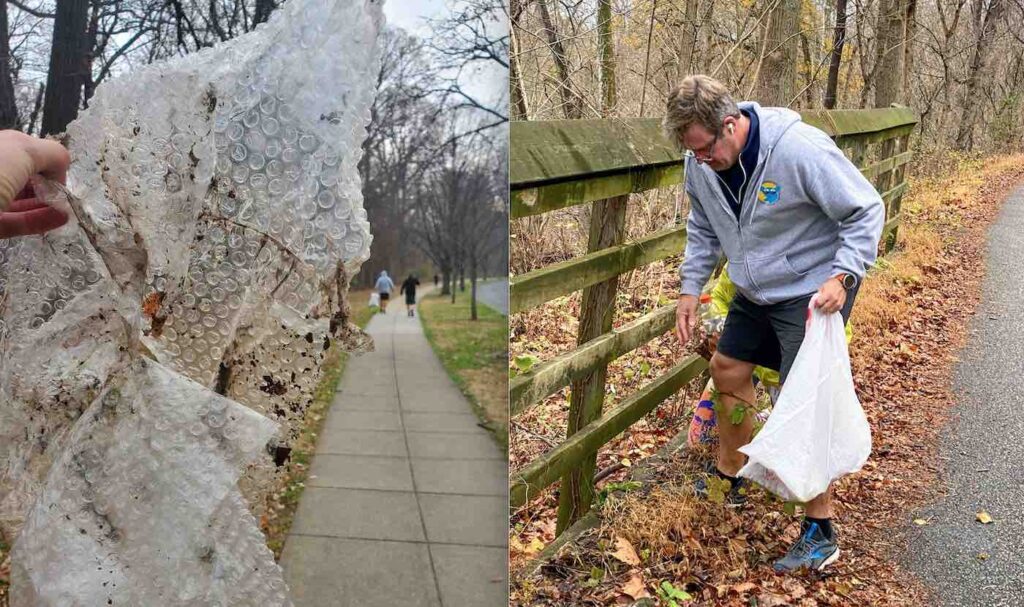
Since June the software executive has been selecting a different 12-mile route every day, picking up just about any piece of garbage on it—in rain, snow, or sleet.

He even gets an empty bag from Starbucks at the half-way mark near Canal Road in Georgetown to continue his clean-up, depositing full bags of litter in public trash cans.

He sets off from his Maryland home just over the D.C. line at 8:30am and uses his hands to pick up the trash for three hours.

Adams told the Washington Post that the habit has been immensely satisfying. “When you see it beforehand, then you walk by it after and it’s all clean, that’s a good feeling.”

Employees at the M Street Starbucks call the 54-year-old “garbage guy,” and they often have a bag ready for him when he stops in to buy a coffee, always leaving a generous tip.

Store manager Ahmed Oukchir told the Post that because of Billy he also has become inspired to be more conscious of litter.

Caroline Miller on a walk with her brother

Billy’s sister Caroline Miller has gone on the walks her husband and says it has had a “contagious impact” on her, too.

“Billy is somebody who likes to do the right thing,” she told the Post. “If he sees trash on the ground, he can’t just walk past it.”

POPULAR: Volunteers Remove 9,200-lbs of Trash From One of the Dirtiest Rivers in the US

Caroline, who was named a GNN Good News Ambassador in 2012, grew up with her brother in Bethesda, Maryland, adjacent to DC, and have deep roots here.

“It is especially important to our family because our great-great-great-grandfather was Jacob Karr, who owned the most popular watch store, within walking distance from the White House,” she told GNN. “Abraham Lincoln and all of the US presidents, from then until he retired in the early 1900s, were friendly with him and he tended to their watches.”

Caroline Miller

“Since D.C. is in his blood, I think it’s even more important to my brother that he lend a hand to beautifying the city.”

Although it is a one-man mission, Billy is thinking about organizing a weekend clean-up for Earth Day in April, so he can try to get others hooked on doing good—and feeling good, at the same time.

LOOK: When Man Got Sick of Trash and Crime, He Bought Buddha Statue for the Street—and Transformed the Neighborhood

CLEAN UP Your Social Media Feed By Sharing the Inspiration Ahead of Earth Day…

Federal Judge Blocks Further Oil And Gas Extraction on Ohio’s Only National Forest

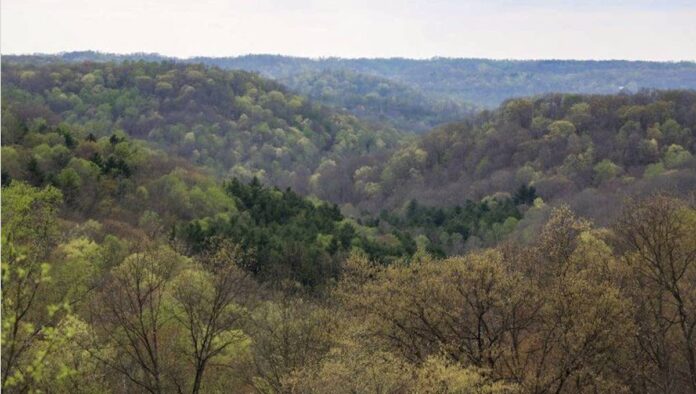
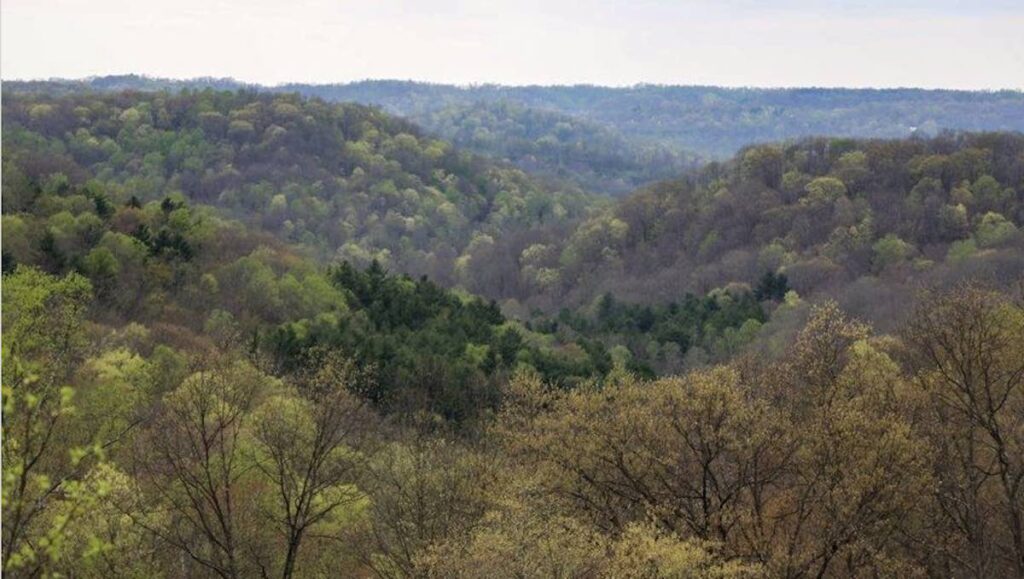
Wayne National Forest Ohio – Credit: Taylor McKinnon / Center for Biological Diversity

A federal judge blocked new oil and gas leasing and fracking in Ohio’s Wayne National Forest, a popular destination for outdoor recreation and the only National Forest located in the vast state.

Wayne National Forest Ohio – Credit: Taylor McKinnon / Center for Biological Diversityfos

The ruling rebuked the U.S. Forest Service and Bureau of Land Management (BLM) for failing to consider threats to public health, endangered species, and watersheds before opening more than 40,000 acres of the forest to fracking last year.

Pending completion of new environmental reviews, the March 9 order blocks new leases, prohibits new drilling permits and surface disturbance on existing leases, and prohibits water withdrawals from the Little Muskingum River for already-approved drilling.

“This is great news for the future of Ohio’s only national forest,” said Taylor McKinnon, a senior campaigner at the Center for Biological Diversity. “We’re grateful the judge recognized the damage fracking could do to this spectacular forest. The order will protect our climate, endangered wildlife and drinking water for millions of people.”

POPULAR: Island Overrun With Rats Completely Recovers in Only 11 Years After Ecosystem Had Been Decimated

U.S. District Judge Michael Watson said the Forest Service and Bureau of Land Management had “demonstrated a disregard for the different types of impacts caused by fracking in the Forest. The agencies made decisions premised on a faulty foundation.”

“This is a victory for public health (and) outdoor recreation,” said Nathan Johnson, public lands director for the Ohio Environmental Council. “The Wayne is a public forest that we all own. Keeping its air and water clean, as well as its views intact, is a win that we can all celebrate.”

RELATED: First Farmer in the US to Sequester Carbon for Cash in Private Marketplace Earns $115,000 For His Planting Strategy

In May 2017 conservation groups sued the agencies over plans to permit fracking in the Wayne, saying federal officials had relied on an outdated plan and ignored significant environmental threats before approving the fracking.

The BLM’s leasing plan would industrialize Ohio’s only national forest through road-building, well pads and gas lines, the lawsuit said. This would destroy Indiana bat habitat, pollute watersheds and water supplies that support millions of people, and endanger other federally protected species in the area.

The Wayne National Forest is a patchwork of public land that covers over a quarter million acres of Appalachian foothills in southeastern Ohio, and much of the property is former coal-mining lands, where restoration has already been done to restore water quality and mitigate toxic minerals that seeped into lakes and rivers from the mines.

LOOK: Sanctuary Containing ‘Healthiest Coral Reefs in the World’ Just Tripled in Size Thanks to U.S. Government Protection

Currently, privately owned oil and natural gas rights underlie around 59% of the forest land, totaling about 144,103 acres. The USDA Forest Service is the managing agency when it comes to mineral leases, and, as of November 2018, there were 1,272 active vertical wells on the Wayne Forest properties—involving both federal and private mineral operations.

The ruling—along with a Biden administration moratorium on new oil and gas leasing on federal public lands—is a big win for conservation groups who fought a three year legal battle to protect the 40,000 acres in question.

SHARE the Legal Victory to Conserve Hope on Social Media…