All News - Page 505 of 1736 - Good News Network
Home Blog Page 505

Island Overrun With Rats Completely Recovers in Only 11 Years After Ecosystem Had Been Decimated

Hawadax Island in the Aleutian archipelago. USFW

Formerly known as ‘Rat Island’, this beautiful spot in the Aleutian islands has become a new example of how ecosystems can fully recover to their natural state in little more than a decade.

USFW

Along the western edge of the Alaskan archipelago, the land had inadvertently become populated with rodents, leading to the ignominious name Rat Islands. The non-native invaders were accidentally introduced to these islands following shipwrecks dating back to the 1700s and World War II occupation.

Known to be among the most damaging invasive animals, the resilient rodents adapted and thrived in the new setting, overwhelming the island ecosystems, disrupting the natural ecological order and driving out native species.

But a coordinated conservation effort removed the rats on the renamed Hawadax Island and a new study led by a University of California San Diego researcher has documented the remarkable recovery.

“We were surprised that the level of recovery unfolded so quickly—we thought it could be longer,” said Carolyn Kurle, an associate professor in the UC San Diego Division of Biological Sciences Section of Ecology, Behavior and Evolution and lead author of the study in published in Scientific Reports.

Kurle, along with researchers from UC Santa Cruz, conducted surveys on Hawadax in 2008 when the invasive rodents dominated the island ecosystem, finding that the rats unleashed a cascade of disruption for the island’s food chain.

RELATED: First Cloned Endangered Species in U.S. From Genes Frozen 30 Years Ago Gives Hope For Black-footed Ferret

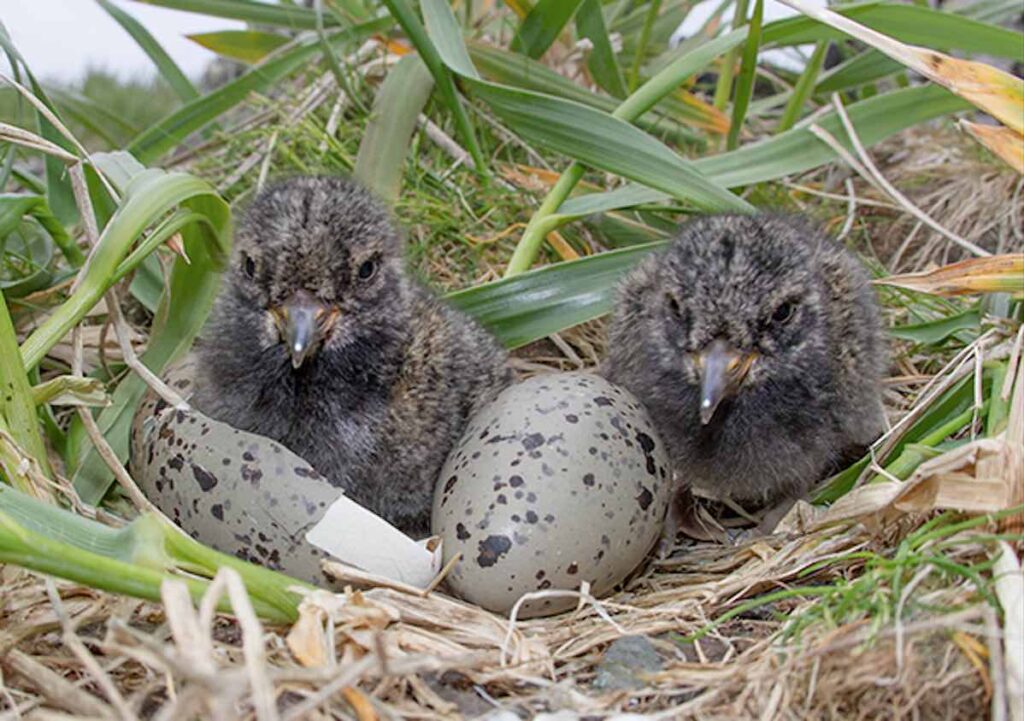
Rats preyed upon shore bird eggs and chicks, nearly wiping out the island’s breeding shorebird population. Without birds consuming herbivorous seashore invertebrates such as snails and limpets, the island’s intertidal plant-eaters flourished, significantly driving down the abundance of the marine kelp.

Rats preyed upon shore birds such as these black oystercatchers. Credit: Rory Stansbury

To reverse these effects, a coordinated conservation strategy to save the native species on Hawadax removed the rats with poison in 2008, and presented a rare case in which researchers were able to compare the ecosystem after five years and, later found a fully recovered system after 11 years.

LOOK: He Thought it was a Kitten Lost in the Snow – But it was One of The Most Endangered Mammals in Europe

“Sometimes it’s hard to say that a conservation action had any sort of impact, but in this particular case we took a conservation action that was expensive and difficult, and we actually demonstrated that it worked,” wrote Kurle. “But we didn’t expect it to be so fast.”

After the rat eradication effort conducted by Island Conservation, the U.S. Fish and Wildlife Service, and The Nature Conservancy, the seabirds returned and are again consuming the seashore invertebrates, which has allowed the recovery and rebound of the kelp community.

“When the birds returned it led to an entirely different structure in the marine community on this island.”

(See photos and more at UC San Diego)

ERADICATE Negativity on Social Media — Share the Amazing Recovery…

This Week’s Inspiring Horoscopes From Rob Brezsny’s ‘Free Will Astrology’

Our partner Rob Brezsny provides his weekly wisdom to enlighten our thinking and motivate our mood. Rob’s Free Will Astrology, is a syndicated weekly column appearing in over a hundred publications. He is also the author of Pronoia Is the Antidote for Paranoia: How All of Creation Is Conspiring To Shower You with Blessings. (A free preview of the book is available here.)

Here is your weekly horoscope…

FREE WILL ASTROLOGY – Week beginning March 19, 2021
Copyright by Rob Brezsny, FreeWillAstrology.com

ARIES (March 21-April 19):
Poet Ocean Vuong speaks of the Hawaiian word kipuka. It refers to a patch of earth that doesn’t get covered with lava when an active volcano exudes its molten material. “Before the lava descended,” Vuong writes, “that piece of land was insignificant, just another scrap in an endless mass of green.” But now that piece of land is special, having endured. I encourage you to identify your metaphorical equivalent of kipuka, Aries. It’s an excellent time to celebrate the power and luck and resilience that have enabled you to persevere.

TAURUS (April 20-May 20):
“Extraordinary things are always hiding in places people never think to look,” writes Taurus author Jodi Picoult. Luckily for you, Taurus, in the near future you’ll be prone to look in exactly those places—where no one else has thought to look. That means you’ll be extra likely to find useful, interesting, even extraordinary things that have mostly been hidden and unused. You may also discover some boring and worthless things, but the trade-off will be worth your effort. Congratulations in advance on summoning such brave curiosity.

GEMINI (May 21-June 20):
“When we ask for advice, we are usually looking for an accomplice,” said Gemini author Saul Bellow. So if you have come here today to read my horoscopes, it’s possible that you’re seeking an accomplice to approve of you making a decision or a move that you have already decided to do. OK. I’ll be your accomplice. But as your accomplice, the first thing I’ll do is try to influence you to make sure your upcoming actions serve not only your own selfish interests (although there’s nothing wrong with that), but also serve the interests of people you care for. The weeks ahead will be a favorable time to blend self-interest and noble idealism.

CANCER (June 21-July 22):
A character in Barbara Kingsolver‘s novel The Lacuna is told to “go rub his soul against life.” Now I’ll advise you to do the same. Why? While it’s true that you have a beautiful soul, you sometimes get in the habit of hiding it away or keeping it secret. You feed it a wealth of dreams and emotions and longings, but may not go far enough in providing it with raw experience out in the messy, chaotic world. In my judgment, now is one of those times when you would benefit from rubbing your soul against life. Please note: I DON’T mean you should go in search of rough, tough downers. Not at all. In fact, there are plenty of pleasurable, safe, educational ways to rub your soul against life.

LEO (July 23-Aug. 22):
If you love the work of self-help author Paulo Coelho, you might be inclined to adopt his motto as your own: “Being vulnerable is the best way to allow my heart to feel true pleasure.” But maybe you wouldn’t want to adopt his motto. After all, what he’s suggesting requires a great deal of courage and daring. Who among us finds it easy and natural to be soft and receptive and inviting? And yet according to my analysis of the astrological omens, this is exactly what your assignment should be for the next two weeks. To help motivate yourself, remember the payoff described by Coelho: the possibility that your heart will feel true pleasure.

VIRGO (Aug. 23-Sept. 22):
Virgo author Michael Ondaatje celebrates “the hidden presence of others in us—even those we have known briefly. We contain them for the rest of our lives, at every border we cross.” As you approach your own upcoming border-crossing, dear Virgo, I encourage you to tune into memories about seven specific people who over the course of your life have provided you with the most joy and the most interesting lessons. Close your eyes for 20 minutes and imagine they are all gathered together with you in your favorite sanctuary. Remember in detail the blessings they bestowed on you. Give thanks for their influences, for the gifts they gave that have helped you become your beautiful self.

LIBRA (Sept. 23-Oct. 22):
“A balance that does not tremble cannot weigh. A person who does not oscillate cannot live.” So wrote biochemist Erwin Chargaff, who did crucial research leading to the discovery of DNA’s double helix structure. Since you’re the zodiac’s expert on balance and oscillation, and because these themes will be especially meaningful for you in the coming days, I’ll ask you to meditate on them with extra focus. Here’s my advice: To be healthy and resilient, you need to be aware of other possibilities besides those that seem obvious and simple and absolutely true. You need to consider the likelihood that the most correct answers are almost certainly those that are paradoxical and complicated and full of nuance.

SCORPIO (Oct. 23-Nov. 21):
In her poem Sandra, Scorpio poet Ariana Reines testifies that she has too many feelings—and that’s not a problem. On the contrary. They are her wealth, she says, her “invisible splendor.” I invite you to regard your own “too many feelings” in the same way, especially in the coming weeks. You will have opportunities to harness your flood of feelings in behalf of transformative insights and holistic decision-making. Your motto: Feelings are healing.

SAGITTARIUS (Nov. 22-Dec. 21):
Historian and author Thomas Berry described “wildness” as the source of our “authentic spontaneities.” He said it’s “the wellspring of creativity” at the root of our lust for life. That’s a different definition from the idea that wildness is about being unruly, rough, and primitive. And Berry’s definition happens to be the one that should be central to your work and play in the coming weeks. Your assignment is to be wild: that is, to cultivate your authentic spontaneities; to home in on and nourish the creative wellspring of your lust for life.

CAPRICORN (Dec. 22-Jan. 19):
Some of the great discoveries in the history of physics have been made while the trailblazing physicists are lolling in bed or in the bathtub. They have done the research and carried out the rigorous thinking, and are rewarded with breakthroughs while relaxing. I think that will be your best formula for success in the coming weeks. Important discoveries are looming. Interesting innovations are about to hatch. You’re most likely to gather them in if you work intensely on preparing the way for them, then go off and do something fun and rejuvenating.

AQUARIUS (Jan. 20-Feb. 18):
My typical horoscope is an average of 108 words long. In that limited space, I can’t possibly tell you all the themes and threads that will be active for you during the upcoming phase of your cycle. I have to make choices about what to include and what not to include. This time I’ll focus on the fact that you now have an opportunity to deepen your relationship with your sense of smell—and to purposefully nourish your sense of smell. Your homework: Decide on at least five scents with which you will cultivate an intimate, playful, delightful connection in the coming days. (PS: You may be surprised at how this practice will deepen your emotional connection with the world.)

PISCES (Feb. 19-March 20):
No one had ever proven that there was such a thing as electromagnetic waves until Piscean physicist Heinrich Hertz (1857–1894) did so in 1886. He was the innovator who first transmitted and received controlled radio waves. Alas, he didn’t think his breakthrough was useful. In 1890, he confessed, “I do not think that the wireless waves I have discovered will have any practical application.” But other scientists were soon capitalizing on his work to communicate long distances. Radio broadcasts were born. I will encourage you not to make a Hertzian-type mistake in the coming months. Always follow through on your initial labors. Have faith that the novelties you dream up will eventually have practical value.

WANT MORE? Listen to Rob’s EXPANDED AUDIO HOROSCOPES, 4-5 minute meditations on the current state of your destiny — or subscribe to his unique daily text message service at: RealAstrology.com

(Zodiac images by Numerologysign.com, CC license)

SHARE The Wisdom With Friends Who Are Stars in Your Life on Social Media…

Watch What Happens When An Octopus Steals a Tennis Ball From a Border Collie

Border Collies are among the friendliest and most inquisitive dogs around.

But Lucy doesn’t know what to make of the underwater creature that confiscated her tennis ball.

Almar Creighton was exploring the tide pools along the South African coastline with Lucy on her daily outing, when they encountered an octopus who was also very inquisitive.

When Lucy’s ball went into the water and she made her way to retrieve it, suddenly the mollusc emerged from under a rock and took control of the floating ball right in front of her.

“Lucy seemed very confused about how to handle this matter but she let the octopus check out her ball without a complaint,” says Almar, who adopted the pup six years ago.

The octopus seemed to be in the mood for a little mischief and he wrapped his tentacles around the ball and dragged it under the water.

“Lucy looked at us questioningly, as if asking what to do next.”

She staried at the tidal pool for 20 minutes, hoping to see a tennis ball rise up to the surface but no luck.

LOOK: Cuddling in Freezing Temperatures, Newborn Calf and Collie Become Adorable Best Friends

Octopuses are very intelligent sea creatures who can solve puzzles, and presumably was ‘having a ball’ trying to keep the ball submerged under a rock.

WATCH the scene unfold…


And, speaking of tennis… this cat named Quincy is practicing to become a table tennis partner for his owner.

Obviously, his reflexes are cat-like. WATCH his prowess at the net…


WOW! Penguin Leaps Into a Tour Boat to Avoid Being Eaten By Killer Whales – WATCH

DON’T KEEP This Story All to Yourself – Share the Fun on Social Media…

MIT Scientists Develop the Perfect Breathable Earth-Friendly Fabric Using The Same Material as Single-Use Bags

CC. MIT.

A multi-national team at MIT have dispelled the long-standing consensus that the most commonly available plastic, polyethylene, can’t be used for clothing.

CC. MIT.

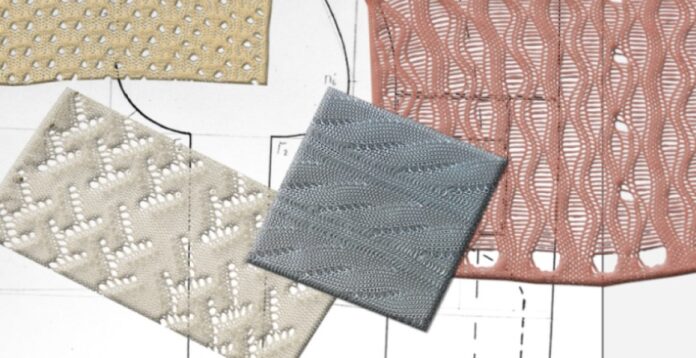
Their new thread spun with normal machinery circumnavigates the problem that polyethylene traps moisture, opening up an industry-changing material for use in earth-friendly textiles.

The fashion and textile industry is one of the king polluters. As well as contributing millions of tons of landfill waste, manufacturing threads made with nylon or polyester consumes massive amounts of water and generates 5–10% of global greenhouse gas emissions annually—and worst of all, none of the fabrics are recyclable.

Polyethylene itself, the plastic used in food wraps and shopping bags, is anti-wicking, and would normally lock water and sweat onto your body, not drawing it away to be evaporated like most athletic wear.

However the new method developed at MIT has created an “efficient water wicking and fast-drying performance which, combined with their excellent stain resistance, offer promise in reducing energy and water consumption as well as the environmental footprint of textiles in their use phase.”

RELATED: H&M In-Store Recycling Machine Turns Old Clothes into New Threads—A World First

Furthermore, polyethylene yarns can be colored by environmentally-friendly methods, thus eliminating the large amounts of toxic wastewater otherwise created during conventional processes.

“Once someone throws a plastic bag in the ocean, that’s a problem. But those bags could easily be recycled, and if you can make polyethylene into a sneaker or a hoodie, it would make economic sense to pick up these bags and recycle them,” wrote Svetlana Boriskina, a research scientist in MIT’s Department of Mechanical Engineering and lead-author of the corresponding paper

It was actually during the manufacturing process, taking polyethylene powder and subjecting it to existing industry-standard equipment, that Boriskina and team discovered that when the plastic is stretched into fibers, similar to the way spaghetti is made, the plastic became slightly oxidized.

CHECK OUT: These Sunglasses Are Made From the First Ever Batch of Plastic Waste Recovered by the Ocean Cleanup Project

This oxidization gave the resulting yarn a thirst for water, drawing it away from sweaty armpits like it had never done before.

“Everyone we talked to said polyethylene might keep you cool, but it wouldn’t absorb water and sweat because it rejects water, and because of this, it wouldn’t work as a textile,” Boriskina said.

Once they found that it could in fact wick moisture away, they continued to experiment until they found fibers of the right diameter that allowed the space in between them within the strand of yarn to wick the most amount of water.

READ ALSO: The Fashion Industry Has a Waste Problem: This Non-Profit With 2,000 Volunteers Is Helping Solve It

The base powder can be dyed with natural materials, and once the finished product was subjected to a life-cycle assessment, they found that, remarkably, polyethylene clothing would consume less energy than polyester, but also natural cotton.

Part of that is because nothing sticks to polyethylene, meaning that you could wash it for 10 minutes in a cold cycle and any stains would be gone. The best part is that owing to the natural dye, the clothing is fully recyclable.

Sometimes the best innovations don’t come from new elements, new machines, or new technology, but a simple double-check on already existing infrastructure and materials.

PASS This Game-Changing Breakthrough to Fashionistas on Social Media… 

“It does not matter how slowly you go as long as you do not stop.” – Confucius

Quote of the Day: “It does not matter how slowly you go as long as you do not stop.” – Confucius

Photo by: Frank Busch

With a new inspirational quote every day, atop the perfect photo—collected and archived on our Quote of the Day page—why not bookmark GNN.org for a daily uplift?


Mother of NHL Hockey Star Donates Kidney to Ice Rink Manager Who Kept Her Kids Out of Trouble

Twitter/St. Louis Blues

To make it in any professional sport takes skill, determination, and practice. Having someone who believes in you and goes out of their way to help can be the difference between living the dream or hanging up your skates.

Throughout the many years that Graham Nesbitt managed the local skating arena in Seaforth, Ontario, he routinely went above and beyond the call of duty—opening the rink early, staying late, and even in the face of snowstorms—to ensure neighborhood kids could get in as many hours on the ice as possible.

No-one is more aware of or as grateful for Nesbitt’s dedication than Bonnie O’Reilly. Her two sons, Ryan and Cal, who skated under Nesbitt’s watchful eye, both went on to play in the NHL.

Ryan captains the Stanley Cup-winning St. Louis Blues. Cal is currently on the Lehigh Valley Phantoms’ roster.

Even though he retired from the Seaforth rink in 2003, when the community learned Nesbitt needed a kidney donation, local folks lined up to be tested to see if they might be a match. One of those people was Bonnie O’Reilly.

MORE: ‘She’s Our Miracle’: This Minnesota Teacher Donated a Kidney to the School’s Custodian

Nesbitt was diagnosed with Berger’s disease nine years ago. A progressive condition that lessens the kidneys’ ability to filter blood, by 2019 the medication keeping his illness under check was no longer working. A kidney transplant became the 65-year-old’s only option for survival.

Once O’Reilly learned she was a match, the only thing left to be done was arrange for the surgery. “She says that ‘What you’ve done for my boys, helping them achieve their goal of playing professional hockey, it’s the least we can do,’” Nesbitt’s son Joe said quoting O’Reilly in a conversation with CBC.

The transplant took place just a couple of weeks ago, on March 3. Both O’Reilly and Nesbitt came through the procedure in good form and were soon on their way to recovery.

Nesbitt’s wife, Pam, deeply touched by O’Reilly’s generosity, posted her thanks on Facebook: “From our family to you and yours Bonnie, thanks for the gift of a lifetime…Your selfless act means more than you’ll ever know.”

“Something my dad’s always taught me is to be kind and helpful and generous to everybody,” Joe Nesbitt told CBC. “It just goes to show that those thoughtful acts and caring for people, it pays off. It truly paid off for my dad and saved his life.”

RELATED: 42-Year-old Zamboni Driver Wins First NHL Game After Being Tapped as Emergency Goalie

So, why is good Karma like an ice rink, you ask? Because what goes around comes around.

PASS ON The Positive Story Of Friendship To Your Friends…

Anyone in These States Can Get a Covid-19 Vaccine, Thanks to Several Native Tribes

Chickasaw twitter. Published

The Native American tribes of Oklahoma are steaming ahead of the greater population towards herd immunity—so much so that they’re opening up COVID-19 vaccination for all Oklahomans.

@ChickasawNation/Twitter

Having received tens of thousands of doses from the Indian Health Service, the small tribal leadership in the Chickasaw, Choctaw, Osage, Cherokee, and Potawatomi nations have been able to quickly and effectively utilize their medical infrastructure to distribute the vaccine to the highest and secondary priority tribal members.

Job done, the tribes are beginning to offer vaccinations to anyone in the state who needs one, understanding that their members are enmeshed in the Oklahoma communities, and Oklahomans are enmeshed within tribal communities.

The Chickasaw Nation in particular recently opened a new tribal health facility in the city of Ada, with 16 drive-thru lanes for vaccinations. Oklahoma residents can schedule an appointment online through the tribe’s website.

Dr. John Krueger, chief medical officer for the Chickasaw, said 30,000 doses had been administered in the population of 35,000 tribal members.

“We are a part of these communities, and they are a part of us,” Krueger told CNN. “The faster we can get all of us back to essential protection, the better it is for us and the better it is for everyone.”

Ute can do it

The Mountain Ute Tribe and Navajo of Colorado followed suit, offering several rounds of Moderna COVID-19 vaccines gratis—with the Mountain Ute hosting the vaccine drive at their casino.

“We need to look toward everyone getting vaccinated in the Four Corners region,” said Ute Mountain Ute Tribe Chairman Manuel Heart, according to local news reports. “Kudos to everyone who came out and worked together to make it happen.”

RELATED: Startup Global-PPE Delivers Essential Protective Gear to Native American Reservations

Around 700 doses were made available and tribal membership was not required. 100 doses of the Johnson & Johnson vaccine, which requires only a single jab, were made available to the homeless community in the Cortez, Colorado area—as the single dose is ideal for transient populations.

The Southcentral Foundation in Alaska is utilizing a patchwork yet effective web of native health centers to also offer vaccines to any Alaskans over the age of 18.

The Indian Health Service has distributed a total of 1.25 million doses, three-fifths of which have already been administered, and the majority of which have gone to New Mexico, California, and Oklahoma.

Share This Story Like The Chickasaw Are Sharing Their Vaccines…

Baboon, Bear, or Bison: Find Out Which Animal Personality Best Matches Yours in a Free Fun Quiz

Have you ever wondered what kind of animal best represents your personality?

A 10-question personality quiz has caught fire since appearing on CNN, CBS, and the Los Angeles Times because it can figure out what kind of animal you are most akin to by asking simple behavioral questions—and 23 million people so far have been matched to a species.

Based on novel psychological ideas, the Animal in You quiz was created by the author of The Animal in You and Animal Attraction by Roy Feinson.

Every ecosystem has at least 50 key species that are needed for a web of life to sustain itself, and the same is true of humans.

The test poses questions about your size, aggressiveness, and sociability among other things to gauge where you might end up in the animal kingdom—because the author theorizes that human societies act the same way.

Our communities have space for dominant aggressive types, like tigers, who may work in the military or as a stockbroker, and also for the gentle deer, who may be a florist or preschool teacher.

GNN took the quiz…

Keven Law, CC license

READ ALSO: Dolphins Have Similar Personality Traits to Humans, Study Finds

The test claims it is the “most accurate personality test on the web,” and so Good News Network subjected a number of its staff to it. Geri, the founder, was deemed ‘the playful baboon’—and in her case, it was spot on.

Baboon personalities were well-suited for careers that include journalist and artist, both of which she became: “If journalism is about paying attention to the world, then it makes sense why baboons excel in the field; sharp eyes, sharp mind and sharp tongue in a dynamic package… Sometimes seeing the world from a new perspective is all it takes to create exceptional art—which explains why so many famous artists are baboons.”

CHECK OUT: This Lizard Has His Own Cookbook – and it’s Utterly Adorable

This reporter scored a Vulpes vulpes—the red fox—which by description was a close fit, possessing such characteristics as “choosing subtlety and cunning over brute strength,” and “thriving when running their own businesses,” and who tend to be “hunter personalities… usually in good physical shape and perform well in pastimes that challenge both mind and body.”

Which animal are you? Take the Quiz here, and leave a comment below and let’s compare notes!

Amaze Your Friends By Sharing This Quiz…

Nothing Restores a River or Local Economy Like Removing a Dam

David Seibold, CC license

Across the United States, 69 river dams were removed from American rivers in 2020, opening up 624 miles of waterways to flow freely.

The work was undertaken with the guidance of American Rivers, a national non-profit that works to restore rivers to their natural state.

More than 90,000 dams block rivers across the U.S, but while many might not think of this as a problem, the relentless damming of American rivers over the decades has created significant detriments to the environment.

Along with disrupting riverine ecosystems, inland marshes, and wetlands—which are important ecosystems for many birds—dammed rivers can also dry up downstream from where dams are built.

Damming has been happening for centuries in the U.S, as GNN reported last year, piling up legacy sediment and choking rivers. But even more modern dams can be major hazards to rivers and the habitats they fragment while soaking up infrastructure tax dollars.

In 2020, dams were removed in South Carolina, Indiana, Washington, Montana, New Hampshire, and 18 other states—helping connect populations of salmon species like Chinook, coho, and pink, as well as steelhead, cutthroat, and bull trout, Bartram’s bass, greater redhorse, longnose dace, and northern brook lamprey—the latter three of which are threatened or endangered in the U.S.

The removal of one dam a mile upstream from its confluence with the St. Joseph River, the Elkhart River Dam, has helped re-open a key migration route for more than 50 fish and other species moving out of the St. Joseph.

Large contributions to the 2020 dam removal projects were made by Indian nations such as the Nooksack and Lummi.

“We’re salmon people. So the salmon is very sacred and very important to the tribe,” said Merle Jefferson, Director of the Lummi Nation’s natural resources department, in a video.

MORE: Salmon Spawning for the First Time in 80 Years in the Upper Columbia River

A 16-mile stretch of culturally sacred salmon habitat collapsed after a dam was built diverting the Middle Fork Nooksack River near Bellingham, Washington.

Removing that dam not only gave the salmon back their habitat, but the Lummi back their culture. The Tulalip Tribes is another group that recovered their ancestral salmon habitat, this time along the Pilchuck River in Washington state, where two separate dams were completely removed.

In most cases, dams were built long ago to fortify industry, or to supply fresh water and irrigation. As technology and population densities have changed over the decades, a surprising amount of dams are powering or assisting nothing, and instead act as irrelevant tax leeches.

RELATED: Volunteers Remove 9,200-lbs. of Trash From One of the Dirtiest Rivers in the US

Reopening rivers, as American Rivers has shown, also brings back some economic opportunity to communities by increasing recreational fishing and boating, as well as replenishing local fish stocks that can be sold.

Featured image: David Seibold, CC license

DON’T BLOCK the Good News—Share it With Your Friends…

“I have learned over the years that when one’s mind is made up, this diminishes fear.” – Rosa Parks

Quote of the Day: “I have learned over the years that when one’s mind is made up, this diminishes fear.” – Rosa Parks

Photo by: Tabea Damm

With a new inspirational quote every day, atop the perfect photo—collected and archived on our Quote of the Day page—why not bookmark GNN.org for a daily uplift?


IKEA’s New Cookbook Puts Kitchen Scraps to Good Use With 50 Recipes From Top Chefs

IKEA SCRAPSBOOK

IKEA’s recent collaboration with 10 super chefs led to the creation of a new kind of scrapbook—one that contains recipes made from food scraps.

Utilizing the less-loved parts of produce or cheese, the SCRAPSBOOK curates 50 recipes for kitchen scraps that would otherwise be thrown away.

As much as Americans try to pull kale and broccoli into their diets, what happens to the greenish white stems? What about the leaves growing from our favorite carrots, turnips, and radishes? What about those banana peels and apple cores—that no one thinks to use for nutrition? Can one really make great recipes with them?

To answer, let’s listen to what Chef Christa Bruneau-Guenther from Winnipeg’s Feast Cafe Bistro had to say on behalf of her “Banana peel bacon” recipe served with wild rice flapjacks.

“Who knew you could eat a banana peel? Although it is thinner than bacon, it has a balance of sweet, smoky, salty, and heat, plus with the hint of banana it is oh so delicious!”

IKEA

Banana flesh can also be used in pancakes, or frozen to use for smoothies or baking. Try the Banana Peel Chutney, on page 30, that Jason Sheardown serves with shrimp.

Adrian Forte from Ontario and David Gunawan from British Columbia turn radish leaves and kale stems into risotto and pesto, while Bruneau-Guenther contributes again to a pan-baked dish of squash and potato skins with maple syrup and cheese to help people get the most amount of fiber and nutrients out of their starches of choice.

RELATED: IKEA Publishes Meatball Recipe for Devoted Fans in Quarantine Pining After the Store’s Beloved Cafés

IKEA SCRAPSBOOK

“Scrapcooking is about finding the beautiful possibilities in that banana peel, radish top, or even the chicken bones you’re about to toss, and make the most of everything available to you,” explain the authors of the book in the foreword. “It’s little things like these that can add up to make a big difference.”

The epitome of this concept may be Adrian Forte, a celebrity chef heading up the Toronto-based Chef du Jour catering service, and his recipe “Clear-out-the-Crisper-Soup”—the ultimate in tasty recycling.

POPULAR: IKEA Released Instructions on How to Build the 6 Best Blanket Forts For Your Home Quarantine

“I often save food scraps throughout the week — everything from chicken parts to vegetable trimmings. Usually, these discarded scraps end up in my weekly soup stock,” he writes as an intro.

The 111-page SCRAPSBOOK, downloadable in PDF here, also contains instructions for all kinds of different ways to reuse food scraps, beyond simply composting them—although it has instructions for starting a compost pile, too!

  • How to regrow produce from chopped ends
  • Using ground eggshells as a limescale cleaner
  • How to prepare cucumber leftovers as an insect repellent
  • Tips for how to store different produce that you wouldn’t expect
  • How to clean your finest skillets with leftover food instead of steel wool

It can be a great feeling to know that every taste inherent in a piece of food was turned into talent to make your life more nutritious and closer to Mother Earth.

Recycle This Valuable Scraps-Book With Your Friends!

Town Surprises UPS Driver With $1,000 to Thank Him For Being Essential During Pandemic

Courtesy Kristie Vogelsong

Every Christmas season, delivery drivers can count on being slammed, but with the pandemic causing huge spikes in online ordering, it seems the holiday season never ends.

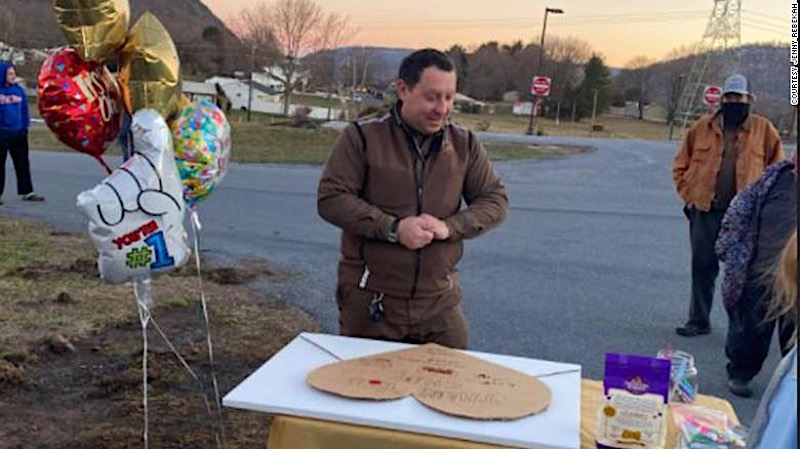
A brown-uniformed UPS driver in Dauphin, Pennsylvania, has been meeting this challenge every day with good cheer and a sense of determination, often going out of his way to make sure the packages in his care arrived on time.

To reward Chad Turns for his extraordinary work ethic, citizens all along his route in the tight-knit community pitched-in to produce a special delivery of their own.

“The whole town has had personal experience with Chad,” Dauphin resident Adam Shickley told CNN. “He once thought a package was a gift and there was a picture on the front. My kids were playing outside so he waited until his shift was done and came back to make sure they didn’t see it.”

Shickley’s wife, Jenny, echoed her husband’s sentiments. “On Facebook, another friend mentioned there was a package that needed signing and they weren’t home,” she told TODAY. “Chad was nervous that it was important, so he went to their parents’ house to get it signed for them.”

Photo by Jenny Shickley

To honor his unflagging dedication, Jenny, organized a ‘Thank you, Chad’ fundraiser. Her original goal of $500 quickly required a bigger package when more than $1,000 flowed in.

MORE: Hero Plumber Has Helped 10,000 Vulnerable Families Fix Heating and Plumbing For FREE During Pandemic

She also drafted one of his UPS coworkers in a secret plan involving a fictional end-of-day pickup at a municipal building. When Chad arrived, instead of a package, he found a group of people waving thank-you signs, a big handmade autographed card, and probably a lot of smiles beneath the face masks. Together, they presented him with $1,000.

Courtesy Kristie Vogelsong

Chad was tear-struck by the outpouring of support, saying, “It was very overwhelming. The idea that they even thought of me to do anything… To go above and beyond and do what they did was truly amazing to me.”

POPULAR: Trucker Hero Pulls Over When He Sees ‘Frantic’ Man Running Up Highway After Wreck Flings His Toddler into the Dark

“Celebrations like this really highlight the bond our drivers have with their customer base,” UPS spokesperson Jackie Fajt said in a statement. “Chad is a great UPSer and has been delivering to Dauphin residents for more than a decade.”

Jenny Shickley

Putting the “special” in special delivery is all part and parcel of a day’s work for Chad, and many drivers, who will happily continue delivering one package at a time to keep the world running smoothly.

North Carolina-based writer Judy Cole has a new murder mystery / rom-com debuting on Amazon for Kindle: And Jilly Came Tumbling After (from Red Sky Presents).

DO YOU Have a Special Driver? Organize a Similar Celebration By Sharing on Social Media…

Viewed Through Venetian Glass: Old Art Form Captures Modern Global Challenges in Stunning Exhibition

Glasstress exhibit–Adriano Berengo YouTube

As lockdowns, stay-at-home orders, and closed recreation facilities have created a mental health crisis in America, art has become the opposite of ‘non-essential’.

Glasstress exhibit–Adriano Berengo YouTube

Thankfully, on the island of Murano, the home of a centuries-old Italian glassmaking tradition, the intrepid Venetian artist Adriano Berengo has—despite lockdowns, floods, and other pandemic related disturbances—has managed to keep his glass workshop running hot.

And, lucky for people in Florida, the Maestro of Murano, in partnership with the Museum of Art in Boca Raton, is staging a 2021 version of ‘Glassstress’ the world’s most famous glass-art exhibition.

“One thing we know for certain… Life is fragile, just as glass is fragile, yet in this fragility there is also strength,” says Berengo.

The exhibit, in South Florida for a 9-month stay through September 5th, expands Berengo’s dream of teaching the world that glass can be a magnificent material for contemporary art. The show uses an old art form to capture many of the challenges faced by societies around the world, such as man’s relation to climate change, oppressive governments, and racial injustice.

“With 2020 being such a challenging year to coordinate an international exhibition of this size and scope, the effort serves as an important reassurance that art is an essential and enduring part of humanity,” says Irvin Lippman, the Boca Raton Museum of Art’s Executive Director in a press release.

LOOK: Amazing Bubble Wrap Artist Creates Masterpieces by Injecting Paint Into Each Bubble

In fragility there is strength

The scale of the project was immense, and required bravery in spades to set up, with all the uncertainties of the pandemic, especially those related to travel—four visa applications were denied, even while their purpose was to work with Americans, because of lack of “national interest.”

Nevertheless, Berengo’s craftsmen worked over the course of 3 years with 34 artists from around the world to combine their artistic visions with the expert hands of Venetian glassmakers.

Powered by his foundation, Fondazione Berengo, which sponsors a recurring exhibit in the famous Biennale of Venice, Glasstress has also traveled the world, making appearances in Beirut, New York City, and Stockholm.

RELATED: See How a Teacher Broke the World Record for Largest Single Drawing Made By One Person

“We have brought Glasstress to countries around the world for ten years, seeking to expand and enliven international awareness of the variety and richness of contemporary artists using glass in their creative practices,” says Berengo.

More than a chandelier

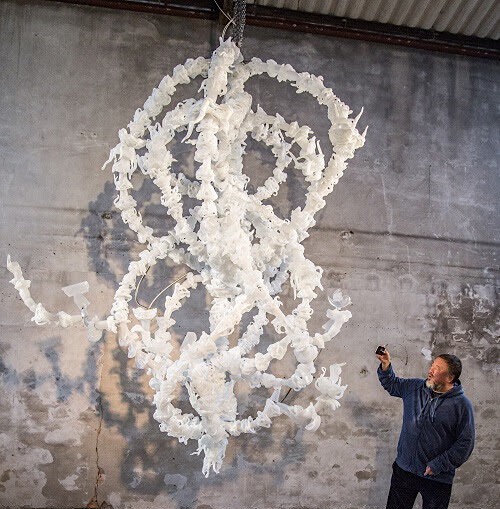
Artist Ai Weiwei with his massive glass-blown sculpture Blossom Chandelier – Karolina Sobel

Among the marquee pieces on display is Chinese artist Ai Weiwei’s, Blossom Chandelier, a gargantuan installation of 1,600 individual elements of glass, both hand-cut and casted, bursting with unexpected shapes such as manacles, Twitter birds, flowers, and a special nod to his time in a Chinese prison—his own middle finger.

POPULAR: Villagers Create Amazing Nighttime Window Displays to Cheer Up Neighbors – 500 So Far (LOOK)

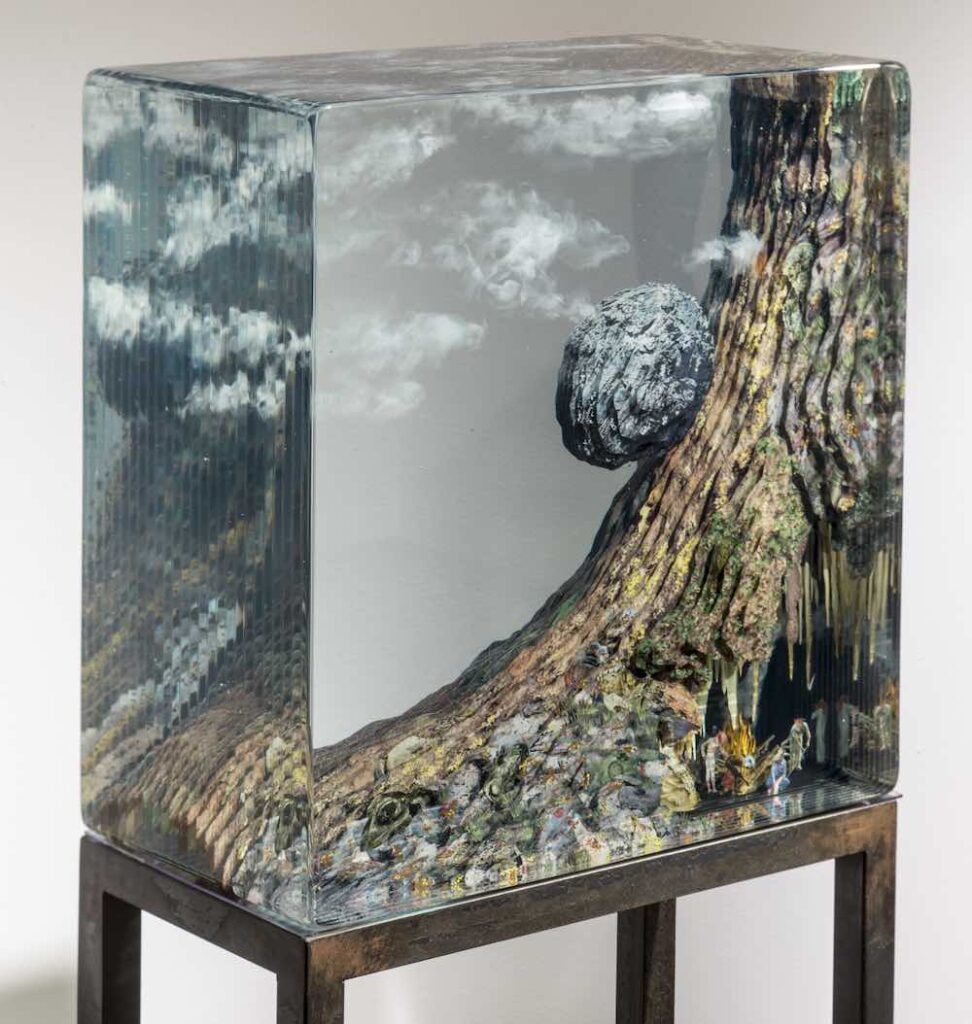
In a similar expressive tone, Dustin Yellin’s Invisible Sisyphus (below) is a diorama of simple folk living beneath the roots of a great tree, all encased in a giant brick of glass, the impurities within which give the illusion of clouds, sky, and atmosphere.

Dustin Yellin’s Invisible Sisyphus, photo by Francesco Allegretto

Glass Big Brother (below) is a government-inspired chandelier, exquisitely made of glass and metal, teeming with ominous looking cameras, reminding us of the danger of allowing a government too much authority.

Glass Big Brother by Song Dong

“Unlike the past and the present, what comes next for our world presents itself as constant possibility, always transforming as we move forward in time,” says Berengo in a press release. “This concept of transformation has always held an affinity with glass, a medium which—as the name Glasstress suggests—exists in a state of constant tension.”

“Life needs tension, it needs energy, and a vibrant exchange of ideas.”

WATCH the Glasstress video…

SHARE the Imagination With Your Artist Friends on Social Media…

Northwestern Scientists Repair and Reverse ALS Neuron Damage in Lab Using New Non-Toxic Compound

Researchers Hande Ozdinler and Richard Silverman -Northwestern

In a study using a non-toxic substance on mice, Northwestern University researchers have identified the first compound that eliminates the ongoing degeneration of brain neurons in the paralyzing disease known as ALS.

Researchers Hande Ozdinler and Richard Silverman -Northwestern

Amyotrophic lateral sclerosis is a neurodegenerative disease in which upper motor neurons degrade in victims, producing a swift and fatal demise.

In addition to ALS, other motor neuron diseases, such as hereditary spastic paraplegia (HSP) and primary lateral sclerosis (PLS) progress in a similar fashion.

In ALS, movement-initiating nerve cells in the brain (upper motor neurons) and muscle-controlling nerve cells in the spinal cord (lower motor neurons) die—and, so far, there has been no drug or treatment for the brain component of ALS, and no drug for HSP and PLS patients.

“Even though the upper motor neurons are responsible for the initiation and modulation of movement, and their degeneration is an early event in ALS, so far there has been no treatment option to improve their health,” said senior author Hande Ozdinler, associate professor of neurology at Northwestern University Feinberg School of Medicine.

“We have identified the first compound that improves the health of upper motor neurons that become diseased.”

RELATED: Yale Scientists Successfully Repair Injured Spinal Cords Using Patients’ Own Stem Cells

Ozdinler collaborated with study author Richard B. Silverman, a Northwestern chemistry professor, and published the results in Clinical and Translational Medicine last month on Feb. 23.

The study was initiated after Silverman identified a compound, NU-9, developed in his lab for its ability to reduce protein misfolding in critical cell lines. The compound is not toxic and crosses the blood brain barrier.

“I am very excited to find out if our hypothesis that stabilizing upper motor neurons in mice will translate to humans and NU-9 will provide hope for those inflicted with currently untreatable upper motor neuron diseases,” Silverman said.

POPULAR: Doctor Determines Perfect Prescriptions For Stage 4 Cancer: With Functional Profiling His Results Are ‘Stunning’

The NU-9 compound addresses two of the important factors that cause upper motor neurons to become diseased in ALS: protein misfolding and protein clumping inside the cell. Proteins fold in a unique way to function; when they misfold they become toxic to the neuron. Sometimes proteins aggregate inside the cell and cause pathology as in the TDP-43 protein pathology. This happens in about 90% of all ALS patient brains and is one of the most common problems in neurodegeneration.

The research team began to investigate whether NU-9 would be able to help repair upper motor neurons that become diseased due to increased protein misfolding in ALS. The results in mice were positive. Scientists next performed experiments to reveal how and why the diseased upper motor neurons regained their health.

Restoring neurons to robust health

After administering NU-9, both the mitochondria (the cell’s energy producer) and the endoplasmic reticulum (the cell’s protein producer) began to regain their health and integrity resulting in improved neuron health. The upper motor neurons were more intact, their cell bodies were larger and the dendrites were not riddled with holes.

CHECK OUT: Scientists Develop Ultra-Precise Lasers to Remove Cancers Without Damaging Healthy Tissue

They stopped degenerating so much that the diseased neurons became similar to healthy control neurons after 60 days of NU-9 treatment.

Commanders-in-chief of movement

Upper motor neurons are the brain’s commanders-in-chief of movement. They carry the brain’s input to spinal cord targets to initiate voluntary movement. The degeneration of these neurons impairs the connection from the brain to the spinal cord and leads to paralysis in patients.

Lower motor neurons have direct connections with the muscle, contracting muscle to execute movement. Thus, the lower motor neuron activity is in part controlled by the upper motor neurons.

Ozdinler and colleagues will now complete more detailed toxicology and pharmacokinetic studies prior to initiating a Phase 1 clinical trial.

(Source: Northwestern News Now)

MOVE This To Your Social Media Friends As Follow-up to Ice Bucket Challenge…

Paleontologists Uncover Rarer-than-Rare Fossil of Oviraptor on Nest of Eggs With 24 Embryos Inside

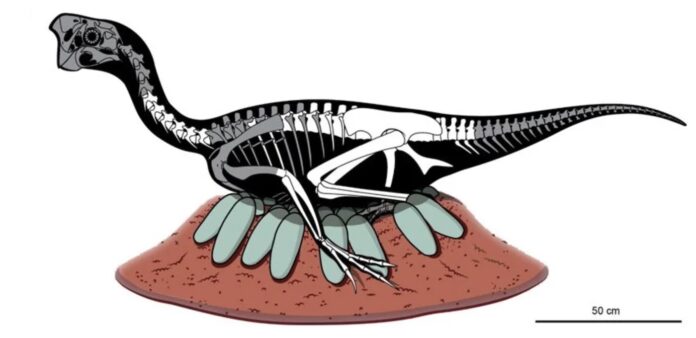
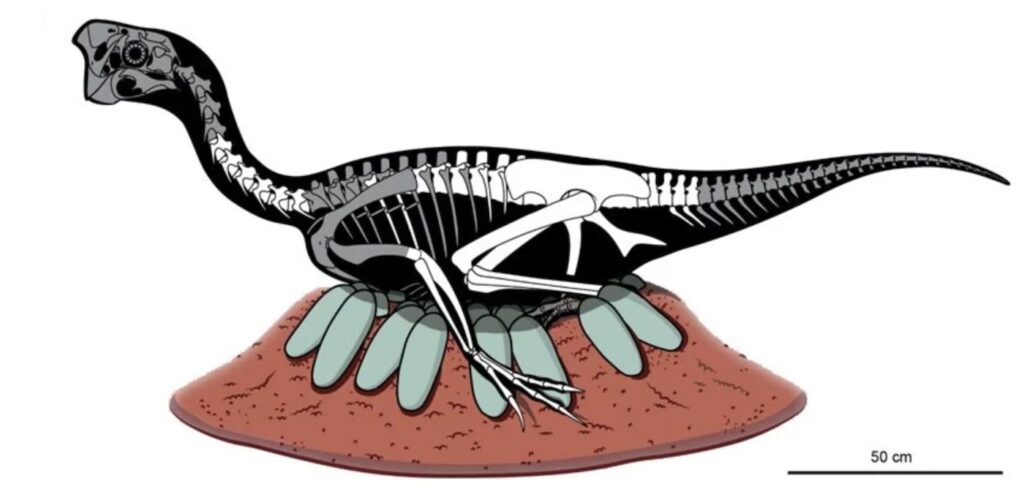
By Andrew McAfee, Carnegie Museum of Natural History, for study published in Science Bulletin 2020

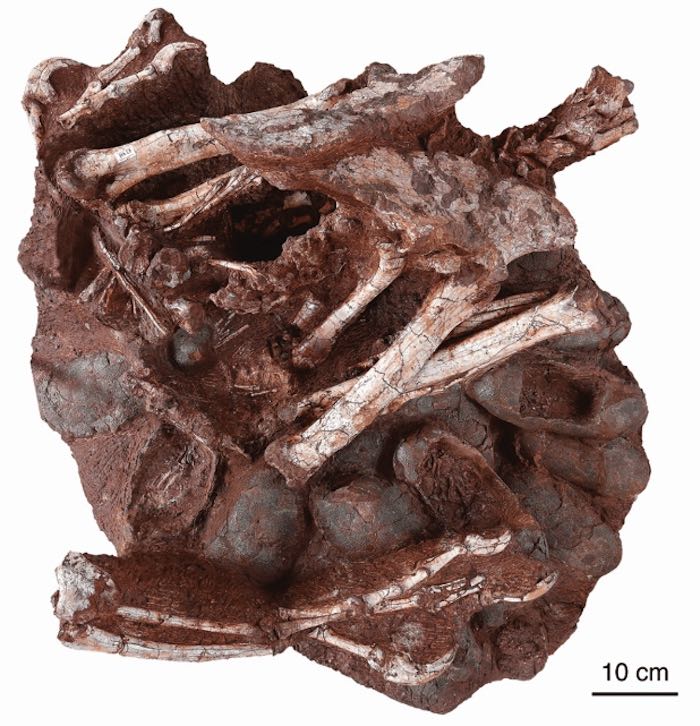
A jaw-dropping fossil has been found of an oviraptor crouching upon two dozen eggs containing fossilized embryos inside—with 7 containing “babies” mere hours from hatching.

By Andrew McAfee, Carnegie Museum of Natural History, for study published in Science Bulletin 2020 – White indicates preserved bones

Found in Ganzhou in South China, the fossil is unprecedented in history, and not only contains an image of the animal and its offspring, but of its very behavior.

China has produced some of the world’s most important discoveries in the field of paleontology, and this oviraptorosaur, from a group of bird-like theropod dinosaurs that thrived in the Cretaceous Period, turned out to be an absolute diamond.

China’s soils contained the first specimens that linked dinosaurs to birds and the first evidence of tree-dwelling dinosaurs. The new fossil discovery seems to confirm that this species was one which broods—sitting atop its eggs as a method of incubation.

“This kind of discovery—in essence, fossilized behavior—is the rarest of the rare in dinosaurs,” says paleontologist Matt Lamanna from the Carnegie Museum of Natural History (CMNH).

“Though a few adult oviraptorids have been found on nests of their eggs before, no embryos have ever been found inside those eggs.”

The lack of contextual evidence so far had prevented paleontologists from being able to be sure that, birds, as far back as their ancestors 70 million years ago, always incubated their young, but several factors in this find lead to that conclusion being very likely.

LOOK: 4-Year-old Girl Finds Dinosaur Footprint on a Beach From 215 Million Years Ago

This perfect clutch revealed so much

Preserved with only a few millimeters of space between fossilized bone and eggs, almost no sediment has managed to squeeze in between, suggesting the dinosaur parent was incubating them.

Furthermore, the oxygen isotopes measured in the embryos put their temperature at about the same as the ones from the bones of the parent.

“This dinosaur was a caring parent that ultimately gave its life while nurturing its young,” explains Lamanna, who was on the research team with primary authors Drs. Shundong Bi, from Indiana University of Pennsylvania and Xing Xu, paleontologist at the Institute of Vertebrate Paleontology and Paleoanthropology in Beijing. Their study was published in the Science Bulletin, with CMNH scientific artist Andrew McAfee producing illustrations for the paper.

Other interesting discoveries were the presence of complete dinosaur skeletons inside the egg material, evidence of the oviraptors’ diet, and the fact that not all of the eggs were incubated to the same stage of development—another hallmark of birds.

RELATED: Dinosaur Unearthed in Argentina Could Be the Largest Animal That Ever Walked the Earth

Synchronous hatching is hard work, and in the avian order it’s done with the help of both parents alternating incubation duties. It’s thought to have originated much further down the evolutionary line, as today it is a behavior demonstrated in only a few certain birds.

Oviraptor may have moved away from simultaneous hatching much earlier than scientists expected. The sex of the fossilized oviraptor is not yet confirmed, and will offer a lot to the mystery.

In the stomach of the dinosaur, small stones were clues for determining the content of its diet. Today, birds, like turkeys, have gizzards, a primitive organ that stores gravel, allowing the bird to pass seeds and other hard or fibrous material through them to aid in digestion.

POPULAR: 7-Year-Old Discovers New Dinosaur Species, a T-Rex That Eats Plants

“It’s extraordinary to think how much biological information is captured in just this single fossil,” says paleontologist Xing Xu from the Institute of Vertebrate Paleontology and Paleoanthropology in Beijing.

“We’re going to be learning from this specimen for many years to come.”

SHARE This Breakthrough Discovery With Your Brood on Social Media…

World’s First 3D-Printed School Poised to Be Built in Madagascar For Half the Price of Traditional

Thinking Huts

A 15-year old Chinese immigrant, adopted as a baby by the founder of MapQuest, is using her adult-sized ambition to use 3D-printing to help more kids get an education in Madagascar.

Thinking Huts

Maggie Grout’s nonprofit is called “Thinking Huts” and they are fundraising to break ground on a series of modular, honeycomb-shaped schools, powered by solar panels, which would be the world’s first 3D-printed schoolhouses.

Hundreds of millions of children don’t have schools to attend around the world, and Grout feels one of the best ways to solve the problem is by bringing down the construction costs of schoolhouses. The initial pilot Thinking Hut in Madagascar is expected to cost $20,000, and in a recent interview at the SmithsonianGrout details how, as well as being half the cost of traditional construction methods, 3D-printed buildings become cheaper when the project is scaled.

In other words the first house may cost $20,000, but the more houses that are built, the cheaper they become.

Despite the pandemic, construction on the first hut is expected to begin in the summer on the university campus of Ecole de Management et d’Innovation Technologique in the city of Fianarantsoa, home to about 200,000 people on the south end of the island.

The 3D-printer itself, at 6.5 feet, is being provided by Thinking Huts’ partner Hyperion Robotics, a Finnish 3D-printing company that builds a hodgepodge of different elements, such as building columns, patio furniture, and even artificial coral reefs.

READ ALSO: One of the World’s First Communities of 3D Printed Homes is Set to House Mexico’s Poorest Families

“We will use locally-sourced materials, remaining conscious of our environmental impact, and implement more additive manufacturing processes as the technology advances, adapting to each community’s environment,” reads their plan for Hut v1.0.

“Initial plans call for solar power, internet access, desks, chairs, and tables. The Hut will have a secure door and operating windows.”

Other features include pockets of space on the outside of the walls, that can either be used for vertical farming or artificial rock climbing walls for the kids. The exterior will be decorated with traditional Malagasy textile patterns, and local materials such as corrugated tin or wood carved by artisans.

Their honeycomb shape allows new huts to be added onto existing ones if the need for expansion arises.

Thinking Huts’ architect, Amir Mortazavi of the San Francisco Studio of the same name, wants to maintain local aesthetic appeal, desiring a building that blends into its environment—more important than ever considering the sterile grey color of the 3D-printing material.

RELATED: Stylish Tiny Homes Are Now Being 3D-Printed In 24 Hours And Shipped to Your Site

“Deforestation is a major issue in Madagascar, which holds a biodiverse ecosystem with many endemic species known only to the island,” Mortazavi told Architectural Digest. “We will be making a reconnaissance trip there shortly to find the most sustainable supplier for our furniture supply in the near future when it’s possible and safe to travel there.”

For completing several schools, with travel, electrical and plumbing, and school supplies, Grout’s charity—a 501(c)3—has already raised $125,000. Not bad for a fifteen year-old.

Educate Your Friends By Sharing This Inspiring Read on Social Media…

“It is not what you do for your children, but what you have taught them to do for themselves, that will make them successful human beings.” – Ann Landers

Quote of the Day: “It is not what you do for your children, but what you have taught them to do for themselves, that will make them successful human beings.” – Ann Landers

Photo by: Margaret Weir

With a new inspirational quote every day, atop the perfect photo—collected and archived on our Quote of the Day page—why not bookmark GNN.org for a daily uplift?


Ancient Biblical Scrolls and Rare Coins of ‘Immeasurable Worth for Mankind’ Discovered in Desert Cave

Israeli Antiquities Authority

Dozens of rare parchment fragments that are over 1,800 years old have been found in a remote cave in the Judean Desert.

Israeli Antiquities Authority

“For the first time in approximately 60 years, archaeological excavations have uncovered fragments of a biblical scroll,” said local authorities, and they contained passages from the books of Zechariah and Nahum—portions of the Books of the Twelve Minor Prophets from the Hebrew bible and Old Testament.

The scroll was believed to be the writings of Jewish rebels who fled to the hills in Judea after the ancient Romans rebuffed one of their many revolts.

These discoveries have been uncovered as part of a daring official excavation by the Israeli Antiquities Authority (IAA) to prevent the cave from being looted by artifact hunters.

On the scrolls, most of the words are written in Greek—the local language following the conquest of the area by Alexander 500 years before—with only the word ‘God’ written in Hebrew.

MORE: Archaeologists in Egypt have Unearthed the World’s Oldest Known Beer Factory, Thought to Date Back 5,000 Years

In an announcement, IAA called the process a “complex and challenging” operation, and the finds “of immeasurable worth for mankind.”

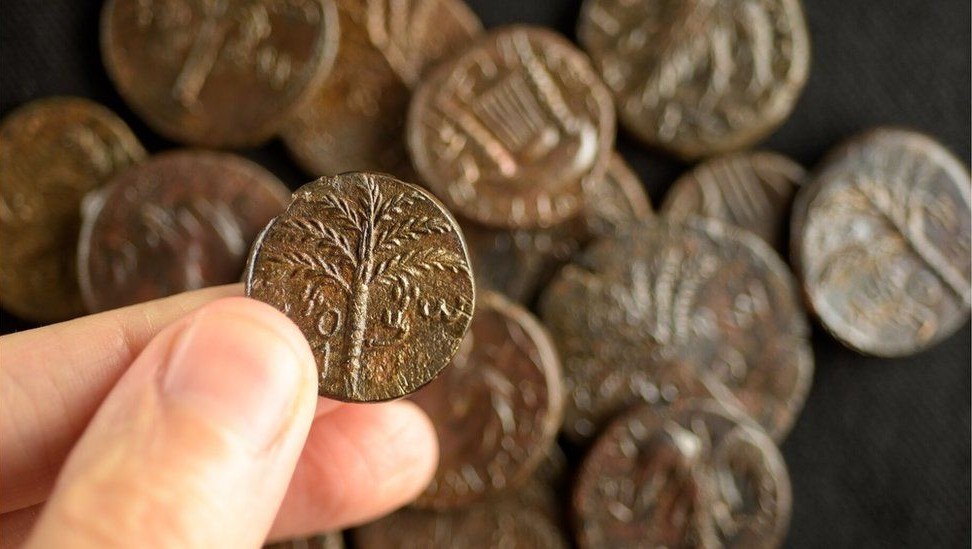
Also discovered were a trove of ancient coins minted by the rebels attempting to create a stable state.

Israeli Antiquities Authority

The mummified remains of a 6,000-year-old child, thought to be a girl, were also uncovered.

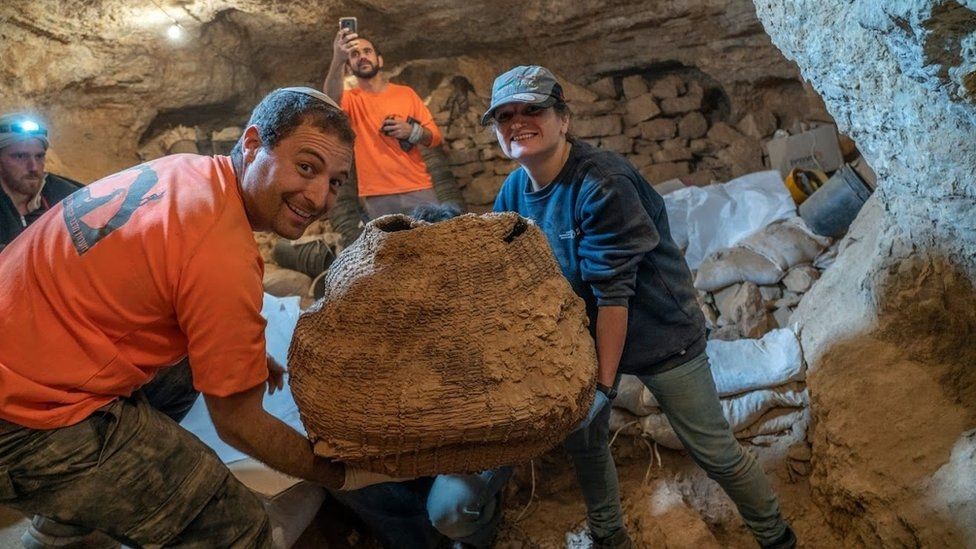
And a giant, woven basket was found. Suspected to be around 10,500 years old, it dates back to the Pre-Pottery Neolithic period and is thought to be the oldest completely intact basket in the world.

Israeli Antiquities Authority

RELATED: One of Archaeology’s Great Mysteries Nearly Solved as Scientists Piece Together 2,000-Year-old Astronomy Calculator

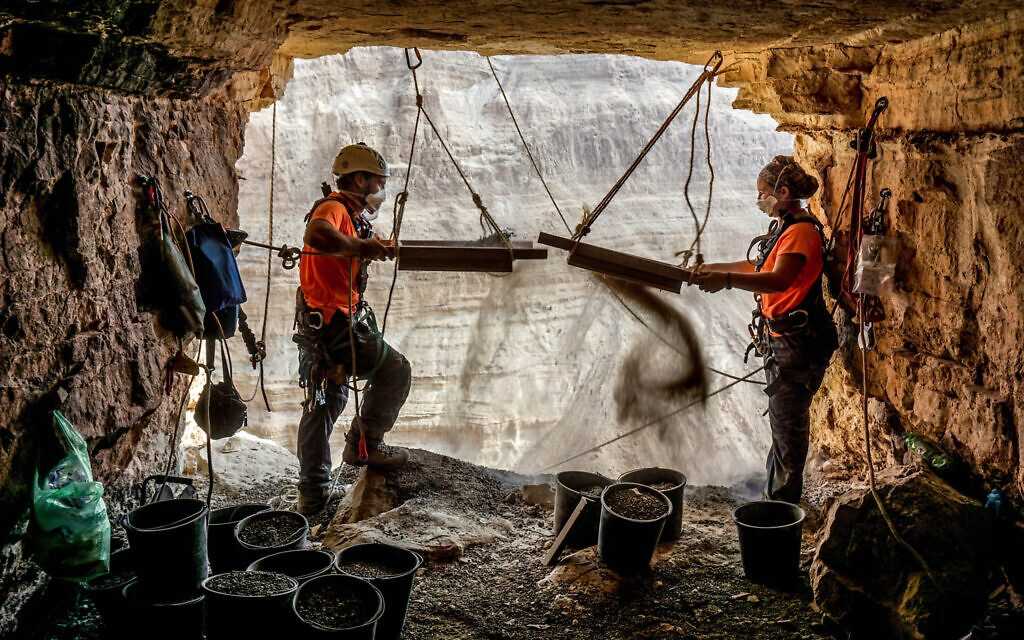
The complex operation included employing drones and reaching virtually inaccessible areas. The mouth of the cave is about 260 feet, or 80 meters, below the lip of a cliff, down which the excavators and scientists were required to rappel.

Israeli Antiquities Authority

It’s the type of terrain feature in the Judean Desert that years ago revealed the remarkable Dead Sea Scrolls, and other relics found in the infamous ‘Cave of Horror’ that contained 40 skeletons.

SNEAK These Ancient Cave Treasures Over to Social Media For Archaeology Fans…

Yo-Yo Ma Gives Surprise Performance at the COVID Vaccine Site After Getting His Second Jab

Berkshire Community College/Facebook

A spoonful of sugar may help the medicine go down, but when it comes to a shot in the arm, there’s nothing more soothing than a little music to get the job done—especially when it’s being performed by world-class cellist Yo-Yo Ma.

That’s just what some lucky folks getting their COVID-19 vaccinations were treated to at Berkshire Community College’s field house clinic after Yo-Yo Ma received his second inoculation dose.

While waiting out his 15-minute observation period, Yo-Yo Ma sat down to play a masked and socially distant impromptu concert for his fellow “inoculees.”

“[He] wanted to give something back,” Richard Hall of the Berkshire COVID-19 Vaccine Collaborative said in an interview with The Berkshire Eagle.

After the college published footage of Yo-Yo Ma’s anti-virus-vaccination performance to their Facebook, the post (ironically) went viral—but in a good way.

This mini-concert isn’t the first time Yo-Yo Ma has employed his music as a calming force during the pandemic. The day of his second inoculation marked one year to the day for a series of performances he’d launched with the hashtag #SongsOfComfort.

“In these days of anxiety, I wanted to find a way to continue to share some of the music that gives me comfort,” he tweeted in March of 2020. The first selection in his #SongsOfComfort series was Dvorák’s Going Home.

MORE: Meghan Markle and Prince Harry Come to the Rescue of Texas Women’s Shelter After Winter Storm

But the clinic gig wasn’t Yo-Yo Ma’s debut pop-up pandemic performance, either. Last September, he joined up with classical pianist Emanuel Ax for a live-stream virtual concert aimed at giving solace to essential workers, which the pair followed up with a string of spontaneous on-the-spot concerts for folks working on the pandemic frontline.

“This is really dedicated to all the people who are going through tough times,” he told Reuters. “Lost people who are pushing through, leading the strenuous life, and for the longest time not knowing if there’s light at the end of the tunnel.”

RELATED: Alex Trebek’s ‘Jeopardy!’ Wardrobe Is Now Going On Job Interviews, Dressing the People Who Need it Most

And if you’re still having trouble seeing the light at the end of the tunnel? Just close your eyes, keep moving forward, and let the music guide you instead.

(WATCH the video of Yo-Yo Ma playing for fellow vaccine recipients below.)

North Carolina-based writer Judy Cole has a new murder mystery / rom-com debuting on Kindle at Amazon: And Jilly Came Tumbling After (from Red Sky Presents).

SHARE This Rousing Performance With Pals on Social Media…

Cannabis Compound Inhibits COVID-19 Replication in Human Lung Cells, Study Says

Martin Vincente

In a study undergoing peer review, the CBD compound from cannabis has been found to stop COVID-19 replication in lung epithelial cells, suggesting the plant medicine holds yet another astounding quality.

Furthermore, observational data from patients who were taking CBD before they were tested for coronavirus showed that its use was associated with a significantly lower infection incidence rate than those not taking CBD.

Measured together with its metabolite 7-OH-CBD, cannabidiol (CBD) inhibited the expression of certain genes within the viral cells, and reversed changes in gene expression within the lung cells resulting from the presence of COVID-19—in other words it had both a protective and a therapeutic role.

It was also found to block viral RNA expression, including the coding for the spike protein, the tool with which the virus enters our cells.

Another crucial finding was that CBD “effectively reversed” the triggering of a hyperinflammatory response—the so-called “cytokine storm” brought on by the presence of the virus, restoring cells not to a previral level of inflation, but a state as if the cells had been treated with CBD alone.

MORE: First-of-its-Kind Clinical Study Finds That Microdosing THC Can Reduce Chronic Pain

Cytokine storm is one of the principal causes of death resulting from a COVID-19 infection.

A range of other cannabinoids were also tested, but by trial’s-end only CBD was found to have any effect at all on COVID-19-infected cells.

“We advocate carefully designed placebo-controlled clinical trials with known concentrations and highly-characterized formulations in order to define CBD’s role in preventing and treating early SARS-CoV-2 infection,” the authors recommend.

A preprint of the study is available in the journal Bio RXIV while it goes under peer review.

RELATED: Cannabis Can Be 30x More Powerful Than Aspirin for Inflammation, Says New Study Eyeing Future Opioid Substitute

CBD is available legally, in various forms and in various ways, in Alaska, Maine, Colorado, California, Washington state, Oregon, Massachusetts, Vermont, Michigan, Nevada, and the District of Columbia.

Featured image: Martin Vincente, CC license

SHARE This Hopeful Study With Friends on Social Media…