All News - Page 517 of 1734 - Good News Network
Home Blog Page 517

Everyone in England is Planting Wildflower Meadows After Prince Charles Replants 60 of Them to Honor Queen

Mark Fairhurst

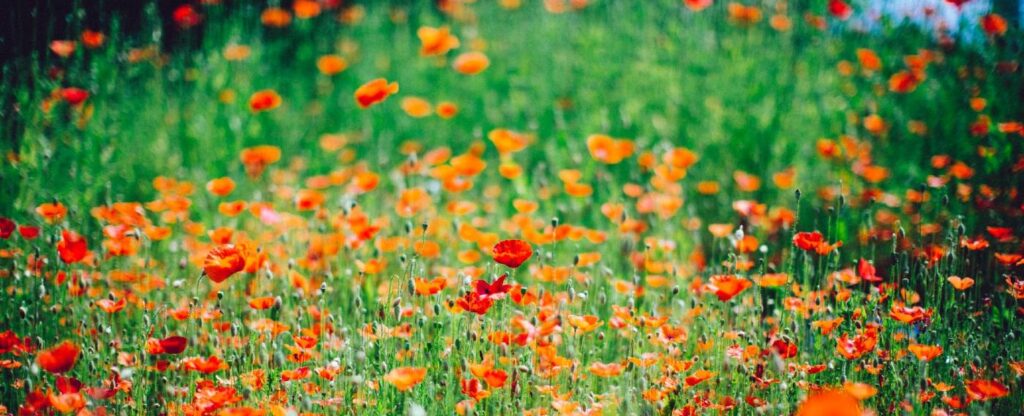
When Prince Charles of Great Britain read Plantlife UK‘s annual 2012 report, he was astonished to find that England had lost 97% of all its natural wildflower meadowland.

Dylan Nolte

He then organized the Coronation Meadows Initiative, which helped build 60 wildflower meadows—one for each year since his mother, the Queen, assumed the throne.

But not only did 60 become 90—totaling over 1,000 acres—but converting old animal paddocks and lawns into wildflower meadowland became the fashion for national gardening and landscaping. Environmental charities and societies are utilizing these trends to promote pollinator restoration, carbon sequestering, and all other manners of ecological benefits.

In Ipswich on the UK’s southeastern coast, a valley running down to a quaint river was turned into landfill in the 1960s and loaded up with trash. Capped and left to sit, in 2017 Landseer Park was turned into a 50-acre wildflower and pollinator sanctuary by a charity called Buglife. It’s now home to rare bee species and butterflies such as the dark green fritillary.

Local reporter Ross Bentley describes the meadows in lovingly nationalistic detail when he wrote for the East Anglian Times.

“Such is the subtle majesty of our native wildflowers that their beauty only becomes truly apparent close up: the lilac of field scabious; the flamboyant blue spikes of viper’s-bugloss; the yellow, honey-scented lady’s bedstraw—the names conjuring up images of their usage back centuries ago when people understood better the properties of our natural flora.”

“When the sun shines on England”

Mark Fairhurst

For Forbes Adam, strolling through the old barley field which has been newly meadowed is like stepping onto “25-acres of hope.”

Her plan was to restore an ancient kind of habitat across much of the North Atlantic called “woodmeadows,” which are exactly what they sound like—a mosaic of trees, grasses, and flowers that marry the creatures of the meadow with those of the forest, and which still can be found across Scandinavia today.

CHECK OUT: Britain Helps World’s Most Remote Inhabited Islands to Establish Biggest Marine Sanctuary in the Atlantic

So far, Adam has recorded more than 1,000 different species of invertebrate, according to an interview she gave with The Guardianincluding 34 bee species and 26 butterflies.

She now runs the Woodmeadow Trust, a charity that helps advise landowners on creating this sort of iconic English habitat everywhere, from Yorkshire in the north to London in the south. That aspiration has a slogan: “a woodmeadow in every parish.”

Over the next 22 years, the larger Plantlife UK charity is hoping to capitalize on the wildflower appreciation trend with a campaign to restore 360,000 acres of wildflower meadows (120k hectares) across the nation.

LOOK: Man Hasn’t Been to the Grocery Store in 8 Months Thanks to Tiny Pandemic Garden Inspired By Grandfather

They practice natural seeding techniques, which involves harvesting seeds at different times from local strains of plant species and seeding areas with this stock rather than buying wildflower seeds from a store.

WhoisBenjamin

The difference is that the naturally collected seeds will create plants which grow and produce nectar and flowers at different rates, meaning the season during which pollinators can find food, and humans can stroll among the beautiful petals, will be much longer.

MORE: UK Debuts Geothermal Plant Using Heat From the Earth to Power 10,000 Homes

Plant Life’s Magnificent Meadows website contains all kinds of resources for making your own wildflower meadow, and how to get involved in the movement to save the English meadow, an important piece of ecological identity, as Alice Duer Miller divulges in The White Cliffs:

When the sun shines on England, shafts of light,
Fall on far towers and hills and dark old trees,
And hedge-bound meadows of a green as bright—
As bright as is the blue of tropic seas.

SPREAD a SEED of Hope—Share This Story With Pals…

Healthcare Workers Stuck in Snowy Traffic With Expiring COVID Vaccines Go Car to Car Offering Them to Drivers

Josephine County Public Health

With COVID vaccines in short supply, waiting times are not unusual—but not for those stuck in traffic alongside these dedicated healthcare workers who made sure that fresh doses didn’t go to waste.

Josephine County Public Health

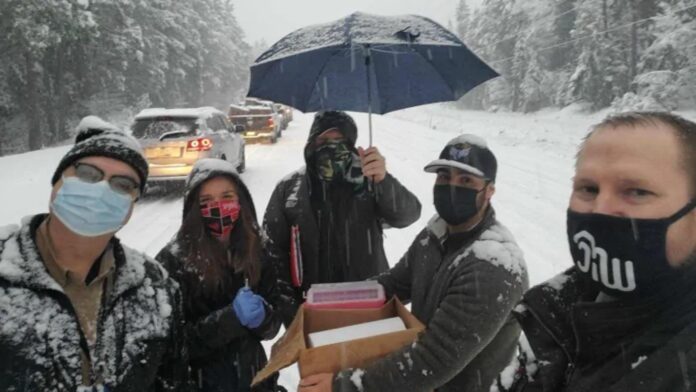
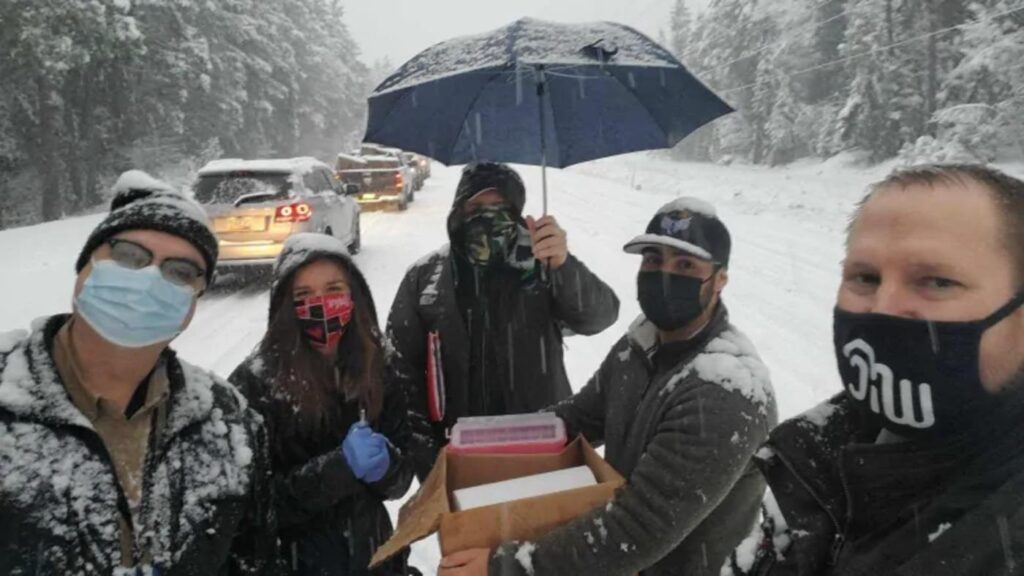
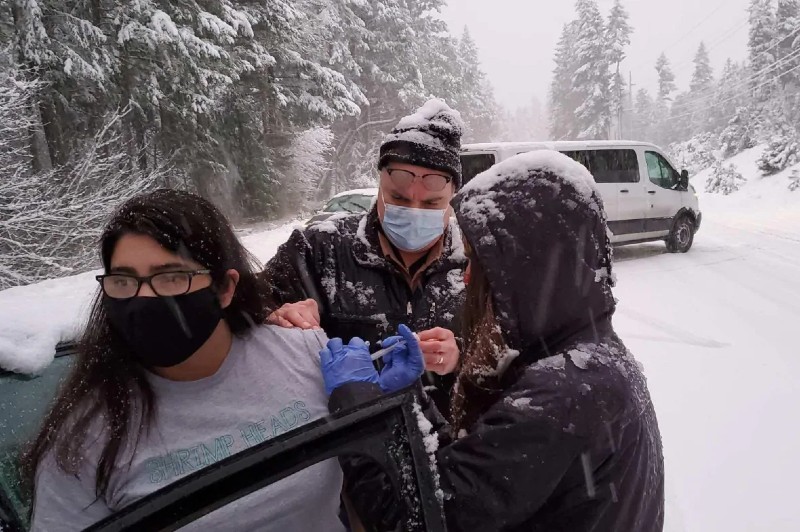
During last Tuesday’s snowstorm in Oregon, this inoculation crew found themselves stranded in a traffic jam. Rather than let vaccine doses expire, they hopped out of their vehicles and braved the cold, walking car to car looking for people eager to receive the shots.

After a day spent doling out vaccinations at various locations, Josephine County Public Health Director Michael Weber and 20 colleagues were on their way back to home base in Grants Pass, Oregon with six vaccine doses leftover. Stuck in a snowbound line of cars behind an accident, Weber realized that the 6-hour shelf life of these vaccine doses that had been removed from sub-zero storage would expire quickly.

With the vaccine’s viability window closing, rather than let the precious cargo go to waste, Weber leaped into action. “I decided to start going door-to-door, car-to-car, offering the vaccine,” he told The Washington Post. An ambulance that had accompanied them was also present and ready to treat anyone in the rare case of an allergic reaction.”

Weber and four team members carried pre-filled hypodermics, medical supplies, and a big umbrella to canvass motorists for likely candidates. After 45 minutes, all the remaining doses had been happily distributed.

MORE: This Nurse is a Hometown Hero for Creating A ‘Take-What-You-Need’ Pantry For Her Virginia Hospital

The six lucky people who got the unexpected shot in the arm were elated. One “vaccinatee” was so psyched, he jumped out of his car and stripped off his shirt in the blizzard to get his injection.

Josephine County Public Health

And finally, in a quintessential “somebody up there likes me” moment, the last dose went to a woman who’d missed her scheduled appointment that same day. She was thrilled.

RELATED: Brides Across America Begin Donating Wedding Gowns to Support the Marriages of Frontline Healthcare Workers

Weber and his crew were pretty pleased with the outcome as well. “I can’t imagine a better way to spend four hours stuck in a snowstorm,” he said.

Neither can we.

SHARE This Snowy Story of Good Fortune With Your Pals…

She was Demoted, Doubted and Rejected But Now Her Work is the Basis of the Covid-19 Vaccine

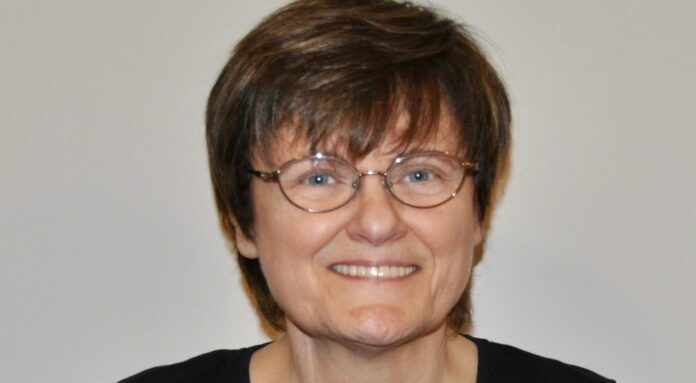
Katalin Karikó

The foundation of the COVID-19 vaccine, and many others, can be drawn back to the work of an intrepid immigrant to the United States from Hungary, whose never-say-die attitude and belief in her work led to one of the most important technological developments in vaccine research.

Katalin Karikó

Katalin Karikó is now being talked about for a Nobel Prize, but life wasn’t always so congratulatory for her, and the story about how she practically invented mRNA and RNA-derived therapies and vaccines—the basis of so many lifesaving treatments—was filled with challenges.

When Karikó left her native Hungary with husband and young child, she had just $1,200 stuffed in her daughter’s teddy bear. Now, after years of her work developing mRNA and RNA technologies, she is the senior vice-president for the German pharmaceutical giant BioNTech, and her work has received more than 12,000 academic citations.

After graduating with a Ph.D. in biochemistry from the University of Szeged, she afterwards embarked on a research career at the Hungarian Academy of Sciences.

However, after getting laid off, Karikó subsequently relocated to the United States after receiving an invitation from Temple University in Philadelphia in 1985. She would eventually transfer to University of Pennsylvania, which would end up being an extremely difficult period.

In that time, messenger RNA research was extremely popular, but shortly after she arrived, the method for using a virus’s genetic material to command a human body to duplicate certain proteins to fight the virus was considered too radical, and too financially risky to fund.

The failed grant applications began piling up on Karikó’s desk, but she was not deterred.

Ten years after she arrived in Philadelphia, she was demoted from her position at UPenn and was then diagnosed with cancer.

“Usually, at that point, people just say goodbye and leave because it’s so horrible,” she told Stat, a health news site, in November. “I thought of going somewhere else, or doing something else. I also thought maybe I’m not good enough, not smart enough.”

Along with another immunologist called Drew Weissman, the pair finally received patents for their mRNA technology in 2012, but after receiving yet more trouble from UPenn, Karikó took a job at BioNTech, a German company founded, perhaps fittingly, also by immigrants.

MORE: Engineers Design New Face Masks With Test Strip to Detect COVID – Much Like a Pregnancy Test

Is it a coincidence that the first and most widespread COVID-19 vaccine was produced by this company? In reality it was Karikó and Weissman, repeatedly underestimated or dismissed by Pennsylvania academics, that partnered their method of mRNA gene-therapy with the expertise of Pfizer, to create the vaccine that has already protected millions of people.

The pair are being talked about for a Nobel Prize, including by famed British intellectual Richard Dawkins and Moderna CEO Derek Rossi.

This year they’ve already scooped up the Rosenstiel Award for Distinguished Work in Basic Medicine.

RELATED: COVID-19 Vaccine Distribution Tracker Lets You See Where U.S. Doses Are Going

“Through their painstaking research into mRNA—and persistence despite setbacks— Weissman and Karikó laid the groundwork for vaccines that will save countless lives,” said Director of the Rosenstiel Center for Research on Basic Medical Sciences.

CHECK OUT: Geophysicists Confirm Plato’s Theory—the Earth Is Made of Cubes

In an interview with CNN, Karikó, with eyes as blue as sea glacier ice, explained that the time for awards and celebrations will come at another time, when the pandemic she will be chiefly responsible for ending, indeed ends.

SHARE This Fascinating Story With Friends on Social Media…

“Every time you tear a leaf off a calendar, you present a new place for new ideas.” – Charles Kettering

Quote of the Day: “Every time you tear a leaf off a calendar, you present a new place for new ideas.” – Charles Kettering

Photo by: Brooke Lark

With a new inspirational quote every day, atop the perfect photo—collected and archived on our Quote of the Day page—why not bookmark GNN.org for a daily uplift?

Photographer Uses Lockdown to Snap Photos of Amazing Wild Birds in Garden –All From the Kitchen Window

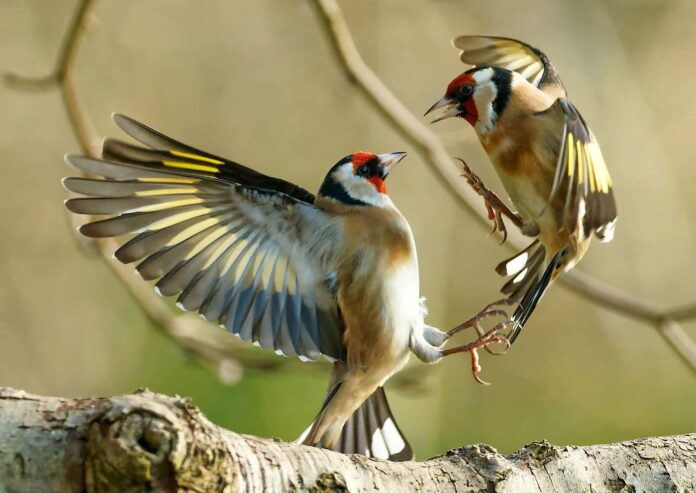
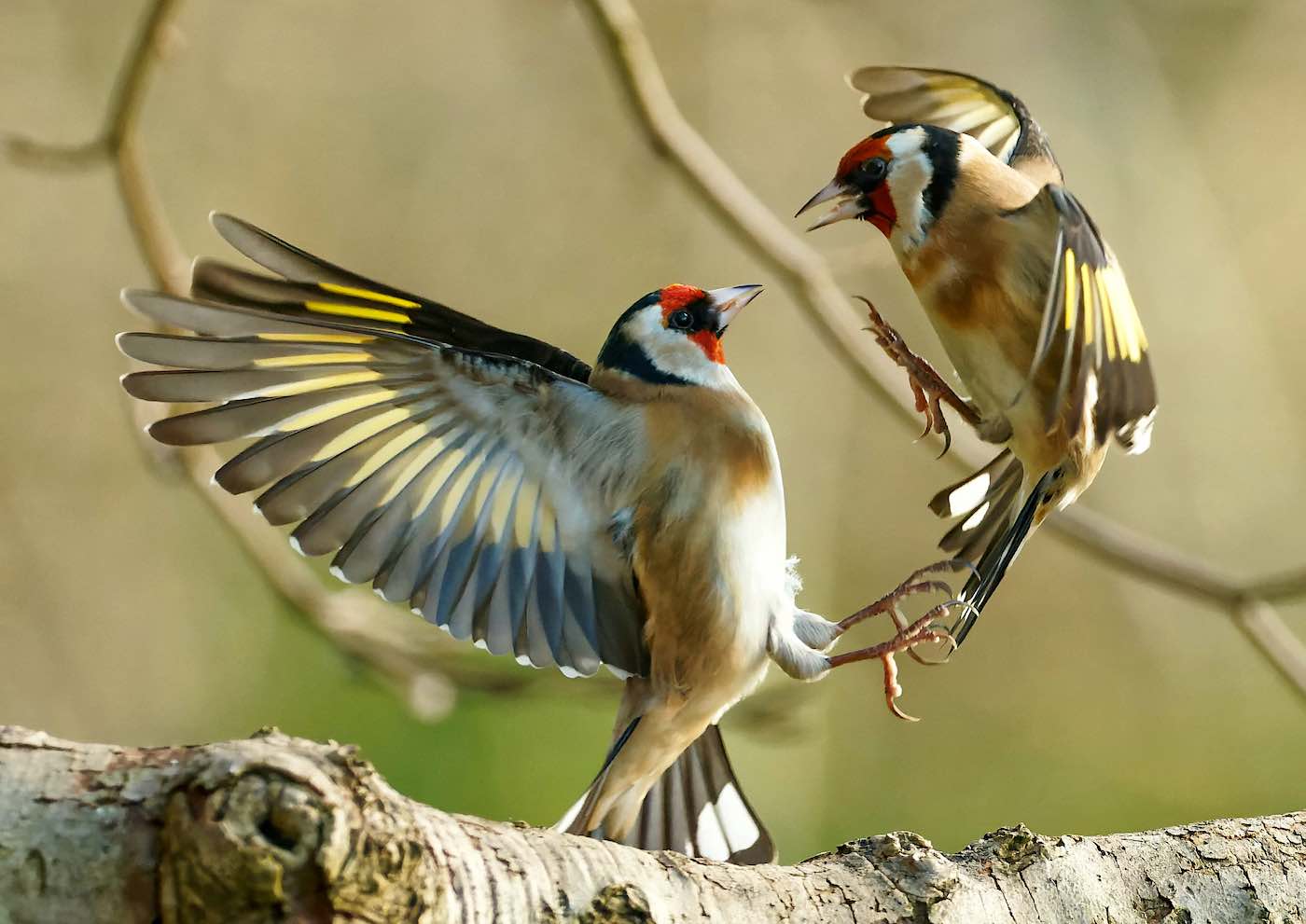
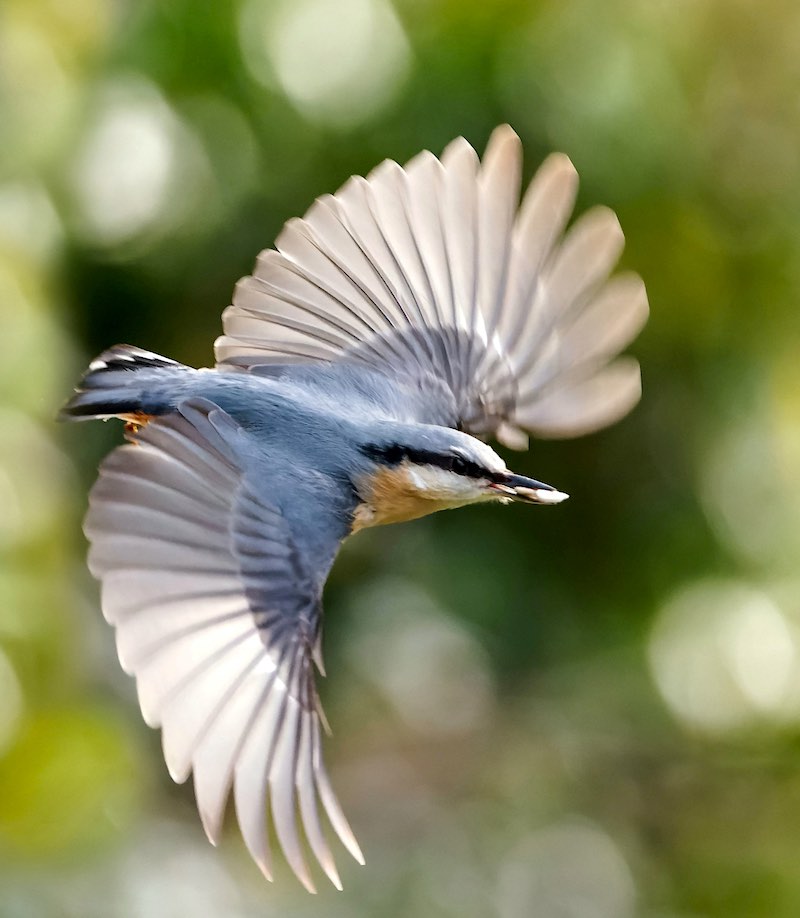
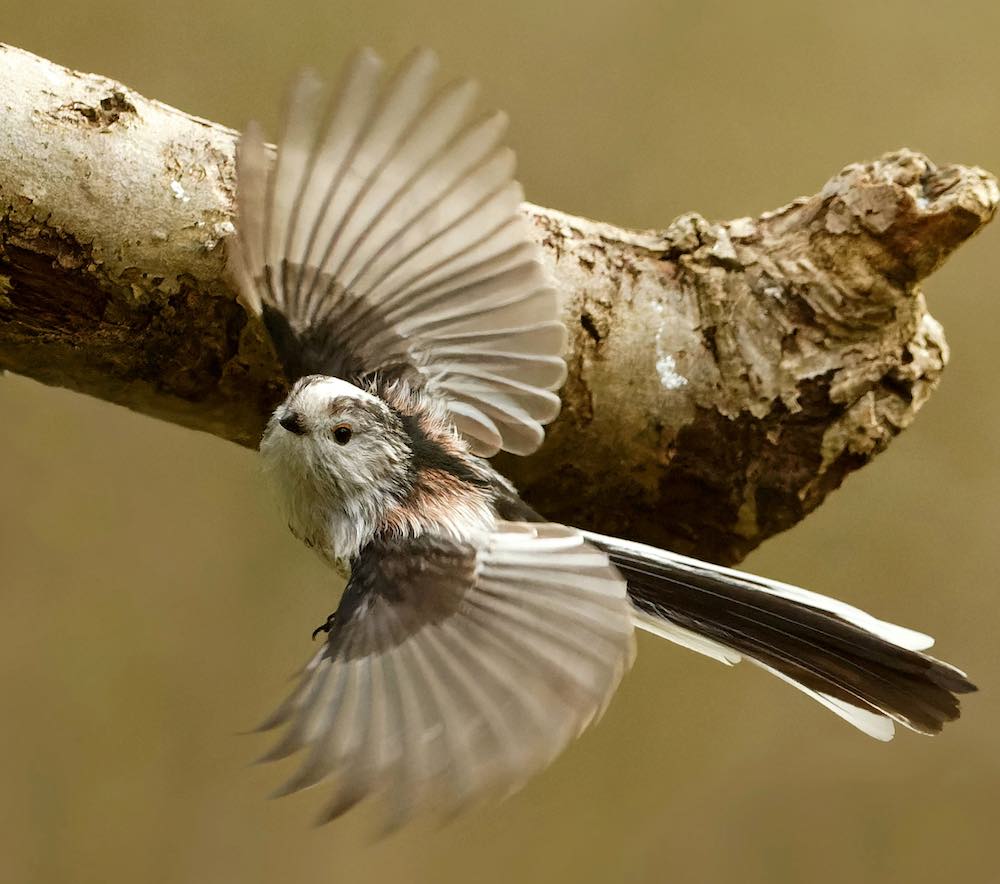
Goldfinches fighting. Colourful garden birds launching into flight and fighting in midair. See SWNS story SWMDbirds. Wildlife photographer Andrew Fusek Peters managed to capture the dramatic scenes through his double-glazed kitchen windows. Over the past week, Andrew, 55, photographed goldfinches, blue and long tailed tits, redpolls, nuthatches and siskins in his garden in Lydbury North, Shrops. Using the glass as a makeshift hide, he spent hours a day taking thousands of pictures.

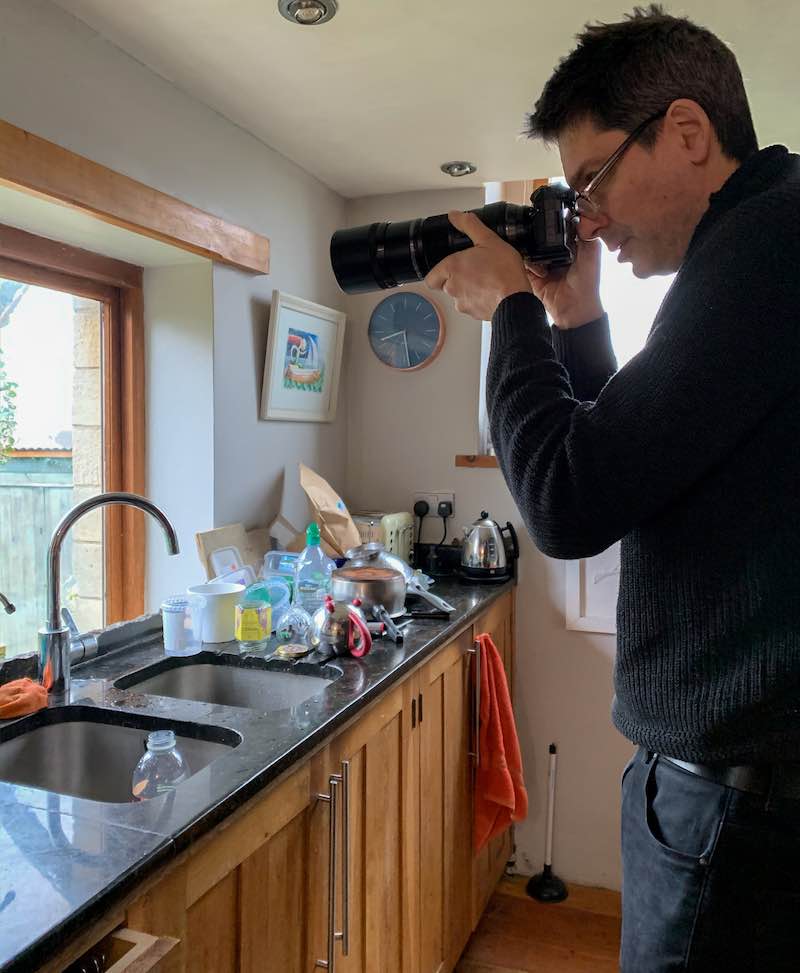
A dedicated wildlife photographer has used lockdown to catalogue the parade of beautiful birds visiting his garden—and has snapped all of the pictures through the kitchen window.

Andrew Fusek Peters – SWNS

Cancer survivor Andrew Fusek Peters, who remained isolated throughout most of the pandemic, forced himself to adapt by working with subjects closer to home who were already socially distant.

The 55-year-old used his double-glazed kitchen window as a makeshift hide to capture stellar images of wild birds outside his Shropshire garden.

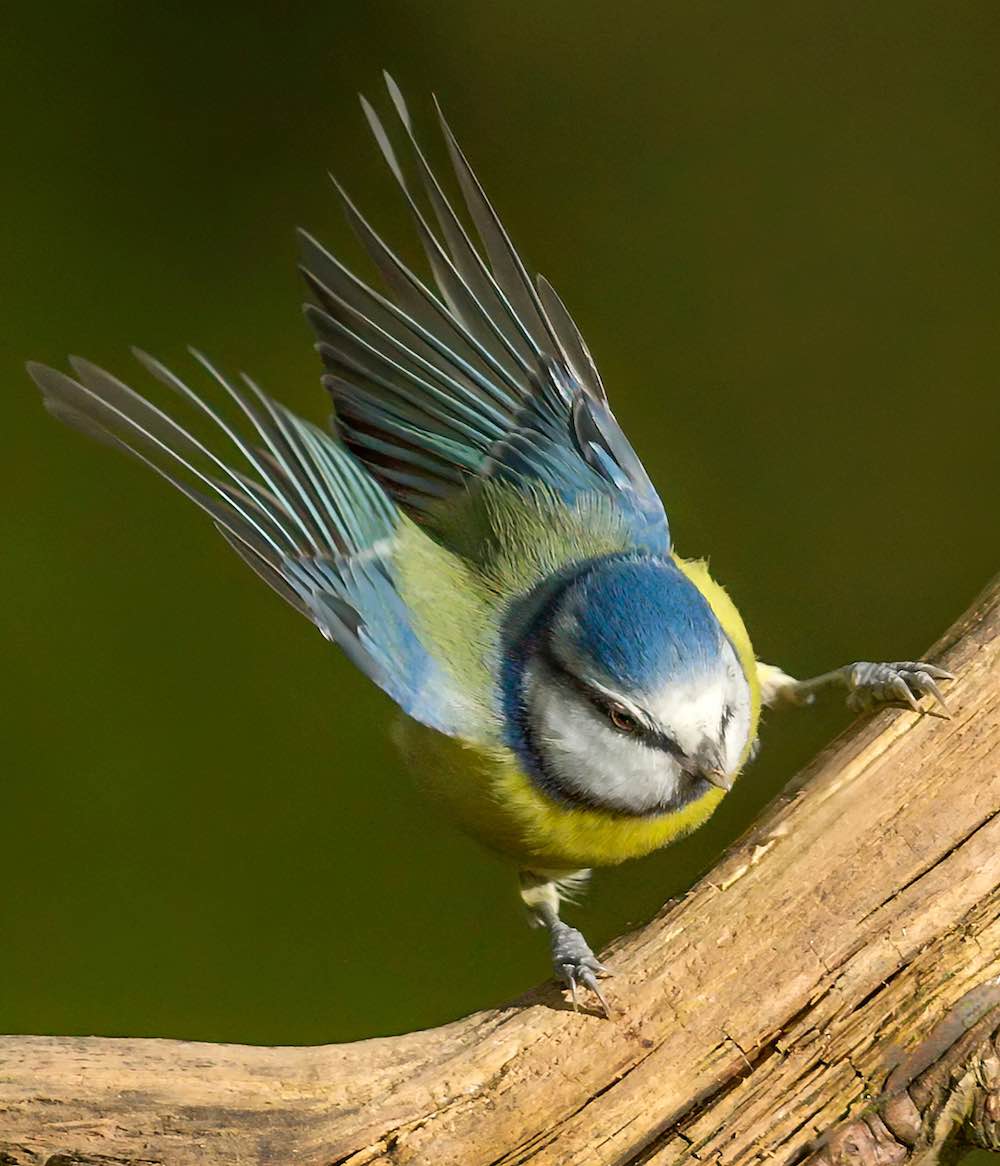
In the last week alone, according to SWNS, he has managed to photograph goldfinches fighting each other midair as well as redpolls, nuthatches, and blue and long tailed tits taking flight.

He spent several hours every day camped in his kitchen while drinking tea to complete the project he has called, “The secret life of birds in lockdown.”

Andrew, of Lydbury North, used an Olympus EM Mark III camera with a zoom lens and shot the birds at 60 frames per second.

He said: “I’ve been carrying on this garden bird project through lockdown and these have worked out really, really well.

Blue tit – Andrew Fusek Peters (SWNS)

“Usually I’d have gone away to Scotland and the Shetlands but instead I’ve managed to showcase this amazing wildlife in our garden.

LOOK: Snowy Owl Spotted in New York’s Central Park For the First Time in 130 Years

“The garden has great light but I need the sun to be at the perfect level at a certain time, and have the ideal weather conditions.

“The sun can’t be shining at the window or the glare makes it impossible. There is only a small window of opportunity really.

Nuthatch – Andrew Fusek Peters (SWNS)

“The bird needs to take off and fly past the exact same place for it to come off.

“Because I’m behind the double glazed glass I have to clean the windows inside and out daily to get the shot as sharp as possible.

RELATEDNew Research Shows Why Crows Are So Intelligent and Even Self-Aware—Just Like Us

“The birds are so fast you are photographing like crazy. The six or seven shots I’ve managed to get are about a one in five thousand chance.

SWNS

“You have to understand the behavior of the birds, which are all different.

“I think these are some of the best shots I’ve done,” he said of the goldfinches fighting.

WEIRD: New Bird Song That ‘Went Viral’ Across Species of Sparrow Was Tracked by Scientists For the First Time

“They look ferocious with their claws up and the look in their eyes is so intense. Their colurs are beautiful.

Long tailed tit – Andrew Fusek Peters (SWNS)

“It’s quite magical to see such a variety of wildlife in your back garden. It shows how beauty is all around us, if you look closely enough.”

FLY This Inspiration to Your Photographer Friends on Social Media…

This New Year, Dare to Be Unfaithful to Your Goals

Lillie Kate, CC license

An excerpt from the book Thriving Through Uncertainty: Moving Beyond Fear of the Unknown and Making Change Work for You (TarcherPerigree-Penguin-Randomhouse),
by Tama Kieves

I was talking to one of my coaching clients who reported not being able to stay with a Zen meditation practice—so she gave up meditating altogether. “I’m either gung-ho all the way or I don’t show up at all,” she said with self-disgust.

We were discussing this on one of the unfortunate evenings when she “hadn’t shown up at all.” To listen to her, you would have thought that she had just murdered the family’s cocker spaniel. Clearly, she needed self-forgiveness more than self-discipline.

I understand the desire to make changes in your life. I am a believer in enthusiasm. I also believe in commitment. But I’m more of a fan of incremental, organic natural commitment.

That means I invite you to be inconsistent and unreliable.

I dare you to break promises to yourself and I dare you to make fresh new ones. This is what it takes to be on the courageous path of learning to reinvent, hunt down your bare heart, and discover and trust yourself.

You are here to follow an unpredictable light wherever it leads, not to wrangle unfathomable power into a silly, stupid box. This isn’t rationalization. It’s strategy. Because a realistic and sustainable path doesn’t come from obligation or hostility. If you want something to go the distance, it needs to come from love.

RELATED: People are Making Self-Care a Priority After One of the Most Stressful Years Ever

Commitment is bold and wondrous. Still, let your intention breathe instead of suffocate you. You’re learning how to commit from something deeper than willfulness. I’ll call it willingness. This willingness arises from an inner summons. Authentic success springs forth from irrepressible desire, not impatience.

“I never follow through,” says Sandra, on one of our afternoon calls. I know this isn’t true. She is a bright, passionate woman who has raised children, which if you ask me, is quite the follow through. In fact, she’s still feeding them, last I heard. “I get it. You’ve got to stare resistance down sometimes,” I said. “But honey, believe me when I tell you, that rigidity will create more problems than it solves.”

Following through is so much less important than following inner guidance.

It’s not wise to stay true to a faded goal. Stay committed to the gold. Your inner voice is the gold. You don’t have to believe me, just because I get paid good money as a coach who kind of turns the term “accountability” on its head. Ralph Waldo Emerson, leading the Transcendentalist movement in the mid 19th century said it even more flagrantly: “A foolish consistency is the hobgoblin of little minds.” Don’t worry. Your inner wisdom is never going to ask you to abandon your integrity. It may ask you to abandon your hobgoblins. Or give yourself elbow room and wingspan.

Flexibility doesn’t mean you have a problem with commitment. It may indicate adaptivity, which is sounds so much sexier than being erratic.

Seriously, though, what if who you think you “should be,” is keeping you from the brilliance of who you are becoming?

For example, I’ve worked with many high-powered successful individuals who don’t “follow through,’ because while something might be a great idea, it’s not an idea that sets its fangs into their jugular. It’s just a good idea. They have lots of great ideas, popcorn coming out of their ears. And it’s not right for them to make a good idea the only opportunity right now. It takes emotional honesty to explore and stay true to your instincts. It takes enormous courage to not follow through.

Maybe you think you’re just a quitter? I’ve met many intelligent authenticity seekers who refuse to settle. They had the need to keep moving on. It wasn’t because they were flighty, but because they had already taken flight. If you’ve grown, you move on. That’s called maturing. If you move on to the 8th grade, have you “quit” 7th grade? No, you’re not quitting; You’re evolving. And growth sheds its baby teeth.

CHECK OUT: If Overly Anxious or Depressed, Study Shows That Focus on Past Successes Can Improve Judgement

There’s also a divine timing to things, when things just work out themselves. My partner Paul tried to get sober three times before he got sober for life, or at least for two decades, and counting. It wasn’t a mistake for him to try to get sober. It wasn’t a failure to take a run at it, even though he didn’t follow through. It’s never wrong to move towards health. You can’t force yourself to be ready. But you can keep taking steps in the right direction as often as is possible.

To me, there’s beauty, intelligence and grace in showing up lopsided, showing up fitfully, showing up sporadically. Showing up is showing up.

The dream-basher in you pushes you into airtight commitments. But real change is about breathing, coming in and going out. Daring to live the authentic life that calls you is a path of invitation, not obligation. If it’s right for you to make a deeper commitment to something, you will move into this grace. But you will make it in your own time and not a second before or afterwards.

The Persian mystic poet Rumi, the absurdly free and expansive spirit, writes “Come, come whoever you are, wanderer, worshipper, lover of leaving… Come, even if you have broken your vow a hundred times. Come, come again.”

The wisdom path of A Course in Miracles echoes this philosophy by telling us to “choose once again,” whenever we have made a choice that has felt painful. It doesn’t say crucify yourself, throw in the towel, and, by all means, go ahead and create your identity out of all that hasn’t worked out yet. No, it instructs us to save time. Just begin again.

Choose the new behavior or belief now. Give birth to a different experience this very minute. This kind of freedom isn’t irresponsible. It’s the ultimate responsibility. You have a mandate in this lifetime to give yourself every chance to be healthy and true.

If you are trying to lose weight, don’t agitate over your failure of will on the third day of your program. Celebrate the first two days of motivation. Only the wins count—if you want to win. In 12 Step Program lingo, “It’s all about progress, not perfection.”

POPULAR: UC Berkeley is Offering Up Their Popular ‘Science of Happiness’ Course for Free Online

I know the sticklers will tell you that taking one exercise class or spending one hour with your camera won’t help, but I disagree. Every act of love for yourself– makes a difference.
That one time can boost your self-esteem, help reveal the heavens, stretch a muscle, or send a rush of dopamine to your brain, which believe me, will increase the likelihood that you’ll return.

Go ahead, stumble into grace. Start and stop a million times. Get there late and leave early. Whatever it takes. So, what, if some think you look spasmodic? You are an extraordinary truth-seeker, an inspired explorer, or as Rumi says a traveler on “a caravan of joy.” And that works just fine, because you’re moving in the right direction.

Tama Kieves, an honors graduate of Harvard Law School, left her law practice to write and help others create their most extraordinary lives. She is the bestselling author of 4 books including A Year Without Fear: 365 Days of Magnificence and her latest Thriving Through Uncertainty. A sought-after speaker and career/success coach, she has helped thousands to thrive in their life, calling, and businesses. Sign up for your FREE digital fortune cookies and a free copy of her popular webinar Dare to Decide at www.tamakieves.com/dare.

SHARE the Wisdom With Pals on Social Media…

Snowy Owl Spotted in New York’s Central Park For the First Time in 130 Years

@ManhattanBirdAlert – Twitter

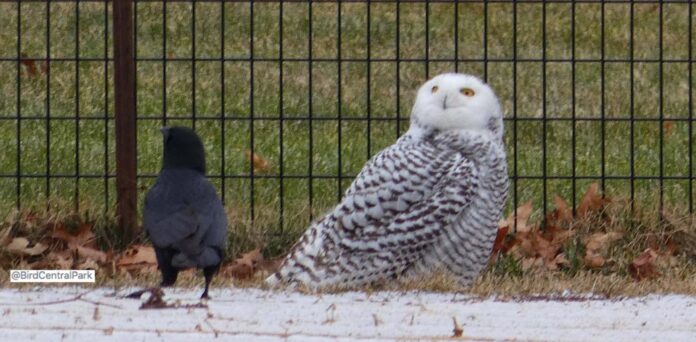
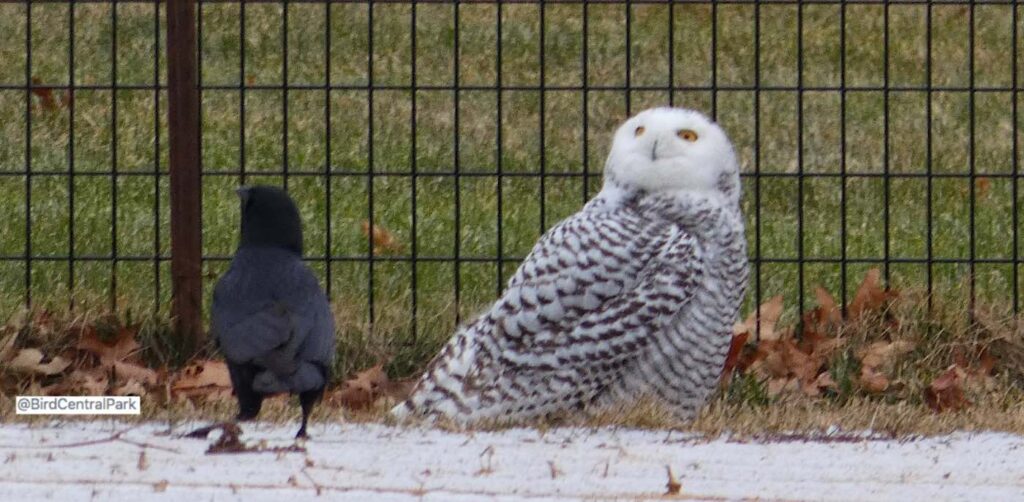
New Yorkers were treated to a once in a lifetime visit from a snowy owl, a species that hadn’t been seen in Central Park in over a century.

@ManhattanBirdAlert – Twitter

The white raptor wasn’t as well camouflaged as it is at home in the Arctic, which is its normal summer home. The species migrates south in search of food in the Winter, but no one expected to see the bright white feathers on a baseball field with the Manhattan skyline in the background.

David Barrett, who runs a popular Twitter page, Manhattan Bird Alert, was the first to report the sighting, calling it “perhaps the first-ever documented record of this species in the park.”

His tweet on January 27 alerted a throng of birders who stayed behind a fence to give the majestic predator plenty of space.

“Yesterday’s snow and cold to our north likely encouraged this SNOWY OWL to fly south in search of better hunting conditions,” Barrett says.

“These owls like flat lands and beaches, so the Central Park North Meadow, flat and with sand-filled fields, might have appealed.”

The appearance is not due to the pandemic, as some would surmise. Snowy owls have been spotted on Governors Island in the NY harbor near Brooklyn throughout the last decade.

However, with more people outside leisurely strolling during the lockdowns, more birds than ever are being reported on wildlife apps and on social media.

LOOK: Miracle on 34th Street for Tiny Owl Found Stowed Away in Rockefeller Christmas Tree

No snowy owl glimpses have been reported in the park over the last 2 days. Maybe it is checking out the nearby island—but with snow in the forecast, it might be back.

WATCH David’s sweet video…

FLY This Beautiful Sighting to Your Flock on Social Media…

“To be hopeful in bad times is not just foolishly romantic. It gives us the energy to act.” – Howard Zinn

Quote of the Day: “To be hopeful in bad times is not just foolishly romantic. It gives us the energy to act.” – Howard Zinn

Photo by: Gabriel Lamza

With a new inspirational quote every day, atop the perfect photo—collected and archived on our Quote of the Day page—why not bookmark GNN.org for a daily uplift?

Engineers Design New Face Masks With Test Strip to Detect COVID – Much Like a Pregnancy Test

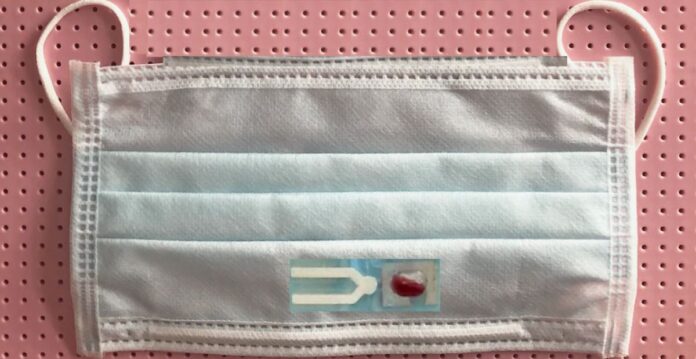
Similar to a classic pregnancy test, a color-changing strip may, in the future, be mounted on face masks to detect the presence of COVID-19 in the air you breathed that day, allowing everyone to self-monitor the environments they pass through.

The project was launched by nanoengineers at UC San Diego with a $1.3 million grant from the NIH’s Rapid Acceleration of Diagnostics Radical (RADx) program.

The scientists created a small test kit to attach to the front of any mask, which can be mass produced at a cost of about 3 cents per kit.

After breathing through the mask for 4-5 hours, enough particles would be available to determine if you came in contact with the virus throughout the duration, or indeed if you perhaps have contracted it.

“In many ways, masks are the perfect ‘wearable’ sensor for our current world,” said Jesse Jokerst, professor of nanoengineering at the California university and project lead. “We’re taking what many people are already wearing and repurposing them, so we can quickly and easily identify new infections and protect vulnerable communities.”

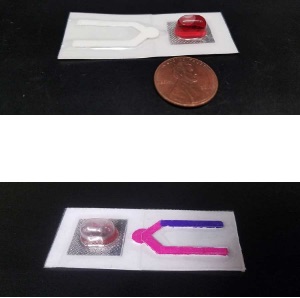
To detect the virus, the wearer would crack a small blister pack that would immediately coat the test kit in fluid which would indicate the presence of proteases—protein-cleaving molecules produced from the coronavirus.

RELATED: Same Technology Behind Pfizer COVID-19 Vaccine is Leading Researchers to Possible MS Breakthrough

The grant program from the NIH totals $107 million and is being handed out to 49 projects at 43 institutions looking for “non-traditional viral screening approaches, such as biological or physiological markers, new analytical platforms with novel chemistries or engineering, rapid detection strategies, point-of-care devices, and home-based testing technologies.”

UC San Diego

An advancement for the future

Despite the fact that the test strip turns blue or red, Jokerst said the product would more represent a smoke detector in function.

“Think of this as a surveillance approach, similar to having a smoke detector in your house,” he said. “This would just sit in the background every day and if it gets triggered, then you know there’s a problem and that’s when you would look into it with more sophisticated testing.”

POPULAR: Hair Stylists Infected With COVID-19 Were Wearing Masks Along With Their 140 Clients—Tests Prove No One Got Sick

Perfect for prisons, homeless shelters, nursing homes, dialysis clinics, or other areas where people must stay in quite close proximity, the kits could prevent outbreaks from becoming epidemics, and while Jesse understands that by the time his idea is mass-produced, which might not even come this year, the vaccination program might have COVID-19 under control.

But, his test also turns red for the original SARS virus from 2003, as well as MERS, which means he thinks they could be utilized—as a rapid and quickly-deployable weapon—for future pandemics originating form coronaviruses

“To solve a problem as complicated as COVID-19, we need ideas, tools, and technologies that challenge the way we think about pandemic control,” said NIH Director Francis S. Collins, M.D., Ph.D., in a statement.

CHECK OUT: New Zealand Buys Enough COVID Vaccine for its Pacific Islander Neighbors

“These awards from the RADx-rad program provide superb examples of outside-the-box concepts that will help us overcome this pandemic and give us a cadre of devices and tactics to confront future outbreaks.”

SPREAD the News to People in Search of Positive Solutions on Social Media…
This Week’s Inspiring Horoscopes From Rob Brezsny’s ‘Free Will Astrology’

Our friend Rob Brezsny provides his weekly wisdom to enlighten our thinking and motivate our mood. Rob’s Free Will Astrology, is a syndicated weekly column appearing in over a hundred publications. He is also the author of Pronoia Is the Antidote for Paranoia: How All of Creation Is Conspiring To Shower You with Blessings. (A free preview of the book is available here.)

Here is your weekly horoscope…

FREE WILL ASTROLOGY – Week beginning January 29, 2021
Copyright by Rob Brezsny, FreeWillAstrology.com

AQUARIUS (Jan. 20-Feb. 18):
“We all want everything to be okay,” writes author David Levithan. “We don’t even wish so much for fantastic or marvelous or outstanding. We will happily settle for okay, because most of the time, okay is enough.” To that mediocre manifesto, I reply, okay. I accept that it’s true for many people. But I don’t think it will apply to you Aquarians in the coming weeks. According to my assessment of your astrological potentials, you can, if you want, have a series of appointments with the fantastic, the marvelous, and the outstanding. Please keep those appointments! Don’t skip them out of timidity or excess humility.

PISCES (Feb. 19-March 20):
DON’Ts: Don’t keep scratching an old wound until it bleeds. Don’t try to snatch away the teddy bear that belongs to the 800-pound gorilla. Don’t try to relieve your tension by pounding your head against a wall. Don’t try to convince a stone idol to show you some tenderness. DOs: Do ask supposedly naive questions that may yield liberating revelations. Do keep in mind that sometimes things need to be a bit broken before you’ll be motivated to give them all the care they need and deserve. Do extinguish the fire on a burning bridge, and then repair the bridge.

ARIES (March 21-April 19):
In the 1950 film Harvey, James Stewart plays a middle-aged man named Elwood whose best friend is a tall invisible rabbit named Harvey. The relationship causes problems with the people in Elwood’s life. At one point a psychiatrist tries to convince him to “struggle with reality.” Elwood replies, “I wrestled with reality for 40 years and I am happy to state that I finally won.” I’m happy to tell you this story, Aries, because it’s a good lead in to my counsel for you: I suspect that one of your long wrestles with reality will yield at least a partial victory in the coming weeks. And it will be completely real, as opposed to Elwood’s Harvey. Congratulations!

TAURUS (April 20-May 20):
The light of the North Star takes a long time to reach us, even though it’s traveling 186,000 miles per second. The beams it shows us tonight first embarked when Shakespeare was alive on Earth. And yet that glow seems so fresh and pure. Are there any other phenomena in your life that are metaphorically comparable? Perhaps an experience you had months ago that is only now revealing its complete meaning? Or a seed you planted years ago that is finally ripening into its mature expression? The coming weeks will be an excellent time to take inventory of such things, Taurus. It will also be a favorable phase to initiate innovations that will take some time to become fully useful for you.

GEMINI (May 21-June 20):
In 1971, astronaut Alan Shepard had the great privilege of landing on the moon in a spacecraft, then walking on the lunar surface. How did he celebrate this epic holy adventure? By reciting a stirring passage from Shakespeare or the Talmud? By placing a framed photo of Amelia Earhart or a statue of Icarus in the dirt? By saying a prayer to his God or thoughtfully thanking the people who helped put him there? Shepard actually hit a golf ball with a golf club. I’ll ask you not to regard him as a role model in the coming weeks. When your sacred or lofty moments arrive, offer proper homage and honor. Be righteously appreciative of your blessings.

CANCER (June 21-July 22):
William Shakespeare worked with another playwright in creating three plays: Henry VIIIThe Two Noble Kinsmen, and Cardenio. The lucky collaborator was John Fletcher, who was popular and influential in his era. I propose that we name him one of your role models in 2021. Here’s why: You will have an enhanced potential to engage in fertile partnerships with allies who are quite worthy of you. I encourage you to be on the lookout for opportunities to thrive on symbiosis and synergy.

LEO (July 23-Aug. 22):
Canadian journalist Nick Ashdown is amazed that white people in North America are so inhibited about revealing their real feelings. He writes, “How bizarre that in English, the word ’emotional’ is used pejoratively, as though passion implies some sort of weakness.” He marvels that the culture seems to “worship nonchalance” and regard intense expressiveness as uncool or unprofessional. I’m going to encourage you to embody a different approach in the coming days. I don’t mean to suggest that you should be an out-of-control maniac constantly exploding with intensity. But I do hope you will take extra measures to respect and explore and reveal the spirited truth about yourself.

VIRGO (Aug. 23-Sept. 22):
Virgo actor Ingrid Bergman appeared in three movies directed by Alfred Hitchcock. In Notorious, set after the end of World War II, she played the daughter of a Nazi spy. During the filming, Bergman had trouble with a particular scene. She explained her doubts to Hitchcock, saying, “I don’t think I can do that naturally.” Hitchcock seemed receptive to her input, but in the end had an unexpected response: “All right,” he told her. “If you can’t do it naturally, then fake it.” I’m going to suggest that you follow Hitchcock’s advice during the next two weeks, Virgo. “Fake it till you make it” is an acceptable—probably preferable—approach.

LIBRA (Sept. 23-Oct. 22):
The 17th-century Libran polymath Thomas Browne had a brilliant, well-educated mind. He authored many books on various subjects, from science to religion, and was second only to Shakespeare in the art of coining new words. He did have a blind spot, however. He referred to sex as the “trivial and vulgar way of union” and “the foolishest act a wise man commits in all his life.” Most of us have pockets of ignorance like that—aspects that qualify as learning disabilities or intellectual black holes. And now and then there come times when we benefit from checking in with these deficiencies and deciding whether to take any fresh steps to wisen them up. Now is such a time for you.

SCORPIO (Oct. 23-Nov. 21):
“There is no sunrise so beautiful that it is worth waking me up to see it,” declares actor and comedian Mindy Kaling. Is that an unromantic sentiment? Maybe. But more importantly, it’s evidence that she treasures her sleep. And that’s admirable! She is devoted to giving her body the nurturing it needs to be healthy. Let’s make Kaling your patron saint for now. It’s a favorable time to upgrade your strategies for taking very good care of yourself.

SAGITTARIUS (Nov. 22-Dec. 21):
All of us go through phases when our brains work at a higher level than usual. I’m guessing that you’re about to enjoy one of these times. In fact, I won’t be shocked if you string together a series of ingenious thoughts and actions. I hope you use your enhanced intelligence for important matters—like making practical improvements in your life! Please don’t waste it on trivial matters like arguments on Facebook or Twitter.

CAPRICORN (Dec. 22-Jan. 19):
Today the Capricorn artist Paul Cézanne (1839–1906) is regarded as an important and influential painter. Early in his career, though, he was rejected and even ridiculed by critics. One reason was that he loved making still-life paintings, which were considered low art. Of his 584 works, about 200 of them were of inanimate, commonplace objects. Fruit was his specialty. Typically he might spend 100 separate sessions in perfecting a particular bowl of apples. “Don’t you want to take a vacation from painting fruit?” he was asked. In response, he said that simply shifting the location of his easel in relation to his subject matter was almost more excitement than he could bear. That’s the kind of focused, detailed attitude I hope you’ll cultivate toward your own labors of love during the coming weeks, Capricorn.

WANT MORE? Listen to Rob’s EXPANDED AUDIO HOROSCOPES, 4-5 minute meditations on the current state of your destiny — or subscribe to his unique daily text message service at: RealAstrology.com

(Zodiac images by Numerologysign.com –CC license)

SHARE The Wisdom With Friends Who Are Stars in Your Life on Social Media…astol

After Losing My Dog, Neighbors on Nextdoor Loaned Me Their Own Pups to Grieve

Layla

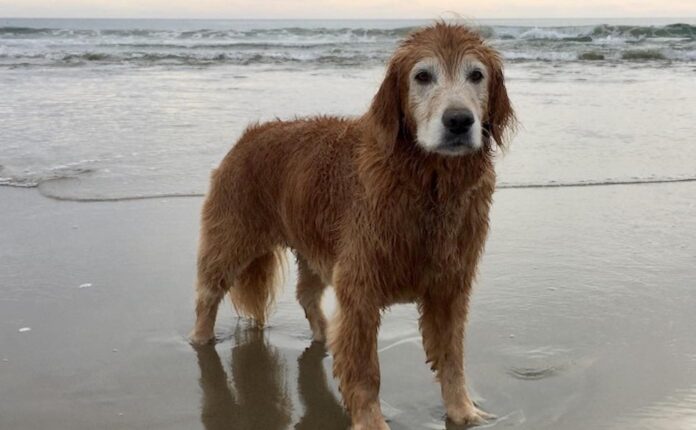
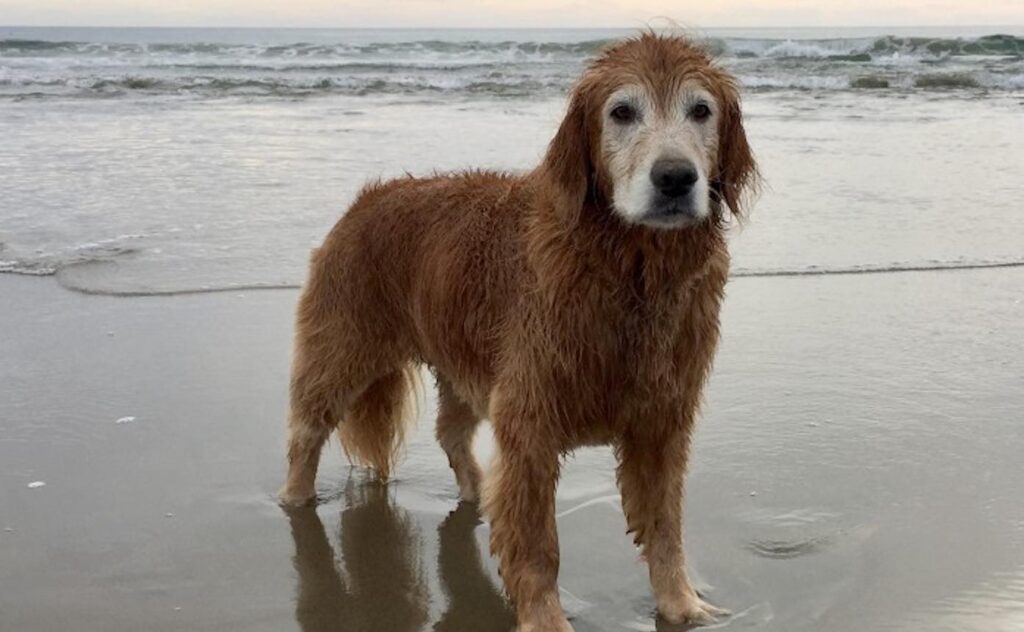
We recently lost our beloved golden retriever, Layla. Her departure left an enormous hole in the house and in our hearts at a time when we needed her never-ending joyfulness, compassion, and affection more than ever. Losing a pet might seem like a small tragedy compared to the ongoing pandemic, but it devastated us nonetheless.

Layla

Because of COVID restrictions, our family has been mourning alone at home. As I floundered around in my grief, desperately missing the intimate physical, emotional, and spiritual relationship with this innately loving creature, an idea came to me. On some levels, it was a little strange, but I decided to step outside my comfort zone.

I put an ad up on Nextdoor Sorich Park, our neighborhood online bulletin board in Marin County, California, with the headline “Grieving Family Needs Canine Healing.” Attaching a picture of Layla, I said I’d love to take a neighbor’s dog for a walk or just play in the yard, assuring readers that I’ve been practicing strict safety measures.

I also mentioned that I would be particularly interested in meeting other golden retrievers; I like almost all dogs, but once you’ve had a golden, you gain lifetime membership to a club where you naturally gravitate to fellow devotees.

Within minutes of posting, the likes, emojis, and comments started rolling in—a stream that soon turned into a flood. There were expressions of sympathy, stories of people’s own losses, and recommendations for local golden retriever adoptions.

WATCH: The Serendipitous Moment a Dog Runs Into Her Puppy Brother in a Park—Even Though He Lives 500 Miles Away

Many included photos of their own pets; two sent beautiful poems; and one included a link to an online pet grief support group. I even got a message from the San Rafael Police Department to visit with their official comfort dog. Best summons I’ve ever received.

Over the following week, I received 420 responses, including 140 comments. I was simply overwhelmed by this outpouring of empathy. Messages from 25 previously unknown neighbors welcomed me to come meet their pups, 15 of them golden retrievers. How could complete strangers be so generous during a health crisis, when we’re so focused on our own well-being?

As the offers kept rolling in, I realized I’d struck a rich vein of humanity at a time when we genuinely need more personal connection. While all of us want to feel loved, I believe we have an equally primal need to give love, and dogs bless us with abundant opportunities to express our devotion.

I work from home, so I saw Layla all day, every day, and I rarely passed her without stopping to rub her soft head, neck, back, or belly, feeling a gentle jolt of loving energy move up my arm and into my heart and brain. Over our 12 years together, I can honestly say that I relished every single stroke.

People always talk about the tenderness, lack of judgment, and unconditional love they receive from their dogs, but I also know that Layla continually called forth these same qualities in me. I think the reason people responded so viscerally to my ad was that it enabled them to share their best friends and best selves.

LOOK: This Vermont Mountain Retreat is a Mecca for Dogs and Grieving Dog Lovers Across the World

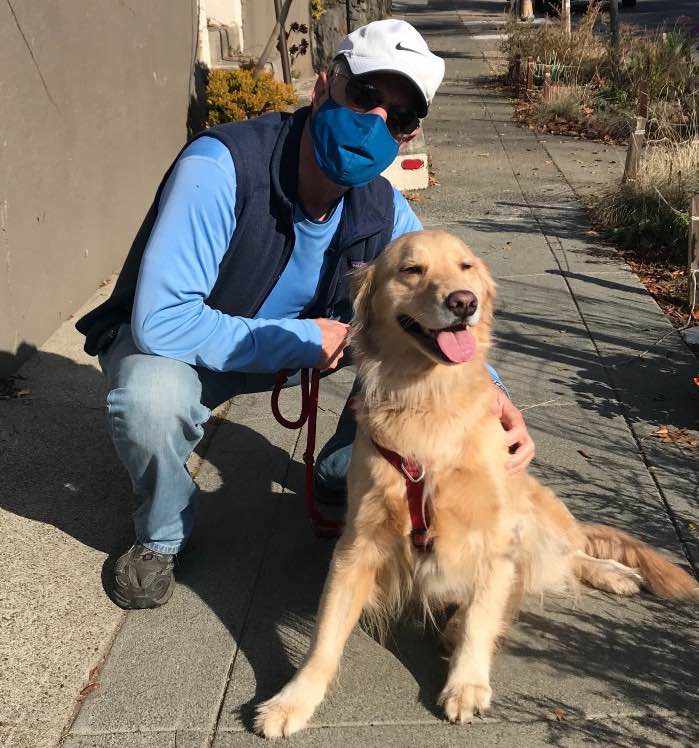
Two weeks after my post ran, I began arranging play times. It was almost like Tinder, where I kept swiping right for my next candidate. I’m now up to six dates, ages 10 weeks to 11 years. It turns out there’s a sweet little golden right down the block who became an instant friend.

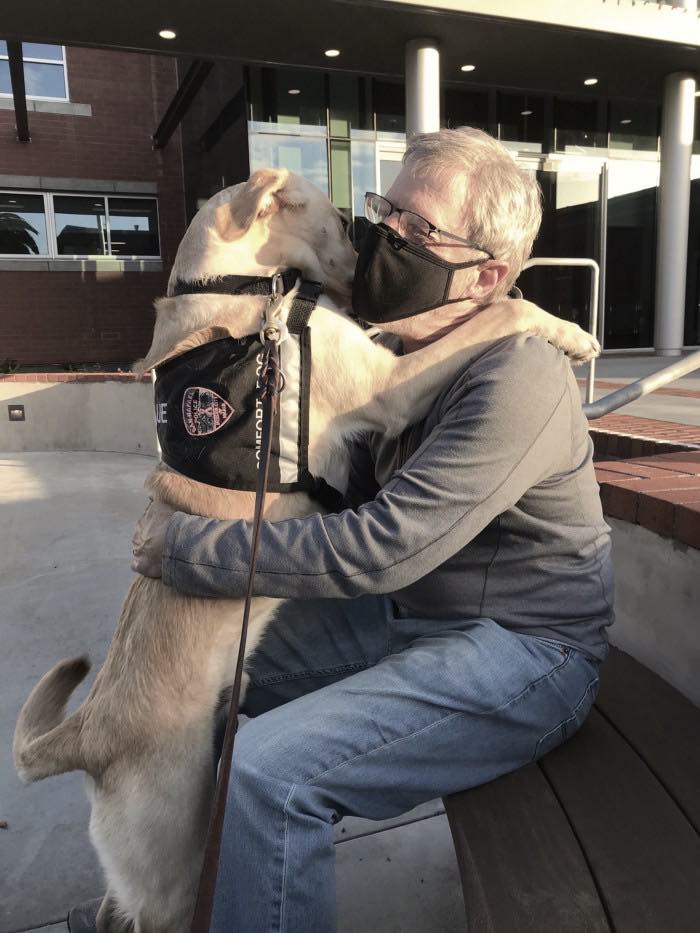
And talk about magic — after a few minutes of sitting together with the police dog, Blue, he suddenly put his front legs on my shoulders to give me a hug. I would have started crying if I weren’t smiling so hard underneath my mask. Somehow, he just knew.

Paul with Blue the police service dog

Under the Bay Area’s stay-at-home orders, we’re only supposed to go out for groceries, prescriptions, and outdoor exercise. The get-togethers with my new furry buddies fit all these criteria: food for my soul, strong medicine for my grief, and fresh air for me and my canine companion.

RELATED: Man Opens Up His Home to Shelter 300 Dogs From a Hurricane: ‘It doesn’t matter if the house is dirty’

Although my heart still aches, I’m also filled with gratitude — both for my cherished friendship with Layla, and the unexpected kindness of so many strangers. And the bonus lesson from this wondrous experience: They were right next door all this time.

SHARE the Encouragement With Pet Owners Who Might Need it on Social Media…
$14 Billion Raised For Great Green Wall to Continue Planting Trees Across Africa, Keeping Sahara From Destroying Villages

GreatGeenWall.org

Efforts to finish the Great Green Wall in Africa, which has been halting the desertification of villages near the Sahara, received a multi-billion dollar boost this month—and nations are saying, ‘Merci!’

GreatGeenWall.org

Following the ‘One Planet Summit for Biodiversity’, held virtually in Paris on January 11, French President Emmanuel Macron announced that $14 Billion was pledged for additional funding over the next ten years.

This financial support will “fast track” the Great Green Wall efforts to restore degraded land, create green jobs, and protect biodiversity in the Sahel and Sahara region, according to the United Nations, which helped organize the Summit.

Among the financiers are the Government of France, the World Bank, and the African Development Bank.

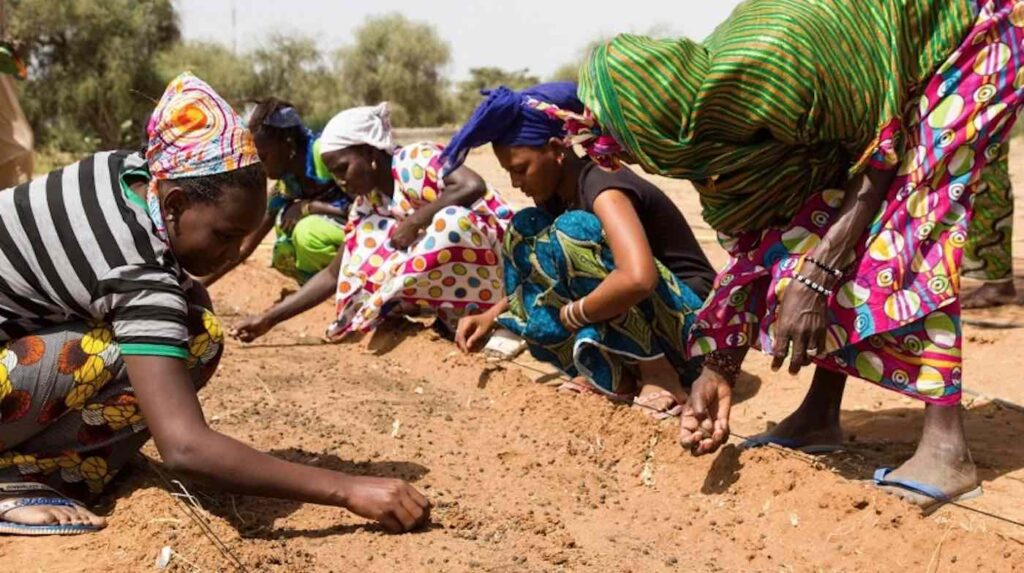
Planting a massive wall of trees across the continent, to span 5,000 miles (8000 kilometers), the Great Green Wall is not only holding back the desert, it is holding back poverty, as well.

Launched in 2007, the African-led initiative originally involved 11 countries, planting and caring for trees that provide an eco-barrier along the southern margin of the Sahara Desert running from the Atlantic coast to the Red Sea.

RELATED: African Nations Use Satellite Monitoring to Cut Deforestation by 18 Percent

The region was once a lush oasis of greenery and foliage back in the 1970s, but the combined forces of population growth, unsustainable land management, and climate change turned the area into a barren and degraded swath of land.

By 2019, the initiative had recruited at least nine additional countries to plant drought-resistant acacia trees across the entire width of the continent. By that time, the wall was only 15% percent complete, but had already dramatically impacted the participating countries: Over 12 million acres (5m-hectares) of degraded land had been restored in Nigeria; 30 million acres of drought-resistant trees had been planted across Senegal; and a whopping 37 million acres of land had been restored in Ethiopia, just to name a few of the states involved.

The new funding provides 30% of the development money needed to complete the project by the year 2030.

CHECK OUT: 14 Years Ago the Amazon Was Being Bulldozed for Soy – Then Everything Changed Here As Corporations Joined Activists

GreatGreenWall.org

“The Great Green Wall is an inspiring example of ecosystem restoration in action,” said Susan Gardner, Director of UN Environment Programme’s Ecosystems Division. “It is rapidly becoming a green growth corridor that is bringing investment, boosting food security, creating jobs, and sowing the seeds of peace.”

Mohamed Cheikh El-Ghazouani, President of Mauritania and current chair of the Conference of Heads of State and Government of the Pan-African Agency of the Great Green Wall, cheered the news.

“The mobilization of this additional funding through an innovative approach will certainly contribute to the achievement of the Great Green Wall goals, which aim by 2030, at the restoration of 100 million hectares [42,400 square-miles] of degraded land and the creation of 10 million green jobs,” said Ghazouani.

LOOK: NASA Uses Supercomputers and AI to Count Earth’s Trees From Space for the First Time

The approach, using a ‘Great Green Wall Accelerator’ to raise the funds, was responding to new challenges posed by the COVID-19 pandemic, which has strained resources in Africa.

“In a post-COVID context where Sahelian countries are struggling with budgets and funding, this accelerator will help meet financial requirements and turbo charge the achievement of its goals,” notes the UN in a statement.

SHARE This Green Approach to Poverty With Your Tribe on Social Media…
“Strength shows not only in the ability to persist, but the ability to start over.” – F. Scott Fitzgerald

Quote of the Day: “Strength shows not only in the ability to persist, but the ability to start over.” – F. Scott Fitzgerald

Photo by: nirmal rajendharkumar

With a new inspirational quote every day, atop the perfect photo—collected and archived on our Quote of the Day page—why not bookmark GNN.org for a daily uplift?

This Sassy Iguana Thinks He’s a Supermodel Posing at the Beach – Video

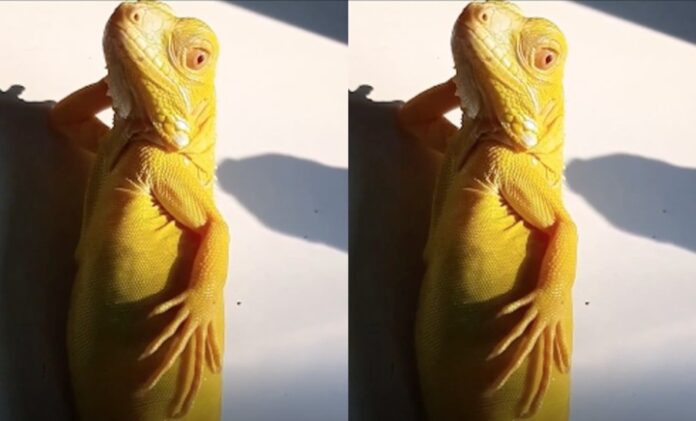
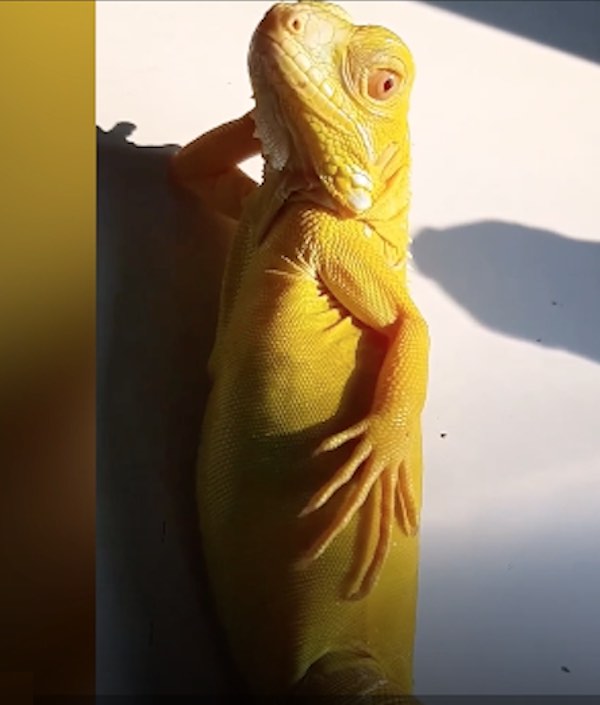
This is the amusing moment a yellow pet iguana sunbathed on a window sill—looking for all the world like a bikini model posing on the beach.

SWNS

The mango-colored reptile laid on its side, flaunting its stomach while its owner watched in amusement in Thailand’s Chonburi province this January.

It was even resting on one of its webbed-hands. Its position? Well, it looks straight out of the pages of Sports Illustrated: The Swimsuit Issue.

Reptile lover Chaiwat Daenglrachang said, “My iguana Mhontong was relaxing under the warm sunlight just like other pet iguanas I have. However, I’ve never seen any of them lay on its side as this one did.”

RELATED: Clever Australian Shepherd Appears to Outsmart Owner, So He Can Get Two Treats

We’ve never seen such sassy behavior from a lizard either. Does he remind you of anyone?

(WATCH Mhontong in his glamorous video ‘shoot’ below.)

PASS Along a Good Laugh —Share This Fun Video With Pals on Social Media!

Postman Who Started the Online Craze for Sea Shanties has Now Quit his Job to Pursue a Career in Music

Nathan Evans/Instagram

Hot off the presses from the ‘Isn’t It Ironic?’ department comes this story of a seasick postman who’s about to get his 15 minutes of fame (and likely a whole lot more) by singing—what else?—sea shanties.

For those not familiar with the jaunty ditties, sea shanties, dating back some 600 years, are folk songs first sung by fishermen, whalers, pirates, merchants, privateers, and pretty much anyone who earned their keep sailing the seven seas.

The tunes feature a steady beat to keep time, and in the days when maritime trade was the king, were crooned in unison by ships’ crews as they toiled at their labors.

Likely or not, in 2021, sea shanties have become all the rage on TikTok, and the man we have to thank for the trend is a 26-year-old Scottish postman named Nathan Evans.

Evans, who has a powerful and pleasing singing voice, has been posting TikTok music videos for some time. His first sea shanty went up last June at a fan’s request.

After hauling in a leviathan’s worth of followers, Evans recorded his second shanty, ‘The Wellerman’, last December—to the tune of 7.5 million views.

@nathanevanss

The Wellerman. #seashanty #sea #shanty #viral #singing #acoustic #pirate #new #original #fyp #foryou #foryoupage #singer #scottishsinger #scottish

♬ original sound - N A T H A N E V A N S S

As in days of yore, he soon had scores of Internet shipmates singing as well as playing along, including none other than legendary music composer and impresario, Sir Andrew Lloyd Webber.

MORE: Gospel Singer’s Hilarious Song About Quarantine Snacking Goes Viral: ‘The Fridge Again!’

Evans’ rendition of ‘The Wellerman’ proved so popular, he decided to quit his day job to pursue a career in music.

“It all started getting hectic,” Evans said in a January 21 interview with I News UK. “I was getting emails about interviews and radio, and it kept rolling on. [Last] Friday I was like, ‘Right, I need to make a change here’, because I was too busy on my phone looking at emails and trying to post letters. I was like, ‘This is not sustainable’.”

While Evans is hopeful the tides of destiny will steer him toward fame and fortune, the mail carrier remains pragmatic about his prospects.

“The future will be quite bright, I hope. This is a once-in-a-lifetime opportunity, it’s never going to come around again,” Evans said. “Hopefully if nothing comes of it then I can go back and continue being a postman, but I thought at the minute I’ll seize it and see what happens.”

CHECK OUT: Idaho Potato Worker Becomes Internet Sensation and Sends Fleetwood Mac Sales Soaring With ‘Dreamy’ Video

As high as Evans’ star may rise, just don’t look for him to do any of his warbling aboard a cruise ship once the pandemic has ended. Even the motion of the ocean from something as tame as a ferryboat ride is enough to make him ill.

Aye, ’tis never easy,
When the singer is queasy…
When he’s a singing o’ the sea!

Check out the knockout collaborative version below.

Get Yer Pals Aboard the Sea Shanty Craze—Share This Story With Them…

This Wood Grown in a Lab Could Cut Deforestation, With Furniture Made From Plant Cells

Aaron Burson

As if lab-grown meat wasn’t a head turner, a group of scientists at MIT are plotting lab-grown wooden furniture.

Wood-like cells from zinnia leaves, MIT

The two projects are nearly identical, made by cultivating cells to divide and multiply into forms outside of their parent phylum, and the proof-of-concept study is a powerful first step towards finding alternatives to forestry.

According to Velásquez-García and team, using a leaf from a zinnia, they were able to grow plant like tissues selectively, free from unnecessary organs. The researchers described in their corresponding paper how plant cells respond well to “tunability,” and that the scalable, land-free cultivation of plant material like wood for use in furniture making, for example, is very possible—and even easier than  what other scientists are doing with cell-cultured meat, the correct jargon for “lab-grown meat.”

“Despite considerable and early resource investment, (imagine the cost of buying, fueling, and operating logging trucks and roads alone) only a small fraction of the cultivated crop may be economically valuable at harvest,” write the authors in their paper, noting also that for the production of some natural fibers, as little as 2% to 4% of the harvested plant matter will be used.

Freshly-grown furniture

Aaron Burson

The strategy for cell-cultured trees, grown in the shape of a table or a rectangular board, is easier to scale, and could become cost-effective much faster than cell-cultured meat—as plants are simply easier to grow in this way.

MORE: This Non-Profit is Hard at Work Designing New Forests to Cure California’s Wildfire Curse

Speaking with Fast CompanyAshley Beckwith, an engineering Ph.D. student and co-author of the paper, explains the inefficiencies of relying on forested trees for lumber production.

“Trees grow in tall cylindrical poles, and we rarely use tall cylindrical poles in industrial applications,” she says. “So you end up shaving off a bunch of material that you spent 20 years growing and that ends up being a waste product.”

RELATED: From Lemurs to Birds, Listen to Various Woodlands From Around the World With This Forest Sound Map

What if instead you could spend that 20 years growing only furniture or clothing applicable fibers and shapes? Well the scientists haven’t yet grown a table from a petri dish, but their work is an important proof-of-concept that if widely adopted could lead to huge reductions in CO2 emissions from a number of sources.

CHECK OUT: Formerly Vacant Lot in Milan Wins ‘Reinventing Cities’ Contest With Vineyard Atop Building With Public Sidewalk

These could include fueling and driving heavy, low-range cargo trucks up logging roads at low speeds, as well as fueling and manufacturing the vehicles to construct the logging roads, and the manufacturing plants that make both, as well as the vehicles to transport that equipment there.

Then one must think of deforestation, a major contributor of CO2 emissions into the atmosphere, as carbon that would otherwise be released through the Earth’s 1,000-year carbon cycle naturally is ripped from the ground as the trees are felled. Tree plantations could be left to age more naturally, retuning more of the carbon cycle into a natural state while attracting more wildlife in return.

PASS on the Innovation—Share This Story With Friends…

Billionaire Mark Cuban’s New Drug Company is Producing Low-Cost Generic Drugs Cutting 90% of the Markup

Mark Cuban by Gage Skidmore, CC license

After Dr. Alex Oshymansky started a public-benefit company to combat the exploding prices of certain prescription drugs, he attracted a new partner—Shark Tank billionaire investor Mark Cuban.

Mark Cuban by Gage Skidmore, CC license

The Dallas, Texas radiologist started in 2015 with Osh’s Affordable Pharmaceuticals and a million dollars in investment capital. Four years later, the new partnership was moving forward under the name Mark Cuban’s Cost Plus Drug Co, and donating medicine to those in need.

For years, a mixture of FDA demands for approval, and drug company greed which created soaring prices for drugs had begun making Cuban “bleeping mad.”

Now under Cuban’s brand name, the private-label arrangement allows Oshymansky to buy from third party suppliers, take care of the labeling and branding laws himself, and sell it at a serious discount with just a 15% mark-up for the business expenses.

This method allowed the pair to lower the cost of an anti-parasitic medication called albendazole from its normal U.S. price range of $225-$500, down to just 20 bucks.

This proved especially valuable for Baylor College of Medicine, who needed thousands of doses of albendazole to complete a study they were doing on U.S. hookworm infections in the South.

Curing hookworm across the south

“The Germ of the South,” was a catch-all term that characterized a curious lethargy and haziness of the brain, distended bellies, and emaciated shoulder blades, found across the Deep South during the 20th century. Even today, American hookworm infects large numbers of people, particularly children, due to poor sanitation and poverty.

One study done in Lowndes County, Alabama of 24 homes found that 34% of stool samples contained the parasite, which is killed rather quickly by albendazole.

Cuban and Oshymansky donated the first 10,000 doses of the company’s albendazole supply to Baylor and the author of the study, Dr. Rojelio Mejia, so that volunteers from Alabama to New York who test positive for hookworm could immediately purge the parasite from their bodies.

RELATED: First-of-its-Kind Clinical Study Finds That Microdosing THC Can Reduce Chronic Pain

Other drug companies estimated that the number of doses which the two entrepreneurs donated would have cost $2 million—which would have kept the research from being conducted.

“We found it deeply troubling that albendazole is extremely expensive in the United States, and are happy to be able to manufacture it for free for this research and provide it at significantly decreased prices to the rest of the U.S. market,” said Dr. Oshmyansky.

An affordable free-market future

Cuban’s Cost Plus Drugs is aiming for 100 new drug offerings by the end of 2021, all with “no hidden costs, no middlemen, (and) no rebates only available to insurance companies,” the company website says. They want to be “radically transparent” about how much the drug costs to formulate and how much pharmacies will be charged to sell it.

They’re also in the process of constructing their own brick-and-mortar pharmacy in Dallas where they hope to earn a profit on non-pharmaceutical items that can fund the lower cost formulations and offer drugs for rare diseases directly to patients or through outpatient facilities.

READ: In World First, AI Develops New Drug, Cuts R&D Costs By 80%, Moving it to Trials For OCD Patients in 1/5 the Time

As helpful as this will be for American consumers and patients, it could also drive drug companies out of business if they over-charge their customers in the extreme. It’s a dose of free market competition in a nation where millions are crying out for alternatives.

PASS on the Generosity by Sharing This Good Medical News… 

Miami Team Able to Bring Basketball Fans Back to Arena With the Help of COVID-Sniffing Dogs

Miami Heat, David Fizdale, CC license/Dog by Jamie Street

With the help of some truly potent pooches, the Miami Heat will be able to allow some ticket holders in to watch their games provided they get the A-okay from a team of COVID-19 sniffing dogs.

Miami Heat, David Fizdale, CC license/Dog by Jamie Street

Several countries have already trained dogs to sniff out COVID-19, and the combination of masks, socially distanced seating maps, and the canines, mean around 2,000 lucky fans get to cheer on their home team next week.

In April, Good News Network reported on the progress of a British medical charity that had successfully trained dogs to smell the infamous virus, while ESPN reports claim the success rate of the Heat’s sniffers are around 94%

It’s not a perfect detection rate, so the Heat staff are augmenting the COVID-19 prevention measures with temp checks, mask wearing, cashless-only transactions, isolated seating patterns, and reduced food and beverage sales. If people are allergic or afraid of dogs, the Heat are even offering rapid antigen tests which they say will produce results in 45 minutes.

“If you think about it, detection dogs are not new,” Matthew Jafarian, the Heat’s executive vice president for business strategy, told ESPN. “You’ve seen them in airports, they’ve been used in mission-critical situations by the police and the military. We’ve used them at the arena for years to detect explosives.”

MORE: Teens Launch Hotline for Isolated Seniors to Listen to Pre-Recorded Jokes, Stories, and Messages of Hope

Indeed, dogs have been trained to detect everything from bombs and narcotics to cancers, low-blood sugar, and even depression. Viral diseases like malaria and COVID have also been trained.

The first game will be at home against the LA Clippers, while Monday is the first game when season ticket holders will be allowed to claim their seats, when the arena will be at a little less than 10% capacity.

Multiply The Good By Sharing The Pawesome News With Your Friends On Social Media…

“What a wonderful thought it is that some of the best days of our lives haven’t even happened yet.” – Anne Frank

Quote of the Day: “What a wonderful thought it is that some of the best days of our lives haven’t even happened yet.” – Anne Frank

Photo by: marco barsotti

With a new inspirational quote every day, atop the perfect photo—collected and archived on our Quote of the Day page—why not bookmark GNN.org for a daily uplift?

Mexico City With 9 Million People, Joins China By Enacting New Ban on Single-use Plastics and Straws in 2021

Daniel Lerman
Daniel Lerman

In Mexico City, after more than a year of behind-the-scenes work, a ban on single-use containers, cutlery, straws, cups, stirrers and other popular but disposable items has come into effect.

Mexico City’s environmental secretary explained on Twitter that the capital will now be a place “without single-use plastics,” and urged citizens to think of reusable containers as something they never leave the home without—just like they might do with cell phones.

Lawmakers in the city actually passed the single-use plastics ban in 2019: a year in which the city was producing 13,000 tons of garbage a day, according to Mexico City’s environmental agency.

CHECK OUT: Scientists Turn Plastic Waste Into Valuable Commodities, to Create a Bigger Market for Waste Materials

The city, which has a population of around 9 million, saw the ban on single-use plastic bags come into effect last year.

Since then, business owners have been preparing for the ban on other day-to-day disposable items.

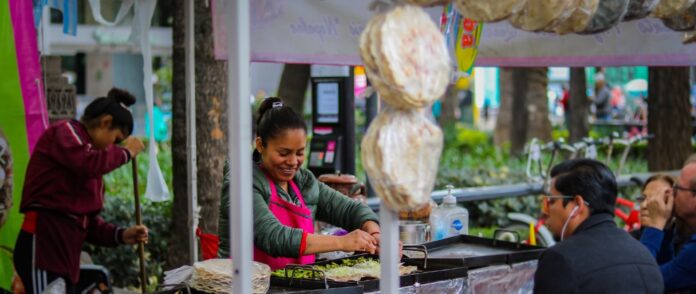
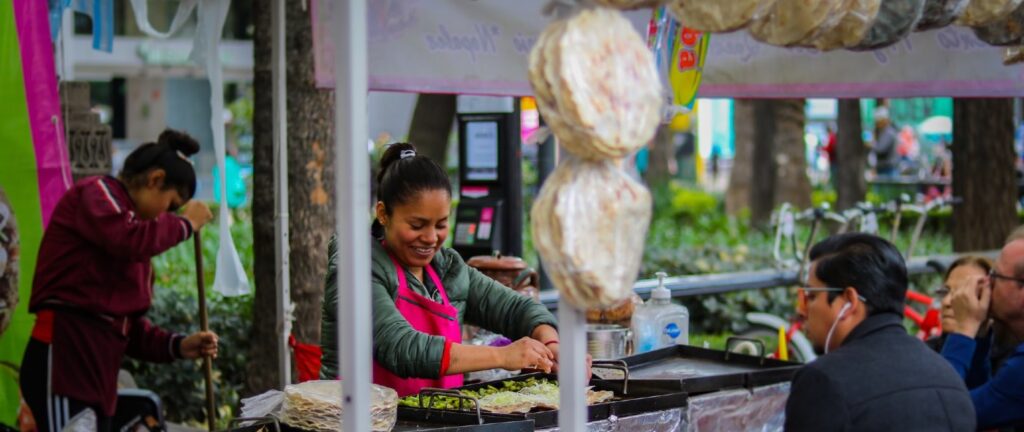
Coronavirus guidelines notwithstanding, tortillas at street stalls should now be wrapped in the paper that a buyer has—hopefully—remembered to bring with them.

The Mexican capital isn’t the only populous place to enact such a ban in recent months.  China is also aiming to reduce plastic pollution by moving towards using biodegradable alternatives to single-use plastic straws and bags.

SHARE This Positive Trend in Plastic Waste With Pals on Social Media…