When the going gets tough, the tough keep going, or at least that’s what you do when you’re a 93-year-old retired Air Force Colonel—and John Hobson likes to keep busy.
Courtesy of John Hobson
“If he just got put somewhere and told him to sit down, he’d go crazy,” his son Mark Hobson, told WKEF-TV.
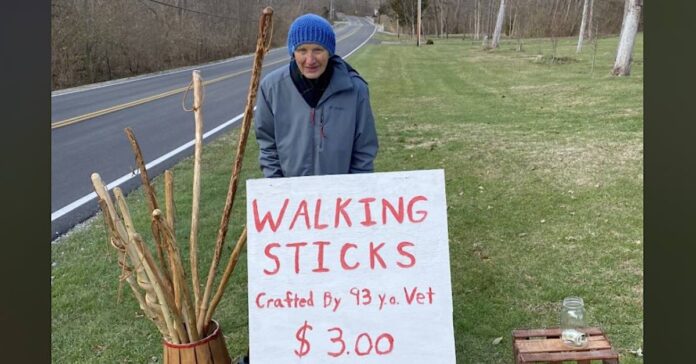
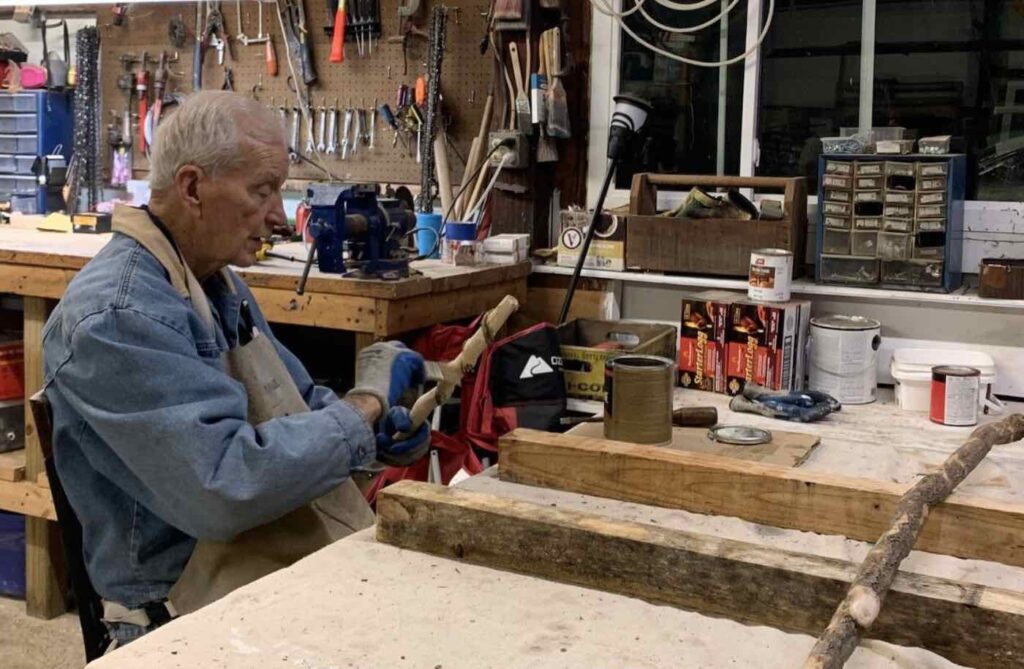
In 2020, Hobson occupied himself by handcrafting close to 100 walking sticks, the proceeds of which, he donated to a local Ohio charity outreach group, the Xenia Area Fish Food Pantry.
“He’s just a sweet man who gives a darn about other folks who don’t have [anything],” Mark Hobson said.
To sell his wares, Hobson set up a roadside stand in his front yard. The price was beyond reasonable: $3.00 each, or a food pantry donation.
Not surprisingly, the senior whittling-wonder was sold out in just a few days, having earned about $600.
Wanting to do more, Hobson and his family set up a GoFundMe page which has since raised $9,565 in cash for the Xenia Area Fish Food Pantry. All told, donations from the sale of the walking sticks, the GoFundMe campaign, and additional donations made in Hobson’s name total close to $16,000.
“Thank you for doing a very kind thing to make Grandpa happy and to make a difference for so many in our community,” Hobson’s granddaughter Jenny Denen wrote. “We have been so touched by your kindness and generosity.”
“We have been told by the pantry that a $1 donation generates five pounds of food. That means that we have helped the pantry be able to distribute about 40 tons of food to the Xenia community! What a massive blessing to those in need during this very difficult time.
Staying busy is certainly one factor that keeps Hobson hard at work, but his main motivation is likely more simple. He says knowing that he’s still able to help others in need in a meaningful way just makes him feel good.
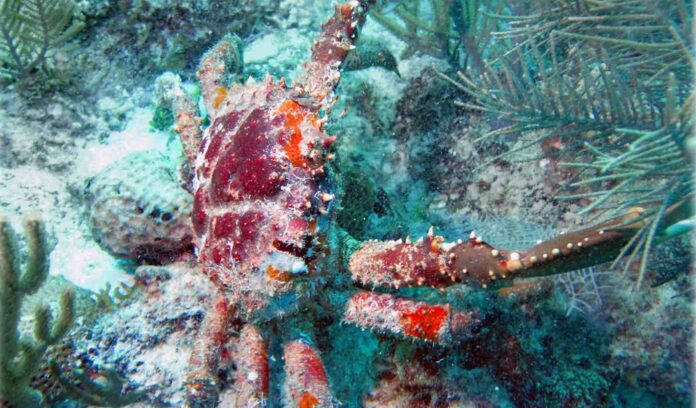
Caribbean king crab on coral reef by Angelo Jason Spadaro
Researchers in the Florida Keys have determined that coral reefs can be saved from invasive seaweed with the help of a particular species of crab lovingly called the “reef goat”.
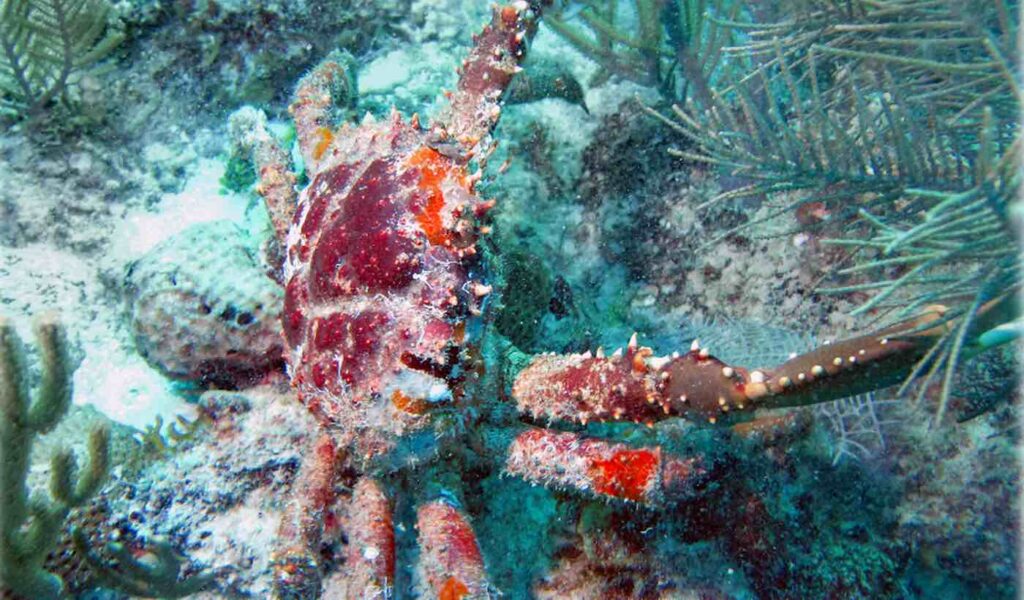
Caribbean king crab on coral reef by Angelo Jason Spadaro
The new study from Florida International University determined that not only can the Caribbean king crab munch the corals free of seaweed faster than all methods involving human hands, but that the increase of coral reproduction spawned a boom in reef fish numbers as well.
All types of marine habitat are important. Seaweed meadows and coral reefs both play vital roles in the health of the ocean and the health of our communities.
However in the same way that a mountain lion, which provides a valuable service by preying on diseased or elderly deer, wouldn’t be helping anyone if it took up residence in an office building, seaweed largely prevents coral from their key function in the ecosystem, just like the lion would prevent any of the terrified office workers from doing their work.
The researchers comment in their paper on the evidence of long-standing competition between seaweeds and corals.
This competition has been influenced heavily for over a century now by overfishing, climate change, and coral diseases, which resulted in many reefs being now too weak or too depleted to compete with seaweed.
Seaweeds too often are blocking sunlight from reaching the baby corals, while simultaneously releasing chemicals that prevent the corals from reproducing—as well as making them more susceptible to disease.
The voracious reef goats
The researchers hypothesized that if sufficiently distributed, the Caribbean king crab, the largest herbivore crustacean in the region, could clean corals free of clinging seaweed faster than human scrubbing, so they conducted a case-control study where they released reef goats on some reefs and let some others remain crab-less.
“We’ve had a lot of experience raising these crabs for human consumption, but I started looking at what their ecological role was on coral reefs. And they are like reef cows, or better yet, reef goats, because they will eat almost any type of algae, and they eat a lot of it,” Mark Butler from Florida International University, a co-author on the study, told Florida Keys News.
Butler, who worked on the research with Angelo Jason Spadaro, a professor at the College of the Florida Keys, said the voracious Caribbean king crabs (Maguimithrax spinosissimus) are prolific coral reef grazers.
Eating algae at a rate higher than any other grazer, including some species that can protect themselves from predation with chemicals or other defense strategies, the crabs were able to reduce seaweed cover by 80% compared to some reefs, while a 3 to 5 fold increase of both baby corals and fish species added to the successful outcome.
The study also boasts something becoming rare in many scientific fields of study — reproducibility.
“The generality of our results was validated by nearly identical results in two separate field experiments conducted at different locations and in different years,” write the authors.
On dry land, goats have been used as ground clearers for thousands of years, as they eat everything from clover and grasses to poison oak and invasive blackberry thorns.
Hopefully, the brilliant results from Butler and his team can solidify Caribbean king crabs as their benthic equivalent at the bottom of the sea.
SHARE This Claw-some News With Coral Lovers on Social Media…
Quote of the Day: “The shoe that fits one person pinches another; there is no recipe for living that suits all cases.” – Carl Jung, MD
Photo by: Arvee Eco, CC license
With a new inspirational quote every day, atop the perfect photo—collected and archived on our Quote of the Day page—why not bookmark GNN.org for a daily uplift?
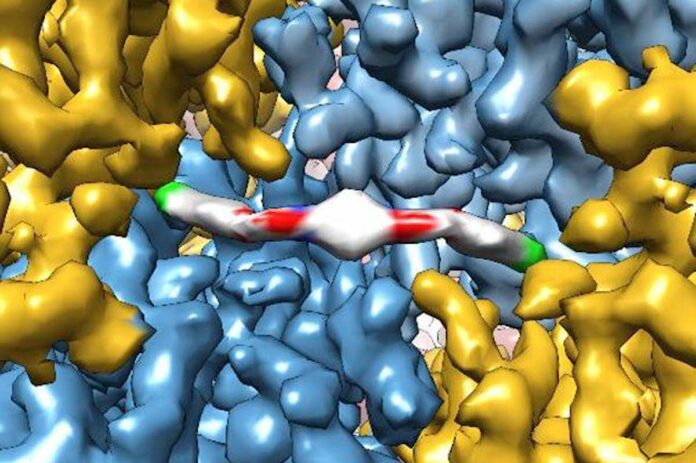
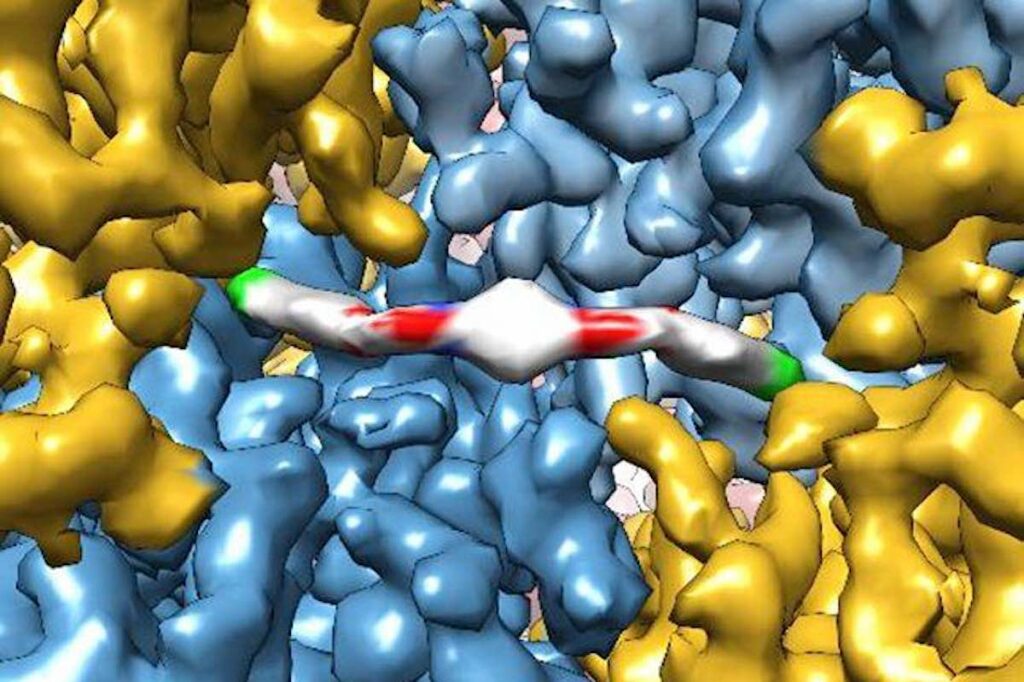
ISRIB molecule - image by the Adam Frost lab at UCSF
Just a few doses of an experimental drug that reboots protein production in cells can reverse age-related declines in memory and mental flexibility in mice, according to a new study by UC San Francisco scientists.
The drug, called ISRIB, has already been shown in laboratory studies to restore memory function months after traumatic brain injury (TBI), reverse cognitive impairments in Down Syndrome, prevent noise-related hearing loss, fight certain types of prostate cancer, and even enhance cognition in healthy animals.
In the new study, published Dec. 1 in the open-access journal eLife, researchers showed rapid restoration of youthful cognitive abilities in aged mice, accompanied by a rejuvenation of brain and immune cells that could help explain improvements in brain function—and with no side effects observed.
“ISRIB’s extremely rapid effects show for the first time that a significant component of age-related cognitive losses may be caused by a kind of reversible physiological “blockage” rather than more permanent degradation,” said Susanna Rosi, PhD, Lewis and Ruth Cozen Chair II and professor in the departments of Neurological Surgery and of Physical Therapy and Rehabilitation Science.
“The data suggest that the aged brain has not permanently lost essential cognitive capacities, as was commonly assumed, but rather that these cognitive resources are still there but have been somehow blocked, trapped by a vicious cycle of cellular stress,” added Peter Walter, PhD, a professor in the UCSF Department of Biochemistry and Biophysics and a Howard Hughes Medical Institute investigator. “Our work with ISRIB demonstrates a way to break that cycle and restore cognitive abilities that had become walled off over time.”
Rebooting cellular protein production holds key to aging
Walter has won numerous scientific awards, including the Breakthrough, Lasker and Shaw prizes, for his decades-long studies of cellular stress responses. ISRIB, discovered in 2013 in Walter’s lab, works by rebooting cells’ protein production machinery after it gets throttled by one of these stress responses – a cellular quality control mechanism called the integrated stress response (ISR; ISRIB stands for ISR InhiBitor).
The ISR normally detects problems with protein production in a cell—a potential sign of viral infection or cancer-promoting gene mutations—and responds by putting the brakes on cell’s protein-synthesis machinery. This safety mechanism is critical for weeding out misbehaving cells, but if stuck in the ‘on’ position in a tissue like the brain, it can lead to serious problems, as cells lose the ability to perform their normal activities, according to Walter and colleagues.
ISRIB molecule – image by the Adam Frost lab at UCSF
In particular, their recent animal studies have implicated chronic ISR activation in the persistent cognitive and behavioral deficits seen in patients after TBI, by showing that, in mice, brief ISRIB treatment can reboot the ISR and restore normal brain function almost overnight.
The cognitive deficits in TBI patients are often likened to premature aging, which led Rosi and Walter to wonder if the ISR could also underlie purely age-related cognitive decline. Aging is well known to compromise cellular protein production across the body, as life’s many insults pile up and stressors like chronic inflammation wear away at cells, potentially leading to widespread activation of the ISR.
“We’ve seen how ISRIB restores cognition in animals with traumatic brain injury, which in many ways is like a sped-up version of age-related cognitive decline,” said Rosi, who is director of neurocognitive research in the UCSF Brain and Spinal Injury Center and a member of the UCSF Weill Institute for Neurosciences. “It may seem like a crazy idea, but asking whether the drug could reverse symptoms of aging itself was just a logical next step.”
Signature effects of aging disappeared literally overnight
In the new study, researchers led by Rosi lab postdoc Karen Krukowski, PhD, trained aged animals to escape from a watery maze by finding a hidden platform, a task that is typically hard for older animals to learn. But animals who received small daily doses of ISRIB during the three-day training process were able to accomplish the task as well as youthful mice—and much better than animals of the same age who didn’t receive the drug.
The researchers then tested how long this cognitive rejuvenation lasted and whether it could generalize to other cognitive skills. Several weeks after the initial ISRIB treatment, they trained the same mice to find their way out of a maze whose exit changed daily – a test of mental flexibility for aged mice who, like humans, tend to get increasingly stuck in their ways. The mice who had received brief ISRIB treatment three weeks before still performed at youthful levels, while untreated mice continued to struggle.
To understand how ISRIB might be improving brain function, the researchers studied the activity and anatomy of cells in the hippocampus, a brain region with a key role in learning and memory, just one day after giving animals a single dose of ISRIB. They found that common signatures of neuronal aging disappeared literally overnight: neurons’ electrical activity became more sprightly and responsive to stimulation, and cells showed more robust connectivity with cells around them while also showing an ability to form stable connections with one another usually only seen in younger mice.
The researchers are continuing to study exactly how the ISR disrupts cognition in aging and other conditions and to understand how long ISRIB’s cognitive benefits may last. Among other puzzles raised by the new findings is the discovery that ISRIB also alters the function of the immune system’s T cells, which also are prone to age-related dysfunction. The findings suggest another path by which the drug could be improving cognition in aged animals, and could have implications for diseases from Alzheimer’s to diabetes that have been linked to heightened inflammation caused by an aging immune system.
“This was very exciting to me because we know that aging has a profound and persistent effect on T cells and that these changes can affect brain function in the hippocampus,” said Rosi. “At the moment, this is just an interesting observation, but it gives us a very exciting set of biological puzzles to solve.”
Success shows the ‘serendipity’ of basic research
Rosi and Walter were introduced by neuroscientist Regis Kelly, PhD, executive director of the University of California’s QB3 biotech innovation hub, following Walter’s 2013 study showing that the drug seemed to instantly enhance cognitive abilities in healthy mice. To Rosi, the results from that study implied some walled-off cognitive potential in the brain that the molecule was somehow unlocking, and she wondered if this extra cognitive boost might benefit patients with neurological damage from traumatic brain injury.
The labs joined forces to study the question in mice, and were astounded by what they found. ISRIB didn’t just make up for some of the cognitive deficits in mice with traumatic brain injury – it erased them. “This had never been seen before,” Rosi said. “The mantra in the field was that brain damage is permanent – irreversible. How could a single treatment with a small molecule make them disappear overnight?”
Further studies demonstrated that neurons throughout the brains of animals with traumatic brain injury are thoroughly jammed up by the ISR. Using ISRIB to release those brakes lets brain cells immediately get back to their normal business. More recently, studies in animals with very mild repetitive brain injury – akin to pro athletes who experience many mild concussions over many years – showed that ISRIB could reverse increased risk-taking behavior associated with damage to self-control circuits in the frontal cortex.
“It’s not often that you find a drug candidate that shows so much potential and promise,” Walter says, calling it “just amazing”.
No side effects
One might think that interfering with the ISR, a critical cellular safety mechanism, would be sure to have serious side effects, but so far in all their studies, the researchers have observed none. This is likely due to two factors. First, it takes just a few doses of ISRIB to reset unhealthy, chronic ISR activation back to a healthier state. Second, ISRIB has virtually no effect when applied to cells actively employing the ISR in its most powerful form – against an aggressive viral infection, for example.
ISRIB has been licensed by Calico, a South San Francisco, Calif. company exploring the biology of aging, and the idea of targeting the ISR to treat disease has been picked up by many other pharmaceutical companies, Walter says.
“It almost seems too good to be true, but with ISRIB we seem to have hit a sweet spot for manipulating the ISR with an ideal therapeutic window,” Walter said.
Get more links to background studies from original article from UCSF News.
SHARE This Exciting Research on Aging on Social Media…
If sportswriter Andy Larsen writes his autobiography one day, he just might have to title it, ‘The Accidental Philanthropist’.
That’s because when Larsen, who covers basketball for the Salt Lake Tribune, inadvertently found himself the recipient of a $55,000 Venmo bonanza, he used the money to help families in need for the holidays.
The story begins just before Thanksgiving—with SpongeBob SquarePants.
Larsen’s mom called to give him a head’s up that she’d just come across the distinctive yellow container he used as a kid for stashing loose coins in his bedroom and wondered if he might want to come to fetch it.
The chunk of change amounted to over $165. Larsen, feeling in the holiday spirit, decided to donate the booty to folks who could really use a few extra dollars this time of year and put the word out to his 27,000 Twitter followers:
“So I had a big jar of coins hanging around,” he tweeted. “I went to the bank today & had them counted. $164.84. Rather than keeping it, I want to give that out to a few people who could use the help for their household’s Thanksgiving dinner or for Christmas presents. My DMs/replies are open.”
By Diane Helentjaris
As expected, requests for assistance began to roll in—but on the flip side of the proverbial coin, came requests from people who wanted to boost the bounty.
The first arrived from a man named Jeff Jones, who asked Larsen to put up his Venmo deets so he could contribute to the good cause.
“I was shocked that someone would do that,” Larsen told the Washington Post. “Even more amazing was that minutes later, people began retweeting everywhere and sending me money out of the blue. It just exploded.”
Even more amazing? Close to a thousand people donated about $55,000 in a single day.
All in all, Larsen fielded close to 200 requests for help. Figuring out who would get the money and how it would be distributed became his next concern.
“I did my best to verify the stories I was told, typically through conversations with those asking and light social media research. The vast majority checked out,” Larsen explained in The Salt Lake Tribune.
In the end, Larsen gifted people with cash for the holidays as well as funds for car repairs, utility bills, and groceries. And, in addition to sending $200 sums to dozens of families to help them cover medical bills, he gave $10,000 to RIP Medical Debt, a national nonprofit organization that buys debts from collection agencies—and forgives them. (Larsen was told his $10,000 donation would translate to roughly $1 million in debt-reduction relief.)
Also on the unintentional holiday “Nice List” were several local charities that focus on food insecurity, including a $1,000 donation Larsen made to a high school food bank that serves low-income families.
“I cried when he contacted me,” said Meg Thunell from Kearns High School in Salt Lake County. “The compounded goodness of all those people giving without even knowing where it was going restored my faith in people after a long and rough year.”
And it was all thanks to an accidental philanthropist—and SpongeBob SquarePants.
SHARE the Story of Luck and Generosity on Social Media…
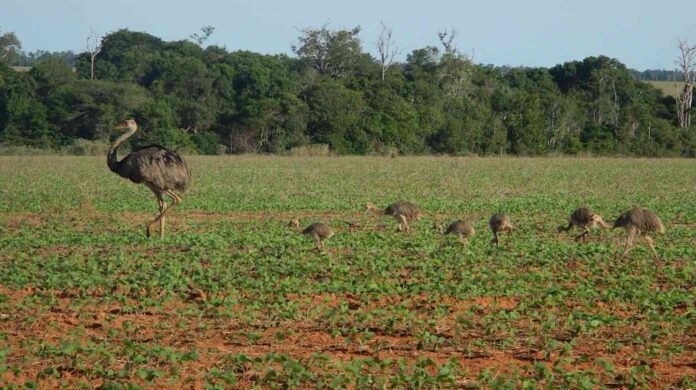
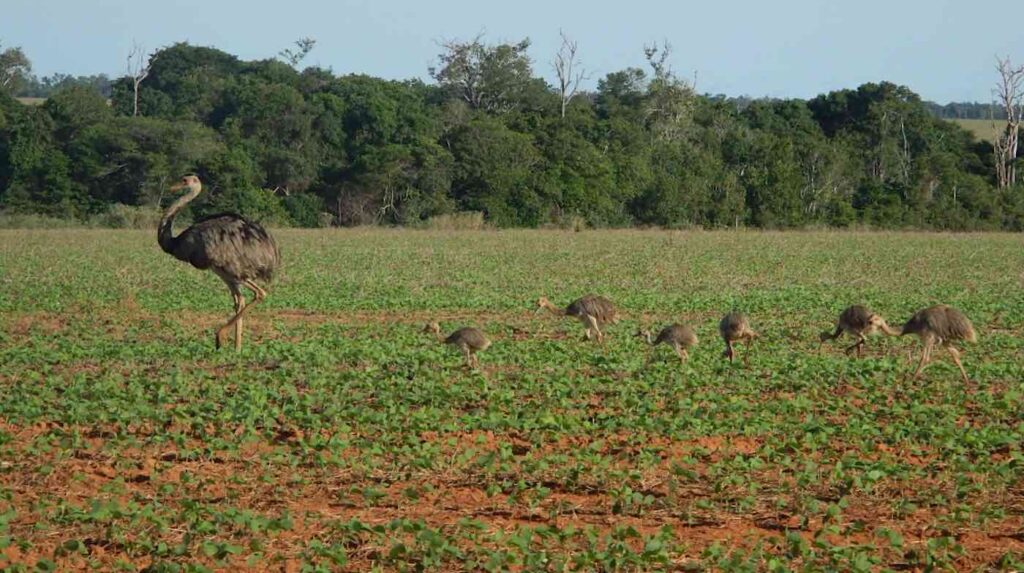
Rhea family of birds snack in soy field - Lisa Rausch, study co-author
Over the last 14 years, a unique public-private initiative has reduced soy farming deforestation in the Amazon, so much so, that almost no soy coming from the Amazon currently contributes to deforestation.
It began in 2006 when Greenpeace launched a campaign exposing the damage of forest clear-cutting for soy the previous year—more than 1,600 square kilometers (nearly 4 million acres)—and demanded action to curtail the devastation.
In response to the public outcry, major soy companies in the region reached a landmark agreement as signatories to the Amazon Soy Moratorium (ASM), pledging not to purchase any crops grown on recently cleared land—and the success has been remarkable
Today, new research shows that 98.6% of all soy grown in the region complies with the moratorium.
Assistant professor Robert Heilmayr at the University of California-Santa Barbara and his colleagues at the University of Wisconsin Madison have now quantified the ASM’s effects and documented how it achieved its goals. The researchers found that while the agreement prevented millions of acres of deforestation in its first decade, the policy did not appear to hamper agricultural growth or push deforestation to other sectors or regions.
“Over one decade the ASM saved 18,000 square kilometers of forest (almost 7,000 square miles),” said Heilmayr, an environmental economist in the Environmental Studies Program and at the UCSB Bren School of Environmental Science & Management. “This is an area bigger than the state of Connecticut.”
Rhea family of birds snack in soy field – Lisa Rausch, study co-author
The authors estimate that between 2006 and 2016, deforestation in soy-suitable portions of the Amazon was 35% lower than what would have occurred without the ASM.
“First time, we were able to control for other policies and factors outside the ASM to quantify its unique contribution to forest conservation,” explained coauthor Holly Gibbs, associate professor at UW Madison.
Scientists and conservationists were concerned the ASM might prompt soy farmers to begin planting in pastures, thereby pushing ranchers to clear more forest, essentially passing the buck to a different sector. However, the study suggests this did not happen. Gibbs explained it’s likely due, at least in part, to similar campaigns aiming to stem deforestation in the cattle sector. These efforts began in 2008 and resulted in similar zero-deforestation agreements in the cattle industry. The team also saw little evidence that the ASM was pushing deforestation into the nearby Cerrado biome.
Although some Brazilian policymakers worry that strict environmental commitments may weaken economic growth, soy production in the Amazon has continued to expand since adoption of the ASM. It increased from 4.9 million tons of production in 2006 to 17.2 million tons in 2019. Ultimately, the moratorium has demonstrated that soy expansion is possible without deforestation, Gibbs explained.
What contributed to the moratorium’s effectiveness?
“One of the strengths of the Amazon Soy Moratorium is that it was a nearly unanimous decision among all the soy buyers in that sector,” said Heilmayr. The signatories account for about 90% of all soy purchases in the region, and this high market share ensured that the agreement would transform agricultural practice.
If farmers wanted to sell their soy, they’d have to abide by the policies set out by the ASM.
Another factor that contributed to the ASM’s success was the cooperation of non-profit NGOs and government agencies. The involvement of environmental organizations like Greenpeace, The Nature Conservancy and World Wildlife Fund boosted confidence that the agreement isn’t merely a form of greenwashing. Government investments in satellite monitoring systems and local property registries provided the backbone for monitoring and enforcing the moratorium.
Ten years on, the parties involved chose in 2016 to renew the ASM indefinitely. While this represents a major victory for sustainable agriculture, the researchers noted that commercial viability is preserved. The Amazon soy sector maintains access to valuable international markets, according to industry trade groups, and at low cost to Amazon soy farmers.
Coauthor Lisa Rausch, a researcher at UW Madison is convinced that the ASM served also to reduce any incentives to clear land on non-soy farms—even in unregistered areas for future soy production.
Current deforestation rates are double what they were at their low point in 2012, though they’re still dramatically lower than what they were back in 2003 and 2004, thanks to the benefits of the ASM’s unique mix of public and private policymaking.
Heilmayr believes the consistent global demand for zero-deforestation soy will continue to discourage new deforestation despite any weakening of public policies.
“The ASM is a nice example of what is possible when companies take aggressive, transparent steps towards supply chain sustainability,” he said. “It provides hope that private actors can trigger meaningful improvements in the way society interacts with our environment.”
Quote of the Day: “Our goal should be to live life in radical amazement. Get up in the morning and look at the world in a way that takes nothing for granted.” – Abraham Joshua Heschel
Photo by: Nicola Abrescia
With a new inspirational quote every day, atop the perfect photo—collected and archived on our Quote of the Day page—why not bookmark GNN.org for a daily uplift?
Two special friends in the Cincinnati, Ohio area have created merrier Christmases for children and families who were affected during the pandemic—and it was inspired by the experience of gratitude they both felt growing up.
Jordynn Jenkins and her best friend Skylar Beavers started ‘Make a Kid Merry,’ an organization that provides holiday gifts to kids—the same support their own moms received years ago.
Growing up, both Jordynn and Skylar were raised by single mothers and this fueled their passion this year to make sure they “pay it forward” to offer support for other kids of single-parent homes during the holidays.
COVID-19 has impacted numerous families, so the dynamic duo decided to set as their goal providing gifts for 50 kids. The university students asked for community donations, and enlisted friends as elves to beautifully wrap the gifts and deliver them.
“We both come from single-mother households, so we both had to be sponsored for Christmases before,” Jenkins told WCPO news. “We just wanted to be able to create a way to give back to our community.”
CHECK Out their Santa’s workshop in the video below…
SHARE the Inspiration And Hope on Your Social Media Feeds…
FREE WILL ASTROLOGY – Week beginning December 23, 2020
Copyright by Rob Brezsny, FreeWillAstrology.com
CAPRICORN (Dec. 22-Jan. 19):
The birds known as red knots breed every year in the Arctic regions. Then they fly south—way south—down to the southern edge of South America, more than 9,000 miles away. A few months later they make the return trip to the far north. In 1995, ornithologists managed to put a monitoring band on one red knot’s leg, making it possible to periodically get a read on his adventures over the subsequent years. The bird’s nickname is Moonbird, because he has traveled so many miles in the course of his life that it’s equivalent to a jaunt to the moon. He’s known as “the toughest four ounces on the planet.” I nominate him to be your magical creature in 2021. I suspect you will have stamina, hardiness, persistence, and determination like his.
AQUARIUS (Jan. 20-Feb. 18):
An Aquarian park ranger named Roy Sullivan was struck by lightning seven times in the course of his 71 years on the planet. (That’s a world record.) None of the electrostatic surges killed him, although they did leave a few burns. After studying your astrological potentials for 2021, I’ve concluded that you may be the recipient, on a regular basis, of a much more pleasurable and rewarding kind of lightning strike: the metaphorical kind. I advise you to prepare yourself to be alert for more epiphanies than usual: exciting insights, inspiring revelations, and useful ideas.
PISCES (Feb. 19-March 20):
Coral reefs, the “rainforests of the sea,” are being affected by ocean acidification, toxic runoff from rivers, rising temperatures, and careless tourists. Why should we care? Because they’re beautiful! And also because they’re hotbeds of biodiversity, providing homes for 25 percent of all marine species. They also furnish protection for shorelines from erosion and storm damage, and are prime spots to harvest seafood. So I’m pleased people are finding ways to help reefs survive and recover. For example, a group in Thailand is having success using superglue to re-attach broken-off pieces to the main reefs. I hope this vignette inspires you to engage in metaphorically similar restorative and rejuvenating activities, Pisces. In 2021, you will have an enhanced power to heal.
ARIES (March 21-April 19):
Your capacity for pioneering feats and impressive accomplishments will be at a peak in 2021. So you could become the best human ever at balancing a ladder on your chin or typing with your nose or running long-distance while holding an egg on a spoon with your mouth. But I’d prefer it if you channeled your triumphal energy into more useful innovations and victories. How about making dramatic strides in fulfilling your most important goal? Or ascending to an unprecedented new level of inspiring people with your passionate idealism? Or setting a record for most illusions shed?
TAURUS (April 20-May 20):
Ark Encounter is a fundamentalist Christian theme park in Kentucky. Its main attraction is a giant replica of Noah’s Ark. Constructed mostly from spruce and pine trees, it’s one of the world’s largest wooden structures. Even though I don’t believe that there was in fact such a boat in ancient times, I do admire how its builder, Ken Ham, has been so fiercely devoted to making his fantasies real. I encourage you to cultivate an equally zealous commitment to manifesting your own visions and dreams in 2021.
GEMINI (May 21-June 20):
From 1961 until 1989, a concrete barrier divided the city of Berlin. Communist East Berlin lay on the east side of the Berlin Wall, and capitalist West Berlin on the west. It was an iconic symbol of the Cold War between the US and Soviet Union. More than 100,000 people tried to escape from east to west, but just 5,000 succeeded. The standoff ended in 1989, during the peaceful revolutions that swept through Eastern Europe. In subsequent months, the Berlin Wall was slowly demolished. Today, tiny fragments of the wall are marketed as medicines for asthma, headaches, narcolepsy, and ulcers. Now I will propose that in 2021, you adopt the demolished Berlin Wall as your metaphor of power. May it inspire you to be gleeful and forceful as you dismantle psychological obstacles and impediments.
CANCER (June 21-July 22):
The year 2021 will contain 525,600 minutes. But I suspect you might enjoy the subjective sensation of having far more than 525,600 minutes at your disposal. That’s because I think you’ll be living a fuller life than usual, with greater intensity and more focus. It may sometimes seem to you as if you are drawing greater riches out of the daily rhythm—accomplishing more, seeing further, diving down deeper to capitalize on the privilege of being here on planet earth. Be grateful for this blessing—which is also a big responsibility!
LEO (July 23-Aug. 22):
Our lives are filled with puzzles and enigmas and riddles. We all harbor aspects of ourselves that we don’t understand. I hope that in 2021, you will be on a mission to learn more about these parts of yourself. One of your superpowers will be a capacity to uncover secrets and solve mysteries. Bonus: I suspect you’ll be able to make exceptional progress in getting to the root of confusing quandaries that have undermined you—and then fixing the problems so they no longer undermine you.
VIRGO (Aug. 23-Sept. 22):
When actor Gene Wilder was eight years old, his mother began to have heart-related health issues. The doctor that treated her suggested he could help her out if he would try to make her laugh. From then on, Wilder cultivated an ability to tell jokes and got interested in becoming an actor. Ultimately he appeared in 22 films and was nominated for two Oscars and two Golden Globe Awards. I foresee a comparable development in your life in 2021: A challenging situation will inspire you in ways that generate a major blessing.
LIBRA (Sept. 23-Oct. 22):
In my astrological opinion, love won’t be predictable in 2021. It won’t be easily definable or comparable to what you’re experienced before. But I also suspect that love will be delightfully enigmatic. It will be unexpectedly educational and fervently fertile and oddly comfortable. Your assignment, as I understand it, will be to shed your certainties about what love is and is not so that the wild, fresh challenges and opportunities of love can stream into your life in their wildest, freshest state.
SCORPIO (Oct. 23-Nov. 21):
Until 1893, Hawaii was a sovereign nation. In January of that year, a group of wealthy foreigners, mostly Americans, overthrew the existing government with the help of the US military. They established a fake temporary “republic” that excluded native Hawaiians from positions of power. Their goal, which was to be annexed by the United States, was fulfilled in July 1898. I propose that you use this sad series of events as a motivational story in 2021. Make it your goal to resist all efforts to be colonized and occupied. Commit yourself passionately to preserving your sovereignty and independence. Be a tower of power that can’t be owned.
SAGITTARIUS (Nov. 22-Dec. 21):
In 2021, you may be smarter than you have ever been. Not necessarily wiser, too, although I have reason to hope that you will leverage your smartness to also deepen your wisdom. But as I was saying, your intelligence could very well soar beyond its previous heights. Your ability to speak articulately, stir up original thoughts, and solve knotty riddles should be at a peak. Is there any potential downside to this outbreak of brilliance? Only one that I can imagine: It’s possible that your brain will be working with such dominant efficiency that it will drown out messages from your heart. And that would be a shame. In order to do what I referred to earlier— leverage your smartness to deepen your wisdom—you’ll need to be receptive to your heart’s messages.
WANT MORE? Listen to Rob’s EXPANDED AUDIO HOROSCOPES, 4-5 minute meditations on the current state of your destiny — or subscribe to his unique daily text message service at: RealAstrology.com
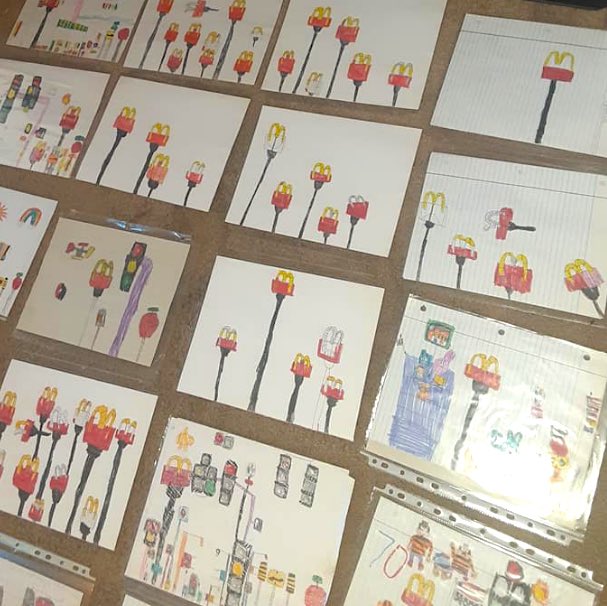
The owners of a Florida McDonald’s restaurant have bestowed some incredible holiday joy on one local family whose 15-year-old son with autism has been prolifically drawing the golden arches since he was a little boy.
Tim and Tracy Johnstone met Devon two years ago after Hurricane Michael destroyed their McDonald’s building in Panama City.
Devon’s mom, Tiffany Winters, had posted on social media asking if anyone could recover the famous “golden arches” from the storm debris to give to her son.
“When we heard about Devon’s story and his love for the golden arches, we knew we had to do something special for him and his family,” said McDonald’s Owner/Operators Tim and Tracy Johnstone who own seven restaurants, four in Panama City.
Not only did they deliver the iconic golden arch signage that was saved from the wreckage, they also brought Devon into his local McDonald’s to experience being an employee for the day.
“Our team felt a lot of emotions after Hurricane Michael two years ago, and to be able to turn around that fear and grief when the golden arches came down and make that into a celebration for such a deserving kid makes this really special to us,” said Tracy.
So they kept in touch with the teen and wanted to make his holiday super special this year, “just like that day.”
On Wednesday, the restaurant owners surprised the family members, who live 40 miles from any town, with a much-needed new car. The vehicle will ensure Devon can get to school, and any doctor or therapy visits.
“This is so far above and beyond,” said Brent Winters, Devon’s father. “To receive a car in a real time of need is going to change our lives.”
“In a year of unprecedented challenges, we’re reminded of how an act of kindness can uplift one another,” said the Johnstone’s. “It was truly such an honor to see Devon’s face light up when he saw his gifts—and to know that we could help him and his family means everything.”
The most popular television news magazine show in America shared an inspiring story about a group called Justice Defenders this week. The nonprofit trains people—and prison staff—in nearly 50 prisons in Kenya and Uganda to become paralegals and lawyers to provide legal services for themselves and others.
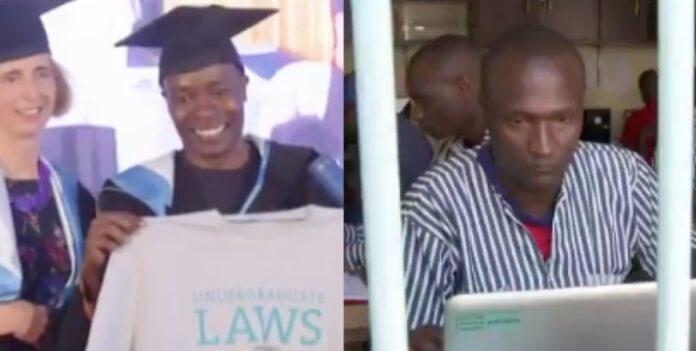
60 Minutes reporter Anderson Cooper traveled to Kenya to speak with Founder Alexander McLean and to see Justice Defenders’ work firsthand. He visited prisons and met with the paralegals who earned a formal law education from the group’s partner, the University of London.
In the segment, Cooper introduces former prisoner, Morris Kaberia, who shared his story of successfully representing himself by appealing his conviction, and overturning a lifelong sentence after spending 13 years in prison.
Isaac Ndegwa Kimaru, a prisoner in Kenya, was also given a second chance and went on to complete his law degree and is now advocating in court for other prisoners.
McLean articulated believes that justice can be achieved when the power of the law is put into the hands of the poor. His work is rooted in a core belief of creating equal access to fair trials and justice, or as they like to call it, “bridging the justice gap.”
Since its founding in 2007, Justice Defenders has served nearly 40,000 imprisoned clients with free legal advice, and 341 auxiliary paralegals are running legal practices at 46 prisons in Uganda and Kenya.
Within 10 years, the UK charity hopes to have served 1 million defenseless individuals… “to protect rights while addressing wrongs” in East Africa, in refugee communities in Europe, and even in the US.
Quote of the Day: “Do not spoil what you have; remember that what you now have was once among the things you only hoped for.” – Epicurus
Photo by: Hert Niks
With a new inspirational quote every day, atop the perfect photo—collected and archived on our Quote of the Day page—why not bookmark GNN.org for a daily uplift?
A 13-year-old from Mililani, Hawaii, is being honored for galvanizing youth to organize Christmas celebrations for children in need and initiating a variety of volunteer opportunities for young people.
Rylee Brooke Kamahele
Rylee Brooke Kamahele grew up volunteering with her parents in a program for at-risk youth, but by age 8 wanted to start making an impact on her own. “We had to fight for me to get involved,” she said, “because programs didn’t want to babysit kids during community service.”
But with a lot of persistence and hard work, she gradually persuaded charitable organizations to let her volunteer with them—and they recruited other young people to join her.
From there, Rylee started an organization called “Love Is A Verb” that organized numerous beach cleanups, provided Thanksgiving dinners for the homeless, and entertained kids at shelters. During Thanksgiving week, Rylee and her team passed out 320 turkeys with the NFL running back Marshawn Lynch.
But the jolliest project of all is her “Secret Santa Project” that makes Christmas brighter for children in need of holiday cheer. She holds donation drives and raises money to provide gifts for kids staying in shelters—and then hosts holiday parties for them.
Rylee Brooke Kamahele
This project has since expanded to include three shelters and one youth program, treating more than 300 kids to a memorable day with food, gifts, games, shaved-ice trucks and slush machines.
All of her initiatives, including environmental awareness campaigns, are under the umbrella of “The Catalyst Club,” an organization she founded to equip young people to be agents of change.
Throughout the pandemic Rylee has continued her volunteer efforts and this holiday season is continuing food distributions for families in need, distributing 2,500 boxes of food every other week.
Rylee is also running a donation drive for a nonverbal little boy who needs an iPad to communicate—raising money for the iPad, the programs he needs, and a protective case.
Rylee Brooke Kamahele
Named one of America’s Top Youth Volunteers by the 2020 Prudential Spirit of Community Awards, it’s young people like Rylee Brooke who make us remember what the holidays are all about.
SHARE This Uplifting Festive Story With Friends on Social Media…
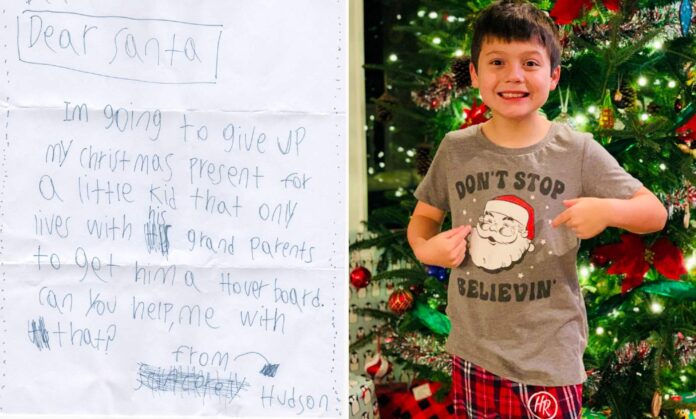
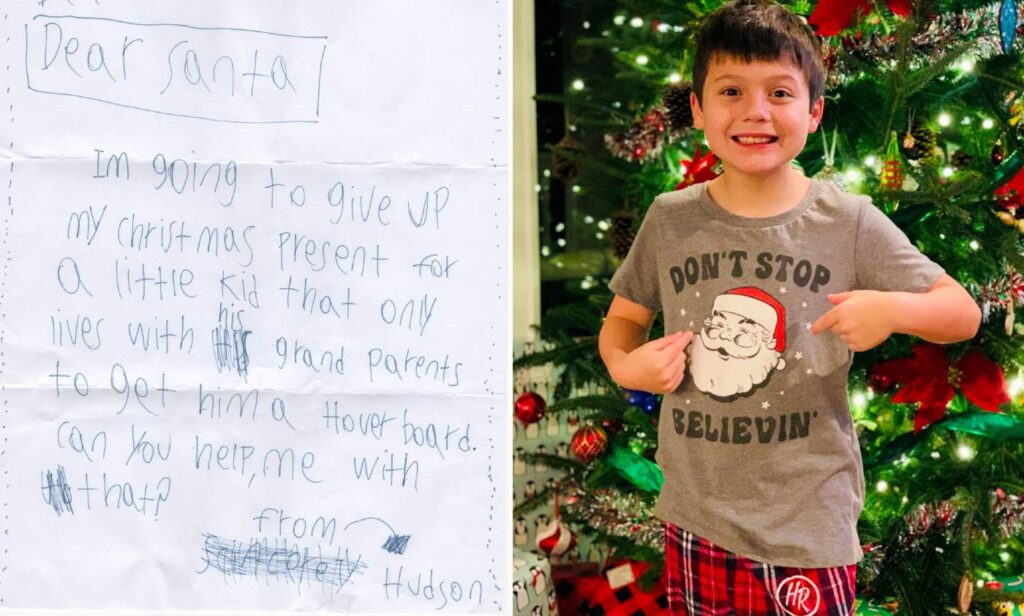
A nine-year-old has written a letter to Santa asking him to give away his hoverboard to a grieving child who wanted the same gift.
SWNS
41-year-old Jason and Sandi Boyer wanted to help another family at Christmas and were anonymously matched with a little boy being cared for by his grandmother.
The boy, who had just lost his grandfather to cancer, had a hoverboard at the top of his wishlist to Santa—just like their son Hudson.
When Hudson found out, he wrote to Santa and asked if his Christmas gift could be given to the other boy.
The Boyer family are going one better—they’re going to make sure that both boys get their hoverboard from Santa this year.
SWNS
Meteorologist Jason from Asheville, North Carolina, said: “Every year we try to think about someone or an organization to help out, normally focusing on children, and this year we found the Barry L. Joyce Cancer Fund in Madison.
“They put us in contact with a child who is parentless and was being looked after by his grandparents, but just recently his grandfather had passed away with cancer.
“Now he only has his grandmother to look after him and his siblings, so we knew they would be stressed and that this time of the year would be hard on them, particularly with the cost of medical care.
“We explained the story to our son and asked him if he would be willing to give up his hoverboard for this little boy,
“He immediately said yes which surprised us, because at that age you don’t really think they would do that.”
Non-profit executive Sandi added: “We wanted to help a little boy who was the same age as Hudson just so it would hit home a bit more, and it just so happened that he wanted exactly the same thing as my son.
A local man in Idaho Falls has been anonymously gifting more than $500,000 to deserving people in his city in the run-up to Christmas.
Now he’s changed the life of a woman who’s endured 96 jaw surgeries and chronic pain after an accident at work.
YouTube/East Idaho News
Last week we shared the story of Diana Boldman, a hard-working grandmother who received a big surprise in the form of a much-needed new vehicle.
Then we shared the story of Alyn. When he was down on his luck and homeless, he made the tough decision to have his teeth pulled. He was overwhelmed a few days ago when surprised with a brand new smile.
Now it’s time to get to know Jennifer.
When Secret Santa’s elf at East Idaho News, Nate Eaton, came to her door to give her a gift, she wasn’t there. She was shoveling snow from the neighbor’s driveway.
As she and Nate spoke, Natalie shared some of the difficulties she and her family have been going through: It isn’t just the 96 surgeries, the constant headaches and pain, the MRSA infection that has spread through her body, or having to blend foods and drink smoothies because she can no longer chew. Last week, her dad died of COVID complications.
“We know that money can’t take away that pain but hopefully you can know that somebody loves you and cares about you,” says Nate.
She’s overcome when she sees the amount. She says, astonished, “I don’t know how this happened but I promise to try and pay it forward.”
Jennifer already volunteers weekly at Ethel Boyes Elementary helping young children learn to read. “Working with the kids gives her something to look forward to and gives her hope,” says East Idaho News. “She is truly the most giving and charitable person you’ll meet. She puts everyone’s needs before her own.”
(WATCH the emotional video where Jennifer receives her incredible gift below.)
SHARE This Story Of Generosity With All Your Friends…
Seven in 10 Americans are planning to participate in more holiday gatherings this year—because they’re being held virtually, according to a new poll
A survey of 2,000 Americans revealed 72% of respondents are participating in at least one virtual celebration this holiday season, and of those, 68% plan to be more social than in years past.
Results also revealed 60% of Americans surveyed said virtual celebrations will be the norm for themselves and their family this holiday season, between Thanksgiving and New Year’s Day.
For those celebrating virtually, 93% said it was thanks mainly or in part due to COVID-19.
Conducted by OnePoll on behalf of Asurion Home+ home tech protection and support, the survey revealed the ways in which the pandemic is changing how America is celebrating the holiday season.
What they found is that many holiday get-togethers, big and small, will largely be virtual this year—the average online holiday gathering will last nearly two hours and include 11 people on the video celebration.
For those holding virtual celebrations, 69% said more of their extended family is expected to join this year than in years past.
Forty-seven percent of respondents celebrating virtually even said they expect to see someone join their gathering who they’ve been out of touch with as of late.
And for some of these respondents, they’ve been really out of touch—the average person plans to reconnect virtually with someone this holiday season whom they haven’t seen in four years.
Despite the move to more virtual holiday celebrations thanks to COVID-19, more than half of respondents (56%) said their family is coming up with creative ways to preserve holiday traditions this year.
Many respondents plan to save a seat for their laptop at the holiday dinner table. In fact, over a third of respondents celebrating virtually will participate in three or more virtual holiday dinners (37%).
And three-quarters of respondents (76%) celebrating virtually said they plan to cook or bake holiday recipes with friends and family via video this holiday season.
Over half (52%) of those partaking in video gatherings will participate in three or more video Christmas Day celebrations with family and friends.
So, with many virtual gatherings happening this season, what are respondents planning to do on these video calls with their loved ones?
In addition to talking and catching up, respondents are doing some casual holiday well-wishing and will even toast the New Year through their screen.
“This year as COVID prevents many extended families from celebrating together in person, video celebrations will play a crucial role in keeping them connected for the holidays. But as we know, tech doesn’t always work when we need it to. It will be important for families to prep their tech to ensure their video celebrations will run smoothly – so they can stay focused on what matters most, rather than fretting about their devices,” said Sarah Day, VP of Marketing at Asurion.
Unfortunately, some people may have trouble joining in on the virtual celebrations—of those planning virtual celebrations, 45% said they have family members who will be unable to join.
For those who might be missing out, respondents said it was due to their loved ones not knowing how to use their tech (37%), not having internet (33%) and not having the right tech devices (31%).
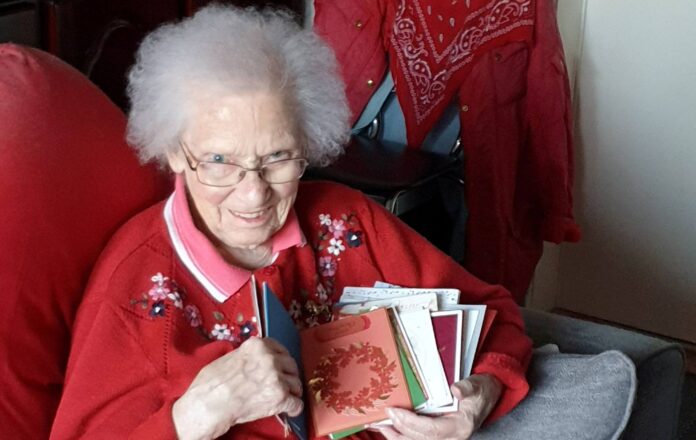
A great-great-grandmother has been inundated with more than 1,000 Christmas cards from around the world, an experience she says has restored her faith in humanity.
SWNS
92-year-old Nancy Letham usually receives only four cards around the holidays as her friends have gotten older and died.
After an online appeal was posted late this October, though, Nancy has received around 50 cards a day, including from schoolchildren in Portugal, who drew pictures for her.
Nancy’s granddaughter Leo Sheppard posted the appeal, expecting to receive around 40 cards from neighbors in Fife, Scotland where the family live. Now cards are coming in from India and the States, from Canada and Australia and Italy and Spain.
SWNS
Mom-of-seven Nancy, who has 17 grandchildren, 46 great-grandchildren, and ten great-great-grandchildren, has also received chocolates, flowers, and Christmas ornaments from well-wishes.She said, “There are some beautiful cards and they’re from all over the world…. I didn’t expect that.”
Leo reads the cards out to Nancy, who can no longer see very well. “It’s just really nice to see how many people have taken the time,” she said. “It’s not just cards, people are writing letters and letting her know about their lives and struggles. It’s letting my gran know that she’s not alone in the world.”
PASS on the Generosity and Share This Story With Friends…
Plato, the Greek philosopher who lived in the 5th century B.C.E., believed that the universe was made of five types of matter: earth, air, fire, water, and cosmos. Each was described with a particular geometry, a platonic shape. For earth, that shape was the cube.
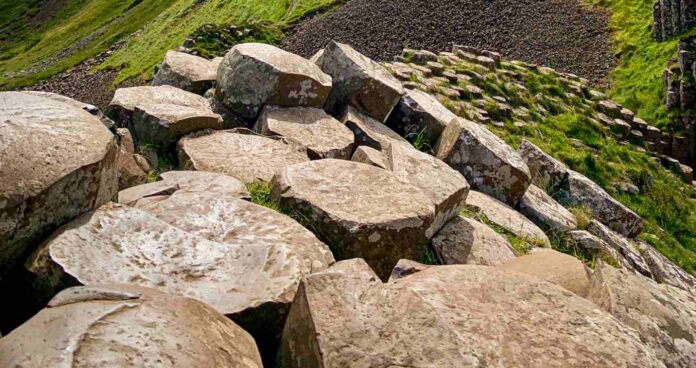
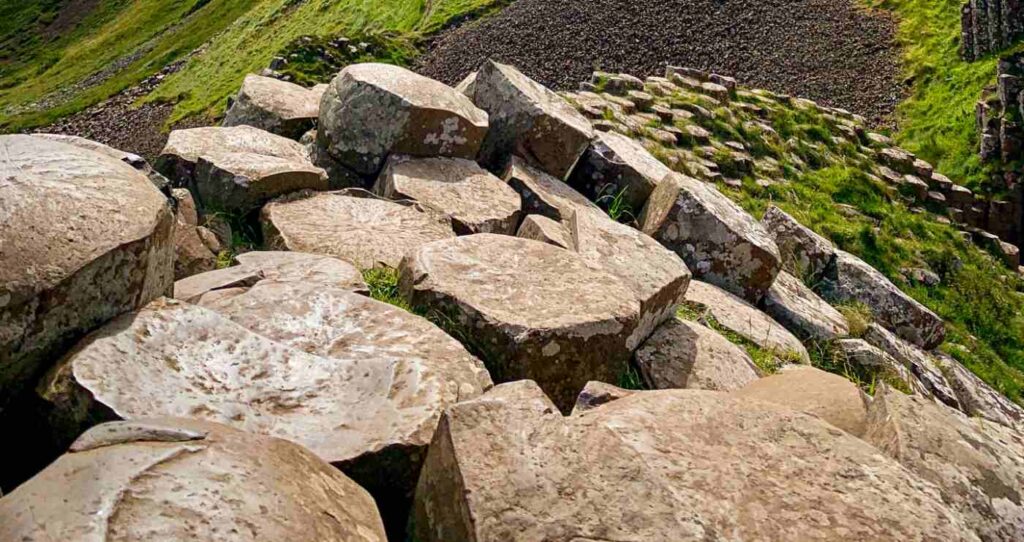
Giant’s Causeway, Joel Nevius
Science has steadily moved beyond Plato’s conjectures, looking instead to the atom as the building block of the universe. Yet Plato seems to have been onto something, researchers have found.
In a new paper in the Proceedings of the National Academy of Sciences, a team from the University of Pennsylvania, Budapest University of Technology and Economics, and University of Debrecen uses math, geology, and physics to demonstrate that the average shape of rocks on Earth is a cube.
“Plato is widely recognized as the first person to develop the concept of an atom, the idea that matter is composed of some indivisible component at the smallest scale,” says Douglas Jerolmack, a geophysicist in Penn’s School of Arts & Sciences’ Department of Earth and Environmental Science and the School of Engineering and Applied Science’s Department of Mechanical Engineering and Applied Mechanics. “But that understanding was only conceptual; nothing about our modern understanding of atoms derives from what Plato told us.
“The interesting thing here is that what we find with rock, or earth, is that there is more than a conceptual lineage back to Plato. It turns out that Plato’s conception about the element earth being made up of cubes is, literally, the statistical average model for real earth. And that is just mind-blowing.”
The group’s finding began with geometric models developed by mathematician Gábor Domokos of the Budapest University of Technology and Economics, whose work predicted that natural rocks would fragment into cubic shapes.
“This paper is the result of three years of serious thinking and work, but it comes back to one core idea,” says Domokos. “If you take a three-dimensional polyhedral shape, slice it randomly into two fragments and then slice these fragments again and again, you get a vast number of different polyhedral shapes. But in an average sense, the resulting shape of the fragments is a cube.”
Domokos pulled two Hungarian theoretical physicists into the loop: Ferenc Kun, an expert on fragmentation, and János Török, an expert on statistical and computational models. After discussing the potential of the discovery, Jerolmack says, the Hungarian researchers took their finding to Jerolmack to work together on the geophysical questions; in other words, “How does nature let this happen?”
“When we took this to Doug, he said, ‘This is either a mistake, or this is big,'” Domokos recalls. “We worked backward to understand the physics that results in these shapes.”
Fundamentally, the question they answered is what shapes are created when rocks break into pieces. Remarkably, they found that the core mathematical conjecture unites geological processes not only on Earth but around the solar system as well.
“Fragmentation is this ubiquitous process that is grinding down planetary materials,” Jerolmack says. “The solar system is littered with ice and rocks that are ceaselessly smashing apart. This work gives us a signature of that process that we’ve never seen before.”
Part of this understanding is that the components that break out of a formerly solid object must fit together without any gaps, like a dropped dish on the verge of breaking. As it turns out, the only one of the so-called platonic forms—polyhedra with sides of equal length—that fit together without gaps are cubes.
“One thing we’ve speculated in our group is that, quite possibly Plato looked at a rock outcrop and after processing or analyzing the image subconsciously in his mind, he conjectured that the average shape is something like a cube,” Jerolmack says.
“Plato was very sensitive to geometry,” Domokos adds. According to lore, the phrase “Let no one ignorant of geometry enter” was engraved at the door to Plato’s Academy. “His intuitions, backed by his broad thinking about science, may have led him to this idea about cubes,” says Domokos.
To test whether their mathematical models held true in nature, the team measured a wide variety of rocks, hundreds that they collected and thousands more from previously collected datasets. No matter whether the rocks had naturally weathered from a large outcropping or been dynamited out by humans, the team found a good fit to the cubic average.
However, special rock formations exist that appear to break the cubic “rule.” The Giant’s Causeway in Northern Ireland, with its soaring vertical columns, is one example, formed by the unusual process of cooling basalt. These formations, though rare, are still encompassed by the team’s mathematical conception of fragmentation; they are just explained by out-of-the-ordinary processes at work.
A messy, fascinating world
Boulders in New Zealand, Christoph Theisinger
“The world is a messy place,” says Jerolmack. “Nine times out of 10, if a rock gets pulled apart or squeezed or sheared—and usually these forces are happening together—you end up with fragments which are, on average, cubic shapes. It’s only if you have a very special stress condition that you get something else. The earth just doesn’t do this often.”
The researchers also explored fragmentation in two dimensions, or on thin surfaces that function as two-dimensional shapes, with a depth that is significantly smaller than the width and length. There, the fracture patterns are different, though the central concept of splitting polygons and arriving at predictable average shapes still holds.
“It turns out in two dimensions you’re about equally likely to get either a rectangle or a hexagon in nature,” Jerolmack says. “They’re not true hexagons, but they’re the statistical equivalent in a geometric sense. You can think of it like paint cracking; a force is acting to pull the paint apart equally from different sides, creating a hexagonal shape when it cracks.”
In nature, examples of these two-dimensional fracture patterns can be found in ice sheets, drying mud, or even the earth’s crust, the depth of which is far outstripped by its lateral extent, allowing it to function as a de facto two-dimensional material. It was previously known that the earth’s crust fractured in this way, but the group’s observations support the idea that the fragmentation pattern results from plate tectonics.
Identifying these patterns in rock may help in predicting phenomenon such as rock fall hazards or the likelihood and location of fluid flows, such as oil or water, in rocks.
For the researchers, finding what appears to be a fundamental rule of nature emerging from millennia-old insights has been an intense but satisfying experience.
“There are a lot of sand grains, pebbles, and asteroids out there, and all of them evolve by chipping in a universal manner,” says Domokos, who is also co-inventor of the Gömböc, the first known convex shape with the minimal number—just two—of static balance points. Chipping by collisions gradually eliminates balance points, but shapes stop short of becoming a Gömböc; the latter appears as an unattainable end point of this natural process.
The current result shows that the starting point may be a similarly iconic geometric shape: the cube with its 26 balance points. “The fact that pure geometry provides these brackets for a ubiquitous natural process, gives me happiness,” he says.
“When you pick up a rock in nature, it’s not a perfect cube, but each one is a kind of statistical shadow of a cube,” adds Jerolmack. “It calls to mind Plato’s allegory of the cave. He posited an idealized form that was essential for understanding the universe, but all we see are distorted shadows of that perfect form.”
Source: University of Pennsylvania
SHARE This Breakthrough With Pals on Social Media…
In the remote Chinese county of Zhong, villagers have been saved from a deadly wasp infestation by a fire-breathing drone.
The remote-controlled flying flamethrower was built by Blue Sky Search and Rescue after legions of stinging wasps moved into the village and surrounding area, near the city of Chongqing.
A fundraiser for a solution to the wasps, whose stings can cause renal failure, liver failure and cardiac injury—sometimes resulting in death in as few as two hours—saw villagers donate around 80,000 RMB, or about $12,250 to cover the cost of the drone, a petrol tank, a nozzle, and the assembly.
In a video released by Blue Sky Rescue, which conducts mountain search and rescue and other emergency services in the more remote parts of China, one can see the drone hover across to just one of over 100 nests and blast it with several gouts of flame, the ash and rubble falling to the floor, dispersing the wasps.
While not the most eco-friendly solution, rural Chinese are often poor, underprivileged minorities living beyond the reach of modern medicine.
(WATCH The Indpendent’s video of the drone in action below.)
SHARE This Fiery Story With Friends on Social Media…
Quote of the Day: “Live out of your imagination, not your history.” – Stephen Covey
Photo by: Jr Korpa
With a new inspirational quote every day, atop the perfect photo—collected and archived on our Quote of the Day page—why not bookmark GNN.org for a daily uplift?