All News - Page 531 of 1735 - Good News Network
Home Blog Page 531

Two Lonely Otters Introduced at a Sanctuary Are Now Living ‘Happily Otter After’

Cornish Seal Sanctuary

What’s better than being utterly in love? How about being “otterly” in love?

Cornish Seal Sanctuary

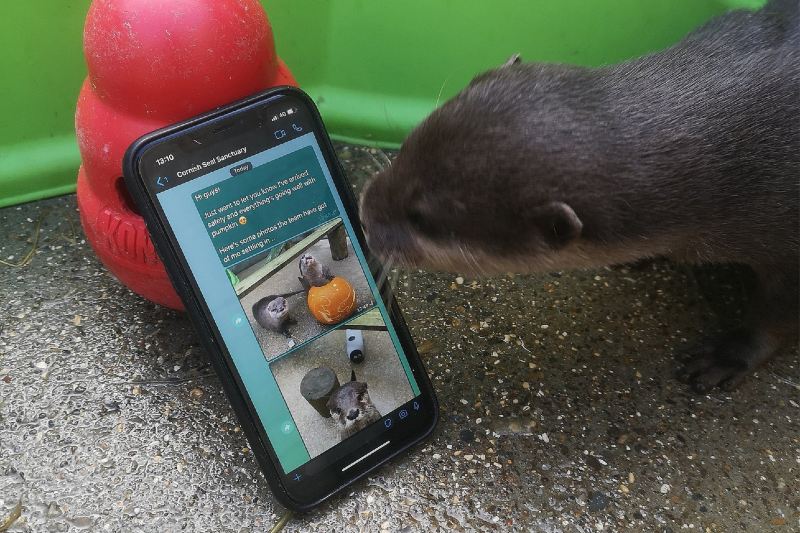
When we last reported on erstwhile Asian short-clawed otter Harris who’d lost his mate, he’d just dipped his toe back into the dating pool. Now, thanks to the online otter dating service Fishing For Love (because there apparently is such a thing), Harris has met his match.

Sea Life Scarborough

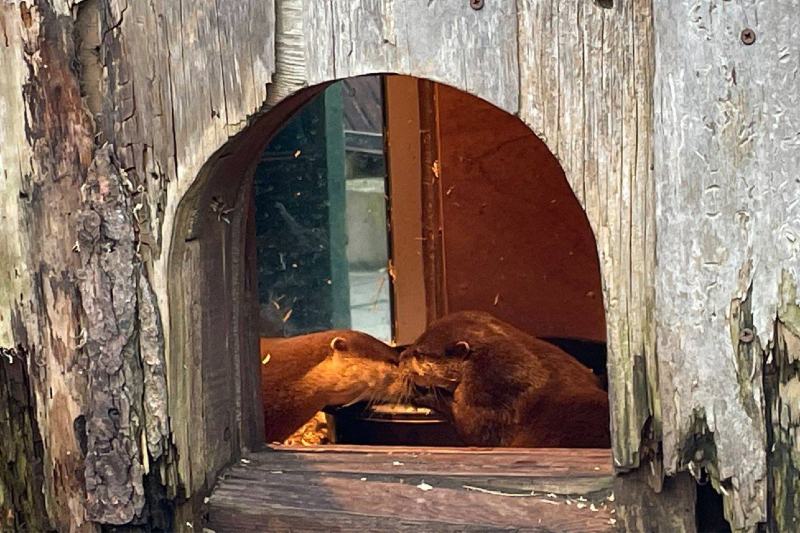
With a profile pairing that looked particularly promising, Harris was relocated from his home at the Cornish Seal Sanctuary to SEA LIFE Scarborough on the coast of Yorkshire where his new mate, Pumpkin, who’d similarly lost her prior life partner, awaited him. (According to experts on the species, otter blind dates work best when the male hooks up with the female on her own turf—or in this case, aquarium enclosure—rather than the other way around.)

The newly-met otter couple’s brief-getting-to-know-you and honeymoon period went off without a hitch. Aquarium staff report the pair has since bonded beautifully and all signs point to a long and happy union.

WATCH: Adorable Otter Jump on Boat to Befriend Dogs

“After an extremely sad period for both Pumpkin and the Animal Care team here at Scarborough we are delighted to report that not only is Pumpkin happy once again, but Harris has settled in extremely well and has already become part of the SEA LIFE Scarborough family,” said program curator Todd German.

While he’s missed at his former home, Harris’s friends and keepers are thrilled for him as well. “We are absolutely delighted that Pumpkin and Harris are getting on so well and he has settled in so quickly,” Cornish Seal Sanctuary curator Tamara Cooper told CNN.

Sea Life Scarborough

And in the words of SEA LIFE Scarborough, may they “live happily otter after.”

SHARE This Story With Friends Who’d Be Otterly Besotted by it…

His Son Designed a Smartwatch App to Stop Dad’s PTSD Nightmares—And It Was ‘Life-changing’

Carmen Ferderber

For many of the servicemen and women who’ve bravely served in war zones, leaving the horrors of the battlefield behind isn’t as simple as just hanging up their uniforms when they get home.

Post-traumatic stress disorder encompasses a wide range of symptoms. When Tyler Skluzacek, son of combat vet Patrick Skluzaceksaw saw his father’s life unravel as the result of recurring debilitating nightmares, he knew he had to do something about it.

Carmen Ferderber

In 2015, when Tyler, then a senior at Macalester College in Saint Paul, Minnesota, learned of an upcoming collaborative computer programming “hackathon” event in Washington, D.C. focused on developing apps to help people like his dad, he was determined to participate.

With technology patterned on the intuitive countermanding measures PTSD service animals provide, Tyler and his team came up with the prototype for the “anti-night-terror” smartwatch app. The program detects the onset of nocturnal disturbances by measuring the wearer’s heart rate and movement. Before the nightmare can take hold, the app delivers a subtle disruption (equivalent to a gentle nudge or a lick from a dog) to reset the wearer’s sleep pattern.

Calibrating the correct vibration level for the watch proved to be a challenge. It had to deliver “just enough stimulus to pull them out of the deep REM cycle and allow the sleep to continue unaffected,” Tyler told NPR.

RELATED: After 68% of Patients Were Cured of PTSD in Phase-2 Trials Clinics May Soon Offer MDMA Therapy

With his dad serving as a volunteer Guinea pig, Tyler continued to tweak his creation until the algorithm was pretty much pitch-perfect. Once the glitches were worked out and the app was performing as intended, both father and son were floored by the immediate difference it made in Patrick’s life.

“It was night and day when I put that watch on and it started working,” Patrick said. The vibrations worked like “little miracles.”

Tyler, now a graduate student in computer science at the University of Chicago, realized the potential for the “little miracles” he’d created to help other PTSD sufferers. With the goal of putting his life-changing app into widespread distribution, he sold the rights to an investor.

MORE: Veterans Are Finding Lasting Peace After Taking These Free Journeys into Nature for Months at a Time

According to the VA, the newly FDA-approved Apple Watch-compatible technology (marketed under the brand name Nightware) should be available by prescription—transforming nightmares into sweeter dreams and bringing hard-earned rest to deserving military veterans everywhere—in the near future.

SHARE this Inspiring Story of Hope With Friends…

“There is a Passion natural to the Mind of man, especially a free Man, which renders him impatient of Restraint.” – George Mason (born 295 years ago today)

Quote of the Day: “There is a Passion natural to the Mind of man, especially a free Man, which renders him impatient of Restraint.” – George Mason (born 295 years ago today)

Photo by: SwapnIl Dwivedi

With a new inspirational quote every day, atop the perfect photo—collected and archived on our Quote of the Day page—why not bookmark GNN.org for a daily uplift?


Stanford Designer is Making Bricks Out of Fast-Growing Mushrooms That Are Stronger than Concrete

Copyright Philip Ross, Mycoworks

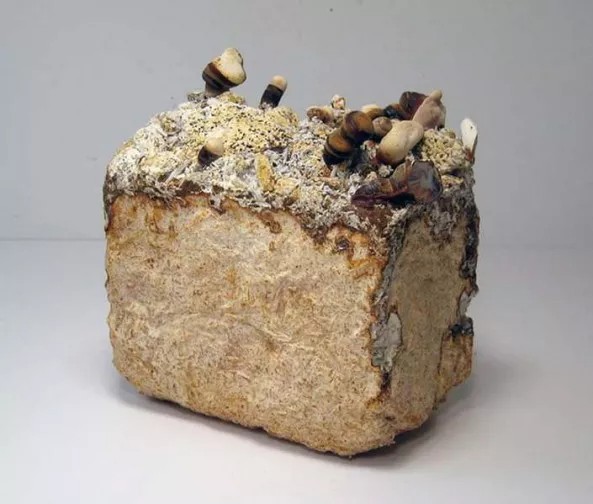
While there aren’t any species of mushroom large enough to live in, one Bay-area designer thinks he can make one if he only cranks out enough of his patented “mushroom bricks.”

Copyright Philip Ross, Mycoworks

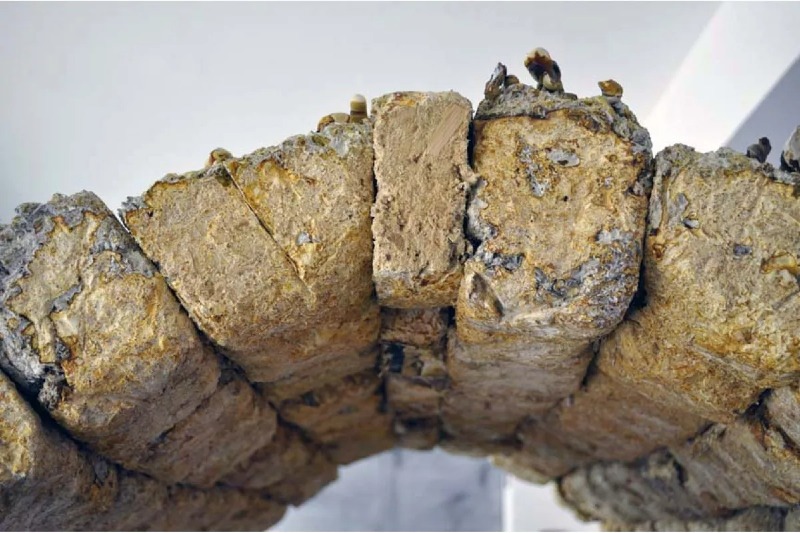
In fact, he knows he can do it, because he’s already build a showpiece called “Mycotecture”—a 6×6 mushroom brick arch from Ganoderma lucidum or reishi mushrooms.

Phil Ross doesn’t use the mushroom, or fruiting body of the reishi; he uses mycelium, the fast-growing fibrous roots that make up the vast majority of fungus lifeforms.

Mycelium grows fast, and is incredibly durable, waterproof, non-toxic, fire-resistant, and biodegradable.

Ross uses it to build bricks by growing mycelium in bags of delicious (to mushrooms) sawdust, before drying them out and cutting them with extremely heavy-duty steel blades.

This works because mushrooms digest cellulose in the sawdust, converting it into chitin, the same fiber that insect exoskeletons are made from.

“The bricks have the feel of a composite material with a core of spongy cross grained pulp that becomes progressively denser towards its outer skin,” explained Discover Magazine. “The skin itself is incredibly hard, shatter resistant, and can handle enormous amounts of compression.”

Copyright Philip Ross, Mycoworks

One design/architecture website described these mushroom bricks as “stronger than concrete,” while another quotes Ross in an interview suggesting that it could replace all manner of plastic polymer building materials.

MORE: Another Study Shows Psychedelic Psilocybin Mushrooms Offering Long-Term Relief From Depressive Symptoms

Indeed, designers have already used mycelium to make cloth hats, sea-worthy canoes, and eco-friendly coffins. Ross’ next plan, according to the same interview, is to build an entire house for 12-20 people out of reishi mycelium.

SHARE the News With Someone Who’d Love a Mushroom House…

The Northern Lights Are Predicted to be Visible Across the Northern U.S. and UK Tonight

Emily Hon
Emily Hon

A geomagnetic storm is set to send the northern lights rippling through the dark tonight, in an event so active it’s predicted to reach much further south than Greenland or Iceland or Alaska. 

Aurora watchers can expect to see green flashes when the sky turns dark on December 10, and again on December 11. 

These shimmering bands of light may be visible in the following US locations, according to an October 9 alert from NOAA: northern Idaho, northern Iowa, Maine, Michigan, Minnesota, Montana, New Hampshire, New York, North Dakota, northern Pennsylvania, South Dakota, Vermont, Washington, Wisconsin and Wyoming, in addition to all of Alaska and Canada. 

Known as the ‘Merry Dancers’ in Scotland, the aurora borealis might also be seen in UK–as far south as the English Midlands.

CHECK OUT: Hawking’s 50-Year Mystery About Falling into Black Holes Has Finally Been Solved

The intensity of this week’s northern lights is, according to meteorologists, because of a solar flare which recently sent charged particles towards our planet in huge numbers, and the strong solar wind coming from the geomagnetic storm.

The aurora is not the only exciting dark sky event on the near horizon. Other celestial gifts for December 2020 include the most active meteor shower of the year, the Geminids, to peak on the nights of December 13 and 14.

Then there’s the ’Christmas star’ conjunction–in which Jupiter and Saturn will appear closer to each other than they have in 800 years–on winter solstice. 

SHARE This News With Other Dark Sky Fans…

‘She’s Our Miracle’: This Minnesota Teacher Donated a Kidney to the School’s Custodian

Erin Durga and Patrick Mertens; photo by Lynda Mertens

The dictionary definition for the word “custodian” is someone who has responsibility for or looks after something. This past summer, one fortunate Minnesota grade-school custodian learned there was an unexpected custodial someone who was not only looking out for him but destined to save his life.

Erin Durga and Patrick Mertens; photo by Lynda Mertens

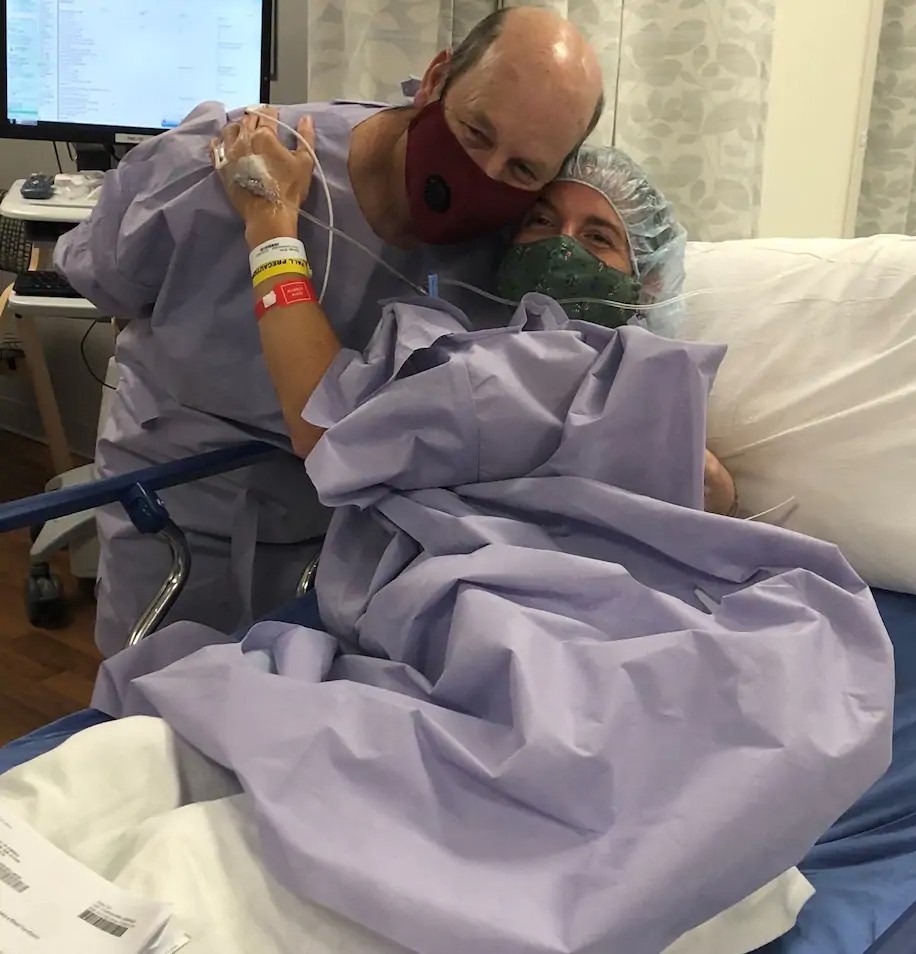
Patrick Mertens, 64, was in dire need of a kidney transplant. The generous staff at Kimball Elementary School had already spearheaded fundraisers to help him pay for ongoing dialysis treatment.

Even with their aid, Mertens’ condition continued to deteriorate. His daughter, Kayla, posted a Facebook plea for potential donors to come forward. Someone did—and it was someone they knew, third-grade Kimball Elementary teacher Erin Durga.

Durga and Mertens were more than nodding acquaintances. In addition to working at the same school, Durga’s three children attended the daycare facility run by Mertens’ wife, Lynda.

The co-workers often chatted about their families with one another after school. Durga also got to know and like Lynda, with whom she bonded at the daycare center while picking up her kids.

Lynda Mertens

Even so, it was a huge leap from swapping casual stories about your families to donating a kidney, but Durga knew it was something she was simply had to do.

CHECK OUT: Goal of Plentiful Organ Transplants Moves Closer to Reality as Scientists Grow Tiny Working Livers from Skin Cells

“I felt in my heart, from the very beginning, that this was my thing,” Durga told The Washington Post. “Once I decided that, yes, I’m going to donate to Pat, I felt really good about it, and I was at peace with it throughout the entire thing.”

After tests confirmed she was a match, Durga drove to Mertens’ home to break the news. But she didn’t have to utter a word. The tee-shirt she wore emblazoned with “DONOR” said it all.

The procedure was scheduled for this past July. Mertens was nervous going in, but Durga reassured him just prior to surgery she was certain everything was going to be all right. Buoyed by her positive attitude, Mertens felt ready to face the coming ordeal.

M Health Fairview

Both patients emerged from the operation with flying colors and were well enough recovered to return to their jobs when the school year began in August.

MORE: Another Record-Setting Organ Donation Year in the U.S. in 2019; Transplant Rate in 2020 Stays Strong

Mertens says since the operation, things have truly turned around for him. As thankful as he is to be able to spend time with his loved ones and resume enjoyment of his favorite pastimes, the thing he and his wife are most grateful for is the amazing woman who was willing to make sure that he could.

“She’s our miracle, our angel,” Lynda Mertens said. “We’ll forever be grateful for her.”

RELATED: Woman Donates Kidney to the Cop Who Locked Her Up (Watch)

Whether or not Durga is a real-life guardian angel isn’t our call, but one thing’s for sure—when you look up the word “custodian” in the dictionary, if her picture’s not there, it definitely should be.

SHARE the Life-Affirming Inspiration With Friends on Social Media…

Greece Opens World’s First Underwater Museum Around a 2,400-Year-old Shipwreck

YouTube/BLUEMED Interreg Atlantis Consulting Partner

Greece’s first underwater museum allows visitors to dive down in time to the era of the Peloponnesian War while viewing ancient shipwrecks and pristine coral gardens.

YouTube/BLUEMED Interreg Atlantis Consulting Partner

Diving down to depths of 80 feet, guides are able to show visitors the 90-foot-long Peristera shipwreck sitting where it sank 2,400 years ago while carrying a cargo of wine and black-glazed clay tableware.

The Peristera shipwreck museum, named for a neighboring uninhabited islet along whose coast it was discovered, was opened to the public during a pilot period which just ended at the closing of October. In total more than 300 people arrived, including 250 visitor-divers.

The optimistic opening, COVID-19 permitting, will be June 2021. Experienced divers can go with a guide, while non-divers can take a class at the nearby accredited diving centers.

Located in the National Marine Park of Alonissos and Northern Sporades, the first Marine Protected Area established in Greece and the largest in Europe, divers will also have the chance to come face to face with over 300 fish species, Mediterranean monk seals, and beautiful coral beds.

For those not intending to dive, five underwater cameras can show visitors a glimpse of what’s underneath the waves, including one which runs on a 24-hour live stream.

A casualty of war

The shipwreck was likely Athenian and was believed to have sank during the Peloponnesian War, a period after the golden era of Greek city-state civilization when Sparta and Athens fought each other down to the nub.

READ: The World’s First Happiness Museum Opened in Copenhagen, and It’s Bound to Put a Smile on Your Face

It was discovered in 1985 by a local fisherman, but wasn’t explored by archaeologist Elpida Hatzidaki and his colleagues until seven years later.

According to National Geographic, the ship was bigger than any merchant vessel from the period (4th to 5th century BCE), and its dimensions, 39-82 feet, are normally assumed to have been achieved during Roman times.

Its archaeologically significant cargo of 4,000 clay amphora—or two-handed clay wine jugs—have remained intact after all these years, and diver-visitors can literally see how they were stacked in the boat.

Archaeologists speaking with Nat Geo said that only some burned timbers remained from the hull, though the shape of the of the ship, much like a fossil, can be clearly seen based on the natural features that grew on its skeleton.

CHECK OUT: Museum of Natural History Unveils New Hall of Gems After Years Of Renovation—And It Looks Incredible

Even though little physical remains of the shipwreck can be found, local dive guide Kostas Efstathiou told the magazine there has been interest from “all over the world” and that the panoramic view of the 4,000 amphorae surrounded by the outline of where the ship sat for so many centuries, with coral-covered seabed around it, is something “awe-inspiring.”

(WATCH the YouTube video of divers exploring the shipwreck below.)

SHARE the News From the Aegean With Pals on Social Media… 

‘Secret Santa’ Just Paid Off Every Layaway Item For All the Shoppers At Mississippi Walmart

Christmas came early to the town of Canton, Mississippi when a generous and very secret Santa picked up the tab for more than 300 layaway tickets at the local Walmart.

A donor who chose to remain anonymous approached the store’s management and made an offer they had no reason to refuse: The jolly old elf volunteered to make good on every layaway ticket they were holding for customers who had yet to pay or fully pay for their merchandise.

The exact amount of the donation has not been revealed, but guesstimates are that Santa laid out a sizable chunk of change to ensure his neighbors’ holidays would be merry, bright, and a whole lot more stress free. In a year that’s been especially hard for people, those who benefited from Santa’s generosity are truly grateful for the gesture.

One Madison County woman named Belinda Brooks who was gifted several times over told WLBT News not only would the unexpected boon mean she could take some days off but that her child would get everything on his wishlist. “I will get everything he asked for, so I’m good on that as long as he’s happy. I’m fine with that,” she said.

A Walmart spokesperson later revealed that even after all the layaways had been paid for, since many of the on-hold items had been reduced in price, thanks to cash register adjustments there’d been a not-so-small stocking-full of funds left over.

RELATED: When a Man Gives a Car to a Substitute Teacher the Gift Ignites a Ripple of Good Deeds

In the spirit of the season, the store passed the good cheer along to a pair of local toy drives and the hunger relief organization Feeding America—putting an extra helping of merry ho-ho-ho in the holidays for some folks who needed it most.

BE GENEROUS With the News and Share This Story With Pals…

“We turn not older with years but newer every day.” – Emily Dickinson (born 190 years ago today)

Quote of the Day: “We turn not older with years but newer every day.” – Emily Dickinson (born 190 years ago today)

Photo by: John Moeses Bauan

With a new inspirational quote every day, atop the perfect photo—collected and archived on our Quote of the Day page—why not bookmark GNN.org for a daily uplift?


Listen to the Superfluid MIT Scientists Have Modeled to Emulate the Sound of a Neutron Star

MIT, Christine Daniloff

For some, the sound of a “perfect flow” might be the gentle lapping of a forest brook or perhaps the tinkling of water poured from a pitcher. For physicists, a perfect flow is more specific, referring to a fluid that flows with the smallest amount of friction, or viscosity, allowed by the laws of quantum mechanics. Such perfectly fluid behavior is rare in nature, but it is thought to occur in the cores of neutron stars and in the soupy plasma of the early universe.

Now MIT physicists have created a perfect fluid in the laboratory, and found that it sounds something like this:

This recording is a product of a glissando of sound waves that the team sent through a carefully controlled gas of elementary particles known as fermions. The pitches that can be heard are the particular frequencies at which the gas resonates like a plucked string.

The researchers analyzed thousands of sound waves traveling through this gas, to measure its “sound diffusion,” or how quickly sound dissipates in the gas, which is related directly to a material’s viscosity, or internal friction.

Surprisingly, they found that the fluid’s sound diffusion was so low as to be described by a “quantum” amount of friction, given by a constant of nature known as Planck’s constant, and the mass of the individual fermions in the fluid.

This fundamental value confirmed that the strongly interacting fermion gas behaves as a perfect fluid, and is universal in nature. The results, published in the journal Science, demonstrate the first time that scientists have been able to measure sound diffusion in a perfect fluid.

Scientists can now use the fluid as a model of other, more complicated perfect flows, to estimate the viscosity of the plasma in the early universe, as well as the quantum friction within neutron stars—properties that would otherwise be impossible to calculate. Scientists might even be able to approximately predict the sounds they make.

“It’s quite difficult to listen to a neutron star,” says Martin Zwierlein, the Thomas A. Frank Professor of Physics at MIT in a statement. “But now you could mimic it in a lab using atoms, shake that atomic soup and listen to it, and know how a neutron star would sound.”

CHECK OUT: His Invention For Renewable Energy Inspired by the Physics of Northern Lights Just Won the 2020 Dyson Prize

While a neutron star and the team’s gas differ widely in terms of their size and the speed at which sound travels through, from some rough calculations Zwierlein estimates that the star’s resonant frequencies would be similar to those of the gas, and even audible—“if you could get your ear close without being ripped apart by gravity,” he adds.

Zwierlein’s co-authors are lead author Parth Patel, Zhenjie Yan, Biswaroop Mukherjee, Richard Fletcher, and Julian Struck of the MIT-Harvard Center for Ultracold Atoms.

Tap, listen, learn

To create a perfect fluid in the lab, Zwierlein’s team generated a gas of strongly interacting fermions—elementary particles, such as electrons, protons, and neutrons, that are considered the building blocks of all matter. A fermion is defined by its half-integer spin, a property that prevents one fermion from assuming the same spin as another nearby fermion. This exclusive nature is what enables the diversity of atomic structures found in the periodic table of elements.

“If electrons were not fermions, but happy to be in the same state, hydrogen, helium, and all atoms, and we ourselves, would look the same, like some terrible, boring soup,” Zwierlein says.

Fermions naturally prefer to keep apart from each other. But when they are made to strongly interact, they can behave as a perfect fluid, with very low viscosity. To create such a perfect fluid, the researchers first used a system of lasers to trap a gas of lithium-6 atoms, which are considered fermions.

The researchers precisely configured the lasers to form an optical box around the fermion gas. The lasers were tuned such that whenever the fermions hit the edges of the box they bounced back into the gas. Also, the interactions between fermions were controlled to be as strong as allowed by quantum mechanics, so that inside the box, fermions had to collide with each other at every encounter. This made the fermions turn into a perfect fluid.

“We had to make a fluid with uniform density, and only then could we tap on one side, listen to the other side, and learn from it,” Zwierlein says. “It was actually quite diffult to get to this place where we could use sound in this seemingly natural way.”

“Flow in a perfect way”

The team then sent sound waves through one side of the optical box by simply varying the brightness of one of the walls, to generate sound-like vibrations through the fluid at particular frequencies. They recorded thousands of snapshots of the fluid as each sound wave rippled through.

“All these snapshots together give us a sonogram, and it’s a bit like what’s done when taking an ultrasound at the doctor’s office,” Zwierlein says.

RELATED: We Might Be Able to Stop Tsunamis in Their Tracks by Firing Sound Waves

In the end, they were able to watch the fluid’s density ripple in response to each type of sound wave. They then looked for the sound frequencies that generated a resonance, or an amplified sound in the fluid, similar to singing at a wine glass and finding the frequency at which it shatters.

“The quality of the resonances tells me about the fluid’s viscosity, or sound diffusivity,” Zwierlein explains. “If a fluid has low viscosity, it can build up a very strong sound wave and be very loud, if hit at just the right frequency. If it’s a very viscous fluid, then it doesn’t have any good resonances.”

From their data, the researchers observed clear resonances through the fluid, particularly at low frequencies. From the distribution of these resonances, they calculated the fluid’s sound diffusion. This value, they found, could also be calculated very simply via Planck’s constant and the mass of the average fermion in the gas.

This told the researchers that the gas was a perfect fluid, and fundamental in nature: Its sound diffusion, and therefore its viscosity, was at the lowest possible limit set by quantum mechanics.

Zwierlein says in addition to using the results to estimate quantum friction in more exotic matter, such as neutron stars, the results can be helpful in understanding how certain materials might be made to exhibit perfect, superconducting flow.

MORE: Australia Blows Science’s Collective Mind by Mapping 3 Million Galaxies in 300 Hours

“This work connects directly to resistance in materials,” Zwierlein says. “Having figured out what’s the lowest resistance you could have from a gas tells us what can happen with electrons in materials, and how one might make materials where electrons could flow in a perfect way. That’s exciting.”

SHARE This Fascinating Story With Friends on Social Media…

Source: MIT

Ethereal Sounds Are Emanating From the World’s First ‘Piano’ Made From Plants

A Spanish startup has launched the world’s first ‘piano’ that’s made from living plants.

SWNS

The remarkable instrument uses flora as biological antennas, capable of perceiving changes in frequency when they are touched.

This change in frequency is translated into a voltage, which is conducted by the plants, as they are natural conductors of electricity.

The voltage is transformed into sound and activates the input of current from the electrical network into the circuit, giving rise to a magical show of light and music.

The installation was created by a biotech company named Bioo that makes electricity from nature.

“The response has been overwhelmingly positive,” said founder and CEO Pablo Vidarte.”Multiple studies show that engaging with plants has a positive impact on humans from an emotional and psychological perspective.

“We aim to create a global consciousness of nature that helps lead the way to a greener future. That’s why we’re so enthusiastic about leveraging our technology that allows us to transform plants into biological switches, to create an amazing experience.”

The ‘green piano’ was launched in August in Spain’s Ibiza Biotechnological Botanical, Europe’s only biotechnology botanical center.

MORE: After Disease Forced Acclaimed Pianist to Stop Playing, a Designer Made Gloves That Brought His Hands Back to Life

Bioo, named by the European Parliament as one of the most innovative companies in Europe, has the overall aim of making sustainable electricity from nature, and is also responsible for creating a biological battery powered from soil that “nourishes from nature without harming it.”

(WATCH the SWNS video to hear the instrument in action below.)

SHARE the Music and Send This Story to Friends on Social Media…

When Toronto Pub Admits it Needs Rent Money, Neighborhood Swoops In to Buy its Entire Stock of Beer

Swan Dive/Facebook

The popular Toronto hangout Swan Dive posted that it was struggling to pay the rent through the pandemic. So customers bought all its stock to help out.

Owner Abra Shiner was trying to keep her pub going through lockdown by operating as a bottle shop, but it was becoming very clear that the costs of trying to run that way were just too high. She decided to be honest about her predicament on social media.

“We were blowing through our savings and I wasn’t sure if I was going to be able to pay rent towards the end of the month,” Shiner told CNN. “So, I wrote on Facebook asking people to come buy the beer we had in our stock room… and it worked. The post went viral.”

Shiner’s social media plea soon had over 20,000 views, and people from all over the Brockton Village neighborhood were showing up to save beer, and their beloved bar.

“People just started coming out of the woodwork, some people we hadn’t seen in years,” Shiner said.

RELATED: Customer Buys Beer and Toasts the Staff With $3000 Tip–As Restaurant Voluntarily Shuts Doors During COVID

Within a few days, the Swan Dive had off-loaded more than 90 cases off craft beer. In fact, it had completely sold out of stock.

Swan Dive/Facebook

Combined with a government rent subsidy, the money the community added to the bar’s float in recent beer sales will keep this much-loved pub around until spring when it can safely open its doors once again.

“You guys are pretty darn great,” Shiner posted to the Swan Dive’s Facebook fans. “What wonderful people you all are.”

SHARE This Heartening Story With Pals on Social Media…

Hydration May Be the Recipe for Happiness: This Poll Reflects Benefits, The More Water You Drink

Anderson Rain Klwak

Does being properly hydrated have a transcendent effect on our lives? According to a new poll, hydration may be the recipe for happiness.

The new survey of 2,000 Americans split respondents by how many glasses of water they drink in a day and found that those who keep up with their H20 intake tend to be more optimistic, energetic, and successful.

Those who drink six or more glasses of water per day are the most likely to strongly agree that they are “very happy” (41%).

Compare that to those who self-report drinking less than one glass per day: only 12% strongly agree with that same statement.

The poll, conducted by OnePoll on behalf of Bosch home appliances, explored the role hydration plays in our lives and the benefits for potentially feeling happier.

RELATED: Americans Who Drink This Much Water a Day Were More Likely to Report Feeling ‘Very Happy’

Forty percent of those who drink six or more glasses of water per day strongly agree that they’re an optimistic person, compared to just 10% of those who drink less than one glass of water a day.

Refreshments could also be the key to waking up feeling refreshed. The study found that those who drink six or more glasses woke up feeling exhausted the least amount of times per week (2.59) compared to those who drink less than one glass of water a day (3.14).

Respondents who drink six or more glasses are also most likely to describe themselves as successful and the least likely to be late to work.

So how does access to ice factor into this phenomenon? Well, room temperature tap water may not be the most refreshing choice of drink to the average person and the results confirmed this to be true, suggesting that not having beverages at our preferred temperature impacts how much we drink, and therefore, our overall energy, happiness, and optimism.

MOREManaging Your Gut Bacteria Shown to Alleviate Anxiety, Says New Research

NUDGE Your Friends to Drink More Water By Sharing The Survey On Social Media…

The Most Active Meteor Shower of the Year is About to Shine Like Christmas Lights in the Sky

Alan Chen

From a rare ‘Christmas star’ on winter solstice to the Full Cold Moon just before new year, there are lots of stunning celestial events to look out for this December. One phenomenon that has astronomers extra excited? 

Peaking on the nights of December 13 and 14—from Sunday night until sunrise this Monday—the most active meteor shower of 2020 will take place in the form of the Geminids.

Alan Chen

Farmers’ Almanac reports that, with a clear sky, “you can easily spot 50 or more meteors per hour. On an optimum night for the Geminids, it may even be possible to see up 100 meteors per hour.” 

With a new moon happening on December 14, this year the skies will be extra dark, and meteor watching will be that bit better. 

What are the Geminids?

According to NASA, these shooting stars are “caused by a stream of debris left by the asteroid, 3200 Phaethon. When the Earth passes through the trails of dust every December left by 3200 Phaethon, we see the Geminid meteor shower as the dust (meteoroids) burn up in Earth’s atmosphere creating meteors.”

Visible all over the world, though best seen in the Northern Hemisphere, there’s no need to look in a particular direction to spot these burning specks of dust.

Just find a dark spot, a large patch of open sky, and look up. The best time to view fireballs hurtling through the sky? At the darkest hour. That is, just before dawn. 

MORE: A Rare ‘Christmas Star’ is Coming This December for the First Time in 800 Years

Because the Geminids are so bright, many people say these meteors show color. Look out for shooting stars that appear yellow, green, and blue as you gaze—and let us know which hues you see.

SHARE This News With the Night Sky Watchers in Your Life… 

“Every time you are tempted to react in the same old way, ask if you want to be a prisoner of the past or a pioneer of the future.” – Deepak Chopra

Quote of the Day: “Every time you are tempted to react in the same old way, ask if you want to be a prisoner of the past or a pioneer of the future.” – Deepak Chopra

Photo by: ZHANG FENGSHENG

With a new inspirational quote every day, atop the perfect photo—collected and archived on our Quote of the Day page—why not bookmark GNN.org for a daily uplift?


90-Year-old in UK Becomes First to Get Pfizer Vaccine: “There is light at the end of the tunnel”

YouTube/Guardian

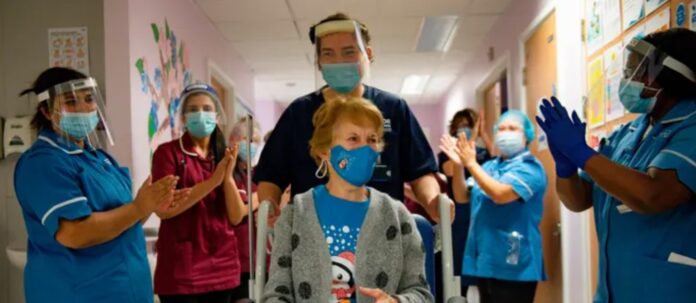
A 90-year-old grandmother in England became the first patient in the world to receive the Pfizer/BioNTech COVID-19 vaccine this morning.

YouTube/Guardian

The UK approved use of the Pfizer vaccine last week, and the nation’s National Health Service is already rolling out its mass immunization program, with Margaret ‘Maggie’ Keenan—who’ll celebrate her 91st birthday next week—receiving her historic jab from nurse May Parsons today at 6:31 am in Coventry.

A retired jewelry shop assistant and grandmother of four, Maggie said her vaccination was “the best early birthday present I could wish for.”

Wearing a “Merry Christmas” charity sweater with a festive penguin on it, Maggie—who has been self-isolating for most of 2020—explained to the Associated Press, “I can finally look forward to spending time with my family and friends in the New Year after being on my own for most of the year.”

Nurse Parsons, who’s from the Philippines and has been working for the NHS for 24 years, said to the Guardian, “I’m just glad that I’m able to play a part in this historic day. The last few months have been tough for all of us working in the NHS, but now it feels like there is light at the end of the tunnel.”

READ: The Red Cross Reports Massive Surge in Volunteer Numbers Worldwide in Response to COVID-19

The UK is the first country in the world to approve the Pfizer vaccine, and has bought 40 million doses. Shown to have 95% efficacy in trials, the most vulnerable in Britain—certain people over 80, hospital staff, and nursing home workers—are now receiving their first inoculations.

The same vaccine is currently under review for emergency approval by the FDA in the United States. Assent is expected to happen within days. From there, 6.4 million doses are expected to be administered within the first week.

Poorer countries won’t be left out in the cold. GNN reported in November that the Vaccine Alliance has raised $2 billion to buy COVID-19 shots for low- and middle-income countries.

MORE: New Study Suggests Mouthwash Can Kill Coronavirus in Saliva in 30 Seconds

The Pfizer vaccine is not the only jab shown to have high success rates against COVID-19 in late-stage trials. The Moderna vaccine has also shown encouraging results, and Oxford University’s 70.4% efficacy results with AstraZeneca have been confirmed today under peer review.

(WATCH the Guardian video of Maggie’s historic morning below.)

SHARE News of This World First With Your Friends On Social Media…

People are REALLY LOVING Their Homes After Spending So Much Time in Them This Year

Hutomo Abrianto

It’s safe to say that 2020 has provided Americans with the opportunity to spend more time at home than ever before—and two-thirds of homeowners have been making the most of the year by investing in their homes.

A poll of 2,000 Americans discovered that for 62% of people, investing in the home is the result of wanting to make their living spaces more comfortable and suitable for their new lifestyles.



The study, conducted by OnePoll on behalf of Thermador, aimed to discover how people are rethinking their home environment and the steps consumers have taken to create more purposeful living spaces.

Results showed that one in four respondents upgraded a kitchen appliance, with another 50% elevating their home décor.

Additionally, 19% of respondents have transformed their entire living space since March 2020. Meanwhile, 17% have purchased new office furniture to make themselves more comfortable as they work from home.

People are also taking more time to reimagine and reconfigure their homes, as more members of the household are now enjoying the same spaces together.

Hutomo Abrianto

As a result of these upgrades, nearly two-thirds of those surveyed are the happiest they’ve been with their homes—ever.

And people will continue to improve their spaces going into the holiday season. In fact, three in five say they are more likely to change up their interior design during this time.

RELATED: Cooking Skills Have Improved So Much in 2020 That 40% Think They’re Ready to Compete on MasterChef

“Many people are making various enhancements to their homes, such as adding built-in coffee machines in master suites and reworking garages to create in-home exercise rooms. It’s more important than ever that living spaces reflect peoples’ lifestyles, so investing in home improvements and remodels enables them to create a truly customized and functional environment,” stated a spokesperson for Thermador.

People are also turning to smart appliances to make their homes function better. For example, 46% of respondents invested in a smart appliance since March 2020.

CHECK OUT: Millennials Are Getting Handier Around the Home Since Lockdown Measures Began

TOP HOME UPDATES OF 2020

  • Upgraded a kitchen appliance 26%
  • Rearranged furniture 26%
  • Re-decorated 25%
  • Upgrade home decor 25%
  • Upgraded furniture 24%

Whether it’s using voice control to lend a helpful hand in cooking meals or remotely starting the dishwasher, it looks like homes across the country are being turned into the newest “hotspot” this year.

Environmental Policies Across EU Set Up Dramatic Improvement in Air Quality That Has Saved Thousands of Lives

There’s been a marked improvement in European air quality over the past decade, the European Environment Agency reports, with European Union, national, and local policies and emission cuts in key sectors making a big difference in lowering air pollution levels.

According to the EEA’s Air quality in Europe — 2020 report, since 2000, emissions of key air pollutants, including nitrogen oxides, from transport have declined significantly, despite growing mobility demand and associated increase in the sector’s greenhouse gas emissions. Pollutant emissions from energy supply have also seen major reductions while progress in reducing emissions from buildings and agriculture has been slow.

Thanks to better air quality, around 60,000 fewer people died prematurely due to fine particulate matter pollution in 2018, compared with 2009. For nitrogen dioxide, the reduction is even greater as premature deaths have declined by about 54% over the last decade. The continuing implementation of environmental and climate policies across Europe is a key factor behind the improvements.

“The EEA’s data prove that investing in better air quality is an investment for better health and productivity for all Europeans. Policies and actions that are consistent with Europe’s zero pollution ambition, lead to longer and healthier lives and more resilient societies,” said Hans Bruyninckx, EEA Executive Director, in a statement.

MORE: ‘Dramatic’ Plunge in London Air Pollution Since 2016, When Mayor Cracked Down

“It is good news that air quality is improving thanks to the environmental and climate policies that we have been implementing… With the European Green Deal we have set ourselves an ambition of reducing all kinds of pollution to zero. If we are to succeed and fully protect people’s health and the environment, we need to cut air pollution further and align our air quality standards more closely with the recommendations of the World Health Organization,” Virginijus Sinkevičius, European Commissioner for Environment, Oceans and Fisheries, explained.

Next steps for nations within Europe include following the EU Action Plan Towards a Zero Pollution Ambition under the European Green Deal.

SHARE This Breath of Fresh Air From Europe on Social Media… (Photo: YouTube)

What Started as a Joking Bake-off Between Dads Led to 15,000 Cookies Being Delivered to Essential Workers

Cookies for Caregivers

Whether their play of choice is a team sport like basketball or football, or something more mano a mano, like tennis, chess, or even videogames, some men are hardwired with the instinct to compete. Yes, to the victor belongs the spoils, but perhaps equally important, he who wins has bragging rights.

So it’s not surprising this the spirit of competition has spilled over into the culinary world as well. While they might not be up to the task in real life, there’s many a home chef who dreams of beating Bobby Flay, taking top honors on Cake Wars, or being crowned a Chopped Champion.

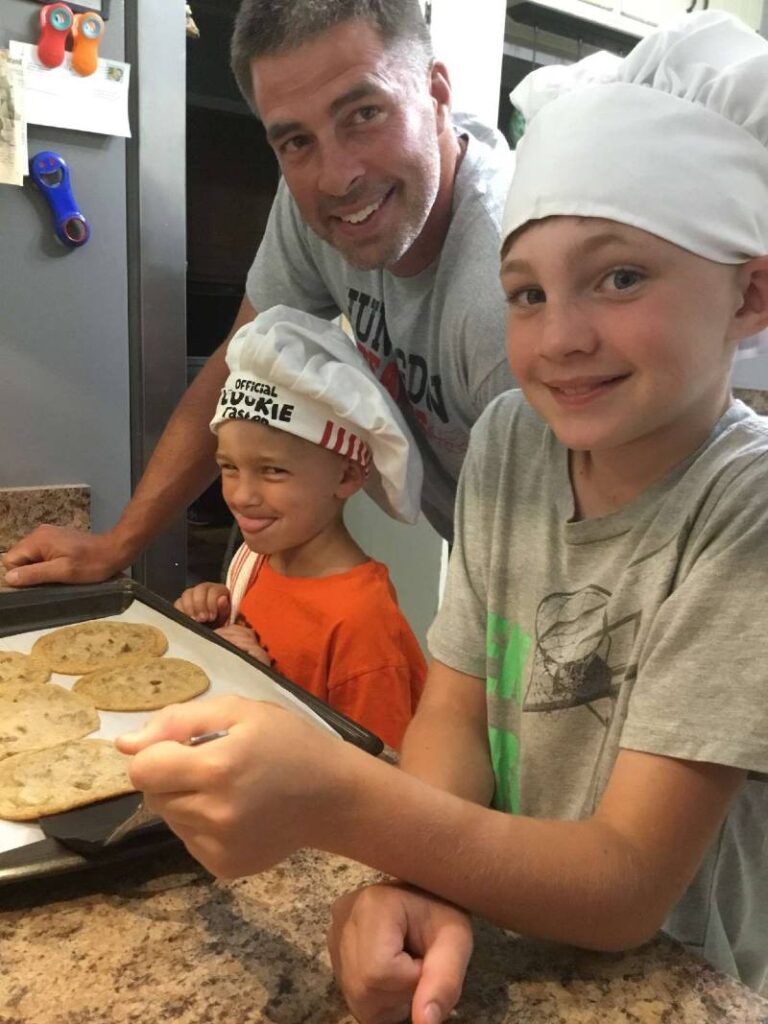
This past April, when Huntington, Pennsylvania dads 58-year-old Scott McKenzie and his buddy 42-year-old Jeremy Uhrich found themselves embroiled in what could be termed, “the cookie wars,” neither man realized what began as a friendly competition to see who was the better baker would morph into something that would have a major positive impact on their community at large.

Cookies for Caregivers

After being furloughed from his associate coaching job at a local liberal arts college due to the coronavirus pandemic, McKenzie set himself a goal of learning a new skill each week. Up first—cookie baking.

Though the results of his first attempt at chocolate chip cookies weren’t flawless, they were pretty darn tasty.

When McKenzie proudly posted of his success to Facebook, middle school English teacher Uhrich commended his pal’s efforts, but said he was sure he could do better. Thus, the cookie gauntlet was thrown and the bake-off was on.

The competition was soon joined by one of Uhrich’s former students, 18-year-old Rachel Kyle who’d gotten wind of it via social media. The dads decided to let Huntingdon Borough Mayor David Wessels choose which cookie reigned supreme. Ironically, it was latecomer Kyle who took top cookie honors.

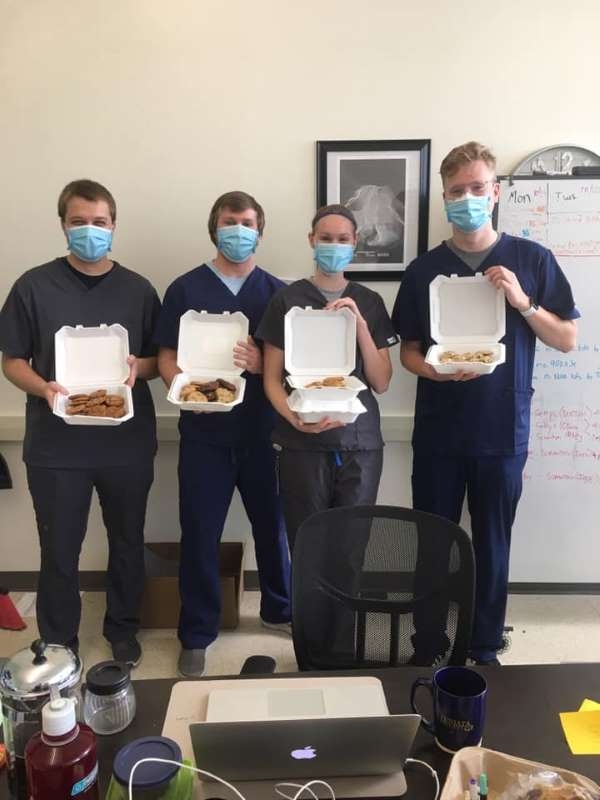
With the winner crowned, Uhrich and McKenzie made the rounds, dropping off the remaining cookie batches to essential workers in the Huntington area. The recipients couldn’t have been more pleased.

“We came out of it saying, ‘A little bit of sugar and some flour can go a long way. We should do it again,’” Uhrich said in an interview with The Washington Post.

Cookies for Caregivers

Inspired to do more, the pair tweaked their two-man bake-off concept, transforminging it into an initiative called Cookies for Caregivers.

“Cookies for Caregivers was born as a reflection of the COVID-19 experience in 2020,” notes the group’s Facebook page. “Many folks continued to go to work and serve their community as others were told to stay home, or were able to work from home. We decided to show our gratitude to those working to serve us by serving them freshly baked cookies as a modest sign of our appreciation and respect.”

McKenzie and Uhrich were hopeful others would volunteer their time and baking expertise, but they never expected the enthusiastic response their idea received. In just a few days, group membership topped 100 would-be cookie bakers.

RELATED: After Devastating Storm, Boy Makes 115 Baseball Bats Hewn From Fallen Limb to Raise Money for Iowa Victims

With so many willing to be involved, McKenzie and Uhrich organized a round robin of four bakers per week. Uhrich coordinates the bakers; McKenzie is tasked with setting up COVID-safe drop-offs the distribution side. One day each week, they load up a car and make deliveries.

Cookies for Caregivers

In the first eight months after Cookies for Caregivers made its debut, McKenzie and Uhrich estimate more than 1,300 dozen—that’s 15,600 individual—cookies found their way to the mouths of essential workers in hospitals, schools, fire and police stations—and even the newsroom of the local newspaper.

Even though he’s back at work, McKenzie and his baking partner continue to helm the cookie initiative, however, both feel blessed that others took up their game plan and not only kept the ball in play, but ran with it. “This is a direct reflection of our community as a whole, and a credit to them,” Uhrich said. “This community is small in size, but huge in heart.”

MORE: Customer Buys Beer and Toasts the Staff With $3000 Tip–As Restaurant Voluntarily Shuts Doors During COVID

It’s said that money can’t buy happiness, but it seems that dough—when it’s cookie dough, that is—can go a long way toward putting smiles on hundreds of deserving faces. And when it comes to providing comfort and cheer to essential workers, there’s nothing half-baked about that recipe.

SHARE This Story With Pals Who Have a Sweet Tooth for Good News…

“There’s just something beautiful about walking on snow that nobody else has walked on. It makes you believe you’re special.” – Carol Rifka Brunt

Quote of the Day: “There’s just something beautiful about walking on snow that nobody else has walked on. It makes you believe you’re special.” – Carol Rifka Brunt

Photo by: Yang Shuo

With a new inspirational quote every day, atop the perfect photo—collected and archived on our Quote of the Day page—why not bookmark GNN.org for a daily uplift?