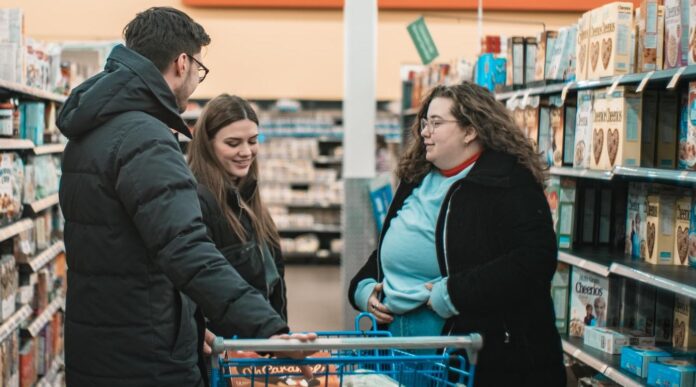
Comfort food is something everyone can appreciate. More than simply sustenance for our bodies, comfort food nourishes the soul and spirit. Now, one New Hampshire woman is taking the concept to a new level, supplying “comfort” groceries in random acts of kindness to her neighbors.
The COVID-19 pandemic has brought stress and food anxiety to tables where it’s never been felt before, but it’s also heightened the opportunity to be able to give back in ways that are immediate and meaningful.
After a generous community turn-out that included gifts and a drive-by parade turned her son Thomas’s 7th birthday celebration from doubtful to “epic,” Brandy Bisson took a notion to pay that goodwill forward.
“On a whim,” the mother of three laid out $600 of her own hard-earned dollars to purchase groceries for eight people she’d never met. “With the pandemic and everything and all the election stuff, I just wanted to bring smiles to people’s faces,” Bisson told WMUR-9.
Having been on the giving and receiving end of the equation, even though she’s not wealthy, Bisson learned from her mom’s positive example that giving back is its own reward. “We’ve been on both ends of the spectrum,” she said. “It’s not a good feeling when you don’t know where you’re going to get food for your kids.”
Bisson’s impromptu acts of kindness would have gone unremarked except perhaps by their recipients had not an observant store employee recorded the good deeds and posted them to social media.
This week, in the spirit of Thanksgiving, Bisson will further spread the love by supplying holiday meals for two families in need in her community but she isn’t stopping there.
She says she also plans to continue her random acts of groceries when she can, and hopes that others who see her story will be inspired to do the same.
(SEE Bisson’s story in the WOKQ 97.5 video below.)
SHARE This Story of Generosity and Kindness With Pals…
One simple way to remind ourselves of this incredible planet we inhabit: By seeing the world from the perspective of artists skilled in noticing the tiny, the magnificent, the sublime.
Seals swirl like dancers around an iceberg. Athletes dive. Tree leaves change color. Thunder slashes through clouds. It’s stunning, and a great reminder that while we may not be able to travel in the way we have might in other years, the birds are still flying. Nature, and people, continue on.
Take a look at some of the winning Siena entries below.
Frozen Mobile Home, by Greg Lecoeur
Vladik, by Sergey Anisimov
El Cordon Caulle II, by Francisco Negron
Synchro Steam, James Rokop
Spanish Moss, Mauro Battistell
Flamingos in Abstract Landscape, Jose Fragozo
I’m a Bragger, Nicolas Reusens Boden
Jump, Xuebiao Yan
When Rays Fly, Emit Aschel
Good Morning, Wookeun Choi
Benediction, Amirmahdi Najafloo Shahpar
HongKongers, Olesia Kim
SHARE These Images From Around the World on Social Media…
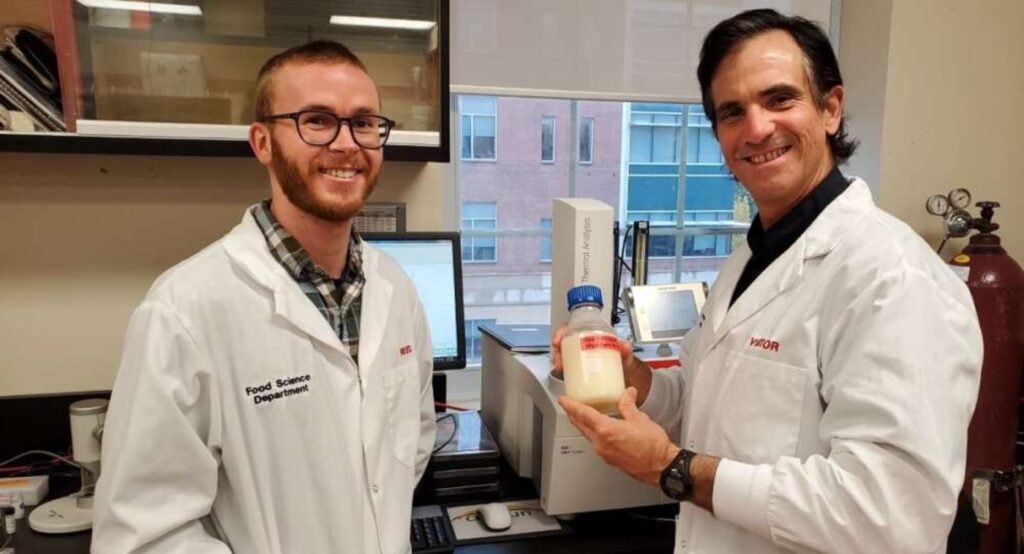
Providing a potential solution everybody was looking for, two Canadian food scientists have created a replacement for palm oil.
University of Guelph
Their invention replicates how the body creates triglycerides, and can hold liquid vegetable fats in a solid form at room temperature—the key advantage of palm oil.
The researchers’ oil could be used as a replacement for the problematic palm product in a variety of pre-prepared foods like peanut butters, cookies and pizza crust, as well as in cosmetics and even toothpaste.
If you’ve ever seen the words “no palm oil” displayed proudly on a jar of peanut butter or other foodstuffs, it’s because palm oil is perhaps the largest isolated cause of tropical deforestation in the world.
Nations and companies often try and wash their hands of the oil palm crop due to its tendency to create deforestation. The English city of Chester proudly proclaims itself the first “sustainable palm oil city,” while Norway straight up banned palm oil imports from plantations linked with deforestation.
A combination of previous scientific findings and outstanding natural qualities created a 20-year explosion in the cultivation and use of palm oil in global food production. 34% of the world’s vegetable oil comes from the oil palm tree, of which 84% comes from merely two countries, Indonesia and Malaysia, where highly biodiverse tropical rainforest has been cut down to make way for oil palm plantations.
The advantages of palm oil became ascendent during the 1980s and 1990s, after nutritionists began broadly warning about the disastrous health effects of eating partially hydrogenated oils and trans-fats. Producers began substituting those harmful fats with palm oil for several reasons.
Capable of remaining as a solid in room temperature due to its high saturated fat content, palm oil rapidly became the prime choice for manufacturers, not least because production is nearly 500% more per-acre than the next most-productive vegetable oil crop, sunflower oil.
Looking inward
For Alejandro Marangoni, a food scientist at the University of Guelph, the challenge was how to create an oil that would stay solid at room temperature, and one that preferably didn’t contain as much saturated fat content as something like coconut oil.
Saturated fat, while necessary in many processes of our biology including the synthesis of testosterone, is capable of exacerbating risks for coronary heart disease when consumed in large portions by individuals with unhealthy lifestyles such as sedentary days or late-night eating habits.
Marangoni is far from the first scientist to have given it a go. Last year two-former baristas attempted to synthesize a substitute from coffee grounds.
Marangoni on the other hand used a process he called enzymatic glycerolysis, inspired by the way the body naturally produces triglycerides. He combined enzymes with glycerin to produce solid vegetable oil without adding any additional saturated fats.
The process would allow food manufacturers to avoid the destructive oil palm plantations, while still being able to keep prices low, since Marangoni’s process could utilize most vegetable oils such as cottonseed, or peanut oil, which also happen to contain fewer saturated fats, leading to less of a public health burden.
Plant Some Positivity By Sharing The Good News With Your Friends On Social Media…
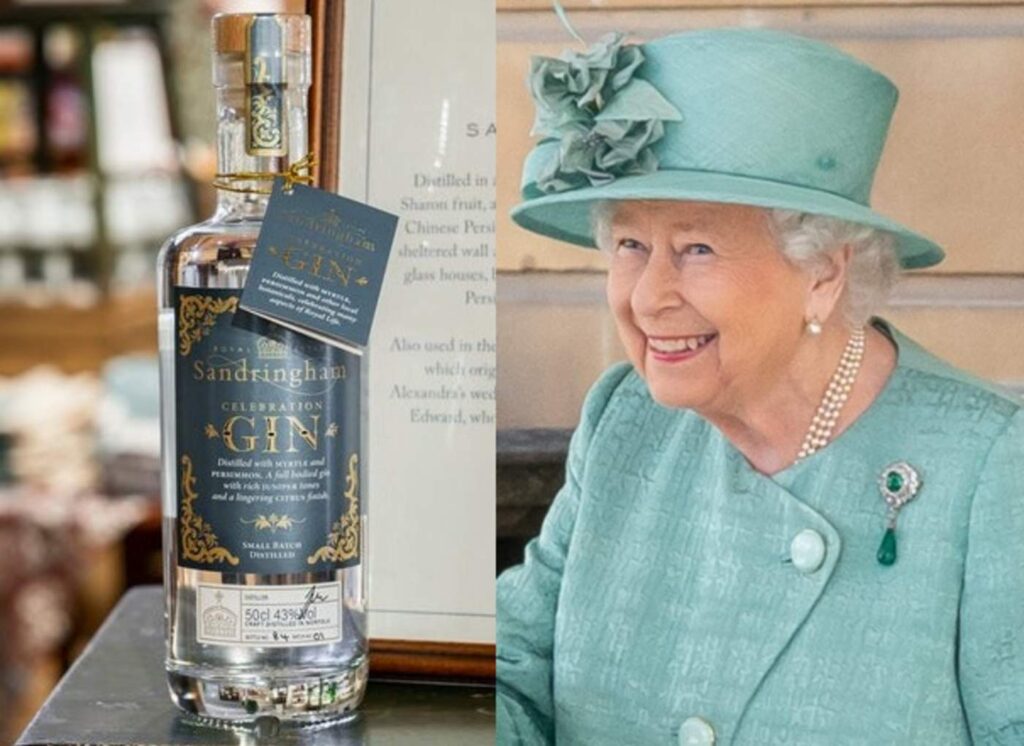
The pandemic has evidently made 94-year old Queen Elizabeth so bored that she has just launched a specialty dry gin distilled from the botanicals on her 20,000-acre Sandringham country estate.
Sandringham Gin, Sandringham Estate
The gardens on her royal estate in the Norfolk countryside provides all the ingredients for the gin, which costs around $67 per bottle and can take up to two weeks to make; and that regrettably for those outside Britain cannot be shipped overseas.
The gin is made with Sharon fruit, also known as the Chinese persimmon. According to the Sandringham website, the ones used for this gin grow “in the Walled Garden on a sheltered wall at the end of what was a range of glass houses, built on the winnings of the famous racehorse, Persimmon, owned by King Edward VII.”
Every sip therefore is a little taste of history, with the other ingredient, myrtle leaves, coming from plants “also grown on the Estate, [that] originated from a cutting taken from Princess Alexandra’s wedding bouquet on her marriage to Prince Albert Edward, who later became King Edward VII and Queen Alexandra.”
A former Buckingham Palace chef reports, according to People Magazine, that the Queen fancies her gin even in her advanced age, treating herself daily to an iced cocktail of gin and Dubonnet with a slice of lemon with lunch.
The Sandringham Gin is actually only one of several liquor outfits run by the British royals. Buckingham Palace gardens also produces a gin that’s made from “lemon, verbena, hawthorn berries, and mulberry leaves” among eight other hand-picked botanicals from the gardens.
Lemon, verbena, hawthorn berries and mulberry leaves are among the 12 botanicals hand-picked for the gin in the Gardens at Buckingham Palace. pic.twitter.com/Kfeo0jyUL1
If you live in the UK and are fortunate to be able to enjoy the royal booze, Sandringham Estate recommends you enjoy it by “pouring a measure into an ice-filled short tumbler before topping up with tonic and garnishing with a slice of lemon.”
SHARE This Royal Story With Friends on Social Media…
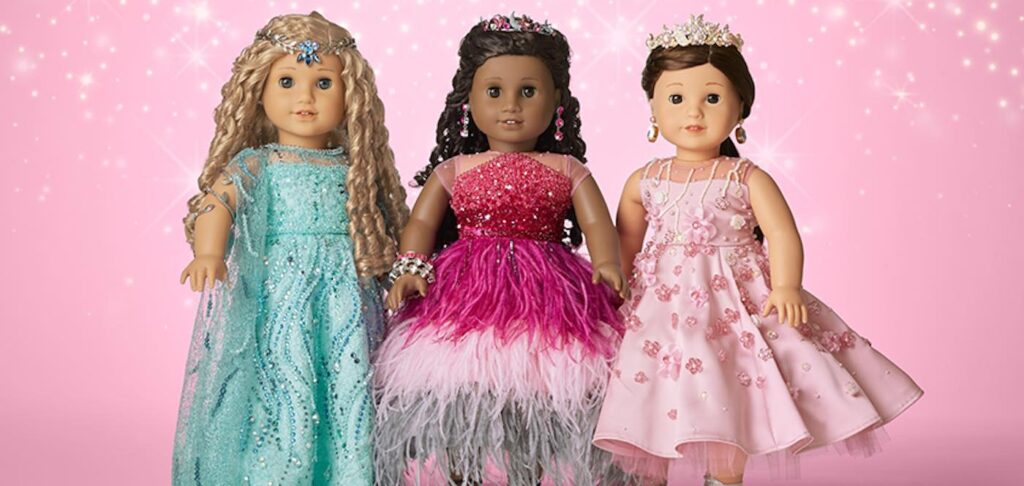
American Girl has been busy auctioning off three exclusive holiday collector dolls made with thousands of Swarovski crystals.
Mattel
These gowns and complementary accessories took couturiers over 330 hours to design and hand embellish, with 5,000 Swarovski crystals and crystal beads being added to the dolls.
The auction closed last night, and it’s been a ringing success, with the one-of-a-kind items raising $880,400 for charity.
One hundred percent of the net proceeds from this auction are going to support the First Responders Children’s Foundation Toy Express Program–an initiative designed to spread joy to the kids of people on the frontlines of COVID-19 across America.
Mattel is also donating more than $1 million in retail value of toys to the program this holiday season, so American Girl dolls and other popular Mattel products, from Hot Wheels to Barbie and Mega Bloks.
These toys will be distributed to thousands of first responder families— including nurses, firefighters, police officers, EMTs, paramedics, medical personnel, and 911 dispatchers who risk their health every day in service to their local communities across the country.
“As the holidays approach, we know it’s more important than ever to show our gratitude to our country’s dedicated First Responders who have contributed and sacrificed so much to help our friends, families, and communities this year,” said Jamie Cygielman, General Manager of American Girl, in a statement.
“We’re pleased to donate the proceeds of these three exquisite one-of-a-kind 2020 collector dolls, plus thousands of Mattel toys, to First Responders Children’s Foundation to say thank you to these hard-working frontline heroes and bring some much-needed holiday sparkle to their children and families.”
(WATCH how the glittery gowns were made below.)
SPREAD the Holiday Cheer and Share This Story With Pals on Social Media…
Quote of the Day: “I would maintain that thanks are the highest form of thought, and that gratitude is happiness doubled by wonder.” – Gilbert K. Chesterton (Happy Thanksgiving!)
G. K. Chesterton (1874-1936) was an English journalist and author best known for his mystery series featuring the priest-detective Father Brown, and for the metaphysical thriller The Man Who Was Thursday. As a lay theologian, he published some of Christianity’s most influential apologetics, including Heretics, Orthodoxy, and The Everlasting Man.
Photo by: Jed Owen
With a new inspirational quote every day, atop the perfect photo—collected and archived on our Quote of the Day page—why not bookmark GNN.org for a daily uplift?
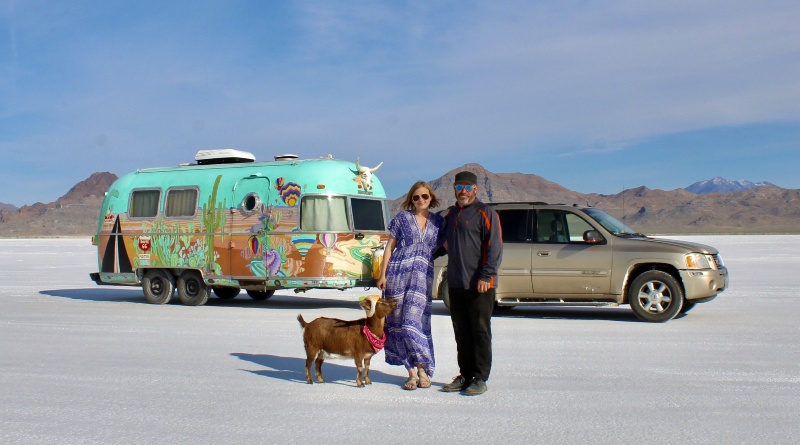
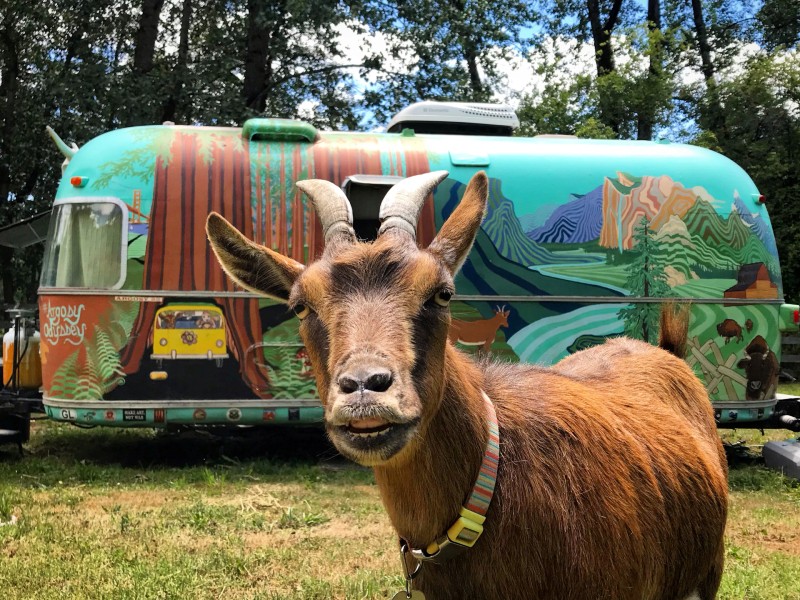
Meet Frankie, the adventurous goat who has traveled over 60,000 miles across the US with her owners in their colorful Airstream trailer.
SWNS
Cate Battles and her husband Chad moved from their house into a trailer in 2016, and they’ve been traveling to beauty spots with their favorite pet ever since.
“She’s an awesome travel companion,” said Cate, a 34-year-old artist and travel writer from Grants Pass in Oregon.
“She’s visited all kinds of scenery with us; lakes, beaches, mountains, and caves. We’ve covered dozens of states and national parks together.
“At this point she’s probably been about 60,000 miles all around the country, all the way from the east to the west coast. She must have been to over 20 states already.
“Frankie loves being on the road and having adventures, she finds joy in any place she goes, in the desserts she climbs all over the rocks and at the beach she loves to lick the salt off the stones.
“She’s a great hiker, wherever we go she loves run around and explore. She’s even been to the Grand Canyon.”
SWNS
The happy trio have managed to continue to travel during the pandemic, because they stick to places that are way off the beaten track.
“We don’t go to camp grounds, we always go out into the middle of nowhere, so Covid hasn’t really affected us at all. We’ve done multiple trips this year already, including North Eastern Nevada and Idaho,” said Cate.
Frankie, a 6-year-old Nigerian dwarf/pigmy goat, will cover a lot more ground in the coming months.
“Next we’re going to do a whole loop around the south west—Nevada, Arizona, Southern Utah, and New Mexico,” said Cate.
A die hard “goat mom,” Cait said she and Chad couldn’t imagine taking their trips without Frankie by their side.
“She’s so much fun, she looks tiny but she actually weighs about 80 pounds, she’s a stocky girl and she’s very well fed by us. We have a great time with her.”
Ready to see some more of Frankie?
Looks like someone’s found the perfect salt lick…
SWNS
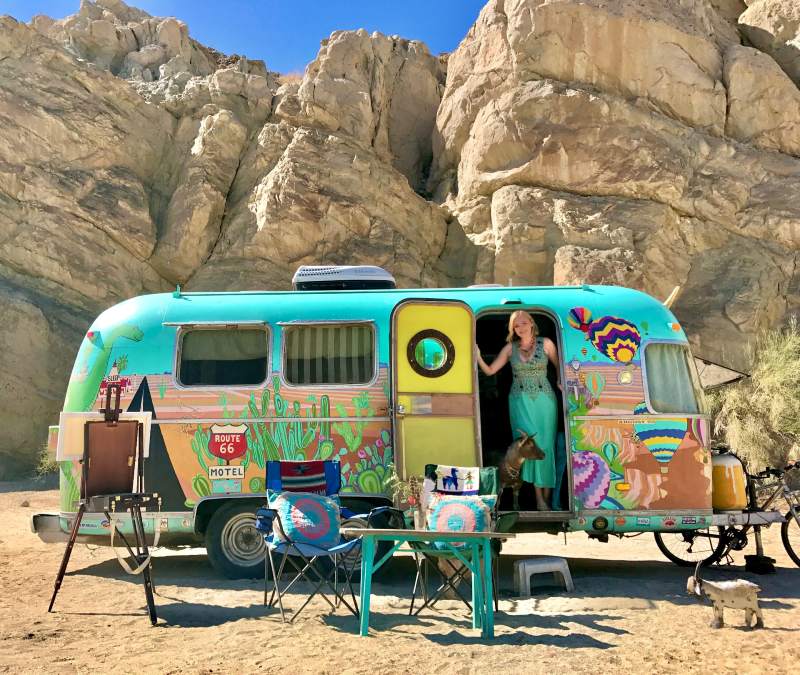
And one colorful home to live in on the road…
SWNS
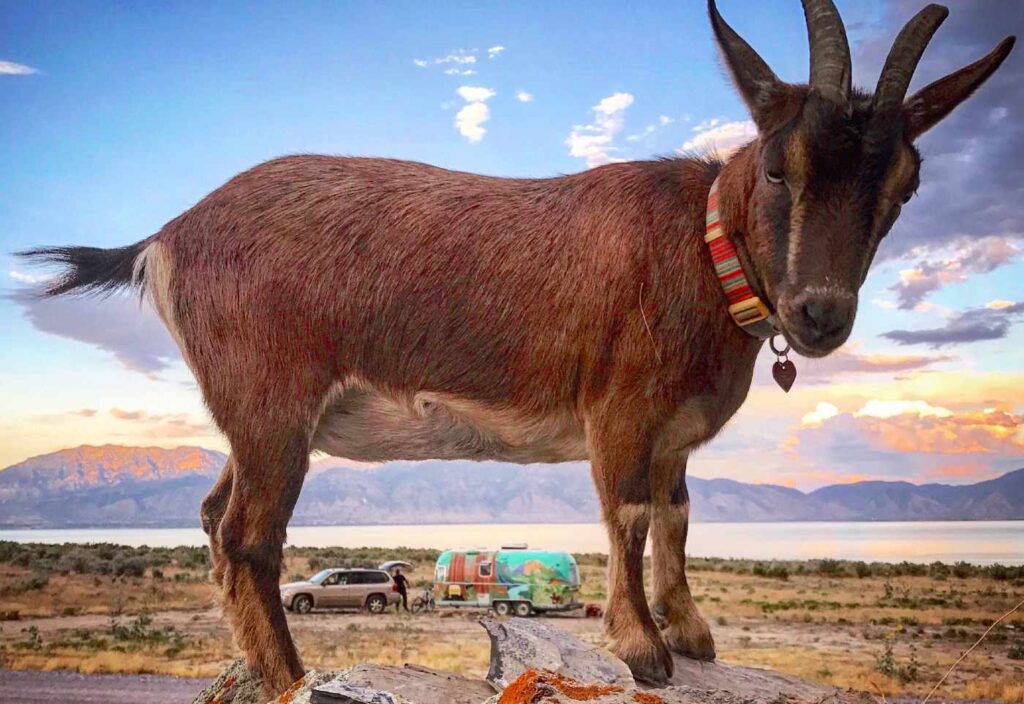
She’s certainly in her habitat here…
SWNS
Though, truthfully, every rocky place is pretty darn good when you’re a goat…
SWNS
So what do you think, would Frankie make the perfect travel companion for you?
SWNS
BLEAT Your Approval of This Fun Story by Sharing it With Friends…
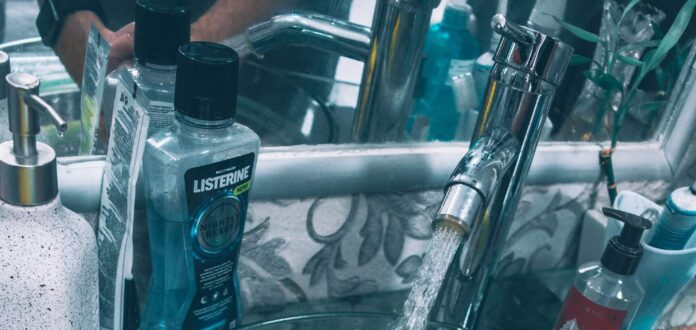
Along with hand washing and other hygiene measures, mouthwash could become a routine part of people’s daily habits after preliminary lab tests from the University of Cardiff found it can combat coronavirus in 30 seconds.
These results, which are yet to be peer-reviewed, stem from a 12-week study where it’s been found that mouthwashes containing at least 0.07 percent cetypyridinium chloride (CPC) show “promising signs” of killing off the virus.
In the laboratory tests, scientists at the university worked with various mouthwash brands, including Listerine and Dentyl. By mimicking the conditions of a person’s naso/oropharynx passage, they tested how various mouthwash ingredients are at killing the virus.
These early results from Cardiff are not the same as finding a cure: There is no indication that mouthwash has any impact on the virus if it moves from human saliva into lung tissue, for example.
Dr Nick Claydon, a specialist periodontologist, told the Independent he believed the research so far is “very valuable,” adding, “If these positive results are reflected in Cardiff University’s clinical trial, CPC-based mouthwashes… could become an important addition to people’s routine, together with hand washing, physical distancing, and wearing masks—both now and in the future.”
Next up for the scientists, a clinical trial will take place that examines how effective mouthwash is in reducing coronavirus levels in COVID-19 patients at the University Hospital of Wales. Results from that study are expected to be published in early 2021.
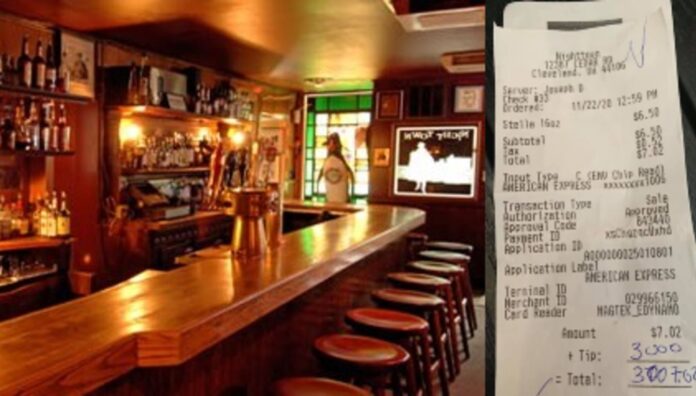
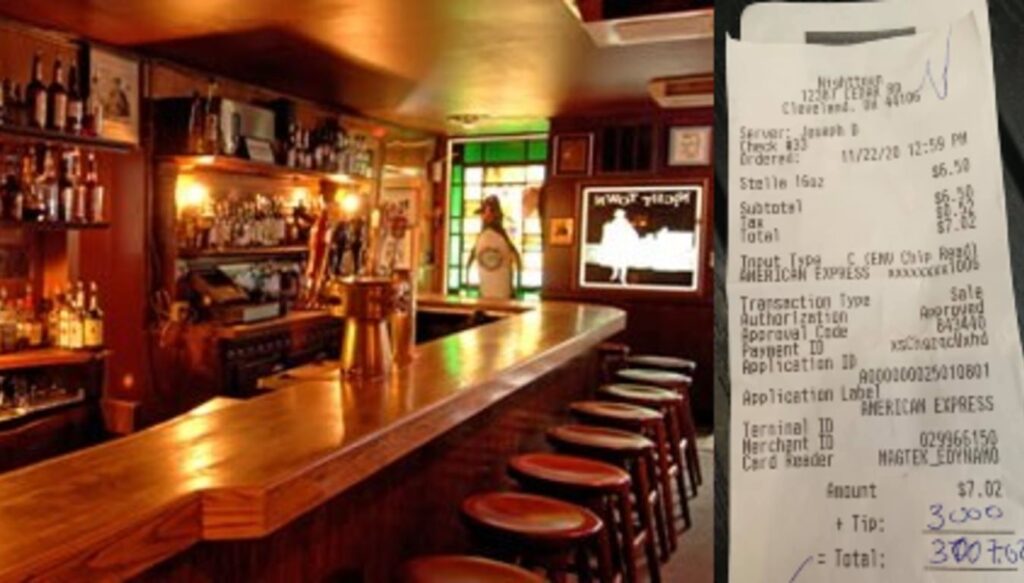
A customer at an Ohio restaurant ordered a single $7 beer on the night it shut down for coronavirus—then dropped an enormous tip for the staff as he was leaving.
Brendan Ring at Nighttown/Facebook
Just before closing time on November 22, a man walked into the Cleveland jazz joint Nighttown. He ordered a Stella Artois, asked for the check, and wished the owner Brendan Ring well.
In a Facebook post, Ring said the man asked that the tip he’d left be shared with the waitstaff.
Ring looked down at the credit card slip the man had left with him. When he saw the amount he had left, “I ran after him,” Ring wrote, “and he said no mistake we will see you when you reopen!”
Describing the gesture as “unbelievable but symbolic of the kind of quality folks” he and the staff have got to know of the years, Ring said everyone at the restaurant is feeling “humbly grateful for this incredibly kind and grand gesture.”
A recycling plant in England has created the world’s first socially and environmentally responsible way to process asbestos.
Thermal Recycling
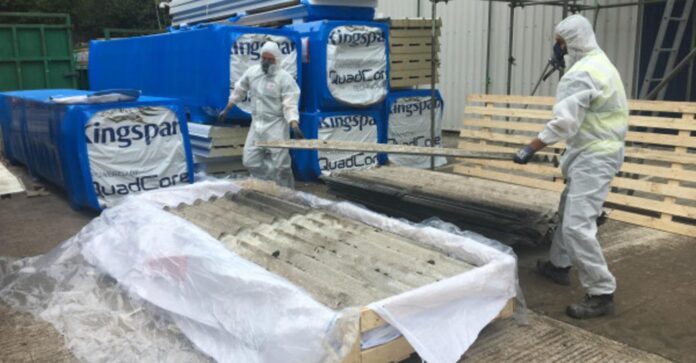
Thermal Recycling in the West Midlands town of Wolverhampton can take asbestos, remove it from the cement it’s mixed in, and turn “chrysotile asbestos into a material that is no more harmful than the cement from which it was derived.”
Famed as an electrical insulator and building material, asbestos is now well-known for its health hazards, as breathing the long silicate fibers released into the air when the material is cut or broken can cause fatal lung diseases.
Thermal Recycling has developed a process for “denaturing,” as in, “to remove the nature of” asbestos through heating the material in a special kiln that passed environmental regulations and is set to come online for business in 2021.
“To date, nearly 200 tests of the treated material have been conducted using Polarised Light Microscopy,” explains Thermal Recycling on their website. “No asbestos has been detected in any of these tests. We have also undertaken eight tests using Scanning Electron Microscopy. These have also shown that no asbestos has been detected.”
Not only does their process remove the properties that make asbestos what it is, but it does so without any pre-treatment of chemicals, as other denaturing processes might require. This lowers costs of the final product and prevents the additional step of needing to dispose of chemicals.
Chairman Graham Gould noted at the opening of their test plant that “we can’t continue putting asbestos in landfill sites for future generations to deal with,” highlighting the unfortunate reality of asbestos disposal up until his groundbreaking innovation.
Thermal Recycling was also awarded the Innovate UK Smart Grant, which they’ll use to identify the exact best use for the post-asbestos cement aggregate material leftover from their process.
Russia produces about one million metric tonnes from its mines in Asbest, northeast of Moscow, while the world’s second largest producer China mines about 400,000 metric tonnes every year. Brazil and Kazakhstan are also significant miners of chrysotile asbestos, and nations like India and Indonesia—though not big producers themselves—import hundreds of thousands of tonnes every year.
Short of dumping the end-use product in landfills, Thermal Recycling is the only environmentally safe option, and the value of their process, in terms of earnings or reductions in lung disease risk from dealing with asbestos disposal in the future, could be priceless.
SEND The Good Recycling News to Friends on Social Media…
Quote of the Day: “You’ll never find a rainbow if you’re looking down” – Charlie Chaplin
Photo by: Lauren Lopes
With a new inspirational quote every day, atop the perfect photo—collected and archived on our Quote of the Day page—why not bookmark GNN.org for a daily uplift?
One minute, you’re minding your own business, working outside your house building a coffin, and the next minute a smoking meteorite worth a small fortune hurtles through the roof of your veranda and winds up buried in the earth next to your living room.
Facebook
It wasn’t a typical day, but that’s exactly what happened to a 33-year-old Indonesian coffin maker named Josua Hutagalung. “I was working on a coffin near the street in front of my house when I heard a booming sound that made my house shake. It was as if a tree had fallen on us,” the father of three told the Sun. “[The meteorite] was too hot to pick up so my wife dug it out with a hoe and we took it inside.”
Weighing in at roughly 4.5 pounds, the 4 billion-year-old meteorite was later classified as the extremely rare CM1/2 carbonaceous chondrite variety.
In the space-rock market, it sells for $850 per gram. When you do the math, that’s roughly $1,858,556 of ka-ching!
As soon as news of the incident went public, American space rock guru Jared Collins hopped on a plane to Sumatra to purchase the precious cargo. After fielding a crazy number of offers, Collins sold the extra-terrestrial treasure to Indianapolis-based meteorite collector Dr. Jay Piateck, who mailed it for safe-keeping to the Center for Meteorite Studies at Arizona State University (where it’s currently being stored in liquid nitrogen).
While Hutagalung won’t reveal the exact dollar amount he wound up accepting for his 4.5-pound chunk of outer-space booty, guesstimates range well in excess of a million bucks.
With his new-found fortune, Hutagalung says he plans to help build a church for his community. He’s also got a more personal wish. Money can’t buy it, but he’s optimistic that his streak of good fortune hasn’t run its full course just yet.
“I have always wanted a daughter, and I hope this is a sign that I will be lucky enough now to have one,” he said.
As far as signs go, wishing on a meteorite might not be the same as wishing on a shooting star, but, odds are, having been singled out by meteor manna from heaven may go a long way toward upping those odds considerably. Here’s hoping they do.
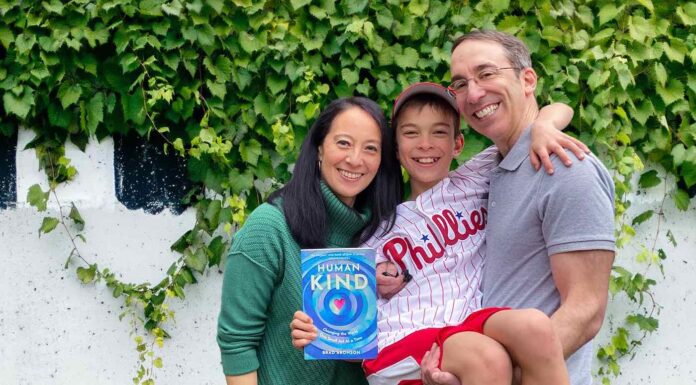
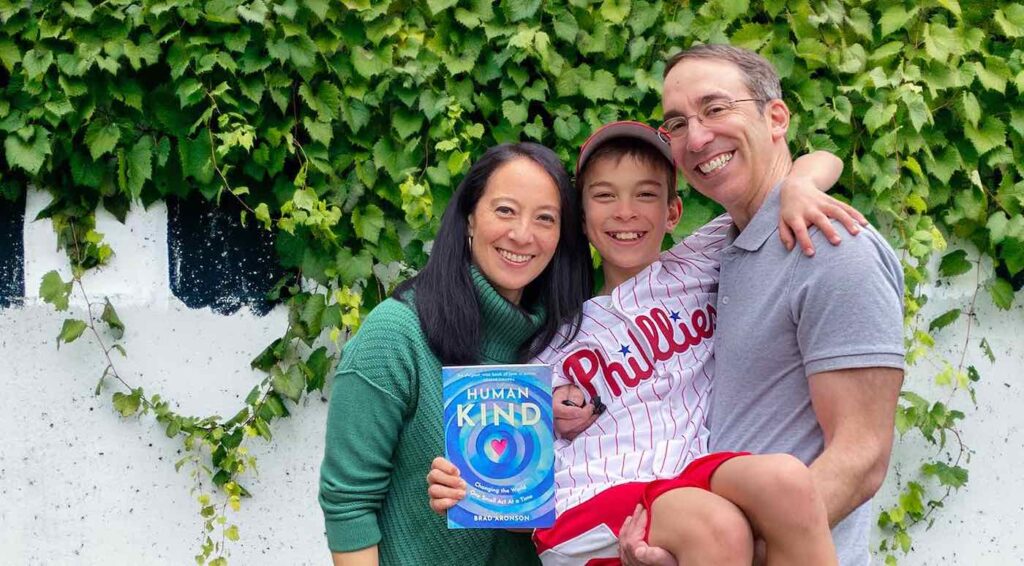
During a darker time than he’d ever known, Brad Aronson discovered shining examples of human kindness that just might have saved his sanity. It happened while his wife, Mia, was being treated for leukemia. Since her treatment would be close to three years, a patient advocate advised her and Brad to each take on a project that would allow them to lose themselves in something other than her illness.
For Brad, a teacher and entrepreneur from Philadelphia, that project was passing on the kindness that friends, family and even strangers had shown his family during this hard time. Literally—he documented that kindness and packaged it in stories that others could appreciate and take to heart. And that was just the tip of the iceberg. Inspired by the life-changing impact small acts of kindness had on his family, he decided to start collecting others’ stories, too.
Like the story about the $20 gift that gave birth to thousands of Secret Santas who have given away over $1.5 million to people in need. And the story about Gabriel Aljalian, who at six years old created a “Day of Kindness” that inspires thousands of kind acts around the world every year. And the one about Pamela Rainey Lawler, who saw opportunity in the food that restaurants threw away. Although experts told her she was crazy, she started delivering that food to nonprofits in her station wagon with her kids in tow, and her efforts sparked a movement that now feeds more than 90,000 people a week.
“When my family was in distress, I saw how much of a difference a single gesture could make, and the people I wrote about demonstrated that and more,” he says. “These amazing stories of kindness kept me going during the most stressful time of my life, and through my book, I’m hoping to share that gift of support with others.”
Aronson’s book, a national bestseller, has been called “the most uplifting and life-affirming book in years” (Forbes) and lauded by Deepak Chopra, People magazine, and many others.
“The most satisfying part of writing my book has been the emails I’m getting from people who tell me how much better they feel after reading it and how they’re inspired to take action,” he says. “Hearing about what they’ve started doing in their communities is just incredible.”
It’s the perfect antidote for these times. If you’re feeling the weight of the world, these beautifully told stories will lighten your load. They’ll remind you that despite the crises that seem to hit us one after another, there’s also a powerful force of good in the world.
And on a practical level, HumanKind will give you the tools to be part of that force. Every chapter includes suggestions for improving your own community through small acts of kindness, and the comprehensive resources section lists avenues for aiding and donating to just about any cause devoted to filling the massive needs out there.
Maybe best of all, HumanKind gives us unforgettable stories to carry around with us when the darkness of the times is at its darkest. Stories that will leave us grateful for what we have and inspire us to be the same kinds of shining examples that made such a difference in Brad’s life.
And, on top of that, ALL proceeds from sales of HumanKind go to the nonprofit Big Brothers Big Sisters.
SHARE the Inspirational Gift Idea With Friends on Social Media…
Another massively successful vertical farming startup is pushing the future of farming towards the sky, literally and figuratively.
Plenty
From an ag-tech startup named Plenty, a two-acre indoor vertical farm produces yields that would normally require a 720-acre ‘flat farm’—and it can be done with 95% less water.
Saving water is critical in an agricultural state like arid California, where Plenty is set to supply fresh produce for 430 Albertsons grocery stores.
The vision is truly one out of Star Trek, with Plenty’s use of robotics and artificial intelligence to ensure perfect plants year round.
The reasons to support indoor vertical farming are varied, ranging from climate-related benefits to removing cumbersome logistical challenges like long-distance transportation.
The company’s website says the technology “frees agriculture from the constraints of weather, seasons, time, distance, pests, natural disasters, and climate” that makes GMO-free nutrient-rich plants at scale with “extraordinary flavor.”
Perhaps that is why Driscoll’s, America’s largest fresh berry farmers, have agreed to grow their strawberries year-round in Plenty’s expanding portfolio of vertical farms.
And investors are seeing the potential of seeding their own portfolios with Plenty.
The company’s method for growing greens, like baby kale and lettuce, on giant vertical racks moved around by robotics recently garnered $400 million in investment capital from the likes of SoftBank, Amazon CEO Jeff Bezos, and former Google chairman Eric Schmidt.
Time to grow
Reductions in transportation chains would eliminate millions of tons of CO2 every year, since instead of importing produce into city centers from farms across the country or the world, you could order it from a warehouse on the edge of town.
Furthermore, Plenty’s farms grow non-GMO crops without the use of pesticides or herbicides, and recycle every drop of water that’s not used, making them extremely friendly to the environment—except for their power usage.
A spokesperson told GNN they were using 100% renewable energy for their flagship farm in San Francisco, to keep emissions down.
Bathed in sun-mimicking LED lights in climate-controlled spaces year round, the farm ensures veggies grow at an astounding rate, which produces 350-times more food per-acre.
Supply-chain breakdowns resulting from COVID-19 and natural disruptions like this year’s California wildfires, demonstrate the need for a predictable and durable supply of produce can only come from vertical farming, says Nate Storey, co-founder of Plenty.
This will be all the more important if continual warming of the planet leads to droughts or other climate-related disruptions that can’t be overcome by farmers and biologists attempting to make crops more climate and drought-resistant.
Furthermore, vegetables and fruits contain far more micronutrients than cereals, but they also spoil fast and therefore are more expensive. Nations and inner cities that have to import all fresh produce places the poorest in the society at an extreme disadvantage nutritionally speaking. Vertical farming could be the way to solve that problem permanently.
Not only that, Plenty told GNN they have introduced new packaging that is not only made of recycled plastic, it is 100% recyclable, and it keeps food fresh longer to cut food waste.
SHARE This Exciting Development With Your Friends On Social Media…
The course of human life can change in the blink of an eye. That’s what happened when at age 14, Canadian gymnast Taylor Lindsay-Noel took a bad spill that left her paralyzed.
Taylor Lindsay-Noel/Twitter @Taylorin
On track at the time as an Olympic hopeful, Lindsay-Noel already had strength and spirit. In the 12-year journey since she became a quadriplegic, she’s discovered she also has a strong sense of resilience.
Lindsay-Noel approached rehab with the same vigor she’d approached gymnastic training but admits it took time for her to come to terms with the idea she’d never walk again. No longer an athlete, she was also forced to re-evaluate her life and her goals. It was a hard lesson to learn, but in the end, one that proved invaluable.
“I was getting to re-write my narrative—divorcing an identity—only, a lot earlier. I grew up really fast, and earlier. Most people learn by the time they are adults that things can change suddenly. I found out early,” she said in an interview with Toronto’s The Star newspaper.
In college, Lindsay-Noel majored in radio and television arts so she would use her talent for voiceover work and keen entrepreneurial spirit to launch a podcast, “Tea Time with Tay,” based on her passion for all things tea.
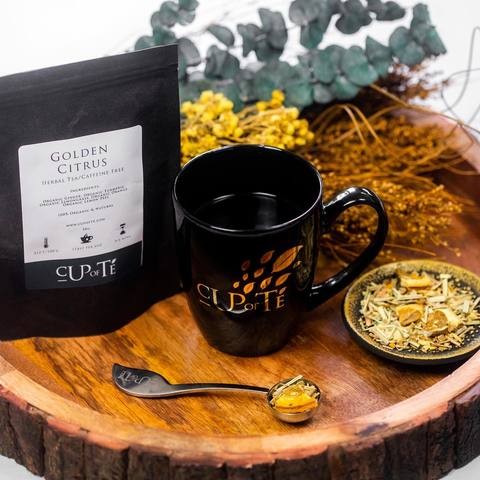
From there, she went on to create her own line of organic tea blends and tea accessories, Cup of Té, and took them to market.
One of the things that makes Lindsay-Noel’s company unique is its core values that include giving back: Cup of Té donates $1 from the sale of each of their starter kits to aid mental health causes and initiatives vital to her community, including CAMH Suicide Prevention.
“This was especially important to me because growing up, tea was a source of comfort and a catalyst for great conversations,” she explained. “And if there were ever a conversation that needed to be continued, it would be one that strives to break down the stigmas that are wrongfully perpetuated on those with mental illness.”
Serendipitously, her story and product line found their way to the editorial offices of O Magazine, where they resonated, big-time. Although she could scarcely believe it, Cup of Té made the annual Holiday list of Oprah’s Favorite Things.
Cup of Té
While Lindsay-Noel concedes her road hasn’t been an easy one, she’s looking forward to whatever comes next in her personal evolution with hope.
“Luckily for me, ten years later, and with a village of support, I’m grateful to know that that first dream would not be my last,” she said.
In making her own dreams come true, Lindsay-Noel believes she’s opening the door for others to succeed as well. “My story demonstrates the power of community and what can happen when people are supported by the love of friends, family, and strangers,” she said.
“There’s life after tragedy. I’m hoping to break other glass ceilings. I’m a female, Black, disabled, small business owner… and I’m still here. NO is not a real word in the capacity of your life.”
(MEET Taylor in the video below.)
SHARE This Cuppa Overcoming to Your Friends on Social Media…
Humanity is making sterling progress on reducing the global prevalence of the tropical disease lymphatic filariasis.
Copyright Joshua E. Cogan/World-Health-Organization
Scientists conducting a review for the journal Lancet used almost 15,000 different global locations to estimate that the burden of the disease—commonly known as elephantiasis—was around 199 million infections in 2000. The disease is caused by a parasitic worm, often causing preventable but severe disabilities like hydrocele and lymphoedema.
Over the last 20 years, however, the number of people infected has dropped by 74%, from 199 million to 51.4 million, and last year three countries—Malawi, Kiribati, and Yemen—eliminated it altogether.
In the year 2000, the World Health Organization launched a campaign to eliminate the disease which occurs across both tropics, and is very prevalent in Southeast Asia, Africa, and South America.
South and Southeast Asia have always registered the highest average infection rates, and today Bangladesh, India, Myanmar, and Indonesia represent 52% of global cases.
“Overall, our results demonstrate the success of the Global Programme to Eliminate Lymphatic Filariasis, reflecting the contribution of donated therapeutics and community-based public health interventions to achieving elimination of a disease that is prevalent among some of the most resource-limited settings in the world,” reads the study, published in Lancet.
Quote of the Day: “Be genuine. Be remarkable. Be worth connecting with.” – Seth Godin
Photo by: Teymi Townsend
With a new inspirational quote every day, atop the perfect photo—collected and archived on our Quote of the Day page—why not bookmark GNN.org for a daily uplift?
This blog was submitted to GNN by one of our readers for publishing. If you have an interesting story of kindness or positivity, be sure and send it to us for review.
Arpi Krikorian wanted to place a phone order for contact lenses in October, so she called 1-800 CONTACTS—and made a contact she will never forget.
“Along the way, the sweet customer service rep asked me what we do, so we had a conversation about my husband’s non-profit, Code 3 Angels and his global humanitarian work.”
Currently, his efforts are concentrated on a region called Artsakh bordering Armenia, which was under attack by Azerbaijan to drive the Armenians from the area.
She explained what they were doing as a family to help the displaced people of Artsakh—and she obviously made quite an impression on the telephone agent Lyndi Reed.
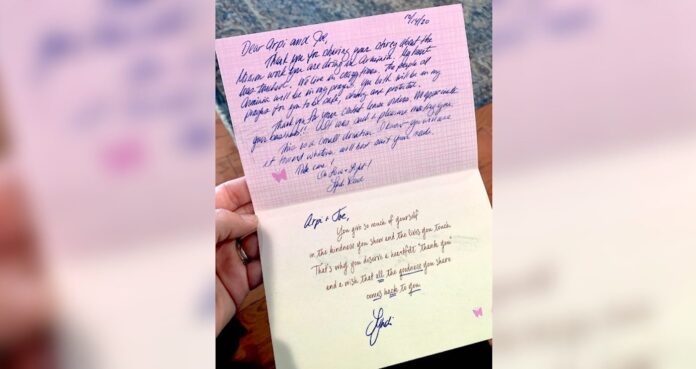
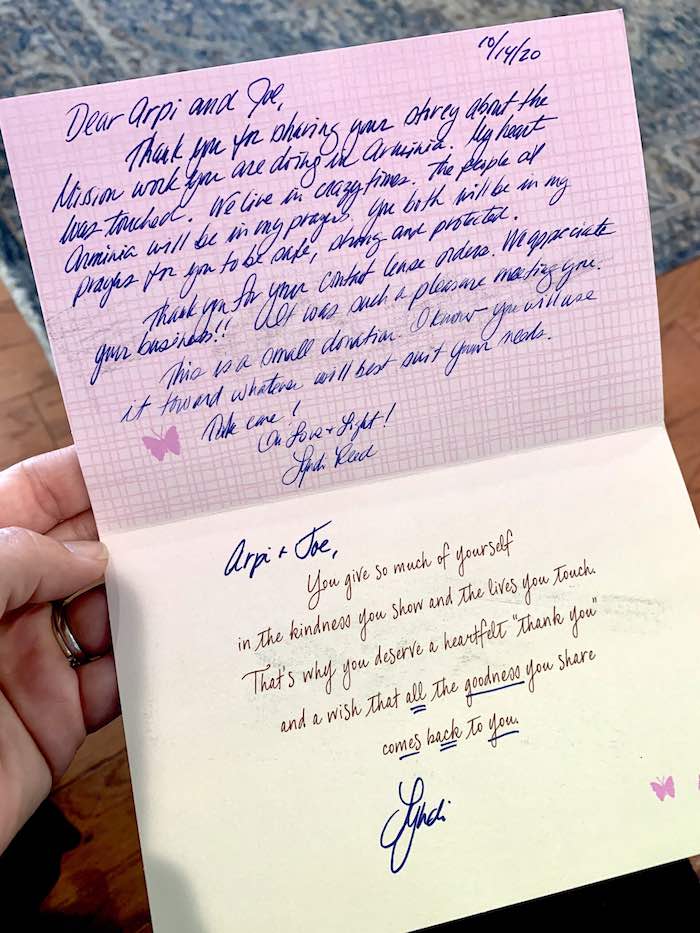
“The very next day, I received a personal greeting card in the mail from that customer service rep with $100 donation inside!”
Dear Arpi and Joe,
Thank you for sharing your story about the mission work you are doing in Armenia. My heart was touched. We live in crazy times. The people of Armenia will be in my prayers. You both will be in my prayers for you to be safe, strong and protected. Thank you for your contact lens orders. We appreciate your business. It was such a pleasure meeting you. This is a small donation. I know you will use it toward whatever will best suit your needs.
Take care!
Lyndi Reed
The next time you need to call 1-800 CONTACTS—or any customer service team—remember that there are kind people out there who might think it’s a pleasure meeting you, too.
SPREAD The Kindness And Restore Some Faith in Humanity By Sharing on Social Media…
The FDA announced on the 17th that the first at-home COVID test which provides rapid results has been approved in the United States.
The test is available with a prescription, and is authorized for use at home with nasal swabs for those aged 14 and older whose doctor suspects they might be infected with COVID-19.
“While COVID-19 diagnostic tests have been authorized for at-home collection, this is the first that can be fully self-administered and provide results at home,” FDA Commissioner Stephen Hahn said in a statement.
Designed to produce results in 30 minutes or less, the Lucira All-in-One has proven 100% efficacy with a rich enough sample, and a 94-98% positive-negative diagnosis accuracy with a limited sample.
The test is predicted to cost around $50, and generates results by swirling the test swab around in a vial included in the test.
Testing up until now has been done at a clinic, which can deter people due to the perceived risk of contracting the virus there, and even afterward the sample would have to be carefully handled, labeled, and tracked as it’s sent to a lab for analysis.
An at-home version expands the testing options for folks in difficult economic or health situations.
Those under 14 years of age should have the test administered by a medical care professional.
“Now, more Americans who may have COVID-19 will be able to take immediate action, based on their results, to protect themselves and those around them,” said Jeff Shuren, the FDA’s boss at the Center for Devices and Radiological Health.
GNN polled readers on our Facebook page to find out which companies have excelled during the pandemic of 2020, and which ones didn’t live up to normal standards of customer service (even in a time of turmoil when they might actually want to level-up their usual performance).
Nick Fewings
THE NICE LIST
Two Fortune 500 insurance companies earned high praised for their service.
“Progressive has been my insurance company for 15 years now. They have great customer service and are open 24/7, so any time I think to call them I can. During the pandemic, they got so few claims that they refunded all their clients the money that they saved,” reports Jolene Birchfield. “They could have kept that as unforeseen profit but instead they returned it to those they knew could use it—and they have, so far, done this for two months. It just shows how committed they are to being a company that cares about people.”
For three years in a row, Progressive was named to FORTUNE’s 100 Best Companies to Work For list (at #49), after employees from across the organization provided anonymous feedback about the company.
Geico came through with wonderful service for one employee at GNN, when National General refused to sell her a new auto policy after she forgot to pay the premium while traveling out of country. The telephone representative for Geico was unbelievably friendly and thorough, and had her Toyota covered within hours. Their rates were the cheapest anywhere, too. Michelle reported also loving Geico: “Their excellent customer service has remained excellent.”
It’s no wonder that workers are upbeat: 68% of employees at GEICO say it is a great place to work (compared to 59% of employees at a typical U.S.-based company), and it was named one of the “Top 50 Large Companies for Perks and Benefits.” The CEO, Bill Roberts, was also named by Comparably’s as one of the “Best CEOS for Diversity.”
TECH
In the American cable internet industry, it is rare to hear praise for any of the big companies but Mairead Boland wrote in about a technician from Xfinity. “He came to install, was very careful with mask, hand cleaning, and whatever he touched. He sat outside and waited while I completed the setup.” He even handed out his cell phone number to let him know how it went or ask further questions.
“OMG Best Buy has THE best curbside pickup process,” wrote Kammy Caruss. “Miles better than everyone else.”
RETAIL
Margaret Èlise wanted to nominate IKEA for the good list: “Last time I was there they had a person at the door checking for masks, sanitation areas along their aisles… and the food area was only take out and traffic was in one way, and out another! They kept population control as well. BRAVO!” Stephanie Spaniol added that they have also been providing free meals for their employees since May as a thank you for working during the pandemic.
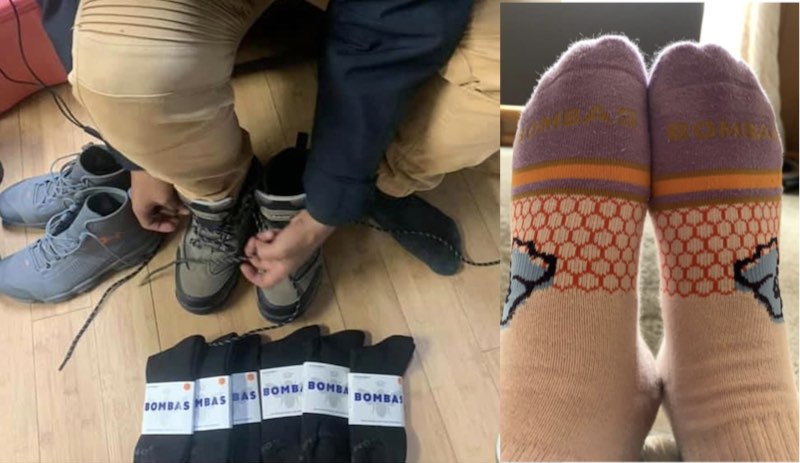
The Bombas sock company has made an excellent impression on several readers. “Their socks are a little expensive, BUT for every pair purchased they donate a pair to a homeless shelter. And they don’t make a cheaper sock for the shelter, they actually add antimicrobial treatment,” wrote Kim Turner. “Plus they have a lifetime guarantee and a hotline of sock happiness experts if you have a problem with them.”
“They are pretty awesome,” agreed Liz McFarland. “I run a nonprofit that helps homeless, disadvantaged, or displaced high school students. One of our volunteers saw their ad and reached out maybe 18 months ago. They sent us 6,000 socks. Then, during the pandemic they told us to get ready for our next shipment. A lot of them know Bombas by name and are very complementary of the socks. It was funny because a student was talking about them two days ago, and he almost sounded like a commercial.” Kim Turner replied, “I don’t have a lot of disposable income but I will always spend the extra on their socks.”
Jellycat, a wholesaler that makes “amazing stuffed animals” earned praise from Jenifer Steele “They were very proactive when COVID hit in March. Literally, just as we all shut down, they sent an email extending time to pay all outstanding invoices.” They continued to offer new items, so we were able to keep our shop looking fresh and even offered free shipping along the way, which helped us maintain sales through a difficult time.” Alison Gray also loves Jellycat, and agrees that “they’re an amazing company!”
Online Pet Food
“Chewy’s saved us, and no price gouging either,” said Victoria Aja. “When people were hoarding pet food, Chewy’s took great care of us & our Rx fur kids who needed special food that everyone else was out of. They were prepared when Petco & other companies failed us.” And, several others praised the online store.
Corin Hotchkiss also nominated Chewy. “They have the most responsive and supportive customer service I have encountered. Super convenient for pet household delivery during the last year.” Michele Craig Victoria replied, “This company is excellent.”
Groceries
H-E-B Grocery Company, is one of the largest privately owned supermarket chains in the U.S., with more than 340 stores throughout Texas. We got several comments praising HEB, which donates 5% of pre-tax profits to charity and has been named Retailer of the Year by Progressive Grocer.
Elisha Moore says “HEB has done amazing things during covid! From supply chain management to raises for their workers and special arrangements for elderly shoppers, they are the model for corporate responsibility during a crisis. But truth be told, they have been such a model for as long as I can remember.”
Bobbi Frels Farris praised HEB, saying, “They help so many all the time,” and Wendi Mote agrees. “Yesterday a friend who works there told me they gave every store employee a $500 bonus due to Covid, and they’ve done that a couple of times on top of non-annual bonuses and raises.”
Employee-owned and based in Vermont, King Arthur Baking Company, was nominated by Kerry McAniff for the NICE list. “It pivoted its distribution model to meet extraordinary demands and is credited with keeping many bakeries afloat across the country. Kerry reports they organize several volunteer and donation programs, such as the Bake for Good kids program.” She touted their high-quality products, as well. Heather Gleason Biesanz also nominated King Arthur Flour, saying they were “working with local businesses to feed their communities.”
Kathleen Pfaff reports, “Costco and Amazon always have done right by me every single time.” Melanie Linn also nominated Amazon Fresh. Terra Michelle also pointed to Costco as an example of a large company doing a good job.
Kroger does not charge or have a minimum for pickup, reports Annette Brown. “That helps me.”
Eating Out
Dixon Distillery in Gettysburg, Pennsylvania, was not only serving customers, they were helping other restaurants—even though they are a restaurant themselves. “They supported other local businesses at the peak and beginning of coronavirus by offering their outdoor tables for folks to purchase food from local eateries who were unable to have outdoor seating—and that provided revenue for these local small businesses to stay afloat.” wrote Elizabeth Anne Mason in her nomination. “They donated to a large health system hand sanitizer from their own facility, as well. Their owner publicly commend their hard working staff regularly on social media and is always looking for a way to be better and serve the community. They are a true example of community leadership and partnership.”
Opa! Greek Taverna, a small, family-owned business in Rowlett, Texas, “stepped up big time” for the community, says Brandi Hurst. “They made sure no one in the community went hungry. They also donated snacks and water for a community peaceful protest for BLM, which our chief of police joined. For a young father and business owner, he did more for the community than most of big businesses.”
“Johnson Cranberries in Johnson City, Tennessee is absolutely amazing!” says Rebecca Bennett. “They even dress in costumes to bring orders to cars, to bring a smile, too.” It is family owned, family run, and offers home-cooked food.
MOD Pizza has been donating to health workers, as well. “We are near locations in Foothill Ranch & Lake Forest, California,” wrote Kathi Cook, “and they have donated pizzas to local frontline healthcare workers.” Erin Oliver said, “I second MOD pizza. Our restaurants in Colorado have been amazing as well with their service, keeping their restaurants super clean, and donating.”
Pizza places around the country have earned nominations:
House of Pizza: “My son is medically complex and has a compromised immune system. They were the ONLY place we trusted to get food. They also donated pizzas to the local food pantry so those families could have a pizza dinner too!” said Heidi Marandos Enfield.
The 4 Corners Pub in Silver Spring, Maryland, has been amazing, says Sherrie B. Pilkington. “They’ve donated pizzas to local hospitals and front line workers, they set up delivery and pickup—then outdoor seating once allowed. When one employee tested positive they closed, cleaned like mad, kept their community updated on how everyone was, and overall was just a great part of our community. I’m proud to support them!”
Laura Marie called out the folks at Sherm’s Catering in Delaware, who left free bagged lunches for the neighborhood for many many months during the pandemic. “Never asked for a penny in return. Never asked for recognition. Just good people helping out because they could.”
In Collingswood, New Jersey, Westmont Diner and Market has stepped up and created a market offering free deliveries in the community, “when so many were struggling to get needed groceries from the larger chain stores,” reports AnnMarie Smyth-Glisson. “They’re still providing the service! They’ve gone above and beyond for the community!”
Alta Anthony called Chick Fil A in Abingdon, Maryland, “The best people hands down.” Lauren Puhala described her local Chick Fil A as having a “very organized way of handling their drive-through business, with friendly employees who come to each car to take orders as soon as it is possible. If you pay with cash, they have a no-touch system to both pay them and to receive change, and the food is delivered promptly to a line of waiting cars.” She says, “They are always so busy, but their employees are incredibly friendly and efficient.”
Panera was nominated to the Nice list by Carole Glauser. “It has a fast, great delivery service and even included basic grocery items that could be added to delivery order. Great app for ordering and handsfree delivery or curbside pickup.”
Another restaurant chain, Whiskey Cake, also has fans. “They’ve always been very customer-centric, but their level of communication, customer attention, and affordable food kits during the lockdown were so welcome and refreshing during a time when people were so incredibly stressed,” said Dana Gordon.
Speaking of chains, Liz McFarland wanted to nominate Taco Bell. “I know they are all franchises but they are doing this little thing with stickers to say that the contents are clean, they added plexiglass, they hand you the cup via a cupholder so that you don’t touch them, and you stick your card out the window into the hand held machine to pay. I only visit Taco Bell about once or twice a year. But I’ve been to them twice during the last seven months and I was impressed.”
Mary English in England nominated Newton Farm Shop for the EXTRA nice list: Home deliveries to the vulnerable and isolating, and provided sheltered outdoor seating, with safety first. Visit the cute piglets on this family farm with “delightful farm shop, butchery, and cafe in the uniquely beautiful village of Newton St Loe, just 3 miles from Bath.”
Other Great Businesses
“Detroit Street Filling Station in Ann Arbor, Michigan, has done nothing but give back to their workers and the community in every way they could since day one of the lockdown and absolutely deserve to be recognized,” said Jonathan Griffith.
Shannon Jordan visited Myrtle Beach in early October, and was “a bit worried” about going to Wonder World. “But sanitizer was available everywhere, it was not crowded, and everyone was wearing masks, with workers cleaning high touch points often.”
A retirement and assisted living community in Santa Rosa, California, Spring Lake Village, was called “amazing” by Susannah Miller Muller. “Not only did they keep it COVID free, but evacuated everyone from wildfires in the middle of the night. Then cleaned the place up and got everyone back, still all COVID-free.”
ClassPass gym, was nominated by Rosy Hawkins. “They were supportive, sent informative communications, and right away worked on different services for lockdown—and gave us endless customer support, plus easy money back refunds and account pause.”
They really impressed us at GNN. It is the opposite of the local Gold’s Gym, which didn’t email that they were reopening the gym, then tried to collect money for the month, and don’t make canceling a membership a simple process at all… Which brings us to the Naughty list:
THE NAUGHTY LIST
“I nominate Wayfair for the ‘naughty’ list,” wrote Connie Schnorbus Hanes. “Their return system is terrible, and they sent me something I didn’t order but won’t come pick it up for TWO WEEKS.
“Hotels.com is doing a horrible job—not replying to customers, very long hold times, making mistakes with reservations, etc.,” said Steven Truitt, who just wanted to spread the word. Although Eileen OBrien said Hotels.com have “pretty much provided good customer service when needed.”
Marjorie Kohn Hamilton reported that on Route 64 in Big Flats, NY, “Aldi grocery store is not enforcing masks, saying corporate tells them not to. It’s a state requirement in New York, but the local exec won’t enforce.”
Sabrina Marra asked HOTWIRE to transform a reservation into a credit to be used in the future. “Since the original swim meet we were supposed to attend got canceled due to COVID: no response, no credit, no consideration for something that is affecting the whole world. Never using them again.”
Skagen (watches) made the Naughty list after Dana Gordon explained: “Sometimes you just want to treat yourself to a little something special, so I tried to buy a new watch online. This is a huge international company, but their website does not function properly, and I’ve been getting the full run around from customer service for three days now. After looking at online reviews, I guess this is the standard. Truly surprising and disappointing for such a large corporation.
Let us know in the comments if you have any nominations of your own!
SEND Some Customers to These Good Businesses – Share on Social Media…