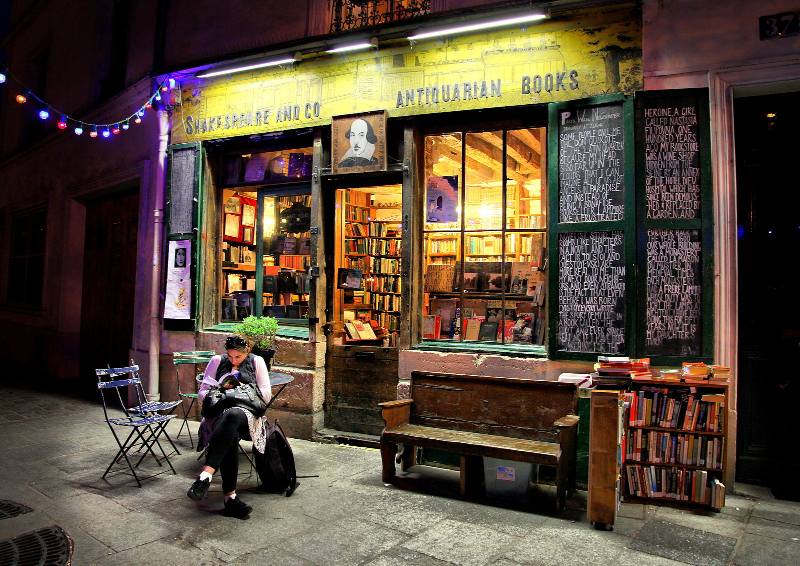
What happens when a world-famous independent bookshop finds itself in dire straights due to the global pandemic? It gets creative, of course.
As with other struggling bookstores like New York City’s venerable Strand, landmark Paris bookstore Shakespeare and Company experienced a devastating drop in revenue as the COVID-19 lockdown forced them to drastically change the way they did business.
Shadowgate
“We’ve been [down] 80% since the first confinement in March, so at this point, we’ve used all our savings,” second-generation proprietor Sylvia Whitman said in an interview with Afar.
Like the Strand, Shakespeare and Company appealed to its customer base for help.
Hard Times...
We've just sent our latest newsletter in which we ask for your support if you have the means and interest.
In the turn of a page, they were deluged with so many online orders—a record 5,000 in one week, compared to 100 under ordinary circumstances—that they had to temporarily shut down their e-commerce site to catch up with the demand.
The efforts didn’t stop there.
In what almost amounts to taking a leaf from the PBS playbook, Whitman found a novel way to hopefully survive and thrive in the age of coronavirus with the help of a newly initiated membership initiative, the Friends of Shakespeare and Company fund. Members will be treated to a series of special online events and have access to other perks aimed at avid bibliophiles.
But this wasn’t the first time loyal patrons have done their part to keep the legendary Paris Left Bank institution afloat.
The story of Shakespeare and Company starts in 1919, when original owner, Sylvia Beach, opened the doors of an establishment that would become not only a bookshop, but a salon where Ernest Hemingway, T.S. Eliot, F. Scott Fitzgerald, and James Joyce made themselves at home, and ultimately, a small publishing house. (It was Beach who first published Joyce’s “Ulysses,” considered scandalous at the time.)
In order to augment flagging sales figures when the Great Depression hit in 1929, Beach launched a series of readings and other in-store events. For a fee, the clientele got to rub shoulders with literary giants. In fact, Whitman says she was inspired by Beach’s example to revive the tradition.
CC, Christine Zenino
In 1941, the Germans took Paris in 1941 and Beach closed shop—legend has it, after refusing to let a Nazi officer buy her remaining copy of Joyce’s Finnegans Wake.
The curtain on the second act of Shakespeare and Company rose in 1951, when the ownership baton was passed to Sylvia Whitman’s father, George. The beloved English-language bookstore has enjoyed its well-earned reputation as a place where life and literature meet and intermingle ever since.
“[My father] let people sleep in the bookshop and called them ‘tumbleweeds,’” Whitman said, explaining her father believed the immersive atmosphere fostered creativity. She believes it too.
These words from a motto on the wall are the guiding force by which Whitman steers her shop and her life: “Be not inhospitable to strangers lest they be angels in disguise.”
And with that as motivation, here’s hoping that the history of Shakespeare and Company has many chapters yet to be written.
SHARE This Parisian Story With the Book Fans in Your Life…
A new vaccine that protects against the coronavirus is 94.5% effective, according to early data from the US company Moderna.
The study involved 30,000 people based in the States, with half receiving two doses of the active vaccine spaced four weeks apart, and the rest given placebo injections—a shot of saline with no effect.
The first 95 volunteers to develop COVID-19 symptoms were analyzed: Only five of the cases were in people who were given the vaccine, compared to 90 who received the dummy treatment.
The data also showed that, of the 11 severe coronavirus cases among volunteers, all occurred in the placebo group.
No significant safety concerns have been reported: A review of solicited adverse events indicates that the vaccine was generally well tolerated among participants.
Moderna plans to apply for Emergency Use Authorization from the US Food and Drug Administration in the coming weeks, and expects to have 20 million doses ready to ship in the US by the end of 2020. According to a statement released from the biotechnology firm on Monday, it also plans to have up a billion doses ready for use around the globe by the end of 2021.
Comparing Vaccines
With similar news coming from Pfizer last week, the data from Moderna adds to a growing belief that vaccines could help end the pandemic that’s gripped the world since March.
Both companies have developed messenger RNA vaccines that take a similar approach, where part of COVID-19’s genetic code is injected so the immune system can be trained to produce antibodies and T-cells that attack the virus.
The preliminary data released by both firms so far is comparable, with around 90% protection from Pfizer’s vaccine, and around 95% in Moderna’s—though as both trials are still going, final numbers could change.
One key difference? Moderna’s vaccine appears to be easier to store. Remaining stable at -4°F for up to half a year, it can be kept in a regular fridge for up to four weeks. Pfizer’s vaccine, on the other hand, requires being stored at less than 80 degrees below zero, though it can be kept in a fridge for up to five days.
Having more than one available vaccine is going to be important in ending the pandemic. According to Wired science writer Adam Rogers, “All the Covid vaccine candidates work in different ways, and none will be perfect for everyone. It’ll take a slate of options to help cover us all.”
Looking to the future
“These are obviously very exciting results,” American physician and immunologist Dr. Anthony Fauci told CNN. “It’s just as good as it gets—94.5% is truly outstanding.”
Fauci stated that high-risk groups—such as health care workers, people with underlying health conditions, and the elderly—could expect to get the first COVID-19 vaccinations towards the end of December. From there, he said, “I think that everybody else will start to get vaccinated towards the end of April… And that will go into May, June, July. It will take a couple of months to do.”
SHARE the News of Moderna’s Vaccine Results On Social Media…
Results from a new study suggest that a hormone commonly used as an over-the-counter sleep aid may be a viable treatment option for COVID-19.
Particularly with coronavirus cases rising during what some have termed the “fall surge,” repurposing drugs already approved by the U.S. Food and Drug Administration for new therapeutic purposes continues to be the most efficient and cost-effective approach to treat or prevent the disease.
According to the the Cleveland Clinic’s findings, published in PLOS Biology, a novel artificial intelligence platform developed to identify possible drugs for COVID-19 repurposing has revealed melatonin as a promising candidate.
Analysis of patient data from its COVID-19 registry also revealed that melatonin usage was associated with a nearly 30 percent reduced likelihood of testing positive for SARS-CoV-2 (the virus that causes COVID-19) after adjusting for age, race, smoking history, and various disease comorbidities.
Notably, the reduced likelihood of testing positive for the virus increased from 30 to 52 percent for African Americans when adjusted for the same variables.
“It is very important to note these findings do not suggest people should start to take melatonin without consulting their physician,” said Feixiong Cheng, PhD, assistant staff in the Genomic Medicine Institute and lead author on the study. “Large-scale observational studies and randomized controlled trials are critical to validate the clinical benefit of melatonin for patients with COVID-19, but we are excited about the associations put forth in this study and the opportunity to further explore them.”
Here, the researchers harnessed network medicine methodologies and large-scale electronic health records from Cleveland Clinic patients to identify clinical manifestations and pathologies common between COVID-19 and other diseases.
Specifically, they measured the proximity between SARS-CoV-2 host genes/proteins and those well-associated with 64 other diseases across several disease categories (malignant cancer and autoimmune, cardiovascular, metabolic, neurological, and pulmonary diseases), where closer proximity indicates a higher likelihood of pathological associations between the diseases.
They found, for example, that proteins associated with respiratory distress syndrome and sepsis, two main causes of death in patients with severe COVID-19, were highly connected with multiple SARS-CoV-2 proteins. “This signals to us, then,” explained Dr. Cheng, “that a drug already approved to treat these respiratory conditions may have some utility in also treating COVID-19 by acting on those shared biological targets.”
Overall, they determined that autoimmune (e.g., inflammatory bowel disease), pulmonary (e.g., chronic obstructive pulmonary disease and pulmonary fibrosis), and neurological (e.g., depression and attention-deficit hyperactivity disorder) diseases showed significant network proximity to SARS-CoV-2 genes/proteins and identified 34 drugs as repurposing candidates, melatonin chief among them.
“Recent studies suggest that COVID-19 is a systematic disease impacting multiple cell types, tissues and organs, so knowledge of the complex interplays between the virus and other diseases is key to understanding COVID-19-related complications and identifying repurposable drugs,” said Dr. Cheng. “Our study provides a powerful, integrative network medicine strategy to predict disease manifestations associated with COVID-19 and facilitate the search for an effective treatment.”
(Source: Cleveland Clinic)
SHARE the News of This Scientific Breakthrough on Social Media…
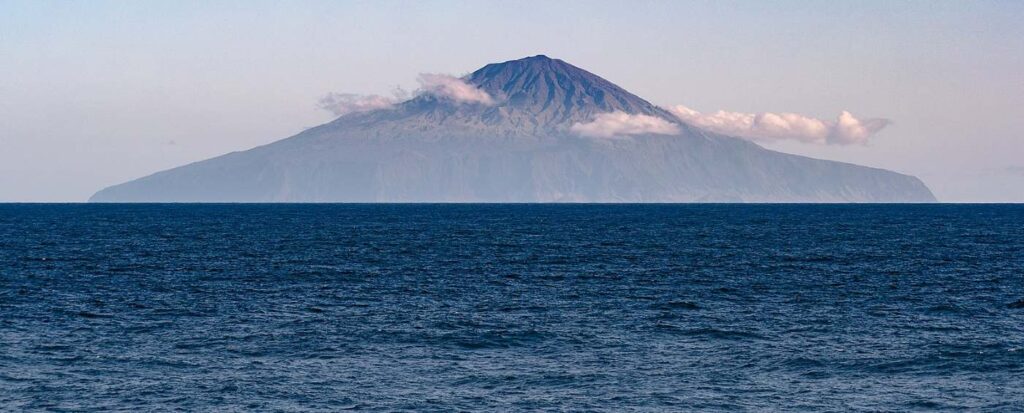
Centered around the small archipelago of Tristan da Cunha in the Southern Atlantic, governments and ecological organizations have created the fourth-largest marine protected area on Earth, and the largest in the Atlantic Ocean.
Yagerq
Spanning 265,347 square miles, Tristan da Cunha is almost three times as big as the island of Great Britain, and will protect tens of millions of native and migratory birds, rare migratory sharks, whales, seals, golden undersea forests of kelp, and penguins—collectively valued as a UNESCO World Heritage Site—from illegal mining, fishing, and other extractive activities.
The government of the small UK territorial island announced on Thursday that, in partnership with the UK government, the Royal Society for the Protection of Birds, and National Geographic’s Pristine Seas Initiative, it would conserve its surrounding oceans to help achieve the goal to “secure protection of 30% of the world’s oceans by 2030.”
“The community… a small chain of islands over 6,000 miles from London in the South Atlantic has declared that almost 700,000 km2 of its waters will join the UK’s Blue Belt of marine protection, becoming the largest no-take zone in the Atlantic and the fourth largest on the planet,” reads a local government statement.
The Blue Belt Program has protected four million square miles of ocean habitat since its inception in 2016, owing to the UK’s territorial ownership of many remote island chains like the South Georgia and South Sandwich islands, and Tristan da Cunha.
Described by National Geographic as a mix between “Edinburgh and California’s Big Sur,” the island is home to around 245 people of British, Italian, Dutch, and American heritage. Most villagers make their living through the sustainable lobster fishery, which is excluded from the protected zone.
Pristine seas
Eager to help reach the goal of 30% protection for the world’s oceans, a goal meant to ensure the flourishing of marine habitats like undersea forests and coral reefs, as well as that potentially endangered species who dwell therein, National Geographic’s Pristine Seas Initiative has worked hard to see humanity reach the goal over the next 10 years.
Pristine Seas was launched in 2008, and his since helped fund and conduct 31 expeditions around the world to gather scientific evidence on the value of certain marine ecosystems. Their work has aided in the creation of 23 marine protected areas (MPAs) around the world, conserving a total of 3.1 million square miles of water.
In 2011, their expedition to the Pitcairn Islands found the deepest-living species of plant known, and two years later it found the northernmost forests of kelp. These discoveries are vitally important to creating conservation legislation, since because science often struggles with a poor knowledge and understanding of the oceans, politicians are often lacking in knowledge too.
However, MPAs are incredibly important, perhaps even more so, than their terrestrial counterparts, as the flourishing that can take place under the surface of an MPA is often enough to raise yearly fish catch by 20%, as the benefits “spill over” into the surrounding oceans.
This was reported by a study in the Proceedings of the National Academy of Sciences which found that “strategically expanding the existing global MPA network by just 5% can improve future catch by at least 20%.”
Currently, around 8% of oceans are considered MPAs, but only 2.6% of those are entirely off-limits to fishing. Fishing, whether through large scale fleets or with hand-sewn nets, often provides the most readily available source of high-quality protein in developing nations across the continents, and ensuring stable, growing fish stocks by conserving vital marine habitats will be key to food security and biodiversity in the face of a growing world population.
“It is testament to the vision of the Tristan da Cunha community that one of the world’s smallest communities can make the single biggest contribution to global marine conservation this year,” said Enric Sala, National Geographic Society Explorer-in-Residence.
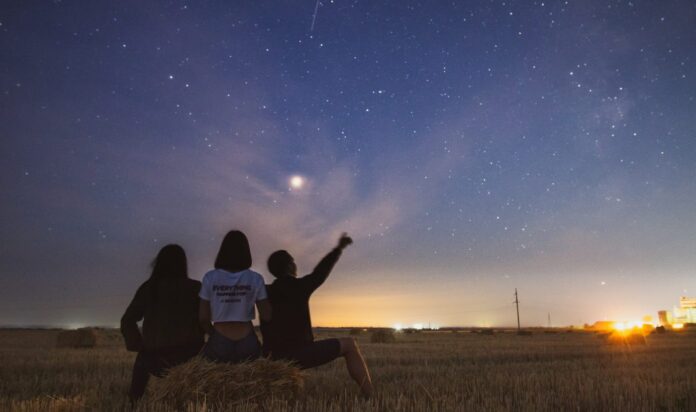
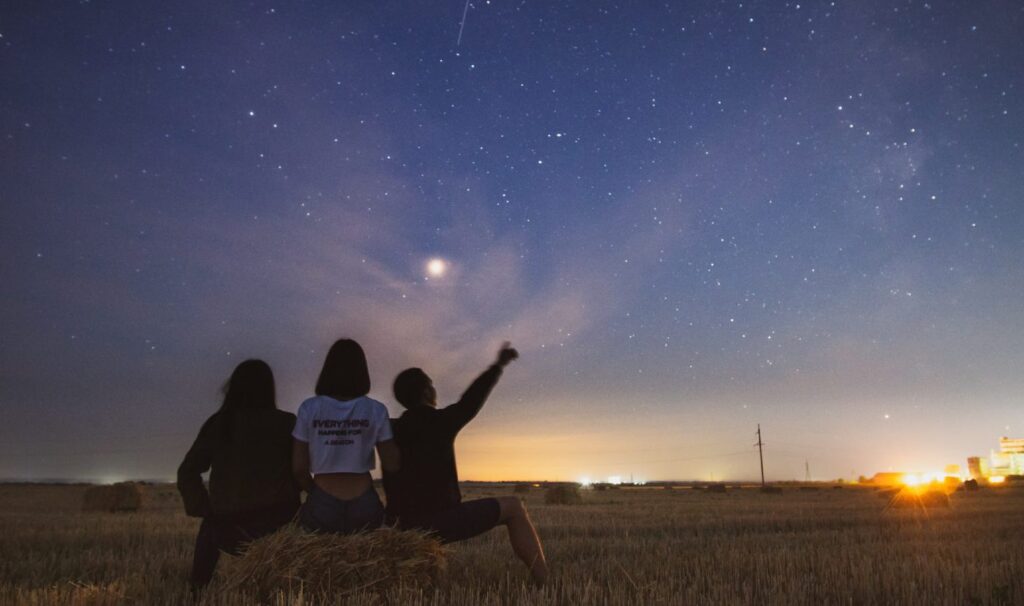
For those who like to gaze at the night sky, this week there will be a lively show as the Leonid meteor stream, as well as all seven planets, will be visible throughout the night—the lack of a strong moon helping immensely to see everything.
Rad Pozniakov
Jupiter and Saturn will be visible in the early night, between the 18th and the 21st, all throughout the Northern Hemisphere, as well as Mars, Neptune, and Uranus.
The Leonid meteor shower will be extra-visible tonight, with peak showers predicted for Tuesday the 17th before dawn, all across the world.
In this period, Venus and Mercury will be bright enough to see in the early mornings.
These events mark a celestial anniversary, as Jupiter and Saturn, visible side-by-side in what astronomers call the Great Conjunction, a phenomenon that happens once every 20 years around the winter solstice of December 21st, are joined by all the other planets of our solar system.
As the planets revolve around the sun in their long orbits, occasionally they will all bunch up for some weeks before spreading out again. It’s not rare, only infrequent.
How to watch the meteors
Sighting the Leonid meteor shower is a yearly occurrence. Centered around the comet Tempel-Tuttle that takes about 33 years to fully orbit Earth, it’s named for the constellation Leo—as the point in the sky where most of the meteors streak from is around the mane of the lion constellation.
Time and Date has an hourly-updating tracker showing where the meteors will be coming from and where they can be seen. This year, the lack of moon and cloudless weather predicted for most of North America will definitely aid the stargazer in seeing as many as 15 meteors per hour.
In 1966, the Leonid shower turned into a storm, when Americans could see a mind-boggling 100,000 meteors an hour streak through the sky, including fireballs that looked almost like ICBM missiles, or “earthgrazers,” low-flying meteors with long colorful ion tails.
The last time Leonid stormed was in 2001, but it produced only 1% of the debris saw in 1966. The next storm period, when the comet passes close by, will be in 2031.
To see the most meteors, pack a lawn chair, a Thermos of tea, and plenty of layers, and drive out to a place that isn’t overly impacted by urban light pollution. You won’t need a telescope or binos to see the fireballs, and if you need a recommendation for a good stargazing spot, EarthSky has a map of registered dark-sky locations.
SHARE This Far Out News With Your Pals on Social Media…
Quote of the Day: “You never change your life until you step out of your comfort zone; change begins at the end of your comfort zone.” – Roy T. Bennett
Photo by: Egor Iskrenkov
With a new inspirational quote every day, atop the perfect photo—collected and archived on our Quote of the Day page—why not bookmark GNN.org for a daily uplift?
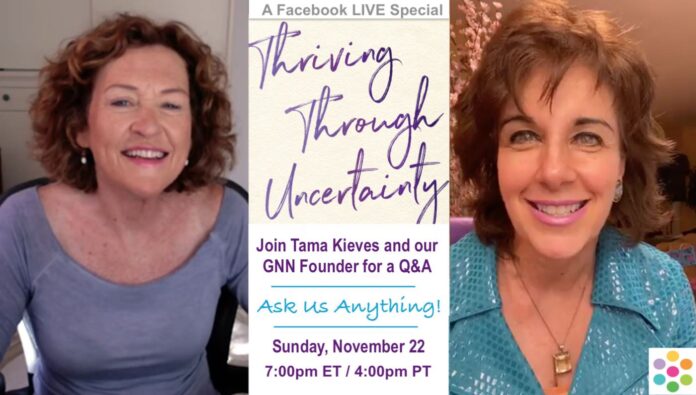
If there’s any part of your life you might want to improve—join us to talk about it on Sunday during a LIVE interactive streaming show. It’s called, Ask Us Anything! We’ll take your questions in advance—and also during the event in the comments section.
If you can’t join us during the live show, you can still submit questions and watch the video later on FB. We want to help you live your best life—and Tama Kieves does that exact thing for people every day.
Tama’s most recent book is Thriving Through Uncertainty (Moving Beyond Fear of the Unknown and Making Change Work for You).
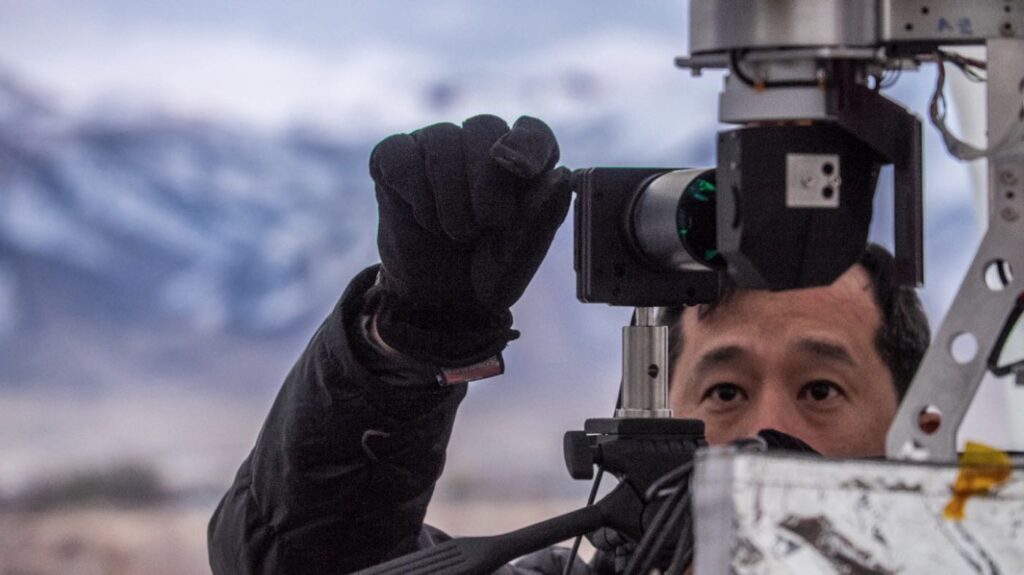
A tech project has developed a way of bringing fiber optic-speed internet to the most remote and mountainous parts of India and Kenya.
Project Taara
Their plan is to blast beams of gigabyte-rich light from projectors mounted on high towers in a bid to bridge the digital divide and bring universal internet connectivity.
If you want to get a Zoom call into the home of a villager in the remote Chaparai valley in India, you need a system that is quick and easy to deploy amid the ruggedness of the terrain, and one that is fast and reliable with tens of gigabytes of throughput.
Project Taara, founded by the tech innovation group called X, which styles itself as the “Moonshot Factory,” has a bright alternative to laying hundreds of miles of fiber optic cable to connect remote villages—and it’s a lot cheaper and less labor intensive.
It uses the same beams of light contained inside fiber-optic cables, but without the cables. Projectors mounting on high poles and towers can beam the information through the air up to 12 miles away.
With a clear line of sight, wireless optical communication technology can transmit data at high speeds of up to 20 gigabytes per second, and can do so without installers bothering to navigate real estate laws, or the costs of digging around bodies of water or tunneling under railroads.
Project Taara
The kind of light emitted by the machine doesn’t damage any part of animal physiology. However if objects pass through the beam of information, one would experience a slight service interruption. To dampen these interruptions, the system automatically resends whatever data it detects was interrupted if, for instance, a bird flies through the stream.
“We are creating history here,” says Dinesh Kumar, project officer with India’s Integrated Tribal Development Agency, which is working with Taara to bring connectivity to remote parts of India.”The last 400 years I couldn’t get connectivity here to Chaparai… it’s an absolute miracle.”
With more than 3 billion people who regularly live without access to the internet, X is not stopping with India but has already announced, a partnership to bring Project Taara to Kenya as well as other parts of sub-Saharan Africa.
Liquid Telecom and Econet Group, which provide telecommunications services across the region, will add Taara-sourced connectivity to its packages in Kenya, following a successful pilot period last year.
According to a blog post from X, they will use the Taara systems to reach communities over rivers, post-conflict zones, and national parks.
Bridge The Divide of Hope By Sharing This News With Friends on Social Media…
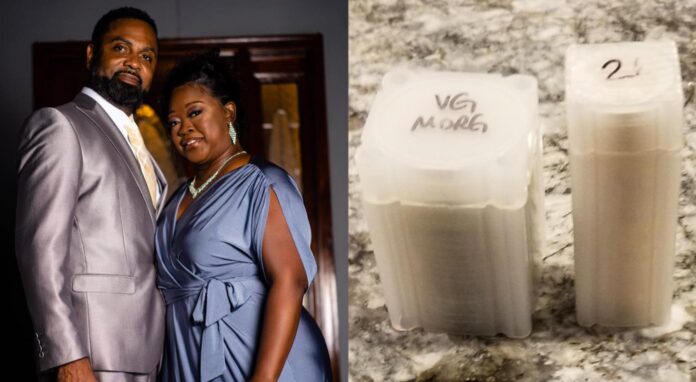
When a South Carolina couple recently sold what had been their ‘dream house’, they were sure they had tied up all the loose ends before the sale.
Repairs had been made, the paperwork was all in order, and they had removed their belongings from the home in which they had spent the last 32 years—or so they thought.
A few days after the sale was finalized, James and Clarrisa Munford discovered a literal treasure, which the former owners had hidden and forgotten all about—50 gold and silver coins.
Legally, the coins—valued at $15,000—were now the Munfords’ property, and they were well within their rights to quietly sell them and pocket the profits.
However, the Munfords, who own Clarrisa’s Kitchen and Catering, in Columbia, chose to contact the sellers and return the coins, which had been left inside a built-in drawer in the home.
The Munfords on their new front porch
“There is an old saying: ‘You reap what you sow,’” said the original owner, who was astonished. “My wife and I spent a great deal of time and effort to ensure that we left our home in excellent condition for the Munfords, and one good deed was certainly returned by another!”
The sellers of the home in Irmo prefer to remain anonymous, but said they wanted to share this story to bring hope and inspiration to others during these difficult and divisive times.
“Now is a good time to pause and reflect about how we treat each other. If there were more people like the Munfords, this world would be a much better place.” he said.
SHARE The Honest Truth About Most People With Friends on Social Media…
This is not your normal game of fetch—although this speedy tortoise would surely be up for one.
Rudy Janssens found the tortoise while walking around in a small Belgian forest, 30 years ago, and it has been happily sharing the yard with generations of family pets.
Rudy told GNN they named him Jaguar because “he is really fast—the hotter the weather the faster.”
One day when Rudy’s sons were playing soccer in their garden in Antwerp, Jaguar started running after the ball.
At the time, their dog—a Bouvier des Flandres—proved a worthy football opponent for Jaguar. “He could take the ball in his mouth run into the house, with Jaguar chasing him.”
These days, their dog is a Dachshund, which proves to be a fairer fight. Named Marcel, after Rudy’s late father, you can tell the pup loves playing both defense and offense, trying to keep the game going as long as possible.
Football season for the pair has ended, however, as winter is settling upon the countryside.
“Jaguar has already buried himself in the sand somewhere in our garden,” says Rudy. “In spring, he will appear again, always a happy moment: He’s back, winter is passed!”
WATCH the adorable video…
MAKE Your Move! Send This Cute Story to Your Pack of Friends on Social Media…
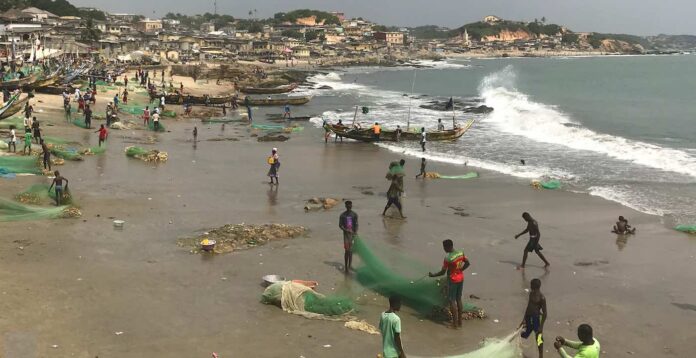
If fish stocks off the Ghanaian coast were to collapse, it would put the livelihoods of millions of people at risk, but a new app that lets local fishermen photograph and report illegal trawlers could be the perfect tool to prevent the disaster.
Andy Corbley
With hand net and hand line, small-catch fishing here in West Africa have provided generations of families a food and income source that is at risk from commercial-scale illegal trawling operations, which have been depleting many of the “people’s fish” species.
Strict laws are in place which prevent trawlers from entering shallow waters where small catch fishermen work and where fish species live, but due to enforcement limitations, these laws are regularly broken, with an estimated 37% of the yearly catch being hauled in illegally.
The new app, called Dase was developed by the nonprofit Environmental Justice Foundation (EJF) and allows small-catch fishermen to rapidly report lawbreakers directly to Ghana’s Fisheries Commission with just their smartphone.
The project was funded by the EU delegation to Ghana as part of a three-year process to restore sustainable fish stocks to the country of 32 million people living in an area the size of Kansas.
The Guardian reports an instance whereby a canoe fisherman spotted a trawler operating within the six-mile exclusion zone reserved for small-catch fishermen. Using the camera on his smartphone, the angler photographed the boat’s identity plate and videotaped its activity, before submitting it directly to the government.
To prevent bribery from ensuring the records are filed away somewhere and never seen again, evidence is sent to a database co-managed by the EJF, who can help build and check the status of cases against perpetrators.
So far over 100 small-catch fishermen have downloaded the app, in communities along Ghana’s 350-mile coastline, to make sure that trawlers are under the legal microscope at all times.
TRAWL This Good News to Your Fishing Friends on Social Media…
Quote of the Day: “Every moment that you share someone else’s pain, feel what they feel, makes you more human.” – Bill Murray
Photo by: Jon Tyson
With a new inspirational quote every day, atop the perfect photo—collected and archived on our Quote of the Day page—why not bookmark GNN.org for a daily uplift?
We have all sung this dirge in one form or another. There is no love for me outside this loveless marriage. There is no money for me beyond this draining career. There is no way to have things fall together now, because if they were supposed to come together they would have; I must be riding on a rickshaw while everyone else caught the plane.
It takes enormous courage to believe that things can be different. Or that there is a life beyond what you can see or even imagine—or a you—that is whole and inspired.
“There is no other world,” says your fear. And to this I say, with great deference to your pain: Poppycock (whatever that actually means). Change is always what’s for dinner.
Buddha said that all suffering stems from trying to hold on to your chocolate mousse. Well, he didn’t say that. He said we try to make things permanent. But the nature of reality is fluid.
Real life cracks open, breathes, disintegrates, and expands. It always expands, even when we feel like things are stuck or going in the wrong direction.
Life is designed to shimmy. We are designed to let go of our lobster shells and grow into new ones. Your true happiness does not come from a stable stock market, a feast of jobs or potential relationships or climate control. It’s about learning how to thrive in the times when you lack control. Boys and girls, we live in dynamic times.
We are all dynamos
We are being roused into our powers.
“The voice of eternity within us demands to be heard,” says the philosopher Soren Kierkegaard “and to make a hearing for itself it makes use of the loud voice of affliction, and when, by the aid of affliction, all irrelevant voices are brought to silence, it can be heard.” That’s a high-class way of saying that pain can awaken you to your Big Picture Life and the only relevant voice there is, your True Self.
You are not the erratic conditions of this moment. You are a powerhouse. You are a continuous force of evolution. You are a phenomenon, a surprise even to yourself. An inspired life is more than the life you planned. This is the nature of thriving. There is an orchestration, a calculation, sometimes an ambush, yet always an intelligence fueling the “chaos.” (…continues below)
Join Tama and GNN Founder Geri Weis-Corbley For a LIVE Show ‘Ask Us Anything’ on Facebook November 22, 2020 at 7pm ET / 4pm PT. Send us questions via email or Messenger, for your chance to win a free book!
I never imagined that my life could get so out of control. But I found myself sitting at a beach in Northern California, staring at waves, thinking about taking my own life. I couldn’t bear to practice law for one more day. And I could not let myself quit. Just the week before, I couldn’t summon my usually ferocious will power and write the brief in front of me. There was some other will going on now.
I was so tired. Fighting myself all the time. I hate this job. You have to stay in this job. The boxing match that never ended. I thought I was being practical. I thought I was being strong. I look back now, years later, and realize I was fighting against a tidal wave. I was pushing back the hunger to live my full expression and the most amazing awakening that has ever happened to me. I was resisting my True Life.
I came home from California a mess. A few weeks later, I walked out of my career without a plan or a viable source of income. It was an end and a beginning. Years later, now in a life where I have taught so many others to awaken their inspired lives, I can’t imagine that I could have ever chosen another life, a life that denied my creativity, my essence, my life’s purpose and the wildest happiness I’ve ever known. But I tried to hold on to what I knew at the time. We all do.
We all have a True Life, the life that does not look like our plans, yet perhaps arises from a deeper wisdom within. This other intelligence sweeps past our conditioning and defies our expectations of how things should go. This life brings us to surrender or acceptance even when we do not yet understand what’s going on. This life brings us to the truth of our bones. The True Life always prevails. The soul’s desires are formidable.
I have seen brilliant transformations in people who have faced addictions, health issues or the death of a loved one. I have seen these shifts in those who seek to express their life’s work or experience true love. Whatever the situation, the shift is always the same: You can’t do what you’ve always done—and then over time you can do what you’ve never done. And always in the end, you wouldn’t go back for anything.
This is the gift of uncertain times. Know that it’s a strength to be undoing that which no longer works for you—yes, even when you think it does. Undoing is progress, not mayhem….
A mother doesn’t have to understand or even trust the birth process to give birth. Your next expression wants to be born. Great and mighty forces marshal their strength around you. It’s your time. You’re uncovering a new way to breathe and feel safe in the world, even though you can’t imagine it. Change may wear a wolf suit. Still, don’t be fooled. It’s wild, abundant magic come knocking on your door.
Join Tama and GNN Founder Geri Weis-Corbley For a LIVE Show ‘Ask Us Anything’ on Facebook November 22, 2020 at 7pm ET / 4pm PT. Send us questions via email or Messenger, for your chance to win a free book!
An honors graduate of Harvard Law School, Tama Kieves left her law practice to write and help others create their most extraordinary lives. Featured on USA TODAY, Forbes, and Oprah Radio, she authored four best-selling books and is a sought-after speaker who leads retreats and online programs that help you unlock your brilliance, no matter what is going on. Sign up for her free digital Fortune cookies and popular monthly newsletter at www.tamakieves.com.
SHARE The Motivation With Friends Who Might Need Their Questions Answered…
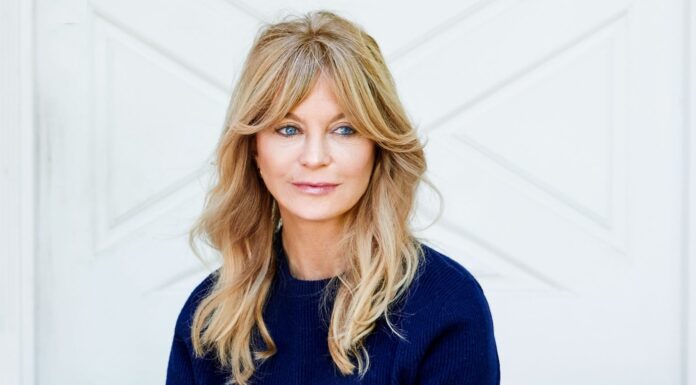
In education and psychology circles, actress Goldie Hawn is known for much more than her long career in film and TV and signature giggle.
The Goldie Hawn Foundation, with its MindUP program, has been teaching mindfulness in schools for more than 16 years—and they’ve measured successful outcomes in students who often experience anxiety, stress, anger, or depression.
Classrooms in 11 countries that use MindUP report a 75% decrease in fighting and an 83% rise in optimistic attitudes among students.
With the pandemic keeping most students at home—and parents racking up their own stress levels related to that new reality—MindUP has unveiled a new free service that families can access 24/7.
Partnering with Insight Timer, the world’s largest free meditation app, MindUP is now delivering short five-minute exercises, based on its accredited curriculum, that teach daily gratitude and “brain breaks” proven to improve focus, resiliency, optimism and empathy.
The audio exercises, which are also on the platform’s website, designed to help children regulate emotions and increase overall wellbeing through positive psychology, mindful awareness, and social-emotional learning, are available in English, Spanish, French and Portuguese with more languages to come this year.
Accredited by the Collaborative for Academic, Social and Emotional Learning (CASEL), MindUP’s exercises on Insight Timer teach children focus, empathy, and relationship-building—which are based firmly in neuroscience that has measured how to manage stress and regulate emotions, with optimism, resilience, and compassion.
The World Health Organization reported in 2020 that more children are struggling with concentration and nervousness amid lifestyle changes during the COVID-19 pandemic.
“During this time of uncertainty, children are affected negatively emotionally and are facing symptoms of stress and anxiety,” says Hawn, the 74-year-old founder of MindUP. “Our program helps address these issues by creating mental fitness and emotional stability.”
“We are proud to add MindUP’s learning resources to our free library to support parents and educators as they face new challenges teaching children with technology,” said Christopher Plowman, CEO of Insight Timer, which has become the most used meditation app in the US, with global audience of 17 million people.
WATCH a Goldie interview and see a summary of MindUP…
SHARE This Mindfulness Solution With Parents On Social Media…
A group that since 2020 has protected half the world’s children against some of the deadliest diseases has announced new donations for its fund that aims to protect the world’s adults against the new coronavirus pandemic.
Photo from Cepi.net
Gavi, the Vaccine Alliance says it received $360 million from the European Commission, France, Spain, The Republic of Korea, and the Bill & Melinda Gates Foundation to bring its total fundraising revenue, so far, to $2 billion.
This funding will allow Gavi COVAX AMC to reserve and access 1 billion doses for low- and middle-income economies.
The announcements come as 94 higher-income economies have officially joined the COVAX Facility, a global effort to ensure rapid and equitable access to safe and effective COVID-19 vaccines for the most vulnerable groups across the world.
“We are incredibly grateful for the support received so far. This vital funding not only helps us ensure lower-income economies aren’t left at the back of the queue when safe and effective COVID-19 vaccines become available, it will also play a vital role in ending the acute phase of this pandemic worldwide,” said Dr Seth Berkley, CEO of Gavi, the Vaccine Alliance.
“We urgently need to raise at least an additional US$ 5 billion by the end of 2021 to ensure equitable distribution of these vaccines to those who need them.”
The details of the latest Gavi COVAX pledges received are as follows:
The President of the European Commission pledged EUR 100 million—a pledge in addition to the EUR 400 million in guarantees approved by the European Investment Bank (EIB) on Wednesday
France pledged EUR 100million
Spain confirmed that EUR 50 million
The Bill & Melinda Gates Foundation pledged $50 million to the Gavi COVAX AMC. This amount is in addition to $106 million pledged by the Foundation for the COVAX AMC, bringing their total contribution to $156 million.
The Republic of Korea pledged $10 million in new funding
The Bill & Melinda Gates Foundation also pledged an additional $20 million to CEPI, which is leading COVAX vaccine research and development work to develop safe and effective vaccines which can be made available to countries participating in the COVAX Facility. Nine candidate vaccines are currently being supported by CEPI; eight of which are currently in clinical trials. Governments, vaccine manufacturers (beyond their own R&D spending), organizations, and individuals have committed $1.3 billion towards vaccine R&D so far.
The COVAX Facility is part of COVAX, and Access to COVID-19 Tools Accelerator, which is co-led by CEPI, the Coalition for Epidemic Preparedness Innovations, Gavi, the Vaccine Alliance, and the World Health Organization—working in partnership with UNICEF, the World Bank, and others.
COVAX is the only global initiative that is working with governments and manufacturers to ensure COVID-19 vaccines are available worldwide to economies of all financial means.
Over the last two decades, Gavi has helped to immunize a whole generation – over 822 million children – and prevented more than 14 million deaths, helping to halve child mortality in 73 developing countries. Learn more at Gavi.org.
IMMUNIZE Your Social Media Feeds Against Cynicism—Share the Generosity…
With a uniquely different flu season approaching, there’s never been a better time to alter your diet so it can fortify your immune system—and there are four micronutrients proven to do this.
While many people are waiting until the SARS-CoV-2 pandemic can be eliminated with a vaccine, like the one from Pfizer that reported 90% effective rates this week in early reports, more practical preventative measures are available today to keep seasonal illness away in the form of micronutrients like resveratrol, zinc, vitamin D, and probiotics—which will boost your immune health and also help protect you from colds.
Zinc, a simple mineral from the ground, when taken in the form of a lozenge can reduce the duration of a cold by 33-40%, while other nutrients like quercetin, fisetin, and luteolin—which are plant flavonoids—can actually bind to the SARS-CoV-1 and SARS-CoV-2 spike proteins and can prevent them from entering our cells.
Some immune cells have demonstrated cross-immunity to, or have genetic memories of immunity to SARS-CoV-1, declared a pandemic in 2003 in China, which have been shown in certain patients to effectively combat COVID-19. Nutrients like zinc and luteolin work in similar ways to the immune cells, and taking these supplements can not only help you if you should come in contact with the COVID-19 influenza, but other seasonal flus that will come around this year.
Here are some other compounds that have been shown to help shorten flu duration and prevent infections.
Vitamin D
While there are certainly people who are not going to feel totally safe until a vaccine is produced, vitamin D has been undeniably shown to reduce acute respiratory tract infections, while potentially also including COVID-19.
This has been examined across many studies, and some meta-analyses have produced averages of around 10% reduction in risk for those with normal vitamin D levels, and a 50% risk reduction for those with a deficiency.
Vitamin D deficiency is already implicated in many different kinds of infections, and one of the most prodigious publishers of paper on athletes’ health recently found that deficiency in vitamin D is common even in collegiate athletes, and people who are deficient are more susceptible to all kinds of infections any time of the year.
Indeed one hypothesis has emerged in the era of COVID-19 that’s demonstrated incredibly-high death rates in populations deficient in vitamin D such as in Indonesia and the Philippines. Some have suggested that this is why Black populations are more susceptible to the coronavirus, because of lower vitamin D levels.
The blood-circulating metabolite of vitamin D, 25-hydroxyvitamin D, “supports induction of antimicrobial peptides in response to both viral and bacterial stimuli,” reads the abstract in one meta-analysis of 25 papers.
Most of our vitamin D comes from the sun, but there are plenty of foods fortified with vitamin D or in which it comes naturally, like fortified milk, egg yolks, salmon, sardines, canned tuna, or cod liver oil. Dietary sources can be completely adequate, as the normally sun-deprived Scandinavians actually have the lowest instances of vitamin D deficiency on earth.
Zinc protects our bodies by stopping the replication of viruses we are infected with. RNA polymerase—an enzyme used by viruses to coax our own cells into replicating the viral proteins—is blocked by zinc.
Zinc deficiency was also found recently to result in poor or non-existent production of immune cells like T cells. Killer and helper T cells have both been shown to be able to identify COVID-19, and so a reduction or dysfunction in their regulation and production could make a person more vulnerable to coronaviruses, whether it’s the novel kind or the seasonal kind.
A 75mg lozenge of zinc not only can help the recovery time of people suffering from seasonal colds by 33-40%, but also is not required to be taken every day, as 75 milligrams is many-times more than the recommended daily allowance. Therefore, a supplement could be taken as needed, especially for vegetarians because the dietary sources of zinc tend to be mostly meat, with oysters being the richest source.
It’s possible to make a case that a rich and diverse microbiome covering the skin, throat, colon, and stomach could protect the bearer against certain bugs during flu season.
The field of human microbiome research is exploding, with specialists using established datasets to control for diseases, disorders, and trends of every degree. The citizen science work of the Human Microbiome Project made the largest, most genetically and culturally rich dataset on earth for studying the human microbiome, and a search for probiotics on their published work page turns up all kinds of research.
There isn’t a lot of published literature on the interaction between the human microbiome and influenza-like viruses, however one meta-analysis of low quality data did find that probiotics were better than placebo for reducing risk of contracting flu-like viruses, as well as days spent experiencing flu-like symptoms.
One of the problems is that the data were testing different kinds of probiotics. Different species can confer different characteristics, and so the lack of continuity hurt the data’s reliability. One could presumably get around this by consuming many different types of food to support a varied community of microbes.
Contrary to zinc and vitamin D, it’s very easy to change your diet to create such a community.
“No matter the diet they prescribed to (vegetarian, vegan, etc.), participants who ate more than 30 different plant types per week (41 people) had gut microbiomes that were more diverse than those who ate 10 or fewer types of plants per week (44 people),” writes a collaborative paper from the University of California San Diego based on the Human Microbiome Project dataset.
Indeed taking in different kinds of microbes can be done simply by increasing the amount of fermented food you eat, which could include raw, fermented, or cultured dairy products like kefir, raw cheese and milk, or quality yogurt, as well as fermented vegetables like kimchi, sauerkraut, and miso.
Ensuring your new microbes stay healthy is as simple as eating more fiber and more types of fiber, and the easiest way to do this is just eat more vegetables; again not relying on a lot of one type, but a selection of many.
Resveratrol
Some information here reprinted with permission from World at Large News, an small news outlet covering health, nutrition, exercise physiology, and medicine.
Gaining a lot of popularity as an anti-aging supplement, resveratrol is a powerful antioxidant and also helps suppress pro-inflammatory compounds like IL-6 and TNF-alpha, compounds that are associated in increased amounts with diseases, the latter of which in every disease known to man.
This was demonstrated in a study where healthy individuals were given a 6-week course of 40mg of resveratrol derived from the extract of a plant called Japanese knotweed.
Now, resveratrol, a compound present in most plants that is expressed when they experience stress, is being looked at as a potential ameliorator of viral infections.
Its main antiviral mechanisms were seen to be elicited through inhibition of viral protein synthesis, inhibition of various transcription and signaling pathways, and inhibition of viral related gene expressions — in other words it makes it harder for viral cells to live, being that viruses hijack our own cells’ reproductive and regenerative functions for their own nefarious purposes.
One exhaustive study looked to pair plant phytochemicals like flavonoids with the now FDA-approved hydroxychloroquine as a way to stop the docking mechanism of COVID-19. Resveratrol was examined as it has been found to inhibit one of COVID’s corona-cousins MERS.
Unfortunately resveratrol, like vitamin D and zinc, is difficult to consume through the diet. Known for existing in the skin of red grapes, it has poor oral-bioavailability and despite what your bartender tells you about its presence in red wine, you’d die of alcohol poisoning before getting any beneficial amount of resveratrol from drinking.
In reality a supplement is what’s needed, stored in a cold dark environment, and taken with a meal with a moderate amount of fat.
With so many people waiting for a shot to protect them for COVID-19 or the regular seasonal flu which would undoubtedly exacerbate any infection with the novel coronavirus, there’s never been a better time to do as Hippocrates said and “let thy food be thy medicine and thy medicine be thy food.”
STARVE A Fever—And Keep Friends Healthy—By Sharing This on Social Media…
Quote of the Day: “It’s on the strength of observation and reflection that one finds a way. So we must dig and delve unceasingly.” – Claude Monet (born 180 years ago)
Painting by: Claude Monet, Water Lilies and the Japanese bridge (1897–1899)
With a new inspirational quote every day, atop the perfect photo—collected and archived on our Quote of the Day page—why not bookmark GNN.org for a daily uplift?
Ricardo Pimentel may not have had an ark to ride out the storm, but he’s being hailed as something of a modern-day Noah nonetheless.
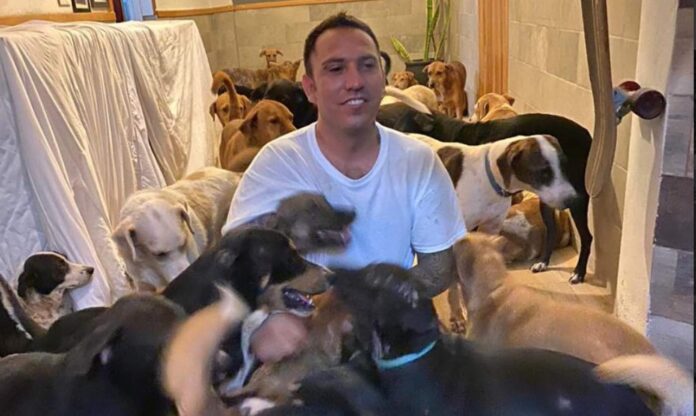
As deadly hurricane Delta bore down on Mexico’s Yucatan Peninsula tearing a path of destruction directly to his door, Pimentel herded hundreds of animals—including more than 300 dogs, numerous rabbits, chickens, and even a hedgehog—inside his home to shelter them from the storm. (A flock of sheep huddled for safety on the patio.)
Ricardo Pimentel Cordero / Facebook
Although his house took a beating, inside and out, the entire menagerie survived. “It doesn’t matter if the house is dirty, it can be cleaned,” Pimentel told AP. “The things they broke can be fixed or bought again, but what’s beautiful is to see them happy, healthy and safe, without wounds and with the possibility of being adopted.”
Pimentel’s actions were no surprise to those who know him. The home he shares with his family serves as the hub of Tierra de Animales (Land of Animals), the 10-year-old animal sanctuary he founded about 20 miles southwest of Cancun.
Knowing supplies might be hard to come by, prior to the storm, Pimentel posted to social media about his concerns for the welfare of his flock. As Delta raged, he also posted pictures from inside his house—which looked like a real-life version of 101 Dalmatians—times three.
Once Delta had passed, with so many mouths to feed and a major post-storm cleanup underway, Pimentel didn’t realize his posts had gone viral until donations from around the world started pouring in. Not only that, neighbors soon arrived in the aftermath of the hurricane to help clear debris and rebuild the sanctuary.
While he was awed by the generosity of donors and volunteers, Pimentel hopes this moment in the spotlight will serve a larger purpose—helping him find forever homes for some of his rescues so he’ll be able to save even more.
“We would like to think that thanks to all this attention, somebody would like to be part of the story and say: ‘I adopted a dog saved from that famous Hurricane Delta,’” he explained.
The storm may be over, but Pimentel continues to walk the walk, a living testament to the sanctuary’s motto, “Leave footprints of kindness for others to follow.”
(WATCH Ricardo’s video showing his work in the hurricane below.)
WOOF Your Praise for This Story By Sharing it on Social Media…
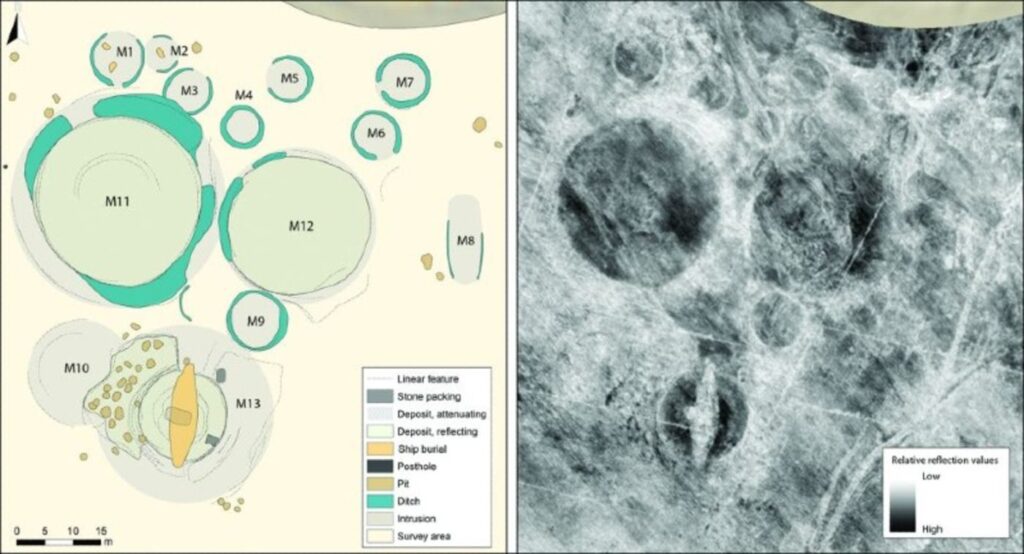
The area surrounding the Gjellestad Viking ship burial in Norway was found to contain an extensive and traditional funerary, feasting, and religious complex of outstanding significance, ground-penetrating radar scans revealed.
The finds transform the understanding of the site as one containing an isolated grave to representing the regional center of Viking high-society.
Antiquity Publications Ltd/L Gustavsen
Remains of three longhouses, a feasting hall, 13 smaller burial mounds, and a temple were all identified sitting in the field around the Jell Mound, the second-largest known funerary earthen mound in Norway, and one that was first used as a high-society burial site in 550 CE, around the fall of the Western Roman Empire.
Together they form a hitherto unknown “central place,” sites which Scandinavian archaeologists classify as places of great importance to the pre-Christian denizens of the peninsula.
Excavations, both academic and amateur, of the Jell Mound and surrounding areas have yielded high value goods, many of which are now on display in Norwegian museums and which include weapons and jeweled personal items.
The researchers suggest that, as can be observed in other burial or political traditions in cultures and nations of the past, tying one’s political or cultural authority to older traditions or places/persons of authority was a strong way of consolidating power.
“We believe that the inclusion of a ship burial in what was probably an already existing—and long-lived—mound cemetery was an effort to associate oneself with an already existing power structure,” said Lars Gustavsen, the lead author of the research paper on the site’s additional structures and mounds.
“Indicative of the emergence of a central place in a time when control of the land was in flux, Gjellestad’s relevance as a political arena was retained and reinforced with the addition of a ship burial—the ultimate expression of status, wealth and connection in Iron Age Scandinavia,” reads the paper.
As good as it gets
The discovery of a partially-intact ship burial is about as good as it gets in European archaeology, and the Viking Ship Museum in Oslo is home to the only three ever excavated, all discovered in the 1800s.
The Gjellestad ship, discovered in the autumn of 2018, is the first one to be excavated in over 100 years, and was discovered in a field in southern Norway near the border with Sweden in Østfold county by archaeologists from the Norwegian Institute of Cultural Heritage Research. It was buried 1,200 years ago, about a decade after the Viking Age exploded into violent life with the raid on the English Monastery at Lindisfarne in 793CE.
“For the first time in 100 years, we will now excavate a Viking ship. We are very excited about the result,” Sveinung Rotevatn, Norway’s Minister for Climate and Environment told state broadcaster NRK. “It is urgent that we get this ship out of the ground.”
Antiquity Publications Ltd./NIKU
The urgency comes from a fungal growth that is rapidly decaying the wood of the ship. $1.5 million was granted by the government for excavation of the Gjellestad last year.
In the mid-20th century, according to Smithsonian, farmers unknowingly built a drainage pipe over the boat’s resting place in the middle of their field. Air leaked down into the soil and allowed a destructive fungus to proliferate and eat away some of the boat which wasn’t already destroyed by both time, and the unfortunate discovery by locals in centuries past.
If the excavation is quick and clean, historians may be able to divine what kind of ship it is, as the Vikings used different ships for trading, raiding, and transport. Measuring 60-feet long, it’s not the smallest ship style built during the Viking Age, but also by no means the biggest, as the famous Gokstad and Oseberg ships are about 18 and 10 feet longer respectively.
(WATCH the NIKU video about the Gjellestad Viking ship discovery below.)
SHARE the News of This Viking Find With Pals on Social Media…
As has been the case for families all around the globe, the past few months have been stressful for the Smiths, to see the least.
Sam Smith is a single father to 6-year-old Lysander and 3-year-old Zenduel. Since lockdown began in England, the family has been largely confined to their one-bed apartment on the 15th floor of a high-rise in East London.
It’s not a very big apartment—just 12 steps from one side of the main room to the other—and with local parks closed, sometimes Sam and the kids have been stuck inside for 23 hours a day.
When the family went on the BBC Breakfast Show to talk about what it’s like to be confined in a very small living area during the pandemic, a couple, Ken and Sheila Sims, were watching the interview from their home on the Devon coast.
Ken grew up in a high-rise apartment building as a young boy, and felt especially saddened seeing the difficulties the Smiths was going through.
Luckily, he knew just how to help. He could give the Smith family a break by asking them if they’d like to spend a week at his cottage by the English seaside.
Of course, they said yes to Ken’s idea.
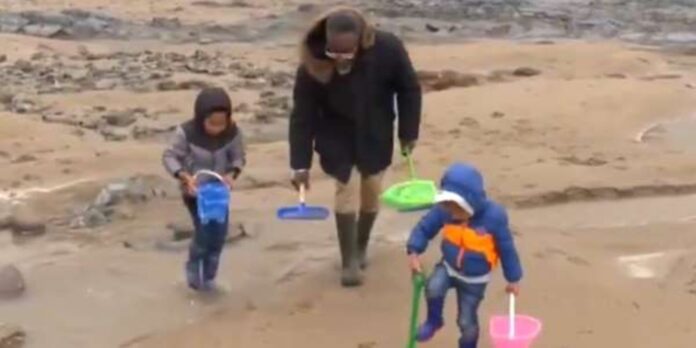
“I can’t find the words… ” Sam said at the beach on his family’s Devon vacation. Motioning at the sky and water all around him, at his young sons making sandcastles, he exclaimed, “It’s beautiful!”
(WATCH the joyful vacation the Smiths just had in the BBC video below.)
SHARE This Sweet Story of Generosity with Pals on Social Media…