













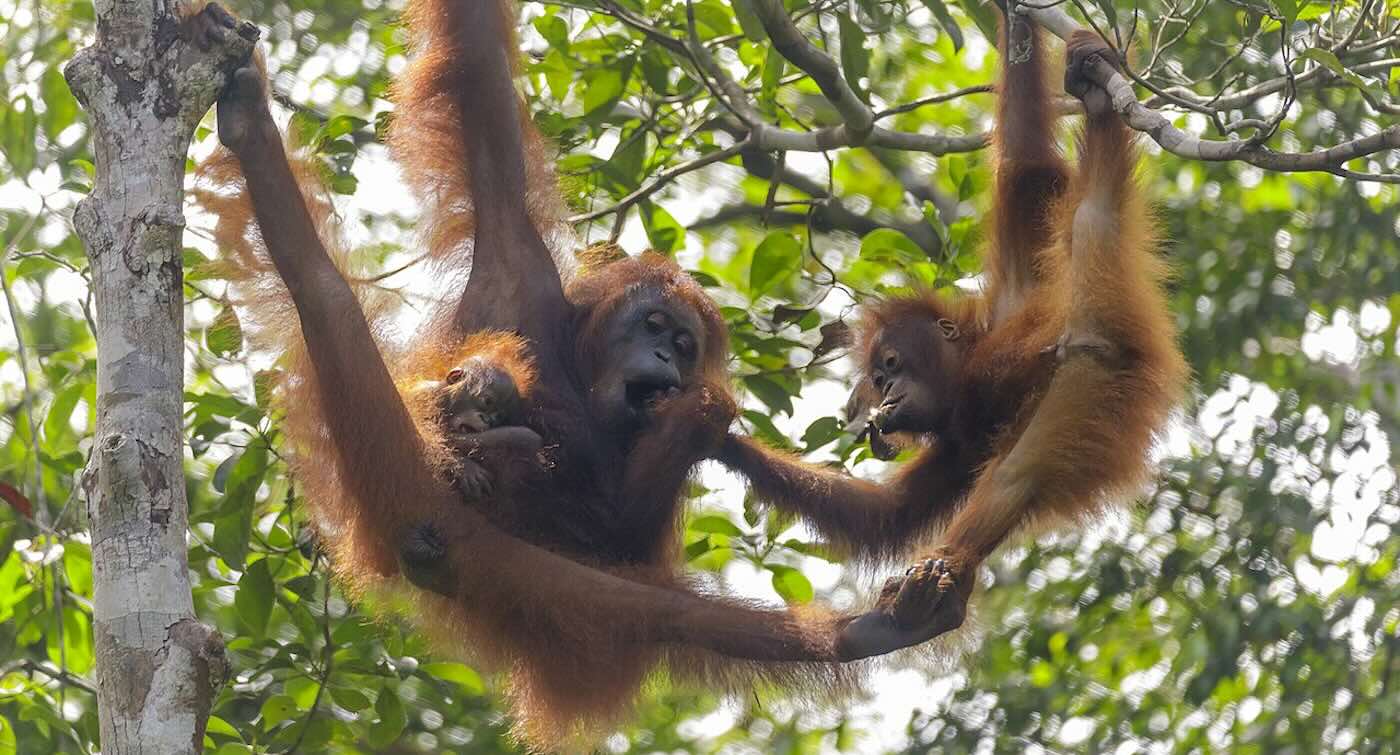
Fifteen years ago, conservationists began releasing rescued orangutans into a protected forest in Sumatra where no others from their species were living.
Some arrived had been in human care after being orphaned. Others had been rescued from conflict situations or captivity and needed months or years of rehabilitation before they could safely be returned to a forest.
Today, those formerly rescued animals aren’t simply surviving—they’re thriving. They’re having babies, raising families and slowly establishing an entirely new population of critically-endangered Sumatran orangutans in the wild.
The remarkable experiment is unfolding in the Jantho Pine Forest Nature Reserve in Indonesia’s Aceh province, where rehabilitated orangutans have been given a second chance at a natural life that many of them nearly lost forever. (WATCH the video at the bottom…)
From Rescue Animals to Wild Mothers
Orangutans aren’t animals that can simply be taken from captivity and dropped into a forest.
Young orangutans normally spend years alongside their mothers learning an extraordinary catalog of survival skills: which fruits are safe to eat, where to find food when seasons change, how to build a nest high in the trees every night, and how to navigate a complex rainforest canopy. Animals separated from their mothers too early may never have learned those lessons, so rehabilitation is sometimes a long process.
When rescued orangutans demonstrate that they can forage, climb, build nests, and generally survive without depending on humans, conservationists consider releasing them. The tricky part is finding somewhere safe to let them go.
Jantho offered something precious, a large and protected forest where conservationists could establish a population away from some of the immediate pressures facing orangutans elsewhere.
Soon, some of the females began giving birth. Those babies weren’t released from cages or transported to the forest. They were born wild.
Building a Population One Baby at a Time
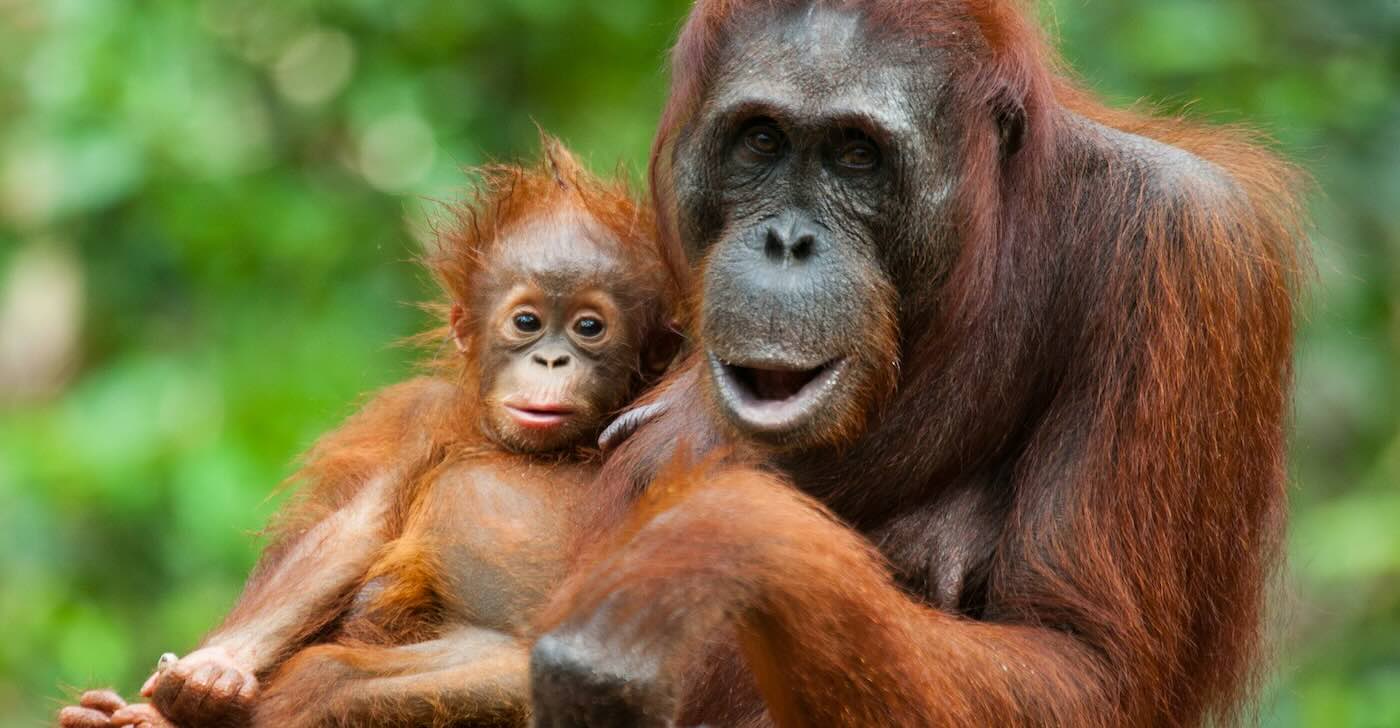
Mothers are teaching a new generation how to be orangutans. That development is particularly significant for the Sumatran orangutan, one of the world’s most threatened great apes.
These mothers typically raise a single infant for years before having another, giving orangutans one of the longest intervals between births of any mammal—so populations can’t rebound quickly.
Every newborn arrival at Jantho is a moment to celebrate—and researchers confirm at least 10 babies have been born in the reserve.
Wildlife rehabilitation is often measured by a single broken animal becoming whole again, and releasing them after they’ve been repaired. But Jantho shows what can happen when those individual ‘second chances’ begin multiplying.
Since 2011, conservationists from the Sumatran Orangutan Conservation Program have brought nearly 200 Sumatran orangutans to Jantho.
AMAZING ORANGUTAN MOMENTS:
• Orangutan Uses Hand Gestures in Quest to Look Inside Woman’s Purse–Hilarious: WATCH
• Fun-Loving Orangutan Goes Ape Over Magic Trick (WATCH)
• Clever Orangutan Makes a Tool to Retrieve Floating Basket From Pond – LOOK
What began as a place to release rescued animals has turned into something much bigger, a home where a new generation of wild Sumatran orangutans can flourish—born free.
THIS IS THE GOOD NEWS WE ALL NEED–So Share it With Friends on Social Media…