














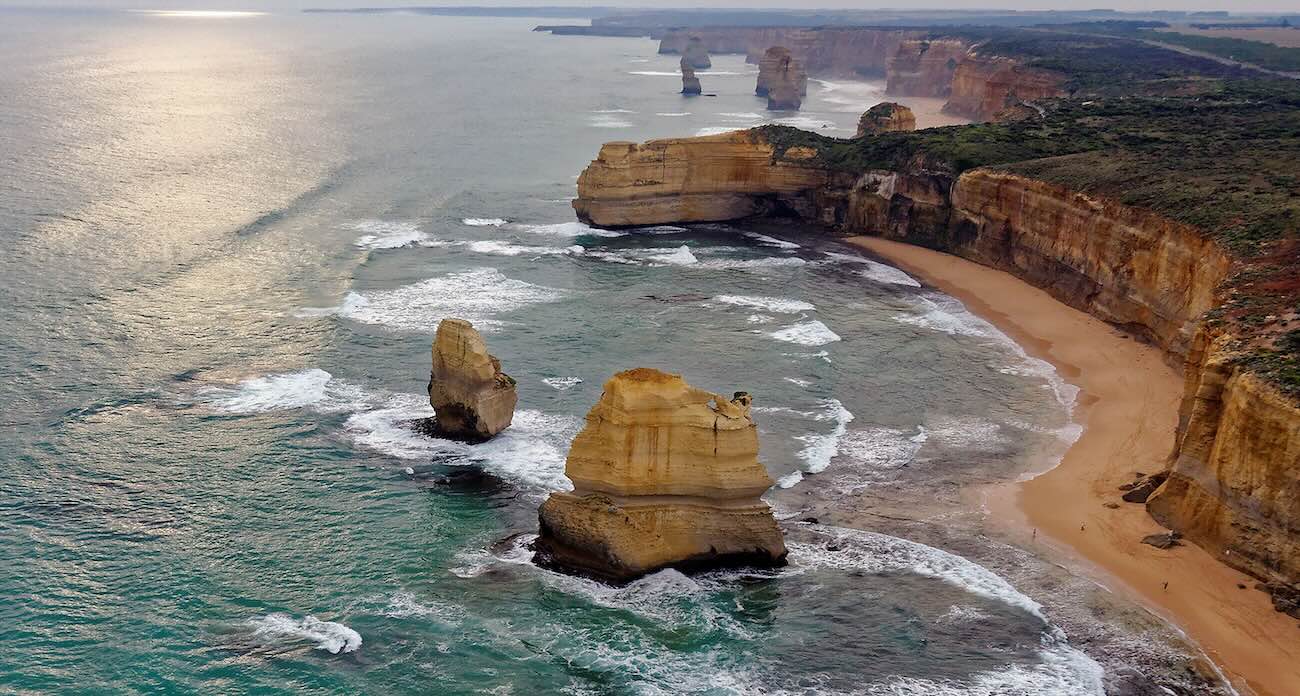
Research from the University of Melbourne for the first time has confirmed the ancient impetus that formed the iconic Twelve Apostles, 25 miles of rock formations along Australia’s southern coast.
The evidence is in: tectonic plate movements over millions of years lifted the giant limestone landmass out of the sea.
“Until now, the evolution of the Twelve Apostles had not been well known,” said the lead researcher, Associate Professor Stephen Gallagher from the School of Geography, Earth and Atmospheric Sciences.
The “landmark” study, published this week in the Australian Journal of Earth Sciences, revealed that while the Twelve Apostles were pushed out of the sea over millions of years by shifting tectonic plates.
The tectonic event, followed by 20,000 years of erosion from wind and waves, helped shape the Twelve Apostles into one of the world’s best-preserved and accessible records of ancient climates and sea levels.
“Much like an environmental time capsule, each layer of these giant structures preserved information about the Earth’s climate, tectonic activity, plants and animals over millions of years, including a key time about 13.8 million years ago when the climate was much warmer than what it is today,” Associate Professor Gallagher explained in a media release.
He continued, “We are using this ‘window back in time’ to understand where temperatures and sea levels may be heading on our current path of climate change.”
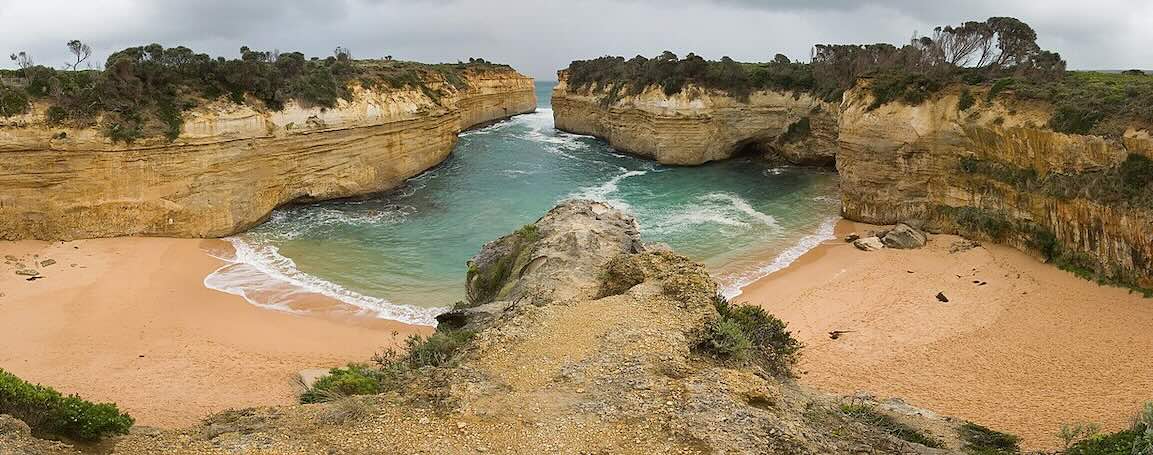
Like tree rings, the layers have provided scientists with a clearer idea of the Apostle’s age than ever before. The researchers say they are actually younger than previously understood.
“Early preliminary research indicated the ancient limestone layers ranged between seven to fifteen million years old, but we discovered microscopic fossils that more accurately dated the layers as 8.6 to 14 million years old,” said Gallagher.
“We also uncovered that the tectonic movements didn’t push up the Apostles perfectly straight. Instead, they forced layers to tilt and break along the way.
“If you look closely at the cliffs around the Twelve Apostles today, you can see the limestone layers are not flat but are, in fact, tilted by a few degrees. Small fault lines can also be seen, which are records of ancient earthquakes.”
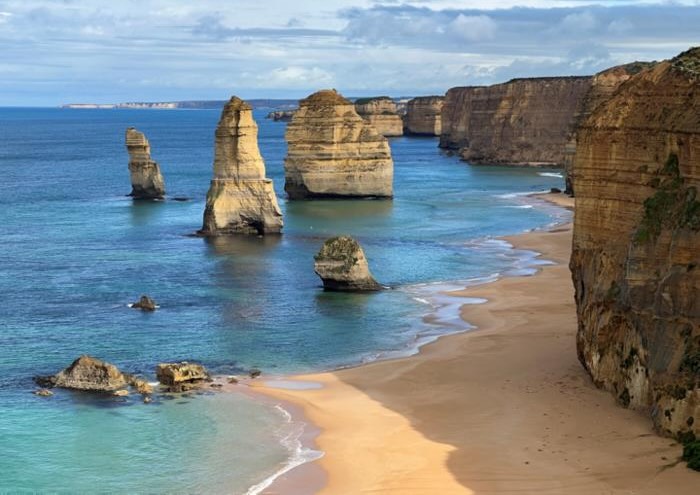
Although the limestone sea stacks 120 miles southwest of Melbourne were named ‘the Twelve Apostles’, there may have only been nine. Only seven remain today, after the collapse of one that was 50-meters-tall (160 ft) in 2005, and another in 2009, leaving only stumps in the protected area within Port Campbell National Park.
The new research along this 40 kilometers (25mi) of continuous sea cliffs, employed photographic and digital imagery, with field mapping, and stratigraphic and microfossil analyses, to reveal that their geology spans 15 million years of Earth history.
GEOLOGY GEMS!
• Turning Themselves to Stone Remarkable Fig Trees Sequester CO2 Far More Than Normal
• Pyrite May Be Known as Fool’s Gold, but It Actually Contains Green Gold: Lithium
• Geologists Found a Mega-Structure Built by Ice Age Hunters Submerged in the Baltic Sea
• Man Finds Meteorite After Seeing Green Light in Sky: It was Warm and Burnt and ‘May Be From Halley’s Comet’
Flooding since the Last Glacial Period 23,000–20,000 years ago created the sea stacks, cliffs, and estuaries, as extreme weather conditions from the Southern Ocean gradually eroded the soft limestone, weakening cracks in the cliffs, causing them to form caves in the cliffs, which then become arches that eventually collapsed, forming free-standing stacks.
CREATE SOME TRAVEL PLANS By Sharing The Awe-Inspiring Site on Social Media…