














Tucked away in the parks and alleyways of East London lies one of the city’s most vibrant collections of public art.
What makes it all the more special is the mending of mental health maladies that transforms its volunteer artists.
The sometimes sprawling, Roman-inspired masterpieces are the work of the Hackney Mosaic Project and its founder Tessa Hunkin.
Her chance encounter with a mental health recovery group in Westminster sparked a realization: the meticulous, slow, and repetitive act of building a mosaic can offer profound therapeutic value.
Over the last 15 years, the project has not simply make colorful public murals out of broken fragments. It has restored pieces of lives broken by depression, PTSD, and addiction, while bringing together people of all backgrounds in a shared vision of beautifying corners of the community.
For the participants, sorting glass shards, nipping ceramic tiles, and carefully pressing each piece into mortar demands intense concentration.
Like embroidery or knitting, this steady rhythm offers a therapeutic calm, and helps interrupt negative thought patterns, quieting the internal noise of trauma and stress while building confidence.
“I spent a lot of time walking around Hackney, which has more parks than any other London borough,” Tessa recalled in an interview with Spitalfields Life. “A hidden little corner in Shepherdess Walk (park), off the City Road—that was the first.”
“Eventually, we had children running around, recovering addicts, some not-so-recovered people with quite serious mental health problems and people who lived close by, all sitting together making mosaics.
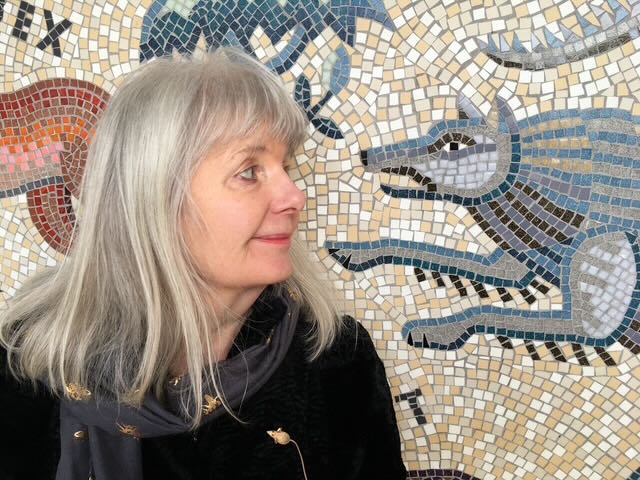
“They finished the mosaics much more quickly than I was anticipating and we have never stopped since.”
“It gives people a holiday from their head,” said the 72-year-old architect turned artist. “It is a simple task that requires concentration and produces something at the end, so it is never time wasted because you can see where your time has gone.”
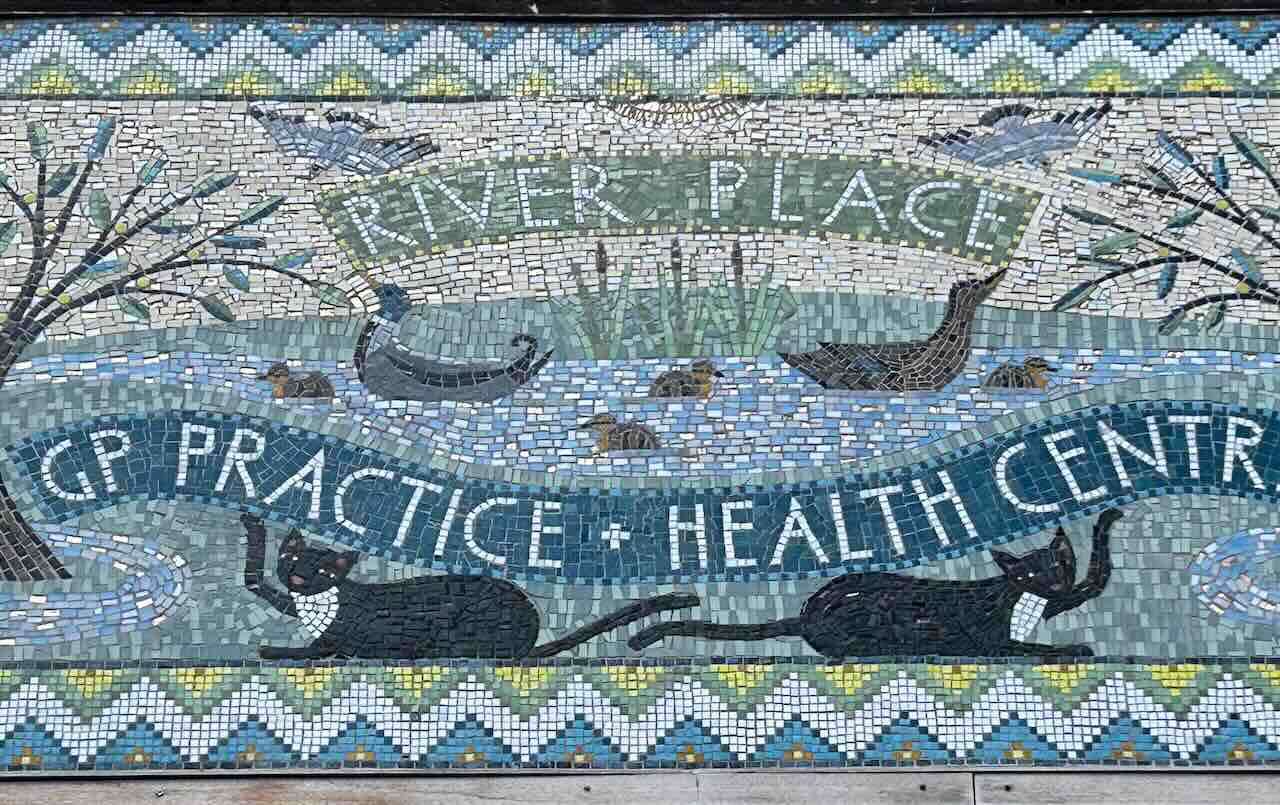
One recent project was launched in 2023 following the COVID-19 pandemic to combat employee burnout for healthcare workers and staff at the River Place Health Centre.
The large new mural on the building showcased the name of the practice along with various plants and animals, like ducks, cats, and a fox.
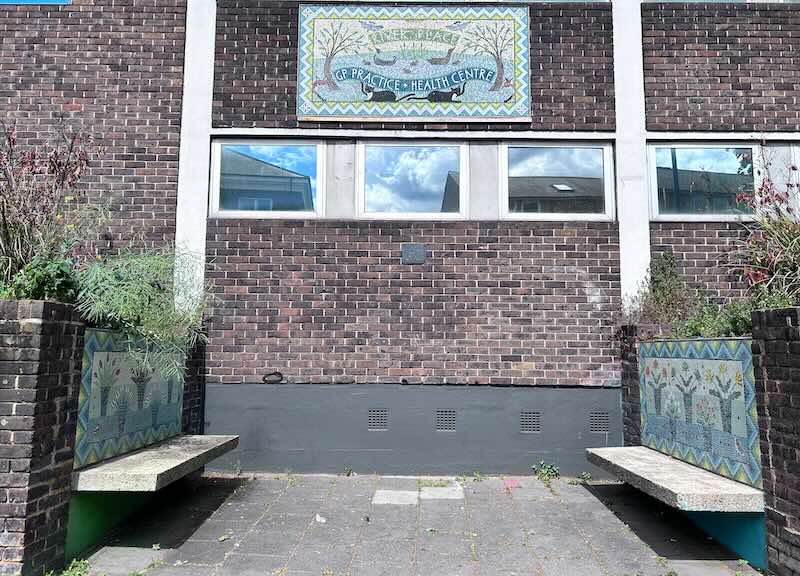
In a second phase, the outdoor concrete benches of the health center were transformed with vibrant floral designs, with weekly workshops that also engaged the local patients in creating the artwork unveiled a year ago.
Where to Find the Mosaics
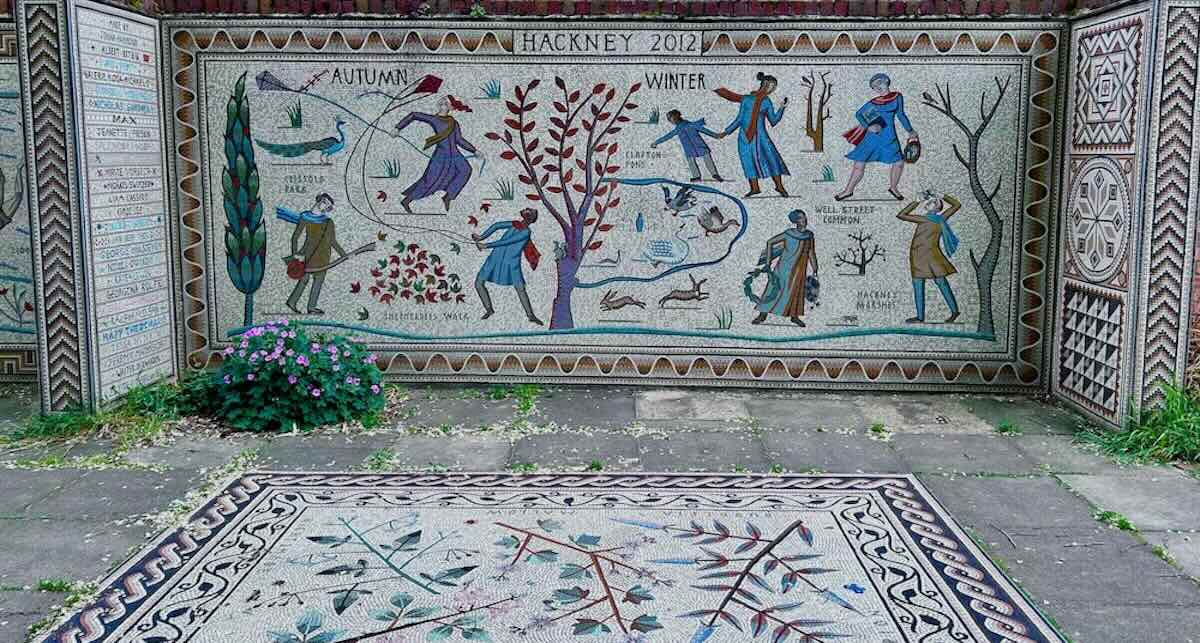
The Shepherdess Walk in Hoxton: These expansive, Roman-style mosaics cover both walls and pavement.
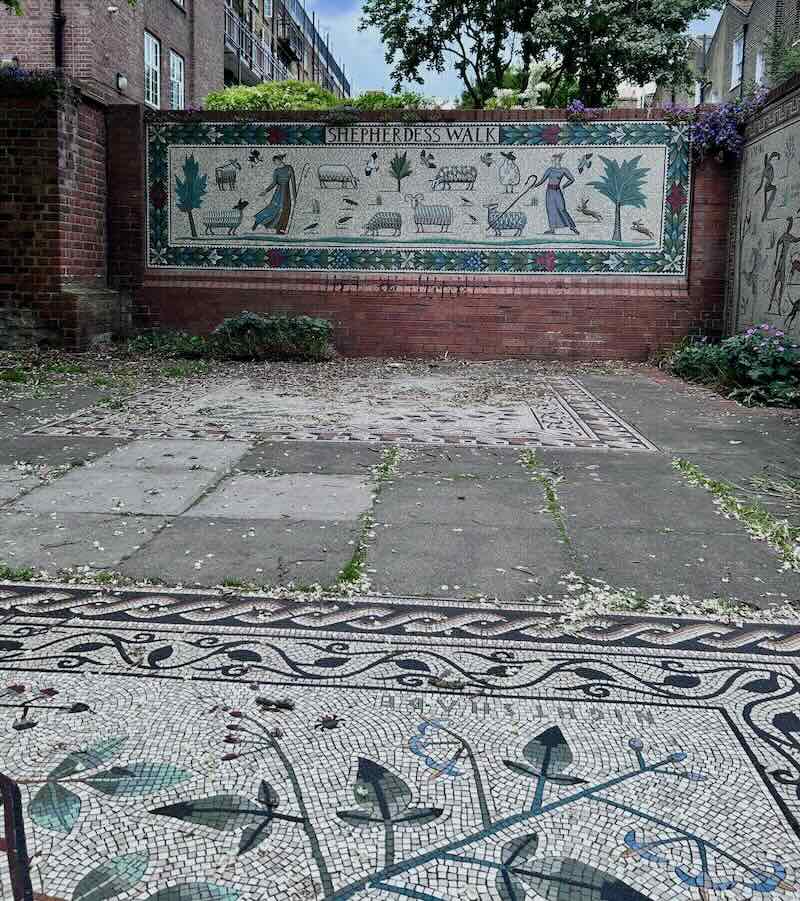
Several depict intricate details of East London life, from local flora and fauna in every season to modern figures with mobile phones.
All the parks in the borough are depicted on two of the huge walls (see top photo), as in this detail (below) listing Clissold Park.
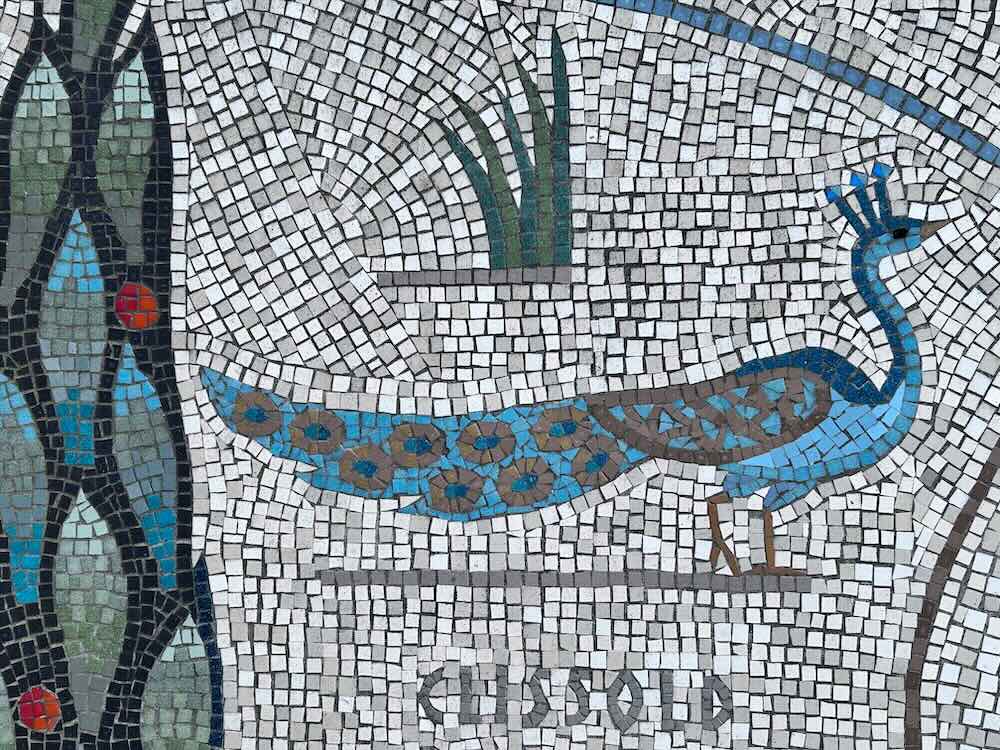
All the artists who helped create the panels designed their names to fit on a column of brick.
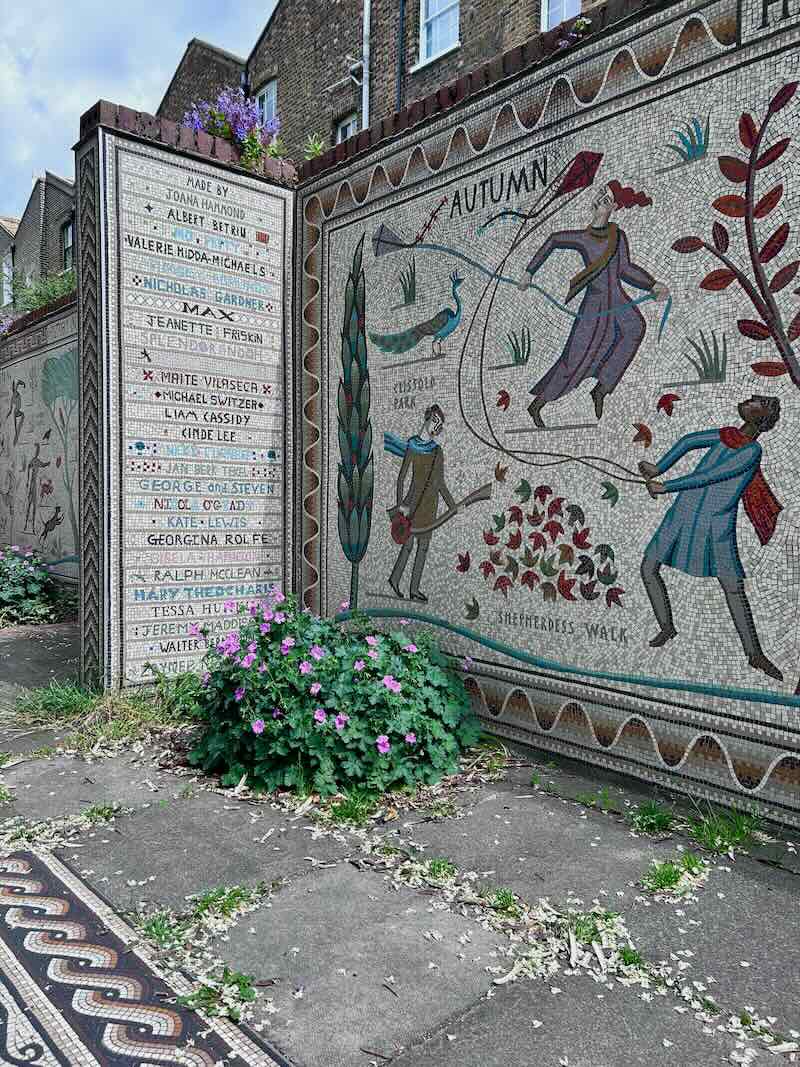
River Place Health Centre Benches in Islington: Situated right off Essex Road, over 100 local patients, including those recovering from mental health conditions, helped revamp drab concrete benches into vibrant floral mosaics (see the photo above).
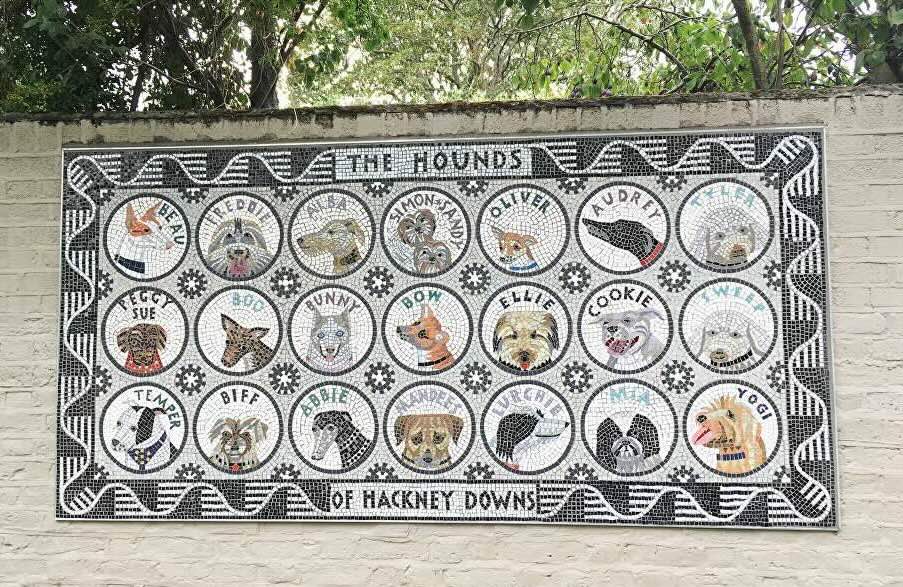
The Hounds of Hackney Downs in Hackney Downs Park: A spectacular collection of vibrant dog portraits in a wall mosaic features highly detailed portraits of local neighborhood dogs to celebrate the community’s daily life. The 50 whimsical dog portraits sit near further mosaics of native flowers that are in the park’s wildflower meadow.
Also in the same park are circular benches designed by Tessa and meticulously hand-tiled by the group’s volunteers, with vibrantly patterns topping the brick and concrete benches to provide a colorful gathering space.
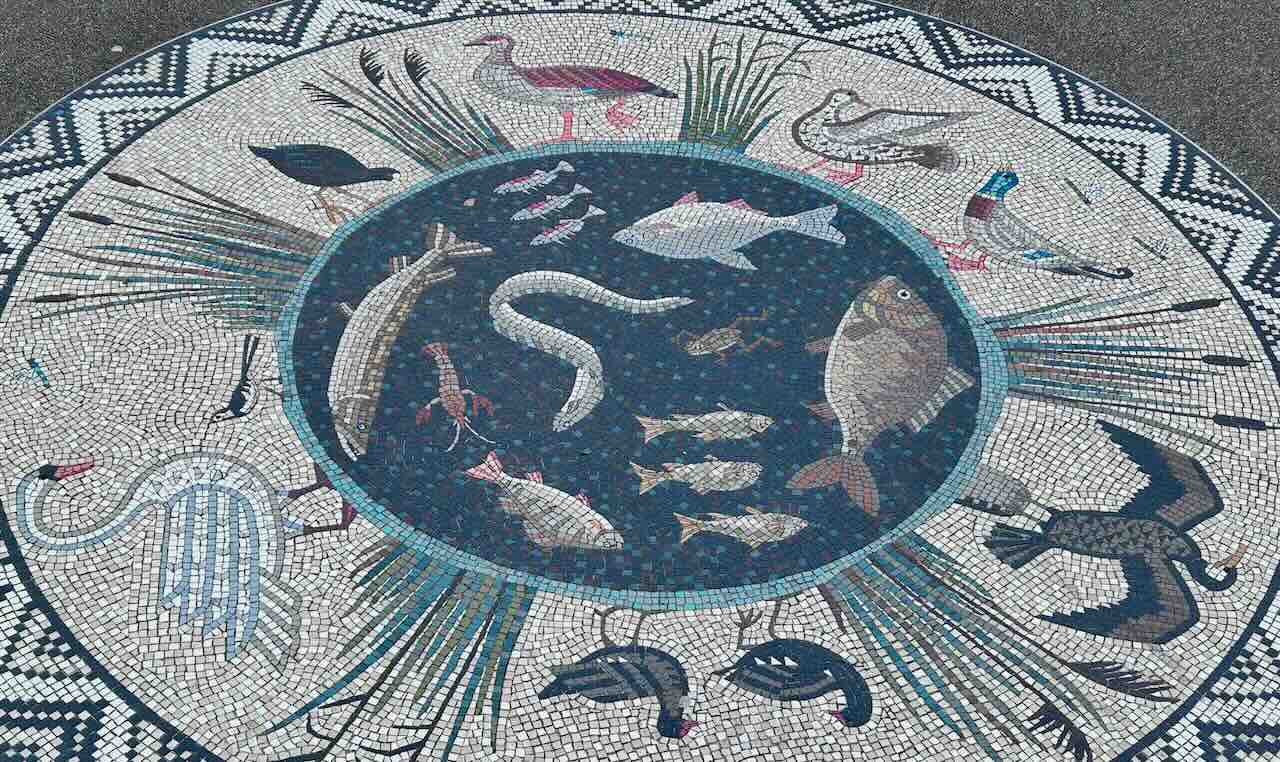
Canalside Square along Arlington Avenue: A large circular mosaic decorated with animals is built into the pavement surrounded by the park benches and playground near a canal.
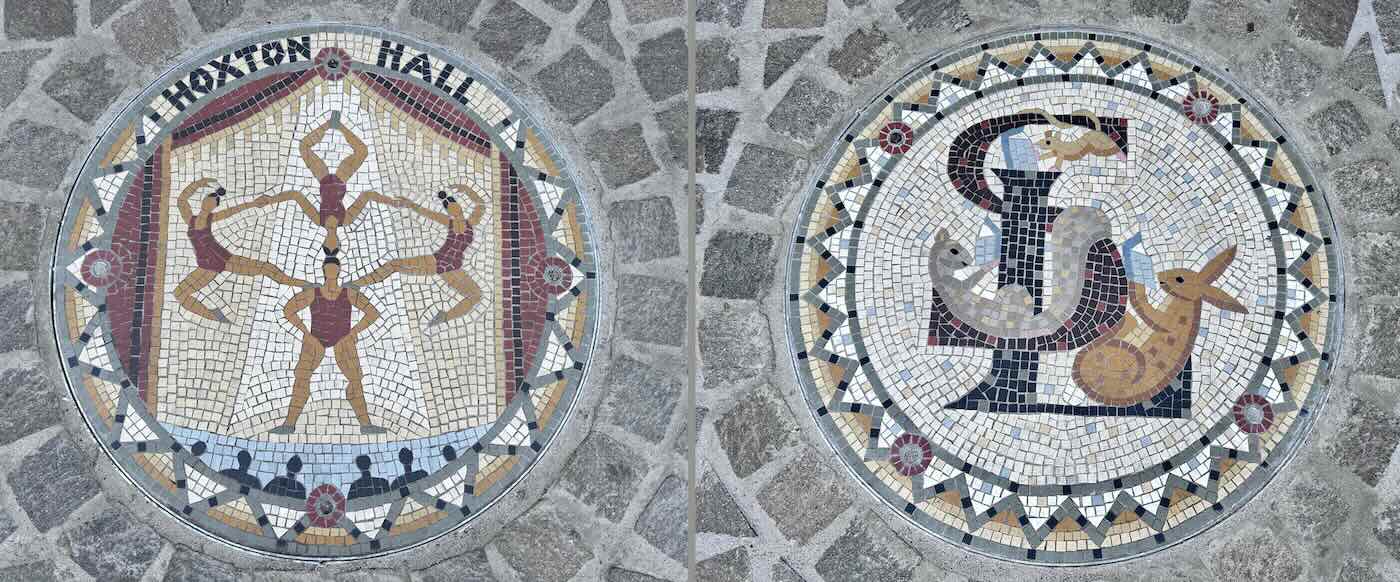
Building Markers in Hoxton: small circular markers have been installed into sidewalk cobblestones in Hoxton, too, outside the Shoreditch Library and the historic performing arts theater and community center called Hoxton Hall.
The website for the Hackney Mosaic Project offers a full map of all the installations.
The weekly workshops, normally held on Wednesdays and Fridays 2-5pm, and on alternate Saturday afternoons, are in flux this year due to changes facing their current home in the Pavilion on Hackney Downs, which may become a cafe.
But over the years, the assembling of thousands of broken pieces of tile into resilient works of art by Tessa Hunkin and her dedicated volunteers will forever offer a profound and lasting metaphor for the journey of healing within dozens of Londoners.
SHARE THEIR INCREDIBLE CREATIONS On Social Media…