











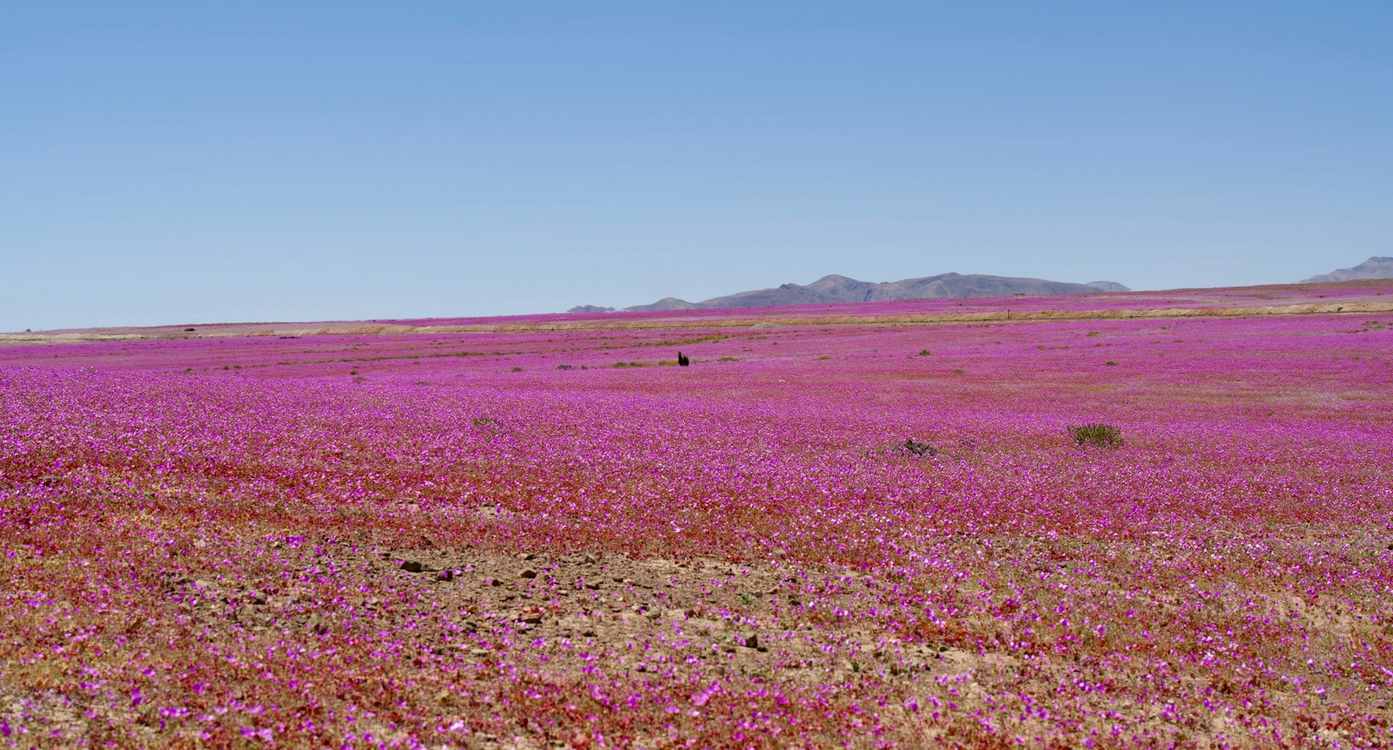
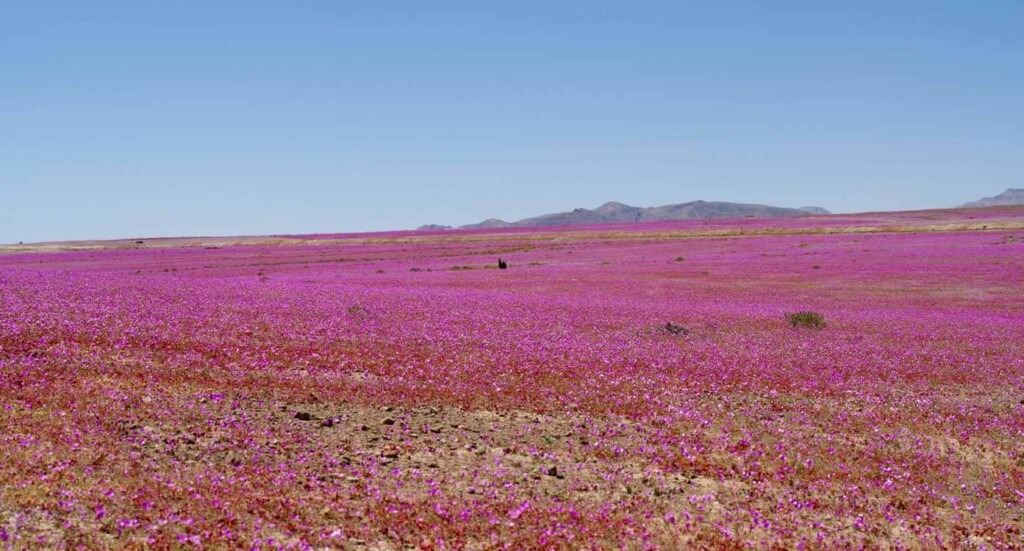
Just a few weeks ago it was the driest place on Earth. Now it’s the most colorful.
Chile’s Atacama Desert has erupted into perhaps the greatest floral display ever recorded there, with some 200 species blooming—some in areas where flowers haven’t been seen since the before new millennium.
VIDEO: 🇨🇱 Chile's Atacama Desert fills with flowers in spring The phenomenon, known as the "flowering desert," occurs in certain years when rainfall and temperatures coincide, awakening the desert's dormant seeds #AFPVertical https://t.co/Cr4C3LaFa8
— AFP News Agency (@AFP) October 6, 2025
It means that seeds and tubers have lain dormant under the sand waiting for the lifegiving touch of water for decades—a remarkable adaptation. For the people who protect this desert ecosystem, it’s another reminder of the incredible resilience and diversity of life that makes this place worth protecting.
“This is a natural seed bank, a dormant archive that becomes a living one with the rains,” Moisés Grimberg, the administrator of Llanos de Challe National Park in the Atacama, told NPR, whose images of the flowering have to be seen to be believed.
“But it’s a race against time — this brief biological window allows these species to complete their life cycle, which lasts roughly two to three months.”
This year’s Super El Niño weather event dumped record rainfall onto the landscape. Through July and August, flooding allowed water to permeate deep into the soil, touching seeds that normally escape seasonal rains.
The resulting “superbloom,” to use the California term, is easily the widest-reaching and most vivid in 30 years. It’s a record that might not stand for long though, as the world’s driest, non-polar desert is seeing more rainfall than usual.
NPR says the increased frequency of the seasonal rains are creating conditions for more varied animal life—albeit transiently—such as reptiles, insects, bats and other pollinators, and even larger animals like the iconic guanaco, a relative of the lama.
ALSO IN CALIFORNIA: Once-in-a-Decade Superbloom Carpets Death Valley in Beautiful, Colorful Life (LOOK)
The Atacama is also host to one of South America’s largest botanical storehouses: the Initihuasi Seed Bank. This genetic mothership is the central node in a nationwide network of institutions that are safeguarding the country’s plant diversity, come what may, and its scientists aren’t wasting this opportunity to merely take photographs.
Ana Sandoval and her colleagues are busy collecting seeds generated by the now-pollinated flowers for future research.
“It’s as if the desert is awakening,” Sandoval told NPR. “Sometimes people think it’s an empty, arid place, devoid of life, but actually our desert is just waiting for the right conditions, and any precipitation, to awaken it.”
LIFE IN THE DESERT: She Used Nature to Transform Dry Stream Beds into Lush Oasis During USGS Study
Along with Llanos de Challe, another national park in the Atacama was created for the specific purpose of protecting an area where the blooms are densest. The local governor now wants to expand the park to cover areas in bloom this year.
He’s also seeking UNESCO World Heritage-recognition for the natural wonder beneath the soil, just waiting to explode into hues of yellow, orange, lilac, and purple.
SHARE This Incredible Flowering Phenomenon On Social Media…