












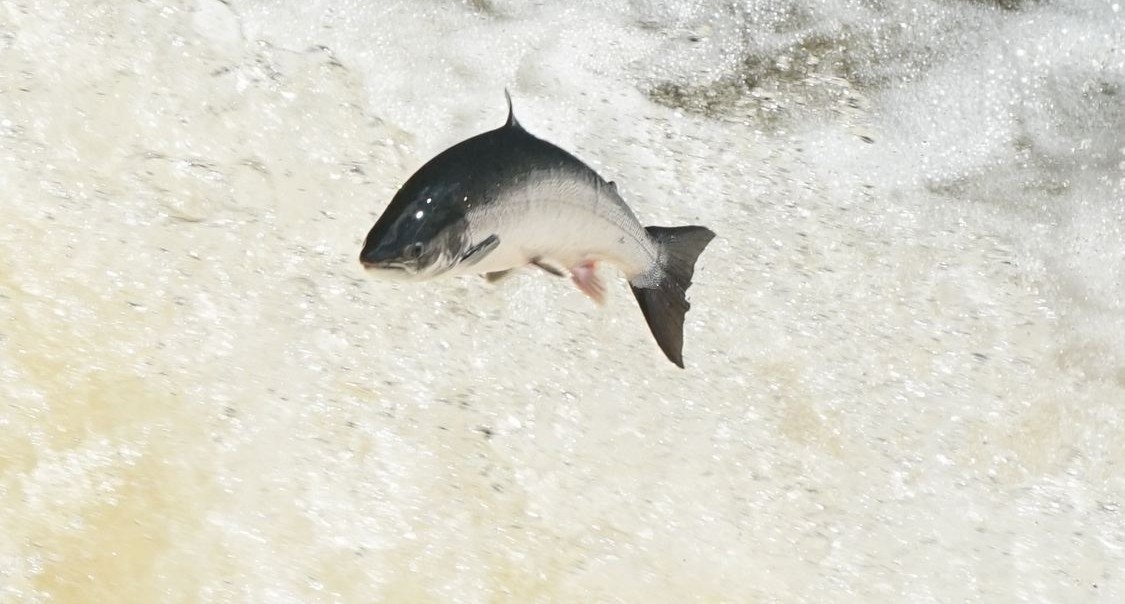
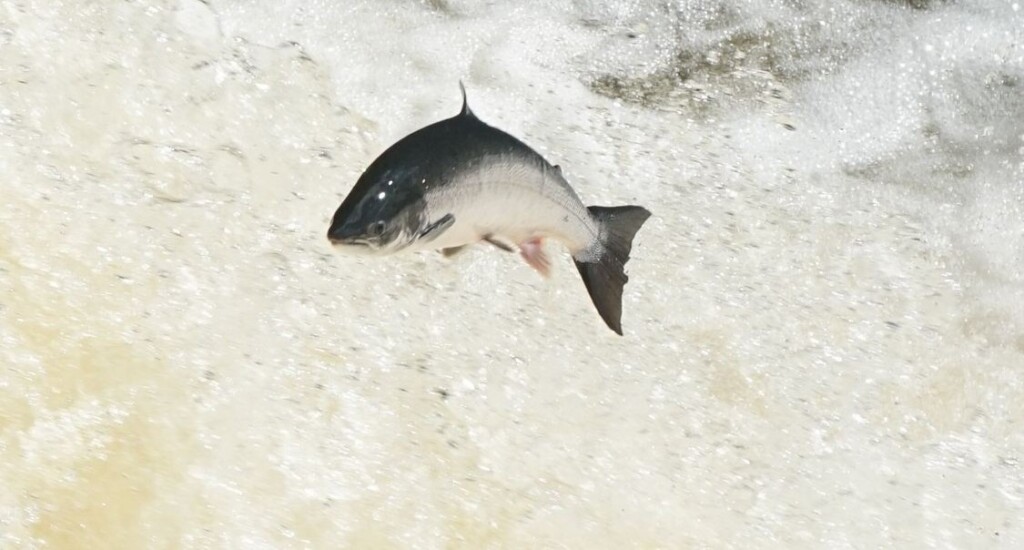
Considered critically endangered in Britain, young salmon must nevertheless be finding their way safely back to the island from the Arctic Ocean, as they’ve been found spawning in three different rivers.
In the Mersey, Goyt, and Bollin, the fish have been recorded where they’d once been absent, a development described as a “significant environmental turnaround.”
The sightings have prompted environmental authorities to plan a salmon study, with hopes they’ll be able to learn more about the animal’s return.
“Significant stretches of river were biologically dead in the 1980s but today they support thriving ecosystems and are home to a number of pollution-intolerant fish species. Those species are recovering thanks to a significant environmental turnaround,” Mark Sewell, a wastewater catchment manager at United Utilities told the BBC.
Since 2006, Atlantic salmon have declined by 40% across the island, with some rivers losing them entirely. Following 2 to 3 years of feeding and growing in the cold waters of the arctic, the salmon will return to their home river and even the same tributary where they hatched, to lay their eggs on gravel beds.
These beds along several rivers are unreachable because of obstacles like locks, dams, and weirs, The Bollin and the Goyt are both feeder rivers of the Mersey which runs through Liverpool, a major river is now experiencing some of the highest levels of biodiversity among major English rivers.
In 2023, GNN reported that a study had identified some 37 species of fish, as well as “huge” eels, sea scorpions, and 5 species of sharks. In 2009, the Mersey was announced to be “cleaner than at any time since the industrial revolution” and is “now considered one of the cleanest [rivers] in the UK.”
SALMON STORIES:
- 4 Dams Set for Removal in Maine Will Open Hundreds of Miles of River for Salmon, Herring and Sturgeon
- Salmon Have Already Returned Far Upriver to Spawn in Historic Habitat After Nation’s Largest Dam Removal Project
- Salmon Return to the Heart of UK for First Time in 100 Years After Dam Removal: ‘It’s very rewarding’
Humpback whales were seen at the time in Liverpool Bay for the first time since 1938, while the river and its sound welcomed back otters, octopus, porpoises, and seals.
A trophy fish both excellent as both a stand in for measuring river health, and on the dinner table, the prospect of returning salmon will be a great incentive for other English rivers that once acted as their homes to scale back unneeded industrialization and try to improve the water quality.
RUN This News Up Social Media Streams To Your Friends…