














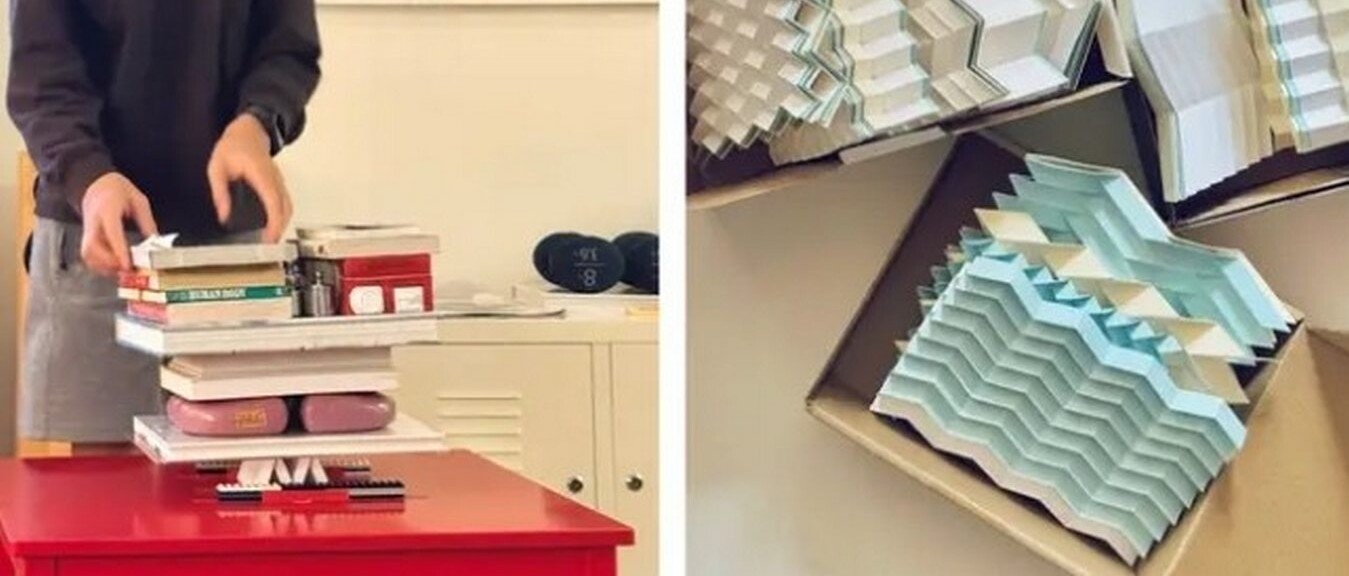
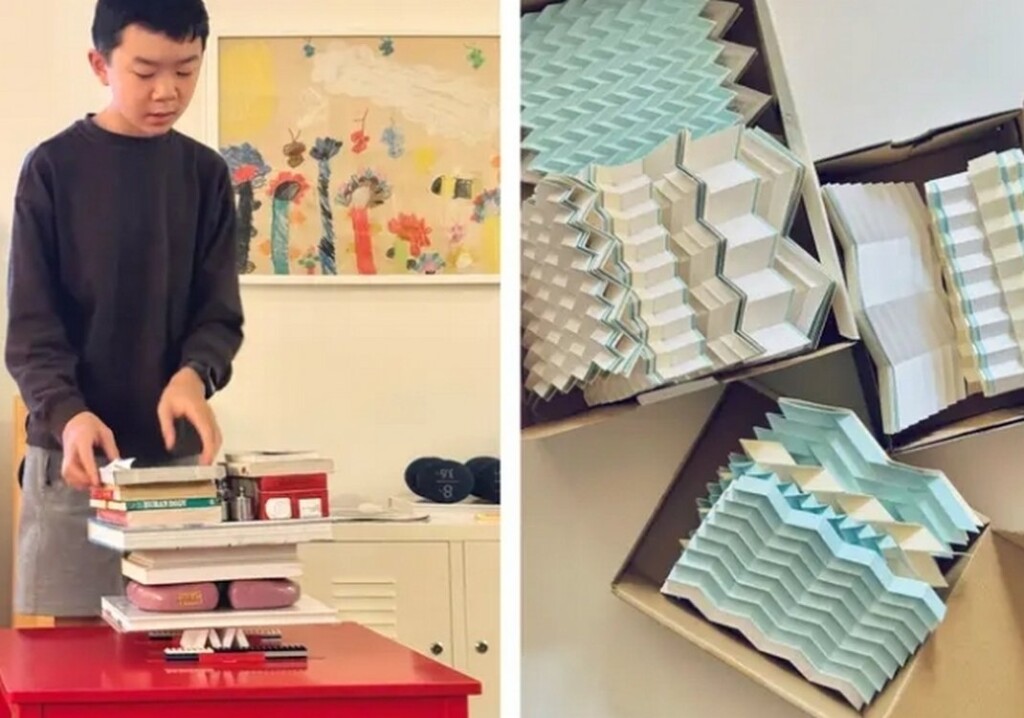
A young man has folded his origami hobby into to a potential career path as an innovator, having used the Japanese artform to create a structure capable of holding 10,000 times its own weight.
His demonstration, which included extensive testing and personal invention, took first prize at the Thermo Fisher Scientific Junior Innovators Challenge in October, giving the lad $25,000 to fold—into his wallet.
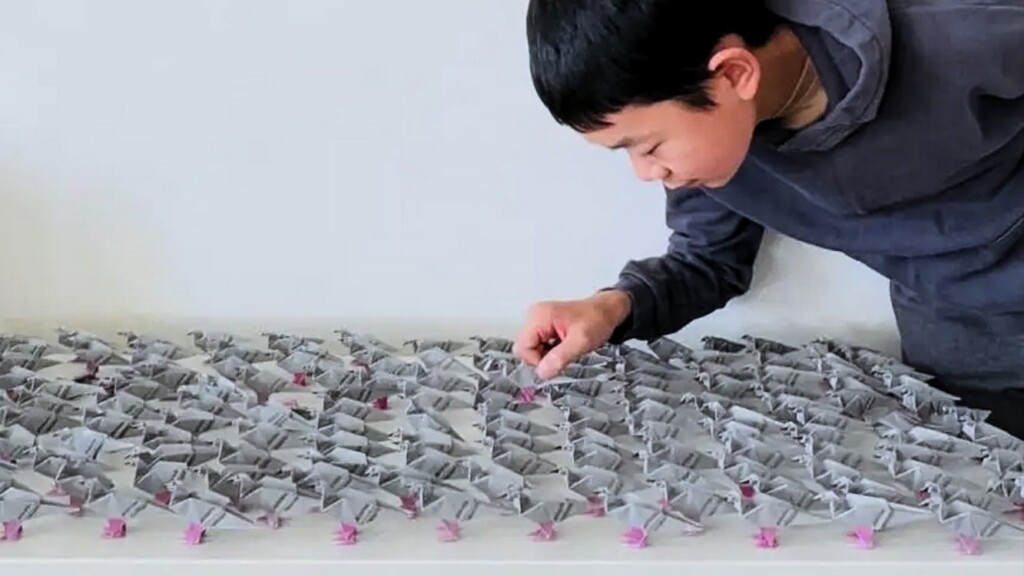
14-year-old Miles Wu from New York City has been folding origami animals and insects for years. He got so good at it that he has even started designing his own folding designs.
His eventual award-winning idea came from studying how origami had previously been used as a field for innovation in medicine. It was during January’s wildfires in Southern California and Hurricane Helene, when Wu familiarized himself with deployable disaster shelters that he realized he might use origami to build a better one.
He began personal experimentation with a kind of origami fold known as Miura-ori, which creates patterned parallelograms by folding a piece of paper over itself into a smaller area.
“A problem with current deployable structures and emergency structures is, for example, tents are sometimes strong, sometimes they can compact really small, and sometimes they’re easily deployable, but almost never are they all three, but Miura-ori could potentially solve that problem,” Wu told Business Insider.
“I found that Miura-ori was really strong, light, and folds down really compactly.”
He tested three different types of paper, folded into three different heights, lengths, and angles of parallelograms—creating 54 variations, which he tested over 108 trials attempting to see how much weight they could support by collapsing in on themselves.
Using every book in his small library, he eventually had to ask his parents to buy research weights to finish his trials.
ALSO CHECK OUT: New $1 Test Using Origami Paper Sensors Can Detect Infectious Diseases Like Covid–With Just a Mobile Phone
“The final statistic I got about the strongest Miura-ori that I tested was that it could hold over 10,000 times its own weight,” Wu said. “I calculated that to be the equivalent of a New York City taxi cab holding over 4,000 elephants.”
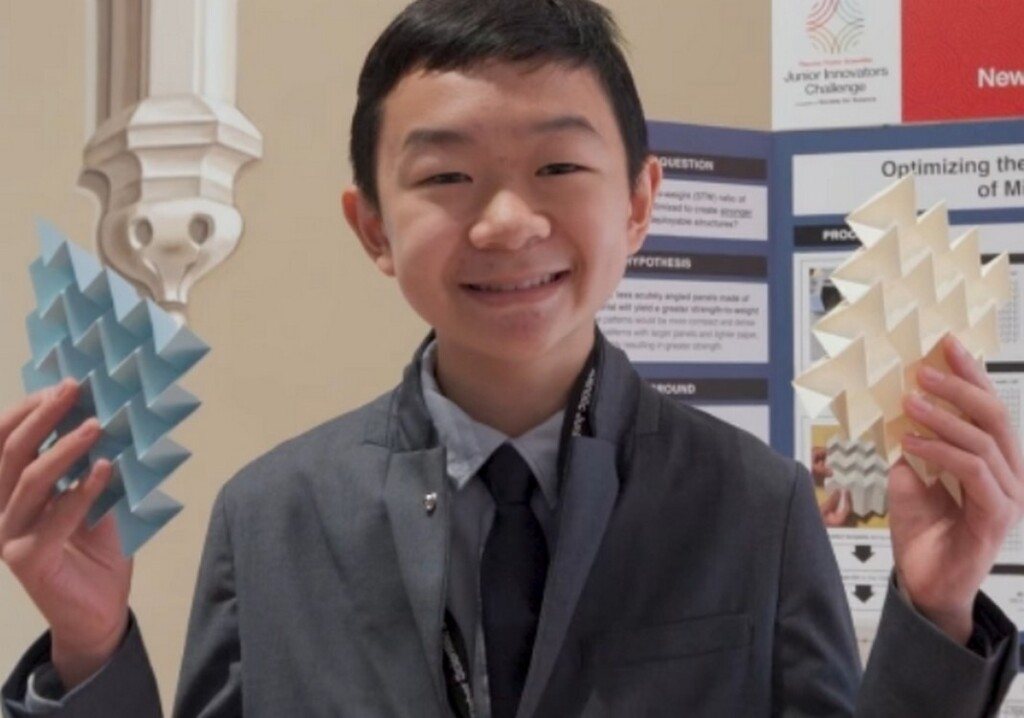
It’s not bad for a 14-year-old.
Wu believed that less-acutely angled smaller folds with heavier material would prove the strongest, which was partially true. Counterintuitively perhaps, it was the lighter material that held up better.
MORE CHILD INNOVATORS: Teens Win 2025 Earth Prize for Refrigerator That Runs on Salt – 200 are Headed to Hospitals to Preserve Medicine
Taking first prize in the Thermo Fisher Scientific Junior Innovators Challenge requires being selected in a body of 300 peers and their experiments out of 2,000 entrants. Of those 300, 30 are then selected to travel to Washington, DC, for a presentation on their work. Wu’s parents have decided the money will go towards his higher education, and Wu himself is already returning to his origami research.
APPLAUD This Brilliant Young Man And His Work With A Share On Social Media…
This boy is already a full-fledged scientist, in how he approaches, in his patience with experimentation, in his dialogue.